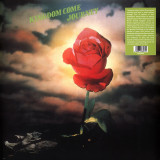
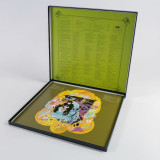
Mit Gitarrist Steve Jansson (Daeva, Unrest), Sänger Brooks Wilson (Unrest), Schlagzeuger Enrique Sagarnaga (Daeva, The Silver), Gitarrist Frank Chin (Daeva), Bassist Matt Knox (Horrendous, The Silver) und Keyboarder Tanner Anderson (Obsequiae, Majesties) hat das in Philadelphia ansässige Sextett seine Zeit abseits des Rampenlichts genutzt, um ein noch größeres, mysteriöseres Crypt Sermon zu schaffen. The Stygian Rose ist eine Mischung aus Doom und Heavy Metal, welches allerdings beide Genres mühelos überwindet. Von der fulminanten Solosalve von "Glimmers in the Underworld" und dem beherrschenden Rhythmus von "Heavy is the Crown of Bone" bis hin zu den beschwörenden nahöstlichen Vibes von "Thunder (Perfect Mind)" und der komplizierten, meisterhaften Reise des 11-minütigen Titeltracks verkörpert The Stygian Rose die zunehmend wachsenden musikalischen und konzeptionellen Fähigkeiten der Band.
Crypt Sermon haben The Stygian Rose mit dem renommierten Produzenten Arthur Rizk (Blood Incantation, Cirith Ungol) und dem Toningenieur Aidan Elias (Blood Incantation, Wayfarer) im Redwoods in Philadelphia aufgenommen. Obwohl Rizk für Out of the Garden (2015) und The Ruins of Fading Light (2019) verantwortlich zeichnete, hat das Team das genreübergreifende Werk der Band dieses Mal in einem neuen Licht eingefangen. Die Singles "Glimmers in the Underworld", "Heavy is the Crown of Bone" und "Thunder (Perfect Mind)" sind beängstigend effektiv in ihrer Neil Kernon-esken Produktion. Gleichzeitig werfen die tiefgründigen Albumtracks "Scrying Orb", "Down in the Hollow" und "The Stygian Rose" lange, mysteriöse Schatten. Rizk holte aus Crypt Sermon denselben Big-Stage-Sound, den die Produzenten Dave Jerden und Rick Rubin Alice In Chains bzw. Trouble entlockten.
Geschmückt mit einem fesselnden Artwork und einem bezaubernden (und doch düsteren) lyrischen Konzept von Wilson, ist dies Crypt Sermons Moment - tauch ein in The Stygian Rose und lass dich von seinem Reichtum verzaubern!
FFO: Candlemass, Khemmis, Visigoth, Eternal Champion, King Diamond, Solitude Aeternus
Cerca:arthur
Mit Gitarrist Steve Jansson (Daeva, Unrest), Sänger Brooks Wilson (Unrest), Schlagzeuger Enrique Sagarnaga (Daeva, The Silver), Gitarrist Frank Chin (Daeva), Bassist Matt Knox (Horrendous, The Silver) und Keyboarder Tanner Anderson (Obsequiae, Majesties) hat das in Philadelphia ansässige Sextett seine Zeit abseits des Rampenlichts genutzt, um ein noch größeres, mysteriöseres Crypt Sermon zu schaffen. The Stygian Rose ist eine Mischung aus Doom und Heavy Metal, welches allerdings beide Genres mühelos überwindet. Von der fulminanten Solosalve von "Glimmers in the Underworld" und dem beherrschenden Rhythmus von "Heavy is the Crown of Bone" bis hin zu den beschwörenden nahöstlichen Vibes von "Thunder (Perfect Mind)" und der komplizierten, meisterhaften Reise des 11-minütigen Titeltracks verkörpert The Stygian Rose die zunehmend wachsenden musikalischen und konzeptionellen Fähigkeiten der Band.
Crypt Sermon haben The Stygian Rose mit dem renommierten Produzenten Arthur Rizk (Blood Incantation, Cirith Ungol) und dem Toningenieur Aidan Elias (Blood Incantation, Wayfarer) im Redwoods in Philadelphia aufgenommen. Obwohl Rizk für Out of the Garden (2015) und The Ruins of Fading Light (2019) verantwortlich zeichnete, hat das Team das genreübergreifende Werk der Band dieses Mal in einem neuen Licht eingefangen. Die Singles "Glimmers in the Underworld", "Heavy is the Crown of Bone" und "Thunder (Perfect Mind)" sind beängstigend effektiv in ihrer Neil Kernon-esken Produktion. Gleichzeitig werfen die tiefgründigen Albumtracks "Scrying Orb", "Down in the Hollow" und "The Stygian Rose" lange, mysteriöse Schatten. Rizk holte aus Crypt Sermon denselben Big-Stage-Sound, den die Produzenten Dave Jerden und Rick Rubin Alice In Chains bzw. Trouble entlockten.
Geschmückt mit einem fesselnden Artwork und einem bezaubernden (und doch düsteren) lyrischen Konzept von Wilson, ist dies Crypt Sermons Moment - tauch ein in The Stygian Rose und lass dich von seinem Reichtum verzaubern!
FFO: Candlemass, Khemmis, Visigoth, Eternal Champion, King Diamond, Solitude Aeternus
With two critically acclaimed albums and a swathe of award-winning production turns under their belt, Ana Frango Elétrico present their most confident and accomplished work to date: Me Chama De Gato Que Eu Sou Sua / Call Me They That I’m Yours. Gesturing to a tradition of Brazilian boogie music, but bouncing with modern pop ebullience, the album sees the Rio artist evolve from a captivating upstart into a surefooted scene leader in full stride.
At just 25, the prolific artist and producer has already garnered worldwide admirers. Ana’s sophomore Little Electric Chicken Heart was nominated at the 2020 Latin Grammys. Since then, standalone singles have received the WME ‘Best Music Producer’ Award, recognising Ana’s deep passion for music production – a passion which has led to collaborations with nascent Brazilian stars Dora Morelenbaum, Illy and Sophia Chablau. Most recently, Ana was hailed for their co-production of Bala Desejo’s 2022 Latin Grammy-winning album Sim Sim Sim.
The new album finds Ana at their most assured and full voiced. Album opener “Electric Fish”, with funky bass and shimmering backing vocals, sets a buoyant tone. “Boy of Stranger Things” is its bombastic counterpart. It’s the grooviest Ana has ever sounded. And the most brazen. Lyrically, where Ana was once oblique on personal matters, they are now forthright – lucidly exploring their gender identity, citing accessible cultural references, and often singing in English.
“I started this album in 2021 with the intention of showing, in means of sound, understandings and feelings about queer love, subjectively exposing myself,” the non-binary artist states – before qualifying that though “feeling was its driving force, the album is really about musical production.”
“There’s so many references to different decades,” Ana explains. “Seventies drums with eighties processing … Going back, getting beyond … Testing the limits of organic sounds”. Characteristically playful, on Me Chama, Ana takes vivid and rewarding detours through funk-inflected R&B (“Dela”) and art pop (“Dr. Sabe Tudo”). “Nuvem Vermelha” is a cinematic chanson with lush strings that recalls Arthur Verocai. Then, “Coisa Maluca” loafs with the indie insouciance of Canadian slacker Mac Demarco. Later, “Let's Go Before Again”, is a full-on drum machine workout evocative of Stereolab.
Mr Bongo proudly presents the debut album from Tasmania-born, Melbourne-based, Finn Rees. Gliding across a swirling palette of saturated hues, Dawn Is A Melody feels vintage yet vibrant, new but familiar at the same time. A spiritual, deep and textured jazz record, tipping its hat to greats from the past, capturing memories and reformulating them into new ideas with the help of some of Melbourne’s finest talent.
Expert keys player for the likes of 30/70 and Elle Shimada, alongside one-half of Close Counters, this debut LP was Finn’s conscious departure from the realm of groove-based jazz. Instead, Dawn Is A Melody places the piano and arrangements centre stage, giving Finn and his fellow Melbourne crew freedom to explore the spaces in between, new emotions and alternate soundscapes.
In Finn’s own words: “My intention with Dawn Is A Melody was to create a world; a microcosm of colour. Something rich and beautiful that allowed the melodies and compositions to reach their full potential. It was driven by hope, curiosity and the search for beauty and reassurance in this ever-changing world. The emotion behind the music is really about the journey of life, growing up and changing, as well as my relationship with Tasmania’s natural landscapes where I grew up, a part of the world that is incredibly unique and beautiful.”
The album arcs between opening, middle and end. Beginning with the optimism of ‘Looking Up’ and ‘Lagoon’, the former a celestial, string and harp marbled slice of positivity, the latter a spiritual journey of exuberance and hope, Finn’s fingers dancing across the ‘70s Yamaha grand piano. From there the songs blossom outwards with the cinematic soulful journey of ‘It’s Behind Me Now’ and Brazilian-inspired ‘Expansion’, as the divine ‘Crossing’ signals a transition to a new realm. The energy is transformed from the rich cosmic textures to a more intimate and personal feeling with ‘Ablaze’, ‘Between Spaces’ and ‘As It Passes’ which blissfully fades down to simply piano and strings to close out the record.
Recorded at Rolling Stock in Collingwood, Melbourne, Henry Jenkins was drafted in as recording and mix engineer, his minimal vintage mic setups giving a live aesthetic and warmth to the arrangements. Lucky Pereira and Blakely McLean Davies form the rock-solid rhythm section, with a hand-picked line-up of other Melbourne talent on display, including Cheryl Durongpitikul on tenor sax, Siwei Wong on harp, Audrey Powne on trumpet and Allysha Joy on vocals to name only a few.
Plotting a course from Alice Coltrane, through Herbie Hancock, to Arthur Verocai, this is a debut nourished by the past but firmly made in the present. A record unable to be age-stamped, casting ambiguity as to when, what era and by whom it has been crafted. Like a vintage lens capturing a current scene, Dawn Is A Melody is warm and familiar yet focused on the here now.
The Funky French League is a collective of intergenerational DJ’s / producers / musicians, composed of Young Pulse, Arthur Chaps, Woody Braun, Monsieur Willy, DJ Asko and Uncle T. Coming from diverse backgrounds, from hip hop to electronic music, the love of groove brought them together. Their goal is to promote funk and its derivatives through parties, mixes, remixes, radio broadcasts... This 7” release is a remake of the African Blood classic A.I.E from 1975. It goes without saying that Monsieur Willy touched this one with respect, dignity and style but yet still pumped it up to the max. The afro beat driven Bonus Beat on the flip, again caters for the DJ to give them maximum freedom to express their skills and mixing creativity.
The Funky French League is a collective of intergenerational DJ’s / producers / musicians, composed
of Young Pulse, Arthur Chaps, Woody Braun, Monsieur Willy, DJ Asko and Uncle T.
Coming from diverse backgrounds, from hip hop to electronic music, the love of groove brought them
together. Their goal is to promote funk and its derivatives through parties, mixes, remixes, radio
broadcasts...
Much more than a musical style above all, they defend a state of mind:
celebration, diversity, inclusivity, good vibrations and the spirit of the party.
They have release compilations through Universal and Warner Music and have their own label Funky
French League records.
Am 17. Mai begrüßt die Band die Veröffentlichung ihres zweiten vollständigen Albums Under The Crooked Claw über Nuclear Blast Records.
Vollgepackt mit straffen, präzisen Songs, die mit schlagkräftigen Refrains und blitzdurchzogenen Leads geladen sind, bietet jeder der 13 Tracks eine neue Horrorkurzgeschichte, die die perfekte Mischung aus Heavy Metal, Punk und Rock'nRoll oder, wie Waste es nennt, "primitiver Heavy Speed" mischt. Die Band präsentiert die erste Single mit dem Titel "Rite For Exorcism" zusammen mit einem brillant augenzwinkernden Videoclip, der von Norman Cabrera inszeniert, von Maya Kay produziert und von Rob Lucas bei Wolfpack Studios gefilmt wurde. Das Powertrio, vervollständigt durch Schlagzeuger Chris Marshall, zog im Juni 2021 nach Philadelphia, wo Arthur Rizk die Grundtracks für Under The Crooked Claw aufnahm.
Yavé Rust nahm später in Richmond Lead-Gitarren und Gesang auf, um schließlich von Rizk gemischt und von Joel Grind gemastert zu werden.
Die Kunstwerke für das Album wurden von Brandon Holt gezeichnet und von Margaret Rolicki koloriert
Bruno Berle, the young songwriter and poet originally hailing from Maceió, the capital of Brazil’s Alagoas state, crafts songs that are simple, direct, and full of tender nuance. With his first album No Reino Dos Afetos (which translates to "In the Realm of Affections” and was released in 2022), Berle firmly established himself as a unique and important voice in the burgeoning scene of new Brazilian artists making a global impact, including peers like Ana Frango Elétrico, Tim Bernardes, Bala Desejo, Sessa and more. Now back with his second album, No Reino Dos Afetos 2, he stretches that further.
Bruno Berle’s music lives between two worlds – a traditional Brazilian folk talent steeped in history, and a contemporary, dreamy electronic pop; the result is songwriting that’s genre-bending, intentional, iconoclastic and consuming, spacious and sinewy and singular, a striking reflection of its composer while leaving space for the listener to settle in. The album follows Bruno’s relocation to São Paulo, and the songs are a reflection of his past and present. A rebuke of former categorizations of his work in Brazilian music scenes, and an idea of where his music can move, unfettered.
Berle’s music is purposeful in being a true portrait of himself, and a reflection of the music, art, and fashion scenes he personally moves through. Berle aims to provide an entrypoint for Black queer joy in his music, in his storytelling, in his presence and vision as a creative. For him, it feels subversive to be playing MPB laced with dubstep and lo-fi, a sort of intentional sacrilege, capturing a dialogue of modernity in traditional music.
Berle wrote most of the arrangements and co-produced his new album, Reino Dos Afetos 2 with longtime friend and musical partner Batata Boy, who is also from Maceió; the album was recorded in Rio de Janeiro, Maceió, and São Paulo, his new home, and picks up the conversation begun in 2022 on Berle’s debut album No Reino dos Afetos. Both records are the result of a nonlinear but coherent seven-year music creation process culminating in these albums, holding hands across space and time.
“Tirolirole,” the first single from the record, was released at the end of 2023; sun-soaked rhythms and soft voice coat the song, the lilting refrain of “Tirolirole” throughout – hushed, gentle, but somehow almost tactile, a golden-hour moment unlocked in the mind. “Tirolirole” is a triumphant future classic about the temporality of a blossoming love, with Bruno’s stunning vocal soaring over melodies which ebb and flow like the waters on the Atlantic shore. Of the track, Berle explains: “Despite ‘Tirolirole’ being an expression that evokes my childhood, just like the light words about nature, the harmony, and the poetry are epic, carrying a great hope for love.”
In fact, the guiding theme of No Reino dos Afetos 2 is a relationship, unfolding in the arc of a weekend. It traverses the innocence of an early young love, how that can be formative, can stretch on to take new shapes, or shape you. The album happens at the genesis of meeting someone and falling for them, before the relationship is thrown into overdrive – set in a big city, against a backdrop of major life changes, rising energy, the sound of São Paulo.
Something transcendental emerges in “Dizer Adeus,” with an arrangement that echoes a gospel atmosphere (evangelical and Catholic environments were pivotal to Berle’s upbringing). On “É Só Você Chegar,” piano and flute gracefully intertwine, a dance, while “Quando Penso” skews sparser, the voice-and-guitar minimalism somehow cultivating an entirely different shape – somehow both cozy and melancholy, with the background sound of a rainy day. Coupled with the lo-fi aspects that shape much of the album’s personality in the vocals and the production, No Reino Dos Afetos 2 is meticulously elaborated by Berle’s sonic alchemy, like on the mid-album instrumental “Sonho,” which feels like floating. “It’s the apex. It’s when lovers are sleeping together,” Berle explains of the feeling he wanted to encapsulate in the song.
On “Love Comes Back” Berle interprets Arthur Russell, the late Iowa musician who only reached greater visibility after he died in 1992. “His way of making music is similar to mine,” Berle explains. “He sings in a more fragile way, has more of an experimental way of recording, letting ‘chance’ appear in the final work.”
Even so, Berle doesn’t want his music to be buried in sentimentality – and the purposefulness of his craft serves as a sort of north star. The production, the arrangements, his restraint and intentionality in crafting his songs feel just as vital as their emotional cores. His songwriting is amorphous, fluid, an encompassing genre-bending movement in-and-of-itself, quietly daring. The songs are often in conversation with other works – drinking in fountains as diverse as the filmmaking of Ingmar Bergman, the poetry of Walt Whitman, the rhythm of Djavan, and the painting of Maxwell Alexandre. Musically he weaves together a rich tapestry of Brazilian folk, UK 2-step garage/dub, trip hop and sun soaked west coast songwriters; something akin to the worlds of Milton Nascimento, Arthur Russell, James Blake, Feist, and Sade colliding into one. But even then No Reino Dos Afetos 2 floats separately, a romanticism driven by a simplicity and intimacy, an open-ended possibility, Berle’s singularity as an artist at the helm of the ship.
repress !
Following acclaimed singles from Powell, Blood Music, Shit & Shine and Prostitutes, the next release from Diagonal is a landmark. It marks both the London label's first full-length album release, and the return of abrasive and furiously funky hip-hop deconstructionists Death Comet Crew, one of the most quietly influential underground acts to emerge from the creative melting pot of 1980s New York.
Ghost Among The Crew documents the group's return to studio operations for the first time since the 80s, as well as their first ever full-length studio album. It's a remarkable trip: a consolidation of their early feral disassemblies of hip-hop and electro, but also broader in scope, chewing up and spitting out fragments of soul, jazz fusion, punk and industrial music.
Death Comet Crew were founded in New York City in 1983 by Stuart Argabright, a founder member of post-punk/industrial mavericks Ike Yard and the mind behind Dominatrix and later Black Rain. Their sound, then as now, was a singular proposition: urban in mood, exploratory, often compellingly danceable, yet confrontational. It emerged from the interweaving talents of the group's varied members: guitarist Michael Diekmann (of Ike Yard), bassist Shinichi Shimokawa (later of Black Rain) and Nick Taylor aka DJ High Priest, frequently joined by the late, great hip hop artist and graffiti writer Rammellzee. Having recorded two studio EPs - 1985's At The Marble Bar (featuring Rammellzee) and its follow-up Mystic Eyes - the group disbanded barely a year after forming. They left behind a reputation for their incendiary live performances, several recordings from which were gathered on crucial 2004 compilation This Is Riphop.
The musical climate that first birthed Death Comet Crew was one of fertile cross-pollination of styles. In the late 1970s and early 1980s, the seeds of modern day urban musics - hip hop, punk and post-punk, no wave - were taking root in the streets of recession-struck New York City. Argabright recalls dancing at the downtown Mudd Club around 1980 to a bold mixture of styles, with DJs cutting from synth-pop and post-punk to funk, soul and early hip-hop: Bowie and James Brown next to Run DMC, Ultravox and Gary Numan. Indeed, the names of his New York contemporaries operating around the same time - the likes of Liquid Liquid, Run DMC, Afrika Bambaataa, Arthur Russell, ESG, Swans, Sonic Youth, Bill Laswell and more - have since been inscribed in modern music history.
With previous projects Dominatrix and Ike Yard having recently become inactive, in 1984 Argabright formed Death Comet Crew as a means of exploring new sonic avenues. He'd been experimenting with tape, recording and procesing the sounds of his surrounding environment and dialogue from films and TV. Joined by Shimokawa, Diekmann and Taylor, and using drum machines, turntables, spidery guitar and bass, the group assembled a scrambled collage of rhythms and sampled voices. Their live performances were, in Argabright's words, "aurally violent, sharp-edged, downright lacerating", hacking gleefully away at hip hop and electro's rhythmic frameworks. Rammellzee joined the group to vocal 1985 debut EP At The Marble Bar; his MC turn on highlight 'Exterior Street' is all the more remarkable for having been entirely freestyled in the studio. When Death Comet Crew reformed in 2003 for a string of live shows, he continued as an active member of the group, touring and working with them during the recording of Ghost Among The Crew, until he sadly passed away in 2010.
After reforming, Death Comet Crew began writing and recording new material. Now, following on from their just-released Galacticoast 12" through Citinite, Ghost Among The Crew - its title a homage to Rammellzee - hones the group's abrasive early experimentations while tripping into bold and astrally minded new territory. Alongside the core quartet of Argabright, Diekmann, Shimokawa and Taylor are new voices, including Rapscallion (a friend of Rammellzee's), Jessica 6/Hercules & Love Affair singer Nomi Ruiz, and Carolyn 'Honeychild' Coleman. Its eight tracks are steeped in the impulsive spirit of electric Miles and the deep space romances of Sun Ra, and possessed of an enigmatic yet undeniable pop edge. But equally they're pricked with urban paranoia and dread, traits that have long been hallmarks of Argabright's musical projects.
'Me Czar Of The Magyars' opens the album in a twist of tension like the turning of a ratchet. Its taut electroid shudder is paired with machine gunned cymbal hits and a voice telling of "wormwood and opium dens" - the sound of being teleported from everyday city streets into the astral plane, where every sensory input is heightened and the promise of danger or pleasure lurks unseen around every corner. Later, Coleman's lyrics pay tribute to Rammellzee on the sci-fi funk of 'Deep Space Woman'. 'Let The Clubs Ring' melts lounge bar organs and frazzled guitar into freakishly unstable shapes, while 'Drag Racing' matches its title, rocketing along frantically atop clattering drums. 'Moons On Titan's Seas' is halfway interlude pause for rest, like an exotic cocktail in a bar orbiting some as-yet-undiscovered new world. These varied strands are somehow all summarised in album closer 'Ignition Spark', which sets Ruiz's vocals alongside Taylor's and Argabright's. The zone the trio inhabit in this final track exists in perpetual push-pull between contemplation, memory, intrigue and violence, a decisive opening of a new chapter in Death Comet Crew's history.
As with all Diagonal releases, the initial vinyl pressing will be packaged in unique, specially designed artwork.
" Celebrating 45 years of Blancmange, Everything Is Connected (Best Of) is the first collection to be curated by Neil Arthur, tastefully blending a mixture of hits and personal favourites.
" Originally from the UK's post punk DIY scene, Blancmange found success in 1982, long player 'Happy Families' selling Gold in the UK, and its 3 singles becoming international hits. They went on to have 7 Top 40 hits and 70 weeks in the UK album charts.
" Long-standing admirers include Moby, John Grant and Honey Dijon, who states that "British synth pop was hugely influential in the burgeoning house music scene and Blancmange was a big part of that."
" All formats contain the Top 40 hits 'Living On the Ceiling', 'Waves', 'Blind Vision', 'Don't Tell Me' and Abba cover 'The Day Before You Came', as well as recent favourites 'What's The Time', 'Reduced Voltage', and 'Some Times These'.
" The vinyl is being pressed onto special Coke-bottle green vinyl.It features the 10 Blancmange's essential tracks.
- Lp Tracks: Queen Feat. Kim Jennett
- Ain't Got No Troubles On The Road Feat. Pete Brown, Chris Farlowe & Tommy Schneller
- Try Me Again Feat. Hamburg Blues Band
- Sunshine Of Your Love Feat. Dennis Chambers, Malcolm Bruce & Maya Sage Tomorrow's Blues Feat. Clem Clempson, Marlia Rae, Harry Waters, Alfred Mehnert, Anne Hauter &Detlef Blanke
- Why Are You Ashamed Of Me? Feat. Heidi Solheim
- I'm A Ram Feat. Jed Potts, Paul Jones, Phil Bee, Alex Lex & Paul Jobson
- I Don't Know Where My Heart Is Feat. Beth Morris
- Road Angel Feat. Vanja Sky & Danny Bryant
- Rock'n Roll Hoochie Koo Feat. Curt Cress, Frank Itt & Stoppok
- Do What I Say Feat. Clawfinger & Millie & Luca Crew
- Bust A Button
It is a monster album which unites the who's who of the modern blues and rock scene and took Krissy one year to produce! Friends on the album include rap metal giants Clawfinger, the god of hellfire Arthur Brown, the voice Chris Farlowe, Germany's soul queen Inga Rumpf, legendary singer songwriter Stoppok, the iconic Hamburg Blues Band, elite drummers Dennis Chambers & Curt Cress, Blues singing dynamite Big Daddy Wilson and many more. The album includes 24 songs and is almost 3 hours long with a mix of Krissy's original material and his favourite cover songs. "It was a long time in the making and I managed to get it done. I started the pre-production in November 2022 and went in the studio to begin the meat and potatoes process in January 2023. I wanted to get all my favourite musicians together that I have met on the road in my career. They are not all here by any means, but a good handful are! I did not want this album to have a box, so there are many different genres from metal to blues and jazz to rock'n'roll. But in the end, it is a Krissy Matthews record."
2024 Repress!
Imagine for a moment that Arthur Russel had learned to speak Brazilian and then moved to Italy to produce an Italo-Disco single back in 1984. There's a good chance it would sound like the Dub version of the B side on this record (Remixed by Bob One). A percussive foundation channeling Latin Freestyle beats sets the groundwork for the chill sunset vibed melody to pleasantly unfold intertwined with the alluring Brazilian lyrics. The recording engineering on this production is clearly at a higher standard (than the usual neighborhood italo disco studio from back in the day) with some of the techniques at play giving it a very balanced and sophisticated sound for its time. The meticulous remastering this re-issue underwent allow for a generous low end with crystal clear mid range – game changing on any well calibrated dance floor sound system.
London-based four-piece Adult Jazz announce their first full-length album in a decade, So Sorry So Slow, out 26 April 2024 via Spare Thought. Alongside the announcement comes lovesick new single ‘Suffer One’ featuring Owen Pallett, a cautious excavation of self and sexuality, clambering across a gorgeously shapeshifting, filmic five-minutes.
Containing some of the band’s most abrasive but gentle, beautiful and melismatic work to date, So Sorry So Slow has many defining characteristics: romance, panic, devotion and remorse, threaded together by an intentionally laser-focused love. It’s deeply personal, bruised and candid in its expressions of tenderness, and deeply pained in its concurrent reflections of ecological regret. Across its hour-long runtime, a delicate, frenetic energy and glacial heaviness coexist, the band pitting those paces against one another. In their richly experimental timbre, dancing strings and fluttering falsettos prang against a bed of brass drones like a wounded bird.
“We started writing in 2017 and began recording in 2018,” says vocalist Harry Burgess. “We genuinely thought it might be finished in 2018! But things kept developing and, having resolutely not struck while the iron was hot, there was no real external push to rush things after that, so we just kept letting things shift and unfold until it felt right. Listening back to my voice notes it’s nice to notice that there are fragments of ideas from the whole period 2017-2023 which have shaped the record.”
Recorded in bursts at studios across London and in the band members’ flats, at Konk, on the Isle of Wight and in Sussex, So Sorry is unambiguous in its evolution. Sonically, there are sparks of the arrhythmic brightness that afforded the band’s critically acclaimed debut album Gist Is its cult adoration, for fans of Arthur Russell and Meredith Monk, but with a blossoming, melancholic darkness often overhead. Piano sprees and luscious string sections appear like low-hanging stars on a night-time drive, whilst plunging vocal distortions and humming brass loops resurrect heavy limbs in a bad dream.
“I usually have objects as kind of totems for ideas,” explains Burgess. “The album initially started out to do with performance… the totem was a head mic, one of the subtle skin-tone ones, discreet on the forehead of a West End star. A number of the first songs in their original forms were almost musical theatre piano ballads. I think that was really a device to write about my life as the ‘main character’ (pre internet-speak reframing): regrets about romance, relationships - unsustainable relationships with the self and others.”
“However, once we started writing, the ideas about unsustainable personal relationships, loving unevenly and heartbreak conflated with a more expressly ecological regret. Like contending with big feelings of loss, endings, beauty, desolation, and with how much joy the earth contains in it. Feeling so much gratitude bound up in waves of sadness. Maybe witnessing a slow-motion goodbye to all that, or its last gasps. I love the earth and the life it supports so much. I love how ecosystems fit together - even the brutal stuff. It may be basic to say, but now is the time to be laser focused on that love. I was thinking about human centrality on earth, us as the ‘main character’, the way that is served by faith and romanticism, and the subsequent disingenuous understandings of our position in the ecosystem, as only stewards somehow, rather than subjects. The totems at this point: a herald’s horn, lorry inner tubes, archaeological tools. I guess from doom, industry, history respectively.”
“Now I would say the record is about gripping. Totems being: crampons, rope, drips, desalination equipment, accruing various survival tech. I think gripping sums up both of the threads. There’s the emotionally correct clinging to the earth that is the substrate of everything we value, or the delusional clinging to our imagined dominant position. But also the practical, technological aspects of creating a sustainable relationship, of remaining here. Then I think of romance again.”
So Sorry So Slow comes out 26th April 2024 on Spare Thought, mixed by Fabian Prynn at 4AD Studios and mastered by Alex Wharton at Abbey Road.
Adult Jazz is Harry Burgess, Tim Slater, Steven Wells and Tom Howe.
On Gut Buster, Yosa Peit spawns fleshy sonic escapades, a swarm of vigorously processed vocals and soulful bass, set to a backdrop of visceral percussive structures. Full of roguish curiosity, the record is cast with an air of lo-fi experimentation, but with a platinum glint of pop sensibility. Peit's second album grapples with the destructive force of modern consumption, Gut Buster is an anti-capitalist battle cry that syntheses intimacy and hostility; a surrealist-punk affirmation and a testament to Peit's singular vision and unique approach. The free-ranging sound of Yosa Peit recalls the intense arrangements of a cyber-era Prince with the surrealist tones of Arthur Russell and early Björk. At the album's core, "World Eaters" unleashes scorching guitars in search of humankind's end, "I was born on a planet, I got hungry and I ate it." Even in the face of planetary doom and personal obstacles, Yosa evokes our propensity for mischief, humor and pleasure. "bb moon" processes sound solely from her bass into wicked oblivion. "CALL ME," a song about friendship, chews up it's anthemic melody into a gnarled strut worthy of an A$AP Rocky production, while "HAD3S" urges us to find balance, nodding to the mystical fuzz of Prince. Yosa's work has been called "personal, punk, poignant, deep" yet her genre-defying production, as textured as it is catchy, escapes definition. Gut Buster takes that collective playground for creation to planetary reaches, congregating friends from Berlin, Cologne, and New York's fuzzy musical underbelly: Employee, Funkycan, Gerry Franke, Glenn Astro, Nauker, Paingel, Tbz, and UCC Harlo. The record was mixed by Brainfeeder affiliate Benjamin Vukelic in Portland and Jan Brauer in Berlin. "Glitchy yet supple, the broken beats and warped abstractions are wholly unpredictable yet deliciously odd, like an esoteric mashup of Bjork, Aphex and Laurie Anderson" Electronic Sound Classic Black Vinyl, Gloss Laminated Sleeve, Printed inner "Gut" sleeve plus DL card.
Bruno Berle, the young songwriter and poet originally hailing from Maceió, the capital of Brazil’s Alagoas state, crafts songs that are simple, direct, and full of tender nuance. With his first album No Reino Dos Afetos (which translates to "In the Realm of Affections” and was released in 2022), Berle firmly established himself as a unique and important voice in the burgeoning scene of new Brazilian artists making a global impact, including peers like Ana Frango Elétrico, Tim Bernardes, Bala Desejo, Sessa and more. Now back with his second album, No Reino Dos Afetos 2, he stretches that further.
Bruno Berle’s music lives between two worlds – a traditional Brazilian folk talent steeped in history, and a contemporary, dreamy electronic pop; the result is songwriting that’s genre-bending, intentional, iconoclastic and consuming, spacious and sinewy and singular, a striking reflection of its composer while leaving space for the listener to settle in. The album follows Bruno’s relocation to São Paulo, and the songs are a reflection of his past and present. A rebuke of former categorizations of his work in Brazilian music scenes, and an idea of where his music can move, unfettered.
Berle’s music is purposeful in being a true portrait of himself, and a reflection of the music, art, and fashion scenes he personally moves through. Berle aims to provide an entrypoint for Black queer joy in his music, in his storytelling, in his presence and vision as a creative. For him, it feels subversive to be playing MPB laced with dubstep and lo-fi, a sort of intentional sacrilege, capturing a dialogue of modernity in traditional music.
Berle wrote most of the arrangements and co-produced his new album, Reino Dos Afetos 2 with longtime friend and musical partner Batata Boy, who is also from Maceió; the album was recorded in Rio de Janeiro, Maceió, and São Paulo, his new home, and picks up the conversation begun in 2022 on Berle’s debut album No Reino dos Afetos. Both records are the result of a nonlinear but coherent seven-year music creation process culminating in these albums, holding hands across space and time.
“Tirolirole,” the first single from the record, was released at the end of 2023; sun-soaked rhythms and soft voice coat the song, the lilting refrain of “Tirolirole” throughout – hushed, gentle, but somehow almost tactile, a golden-hour moment unlocked in the mind. “Tirolirole” is a triumphant future classic about the temporality of a blossoming love, with Bruno’s stunning vocal soaring over melodies which ebb and flow like the waters on the Atlantic shore. Of the track, Berle explains: “Despite ‘Tirolirole’ being an expression that evokes my childhood, just like the light words about nature, the harmony, and the poetry are epic, carrying a great hope for love.”
In fact, the guiding theme of No Reino dos Afetos 2 is a relationship, unfolding in the arc of a weekend. It traverses the innocence of an early young love, how that can be formative, can stretch on to take new shapes, or shape you. The album happens at the genesis of meeting someone and falling for them, before the relationship is thrown into overdrive – set in a big city, against a backdrop of major life changes, rising energy, the sound of São Paulo.
Something transcendental emerges in “Dizer Adeus,” with an arrangement that echoes a gospel atmosphere (evangelical and Catholic environments were pivotal to Berle’s upbringing). On “É Só Você Chegar,” piano and flute gracefully intertwine, a dance, while “Quando Penso” skews sparser, the voice-and-guitar minimalism somehow cultivating an entirely different shape – somehow both cozy and melancholy, with the background sound of a rainy day. Coupled with the lo-fi aspects that shape much of the album’s personality in the vocals and the production, No Reino Dos Afetos 2 is meticulously elaborated by Berle’s sonic alchemy, like on the mid-album instrumental “Sonho,” which feels like floating. “It’s the apex. It’s when lovers are sleeping together,” Berle explains of the feeling he wanted to encapsulate in the song.
On “Love Comes Back” Berle interprets Arthur Russell, the late Iowa musician who only reached greater visibility after he died in 1992. “His way of making music is similar to mine,” Berle explains. “He sings in a more fragile way, has more of an experimental way of recording, letting ‘chance’ appear in the final work.”
Even so, Berle doesn’t want his music to be buried in sentimentality – and the purposefulness of his craft serves as a sort of north star. The production, the arrangements, his restraint and intentionality in crafting his songs feel just as vital as their emotional cores. His songwriting is amorphous, fluid, an encompassing genre-bending movement in-and-of-itself, quietly daring. The songs are often in conversation with other works – drinking in fountains as diverse as the filmmaking of Ingmar Bergman, the poetry of Walt Whitman, the rhythm of Djavan, and the painting of Maxwell Alexandre. Musically he weaves together a rich tapestry of Brazilian folk, UK 2-step garage/dub, trip hop and sun soaked west coast songwriters; something akin to the worlds of Milton Nascimento, Arthur Russell, James Blake, Feist, and Sade colliding into one. But even then No Reino Dos Afetos 2 floats separately, a romanticism driven by a simplicity and intimacy, an open-ended possibility, Berle’s singularity as an artist at the helm of the ship.
- A1: Tremendous Aron, Alfred & Arthur Kohlaas - Over At Art’s
- A2: Soulchef - Keep On Dreaming
- A3: Flo Badabum - Flyers
- A4: Saib, Beautiful Disco - Namsan
- A5: Matt Wilde - Butterflies
- A6: Swum - Soul Assassin
- B1: Mattari - Cerulean Sky
- B2: Mama Aiuto, Daphné - Devine Variety
- B3: Koralle - Corner
- B4: Astairé - Bellarosa
- B5: Klim - Nyc Parks
- B6: Wun Two - Snow Jazz Rio
- C1: Wieland & Ulrich - Light It Up
- C2: Emapea - They Say
- C3: Juan Rios - Cayenne
- C4: Mecca 83 - Onefourded
- C5: Shuko - Morning Calm
- C6: Konteks - Nowt But Soul
- D1: Kaspahauser - Filthy Casual
- D2: Keeth - Pray
- D3: Sátyr & Flks - Relajado
- D4: Sync.exe - Mustang
- D5: Doidoi - Common
- D6: Farhot - Mouse
Hip Dozer embarked on its journey almost a decade ago, in 2015. Diggers and producers joined this adventure, bound by a shared dedication and passion for the 90s hip-hop music and culture. Nearly 10 years since our label’s creation, the beat-making scene has evolved significantly, tingering closely with its mother genres that are jazz, library music, funk and soul music. We’re happy to be able to illustrate this continuous evolution of the artists’ skills, now richer than ever.
Eight years after the initial release of our 1st Anniversary compilation, our goal remains unwavering and will always revolve around championing the beloved art of beat-making while supporting and highlighting the talents of emerging artists.
This year, we are delighted to collaborate with some of our long-time partners: Konteks, Mama Aiuto, Shuko, KaspaHauser, SoulChef, Emapea, and some new ones—Juan Rios, doidoi, Farhot, and Tremendous Aron.
A massive thanks to all the incredible artists who jumped on board for this project! Your enthusiasm has made the journey exciting from the start, and we have much more in store for you. Thanks to all the listeners who keep tuning in with us.
- A1: B B. King - Three O'clock Blues
- A2: Pee Wee Crayton - Blues After Hours
- A3: Little Willie John - Need Your Love So Bad
- A4: Scrapper Blackwell - Kokomo Blues
- A5: Mose Allison - Young Man's Blues
- A6: T-Bone Walker - T-Bone Blues
- A7: Vera Hall - Trouble So Hard
- B1: Chuck Berry - Driftin' Blues
- B2: Bobby "Blue" Bland - It's My Life, Baby
- B3: Screamin' Jay Hawkins - I Put A Spell On You
- B4: Alexis Korner's Blues Incorporated - Hoochie Coochie Ma
- B5: Fat Domino - Blueberry Hill
- B6: Mississippi Fred Mcdowell - Good Morning Little Schoolg
- B7: Memphis Slim - Lonesome
- B8: Muddy Waters - Mannish Boy
- C1: John Lee Hooker - Boom Boom
- C2: Big Joe Williams - Baby Please Don't Go
- C3: Sleepy John Estes - Little Laura Blues
- C4: Memphis Minnie - If You See My Rooster (Please Run Him Home)
- C5: Freddy King - I'm Tore Down
- C6: Sister Rosetta Tharpe - My Journey To The Sky
- C7: Brownie Mcghee - Dealing With The Devil
- C8: Lightnin' Hopkins - Mojo Hand
- D1: Aretha Franklin - Today I Sing The Blues
- D2: Billie Holiday - God Bless The Child
- D3: Sonny Terry - Diggin' My Potatoes
- D4: Lonnie Johnson - Some Day Baby
- D5: Charles Brown - Black Night
- D6: ”Little” Esther Phillips & The Anita Kerr Singers - No Headstone On My Grave
- D7: Howlin' Wolf - Smokestack Lightnin
- E1: Bo Diddley - I'm A Man
- E2: Big Joe Turner - S K. Blues (Part I)
- E3: Slim Harpo - I'm A King Bee
- E4: Elmore James - Blues Before Sunrise
- E5: Lead Belly - Where Did You Sleep Last Night
- E6: C B. & The Ten Others With Axes - Rosie
- E7: Johnny Cash - Home Of The Blues
- F1-: Ray | Charles - Mr Charles' Blues
- F2: Bessie Smith - Nobody Knows You When You're Down And Out
- F3: Jimmy Reed - Big Boss Man
- F4: Robert Johnson - Sweet Home Chicago
- F5: Arthur "Big Boy" Crudup - That's All Right
- F6: Albert King - Don't Throw Your Love On Me So Strong
- F7: Big Mama Thornton - Nightmare
- F8: Elvis Presley - G I. Blues
Blue Bendy are kicking off 2024 with news of their highly anticipated debut album ‘So Medieval’ which is being released via state51 on 12 April. Alongside this big announcement the band are sharing the latest new track from the record, ‘Come On Baby, Dig!’, and dates for their UK tour including their largest headline show to date at The Garage in London on 9 May and a special Album Launch Show in the band’s hometown of Scunthorpe to celebrate the release.
‘So Medieval’ captures all the musical foibles, idiosyncrasies and departures from the norm which Blue Bendy have displayed across their previous releases. Expressing their sound over the course of a full record for the first time, ‘So Medieval’ is an explosive mix of genre, atmosphere and emotions. The end result is something rare for a new band: a debut album which is as experimental as it is confident and assured, as tender as it is visceral, as quiet as it is loud, as bloody as it is teary.
Released 25th January, new single ‘Come On Baby, Dig!’ follows on from previously released album tracks ‘Cloudy’ and ‘Mr. Bubblegum’. Simmering down the tempo and darkening the mood, the track stacks forlorn lyrics against an assortment of riffs, tones and textures. The music video, directed by Michael Julings, depicts an unnamed character locked in an existential battle with an immovable black fridge. Starring Laura Schuller, a performance artist recently cast in the Marina Abramović retrospective at the RA, the video also features the band coming together to conjure supernatural powers at the video's climax.
Singer and lyricist Arthur Nolan explains that “Dig is dedicated to an old flame and a city break. I was eat pray loving, digging around for some culture in the wake of breaking up. The wheels came off the trip quickly, and now I won’t go back to Bologna, I’m banned.”
Building on the momentum of their 2022 EP ‘Motorbike’ Blue Bendy are stretching out into vast new sonic terrain. Their following two singles ‘Mr Bubblegum’ - a joyously intricate piece of experimental guitar pop - and the frenetic, propulsive yet incredibly deft sprawl of ‘Cloudy’, saw the band reach new heights creatively. Of the former, The Guardian enthused: “indie is riddled with addled, verbose frontmen right now, but none so rapturous as Blue Bendy’s Arthur Nolan: here he dances all over splayed post-rock and micro-cataclysms.”
Having toured as main support for Squid and Cola as well as playing packed out tents at festivals like End Of The Road and Green Man, Blue Bendy have struck a balance between being obviously skilled musicians, writing complex, layered, overlapping and ambitious compositions, while also utilising space, breadth, and restraint. Their music is bursting with dynamism, exploring push-pull dynamics that results in something ceaselessly unpredictable.
With two critically acclaimed albums and a swathe of award-winning production turns under their belt, Ana Frango Elétrico present their most confident and accomplished work to date: Me Chama De Gato Que Eu Sou Sua / Call Me They That I’m Yours. Gesturing to a tradition of Brazilian boogie music, but bouncing with modern pop ebullience, the album sees the Rio artist evolve from a captivating upstart into a surefooted scene leader in full stride.
At just 25, the prolific artist and producer has already garnered worldwide admirers. Ana’s sophomore Little Electric Chicken Heart was nominated at the 2020 Latin Grammys. Since then, standalone singles have received the WME ‘Best Music Producer’ Award, recognising Ana’s deep passion for music production – a passion which has led to collaborations with nascent Brazilian stars Dora Morelenbaum, Illy and Sophia Chablau. Most recently, Ana was hailed for their co-production of Bala Desejo’s 2022 Latin Grammy-winning album Sim Sim Sim.
The new album finds Ana at their most assured and full voiced. Album opener “Electric Fish”, with funky bass and shimmering backing vocals, sets a buoyant tone. “Boy of Stranger Things” is its bombastic counterpart. It’s the grooviest Ana has ever sounded. And the most brazen. Lyrically, where Ana was once oblique on personal matters, they are now forthright – lucidly exploring their gender identity, citing accessible cultural references, and often singing in English.
“I started this album in 2021 with the intention of showing, in means of sound, understandings and feelings about queer love, subjectively exposing myself,” the non-binary artist states – before qualifying that though “feeling was its driving force, the album is really about musical production.”
“There’s so many references to different decades,” Ana explains. “Seventies drums with eighties processing … Going back, getting beyond … Testing the limits of organic sounds”. Characteristically playful, on Me Chama, Ana takes vivid and rewarding detours through funk-inflected R&B (“Dela”) and art pop (“Dr. Sabe Tudo”). “Nuvem Vermelha” is a cinematic chanson with lush strings that recalls Arthur Verocai. Then, “Coisa Maluca” loafs with the indie insouciance of Canadian slacker Mac Demarco. Later, “Let's Go Before Again”, is a full-on drum machine workout evocative of Stereolab.
“Even if people don't find my own references here, they'll find theirs,” observes Ana. “Maybe that’s this record’s biggest goal.”
**Ltd First Pressing on Black/Red Splatter Vinyl** Introducing Observers “The Age of the Machine Entities” an instrumental heavy metal reimaginin of Stanley Kubrick and Arthur C Clarke's 2001 A Space Odyssey. Observers is a new project fronted by Martin Kennedy whose ambient rock band All India Radio has seen music used in CSI, One Tree Hill and many more. Canadian metal titan Devin Townsend even covered an All India Radio song that he fell in love with while on holiday. Kennedy has also released over fifteen albums with Steve Kilbey of psychedelic rock legends The Church. Kennedy says “I’ve been fascinated by 2001 A Space Odyssey ever since my mum took me to see it in the 1970s. It blew my mind. I started making my own 2001 inspired super 8 movies, I collected everything I could afford and I’m still obsessed with it into my adult years.” “The Age of the Machine Entities” is entirely instrumental and takes us on a cosmic journey through melodic metal, atmospheric riffs and psychedelic ambient sequences with echoes of Gojira, Black Sabbath and Tangerine Dream and the early 70’s work of Pink Floyd. Indeed treats us to a searing metal version of the obscure but fan favourite “The Narrow Way Part 2” from the Floyd’s Umma Gumma. The album was mixed by Joe Haley from Tasmania’s legendary Psycroptic and the line up is Rich Gray (Annihilator) on bass, Chris Bohm on drums, and guest soloists including Joe Haley and Jake Weber. The all important visual aspect is brought to life by Ryan T Hancock (known for work with King Buffalo, ᴀɢɴᴏxɪᴀ, Robot God), who created the mesmerizing album artwork. Observers' "The Era of Machine Entities" is a fusion of artistic brilliance that pays homage to the timeless mystery of "2001: A Space Odyssey.”
One thing is certain about the idiosyncratic J. B. Lenoir, he was a true original. No one ever sounded quite like him and despite comparisons by some writers to Arthur Crudup his high pitched vocals were pretty much unique. Although J. B. Lenoir only had one hit in the US with “Mama Talk to Your Daughter” his influence over the British blues scene was immense. In fact John Mayall was a huge fan and he helped to get his 45s released in the UK. Rocking R&B and topical social commentary all thrown in the mix. This is Chicago blues with a twist. Let’s call it Chicago blues J.B. Lenoir style. Limited edition press on 140 gram colour blue/black marbled vinyl.
- A1: Wear Your Love Like Heaven
- A2: Mad John's Escape
- A3: Skip-A-Long Sam
- A4: Sun
- A5: There Was A Time
- B1: Oh Gosh
- B2: Little Boy In Corduroy
- B3: Under The Greenwood Tree" (Words By William Shakespeare, Music By Leitch)
- B4: The Land Of Doesn't Have To Be
- B5: Someone Singing
- C1: The Enchanted Gypsy
- C2: Voyage Into The Golden Screen
- C3: Isle Of Islay
- C4: The Mandolin Man And His Secret
- C5: Lay Of The Last Tinker
- D1: The Tinker And The Crab
- D2: Widow With A Shawl (A Portrait)
- D3: The Lullaby Of Spring
- D4: The Magpie
- D5: Starfish-On-The-Toast
- D6: Epistle To Derrol
Donovan’s Original
A Gift From a Flower to a Garden made for a few firsts: the first double LP of Donovan’s
career, one of the first box sets in pop and, most importantly for Donovan himself; the first
pop album for the children of tomorrow.
He resolved to make A Gift From a Flower to a Garden an album of two halves. The first,
Wear Your Love Like Heaven, was intended for his own generation as they started to think
about the kind of world they wanted to leave behind. The second, For Little Ones, was for
the children they had or would have in the years to come. The result was a kaleidoscopic
folk-jazz suite on the power of love, imbued with all the romance and mystery of an Arthur
Rackham illustration for an ancient English fairy tale. The songs, remarkably adventurous
given Donovan was a globally famous singer at his commercial height, combined the
influences he had amassed so far.
There is something about A Gift From a Flower to a Garden that could never be repeated,
though. It is such an innocent evocation of the childlike imagination, so redolent of its time,
yet set apart from it too. All these years later, the peaceful qualities of this pioneering,
enchanting, deeply unusual album feel more valuable than ever.
The state51 Box Set
With authenticity core to the project, The state51 Conspiracy engaged one of the UK’s
leading experts in box set design, Daniel Mason at Something Else, to painstakingly recreate
the box, records and accompanying ephemera. The first challenge was to find the deep blue
leatherette paper the original box set was covered in; a problem since it was no longer in
production. “I knew people who had stacks of it, gathering dust on top shelves, so I bought it
up wherever I could find it,” says Mason. Then came the reproduction of 12 loose leaf lyric
sheets on fine art watercolour paper, each of them featuring a watermark and a fairytale-like
illustration by Donovan’s artist friends Sheena McCall and Mick Taylor. Where, though, to
find the same paper stock? “I found out that it was made at a paper mill in North Wales
called Abbey Mills. Unfortunately the mill dissolved in the early 70s and very little of the
paper remained. However enough paper remained to allow us to produce the numbered
certificate also signed by Donovan that sits within the box.”
Then to the iconic cover image. Donovan and Jimi Hendrix’s personal photographer Karl
Ferris, used infra-red film to achieve the psychedelic effect on the cover, but the original
negatives couldn’t be found. Mason then used digital technology to ramp up the colour levels
on a reproduction from an original copy of the album while allowing it to remain a little bit
faded, as it would be after half a century. The same labour of love and care has gone into
producing all elements of the box; from the rebuilding of the famous front cover font to the
hand-numbered and signed certificate; letterpress printed on the original paper stock of the
1968 UK release lyric sheets.
To cap it all off the original mono master tapes were waiting safely in the EMI Donovan
Archive and transferred from tape to digital by Abbey Road Studios where new lacquers
were cut, ensuring Donovan's favoured mono version of the album would be presented both
physically (and digitally for the very first time) in striking audiophile quality. The final touch to
Drum-machine soul, funk, disco and boogie from Buffalo, NY. Rare 7" singles and previously unreleased tracks presented as a complete album. In the early 70s, Jessie Key and Sylvester Cleary - two passionate idealists living in Buffalo, New York - formed a close friendship based on a mutual mission to better their city. The Attica State Prison Riot of 1971 was a burning memory, and the Arthur vs. Nyquist lawsuit - brought against the City of Buffalo for creating and maintaining a racially segregated school system - was on the docket. Key was once a cotton-laborer in Mississippi, who journeyed north for school where he met his kindred spirit, Cleary. The two struck up an intense friendship, bought a drum machine and recorded their first 45, "A Man," a paean to self-actualization and Black American empowerment, which they custom pressed and issued privately. Dozens of recordings followed over a decade long span, issued on local labels and warehoused on cassette tapes. Perennial optimists, Key & Cleary tried any - perhaps every! - path they could demarcate in hopes of forwarding their agenda of self-effected, positive change. They formed Buffalo’s first minority-owned construction company, opened a health food restaurant in a building previously occupied by a fast food chain, and even concocted a candy bar called "The Buffalo Treat," which they manufactured and sold locally. Eventually they started their own label, Buffalo’s Reflection. On it they released their masterpiece, "What It Takes To Live," a sought-after disco and Northern Soul classic, which previously appeared on Now-Again”s Soul Cal anthology. This album collates the breadth of Key & Cleary’s recordings from 1970 until the mid 1980s, both with songs issued on rare 7" singles and previously unreleased. It presents a conjoined musical vision and tells the story of a duo years ahead of their time, both musically and culturally. Love Is The Way was their ethos - their goal was to enlighten humanity and to bend history in a more loving direction through communion.
Patsy Cline was the first true Queen of Country, putting down markers in a male dominated musical world for the likes of Kitty Wells, Brenda Lee and Loretta Lynn. She is now revered by a new generation of performers. Invited to sing on American television’s Arthur Godfrey Talent Scouts show, the show’s producers insisted she sing Walkin’ After Midnight. The standing ovation it won from the studio audience told its own story, and a Number 12 Pop hit resulted. She came back strongly, recording another crossover hit in Crazy, written by Willie Nelson. It became her biggest seller, reaching Number 9 in the Billboard Pop listing that October. Other 1962-vintage tracks featured here are She’s Got You, When I Get Thru With You (You'll Love Me Too) and So Wrong, show an artist at the top of her game. But while 1962 would bring more acclaim, the story ended for Patsy Cline all too soon. However, her recordings ensure Patsy’s name lives on through her songs Heartaches, You're Stronger Than Me, Lonely Street, Stop, Look And Listen, Why Can't He Be You, You Belong to Me, Strange and the Hank Williams cover Your Cheatin' Heart.
The English duo Persher, Arthur Cayzer (Pariah) and Jamie Roberts (Blawan), take the same subversive, boundaryless approach to extreme music that underpins their electronic explorations. Their individual singles output are highly anticipated in the dance world in part because of their affinity expression beyond a trend. The debut album Sleep Well is ferocious and innovative. Cayzer and Roberts take a decidedly unconventional approach to writing, using the full potential of the studio in their exploration of extreme music. What sounds like a live band performance is more often than not an amalgam of many different sessions, the duo applying techniques from electronic music to heavier sonics. Recording in Roberts" studio at Funkhaus, the home of the former East German state-owned radio station, Cayzer would improvise long takes on guitar and bass, contorted and mutated by Robert"s using his extensive modular setup to add weight and texture. This primordial ooze of raw sonics was then chopped up and reassembled into bristling hooks and corrosive atmospheres. The duo"s playful, exuberant approach to music is evident in their absurdist themes and lyrics. Much of the album is inspired by "really disgusting food". Medieval Soup from the Milkbar references the epically bad meal of gray, gruel-like soup, and seeps into the track"s noxious slurry and stomach-churning riffs. "Portable Aquarium" was born of a cup of herbal tea overflowing with foliage. Their playful and often self-deprecating sense of humor allows them to find inspiration in the smallest of life"s events. Persher"s Sleep Well provides a daring, revelatory expansion on heavy music"s myriad mutations. The duo uses their production skills and their humor to embrace the powerful release they find in extreme. Persher"s debut album exudes the sheer joy of making music unconstrained by genre boundaries, as gleefully weird as it is visceral and primal.
Doppel-Vinyl inklusive CD-Kopie! 2019 waren DESTINATION LONELY unermüdlich und schamlos kreativ, getrieben von vielen Shows und die durchgedrehte Situationen, welche derzeit auf unserem Planeten passierten. Sie buchten das Studio für zwei Wochen, nahmen 17 Songs auf, alles Killertracks, hauptsächlich Originale gespickt mit einigen Coverversionen u.a. von THE TROGGS (I Want You), THE STOOGES (Ann). Arthur Larregle (JC SATAN) und Stefano Isaia (MOVIE STAR JUNKIES) steuerten auch noch Songs bei. VVR/Beat-Man: "Ich könnte einige Track wegschneiden, um ein normales Album zu veröffentlichen, aber was solls !! Sie sind alle so verdammt gut !!! Deshalb haben wir beschlossen, dieses Doppelalbum heraus zu bringen, und du wirst nicht enttäuscht sein und es lieben, wie wir es auch Lieben. Das ist Raw Super Filthy Garage Noise Trash Rock'n'Roll in seiner besten Tradition, und für alle Gitarren-Wichser gibt es einen 13-minütigen Gitarren-Orgasmus (Nervous Breakdown). Und für alle ELECTRO- und SYNTH-Nerds haben wir hier den Re-Mix von Schizo MF !!! DESTINATION LONELY, drei Agressiv-Negativ Junge Männer aus Toulouse/Bordeaux, entsprungen einer reichen ROCK'N'ROLL GARAGE NOISE TRASH-Kultur in Südfrankreich. Sie spielten und formierten legendäre Bands wie "Blew Up", "THE FATALS", "Space Beatnicks", "Jerry Spider Gang", "Beach Bitches" oder "Kung Fu Escaelators", um nur einige zu nennen, im In- und Ausland tourten sie und veröffentlichen Schallplatten auf unzähligen Labels und sind jetzt auf dem Weg ins Nirgendwo als DESTINATION LONELY. Lo Spider hat sein eigenes Aufnahmestudio "Swampland", in dem er Bands wie THE SPITS, THE MONSTERS, MAGNETIX, BAD MOJOS oder DEAD GHOSTS aufnimmt, um nur einige zu nennen.
- A1: Passage Through The Spheres
- A2: All Life Long (For Organ)
- A3: No Sun To Burn (For Brass)
- B1: Prisoned On Watery Shore
- B2: Retrograde Canon
- B3: Slow Of Faith
- C1: Fastened Maze
- C2: No Sun To Burn (For Organ)
- D1: All Life Long (For Voice)
- D2: Moving Forward
- D3: Formation Flight
- D4: The Unification Of Inner & Outer Life
Kali Malone's anticipated new album "All Life Long" is a collection of music for pipe organ, choir, and brass quintet composed by Kali Malone, 2020 - 2023. Choral music performed by Macadam Ensemble and conducted by Etienne Ferschaud at Chapelle Notre-Dame-de-L'Immaculée-Conception in Nantes. Brass quintet music performed by Anima Brass at The Bunker Studio in New York City. Organ music performed by Kali Malone and Stephen O'Malley on the historical meantone tempered pipe organs at Église Saint-François in Lausanne, Orgelpark in Amsterdam, and Malmö Konstmuseum in Sweden. Kali Malone composes with a rare clarity of vision. Her music is patient and focused, built on a foundation of evolving harmonic cycles that draw out latent emotional resonances. Time is a crucial factor: letting go of expectations of duration and breadth offers a chance to find a space of reflection and contemplation. In her hands, experimental reinterpretations of centuries-old polyphonic compositional methods become portals to new ways of perceiving sound, structure, and introspection. Though awe-inspiring in scope, the most remarkable thing about Malone's music is the intimacy stirred by the close listening it encourages. Malone's new album All Life Long, created between 2020 - 2023, presents her first compositions for organ since 2019's breakthrough album The Sacrificial Code alongside interrelated pieces for voice and brass performed by Macadam Ensemble and Anima Brass. Over the course of twelve pieces, harmonic themes and patterns recur, presented in altered forms and for varied instrumentation. They emerge and reemerge like echoes of their former selves, making the familiar uncanny. Propelled by lungs and breath rather than bellows and oscillators, Malone's compositions for choir and brass take on expressive qualities that complicate the austerity that has defined her work, introducing lyricism and the beauty of human fallibility into music that has been driven by mechanical processes. At the same time, the works for organ, performed by Malone with additional accompaniment by Stephen O'Malley on four different organs dating from the 15th to 17th centuries, underscore the mighty, spectral power that those rigorous operations can achieve. All Life Long simmers in an ever-shifting tension between repetition and variation. The pieces for brass, organ, and voice are alternated asymmetrically, providing nearly continuous timbral fluctuation across its 78-minute runtime even as thematic material reiterates. Each composition's internal framework of fractal pattern permutations has the paradoxical effect of creating anticipated keystone moments of dramatic reverie and lulling the listener into believing in an illusory endlessness. On an even more granular level, the historical meantone tuning systems of each organ used, and the variable intonation of brass and voice, provide further points of emotional excavation within the harmony. The titular composition "All Life Long" appears twice on the album, first as an extended canon for organ and again in the final quarter, compactly arranged for voice In the latter, Malone pairs the music with "The Crying Water" by Arthur Symons, a poem steeped in language of mourning and eternity. For organ, "All Life Long" moves with a patient stateliness, the drama concentrated in moments when shifting tonalities generate and release dissonance and ecstasy. For voice, each word is saturated with feeling, the singers swooping gracefully downward to capture the melancholy of the narrator's relationship to the timeless tears of the sea. "Passage Through The Spheres," the album's opening piece, contains lyrics in Italian pulled from Giorgio Agamban's essay In Praise of Profanation. In it, Agamban defines profanation as, in part, the act of bringing back to communal, secular use that which has been segregated to the realm of the sacred, a process Malone enacts each time she performs on church organs. This is not music of praise, or of spiritual revelation, but it is an artistic enactment of translating the indescribable. It carries the gravity of liturgical chant, and its fixation on the infinite, but draws its weight from the earthly realm of human experience. A music that draws the listener into the present moment where they can discover themselves within the interwoven musical patterns that can come to resemble the passage of days, weeks, years, a lifetime.
Craig Clouse has devoted the past several decades to exploring a wide range of avant-garde avenues for his brainchild Shit & Shine. The monolithic riffs of raw and powerful psych'n'roll hysteria, the freeform dance miasma, sub-heavy electronica and the blissful stupidity crafted for ecstatic ascension: all perfectly-placed in the idiosyncratic world of Shit & Shine. There's also fertile soil for twisted noises in their lowest form, often obscured by groovier comrades in S&S releases yet vitally important for the substance of Clouse's compositional carcass and OOH-sounds has given him the required space to stretch out his longtime interest in developing loose structures and crackling landscapes to transcend his rhythmic comfort zone.
Making an enthusiastic transgression into noisy tones, "Joy Of Joys" has a friendly way of presenting difficult material. The rough and ready cheapo electronics sparkle in full electrifying mode, welding an ascetic gamut of aural hypnotics with a wormhole of uncompromising loop brut. Clanks, bangs, twangs and creeping, ragged globs of sound bloom on the bones of repetition to focus on the swinging stream of dirty anarchy. Stepping out of any context and genre disciplines, S&S finds new sonic trajectories in "Joy Of Joys" which perfectly sit in-between a wobbly cabal of international sub-underground acts: the idiot-avant strategies of LAFMS, early Mego bad digitalia, no-brow enthusiasm of Wolf Eyes family, micro-DIY ethos of Chocolate Monk and the sheer hellish nonsense of US noise circa '00s.
Clouse was already established as a landscape painter with a series of faux naïf paintings charmingly accompanying his releases. With his heart full of passion for abstract minimalism, he continued these narrative forms but was always in search of the confidence to paint non-figurative art. The first step into the chaotic abyss is coming from his sonic side by abandoning the beat and riff layers of his previous works to complete nakedness and reductionist courage. At once Clouse makes an evolutionary lurch into extremes as well as taking us back to basic forms in "Joy Of Joys". He creates an entire new parallel world to Shit & Shine with his maverick imagination presenting us with one of the most mutant releases to bear his name. Arthur Kuzmin
Like a complex optical illusion perceived as a banner over the sea horizon, where sight is significantly distorted and changes rapidly, unlike any other ordinary mirage, a true Fata Morgana comprises several inverted and steepled illusions, stacked on one another, showing alternating compressed and stretched sonic lands.
The term named after the Mistress of the Fairies of the Salt Sea, King Arthur's half-sister Morgan le Fay, encapsulates the hallucinatory prowess of the seduction myth, a symbol of incantation and sensorial catharsis among the pleasure and the pain meanders.
Musically the 5 track EP presents an uncharted lysergic soundscape unfolding with hallucinatory electro-glitter and gritty fat notes (Wickbush), evolving like the poisoning stages of a vividly cosmic intake- dub acid darkness (Acid Tears) conveying a magnetic grip, a true obsession which turns to be a spell (Una y Otra Vez), steadily building up a hypnotic subtle theme that takes you as high as an astral trip (Mirage) and slowly descends from the alternate consciousness state on the latter, March 3rd as a premise of the deepen future journey blazing ahead.
Into the best Balearic tradition boldly steps Milan’s Rollover crew. As well as a regular party in Milan, the Rollover DJs (Tiberio Carcano & Rocco Fusco) have been making edits and releasing tunes over the past several years, but with this release there has been a step change in ambition. The latest collection of songs has been produced in a studio with actual musicians and songwriters, but with the ear of an experienced DJ. The best of both worlds. It was recorded almost exactly one year ago in December 2022, with the cream of Italian players, including bass player and Jovanotti collaborator, Saturnino, sticksman Sergio Carnevale, vocalist David Blank and guitar and synth boffin Lorenzo Morresi, who’s helped the guys with production. It follows in the tradition of a new generation of Italian musicians, like Nu Genea, Mystic Jungle Tribe and also DJs like Volcov. The lead single, ‘What Do You Live For’ was what Rocco & Tiberio describes as, “a funky track inspired by the early 1980s” and grooves so hard, with Blank’s message hitting right in the solar plexus. This will be followed by a pair of bangers, ‘Change My Mind’, a mid tempo disco chugger that is a tribute to LTJ Experience, the Bologna DJ Luca Trevisi, while ‘Never Found The Way’ heads towards Arthur Russel, before pealing off directly to the dancefloor. There’s also a Bawrut remix that adds some urgency and darkness to proceedings. The package is completed by lovely artwork by Riccardo Corda, whose work has adorned the Nu Genea releases. Is it Balearic? We think it is.
Cassette[13,87 €]
Jubiläumsfolge: Limitiert 180g Vinyl schwarz, Clamshellbox - Setinhalt: 5 Vinyle
Schaurige Maispuppen, Schüsse und verurteilte Verbrecher - keine guten Vorzeichen für eine Hochzeit. Die drei ??? geben ihr Bestes, um das Fest zu retten. Deep Spring, ein verschlafener Ort in der Wüste von Arizona: Die drei ??? reisen an, um die Hochzeit eines alten Bekannten zu besuchen. Doch während die Vorbereitungen in vollem Gange sind, pflastern unheimliche Puppen den Weg der Detektive. Als sie schließlich ein Hochzeitspaar aus Mais, aufgehängt im Gebälk, entdecken, bekommt nicht nur die Braut kalte Füße. Können Justus, Peter und Bob die seltsamen Geschehnisse aufklären?Sprecher:innen und MitwirkendeErzähler Axel MilbergJustus Jonas, Erster Detektiv Oliver RohrbeckPeter Shaw, Zweiter Detektiv Jens WawrczeckBob Andrews, Recherchen und Archiv Andreas FröhlichTante Mathilda Karin LienewegOnkel Titus Erik SchäfflerKenneth Till HusterChief Householder Gordon PiedesackTricia Cooper Anna CarlssonMr. Rice Stephan Schad Katee Anne MollSergeant Murray Achim BuchMary Svantje WascherScott John Wesley ZielmannJohnson Wanja Mues Nigel Tim Mälzer Patrick Christian Rudolf Dolly Craig Rosemarie Wohlbauer Mrs. Cooper Angelika BergProduktionshinweiseBuch und Effekte: André MinningerRegie und Produktion: Heikedine KörtingRedaktion: Maike MüllerTitelmusik: Simon Bertling & Christian Hagitte (STIL)Musik: Jan Friedrich Conrad, Peter Morgenstern, Constantin Stahlberg, Betty George, Andris Zeiberts, Detlef OelsCover-Illustration: Silvia ChristophDesign: Atelier SchoedsackBasierend auf dem gleichnamigen Buch von André Marx, erschienen im Kosmos Verlag, Stuttgart. Die drei ??? © 2024 Franckh-Kosmos Verlags-GmbH & Co. KG. Based on characters created by Robert Arthur. Mit freundlicher Genehmigung der Universität Michigan. (P) & © 2024 EUROPA a division of Sony Music Entertainment GmbH
5x12"[43,66 €]
Schaurige Maispuppen, Schüsse und verurteilte Verbrecher - keine guten Vorzeichen für eine Hochzeit. Die drei ??? geben ihr Bestes, um das Fest zu retten. Deep Spring, ein verschlafener Ort in der Wüste von Arizona: Die drei ??? reisen an, um die Hochzeit eines alten Bekannten zu besuchen. Doch während die Vorbereitungen in vollem Gange sind, pflastern unheimliche Puppen den Weg der Detektive. Als sie schließlich ein Hochzeitspaar aus Mais, aufgehängt im Gebälk, entdecken, bekommt nicht nur die Braut kalte Füße. Können Justus, Peter und Bob die seltsamen Geschehnisse aufklären?Sprecher:innen und MitwirkendeErzähler Axel MilbergJustus Jonas, Erster Detektiv Oliver RohrbeckPeter Shaw, Zweiter Detektiv Jens WawrczeckBob Andrews, Recherchen und Archiv Andreas FröhlichTante Mathilda Karin LienewegOnkel Titus Erik SchäfflerKenneth Till HusterChief Householder Gordon PiedesackTricia Cooper Anna CarlssonMr. Rice Stephan Schad Katee Anne MollSergeant Murray Achim BuchMary Svantje WascherScott John Wesley ZielmannJohnson Wanja Mues Nigel Tim Mälzer Patrick Christian Rudolf Dolly Craig Rosemarie Wohlbauer Mrs. Cooper Angelika BergProduktionshinweiseBuch und Effekte: André MinningerRegie und Produktion: Heikedine KörtingRedaktion: Maike MüllerTitelmusik: Simon Bertling & Christian Hagitte (STIL)Musik: Jan Friedrich Conrad, Peter Morgenstern, Constantin Stahlberg, Betty George, Andris Zeiberts, Detlef OelsCover-Illustration: Silvia ChristophDesign: Atelier SchoedsackBasierend auf dem gleichnamigen Buch von André Marx, erschienen im Kosmos Verlag, Stuttgart. Die drei ??? © 2024 Franckh-Kosmos Verlags-GmbH & Co. KG. Based on characters created by Robert Arthur. Mit freundlicher Genehmigung der Universität Michigan. (P) & © 2024 EUROPA a division of Sony Music Entertainment GmbH
- A1: You're Not God (02:31 )
- A2: Tommy's Requiem #1 (02:38)
- A3: Tommy's Plan (02:22)
- A4: Death Is A Kindness (04:09)
- A5: Black Tuesday (01:32)
- A6: I Don't Like The Life (03:15)
- A7: Moseley #1 (02:34)
- A8: Ruby's Birthday (03:30)
- A9: Grace (02:41)
- B1: There Ain't No Grave (03:42)
- B2: We Don't Like The Life (02:58)
- B3: The Execution (03:36)
- B4: Do What The Voices Tell You (02:39)
- B5: Moseley #2 (02:07)
- B6: Retribution (02:15)
- B7: Reckoning (03:10)
- B8: Tommy's Requiem #2 (05:42)
- C1: Miquelon (03:01)
- C2: Esme (01:41)
- C3: Under The Maple Tree (01:23)
- C6: The Sanatorium (02:27)
- C7: Mosley (01:05)
- C8: Where Will You Go (01:13)
- C9: Pledge Your Allegiance (02:37)
- C10: Arthur (03:03)
- C11: Esme’s Dream (02:22)
- D1: Ruby Has A Fever (04:47)
- D2: Jail And Perfume (01:06)
- D3: Michael’s Plan (03:53)
- D4: Red Right Hand (04:17)
- D5: The Eleventh Hour (01:16)
- D6: Opium (01:12)
- D7: Goodbye Billy (03:30)
- D8: Legacy (02:21)
- D9: Tommy’s Final Requiem (02:10)
- C4: Gina (01:43)
- C5: Ain’t No Grave (03:40)
Anna Calvis fesselnde und atmosphärische Kompositionen für der 5. und 6. Staffel von Peaky Blinders, der rekordverdächtigen BBC-Fernsehserie, werden über Domino Soundtracks veröffentlicht. Der Original Score umfasst 37 Tracks, die verschiedene Mitglieder der Shelby Company Limited sowie neuere Charaktere wie Oswald Mosley einbeziehen. Das Album enthält auch die zuvor veröffentlichten Originalsongs "You're Not God" und das schwungvolle "Ain't No Grave" sowie Calvis Cover von "Red Right Hand", dem Peaky Blinders-Titelsong von Nick Cave & The Bad Seeds.
#40 ON ROLLING STONE'S 500 GREATEST ALBUMS OF ALL TIME: ANTICIPATES LATE 1960S TURBULENCE VIA PROPHETIC SONGS AND DARK THEMES
1/4" / 15 IPS analogue master to DSD 256 to analogue console to lathe
Any discussion about the finest psychedelic rock record ever recorded is incomplete if it doesn't grant consideration to Love's Forever Changes. Ranked by Rolling Stone as the 40th greatest album ever made, and named by Mojo the second-greatest psychedelic set in history, the effort is an internationally recognized seminal work of art. Transcending language and convention, its magnitude and magnificence need to be heard again and again. For here is an effort whose mind-boggling acoustic complexities and kaleidoscopic nuances are tailored for high-fidelity playback.
Nearly unlimited headroom, vast instrumental separation, transparent clarity, artifact-free atmospherics, and faithful balances appear out of jet-black backgrounds. Turn it up as loud as you want; the sole limitation will be your system's potential.
Commercially ignored upon release in November 1967, Forever Changes confronts the alienation, paranoia, violence, and strife that would soon plague the countercultural movement and send the Summer of Love into a tailspin. Apart from its lyrical themes and prescient malaise, the record's enduring nature equally owes to intertwined arrangements sewn together with Latin guitar-picked lines, finessed folk harmonies, mariachi-inspired horn charts, and subdued strings.
The seemingly opposing combination – ominous, dark reflections situated amidst lush, light melodic beds – affords Forever Changes a distinguished tension of claustrophobia and openness, dourness and ecstasy, ugliness and elegance enjoyed by no other record in the rock canon. Much of the contrast owes to leader Arthur Lee's mental state and pertinent observations. Lee, whose suppressed romanticism often surfaces even amidst the blackest shadows and most cynical moments, believed he would soon die, and hence channeled everything from lasting hopes to acid-addled decay to the chilling testimony of a Vietnam veteran in his narratives.
Alternatively sad and beautiful, the album-opening and flamenco-inspired "Alone Again Or" establishes the mood for what follows. Vocals overlap and soar; tempos rise and fall; surrealism trades places with reality.Forever Changes thrives both because of and in spite of a surfeit of labyrinthine chords and difficult notes that never repeat. Its ambitious construction almost forced the already fractured band to cede responsibilities to session musicians, which appear on two tracks. The quintet's resolve to not only complete the album, but to do so with such poignancy and curiosity, further enhances Forever Changes' standing.
No wonder that, in the twilight of his troubled career, Lee performed the record in its entirely during concerts met with overwhelming critical acclaim. It was, and will always be, a personal manifesto of timeless relevance and appeal.
Sourced from the Original Master Tapes and Presented in Audiophile Sound for the First Time: Mobile Fidelity’s Numbered-Edition 180g SuperVinyl LP Plays with Riveting Detail
Three decades before he released The Philosophy of Modern Song — an insightful book devoted to 66 tunes that both impacted his career and the music world at large — Bob Dylan issued Good As I Been to You. The under-heralded 1992 album, Dylan’s first solo acoustic album in nearly 30 years and first all-covers effort in nearly 20 years, can be seen as a prophetic prelude to what has become the Nobel Laureate’s celebrated late-career arc. It’s also an absorbing continuation of the custom Dylan has embraced since he first picked up a guitar.
Sourced from the original master tapes, pressed at RTI, and housed in a Stoughton jacket, Mobile Fidelity's numbered-edition 180g SuperVinyl LP of Good As I Been to You reveals the immediacy, detail, and stripped-down nature of recording sessions that took place in Dylan’s garage studio in California. Simple, raw, and unplugged, the record presents Dylan in peak form — and showcases a diversity of vocal phrasing, soulful chording, harmonica accents, and close-up ambience that on this reissue emerge like never before. As the first-ever audiophile edition of this almost-lost classic, this LP also benefits from SuperVinyl’s extraordinary properties: a nearly inaudible noise floor, superb groove definition, and dead-quiet surfaces among them.
Recorded and mixed by Micajah Ryan, and supervised by Debbie Gold, Good As I Been to You took shape at Dylan’s home shortly after the singer-songwriter completed sessions in Chicago with a full band. Unaccompanied, he again gravitated to existing works — in this case, traditional folk music — and, with Gold serving as a trusted advisor, performed the songs in multiple keys and tempos until he arrived at what he desired. That careful, determined albeit loose, organic approach emanates from this reissue, on which each note, movement, and space come across more directly, fully, and immediately than on the original formats. It helps draw a through-line to Another Side of Bob Dylan (1964) as well as the similarly themed follow-up, World Gone Wrong (1993) and immersive old-world storytelling of Tempest (2012) and Rough and Rowdy Ways (2020).
Well before Dylan made those renowned 21st century LPs, however, he needed to find a way out of a funk that — save for his 1989 collaboration with Daniel Lanois, Oh Mercy — followed him for years. As author Clinton Heylin reported Dylan admitting in 1997: “My influences have not changed — and any time they have done, the music goes off to a wrong place. That’s why I recorded two LPs of old songs, so I could personally get back to the music that’s true for me.”
Truth: Few, if any, concepts better encapsulate Good As I Been to You. It resonates with the same originality, honesty, resolve, and age- and time-defying relevance as the seminal Anthology of American Folk Music that fired Dylan’s imagination as a kid in small-town Minnesota and, later, per Greil Marcus’ That Old Weird America book, informed Dylan and the Band’s Basement Tapes sessions. This record also contains the type of music Dylan was playing during his acoustic sets at his period Never Ending Tour shows; within a year of the record’s release, Dylan would play half the album’s songs live.
As for those songs: Rife with strange mystery, common circumstance, and epic adventure, the stories appeal to our base instincts. Their themes — jealousy, temptation, sacrifice, love, revenge, identity, opportunity — operate on a fundamentally human level immune to trends, generations, or eras. They’re ancient and modern, serious and comical, open and disguised, simple and multi-layered. They talk of vengeance and justice (“Frankie & Albert”; “Jim Jones”), romance and tenderness (“Tomorrow Night,” “Froggie Went a Courtin’”), the troubled and trouble-free (“Hard Times,” “Sittin’ on Top of the World”). They lend voice to lovers scorned and freed (“Blackjack Davey”), the used and users (“Diamond Joe”), the powerful and powerless (“Arthur McBride,” “Canadee-I-O”), the followed and followers (“Little Maggie”). And akin to much of Dylan’s finest output, things are not always what they appear to be.
Spanning country, folk, sea shanty, bluegrass, and blues motifs, Good As I Been to You re-confirms Dylan’s position as an elite interpreter and sculptor — not of just structure but emotion. Dylan delivers the tunes as if he’s known them forever. He plays with a subtle sense of mischievousness and retains a largely upbeat demeanour; his eyes seemingly twinkle as he sings and picks. His guitar serves as the guidepost for shuffles, boogies, ballads, and mess-arounds while his innate feel for each specific arrangement and melody helps inform pacing, tone, attack.
Like a great author, he understands the importance of adhering to concision, luring an audience, holding their attention, and maximizing the impact of details, actions, and unexpected turns. Though already coarse and ragged, his voice feels ideal for the subject matter and his phrasing — from the clever ways he stretches syllables to underline meanings on the surprise twists of “Canadee-I-O” to the sheer delight he gets from singing “rowdy-dow-dow” on the protest song “Arthur McBride” — outstanding.
The second crushing, soul mangling, neck bustin' album from Texas hardcore thrashers: Power Trip. Quite possibly the best thrash album you will have heard in the last decade. IMMENSE, MAMMOTH, MASSIVE.
Recorded by Arthur Rizik (Inquisition) , mastered by Joel Grind (Poison Idea, Toxic Holocaust) and features cover art by Paolo Girard.
POWER TRIP is a real band like no other. Their raw energy, musical proficiency, perfect song structure, rich tones, fierce riffs, persecution, and collective attitude have seeded them as one of the most prolific underground staples in the US metal, punk, and hardcore scenes. POWER TRIP has relentlessly toured the world for years with the likes of Anthrax, Lamb Of God, Cro-Mags, Negative Approach, Turnstile, Backtrack, Eyehategod, Bane, Off!, and more, and has performed with countless others, in addition to pummeling audiences at major festivals all over the US, Europe, and beyond. The band will be touring endlessly in support of this new album!
Vol. 2 Yellow Vinyl[29,37 €]
Vol. 3 Yellow Vinyl[31,72 €]
Vol 1 Black Vinyl[29,37 €]
Vol 2 Black Vinyl[29,37 €]
Vol. 3 Black Vinyl[31,72 €]
Die dritte und letzte Phase der Kaizers Orchestra-Reissue-Serie auf 180g Gatefold-Vinyl. Remastered von den Originalproduzenten, explodiert ihr facettenreicher Balkan-Punk-Sound, klingt offener & lauter, hat mehr Punch & Dynamik und atmet Live-Energie & Schwung ihrer Kultkonzerte. 'Violeta Violeta Vol.I' aus 2011 ist ein Werk voller Inspiration, Kreativität, Freude und musikalischer Erkundung. Mit grossartigen Ideen und der Fähigkeit, sie umzusetzen. Die Single 'Hjerteknuser' führte die Band zu neuen Höhen und festigte Kaizers Position als grösste Band Norwegens.
Vol. 1 Yellow Vinyl[29,37 €]
Vol. 2 Yellow Vinyl[29,37 €]
Vol. 3 Yellow Vinyl[31,72 €]
Vol 2 Black Vinyl[29,37 €]
Vol. 3 Black Vinyl[31,72 €]
Die dritte und letzte Phase der Kaizers Orchestra-Reissue-Serie auf 180g Gatefold-Vinyl. Remastered von den Originalproduzenten, explodiert ihr facettenreicher Balkan-Punk-Sound, klingt offener & lauter, hat mehr Punch & Dynamik und atmet Live-Energie & Schwung ihrer Kultkonzerte. 'Violeta Violeta Vol.I' aus 2011 ist ein Werk voller Inspiration, Kreativität, Freude und musikalischer Erkundung. Mit grossartigen Ideen und der Fähigkeit, sie umzusetzen. Die Single 'Hjerteknuser' führte die Band zu neuen Höhen und festigte Kaizers Position als grösste Band Norwegens.
Emerging from the depths of Cardiff’s burgeoning music scene, heirs to their country’s lineage of storytellers, are Slate. Formed by frontman Jack Shephard and drummer Raychi Bryant, the four-piece band are barely touching their twenties, but together, they have command of post-punk which rings with the gravitas of a death knell; a grasp of atmosphere and melody which touches on the ethereal.
With the addition of bassist Lauren Edwards and guitarist Elis Penri who completed the band at the end of 2021, the four bonded over the written word playing poetry games over pints. Together, they found an affinity with the surreal works of Arthur Rimbaud and the Welsh poets R. S. Thomas and Dylan Thomas, whose reverence for their country and its people bleeds into Slate’s own lyrics.
The 7" collects Slate's stunning 1-2 of debut singles 'Tabernacl' and 'St Agatha', which were both produced by Buzzard Buzzard Buzzard's Tom Rees. Both songs come loaded with frontman Jack Shephard's distinctive, poetic drawl, blistering yet gothic and ornate guitars and rollicking, road-ready drums. Together they offer a snapshot of a band born fully-formed and prove a statement of intent that's hard to ignore.
Of the track, Shephard explains: "'St Agatha' is the first song we wrote about being Welsh. Though, living in in the south, we each converge at the forefront of anglicisation. At the time of writing, we were indulging in literature, landscapes as well as each another, in an attempt to re-connect with much of our disregarded national identity. So much was left unrevealed to us in school. We read about a churchyard on the border, where some people are buried with their heads in Wales and their feet in England. It was the perfect place to tell the story of a conflicted protagonist. Severed at St Agatha’s, between there and the homeland