2024 Repress!
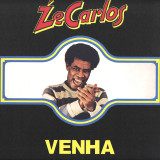
Imagine for a moment that Arthur Russel had learned to speak Brazilian and then moved to Italy to produce an Italo-Disco single back in 1984. There's a good chance it would sound like the Dub version of the B side on this record (Remixed by Bob One). A percussive foundation channeling Latin Freestyle beats sets the groundwork for the chill sunset vibed melody to pleasantly unfold intertwined with the alluring Brazilian lyrics. The recording engineering on this production is clearly at a higher standard (than the usual neighborhood italo disco studio from back in the day) with some of the techniques at play giving it a very balanced and sophisticated sound for its time. The meticulous remastering this re-issue underwent allow for a generous low end with crystal clear mid range – game changing on any well calibrated dance floor sound system.
Search:ze carlos
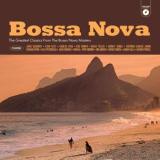
- 1: Joao Gilberto - Chega De Saudade
- 2: Stan Getz - Bim Bom
- 3: Carlos Lyra - Ciúme
- 4: Baden Powell - Improviso Em Bossa Nova
- 5: Silvia Telles - Se É Tarde Me Perdoa
- 6: Quincy Jones - Soul Bossa Nova
- 7: Antônio Carlos Jobim - A Felicidade
- 8: Charlie Byrd - Meditacao
- 9: Ella Fitzgerald - Desafinado
- 10: Joao Donato E Seu Trio - Muito A Vontade
- 11: Maysa - O Barquinho
- 12: Pery Ribeiro - Garota De Ipanema
- 13: Orlandivo - Onde Anda O Meu Amor
- 14: Grant Green - Brazil
- 15: Laura Villa - Corcovado
- 16: Luiz Bonfa - Luzes Do Rio
Mit der neuen Ausgabe der Vintage Sounds Vinyl Collection kehrt ein echter musikalischer Schatz zurück - diesmal ganz im Zeichen der Bossa Nova. Diese liebevoll kuratierte Zusammenstellung präsentiert 16 zeitlose Klassiker, die den unverwechselbaren Klang Brasiliens geprägt haben und bis heute weltweit für entspannten Groove und federleichte Eleganz stehen. Auf dem Album versammeln sich die wichtigsten Künstler einer Ära, die Musikgeschichte geschrieben hat: Joao Gilberto, Baden Powell, Silvia Telles, Quincy Jones und natürlich Antônio Carlos Jobim, dessen Kompositionen bis heute als Herzstück des Genres gelten. Freuen Sie sich auf unvergängliche Perlen wie "Chega De Saudade", "Garota De Ipanema", "Desafinado", "Corcovado", "A Felicidade", "Soul Bossa Nova", "O Barquinho" oder "Meditaçao" - alle sorgfältig ausgewählt und auf hochwertigem Vinyl neu erlebbar gemacht.
- 01: De Alegria Raiou O Dia
- 02: Tudo Era Lindo
- 03: A Cruz
- 04: Hello Mr. Wonder
- 05: Bem Querer
- 06: Pra Que Vou Recordar O Que Chorei
- 07: Zé Marmita
- 08: Bichos E Crianças
- 09: O Metr?
Carlos Dafé (born October 25, 1947) is a singer and songwriter from Rio de Janeiro, recognised as one of the iconic voices of the Brazilian samba-soul era. Born into a family of musicians and trained at the conservatory, he rose to prominence in the 1970s alongside Tim Maia, Cassiano, and Hyldon, shaping the sound of Rio Noir with his warm baritone voice and soulful phrasing. His 1977 album, Pra Que Vou Recordar, became a cult classic among collectors and DJs worldwide, earning him the title of "Prince of Brazilian Soul." Still active today, Carlos Dafé remains an essential reference for artists exploring the boundaries between samba, soul, and MPB (Brazilian Popular Music). Released in 1977, Pra Que Vou Recordar reveals Carlos Dafé at the peak of his art, blending samba-soul, MPB, and the warm groove of the 1970s Rio de Janeiro scene. Surrounded by some of the city's finest musicians, Dafé showcases his baritone voice in deeply melodic arrangements and a series of songs that have become fan favourites. An album imbued with soul and elegance. The sound of BrazilianBlack music at its most sincere and timeless.
Antônio Carlos & Jocafi, das legendäre Duo aus Bahia, dessen Musik seit über fünf Jahrzehnten den Soul Brasiliens verkörpert, kehrt mit einer kühnen neuen Zusammenarbeit zurück: Jazz Is Dead 026. Beto Barreto von Baiana System stellte Adrian Younge und Ali Shaheed Muhammad vor, und die Begegnung war sofort von Magie geprägt. ,Als wir uns zum ersten Mal trafen, war es wie bei einer Familie", erinnern sie sich. Diese Verbundenheit veranlasste Younge und Muhammad, das Duo nach Los Angeles einzuladen, wo sie eine Handvoll Ideen mitbrachten und vor Ort neue Songs schufen - ein intuitiver, improvisatorischer Prozess, der die Philosophie von Jazz Is Dead ausmacht. Mit dieser Veröffentlichung bekräftigen Antônio Carlos & Jocafi ihre kreative Vitalität und bringen gleichzeitig einer neuen Generation ihren zeitlosen bahianischen Geist näher. ,Adrians Liebe zu Brasilien ist größer als die vieler Brasilianer", sagen sie und betonen, wie aufmerksam er zuhört, studiert und die Rhythmen, Geschichten und Gefühle ihrer Kultur vermittelt. Das Ergebnis ist ein Album, das eine Brücke zwischen dem Mercado Modelo in Salvador und der globalen Bühne schlägt und die folkloristischen Traditionen Bahias mit der analogen Seele von Jazz Is Dead verwebt.
- Rala-Bucho
- Canarin Da Alemanha
- Menina Do Toror
- T Com Medo Por Qu?
- Bacax
- Quixod
- Um Abraço No Adrian
- Nunca Mais Feat. Loren Odeon
- Loca Pasin Feat. Loren Odeon
GREEN VINYL[26,01 €]
Antônio Carlos & Jocafi, das legendäre Duo aus Bahia, dessen Musik seit über fünf Jahrzehnten den Soul Brasiliens verkörpert, kehrt mit einer kühnen neuen Zusammenarbeit zurück: Jazz Is Dead 026. Beto Barreto von Baiana System stellte Adrian Younge und Ali Shaheed Muhammad vor, und die Begegnung war sofort von Magie geprägt. ,Als wir uns zum ersten Mal trafen, war es wie bei einer Familie", erinnern sie sich. Diese Verbundenheit veranlasste Younge und Muhammad, das Duo nach Los Angeles einzuladen, wo sie eine Handvoll Ideen mitbrachten und vor Ort neue Songs schufen - ein intuitiver, improvisatorischer Prozess, der die Philosophie von Jazz Is Dead ausmacht. Mit dieser Veröffentlichung bekräftigen Antônio Carlos & Jocafi ihre kreative Vitalität und bringen gleichzeitig einer neuen Generation ihren zeitlosen bahianischen Geist näher. ,Adrians Liebe zu Brasilien ist größer als die vieler Brasilianer", sagen sie und betonen, wie aufmerksam er zuhört, studiert und die Rhythmen, Geschichten und Gefühle ihrer Kultur vermittelt. Das Ergebnis ist ein Album, das eine Brücke zwischen dem Mercado Modelo in Salvador und der globalen Bühne schlägt und die folkloristischen Traditionen Bahias mit der analogen Seele von Jazz Is Dead verwebt.
- 1-: Opening Scene/ The Currency - Antony Genn, Carlos O’connell And Martin Slattery
- 2-: The Immortal Man - Antony Genn,Carlos O’connell And Martin Slattery
- 3-: Ruby’s Scarf - Antony Genn, Martin Slattery And Grian Chatten
- 4-: Nobody’s Son - Amy Taylor,Tom Coll, Antony Genn And Martin Slattery
- 5-: No Heaven No Hell For Duke Shelby - Antony Genn And Martin Slattery
- 6: People Person - Andrew Falkous, Jack Egglestone, Damien Sayell
- 7-: Duke And Beckett Strike A Deal - Antony Genn And Martin Slattery
- 8-: An Intruder In The House - Antony Genn And Martin Slattery
- 9-: Ada And Duke - Antony Genn And Martin Slattery
- 10-: Opium Dreams - Antony Genn, Martin Slattery And Grian Chatten
- 11: Tommy, Kaulo And Zelda - Antony Genn And Martin Slattery
- 12-: Black Dahlia - Grian Chatten, Antony Genn And Martin Slattery
- 13-: Beckett Tests Duke - Antony Genn And Martin Slattery
- 14-: Close The Door - Antony Genn And Martin Slattery
- 15-: Dukes Descent - Antony Genn And Martin Slattery
- 16-: A Hero’s Death - Grian Chatten, Carlos O’connell, Conor Curley, Conor Deegan Iii, Tom Coll
- 17-: Pig Pen - Antony Genn And Martin Slattery
- 18-: Puppet - Grian Chatten, Antony Genn And Martin Slattery
- 19-: A Gun Is No Good - Antony Genn And Martin Slattery
- 20-: Tommy Vs Duke - Antony Genn And Martin Slattery
- 21-: St Elizabeth’s Mortuary - Antony Genn And Martin Slattery
- 23-: Stable Shootout - Antony Genn And Martin Slattery
- 24-: Red Right Hand (Immortal) - Nick Cave, Mick Harvey And Thomas Wydler
- 25-: The Bullet - Antony Genn And Martin Slattery
- 26-: The Coin - Antony Genn And Martin Slattery
- 27-: Teardrop - Girl In The Year Above
- 28-: Romance - Grian Chatten, Carlos O’connell, Tom Coll, Conor Curley, Conor Deegan (Iii)
- 29-: The Map - Antony Genn And Martin Slattery
- 30-: Angel - Grian Chatten, Antony Genn And Martin Slattery
- 31-: The Tunnel - Antony Genn, Martin Slattery And Grian Chatten
- 32-: Medusa - Grian Chatten, Antony Genn And Martin Slattery
- 33-: Tommy Vs Beckett - Carlos O’connell, Antony Genn And Martin Slattery
- 34: Father And Son - Antony Genn And Martin Slattery
- 35-: Hunting The Wren (The Immortal Man Version) - Lankum With Grian Chatten
- 36-: Ellipsis - Grian Chatten, Antony Genn And Martin Slattery
- A1: Hurts And Noises
- A2: Wake Up
- A3: I Don't Wanna Be A Rich
- A4: Terrorist Bad Heart
- A5: Provocate
- A6: Lucifer Sam (Pink Floyd)
- B1: Happy!?
- B2: So Lazy
- B3: I Feel Down
- B4: Stupido
- B5: Guilty
- B6: Caroline Says (Loo Reed)
UILTY RAZORS, BONA FIDE PUNKS.
Writings on the topic that go off in all directions, mind-numbing lectures given by academics, and testimonies, most of them heavily doctored, from those who “lived through that era”: so many people today fantasize about the early days of punk in our country… This blessed moment when no one had yet thought of flaunting a ridiculous green mohawk, taking Sid Vicious as a hero, or – even worse – making the so-called alternative scene both festive and boorish. There was no such thing in 1976 or 1977, when it wasn’t easy to get hold of the first 45s by the Pistols or the Clash. Few people were aware of what was happening on the fringes of the fringes at the time. Malcolm McLaren was virtually unknown, and having short hair made you seem strange. Who knew then that rock music, which had taken a very bad turn since the early 1970s, would once again become an essential element of liberation? That, thanks to short and fast songs, it would once again rediscover that primitive, social side that was so hated by older generations? Who knew that, besides a few loners who read the music press (it was even better if they read it in English) and frequented the right record stores? Many of these formed bands, because it was impossible to do otherwise. We quickly went from listening to the Velvet Underground to trying to play the Stooges’ intros. It’s a somewhat collective story, even though there weren’t many people to start it.
The Guilty Razors were among those who took part in this initial upheaval in Paris. They were far from being the worst. They had something special and even released a single that was well above the national average. They also had enough songs to fill an album, the one you’re holding. In everyone’s opinion, they were definitely not among the punk impostors that followed in their wake. They were, at least, genuine and credible.
Guilty Razors, Parisian punk band (1975-1978). To understand something about their somewhat linear but very energetic sound, we might need to talk about the context in which it was born and, more broadly, recall the boredom (a theme that would become capital in punk songs) coupled with the desire to blow everything off, which were the basis for the formation of bands playing a rejuvenated rock music ; about the passion for a few records by the Kinks or the early Who, by the Stooges, by the Velvet mostly, which set you apart from the crowd.
And of course, we should remember this new wave, which was promoted by a few articles in the specialized press and some cutting-edge record stores, coming from New York or London, whose small but powerful influence could be felt in Paris and in a handful of isolated places in the provinces, lulled to sleep by so many appalling things, from Tangerine Dream to President Giscard d’Estaing...
In 1975-76, French music was, as almost always, in a sorry state ; it was still dominated by Johnny Hallyday and Sylvie Vartan. Local rock music was also rather bleak, apart from Bijou and Little Bob who tried to revive this small scene with poorly sound-engineered gigs played to almost no one.
In the working class suburbs at the time, it was mainly hard rock music played to 11 that helped people forget about their gruelling shifts at the factory. Here and there, on the outskirts of major cities, you still could find a few rockers with sideburns wearing black armbands since the death of Gene Vincent, but it wasn’t a proper mass movement, just a source of real danger to anyone they came across who wasn't like them. In August 1976, a festival unlike any other took place in Mont-de-Marsan – the First European Punk Festival as the poster said – with almost as many people on stage as in the audience. Yet, on that day, a quasi historical event happened, when, under the blazing afternoon sun, a band of unknowns called The Damned made an unprecedented noise in the arena, reminiscent of the chaotic Stooges in their early adolescence. They were the first genuine punk band to perform in our country: from then on, anything was possible, almost anything seemed permissible.
It makes sense that the four+1 members of Guilty Razors, who initially amplified acoustic guitars with crappy tape recorder microphones, would adopt punk music (pronounced paink in French) naturally and instinctively, since it combines liberating noise with speed of execution and – crucially – a very healthy sense of rebellion (the protesters of May 1968 proclaimed, and it was even a slogan, that they weren’t against old people, but against what had made them grow old. In the mid-1970s, it seemed normal and obvious that old people should now ALSO be targeted!!!).
At the time, the desire to fight back, and break down authority and apathy, was either red or black, often taking the form of leafleting, tumultuous general assemblies in the schoolyard, and massive or shabby demonstrations, most of the time overflowing with an exciting vitality that sometimes turned into fights with the riot police. Indeed, soon after the end of the Vietnam War and following Pinochet’s coup in Chile, all over France, Trotskyist and anarcho-libertarian fervour was firmly entrenched among parts of the educated youth population, who were equally rebellious and troublemakers whenever they had the chance. It should also be noted that when the single "Anarchy in the UK" was first heard, even though not many of us had access to it, both the title and its explosive sound immediately resonated with some of those troublemakers crying out for ANARCHY!!! Meanwhile, the left-wing majority still equated punks with reckless young neo-Nazis. Of course, the widely circulated photos in the mainstream press of Siouxsie Sioux with her swastikas didn’t necessarily help to win over the theorists of the Great Revolution. It took Joe Strummer to introduce The Clash as an anti-racist, anti-fascist and anti-ignorance band for the rejection of old-school revolutionaries to fade a little.
The Lycée Jean-Baptiste Say at Porte d’Auteuil, despite being located in the very posh and very exclusive 16th arrondissement of Paris, didn’t escape these "committed" upheavals, which doubled as the perfect outlet for the less timid members of this generation.
“Back then, politics were fun,” says Tristam Nada, who studied there and went on to become Guilty Razors’ frontman. “Jean-Baptiste was the leftist high-school in the neighbourhood. When the far right guys from the GUD came down there, the Communist League guys from elsewhere helped us fight them off.”
Anything that could challenge authority was fair game and of course, strikes for just about any reason would lead to increasingly frequent truancy (with a definitive farewell to education that would soon follow). Tristam Nada spent his 10th and 11th unfinished grades with José Perez, who had come from Spain, where his father, a janitor, had been sentenced to death by Franco. “José steered my tastes towards solid acts such as The Who. Like most teenagers, I had previously absorbed just about everything that came my way, from Yes to Led Zeppelin to Genesis. I was exploring… And then one day, he told me that he and his brother Carlos wanted to start a rock band.” The Perez brothers already played guitar. “Of course, they were Spanish!”, jokes their singer. “Then, somewhat reluctantly, José took up the bass and we were soon joined by Jano – who called himself Jano Homicid – who took up the rhythm guitar.” Several drummers would later join this core of not easily intimidated young guys who didn’t let adversity get the better of them.
The first rehearsals of the newly named Guilty Razors took place in the bedroom of a Perez aunt. There, the three rookies tried to cover a few standards, songs that often were an integral part of their lives. During a first, short gig, in front of a bewildered audience of tough old-school rockers, they launched into a clunky version of the Velvet Underground's “Heroin”. Challenge or recklessness? A bit of both, probably… And then, step by step, their limited repertoire expanded as they decided to write their own songs, sung in a not always very accurate or academic English, but who cared about proper grammar or the right vocabulary, since what truly mattered was to make the words sound as good as possible while playing very, very fast music? And spitting out those words in a language that left no doubt as to what it conveyed mattered as well.
Trying their hand a the kind of rock music disliked by most of the neighbourhood, making noise, being fiercely provocative: they still belonged to a tiny clique who, at this very moment, had chosen to impose this difference. And there were very few places in France or elsewhere, where one could witness the first stirrings of something that wasn’t a trend yet, let alone a movement.
In the provinces, in late 1976 or early 1977, there couldn’t be more than thirty record stores that were a bit more discerning than average, where you could hear this new kind of short-haired rock music called “punk”. The old clientele, who previously had no problem coming in to buy the latest McCartney or Aerosmith LP, now felt a little less comfortable there…
In Paris, these enlightened places were quite rare and often located nex to what would become the Forum des Halles, a big shopping mall. Between three aging sex workers, a couple of second-hand clothes shops, sellers of hippie paraphernalia and small fashion designers, the good word was loudly spread in two pioneering places – propagators of what was still only a new underground movement. Historically, the first one was the Open Market, a kind of poorly, but tastefully stocked cave. Speakers blasted out the sound of sixties garage bands from the Nuggets compilation (a crucial reference for José Perez) or the badly dressed English kids of Eddie and the Hot Rods. This black-painted den was opened a few years earlier by Marc Zermati, a character who wasn’t always in a sunny disposition, but always quite radical in his (good) choices and his opinions. He founded the independent label Skydog and was one of the promoters of the Mont-de-Marsan punk festivals. Not far from there was Harry Cover, another store more in tune with the new New York scene, which was amply covered in the house fanzine, Rock News (even though it was in it that the photos of the Sex Pistols were first published in France).
It was a favorite hang-out of the Perez brothers and Tristam Nada, as the latter explained. “It’s at Harry Cover’s that we first heard the Pistols and Clash’s 45s, and after that, we decided to start writing our first songs. If they could do it, so could we!”
The sonic shocks that were “Anarchy in the UK”, “White Riot” or the Buzzcocks’s EP, “Spiral Scratch” – which Guilty Razors' sound is reminiscent of – were soon to be amplified by an unparalleled visual shock. In April 1977, right after the release of their first LP, The Clash performed at the Palais des Glaces in Paris, during a punk night organised by Marc Zermati. For many who were there, it was the gig of a lifetime…
Of course, Guilty Razors and Tristam were in the audience: “That concert was fabulous… We Parisian punks were almost all dressed in black and white, with white shirts, skinny leather ties, bikers jackets or light jackets, etc. The Clash, on the other hand, wore colourful clothes. Well, the next day, at the Gibus, you’d spot everyone who had been at this concert, but they weren’t wearing anything black, they were all wearing colours.”
It makes sense to mention the Gibus club, as Guilty Razors often played there (sometimes in front of a hostile audience). It was also the only place in Paris that regularly scheduled new Parisian or Anglo-Saxon acts, such as Generation X, Siouxsie and the Banshees, the Slits, and Johnny Thunders who would become a kind of messed-up mascot for the venue. A little later, in 1978, the Rose Bonbon – formerly the Nashville – also attracted nightly owls in search of electric thrills… In 1977, the iconic but not necessarily excellent Asphalt Jungle often played at the Gibus, sometimes sharing the bill with Metal Urbain, the only band whose aura would later transcend the French borders (“I saw them as the French Sex Pistols,” said Geoff Travis, head of their British label Rough Trade). Already established in this small scene, Metal Urbain helped the young and restless Guilty Razors who had just arrived. Guitarist for Metal Urbain Hermann Schwartz remembers it: “They were younger than us, we were a bit like their mentors even if it’s too strong a word… At least they were credible. We thought they were good, and they had good songs which reminded of the Buzzcocks that I liked a lot. But at some point, they started hanging out with the Hells Angels. That’s when we stopped following them.”
The break-up was mutual, since, Guilty Razors, for their part, were shocked when they saw a fringe element of the audience at Metal Urbain concerts who repeatedly shouted “Sieg Heil” and gave Nazi salutes. These provocations, even still minor (the bulk of the skinhead crowd would later make their presence felt during concerts), weren’t really to the liking of the Perez brothers, whose anti-fascist convictions were firmly rooted. Some things are non-negotiable.
A few months earlier (in July 1978), Guilty Razors had nevertheless opened very successfully for Metal Urbain at the Bus Palladium, a more traditonally old-school rock night-club. But, as was sometimes the case back then, the night turned into a mass brawl when suburban rockers came to “beat up punks”.
Back then, Parisian nights weren’t always sweet and serene.
So, after opening as best as they could for The Jam (their sound having been ruined by the PA system), our local heroes were – once again – met outside by a horde of greasers out to get them. “Thankfully,” says Tristam, “we were with our roadies, motorless bikers who acted as a protective barrier. We were chased in the neighbouring streets and the whole thing ended in front of a bar, with the owner coming out with a rifle…”
Although Tristam and the Perez brothers narrowly escaped various, potentially bloody, incidents, they weren’t completely innocent of wrongdoing either. They still find amusing their mugging of two strangers in the street for example (“We were broke and we simply wanted to buy tickets for the Heartbreakers concert that night,” says Tristam). It so happened that their victims were two key figures in the rock business at the time: radio presenter Alain Manneval and music publisher Philippe Constantin. They filed a complaint and sought monetary compensation, but somehow the band’s manager, the skilful but very controversial Alexis, managed to get the complaint withdrawn and Guilty Razors ended up signing with Constantin with a substantial advance.
They also signed with Polydor and the label released in 1978 their only three-track 45, featuring “I Don't Wanna be A Rich”, “Hurts and Noises” and “Provocate” (songs that exuded perpetual rebellion and an unquenchable desire for “class” confrontation). It was a very good record, but due to a lack of promotion (radio stations didn’t play French artists singing in English), it didn’t sell very well. Only 800 copies were allegedly sold and the rest of the stock was pulped… Initially, the three tracks were to be included on a LP that never came to be, since they were dropped by Polydor (“Let’s say we sometimes caused a ruckus in their offices!” laughs Tristam.) In order to perfect the long-awaited LP, the band recorded demos of other tracks. There was a cover of Pink Floyd's “Lucifer Sam” from the Syd Barrett era – proof of an enduring love for the sixties’ greats –, “Wake Up” a hangover tale and “Bad Heart” about the Baader-Meinhof gang, whose actions had a profound impact on the era and on a generation seeking extreme dissent... On the album you’re now discovering, you can also hear five previously unreleased tracks recorded a bit later during an extended and freezing stay in Madrid, in a makeshift studio with the invaluable help of a drummer also acting as sound engineer. He was both an enthusiastic old hippie and a proper whizz at sound engineering. Here too, certain influences from the fifties and sixties (Link Wray, the Troggs) are more than obvious in the band’s music.
Shortly after a final stormy and rather barbaric (on the audience’s side) “Punk night” at the Olympia in June 1978, Tristam left the band ; his bandmates continued without him for a short while.
But like most pioneering punk bands of the era, Guilty Razors eventually split up for good after three years (besides once in Spain, they’d only played in Paris). The reason for ceasing business activities were more or less the same for everyone: there were no venues outside one’s small circuit to play this kind of rock music, which was still frightening, unknown, or of little interest to most people. The chances of recording an LP were virtually null, since major labels were only signing unoriginal but reassuring sub-Téléphone clones, and the smaller ones were only interested in progressive rock or French chanson for youth clubs. And what about self-production? No one in our small safety-pinned world had thought about it yet. There wasn’t enough money to embark on that sort of venture anyway.
So yes, the early days of punk in France were truly No Future!
- A1: Lex Lugor
- A2: I Was Forgotten
- A3: Kick A Dope Verse Feat Bobbito
- A4: Mommy
- A5: You're Late Feat Percee-P
- B1: Rhymes I Sniff A K.a Carlos Died
- B2: Keep On Feat Bobbito
- B3: How The Fuck You Get A Deal
- B4: Kick A Dope Verse (Battered Baby Seal Remix)
- C1: Slaves
- C2: Mc's Out To Murder The World
- C3: Return To Zero
- C4: Hawaii Feat Bobbito
- C5: Break Em Down
- C6: Hot Crib Promo Feat Cage
- D1: Cold Peein' On Em, Remix
- D2: Lazy Woman
- D3: Your Time Is Now
- D4: Pull The Trigger And Step
- D5: Hot Crib Promo Pt 2 Feat. Cage
- D6: Stretch And Bob Buggin' Out
- A1: Lex Lugor
- A2: I Was Forgotten
- A3: Kick A Dope Verse Feat Bobbito
- A4: Mommy
- A5: You're Late Feat Percee-P
- B1: Rhymes I Sniff A K.a Carlos Died
- B2: Keep On Feat Bobbito
- B3: How The Fuck You Get A Deal
- B4: Kick A Dope Verse (Battered Baby Seal Remix)
- C1: Slaves
- C2: Mc's Out To Murder The World
- C3: Return To Zero
- C4: Hawaii Feat Bobbito
- C5: Break Em Down
- C6: Hot Crib Promo Feat Cage
- D1: Cold Peein' On Em, Remix
- D2: Lazy Woman
- D3: Your Time Is Now
- D4: Pull The Trigger And Step
- D5: Hot Crib Promo Pt 2 Feat. Cage
- D6: Stretch And Bob Buggin' Out
- A1: Burns & Tubbs - Where Were U In 92?
- A2: ?-Ziq - 4Am
- A3: Arthur Verocai - Caboclo
- A4: Auntie Flo - Green City
- B1: Software - Present Voice
- B2: Point Zero - Coastal
- B3: Nina Simone - Come Ye
- B4: N.y. House'n Authority - Apt. 3B
- C1: Mark Barrott - When Devils Become Gods
- C2: Eric Serra - Protect Life
- C3: Mazzy Star - Fade Into You
- D1: Boards Of Canada - Open The Light
- D2: Aqua Bassino - When The Bird Flies
- D3: Talk Talk - Wealth
- D4: Yukihiro Takahashi - Present
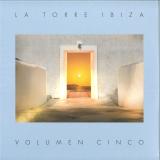
To mark a decade as one of Ibiza's most iconic musical sanctuaries, Hostal La Torre announces 'La Torre Ibiza Volumen Cinco', a new compilation curated by long-standing residents Pete Gooding and Mark Barrott. Released June 27 on CD and double vinyl, the 15-track collection captures the spirit of the venue that has come to define the golden-hour soundtrack ofthe island's west coast.
Since opening in 2015, La Torre has established itself as a bastion of Balearic culture-set high on the cliffs overlooking the sea, where music flows with the sun rather than the clock. The fifth volume in the celebrated La Torre series is a journey through Brazilian soul, ambient electronica, classic deep house, orchestral minimalism, and dusk-lit Detroit techno-an emotional arc designed to mirror the progression of an evening at the venue.
From timeless icons like Nina Simone, Mazzy Star, Talk Talk (with their Spirit of Eden closer "Wealth"), and Boards of Canada, to boundary-pushers like Auntie Flo, Eden Burns, and µ-Ziq (aka Mike Paradinas), Volumen Cinco weaves together deep-rooted classics and leftfield discoveries. Mark Barrott contributes a brand-new exclusive, 'When Devils Become Gods', while the compilation closes on a rare gem from Yellow Magic Orchestra's Yukihiro Takahashi. Also includedis Software's 'Present Voice', a quietly powerful tribute to the late José Padilla, the spiritual architect of Ibiza's sunset sound.
Volumen Cinco is more than just a listening experience-it's a tribute to La Torre's ethos: open-hearted, genre-fluid, rooted in place and time. Each track is carefully sequenced to evoke a feeling, a shift in light, or a shared memory beneath the fading sun.
Over the years, La Torre has welcomed some of the most influential names in Balearic and electronic music, from José Padilla, Alfredo, and Jon Sa Trinxa to DJ Harvey, David Holmes, Lovefingers, Heidi Lawden, Wolf Müller, Don Carlos, and Phil Mison. With each summer season and each release, the venue continues to build a musical legacy that has earned critical acclaim from Resident Advisor, Phonica Records, Juno, and Piccadilly Records, regularly featuring in their year-end lists.
As Test Pressing once wrote, "La Torre is not a party, it's a place of pilgrimage. It feels almost sacred." That spirit resonates deeply in this anniversary compilation-a celebration of music, community, and connection that spans a decade.
La Torre Ibiza Volumen Cinco is dedicated to the artists, friends, collaborators, and guests who've shaped its story so far-and to everyone who continues to gather, listen, and lose track of time as the sun slips beneath the horizon.
- A1: Wulomei – Takoradi
- A2: Conjunto Ana N’gola – Puxa Odoette
- A3: Zeal Onyia & His Music – Egbe Ne Lueli
- A4: Los Corraleros De Majagual – Remanga
- A5: Aquí Suena – Abel Llinas
- B1: Peacocks International Highlife Band – Igbala Oso
- B2: Pedro Lima Et L’orchestre Os Leonenses – Philomene
- B3: The Shoe Laces – Isitha Somunthu
- B4: Claudio Y Su Combo – Como Sea
- B5: Pa’ Entro Mi Gente – Ángelo El Auténtico
- C1: Zaire – I’m Tired Of Living In The Shack
- C2: Afous - Anavdhou (Edna Martinez Extended Edit)
- C3: Zaïko Langa Langa – La Tout Neige (Edna Martinez Edit)
- C4: Erick Cosaque Et Les Voltage 8 – Ajaccio (Edna Martinez Remix)
- C5: Picó Sin Fronteras – Abel Llinas
- D1: La Calandria – Como Duele Una Traición
- D2: African System International – Amina
- D3: Carlos Díaz Y Su Orquesta – Tres Meses De Vida
- D4: No Puedes Conmigo – Ángelo El Auténtico
Berlin-based Colombian DJ, producer, and curator Edna Martinez presents a sonic journey into the electrifying world of Picó—the vibrant and dynamic sound system culture that has defined the streets of Cartagena and Barranquilla for decades. More than just a musical movement, Picó is a way of life, a bold expression of identity, community, and resistance. From its roots in the working-class neighbourhoods of Colombia’s Caribbean coast to its deep connections with Africa and the Caribbean, this compilation captures the pulse of a culture where music is played at full volume, rhythms travel across oceans, and dance is both a form of celebration and storytelling. For those unfamiliar, Picós are hand-painted sound systems, often adorned with dazzling colours and striking imagery, each with its own name and sonic identity. These mobile discos became the heart of neighbourhood bailes, where the sounds of champeta, highlife, soukous, mbaqanga, zouk, soca, and cumbia would turn every street corner, market, and terrace into a dancefloor. Initially built by local craftsmen using modified speaker components, Picós became legendary for their powerful bass and exclusivity, with DJs sourcing rare vinyl from African and Caribbean ports and rebranding them with unique piconemas—new names adapted to local slang, making the tracks instantly recognisable within the community.
This compilation brings together a carefully curated selection of these rare and sought-after tracks, tracing the deep-rooted musical exchanges between Colombia, West and Central Africa, and the Caribbean. Featuring artists like Los Corraleros De Majagual, Peacocks International Highlife Band, Pedro Lima, Zaïko Langa Langa, and more, the album also includes edits by Edna Martinez, reimagining these timeless rhythms for contemporary audiences while staying true to their original spirit.
Strut presents ‘Picó! Sound System Culture From The Colombian Carribbean’ across 2LP Vinyl, 1CD & Digital focusing on a celebration of the raw, undiluted energy of Picó culture. Through Edna Martinez’s curation, and extensive liner notes, this compilation offers a powerful and authentic glimpse into one of the most vibrant musical traditions of the Colombian Caribbean
“Raggamuffin Soldier” was recorded at Channel One Recording Studio in 1983 with Soldgie as engineer and a rhythm track played by Jolly Stewart and Daniel “Axeman” Thompson. Growing up in the Waterhouse neighborhood of Kingston, Jolly Stewart obviously developed this singing style and gave us a killer early digital dancehall missile with pure conscious lyrics “Raggamuffin soldier, big ina your area...me no deal with badness, me nah deal inna war, me is a raggamuffin soldier...mi raggamuffin ina foreign, raggamuffin sit down pon di riddim...how you know the raggamuffin? Me no wear no gold chain, me no wear no gold ring...”. “Raggamuffin Soldier” was produced by Fitzroy Peterkin who also produced the digital lover tune "Angie".
The Waterhouse style is a particular style of singing that emerged in the late seventies and early eighties within the Jamaican reggae scene. The Waterhouse style is commonly described as a plaintive, groaning and fluctuating vocal style, often nasal and strident, characteristics that will give it a sound that is distinct from the rest of the reggae singers. The commonly recognized founders of the Waterhouse style are the singers Michael "Mykal" Rose, Junior Reid and Don Carlos. The name derives from the famous neighborhood of the same name in Kingston, the capital of Jamaica, the place where the three pioneers were born and emerged. The Waterhouse style influenced many dancehall reggae artists of the eightiesvsuch as Tenor Saw, Half Pint, Nitty Gritty, Anthony Red Rose, King Kong, Yami Bolo, Andrew Bees...
Vincent Stewart aka “Jolly Man” is a reggae singer from Kingston 11, born december 16 1960 at Hunts Bay Lane, 4 Miles, Jamaica. Jolly started singing at age 13, he was placed in an approve School for 3 years and at the age of 16 he was released.
He started his musical career in the late 70's with Ossie Thomas, Phllip Morgan and Tristan Palmer from Black Solidarity label. Jolly Stewart recorded his first song entitled "Money Pyaka" on the classic "Pretty Looks" riddim which was recorded for Oswald Thomas on Ganja Farm label and released in 1979. Tristan Palmer who has another tune "Disappointed Lover" on the same riddim backed by The Soul Syndicate made the link with Jolly Stewart because he liked his style of song writting.
Jolly Stewart wrote three songs for Black Solidarity label: "Collie Man", "Bad Minded" and "Symbol Of Justice". All three tracks were covered by Triston Palmer. As a song writter, Jolly Stewart is behind Yami Bolo's hit on Stalag riddim “When A Man Is In Love” released on Winston Riley's label Techniques.
Jolly Stewart then decided to move on with his singjay career. He ventured to Tuff Gong studio where he met two producers. One was Prince Jazzbo from Ujama label, and the other was John John who owned the Bun Fi Bun label. He recorded "Praise jah" for Ujama and "Poverty Rush" for Bun Fi Bun. Still not satisfied with how his career was heading, he moved on to Lannaman's Preparatory School. There he learned to play guitar from a man named Fred McMurray aka Faf and Donald Jackson. Later he learned to play the keyboards by watching other musicians.
In the late 80's and early 90's, Jolly Stewart recorded many songs for various labels such as “Do Me Like So” for Bunny Gemini's label “Bun Gem Records” in 1987, “Late Last Night” and “War” for producer Zelma Rust and his label Myotta Ruff.
He also recorded for Augustus Pablo on his label Rockers International just before he died in the late 90's but we never heard about this release so probably Addis Pablo have it on old master tapes in the Rockers International archives....only Jah knows!
DJ Support: David Morales, Louie Vega, Hector Romero, Dave Lee ZR,Tony Humphries, Kevin Yost, Jimpster, Atjazz, Ron Trent, Dj harvey.
Considered the Master of Italo piano house, Don Carlos is up next on friends Micky More & Andy Tee's label Groove Culture Deep with an EP of Finest Classic Piano house.Features the amazing, warmup Classic House of ‘Italian Paradise Piano’ followed by the Deep heater ‘Soul Emotion' and The Garage Late-night ‘Good Emotion’(Vocal Mix) on the A-side. The flip offers ‘Paranoia’(Piano Edit) and ‘Good Emotion’(Paranoia Mix) both tracks perfectly capture the zeitgeist of house music's golden era of late 80’s early 90’s.
“Sainen Hildo” is an album based on Miguel’s original compositions, recomposed and rearranged for accordion and voice by the two composers. Using the natural resonance and harmonics of these two instruments to influence their introspective interactions, resulting in evolving drones and tones and puzzling percussive outbursts. Unusual and at times unsettling, they manage to create a calibrated, deep and complex exploratory universe of ambience and drone where listening becomes a ritual. Highest recommendation for fans of Pauline Oliveros, Eliane Radigue or Phill Niblock.
Garazi Navas (accordion + voice). Original compositions by Miguel A. García. Recomposed and rearranged by Garazi Navas & Miguel A. García. Recorded by Ibon Rg at Azkuna Zentroa (Contemporary Art Centre in Bilbao) in June 2022, as part of the associated artists program. Mixing and mastering by Juan Carlos Blancas. Compiled by Mikel Acosta.
Acrylic painting on heavyweight paper by Maite Mugerza Ronse. Limited edition of 300 black vinyl LP’s housed in a coloured matt laminated cover. Released by Hegoa Diskak.
Dopelganger is the project in collaboration between classically trained accordion player and singer Garazi Navas (Usansolo, Bizkaia-Biscay, 1995) and Miguel A. Garcia (Vitoria-Gasteiz), an artist living in Bilbao with an extensive career in the fields of experimental music and sound art.
Garazi Navas / Classically trained at Musikene School of Music in San Sebastian with a masters in traditional music, Garazi, is a restless accordionist who, despite her young age, has taken part in a multitude of projects in theater, poetry, ballet, art installations and even playing with the Bilbao Symphony Orchestra. Her works are a personal interpretation of the close relationship which she feels exists between cutting-edge and traditional music.
Miguel A. García / Has performed extensively in Europe, America and Asia, both as a solo artist, improvising and in multiple ensembles. He has collaborated with dozens of artists (Al Karpenter, Jean Luc Guionnet, Sébastien Branche...) in studio and live, and appeared in more than a hundred albums. At the same time, he is organizer and curator of events, being founder of Club Le Larraskito, director of Zarata Fest, and part of the coordination of the cycle Hotsetan at Azkuna Zentroa itself
- A1: The Weather
- A2: House Music
- A3: Undercommons
- A4: Olde Joy
- A5: New Joy
- A6: Arms, Armor
- A7: Fission For Drums, Piano And Voice
- A8: Love Letter Zzz
- A9: Half-Life
- B1: The Great Wedge
- B2: I Hear A New World
- B3: No! (Geiger Dub)
- B4: Destroyer X
- B5: Voyager
- B6: Divider
- B7: Challenger
- B8: Decades, Castle Romeo
- B9: Us (Tower Of Love)
white LP[27,31 €]
Der multidisziplinäre Künstler Jasper Marsalis, bekannt unter seinem Künstlernamen Slauson Malone 1, kündigt sein neues Album EXCELSIOR als Debüt für das Kultlabel Warp Records an. Unter den Juwelen dieses Albums befinden sich die Singles NEW JOY, eine faszinierende Erkundung des Vergnügens, das aus der Unterwerfung entsteht, und VOYAGER, die von der Zeit der Liebe und Freude nach Veröffentlichung seines von der Kritik gefeierten 2019er Albums 'A Quiet Farwell, 2016-2018 (Crater Speak)' erzählt, bevor er nach LA zog.
Das Wort EXCELSIOR verkörpert den ewigen Aufstieg. Slauson Malone 1 stellt es sich als metaphorisches Schwert vor, das im Besitz von jemandem unaufhörlich wächst, bis es in einem großen Finale die Erde spaltet. Diese Metapher wird zu seinem Objektiv, um alle Facetten der Männlichkeit mit einer neuen Klarheit zu erforschen, während er seine eigenen gelebten Erfahrungen anhand von Songs und Bewegungen auf dem gesamten Album hinterfragt, die von allem inspiriert sind, von der Grammy-preisgekrönten Komponistin Wendy Carlos bis hin zu den Ähnlichkeiten zwischen dem Ende der Liebe und der nuklearen Halbwertszeit. EXCELSIOR hat die Form einer Sammlung persönlicher Essays mit Vignetten, die ineinandergreifen und eigenständig sind, aber letztendlich dem Zweck dienen, Slauson Malone 1s bislang persönlichstes und fesselndstes Musikwerk zu bilden.
- A1: The Weather
- A2: House Music
- A3: Undercommons
- A4: Olde Joy
- A5: New Joy
- A6: Arms, Armor
- A7: Fission For Drums, Piano And Voice
- A8: Love Letter Zzz
- A9: Half-Life
- B1: The Great Wedge
- B2: I Hear A New World
- B3: No! (Geiger Dub)
- B4: Destroyer X
- B5: Voyager
- B6: Divider
- B7: Challenger
- B8: Decades, Castle Romeo
- B9: Us (Tower Of Love)
black LP[30,21 €]
Der multidisziplinäre Künstler Jasper Marsalis, bekannt unter seinem Künstlernamen Slauson Malone 1, kündigt sein neues Album EXCELSIOR als Debüt für das Kultlabel Warp Records an. Unter den Juwelen dieses Albums befinden sich die Singles NEW JOY, eine faszinierende Erkundung des Vergnügens, das aus der Unterwerfung entsteht, und VOYAGER, die von der Zeit der Liebe und Freude nach Veröffentlichung seines von der Kritik gefeierten 2019er Albums 'A Quiet Farwell, 2016-2018 (Crater Speak)' erzählt, bevor er nach LA zog.
Das Wort EXCELSIOR verkörpert den ewigen Aufstieg. Slauson Malone 1 stellt es sich als metaphorisches Schwert vor, das im Besitz von jemandem unaufhörlich wächst, bis es in einem großen Finale die Erde spaltet. Diese Metapher wird zu seinem Objektiv, um alle Facetten der Männlichkeit mit einer neuen Klarheit zu erforschen, während er seine eigenen gelebten Erfahrungen anhand von Songs und Bewegungen auf dem gesamten Album hinterfragt, die von allem inspiriert sind, von der Grammy-preisgekrönten Komponistin Wendy Carlos bis hin zu den Ähnlichkeiten zwischen dem Ende der Liebe und der nuklearen Halbwertszeit. EXCELSIOR hat die Form einer Sammlung persönlicher Essays mit Vignetten, die ineinandergreifen und eigenständig sind, aber letztendlich dem Zweck dienen, Slauson Malone 1s bislang persönlichstes und fesselndstes Musikwerk zu bilden.
- A1: Axe Para O Bara (Feat Mestre Antonio Carlos De Xango)
- A2: Cade Ze (Feat Rosangela Macedo)
- A3: Labuta (Feat Russo Passapusso & Roberto Barreto)
- A4: Amor (E Revolucao) (E Revolucao)
- A5: Recado De Vovo (Feat Rosangela Macedo)
- B1: Ilu De Oya (Feat Alexandre Garnize)
- B2: Sapateado De Catita (Feat Felipe Cordeiro)
- B3: Na Contencao De Jah (Feat Jeru Banto)
- B4: Congo Rei (Feat Jota 3)
- B5: Recanto Ii (Feat Isaar)
- C1: Axe Para O Bara (Feat Mestre Antonio Carlos De Xango & Lucas Dan - Berra Boi Remix)
- C2: Cade Ze (Feat Rosangela Macedo - Nirso Remix)
- C3: Amor (E Revolucao) (E Revolucao)
- C4: Labuta (Feat Russo Passapusso & Roberto Barreto - Lucio K Remix)
- D1: Ilu De Oya (Feat Alexandre Garnize - Dengue Dengue Dengue Congobow Remix)
- D2: Recado De Vovo (Feat Rosangela Macedo - Psilosamples Remix)
- D3: Na Contencao De Jah (Feat Jeru Banto - Buguinha Adubada Remix)
- D4: Congo Rei (Feat Jota 3 - Victor Rice Remix)
- D5: Recanto Ii (Feat Isaar, Chico Correa & Roberto Barreto - Lucas Dan Remix)
"Speaker-bangin' before all else" (XLR8R) with "some of the smartest ears in the game" (Chicago Reader), "few can make a room explode like Maga Bo" (Flavorpill). A purveyor of "international sonic weaponry and rhythm knowledge" (Rough Trade), the Rio de Janeiro-based DJ/producer is a veteran pioneer of global bass music, with 20+ years of dedicated experience searching out unheralded music bumping from speaker-boxes in the world's grittiest corners, from Addis Ababa to Zanzibar.
Simultaneously, Amor (É Revolução), the new album from Maga Bo, is statement of hope through change, a call to arms, a lament, a proclamation of resistance, a shout of resilience, an exuberant yell and a deep therapeutic groove all at once. The result of a multi-decade search for rhythmic common denominators with an Afro-Brazilian-centric focus. It joins raw, natural, acoustic timbres and textures with the grit, weight and power of modern electronic production. It is where heavy dub bass pulsations sync with rhythms coaxed from drums heated over an open flame and ancestral voices rise and fall in call and response.
Recorded in Rio de Janeiro, Salvador, Recife, Arcoverde and Porto Alegre, the album counts amongst many illustrious talents from the Brazlian music scene, long time collaborators, Russo Passapusso and Roberto Barreto of Baianasystem, the legendary singer, BNegão and São Paulo based, Rosângela Macedo. Grupo Bongar and Samba de Coco Raízes de Arcoverde provide backing percussion and vocals. It also brings newer collaborators, from Recife, the amazing voice of Isaar, the fabulous guitarist, Felipe Cordeiro, as well as long-time friends, ex-Digitaldubs, Jeru Banto and Jota 3, the Mestre of Tambors de Olokun, Alexandre Garnizé, on percussion, fellow nomadic electronic roots explorer, Teleseen and the rock solid percussionist from Salvador, Icaro Sá.
- Joao Gilberto - Bim Bom
- Elizete Cardoso - Outra Vez
- Luiz Bonfa - Copacabana
- Antônio Carlos Jobim & Roberto Paiva - Eu E O Meu Amor
- Joao Donato - Tim-Dom-Dom
- Carlos Lyra - Você E Eu (You And Me)
- Baden Powell - Improviso Em Bossa Nova
- Salinas - Tenha Fé, Pois Amanha Um Lindo Dia Vai Nascer
- Stan Getz & Charlie Byrd - Desafinado
- Sérgio Mendes - Oba-La-La
- Pery Ribeiro - Garota De Ipanema
- Orlandivo - Onde Anda O Meu Amor
- Shorty Rogers & His Giants - Chega De Saudade (No More
- Sylvia Telles - Corcovado
- Grant Green - Brazil
- Maysa - Agua De Beber
- Quincy Jones & His Orchestra - Soul Bossa Nova
- Trio Mocoto - Nao Adianta
- David K (Feat. Rolando Faria) - Mas Que Nada (David K R
- Tom & Joy - Para Bailar
- Seu Jorge - Carolina
- Salome De Bahia - Outro Lugar (Edit)
- Carlinhos Brown - Brasil Brasil (Ole Ole)
- Caetano Veloso - Hino Da Bahia
- Suba (Feat. Cibelle) - Felicidade
- Marcelinho Da Lua (Feat. Seu Jorge) - Cotidiano (Buzzin
- Bebel Gilberto - August Day Song
- Negrocan - Cada Vez (Grant Nelson Vocal Mix Edit)
Mit Brazil Greatest Hits veröffentlicht Wagram eine musikalische Reise durch die farbenfrohe Welt Brasiliens - von zeitlosen Bossa-Nova-Klassikern bis zu modernen Latin-Grooves. Auf zwei sorgfältig zusammengestellten Vinyl-LPs versammeln sich legendäre Aufnahmen und internationale Club-Favorites, die den Spirit von Rio, die Leichtigkeit des Samba und den warmen Sound des Tropenlands einfangen. Die erste LP präsentiert ikonische Stimmen und Instrumentalstücke der goldenen Bossa-Nova-Ära - voller Eleganz, Rhythmus und Melodie. Auf LP 2 geht es moderner und tanzbarer weiter: brasilianische Funk-Einflüsse, Remix-Perlen und energiegeladene Tracks zeigen, wie lebendig und vielfältig die Musikszene Brasiliens bis heute ist.
- Wood
- Ascendance
- Garage
- Bakunawa
- Searching
- Tristan Junk (Feat. Jj Whitefield)
- Café San Marco
- Cherry Pie
- The Green Beauty Of The Broken World
- Cabanes/Castellon
- Ibdiss
- Free Your Eyes
- King Of Thieves
- Tiger
- Sergio St. Carlos
Shake Stew ist mehr als eine Band - sie ist ein Ereignis. Seit ihrer Gründung durch Bassist und Komponist Lukas Kranzelbinder umweht die Formation ein Hauch von Magie und Energie, der sich live in eine hypnotische Kraft verwandelt. Zwei Schlagzeuge, zwei Bässe und drei Bläser erzeugen einen Sound, der zwischen tranceartigen Basslinien, eruptiven Grooves und fragilen Klanggebilden oszilliert. Die Jury des Preises der deutschen Schallplattenkritik sprach von "etwas Kultischem", das den Jazz bereichert, während MOJO begeistert: "Shake Stew twists, blisters and burns like a fevered dream!" Ob im Club oder im Wiener Konzerthaus - die Band zieht alle in ihren Bann. Mit dem Jubiläumsprojekt TEN ONE TWO öffnet sich Shake Stew noch weiter: neue Klangfarben, freie Improvisationen, Kooperationen und eine Besetzung, die mit Yvonne Moriel eine aufregende Stimme integriert. Nach zehn Jahren, zahllosen Konzerten und internationalen Auszeichnungen ist klar: Shake Stew definiert Jazz als lebendige Kunstform - kompromisslos, visionär und voller Dynamit.
- A1: Chris Madem - Island
- A2: Nato - Macondo
- A3: Sahalé - Kaaleen
- A4: José Solano - Corazon De Verano
- B1: Larss / Papa - Mayan - Feat Jo Paciello
- B2: Sorä / Munaylayt / Zeina Aftimos - Ya Helli
- B3: D-Compost - Sunrise
- B4: Ablozé - Feel
- C1: Dole / Kom - Mind Up
- C2: Carlos Campos / Ravin - Danse Pour Moi
- C3: Marsey / Blue Eyes - Gone
- C4: Paul Losev - Milkyway - - (Edit)
- D1: Deni / Boterita - Paloma Blanca
- D2: Satori - Believer - Feat Vieux Farka Touré
- D3: Devs - Singere - - (Extended Mix)
- D4: Betrieb - Sonsuz - - (Sinan Kaya's Eastern Remix)
Wiener Philharmoniker & Yannick Nézet-Séguin
Neujahrskonzert 2026 / New Year's Concert 2026 / Concert du...
Erstmals steht Yannick Nézet-Séguin beim Neujahrskonzert am Pult der Wiener Philharmoniker. Der Kanadier, schon seit Langem dem Orchester verbunden, ist Chef der Metropolitan Opera in New York und des Philadelphia Orchestra. Er bringt im Goldenen Saal des Wiener Musikvereins neben populären Titeln wie "Rosen aus dem Süden" oder der "Fledermaus-Quadrille" fünf Novitäten, die dort erstmals erklingen - darunter auch Kompositionen der US-Amerikanerin Florence Price (1887-1953) und von Josephine Weinlich (1848-1887), die das erste europäische Damenorchester gegründet hatte. Das Neujahrskonzert ist eines der größten Events der klassischen Musik; es wird in über 150 Länder übertragen und hat über 150 Millionen Zuschauerinnen und Zuschauer.
Das jährliche Neujahrskonzert in Wien ist seit mehr als acht Jahrzehnten, seit 1939, ein großes Ereignis, das im Fernsehen und im Radio übertragen wird und Millionen von Zuschauern in über 90 Ländern der Welt erreicht. Das Konzert wurde bisher von weltberühmten Dirigenten wie Herbert von Karajan, Lorin Maazel, Claudio Abbado, Carlos Kleiber, Zubin Mehta, Riccardo Muti, Nikolaus Harnoncourt, Seiji Ozawa, Mariss Jansons, Franz Welser-Möst, Gustavo Dudamel und anderen geleitet. Als musikalische Botschafter Österreichs senden die Wiener Philharmoniker den Menschen in aller Welt einen Neujahrsgruß im Geiste der Hoffnung, der Freundschaft und des Friedens mit beschwingter und unbeschwerter und zugleich nostalgischer und tiefgründiger Musik aus dem großen Repertoire der Familie von Johann Strauß und seiner Zeitgenossen.
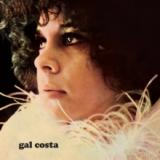
- A1: Não Identificado (Caetano Veloso)
- A2: Sebastiana (Rosil Cavalcanti)
- A3: Lost In The Paradise (Caetano Veloso)
- A4: Namorinho De Portão (Tom Zé)
- A5: Saudosismo (Caetano Veloso)
- A6: Se Você Pensa (Roberto Carlos-Erasmo Carlos)
- B1: Vou Recomeçar (Roberto Carlos-Erasmo Carlos)
- B2: Divino, Maravilhoso (Caetano Veloso-Gilberto Gil)
- B3: Que Pena (Êle Já Não Gosta De Mim) (Jorge Ben)
- B4: Baby (Caetano Veloso)
- B5: A Coisa Mais Linda Que Existe (Gilberto Gil-Torquato Neto)
- B6: Deus É O Amor (Jorge Ben)
Gal Costa’s 1969 self-titled album stands as one of the
boldest statements of the Tropicália movement. Blending
psychedelic rock, experimental arrangements, and Brazilian
popular music with fearless originality, the album showcases
Costa’s powerful, expressive voice at its most adventurous.
Featuring contributions from major Tropicália figures such as
Caetano Veloso and Gilberto Gil, its mix of sweetness and
sonic daring helped redefine contemporary Brazilian music,
cementing Gal Costa as a groundbreaking and influential artist.
Dieses spezielle Vinyl-Boxset enthält den kompletten Original-Soundtrack des Spiels sowie die DLC-Musik für Stir of Dawn und Wounds of Eventide. Der 4LP-Schuber in limitierter Auflage ist mit einem maßgeschneiderten Coverartwork von Diego Minguez sowie bedruckten Innenhüllen mit Artwork von Jesús Campos „Nerkin“ verziert.
Blasphemous präsentiert eine alptraumhafte Variante des mystischen Katholizismus und der gotischen Architektur der Heimatstadt von The Game Kitchen, Sevilla. Das angesehene Metroidvania-Spiel ist voll von verdrehter religiöser Ikonografie und esoterischer Symbolik. Die eindringliche Musik des Komponisten Carlos Viola ist untrennbar mit der einzigartigen Atmosphäre des Spiels verbunden. Er übersetzt Themen wie Leid, Schuld und Einsamkeit in eine tief emotionale Musik, die von der Tragödie zur Transzendenz drängt.
Der Soundtrack beschwört ein spezifisches Gefühl von Ort und Zeit herauf und schöpft aus den Traditionen der spanischen Folkgitarre, mittelalterlichen Chorälen und orchestralen Verzierungen, um eine Art okkulte Kammermusik zu schaffen. Geschmeidige Streicher und schwebender Gesang kreuzen Wellen kolossaler Drones, bevor sie wieder im Morast versinken. Hypnagogische Passagen pulsieren mit übernatürlicher Kraft, während klagende, beunruhigende Klavierstücke für Momente des Alleinseins inmitten des Gemetzels sorgen. Violas prächtige Kompositionen werden durch Beiträge der Instrumentalisten Sergio Carmona (Bass) und Manuel Soto "Noly" (Gitarre) sowie durch die mitreißenden Gesangseinlagen von Nadia Torres und Dolores Berg unterstützt.
Wie das Spiel selbst ist auch die Musik von Blasphemous beunruhigend und von Leid durchdrungen, aber dennoch seltsam schön und fesselnd. Schnappen Sie sich Ihr Schwert und Ihren Rosenkranz, bevor Sie eintauchen - Sie werden beides gebrauchen können.
- Fyordh - Malabar
- Gotama - Shanti
- Eastern Wizard - El Sueno Santo
- Trabbart, Sahraaoui - Memories
- Rameff - Cosmic Bindi
- Majnoon, Zeynel - Pinarbasi
- Fausto Messina - Pekmez
- Raw Main - Above The Hil
- Tamer Elderini - Monaya
- Bluepaper, Okassus - Exertion
- Carlos Campos, Ravin - Mysterio
- Dj Phellix & Idin Gorji - Aman (Original Mix)
- Vs Prjct - Pianissimo
- Ephlum & Stephane Salerno - Upendo
- Omary - Motherland
- Nora B & Determind - Nho Nguoi Yeu (Original Mix)
Winter Sessions in Courchevel - compiled by DJ Ravin Bereit für den Winter? Mit Winter Sessions in Courchevel präsentiert der legendäre DJ Ravin eine exklusive Doppel-Compilation, die den Soundtrack für stilvolle Höhenflüge liefert - von glamourösen Nächten in den Alpen bis zu entspannten Après-Ski-Momenten. Die Auswahl vereint feinste World Lounge, Electro-Chill und festliche Deep Vibes - perfekt abgestimmt auf die Atmosphäre des Luxus-Skiorts Courchevel. Mit dabei sind renommierte Buddha-Bar-Künstler wie Majnoon, VS Prjct, DJ Phellix, Souhail Artwork, Omary, Carlos Campos und viele mehr. Ob auf exklusiven Partys oder in ruhigen Stunden am Kamin - diese Musik schafft Räume für Emotion, Eleganz und Eskapismus. Jeder Track ist ein Fenster in eine Welt zwischen Tradition und Moderne, zwischen globaler Klangästhetik und alpinem Chic.
Auf Carlos Dafé JIDO25 bekräftigt Carlos Dafé sein Vermächtnis und wagt sich gleichzeitig in unbekanntes musikalisches Terrain vor. Das Album zelebriert Dafés außergewöhnliche Fähigkeit, Vergangenheit und Gegenwart zu verbinden, indem er Soul, Samba und Funk mit zeitgenössischen Experimenten verschmilzt. Seine Geschichte, seine Stimme und seine Kunst inspirieren weiterhin und machen ihn nicht nur zu einem Eckpfeiler der brasilianischen Black Music, sondern zu einer zeitlosen Figur der globalen Musikgeschichte.
- Amor Enfeiticado
- Bloco Da Harmonia
- Jazz Esta Morto
- Verdadeiro Sentimento
- E Um Pouco De Paz
- Baile Funk Vai Rolar
- Como Entender O Amor
- É Real... É Verdade
- Esse Som É Verdadeiro
MIDNIGHT BLUE VINYL[26,01 €]
Auf Carlos Dafé JIDO25 bekräftigt Carlos Dafé sein Vermächtnis und wagt sich gleichzeitig in unbekanntes musikalisches Terrain vor. Das Album zelebriert Dafés außergewöhnliche Fähigkeit, Vergangenheit und Gegenwart zu verbinden, indem er Soul, Samba und Funk mit zeitgenössischen Experimenten verschmilzt. Seine Geschichte, seine Stimme und seine Kunst inspirieren weiterhin und machen ihn nicht nur zu einem Eckpfeiler der brasilianischen Black Music, sondern zu einer zeitlosen Figur der globalen Musikgeschichte.
Aufgenommen 1963, ist das Album nicht nur als zeitloses Meisterwerk der Bossa Nova relevant, sondern
auch ein Evergreen dieser überwältigend schönen, melancholischen Musik. Jobim, der zu den Begründern
der Bossa Nova gehört, nahm für sein Verve-Debüt seine damals noch jungen Hits “Corcovado,” “The Girl
from Ipanema”, “Agua de Beber” u.a. auf. Er ist an Gitarre und Piano zu hören, Claus Ogerman liefert
subtile Arrangements.
Mitreißende kubanische Rhythmen treffen auf zeitlose Weihnachtsklassiker
„Cuban Christmas ist ein Fest der Kulturen, des Miteinanders und der Musik, die die Weihnachtszeit so
magisch machen“, sagt Sarah Willis, Hornistin der Berliner Philharmoniker. Gemeinsam mit ihrem kubanischen Ensemble, der Sarahbanda, lädt sie mit diesem Album zu einem ganz besonderen Weihnachtsfest ein!
Die farbenfrohe, mitreißende Energie der kubanischen Musik trifft dabei auf zeitlose Weihnachtsklassiker
wie We wish you a Merry Christmas, Feliz Navidad u.a. - einige davon mit Gesang von Carlos Calunga,
bekannt durch den legendären Buena Vista Social Club. Zu hören ist ein fröhlicher Mix aus Klassikern
wie Jingle Bells und Stille Nacht, alle durchdrungen vom unwiderstehlichen Groove von Salsa, Mambo,
Bolero und Son. Auch Tchaikowskys Nussknacker-Suite und Bachs Brandenburgisches Konzert Nr. 3
erklingen voller kubanischem Flair. Ein beschwingtes Weihnachtsfest mit Tanz um den Weihnachtsbaum
ist garantiert!
Black Vinyl LP with insert (including the story behind the album and lyrics with English translation)
After their first LP, in 1987, Pedro gathered his usual band, Carlos Sousa on keyboard, Bulimundo on drums, Nuno Santos and Zézé on lead and rhythm guitars, Augusto Rasta on bass, Daló on sax and finally Dalú on percussions, for yet another project, one that carried both their names: Jacinta Sanches - Pedro Ramos. Eight days, no more, that’s all Pedro Ramos and Jacinta Sanches needed inside the Estúdios Musicorde. The process was natural, as with all their music, memories recollected and arranged by Pedro on café napkins, rehearsed and perfected at home with Jacinta. Together they imagined music where Cape Verdean saudade could dance together with Kingston’s skank, two island hearts beating inside European concrete.
His name is Pedro Correia Ramos Varela, born in Praia, Santiago, Cabo Verde on April 6th 1954; her name is Jacinta Lopes Veiga Varela, born in Cidade Velha, Santiago, Cabo Verde on January 22nd 1959. The two met in Praia, where a few exchanged words turned into long evening conversations; conversations into friendship; friendship into love; and love into six wonderful children. After the independence of Cabo Verde, they got married in 1978 and moved to Portugal, where Pedro started working as a welder for Lisnave and playing the guitar in a band in Ramada. Trading shipyard sparks by day for the after-hours pulse of Cova da Moura, his love for music proved harder than steel. And in 1982, after seeing Bob Marley and Peter Tosh in Rotterdam, he opened his own Dancing Bar just below their house, a pioneering space for the promotion of reggae music in Portugal.
Their Dancing Bar kept its doors open from 1982 to 1994, seeing the release of two albums and more singles. To this day, Pedro and Jacinta are still making music, one the inspiration of the other. They define themselves as simple people, living happy without prejudice, friends with the world.
- A1: Chris Madem - Island
- A2: Nato - Macondo
- A3: Sahalé - Kaaleen
- A4: José Solano - Corazon De Verano
- B1: Larss / Papa - Mayan - (Feat Jo Paciello)
- B2: Sorä / Munaylayt / Zeina Aftimos - Ya Helli
- B3: D-Compost - Sunrise
- B4: Ablozé - Feel
- C1: Dole / Kom - Mind Up
- C2: Carlos Campos / Ravin - Danse Pour Moi
- C3: Marsey / Blue Eyes - Gone
- C4: Paul Losev - Milkyway - - (Edit)
- D1: Deni / Boterita - Paloma Blanca
- D2: Satori - Believer - (Feat Vieux Farka Touré)
- D3: Devs - Singere - - (Extended Mix)
- D4: Betrieb - Sonsuz - - (Sinan Kaya's Eastern Remix)
BUDDHA-BAR SUMMER SESSIONS - MONTE-CARLO BY RAVIN A MUSICAL ODYSSEY TO CELEBRATE SUMMER & THE 15TH ANNIVERSARY OF BUDDHA-BAR MONTE-CARLO Under the starry sky of the Riviera, lulled by the warm breeze, an invitation to travel rises. A beat, a melody... and the mind drifts away. Buddha-Bar, the temple of world music and sonic elegance, celebrates 15 years of magic in Monte-Carlo with an exceptional compilation: Buddha-Bar Summer Sessions Monte-Carlo by Ravin. Conceived as a musical odyssey, this double compilation weaves captivating atmospheres, blending ethereal lounge, organic electro, and world sounds, in an intimate dialogue between East and West, tradition and modernity. Each track (including more than a dozen unreleased tracks) has been carefully selected by Ravin, who creates a captivating and chic experience, a true invitation to dance and escape.
- A1: Dawn/Go Within
- A2: Carnaval
- A3: Let The Children Play
- A4: Jugando
- A5: I’ll Be Waiting
- A6: Zulu
- B1: Bahia
- B2: Black Magic Woman/Gypsy Queen
- B3: Dance Sister Dance (Baila Mi Hermana)
- B4: Europa (Earth’s Cry Heaven’s Smile)
- C1: She’s Not There
- C2: Flor D’luna (Moonflower)
- C3: Soul Sacrifice/Head, Hands & Feet
- D1: El Morocco
- D2: Transcendence
- D3: Savor/Toussaint L’overture
Santana Bridges the Divide Between Live and Studio Material on Moonflower: 1977 Double Album Features Extraordinary Performances, Soulful Vibes, and Dynamic Mix of Latin, Rock, Funk, and Blues
Sourced from the Original Master Tapes and Strictly Limited to 3,000 Numbered Copies: Mobile Fidelity’s 180g 33RPM 2LP Set Plays with Audiophile-Quality Detail, Balance, and Imaging
1/4” / 15 IPS original analogue non-Dolby master to DSD 256 to analogue console to lathe
Though it may seem strange now, Moonflower stood for nearly 15 years as Santana’s first and only live record released in the United States. This despite the fact that roughly half of the double album consists of new studio songs, including a zesty cover of the Zombies classic “She’s Not There” that reached the Top 30 of the singles charts.
However unconventional, the “split” strategy went over like gangbusters. Moonflower reached the Top 10 of the Billboard Top 200 and achieved double-platinum status — feats the group would not again replicate for 22 years. These, and the beautiful quality of the program itself, are among the reasons why the 1977 effort remains viewed by critics and fans alike as must-have Santana.
Sourced from the original master tapes, pressed at Fidelity Record Pressing in California, housed in a Stoughton jacket, and strictly limited to 3,000 numbered copies, Mobile Fidelity’s 180g 33RPM 2LP set of Moonflower presents the record in audiophile sound for the first time on a domestic reissue. Part of the MoFi’s Santana catalog restoration series, this collectible version features quiet surfaces and black backgrounds that expose the critical details, liquid tones, and dynamic interplay central to Santana’s music.
The enhanced sonics extend not only to Carlos Santana’s six-string wizardry, but to the rhythmic, melodic, and vocal elements that course throughout both the studio and live cuts on Moonflower. The grip and depth of the bass lines; the wash of the organ; the scope and carry of the vocals; the extension and weight of the low-end frequencies; the rich textures of the guitars, percussive devices, and keyboards: all appear amid wide, balanced soundstages and image with right-sized dimensionality.
Significantly rooted in the styles and approaches that inform the group’s first three records, Moonflower captures the final appearances of iconic percussionist Jose “Chepito” Areas and go-to keyboardist Tom Coster on a Santana album. As he did during the preceding five-year stretch, Coster inhabits a large role here, sharing songwriting credits on a majority of the new cuts and helping steer the arrangements toward spiritually minded albeit concise directions that encompass vibrant Latin, rock, and blues themes that began to escape the ensemble shortly after his departure.
Close your eyes and feel the warmth of the sun on the R&B-kissed “I’ll Be Waiting,” anchored by Carlos Santana’s gliding fretwork and Greg Walker’s creamy vocals. Enter the cosmic universe of “Zulu,” on which Coster’s nimble phrasing opens the gate to polyrhythmic beats, knotty grooves, and interlocking funk. Grab the album cover and drift off to paradise amid the equally evocative “Flor d’Luna (Moonflower),” a romantic slow dance that Carlos Santana ensures tiptoes en route to its blissful destination. Channeling a different spirit animal, the guitarist later lets loose on the hard-hitting “El Morocco,” on which he seemingly engages in a shootout with himself and wades into the rippling psychedelia that elevated the band’s early material.
Speaking of the past, Moonflower triumphs on that level as well. In more ways than one, the live selections — and the caliber of the performances — chosen for inclusion represent an abbreviated greatest-hits survey of the band up to that point. And, at the very least, a convincing argument about why Santana had progressed into one of the most formidable bands you could hope to see on a stage in the mid ‘70s.
Simultaneously representative and illustrative of the group’s breadth, tracks stem from the collective’s eponymous debut, Abraxas, and Santana III as well as the then-more recent Amigos and Festival. Whether you fall for the sidewinding spell of a spicy rendition of “Black Magic Woman/Gypsy Queen,” lose your head to the positively epic momentum of “Soul Sacrifice/Head, Hands & Feet,” or keep dropping the needle on the savory grace of the brilliant reading of “Europa (Earth’s Cry Heaven’s Smile),” this pressing of Moonflower puts you — and Santana’s first-chapter legacy — in good hands.
- A1: Love To All Doulas! 03 52
- A2: Some Rest For The Midwives . . . 07 19
- A3: Real Vital Organs 03 57
- A4: Surges, Expansions 02 43
- A5: In Appreciation Of Chico Hamilton's Vast Influence On The West Coast Sound 02 44
- B1: Birthworkers Magic, And How We Get Hear . . . 07 21
- B2: This "I" Was Not 02 37
- B3: Placenta, Nourishment, New Home, The Galaxy 09 03
- C1: Carla's Beads 01 51
- C2: Moonlight Watsu In Dub 04 34
- C3: Generous Pelvis 04 26
- C4: Bi-Location 09 08
- D1: Play Kerri Chandler's Rain" 17 32
black 2x12"[28,15 €]
Placenta is the fourth collection of broadly imaginative and highly collaborative Carlos Niño & Friends music released on International Anthem since 2021. But perhaps more notably for the zeitgeist of today, it is the first new music to be released by Carlos Niño & Friends following the November 2023 release of André 3000’s New Blue Sun – an album which Carlos produced alongside André, while co-writing, performing, and co-mixing every song. The announcement of Placenta also comes while Carlos is in the middle of tours with André to support New Blue Sun, where Carlos wields an immense presence as music director, bandleader, and percussionist, and performs alongside many of the same musicians that are present on his recent & Friends albums, including this new one.
Placenta is announced on the 1st solar return of Moss Niño, of whom Carlos and his partner Annelise are Earth parents. Their experience of pregnancy, labor and delivery were all profoundly impactful for Carlos. Becoming a father again (a whole 25 years after the birth of Azul Niño, who has become a regular artistic collaborator for Carlos) he felt total Inspiration for this set of recordings, and hence it is perhaps the most conceptually-grounded Carlos Niño & Friends album we've yet to present–fully connected to the spirit of family, birth, and "how we get here."
In Niño’s words, Placenta is “dedicated to Mothers, Children, Babies, Aunties, Doulas, Midwives, Birthworkers...,” and a short list of track titles includes: "Love to all Doulas!," "Some Rest for the Midwives," "Real Vital Organs," and "Generous Pelvis." The centerpiece of the album, the sprawling "Placenta, Nourishment, New Home, The Galaxy," is an unbelievably vivid immersion in the sonic architecture of Niño's memory-scape...like being present in his energy field...or being present in a birthing room, or maybe even being born yourself. And it just might be the most powerful, unique piece of music Niño has ever created.
Featured artists on Placenta, in order of their entry on the album, include: Nate Mercereau, Jamire Williams, Sam Gendel, Jamael Dean, Dexter Story, Brandon Eugene Owens, Maia, André 3000, Jesse Peterson, Ariel Kalma, Surya Botofasina, Annelise, Haize Hawke, Aaron Shaw, Devin Daniels, Tiffany de Leon, Michael Bolger, Michael Alvidrez, Moss, Iasos, Photay, Deantoni Parks, Adam Rudolph, Andres Renteria, and Cavana Lee.
- Tranquilizer
- You Do Something To Me
- Pietons
- Streetwalker
- The Zebrah
Jan Akkerman (b. 1946) stands apart as a singular figure in the realm of rock and beyond. A Dutch guitarist of unparalleled versatility, he earned international acclaim in 1973 when he topped the prestigious Melody Maker readers’ poll, surpassing icons like Eric Clapton (2nd), Jimmy Page (5th), and Carlos Santana (10th). His fame, however, has never defined his artistry. For Akkerman, it’s always been about the music—any genre, as long as it resonates. He’s a lifelong improviser who approaches each performance as a new adventure. Akkerman first rose to prominence with Focus, a band that embodied the grandiose instrumental rock spirit of the 1970s. Long compositions, dazzling technique, and adventurous arrangements made them a cornerstone of progressive rock. Despite the accolades, Akkerman remained true to his calling. When asked about his success, he has always brushed it aside, preferring to let his guitar do the talking. Side 1 of this record captures Akkerman’s stunning performance on July 10, 2011, at the Nile Hall in Rotterdam. Here, he showcases his ability to take listeners on a sonic journey. The mellow “Tranquilizer” offers a relaxed groove, followed by the heartfelt ballad “You Do Something to Me,” unfolding emotion without words. In “Piétons”—a gospel-tinged blues—trumpeter Eric Vloeimans delivers a fiery solo before the leader propels the piece into uncharted territory. Side 2 brings us back to an earlier moment, recorded in July 2005 at the Paul Acket Paviljoen in The Hague. “Streetwalker” delivers a funk-driven explosion featuring alto saxophonist Benjamin Herman, while “The Zebrah” sends Vloeimans soaring into the musical stratosphere, only to have Akkerman reignite the piece with blistering guitar lines, his band driving forward like a well-tuned Mercedes on an open highway. Akkerman’s live performances are as unpredictable as they are electrifying. Whether sharing the stage with legends or newcomers, his spontaneous creativity makes every concert unique—a master class in musical freedom. Jan Akkerman remains a touchstone for guitarists and fans alike, an authentic improviser whose name still elicits one universal response from any seasoned Dutch rock enthusiast: “He’s the best guitarist in the world.” The North Sea Jazz Concert Series includes officially licensed releases that will be released as standard on 180-gram white vinyl in a sleeve of heavy paper and printed on reversed board. The records are captured in mainly black-and-white artwork by Hans Pol in his signature style of the festival with inspiration from the covers of classic older jazz releases from the Blue Note label, for example. The liner notes are written by journalist and jazz expert Jeroen de Valk. For all recordings it’s a first time ever release on vinyl!
- I Wonder Who
- Heartbreaker
- Blues On The Westside
- Waterfall
- Well All Right
- Rock De La Carcel
- Evol
- Aguaturbia
Aguaturbia's second LP "Volumen 2" (1970) is an essential album to understand the construction of what we know today as Chilean rock. Aguaturbia's debut album was originally released in 1970 and showcases one of South America's most significant psychedelic bands from the late 60s and early 70s. Their influence in their native Chile -and beyond- was groundbreaking. In July that same year the band recorded "Volumen 2" that, just as raw and dynamic as the debut,delivers even heavier intensity than their debut LP. As expected, this album is raw and dynamic, featuring heavy rhythms, distortion, and exceptional phased female vocals reminiscent of Jefferson Airplane. Comparisons with the Grateful Dead, Country Joe and the Fish and Led Zeppelin can be drawn. Splendid heavy psych and proto-stoner tracks make this album a pioneer recording in the history of South American rock. The LP showcases breathtaking moments, like the psych-blues 'Heartbreaker' or 'I Wonder Who' where guitarist Carlos Corales shines. When he played solos at the gigs, the effect on the audience was silence and euphoria at the same time. In fact, Carlos Corales (guitar) and Willy Cavada (drums) were both professional musicians who had made a previous career in rock and roll bands. Other outstanding songs are 'Blues On The Westside', 'Waterfall' and the magnificent 'Well All Right'. Controversy accompanies the release of the album once again. In this case the cover artwork, a tribute to Salvador Dalí, scandalizes the most conservative sector of Chilean society. This outstanding album is now available again on vinylafter many years out of stock.
Raúl Monsalve y Los Forajidos welcome listeners to a new day with SOL, their groundbreaking second album for Olindo Records. Venezuelan rhythms and traditional songs blend with spiritual jazz, psychedelic funk, and Afrobeat, delivering an exhilarating, boundary-pushing experience.
Led by Venezuelan bassist Raúl Monsalve, the group gained international acclaim with Bichos (2020), praised for its Afrobeat influences from legends like Fela Kuti and Orlando Julius, alongside Afro-Venezuelan rhythms. Featuring Luzmira Zerpa (Family Atlantica) and Betsayda Machado, the album earned praise from The Wire, Songlines, Gilles Peterson, and others, with airplay on BBC 6 Music, NTS, and Worldwide FM. This success brought performances at Super Sonic Jazz Festival and Shambala Festival.
SOL marks a leap forward for Los Forajidos, evolving from a studio project into a cohesive ensemble. Monsalve, now contributing bass, vocals, and percussion, is joined by vocalist Lya Bonilla, keyboardist Edgar Bonilla, flautist/guitarist Nando Guerrero, saxophonist Andrés Vela, drummer Mario Orsinet, and percussionist Yves Prud’homme.
The album features contributions from producer Nick Woodmansey (Emanative), singer Carlos Talez, mixing by Malcolm Catto (The Heliocentrics), percussionist Gustavo Ovalles, and Congolese guitarist Kiala Nzavotunga.
Drawing from Venezuelan traditions while embracing modern influences like George Clinton, Herbie Hancock’s Mwandishi, Jeff Parker, and Nyege Nyege Tapes, SOL bridges cultural heritage and forward-thinking artistry.
- A1: Harmony Cats - Harmony Cats' Theme
- A2: Luiza Maura - Sorriso Vermelho
- A3: Gretchen - Ela Tem Raça, Charme, Talento E Gostosura
- A4: Coisa Quente - Edmundo (In The Mood)
- B1: Zé Carlos - Venha (Remix)
- B2: Robson Jorge & Lincoln Olivetti – Suspira
- B3: Os Carbonos - Pássaro Selvagem
- B4: San Rodrigues – Fofa
- C1: Marcos Valle - Parabéns (Dança Do Daniel)
- C2: Lafayette - Sol De Verão
- C3: Roberto Cesar - Fevereiro (O Bamba)
- D1: Arlete - Quero Ser Sua Mulher
- D2: Waldirene - Queima Como Fogo
- D3: Luiza Maura - Deixa Girar
- D4: Jorge Ben - Rio Babilônia
- D5: Carlos Bivar – Elo
13 years in the making, Mr Bongo proudly presents a new compilation of beloved Brazilian disco and boogie finds from the legendary London disco connoisseurs, Horse Meat Disco. A labour of love, it showcases a tantalising cross-section of disco, funk, boogie, samba and MPB, from past to present. Unearthing tracks from the seemingly endless gold mine of Brazilian gems, the compilation features legends such as Jorge Ben, Gretchen, Marcos Valle and Robson Jorge & Lincoln Olivetti, alongside unsung heroes including Zé Carlos and Carlos Bivar.
Over 20 years ago, the Horse Meat Disco crew (James Hillard, Severino Panzetta, Jim Stanton and Luke Howard) began their weekly residency at Eagle London back in 2003. That same year, Luke made his first visit to Brazil, beginning a musical love affair that is still going strong.
“I had always wanted to go to Brazil since I was a kid, and when I finally had the opportunity to go with Princess Julia, I was just blown away. I’ve visited Rio every year since 2003, and in that time, I’ve learned Portuguese and tried to discover as much as I can about Brazilian music and popular culture. I learned to dance samba with the Paraiso School of Samba in London and paraded three times at Rio Carnival. Brazilian music was a brand-new world for me to explore and get excited about—a whole universe of genius musicians, singers, and styles.”
9 years later, Mr Bongo invited Luke down to their Brighton HQ for a listening session of some of his favourite Brazilian boogie and disco 7" finds. A compilation was green-lit, but multiple licensing delays and the release of other HMD compilations meant that it lay dormant for years.
Fast forward to 2024, and with the help of esteemed, Rio-based record collector Tee Cardaci, along with suggestions from HMD’s James Hillard, the dream of an HMD Brazilian compilation finally materialised. It’s a carefully curated collection that includes the electronic-boogie/italo-disco-esque 1984 groover 'Venha (Remix)' by the singer Źe Carlos, two cuts by Luiza Maura taken from her sought-after Deixa Girar 7", and Gretchen's sultry 'Ela Tem Raça, Charme, Talento E Gostosura' written by Jorge Ben.
At its core, this compilation captures the excitement and sense of discovery that won over Horse Meat Disco’s heart more than 20 years ago. A vibrant mix of feel-good flavours, it homes in on a sun-soaked strand of disco and boogie that has been enriched with the spirit of a nation where music serves as a central pillar of life.
- Invocación
- Viaje Sideral
- Urmah
- Cumbia Espacial
- El Porro Del Olvido
- Cuando El Río Suena
- Sofi Entre Constelaciones
- El Tigrillo Mono
- La Perica
It's hard to imagine El León Pardo, a loyal advocate of some of the most advanced projects in which folklore is the road map and the destination itself, without his kuisi. It's hard to see him with his hands free. Always holding on to that ancestral instrument, that pre-Colombian flute that survived the conquest and has become a symbol of resistance, overcoming the ravages of time, the imposition of ideologies, dogmas and religions. Despite all that, the kuisi continues with its liberating sound, the power of its cry, its invitation to dance, its sound a cure and a blessing. That's why it leads the way in this Viaje Sideral ("Space Voyage"), an astral journey in which the kuisi is the vehicle and the life force of the rhythm. Viaje Sideral feels like floating eternally in the infinite cosmos. This second long player from El León Pardo is inspired by humanity's relationship with the stars, escaping to mythical planes and led into a trance by Caribbean percussions, analog synths, deep bass, electric guitars and the hypnotic vibrations of the kuisis and trumpets that complete the soundtrack of this voyage. Through these nine songs, El León Pardo continues to create a sound of his own, evolving in his intention to pay tribute to the psychedelia of the tropical world of the Caribbean in the 1970s and 80s, but this time also taking as reference artists like Terry Riley, Kraftwerk and Mad Professor, including the roots of ambient and electronic music with the characteristic sound of the kuisi, an encounter of dreamlike and astral sounds, with the music of the bandas pelayeras of the tropics and figures like Pedro Laza and Juan Lara. In this new universe the Cartagena trumpeter dialogs with the past, processing the ideas that have emerged over the years and morphed into his personal search that gives an identity to his ideas, nurtured by figures like producer Diego Gómez (Llorona Records, Discos Pacífico, Cerrero) who awoke his interest in electronic instruments, Edson Velandia and kuisi maestros like Juan Carlos Medrano and Fredy Arrieta. In his sound there is a particular feature, one that contains histories of personal experiences, accompanied by the kuisi, including ancient Zenú flutes dating from between 600 and 800 AD and which helped create the atmosphere of "Invocación." "Viaje Sideral," the song that gives the album its name, was born from a dream in which two stars speed towards the earth and an imminent collision. As the record continues, the stellar connection becomes clear with songs like "Urmah" with Edson Velandia, inspired by an article about extra-terrestrial races and how the Urmah were a race of hominid felines, the greatest geneticists of the universe; and "Cumbia espacial," featuring rapping from N. Hardem, seeking to create that aura of immensity and consciousness of the infinity of the universe.
- A1: The Book Of Sounds - Part 1 07 34 Min
- A2: The Book Of Sounds - Part 2 08 32 Min
- B1: The Book Of Sounds - Part 3 05 05 Min
- B2: The Book Of Sounds - Part 4 05 05Min
- B3: The Book Of Sounds - Part 5 05 52 Min
- B4: The Book Of Sounds - Part 6 03 26 Min
- C1: The Book Of Sounds - Part 7 08 01 Min
- C2: The Book Of Sounds - Part 8 05 09 Min
- C3: The Book Of Sounds - Part 9 02 46 Min
- D1: The Book Of Sounds - Part 10 11 49 Min
- D2: The Book Of Sounds - Part 11 03 30 Min
- D3: The Book Of Sounds - Part 12 04 33 Min
The new recording of The Book of Sounds is an intimate exploration of the piano by pianist Carlos Cipa - a way of looking into the sound, of listening into the moment when Cipa's fingers press down on the piano keys. The Book of Sounds, composed between 1979 and 1982 by composer and pianist Hans Otte, is a musical pendulum movement of one hour in twelve 'pieces', as the composer himself describes them. Chords and melodies repeat themselves, sometimes quickly, sometimes slowly; they follow each other in harmonic cadences and yet never dissolve - a timeless back and forth.
The Book of Sounds is the European-German answer to the concert music of American minimalism. But it is also the essence of many questions about society and the human condition at that time. Inspired by Zen Buddhism, Otte was convinced that a return to simplicity, to the unagitated - a piano, harmonic cadences, a middle register - frees the listener to focus on what is really important in art: the human being. Introspection begins with listening. Seldom have simple chords and melodies been so selectively staged. It is a process of endless reduction - no wild sound dramaturgies, no climaxes, hardly any beginning or end. The interpreting pianist simply prepares a tableaux of perception for the listener. Cipa naturally sets accents; he recorded the 12 pieces on three different pianos - a Steinway grand piano, a Yamaha piano, and a Yamaha CP-70, an early electric piano - to help shape the tonal characteristics.
Carlos Cipa hits the nerve of the times with this new recording. What music can be as art is still up for debate today. The Book of Sounds is not 'art-proof' and in this it is still a provocation today; absolutely unspectacular and practising relaxation. It is a wonderful invitation to feel, experience, and perhaps even find oneself in the confrontation with the work - and for a moment not to fuel the discourse. Cipa, who otherwise appears as a composer himself, here carries out Otte's intended gesture of withdrawal in a double sense and steps into the background as creator but also interpreter, in order to bequeath The Book of Sounds to the loudspeakers and headphones at home in one step forward.
Mr Bongo is proud to present an official reissue of Zé Rodrix E A Agência De Mágicos ‘O Esquadrão Da Morte’. Written, arranged and composed by the genius of Zé Rodrix and performed by his band 'Agência de Mágicos’, this Brazilian library funk beauty is the soundtrack to Carlos Imperial's 1975 film of the same title. Echoing European soundtrack maestros such as Roy Budd and Ennio Morricone, but with a Brazilian swagger, Zé Rodrix's score is a sublime gem that needs rediscovery.
Rich in 70's soundtrack cool, the score is packed with orchestrated jazz, chase scene-funk, breaks, psychedelic freakouts and plenty of drama. The loose and quirky break-beat jazz-funk of 'Assalto' feels almost tailor-made for today's hip-hop production aesthetic. The opening drum break of 'Esconderijo' is a sampler’s dream and has already been reinterpreted by the Turkish Rapper Anıl Piyancı, as well as Brazil's DJ Caique.
Carlos Imperial was a jack of all trades. As a songwriter and music producer, he created a highly impressive back catalogue. It includes working with or writing songs for Tim Maia, Elza Soares, Brigitte Bardot, and Wilson Simonal. He also co-wrote the rare cult Brazilian 7" compacto 'Lindo Sonho Delirante (L. S. D') by Fábio. Carlos Imperial wrote liner notes and was an actor, filmmaker, television presenter, and media figure. His film 'O Esquadrão da Morte' is a violent heist movie starring Beto Bandeira, Claire Chevalier, and Baby Conceicao; in the vein of exploitation films and gritty, raw B-Movie cinema of the day. Both the film and album share striking, macabre artwork by artist Benicio.
The instrumentalist, arranger, and singer-songwriter Zé Rodrix has a musical achievements list that is also one to admire. He’s worked with the cream of Brazilian music, having written songs covered by the greats, including Quarteto Em Cy, Ronald Mesquita, Elis Regina, Karma, and Célia, to name just a few. His written arrangements have graced the music of Luli Lucinha E O Bando and Helio Matheus. He was a member of the iconic group Som Imaginário and played piano and synthesizer on Secos & Molhado's classic 1973 album.
We are super pleased to make this dusty treasure available again. It is a wonderful soundtrack score that more than holds its own with its European and American counterparts of the era.
1/4" / 15 IPS / Dolby A Analogue Copy to DSD 256 to analogue console to lathe
Carlos Santana and Company Return to a Dynamic Blend of R&B, Latin, Funk, and Rock: Amigos Aims for the Hips, Spreads Joy, and Includes “Europa (Earth’s Cry Heaven’s Smile)” Amigos has been beloved for decades by both long-time and recent Santana admirers, with multiple generations of fans drawn in by the record’s contagious blend of R&B, Latin, rock, and funk elements. As well as its immense accessibility. Coming off a series of albums that heavily leaned into jazz fusion, the band returns to the more dynamic and concise approaches of its earlier works without losing the sense of adventurousness, craftsmanship, and virtuosity that turned it into a juggernaut embraced by both the mainstream and experimentally minded communities.
Mastered at Mobile Fidelity’s in-house studio in California, pressed at Fidelity Record Pressing, and strictly limited to 3,000 numbered copies, Mobile Fidelity’s 180g 33RPM LP of Amigos presents the 1976 album in audiophile sound for the first time on a domestic release. Part of the reissue label’s Santana series, this collectible version features quiet surfaces and black backgrounds that help reveal the intricate details, distinguished tones, and cohesive interplay that cause Santana’s music to take flight.
The enhanced aural perspectives extend not only to Carlos Santana’s intoxicating fills and solos, but to the rich tapestry of the rhythmic, melodic, and vocal elements that help Amigos feel as fresh today as it did several decades ago. This LP shines a beaming light on the surrounding musicians that simultaneously feed off and inspire their bandleader. The solidity and depth of the bass lines; the wash of the organ; the scope and carry of the vocals; the grip and weight of the low-end frequencies; and, possibly the most enticing traits, the textures of the acoustic guitars, numerous percussive devices, and then-modern synthesizers: all come across with tremendous presence and energy.
Entirely appropriate for a set that kicks from the start, with the opening “Dance Sister Dance (Baila Mi Hermana)” true to the song title’s combination directive-invitation meaning. Tropical, soulful, upbeat, and liberating, it beckons hips to shake and delicious libations to pour. Clinking cowbells, spirited background vocals, hand-tapped congas, and Carlos Santana’s six-string magma pour forth with abundance. The song sets the mood and expectations for a record that contains not an ounce of filler, and which inspires and spreads joy at practically every turn.
On the gold-certified Amigos, the ensemble never seems to run short of zest or happiness. Key in on the Latin bite and searing guitar architecture of “Take Me With You,” an instrumental that shifts tempo at its midpoint and sparkles with a samba-like outro that aims to put everyone in earshot on the dance floor. Surrender to the slow-burn of “Tell Me You Are Tired,” sent up with Greg Walker’s sympathetic vocals and spun around with whirling funk accents. Marvel at the Spanish guitar introduction, Mexican folk foundation, group vocals, and extroverted grooves of the forward-propulsive “Gitano,” with lead singing by conga/bongo expert Armando Peraza.
Having reached the Top 10 in the United States and spawned the hit “Let It Shine,” Amigos marked the final stint for bassist David Brown, the last of the group’s famed Woodstock lineup to depart. His contributions feel especially spirited throughout the album, compass readings that the group uses to chart their course. Just listen to how his passages pop on “Let Me” and frame the can’t-get-it-out-of-your-head “what you need is what you want” refrain. And while Carlos Santana remains the centerpiece of the brilliant and meditative “Europa (Earth’s Cry Heaven’s Smile),” Brown serves as a trustworthy anchor and friendly advocate.