Channeling a love affair with classic '90s hip-hop, an affinity for otherworldly themes and an ear for raw funk, Barclay Crenshaw uses his given birth name to bare his soul and deliver a slowed-down, emotive collection of collaborations and instrumentals. This self-titled debut album is a left-field departure from his better-known alias, Claude VonStroke, but the quality is undeniably the same. The themes of ancient alien abductions and exploration of time and space are discovered and brought to life over ten tracks that sound like a mixture of gold rope chains and new age enlightenment. Modern organic beats mixed with gorgeous melodic moments and underlying grittiness create an experience that is eclectic, expressive and expansive. Coded art furthers the sense of mystery and the unknown, harking back to the past while gazing into the future.
Поиск:artifact
Все
- Saylo
- Can't Take The Hood To Heaven
- Attack Of The Dreadlocks (Feat. Rae Khalil)
- Lynn's Lullaby (Interlude)
- Brownskin Cinnamon
- Grey Seas (Feat. Reaper Mook)
- Cowboy Leather (Feat.pink Siifu)
- Overseas Sam
- Bullets From A Butterfly
- Pearly Gates Playlist
- Things Grandma Told Me
- Bygones
- Lagonda (Feat. Goya Gumbani)
- The Card Players (Feat. Jayellz)
- When I Met Rose
Forest Green Vinyl[27,31 €]
Seafood Sam is a futuristic artifact. If that description might sound confusing at first, it matches the eclectic dualities found in true originals. With his effortless cool and timeless style, the North Long Beach native defies convention and exact comparison. He's a virtuosic rapper, a stop-you-in-your tracks singer, and a symphonic producer. Welcome to the lavish life of a laid-back transcontinental man of mystery, rolling in old school Cadillacs, eating caviar with a blade in his pocket, and making plays in vintage Pelle Pelle gear. A blaxploitation icon for the Instagram age, blessed with the bars of a `90s legend and 23rd century swagger. Seafood Sam is a true hero of modernity. On his full-length album debut for up-and-coming label drink sum wtr (Kari Faux, Deem Spencer, Aja Monet) debut, Standing on Giant Shoulders, Sam splits the difference between Snoop Dogg and D' Angelo, Curren$y and David Ruffin. The songs reveal a forward-thinking sensibility rooted in ancestral soul. He creates spiritual hymns for the streets that tap into universal ideals and irrepressible groove. In an era plagued by short-term thinking, his ambitions reveal a crate-digging depth of music history and a meticulous ear for detail. The giant shoulders in the album's title refer to James Brown, Bobby Brown, and Miles Davis - the holy trinity who inspired Sam's process. From the Godfather of Soul, Sam took a perfectionist's rigor and focus. The example of Bobby Brown lent an unshakeable confidence and self-belief. While the constant artistic left turns of the trumpeter that birthed Ccool offered an aspirational archetype. The story starts in the glory days of Long Beach hip-hop. As a young child, the G-Funk era soundtracked rides in Sam's father's car. Some of his earliest memories are trying to memorize Snoop's verse on "Nuthin' But a "G" Thang." Beyond gangsta rap, the LBC has historically doubled as a capital of lowrider soul and carwash oldies. At any intersection, you could hear Dogg Food or Brenton Wood, Warren G or Barbara Lynn. This too was absorbed via osmosis. It also just so happened that the art of performance was always in Sam's blood. So at family functions, he and his sister supplied entertainment by singing karaoke renditions of The Isley Brothers. While his Harlem Shake remains a thing of local lore. Long Beach is a culturally diverse mecca of skate parks and gang life, street fashion and tricky dance moves. This is the place that raised Sam on a diet of Wu-Tang and Nelly Furtado, Lil Bow Wow and Allen Iverson. He was the middle ground between his two older brothers: one who gangbanged, the other who graduated with a master's degree from UC-Santa Barbara. But it wasn't until the end of high school that Sam started to take rap seriously. Alongside long-time collaborators like Huey Briss and Reaper Mook, Sam's name began to make waves on the northside of the city, but he was partially distracted by a modeling career that paid the bills and took him all to way to walk in Paris' fashion week. The first turning point arrived with 2018's "Ramsey," a self-produced, slick-talk anthem with over 10,000,000 streams across all platforms. With each subsequent release, Sam showcased his peerless consistency, building buzz both online and in the city streets. Spin hailed his "smooth and unhurried cadences and understated lyricism_ that sounds like nothing else in Long Beach." Clash raved about Sam's "evolution as an artist, cruising through nostalgic production with slick, witty rhymes." The culmination arrives with Standing on Giant Shoulders. It's the evidence of a master, a young sensei in the model of Quincy Jones. All rhymes, singing, production, and arrangements were handled by Sam - with an assist from his close Long Beach kinsman Tom Kendall from the group Soular System. It's hard-edged and lyrical enough for disciples of Larry June and Roc Marciano, but orchestral and melodic enough for fans of Anderson .Paak and H.E.R.
At once a hazy relic and a digital snapshot of the human experience, Your Day Will Come is the debut album from Chanel Beads, arriving April 19 via Jagjaguwar. The remarkable project announces the arrival of New York-based musician Shane Lavers as a new force in experimental music, capturing the many contradictions of modern existence and the strange infiniteness of the digital world. The songs feel like a memory in which you can't distinguish between what actually happened or what was a false reproduction in your mind - although the burning emotion remains intact. Lavers pushed himself to strip his own sense of ego from “Your Day Will Come”. Throughout, Lavers weaves in contributions from his live bandmates, singer-songwriter Maya McGrory (Colle) and experimental instrumentalist Zachary Paul, who offer their own layers of feeling. As McGrory offers a more full-bodied tone and Lavers often sings with his higher-pitched head voice, the two collaborators meet in the middle; it's an intermingling of identities or a subconscious pining for androgyny. In this slippery space, different perspectives merge together, and there's a sense of empathy and humility that arises from the blending of these voices. These days, Chanel Beads live shows see all three performers weaving together in absolute catharsis. This catharsis is pushed to its peak on "Idea June," which sees McGrory taking over lead vocals to project Lavers' lyrics. As McGrory sings, "The waves wash onto my shore," in a voice that's both earnest and digitally processed, it's as though she's speaking as a separate embodiment of Lavers. In under two minutes, the track of clunky acoustic guitar and gutting strings lands somewhere between detachment and kinship. Similar to the off-kilter structure of "Police Scanner," these songs are strangely affecting in their unfinished and liminal forms. Lavers, who is drawn to poor MP3 rips and transitional moments in DJ mixes, knows that these inexact musical artifacts evoke human imperfection. The title of Your Day Will Come could be read as a promise of the arrival of good karma, or it could be a reminder of one's mortality, said out of spite. Yet as Lavers unpacks the haunting feelings of the past that he must release in order to move into his future, he reminds us that grief and hope might be closer than they seem to the naked eye.
High Roller Records, 2nd pressing, black vinyl, ltd 475, revised 425gsm heavy cardboard cover with 9 (!) mm spine, 20 page A4 booklet, 2 x double sided poster, 3 x A5 photo card in a sepcial envelope, 4 track black vinyl 10" with p/s and insert, Original transfer by Marcus Mossmann (R.I.P.) at PHONOGRAPHIC ARTIFACTS in March 2021. Audio cleaning, restoration and mastering by Patrick W. Engel at TEMPLE OF DISHARMONY in April 2021. Cutting by SST Germany on Neumann machines for optimal quality on all levels... The ultimate audiophile edition of this eternal NWOBHM classic!
High Roller Records, picture vinyl, ltd 500, handnumbered, deluxe plastic bag, cardboard insert, Restored Roadster master! Transfer by Marcus Mossmann at PHONGRAPHIC ARTIFACTS, mastering by Patrick W. Engel at TEMPLE OF DISHARMONY in March 2020. Cutting by SST Germany!
After the highly acclaimed first release Serenity Now is back presenting the debut EP by OP Boombox @op-boombox. An electronic duo formed by brothers Orion and Phoenix Jarvis out of Dharawal Country on the East Coast of Australia.
The new EP Initial Artifacts is an honest and unique collection of raw, yet grounded, dancefloor tracks performed and recorded live through their vast collection of hardware synths, drum machines and FX pedals. Expect a deep journey through breezy coastal house landscapes with slight nods towards dub and trance where bass is absolute key.
A versatile EP for every mood of the night, taking it all the way from downtempo chuggers to peak time hard hitters making this a longtime “stay in the bag” sure shot.
Of the countless accolades and analyses that surround Blue, no point is more significant than the fact that the 1971 Joni Mitchell album continues to become more popular, revered, referenced, and relevant with each passing day. Such vitality is not only extremely singular; it is the ultimate measure of great art and, in the context of Blue, indisputable proof of the record's accessibility, integrity, and timelessness. If the most brilliant and everlasting music seeks to find truths shared by all of humanity, Blue can be said to be universal doctrine.
Sourced from the original analogue master tapes, pressed on MoFi SuperVinyl, and strictly limited to 12,000 numbered copies, Mobile Fidelity's UltraDisc One-Step 180g 45RPM 2LP box set presents the landmark album with reference-grade detail, tonality, and directness. Marking the first time the beloved LP has received audiophile-quality treatment, it's one of six iconic 1970s Mitchell records Mobile Fidelity is reissuing on definitive-sounding vinyl and SACD sets.
Everything about Blue sounds more intimate, involving, and inescapable on this transparent pressing, which benefits from a virtually non-existent noise floor and superior groove definition. Mitchell's voice, positioned front and center, and primarily accompanied by minimalist acoustic guitar, piano, and dulcimer playing, comes across clearly and prominently. Suspended notes and radiant chords double as question marks, commas, and phrases. The in-the-room presence and spatial dimensionality make absolute the full-range spectrum of introspective emotions — hurt and distress, self-awareness and joy, difficulty and uncertainty, warmth and desire — Mitchell navigates, queries, and contemplates throughout the record. The defencelessness the singer once spoke about is laid bare here like never before.
The packaging of the Blue UD1S set complements its distinguished status. Housed in a deluxe box, both LPs come in special foil-stamped jackets with faithful-to-the-original graphics that illuminate the splendor of the recording. This UD1S reissue exists as a curatorial artifact for listeners who prize sound quality and production, and who desire to engage themselves in everything involved with the album, including the unforgettable cover photograph of a ruminative Mitchell shot by Tim Considine.
Deemed the third Greatest Album of All Time by Rolling Stone; universally celebrated by critics, fans, artists, and educators; and defined by a spell of disarmingly vulnerable songs that are at once confessional, intense, spare, honest, painful, hopeful, and exquisite, Blue charts love, spiritualism, independence, and loss like no record before or since. Widely considered the album that established the singer-songwriter template, the largely autobiographical LP changed everything shortly after its original release in June 1971. Amazingly, it continues to do so more than five decades later.
An incalculable influence on generations of artists, it stands as the through-line from Carole King, Elton John, James Taylor, Joan Armatrading, and Leonard Cohen to Patti Smith, Carly Simon, Emmylou Harris, and Rosanne Cash to 21st century contemporaries like Brandi Carlile, Taylor Swift, Sharon Van Etten, and Courtney Barnett. Teetering between agony and optimism, it is — to borrow a phrase from Mitchell's eternal "A Case of You" — a bottomless "box of paints."
The beauty of the stripped-down arrangements, intoxicating melodies, and Mitchell's wisdom on Blue didn't go unnoticed. Critical acclaim, coupled with the depth of the material and Mitchell's reputation, propelled the album into the Top 20 in the U.S. and Top 10 in the U.K. Yet while so much pop music diminishes with age, Blue has defied norms and headed in the opposite direction. Its 50th anniversary year witnessed an outpouring of tributes, reflections, and testimonials that helped frame the record's escalating importance and symbolism — apt in an age in which women have become the prominent trailblazers in rock, R&B, and hip-hop.
Perhaps most succinctly, in a 2021 article celebrating the LP, the Los Angeles Times declared: "In 1971, nothing sounded like Joni Mitchell's Blue. 50 years later, it's still a miracle." Nothing, indeed. Yet "miracle" suggests Blue partially owes to a divine agent or inexplicable circumstance. And though Mitchell's bracing conviction and forthright sincerity can appear otherworldly, her musical approach and lyrical storytelling is nothing if not personal and human. What we hear is pure truth — no matter how aching, complicated, or stark.
Much has been written about the circumstances that inspired the songs on Blue: Mitchell's romances; her time overseas; her disdain for celebrity; her lingering sense of loss at having given up her daughter for adoption; her treatment by the very same industry that her music made uncomfortable; her prolonged search for resolution. These situations and experiences pushed Mitchell to question everything — especially big-picture concepts that have always obsessed mankind: fulfilment, autonomy, love, honesty, being.
"I wanna make you feel free," Mitchell sings on the record-opening "All I Want." Mission accomplished. Blue is liberation — and the start of a freedom that continues to impact music, culture, and identity today.
More About Mobile Fidelity UltraDisc One-Step and Why It Is Superior
Mobile Fidelity Sound Lab's UltraDisc One-Step (UD1S) technique bypasses generational losses inherent to the traditional three-step plating process by removing two steps: the production of father and mother plates, which are created to yield numerous stampers from each lacquer that is cut. For UD1S plating, stampers (also called "converts") are made directly from the lacquers. Since each lacquer yields only one stamper, multiple lacquers need to be cut. Mobile Fidelity's UD1S process produces a final LP with the lowest-possible noise floor. The removal of two steps of the plating process also reveals musical details and dynamics that would otherwise be lost due to the standard multi-step process. With UD1S, every aspect of vinyl production is optimized to produce the best-sounding vinyl album available today.
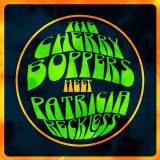
The Cherry Boppers are back with six fiery artifacts of promiscuous funk recorded in collaboration with the vocalist, also from Bilbao, Patricia Reckless, in this mini-album in 10-inch vinyl format. Pure rhythm from head to toes. As is well known, funk fuses what has historically been labelled soul, rhythm and blues, jazz and rock, and The Cherry Boppers (TCB) have undoubtedly created their own promiscuous formula based on a fine selection of styles that predate hip-hop. Active since 2004 and convinced advocates of jazz-funk and instrumental funk, there are very few examples of vocal tracks in their discography. However, in 2014 they released the EP "TCB meet Dr. Baltz" (Brixton Records-Soul Series) in which they successfully covered three classic rhythm and blues standards with lyrics in Spanish. Now, after five years of publishing drought, they repeat the experience with the stellar collaboration of the vocalist, also from Bilbao, Patricia Reckless, musically formed in the band "Bohemian Soul". The powerful and educated voice of Patricia Reckless blends perfectly, as one more instrument, into the compact rhythmic machinery of TCB, giving the 6 tracks of this mini-album (the 6-track EP thing doesn't quite fit) a structure, perhaps, more familiar to a non-specialized audience. But let's not get carried away, the textures, the silences, the "on the one!" beat, the breaks, the stately Hammond organ, the brilliant brass, the forceful bass lines, the precise percussion, the wah wah... are all 100% Cherry Boppers. "The Cherry Boppers meet Patricia Reckless" remains faithful to that analogue funk sound that makes the band proud of a long and vocational career in the genre. And it is also an album full of details, of paths and instrumental lines to be discovered on multiple listens.
"Days Gone By," the latest creation from Manuel Gonzales (MGUN), showcases his remarkable versatility inside of the contemporary musical landscape. This 9-track EP, released for 100 LIMOUSINES, is a vibrant mosaic of raw, gritty sounds that capture the quintessence of Detroit's musical heritage.
Each track on the album is an immersive experience that echoes the feel of street techno, rhythmic and driving. MGUN's ingenious use of the studio as an instrument is striking, as he shapes tracks that embody the essence of bedroom production. The album vibrates with deep sub-bass frequencies, eerie highs, and peculiar artifacts of found sound.
Gonzales, a name synonymous with raw and unadulterated music, brings his signature touch to the 100 LIMOUSINES catalog, a label rapidly gaining recognition for its bold defiance of genre constraints. "Days Gone By" is more than a mere collection of tracks; it's a deep dive into Gonzales' daily sonic experiments, a testament to his relentless pursuit of pushing the boundaries of techno music.
This album is an essential listen for those who value the fusion of Detroit's robust underground legacy with innovative, avant-garde electronic music. It's a journey designed for those who revel in the unrefined authenticity of analog production and the boundless potential of cross-genre exploration. "Days Gone By”, an absolute experimental body of music, a unique auditory adventure that defies convention.
For Listeners Who Enjoy: Rob Hood, A Guy Called Gerald, RZA, Autechre, UR
Psychedelic Anxiety, as a mood, goes something like this: overwhelming, existential, vertigoic, arising when we stare into the void. This metaphysical unease also serves as the title for Brooklyn-based musician Frances Chang’s second album, and as a feeling it’s present throughout, charged by all things occultish. Recorded by Chang and engineer Andrea Schiavelli, featuring a cast of revered NYC DIY players, including Schiavelli (Eyes of Love) and Liza Winter (Birthing Hips), Psychedelic Anxiety relishes in the refining of aesthetic, in the electricity of improvisation, in balancing bleakness with humor. It embodies an idiosyncratic genre Chang calls slacker prog — offbeat, but brimming with spiritual and emotional resonance. The record infuses artifacts of the mundane with otherworldliness— even the love songs live more in the realm of fantasy (or horror) than the romantic. The psychic twin and mirror image of Chang’s 2022 debut full-length Support Your Local Nihilist, Psychedelic Anxiety by comparison is less urgent, leaving space for more nuance and storytelling. Together, these albums represent a new cycle of creativity for Chang, a reset to zero. “Eye Land,” captures Chang on a tour around the Irish and English countryside, in a moment of major life change. “Lying around your spare room,” she sings, “Sky is cloudy here in June.” Around her, guitar sputters and stops. Vocals branch off like vines on the side of an old house. It is a profoundly lovely song, a freaky miniature in the way that a Broadcast song is a freaky miniature. “Darkside” opens up with a particularly memorable narrative moment. “Last night I saw Parasite,” sings Chang, describing how she saw it alone, how regular life that week was acute, weird, intense. How she found comfort in resignation. After all: Psychedelic Anxiety is a serene, bizarre record full of alien sounds and big introspection.
Danielle Boutet’s P »Pièces« is a mysterious artifact of Quebecois marginalia, self-released in 1985. Moving from languid ennui to high drama, »Pièces« is a dreamy gestalt, an album that borders Chanson, spoken-word, jazz noir, and minimalism, conjured from the chasm between acoustic and electronic realms. »Pièces« allows us a window into the highly intimate songcraft and compositional skill of an artist who longed to linger not in the public eye, but in relation with others and the world around her.
Born in Quebec City, Boutet studied music at the University of Montreal, where she focused on composition and percussion, before becoming involved in Montreal’s feminist and lesbian art scene. Primarily written, performed, and recorded by Boutet, with voice, guitar work, and technical assistance by Sylvie Gagnon, Pièces was created during a paradigm shift in home recording. Originally composed for the piano, Boutet and Gagnon utilized a consumer-friendly Tascam 4-track Portastudio and versatile Yamaha DX-7, alongside guitar, bass, marimba, and the human voice, to expand and contemporize the original composition’s scope.
Inspired by prog rock and British poet and musician Anne Clark, »Pièces« translates Boutet’s influence by moving between sunny, wistful fairytale and dark, wintry dirge. Filled with longing marimba, vertiginous, startling synth pads, and folk guitar, each track on Pièces offers a wholly unique proposition. Some are modal and rife with the ethereal psychological tension of a sci-fi soundtrack, while others are more like entering a smoke-laced lounge, the entertainer embodying seduction.
With the sprechgesang of artists like Serge Gainsbourg, there is an intense intimacy to Boutet’s delivery, sometimes as if she is performing for an audience of one. As one lyric goes, translated to English from French: “Like holograms/ Images from a world/ That inhales souls/ And exudes drama.” Another song contains an excerpt from The Tao of Physics: “The eastern sages specify clearly that they do not identify an ordinary void, but rather, a void having an infinite creative potential.”
To English-language audiences, the album’s title, »Pièces«, might seem to simply refer to the eleven different pieces. The title can also, of course, refer to parts of a larger whole, but Boutet is keen to point out that there is also another meaning: In French, a pièce is a room. On the cover of the original cassette, Boutet is seen sitting on a chair, alone in an empty apartment, a cable snaking at her feet. Listening to »Pièces« is like entering eleven different rooms: whether a study encased in shadow, a greenhouse left to wither in an eternal frost, or a divine nave.
Boutet sold a few dozen copies around Montreal, a scene mostly occupied by the new wave explosion de rigueur, but the inclusion of Pièces in the 1987 issue of Ladyslipper—the North Carolina-based mail order catalog that championed women musicians of all calibers and careers—led to more exposure throughout North America. “In the catalog,” Boutet says, “they included it in the New Age section, but I was, and still am, aware that this album is relatively unclassifiable.”
Boutet would release one more album, titled Musiques Urbaines, before getting pulled in the direction of interdisciplinary art and theory. “Although I never stopped making music, I lost all interest in public diffusion or performance,” Boutet says. Despite her departure from performance and publicly releasing music, she left behind a strange and enthralling document of Montreal’s 1980s feminist fringe, an aural document of the historic moment when self-recorded music and its practical potential became a prismatic reality.
Danielle Boutet’s Pièces arrives February 16, 2024 as part of uncommon¢ (“uncommon sense”), an open-ended, serialized endeavor from Freedom to Spend that provides new meaning for rarefied recordings from music’s outermost fringe.
What I can say about TORRES is I think the music comes from a convicted place. Not convicted meaning a person is narrowly and foolishly committed to an ideal, or unshakably convinced of themselves, or a zealot, or stubborn. I mean dedicated, I mean: If TORRES' music gets weird, gets brainy, gets funny, gets defiant, provokes, deliberately scandalizes, employs the crass to undermine the austere, courts lofty philosophical truth-it's all done with the conviction of an artist with the (essential) belief in the worth of their task. I think you can hear it in the songs, someone reaching, leaning over the boundary between known and not, probing the almighty. After a decade and six studio albums and however many one-offs and tours and articles read and conversations had, the parts of this pursuit I've been able to observe are all marked by a dedication to creation that treats the act-ongoing-with as much preciousness as the evidence of the act that is left in a record. The modes of being are different: heartbroken, broke, furious (right- and unrighteously), awestruck by love, compelled by desire. sometimes resigned to death, sometimes fascinated by and reverent of the future. Sometimes viscerally present, other times suspended in heady awareness, poised on a fulcrum of observation and participation in the phenomenon that aliveness is. The tools are the same: instruments that growl and shriek and moan, a lyrical voice shouting, swooning, chuckling, snarling as the moment commands. TORRES' music-making is conducted in a melodic vocabulary unique to itself-methods, equipment, circumstances shifting around the impulse to affirm the self within the world, to make art that bears all these little artifacts of the divine and of the real and show it to people and know it is valuable. I think that's what Mackenzie's music does. And I think it's just incredibly good music to listen to. -Julien Baker TORRES is the pseudonym of Mackenzie Scott. She was born January 23, 1991, and lives in Brooklyn, New York, with her wife Jenna, stepson Silas, and puppy Sylvia. She has been releasing albums and performing as TORRES since 2013. What an enormous room is TORRES' sixth studio album (her third with Merge). It was recorded in September and October 2022 at Stadium Heights Sound in Durham, North Carolina. It was engineered by Ryan Pickett, produced by Mackenzie Scott and Sarah Jaffe, mixed by TJ Allen in Bristol, UK, and mastered by Heba Kadry in NYC. The album contains 10 songs. Mackenzie wrote all of them. Sarah played bass guitar, synths, drums, organ, and piano. Mackenzie sang vocals, played guitar, bass, synths, organ, piano, and programmed drums. Additional synth bass, tambourine, and shakers were played by TJ Allen.
Here it finally is, the first ever official reissue of all recorded material by Zyklome A, and as a bonus one unreleased track plus unreleased live recordings! One of Belgium’s earliest and most primitive hardcore punk bands’ legendary ‘Made In Belgium’ LP has been one of the rarest artifacts in the genre, and although it was bootlegged many times, the reason why an official reissue on vinyl has never been published is complicated. Zyklome A’s story starts in the middle of nowhere: in Bonheiden in early 1980, above a bank office. Brothers Bie and Toon Puttemans started shredding and terrorizing ears and minds with Markus Verbeeck, without any knowledge of anything close to a scene or other people doing what they were doing. Completely isolated, they were struck by lightning with the genius idea of speeding up punk, playing Ramones chords backwards and letting the bank office’s fire alarm go off with their wall of noise. When drummer Bie got to hear other hardcore records through a school mate, he was baffled to hear there were other folks out there doing what they were doing as well. After a fire alarm and family drama too many, the trio moved to a tiny shed in the garden of the Verbeeck family to refine their special blend of primal hardcore. The rest is history! For just 5 years they became one of Belgium’s most active HC bands, befriending many other classic main stays such as The Dirty Scums, Moral Demolition, Vortex, Wulpse Varkens etc., creating pits everywhere, and turning many a nazi skin’s skulls into pulp! When guitarist Toon “forgot” to fulfil his army service, he had to flee Belgium, and as the police harassed the other band members constantly about this, it became next to impossible to maintain Zyklome A. Zyklome A morphed into Ear Damage, with different members. In a later, army free future, a reunion of Zyklome A was not possible due to Toon’s heroin problem. It is strange, and sad to say, that the cards played differently when Toon passed away. Zyklome A played 2 reunion gigs in 2016 with guitarist Pieter Coolen (of Toxic Shock fame) before Markus’ severe back pain sadly also led to his passing. This record is dedicated to Toon and Markus, whose spirits live on through their incredible music. You will find the entire first album plus an extra LP with their part of the split single Moral Demolition, their tracks of the ‘Alle 24 Goed’ compilation LP, their tracks of the ’Second Time Around’ compilation cassette, an unreleased track and a live recording at the height of their game from 1984 in Deventer (which includes covers such as ’These Boots Are Made For Walking’ and ‘Rock ’n Roll Rebel’) and a 76 page book filled with tons of archive material such as flyers, lyrics, drawings, pictures and a lengthy interview with Bie Puttemans on this most possibly last Ultra Eczema release, Zyklome A’s ‘Uitgesproken (1980-1985)’.
The most iconic italian italo-disco-syntpop, nu disco duo: “Italoconnecon” (aka Fred Ventura and Paolo Gozze!) are back on track with a brand new vinyl only release which collects 6 among their best producons of the near present, recently released digital only on Bandcamp. Their very many worldwide fans have been awaing a lot for this and finnally they have now their favourite tracks pressed on a vinyl support for the first me! This is an unmissable release unique for the freshness and contemporary quality of the sound, in fact, their remixes have been out on the most relevant publicaons so far such as Savage, Styloo, Scotch and many more… This is a super limited edion printed in only 100 copies on transparent blue vinyl and 100 copies on red vinyl, each edion come with a 30x30 cm insert poster , the blue one is signed by the duo and both variants are hand numbered
High Roller Records, black vinyl, ltd 400, 425gsm heavy cardboard cover with 5mm spine, 4 page insert, double sided poster, 2 track black vinyl bonus 7" with p/s and insert, Original transfer by Marcus Mossmann (R.I.P.) at PHONOGRAPHIC ARTIFACTS in March 2021. Audio cleaning, restoration and mastering by Patrick W. Engel at TEMPLE OF DISHARMONY in April 2021. Cutting by SST Germany on Neumann machines for optimal quality on all levels... The ultimate audiophile edition of this eternal NWOBHM classic!
#40 ON ROLLING STONE'S 500 GREATEST ALBUMS OF ALL TIME: ANTICIPATES LATE 1960S TURBULENCE VIA PROPHETIC SONGS AND DARK THEMES
1/4" / 15 IPS analogue master to DSD 256 to analogue console to lathe
Any discussion about the finest psychedelic rock record ever recorded is incomplete if it doesn't grant consideration to Love's Forever Changes. Ranked by Rolling Stone as the 40th greatest album ever made, and named by Mojo the second-greatest psychedelic set in history, the effort is an internationally recognized seminal work of art. Transcending language and convention, its magnitude and magnificence need to be heard again and again. For here is an effort whose mind-boggling acoustic complexities and kaleidoscopic nuances are tailored for high-fidelity playback.
Nearly unlimited headroom, vast instrumental separation, transparent clarity, artifact-free atmospherics, and faithful balances appear out of jet-black backgrounds. Turn it up as loud as you want; the sole limitation will be your system's potential.
Commercially ignored upon release in November 1967, Forever Changes confronts the alienation, paranoia, violence, and strife that would soon plague the countercultural movement and send the Summer of Love into a tailspin. Apart from its lyrical themes and prescient malaise, the record's enduring nature equally owes to intertwined arrangements sewn together with Latin guitar-picked lines, finessed folk harmonies, mariachi-inspired horn charts, and subdued strings.
The seemingly opposing combination – ominous, dark reflections situated amidst lush, light melodic beds – affords Forever Changes a distinguished tension of claustrophobia and openness, dourness and ecstasy, ugliness and elegance enjoyed by no other record in the rock canon. Much of the contrast owes to leader Arthur Lee's mental state and pertinent observations. Lee, whose suppressed romanticism often surfaces even amidst the blackest shadows and most cynical moments, believed he would soon die, and hence channeled everything from lasting hopes to acid-addled decay to the chilling testimony of a Vietnam veteran in his narratives.
Alternatively sad and beautiful, the album-opening and flamenco-inspired "Alone Again Or" establishes the mood for what follows. Vocals overlap and soar; tempos rise and fall; surrealism trades places with reality.Forever Changes thrives both because of and in spite of a surfeit of labyrinthine chords and difficult notes that never repeat. Its ambitious construction almost forced the already fractured band to cede responsibilities to session musicians, which appear on two tracks. The quintet's resolve to not only complete the album, but to do so with such poignancy and curiosity, further enhances Forever Changes' standing.
No wonder that, in the twilight of his troubled career, Lee performed the record in its entirely during concerts met with overwhelming critical acclaim. It was, and will always be, a personal manifesto of timeless relevance and appeal.
High Roller Records, black vinyl, ltd 400, 425gsm heavy cardboard cover with 5mm spine, 4 page insert, poster, 2 track black vinyl bonus 7" with p/s and insert, Original transfer by Marcus Mossmann (R.I.P.) at PHONOGRAPHIC ARTIFACTS in March 2021. Audio cleaning, restoration and mastering by Patrick W. Engel at TEMPLE OF DISHARMONY in April 2021. Cutting by SST Germany on Neumann machines for optimal quality on all levels... The ultimate audiophile edition of this eternal NWOBHM classic!