Shhh. The command to be quiet is not just part of the title of one of the two sprawling compositions on this pioneering album. It's also an apt metaphor for the relaxed hypnotism and spaced-out atmosphere that define In a Silent Way, a record that pushes the boundaries of studio possibilities, artist-producer relationships, and rock-jazz chasms. Recognized as Miles Davis' first full-on fusion effort and part of his "electric" era, the 1969 landmark claims a Who's Who line-up that sends the music into an ethereal stratosphere.
Mastered from the original master tapes and pressed at RTI, this unsurpassed 180g LP edition lifts the veil on the cutting-edge assembly process that created the pair of lengthy suites. Helmed by three electric instruments, the bevelled compositions melt away all preconceived notions of "jazz," ˜rock," and "ambience," following a loose theory Davis dubbed "New Directions."
Few albums are so delicately textured. And on Mobile Fidelity's meticulous reissue, such sulcate elements pour over ink-black backgrounds on a canyon-wide soundstage. In particular, Tony Williams' inventive percussive touch – he causes the cymbals to shimmer as a pieces of silver tend to do when exposed to sunlight – is broadcast with lifelike three-dimensional qualities, the panoramic view extending to Davis' nocturnal trumpet, Wayne Shorter's ribbon-unfurling saxophone, Dave Holland's extrapolative bass, and the mosaic of keys.
If the record's only accomplishment is its introduction of guitarist John McLaughlin to the world, it alone would be enough. Yet In a Silent Way continues to bedazzle, puzzle, and inspire for myriad reasons – not the least of which is the seemingly telepathic communicative methods employed by the group's members. The line-up is great on paper, but, if it's even possible, the octet sounds even better in practice, with the instruments and tonalities conjoining in avant-garde communion like hyper-sensitive tentacles exploring the stippled landscapes of an undiscovered planet.
Diverting from expectation, tubular grooves twist, turn, and spin, sometimes piling atop of each other, always shying away from structure and melody. Ellipsoidal solos provide hesitant guidance, ranging from Chick Corea's Fender Rhodes phrases to Davis' decorative spirals. And as colour is the primary unit of currency on Davis' Sketches of Spain, laid-back episodes, geometric spaces, and quiet sensuality reign here, with the set's maverick reputation attained via musings on solitude rather than explosions of noise.
Controversial for the period, the heavily edited production of In a Silent Way blew open the once-locked doors on what producer's could attempt – and how artists could assist them. Knitted together as one would construct a cross-hatched quilt, songs contain grafts of repeat passages that provide unifying structure and experimental continuity. What a statement.
out of Stock
Last delivered 12 months ago available to reorder, subject to availability
Josie ist Kopenhagens neueste Popgruppe, die 2023 gegründet wurde und aus den vier Freunden Charlotte, Dawn, Martin und Anton besteht. Ursprünglich ein Trio, nahmen sie ein frühes Demo auf, bevor Anton als Schlagzeuger hinzukam, was ihre Besetzung festigte und die Bühne für ihr Debütalbum bereitete. "A Life on Sweets Alone" bietet eine rohe und ansteckende Mischung aus Jangle-Pop, Wehmut und Attitüde. Josie verbindet poetische und doch nachvollziehbare Texte mit einer rauen Pop-Punk-Sensibilität. Fans von Talulah Gosh, Shop Assistants und Tiger Trap werden sich in Josies Welt wie zu Hause fühlen, in der verträumte Melodien und schrille Gitarren auf wummernden Gesang treffen, aber die ursprüngliche punkige "Fuck you"-Energie und die treibende Rhythmusgruppe des Genres beibehalten. "A Life on Sweets Alone" zeigt eine Band, deren Songwriting mit dem der Besten in jedem Genre mithalten kann. Songs wie "Cupid Strikes A Blow" und "My Boy And I" sind unwiderstehlich eingängig, bieten aber genug Wendungen, um den Hörer auf Trab zu halten. "These Days" und "Always" sind beide kompakte Twee-Punk-Taschenmesserstiche, während "If You" und "Falling Apart" klassische Balladen sind, die jedem einsamen Hörer Trost spenden.
The official soundtrack to the first season of the acclaimed historical drama Vikings is now, for the first time, available on vinyl, offering fans and collectors a rich and immersive listening experience. Composed by Emmy Award-winning composer Trevor Morris (The Tudors, The Borgias, Dragon Age: Inquisition), the score captures the raw intensity, emotional depth, and mythic atmosphere that helped define the tone of the series. From sweeping orchestral moments to brooding ambient textures, the music reflects the harsh beauty of the Viking world and its complex characters. One of the standout tracks is the opening theme, “If I Had A Heart” by Swedish artist Fever Ray, whose haunting vocals and minimalist electronics set the tone for the series. The track became iconic, earning recognition for its unique contribution to the show’s identity. The series itself has received widespread acclaim and multiple awards, both for its storytelling and technical execution, with the music playing a vital role in its success. Vikings (Music From The TV Series) is available for the first time on vinyl as a limited edition of 750 numbered copies on blue coloured vinyl. This 2LP package includes a 4-page booklet with pictures and liner notes by Trevor Morris.
Released in 1996 at the height of Britpop’s cultural takeover, Free Peace Sweet saw Dodgy break into the mainstream with a sun-drenched sound that set them apart from their more angst-ridden peers. Bursting with optimism, melody, and a touch of psychedelic sparkle, the album became the band’s biggest commercial success. Its lead single, "Good Enough", was a bona fide anthem, climbing to No. 4 on the UK Singles Chart—Dodgy’s highest-charting track to date. Follow-ups "In a Room" and "If You're Thinking of Me" also struck a chord with listeners, hitting No. 12 and No. 11, respectively. Even "Found You", the album’s final single, secured a strong No. 19 spot, solidifying the band’s chart credentials. Free Peace Sweet reached No. 7 at the UK Albums Chart and later achieved certified platinum. Dodgy's Free Peace Sweet includes a 4-page booklet.
GAISTER (Olivia Salvadori, Akihide Monna and Coby Sey) release their self-titled LP.
The record captures the embodiment of an encounter, one moment of the trio’s ongoing relationship as artists who communicate with each other through sound, voice and music.
After orbiting in the same circles at each other's shows around 2016 in London, Sey and Salvadori eventually crossed paths. In 2017 Sey joined Salvadori’s artistic collective Tutto Questo Sentire on a residency in Capalbio, the southernmost part of Tuscany, Italy, and started working together. Down the line the pair ended up joining with Akihide Monna (of Bo Ningen), performing together in 2019 at Camden Art Centre on Cork Street in London.
When the trio come together something new is created, brought out after laying dormant, like an Icelandic Geysir. The setting of this particular encounter amongst the trio is essential in the album’s sonic palette, process and emotion. The album was recorded in Iceland at
Greenhouse Studios, where the trio formalised a set of intuitions; how nature can provide a guideline in the choices of the instruments, their materials and related rhythms; reflections on the voice as a sculptural element, pure sound and words.
As Akihide has said of the experience during their short and intense recording period: “The sound spontaneously spun out as if we were pulling at each other's hearts and minds with a strange internal connection and sensation. Something pure was brought out.”
‘Gaister’ itself is a made up word, sprung from the German ‘Geist’ to mean ‘spirit’, and made into a sound of its own. A purity, spirit and essence is pulled from the trio, in spite of their varying mother tongues (Italian, Japanese and English), musical genres and identities to create something new. Olivia Salvadori’s operatic vocals run free, flowing and moving in
synergy with Monna’s rhythmic drumming. Sey sings freely with Salvadori, their voices braided together like a waterfall.
This flowing nature is reflected in the album itself, its timestamps and scores are marked by encounters rather than tracks themselves. This album can be considered as one constant piece and a journey of its own that is not foreclosed, in keeping with the band’s ethos of
constant conversation and collaboration.
As Sey speaks of the trio’s relationship: “Olivia, Monchan and I had performed live together once before, several years before this song and this album came to be… and yet, we fully trust each other’s intuition when performing and creating music together because of our unified belief in the ability of sound and music to communicate and connect.”
credits
releases November 1, 2024
First time reissue of this French cold-wave / minimal-synth treasure.
November 1981 – In the heart of autumn, we set off in two cars along the Nationale 1 (!) to reach Choisy-le-Roi, where a 16-track studio was waiting for us—a place where, over the course of a weekend, we would finally be able to carve our own grooves into vinyl. We were quite nervous, as Guerre Froide had already been around for a year and a half. Our elders in Kas Product had already released two EPs—one with four tracks, the other with three—in 1980, even though they’d started only a few months before us. Admittedly, there wasn’t really a sense of urgency—some of us came from the punk movement, where the prevailing mood was still very much No Future, even if we’d long since stopped believing in it... And yet others had truly lost everything, like those from the generation before us. The reasons, ironically, were often the same: heroin and/or love—hard drugs, in both cases.
Speaking of which, I had a terrible stomach ache—due to nerves or some form of tension—which forced us to make a pit stop in the Oise region so I could rush to the toilet of a local café. That same stomach discomfort would hit me again once we arrived at the studio—whose name, incidentally, I’ve since forgotten...
We had gotten there thanks to the generous initiative of a friend, Sylvain S., known as “Perlin” (what a phonetic coincidence!?), who had specifically created the Stechak Products label to produce our record. Stechak because it was consistent with his earlier association called Tchernoziom, and Products as a plural tribute to the trailblazers from Nancy.
Guerre Froide originally consisted of four members: Fabrice Fruchart on guitar-synth (Korg MS-20), Patrick Mallet on bass, and Gilbert Deffais, known as “Bébert”, on Korg drum machine. At the time, I was already singing in a rock/post-punk band called Stress, and that’s how Guerre Froide picked up the bad habit of rehearsing in the same basement in Amiens as Stress. Within a month or two, we had half a dozen songs. We then had the opportunity to record a 4-track demo with a friend from Radio France Picardie, and to perform in October at a festival held at the Amiens municipal circus. Then came the now-legendary concert on November 11 at B.J.’s Club. After that, we self-produced and released 50 completely DIY copies of a cassette titled Cicatrice. A few concerts later—after Jean-Michel Bailleux had joined us on bass and Patrick had switched to guitar, which felt more natural to him—and with more concrete plans starting to take shape, we had to find a new rehearsal space and start renting a room.
Then came the moment when Fabrice told us he was leaving to go study in Lille... After the June 19, 1981 concert, which was naturally dubbed “Farewell to 2F,” Marie-José, Bébert’s wife, offered to take over on synth.
That’s when Perlin, who was a close friend of the Deffais couple and a great fan of our music, offered to fully finance the production of a 4-track 12-inch EP—covering the studio time, mastering, pressing, and artwork. What up-and-coming band would have turned that down? An improvised contract was signed with each member of Guerre Froide. The first step was choosing which four songs we would record. Berlin 81 was an obvious pick, having already become the group’s flagship track. We wanted to avoid reusing songs from Cicatrice, so the focus shifted to new material—some written before, some after Fabrice’s departure. Ersatz, for example, was his composition, but Mauve and Peine Perdue, which were also selected, were both written by Patrick.
GG Allin singles compilation reissued on vinyl. If you had an immense amount of courage (as well as a strong stomach), then you may have been 'lucky' to have experienced G.G. Allin the way he was meant to be -- on-stage. In the studio, G.G.'s recordings more times than not did not match the fire of his live performance (and after watching some of his brutal shows on video, how could they'), as they were issued on a variety of little-known indie labels, and of varying quality. One of the first compilations to truly pull tracks from throughout G.G.'s controversial career is 2004's Expose Yourself: The Singles Collection 1977-1991. A few selections have been impossible to find for years, such as the early G.G. single "Love Tunnel" b/w "Devil's Triangle," which makes its first appearance in years here. Elsewhere, you'll find tracks that have appeared elsewhere -- "Snakeman's Dance," "When I Die," "Gypsy Motherfucker," etc. -- but are among G.G.'s best. Since it touches upon most of his different eras, Expose Yourself: The Singles Collection 1977-1991 is easily one of the better G.G. comps to appear. ~ Greg Prato
GG Allin singles compilation reissued on vinyl. If you had an immense amount of courage (as well as a strong stomach), then you may have been 'lucky' to have experienced G.G. Allin the way he was meant to be -- on-stage. In the studio, G.G.'s recordings more times than not did not match the fire of his live performance (and after watching some of his brutal shows on video, how could they'), as they were issued on a variety of little-known indie labels, and of varying quality. One of the first compilations to truly pull tracks from throughout G.G.'s controversial career is 2004's Expose Yourself: The Singles Collection 1977-1991. A few selections have been impossible to find for years, such as the early G.G. single "Love Tunnel" b/w "Devil's Triangle," which makes its first appearance in years here. Elsewhere, you'll find tracks that have appeared elsewhere -- "Snakeman's Dance," "When I Die," "Gypsy Motherfucker," etc. -- but are among G.G.'s best. Since it touches upon most of his different eras, Expose Yourself: The Singles Collection 1977-1991 is easily one of the better G.G. comps to appear. ~ Greg Prato
“New York’s Harlem River Drive is a dividing line, a highway where the rich zip past the poor,” says singer Jimmy Norman. Eddie Palmieri’s Latin-funk band of the same name tackled these hard truths, playing prisons and speaking to the common man. Ultimately, Norman and Palmieri made a powerful socio-political statement that continues to resonate to this day." Pablo Yglesias/Wax Poetics. When initially released in 1971, many critics panned Eddie Palmieri’s album Harlem River Drive. Those critics were wrong. Regardless of critical opinion, the release was not the crossover success Palmieri and Roulette Records had hoped for, at least in the immediate. Over the years the release has developed a following among listeners, DJs, and aficionados of rare-grooves. The record may have been recorded towards the end of the Latin soul era, yet it features that genre's wonderful mix of Puerto Rican soul, Spanish Harlem Latin, and New York funk. Palmieri worked with an incredibly talented crew of Latin and R&B session musicians to create this quintessential New York vibe, a synthesis of funk and Afro-Cuban sounds. Contributors include Victor Venegas from Mongo Santamaria’s band, Palmieri’s brother Charlie, an accomplished musician in his own right, Bruce Fowler who went on to join Frank Zappa’s band, Dick Meza who went on to great things with Tito Puente, Ray Barretto and Celia Cruz, as well as Andy Gonzalez who’s pedigree includes recordings with Barretto, Johnny Pacheco, Willie Colon and even Chico O’Farrill. Also appearing Randy Brecker and one of the all-time greatest of the greats Bernard Purdy. An over-arching theme of Harlem River Drive is the thought that, as Palmieri puts it “The U.S. is richest country, all this immense wealth, side by side with the most intense poverty, racial prejudice; how is that possible?” A question that’s perhaps more even more relevant today than it was in 1971. A question that can be further explored with Get On Down’s reissue of this seminal recording.
out of Stock
Last delivered 7 years ago available to reorder, subject to availability
Glass Museum Records was born out of a desire to promote music specifically created for soundtracks of both existing and imaginary films. Without being bound to any genre, the label will present its first limited edition vinyl release in September 2025. The release will be "Through metaphors, assonance but mostly by differences", a journey of seven tracks produced by the band GORO HANADA, a cinematic collective based between Italy and the Netherlands.
Music fades, but it holds the vault of endless cinematic worlds.
out of Stock
Last delivered 12 months ago available to reorder, subject to availability
The successor to 2022"s Bajascillators glides easily into frame, but once there, Inland See is deceptively immediate. It"s so dialed in, you hardly even feel how present the music (and you the listener) is. Time wharping"s always been a resident magic for Bitchin Bajas, as is flow, which is translucent like water here. That"s the Inland See vibe, unique unto itself. In turn, each of the four songs here are entirely within themselves, all together forming an essential whole. The coincision"ll cause yer breath to shorten, like an exciting and non-fatal kind of exercise! New freedoms, yet more molecular structure in each one. With every successive Bitchin Bajas release, we see that the real key for them is a sense of discovery, that tingle that comes when you feel something breakíing through. The sky opening up. The stuff that fills this Inland See holds you up powerfully, as if you"re floating, saltwater or helium-wise - effervescent, effortless, elemental.
The successor to 2022"s Bajascillators glides easily into frame, but once there, Inland See is deceptively immediate. It"s so dialed in, you hardly even feel how present the music (and you the listener) is. Time wharping"s always been a resident magic for Bitchin Bajas, as is flow, which is translucent like water here. That"s the Inland See vibe, unique unto itself. In turn, each of the four songs here are entirely within themselves, all together forming an essential whole. The coincision"ll cause yer breath to shorten, like an exciting and non-fatal kind of exercise! New freedoms, yet more molecular structure in each one. With every successive Bitchin Bajas release, we see that the real key for them is a sense of discovery, that tingle that comes when you feel something breakíing through. The sky opening up. The stuff that fills this Inland See holds you up powerfully, as if you"re floating, saltwater or helium-wise - effervescent, effortless, elemental.
As if cosmically enacted, Neko Case breaks to the surface once again with the new album Neon Grey Midnight Green and reminds listeners that she is one of our greatest living songwriters - perpetually becoming more fearless and adventurous. Arriving September 26, the GRAMMY-nominated iconoclast"s ninth LP is self-produced and her biggest-sounding and most intimate-feeling release yet.
As if cosmically enacted, Neko Case breaks to the surface once again with the new album Neon Grey Midnight Green and reminds listeners that she is one of our greatest living songwriters - perpetually becoming more fearless and adventurous. Arriving September 26, the GRAMMY-nominated iconoclast"s ninth LP is self-produced and her biggest-sounding and most intimate-feeling release yet.
“Tunggak Semi” is the third album from Indonesian musician and producer Bambang Pranoto. Originally released in 2000, it’s an exemplary slice of what has become his signature style, a dream-like meditation on aspects of nature, combining elements of accordion, acoustic guitar, flute and percussion. The compositions cross eastern and western notation to inhabit a world of their own, a world between worlds, where harmonies reflect the beauty and joy of nature.
Bambang had a rather atypical entry into music, and studied electronics and telecommunications, before he took advantage of the wave of computer software like Cubase and Protools in the 1990s that enabled him to set about recording his own compositions and soundscapes. After playing in groups, he developed his own approach to constructing his productions. He invites musicians to record interpretations of his themes, which he then pieces together in Protools like a jigsaw puzzle. “The musicians have never even met!” he chuckled on a Skype call.
“Tunggak Semi” refers to the giant trees that appear all over Bali, and their process of renewal and regeneration. “If you cut the tree, and leave the roots, they will grow again. Everytime we cut, they grow again. It’s limitless. This philosophy means there’s always something new coming, whether an idea or music, anything.” This approach has grown out of Bambang’s studies into meditation, including Indian and Chinese scriptures, also Balinese and Indonesian religions. Music, like meditation, is a daily practice, and acceptance of the music and its ‘unfinishedness’, forms a central part of the process.
“We must not just think, but we must also feel, and we must accept that feeling,” explains Bambang, and that’s a step of opening one’s mind to possibility. It seems in keeping with two of Bambang’s musical inspirations, namely Ryuichi Sakamoto and Peter Gabriel, both known for their love of world folk music, and fusion of musical traditions. That’s mirrored in Bambang’s own collage-like approach, recording elements and piecing them together to make something unimagined. While the acoustic sound palette for “Tunggak Semi” is rooted in live recordings, Bambang is not afraid to put the digital technology to good use.
“We have to use the computer as a tool in the best way we can,” Bambang says. “Sometimes people say music is made by people, not by the computer, but it’s just another piece of equipment. What can we compose from this equipment? It’s technology music!”
Written and produced by Bambang Pranoto at interactive garden studio, Depok, Bogor between September and December 2001. 2025 version remastered by Wouter Brandenburg at Brandenburg Mastering.
Honour's debut album is a ligament stretching from Lagos to London and to New York, curling across the diaspora and brushing the darker hues of blues, hip-hop, free jazz, ambient, gospel with Christian mythology and Yoruba folklore. As cinematic as it is painterly, Alàáfíà is a meditation on themes of life, death and love that pulls inspiration from the unexpected poetic profundity of casual conversations, field recordings, literature, ephemera, or personal archives. The result is an impressionistic vision in Black and Blur that both exhausts and implicates language_substantiating a mythos proposed by Fred Moten that sublimates boundaries between everywhere and nowhere; history and the present; the individual and the universal. Alàáfíà delineates a gothic landscape cut by overdriven beats, swooping orchestral blasts, choral bursts and ear- splitting fuzz, where the fleshly and spiritual realms commune. Dedicated to Honour's late grandmother, the title track began to take form after their last embrace and remains steeped in her influence and spirit_a tape-saturated composition that starts in Lagos and ends in London's smoke-stained cityscape, the song's dream-like quality developed out of the artist's grief and PTSD coping with this loss. Beneath the stretched guitar drones and stuttering loops, their grandmother's shared faith bubbles to the surface. "When Angels Speak of Love," borrows its title from two works by Sun Ra and bell hooks, respectively. Sculpting echoes of praise music into disorienting spirals perforated with syrupy DJ Screw-inspired breaks and sharp splinters of melancholic guitar, "When Angels Speak of Love" engages a conceptual dialogue with the spirits of both late thinkers, folding them into Honour's pantheon of ancestral guides. The album's ninth track, "Giz Aard ($uckets)," is a dirge of regimented drums which anchor this somber melody as it whirls into a blizzard of heartache, uncertain if its consequence will be death or eternal joy. The album's sole lyrical offering, "Pistol Poem (Lead Belly)," begins with a darkly humorous bar, "He went thru hell and back/ came back/ 2 get the strap," that swells into a haunting allegory based on the life of Philip "Hot Sauce" Champion. A modern take on the Blues, Honour's lyrics reify the artist's status as a student of both literature and popular culture, crossbreeding the artist's clever wordplay with additional references to Richard Pryor, Robert Johnson, Kelly Rowland & Bryon Gysin. Setting core principles of hip-hop, R&B, jazz and gospel music to atemporal soundscapes and compositions, Honour crafts a record that marinates in its own knotty contradictions. The ghosts that sit on the artist's shoulders have never been more tangible than with this emotive debut.
out of Stock
Last delivered 12 months ago available to reorder, subject to availability
It's spring of 2023 in the North Carolina Piedmont, and songwriter and singer M.C. Taylor - leader of the band Hiss Golden Messenger - is feeling alive. Joyful. Eternal, he might say. For the Grammy-nominated musician, whose albums have traced an internal path through adulthood, fatherhood, spirituality, and depression for well over a decade, this is something new. "The tunes on Jump for Joy were composed in free moments throughout 2022, a year during which Hiss was on the road more or less constantly," explains Taylor. "And perhaps because the post-pandemic energy out in the world felt so chaotic and uncertain, I found myself thinking a lot about the role that music has played in my life and how exactly I ended up in the rarefied position of leading a band and crew all over the globe through dingy graffiti-scrawled green rooms, venerated music halls, dust-blown roadside motels.
Sometimes playing in front of 5,000; sometimes 200. Sleeping sitting up. Laughing until my stomach hurts. Not being able to fall asleep at 3 a.m. in some anonymous bed because my mind is spinning with anxiety or depression or adrenaline, or because my ears are still ringing. Robbing Peter to pay Paul, then robbing Paul to pay Peter back. Over and over again. It's an outlaw life but one, I'm coming to realize, that makes me happy." The songs that make up Jump for Joy - the sharpest and most autobiographical that Taylor has written under the Hiss name - read as a sort of epistolary, postcards between the present-day songwriter and his alias Michael Crow, a teenaged dreamer very much like Taylor himself, who trips his way through the 14 tunes that make up the record. In this way, Jump for Joy is a meditation on a life lived with art, and the ways that our hopes and dreams and decisions bump up against_ and, with a little bit of luck, occasionally merge with real life. "Creating this character became the way that I could explore these vulnerable, tender moments that were so decisive in my life, even if I didn't know it at the time," explains Taylor.
Produced by Taylor and engineered by longtime Hiss compatriot Scott Hirsch over two weeks in the late fall of 2022 at the fabled Sonic Ranch studio in Tornillo, TX, just a short walk from the Mexican border, Jump for Joy dances with joyful, spontaneous energy that feels like a fresh chapter in the Hiss Golden Messenger oeuvre. Taylor is accompanied throughout the album by his crack live band: guitarist Chris Boerner, bassist Alex Bingham, keyboardist Sam Fribush, and drummer Nick Falk, a collection of musicians that have helped make Hiss Golden Messenger's live performances legendary affairs
out of Stock
Last delivered 12 months ago available to reorder, subject to availability
If you're a serious music fan but not a native Kiwi, your first awareness of New Zealand's fab music scene may have come from the debut of The Chills' mesmerising Kaleidoscope World collection of early singles. Within a few years, a great number of NZ acts saw music released by various UK and US labels . . . generally to great praise and enthusiasm. That this occurred without any of these acts having to move abroad to further their chances was nearly as delightful a feat as the music itself. The exception to this was Dead Famous People, radical in a snap decision after a five-song 12" for Flying Nun, Lost Persons Area, to change hemispheres and make a go for it in London. It started well. Three London recordings were added to three from their Flying Nun EP and put out by Billy Bragg's Utility label - about as perfect a mini-album as there's ever been. Response was positive, more songs recorded, the group did a John Peel session and played out often, but the vaguely impoverished group began to fall apart. Singer and primary writer Dons Savage - determined to make it - had a near-miss at becoming Saint Etienne's singer on an early take of their 'Kiss And Make Up' cover, and there was a fine performance from her on The Chills' 'Heavenly Pop Hit' . . . but dismay had set in. Upon learning of her mum's passing back home, Dons returned to NZ and was quiet for decades. Most of their London recordings were later released later in minuscule quantities by very small labels, but these saw scant press or attention and enjoyed next-to-no sales. Their moment had passed, and the band has suffered the strange fate of being the least-known of the truly brilliant acts associated with Flying Nun. Listening to these `lost' songs, it seems unfathomable that they could have fallen by the wayside. No NZ songwriter comes as close to equalling Martin Phillipps' pop brilliance as Dons. Her superbly sweet vocals, delicious harmonies and sophisticated arrangements aside, the songs dealt perceptively with universal follies of youth and yearning in tandem with a then-unusual twist of lyrics dealing matter-of-factly with her sexuality at a time when `women's music' was seen as exclusionary (segregated into its own bin in shops, if it existed there at all), and the riot grrrl movement was years away, later breaking through due to its radical stance. Dons is a pioneer in myriad ways, the irony of her transcendent brilliance failing to propel a greater career may rest in the fact that she leapt to the head of the class too quickly for people to grasp it; a fate that's befallen so many musical geniuses acknowledged today but less in their time - something rather tragically acknowledged in old pal Martin Phillipps' song with The Chills, 'A Song For Randy Newman, Etc.' None of these thirteen songs fails to deliver something both immediate and unique. And we're proud to debut 'Vampirella"', a magical fantasy song of longing and intrigue - surely one of the most perfect tunes to ever sit around unreleased for decades! Dons is again busy conjuring new songs; in the meantime we're delighted to unveil these obscure gems from the past.
Satisfaction comes in many forms. When the magical word Motown is uttered, most people are hard-wired to The Four Tops, the Temptations and The Supremes. But to reduce Motown to the effervescent sixties is only part of the label’s remarkable legacy.
By the 1970s, a different sound was gathering. America was on the verge of a nervous breakdown. The Vietnam War had been a disaster, urban street crime was epidemic and the nation’s college campuses were alive with political resistance. The joyful hope that had inspired “Baby Love” now felt anachronistic and out of time.
The music industry was changing too. The vinyl pop single on 45rpm which had been the staple of Motown’s success was being challenged by concept albums. This was the era of Edwin Starr’s anti-war album War and Peace (1970), The Temptations mind-bending Psychedelic Shack (1970) and Marvin Gaye’s state-of-the-nation classic What’s Going On (1971).
By the early 1970s Motown had a stable of male vocalists that was arguably the best in the world, among them former lead singers from The Temptations - David Ruffin, Dennis Edwards and Eddie Kendricks. Alongside them singer-producers like Leon Ware and Frank Wilson were asserting their presence.
David Ruffin’s “Crime in the Street” captured the epidemic of violence in Detroit allowing his exquisite voice to quietly rage against gun crime. Recorded a few years before his underground classic “Rode by the Place”, both sound more modern today than when they were recorded.
If there is a common thread here, it’s the mid-tempo shifting soul soon to be christened as “quiet storm” including groups on the margins of Motown such as The Originals and The Fantastic Four led by the impassioned “Sweet” James Epps.
Just to keep you satisfied, immerse yourself in the overlooked creativity of Detroit’s male voices in the early 1970s.
John Calvin Abney rises again from the Oklahoman prairies with his latest album Transparent Towns. The ten songs focus on how we remember, and ultimately accept, though he is not always certain the memories we carry adequately mark the moments that make us. "This record is wrapped around the passage of time, whether or not we can trust the memories that we swear on, how we forgive ourselves and others as seasons turn, and how we define what is important as we roll the boulder back up the hill," Abney says of Transparent Towns. "We build these routines and live our stories, we rely on our histories and our memories - spoken and recorded. Now, we're relying on copies of copies, memories of memories, all packed like sardines into our phones, and we're losing the ability to tell our own stories. I have to constantly remind myself, as well as redefine what matters at the end of a day." Transparent Towns is the seventh studio album for Abney, and his first since 2022's Tourist, which he crafted after spending the pandemic as an itinerant writer. In contrast Abney penned most of the album's 10 tracks during a period of introspection and convalescence while recovering from vocal cord surgery in 2023. The time to himself - "I didn't sing for nearly a year, and after surgery, I couldn't talk for a month, and couldn't sing for over three months," he says, left him contemplating how to trace his experiences in the silence. The album's title track is Abney's take on the inaccessible past, witnessing loss and grief through the years, damning the "days we let go left unsaid", and accepting the uncontrollable circumstances we are sometimes placed in. "The troubles and the joys exist vibrantly in your memory, but you're wondering if you remember correctly," Abney remarks. "I've sometimes had this sort of confusion between memory and dreams - you crafted this ideal in your head of how things were or might be, in order to soften the blow of a harsher reality." The places we inhabit dictate how our memories form, and for Abney, there is one place to which he is constantly drawn: Oklahoma. Although he was born in the biggest little city in America, Reno, Nevada, he grew up learning guitar and piano in Tulsa, playing bars and DIY spaces from Norman to Stillwater. His affinity for the land that raised him is evident in the production of Transparent Towns. Abney self-produced the record, tracking most of it at Cardinal Song outside of Oklahoma City, with Michael Trepagnier handling mixing and engineering. The band was comprised mostly of Sooner State musicians too, along with Lydia Loveless and John Moreland contributing harmony vocals. His signature vulnerable voice and lyrical handiwork comes through in each of the songs, along with his penchant for alternative pop melodies set against colorful chords and subtle soundscapes. Having toured for years backing up artists like Moreland, Wild Child, Ben Kweller, and S.G. Goodman, Abney embraces a lead role again, as he presses forward with the loving lament and defiant joy throughout Transparent Towns, calling us to leave behind the pressures we place on our ourselves and recognize that just because there is an ending, it doesn't mean it's the end.
Can a self-portrait be a collage? Can empathy be autobiographical? What's the point of living if we're not trying to understand all the horror and humor that surrounds everything? These are a few of the questions lurking under the bleachers of Wednesday's new album Bleeds, an intoxicating collection of narrative-heavy Southern rock that_like many of the most arresting passages from the North Carolina band's highlight reel so far_thoughtfully explores the vivid link between curiosity and confession. Bleeds is not only the best Wednesday record_it's also the most Wednesday record, a patchwork-style triumph of literary allusions and outlaw grit, of place-based poetry and hair-raising noise. Karly Hartzman_founder, frontwoman, and primary lyricist_credits Wednesday's tightened grasp on their own identity to time spent collaborating on previous albums, plus a tour schedule that's been both rewarding and relentless. "Bleeds is the spiritual successor to Rat Saw God, and I think the quintessential `Wednesday Creek Rock' album," Hartzman said, articulating satisfaction with the ways her band has sharpened its trademark sound, how they've refined the formula that makes them one of the most interesting rock bands of their generation. "This is what Wednesday songs are supposed to sound like," she said. "We've devoted a lot of our lives to figuring this out_and I feel like we did." Just like Rat Saw God, one of the defining rock & roll records of the 2020s so far, Bleeds came together at Drop of Sun in Asheville and was produced by Alex Farrar, who's been recording the band since Twin Plagues. Hartzman again brought demos to the studio, where she and her bandmates _X andy Chelmis (lap steel, pedal steel), Alan Miller (drums), Ethan Baechtold (bass, piano), and Jake "M.J." Lenderman (guitar) _ worked as a team to bulk-up the compositions with the exact right amounts of country truth-telling, indie-pop hooks, and noisy sludge. More than ever, the precise proportions were steered by the lyricism_not only its tone or subject matter, but also the actual sound of the words, as well as Hartzman's masterfully subjective approach to detail selection. Every image or scene is filtered through Hartzman's agile, writerly brain. The particulars deemed essential all contain revelations about Hartzman's specific obsessions and vulnerabilities, about the fragmented way she processes the world. Maybe sometimes the best way to locate truth or pain or dignity within your own life story, Bleeds suggests, is by crawling into someone else's.
Can a self-portrait be a collage? Can empathy be autobiographical? What's the point of living if we're not trying to understand all the horror and humor that surrounds everything? These are a few of the questions lurking under the bleachers of Wednesday's new album Bleeds, an intoxicating collection of narrative-heavy Southern rock that_like many of the most arresting passages from the North Carolina band's highlight reel so far_thoughtfully explores the vivid link between curiosity and confession. Bleeds is not only the best Wednesday record_it's also the most Wednesday record, a patchwork-style triumph of literary allusions and outlaw grit, of place-based poetry and hair-raising noise. Karly Hartzman_founder, frontwoman, and primary lyricist_credits Wednesday's tightened grasp on their own identity to time spent collaborating on previous albums, plus a tour schedule that's been both rewarding and relentless. "Bleeds is the spiritual successor to Rat Saw God, and I think the quintessential `Wednesday Creek Rock' album," Hartzman said, articulating satisfaction with the ways her band has sharpened its trademark sound, how they've refined the formula that makes them one of the most interesting rock bands of their generation. "This is what Wednesday songs are supposed to sound like," she said. "We've devoted a lot of our lives to figuring this out_and I feel like we did." Just like Rat Saw God, one of the defining rock & roll records of the 2020s so far, Bleeds came together at Drop of Sun in Asheville and was produced by Alex Farrar, who's been recording the band since Twin Plagues. Hartzman again brought demos to the studio, where she and her bandmates _X andy Chelmis (lap steel, pedal steel), Alan Miller (drums), Ethan Baechtold (bass, piano), and Jake "M.J." Lenderman (guitar) _ worked as a team to bulk-up the compositions with the exact right amounts of country truth-telling, indie-pop hooks, and noisy sludge. More than ever, the precise proportions were steered by the lyricism_not only its tone or subject matter, but also the actual sound of the words, as well as Hartzman's masterfully subjective approach to detail selection. Every image or scene is filtered through Hartzman's agile, writerly brain. The particulars deemed essential all contain revelations about Hartzman's specific obsessions and vulnerabilities, about the fragmented way she processes the world. Maybe sometimes the best way to locate truth or pain or dignity within your own life story, Bleeds suggests, is by crawling into someone else's.
out of Stock
Last delivered 13 months ago available to reorder, subject to availability
Following the "rich jangle and big, well-developed songs" (Bandcamp) of 2023's Bananasugarfire, Edling sought to deconstruct his creative process by centering collaboration instead of a more solitary pursuit in songwriting, even as personal matters made isolation a more natural instinct. He describes taking time to make notes of the ways, timing and forms in which songs came to him in the process of demoing the record, and regularly questioning if his approach was like that of "watching a pot of water boil" or waiting for a bolt of light to appear in the sky. In many ways, Shooting Star is an appeal to the muse, a record of "songs about writing songs" born from Edling's desire to trust his instincts despite the posturings of inner demons and creative roadblocks, and to celebrate the little wins along the way. The result is a sprawling new work packed to the brim with playful eccentricities and dynamism, one that owes as much of its inspiration to mid-century folkies like Michael Hurley and Karen Dalton as it does to alt rock of the nineties like Yo La Tengo and Stereolab. Shooting Star is a constellation of influences, experiences, reckonings-with the state of the world, with others, with creativity, with oneself-with no two songs created in the same way. Instead of holing up in a recording studio, the creation of the record was formed by a patchwork of collaborations in a variety of recording locales, all which were later alchemized by mix engineer Matthew Schimelfenig. - RIYL Sparklehorse, John Cale, Yo La Tengo, Superviolet, Spirit of the Beehive, Horse Jumper of Love, Of Montreal
François and Sylvain Rabbath have turned six years of touring into a joint album that patiently and intensely distills a variety of musical flavors gathered from around the world.
Since the early 1960s, François Rabbath's double bass has resonated through enough landmark recordings to fill several shelves in a record collection. As an arranger, composer, and musician, his imprint on music goes far beyond his collaborations with Barbara, Paco Ibáñez, Charles Aznavour, or Édith Piaf. Aspiring double bassists owe him a groundbreaking method for learning the instrument. Born into a lush musical universe that quickly became his own, his son Sylvain first accompanied him on his travels before settling at the piano and sharing stages around the world at his side.
Those years of accumulating visas in their passports were put to good use by father and son. The continents, countries, and cities they passed through became a rich source of inspiration for composing Amall, the album by the Rabbath Electric Orchestra.
Long hours spent in the air or on the road, watching passing landscapes that never stayed the same, were transformed into compositions imbued with the atmospheres of the places they crossed or visited. Inspiration sometimes struck with force, like a green oasis appearing in a desert of stone—unexpectedly, as glowing red rocks suddenly dominated an otherwise open landscape with an endless horizon, while the mind wandered into a state between meditation and introspection.
Born from these travels, the pieces took on their final colors once brought into the studio, refined, and finally arranged to welcome the guitars of Keziah Jones and Matthieu Chedid, the piano of Laurent de Wilde, the bass of Victor Wooten, the saxophone of Raphaël Imbert, and the percussion of Minino Garay. Enhanced by the scale of the jazz-soul orchestrations, by the richness of arrangements bursting from strings, brass, rhythms, or keyboards, the epic breath of vast plains became ingrained. The urban tension of funk, echoing their movements, found its place—alongside more electric expressions or the ambience of a darkened room.
Melancholic and melodious, expressive and edgy, the bowed double bass—played in the high register where few dare to go—emerged as the musical guide. One that draws a path between Seville and Minneapolis, connects François Rabbath's native Syria to France, and bridges South America to Europe. It sets the tone to follow—the emotion that will carry the piece, and if not filled with light, will carry it there nonetheless.
Musical visions packed in luggage, transported in cargo holds, or imprinted in their minds just long enough to cover the distances to the next stop—father and son deepened their bond, beyond family and art. And their hands have never held each other more tightly.
François et Sylvain Rabbath ont fait fructifier six ans de tournées pour un album commun distillant patiemment et intensément la variété de parfums musicaux récoltés autour du monde.
Depuis le début des 60’s, la contrebasse de François Rabbath résonne dans assez de références pour combler plusieurs étagères d’une collection de disques. Arrangeur, compositeur, musicien, l'empreinte laissée dans la musique va bien au-delà de ses collaborations avec Barbara, Paco Ibanez, Charles Aznavour, ou Edith Piaf. C’est à lui que les
apprentis contrebassistes doivent une méthode novatrice pour apprendre l’instrument.
Né dans un univers musical luxuriant qui est vite devenu aussi le sien, c’est d’abord dans ses voyages que son fils Sylvain l’a accompagné, avant de s’installer au piano, et parcourir les scènes du monde à ses côtés. Ces années où les visas se sont entassés sur leurs passeports, père et fils les ont mises à profit. Continents, pays, et villes qui se sont succédés sont devenues un gisement pour composer Amall, l’album du Rabbath Electric Orchestra.
Les longs moments passés dans les airs ou sur la route à contempler un paysage qui défile sans pour autant rester le même, se sont convertis en compositions habitées par les ambiances de ces endroits traversés ou visités. Là où l’inspiration s’est imposée parfois brutalement, sous
la forme d’un oasis de verdure surgissant au milieu d’un désert de pierres. Au hasard d’imposantes roches rougeoyantes s’invitant dans un paysage jusqu’alors dégagé sur un horizon sans fin, quand l’esprit se laisse aller à un mélange de méditation et d'introspection.
Nés de ces pérégrinations, les titres ont pris leurs couleurs définitives une fois ramenés en studio, peaufinés puis, enfin, pensés pour y inviter les guitares de Keziah Jones et de Matthieu Chedid, le piano de Laurent de Wilde, la basse de Victor Wooten, le saxophone de Raphaël Imbert, les percussions de Minino Garay. Sublimé par la dimension des orchestrations jazz-soul, par la richesse des arrangements jaillissant des cordes, des cuivres, des rythmiques ou des claviers, le souffle épique des plaines immenses s’est imprimé.
La nervosité citadine du funk rythmant les déplacements a trouvé sa place, non loin d’une expression plus électrique ou d’une atmosphère de salle obscure.
Mélancolique et mélodieuse, expressive et nerveuse, la contrebasse jouée à l’archet, dans les notes hautes du manche où peu s’aventurent, s’est érigée en guide musical. Celui qui trace le chemin entre Séville et Minneapolis, relie la Syrie natale de François Rabbath à la France,
réduit la distance entre l’Amérique du Sud et l’Europe. Donne la note à suivre, l’émotion qui traversera le morceau qui, s’il n’est pas habité par la lumière, le portera néanmoins jusque là.
Visions musicales mises dans le coffre, transportées en soute ou imprimées dans l’esprit le temps de couvrir les distances qui les mèneront aux prochaines, c’est côte à côte que père et fils ont prolongé leur lien par delà des seules limites familiales et artistiques. Et leurs mains ne se sont jamais serrées aussi fort.
credits
Halima's debut album SWEET TOOTH is a bold declaration of power from an undeniable talent. Seductive, restless, and deeply assured, the record unspools like a night in motion. In the afterglow of her 2024 EP on drink sum wtr, praised by Clash Magazine, The Fader, BBC Radio, and others, the Brooklyn-based, UK/Nigerian musician solidifies her sound and expands it tenfold. If EXU was a spark, SWEET TOOTH is the full burn. Not so much genre-less as "genre-full"; the album spans a bright, lush world where club bangers meet deep ballads in a striking, fully-formed hybrid of honeyed Afro-pop and scorched R&B. Across its eleven tracks, Halima maps the push-pull of desire, transformation, and emotional reckoning. "Sweetness on my terms," she offers a mantra for reclaiming softness without surrendering strength. "The album is about the journey to reclaim one's self amidst the chaos of life and ultimately acts as a love letter to the pleasures and pain of these human pursuits." While SWEET TOOTH declares Halima's artistic arrival, she calls it an epilogue, a reflection on past behaviors and lessons learned. "Am I the person that I wanted to grow into becoming? I think so. I've given myself permission to be free of those things. To be bold. To take up space."
Running with Scissors is a cathartic heart ache and, ultimately, a therapeutic exploration of what it means to be alive—to love, to grieve, to regret, and to grow. It pulses with rawness and authenticity, sincerity and honesty, offering both solace and strength to anyone navigating their own emotional journey.
Running with Scissors is the third full-length album from Canadian trio Afternoon Bike Ride. Residing in Montreal, the group is made up of Lia (vocals, guitar, programming), David (vocals, guitar, drums, programming), and Éloi (vocals, keys, drums, programming). Since their formation in 2019, the band has released numerous projects where indie rock blends with acoustic pop, ambient field recordings, and lofi folk.
With each track on the new album, the three artists explore the rollercoaster ride of life’s most profound lessons—falling in and out of love, embracing grief, and navigating the complex spectrum of human emotion. The album feels like a series of journal entries, capturing moments of vulnerability, self-discovery, and personal growth. A lot has changed since their formation in 2019 but their hearts are still in the right place. Lead singer and songwriter Lia reflects on the bittersweet realization that life is an ongoing journey and we’ll never have all the answers, but we can still find meaning through love, meaningful connection, and the lessons that shape us. If life is one big lesson, then according to Lia, "I guess these songs are some classes I've taken."
The twelve song soundscape blends raw, emotional acoustic elements with subtle electronic layers and indie rock grunge, creating a textured blend that feels as vast and intimate as the album’s themes. It’s an immersive record that shifts perspectives, from the micro to the macro, zooming out to explore the universe and zooming in on the personal experiences that define our lives. Throughout the album, ABR explores the beauty of feeling deeply while embracing both the intensity of emotion and the struggles of finding purpose. "I'm finding my way through this world now," says Lia, "with the comfort of knowing I'll never know it all.”
A1 - The Moon On The Moors
ASC opens the EP with a distinctive, purposeful and dancefloor-friendly piece, driven by an intensely memorable drum pattern that will have your head nodding instantly - that's before the deep, earthy room-filling bassline quakes below. Filtered metallic breakbeats join the mix periodically along with string melodies and a plethora of sci-fi effects and classic micro samples. Absolutely essential stuff from the atmospheric wizard that is ASC.
A2 - Persuasion
A measured approach introduces Persuasion, with light hats and a subtle bleepy melody gradually pulling us toward a stunningly crisp slice of breakbeat heaven. Impossibly detailed rapidfire snares dominate the mix with incredible clarity that just has to be heard to be believed. Light bongos and airy synthwork nestle beautifully alongside trademark old school high pitched female vocal hits to cap off another stunner.
AA1 - Time and Again
Setting the tone immediately with thunderous, deep Hot Pants breaks - finely crafted as ever - Time and Again sees ASC explore an other-worldly setting with an uneasy intrigue to the echoing keys, while rousing strings provide a suitably nervy backdrop to the mix. A mellow yet tense breakdown is quickly nudged aside with the crunching breaks and darkly bassline, while echoed vocal hits add further texture.
AA2 - Severance
A wonderfully old school slice of breakbeat action quickly unfolds as Severance sees ASC playfully experiment with varied break patterns riddled with delicious little details you will pick out with each repeated listen. Sublime intent is present throughout with a heavy undertone bassline, not to mention the excellent sampled quote from the show of the same name - eventually we all have to accept reality. If this is our reality, bring it on.
Words by Chris Hayes (Spatial / Red Mist)
out of Stock
Last delivered 13 months ago available to reorder, subject to availability
Freak Show is the second album by the popular Australian band Silverchair, which charted in different lists all over the world (US, UK, Australia, Canada and many more). After their debut Frogstomp they were fusing more elements together in their music. Freak Show contains a lot of strong hooks and the song writing skills increased. This post-grunge album is more versatile in comparison to their earlier work and it marks the beginning of the definitive band sound.
Silverchair were an Australian rock band formed in 1992, who have sold over 9 million albums worldwide. Their sounds evolved during the years from the grunge and alternative rock to pop and art rock. In 2011 they announced their “indefinite hibernation” and it is still unknown if they ever going to return on stage.
Freak Show is available as a limited edition of 5000 individually numbered copies on flaming (red & yellow swirled) vinyl.
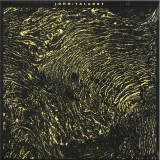
If there is one person, who has been causing a stir on the international club circuit recently, it is Barcelona's John Talabot. Already his debut “My Old School“ (which is meant literally by the way) on Permanent Vacation in 2009 and shortly after that the single “ Sunshine”, which he put out on his own Hivern Disc imprint, made him one of the most promising musicians of the Spanish electronic scene. And those two releases also already set the mark for John Talabot’s unparalleled music: raw, loopy, heavy on the kick drum, sample based, moderate on the tempo, distorted on the drums and light years away from the clean and ever revolving house sound of today. This unique style which also blends influences from afro beat, Detroit techno, Chicago house and cosmic disco, but also northern soul or the energy of Flamenco, immediately turned some heads around. James Murphy, Âme and Aeroplane started including Talabot music in their sets like it was the most natural thing. However - and this is quite rare - he not only gained legions of fans in the house and disco community, but also amongst the leftfield pop and indie rock followers. NME and Resident Advisor both had “Breakthrough“ features on John Talabot and he can be proud of a “Best New Music“ dubbing on
Pitchfork. (Being rather elusive on showing his face in magazines or the web it also came to some funny rumors that John Talabot was the alter ego of a well-known techno producer from Detroit).
At the same time he drew the attention of like-minded artists like James Holden and Luke Abott from Border Community, Blondes or Delorean, which lead to a bunch of fertile collaborations: Luke Abbott and Blondes remixed Talabot’s “Sunshine“ single , John Talabot remixed a track by Delorean and vice versa Delorean’s Ekhi contributed vocals to the track “Journeys “ on John’s album). Another example is the Young Turks Label (home of Jamie XX, Holy Fuck, El Guincho or SBTRKT ) on which he released the “Families“ EP in 2010. It was praised beyond limits. Pitchfork for
instance hailed: “… where pop and house influences sweetly buffer up against one another to provide an unyielding sense of elation“ and even brought Talabot a comparison with artists like Four Tet or Caribou.
While staying true to his sound, John Talabot has nevertheless shown a constant evolution as a producer since his first release. He has traced a solid musical path that has turned him into one of the big references of European House and has made him also a highly in demand Remixer (for the likes of The XX, Francesco Tristano’s “Aufgang” project, Shit Robot on DFA, Thaiti 80, Joakim or Teengirl Fantasy to name just a few ).
A progression that now crystallizes in “ƒin”, his first full-length album for Permanent Vacation. A record, in which the Barcelona mastermind sets aside the danceable immediacy to expand his stylistic palette more than ever. For that purpose, Talabot melts all the elements that have constructed his distinctive sound until now and makes them emerge from a new perspective, in which the construction of complex song structures, intricate rhythms and superpositions of ever-evolving melodies and atmospheres pick up the baton of the “a kick-drum and a sampler” philosophy of his initial productions. The result brings us 11 tracks (we should call them songs really!) dominated by dark ambiances, gaseous textures and bittersweet moods that, above all, reveal a kind of vivacity that’s really hard to find in contemporary electronics. “Fin” is far from being a track collection. From the majestic opener “Depak Ine“ to it’s solemn ending with
“So Will Be Now“ , one of the two tracks that features Talabot’s soul and label mate Pional, each song traces an overall dialogue with the rest, culminating a highly emotional journey through Talabot’s always compelling and unique musical vision.
out of Stock
Last delivered 6 months ago available to reorder, subject to availability
Tin Fingers takes on a darker, melancholic direction on their second full album. Felix Machtelinckx' weeping vocals, preaching, searching, and trying to understand God, form the leitmotif. With rich melodies, haunting piano sounds, improvisations, first takes and no overdubs, Tin Fingers is searching for pureness and keeping things human and simple. The band is playing together intuitively, without a computer, without ego, just for the sake of music
The creation of the album was very fluent and spontaneous. Singer Felix wrote the backbones of the songs and the lyrics on acoustic guitar and piano. He wanted to have songs ready in order to be able to record and write arrangements fast. With an eye for details but without overthinking, keeping the ideas fresh. 'I wanted to stay in love with the music.' he explains. 'It needed to go fast, very fast, in just two weeks the entire album was recorded and ready to be mixed.'
In the studio, the band especially focused on picking the right mood rather than playing the right notes.
They were fed up with working on a computer for many hours, overthinking production choices, and adding instruments on top of each other as if they were Lego blocks. This time they decided to work in a more traditional way, going for first takes, jams, and essentially working with analog gear. No computers, no screens, no distractions. Only four humans in a studio trying to make a sound together by keeping things spontaneous and raw. They said goodbye to perfection and worked towards an unfinished product, a snapshot.
Tin Fingers also didn't want to sound like any other artist on this record. They decided not to listen to music during the sessions, and to never express ideas by referencing other bands. Just before the studio session, however, bass player Simen Wouters broke the rules and shared Bonnie 'Prince' Billy's, I See Darkness. Its dark and searching sound ended up inspiring the band unmistakably.
Once the recording was finished, the band decided to keep the volatile rhythm going and asked reputable NYC-based mixer and producer D. James Goodwin to finish the job. Goodwin, known for his analog folk productions with a real American punchy sound but a tender touch, proved the right man for the job. He opened up the songs and kept things poetic, minimal but impressive.
out of Stock
Last delivered 13 months ago available to reorder, subject to availability
Percussive P (who has previously released on the label with FR037 & our remix on THCFR001) is a top quality producer who I wish had more music/releases out there. I used to play a tune of his called "Gunsmith" a lot in sets, as well as a lot of his collabs with Kid Lib which I was a big fan of. I'd previously collaborated with him on a tune for Dublinquents a few years ago and I was quite keen on doing a new collaboration with him for Meeting Of The Minds, so he sent me some tracks he had started, I picked my favourite to work on and that led to "Impatience".
Fluid Haunts is a solid producer who I was familiar with, but it wasn't until his music was drilled into my head by Dwarde who was playing a few select tunes from him in every single b2b set we had together, that I started to really appreciate his skills. Dwarde would play "Not Your Ordinary Love Song" without fail, in any given moment and time, and it would always get a great reaction from the crowd, so I had to get in touch to see if he'd be up for working with me & thankfully he was! We ended up making "Pineapple Soup" together & I can't remember why it's called that, I think he named the tune ????
Hobzee is one half of Silent Dust (him & Zyon Base) & I used to chat regularly with him and trade music with him on AOL Instant Messenger (showing my age here!) a long while back. He got back in touch with me about wanting to work on music together and he had an early version of "Sunspots" done. It was very promising sounding so I was quite keen to get involved with him on it and I'm grateful that I was able to get him on Future Retro London after many many years of IM chats!
Usually, I limit my collaborations on Meeting Of The Minds to producers that are fairly established and already somewhat known to other people, but for those who don't know who Eff is, she is a potentially familiar face to anyone who has attended a Future Retro London event, as she has been on the door for every single one. One day after a Distant Planet event in Bristol, she mentioned to me that she had an idea for a track inspired by a PFM tune and she already had the title in mind for it, which is "Wavebreak". I was curious about how this would sound in reality, so we met up to work on the tune & she said it was pretty much like how she had envisioned it & I liked how it sounded, so I thought it would be worth putting out on a future Meeting Of The Minds release, which ended up being this one.
Big up to all the artists involved on this edition of Meeting Of The Minds, it's quite a long and arduous task putting together each one, which is why there was such a gap between Vol. 9 & 10 and Vol. 11 & 12. I plan on getting the series back into something more regularly occurring, so hopefully I can actually stick to that plan!
out of Stock
Last delivered 9 months ago available to reorder, subject to availability
Indie exclusive Peak Edition on Orange & Black Swirl Vinyl, in a gatefold cover + poster.
It's spring of 2023 in the North Carolina Piedmont, and songwriter and singer M.C. Taylor - leader of the band Hiss Golden Messenger - is feeling alive. Joyful. Eternal, he might say. For the Grammy-nominated musician, whose albums have traced an internal path through adulthood, fatherhood, spirituality, and depression for well over a decade, this is something new. "The tunes on Jump for Joy were composed in free moments throughout 2022, a year during which Hiss was on the road more or less constantly," explains Taylor. "And perhaps because the post-pandemic energy out in the world felt so chaotic and uncertain, I found myself thinking a lot about the role that music has played in my life and how exactly I ended up in the rarefied position of leading a band and crew all over the globe through dingy graffiti-scrawled green rooms, venerated music halls, dust-blown roadside motels.
Sometimes playing in front of 5,000; sometimes 200. Sleeping sitting up. Laughing until my stomach hurts. Not being able to fall asleep at 3 a.m. in some anonymous bed because my mind is spinning with anxiety or depression or adrenaline, or because my ears are still ringing. Robbing Peter to pay Paul, then robbing Paul to pay Peter back. Over and over again. It's an outlaw life but one, I'm coming to realize, that makes me happy." The songs that make up Jump for Joy - the sharpest and most autobiographical that Taylor has written under the Hiss name - read as a sort of epistolary, postcards between the present-day songwriter and his alias Michael Crow, a teenaged dreamer very much like Taylor himself, who trips his way through the 14 tunes that make up the record. In this way, Jump for Joy is a meditation on a life lived with art, and the ways that our hopes and dreams and decisions bump up against_ and, with a little bit of luck, occasionally merge with real life. "Creating this character became the way that I could explore these vulnerable, tender moments that were so decisive in my life, even if I didn't know it at the time," explains Taylor.
Produced by Taylor and engineered by longtime Hiss compatriot Scott Hirsch over two weeks in the late fall of 2022 at the fabled Sonic Ranch studio in Tornillo, TX, just a short walk from the Mexican border, Jump for Joy dances with joyful, spontaneous energy that feels like a fresh chapter in the Hiss Golden Messenger oeuvre. Taylor is accompanied throughout the album by his crack live band: guitarist Chris Boerner, bassist Alex Bingham, keyboardist Sam Fribush, and drummer Nick Falk, a collection of musicians that have helped make Hiss Golden Messenger's live performances legendary affairs
out of Stock
Last delivered 13 months ago available to reorder, subject to availability
Give It Up Or Turnit a Loose (Edit) by James Brown b/w Web (Edit) by Hampton Hughes / Give It Up or Turnit a Loose (Bonus Breaks) by James Brown| Galaxy Sound Company — GSC45-044, test pressing | The long-running @galaxy_sound_company imprint has been responsible for some superb re-edits over the years, most of which are pleasingly purist in tone — meaning they are pro rearrangements with no added effects but & needless new beats or cheap trickery like so many out there— making any of their releases cop-on-site. & as you can hear from the test pressing, the 44th in the stellar series delivers yet again.
Side A is a masterclass in breakbeat editing of a b-boy classic sample source. Yes, there are many killer JB edits out in the universe, but when you see that the legendary Black Cash & Theo AKA Thelonious Beats take a turn, you know you gotta cop this mutha on site. Here the edit master bravely returns to one of the main sources of the dawn of hip-hop — JB’s comp “In The Jungle Groove” which was released in 1986 to capitalize on it’s popularity in the genre at the time. The comp is named for a breakdown section that appears in “Give It Up Or Turnit a Loose” which is the workout we have here. JB quiets the band down to handclaps, footstomps & congas played by Johnny Griggs. After he raps a little, JB cues legendary drummer Clyde Stubblefield back in, followed by bassist Bootsy Collins & the rest of the band. JB wasn’t intentionally trying to create a perfect batch of hip-hop samples in the late 60s & early 70s, but he couldn’t have succeeded any better if he had been. This edit may enter well-worn territory but he uniquely delivers an edit that showcases why it inspired so many & still delivers the goods to help you get your party started off right & quickly.
Next up on the flipside we are treated to an edit of “Web” by Hampton Hughes, from his 1974 David Axelrod produced & arranged album “Northern Windows”. Heads will recall it as the core sample for “Off the Record” by Hieroglyphics, from the 1998 LP “3rd Eye Vision”. This jazz-funk burner features a stellar line-up:
Piano/keyboards = Hawes
Trumpet = Allen DeRienzo, Snooky Young
Trombone = George Bohanon
Sax/flute = Jackie Kelso, Jay Migliori, William Green
Electric Bass = Carol Kaye
Drums = Spider Webb
But wait, GSC ain’t done yet! We get some bonus beats from the A-side. Another reason why doubles are highly recommended when you need assistance in your set.
out of Stock
Last delivered 13 months ago available to reorder, subject to availability
180g, turquoise vinyl. Perhaps the hardest thing about Soul music is convincing. If the place and the experiences don't somehow shine through and meet us, we risk missing out on what's on offer completely. "But first_ are you experienced?" as Jimi Hendrix asked. That's precisely why Soul music is difficult in Sweden. There are few who can portray their experiences in music in a way as convincing as in the Black US Soul tradition. This however seems almost provocatively easy for Bror Gunnar Jansson to do. On the album People, it's as if he pours both lyrics and melodies that have grown slowly in life and that come naturally if you grow up on the right soil. And on almost every song, it only takes a few bars for Bror Gunnar Jansson & The Escapism to show who their musical relatives are. Although Gunnar seems to move freely in musical landscapes ruled by the greats of seventies soul from Al Green, Curtis Mayfield and Aretha Franklin, as well as in some of the fringes of blues and jazz territory, both he and drummer and producer Christopher Cantillo explain that the album has took a long time brewing. And that what may appear obvious and simple has sprung out of a friendship that spans more than half of their lives.
Sticking a dirty thumb in the eye of fate, our third collaboration sees this marrow deep family malarky turn official as Pace Yourself teams up with YS’s own imprint ERF REC for a split release. As if our status as minor celebrities and footnotes of the underground could level off no further: the unification no one asked for is here. Sticking it to the man, handing your arse to ya on plate; cauterising infected suburban minds world over.
Burn is the second YS album and written as a direct follow-up album to Brutal Flowers. If their first album was an exercise in the incremental, a construction of poise and patience, Burn, should be taken way the fuck at it’s word: it quite literally finds catharsis in twisted reverse. Birthed out the malignant kick found in deconstruction and chaos. Evil twin, psychotic younger sibling, call it what the hell you like. It might take you a moment to get the lay of the land in this darkly mutated world. Like a bug eye’d native first confronted with a zippo, the hit is radical and instant: a new way for the world to go up in smoke.
Splice the Seattle slacker scene with the spliffhead soundsystem culture of the 90s Bristol trip-hop scene, then cross-breed that with the DIY optimism and glee in creation found in the cut-and-paste worlds of skate, graffiti and hiphop, now run that through the skitzo basement mind of John.T. Gast and you’re close to the kind of scorched earth and spiked suburbia that birthed Burn.
Dunno quite what YS have been ingesting of late but this massively twisted LP touches on a host of gloriously fucked totemic underground sources while not sounding much like any of them. It has the ballsy swagger and hard flipping of the script as Massive Attack’s seminal Blue Lines. Indeed, the eponymous album tracks sound similar - the opener ‘Burn’ is like a hard nosed jammed out redux of ‘Blue Lines’. Getting into a kind of slow-spinning overdubbed maximal euphoria ending with mumbled downer vocals, struggling to conceal their tongues in their cheeks there’s an air of paranoia and proto-conspiracy theory. It’ll leave you scratching your head, feeling like you’ve stepped into a New World Order governed by a cacophony of drop outs, dope fiends and apocalyptic stoners. A cracked out world somewhere between Richard Linklater’s movie Slacker (1990) and Marc Singer’s Dark Days (2001).
The rest of the album parts like a tongue on a wine glass: Smith and Mighty, Bandulu, ambient Luke Slater records, Wah Wah Wino, Nurse with Wound, Land of the Loops, Placid Angels, Adrian Sherwood, Urban Tribe and DJ Shadow can all be heard in momentary splatters - but Burn like other works by YS, is its own ritual beast. ‘Moth’, a track which has been knocking about the underground deejai circuit for many moons, is a real raw chopped and screwed slice of stoner erotica that reeks of obsession and unrequited desire. Elsewhere, on tracks like ‘Switch’, ‘Trying’ and ‘Drift’ the throughline from Brutal Flowers can be heard. Underneath the driving heavy gravity the trademark emotional intimacies of YS linger: eternal recurrence, ghosts of static and shortwave, worn memories of the playful and painful sort. The brief moments where flashes of orchestral ambience get out from underneath the swagger are so pure, personal and unguarded that for a moment they leave you completely lonesome. In the album’s closer ‘End’, you can hear the fleeting promise and DIY possibilities of an analogue world and embers of ash that flutter in its wake: where it seemed, for a brief moment, that collective of DJs, engineers, rappers, graffiti artists and skate crews were emerging from the streets, giving the middle fingers to the system, before just as quickly disappearing back to the doldrums of obscurity. ‘End’ is a bittersweet ode to early soundsystem culture, MCs and pirate radio - an out of step time where for a moment the underdogs and weirdos seemed to be kicking on the door of something bigger.
A veritable teenage doof suite dosed with desire, claustrophobia and deviance. Burn is a good old howl at the moon: lonely, raw, and out for blood; basement style exegesis at its best. A thump to the gut, a stud through your blood. A dubbed-to-death classic straight out of the annals of nowhere. A perfect post card from oblivion. A bleak, bold and personally ferocious vision of tomorrow and tomorrow and tomorrow.
This is everything that record collectors skip dates for. Fuck the scene and keep that shit underground. That’s what it is all about. Know what I mean, if you do? You’re in…
out of Stock
Last delivered 12 months ago available to reorder, subject to availability
Gothenburg/Malmö-based post rock power trio Barrens return with Corpse Lights, the band's second full-length release following their critically-acclaimed 2020 debut Penumbra. Five years in the making, Corpse Lights sees Barrens strike a breathtaking balance between light and dark, beauty and brutality. Corpse Lights, Barrens' sophomore album, is somehow deeper, richer and headier; imbued with an alluring compositional patience that serves as unspoken testament to the combined creativity of the trio in their element, as something so much greater than the sum of its parts. Recorded and produced by Kristofer Jönson, who also helmed Penumbra, and mixed and mastered once again by Cult of Luna's Magnus Lindberg, shimmering synthesizers and sprawling guitars lead the charge propelled by exhilarating drums and percussion but Corpse Lights also finds Barrens using space, silence and atmosphere as another instrument if not as another band member entirely. `Corpse Lights' is the name given to the folk belief that small coloured lights often appear near the home of someone about to die, leading them along the path to their eventual resting place. Often considered to be evidence of the soul leaving the body, the concept of corpse lights embodies Barrens' approach to creating music as a cathartic release; not just writing music because they want to but because they have to. Their writing process is one of joy, light and release as much as it is dark, heavy and tense. The result is Corpse Lights, a collection of nine pieces that guide us through five tumultuous years of highs and lows, of loves and losses and victories and defeats without ever needing to say a word. FOR FANS OF Mono, PG.LOST, Caspian, Mogwai, This Will Destroy You, Russian Circles, Pelican, Scraps Of Tape, God Is An Astronaut. Vinyl is a gatefold, the sleeve comes with metalic ink
Gothenburg/Malmö-based post rock power trio Barrens return with Corpse Lights, the band's second full-length release following their critically-acclaimed 2020 debut Penumbra. Five years in the making, Corpse Lights sees Barrens strike a breathtaking balance between light and dark, beauty and brutality. Corpse Lights, Barrens' sophomore album, is somehow deeper, richer and headier; imbued with an alluring compositional patience that serves as unspoken testament to the combined creativity of the trio in their element, as something so much greater than the sum of its parts. Recorded and produced by Kristofer Jönson, who also helmed Penumbra, and mixed and mastered once again by Cult of Luna's Magnus Lindberg, shimmering synthesizers and sprawling guitars lead the charge propelled by exhilarating drums and percussion but Corpse Lights also finds Barrens using space, silence and atmosphere as another instrument if not as another band member entirely. `Corpse Lights' is the name given to the folk belief that small coloured lights often appear near the home of someone about to die, leading them along the path to their eventual resting place. Often considered to be evidence of the soul leaving the body, the concept of corpse lights embodies Barrens' approach to creating music as a cathartic release; not just writing music because they want to but because they have to. Their writing process is one of joy, light and release as much as it is dark, heavy and tense. The result is Corpse Lights, a collection of nine pieces that guide us through five tumultuous years of highs and lows, of loves and losses and victories and defeats without ever needing to say a word. FOR FANS OF Mono, PG.LOST, Caspian, Mogwai, This Will Destroy You, Russian Circles, Pelican, Scraps Of Tape, God Is An Astronaut. Vinyl is a gatefold, the sleeve comes with metalic ink, the Periastron edition is transparent "white" Vinyl
Teresa Rotschopf, a musician and composer from Vienna, presents her second solo album, »Currents and Orders« – a radical, delicate, yet grandiose sonic journey between experimental pop, new music, and improvised composition. The album will be presented live on August 27 as part of the »Pop-Kultur« festival (silent green, Berlin) and at the »ORF RadioKulturhaus« (Vienna) on 12 September.
»Currents and Orders« was recorded in an unusual location: a stalactite cave in Styria, Austria. Together with a small group of musicians (Maria Gstättner: bassoon, contraforte; Alex Kranabetter: tuba, trumpet, French horn; Patrick Dunst: saxophone, duduk; Florian Klinger: marimba, vibraphone, glockenspiel, cymbals, gong, stalactite; Patrick Pulsinger: gong, stalactite; Ulrich Schleicher: gong) and in co-production with Patrick Pulsinger, Rotschopf recorded the album in June 2023 – deep underground, far from daylight, but all the closer to archaic sounds and resonances.
The cave becomes not only an acoustic stage, but also a symbolic space of memory, retreat, and transformation. The album comprises four pieces – including two large-scale tracks:
- the opening, mantra-like title track »Currents and Orders« (over 10 minutes)
- the final, free-jazz, expressive »I Open My Gates (for You)« (over 20 minutes)
With a minimalist structure, choral voices, vibraphone, percussion, and wind instruments, fragile yet powerful soundscapes emerge, whose spatial depth is also palpable through the cave reverberation.
Rotschopf first developed the desire to record in a cave in the summer of 2022. What began as a visual and sonic image became a concrete project – supported by the Austrian Cave Association. In June 2023, Rotschopf and her musicians spent three days in a cave in the Styrian forest. Almost a kilometer of cable was laid, and equipment and instruments were carried deep underground. Rotschopf describes the recording situation as a kind of return to herself: »I descended into this cave, as if I could descend into myself, into my own womb ... What we did in the cave could just as easily be called ›recording music,‹ but it could also be called ›remembering‹ – remembering the earth, the cave, and humanity.«
»Currents and Orders« is an album like a ritual: haunting, atmospheric, bold in its form, and deeply rooted in both physical and emotional space. Music that takes its time, uses space, and pushes boundaries.
The pre-release single »O Please My Soul (Rest On My Back)« (release: July 17, 2025) is accompanied by a striking music video shot by Antoinette Zwirchmayr on 16mm film: Teresa Rotschopf holds a real owl in her hand – an image that is as magical as it is enigmatic.
Label owner Martin Hossbach read a review of Rotschopf's first solo album, »Messiah,« in 2018 and contacted the artist. Joint releases followed, including a drone album on the sub-label Martin Hossbach Score and a Pet Shop Boys cover version on Martin Hossbach Cover.
Teresa Rotschopf, Musikerin und Komponistin aus Wien, präsentiert mit »Currents and Orders« ihr zweites Soloalbum – eine radikale, zarte und zugleich groß angelegte Klangreise zwischen experimentellem Pop, Neuer Musik und improvisierter Komposition. Das Album wird am 27.8. im Rahmen des Festivals »Pop-Kultur« (silent green, Berlin) und am 12.9. im »ORF RadioKulturhaus« (Wien) live vorgestellt.
»Currents and Orders« entstand an einem ungewöhnlichen Ort: in einer Tropfsteinhöhle in der Steiermark, Österreich. Gemeinsam mit einer kleinen Gruppe von Musiker:innen (Maria Gstättner: Fagott, Kontraforte; Alex Kranabetter: Tuba, Trompete, Waldhorn; Patrick Dunst: Saxophon, Duduk; Florian Klinger: Marimbaphon, Vibraphon, Glockenspiel, Becken, Gong, Stalakmit; Patrick Pulsinger: Gong, Stalakmit; Ulrich Schleicher: Gong) und in Ko-Produktion mit Patrick Pulsinger nahm Rotschopf das Album im Juni 2023 auf – tief unter der Erde, fern von Tageslicht, dafür umso näher an archaischen Klängen und Resonanzen.
Die Höhle wird nicht nur zur akustischen Bühne, sondern auch zum symbolischen Raum der Erinnerung, des Rückzugs, der Transformation. So umfasst das Album vier Stücke – darunter zwei großformatige Tracks: - das eröffnende mantraartige Titelstück »Currents and Orders« (über 10 Minuten) - das finale, free-jazzig-expressive »I Open My Gates (For You)« (über 20 Minuten)
Mit minimalistischer Struktur, Chorstimmen, Vibraphon, Schlag- und Blasinstrumenten entstehen fragile und zugleich mächtige Klangwelten, deren räumliche Tiefe auch durch den Höhlenhall spürbar wird.
Der Wunsch, in einer Höhle aufzunehmen, kam Rotschopf im Sommer 2022. Was als visuelles und klangliches Bild begann, wurde zu einem konkreten Vorhaben – unterstützt vom Österreichischen Höhlenverein. Im Juni 2023 begab sich Rotschopf mit ihren Musiker:innen drei Tage lang in eine Höhle im steirischen Wald. Fast ein Kilometer Kabel wurde verlegt, Equipment und Instrumente tief unter die Erde getragen. Rotschopf beschreibt die Aufnahmesituation als eine Art Rückkehr in sich selbst: »Ich stieg in diese Höhle hinab, so als ob ich in mich selbst hinabsteigen könnte, in meinen eigenen Schoß [...] Was wir in der Höhle taten, könnte man ›Musik aufnehmen‹ nennen, genauso gut aber auch ›Erinnern‹ – Erinnern von Erde, Höhle und Menschsein.«
Currents and Orders ist ein Album wie ein Ritual: eindringlich, atmosphärisch, mutig in der Form und tief verwurzelt im physischen wie emotionalen Raum. Musik, die sich Zeit nimmt, Raum nutzt und Grenzen sprengt.
Die Vorab-Single »O Please My Soul (Rest On My Back)« (VÖ: 17.7.205) wird begleitet von einem eindrücklichen Musikvideo, das Antoinette Zwirchmayr auf 16mm-Film drehte: Teresa Rotschopf hält darin eine echte Eule auf ihrer Hand – ein Bild, das genauso magisch wie rätselhaft wirkt.
Labelbetreiber Martin Hossbach las im Jahr 2018 eine Rezension des ersten Rotschopf-Soloalbums »Messiah« und nahm Kontakt zu der Künstlerin auf. Es folgten gemeinsame Veröffentlichungen – etwa ein Drone-Album auf dem Sub-Label Martin Hossbach Score und eine Pet-Shop-Boys-Coverversion auf Martin Hossbach Cover.
When NYC-based experimental dance punks Guerilla Toss, active since 2011, were in Vermont recording their new full-length album You're Weird Now, frontwoman Kassie Carlson would prepare what she called 'punk lunch': a communal meal made by raiding the studio fridge for whatever was left and assembling a sandwich from the most random ingredients imaginable. Regularly joining punk lunch were two legends from their own corners of the weird music world: Stephen Malkmus (Pavement, The Jicks) and Trey Anastasio, Phish guitarist and owner of The Barn; the recording studio where Guerilla Toss were making You're Weird Now, with Malkmus in the producer's seat. Engineer Bryce Goggin, who has worked with Malkmus since Crooked Rain, Crooked Rain, and Ben Collette, Phish's longtime engineer at The Barn, were also part of the crew. While the idea of the guy from Phish and the guy from Pavement sitting around with Guerilla Toss, congenially assembling sandwiches from random foodstuffs dug up from the depths of a studio fridge, might seem absurd, it also makes total sense. Because really, if there's any band that serves as the natural bridge between slacker punks who saw Pavement way before you did, wild-eyed wooks who've seen Phish more times than you ever will, and even the eccentrics in '90s drip following former GT tourmates Primus-it's Guerilla Toss. A band so imaginative and unapologetically themselves, they're basically the real-life manifestation of a utopian, post-snob world where all musical ideas are worthy of expression and everyone is welcome. You're Weird Now powers this message. Guerilla Toss' fifth album and second for Sub Pop is a hugely creative and joyful statement about the joy of creativity. With You're Weird Now Guerilla Toss reclaim the word "weird" for everyone brave enough to let their freak flag fly and stay true to their artistic vision no matter what-a way riskier act than it's ever given credit for, and one that requires a certain amount of serene self-confidence that it takes time and effort to cultivate and sustain. And they do so with the enthusiastic support of their musical predecessors: a standout moment arrives with "Red Flag to Angry Bull," which builds to a campfire sing-along-worthy outro featuring Malkmus and Carlson duetting over a chatty, classically Phish-y (there's really no better word for it) solo from Anastasio. The band hopes the message of You're Weird Now will resonate not only with music heads but anyone who struggles with feeling weird in a world where it will always be hard to be different. At the end of the day, it's all about the spirit of punk lunch: there's room for everyone because music is for everyone. "Everyone loves and appreciates music," says Carlson. "If you don't like music, you're kind of an asshole." That's not weird-that's just true.
Matt Watts (1987–2024) was born in Philadelphia, in the USA. He recorded his first songs along the banks of the Missouri River in Montana when he was 15, touring the north-western states extensively as a young troubadour. He arrived in Belgium at the tender age of 19 and grew into a full-fledged singer-songwriter that combines a profound respect for the folk tradition with contemporary influences.
His solo album, Songs from a Window, was released in 2014 by Starman Records and received glowing praise in the press.
Matt Watts played dozens upon dozens of shows in the Benelux, often together with Stef Kamil Carlens and Nicolas Rombouts. While his predecessor Songs from a Window was a true solo album, How Different It Was When You Were There includes personal stories by Watts that have been subtly seasoned with wonderful musicians such as Nathalie Delcroix, Bjorn Eriksson, Geert Hellings (Stanton, Guido Belcanto), Maarten Moesen (Guido Belcanto), and bassist and this album’s producer, Nicolas Rombouts (formerly with Dez Mona, Stef Kamil Carlens, The Colorist, Guido Belcanto, and many others).
One of the highlights of this album, which truly showcases Matt Watts’ awakening, is “Many a Friend Too Kind”: a fabulous duet with Stef Kamil Carlens. Watts also performed in Zita Swoon Group’s production, The Ballad of Erol Klof. Sadly, Matt Watts passed away in June 2024.
MORE QUOTES
“Watts, who washed up in Belgium, sings his personal, poetic lyrics in a high, whispering voice that immediately brings Nick Drake to mind.” 4/5 **** (De Standaard)
‘This is an album full of sincere sentiment and stimulating, evocative stories in fine songs that have been beautifully coloured by Watts and his band, and on which he brings the narrative aspect to the fore more than ever.’ (daMusic)
‘Sensitive songwriter, exceptional storyteller... Introverted, dark, more country, less Nick Drake.’ (OOR)
‘This is real, raw, authentic. Well done, Matt, very well done.’ (Keys And Chords)
‘And no matter how young Matt Watts may be, the singer/musician writes timeless songs reminiscent of those by David Blue and John Martyn...’ (Rootstime)
‘Matt knows how to strike that chord in the same way as Cohen, which immediately moves you. From the beginning to the end of this record.’ (Gigview)
‘A singer-songwriter who believes in simplicity (not a note too many), but grabs you by the scruff of the neck from the start and confronts you with the painful beauty of romance.’ (Luminous Dash)
‘Let's be honest here: Belgium has simply become too small for an album like “How Different It Was When You Were There”. Song material of this calibre deserves a much, much wider audience!’ 4.5***** (ctrl.alt.country)