180 Gram Vinyl Melina Paxinos is a composer and saxophonist (soprano and alto) and dedicates her album "Time", to the now state of time, because time is the most precious thing we have. Here, modern Jazz meets Mediterranean flair, creating a small journey through time with the help of her expressive melodies. The band Melina Paxinos Quartet plays together since 2018 and consists of Melina Paxinos (bandleader, sax, comp.), Yiannis Papadopoulos (piano), Ntinos Manos (bass) and Dimitris Klonis (drums). As a guest musician this time she invited Andreas Polyzogopoulos, who with his lyrical playing, accompanies the band with his trumpet and flugelhorn. The last song on her album "Ta Matoklada sou Lampoun" is a composition by one of the most famous Greek rebetiko musicians Markos Vamvakaris (1905-1972), which Melina rearranged for her album, thus bringing the past, that is the cultural heritage, into the present.
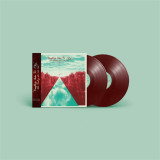
180g, blue marbled vinyl. Melina Paxinos is a composer and saxophonist (soprano and alto) and dedicates her album "Time", to the now state of time, because time is the most precious thing we have. Here, modern Jazz meets Mediterranean flair, creating a small journey through time with the help of her expressive melodies. The band Melina Paxinos Quartet plays together since 2018 and consists of Melina Paxinos (bandleader, sax, comp.), Yiannis Papadopoulos (piano), Ntinos Manos (bass) and Dimitris Klonis (drums). As a guest musician this time she invited Andreas Polyzogopoulos, who with his lyrical playing, accompanies the band with his trumpet and flugelhorn. The last song on her album "Ta Matoklada sou Lampoun" is a composition by one of the most famous Greek rebetiko musicians Markos Vamvakaris (1905-1972), which Melina rearranged for her album, thus bringing the past, that is the cultural heritage, into the present.
Jules Reidy"s sublime music maps the human experience in glittering constellations of sound. The guitarist is a driver of Berlin"s fertile contemporary music scene. A wide-eyed imagination combined with technical mastery guide each work in Reidy"s extensive catalog, from solo guitar albums and collaborations with innovative peers, including recent works with claire rousay, Oren Ambarchi, Andrea Belfi and Sam Dunscombe to major commissions from JACK Quartet and Zinc & Copper. The songs of Ghost/Spirit collectively convey an astral sense of yearning and wonder, pushing towards transcendence. The album charts a deeply personal journey with love, spirituality and transformation expressed in fractal guitar figures, ethereal vocal vapors and rippling microtones. Reidy"s guitar approach unlocks the tonal and textural possibilities of the instrument from their use of alternate tunings and astute processing. The maximalist melodics of album opener "Every Day There"s a Sunset" are bolstered by rumbling bass samples from Andreas Dzialocha, Reidy"s collaborator in the duo Sun Kit. On "Satellite," cello samples from Judith Hamann stretch out through the cosmos, orbited by spiraling finger-picked guitars, while stacked trombone chords echo out into the ether. Thundering drum samples from Berlin metal mainstay Sara Neidorf push the album to ecstatic peaks on "Every Day There"s a Sunrise," fragmented rhythms breaking apart in the atmosphere. Field recordings of the Berlin S-Bahn recur throughout the album, another endless cycle of leaving and returning that shuttles beneath the album"s whirling tones. Ghost/Spirit captures the inherent power and agency in choosing to offer yourself up to the universe and let go, ego death and prayer rendered in incandescent sonics. Reidy"s inimitable skill as a guitarist, producer and composer is on full display, and when combined with the intensity of experience, the resulting album is a remarkable work of art.
The title of the brand new album from Brussels hybrid pop quartet FABIOLA refers to the fruit of the gigantic network known as mycelium. A fitting image to describe an album rich in luxuriant sound worlds. This unique collage of 90’s hip hop basses, vivid drums, ominous synthesizers, fields recordings and almost no-wave guitar pizzicati perfectly blends with Fab Detry’s lush vocal lines. If lyrics can express political concerns, crucifying conservatism, icons and orchestrated social division, they also hearten contemplation and a return to simplicity and nature. Fabiola’s pop is utterly smiling, even if it lacks a few teeth.
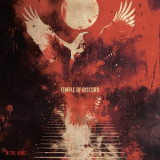
Formed by Matte Marklund when Wytch went on an indefinite hiatus. Temple Of Discord moves within darkened, ethereal and very captivating horror doom. Brilliant, indeed!
Agonis debut album Neutropia gets a high profile and well deserved remix treatment. Originally released in 2021 on his own co-founded amenthia recordings, the album was a strong statement in terms of sound. Formerly known for his excellent deep and incantatory techno, Neutropia opened the door to show more of his far reaching musical interests. It became a vital document of genre bending electronics, fusing half paced drum & bass, rolling amen breaks, forceful frequencies, dreamlike trip-hop and futuristic techno all together. For Neutropia Remixed the sound palette even got wider. Four artists that are highly appreciated by the amenthia camp were asked to rework their track of choice and make it their own. Carrier drops the pace of 'Thermo' and adds a brilliant touch of his stripped down half-time rhythm excellence. Christina Vantzou continues to build on the powerful frequencies that were present at the full original album with a mesmerizing drone trip. Amsterdam resident upsammy adds her glistering dynamics to the dark 'Algoflash' and Felix K does what he does best.. The Hidden Hawaii/Nullpunkt originator turns the rolling 'Pyrchid' into a heady drum work out.
out of Stock
Last delivered 19 months ago available to reorder, subject to availability
An absolute classic of the era - both tracks were battered back in the day and these were huge tracks at Madisons in Bournemouth around this time as they were originally released on Adrenalin Records in 1992, which was Stu J's label, a south coast rave DJ. Shaun from Aurora went on to form Mad Dog and Fugitive after this project.
out of Stock
Last delivered 16 months ago available to reorder, subject to availability
Red Marbled Vinyl. Play Dirty is the fourth studio album by British heavy metal band Girlschool released in 1983 and produced by Noddy Holder and Jim Lea from the hard rock band Slade. It has very polished sound, filled with keyboards, choruses andmelodies, containing covers of the Slade songs ,High & Dry" and ,Burning in the Heat" and of T.Rex's ,20th Century Boy". Drummer Denise Dufort rated the album as her favourite of all the band`s career saying it had a more mature sound to it and comparing it to Def Leppard. Girlschool are thelongest-running all-female rock band, still active after more than 40 years. During their career they travelled the world, playing in many rock and metal festivals and co-headlining or supporting important heavy metal bands. They maintain a worldwide cult following, and are an inspiration for many female rock musicians.
Red Vinyl. Play Dirty is the fourth studio album by British heavy metal band Girlschool released in 1983 and produced by Noddy Holder and Jim Lea from the hard rock band Slade. It has very polished sound, filled with keyboards, choruses andmelodies, containing covers of the Slade songs ,High & Dry" and ,Burning in the Heat" and of T.Rex's ,20th Century Boy". Drummer Denise Dufort rated the album as her favourite of all the band`s career saying it had a more mature sound to it and comparing it to Def Leppard. Girlschool are thelongest-running all-female rock band, still active after more than 40 years. During their career they travelled the world, playing in many rock and metal festivals and co-headlining or supporting important heavy metal bands. They maintain a worldwide cult following, and are an inspiration for many female rock musicians.
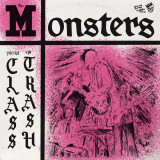
Dies ist die zweite Auflage von The Monsters "You're Class, I'm Trash", dem noch aktuellem Monsters-Album aus dem Jahre 2021 (erste Auflage war gelb und mit einer 7" Bonus-Single). Diese zweite Auflage hat ein neues pinkfarbendes Sleeve-Design, kommt als 180g Vinyl und mit einem zweiseitig bedrucktem Insert. HI-SPEED-BOOGIE-FUZZ-GARAGE-TRASH-ROCK-N-ROLL FROM LEGENDARY BERNESE GARAGE PUNKS PLAYED WITH A CHAINSAW-ON-STEEL 13 SPLATTER HITS INCLUDING SMALL HORROR OPERA BY SWISS FILM COMPOSER MARIO BATKOVIC The Monsters wurden 1986 in Bern der Schweiz gegründet, als Alternative zur damaligen populären Musik (z. B. Disco, Pop, Top 40 Rock). Sie nannten dies "Teenage Primitive Rock n' Roll Chainsaw Massacre Garage Trash Mix up Rockabilly mit Punkrock und Garage" und haben sich zu einer gefragten Garagen-Punkrockband gemausert, die auf Festivals, in Klubs und großen Hallen so weit gen Osten wie Japan, gen Süden wie Brasilien und gen Norden zu den Skandinavier resit und dort audspielt. Sogar im so Wilden Westen wie New York City in Amerika. Und dann öffnet 2020 die Türen, YAHOO!!! Die Welt wurde komplett abgeschottet und die Pläne aller änderten sich! Da es in naher Zukunft keine Tourneen gäbe, war es jetzt an der Zeit, ein neues Album zu machen. So widmete sich die Band zwei Wochen, um ihren Proberaum aufzuräumen und neue Musik zu schreiben, und 3 Tage im Berner Shirt Off Studio um diese aufzunehmen. Voila! Hier hast du Rosemary's Baby den Knüppel aus dem Sack: 13 raue, laute und spritzig klingende Tracks, die live ohne Overdubs (nur der Gesang/das Geschrei') aufgenommen wurden. Textlich ist das Album eine komplette Katastrophe mit nicht viel mehr als 120 Wörtern, welche aneinandergereiht meistenfalls keinen Sinn ergeben! Es ist eigentlich völliger Quatsch, aber THE MONSTERS lieben es! Das Cover stammt übrigens vom Berner Surrealisten Jerry Haenggli.
The second release on Between Stations (proceeding the «rst BETWEENTAPES release by DOOM TV), sees label head Cowper kicking off the «rst in the BETWEENEDITS series. Possessing atom-splitting heft at a tectonic pace, A1 writhes around on a French Kiss theme, tantalising FX swirls and thundering bass before sensual pads slowly begin to caress the central nervous system, taking us off into hypnotic revelry.
B1 grasps onto a swirling and mesmerising, opiated version of Larry Heard. A spine-tingling concoction of elements and drifting echoes transporting us to a blissful ocean, ebbing with the sonic currents in a suspended state of glee. B2 pulls on the space cord, bringing us back from our temporary drift with a slow and steady hand. This one lets the machines do the talking whilst we concentrate on keeping stable as the «nal remnants of euphoria are squeezed from our serotonin glands.
out of Stock
Last delivered 4 months ago available to reorder, subject to availability
Alternative Tentacles Records is thrilled to announce the first-ever vinyl release of two long-awaited tracks, previously available only in digital format. This highly anticipated split 7" features Jello Biafra & The Guantanamo School of Medicine and The November 3, with two explosive songs: "Blunder Blubber" and "IFAR." "Blunder Blubber," originally released as a digital single to mark Rush Limbaugh's passing and was recorded during the TEA PARTY REVENGE PORN recording sessions, highlights everything iconic about Jello Biafra & The Guantanamo School of Medicine. The song critiques the rise of right-wing extremism, tracing its roots back to Rush Limbaugh's influence and the repeal of the Fairness Doctrine under President Reagan in 1987—a policy change that allowed one-sided political commentary on public airwaves. Biafra argues that this set the stage for the toxic media landscape, fueling figures like Limbaugh and the current wave of ""MAGA"" rhetoric. Reflecting on the political climate, Biafra notes, "I wrote the song back when Clinton was president, seeing the writing on the wall. I was hoping never to use it, but we had no choice but to update and perform it now." On the flip side, The November 3 delivers "IFAR," a fiery debut track that first dropped during the 2020 Republican National Convention. Blending punk rock energy with raw political outrage, lead vocalist Billie O' Rights unleashes a bold, biting rant, backed by Tom Pain’s searing guitars. Pat Triotte and Justice Ferrall add their creative touches to this electrifying anthem, capturing the chaotic spirit of the times. "IFAR," is a raucous, tongue-in-cheek commentary on partisan divides, clocking in at just two minutes of catchy, irreverent fun. Interestingly, the song was reportedly conceived during a mundane moment: Pat Triotte was baking blueberry muffins one Saturday afternoon when the idea hit, and within hours, the track was recorded— and the muffins were supposedly amazing. Despite the humorous and often provocative tone of both songs, the core message of this release is clear: a call to action to vote. With this limited 7" vinyl, Alternative Tentacles Records urges everyone to make their voices heard in the 2024 election and beyond! Don't forget to VOTE!
Italian dramatic death metal band DARK LUNACY celebrate
the 25th anniversary of their acclaimed debut album
“Devoid” which will be reissued as remastered 2LP
gatefold on February 21st via Fuel Records/Self.
In addition to the original track listing “Devoid 25th
Anniversary” contains “From The Blacked Soul” taken
from the first EP, “Oblivion” a bonus track from the
recording sessions of the album, and a commemorative
poster.
Album features and was co-produced by Joseph Shabason. String arrangements by Owen Pallett. Thom Gill has written songs for Chaka Khan, in addition to contributing to albums by The Mountain Goats, Owen Pallett, Joseph Shabason, Bernice, and many others. Way Through is a collaborative album by Toronto musicians Chris Cummings, Joseph Shabason, and Thom Gill (as Cici Arthur). Inspired by moments of discovery in familiar places, the album's title reflects the feeling of uncovering hidden paths in life. Musically, it blends mid-century influences like Jobim and Sinatra, with producer-instrumentalists Shabason and Gill crafting lush, expansive soundscapes. Featuring a 30-piece orchestra led by Owen Pallett, the album brings a grand scale to Cummings' intimate, reflective lyrics. The project began in 2020 when Cummings lost his job and turned to full-time music for the first time in his life. His collaborators tailored the arrangements to showcase his understated vocal delivery against sweeping orchestral backdrops. Songs like 'Cartwheels for Coins' and 'Prior Times' explore themes of regret and emotional complexity, contrasting the grandeur of the music with Cummings' quiet introspection. Tracks like 'Damaged Goods' provide upbeat moments with doo-wop harmonies, while the cinematic closer 'No Fight Or Flight' emphasizes the filmic quality of the album. Through its orchestral richness and deeply personal lyrics, Way Through captures the tension between ambition and realism, offering a poignant reflection on life's unpredictable journey
Bunny Wailer, respectfully called "The Blackheart Man", produced Johnny Scar's one-off recording 'United Africa'. The mystic singer wrote this heavy roots song and sang in his unique chant with a stylistic nod to the roots reggae icon, Burning Spear. The song appeared as 12"on the Solomonic Production imprint in 1986.
When Apollo Brown and Crimeapple connect, it’s like old film grain under a projector— gritty, timeless. This album isn’t just boom-bap nostalgia; it’s a rebirth of smoke-stained bars, where Crimeapple plays both poet and philosopher, flipping bilingual manteca rhymes with a chef’s precision, stirring up the street grime and serving it with a side of sharp wit. Apollo Brown, as always, builds his beats like ancient architecture—dusty, soulful, and heavy with forgotten stories. These tracks sound like the cracks in the sidewalk talking back, the perfect companion for long nights and even longer thoughts. It’s a sonic novel, a street sermon, and Crimeapple’s wordplay dances through it like grease sizzling in a pan, a reminder that even in decay, there’s beauty. This, Is Not That.
Two records came out in 1988 that forever changed the perception of "experimental" or "serious" music produced in Portugal. These were "Plux Quba" by Nuno Canavarro and "Música de Baixa Fidelidade" by Tózé (António) Ferreira. Both were released by the same label - Ama Romanta -, an influential independent imprint closely linked to avantgarde pop band Pop Dell'Arte. Because those records appeared in what could be perceived as an "alternative pop" framework, they rescued this difficult music from Academia. It helps that Canavarro played in a successful new wave pop band (Street Kids) during the period 1980-83. By association, being a friend since 1976, António was in close contact with many of the musicians and bands that were part of the equally celebrated and detested Portuguese Rock Boom (roughly 79-82).
He was not a musician then but through his friendship with Canavarro, who had the means to acquire electronic equipment, António became involved with that equipment and shared Canavarro's passion for experimentation and curiosity for knowledge. They tried to get hold of as many technical magazines as possible and learn while testing ideas. In 1983, Street Kids were about to break up, young lives drafted into the Army and maybe, in Canavarro's case, a whole new passion for challenging music similar to his bandmate Nuno Rebelo, by then in the process of discovering a wide range of "other" music mainly through Jorge Lima Barreto. Barreto, who had started Telectu with Vítor Rua, possessed a huge book and record collection and, like Rua before them, Canavarro, Rebelo and Ferreira became fascinated by the pool of knowledge they now had access to by frequenting Barreto's house in Lisbon. He was roughly a decade older, had published several books and other writings throughout the 1970s, cultivated an anarchic stance and a penchant for cultural indoctrination. Rebelo was the first to be introduced via his contact with Rua (who had invited him to play in his other band GNR).
Overwhelmed, he felt the need to share his enthusiasm with friends and eventually took a few to the house in true pilgrimage fashion. To see the Light. Among the few he led there was even João Peste, founder of Ama Romanta. Canavarro and Ferreira preceded him.
Ferreira recalls an exciting learning process added to his experiments with Canavarro's array of synths such as the Korg Ms 20, Korg polysix, ARP Axxe, Roland SH-01, the Ensoniq Mirage sampler... He read in a magazine article about someone who had studied at the Institute of Sonology (then in Utrecht, Netherlands) and went there during a vacation trip in the Summer of 1983. He became excited by the prospect of studying at the Institute but money was a problem. Canavarro, on the other hand, was admitted there in the following year. Back in Portugal, Ferreira eventually abandoned his Chemical Engineering studies in Lisbon's Technical Institute in favour of a more focused music practice. He collaborated with Telectu during 1984 and 85 as a sort of technical engineer, implementing some recording solutions and background tapes and went to work at a thermoelectric power plant in Sines, hoping to make enough money to fund his musical studies. He did and proceeded with the paperwork for admission at the Institute of Sonology, now based in The Hague. António studied there in 1986-87 and the present album includes two compositions developed at the Institute: "More Adult Music" and "This Is Music, As It Was Expected", both featuring the voice of Rodney Waschka II. Among other activities and talents, Rodney is an expert in computer music and to António his voice sounded similar to Robert Ashley's, whose work he admired.
What happened at the Institute was a systematization of António's self-taught practice. Computer software, Musique Concrète, noise and silence, organisation of abstract ideas and sounds. The original notes on the back sleeve of the LP give some indication of process and thinking, but a more detailed account was given by António in the liner notes of the CD reissue in 2002, which are also included in this 2025 LP reissue.
The music sounds deep and detailed, despite the fact of António calling it low-fi ("Baixa Fidelidade"). It flows like an improvised performance where several musicians might be responding to each other, respectful of their mutual space. Drama occurs, as a natural emotional connection is sought by the listener. Piano, bells, drone, processed voices, even the clear narrative of Rodney Waschka II, contribute to create a sort of alternative perceptual reality. The sounds are almost tangible, more a part of the physical world than ethereal manifestations and thus it would not be correct to invoke "ambient music" as a selling point. But although "physical" and distinct, this music is still alien, more so in Portugal's 1988 environment. In March, helped by Canavarro, António set up a home studio and there he recorded the remaining material for this album: "Algumas Pessoas Olharam O Sul E Viram Deserto", "Um Som, Seguido De Uma Cena Negra E Malva" and "O Verão Nasceu Da Paixão De 1921".
"Música de Baixa Fidelidade" stands not only as a proof of great resilience but as one of those magnificent works of art coming from someone who balanced technical inclination and emotional sensibility. Because of that, Tózé Ferreira is able to decode the phantom world of sound for anyone who cares to experience the sensation of inhabiting a version of the Future. First ever vinyl reissue, reproduction of the original artwork with an additional insert. Made in collaboration with the artist and the support of Paulo Menezes (Plancton Music), who provided valuable assistance. Remastered by Taylor Deupree.
LA-based band ASHRR picked up plenty of new fans with their recent Sunshine Low album and now they're back with the sixth single from it and it comes with some seriously heavyweight names on the remix. Chicago house pioneer Ron Trent does his thing to 'Please Don't Stop The Rain' by going super deep, spine tingling and heady with some lush arps and distant guitar twangs adding a Balearic feel. Dub treatments come from the Prescription boss himself, while ASHRR's alter ego, ASHRR Soundsystem, offer up an instrumental and a remix that lay down dubby house drums and lush chord work. This one keeps the summer vibes going well into winter.
out of Stock
Last delivered 5 months ago available to reorder, subject to availability
Wrekmeister Harmonies, the duo of JR Robinson and Esther Shaw, are sonic shape shifters with expansive ideas. From special performances to collaborations the band have worked with David Yow (Jesus Lizard) Ryley Walker, Ken Vandermark, Bruce Lamont, Mark Solotroff, Sanford Parker, Jamie Fennely (Mind Over Mirrors), The Body, Mary Lattimore, Olivia Block, Jamie Stewart (Xiu Xiu), Chris Brokaw, Fred Lonberg-Holm and Thor Harris (Swans). Inspired by artists such as Glenn Branca, Rhys Chatham, and Lou Reed, the duo approach each album as a new sonic adventure. Flowers in the Spring was born of deep, careful listening as much as composing. It explores music as a meditative practice with a focus on microtonal shifts and intersectional overtones. Robinson explains: "It"s the subtle movements within and without, the fine threads of sound, loud or quiet, interior or exterior that become valuable." Limiting himself to just four mixer channels on each piece; precisely layering guitar and electronics, intently listening and manipulating either the intensity or the duration of each loop to yield unexpected interactions, moments of beauty as well as dissonance. "Flowers in Spring" emerges from fizzing distortion, hewing monolithic slabs of drone from the rock face while electronics push through fissures. "Fuck the Pigs" uses layers of noise as it metaphorically shifts into the depths of winter, arctic winds howling while the guitar scars like frost across a windowpane. In contrast "A Shepherd Stares Into the Sun" is pure light and heat, overwhelming in its sheer celestial enormity. "Flowers Variation" was born of nature"s microscopic subterranean movements in its primordial gloom and buzzing synth pads. Each track holds multitudes of micro sonic details coming together to form the album"s expansive ecosystem.
Wrekmeister Harmonies, the duo of JR Robinson and Esther Shaw, are sonic shape shifters with expansive ideas. From special performances to collaborations the band have worked with David Yow (Jesus Lizard) Ryley Walker, Ken Vandermark, Bruce Lamont, Mark Solotroff, Sanford Parker, Jamie Fennely (Mind Over Mirrors), The Body, Mary Lattimore, Olivia Block, Jamie Stewart (Xiu Xiu), Chris Brokaw, Fred Lonberg-Holm and Thor Harris (Swans). Inspired by artists such as Glenn Branca, Rhys Chatham, and Lou Reed, the duo approach each album as a new sonic adventure. Flowers in the Spring was born of deep, careful listening as much as composing. It explores music as a meditative practice with a focus on microtonal shifts and intersectional overtones. Robinson explains: "It"s the subtle movements within and without, the fine threads of sound, loud or quiet, interior or exterior that become valuable." Limiting himself to just four mixer channels on each piece; precisely layering guitar and electronics, intently listening and manipulating either the intensity or the duration of each loop to yield unexpected interactions, moments of beauty as well as dissonance. "Flowers in Spring" emerges from fizzing distortion, hewing monolithic slabs of drone from the rock face while electronics push through fissures. "Fuck the Pigs" uses layers of noise as it metaphorically shifts into the depths of winter, arctic winds howling while the guitar scars like frost across a windowpane. In contrast "A Shepherd Stares Into the Sun" is pure light and heat, overwhelming in its sheer celestial enormity. "Flowers Variation" was born of nature"s microscopic subterranean movements in its primordial gloom and buzzing synth pads. Each track holds multitudes of micro sonic details coming together to form the album"s expansive ecosystem.
Maud the moth, the solo project of Spanish-born and Scotland-based pianist, singer and songwriter Amaya Lopez-Carromero announces her new album, The Distaff, to be released via The Larvarium (digital +CD) and La Rubia Producciones (vinyl) Amaya has long used the mantle of Maud the moth as an alter-ego, a séance-like conduit to explore themes of rootlessness, identity and trauma. The Distaff in particular refers to the stick or spindle onto which wool or flax is wound for spinning, and an object which has historically been used across multiple cultures as a symbol wielded by the “virtuous woman”, an authoritarian ideal around which much of the trauma surrounding the feminine coalesces. The album takes the form of a sort of self reflective and surreal autobiography. It was in part inspired by the poem of the same name written by the Greek poet Erinna, as she mourns her friend's loss of individuality and agency in exchange for marriage - and therefore safety and acceptance in the eyes of society. The album exists in an ethereal but violent world of aesthetic overlaps where time stands still and fictional and reimagined folk sits at the table with Maud the moth’s usual sonic menagerie. It is the result of a lifetime of obsession with sound and music, where glimpses of musical genre offer insight into Amaya’s artistic interests and her participation in the underground European scene for many years, in bands such as healthyliving. Heavier, darker, and more exposed than any of her previous works it features some highly accomplished artists, such as Seb Rochford (Patti Smith, Polar Bear, Sons of Kemet, Pulled by magnets, etc.) on drums, Alison Chesley (Helen Money) on cello, Fay Guiffo on violin and Scott McLean (Ashenspire, healthyliving, Falloch) on guitar, saxophone and synthesiser. Maud the moth shares the video for "Siphonophores". About the track, Maud the moth says; I wrote "Siphonophores" on guitar, during the first lockdown, a period where I was kind of trapped between an almost empty flat in Edinburgh and Dresden. It was an incredibly harrowing time, but also one of hope and where important new things were being birthed. I felt incredibly sensitive to everything, almost like life was happening in slow motion. I´m not a confident guitarist since I am completely self-taught, but, probably because of this, I feel that this instrument allows me to focus on aspects of the songwriting that I normally overlook when writing on piano, and I think it was a necessary step for this song to exist. Something else which I've been really exploiting lately and features strongly in the album is the percussive capabilities of the piano, and in particular, of the sustain pedal when mic'd up. This can be heard very clearly at the beginning of "Siphonophores". Written and arranged by Amaya, with some contributions in the later role from the aforementioned collaborators, the album presents nine tracks originally written entirely on acoustic piano as accompanied voice pieces, in pure singer-songwriter fashion. The album was co-produced and recorded by Scott and Amaya in different studios across the UK between January and July of 2024, in a process that started shortly after the 2020 pandemic and finished alongside the album recordings in a detailed, organic and at times obsessive process aimed primarily at capturing the natural dynamics and expression of free performance. The Distaff was mixed in its entirety by Scott and mastered at Abbey Road by Alex Wharton (Radiohead, My Bloody Valentine, Aurora, Kathryn Joseph etc.) Despite being born of a very personal point of view, the album lacks a specific narrator and was conceived almost as a sonic trousseau, where the needle point, silks and other family heirlooms have been swapped for out-of-the-corner-of-the-eye memories of rural Spain by the vineyards, family disputes, old tales of wartime pains, generational breaches and finally the conflict of migration and estrangement. The songs paint dystopian pastoral scenes which evolve throughout the span of one fictional day outside of time and coherent locations and where imagination (often the only account surviving from traumatic events and gaslighting) has become indistinguishable from fact. The Distaff attempts to acknowledge past trauma, comprehend and process some of the more difficult aspects which have contributed to our darker self and offer closure and solace through creative catharsis.
Maud the moth, the solo project of Spanish-born and Scotland-based pianist, singer and songwriter Amaya Lopez-Carromero announces her new album, The Distaff, to be released via The Larvarium (digital +CD) and La Rubia Producciones (vinyl) Amaya has long used the mantle of Maud the moth as an alter-ego, a séance-like conduit to explore themes of rootlessness, identity and trauma. The Distaff in particular refers to the stick or spindle onto which wool or flax is wound for spinning, and an object which has historically been used across multiple cultures as a symbol wielded by the “virtuous woman”, an authoritarian ideal around which much of the trauma surrounding the feminine coalesces. The album takes the form of a sort of self reflective and surreal autobiography. It was in part inspired by the poem of the same name written by the Greek poet Erinna, as she mourns her friend's loss of individuality and agency in exchange for marriage - and therefore safety and acceptance in the eyes of society. The album exists in an ethereal but violent world of aesthetic overlaps where time stands still and fictional and reimagined folk sits at the table with Maud the moth’s usual sonic menagerie. It is the result of a lifetime of obsession with sound and music, where glimpses of musical genre offer insight into Amaya’s artistic interests and her participation in the underground European scene for many years, in bands such as healthyliving. Heavier, darker, and more exposed than any of her previous works it features some highly accomplished artists, such as Seb Rochford (Patti Smith, Polar Bear, Sons of Kemet, Pulled by magnets, etc.) on drums, Alison Chesley (Helen Money) on cello, Fay Guiffo on violin and Scott McLean (Ashenspire, healthyliving, Falloch) on guitar, saxophone and synthesiser. Maud the moth shares the video for "Siphonophores". About the track, Maud the moth says; I wrote "Siphonophores" on guitar, during the first lockdown, a period where I was kind of trapped between an almost empty flat in Edinburgh and Dresden. It was an incredibly harrowing time, but also one of hope and where important new things were being birthed. I felt incredibly sensitive to everything, almost like life was happening in slow motion. I´m not a confident guitarist since I am completely self-taught, but, probably because of this, I feel that this instrument allows me to focus on aspects of the songwriting that I normally overlook when writing on piano, and I think it was a necessary step for this song to exist. Something else which I've been really exploiting lately and features strongly in the album is the percussive capabilities of the piano, and in particular, of the sustain pedal when mic'd up. This can be heard very clearly at the beginning of "Siphonophores". Written and arranged by Amaya, with some contributions in the later role from the aforementioned collaborators, the album presents nine tracks originally written entirely on acoustic piano as accompanied voice pieces, in pure singer-songwriter fashion. The album was co-produced and recorded by Scott and Amaya in different studios across the UK between January and July of 2024, in a process that started shortly after the 2020 pandemic and finished alongside the album recordings in a detailed, organic and at times obsessive process aimed primarily at capturing the natural dynamics and expression of free performance. The Distaff was mixed in its entirety by Scott and mastered at Abbey Road by Alex Wharton (Radiohead, My Bloody Valentine, Aurora, Kathryn Joseph etc.) Despite being born of a very personal point of view, the album lacks a specific narrator and was conceived almost as a sonic trousseau, where the needle point, silks and other family heirlooms have been swapped for out-of-the-corner-of-the-eye memories of rural Spain by the vineyards, family disputes, old tales of wartime pains, generational breaches and finally the conflict of migration and estrangement. The songs paint dystopian pastoral scenes which evolve throughout the span of one fictional day outside of time and coherent locations and where imagination (often the only account surviving from traumatic events and gaslighting) has become indistinguishable from fact. The Distaff attempts to acknowledge past trauma, comprehend and process some of the more difficult aspects which have contributed to our darker self and offer closure and solace through creative catharsis.
After two pandemically conditioned ‘reaction’ albums - Yay! (2023) and Neigh!! (2024) - a few non-album singles and a compilation album, a downsized and sleek Motorpsycho is back where we all know and love them, with an epic, sprawling double album, filled to the brim with inventive, organic and ecstatic rock-based music. Rejoyce Psychonaut! This eponymously titled, 11 song work, has exactly as much variety & diversity, accord and discord, as one expects from a band that has released a few albums before, and that these days must be regarded as an institution in European rock. From concise 3min-something pop-rockers, to 20mins plus progressive epics, via acoustic intimacies and psychedelic wig-outs, this is concentrated Motorpsychosis: commenced Rebis, countdown initiated. Ever closer. Ever sharper... Since the traditional 3 or 4 piece rock band seems to be a dying breed these days, and MP always was a band in flux anyway, a new pragmatic era has begun in the Psychoverse. The band has, in what one might call alchemical terms, been ‘dissolved and purified’, and is by now again reduced to the core two founding members HMR & BS. This is nothing new, it has happened a few times before, but these days they are also the owners and creators of the record company NFGS, which is now the hub of all recorded band activity, and Motorpsycho marks the final severance of existing ties to other labels for the first time in 35 years. If ‘freedom is free of the need to be free’, this is it. Yikes! The minimalist title of the album is then not just easy to remember, it’s also a statement: a new era has begun in the Psychoverse, a state of affairs reflected in execution and details as well as title, if not perhaps, in ambition or size: “Senex psittacus negligit ferulam” *. This is a time of new beginnings for a band that has spent two years consolidating and reseting before charging ahead anew on a new path, trumpets blaring (...and trumpets don’t come much more blaring in the Psychoverse than with this grandiloquent hyperbole. Good fun! ). New day rising indeed. The core band was adroitly helped by a gaggle of greats from all over the Scandinavian musical landscape on these recordings: drummers Ingvald Vassbø and Olaf Olsen, string arranger/violinist Mari Persen, vocalist Thea Grant, and - as usual - honorary psycho, brother Reine Fiske, were all fellow travellers on this musical journey. Motorpsycho was co-produced by the band and Deathprod, and mixed by Andrew Scheps. Motorpsycho are not the best at what they do, they’re the only ones that do what they do. NFGS2025 *: “Senex psittacus negligit ferulam,” or “An old parrot doesn’t mind the stick.”
After appearing with Archie Shepp at the landmark Pan-African Cultural festival in Algiers in 1969, African-American trumpeter-cornetist Clifford Thornton recorded a set of his own compositions in Paris later that year. The result was Ketchaoua, an important political and spiritual as well as musical statement that reflected the inspiration that he took from Islam. Indeed, the title of the album refers to the awe-inspiring mosque in Algiers.
Clifford Thornton’s superb band comprised his compatriots, saxophonists Archie Shepp and Arthur Jones, drummer Sunny Murray, trombonist Grachan Moncur III, pianist Dave Burrell, and bassist Earl Freeman, as well as French bassist Beb Guérin. Together they brought energy and ingenuity to the leader’s compositions, which were characterized by vivid atmospheres, exploratory, mysterious sounds and haunting themes. And the song titles conveyed an important social and cultural message. Pieces such as ‘Brotherhood’ pointed to the sense of unity and kinship that African-American artists felt with the citizens they encountered on their journey to North Africa and Europe.
This newly remastered deluxe edition of Ketchaoua provides an opportunity to hear one of the major entries in Clifford Thornton’s relatively small yet nonetheless highly impressive discography. It is an album that marks him out as a figure in the avant- garde movement of the late 60s and early 70s who deserves far wider recognition.
Finnish-born producer and pianist Idealism (800K Spotify Monthly Listeners) and French transplant Lucid Green (175k SML) are no strangers to each other’s subtle, yet potent productions. Having worked together on „Untold“ their Sophomore, fully collaborative LP “Unsaid” is a natural journey into the beautiful ambient, downtempo, lo-fi worlds they’ve each created. Through visits to Lucid’s flat in Paris and ideas being exchanged remotely, the duo experimented with different sounds, instruments and aural environments, in the process crafting a natural partnership that sits in a comfortable, melancholic pocket.
With lulling guitar and poignant piano progressions that provide a pillow to rest your ears, and downtempo percussions that keeps you ebbing and flowing along on a subtle current, unsure where one wave ends and the next begins, only the albums progressions dictate the head-nod. The album soars, reminiscent of life’s simple, yet wholly memorable moments.
As with all 823 releases, the project is a visual one as much as it is a musical project. The first singles visualizers are a fusion of Hopes & Dreams Club & 823’s design aesthetics with personal super8 footage captured by Idealism & Lucid Green, beautifully expressed from Hopes & Dreams Club membersi. Each visualizer and single art will easily stand on its own, transporting you to worlds familiar, yet undeniably groovy and sonically comfortable.
823 is a multifaceted Perth-based record label, fashion brand, and artistic community, founded by Australian producer and all-around creative, Ta-ku (630 SML). With an astute attention to detail and an ethos that appreciates the everyday things in life, 823 doesn’t stick to any particular genre. Past 823 releases include “So Far To Go” EP via Cabu (500k SML), Ta-ku and matt mcwaters’s duo project “Black and White,” featuring Masego collaboration “Flight 99” (38mil streams on Spotify), the “All Things Considered” compilations, a curated, collaborative series featuring both budding and well-established artists around the world and have included Idealism, Wun Two, pastels, L.Dre, Flobama, SwuM, Jinsang, Tenderlonious, among a host of others, as well as multiple sold out clothing capsules.
‘4th DIMENSION’ is the last and probably greatest album ever recorded by Italian piano Maestro Mario Rusca. This monumental music produc"on features tracks in Nonet, Quintet and Trio. Along with the faithful rhythm sec"on composed by Riccardo Fioravan" on bass and Maxx Furian on drums, on this slamming cinema"c jazz album Mario Rusca teamed up with two extraordinary wind players: legendary Flavio Boltro (of Michel Petrucciani Quintet fame) on trumpet and Gabriele Comeglio on sax alto.
As far as the choruses are concerned, Nicole4a Tiberini, Mar"na Rossi and Alice Macchi, from Maestro Rusca’s ensemble music courses at the Civica di Jazz School, provide inspired and swinging backing vocals. The cherry on the cake, the element that gives to ‘4th DIMENSION’ a pulsa"ng and swinging’ drive, is the par"cipa"on on the album of Marco Fadda, one of Italy’s leading percussion players.
This heterogeneous ensemble has shaped, during 5 days of intense studio recordings, an absolute masterpiece full of swinging rhythms along with a few magical in"mate moments. In his 65 years career, Italian piano legend Mario Rusca has shared the stage and recording studios with luminaries such as Chet Baker, Cur"s Fuller, Gerry Mulligan, Lou Donaldson, Art Farmer, Lee Konitz, Dusko Gojkovic, Enrico Rava, Tullio De Piscopo, Kenny Clarke, Stan Getz, Toots Thielemans, Gianni Basso, Pepper Adams, Steve Lacy and Tony Sco4 (with whom he formed an indissoluble partnership).
Being accompanied in this album by extraordinary musicians, Rusca chooses to flow in a repertoire that, like in his most recent records for Mono Jazz, bridges between original pieces and revisited standards from the American Jazz Songbook, approached with unprecedented sensi"vity and depth.
The journey of ‘4th DIMENSION’ is an extraordinary cinema"c musical voyage across various styles ranging from Bop, Hard Bop, Cool, Funk and La"n Jazz. ‘4th DIMENSION’ is a perfect follow up to the interna"onally acclaimed Easy Tempo legacy! In these 13 tracks, “il Maestro” embraces and enhances a ‘cinema"c’ component in his music - an a4ribute he has long cul"vated through original soundtracks and library albums recorded for diverse cult Italian labels.
This, as we were saying, is achieved through the addi"on of percussionist Marco Fadda, who introduces a series of rhythmic nuances across several tracks, and of the extraordinary female vocal trio reminiscent of I Cantori Moderni of Alessandro Alessandroni & Edda Dell'Orso, used in the tradi"on of Italian composers of ‘60s and ‘70s film music.
This natural progression reflects Italy's history, where jazz musicians have long been involved in soundtracks and film scoring since the late ‘50s. Italian jazz has integrated this approach into its composi"on and arranging styles, as demonstrated in the first 10 volumes of the Easy Tempo series. A spirit and tradi"on that Rusca's ‘4th DIMENSION’ record con"nues. Listening to some of the tracks on the record evokes the legendary works created for cinema by Piero Umiliani, Piero Piccioni, Lelio Lu4azzi, Armando Trovajoli, Gianni Ferrio and others.
Amsterdam-based keyboardist, producer, arranger and DJ Soul Supreme reached out to NYC drummer Jay Mumford in 2021 to lay the down groove on his re-imagining of Q-Tip and J-Dilla's "Let's Ride". That paved the way for future collaborations: a cover of A Tribe Called Quest's "Award Tour (We Gettin' Down)" and two tunes on Soul Supreme's Poetic Justice LP. But when the pair began doing brief covers of their favorite funk, jazz and hip-hop tunes on Instagram just for fun, followers of both musicians - and often, the covered artists themselves - began to take note. Two of those 20+ covers were particularly well-received, and the duo decided to answer the peoples' call for a 7" release with the songs pushed to their full potential. Similar to "Award Tour" and "Let's Ride", a hip-hop classic and a fan favorite are pushed to their full potential here. This installment goes coast to coast and explores Digable Planets' "9th Wonder" (the "East" side) and People Under the Stairs' (PUTS) "Crown Ones" (the "West" side).
The iconic synth intro of "9th Wonder" makes way for Jay's thunderous ode to a slowed down Clyde Stubblefield groove. Sure to be a favorite with DJs, Jay eventually detours into a syncopated New Orleans funk break, before getting back to the groove for Soul Supreme's funky wah wah clavinet work. Throughout, the arrangement expands beyond both that of the original and all of its DNA. The addition of cascading horns (featuring a trumpet solo by Lourens van der Zwaag) and a second, more aggressive break from Jay bring it back full circle, completing a modern update of a classic that manages to pay homage to '70s jazz-funk, breakbeats and '90s hip-hop - all while staying both modern and raw.
Diehard PUTS fans will recognize Soul Supreme's catchy Rhodes line as soon as the needle drops, but Jay's heavy funk groove quickly separates it from the original and takes it from hip-hop cover to heavy funk tune. Soul Supreme's Rhodes solo pushes it far beyond the confines of instrumental funk as the groove intensifies, while his chops as an arranger are on full display: his horn parts - featuring van der Zwaag, trombonist Olav Schloorlemmer and Job Chajes' Contra-Alto Clarinet that channels The Headhunters - counter his synth melodies in a discussion that completes the record as a heavy slice of uncut jazz-funk.
As part of the 60th anniversary celebrations of iconic series Doctor Who, one of the show’s most renowned tales underwent an out of this world update as it received an artistic colourisation.
Originally transmitted in December 1963 to February 1964, The Daleks were introduced to audiences and soon became one of the Doctor’s most formidable and enduring foes.
The story follows the very first crew of the TARDIS as they land in a petrified forest on an alien planet. Determined to explore, the Doctor (William Hartnell) leads his
companions into the metal city, where they discover danger at every corner and what will become his deadliest enemy, the mutant Daleks.
These seven original 25-minute episodes have been colourised and weaved together into a 75-minute blockbuster.
With brand new sound, a brand-new soundtrack - created by Mark Ayres utilising elements of Tristram Cary’s original music with newly recorded score –
The Daleks has been updated, whilst ensuring the original classic story remains as thrilling as it was when it began in 1963.
The new recording of The Book of Sounds is an intimate exploration of the piano by pianist Carlos Cipa - a way of looking into the sound, of listening into the moment when Cipa's fingers press down on the piano keys. The Book of Sounds, composed between 1979 and 1982 by composer and pianist Hans Otte, is a musical pendulum movement of one hour in twelve 'pieces', as the composer himself describes them. Chords and melodies repeat themselves, sometimes quickly, sometimes slowly; they follow each other in harmonic cadences and yet never dissolve - a timeless back and forth.
The Book of Sounds is the European-German answer to the concert music of American minimalism. But it is also the essence of many questions about society and the human condition at that time. Inspired by Zen Buddhism, Otte was convinced that a return to simplicity, to the unagitated - a piano, harmonic cadences, a middle register - frees the listener to focus on what is really important in art: the human being. Introspection begins with listening. Seldom have simple chords and melodies been so selectively staged. It is a process of endless reduction - no wild sound dramaturgies, no climaxes, hardly any beginning or end. The interpreting pianist simply prepares a tableaux of perception for the listener. Cipa naturally sets accents; he recorded the 12 pieces on three different pianos - a Steinway grand piano, a Yamaha piano, and a Yamaha CP-70, an early electric piano - to help shape the tonal characteristics.
Carlos Cipa hits the nerve of the times with this new recording. What music can be as art is still up for debate today. The Book of Sounds is not 'art-proof' and in this it is still a provocation today; absolutely unspectacular and practising relaxation. It is a wonderful invitation to feel, experience, and perhaps even find oneself in the confrontation with the work - and for a moment not to fuel the discourse. Cipa, who otherwise appears as a composer himself, here carries out Otte's intended gesture of withdrawal in a double sense and steps into the background as creator but also interpreter, in order to bequeath The Book of Sounds to the loudspeakers and headphones at home in one step forward.
Rising indie soul artist Sevens announces the release of his highly anticipated debut album, Sincerely, Sevens, on February 21, 2025. At just 24 years old, Sevens emerges as a compelling voice in the contemporary soul scene, blending indie soul, neo-soul, and jazz into a collection of sincere, heartfelt songs.
With a distinct baritone voice and a gift for storytelling, Sevens explores themes of love, growth, and introspection throughout the 9-track record. His philosophy is simple: less is more. Crafted over a span of three years, much of the album was created in Sevens' bedroom, showcasing his skills not only as a songwriter and vocalist but also as a multi-instrumentalist and producer.
Sincerely, Sevens captures the artist in his purest form—a deeply personal work that touches the soul. From sparse, intimate arrangements to warm, groove-infused instrumentation, the record embraces vulnerability while exuding timeless charm.
The album features contributions from trusted collaborators: Boris Van Overschee (co-producer / Delv!s, Portland) Willem Ardui (additional production / Blackwave.) and David Poltrock (additional keys)
Tobie Speleman expertly handled the final mix, ensuring every note resonated with clarity and purpose.
Reflecting on the album, Sevens shares: “I wanted to feel more with less. I wanted to evoke, I wanted to touch. Parts of me I’ve never gone. It is honest, it is true. It is me.”
With Sincerely, Sevens, the young artist solidifies his position as one to watch—an emerging voice with both depth and authenticity.
A special ‘Submerge” 12” EP featuring a bunch of reworks of this pivotal track from Apta's forthcoming ‘The Pool’ album on Castles in Space.
Kicking things off, Apta's own rework of the original sees the shadowy textures and droning wall-of-sound backdrop turned into a static-strewn dreamland of a piece, underpinned by a flickering guitar riff, cracked snare drums and fuzzed-out Odyssey strokes before launching into the euphoric half-time vocal refrain.
The follow-up sees Clay Pipe boss, illustrator and musician step into her Hardy Tree guise for a beautifully hypnotic waft of wistful folk-tinged electronics and shimmering ambient textures. It's warmly nostalgic, and packed full of all the feel of a lovely Clay Pipe release.
Following on from that, modular wizard Polypores takes pieces of the original and stretches them into an organic swell of texture and movement, warping the low basses and flickering modular plinks (and / or plonks) into a beautiful, undulating wall.
Flip over and It's none other than the brilliant Pye Corner Audio, providing an organically blooming suite of saturated percussion and woozy drifting oscillators, in peak PCA fashion. There are few artists that can do as much as with little as Martin Jenkins can, and hearing his audio sunshine underpinning the vocal line is breathtaking.
It's good to get the ears nice and soothed too before the aural assault and hypnotic spirit-cleansing heft of the legendary Gnod. Dubby throbbing bass and cavernous reverb tear the original into shards and piece it together as a churning, industrial powerhouse before shooting the rest into the endless reaches of space.
Closing things out on a space theme is the ideal way to do things too, with Field Lines Cartographer's remix taking things waaay into the outer reaches. Grounding bass churns and stellar synth sweeps float below the modulated vocal line, resulting in a perfectly crafted drone, rich in melody but untethered to the earth.
Amongst the hundreds of recordings issued by Sun Ra and his Arkestra, under their various guises, the majority were recorded in concert or in makeshift studios such as their early 1960s set-up at NYC's Choreographer's Workshop. Beyond those, roughly 22 albums were recorded at Variety Recording Studio in New York's Times Square. However, on August 25, 1986, Sun Ra and cohorts entered Mission Control, a state-of-the-art 24-track studio north of Boston, which was teeming with electronic keyboards and otherworldly sound generators. Nestled within that arsenal was a brand-new digital ultra keyboard — the Prophet VS ("Vector Synthesizer").
Of all the keyboards Ra played throughout his half-century career, the Prophet was one of the most sophisticated. There's no evidence that he had played either of the instrument's earlier incarnations, the Sequential Circuits Prophet-5 and Prophet-10. Created using microprocessors, a then-new technological advance, under the auspices of engineer Dave Smith in 1978, the Prophet-5 revolutionized electronic music as the first polyphonic and, most importantly, programmable synthesizer.
Ra was intrigued by the Prophet (surely by the instrument as well as by the name). Recorded during a single day, it's about time that these once lost performances have now been found.
It was a joy and a thrill to be sitting at the console hearing this music for the first time, especially with my fingers on the faders and knobs of the mixing desk. We watched the oxide fly off the 2" tapes during playback, making this our one chance to digitize before they metamorphosed into dust. Welcome to the new Sun Ra album....35+ years after it was recorded. The Omniverse has expanded once again.
Hereditary is a 2018 American psychological horror film written and directed by Ari Aster in his feature directorial debut.
He later went on to direct Midsommar (2019) and Beau Is Afraid (2023). The movie stars Toni Collette, Alex Wolff, Milly Shapiro, Ann Dowd, and Gabriel Byrne.
When Ellen, the matriarch of the Graham family, passes away, her daughter’s family begins to unravel cryptic and increasingly terrifying secrets about their ancestry.
The more they discover, the more they find themselves trying to outrun the sinister fate they seem to have inherited.
The soundtrack for the movie was written, arranged, and produced by Colin Stetson. Aster tried to keep it simple for Stetson regarding the music, but he wanted one thing to be apparent: the music had to “feel evil”.
This 2LP is housed in a gatefold sleeve that includes liner notes by the director, Ari Aster.
Sunny War, also known as Sydney Ward, found inspiration for her latest album Armageddon In A Summer Dress while living in her late father's 100-year-old house in Chattanooga, TN. She initially thought the house was haunted. Eerie sounds and visions led her to write the song "Ghosts." However, she later discovered that hallucinations were caused by gas leaks, shifting her understanding of those experiences but not her artistic focus. Armageddon In A Summer Dress explores themes of memory, loss, and the ghosts of past selves. After the success of her 2022 album, Anarchist Gospel, Sunny spent more time touring with artists like Bonnie Raitt and Mitski. To avoid falling back into past struggles with alcohol, she channeled her energy into music, crafting intricate demos and experimenting with sound. This process involved shifting from acoustic to electric guitar, aiming for a fuller band sound. Tracks like "One Way Train" and "No One Calls Me Baby" highlight her blend of punk and roots influences, emphasizing the rebellious spirit shared by both genres. A notable collaboration on the album is with Steve Ignorant from Crass, whose participation in "Walking Contradiction" reflects Sunny's admiration for the band and its critique of modern society. Armageddon in a Summer Dress serves as a reflection on identity and choices, balancing heavy themes with empowerment. Sunny War encourages listeners to live authentically and resist societal pressures. Committed to continual growth, she sees every performance and song as an opportunity for exploration. Through her music, Sunny War captures the complexities of life, loss, and the transformative power of creativity.
"‘man oh man !’ is the sophomore 11 track album from indie singer-songwriter Martin Luke Brown.
Marking a significant new era in both his personal and musical life, Martin tackles a myriad of themes; self-awareness and personal growth, treasured friendships, swept-off-your-feet romance and gut wrenching heartbreak - all with a laidback, indie singer-songwriter sound that naturally shapes the album into three linear phases: the end of a relationship, new beginnings and the consequential feeling of accepting change.
Described by Martin as a ‘time capsule’, each track on the album was written and recorded in one day, making for a raw and honest snapshot of Martin’s life experiences at the time. Instrumentation is simple and recorded with producer and friend Matt Zara using almost exclusively analog technology – tape machines and vintage mics, a messiness that the duo embraced from the get go.
Martin has released over 100 songs as either a co-writer or a producer, with BTS, Dylan, Jacob Banks, Gavin James, Sam Tompkins,James Smith, Sody andJack Kane. He has also seen a wealth of success as part of pop supergroup FIZZ alongside Orla Gartland, dodie, and Greta Isaac, earning widespread praise from the likes of Rolling Stone UK, Dork, DIY, Clash & more."
Exploring late-night, after-hours meditations on sound; ‘Everything Above The Sky (Astral Travelling with Luke Una)’ is a new compilation by the titular DJ, promoter and enigmatic cultural curator. Off the back of the E Soul Cultura phenomena, this compilation comes at a timely point in Luke’s rich career as he soars the heights of playing all over the world. Avoiding any chance of his sound being pigeonholed, Luke has put together a tracklist of songs and music that have a transcendental feel, after coming off the grid, going back to source, outside the city walls .
Music has long been believed to aid out of body experiences and many of us have searched long and hard for a combination of those elusive ingredients that might alleviate some of the monotony of everyday life, our daily routines and obligations, and those things that seem to block us from the spirit of the universe. In this collection, Luke selects music with all the right ingredients in just the right quantities, allowing the listener to engage in an esoteric journey of enlightenment through sound. Being a prolific collector of music, Luke initially delivered enough tracks to compile several compilations, making the licensing process the biggest effort to date for the label. The music moves softly and slowly, never becoming too intrusive, exemplifying the wonderful elevating properties of simple songs played from the heart.
Luke’s Everything Above The Sky manifesto reads, “Astral Travelling in the meadowlands with acid folk, spiritual jazz, around midnight hocus pocus, cosmic psychedelic soul, magical spellbound whirling swirling love songs, Brazilian ballads of light into machine soul gospel utopia dreaming, Balearic bossa, Outer Space ancient African drum, the breath of trees, escaping the big bad modern world, gathering round winter fires, walking amongst the bracken in Padley Gorge in late summer twilight, overlooking the Hope Valley, escaping ego, detaching and finally letting go amongst the stars with the slowly floating people. It’s beautiful beyond. Everything above the Sky”.
Beginning his career as an original Sheffield house young blood in the mid 1980s, Luke’s move to Manchester and partnership with Justin Crawford saw the birth of Electric Chair, a cornerstone cult night in the UK underground club scene. Then came Electric Elephant, a Croatian festival paying homage to their wild eclecticism from Balearic to Brazilian to É Soul, house, disco and techno. Luke’s much loved, long-running Homoelectric night and more recently Homobloc sell out festival for 10,000 souls has been at the forefront of Manchester’s LGBTQ+ cultural landscape. Luke’s Friday evening show on Worldwide FM captured imaginations and became a cult four-hour must-listen monthly journey for fans all over the world. Today, Luke remains, as ever, at the forefront of a changing milieu, pairing the momentous legacy of Manchester’s 80s and 90s scene with the delivery of what today’s club communities need to get down.
All the shades of green. Plants. Water. The absolute necessities of life. Music, too, is an absolute necessity. To capture both color and sound in a bottle to put atop a piano like a houseplant. A clock. A fern. Synesthesia. This music is meant for that. To close your eyes and see green. To drown in the color of piano. A melancholic covey that pulls hard on the heart strings musically and lyrically, brushed over with a plethora of improvisation in smooth watercolors.
With Tim Hill’s new trajectory, we are offered a fresh neuron sprawl, branching beyond lyrics in interrupted pieces of sound. He takes our reptilian brains and welds them to our unborn futures, placing us inside of his droplet. Here, we're forced to reflect out, something singular multiplies, nature brings her face in, something shifts, our speed changes, the Self refracts and what's left jumps on sustained lines that eventually arch into meditation milk. It becomes a karmic cleanse of the amygdala, a launch from normal feeling life. Tim takes the risk, committing to diving deeper into his own bottomless pool of art, gifting us with sensory treats that dilate our old perimeters. It's sky as theatre, handing out everything but answers to questions. And where do we go? Where starlight mingles. Where minds never land.
A seasoned musician in all forms, Tim Hill has toured the world as a keyboardist, guitarist, saxophonist, and drummer, with a long time stint with LA group the Allah Las, and well known acts such as Nick Waterhouse, Curtis Harding, PAINT, and others.
In a trajectory full of about-faces, Music for Four Guitars splices the formal innovations of Bill Orcutt's software-based music into the lobe-frying, blown-out Fender hyperdrive of his most frenetic workouts with Corsano or Hoyos. And while the guitar tone here is resolutely treble-kicked—or, as Orcutt puts it, 'a bridge pickup rather than a neck pickup record'—it still wades the same melodic streams as his previous LPs (yet, as Heraclitus taught us, that stream is utterly different the second time around). Although it's a true left-field listen, Music for Four Guitars is bizarrely meditative, a Bill Orcutt Buddha Machine, a glimpse of the world of icy beauty haunting the latitudes high above the Delta (down where the climate suits your clothes)..."—Tom Carter
Hardly Cricket sees the band truly lean into their rock tendencies. Those who have enjoyed their past forays into 70s style dual guitar leads will find much to latch onto here. Explosive, high energy tunes like “New Music” and “Sacred Heart” are instantly infectious and truly set the tone with high flying guitar action from all the players. However, as always, Shirese keeps it varied. With songwriting duties being more evenly spread throughout the group this time around, listeners will find 60s garage, country, and even doo-wop inflected songs as well. Matt Paolilo’s ever present vocals and tongue-and-cheek lyrics keep listeners on their toes. While the occasional descent into tape spliced experimental madness still finds its place in the grooves. Shirese continues to evolve as their lineup continues to cement. Gone are the days of a revolving cast of characters, and in its place we find a group of friends who mesh tightly, pushing beyond their perceived limits to true rock’n’roll glory! A Grapefruit Records and C/Site Recordings co-release. Limited to 300 copies.
Dajusch unleashes the 'Ambition EP', a raw and uncompromising statement of techno tradition. Berlin-based producer, DJ and sound engineer Dajusch returns with his latest four-track EP, a high-powered offering that channels the essence of Detroit and Chicago techno while pushing the boundaries of contemporary club sound. Known for his deep connection to electronic music's pioneering roots and his work behind the scenes as a mastering engineer, Dajusch brings an intense and refined energy to this release. The EP opens with the single 'No Mas', a relentless percussive workout where hypnotic synths intertwine with driving drum patterns, setting the stage for an unyielding ride. The title track 'Ambition' follows suit with a high-octane groove, combining raw machine-funk aesthetics with a pulsating bassline and intricate, evolving textures that command the dance floor. On the flip side, 'Split' takes a darker and more cerebral turn, layering industrial-tinged sonics over a tight, rolling beat, blurring the line between peak-time energy and introspective depth. Closing out the EP is '36g', a heady, propulsive cut that builds into a whirlwind of syncopated rhythms and distorted stabs, rounding off the record with a powerful, no-holds-barred climax. With Ambition, the Spandau20 artist Dajusch reinforces his position as a purist and innovator, delivering a release that feels both timeless and forward-thinking. Whether experienced in the heart of a sweaty warehouse or through the pulse of a late-night drive, this EP stands as a testament to the raw, unfiltered power of techno.
out of Stock
Last delivered 7 months ago available to reorder, subject to availability