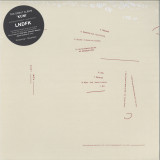
STRIKER TRAXX proudly presents its very first release — STX101: BALLAN “Chantal Grooves EP”.
Born as the new sub-label of SUPREME STRIKER, itself a direct emanation of the Skylax Records universe, STRIKER TRAXX sets the tone for a new era: raw, uncompromising, and forward-thinking. As always, the visual identity is entrusted to the legendary H5’s exclusive artwork (Daft Punk, Air, Logorama), delivering a striking design that transforms each copy into a true collector’s object.
For this inaugural strike, we welcome Asaf Ballan, aka BALLAN, an artist emerging with force from the vibrant beatscape of contemporary electronic music. With Chantal Grooves EP, he delivers a 12-inch packed with five club-weapons that dive deep into the essence of house and tech house, reshaping them with his own relentless, pumpy twist.
The trip opens with “How Should I Start”, a perfect ignition, teasing anticipation while locking you instantly on the groove. “Goddamnit (Club Tool)” follows as a pure machine workout, echoing Kerri Chandler’s house foundations while pushing them into today’s territory. “Members Only Club” exudes exclusive sophistication, a secret-weapon built for late-night dancefloors. On the flip, “Keep the Frequency Clear” hypnotizes with razor-sharp frequencies, proof of BALLAN’s sonic craftsmanship, before “Futuro” launches us headfirst into tomorrow—where innovation collides with the Romanian sunrise aesthetic, infused with a heavier, raw energy.
Influenced by the minimal masters (Zip, Ricardo Villalobos, Raresh) yet unwilling to compromise on drive and power, BALLAN delivers here a record where every track stands as a killer. Chantal Grooves EP is both a homage to the roots of house and tech house, and a manifesto propelling the genre into its next evolution.
STRIKER TRAXX launches with a statement: this imprint is made for DJs and dancers who still believe in vinyl as a sacred object and in the dancefloor as a transformative space. With H5’s exclusive artwork (Daft Punk, Air, Logorama)and Skylax’s uncompromising vision, each release is conceived as a weapon for the underground, and a jewel for the true collectors.
Vinyl only. For devoted believers.
Suche:asa tone
- 1
Paul K, a longstanding figure in the Romanian electronic music scene, unveils his latest release, "Black Round 36", showcasing his signature blend of minimalism, techno, and micro house. The opening track sets the tone with its sustained minimalism and broken rhythm, punctuated by sparse low-tonal sounds that weave a hypnotic spell. Paul K's adept sound design skillfully combines dominating percussion with soft analogue tones, adding a touch of romance to the intrigue.
Throughout the release, Paul K demonstrates his mastery of crafting inspiring compositions that transcend genre boundaries. From Cluj-Napoca to Arad, Bucharest, and even London, his eclectic underground sound resonates, drawing listeners into a world of sonic exploration. Collaborating with Israeli artist Asael Weiss for the remixe of "Black Round 36", the release takes on new dimensions, with improvisation leading to synthesised solutions and psychedelic atmospheres reminiscent of springtime.
Closing the release with the solo track "No Data", Paul K continues to mesmerize, creating percussion-driven images that invite listeners on a captivating journey. The measured sound of the entire release serves as a guiding light, leading listeners to discover their own highlights within its immersive soundscape.
"Black Round 36" is more than just a music release; it's a testament to Paul K's ability to craft hypnotic works that transcend genre boundaries and captivate audiences worldwide.
Orizont is back for its second release. And just like its predecessor, "Orizont 02" introduces four tracks from different artists, each with its own style, circling the worlds of atmospheric minimal and deep tech-house: Dragusanu, Calinie, Andrei Voica and Cata.
Dragusanu kicks off the EP with 'Asa Dar', a thoroughly atmospheric minimal track drenched in dark tones and menacing grooves. Calinie's 'Substance' is the logical continuation to Dragusanu's darker tones, expertly expanding and emotionally charging the sonic space into the morning hours with finesse. Andrei Voica's 'Colors' entirely switches the colour of the EP, opting for warmth and a particular focus on groove and feel-good sounds. Cata's contribution, 'Morning Dew,' provides an adequately named (and particularly groovy) deep house track for the closing of the EP, fulfilling the desires of those looking for an EP that they can play at any given time, from dusk till dawn.
- A1: Ryuichi Sakamoto - The End Of Asia
- A2: Mariah - Shinzo No Tobira
- A3: Chika Asamoto - Self Control
- A4: Jun Fukamachi - Treasure Hunter
- B1: Yumi Murata - Watashi No Bus
- B2: Hitomi 'Penny' Tohyama - Rainy Driver
- B3: Yumi Seino - La Maison Est En Ruine
- B4: Kyoko Furuya - Tokyo
- C1: Kazue Itoh - Chinatown Rose
- C2: Kazumi Watanabe - Tokyo Joe
- C3: Juicy Fruits - Jenie Gets Amgry
- C4: Haruo Chikada & Vibra-Tones - Soul Life
- D1: Colored Music - Heartbeat
- D2: Akira Sakata - Room
- D3: Yasuaki Shimizu - Semi Tori No Hi
- D4: Shigeo Sekito - The Word Ii
Repress!
A MAJOR EXPLORATION OF TOKYO'S CUTTING EDGE 80S SOUND THROUGH THE MUSIC OF CULT JAPANESE LABEL NIPPON COLUMBIA AND ITS BETTER DAYS IMPRINT, SELECTED BY BRITISH RADIO PRESENTER AND DJ NICK LUSCOMBE.
‘Tokyo Dreaming’ is a superb selection picked from the highly collectible Nippon Columbia label and its Better Days sub-label. For the occasion, we’ve teamed up with journalist and Japanese music expert Nick Luscombe who was granted rare access to the much-guarded Nippon Columbia's vaults for a masterful selection encapsulating the fascinating sound of Tokyo in the late 70s and 80s. The selection mixes electro, synth-pop, funk and ambient and features such artists as Ryuichi Sakamoto, Mariah, Shigeo Sekito, Juicy Fruits, Hitomi "Penny" Tohyama and Yumi Murata. The tracklist includes many sought-after rarities and hidden gems which have never been released outside of Japan and the set has been newly remastered by Nippon Columbia. The album has been designed by famed London-based designer Optigram and is annotated by Nick.
Nippon Columbia, one of Japan's oldest music labels is also one of its most collectible thanks to its sub-label Better Days which, in the late 70s, became a hotbed for Tokyo's new generation of pop artists eager to experiment with ambient, electro and funk. Armed with a string of new Japanese-made synthesizers and drum machines that would soon take the world by storm, they made cutting-edge music, which has since become highly sought-after by a new generation of Japanese music lovers. Nick Luscombe, who has long been a leading advocate of Japanese music from this era, has handpicked a selection of some of the sharpest music released on these labels at the time.
According to Nick, “Tokyo Dreaming is a look back to an incredible era of Japanese music, that still sounds and feels like the future. It was a moment when brand-new music tech from Japan helped forge new ideas and experiments that permeated pop, soul and jazz and helped create new forms of music including electro and techno. The perfect meeting point that would help create a new soundtrack for modern living.“
?The selection starts with "The End of Asia" by Ryuichi Sakamoto from his 1978 ground-breaking debut "Thousand Knives Of" (reissued last year by Wewantsounds). The track became a staple of Sakamoto's and YMO's live shows and was even re-recorded by the group for their 1980 album 'X Multiplies'. The track is followed by Mariah's cult Armenian folk flavoured synth pop classic "Shinzo No Tobira" (1983), which first spread outside of Japan when the Scottish DJ duo Optimo started playing the track regularly at their shows.
?Chika Asamoto's "Self Control" (1988) and Jun Fukamachi's "Treasure Hunter" (1985) are perfect songs in the synth-pop canon, while Yumi Murata's rendition of Akiko Yano's "Watashi No Bus" and Hitomi "Penny" Tohyama's "Rainy Driver" both from 1981, move closer towards the slicker, funkier sound of City Pop.
?'Tokyo Dreaming' superbly showcases the breadth of 80s Japanese music and the way electro pop was a playing ground for musicians to experiment with many styles, as showcased by Akira Sakata's dub-enfused "Room" from 1980, Kazumi Watanabe's discoid "Tokyo Joe" (1980) and Juicy Fruits' "kawai" robotic Techno pop song "Jenie Gets Angry".
?The selection flows effortlessly between many shades of synth and ends with two cult classics in the form of Yasuaki Shimizu's "Semi Tori No Hi" and Shigeo Sekito's ambient-jazz masterpiece "The Word II" from his highly sought-after album "Kareinaru Electone (The Word) Vol.2" which, although recorded in 1975, perfectly announces the synth revolution to come. Tokyo Dreaming showcases the groundbreaking sounds of a city turned giant sonic lab which was restlessly inventing the music of the future.
Nick Luscombe is a highly respected and in-demand music influencer who discovers great music from all over the world and shares it internationally through his many radio shows and DJ sets. He has been in charge of music selection for various radio programs since 1999, and from 2010 - 2019, was the DJ for the popular BBC Radio music program "Late Junction”. He has also curated and presented music shows for Monocle and British Airways radio stations. He has worked as both Chief Music Editor at iTunes and Director of Music at London’s Institute of Contemporary Art, and is the founder of MSCTY.
Julius Asal bringt anlässlich des 150. Geburtstags von Maurice Ravel Werke des französischen Komponisten in einen lebendigen Dialog mit eigenen Improvisationen. SIENA TAPES vereint Ravels „Jeux d’eau“,
„Prélude in a-Moll“, „Menuet sur le nom de Haydn“ und „À la manière de Borodine“ mit Asals „Prélude
(3191)“ und „Cascades I-III“. Das Album wurde in der Toskana auf dem Anwesen des US-Produzenten
Rick Rubin aufgenommen und erscheint am 29. August 2025 sowohl digital als auch auf CD und Vinyl.
„Es gibt Orte, an denen man am liebsten bleiben und weiterspielen würde, auch wenn das Publikum
schon längst nach Hause gegangen ist“, sagt der Pianist. „Irgendwie hatte ich den Eindruck, dass die Töne
in diesen Mauern ewig nachklingen könnten.“
With his second album, 'All The Others', the award-winning German trumpeter
and composer Jakob Bansch cements his status as one of the most
promising musicians of the young jazz generation
Building on the success of his critically acclaimed debut 'Opening', the artist from
Pforzheim, Southern Germany presents himself as even more mature and versatile on
his sophomore release. 'All The Others' blends influences from classical music, jazz,
and film scores into a musical work that tells personal stories and resonates deeply.
Bansch's approach to this album is remarkable: "I wanted to musically portray
characters and themes that have personally inspired me - whether from literature,
films, and series, or from the real world," he explains. Alongside his impressive
trumpet playing, it is above all the narrative depth of his compositions that defines the
album. Highlights include the epic opener "Ouverture", inspired by classical
composers such as Maurice Ravel and Olivier Messiaen, as well as the rhythmically
driving "Mephisto", which showcases Bansch's extraordinary technique and his
penchant for complex structures. The album features nods to Avatar: The Last
Airbender, Ahsoka Tano - the Jedi Knight from Star Wars: The Clone Wars and Maeve
from the series Sex Education. The music reaches a particularly poignant depth in
pieces like "Vasudeva", a homage to Hermann Hesse's Siddhartha, where Bansch
conveys warmth and tranquility through the gentle tones of his flugelhorn.
His working band - pianist Niklas Roever, bassist Jakob Obleser, and drummer Leo
Asal - returns for this album, displaying an almost telepathic musical chemistry. The
ensemble is further enriched by Latvian guitarist Ella Zirina and vocalist Zuza
Jasinska, who add additional sonic nuances to the work. A standout moment is
Roever's composition "Kauai'o'o", which musically processes the tragic story of an
extinct bird, powerfully highlighting the importance of conservation.
With 'All The Others', Jakob Bansch delivers a remarkable second album that
demonstrates his artistic growth. It is not only a continuation of his journey but also a
bold step into new musical dimensions - a work that takes its listeners on an
emotionally moving journey.
Founded in the stillness of 2020 when a group of tight tight-knit up and coming musicians were robbed of their livelihood and greatest joy - live performance - the group came together in a graffiti smudged artist s space in an old industrial facility in Copenhagen s outskirts and created a space for themselves to improvise in a funky, groove based setting. A followup to their 2023 debut Moko Jumbie which explored the rich culture of West African music popularised by Mulatu Asastke and Fela Kuti, as the name suggests, Soul Piece leans further into the tropes, grooves and idioms of Western 60" s Soul and Funk. Recorded live over two days at the Royal Danish Academy of Music, the albums raw, warm production captures the energy, intimacy and excitement of a live performance, transporting the listener right in the centre of a pulsating dancefloor. Each song is rooted in groove and exemplary band musicianship, and made up of every stylistic feature one might crave from the genre: crunchy rhodes tones, percussive clavinets, thick organ textures, grooving tambourines, searing guitar solos, deep pocket drum grooves, infectious basslines, punchy horn backings and James Brown Brown-esque stabs. Self described as the young lions " of the Danish jazz scene, each member of the six piece is an active contributor to the country s diverse musical output; Norregaard, Langebæk & Besiakov can be heard performing regularly in the Fela Kuti saluting Black Money Orchestra and Bæst, Eskildsen with the Addis Ababa Band, and Thofte & Toftemark each leading their own projects in contemporary hard hard-hop to name but a few of their many ventures.
Tape
The music of Melati ESP aka Melati Malay is a euphoric vision of megacity rhythm and rainforest escape, club breaks and weightless pop, mapping new dreams from the sound of futures passed: hipernatural.
Drawing on the music era of her teenage years growing up in Jakarta – Javanese radio Dangdut, gamelan cassettes, Moving Shadow-era liquid jungle, Japanese chill-out, etc. – as well as her current work in progressive percussion trio Asa Tone, Malay’s solo debut is boldly borderless, bridging worlds and wavelengths into a richly imagined hybrid synthetic utopia.
hipernatural is momentous linguistically, too, as Malay’s first foray into singing in Indonesian, the language of her youth. She characterizes her lyrical mode as “abstract, and a bit broken,” an intuitive collage of diaristic emotion and oblique poetry (“plant me in fleeting twilight / missing home, where is home? / I am another you”). Her voice serves as its own versatile instrument, alternately intimate and alien, sensual and sacred, shaded with the haze of hidden heavens.
Co-produced with long-time collaborator Kaazi (100% Silk, Asa Tone), the album’s 12 tracks are cohesive but eclectic, threading through temple bass music, cyber siren techno, Stereolab drum n bass, new age downtempo, and dial-up rave reveries, flecked with tactile fragments of offworld dialogue, computer hum, bubbling water, and beyond.
Malay’s technique of sampling and processing her voice into an electronic palette which she then performs on generative instruments gives the songs a bewitching artificial intelligence elegance, exquisite but uncanny. Hers is a hybridity both organic and hypermodern, deeply personal yet globally sourced – YouTube rips, nature tapes, cheap sample packs, club bootlegs. hipernatural champions a dynamic new language at the axis of then and now, of east and west
LNDFK (aka Linda Feki) presents her ground-breaking debut album, "Kuni" on Brooklyn-based Bastard Jazz Recordings. Undeniably on the rise after her 2019 breakout performance at Primavera Sound, LNDFK has already caught the attention of Pitchfork, Rolling Stone, Clash Magazine, Noisey, and Brooklyn Vegan (among many others) while being championed by the likes of Gilles Peterson, Tom Ravenscroft, and Jamz Supernova & landing spots on tastemaker playlists like Spotify's "Pollen" and "Fresh Finds."
"Kuni" is a spellbinding exploration of dichotomies: Love & Death (Eros & Thanatos), Flower & Fire, Delicacy & Violence, Poetry & Realism, Purification & Destruction. These opposites are reified in the 10-track LPs multifarious and multifaceted sounds, elegantly meandering through a variety of styles and genres, spearheaded by Linda and features the production wizardry of Darrio Bassolino who co-wrote the album.
"Kuni" opens with "Hana-bi," an ambient instrumental piece that sets the tone for the album. Inspired by the Takeshi Kitano 1997 film of the same name – particularly Joe Hisaishi's stunning soundtrack, as well as Kitano's paintings which appear in the film. "Hana-bi" expresses the dialoguing opposites of flowers and fire, the first of many dichotomous representations throughout the album. "Takeshi" acts as an extension and to "Hana-bi," albeit one of opposing sound, with its driving, highly syncopated drums (which reappear throughout "Kuni") – à la Karriem Riggins, Questlove, or Yussef Dayes – frenetic bass line, and jazz chords. Linda's sultry voice is interspersed, initially jumping around in scat fashion, being triggered as if a sample, before her lyrics come in; her vocals are used like an additional instrument, adding to the song's rich texture. "Kuni" truly hits its stride with the next song, "Smoke – a moon or a button" (its title lifted from the 1959 book by Ruth Krauss and Remy Charlip), which is structured like a jazz standard yet flows into neo-soul territory sonically with those prodigious drums a highlight once again.
LNDFK touches on experimental hip hop in two songs on the record (both of which were released as singles in 2021): "Don't Know I'm Dead or Not (feat. Chester Watson)" – track #4 – and "How Do We Know We're Alive (feat. Pink Siifu)" – track #9. Although they embrace a more hip hop-leaning sound, these songs by no means shy away from the exploratory theme, and feature two of the alt-rap scenes rising stars with Chester Watson and Pink Siifu who offer provocatively impressing verses, combining dense word play with unconventional flows. While these tracks may first appear to be outliers on the album, they are undeniably in tune with "Kuni's" message and sonic palette, acting as testaments to LNDFK's willingness to explore and experiment.
Meanwhile, "Ku" – the third and last single before the album release – furthers the pre-established future soul sound while meandering through nu jazz and left-field electronic. Inspired by the graphic novel and film, "Sin City," and its female assassin protagonist Miho, "Ku" is a musical interpretation of Miho's story, incorporating both her beauty – the first half of the song – and murderous tendencies – the second half – to create a stunning juxtaposition, culminating in an ambient finale that suggests the character's vulnerability and inner peace. The song gracefully bridges the gap between Hiatus Kaiyote-esque songwriting, Dilla's rhythmic syncopation, and Thundercat's instrumental prowess (LNDFK has shared a stage Brainfeeder labelmate Kamasi Washington).
Mixed in throughout "Kuni" are a series of instrumental pieces that function as something akin to an interlude. The aforementioned intro, "Hana-bi," and the album closer "se mi stacco da te, mi strappo tutto:" act as bookends, while "Om" indicates the half-way mark, and "Ktm" sees Jason Lindner add his sound the album. These tracks are the ambient foundation of "Kuni," representing the thematic duality of the work. Clocking in at only 24 minutes, "Kuni" packs an astonishingly diverse array of sounds, styles, and themes, all while showcasing virtuosic musicianship and instrumental prowess.
Appearing on "Hana-bi" and "Ktm," renowned international artists Asa-Chang and Jason Lindner add an additional perspective to "Kuni": Asa-Chang on "Hana-bi," and Jason Lindner on "Ktm." Asa-Chang - famously of the Japanese avant-garde group Asa-Chang & Junray - provides vocals and percussion to an alternate version of the instrumental opener, while the acclaimed keyboardist Jason Lindner offers his synth expertise on "Ktm." These features highlight the spirit of collaboration found in LNDFK's music, always willing to try out new ways of working.
LNDFK is a singer and songwriter, born of two cultures – an Italian mother and Arab father. She grew up in Naples, away from her father, the Sahara, her homeland and traditions, which has helped nourish the desire to rediscover – through art – an engagement to her roots. Her music melts with jazz, neo-soul and hip-hop influences, filtered through her experiences and sensibility.
Her first EP, "Lust Blue," was composed with the artistic production of Dario Bass and released by Feelin' Music; after that she released several singles that saw international radio support (BBC, NTS, Wordwide FM) and gained a massive audience on digital platforms. Together with her band, she toured around Europe, performing alongside such notable artists as Kamasi Washington and Mndsgn, among others. Most recently she toured Italy, and performed at Primavera Sound Festival 2019 in Barcelona.
"Kuni," is due out on NYC label Bastard Jazz Recordings in February, 2022, while the vinyl LP will follow shortly after.
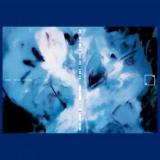
- A1: Noriko Miyamoto - Arrows & Eyes
- A2: Mishio Ogawa - Hikari No Ito Kin No Ito
- A3: Yoshio Ojima - Days Man
- B1: Mkwaju Ensemble - Tira-Rin
- B2: Rna Organism - Weimar 22
- B3: Naoki Asai - Yakan Hikou
- B4: Takami Hasegawa - Koneko To Watashi
- C1: Mammy - Mizu No Naka No Himitsu
- C2: Dip In The Pool - Hasu No Enishi
- C3: Wha Ha Ha - Akatere
- D1: D Day - Sweet Sultan
- D2: Perfect Mother - Dark Disco-Da Da Da Da Run
- D3: Neo Museum - Area
- D4: Sonoko - Wedding With God (A Nijinski) (A Nijinski)
LTD. COLORED VINYL
Somewhere Between: Mutant Pop, Electronic Minimalism & Shadow Sounds of Japan 1980–1988 hovers vibe–wise between two distinct poles within Light In The Attic’s acclaimed Japan Archival Series—Kankyō Ongaku: Japanese Ambient, Environmental & New Age Music 1980–1990 and Pacific Breeze: Japanese City Pop, AOR & Boogie 1976–1986. All three albums showcase recordings produced during Japan’s soaring bubble economy of the 1980s, an era in which aesthetic visions and consumerism merged. Music echoed the nation’s prosperity and with financial abundance came the luxury to dream.
Sonically, Somewhere Between mines the midpoint between Kankyō Ongaku’s sparkling atmospherics and Pacific Breeze’s metropolitan boogie. The compilation encompasses ambient pop, underground electronics, liminal minimalism and shadow sounds—all descriptors emphasizing the hazy nature of the nebula. Out–of–focus rhythms wear ethereal accoutrements, ballads are shrouded in static, and angular drums snake skyward on transcendent tones. From the Avant–minimalism of Mkwaju Ensemble and Yoshio Ojima, to the leftfield techno-pop of Mishio Ogawa and Noriko Miyamoto (featuring members of YMO), and highlights from the groundbreaking Osaka underground label Vanity Records, these are blurry constellations defying collective categorization.
These tracks also exist in a space of transition when the major label grip on the Japanese recording market began to give way to the escalation of independents. Thanks to the idyllic economic climate and innovations in domestically–manufactured music gear, creators on the edges were empowered to focus on satisfying their artistic visions in the open headspace of home studios. While labels like Warner Music and Nippon Columbia explored new sounds through traditional channels, it was possible for Vanity, Balcony and other indie labels, not to mention self–released artists like Ojima and Naoki Asai, to publish their work via affordable media such as cassettes, 7" vinyl, and flexi–discs.
Expertly curated by Yosuke Kitazawa and Mark “Frosty” McNeill (dublab), Somewhere Between is a collection of music, much of it released for the first time outside Japan, that is bound more by energetic vibration than shared history, genre or scene. They are the sounds of transition and searching—a celebration of the freedom found in floating.
Note: The track “Days Man” by Yoshio Ojima is only available on the LP and Cassette versions.
DEEWEE ‘s new releases now worked with Because Music. Formed in 2012, Asa Moto purvey non-standard body music from their Ghent outpost, Studio Martino. Closely affiliated with famed Soulwax imprint, DEEWEE, the Belgian duo’s recorded offerings carefully juxtapose expert synth-work with aesthetic imperfection. Charming melodies and throbbing rhythms come courtesy of archaic tone generators and acoustic instrumentation alike, landing Asa Moto in a zone of confident sonic idiosyncrasy. Their studio prowess has hardly gone unnoticed and during their breakout year of 2018, Resident Advisor, Redbull and the BBC were quick to take note of the group’s steady ascent. Via their ever-changing live performances, Asa Moto have become regular fixtures on the European touring circuit, touching down for club nights and festival appearances across the continent. As astute selectors, they operate a bi-monthly radio show in Brussels, digging into their sprawling collection, ranging from obscure jazz records to contemporary electronic cuts. Asa Moto have re-adapted their unmistakable strain of body music into a live show, which premiered on the Mainstage of the Lokerse Feesten 2019 and at the 40th anniversary of Ancienne Belgique in Brussels. In 2020, they co-produced and mixed the Turkish band, Altin Gün album 'Yol' marking the first time that the band has collaborated with outsiders.
- A1: Noriko Miyamoto - Arrows & Eyes
- A2: Mishio Ogawa - Hikari No Ito Kin No Ito
- A3: Yoshio Ojima - Days Man
- B1: Mkwaju Ensemble - Tira-Rin
- B2: Rna-Organism - Weimar 22
- B3: Naoki Asai - Yakan Hikou
- B4: Takami Hasegawa - Koneko To Watashi
- C1: Mammy - Mizu No Naka No Himitsu
- C2: Dip In The Pool - Hasu No Enishi
- C3: Wha Ha Ha - Akatere
- D1: D-Day - Sweet Sultan
- D2: Perfect Mother - Dark Disco-Da Da Da Da Run
- D3: Neo Museum - Area
- D4: Sonoko - Wedding With God (A Nijinski) (A Nijinski)
Somewhere Between: Mutant Pop, Electronic Minimalism & Shadow Sounds of Japan 1980–1988 hovers vibe–wise between two distinct poles within Light In The Attic’s acclaimed Japan Archival Series—Kankyō Ongaku: Japanese Ambient, Environmental & New Age Music 1980–1990 and Pacific Breeze: Japanese City Pop, AOR & Boogie 1976–1986. All three albums showcase recordings produced during Japan’s soaring bubble economy of the 1980s, an era in which aesthetic visions and consumerism merged. Music echoed the nation’s prosperity and with financial abundance came the luxury to dream.
Sonically, Somewhere Between mines the midpoint between Kankyō Ongaku’s sparkling atmospherics and Pacific Breeze’s metropolitan boogie. The compilation encompasses ambient pop, underground electronics, liminal minimalism and shadow sounds—all descriptors emphasizing the hazy nature of the nebula. Out–of–focus rhythms wear ethereal accoutrements, ballads are shrouded in static, and angular drums snake skyward on transcendent tones. From the Avant–minimalism of Mkwaju Ensemble and Yoshio Ojima, to the leftfield techno-pop of Mishio Ogawa and Noriko Miyamoto (featuring members of YMO), and highlights from the groundbreaking Osaka underground label Vanity Records, these are blurry constellations defying collective categorization.
These tracks also exist in a space of transition when the major label grip on the Japanese recording market began to give way to the escalation of independents. Thanks to the idyllic economic climate and innovations in domestically–manufactured music gear, creators on the edges were empowered to focus on satisfying their artistic visions in the open headspace of home studios. While labels like Warner Music and Nippon Columbia explored new sounds through traditional channels, it was possible for Vanity, Balcony and other indie labels, not to mention self–released artists like Ojima and Naoki Asai, to publish their work via affordable media such as cassettes, 7" vinyl, and flexi–discs.
Expertly curated by Yosuke Kitazawa and Mark “Frosty” McNeill (dublab), Somewhere Between is a collection of music, much of it released for the first time outside Japan, that is bound more by energetic vibration than shared history, genre or scene. They are the sounds of transition and searching—a celebration of the freedom found in floating.
Note: The track “Days Man” by Yoshio Ojima is only available on the LP and Cassette versions.
'Banoffee Pies Records' drop their 12th release in the original series with a solo EP from New York based Tristan Arp. With a string of intricate music on the likes of Human Pitch and a recent LP entitled "Suggested Forms", which offers a wider exploration into his work, Tristan's passion for sound design echoes in this record.
All four tracks offer an environment somewhere between a feeling &
a dancefloor with obscure influences in polyrhythmic drum patterns and a clear combination of digital and analogue processing. "Swept Thru" opens proceedings with a spiral of rhythms and heavy percussion leaping in energy throughout, before the spooked out Vox takes control on "Oblique House" with deeper movements in a haunted club tune. The B side opens with the title track "Slip" in a powerful whirlwind arrangement of sub bending sounds before the final colour is added to the palette in "Circling Music'' with emotive jingles in a more retained and patient mood.
You can hear Tristan's other work within the Asa Tone project - a trio group well worth the trip, offering a deep variety of works exploring field recordings taken and formulated in Indonesia beneath a tree canopy deep in the jungle. This same energy and mood spills into this release. Music for feeling. Much love BP x
Mastered: Optimum, Pressed: MPO & Distributed by KUDOS.
Since 2008 Düsseldorf based producer and live wizard Stefan Schwander deeply concentrates on his always evolving electronic venture named Harmonious Thelonious. It besprinkles the world with fractional musical structures in the spirits of American minimal music, in order to immingle them with African rhythm patterns. Exceptional hypnotic opiates, enlarged with twisted harmonies and tricky rhythm archetypes. All heavy danceable!
After five magnetic albums for labels like Emotional Response and his old home base Italic as well as a highly acclaimed string of EPs for in-demand platforms like Asafa, Diskant, Disk, Kontra-Muzik, Meakusma, The Trilogy Tapes or Versatile Records, he now produced a heavy arresting 'Petrolia' LP for Marmo Music - a label that is not new to Harmonious Thelonious. Already on the label's second release Tru West: 'The DOWC part 2' his 'Sunset Liturgy' fingerprints are audible with a moving remix. Now he delivers six epic tunes that only partly dance the familiar Harmonious Thelonious dance. There are deeply traces from Africa and Arabia. There is the polyrhythmic witchery that makes his music special. But in contrast his new tunes are more mental then his former ones. They have a menacing industrial feel but yet continue to be enlarged with the enchanting spirits of the land of the Sahara. Furthermore, there is a slight manic touch arising from nervous electronic and foremost organic melodies. The live played jittery is coming from the Berlin based experimental musician Ghazi Barakat, also known under monikers like Pharoah Chromium or Crème de Hassan for mind shredding ambient, drone, experimental, noise, industrial, free jazz and free improvisation music from beyond. For Harmonious Thelonious Barakat, who also produced together with Marmo Music artist Günther Schickert the collaboration album 'OXTLR' in 2014, tuned his wind instruments Rauschpfeife and Kangling elflock-stricken the Master Musicians of Jajouka way. And instead of giving them a prominent lead position, Schwander deeply implements his tones into his propulsive creations to evoke a modern rhythmic meltdown of Occident versus Orient spheres that exhale a deeply absorbing soul.
A record, who's psychedelic energy fits perfect into the Marmo Music cosmos - a world where the progressiveness of the 70ties continues to live in the current to disband all white bread musical norms for the energy of music without classes. Dancers of the world, unite!
* The second in Joker's trio of special releases to commemorate 10 years of his Kapsize label is to release this coming May.
* Over the past decade, Kapsize has put out some of Joker's most defining work, including the iconic 'Purple City' (produced with Ginz) — a track widely recognised as ground zero for Joker's purple dubstep aesthetic — and 2015 album, 'The Mainframe', as well as early records from Asa & Sorrow and L-Wiz.
* To be released both on special edition vinyl, A-side 'Marching Orders' features legendary grime MC and producer, Footsie, who goes hard over Joker's monstrous instrumental — think relentless, hyper-distorted club hydraulics — even acknowledging him on the hook; 'Oi Joker this beat's sick, crazy'.
* On the flip, B-side 'Polka Dot' is equally as tough, despite the dizzying melodies and gentle tones of the track's opening throws, landing as a crunching melee of textbook Joker sounds.
- 1