Re-mastering by: Ray Staff at Air Mastering, Lyndhurst Hall, London
An amazing session of spiritual soul jazz – and one of the rarest albums on Strata East! Shamek Farrah's soulful alto is matched with the free spiritual piano of Sonelius Smith, for a totally memorable session that virtually defines the essence of the Strata East sound! The music is free, but not too free; lyrical, but never indulgent; and always turning over with a fresh sense of imagination, and a soaring groove that's very much in the classic Strata East mode!
Buscar:at jazz
"From Nishinari Osaka Japan Weird Wild Obscure Spooky exotica burlesque toy junk Muzak Trash One Man Band music made with broken cassette desks and fucked up record players feat members of (Acid Mother Temple)" - VRR 20202 Vinyl LP, starker Karton, bedruckte Innenhülle, Download inklusive. Willkommen in der wilden obskuren und seltsamen Welt von DEGURUTIENI und seiner ONE MAN BAND. teuflisch exotischer Striptease Kinder Spielzeug Krach mit ausgedientes Tonbandgerät und zerbrochenen Plattenspielern mit Mitgliedern von ua Acid Mother Temple in einigen Songs. Dies hier ist eine Zusammenstellung mit älteren Songs (selbst Veröffentlichungen und auf kleinst Labels) und viele neue Songs die noch nie vorher veröffentlicht wurden. Ich dachte, es ist an der Zeit, dass die Welt etwas über DEGURUTIENI erfährt (ich hatte Wochen, bis ich seinen Namen richtig buchstabieren konnte, hahaha ) Er tourt ständig durch die ganze Welt (pre Covid-19) und tritt in regulären Konzertsälen sowie in Theatern, Kunstgalerien oder sogar auf der Straße auf. wenn man ihn zum ersten mal sieht ist es eine Lebens Erfahrung die man nicht wider vergisst und es bleibt ein großes Lächeln im Gesicht und ein verzerrtes Fragezeichen in deinem Gehirn. Alco Degurutieni wurde Ende der 60er Jahre im Nishinari Ghetto von Osaka geboren (Alco Degurutieni: Diese Zeit in den 1970er Jahren war eine harte Zeit für alle, einmal im Monat Unruhen auf den Straßen. Rot Licht viertel Prostitution und die Yakuza-Mafia waren uns vertraut. Diese Erinnerungen an ein jugendliches Chaos sind seitdem ein Katalysator für mein Peter-Pan-Syndrom.) Degurutieni schafft Harmonie durch Gegenüberstellung, indem er ihnen Melodie aus Chaos und Dekadenz aus Abfall extrahiert. Mit 13 Jahren bekam er seine erste Boombox und wurde der beste Kunde in seinem örtlichen Leih-Platten und Trödler laden. Er arbeitete sich durch alle Genres von den Beach Boys bis zum Black Sabbath. Ab 16 Jahren begann er, seine eigenen Songs mit den einzigen Dingen zu kreieren, zu denen er Zugang hatte; Müll, umgebaute Kinderspielzeuge und ein ausgedientes Tonbandgerät. All dies spielt noch heute eine wichtige Rolle in seiner Musik. Auf diesem Album findest du ,Acme in the afternoon, ein komplett Hit, Tom Waits Blues Jazz Burlesque, dann mit ,Blur Blur Blur, hörst du ihn super minimalistisch und verloren im All Blues, oder den unglaublichen ,Midnight Express' mit einem orientalischen Trash-Flair der dich in einen neuen Blade Runner film katapultiert, und Zigeuner Fanafare und Rock'n'roll in ,13th Floor City ' zusammen mit: Orchester du Belgistan (aus Belgien) oder mein favorit ,Dreaming party' das wie ein psychedelischer horror film Soundtrack daher kommt LINE UP Alco Degurutieni (mostly all instuments) aditional Musissians on the Album Jyonson Tsu (ACID MOTHERS TEMPLE) Machiko Kuniki (Sujiko Sumoguri) Akiyoshi Kajitani (MOHIKAN FAMILIES) Atsushi Sekitani Watanbe (BRO TÜRK,PATO LOL MAN) Naoya Takami (Ichibanboshi Crue) Kwandae Park (UMA UMA UMA) Akira Ohno Tadahiro Ishihara Keigo Matsunaga (Rock'n'TASUKE'Roll & THE CAPTAIN SWING,MOHIKAN FAMILY'S) Tom Manoury (Orchestre du Belgistan) Mbengue Ndiaga Jordi Grognard (YOKAI) Akiko Igaki (TAYUTAU,COLLOID) Kiri Mochida Takeo Touyama (PATO LOL MAN) Shuichi Hirose (HUMNED) Takeo Touyama (PATO LOL MAN)
This previously unreleased session from 1988 features the French saxophonist Barney Wilen and the Spanish pianist Tete Montoliu. Recorded live at the Grenoble Jazz Festival they are accompanied by Riccardo Del Fra on bass and Aaron Scott on drums.
The programme of standards includes ‘Round Midnight, Summertime, Someday My Prince Will Come and All The Things You Are.
“To my knowledge, Barney Wilen and Tete Montoliu had never played together before. The uniqueness of the event gives it even more flavour.”
Philippe Vincent
INDIE EXCLUSIVE, LTD PURPLE VINYL! Among the heroes and innovators of 70s spiritual/progressive/funk/jazz, Doug Carn has always flown a little under the radar. He has long plied his trade with patience and dedication, releasing absolutely stunning albums that are cherished by cognoscenti but lesser known even to the jazz mainstream, even as his influence can be detected among his colleagues. Carn's newest project, his entry in the Jazz Is Dead album series helmed by Adrian Younge and Ali Shaheed Muhammad, takes his unique and timeless art and places it within the context of a musical culture that has always taken cues from his '70s classics. There's no mistaking the musical mind that created legendary albums like Infant Eyes and Adam's Apple, but the encounter of that with the distinctive jazz-hip hop-funk-noir that is the Younge/Muhammad/JID trademark creates something worthy of comparison to Carn's past work but which could only have been made right now.
When Lindstrom and Prins Thomas get together, expect the unexpected. The Norwegian production duo's third album III is also their first outing together in eleven years, since II from 2009 and as ever, Lindstrom and Prins Thomas have crafted their own unique sonic world between the two of them. This is expansive, luscious electronic music rich with texture and intricacy, patiently revealing every eccentricity while constantly pulling the listener in. Getting lost never sounded so good. Since the release of II, Lindstrom and Prins Thomas have remained more than busy with their respective solo careers, but work on III was taking place behind the scenes the whole time - slow and steady by sending files back and forth. "There's a different process with every album," Thomas explains. "With the first two albums, we had a door between separate rooms in the studio, so I could open my door and play him something. We also toured together a lot after the first album, and after that experience we realized that we work better together at a distance. We're doing our best work by not worrying too much about what the other one of us is doing." Eventually, the bulk of III came together over the last year, as Lindstrom and Prins Thomas teamed up to craft a lush and lovely work that recalls the hazy atmospherics of Air, the loose-fit jazz of Lonnie Liston Smith, and the genreresistant electronic music that both artists have made their name on over the course of their impressive careers. "Our partnership is very democratic "we never turn down each other's ideas. And if it goes wrong, we blame it on the other guy," Thomas says with a laugh. "The tracks that Lindstrom sent me this time were almost like standard house tracks. I already had an idea of what I wanted to do, so I forced those tracks into new shoes and dresses." Above all else, III is a testament to the adventurousness of Lindstrom and Prins Thomas when it comes to soundcraft. Both artists have established separate careers on bodies of work that feature infinite twists and turns, thrilling their audiences with the suggestion of where they've been and where they're about to go. Together, they've crafted what might be their most beguiling and inviting work yet, a jeweled box of electronic music ornately crafted but never losing the sense of playfulness that so many have come to love from them.
Strut present the first ever international reissue of one of the most sought-after albums from the Black Fire catalogue, Lon Moshe & Southern Freedom Arkestra's life-affirming 'Love Is Where The Spirit Lies' from 1977. This first international reissue of the album features new sleeve notes including interviews and commentary by Lon Moshe, Plunky Branch and band members with original illustrated artwork by Mary E. Greer. Audio was remastered from original tapes by The Carvery. "Lon was creating his own path in his music life at this time," remembers Black Fire's Plunky Branch. "We had met in San Francisco and he had become an original member of JuJu during the early '70s. He then wanted to pursue his own music, primarily in jazz; he was an avant-gardist and loved Tribe, Strata-East and Sun Ra." For his Love Is Where The Spirit Lies album, Moshe drew from musicians within the Black Fire stable. Oneness Of Juju's Jackie Eka-Ete sang and helped to write songs and members of Southern Energy Ensemble contributed, including their bandleader Marvin Daniels. "The band name, Southern Freedom Arkestra, was a proud declaration that this music was from the U.S. South," continues Branch.
- A1: Born To Play
- A2: Born To Play Reprise
- A3: Bigger Than Us
- A4: Collard Greens & Cornbread Strut
- A5: Joe's Lowdown Blue
- A6: 22'S Getaway
- A7: Apex Wedge
- A8: Let Your Soul Glow
- A9: Feel Soul Good
- A10: Looking At Life
- A11: Fruit Of The Vine
- A12: The Epic Conversationalist/Born To Play
- A13: Celestial Spaces In Blue
- A14: Spiritual Connection
- A15: The Initial Pursuit
- B1: The Initial Pursuit
- B2: Space Maker
- B3: Cristo Redentor
- B4: Danceland
- B5: Epistrophy
- B6: I Let A Song Go Out Of My Heart
- B7: Blue Rondo A La Turk
'Available exclusively on Disney+ beginning Dec. 25, 2020, Disney and Pixar’s feature film “Soul” introduces Joe Gardner, a middle-school band teacher with a serious passion for jazz music. The story is particularly relatable to the artists behind it. For Jamie Foxx, who lends his voice to Joe, it begins with jazz. “Like Joe, I hear music in everything,” said Foxx. “When you’re a jazz artist, man, you talk a little different: ‘Hey, cat!’ I got a chance to go to a few jazz fests and meet Herbie Hancock, Chick Correa—hang out with those guys. They have a way of talking, a way of dressing—everything funnels toward their music, toward the jazz."
This album could easily have turned top-heavy. After all, here’s a record which, in just under 40 minutes, covers anything from Arabic scales to Japanese sounds, from free jazz references to concepts by Finnish pianist Kari Ikonen’s favourite painter Vasiliy Kandinsky.
To realise his vision, Ikonen even personally developed a device allowing him to play micro-intervals on his piano. And yet, things turned out differently: If anything, the results sound dream-like and mesmerising rather than stodgy and severe.
The album’s genesis may serve to explain this paradox. In August of 2019, Ikonen suddenly found himself with a month of free time. Without thinking twice and as if in a premonition of the Covid-lock-down, he recorded ‘Impressions, Improvisations and Compositions’ at his own home. His only companion was his beloved Steinway, captured by a personal selection of high-end microphones. Just a few days after the final session, the pieces landed on the desk of ECM- and Blue-Note-engineer Johannes Lundberg who mixed the album at his Gothenburg Epideminstudios. Clearly then, the music is spontaneous. But it’s also refined and deep. The influence of Kandinsky inspired
Ikonen to write some of his most complex and monumental pieces.
Barang Bang Records Archive Series vol. 1
Previously unreleased recordings
Compiled by Gianmarco Liguori
Bernie McGann - alto sax
Kim Paterson - trumpet
Bobby Gebert - piano (side A)
Andy Brown – bass
George Neidorf – drums
Recorded by Trevor Graham in Sydney, Australia (copyright 1966)
There is no more engaging nor distinctive alto saxophone sound on the planet than McGann’s.
Sydney Morning Herald
McGann takes the language of Bebop then bends and stretches it to fit the contours of his own remarkable im-agination.
The Wire
Bernie McGann’s sound is exciting and physical, as heated as any post-coltrane modernist.
Downbeat
A lost treasure of Antipodean jazz
This compilation documents part of an exciting period in Australasian jazz. Recorded in Sydney, 1966, we can hear Bernie McGann was already one of the great Australian jazz stylists. At the time, the only publicly available recording he made was two tracks on the Jazz Australia compilation (1967) (CBS BP 233450).
Two years earlier, McGann was living in Auckland, New Zealand (1963-64). It was here that he worked regular-ly with Kim Paterson, Andy Brown and pianist Dave MacRae, and the basis of this band came into being.
‘Lazy Days’, ‘Chuggin’, and ‘Sky’ were salvaged from a cassette in Kim Paterson’s collection, one of the few remaining copies. Originally intended for a radio broadcast, the master tapes were reportedly destroyed after the session.
‘Rhythm-a-Ning’ and ‘When Will The Blues Leave?’ were taped by Trevor Graham at the Wayside Chapel in King’s Cross. Graham was a Sydney music journalist and ally of the avant garde, with the foresight to capture some of what was happening at the time.
This album is also notable for a rare appearance by the mysterious American drummer George Neidorf (mis-spelt as ‘Neidori’ in the liner notes on the first Soft Machine album), an early influence on drummer Robert Wyatt.
Field recordings of a major artist in strong company – a lost treasure of Antipodean modern jazz.
Amazing 1976 album where jazz meets world music !
An amazing document of the life experiment that was the Organic Music Society. This super quality audio, recorded by RAI (the italian public broadcasting company) in 1976 for television, documents a quartet concert focused on vocals compositions and improvisations. Here, Don Cherry and his family-community’s musical belief emerges in its simplicity, with the desire to merge the knowledge and stimuli gained during numerous travels across the World in a single sound experience. Don's pocket-trumpet is melted with the beats of the great Brazilian percussionist Nana Vasconcelos, the Italian guitar of Gian Piero Pramaggiore, and the tanpura drone of Moki. A pure hippie aesthetic, like in an intimate ceremony, filters a magical encounter between Eastern and Western civiliziations, offering different suggestions of sound mysticism: natural acoustics in which individual instruments and voices are part of a wider pan-tribal consciousness. A desert Western landscape marries Asian and Latin atmospheres. Indigenous contributions with berimbau explorations find fossil sounds of rattles and clap-hands invocations. Influences of Indian mantra singing are combined with eternal African voices or with folkish-Latin guitar rhythms , while flute and drums evoke distant dances. In the Organic Music everything becomes an act of devotion and love, an ecstatic dwell in the dimension of a sacred free-rejoice.
Alfredo "El Inca" Linares is one of the best and most beloved musicians in the history of salsa. Fans love his piano playing because of his authentic Cuban feel and 'swing' combined with progressive arrangements and uncompromising phrasing. "Lo Que Tengo" is full of rock solid dance floor killers and no filler, recorded in 1980 with some of the cream of the crop of contemporary Venezuelan salsa musicians (members of Mango, Madera, El Trabuco Venezolano, Los Dementes, Los Melódicos, Dimensión Latina, Guaco, and La Salsa Mayor) and launched there on the indie label A.L.G. Records as ¡Con Todo!, and then a year later on the much larger Velvet Records with a different cover. This a classic Alfredo Linares album, but with the updated studio sound of 1980s Caracas. With five perfectly paced salsas, one funky cha cha chá, a steamy bolero and a dance-friendly Latin jazz number to top it off, there is something for everybody on this record. Thankfully today's generation can now enjoy this rarity at a fraction of the cost of an original copy. Presented in its original artwork and pressed on 180g vinyl. Good to know: Alfredo "El Inca" Linares is one of the best and most beloved musicians in the history of salsa. Fans love his piano playing because of his authentic Cuban feel and 'swing' combined with progressive arrangements and uncompromising phrasing that puts one in mind of Eddie Palmieri. As a composer, arranger and band-leader Linares is highly respected as well. Ever since the 1960s in Lima Peru when his career began, his records have always been on point, being super tight, sharp, and hard as hell, what salseros call salsa brava con afinque. It's no surprise that Lo Que Tengo is exactly that: full of rock solid dance floor killers and no filler, played with verve and flair. Unlike some of his other records that were patched together from various sessions made in different studios (sometimes even in several countries!), this album has the advantage of being produced, recorded and mixed by Alfredo Linares all in one studio and block of time, and backed by hand-picked seasoned professionals who Linares had already played with, both in the studio and on stage, lending it a consistency and sonic integrity that is excitingly manifest in every groove. The album was recorded in 1980 in Caracas with some of the cream of the crop of contemporary Venezuelan salsa musicians (members of Mango, Madera, El Trabuco Venezolano, Los Dementes, Los Melódicos, Dimensión Latina, Guaco, and La Salsa Mayor) and launched there on the indie label A.L.G. Records as ¡Con Todo!, and then a year later on the much larger Velvet Records with a different cover. The LP was also released in Colombia (INS, 1982) and the US (Gallo, 1984), both editions utilizing the Velvet Records cover. During this time Linares had been in Venezuela for some five years and was under contract with a nightclub in Caracas. Through being on the salsa scene there he became friends with the band Mango and even guested on an album with them in 1976. After the contract was up Linares was a free agent again and he was able to draw on his friendship with Mango and assemble a band to back him, first for the Colombian/Venezuelan production Salsa de Verdad (Fonodisco, 1976) and then again with ¡Con Todo! / Lo Que Tengo. One of the distinctive aspects of Alfredo Linares tunes is the 'break' (la cierre)-there are always plenty of dramatic hand-clapping breakdowns followed by an infectious tumbao (sustained vamp) section that sends shivers up the spine and makes the dancers go crazy. In addition, Linares always lets his musicians stretch out, especially in the percussion section. Again, Lo Que Tengo is no exception: there are so many examples of typical arrangements here that one could call this a classic Alfredo Linares album, but with the updated studio sound of 1980s Caracas, which was awash in petro-dollars at the time and so had the latest equipment and a strong consumer base for the salsa market. The album's title tune (originally credited on the Venezuelan edition as 'Lo que tengo que crear'-'What I Have To Create') is by Mango's timbalero José "Cheo" Navarro and sums up Linares' central career philosophy: the musician lives every day to create music, to spread joy and create a party, without complications, wherever he goes. With five perfectly paced salsas, one funky cha cha chá, a steamy bolero and a dance-friendly Latin jazz number to top it off (note the bluesy piano solo from Linares and the sublime vibes of Mango's Freddy Roldán), there is something for everybody on this record. Thankfully today's generation can now enjoy this rarity at a fraction of the cost of an original copy.
First Word Records are extremely proud to welcome aboard Allysha Joy and her first EP
for the label, 'Light It Again'.
Well versed in poetry and performance, Allysha Joy's potent lyricism, unique musicianship and killer vocals have garnered legions of attentive fans the world over. She's an integral member of the Melbourne soul jazz scene, known as part of the acclaimed 30/70 Collective and for her own equally revered solo work.
'Light It Again' is a 4-part expedition across a variety of grooves and deep lyricism that marks a defiant statement of intimacy and hope. Produced and engineered by twice Grammy nominated artist Clever Austin, the EP features accompaniment from an all-star set of Melbourne artists; Horatio Luna, Ziggy Zeitgeist, Danika Smith and Josh Kelly. This EP marks a new sound for the young artist, transmitting her honest and raw expression through the signature crunch and sonic landscape of Clever Austin.
Allysha is already well established across Europe, performing on the live circuit alongside the likes of Sampa the Great, Matthew Halsall, Ezra Collective, Bradley Zero and Children of Zeus, as well as currently hosting two regular radio shows, on Worldwide FM and Reform Radio in Manchester respectively.
Her 2018 debut album 'Acadie : Raw' on Gondwana Records won 'Best Soul Album' at the Music Victoria Awards, was nominated for a Worldwide Award, and featured in many an end-of-year list, including Bandcamp's Top Soul Albums, whilst she's also featured on releases on UK labels such as Rhythm Section, Total Refreshment Centre and now an EP for First Word, 'Light It Again'.
The EP touches on love, shame, mental health, grief & spirituality. 'Watercolours' sets off on a mid-tempo neo-soul jazz tip. Allysha says "I wrote this in the hope that maybe we could all feel the beauty that is present in the every day - in nature, in art, in each one of us mirroring each other so intrinsically. Then maybe we'd all start to live out a message of love."
'Better' follows on an uptempo vibe influenced musically by The Senegambian Jazz Band, who Allysha would watch regularly at Bar Oussou in Melbourne. Lyrically the song explores the external and internal struggles that occur trying to create a more inclusive and compassionate world. "It's about catching myself pointing the finger outwards to challenge social / political systems and certain individuals, then coming to the realisation that I must turn that finger back on myself to ask, "how can I do better, how can I know better?"
Lead track 'Light It Again' begins with Allysha's keys gliding a steppa-like rhythm - head-snap snares and punchy bass accompany ethereal harmonies and delicate vibes on an ever-evolving groove before switching entirely mid-track. This time the subject matter is mental health and "the cycle of addiction and pain, the coping mechanisms that hold us back from reaching our true potential".
The EP closes out with the beautiful 'Mardi'; deep Rhodes, sax and synths build ahead of deliciously slushy percussion and jilted drums. Named for her grandmother, 'Mardi' is a tribute to the spiritual connection they shared before her passing. Allysha writes, "it's about the connective forces of the matriarchal lineage and the drive to step into my own sense of self, in all the beauty and pain which that entails".
Allysha's lyrics weave together a heartfelt mix of love, power, desire, wonder, anger, faith and hope for change. An artist that presents a palette of intricate grace and optimism, whilst unafraid of adding uncomfortable truths. Allysha is an incredibly powerful live performer; her husky vocals sonically synced with her formidable Fender Rhodes playing, whilst her influences are a solid base of jazz, hip hop and R&B; all glazed with the unique special sauce the Melbourne soul scene has become known for globally. A gloriously meditative, raw soul, we are delighted to be able to share her music with you.
'Light It Again' is released on vinyl & digital worldwide, November 20th 2020.
Grammy award winner & multi grammy nominated Luisito Quintero grew up with the Latin American and African tradition of percussion. His father is just as much a percussionist as his uncle Carlos Nene Quintero and his cousin Roberto Quintero . He became a member of the Orquesta Simfonica de Venezuela , but soon appeared with ensembles such as Grupo Guaco and El Trabuco
Venezolano and toured with Oscar D'León .
He then moved to New York, where he initially worked with Latin jazz musicians such as Willie Colón , Eddie Palmieri , Tito Puente and Celia Cruz . He then turned to the fusion of jazz, funk, salsa and African music and performed with George Benson , Herbie Hancock , Ravi Coltrane and Toshiko Akiyoshi , but also with pop musicians such as Gloria Estefan and Marc Anthony .
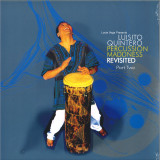
Vega Records are proud to present his new vinyl release “Percussion Maddness Revisited” Part Two. From the Osibisa remake by Luisito Quintero “Music For Gong Gong” to collaborations with the Great Richard Bona, Latin Jazz legend Hilton Ruiz and Salsa Veterans Jose Mangual and Milton Cardona, you can see the caliber of musicians that make up this timeless piece. For the afrohouse heads you have the new track “Yemaya” Featuring Nina Rodriguez remixed by Afrohouse King Manoo. Prepare for the sonic fun with vinyl pressings by Optimal !!
Percussions Maddness Revisited Part Two Double Vinyl Set out soon at a vinyl store near you !!!
Flute, congas, bass, drums, guitar and clavinet; this unconventional arrangement of instruments intertwine to form the debut album by Badge Époque Ensemble - a group of creative improvisers assembled to perform new, largely instrumental compositions by Maximilian ‘Twig’ Turnbull(formerly Slim Twig - DFA Records).
Badge employs an eclectic cast of characters from the Toronto underground music scene, whose combined experience would take pages to spell out. It includes stints accompanying songwriters Andy Shauf and Marker Starling, outfitting heavies Blood Ceremony and Biblical, and respective careers spent gigging Django-jazz and the classical cannon.
Badge’s distinctive sound arises from the diversity of these musical exploits, creating a palpable chemistry well captured on the live-tracked songs that form the group’s self-titled debut. Part of this crucial chemistry can be attributed to the fact that four of the six players in the Ensemble have been at the core of the live, U.S. Girls band, a group that has scorched stages internationally over the past year and was hailed by Paste magazine as the best live band of 2018. While it may call to mind an improbable collision between psych-era Stevie Wonder and the whimsically dark, Fantastic Planet score, it is clear we are operating in a post Wu-Tang paradigm. If a crate of library, tropicalia, prog and electric jazz records were flattened into a single 12” and then fed into a sampler, we might approximate the process.
- A1: Mega Corp - Jon Sewi
- A2: Gladdics - Black Soyls
- A3: It's Tea Time - Renegades Of Jazz
- A4: Jagged - Serafin Plum
- A5: Opera - The Maenads
- A6: Sheikah - Double Screen
- A7: Put It On Ice - Stubby Dials
- B1: The Cards - Lucinate
- B2: Waving At A Melting Square Tooth Of A Specific Rabbit (Short Version) - Woodpecking Mantis
- B3: Lucempight - Wrenasmir
- B4: Poets And Rockets - Jay Solomon
- B5: Midnight Sun - The Motion Orchestra
- B6: What - Teis Ortved
- B7: The Last Recording From Earth - Funki Porcini
This compilation sees the coming together of independent music makers from across the globe to meet in one place and gather as a single entity. That simmering hub of warmth and affection is known as Motor Jazz - a place for artists to congregate and share their devotion for songs that are infused with rhythms created by anodic wires, buttons and other digital paraphernalia. That's electronic music to you and me, and in this case electronic music with swing, a sense of freedom and improvisation that some might call 'Jazz'.
The album opens with the ominous drone of the Mega Corp., sounding like one of the parties responsible for 2020's almost post-apocalyptic feel. It's perhaps an unlikely opener for a what's a positive and optimistic collection courtesy of young musicians from across the globe, but we all need to be reminded of who's in charge sometimes, and Dutch producer Jon Sewi does just that!
The mood soon lightens though, with the soulful strings and enticing keys of Gladdics by the mysterious Black Soyls, before well established German musical artisan Renegades of Jazz brings the family in for It's Tea Time with ticking clocks, warm tea pots and slices of cake, whilst being serenaded by a very vintage sounding horn section.
Serafin Plum almost steer us into drum & bass territory with their off-the-wall percussive nugget Jagged, whilst keeping a calming hand on the shoulder (as all good parents should) with soothing keys, before it's playtime once again.
There's nothing conventional about the Motor Jazz family though, and after tea time and play time, it's time to rave! In Greek mythology, The Maenads were female followers of Dionysus; their name literally translating as "the raving ones". Often they were portrayed as being inspired by the god into a state of ecstasy through a combination of dancing and intoxication, during which time they would dress in fawn skins and carry a thyrsus - a long stick wrapped in ivy or vine leaves and tipped with a pine cone. With a sound ranging between Jazz, Techno, Rave and Breaks their track, Opera, delivers a psyche and Jazz influenced piece with colliding styles, busy drums and rich melodies.
Heading over to Dublin, Ireland, and multi-talented producer, musician and DJ, Donal Sharpson (aka Double Screen) makes his presence known with grandiose brass preempting a four-to-the-floor wood block frenzy in the shape of Sheikah, complete with enthusiastic whoops and a persuasive bassline. Meanwhile, somewhere below the Irish Sea, aquatic artiste Stubby Dials delivers the bass worrying Put It On Ice the only way he knows how - living in a submarine, he emerges from time to time to leave his master tapes on the beach with a note saying "Release this!" before submerging, never been seen again.
Back in the Netherlands, Bram van der Hoeven, otherwise known as Lucinate, is an electronic Jazz producer par excellence. His effortless balance of organic musical roots like Fusion, Bossa Nova and Soul, into the world of modern beat orientated sounds is something to behold, and with The Cards he offsets life-affirming keys with rolling drums reminiscent of some of the seminal liquid Drum & Bass he grew up with.
As the global Motor Jazz family expands, we head to Canada, where the wonderfully monikered Woodpecking Mantis brings a little acid to the party with his squelchy, stuttering and brilliantly entitled Waving At A Melting Square Tooth Of A Specific Rabbit……. We're guessing they like acid a lot in Canada.
We're going down under to Newcastle, Australia next, where things take a more serene turn. Wrenasmir, known to his parents as Craig Smith, used to be a baroque pipe organist before he discovered samplers and synthesizers. Now he makes imaginary soundtracks at his studio for the twilight beachside city that lives in his head - full of vinyl and pixels and bittersweet memories. The gorgeous Lucempight is exactly that.
Keeping things low key and tranquil, Poets And Rockets, the latest offering from Jay Solomon is a horn driven slice of futuristic dub that makes way for The Motion Orchestra's majestic Midnight Sun, complete with Alexander Bednasch on double-bass, Mark Matthes on violins, Andy Sells on drums and David Hanke on electronics and production. Though influenced heavily by neo-classical and jazz sensibilities they occupy a musical space that sits in neither sphere, with a compositional style that deftly fuses the orchestral and electronic worlds. The full Motion Orchestra album, All One, will be released later this year on Bathurst.
Sixteen year old, self taught producer and multi-instrumentalist Teis Ortved is something of a prodigy. The Copenhagen based wunderkind has so far self-released two EPs, and if What, his offering here, is anything to go by, he's going to be making big waves across the eclectic music spectrum for years to come.
If Teis is the new kid on the block then what better way to round off this compilation that with its patriarchal figure. Funki Porcini has over a quarter of a century of recordings in his back catalogue, and has spent fifteen of those years dedicated to the independent UK behemoth that is Ninja Tune records. The Last Recording From Earth is exclusive to this album and is in many ways the perfect closing song. Perhaps more concept art than traditional piece of music, the idea behind it is that an alien archeologist has found this recording tens of thousands of years after humans have disappeared into the sand…. You never know, it might just happen, and hopefully Them To Us will take on a whole new meaning.
A lucid dream meeting of synth waves, aquatic jazz spirits and drum-triggered electronics.'Linha D'Água'translates as 'water lines', fitting for an album that traces boundaries between water and air through an echo chamber of dizzying oceanic layers and free flowing ideas.
This is not a record based on genres. It's an album that navigates through atmospheres, through explorations and discoveries, through curiosity and dialogue. The eight tracks were recorded in a single day in the studio, but it is the result of more than two years of collaborations.
Mauricio Takara and Carla Boregas are two towering figures of the Brazilian underground/experimental scene, where they provide the rhythm section for demented genre-bending trio Rakta. While that band is all ritual percussion and red-blooded passion, as a duo they're a blue-water flowing counterpoint. From the drums, Takara fires melodies and, with the synthesizer, Carla sculpts the sound. The result iscaught somewhere between abstract improvisation and propulsive rhythm. Each song's an organic layering of manipulated synthesizers and acoustic sounds; teasing new rhythms from the drum kit via MIDI (and a near-telekinetic bond between Carla and Mauricio).
Sometimes'Linha D'Água'driftsclosest to ambient music, as in the title track, in 'Mãe D'Ouro' and 'Bocca Chiusa'; sometimes it runs into free jazz, as in 'Traçado Entre Duas Linhas'. There are moments when Carla and Mauricio explore a universe of tension that comes closest to the cosmic music of 70s Germany, as in 'Rosa de Areia' and 'Constante de Distância'; in others they evoke the metallic sounds of Indonesian gamelan (on 'Execution').
Carla Boregas is a founding member of the band Rakta, which started in 2011. She co-founded Auta, a DIY space dedicated to adventurous music in São Paulo hosting artists like Feminine Hi-Fi and Deafkids. She is also part of the transdisciplinary duo Fronte Violeta.
Mauricio Takara also plays drums/percussion with the bands Hurtmold and São Paulo Underground (with trumpeter Rob Mazurek from Chicago). Takara has played with a dizzying array of improv / experimental / jazz figures such as Pharoah Sanders, Damo Suzuki, Yusef Lateef, Joe Lally (Fugazi), Naná Vasconcelos, Prefuse 73, Makoto Kawabata and more.
- Track 1 Rub-A-Dub Style - Shorty The President
- Track 2 Gorgon Style - U Roy
- Track 3 Greedy Girl - Jah Stitch
- Track 4 Babylon Dub – Dillinger
- Track 5 Dub Dunza - U Brown
- Track 6 Stick By Dub - Dennis Alcapone
- Track 7 Dub To The Lonely - Prince Jazzbo
- Track 8 Control Dub - Shorty The President
- Track 9 3 Wisemen In Dub - I Roy
- Track 10 Yu Nuh Here Dub - U Brown
- Track 11 Dub Chalice - Prince Jazzbo
- Track 12 Rebel Dub Skank - Shorty The President
- Track 13 Don’t Touch The Dub - I Roy
- Track 14 Hard Time Dub - U Brown
One of the two great chapters in reggaes history was the DJ phenomenon that conquered the Sound Systems in and around Kingston town in those heady 1970's, the other was the dub plates specials that allowed the DJ's to explore a tune in the first place. Giving some fine question and answers to its original vocal, emphasising its meaning or taking it into another subject matter altogether. When you have these two styles and add to it that original vocal, dubbed in at various points you get a fantastic melting pot that lifts a tune and can take it almost anywhere it likes.
Although DJ's were operating in Jamaica in the 1950's and 1960's with the likes of Count Matchuki and Sir Lord Comic, their role was that of mainly selector with a few vocal embellishments to instrumental tracks to gee up the crowd. 1969 saw the art form broaden with the likes of DJ King Stitt (Winston Spark) who scored a couple of hits for producer Clancy Eccles with 'Fire Corner' and 'Herbsman Shuffle'. But it was Clancy Eccles next releases with a certain U Roy (Ewart Beckfort) in the same year that saw the style explode. When hearing the DJ holding the crowd’s attention on King Tubby's Home Town Hi - Fi Sound System, the producer rushed the DJ into the studio and cut 'Wake the Town' and 'Rule The Nation'. Which would top the Jamaican charts in the soon to follow 1970.
In true Jamaican musical style when a new sound hits on the radio waves, many would soon follow. With an abundance of already tried and tested hits, producers would get the new
toasters of which there were many and revamp and breathe new life into their back catalogues.
But what makes this set of cuts, chosen for this release that little bit more interesting, are the working of the dub plates and effects alongside these vocal talents. Adding another layer to this musical cake.
A fine selection of tunes worked over by the cream of the 1970's DJ circuit.U Roy, I Roy. Jah Stitch, U Brown, Dillinger, Prince Jazzbo, Dennis Alcapone and the vastly underrated Shorty the President alongside some classic King Tubby dubs surely a match made in heaven...
Hope you enjoy ride…….
- A1: Frank Wiedemann - Dream Hoarding
- A2: Sainte Vie - Hibernation
- A3: Mano Le Tough - Oblivion
- B1: Marc Piñol - Sooner
- B2: Adana Twins -Shadow Of Doubt
- B3: Axel Boman - Anywhere In The World
- C1: Echonomist - Cecil
- C2: Perel - Der Abend Birgt Keine Ruh
- C3: Michael Mayer - Hamstring
- D1: Rebolledo - Twenty Tears
- D2: Frank Wiedemann - Peter Pan Me
- D3: Robag Wruhme - If You Leave
“We have always been very fortunate to meet and know many talented producers. In recent years, we have been exploring those relationships with different remixes and collaborations, and every time something exciting came out. That’s why we started our Synchronicity project. To challenge ourselves making inspiring, fun and beautiful music.‘Synchronicity’ means "the simultaneous occurrence of events which appear significantly related but have no discernible causal connection. This very well describes how our path led to the place we are now – somewhere between the club and indie scenes.” – WhoMadeWho
KOMPAKT welcomes back Copenhagen’s WhoMadeWho. Tomas Barfod’s penchant for electronic music poetically juxtaposed with Tomas Høffding and Jeppe Kjellberg’s respective backgrounds in rock and jazz, gives their music an electrifying combination of sounds, merging a variety of influences to produce a unique sonic fingerprint that is emotive, irresistible and immensely satisfying.
Though we both have yet to strike a note together since the release of their 2012 full length “Brighter” (KOM 254), WhoMadeWho have been remarkably productive. With two full lengths, a DJ mix for Watergate’s series and releasing two of 2019’s most played out club tracks together with Rampa (Innervisions) and Artbat (Watergate Records), the trio have found themselves diving more and more into the world of electronic music, tapping into their goldmine of connections within the scene to spearhead an array of collaborations.
Synchronicity is all about ‘meaningful coincidences’ – bringing interpretation to bear on connections that have no actual causal relationship. It’s a canny concept to pin onto Copenhagen trio WhoMadeWho’s latest album, which sees them return to Kompakt for the first time since 2012’s Brighter.
This re-established connection helps us to understand the synchronicity at play, the way that the WhoMadeWho core ave built an album around collaboration with friends and peers, much as Kompakt is all about cross-connections and family. On Synchronicity, WhoMadeWho call on friends old and new – Michael Mayer, Echonomist, Adana Twins, Alex Boman, Robag Wruhme, Frank Wiedemann, Sainte Vie, Mano Le Tough, Marc Piñol, Rebolledo, and Perel is the cast list; WhoMadeWho direct the material, shaping it into one lovingly flowing gem of dance-pop glory.
There’s something particularly generous about hearing an album as all-inclusive and open-hearted as Synchronicity in the midst of the profound social and cultural shifts we’re currently experiencing. While some songs on Synchronicity were recorded together, in real time, such as the collaborations with Adana Twins and Rebolledo, most of them have taken place via long distance, thanks to the pandemic lockdown. But you don’t need to know who was where to understand either the magnesium-flare melancholy of “Sooner”, recorded with Piñol, which has you holding your breath with the gentle thrill of the song’s lush melody, or the stomping strut of the following Adana Twins collaboration, “Shadow Of Doubt”.
Elsewhere, there’s the stentorian robot voice at the heart of “Hamstring”, where they’re joined by Michael Mayer; the lustrous headsoak of “Twenty Tears”, a tender intervention by Rebolledo; the strip-light, slow-motion disco strut of “Cecil”, produced alongside Echonomist; or the glittering, arpeggio dreamwork that Perel helps sculpt into shape on “Der Abend birgt keine Ruh.”… Really, there’s so much to celebrate here, a panoply of pleasures. From pop revelations to dancefloor delirium to slow-burning brooders, Synchronicity is just that; a space for the joys of the unexpected to collide, and to be given meaning by their coincidental co-existence in WhoMadeWho’s beautiful world.
"Wir hatten immer schon das Glück, viele talentierte Produzenten kennenzulernen. In den letzten Jahren haben wir diese Beziehungen durch verschiedene Remixe und Kollaborationen vertieft und jedes Mal kam etwas Aufregendes dabei heraus. Aus diesem Grund haben wir unser Synchronicity-Projekt gestartet: um uns selbst herauszufordern inspirierte, lustige und schöne Musik zu machen. “Synchronizität” bedeutet das gleichzeitige Auftreten von Ereignissen, die scheinbar in einem signifikanten Zusammenhang stehen, aber keinen erkennbaren kausalen Zusammenhang haben. Das beschreibt sehr gut, wie unser Weg zu dem Ort geführt hat, an dem wir jetzt sind - irgendwo zwischen der Club- und der Indie-Szene". – WhoMadeWho
KOMPAKT freut sich über Rückkehr der Kopenhagener Band WhoMadeWho. Tomas Barfods Vorliebe für elektronische Musik im poetischen Kontrast zu Tomas Høffding und Jeppe Kjellbergs jeweiligem Hintergrund im Rock und Jazz macht ihre Musik zu einem elektrisierenden Konglomerat, in das verschiedene Einflüsse zu einem einzigartigen klanglichen Fingerabdruck verschmelzen: gefühlvoll, unwiderstehlich und immens befriedigend.
Obwohl wir seit der Veröffentlichung von "Brighter" (KOM 254) in 2012 keine gemeinsamen Dinger gedreht haben, waren WhoMadeWho in der Zwischenzeit bemerkenswert produktiv. Mit zwei Full-Length-Alben, einem DJ-Mix für die Watergate-Reihe und der Veröffentlichung von zwei der meistgespielten Clubtracks aus dem Jahr 2019 zusammen mit Rampa (Innervisions) und Artbat (Watergate Records), taucht das Trio mehr und mehr in die Welt der elektronischen Musik ein. Für ihre Kollaborationen greifen WhoMadeWho immer wieder auf ihre Goldgrube an Bekanntschaften innerhalb der Szene zurück.
Bei “Synchronicity” geht es um "sinnvolle Zufälle" - also um die Interpretation von Verbindungen, die keinen tatsächlichen Kausalzusammenhang haben. Es ist ein ausgeklügeltes Konzept, das dem neuesten Album des Kopenhagener Trios WhoMadeWho anheftet: Diese wieder hergestellte Verbindung hilft uns, die Synchronizität im Spiel zu verstehen; die Art und Weise, wie WhoMadeWho ein Album um die Zusammenarbeit mit Freunden und Gleichgesinnten herum aufgebaut hat: schließlich geht es auch bei Kompakt um Querverbindungen und Familie. Auf Synchronicity richten sich WhoMadeWho an alte und neue Freunde: Michael Mayer, Echonomist, Adana Twins, Axel Boman, Robag Wruhme, Frank Wiedemann, Terr, Sainte Vie, Mano Le Tough, Marc Piñol, Rebolledo und Perel stehen auf der Liste. Das Trio führt Regie und sorgt für den Feinschliff. Das Ergebnis: ein echtes Juwel aus Dance, Pop und Glorie.
Inmitten der tiefgreifenden sozialen und kulturellen Veränderungen, die wir derzeit erleben, ist es etwas Besonderes, ein Album zu hören, das so offenherzig ist wie “Synchronicity”. Zwar wurden einige Songs gemeinsam und in Echtzeit aufgenommen – etwa die Kollaboration mit den Adana Twins und Rebolledo – die meisten Sessions fanden aufgrund der Pandemie jedoch über größere Entfernungen statt. Letztlich muss man aber gar nicht wissen wer wo war, um die Melancholie von "Sooner" mit Marc Piñol zu verstehen und im sanften melodischen Rausch des Liedes den Atem anzuhalten. Auch die eher brachiale Energie der darauf folgenden Adana-Twins-Kollaboration , "Shadow Of Doubt" vermittelt sich eingehend über die soziale Distanz hinweg.
An anderer Stelle ertönt die schallende Roboterstimme im Herzen von "Hamstring", wo sich Michael Mayer zu ihnen gesellt; die schimmernden "Twenty Tears", einer zärtlichen Intervention von Rebolledo; der Zeitlupen- Disco-Nummer "Cecil", die zusammen mit Echonomist produziert wurde; oder der glitzernde Arpeggio-Traum, den Perel in "Der Abend birgt keine Ruh" in Form bringt.. Ja, es gibt tatsächlich einiges zu feiern: Von Pop-Enthüllungen über Dancefloor-Delirium bis hin zu Stücken, die sich ihre Zeit nehmen - Synchronicity bietet Platz für all das; das Album spendet Raum, in dem die Freuden des Unerwarteten aufeinanderprallen und durch ihr zufälliges Nebeneinander in der Welt von WhoMadeWho Sinn ergeben.
Joshua Abrams’ first album Natural Information from 2010, superb avant-jazz, newly remastered at Dubplates & Mastering.
In his book Powershift, published in 1990, writer and businessman Alvin Toffler predicted that the century ahead would be defined by speed and that time itself is destined to become our most valuable commodity. When Joshua Abrams recorded Natural Information, originally released by Eremite in 2010, he was reacting against such commodification of time and the diminishing attention span that accompanies it by offering music with an irresistible groove, rooted in the sinuous rhythms of the human body and the full play of our senses.
At the heart of this music is the sound of the guimbri, a North African three-stringed bass lute, which Abrams started to play following a visit to Morocco during the late 90s. Traditionally the instrument has a key role in mystical healing ceremonies. Abrams, already a well-established figure in Chicago’s vibrant musical communities, had no desire to repackage tradition. He recognized however that the involving, springy and percussive sound of the guimbri was just the right voice to communicate vital data, to relay the natural information we all need in order to get back in touch with the pulsating continuities of a world we all share.
With Natural Information Abrams entered a new phase of his musical life, extending an invitation to the trance, where time intersects with timelessness. He carried with him a wealth of playing and listening experience. As a bass player he had worked with a host of notable musicians including guitarist Jeff Parker and percussionist Hamid Drake, and had been a member of back porch minimalism outfit Town And Country and the improvising trio Sticks And Stones.
The guimbri is a shaping presence on this remarkable recording, but Abrams also plays bass, bells, kora, sampler and synthesizer. Sympathetic friends including guitarist Emmett Kelly, vibraphonist Jason Adasiewicz and drummers Frank Rosaly and Nori Tanaka join him for the project. They set out not to contrive some neat hybrid but to enable coordinated energies and enriching influences to pulse and flow through living, breathing music. Ten years further into a century seemingly dedicated, as Toffler foresaw, to the survival of the fastest, the deep involving groove of Natural Information seems still more relevant, more illuminating, more vital.
Joshua Abrams: guimbri, mpc, percussion, harmonium, bass, bells, dulcimer, donso ngoni, ms20
Jason Adasiewicz: vibraphone
Emmett Kelly: guitar
Frank Rosaly & Noritaka Tanaka: drums
Germany’s Jacob Groening is one of those hard to pin down artists working within the space of organic dance music. As a live performer and hybrid DJ, Jacob somehow manages to infuse everything from gypsy to jazz, blues to soul, with distinctly electronic elements. Never one to settle for anything less than unique, his gentle touch and international influences create music that is both sweet and powerful. This sound has already been felt across the likes of Bar 25, teyoyoke, Delicieuse Musique, and his own Kamai Music imprint, and now Jacob
provides the 4th instalment on Amsterdam’s The Gardens of Babylon eponymous label. Jacob’s Leslie Ep is a three-track excursion, Inspired by travels yet constructed in quarantine. It is a testament to the connective power of music through uncertain times, where some dancefloors may be empty, but hearts and minds remain full. Until we meet again, let Jacob’s playful and pulsating Ep satisfy those Communal urges with a journey through sound and culture. Starting this journey, its title track gently swells throughout with subtle chants and hypnotic percussion. Kabir then kicks things up a notch, Bouncing between its own pulsating rhythm and powerful chord progressions. Finally, Iguazu draws direct inspiration from Jacob’s travels through India during times before the world changed. With field audio and local musicians interjected throughout its explorative atmosphere, Iguazu is the perfect representation of Jacob’s distinct style: gentle, shifting, and cultural. If you know The Gardens of Babylon, you know Jacob Groening. His sets from The Dunes of Babylon and ADE’s The Seekers of Light have placed him firmly within family status. Now, with Leslie Ep Jacob Groening joins Geju with his own solo release on the label.