Prehistoricisms by Intronaut is a landmark album in progressive metal, merging complex rhythms with deep, atmospheric textures. Originally released in 2008, this album showcases the band’s unique approach to combining elements of jazz, sludge, and progressive metal, setting a new standard in genre-blending. Intronaut, formed by accomplished musicians Sacha Dunable, Joe Lester, Dave Timnick, and Danny Walker, stands out for their technical mastery and innovative soundscapes, drawing listeners into a journey through ancient themes and explorations of human existence. Prehistoricisms is revered for its intricate compositions, with tracks that seamlessly shift between aggression and introspection, highlighting the band's bold musical vision and mastery of dynamics. This exclusive vinyl reissue is carefully crafted to preserve the album's original depth and clarity, making it the definitive version for discerning listeners. Perfect for both long-time fans and new listeners, "Prehistoricisms" remains a testament to Intronaut’s legacy in modern metal and is an essential addition to any vinyl collection. Experience the immersive power of this high-quality pressing and rediscover the timeless impact of Prehistoricisms.
Suche:at jazz
- A1: Color Me Blu - Fields Of Laughter
- A2: Apple - Love Melody In E Minor
- A3: Tribal Sinfonia - Do You Want Me
- A4: Harve And Charee - New Me
- B1: Kwartet Frits Kaatee - Easy Evil
- B2: Ernie Scott Trio - Souled Out
- B3: Bunker Hill - Dionysis
- B4: San Diego - Sands Of Malibu
- C1: Synod - Sheryl Song Is Gonna Do My Dancing
- C2: Whiz Kids - Long Time Gone
- C3: Ross Miller - I Can Love Her Anyway
- C4: Thunderbolt The Wondercolt - Ragged Edge
- C5: Eyrle Oliver - Lovely Lady
- D1: Lisa Richards - A Day In The Life Of A Fool
- D2: Joe Bozzi Quintet - Masquerade
- D3: George Melvin Quintet - It ´S Good Not To Forget
Watch out! You are holding the 125th (one-hundred-and-twenty fifth!) album on Tramp Records in your hands! We are honored to celebrate this impressive anniversary with the tenth volume in the Praise Poems series. This time, too, we go on a journey to discover previously unheard regions of jazz, folk and AOR from the 1970s and 80s.
Praise Poems Vol.10 presents sixteen (almost) forgotten rare groove gems, all released between the years 1970 and 1984. One of the many highlights is the opening track: "Fields of Laughter" by Color Me Blu - originally released on an acetate only of which two copies exist worldwide. But there is much, much more to discover. This brandnew volume features a wide range of genres, from AOR (Whiz Kids, Ross Miller, and another previously unreleased track by Harve & Charee) to Latin-Rock a'la Santana (Color Me Blue, Tribal Sinfonia, and Apple) to Soul-Jazz (Ernie Lewis Trio, Joe Bozzi Quintet or Dutch saxophonist Frits Kaatee). Right at the end, one track in particular stands out: the wonderful "It's Good Not To Forget" by George Melvin and his quintet - a fabulously dreamy, thoughtful instrumental piece in the style of Ramsey Lewis with catchy tune potential.
Not many compilation series make it to a tenth edition. And if they do, then you often notice that the quality of the songs goes in the opposite direction to the increasing number of series: namely decreasing. Not so with Praise Poems Vol. 10, which the creators prove in an impressive new way. They have found tracks that were originally either a) pressed by the musicians themselves in very small editions or b) released by small, regional labels. It is understandable that neither the musicians nor these small labels had the necessary knowledge or budget to market their albums or singles professionally. The majority of the bands therefore did not manage to reach a large audience - although they certainly had the potential for the big stage.
"Praise Poems 10 - A journey into soulful jazz and funk from the 1970s" makes these almost 50-year-old treasures accessible to a new audience. We hope that you enjoy discovering your personal favorite song(s) and we are already looking forward to many more releases!
When The World Was One is something of a companion piece to Matthew Halsall’s 2012 album Fletcher Moss Park (much of the music was written at the same time) but draws more explicitly on Halsall’s love of spiritual jazz and Eastern music as well as his own studies in meditation and travels in Japan. Beautifully recorded at Hasall’s favourite studio, 80 Hertz in Manchester, and engineered by Brendan Williams and George Atkins it features the recording debut of Halsall’s large ensemble, The Gondwana Orchestra, which utilises the exotic flavours of harp, koto and bansuri flute and Eastern scales to create a global palate for Halsall’s life-affirming sounds.
- A1: Progetto Tribale - The Sweep
- A2: Onirico - Echo Giomini
- A3: Open Spaces - Artist In Wonderland
- B1: Alex Neri – The Wizard (Hot Funky Version)
- B2: M C.j. Feat. Sima - To Yourself Be Free - Instrumental Mix Energy Prod
- B3: Mato Grosso - Titanic Expande
- C1: Dreamatic - I Can Feel It (Part 1)
- C2: Carol Bailey - Understand Me Free Your Mind (Dream Piano Remix)
- C3: The True Underground Sound Of Rome - Secret Doctrine
- D1: Don Carlos - Boy
- D2: Lazy Bird – Jazzy Doll (Odyssey Dub)
Vol 2[28,99 €]
Volume 1 of this expertly curated project of 90s Italian House - put together by Don Carlos.
If Paradise was half as nice… by Fabio De Luca.
Googling “paradise house”, the first results to pop up are an endless list of European b&b’s with whitewashed lime façades, all of them promising “…an unmatched travel experience a few steps from the sea”. Next, a little further down, are the institutional websites of a few select semi-luxury retirement homes (no photos shown, but lots of stock images of smiling nurses with reassuring looks). To find the “paradise house” we’re after, we have to scroll even further down. Much further down.
It feels like yesterday, and at the same time it seems like a million years ago. The Eighties had just ended, and it was still unclear what to expect from the Nineties. Mobile phones that were not the size of a briefcase and did not cost as much as a car? A frightening economic crisis? The guitar-rock revival?! Certainly, the best place to observe that moment of transition was the dancefloor. Truly epochal transformations were happening there. From America, within a short distance one from the other, two revolutionary new musical styles had arrived: the first one sounded a bit like an “on a budget” version of the best Seventies disco-music – Philly sound made with a set of piano-bar keyboards! – the other was even more sparse, futuristic and extraterrestrial. It was a music with a quite distinct “physical” component, which at the same time, to be fully grasped, seemed to call for the knotty theories of certain French post-modern philosophers: Gilles Deleuze, Félix Guattari, Paul Virilio... Both those genres – we would learn shortly after – were born in the black communities of Chicago and Detroit, although listening to those vinyl 12” (often wrapped in generic white covers, and with little indication in the label) you could not easily guess whether behind them there was a black boy from somewhere in the Usa, or a girl from Berlin, or a pale kid from a Cornish coastal town.
Quickly, similar sounds began to show up from all corners of Europe. A thousand variations of the same intuition: leaner, less lean, happier, slightly less intoxicated, more broken, slower, faster, much faster... Boom! From the dancefloors – the London ones at least, whose chronicles we eagerly read every month in the pages of The Face and i-D – came tales of a new generation of clubbers who had completely stopped “dressing up” to go dancing; of hot tempered hooligans bursting into tears and hugging everyone under the strobe lights as the notes of Strings of Life rose up through the fumes of dry ice (certain “smiling” pills were also involved, sure). At this point, however, we must move on to Switzerland.
In Switzerland, in the quiet and diligent town of Lugano, between the 1980s and 1990s there was a club called “Morandi”. Its hot night was on Wednesdays, when the audience also came from Milan, Como, Varese and Zurich. Legend goes that, one night, none less than Prince and Sheila E were spotted hiding among the sofas, on a day-off of the Italian dates of the Nude Tour… The Wednesday resident and superstar was an Italian dj with an exotic name: Don Carlos. The soundtrack he devised was a mixture of Chicago, Detroit, the most progressive R&B and certain forgotten classics of old disco music: practically, what the Paradise Garage in New York might have sounded like had it not closed in 1987. In between, Don Carlos also managed to squeeze in some tracks he had worked on in his studio on Lago Maggiore. One in particular: a track that was rather slow compared to the BPM in fashion at the time, but which was a perfect bridge between house and R&B. The title was Alone: Don Carlos would explain years later that it had to be intended both in the English meaning of “by itself” and like the Italian word meaning “halo”. That wasn’t the only double entendre about the song, anyway. Its own very deep nature was, indeed, double. On the one hand, Alone was built around an angelic keyboard pattern and a romantic piano riff that took you straight to heaven; on the other, it showcased enough electronic squelches (plus a sax part that sounded like it had been dissolved by acid rain) to pigeonhole the tune into the “junk modernity” section, aka the hallmark of all the most innovative sounds of the time: music that sounded like it was hand-crafted from the scraps of glittering overground pop.
No one knows who was the first to call it “paradise house”, nor when it happened. Alternative definitions on the same topic one happened to hear included “ambient house”, “dream house”, “Mediterranean progressive”… but of course none were as good (and alluring) as “paradise house”. What is certain is that such inclination for sounds that were in equal measure angelic and neurotic, romantic and unaffective, quickly became the trademark of the second generation of Italian house. Music that seemed shyly equidistant from all the rhythmic and electronic revolutions that had happened up to that moment (“Music perfectly adept at going nowhere slowly” as noted by English journalist Craig McLean in a legendary field report for Blah Blah Blah magazine). Music that to a inattentive ear might have sounded as anonymous as a snapshot of a random group of passers-by at 10AM in the centre of any major city, but perfectly described the (slow) awakening in the real world after the universal love binge of the so-called Second Summer of Love.
For a brief but unforgettable season, in Italy “paradise house” was the official soundtrack of interminable weekends spent inside the car, darting from one club to another, cutting the peninsula from North to centre, from East to West coast in pursuit of the latest after-hours disco, trading kilometres per hour with beats per minute: practically, a new New Year’s Eve every Friday and Saturday night. This too was no small transformation, as well as a shock for an adult Italy that was encountering for the first time – thanks to its sons and daughters – the wild side of industrial modernity. The clubbers of the so-called “fuoriorario” scene were the balls gone mad in the pinball machine most feared by newspapers, magazines and TV pundits. What they did each and every weekend, apart from going crazy to the sound of the current white labels, was linking distant geographical points and non-places (thank you Marc Augé!) – old dance halls, farmhouses and business centres – transformed for one night into house music heaven. As Marco D’Eramo wrote in his 1995 essay on Chicago, Il maiale e il grattacielo: “Four-wheeled capitalism distorts our age-old image of the city, it allows the suburbs to be connected to each other, whereas before they were connected only by the centre (…) It makes possible a metropolitan area without a metropolis, without a city centre, without downtown. The periphery is no longer a periphery of any centre, but is self-centred”.
“Paradise house” perfectly understood all of this and turned it into a sort of cyber-blues that didn’t even need words, and unexpectedly brought back a drop of melancholic (post?)-humanity within a world that by then – as we would wholly realise in the decades to come – was fully inhuman and heartless. A world where we were all alone, and surrounded by a sinister yellowish halo, like a neon at the end of its life cycle. But, for one night at least, happy.

Berlin’s Moses Yoofee Trio have confirmed details of their first new material since their 2023 mini-album, Ocean. ‘WHIP.wav’ will be released digitally on October 18, 2024, and represents the first taster for their debut full-length, MYT, set to be released by Nils Frahm’s LEITER on February 7, 2025. The German group recorded much of the album over ten days in April 2024 at Glaswald Studios, in the countryside outside Stuttgart, before returning to Berlin to polish the results and record two further tracks at LEITER’s Funkhaus studio. Available on vinyl and via all digital platforms, the album was produced by the trio with long-time collaborator and mixing engineer oh.no.ty. ‘WHIP.wav’, the original version of which was previously shared to social media to great response, is a perfect showcase for the band’s unique brand of sophisticated jazz, its laidback summer grooves lit up by Moses’ fluid piano lines, while drummer Noah Fürbringer’s deft rhythms lock in with Roman Klobe-Barangă‘s understated bassline. At just 100 seconds long, it’s also as succinct and straightforward as MYT’s title – and indeed many of its tracks – which reveals a lot about the Moses Yoofee Trio. The new album’s tracks display a remarkable determination to distil their work to its essence, allowing their prodigious talents and graceful versatility to flourish in uncluttered surroundings. Their goals, they state concisely, are “emotions, moments and bangers”, and careful attention was paid to arrangements to ensure nothing superfluous made the cut. Before coming together as a band, all three members were already deeply involved in the music scene, touring, recording, and producing for a wide range of artists and bands. They connected in 2020 when Moses met Roman at Berlin’s Jazz Institute, and it was the latter who suggested they jam with his friend Noah, who was living in southern Germany at the time but frequently visited Berlin. Amid the extended lockdowns of the Covid-19 pandemic, the trio embraced the chance to fully immerse themselves in the creative process. Since then, Moses Yoofee Trio have cultivated an extraordinary reputation for their shows, and this year they won the German Jazz Prize’s prestigious Live Act of The Year award. Recent highlights include a 2,500-capacity Elbjazz Festival booking beside Hamburg’s harbour, a riotous appearance at London’s Jazz Festival, and an intimate gig before 200 people at the German capital’s now redundant Tempelhof Airport on the rooftop of an air traffic control tower. Despite their own work as a trio, all three musicians remain busy elsewhere, with Moses, like Roman, often working with chart-topping Berlin-based Peter Fox, a frontman for reggae/dancehall/hip hop crossover act SEEED, and accompanying him on his extensive solo tours. Noah, meanwhile, plays with another renowned artist, German-American rapper Casper, as well as Sweden’s acclaimed Petter Eldh and German comedian / actor / musician Teddy Teclebrhan.
- A1: 3Rd Street Blues
- A2: Never Never Land
- A3: Incognito
- B1: Seven Minds
- B2: Clockwise
- B3: Firm Roots
Eastern Rebellion 3 was recorded in 1979 at the Sound Ideas Studio in New York City, USA. Musicians include Cedar Walton on piano, Curtis Fuller on trombone, Bob Berg on tenor saxophone, Sam Jones on bass and Billy Higgins on drums. The renowned jazz musicians deliver 6 solid jazz tracks all written by Cedar Walton, except their jazz interpration of the standard “Never Never Land” which was written by Jule Styne, Adolph Green and Betty Comden.
Eastern Rebellion 3 is available on black vinyl.
- A1: Slaw 03 52
- A2: Dirtmouth (Feat. James Brandon Lewis) 04 42
- A3: Solanin (Feat. Brandee Younger) 03 54
- A4: Never In My Short Sweet Life (Feat. Mononeon) 03 50
- A5: Robert Pollard 01 54
- B1: Unified Dakotas (Feat. Jeff Parker) 05 04
- B2: Fast Asleep 04 34
- B3: (If You Don't Leave) The City Will Kill You (Feat. Daedelus) 05 11
- B4: Fatigue (Feat. Kurt Rosenwinkel & Telemakus) 03 20
- B5: Bad Infinity 04 44
Los Angeles-based experimental jazz collective High Pulp will release
their new album Days in the Desert in peak sweltering summer heat on
July 28
The titular desert is both literal and metaphorical: it's the Mojave Desert that the
band powers through on their many DIY tours around the country, and the band's
founder / drummer Bobby Granfelt perceives the desert as "a spiritual quest" as
well. Amid the trials of our present moment, you must look within, relying solely
on your own instincts to keep moving forward. "You're in the desert and it's a long,
lonesome process and a lot of times you have to check yourself to ask 'Is this
right? Is this good? Is it too out?'" he says.
High Pulp's Days in the Desert makes this vision come true, finding the West
Coast band fully emerging into their own sound. Rooted in the jazz tradition while
also smitten by indie- rock and electronic music, High Pulp was willing to grab
from all these sounds at once to pursue something truly their own. Their third fulllength album (following 2022's promising Anti- debut Pursuit of Ends), Days in the
Desert reveals the band realizing their strengths, deepening their own bonds, and
pushing all these skills into a thrilling new sonic vista all but unimaginable just a
few years before
Causa Sui returns with a new live album, recorded at their home turf – the legendary Copenhagen venue Loppen, located at the famous, and notorious, freetown Christiania – a venue the band has played more often than any other throughout their 20 year career.
This set is the perfect companion to last year's career highlight ‘From The Source”, which saw the band condense the multiple stylistic aspects of their sound into an awe-inspiring 47 minutes. Represented here are key cuts from that album – including the sidelong 7-part epic ‘Visions of a New Horizon” - as well as a few fan favorites such as ‘Red Sun in June” from the band's Summer Sessions series, which has never previously been released in a live version. In this rendition the band let themselves get carried away, riding on the energy of the room, soaring into jammy Grateful Dead territory. Elsewhere the band explores jazzy, improvisatory group interplay (The Spot) and get as heavy as they can (Soledad, Boozehound). Getting carried away is what Causa Sui are all about when playing live, and that mentality is captured in entirety on this set. Mixed and mastered by Jonas Munk from a multitrack soundboard recording
- Lost At Last
- Measure Of Joy
- Tangled
- Swimming In The Quarry
- Genevieve Of The Mountain
- Drunk On Promises
- Deep Dark Blue
- The Trembling Cup
- Brother Was A Runaway
- Transmission Lost
- Cherry Blossom Soft Confetti
Four years after "The Watchful Eye Of The Stars", Adrian Crowley returns with a new John Parish-produced album "Measure of Joy" to be released on the brand new label Valley of Eyes Records. This is album 10 for Crowley: an achievement number and maybe even a career high, but the music doesn"t bother with that. They are just great songs. Crowley is a songwriter and a poet. Here, also, he is in the company of John Parish, who is always more than a producer. "Measure of Joy" is a nocturnal album. Not in the usual commonplace sense of dark and moody though it can be. The night is present in the sounds that can only be noticed when most things rest. In the lost transmission and the ghost lips that talk on the phone over sleepy jazz.
The compilation includes 5 Downtempo and 2 Deep House tracks. Marcel primarily focuses on slow and soft grooves with jazzy elements. The “Muzai in the House” and the“Cool Stuff at 4 o’clock” gives a jazzy fl are with a nice bassline. The “Sun-Kissed Shores” is a cool deep House track with a nice trumpet solo. The closing track “End of the Day” by Forteba is a calm and warm deep house song.
'Solitude' is a perfectly apt title for anything Sistrum label head Patrice Scott does. The US deep house master makes such introverted and introspective sounds that they have you utterly transfixed in the moment, locked into thought and gazing on at his gorgeous synth designs which are cosmic, meaningful and jazzy. The title track here does all that and more with some deft vocals laced in and gentle tambourine sounds. 'Inoffensive Dance' is another meditation of deepness with loose drums and lovely melodies all soothing mind, body and soul.
At the age of 14, Ayako Hosokawa was already performing in the American military clubs in Japan, picking up the English language by singing international pop songs of that time. Now, she represents feeling and soul within her songs, no matter whether she sings in English or Japanese. After her marriage, she moved to the United States and was discovered and sponsored by Earl "Fatha" Hines. She found enthusiastic fans touring San Francisco, Las Vegas, Montreal and lots of places in California, performing in the clubs, local radio stations or on TV. In the '80s, she started a roving life between the United States and Japan. Due to her recordings for TBM and performances for radio stations and on TV, she became one of the best-known pop and jazz singers throughout her country.
Backed by a terrific band, Ayako tackles some of the most memorable jazz standards of all time on the 1977 release To Mr. Wonderful. Couple this with spectacular sonics for a memorable and beautiful album.
- A1: Come As You Are (Instrumental)
- A2: Love Brings Happiness (Instrumental)
- A3: Black Rainbows (Instrumental)
- A4: The Summer Time (Instrumental)
- A5: Love Can Be (Instrumental)
- B1: People Of The Sun (Instrumental)
- B2: My Mystic Life (Instrumental)
- B3: Cosmic Changes (Instrumental)
- B4: Black Love (Instrumental)
- B5: Visions (Instrumental)
Purple Vinyl[26,01 €]
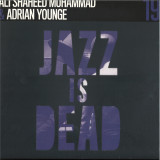
Instrumentals JID019 captures the musical alchemy produced at the Linear Labs Studio by producers Adrian Younge and Ali Shaheed Muhammad. These instrumental recordings encapsulate the spirit of the Jazz Is Dead concert and recording series, celebrating the African-American art form known as jazz through improvisation, musical collaboration and authentic cross-generational and cross-cultural communication.
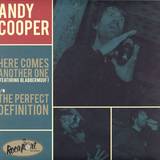
This rare 12" outing from Rocafort Records features the rapping and production talents of Andy Cooper (Ugly Duckling/The Allergies). Taken from the forthcoming album 'The Layered Effect', both tracks throw you around the hip hop boxing ring, slapping you hard with the prerequisites needed for microphone supremacy. Lyrically tough and musically nimble, Andy swings at you somewhere between the artful dodger and a heavyweight pugilist.
The irresistably bouyant 'Here Comes Another One' opens by means of an elegant old jazz trumpet whose player states "rhythm is my business". Get the picture It's a choppy, jazztastic journey. Cleverly underpinned by a gorgeous jazz piano, horns, sharp beats and aural treats, suddenly mashed up by a reggae toasting session on speed courtesy of Blabbermouf.
'The Perfect Definition' has a heavier step and a more serious punch. Fresh and funky attitude meets a deeply earnest reverence towards microphone art, a theme echoed throughout the LP and cherisheddearly by Cooper.
Two tracks that certainly roll with the punches.Out in November. A sure tonic to the winter blues.
Azymuth JID004 is the fourth installation in the Jazz Is Dead catalog. This album features newly recorded songs by Adrian Younge and Ali Shaheed Muhammad and Azymuth, the beloved Brazilian samba funk trio. Azymuth JID004 showcases the trio's distinctive sound as the bedrock for some of the greatest Brazilian albums of the 1970s (Hyldon, Marcos Valle, etc.) All songs produced by Adrian Younge & Ali Shaheed Muhammad. Recorded and mixed by Adrian Younge at Linear Labs, the preeminent analog studio of Los Angeles, CA.
In February 2023, multi-instrumentalist, producer, songwriter, and “genre-defying melody man” (Billboard) Amtrac released his highly-anticipated third album ‘Extra Time’ via Openers.
Inspired by a period of deep reflection during the 2020 lockdowns, ‘Extra Time’ consists of a handcrafted fuse of delicate textures and gritty styles into an unfiltered sonic trip, with each song depicting the process of emotions during a time of uncertainty for the future. It’s a 13-track exploration of forced introspection, a cohesive story that finishes with a surreal feeling of hope.
Amtrac stated: “I made this record to encompass what I was feeling during the times of uncertainty in the world, it helped me cope and was my outlet for everything I was going through. When the listener is done with this album I’m hoping to create the feeling of when you left the movie theater as a child and just saw something that made you think differently.”
Designed to mimic the tension and release of a classic film score, the unique sound of ‘Extra Time’ was heavily influenced by Amtrac’s immersion in the worlds of Jazz and 90s video game music, particularly the classic 90s computer game Grim Fandango and the sonic landscapes of Miles Davis and Stanley Turrentine in addition to the groundbreaking work of fellow electronic pioneers such as Bonobo and Dan Snaith.
Album highlights include kickoff track “Heard Me Right” which was described by Billboard as a “moving mix of rhythmic bass lines and atmospheric melodies”, “Contrast” featuring vocalist Reva Devito, and “Domino” featuring Future Islands frontman Samuel T. Herring that Fangoria described as “like John Carpenter and Basement Jaxx had a baby”. The album also features vocals from his friend Naeem, who worked closely with Amtrac on the jazzy and suspended-in-time groove of “Hesitation.” “Nobody Else” flips a vocal from the Four Tops classic “I Can’t Help Myself” over energetic drums and sultry guitar, and “Dancing With You” unfolds with traditional house elements toward an explosive climax of layered synths. Having made his name with intense DJ sets and creative remixes and collaborations, ‘Extra Time’ is the perfect showcase for Amtrac’s trademark stylistic dexterity and melodic sensitivity - and redefines what it means to create electronic music in 2023.
This follows his collab with Diplo and Leon Bridges on “High Rise” and the recent release of “I’ll Be Around”, his collaboration with English vocalist/producer Elderbrook.
Welcome into the world of scarse music for the ultimate connoisseurs, fine taste beatmakers and holy grails collectors.
You made a step close to The Edge.
From cult Italian soundtrack and 80's iconic anime, English and French library music, to tunes that made Hip Hop iconic anthem, Medline picked 10 compositions to cover, among his favorite crate diggers treasures.
With a 30 years Dj's culture, he unite on vinyl a collection of underground classics.
When other musicians sample, as former beatmaker, he found his fulfillment by playing the entire tracks, as homage to these composers.
In 2018 Solstice has set the corner stone of this unique artwork at the cross road of Jazz, Funk, Soul and Hip Hop worldwide culture.
With The Edge, the out of boundaries producer, placed the level even more higher.
The whole work is incredible, for a man alone, without music theory knowledge but playing flutes, horns, keyboard, guitar and many more instruments... creating in his little home studio the sound of a 70's orchestra.
Challenging and epic:
Epic for covers like A Day In The Life, Beatles cover by Les Demerle, took by Buck Wild for O.C. Time's Up and of course the eponym David Axelrod's The Edge on David McCallum album.
Challenging, for library anthem like Hot Dog, Ghetto or Keep Quiet by Jacky Giordano, sharp and definitely audacious.
Despite the variety of the ten themes, the man's touch is present each time, into the texture, sound taste and balance. Like a chef bringing up to date magical recipes.
The archetypal type of records My Bags loves to release, "The Edge" is built as a crate digger paradise, a timeless record linking past and present into a highly concentrate of divine grooves.
- A1: On Green Dolphin Street
- A2: Fran-Dance
- B1: Stella By Starlight
- B2: Love For Sale
Mastered by Matthew Lutthans at The Mastering Lab from a new 30 ips quarter-inch stereo master tape transferred from the original 3-track session tapes. Plated and pressed at Quality Record Pressings for flawless production and superior fidelity! Stoughton Printing Old Style tip-on gatefold heavyweight jacket with scuff-resistant matte finish.
Miles Davis's Kind of Blue was the number-one jazz album in history. It totaled five songs. There are four more songs from that same historic group, recorded in the same time period and at the same studio. And here they are. These songs deserve to stand on their own with artwork to highlight the quality of the music and that matches the time period of the recording. This is a rare opportunity to have a smash follow-up to what many consider the greatest jazz record ever!
Through the years, these four remarkable performances — all from a single recording session in 1958 and all exemplary of the sound of Miles Davis' legend-loaded sextet of that year — have not been served well. They have been largely treated as add-ons for other compilations. Now, for the first time, Analogue Productions, the audiophile in-house reissue label of Acoustic Sounds, Inc., together with Quality Record Prssings, has deservedly given these tracks a stellar stand-alone release for jazz fans to savor!
The once-in-a-generation lineup that recorded these tunes is the very same that would be immortalized for the enduring classic they would record almost a year later, Kind of Blue. Davis played trumpet sublime with his ensemble sextet featuring pianist Bill Evans, drummer Jimmy Cobb, bassist Paul Chambers, and saxophonists John Coltrane and Julian "Cannonball" Adderley.
Undervalued since their recording, the tunes on this album reflect historial and musical significance. They offer early glimpses into the modal jazz that Kind of Blue would bring to the forefront. Using modes common in modern classical music, rather than the chords of popular songs, Miles had begun to experiment with the new approach on the Milestones recording sessions previously.
Analogue Productions is proud to present Birth of the Blue in an exclusive first-of-its-kind stand-alone release that reflects our reputation for meticulous production, capturing authentic sound with clarity, depth and fidelity that exceeds the audiophile standard.
For this release, we started with the original 3-track recording session tapes that were mixed down to a brand-new 30 ips quarter-inch stereo master tape by senior mastering engineer Vic Anesini at Battery Studios. From that stereo master tape, Matthew Lutthans at The Mastering Lab cut the lacquers at 33 1/3 RPM utilizing the legendary Doug Sax's custom all-tube system and cutting lathe. The lacquers were plated and pressed on 180-gram vinyl at Quality Record Pressings. Lastly, the Stoughton Printing tip-on gatefold jacket with a deluxe scuff-resistant matte finish is the highest quality available. The artwork has an incredible spot-on look to a 1959 Columbia records release!
Features:
• Pioneering Ensemble: Captured the same rare and short-lived alignment of jazz legends including Miles Davis, John Coltrane, Cannonball Adderley, Bill Evans, Paul Chambers, and Jimmy Cobb, as heard on the historic Kind of Blue.
• Innovative Sound: The session represented a crucial transition in jazz, blending elements of hard bop with early modal jazz influences, showcasing the ensemble's experimentation and forward-thinking approach.
• Undervalued Legacy: Despite its historical and musical significance, the session's recordings have been historically overlooked, often relegated to being add-ons in compilations rather than recognized as standalone masterpieces.
• Modal Jazz Precursor: Offered early glimpses into the modal jazz that would later be fully realized in Davis's groundbreaking album "Kind of Blue," laying the groundwork for future jazz innovation.
• Impact on Artists: Served as a critical point of development and confidence for the musicians involved, particularly Bill Evans, who noted the significant impact of this experience on his own identity and style.
• Historical Context: Occurred at a peak moment in Miles Davis's career, following his signing with Columbia Records and his critical and commercial successes with albums such as ‘Round About Midnight and Miles Ahead.
• Revealed backstory: Extensive liner notes by the Grammy Award-winning author Ashley Kahn, who also penned the estential book, Kind Of Blue — The Making Of The Miles Davis Masterpiece
First Word Records is extremely proud to welcome aboard Takuya Kuroda.
A highly-respected trumpeter born in Kobe, Japan, Takuya is a forward-thinking musician that has developed a unique hybrid sound, blending soulful jazz, funk, post-bop, fusion and hip hop music.
After following the footsteps of his trombonist brother playing in big bands, he relocated to New York to study jazz & contemporary music at The New School in Union Square; a course he graduated from in the mid-noughties. It was here that Takuya met vocalist José James, with whom he worked on the 'Blackmagic' and 'No Beginning No End' projects.
Following graduation, Takuya established himself further in the NYC jazz scene, performing with the likes of Akoya Afrobeat and in recent years with DJ Premier's BADDER band (also including acclaimed bass player, Brady Watt). Premier said "The BADDER Band project was put together by my manager, and an agent I've known since the beginning of my Gang Starr career. He said, 'What if you put a band together that revolved around a trumpet player from Japan named Takuya Kuroda? He's got a hip-hop perspective and respect in the jazz field…"
Takuya Kuroda is already incredibly prolific, releasing five albums in the past decade and fortifying a solid reputation in the global jazz scene. 2011 saw the release of Takuya's independently-produced debut album, 'Edge', followed by 'Bitter and High' the following year and 'Six Aces' on P-Vine in 2013. Takuya was signed to the legendary Blue Note Records in 2014 for his album 'Rising Son', as well as appearing on their 2019 cover versions project, 'Blue Note Voyage'. He released his 5th album 'Zigzagger' on Concord in 2016, which also featured Antibalas on a reimagining of the Donald Byrd classic 'Think Twice'.
Late Summer 2020, Takuya Kuroda returns with his sixth album 'Fly Moon Die Soon'.
In his words, "this album is about the irony between the greatness of nature and the beautiful obsceneness of humanity. Melodies and grooves fly back and forth from being spiritual to being vulgar."
It took two years to make this album. In 2018, I decided I just couldn't make albums the same way I had been in the past anymore. As a birthday treat to myself, I booked a studio in Brooklyn for two days, with only myself and an engineer, Todd Carder. I brought along some tracks I'd been building at home to see if we could complete them within that time. We began replacing sounds and adding texture, sampling noises from all over the studio; me sipping coffee, hitting a 26" kick drum, speeding up snares. At the end of the two days we were like "wow, I didn't know we could make tracks this good in this way". This is how the process of the full album started. Everything was based on my beats I made at home, inviting musicians in one by one, adding or replacing parts. I was very careful when developing these tracks; just note by note, part by part. I wanted to make the music effectively from a blend of two different recording methods; one very slickly produced part and one very organic part played by live musicians. I remember mixtapes from when I was kid, and wanted to make an album that wasn't just a bunch of flashy singles, trying to catch people's attention in the first 30 seconds, or full of guest features. Instead, I'm essentially just trying to let the grooves breath."
The album consists of nine tracks of excellence. The uptempo jazz-funk of 'ABC' and 'Moody' sit alongside soulful jazz cuts like 'Fade' and 'CHANGE', also featuring Corey King on vocals. The title track is a downtempo groove lead by a heavy Moog bassline, whilst 'Do No Why' contains an infectious piano riff throughout. Aside from Takuya's original compositions, he revisits two classics from Ohio Players ('Sweet Sticky Thing' featuring Alina Engibaryan on vocals) and Herbie Hancock ('Tell Me A Bedtime Story') whilst the album closes with the epic 'TKBK'.
Takuya adds "this special cover was inspired by the Golden Moon I saw during a photoshoot in Death Valley with my homie Hiroyuki Seo".
Takuya Kuroda is a truly unique talent, and this album is a realisation of the evolution of his sound.
'Fly Moon Die Soon' is released on Worldwide Award-winning UK label First Word Records on vinyl & digital in September 2020.
In 2016, the Norwegian pianist and composer Espen Berg was commissioned to write for the Trondheim Jazz Orchestra. With the opportunity to hand-pick a line-up consisting of 14 of Scandinavia’s most creative and prolific jazz artists, Espen grasped this opportunity with both hands and a mind bursting with ideas. MAETRIX premiered at Molde Int’l Jazz Festival in 2017 to a standing ovation, making the audience shake their head in awe. However, MAETRIX isn’t just an impressive feat, it’s also incredibly beautiful music.
With MAETRIX, Espen has solidified his call to explore a kind of music where complex rhythms are paired with strong, heartfelt melodies. The name itself combines the 1999 blockbuster movie title The Matrix, with metrics. Similar to the movie, the listener can choose which reality to listen to, either intellectually by diving into the mechanical and the conceptual, or emotionally by getting carried away by the melodies and the music as a whole.
The Trondheim Jazz Orchestra demonstrates yet again to inherit a flexibility and agility more commonly associated with smaller bands. Every musician add their personal rendition to the scores, transcending the music and make it come alive. MAETRIX has been performed at seven festivals and venues in Norway and Sweden, and it was recorded in Rainbow Studio, Oslo in May 2021 by Martin Abrahamsen. For Espen it has been a defining project, and many of the songs have lived on in his trio. It also laid the groundwork for Water Fabric, which was released in November 2023. As an «about time»-moment, MAETRIX will finally be available on Odin Records on Aug 30.