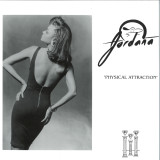
A deeper dive into the production archives of Alex "Landy" Hill (Timex Social Club) reveals an unreleased 90s bay area demo project with vocalist Jordana and songwriter John Pruitt. Nine tracks total, written and recorded in Alex's makeshift apartment recording studio. Tape restoration by PPU.
out of Stock
Last delivered 12 months ago available to reorder, subject to availability
Cosmic Tribe Records proudly presents XTRICTLY ELEKTRO, a groundbreaking vinyl series dedicated to the raw energy and precision of Electro. This debut release brings together a stellar lineup of artists, including EC13, 5ZYL, Nachtwald, Spectrums Data Forces, Wicked Wes, and Calagad 13, each delivering their unique sonic signature to craft a dynamic and immersive listening experience.
Merging the razor-sharp precision of contemporary Electro with the timeless essence of its underground roots, this compilation offers a journey through deep basslines, intricate drum programming, and futuristic atmospheres. The result is a collection that not only pays homage to the genre’s pioneers but also pushes it into new, uncharted territories.
out of Stock
Last delivered 7 months ago available to reorder, subject to availability
'Wherever You Are' is a new solo piano album, played and composed by John Foxx. Most of the recordings were made at home and in the early hours of morning in the weeks following his rare live performance at Kings Place, London in October 2023, as part of the BBC Radio 3 'Night Tracks' event. 'Around dawn is the best time to play piano,' says Foxx. 'Self-critical mechanisms mostly dormant, so I'm free to invent and enjoy for a while. The piano faces a window overlooking a valley surrounded by hills, where the sun comes up. There's often an early mist in the valley - and quite often, it rains. Some notes and sounds resonate with remembered experiences and you get glimpses of times and people. It's valuable. Quiet. Free association, myriad moments orbiting - and off you go.' He adds: 'Lately I'm realising how we get formed by other people. Everyone we know or knew, who affects the way we think and the way we see things - even in a small way, has a voice, and all those voices remain in a sort of lifelong conversation. I hear them all the time. It's not at all frantic, it's more oceanic - calm and pleasant and it eventually makes us the way we are. Luckily, I seem to have met - and meet - mostly good, generous, bright people and I'm still learning a great deal from all of them. They give you the touchstones, the maps, the weather. It's how we find our way. So - simply, thanks. Wherever you are.'
“Sometimes They Come Back” is not just the title of a horror movie based on a macabre tale by Stephen King, it is also a summary of what happened to UK death etal veterans BENEDICTION, yet you might ke to add a “better than ever before”. While never officially disbanded, 2020’s Scriptures, the group’s eighth studio album achieved what is usually not an easy feat. It connected well with classics like Transcend the Rubicon (1993) and its immediate and memorable songwriting, the heavy-as-a-brick Grind Bastard (1998), and also saw legendary vocalist Dave Ingram return with his merciless roar and knack for morbid, twisted lyrics. After two albums with Dave Hunt on vocals, Scriptures was BENEDICTION’s first record in over a decade impressing with aggressive up-tempo attacks like ‘Iterations of I’ and ‘Rabid Carnality’ or the neck-breaking mid-tempo barrage of ‘Stormcrow’, songs that became live staples alongside ‘evergreens’ such as ‘I Bow to None’, ‘Magnificat’, ‘Subconscious Terror’ or ‘Vision in the Shroud’ in no time. With Scriptures, BENEDICTION even almost cracked Germany’s top ten by entering at a phenomenal #11 of the Official German Charts showing that the death metal veterans founded 1989 in Birmingham, England, offered an extremely well received sonic catharsis when due to the pandemic, people were locked down and pissed off.
When the shroud of Covid-19 lifted, the quintet finally could start to promote the album onstage with numerous festival gigs including Summer Breeze (DE), Copenhell (DK), Mystic Festival (PL), UK Deathfest, Alcatraz (BE), Party.San (DE), Obscene Extreme (CZ), Eindhoven Metal Meeting (NL) and Rock Hard (DE) to name but a few, played triumphant shows in South and Middle America as well as in their home country and all over Europe.
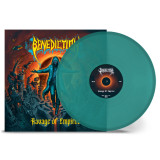
Kicking in the door without further warning, fast paced opener ‘A Carrion Harvest’ that mounts in a vicious Slayer-style break, starts with Ingram growling ‘Brace for impact, go!’ giving an unmistakable hint at what to expect during the following 47 minutes and 11 songs. With tremolo riffs and hammering grooves in spades, tracks like ‘Engines of War’, ‘Genesis Chamber’, ‘Crawling over Corpses’, ‘In the Dread of the Night’, and ‘Psychosister’ show a remarkable consistency and Scott Atkins, who produced the record at Grindstone Studio once again, ensures with a crisp and massive sound that the aforementioned impact leaves no bone unshattered. Garnered with artwork by Wolven Claws Artist, Ravage Of Empires continues BENEDICTION’s flawless discography on Premier League level and promises to become one of 2025’s undisputable old school death metal highlights!
With their brilliant new record in tow, founding members and guitarists Darren Brookes and Peter Rew, longtime vocalist Dave Ingram, drummer Giovanni Durst, and Nik Sampson (bass) will travel far and wide once more. Already confirmed are the Tales of the Triple Death Tour with Jungle Rot and Master kicking off on album release date as well as confirmed appearances at Wacken Open Air and Maryland Deathfest. More to be announced soon!
“Sometimes They Come Back” is not just the title of a horror movie based on a macabre tale by Stephen King, it is also a summary of what happened to UK death etal veterans BENEDICTION, yet you might ke to add a “better than ever before”. While never officially disbanded, 2020’s Scriptures, the group’s eighth studio album achieved what is usually not an easy feat. It connected well with classics like Transcend the Rubicon (1993) and its immediate and memorable songwriting, the heavy-as-a-brick Grind Bastard (1998), and also saw legendary vocalist Dave Ingram return with his merciless roar and knack for morbid, twisted lyrics. After two albums with Dave Hunt on vocals, Scriptures was BENEDICTION’s first record in over a decade impressing with aggressive up-tempo attacks like ‘Iterations of I’ and ‘Rabid Carnality’ or the neck-breaking mid-tempo barrage of ‘Stormcrow’, songs that became live staples alongside ‘evergreens’ such as ‘I Bow to None’, ‘Magnificat’, ‘Subconscious Terror’ or ‘Vision in the Shroud’ in no time. With Scriptures, BENEDICTION even almost cracked Germany’s top ten by entering at a phenomenal #11 of the Official German Charts showing that the death metal veterans founded 1989 in Birmingham, England, offered an extremely well received sonic catharsis when due to the pandemic, people were locked down and pissed off.
When the shroud of Covid-19 lifted, the quintet finally could start to promote the album onstage with numerous festival gigs including Summer Breeze (DE), Copenhell (DK), Mystic Festival (PL), UK Deathfest, Alcatraz (BE), Party.San (DE), Obscene Extreme (CZ), Eindhoven Metal Meeting (NL) and Rock Hard (DE) to name but a few, played triumphant shows in South and Middle America as well as in their home country and all over Europe.
Kicking in the door without further warning, fast paced opener ‘A Carrion Harvest’ that mounts in a vicious Slayer-style break, starts with Ingram growling ‘Brace for impact, go!’ giving an unmistakable hint at what to expect during the following 47 minutes and 11 songs. With tremolo riffs and hammering grooves in spades, tracks like ‘Engines of War’, ‘Genesis Chamber’, ‘Crawling over Corpses’, ‘In the Dread of the Night’, and ‘Psychosister’ show a remarkable consistency and Scott Atkins, who produced the record at Grindstone Studio once again, ensures with a crisp and massive sound that the aforementioned impact leaves no bone unshattered. Garnered with artwork by Wolven Claws Artist, Ravage Of Empires continues BENEDICTION’s flawless discography on Premier League level and promises to become one of 2025’s undisputable old school death metal highlights!
With their brilliant new record in tow, founding members and guitarists Darren Brookes and Peter Rew, longtime vocalist Dave Ingram, drummer Giovanni Durst, and Nik Sampson (bass) will travel far and wide once more. Already confirmed are the Tales of the Triple Death Tour with Jungle Rot and Master kicking off on album release date as well as confirmed appearances at Wacken Open Air and Maryland Deathfest. More to be announced soon!
Kneading dough is tricky – you should know how it’s supposed to feel. If you try too hard you could make it worse. It’s a beautiful practice – creation with a gentle touch, to work at something so it can be left alone. “If it’s too drawn out it’s awful. It’s easy to give too much.” Dance in the mirror. Contemplate your veiny hands. Who do they remind you of?
You begin by mixing flour and water. “What happens when your people die? Why’d they move the rock to the other side of Ulster Park?” Eliza Niemi asks two seemingly unrelated questions in a rising melody with guitar accompaniment, like fingers playing spider up to the nape of your neck. Gentle pressure. Strands of gluten form to bind the mix. A new question lingers in the binding. When she admits “but I don’t know how to tell if I’m feeling it or not,” that question surfaces through the text. It is reiterated throughout the album. When I’m working with dough I think the same thing to myself.
On Progress Bakery, her second album as a solo artist, Eliza knows to leave some questions alone – to let juxtaposition and tension be the proof. It doesn’t have to be hard. The feelings and revelations they provoke rise in the heat. The smell is sweet. Crispy on the outside and soft all the way through. She playfully slip-slides through words and sounds and images, delighting in surprise, skimming ideas like stones cast across clear water, touching down briefly with uncommon grace.
The question provoked between those opening lines resurfaces in the strands between songs – “Do U FM” is fully formed and beautifully layered, while “Novelist Sad Face” is a short, acapella rendering of gentle curiosity. What is holding these ideas together? Some songs demand more, seem to carry a whole load – eventually the skipping stone will halt to sink and resume its idle duty – while others drift in and out of focus, the way thoughts and dreams become interwoven before the mind is sunk into true sleep.
Music and words don’t always have to interact. Where she decides to keep them apart gives a new contour to where and how she puts them together. The kind of thing you’re supposed to take for granted with songs and their singers comes alive in Eliza’s hands – the little miracle of mixing, kneading, stretching, and stopping.
So often on Progress Bakery, Eliza teases out truth and meaning by asking questions. “Do I wanna be crying?” “Do you want me good or do you want me bad?” “Do I need an eye test?” “I’m writing songs in my head while you’re going over stuff with me — is that cruel??” In “Pocky” Eliza ends with a question that feels to me like the actual biography, succinct and revealing:
I don’t wanna be made to see
I just wanna ask “what’s that?”
Grace that ought to be rare, but in its care and precision is offered humbly, with great generosity, and without announcing itself. Eliza’s simple, miraculous music is given further form and shape by a group of collaborators – invaluable guest musicians Jeremy Ray, Evan Cartwright, Steven McPhail, Kenny Boothby, Ed Squires, Carolina Chauffe, Dorothea Paas, Louie Short, and Avalon Tassonyi. Together with Louie Short, who recorded, mixed, and produced the album along with Jeremy Ray and Lukas Cheung, Eliza has cultivated a richness in sound and texture that prods and provokes the ticklish ear. Barely audible guitar tinkering, a brief lo-fi field recording of trumpets, the harmonic clicking of a looped synthesizer, a flourish of reeds, a child’s conversation, each uncanny sound perfectly placed, rippling out under a soft breeze.
Lay in bed alone at night and ask aloud to the stillness,
“What were you doing at the Albuquerque Airport?
What were you doing there??”
And hear your question answered by a dream of swelling, undulating cellos. Try to grasp at the melody and structure. It’s not an answer (if there could be one), but it moves deeper, closer to the weird layer of fleeting moments and disconnected images, barely perceptible at its core. Wait for the dream reel to click into place.
Eliza took me for a ride in Nicole (her beloved Dodge Grand Caravan) and told me she’d been thinking of the album as an embodiment of transition – and I think every transition, known or unknown, carries the weight of new meaning, skittering off the surface tension of life as you know it, creating ripples, sometimes bouncing off and sometimes breaking through. There is a trick you can use to tell if a dough is glutinous enough. You’re supposed to stretch it out as thin as you can without breaking it and hold it up to the light. If you can see through, even if it renders the world murky and uncertain, you should leave it alone. I love this trick. It’s one that Eliza seems to know intuitively: work gently and ask questions and don’t always expect answers, and when you can, take a glimpse at something new, and then leave.
Kneading dough is tricky – you should know how it’s supposed to feel. If you try too hard you could make it worse. It’s a beautiful practice – creation with a gentle touch, to work at something so it can be left alone. “If it’s too drawn out it’s awful. It’s easy to give too much.” Dance in the mirror. Contemplate your veiny hands. Who do they remind you of?
You begin by mixing flour and water. “What happens when your people die? Why’d they move the rock to the other side of Ulster Park?” Eliza Niemi asks two seemingly unrelated questions in a rising melody with guitar accompaniment, like fingers playing spider up to the nape of your neck. Gentle pressure. Strands of gluten form to bind the mix. A new question lingers in the binding. When she admits “but I don’t know how to tell if I’m feeling it or not,” that question surfaces through the text. It is reiterated throughout the album. When I’m working with dough I think the same thing to myself.
On Progress Bakery, her second album as a solo artist, Eliza knows to leave some questions alone – to let juxtaposition and tension be the proof. It doesn’t have to be hard. The feelings and revelations they provoke rise in the heat. The smell is sweet. Crispy on the outside and soft all the way through. She playfully slip-slides through words and sounds and images, delighting in surprise, skimming ideas like stones cast across clear water, touching down briefly with uncommon grace.
The question provoked between those opening lines resurfaces in the strands between songs – “Do U FM” is fully formed and beautifully layered, while “Novelist Sad Face” is a short, acapella rendering of gentle curiosity. What is holding these ideas together? Some songs demand more, seem to carry a whole load – eventually the skipping stone will halt to sink and resume its idle duty – while others drift in and out of focus, the way thoughts and dreams become interwoven before the mind is sunk into true sleep.
Music and words don’t always have to interact. Where she decides to keep them apart gives a new contour to where and how she puts them together. The kind of thing you’re supposed to take for granted with songs and their singers comes alive in Eliza’s hands – the little miracle of mixing, kneading, stretching, and stopping.
So often on Progress Bakery, Eliza teases out truth and meaning by asking questions. “Do I wanna be crying?” “Do you want me good or do you want me bad?” “Do I need an eye test?” “I’m writing songs in my head while you’re going over stuff with me — is that cruel??” In “Pocky” Eliza ends with a question that feels to me like the actual biography, succinct and revealing:
I don’t wanna be made to see
I just wanna ask “what’s that?”
Grace that ought to be rare, but in its care and precision is offered humbly, with great generosity, and without announcing itself. Eliza’s simple, miraculous music is given further form and shape by a group of collaborators – invaluable guest musicians Jeremy Ray, Evan Cartwright, Steven McPhail, Kenny Boothby, Ed Squires, Carolina Chauffe, Dorothea Paas, Louie Short, and Avalon Tassonyi. Together with Louie Short, who recorded, mixed, and produced the album along with Jeremy Ray and Lukas Cheung, Eliza has cultivated a richness in sound and texture that prods and provokes the ticklish ear. Barely audible guitar tinkering, a brief lo-fi field recording of trumpets, the harmonic clicking of a looped synthesizer, a flourish of reeds, a child’s conversation, each uncanny sound perfectly placed, rippling out under a soft breeze.
Lay in bed alone at night and ask aloud to the stillness,
“What were you doing at the Albuquerque Airport?
What were you doing there??”
And hear your question answered by a dream of swelling, undulating cellos. Try to grasp at the melody and structure. It’s not an answer (if there could be one), but it moves deeper, closer to the weird layer of fleeting moments and disconnected images, barely perceptible at its core. Wait for the dream reel to click into place.
Eliza took me for a ride in Nicole (her beloved Dodge Grand Caravan) and told me she’d been thinking of the album as an embodiment of transition – and I think every transition, known or unknown, carries the weight of new meaning, skittering off the surface tension of life as you know it, creating ripples, sometimes bouncing off and sometimes breaking through. There is a trick you can use to tell if a dough is glutinous enough. You’re supposed to stretch it out as thin as you can without breaking it and hold it up to the light. If you can see through, even if it renders the world murky and uncertain, you should leave it alone. I love this trick. It’s one that Eliza seems to know intuitively: work gently and ask questions and don’t always expect answers, and when you can, take a glimpse at something new, and then leave.
The name implies the diverse nature of the music, the substantial genre blending throughout, and the general psychedelic vibe of the songs.
It's a cross-continental trip across time, styles, languages, and rhythms.
In just five years, BALTHVS has carved out a unique space in the global music scene, emerging as Colombia’s most prominent alternative international act. Blending psychedelic grooves with hypnotic funk, the band has captivated audiences across three continents, performing in 56 cities throughout 19 countries. Their ever-expanding reach is backed by over 45 million streams, 10,000 vinyl records sold, and a relentless touring schedule that has seen them grace stages at premier festivals such as Austin City Limits, Outside Lands, Electric Forest, and SXSW Sydney. As three-time SXSW alumni, they’ve cemented their presence in Austin’s thriving music circuit while remaining a staple at Colombia’s top festivals, including Rock al Parque and Estéreo Picnic. With critically acclaimed releases and appearances on influential platforms like KEXP, Gilles Peterson’s Worldwide Café, and the BBC, BALTHVS continues to redefine modern psychedelic music with a sound that is both immersive and irresistibly groovy.
out of Stock
Last delivered 18 months ago available to reorder, subject to availability
Legendary postmodern, post punk, post human, past caring collective Mekons return with a brand-new album for 2025. Their first release on Fire Records, ‘Horror’ a collection of songs written in late 2022 but providing a horribly prescient reflection of the world in its current miasma and how we got here. ‘Horror’ looks at history and the legacies of British imperialism with mashed up lyrics set against a typically eclectic sound that amalgamates everything from dub, country, noise, rock & roll, electronica, punk, music hall, polka and you can even take your partner for a nice waltz on ‘Sad And Sad And Sad’. The roots of their global sound reflect their nomadic journey through time and space from Leeds to California in the West and Siberia in the East and is woven into the fabric and intricacies of their song creation… Sounding like The Chills and R.E.M circa the I.R.S Records years, ‘Mudcrawlers’ sees just about the whole band joining Jon Langford on vocals speaking of Irish famine and refugees journeying to Wales. ‘War Economy’ shivers in the cold of such Boroughs spiked one-liners: “Clinical coercion will not achieve dominance!” Sounding like its straight off a Jenny Holzer neon sign (she of Abuse Of Power Comes As No Surprise), it’s held together by a disgruntled swaggering riff that underpins an explosion of disquiet. Meanwhile, Rico takes the lead on the maliciously luscious ‘Fallen Leaves’ an appalled and appalling Hammer Horror take on climate breakdown reminiscent of Rolling Thunder Dylan, that recalls The Pogues at their most introspective, its Celtic twilightism augmented by Susie Honeyman’s keening violin as the dying sun sinks down and the river Styx flows on in the pitch black night. Almost 50 years in the making, these Mekons continue to astound, their sound, sentiment and method of delivery blended to perfection by bass player and studio wizard, Dave Trumfio. The Mekons are Jon Langford, Sally Timms, Tom Greenhalgh, Dave Trumfio, Susie Honeyman, Rico Bell, Steve Goulding, and Lu Edmonds. "Effortlessly eloquent post-punks" Pitchfork // “The Mekons are still vital” Rolling Stone // “The most revolutionary group in the history of rock ‘n’ roll,” Lester Bangs // UK Tour 8-15 May 2025 (including London, Manchester, Glasgow, and more).
Halo Studios und Laced Records haben sich zusammengetan, um die ikonische Musik der ursprünglichen Halo-Trilogie zum ersten Mal auf Vinyl zu veröffentlichen.
Diese Box enthält 83 Titel aus den ersten drei Halo-Alben, die speziell für Vinyl neu gemastert und auf acht heavyweight LPs gepresst wurden. Jeder Soundtrack befindet sich in einer breitrandige Außenhülle und einer bedruckten Innenhülle. Diese wiederum befinden sich in einer stabilen Sammlerbox aus Karton mit silbernem Laminatüberzug und geprägtem Halo-Logo.
Das Original-Cover-Artwork stammt von Art Director und Concept Artist Isaac Hannaford (alias Rhizus / Space Ship Guru), dem ehemaligen Lead Concept Artist und Mitwirkenden an Halo 3, Halo 3: ODST und Halo Reach. Das zusätzliche Artwork der Box wurde von der Grafikdesignerin Maren Landsnes erstellt.
Halo: Combat Evolved war der Inbegriff des Konsolen-Ego-Shooters und sein Soundtrack legte den Grundstein für den legendären Sound der Serie. Der Soundtrack ist von verschiedenen Genres inspiriert und kombiniert schwungvolle Orchesterklänge mit marschierenden Militär-Snares, Prog-Rock-Percussion und - wer könnte den gregorianischen Mönchsgesang vergessen?
Für Halo 2 taten sich die Komponisten mit hochkarätigen Musikern zusammen und verpassten dem Halo-Thema mit dem neuen „Mjolnir Mix“ ein Heavy-Metal-Makeover. Es war der erste Videospiel-Soundtrack, der es in die Billboard 200 schaffte.
Halo 3 zeichnete sich durch Tribal-Drums und Prog-Rock-Refrains aus, während Klaviermelodien, begleitet von einem 60-köpfigen Orchester und einem 24-stimmigen Chor, dem Soundtrack emotionale Tiefe verliehen.
- 83 Tracks aus Halo: Combat Evolved, Halo 2 und Halo 3
- Speziell für Vinyl neu gemastert
- Cover-Artwork von Isaac Hannaford (ehemaliger Lead Concept Artist, Bungie)
Halo Studios und Laced Records haben sich zusammengetan, um die ikonische Musik der ursprünglichen Halo-Trilogie zum ersten Mal auf Vinyl zu veröffentlichen.
Dieses Doppel-LP-Set enthält die Musik aus dem Spiel, mit dem alles begann, speziell für Vinyl neu gemastert und auf heavyweight LPs gepresst. Die Schallplatten befinden sich in einer breitrandigen Außenhülle und zwei bedruckten Innenhüllen.
Das Original-Cover-Artwork stammt von Art Director und Concept Artist Isaac Hannaford (alias Rhizus / Space Ship Guru), dem ehemaligen Lead Concept Artist und Mitwirkenden an Halo 3, Halo 3: ODST und Halo Reach. Das zusätzliche Artwork des Sets wurde von der Grafikdesignerin Maren Landsnes erstellt.
Halo: Combat Evolved war der Inbegriff des Konsolen-Ego-Shooters und sein Soundtrack legte den Grundstein für den legendären Sound der Serie. Der Soundtrack ist von verschiedenen Genres inspiriert und kombiniert schwungvolle Orchesterklänge mit marschierenden Militär-Snares, Prog-Rock-Percussion und - wer könnte den gregorianischen Mönchsgesang vergessen?
- 26 speziell remasterte Titel aus dem Spiel von 2001
- Cover-Artwork von Isaac Hannaford (ehemaliger Lead Concept Artist bei Bungie)
Die mehrfach preisgekrönte norwegische Jazzsängerin und Songwriterin Silje Nergaard präsentiert ihr neues Album "Tomorrow We'll Figure Out the Rest". Dies ist eine zutiefst persönliche Hommage an ihre Eltern und eine musikalische Reise, inspiriert von Erinnerungen, Momenten mit ihrer Familie und Szenen aus ihrem Leben."'Tomorrow We'll Figure Out the Rest' ist nicht nur der Titel eines Albums, sondern auch das, was das Leben im Moment ausmacht - die Erlaubnis, nicht alles perfekt durchdacht haben zu müssen", erklärt Silje Nergaard. "Diese Inspiration stammt aus einer Quelle, die mir sehr nahesteht: meinen Eltern. Sie haben mir gezeigt, wieviel Freude die Musik in ein Zuhause bringen kann - die Freude und auch die Traurigkeit, die sie in unsere Herzen bringt. Sie haben mir beigebracht, dass das Leben nicht immer bis ins letzte Detail geplant sein muss."Mit ihrer besonderen Fähigkeit, bewegende Geschichten mit Musik zu erzählen, vereint Silje auf "Tomorrow We'll Figure Out the Rest" intime Jazzklänge mit orchestralen Arrangements. Dabei wird sie von führenden europäischen Jazzmusikern begleitet, darunter Helge Lien (Piano), Jarle Vespestad (Schlagzeug), Finn Guttormsen (Bass), George (Jojje) Wadenius (Gitarre) und Håkon Kornstad (Saxophon). Ergänzt wird das Ensemble durch das renommierte Stavanger Symphony Orchestra, dirigiert von Vince Mendoza, der die emotional-farbigen, bisweilen geradezu cineastischen Orchesterarrangements für das Album komponiert hat. Mendoza und Nergaard arbeiteten bereits bei dem Grammy-nominierten Album "A Thousand True Stories" zusammen.Besonders bewegend sind die persönlichen Einblicke, die Silje Nergaard in dieses Album eingebaut hat: "Es hat ein paar kleine Momente, die zeigen, wie mein Leben als Kind aussah. Ich habe eine alte Kassette gefunden, auf der ich mit meinem Vater spreche - da war ich gerade mal fünf Jahre alt. Darauf singen meine Schwester, meine Eltern und ich zusammen. Diese Aufnahmen haben mich tief berührt, und ich freue mich, sie mit euch teilen zu können."Das Album vereint die intime Atmosphäre eines Kammer-Jazzensembles mit dem majestätischen Klang eines großen Orchesters. Silje Nergaard beschreibt es als eine Sammlung von Erinnerungen, die die Vergangenheit feierlich nachvollziehbar machen, aber auch einen hoffnungsvollen Blick in die Zukunft werfen. "Das Cover des Albums zeigt ein altes Foto meiner Eltern, als sie jung und frisch verliebt waren - ein Moment purer musikalischer Freude, ohne Gedanken an den nächsten Tag. Dieses Bild und diese Stimmung haben mich inspiriert."Mit "Tomorrow We'll Figure Out the Rest" zeigt Silje Nergaard einmal mehr, warum sie zu den herausragendsten Künstlerinnen der Jazzszene gehört: persönlich, authentisch und musikalisch brillant.
Black Country, New Road veröffentlichen ihr neues Studioalbum „Forever Howlong“ auf Ninja Tune! Das Album ist ihre erste Studioveröffentlichung seit ihrem Album, „Ants From Up There“, aus dem Jahr 2022, neben ihrem für den Mercury Prize nominierten Debüt, „For The First Time“ und folgt auf „Live At Bush Hall“ aus dem Jahr 2023. Jetzt, auf dem dritten Studioalbum, beginnt die Band wieder von Grund auf und vollzieht eine weitere wundersame musikalische Verwandlung.
Das lang erwartete neue Album wurde von James Ford (von Simian Mobile Disco, der u.a. bereits mit Arctic Monkeys, Depeche Mode und Blur zusammenarbeitete) produziert und zeigt Black Country, New Road in einer neuen Form, in der die Gesangsaufgaben - und der Großteil des Songwritings - zwischen Tyler Hyde, Georgia Ellery und May Kershaw aufgeteilt sind. „Forever Howlong“ ist ein ehrgeiziges, detailliert ausgearbeitetes Album, das von Folk über Prog und Barock-Pop bis hin zu einem Hauch von Alt-Rock alles enthält - mit Anklängen an Joanna Newsom, Randy Newman, Fiona Apple und Janis Ian - und dabei doch diesen unverwechselbaren, einzigartigen Sound beibehält, den nur diese Kombination von Musiker:innen hervorbringen kann. Obwohl das Album sehr vielfältig und umfangreich ist, fühlt es sich auch sehr kohärent und fokussiert an, da es drei verschiedene Stimmen und Stile aufnimmt und sie nahtlos in einen neuen kollektiven Sound einfließen lässt.
out of Stock
Last delivered 18 months ago available to reorder, subject to availability
Black Country, New Road veröffentlichen ihr neues Studioalbum „Forever Howlong“ auf Ninja Tune! Das Album ist ihre erste Studioveröffentlichung seit ihrem Album, „Ants From Up There“, aus dem Jahr 2022, neben ihrem für den Mercury Prize nominierten Debüt, „For The First Time“ und folgt auf „Live At Bush Hall“ aus dem Jahr 2023. Jetzt, auf dem dritten Studioalbum, beginnt die Band wieder von Grund auf und vollzieht eine weitere wundersame musikalische Verwandlung.
Das lang erwartete neue Album wurde von James Ford (von Simian Mobile Disco, der u.a. bereits mit Arctic Monkeys, Depeche Mode und Blur zusammenarbeitete) produziert und zeigt Black Country, New Road in einer neuen Form, in der die Gesangsaufgaben - und der Großteil des Songwritings - zwischen Tyler Hyde, Georgia Ellery und May Kershaw aufgeteilt sind. „Forever Howlong“ ist ein ehrgeiziges, detailliert ausgearbeitetes Album, das von Folk über Prog und Barock-Pop bis hin zu einem Hauch von Alt-Rock alles enthält - mit Anklängen an Joanna Newsom, Randy Newman, Fiona Apple und Janis Ian - und dabei doch diesen unverwechselbaren, einzigartigen Sound beibehält, den nur diese Kombination von Musiker:innen hervorbringen kann. Obwohl das Album sehr vielfältig und umfangreich ist, fühlt es sich auch sehr kohärent und fokussiert an, da es drei verschiedene Stimmen und Stile aufnimmt und sie nahtlos in einen neuen kollektiven Sound einfließen lässt.
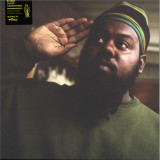
Second volume of tributes from Kutmah.
A beat tape for the brotha from anotha planet, the most high Ras G & the Afrikan Space Program
All beats by Kutmah / Cover Photos By Kevin Ramos
out of Stock
Last delivered 18 months ago available to reorder, subject to availability
The Passion of the Christ is a 2004 biblical drama film by Mel Gibson with music composed by John Debney. The soundtrack received an Academy Award nomination for Best Original Score and it was on the first place in both Top Christian Albums and Top Soundtracks in 2004. In 2005, the album won a Dove Award for Instrumental album of the year at the 36th GMA Dove Awards. The soundtrack succeeds as a coherent, moving, well-executed musical statement whether or not one has seen the film. The album is a combination of folk instruments, Eastern-tinged harmonics, solo, and choral voices. Debney worked together with Indian master violinist and vocalist L. Shankar, and singer/double-violinist Gingger Shankar. The Passion of the Christ is available as a limited edition of 750 numbered copies on gold coloured vinyl and includes a 4-page booklet.
Legendary producer Ant, best known for his work with Atmosphere, proves once again how irreplaceable he is with Collection of Sounds: Vol. 4. This latest release showcases the lifetime of dedication behind his craft, blending his unparalleled skills with a fresh, expanded vision. With previous volumes in the Collection of Sounds series, Ant has traced his musical evolution, spanning hip-hop, funk, reggae and more, all influenced and inspired by extensive travel dating back to his youth. Vol. 4 deepens this exploration, introducing rock-inspired elements—guitars that wail, gnaw, and groove—while maintaining his signature sound.
Despite these genre experiments, Vol. 4 is firmly grounded in hip-hop. The opening track, “Hearing In Dark Colors,” sets the tone, evoking long drives up desolate highways in the dead of night. Tracks like “Created With a Heavy Brush” and “Just Another Three A.M.” reveal a mastery of diverse soundscapes, while the triumphant “Day After 2010" takes listeners on an unexpected journey. As the album circles back to hip-hop on tracks like “A Pinch Brighter” and “Prelude Revisited,” it leaves listeners transformed, further solidifying Ant’s status as a visionary artist.
Atmosphärischer Black Metal aus Sibirien – Klirrende Kälte, antike Rituale und finstere Wälder!
Atmosphärischer Black Metal aus der sibirischen Taiga – GRIMA vertonen klirrende Kälte, Rituale vergangener Zeiten und finstere, einsame Wälder in
atmosphärischem Gewandt. Mit ihrem neuen Album und Napalm Records-Debüt Nightside setzt die Band ein Ausrufezeichen als eine der
vielversprechendsten Hoffnungen im Black Metal!
out of Stock
Last delivered 18 months ago available to reorder, subject to availability
Bon Iver's debut full-length For Emma, Forever Ago has been making major waves in critics circles based on the strength of an early artist-pressed advance cd and a couple awe-inspiring sets at CMJ in October 2007. The New York Times called it "irresistible" and Pitchfork stamped its early review of the album with a Recommended tag. For those of you hiding away in a cabin of your own, it's time that you hear the story, and more importantly, the music. Bon Iver (pronounced: bohn eevair; French for "good winter" and spelled wrong on purpose) is a greeting, a celebration and a sentiment. It is a new statement of an artist moving on and establishing the groundwork for a lasting career. For Emma, Forever Ago is the debut of this lineage of songs. As a whole, the record is entirely cohesive throughout and remains centered around a particular aesthetic, prompted by the time and place for which it was recorded. Justin Vernon, the primary force behind Bon Iver, seems to have tested his boundaries to the maximum, and in doing so has managed to break free from any pre-cursing or finished forms. It wasn't planned. The goal was to hibernate. Vernon moved to a remote cabin in the woods of Northwestern Wisconsin at the onset of winter. He lived there alone for three months, filling his days with wood splitting and other chores around the land. This solitary time slowly began feeding a bold, uninhibited new musical focus. The days slowly evolved into nights filled with twelve-hour recording blocks, breaking only for trips on the tractor into the pines to saw and haul firewood, or for frozen sunrises high up a deer stand. All of his personal trouble, lack of perspective, heartache, longing, love, loss and guilt that had been stock piled over the course of the past six years, was suddenly purged into the form of song.
out of Stock
Last delivered 18 months ago available to reorder, subject to availability
Back in what now feels like a golden period in music and creativity, in the 1970s, many bands were formed by students. It almost seems like so many people could either sing, play, dance or write songs! This was also the case of several Woodland High School students in New York, who created Newban with fellow classmates.
The group started gigging around the tri-state area of New York, Connecticut and New Jersey, and were soon brought to the attention of legendary Bell Recording Studios audio engineer Malcolm Addey, who recorded with the band over a two-month period in 1974. Three years later the tracks made up two superb and sought-after albums released by tax scam label Guinness.
In 1977, Newban headed out to play the Los Angeles nightclub scene, closed a deal with A&M, and changed the band name to Atlantic Starr at the request of Herb Alpert.
For the first time on a 7” format, Soul4Real brings you two of the best songs from Newban. Enjoy the music...
out of Stock
Last delivered 18 months ago available to reorder, subject to availability
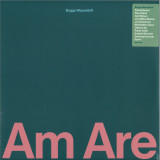
Bugge Wesseltoft has long been a shaper of his own jazz idioms, through his diverse solo albums, his group projects such as New Conception of Jazz, OKWorld! and RYMDEN, and collaborations with artists such as Sidsel Endresen, Henning Kraggerud or Henrik Schwarz.
"Am Are" features special constellations of superb musicians that spans both generations and styles, and is an exploration of sonic textures, dynamic contrasts of mood and style, and ranges from sparse arrangements through to complex layers of dubs and loops and improvisational interplay.
The album begins with Bugge alone on "How?" with layers of undulating atmospheric synth, brought into focus by Bugge's piano at the forefront, creating a minimalist miniature that is both emotive and serene. For "Villrein" Bugge is joined by Elias Tafjord on drums, beginning with a santur-like synth figure, floating over ominous formant sci-fi bass synths bubbling and pulsing, and overlaid by phrenetic piano that only stops to lock into the santur figure before relaunching on its own journeys, all underpinned by Elias Tafjord's expressive drumming. "Is Anyone Listening?" demonstrate's Bugge's songcraft, layering muted percussive piano behind Rohey's distinctive and beautiful vocals punctuated by Martin Myhre Olsen's tenor saxophone, creating a soulful mood tinged with desperation.
"BAG" presents the first classic piano trio of the album - Bugge on piano and synths, Arild Andersen on bass, and Gard Nilssen on drums - announcing itself with an insistent riff, chattering drums, breaking into a progressive rock-style passage of bass and piano in unison. "Reel", the second track from this trio, is a mellow soundscape that evolves to become hazy urban downbeat jazz.
The second piano trio of Bugge (Rhodes and Korg MS20 synth), Sveinung Hovensjø (Electric Bass), and Jon Christensen (Drums and Bells) offers a completely different perspective. The first track "Render" features Bugge's Zawinul-esque Rhodes and monosynth leads, Sveinung's fuzz bass in something of a leading role, all carried with chattering gusto by Jon Christensen's dynamic drumming that brings texture and space as well as rhythm to the piece. "Vender" begins as an atmospheric piece, with reed organ-like synth washes, and octave-processed bass with a somewhat sitar-like tone, meandering until the track breaks down into drums and bass weaving around an insistent drum machine loop, dripping with synth pads and monosynth lead.
"JazzBasill" introduces the third piano trio - featuring Bugge (Piano), Jens Mikkel Madsen (Acoustic Bass) and Øyunn (Drums) - and offers a classic piano trio style with urban sophistication, that is lyrical, and interspersed with staccato cadences, giving a feeling of broken swing, slightly staggered yet driving forwards. The title track "AM ARE" is late night jazz, with baroque whispers, and distinctly melodic.
The final track, "Think Ahead" features the non-standard trio of Bugge (Piano/Organ), Oddrun Lilja (Guitar) and Sanskriti Shrestha (Tablas/Harp). Beginning with a minimalist piano figure, table, and sustained guitar, the track breaks down to a noise surge and ambient windscape, with guitar birds and abstract grinding, before returning to minimalist melodicism.
The shifting personnel across the album, as well as the three different studios in which it was recorded - Village Recording in Copenhagen, Rainbow Studios in Oslo, and his own Buggesroom Studio - creates a feeling of dynamic change and musical variety that is unified by Bugge's piano and keyboards. His playing moves between foreground, where he allows the music to elevate him, and background, where he move gently like a beneficent presence, tending to the demands of the spirit of the musical moments he has captured. It is an album powered by restless exploration and shaped by distinctive musical personalities; it is a journey through different moods, illuminated and brought into focus by Bugge's measured approach and guiding hand.
out of Stock
Last delivered 15 months ago available to reorder, subject to availability
Googling “paradise house”, the first results to pop up are an endless list of European b&b’s with whitewashed lime façades, all of them promising “…an unmatched travel experience a few steps from the sea”. Next, a little further down, are the institutional websites of a few select semi-luxury retirement homes (no photos shown, but lots of stock images of smiling nurses with reassuring looks). To find the “paradise house” we’re after, we have to scroll even further down. Much further down.
It feels like yesterday, and at the same time it seems like a million years ago. The Eighties had just ended, and it was still unclear what to expect from the Nineties. Mobile phones that were not the size of a briefcase and did not cost as much as a car? A frightening economic crisis? The guitar-rock revival?! Certainly, the best place to observe that moment of transition was the dancefloor. Truly epochal transformations were happening there. From America, within a short distance one from the other, two revolutionary new musical styles had arrived: the first one sounded a bit like an “on a budget” version of the best Seventies disco-music – Philly sound made with a set of piano-bar keyboards! – the other was even more sparse, futuristic and extraterrestrial. It was a music with a quite distinct “physical” component, which at the same time, to be fully grasped, seemed to call for the knotty theories of certain French post-modern philosophers: Gilles Deleuze, Félix Guattari, Paul Virilio... Both those genres – we would learn shortly after – were born in the black communities of Chicago and Detroit, although listening to those vinyl 12” (often wrapped in generic white covers, and with little indication in the label) you could not easily guess whether behind them there was a black boy from somewhere in the Usa, or a girl from Berlin, or a pale kid from a Cornish coastal town.
Quickly, similar sounds began to show up from all corners of Europe. A thousand variations of the same intuition: leaner, less lean, happier, slightly less intoxicated, more broken, slower, faster, much faster... Boom! From the dancefloors – the London ones at least, whose chronicles we eagerly read every month in the pages of The Face and i-D – came tales of a new generation of clubbers who had completely stopped “dressing up” to go dancing; of hot tempered hooligans bursting into tears and hugging everyone under the strobe lights as the notes of Strings of Life rose up through the fumes of dry ice (certain “smiling” pills were also involved, sure). At this point, however, we must move on to Switzerland.
In Switzerland, in the quiet and diligent town of Lugano, between the 1980s and 1990s there was a club called “Morandi”. Its hot night was on Wednesdays, when the audience also came from Milan, Como, Varese and Zurich. Legend goes that, one night, none less than Prince and Sheila E were spotted hiding among the sofas, on a day-off of the Italian dates of the Nude Tour… The Wednesday resident and superstar was an Italian dj with an exotic name: Don Carlos. The soundtrack he devised was a mixture of Chicago, Detroit, the most progressive R&B and certain forgotten classics of old disco music: practically, what the Paradise Garage in New York might have sounded like had it not closed in 1987. In between, Don Carlos also managed to squeeze in some tracks he had worked on in his studio on Lago Maggiore. One in particular: a track that was rather slow compared to the BPM in fashion at the time, but which was a perfect bridge between house and R&B. The title was Alone: Don Carlos would explain years later that it had to be intended both in the English meaning of “by itself” and like the Italian word meaning “halo”. That wasn’t the only double entendre about the song, anyway. Its own very deep nature was, indeed, double. On the one hand, Alone was built around an angelic keyboard pattern and a romantic piano riff that took you straight to heaven; on the other, it showcased enough electronic squelches (plus a sax part that sounded like it had been dissolved by acid rain) to pigeonhole the tune into the “junk modernity” section, aka the hallmark of all the most innovative sounds of the time: music that sounded like it was hand-crafted from the scraps of glittering overground pop.
No one knows who was the first to call it “paradise house”, nor when it happened. Alternative definitions on the same topic one happened to hear included “ambient house”, “dream house”, “Mediterranean progressive”… but of course none were as good (and alluring) as “paradise house”. What is certain is that such inclination for sounds that were in equal measure angelic and neurotic, romantic and unaffective, quickly became the trademark of the second generation of Italian house. Music that seemed shyly equidistant from all the rhythmic and electronic revolutions that had happened up to that moment (“Music perfectly adept at going nowhere slowly” as noted by English journalist Craig McLean in a legendary field report for Blah Blah Blah magazine). Music that to a inattentive ear might have sounded as anonymous as a snapshot of a random group of passers-by at 10AM in the centre of any major city, but perfectly described the (slow) awakening in the real world after the universal love binge of the so-called Second Summer of Love.
For a brief but unforgettable season, in Italy “paradise house” was the official soundtrack of interminable weekends spent inside the car, darting from one club to another, cutting the peninsula from North to centre, from East to West coast in pursuit of the latest after-hours disco, trading kilometres per hour with beats per minute: practically, a new New Year’s Eve every Friday and Saturday night. This too was no small transformation, as well as a shock for an adult Italy that was encountering for the first time – thanks to its sons and daughters – the wild side of industrial modernity. The clubbers of the so-called “fuoriorario” scene were the balls gone mad in the pinball machine most feared by newspapers, magazines and TV pundits. What they did each and every weekend, apart from going crazy to the sound of the current white labels, was linking distant geographical points and non-places (thank you Marc Augé!) – old dance halls, farmhouses and business centres – transformed for one night into house music heaven. As Marco D’Eramo wrote in his 1995 essay on Chicago, Il maiale e il grattacielo: “Four-wheeled capitalism distorts our age-old image of the city, it allows the suburbs to be connected to each other, whereas before they were connected only by the centre (…) It makes possible a metropolitan area without a metropolis, without a city centre, without downtown. The periphery is no longer a periphery of any centre, but is self-centred”.
“Paradise house” perfectly understood all of this and turned it into a sort of cyber-blues that didn’t even need words, and unexpectedly brought back a drop of melancholic (post?)-humanity within a world that by then – as we would wholly realise in the decades to come – was fully inhuman and heartless. A world where we were all alone, and surrounded by a sinister yellowish halo, like a neon at the end of its life cycle. But, for one night at least, happy."
out of Stock
Last delivered 3 months ago available to reorder, subject to availability
If every significant artist has an underrated gem in its catalog, then Mirage is that album for Fleetwood Mac. An obvious return to relative simplicity after the dramatic tension of Rumours and experimental ambitions of Tusk, the 1982 album finds the band re-grouping after a brief hiatus and again climbing to the top of the charts. Extremely well-crafted, well-produced, and well-performed, the double-platinum effort distills the group’s hallmark strengths into a filler-free set that never runs short of addictive pop hooks or daft accents.
Sourced from the original analog master tapes, pressed at Fidelity Record Pressing in California, and housed in a Stoughton jacket, Mobile Fidelity’s numbered-edition 180g 45RPM 2LP set presents Mirage in reference sound for the first time. The efforts co-producers/engineers Ken Caillat and Richard Dashut went to capture the splintered albeit formidable band can be heard with stunning accuracy, range, depth, and detail.
Though Rumours understandably gets a permanent spot in the audiophile hall of fame, the smooth, clear, and dynamic sonics on Mirage confirm that the record that stood as Fleetwood Mac’s last effort for five years deserves a place in the same vaunted arena. The presence and imaging of Mick Fleetwood’s percussion alone on this reissue might have you wondering how this slice of soft-rock bliss has gone under-noticed for decades. Other prized aural aspects — separation, definition, impact, tonal balance — are also here in spades.
Like much surrounding Fleetwood Mac in the 1980s, arriving at Mirage was not easy. Caillat searched for studios located outside of Los Angeles on a mission to change up the vibe of the band’s prior recording sessions. Everyone settled on Le Chateau in France, where relations between some members remained icy — and cooperation with the producers strained. Battles with exhaustion, bitterness, and addiction further informed the proceedings at the 18th century complex in the French countryside, where even communal meals were allegedly eaten in silence.
Inevitably, the feelings that co-producer Lindsey Buckingham, Stevie Nicks, Christine McVie, and company harbored — as well as the situations in which they found themselves — drifted into the songwriting. In its rapid ascent to rock-star royalty status, Fleetwood Mac drifted apart, embarked on solo pursuits, and found it was lonely at the top. Emptiness, the illusion of dreams, the longing for love, the want to escape to bygone times of innocence and happiness: Such themes inform a majority of the narratives. Even if the lyrics regularly take a back seat to easygoing arrangements that allow Mirage to come on like a refreshing breeze on a sunny summer afternoon.
Home to three Top 25 singles in the U.S. and having occupied the pole position of the Top 200 album charts for five weeks, Mirage rightfully resonated with the mainstream and attracted listeners on both sides of the pond. And how, via a smart blend of sugary melodies, warm harmonies, interlaced notes, nimble rhythms, taut structures, and passionate vocals. Not to mention the presence of what arguably remains Nicks’ signature song, the biographical “Gypsy,” a meditation on the loss of her close friend Robin Anderson that teems with majesty, mystery, and mysticism — and which gets an assist from Buckingham’s shaded tack piano and richly strummed guitar chords.
Its ranking as an all-time classic aside, that No. 12 hit has plenty of company when it comes to brilliant pop turns on Mirage. On the subject of Nicks, the raspy singer gets a little bit country on “That’s Alright.” Its clip-clopping pace and two-stepping progression complement subtle vocal swells that emerge during the final verse of a tune that is ostensibly about leaving but still conveys forgiveness and grace. And what would a Fleetwood Mac record be without Nicks drawing on the tools of the supernatural — cards, dreams, wolves, and the like — on the twirling “Straight Back.”
Despite the potency of Nicks’ primary contributions, Mirage seemingly unfolds as a tight competition between Buckingham and McVie — and one that ultimately ends in a draw. Buckingham’s salvos include the contagious “Can’t Go Back,” a yearning to time-travel back to the past that’s complete with hall-of-mirrors backing vocals; “Oh Diane,” out-of- left-field ear candy sweetened with hiccupped vocals and salt-and-pepper-shaken grooves; the chiming “Eyes of the World”; and “Empire State,” a delightfully fluttering track whose high-range vocals, lap harp notes, and ringing xylophones hint at the galaxies of sound that would erupt on Tango in the Night.
Then there’s McVie. As elegant, understated, and coolheaded as she’s ever been on record, she pours her heart out on cuts that revolve around her inevitable split with Beach Boy Dennis Wilson. In the process, she punctuates Mirage with a characteristic not always associated with catchy pop music: emotional weight, and the sense of dreaded acceptance in the face of dreams deferred.
“I wish you were here/Holding me tight,” McVie sings over a delicate melody on the album-closing piano ballad “Wish You Were Here.” Though they hoped otherwise, for the members Fleetwood Mac, distance and separation were always close at hand. Believing otherwise, inviting nostalgia, and pretending everything was fine only amounts to a mirage.
Summertime Whiteout is a debut Bleach Cult album - the quirky ambient pop record that
fantasizes about 1960s surf culture and romanticizes the neverending dilemmas of teen
life. It is all about raw imperfections and beautiful spontaneity, captured live on a
modular synthesizer, often relying on single takes and instinctive executions of tracks
that leave little to no room for extensive tweaking and post-processing. Recorded in the
living room at night it shies away from sophistication and complexity instead employing
rough, rock and roll inspired ideas. Raw drifting analog sequences, pulsating textures
and polychromatic vocals. No guitars or drum machines, however.
'It begins with a shoebox of mysterious provenance, full of recordings from the Vendée department on France’s western seaboard: songs of love and war, life and death, played out on land and sea. Songs passed down and sung by ordinary men and women, gracefully delivered with the poetic economy which unites the folk song of all peoples.
Next it takes a group of contemporary musicians to make selections from this treasure trove and sing these old songs anew; to sing them for their beauty, of course, and to reclaim the people’s tradition from those who would seek to exploit it for nefarious political ends. Who better for this task than Tartine de Clous, a singing trio from Vendée’s neighbouring department of Charente-Maritime, who burst into national and international consciousness with their debut album "Sans Folklore" in 2015? The result of their shoebox rummagings, the new album "Compter les dents", recorded in 2019 and finally seeing the light of day, is bound to delight old fans and win them many new ones.
Time makes many’s the alteration, and "Compter les dents" finds 'les garçons' - Geoffroy Dudouit, Thomas Georget and Guillaume Maupin - in a different state of being from their debut release. The trio, friends since youth, have certainly matured between albums, as one would expect; consequently the newer performances are more considered and poised, unfolding with a patient confidence. A relaxed domesticity prevails, something to do with the fact that the album was entirely recorded chez les amis, in contrast to the first album, which was mostly recorded at live performances in bars and night-spots across France.
Lending gravitas to the grain of their voices we mark a deepened richness, doubtless born of the various vicissitudes of daily existence which these gentlemen - and we too as citizens of this turmoiled globe - have weathered in the intervening years. Not too dissimilar, in fact,
from some of the vicissitudes detailed in those old Vendée songs. Plus 'ça change', right?
There’s a greater complexity and subtlety to their unique three-part harmonising, too. Their voices mesh in even stronger - almost telepathic - 'fraternité' than ever before: now commanding and mighty as a full-rigged counter-vessel, now gentle and lulling as a mother’s
cradle-croon, or as the whisper in a lover’s ear.
Three legendary figures of French traditional music, now sadly departed, preside as tutelary spirits over Compter les dents. They are: the late Claude Flagel, musician and ethnomusicologist; and the late Jean-Loup Baly of the well-known 1970s band Mélusine. Most of the album was recorded by Claude in the Brussels home he shared with his late wife Lou Flagel. The album is dedicated to the memory of Jean-Loup, Claude and Lou.
For the first time there are several guest instrumentalists working their magic to expand the Tartine de Clous sound. Jean-Loup plays a characterful accordéon on the song ‘La Veuve'. The other guests are: Maurice Artus (voice), Robert Thébaut (violin), Quentin Manfroy (piccolo, contrabassoon), Marceau Portron (cigar box guitar). Their contributions add even more conviviality to that which the trio of singers already share, a sensation which will doubtless be shared by those who happen to find a place in their lives for "Compter les dents".'
Second volume of tributes from Kutmah.
A beat tape for the brotha from anotha planet, the most high Ras G & the Afrikan Space Program
All beats by Kutmah / Cover Photos By Kevin Ramos
"Night Sketches" is the follow-up to French pop duet Papooz's first album "Green Juice". The album spawned single release 'Ann Wants To Dance' (alongside a video directed by French artist & musician SoKo), which has since clocked over 12 million streams online and counting.
After selling out both Moth Club & The Sebright Arms, Papooz headlined Scala in London in December 2018. Produced by Adrien Durand of Bon Voyage Organisation, Night Sketches finds Papooz perfecting their gift for wonky, exotic pop balanced with surreal, character-driven lyricism.
"We had this romantic idea of capturing the essence of night life: its stories, its suspicious characters, its highs & lows and put them into pop songs." Whilst Night Sketches continues to keep Papooz' tongue firmly in cheek, there's real precision at play in Armand Cottin and Ulysse Penicaut's assimilation of soft rock, jazz and Brazilian music, leavened with an unmistakably British sense of humour (those lyrics sung in English are not by chance).
The Crystal Hum is the debut vinyl release by Taiwan-based artist Yuching Huang and her first release for Night School.
A beguiling dreamscape of crackles, spluttering, love-struck Casios presided over by the the spectral vocal and guitar work of Huang, Yuching sings love songs at the end of this world and the beginning of the next. Recorded during a hiatus from her group Aemong (a duo with artist Henrique Uba) in Berlin, these songs elevate Huang’s unique vocal style and grasp of atmospherics. The Crystal Hum deconstructs balladry, Garage, guitar music and reforms it into a
unified ghostly otherworld version of these languages.
The Crystal Hum thrums with buried desire, trails of nocturnal reverb seeping out of apartment windows, diaristic vocal performances and deeply emotive, evocative Western-style strings. Formulated by Yuching Huang after periods of frustration and experimentation, the album is an exercise in minimalism and paring back, with some tracks like JohnJohn featuring little else than an elastic bass, spring reverb trails, an interjecting vocal and swelling, dislocated synths. The effect is spellbinding, the soundtrack to getting lost in the labyrinthine, closed streets of Venice, Taipei, Hong Kong, or mirror versions of them in the imagination.
On opener Fly! Little Black Thing, a subterranean funk bassline roots Huang’s singing, a rudimentary, unreliable beat floundering in whimsy underneath. Demure, dream Dance music, Huang references classic lo fi experimenters Suicide and Arthur Russell as well as Night School label mates The Space Lady and Ela Orleans. In fact, after the release of Aemong’s third album Crimson, Huang credits the direction of The Crystal Hum to being enchanted by The Space Lady’s Greatest Hits,
the landmark lo-fi recording made by Susan Dietrich Schneider in 1990. The new, minimalist approach to her sound world reveals and shrouds in equal measure. On the heart-melter Love, a sultry mid-tempo Casio + bass backing drops into the ether with Huang’s vocal swimming in preternatural void before emerging anew, in awe at the world. Every chord change heralds new perspectives, every guitar flurry swells and drips emotion, nothing is wasted and space billows out from between the grooves.
Huang never reveals more than necessary, making this an in-between love album: the right amount of mystery and darkened mirror shines wanely on The Crystal Hum while remaining fragile and vulnerable in the sweet spots. Turning over in pillowing smoke and night in the dark corners, Huang sings in both Mandarin and English. The songs speak of earthly matters seemingly at the edge of dissipating into nothing. Distorted, beguiling Sambas warble like sweating dancehalls in an imagined Lynchian 60s, as on Thoughts. Closer You, An Illusion warps a classic 60s Girlgroup bassline beloved of the likes of Les Rallizes
Denudes into a slight ballad on the edge of the void, held back by the teary-eyed, wistful and enveloping vocal cooed by Huang. Each song feels like a love song dedicated to the bits between worlds, between beats, the negative space between people where desires, feelings and loss hangs in the air, resolute and unresolved.
out of Stock
Last delivered 2 years ago available to reorder, subject to availability
SC returns with a full length LP showcasing his vast armoury of musical ability in a controlled, contemplative reflection of his inner self, laid bare in breaks-driven form for the enjoyment of Spatial fans new and old - continuing the ongoing celebration and evolution of classic atmospheric drum & bass.
A1 - Fear of the Deep
Curious, high twinkling bells cautiously introduce Fear of the Deep, reminiscent of classic sci-fi movies building atmosphere and intrigue, before the hi-hat heavy, snappy break previously used in Spatial classic Essence (also by ASC) makes a welcome return. The 2-step - occasionally broken - beat pattern drives the track along with a darkly, investigative energy, while a typically deep bassline rumbles beneath, setting the scene perfectly.
A2 - Concentric Circles
A change of pace for ASC here with Concentric Circles, exploring a jazzier spectrum of influences not often broached in his production adventures, with broken scattershot beats toying and playing around a wealth of reverberating brass samples to create a minimal yet quietly imposing undertone. Double bass props up the composition wonderfully, completing an exquisitely quirky entry to the LP.
B1 - Say It
Opening with rousing strings and quietly ominous effects, ASC utilises a unique fusion of melancholic atmospherics, jazzy basslines and a classic old-school breakbeat to form Say It. Dense, purposeful kicks stomp across the mix as the strings and synthwork wash in the foreground, developing a sombre, contemplative tone to the track throughout, before a wonderful outro ending with those delightful strings.
B2 - Virtual World
Filtered Hot Pants breaks gently ease their way to the forefront of a beautifully constructed intro to Virtual World, trademark crispness and intricacy etched onto the beats effortlessly, as we've come to expect from ASC. Delicately nuanced vocal samples combine with an intense concoction of synths and micro-melodies, dancing over the sharp breaks and a suitably earthy undertone bassline.
C1 - Eons
The classic, intense atmospherics continue with Eons, a spacey piece introduced by a memorable melody, tinged with purpose and allure. This melody continues through sci-fi computer FX reminiscent of early 720, and persistent backdrop synths as we are treated to a gentle flurry of perfectly edited amens leaping and falling over subtle, juddering basslines creating that elusive blend of both headphone and dancefloor appeal.
C2 - Timeslides
ASC flexes the timeless Hot Pants break again - crisply edited with a sharpness in the mix which is simply to die for - in Timeslides, a track which continues the brooding, introspective tone of the LP. Utilising a varied array of samples and effects which will transport you straight back to that unmistakable era of 90's atmospheric heaven with several nods to forefathers of this wonderful sound - just how we like it at Spatial.
D1 - Lightspeed
Take a moment to appreciate the bells tolling, glimmering and colliding during an enchanting intro, freely crafting layered melodies without a care as ASC presents us with an immensely memorable piece in Lightspeed. Long, elongated vocals drift and swirl through the airy soundscape, all punctuated by finely tuned and arranged Circles breaks, energetically deployed for the discerning breakbeat aficionado.
D2 - Nightvision
Intensity is dialled up to 11 in Nightvision, a deeply atmospheric track which showcases a perfect, symbiotic combination of melancholy, drama and raw energy. The lively breaks take center stage over a heavy, consistent 808 bassline with enveloping masses of atmospherics circling, gripping your attention, joined by dreamy vocal samples deployed subtly in an ever-changing tone to close the LP in style.
Words by Chris Hayes (Spatial / Red Mist)
out of Stock
Last delivered 11 months ago available to reorder, subject to availability
This double vinyl captures two legendary concerts, one in Paris in February 1960, the other at an unknown location in 1961. Side A features tracks like “This Night Mountain” and “Ceciliana,” showcasing dazzling rhythmic mastery, supported by Tommy and Stanley Turrentine. Side C enchants with “Who Will Buy?” elevated by Abbey Lincoln’s mesmerizing vocals. Finally, Side D peaks with “Stop Motion,” a masterpiece of bold percussion. A must-have for jazz enthusiasts.
At the heart of Tuesday Night Music Club, Sheryl Crow’s impressive debut, is collaboration – the title comes from the shorthand used to describe the group of musicians who came together on Tuesdays to work on the project. Not released on vinyl in 1993, the album was remastered in 2023 and released as a 1LP. Now available on limited edition blue vinyl.
Apollo / R&S are delighted to welcome back The Primitive Painter, aka the duo of Roman Flügel and Jörn Elling Wuttke for a timely reissue of their 1994 lost classic self-titled album of sonorous IDM.
Growing up in Frankfurt, in the 80s and 90s the duo met at an indie rock club in their home town of Darmstadt, bonding over their shared obsession with the first wave of acid, Chicago house and early Detroit techno as well as their patronage of now iconic Frankfurt club nights like The Omen or Dorian Gray or the infamous Delirium Record shop run by scene stalwarts Ata (Robert Johnson) and Heiko MSO (Playhouse).
Taking inspiration from the likes of The Black Dog and Transmat as well as seminal compilations such as Planet E’s Intergalactic Beats and Warp’s Artificial intelligence compilation the duo honed their inventive take on the Detroit techno blueprint under the monicker Acid Jesus, debuting on their freshly minted Klang Elektronik label. The label was started in conjunction with Ata and Heiko after Fluegel & Wuttke (regular patrons of the Delirium store) pressed a demo on them, muttering the immortal line; “Please listen to the tape, we are big Mr. Fingers fans.”
Through the mid ’90s the project flourished giving rise to a classic album and a brace of singles that number amongst the best of the era’s techno, winning them a influential fans most notably Sven Väth, David Holmes and Andrew Weatherall who invited them to play live at one of the legendary Sabresonic parties in London.
Alongside the success of the Acid Jesus project, the duo found great inspiration in outside of the club, including an ambient happening when the KLF came to play Frankfurt; “There were live sheep eating grass on stage while they played at Mark Spoon’s club XS”, as well as cinematic influence from the likes of Jim Jarmush and Wim Wenders. It was however the euphonic IDM grandeur of Apollo Recordings self titled compilation of 1993 that really got their creative juices flowing: “It was a ten track compilation with artists like David Morley, Model 500, Aphex Twin which still sounds so good today,” Jörn enthuses. “ It was really the trigger to go away from the Detroit sound and more towards the big melodies of B12 etc.”
Deciding to make their tribute to this style of music the duo turned out 10 tracks of gauzy, melodious electronica in a white hot fever, one after another over the ensuing months. Settling on a name for the new project they picked ‘The Primitive Painters’ taking inspiration from the band Felt. “We are both children of the C86 movement,” explains Jörn. “this attitude of noisy art school influenced rock like Primal Scream, MBV, The Jesus & Mary Chain really inspired us to take a DIY approach to our music.”
They sent the resulting demo cassette to Renaat at R&S / Apollo. “We really had no expectations,” Jörn explains. “So we were shocked and delighted when we received a fax saying that he wanted to release it”.
The resulting release was bungled by an R&S mix up that attributed the album to the duo’s own Klang Elektronik label which confused both fans and distributors alike, denying the release the critical boost and attention that it so richly deserved. Accordingly the release slipped out without much fanfare, with a chastened Fluegel & Wuttke returning to their Acid Jesus activities which would eventually lead to their blockbusting success as Alter Ego.
Over the ensuing years the reputation of The Primitive Painter album has only grown, with second hand copies (only 500 vinyl were pressed) changing hands for exorbitant amounts on Discogs, leading us to this opportune moment of a richly deserved ‘first’ release on the label for which the project was started, Apollo / R&S.
“This really brings us full circle,” says Jörn. “Apollo / R&S meant and means so much to us as artists and so it was bittersweet to not have the official release - to put that right all these years later feels really good.”
This new vinyl release comes in re-created original gatefold artwork and includes all original 10 tracks (Stoned Soul Picnic was previously on the CD only).
out of Stock
Last delivered 14 months ago available to reorder, subject to availability
"Daft Punk brought me here, he brought me Daft Punk"
Just knowing that this slice of hyper-rare disco dynamite was crafted by Thomas Bangalter's dad should be enough for you to buy this on sight, if only to understand a little bit more about Thomas and Daft Punk's background. But this is so much more than a Daft Punk family curio.
Born Bangalter in 1947, Daniel Vangarde is a French songwriter and producer. In 1975, Vangarde founded his label, Zagora Records, who we have worked closely with on this lovingly curated reissue. For years, Vangarde wrote and produced songs that remained underground, under several pseudonyms and for various artists. Dubbed "the secret father of French disco" this here groove-fulled firecracker - using his Who’s Who moniker - is for disco-funk, library music and cosmic beat lovers.
The intense, evocative opener "Palace Palace" positively throbs with raw energy and sounds, honestly, like something off Daft Punk's Discovery. The title refers to the fashionable Parisian club Le Palace, essentially the Parisian Studio 54. "I’d been to a nightclub in New York, a big ring where people were roller skating with a whistle. The atmosphere was great. The music was all disco. I made this song when I came back. A vocoder transformed my voice. Back then, it wasn’t used much." The track rides a killer groove and is deceptively complex, with layers of fantastic percussion and ace synth work going on all over it. Listed to on repeat, it's brilliance is simply undeniable.
The louche, slo-mo heater "Hypno Dance" is, in Be With's opinion, *the* deadly dancefloor track. A svelte slice of ace space disco again geared towards the roller skating dance mania of the day. So deep, so disco, so instrumental. An unreal track and, as the title hints at, totally hypnotic. The side closes with the somewhat throwaway "Popeden" - it's a jaunty number that you're probably best skipping, in all honesty. Have we ever steered you wrong?
The B-Side opens with the frankly enormous "Roll Jacky Roll" is another thrilling, high class roller-rink jam with beautiful melodies that's adored the world over. The wonky, abstract "Ad Libitum 80" is a super dope, swirling, staccato electro-funk bounce which sounds light years ahead of its time. This might be the real lowkey sleeper gem on this record. CHECK! This remarkable LP rounds out with the huge "Dancin' Machine". It's got sleek drums that emit an absolutely ace swagger and elements of Italo synth funk feels. A relaxed, slow rhythm throughout ensures you can't help but get your funk on when this crashes soundsystems. We'll leave the final word on this to Daniel: "It amuses me to think that my son Thomas was influenced by "Dancin’ Machine" for "Around The World", he says. Both songs being based on an hypnotic repetitive refrain. Both songs being, of course, timeless pieces of Euro genius.
Who's Who really is a fantastic late-70s-early 80s roller disco-funk essential. The audio has been carefully remastered by Be With regular Simon Francis, ensuring it sounds better than ever. Cicely Balston's expert skills have made sure nothing is lost in the cut whilst the records have been pressed to the highest possible standard at Record Industry in Holland.
When it came to the sleeve for this we were presented with an unusual problem: we usually have to rely on an original sleeve as the starting point for the restoration, but instead we were able to scan the original 35mm transparency of the front cover photo. The problem is that with a modern scanner the results were far sharper than when they made the original sleeve. We’ve played around with the exposure and the colour grading but we’re sorry to say that our version of the front cover still ended up looking too good! Don’t hate us.
out of Stock
Last delivered 18 months ago available to reorder, subject to availability
Im Jahr 2023 veröffentlichte James Elkington "Me Neither", ein Doppelalbum mit Solo-Gitarrenimprovisationen und -Experimenten. Am Ende betrachtete er es als eine wortlose Sammlung von Library Music, eine Fundgrube anonym produzierter Klänge, die für jede Art von Verwendung geplündert werden können, und Elkington, der in Chicago lebende britische Gitarrist, findet in dieser Musik eine Freiheit, die aus dem Nichts zu kommen scheint. Er lässt "Me Neither" mit "Pastel De Nada" ein neues 2xLP-Set folgen, dessen 27 Tracks eher einem Werkzeugkasten als einer Bibliothek gleichen. Helle, optimistische Strums wie 'The Lyre Concordia', vielschichtige Meditationen wie 'Morny in the Earling' und 'The Caves at Aurangabad' und Stücke wie 'The Equal Spacing', die wie kleine Maschinen ticken und surren, um Freude zu erzeugen. Elkington stellt seinen Gitarren Texturen, Atmosphären und flüsternde Perkussionsinstrumente gegenüber.
Yearly compilation series RADAR KEROXEN return with its fifth volume of themed based albums showcasing the talents and misfortunes of carefully selected musical projects based or connected with the Canary Islands.
With its first volume released in 2020 aiming to introduce and divulge adventurous Island based music, the Keroxen imprint now presents Vol.5 with a collection of tracks born out of an in-situ collective performance at the Keroxen Festival iconic venue - a massive disused gasoline tank near the harbour of Santa Cruz de Tenerife.
The Radar Drone Ensemble, as it was named for that night only, took advantage of the tank’s natural reverb to perform an improvised piece exploring the cavernous resonance corners inherent to the locale. The four artists then took a few months to compose a 9 track LP inspired by the site’s peculiar sound.
Gonçalo F. Cardoso kicks opens up the proceedings with two broody new tracks, in a style not heard since his 2015 album A Study of 21st Century Drone Acoustics. Doomed and menacing atmospherics brush shoulders with creepy and ethereal chants creating the perfect opening for this drone themed edition of Radar Keroxen. Eduardo Briganty (also from MINIATURa) follows with two equally deranged feedback based compositions letting his guitar riffs and distortions roam free. Afgan aka Mladen Kurajica (from GAF, Lagoss and Tupperwear) takes things further to an Angus MacLise inspired drone collage of mystic percussions, field recordings and electronic modular storms. Resonance aka Javier Perez wraps up the journey with his now trademark soothing synth compositions full of warm tones and blissful melodies.
The album comes, as always, wrapped into a dizzying post-tropical collage artwork by Pura Marquez.
out of Stock
Last delivered 18 months ago available to reorder, subject to availability
Rich in centuries of creolization*, the music of the Caribbean basin is among the most diverse in the world, and with Sono Mondiale, repertoires cross the oceans and are constantly enriched in a sonic and narrative mise en abîme.
Pambelé's debut album blends Afro-Colombian influences with the acidic, piercing sounds of the sixties psychedelic movement. This cross-fertilization is a powerful expression of the group's transatlantic and definitively Caribbean cultural universality.
Traditional percussion instruments from the north coast of Colombia intertwine and mingle with the joyful cadence of the vocals, while the chiselled words of the guitars, accompanied by the voluptuous sounds of wild organs, draw us into a torrid, exuberant atmosphere.
Pambelé's debut opus is a bewitching trance, a condensed blend of raw, composite material. A boundless playground where the culture of trance, improvisation and dance is the very essence of its strength.
out of Stock
Last delivered 18 months ago available to reorder, subject to availability
Laurence Guy returns to Shall Not Fade for his eighth release on the label, this time teaming up with friend & musical collaborator J. Peacock.
Too Far To Come Back is feel good house music at its finest, three tracks of warm, dreamy dance music goodness, perfect for those dancefloor moments and late night jams.
out of Stock
Last delivered 18 months ago available to reorder, subject to availability
"“We can still hold the line of beauty, form, and beat. No small accomplishment in a world as challenging as this one... hard times require furious dancing. Each of us is proof” Alice Walker, Hard Times Require Furious Dancing
Snapped Ankles have given up trying to make sense of it all. The forest only offers so much protection. Feeding on a diet of fractured narratives, meme culture, viral moments and the very worst of human impulses weighs heavy. The woodwose hold up a mirror to the absurdity of modern life once again. The only sane response is to dance. Make your way to the clearing, gather around the megalith of speakers, drum machines, amps and synthesisers and dance like there’s no tomorrow.
Hard Times Furious Dancing is an invitation to all those lost in the unrelenting noise of the present, to leave it all behind and come together in the forest. Driven by the primitive thrust of their single-oscillator ‘log’ synths, high and low culture collide in a surreal, free flowing narrative - but the rhythm is universal. This is easily the closest Snapped Ankles have come to capturing their rapturous live energy in the studio.
The sound of Hard Times Furious Dancing evolved at Snapped Ankles’ South London ‘Forest Rayve’ club nights in 2024 in response to that age-old primal urge to bring people together and make them move. It’s the first time the woodwose have road tested new material to this extent before committing it to tape since debut album Come Play The Trees, and in doing so have harnessed that feral energy once again. This surreal human/woodwose connection is the very best release from an algorithm that knows you better than you know yourself. Dance it all loose."
It is a huge honour to announce the publication of Peter Brotzmann’s final concerts on OTOROKU. When we invited Peter to do a residency at Cafe OTO back in February 2023 we had no idea these would be his last ever shows and he played with such power it would have been hard for anyone present to believe he would never play publicly again.
Recorded over two nights this grouping of Jason Adasiewicz on vibraphone, John Edwards on bass and Steve Noble on drums feels especially resonant and personal to Cafe OTO. The first time Peter performed at the venue back in 2010 it was in a trio with John and Steve, (released as The Worse The Better kick starting our in-house record label) so it feels fitting that the last shows he ever played here should also have that trio at its core.
The quartet last played together at OTO back in 2013, (released as Mental Shake on OTOROKU), and Brotzmann humbly opened the return of the group saying, "it's a pleasure to be back” before launching straight into a long blast on the alto sax, swiftly met by the relentless energy and engagement of Adasiewicz, Edwards and Noble.
There are moments of tenderness to Brotzmann’s playing that feels specific to this small group - one that cuts across three generations - and in a space that’s come to feel like home. Of course, there is dizzying, forceful, singleminded playing, but even amongst a relentless chorus of cymbal splashes and busy vibraphone clusters the lyrical, spacious moments are savoured and held onto. As he remarked at the end of the group's first visit to OTO, “the Quartet is, for us, a great adventure.”
Peter clearly wanted to play to the end. Did he know these might be his last shows? We will never know. What is clear is he wanted to go out in style and on his terms. For anyone in the room at the time or listening to these recordings it’s clear he achieved that.
It was Peter’s wish that these recordings should be made public and he was due to finalise the cover design on the week he passed away. We would like to thank Peter’s family for working with us to fulfil Peter’s wishes to release this material but more than anything we would like to thank Peter himself for all the extraordinary memories, his generosity and all he has given the music. On a personal level for us, like so many, he meant a huge amount and we miss him deeply.
The Quartet will be released as a complete recording on 2CD and as a special edit version on 2LP. Both feature artwork by Peter Brotzmann and UNTIET and are complete with photographs by Dawid Laskowski.
OTOROKU will also release a special 4LP boxset edition, limited to 250 copies and only available direct from us. Pre-orders are on the website now and Cafe OTO members will receive a 20% discount.
out of Stock
Last delivered 17 months ago available to reorder, subject to availability
A Paradise In The Hold is an album of yearning. It’s about Ivor Novello Award winning Yazz Ahmed’s dual heritage, drawing on traditional music and folklore as well as her own personal experience as a British-Bahraini woman. A sweeping epic where tradition meets innovation, she melds ancient rhythms with contemporary musicianship. The record is a tribute to the sorrowful songs of Bahrain’s pearl divers, the strength of Arab women, and the celebratory rhythms of women's traditional drumming circles, while also telling the story of Yazz’s own decade-long voyage of selfdiscovery. The album also marks Yazz’s first foray into writing lyrics, in both English and Arabic, bringing a new dimension to her expansive sound. The project features an impressive roster of collaborators, including vocalists Natacha Atlas, Brigitte Beraha, and percussionist Corrina Silvester. With A Paradise In The Hold, Ahmed delivers a groundbreaking fusion of tradition and innovation, creating a contemporary jazz project that is set to make a lasting impact on the genre
out of Stock
Last delivered 7 months ago available to reorder, subject to availability