![COIL - SIZE L T-SHIRT [SUN]](https://www.deejay.de/images/l/0/9/1227109.jpg)
pre-order now29.05.2026
expected to be published on 29.05.2026
28,15 €
expected to be published on 29.05.2026
![COIL - SIZE M T-SHIRT [SUN]](https://www.deejay.de/images/l/1/2/1227112.jpg)
expected to be published on 29.05.2026
![COIL - SIZE M T-SHIRT [SUN]](https://www.deejay.de/images/l/1/5/1227115.jpg)
expected to be published on 29.05.2026
![COIL - SIZE XL T-SHIRT [SUN]](https://www.deejay.de/images/l/2/1/1227121.jpg)
expected to be published on 29.05.2026
![COIL - SIZE S T-SHIRT [DOTS]](https://www.deejay.de/images/l/2/4/1227124.jpg)
expected to be published on 29.05.2026
![COIL - SIZE L T-SHIRT [DOTS]](https://www.deejay.de/images/l/3/0/1227130.jpg)
expected to be published on 29.05.2026
![COIL - SIZE XL T-SHIRT [DOTS]](https://www.deejay.de/images/l/3/3/1227133.jpg)
expected to be published on 29.05.2026
![COIL - SIZE XXL T-SHIRT [DOTS]](https://www.deejay.de/images/l/3/6/1227136.jpg)
expected to be published on 29.05.2026
![COIL - SIZE M T-SHIRT [DOTS]](https://www.deejay.de/images/l/2/7/1227127.jpg)
expected to be published on 29.05.2026

Getting You Back to the Game of Life Records’ opening release, ‘Comme des mots’ LP is a journey through diverse sonic textures and energies from label-founder Lil Ronin.
Getting you back to the game of life is the headline of a physical and mental health therapy center. Casually popped in your conscience from an advertising board and let you in a strange place. But what is the game of life?
This label could be that space to get you back, to forget and perhaps find a form of youthful innocence again.
As a first solo project Lil Ronin freely experimented between different influences and genres that present his intimate universes, juggling with abstract, ballad and more dancefloor music, mostly recorded in Parisian suburb Alfortville between 2022 and 2024.
‘Comme des mots’ means ‘like words’ and evokes the ambiguous presence of his voice in the album, hidden in different characters, sometimes raving other times being conscious. Finally becoming a schizophrenic presence guiding you for the trip.
The cover follows the same ambivalence showing a typography with a distinct message that loses its readability in abstraction. The record also includes an insert with a childhood photo of Lil Ronin.
The LP was mastered in Paris by artist and engineer Krikor KOUCHIAN,
(past works for Simo Cell, Maoupa Mazzocchetti, Tolouse Low Trax…);
The design was created by sculptor artist and designer Marie-Mam-Sai BELLIER,
(past works for Erwan Sene’s JUnQ LP - PAN record, Zulu’s Hear The Sound Of My Feet - Association fatale etc.); The handmade drawings are by Vincent BENTOLILA (associated with the ‘Isengard’ label and parties in Brussels) ; The cover was handmade through silk-screen printing by the Lyon-based printer Olivier BRAL (whose past projects include Brigade Cynophile, Ateliers Dénudés, and Megabasse).
On Stock and ready to ship

Vol 1[28,99 €]
Googling “paradise house”, the first results to pop up are an endless list of European b&b’s with whitewashed lime façades, all of them promising “…an unmatched travel experience a few steps from the sea”. Next, a little further down, are the institutional websites of a few select semi-luxury retirement homes (no photos shown, but lots of stock images of smiling nurses with reassuring looks). To find the “paradise house” we’re after, we have to scroll even further down. Much further down.
It feels like yesterday, and at the same time it seems like a million years ago. The Eighties had just ended, and it was still unclear what to expect from the Nineties. Mobile phones that were not the size of a briefcase and did not cost as much as a car? A frightening economic crisis? The guitar-rock revival?! Certainly, the best place to observe that moment of transition was the dancefloor. Truly epochal transformations were happening there. From America, within a short distance one from the other, two revolutionary new musical styles had arrived: the first one sounded a bit like an “on a budget” version of the best Seventies disco-music – Philly sound made with a set of piano-bar keyboards! – the other was even more sparse, futuristic and extraterrestrial. It was a music with a quite distinct “physical” component, which at the same time, to be fully grasped, seemed to call for the knotty theories of certain French post-modern philosophers: Gilles Deleuze, Félix Guattari, Paul Virilio... Both those genres – we would learn shortly after – were born in the black communities of Chicago and Detroit, although listening to those vinyl 12” (often wrapped in generic white covers, and with little indication in the label) you could not easily guess whether behind them there was a black boy from somewhere in the Usa, or a girl from Berlin, or a pale kid from a Cornish coastal town.
Quickly, similar sounds began to show up from all corners of Europe. A thousand variations of the same intuition: leaner, less lean, happier, slightly less intoxicated, more broken, slower, faster, much faster... Boom! From the dancefloors – the London ones at least, whose chronicles we eagerly read every month in the pages of The Face and i-D – came tales of a new generation of clubbers who had completely stopped “dressing up” to go dancing; of hot tempered hooligans bursting into tears and hugging everyone under the strobe lights as the notes of Strings of Life rose up through the fumes of dry ice (certain “smiling” pills were also involved, sure). At this point, however, we must move on to Switzerland.
In Switzerland, in the quiet and diligent town of Lugano, between the 1980s and 1990s there was a club called “Morandi”. Its hot night was on Wednesdays, when the audience also came from Milan, Como, Varese and Zurich. Legend goes that, one night, none less than Prince and Sheila E were spotted hiding among the sofas, on a day-off of the Italian dates of the Nude Tour… The Wednesday resident and superstar was an Italian dj with an exotic name: Don Carlos. The soundtrack he devised was a mixture of Chicago, Detroit, the most progressive R&B and certain forgotten classics of old disco music: practically, what the Paradise Garage in New York might have sounded like had it not closed in 1987. In between, Don Carlos also managed to squeeze in some tracks he had worked on in his studio on Lago Maggiore. One in particular: a track that was rather slow compared to the BPM in fashion at the time, but which was a perfect bridge between house and R&B. The title was Alone: Don Carlos would explain years later that it had to be intended both in the English meaning of “by itself” and like the Italian word meaning “halo”. That wasn’t the only double entendre about the song, anyway. Its own very deep nature was, indeed, double. On the one hand, Alone was built around an angelic keyboard pattern and a romantic piano riff that took you straight to heaven; on the other, it showcased enough electronic squelches (plus a sax part that sounded like it had been dissolved by acid rain) to pigeonhole the tune into the “junk modernity” section, aka the hallmark of all the most innovative sounds of the time: music that sounded like it was hand-crafted from the scraps of glittering overground pop.
No one knows who was the first to call it “paradise house”, nor when it happened. Alternative definitions on the same topic one happened to hear included “ambient house”, “dream house”, “Mediterranean progressive”… but of course none were as good (and alluring) as “paradise house”. What is certain is that such inclination for sounds that were in equal measure angelic and neurotic, romantic and unaffective, quickly became the trademark of the second generation of Italian house. Music that seemed shyly equidistant from all the rhythmic and electronic revolutions that had happened up to that moment (“Music perfectly adept at going nowhere slowly” as noted by English journalist Craig McLean in a legendary field report for Blah Blah Blah magazine). Music that to a inattentive ear might have sounded as anonymous as a snapshot of a random group of passers-by at 10AM in the centre of any major city, but perfectly described the (slow) awakening in the real world after the universal love binge of the so-called Second Summer of Love.
For a brief but unforgettable season, in Italy “paradise house” was the official soundtrack of interminable weekends spent inside the car, darting from one club to another, cutting the peninsula from North to centre, from East to West coast in pursuit of the latest after-hours disco, trading kilometres per hour with beats per minute: practically, a new New Year’s Eve every Friday and Saturday night. This too was no small transformation, as well as a shock for an adult Italy that was encountering for the first time – thanks to its sons and daughters – the wild side of industrial modernity. The clubbers of the so-called “fuoriorario” scene were the balls gone mad in the pinball machine most feared by newspapers, magazines and TV pundits. What they did each and every weekend, apart from going crazy to the sound of the current white labels, was linking distant geographical points and non-places (thank you Marc Augé!) – old dance halls, farmhouses and business centres – transformed for one night into house music heaven. As Marco D’Eramo wrote in his 1995 essay on Chicago, Il maiale e il grattacielo: “Four-wheeled capitalism distorts our age-old image of the city, it allows the suburbs to be connected to each other, whereas before they were connected only by the centre (…) It makes possible a metropolitan area without a metropolis, without a city centre, without downtown. The periphery is no longer a periphery of any centre, but is self-centred”.
“Paradise house” perfectly understood all of this and turned it into a sort of cyber-blues that didn’t even need words, and unexpectedly brought back a drop of melancholic (post?)-humanity within a world that by then – as we would wholly realise in the decades to come – was fully inhuman and heartless. A world where we were all alone, and surrounded by a sinister yellowish halo, like a neon at the end of its life cycle. But, for one night at least, happy."
On Stock and ready to ship
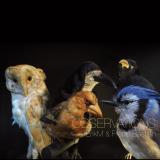
With one exception, this disc is a recording of a concert given at the Ateliers Claus in Brussels in March 2024. It was preceded by three short hours of improvisation the day before and the day before that, during which ErikM and I made a series of careful observations of each other's playing. It must be said that neither of us had skimped on transporting a few cases, the contents of which would have allowed us to play several concerts in a row without ever repeating ourselves. Erik had brought his turntables to Brussels, as well as sophisticated electronic machines, accompanied by a virtually infinite sound bank. For my part, I had both a mechanical orchestra and a range of acoustic instruments at my disposal. In two sessions, we eliminated the superfluous and the ineffective. On the evening of the concert, it was through close observation-of each sound, each direction taken by one or the other, each intention, each break-that we composed this record in the moment: vigilant and scrutinising, like the pairs of eyes on the cover of this album.
expected to be published on 24.04.2026

KITCHEN. LABEL is proud to present AGATE, the latest album by Japanese artist MEITEI, marking a deepening of the world he first shaped through his Kofū trilogy released between 2020 - 2023.
Named after the mineral agate, a stone formed through slow accumulation, pressure, and time, the album reflects MEITEI’s patient approach to sound. AGATE brings together extended and newly rearranged works from across the Kofū cycle alongside new compositions and passages, refining material developed through years of performance and sustained practice.
The album presents seven tracks:
HAŌ (Previously unreleased track)
SHIN-OIRAN (Remodeled from Oiran I, Kofū 2020)
SHIN-SADAYAKKO (Remodeled from Sadayakko, Kofū 2020)
SHIN-WAROSOKU (Remodeled from Wa-rōsoku, Kofū III 2023)
KYŪGEKI (Remodeled from Shinobi and Akira Kurosawa, Kofū II 2021)
SHIN-OIRAN II (Remodeled from Oiran II, Kofū 2020)
SHIN-EDOGAWARANPO (Remodeled from Edogawa Ranpo, Kofū III 2023)
Across these works, MEITEI expands the musical vocabulary first introduced in Kofū, a sound he once described as “lost Japanese mood.” While Kofū drew from fragments of folklore, theatre, ghost stories, and forgotten urban memory, it was never an act of historical reconstruction. Rather, it reflected a sensibility of the past observed from the present. With AGATE, this worldview is clarified as Shinpu, a process of discovery in which historical awareness becomes a foundation for contemporary creation rather than a constraint.
During five years of Kofū tours across Japan, Europe, and Asia, MEITEI performed this material in a wide range of spaces, from underground live houses and listening rooms to culturally significant sites. These environments influenced pacing, dynamics, and structure, shaping how the material evolved over time. AGATE is therefore not only a studio album, but the result of material refined through repeated performance.
If the Kofū albums were windows into forgotten eras, AGATE explores what lies beneath, sediment and strata formed through time and pressure. MEITEI’s approach to sound mirrors the nature of agate itself. Grains become texture. Texture becomes narrative. Voices drift through decaying layers of sound, while ancient instruments are used in non-traditional ways, forming distinctive percussive rhythms and melodies that appear and vanish without fixed resolution.
The album’s visual materials were developed under MEITEI’s direction through physical art-making processes. The cover artwork originates from a letterpress print created by Kamisoe, a Karakami atelier in Nishijin, Kyoto, using Kyo-karakami paper. The original artwork, produced through traditional woodblock techniques on handmade washi, was subsequently reproduced on print for the album edition. Kamisoe continues to reinterpret this historical Kyoto craft with a contemporary sensibility.
The title calligraphy was created by Bio Xie, whom MEITEI personally invited to participate in the project. During his performances abroad, MEITEI encountered in Taiwan a lingering atmosphere reminiscent of “Shitsunihon” — a sense of old Japanese memory that quietly endures beyond time. He was deeply drawn to Bio Xie’s distinctive use of Chinese characters, which resonated with this experience, and asked him to contribute to the visual expression of AGATE.
In parallel, MEITEI continues to reinterpret Japanese sensibility through his concept of “Shitsunihon,” presenting it as a contemporary musical language. The refined Kyoto motifs envisioned by Kamisoe and the distinctive calligraphic expression by Bio Xie intersect with MEITEI’s singular artistic direction, weaving together a newly articulated worldview.
The accompanying visual imagery, including the liner photographs, was created by photographer Hiroshi Okamoto, who was also responsible for the visual direction of MEITEI’s previous work, “Sen'nyū.” It draws from MEITEI’s lived experiences of winter seas, solitary cliffs, and breaking waves. These scenes symbolize the inner conflicts of the ten years he spent living in Hiroshima, and his confrontation with solitude and the sounds he creates.
AGATE will be released on 17 April 2025 via KITCHEN. LABEL on 180g vinyl, CD, and digital formats. The album is mastered by Kelly Hibbert, known for his work with Flying Lotus, Madlib, and J Dilla.
With AGATE, MEITEI returns to the material of Kofū with greater focus and discipline, continuing an ongoing process of working forward with inherited material.
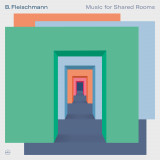
»Music for Shared Rooms« is B. Fleischmann’s eleventh solo album and his first since 2018. It is also not an album, or at least not in the conventional sense of the word. These 16 instrumental pieces provide a kaleidoscopic glimpse of a forward-thinking musician at home in many different musical worlds, including experimental and abstract music, pop and more classically-minded compositional forms. These pieces were culled from an archive of roughly 600 compositions for theatre pieces and films written throughout the past twelve years. The Österreichischer Filmpreis-awarded composer, however, aimed for more than simply documenting his extensive work in and with different media. To do so, he edited and re-mixed the individual recordings for this release, taking them out of their contexts and reworking them for an audience who can experience them in a different setting. »Music for Shared Rooms« makes it possible for its listeners to engage with the sounds and to fill the spaces they open up with their own imagination.
Roughly speaking, music for theatre or film can serve two functions: it either takes the lead, or underscores what is happening on stage or screen. The marvelous thing about these pieces is that they manage to do both. Fleischmann’s work as a prolific producer has always drawn on contrasts, at times combining pop sentiment with rigid experimentation, the seemingly naive with the intricate and complex. This approach also marks the tracks collected here: bringing together acoustic elements and electronic sounds, at times working with conventional structures but always de- and re-contextualising them, Fleischmann constructs a vivid dramaturgy out of discrete singular compositions, letting them interact across the record.
Take, for example, the opener »Träumerei« and the following »Brenne«: after the soothing acoustic sounds of the former, the latter quickly picks up speed with hard-hitting drum machine rhythms. It’s a stark contrast sonically and stylistically, however both tracks are tied together by a certain harmonic sensibility. This sort of dramaturgical interconnectedness of varied musical materials is the thread that runs through »Music for Shared Rooms«. A droney piece for string instruments like »Sehnsucht« is followed by a trip-hop beat, before »Schock« lives up to its title with skittering beats and piercing high frequencies. The differences between the pieces may be striking, but the progression from one to the other is subtle. It goes on like this through different moods and tempos. There’s soothing-yet-eerie piano pieces like the »Für Elise«-inspired »Der Lärmkrieg«, gentle house grooves, joyful synthesizer excursions and, finally, »Die Erde ist mir fremd geworden«, a collage of abstract textures and concrete sounds.
All these pieces create distinct situations through the juxtaposition of diverse musical elements, but are also bound together by a single vision. Writing music for theatre pieces or film requires a composer and his pieces to engage with people and their movements in space, which is exactly what Fleischmann offers on this record. He breaks down the fourth wall and invites his listeners into his world, a wide-ranging musical panorama. »Music for Shared Rooms« is indeed not an album in the conventional sense of the word, but more like a photo album in which each page opens up a new space to get lost in; recreates different scenes in which you can immerse yourself. These are shared rooms indeed.
Order now and we will order the item for you at our supplier.

1. Special remarks: 116 pages A5 format, risograph printing with thread binding, exposed spine
2. GENRE/S: Poetry/Art/Photography
3. SHORT INFO:
Period Music is a research process involving Susanna Gonzo, Merma Suelo, Tuce Alba, Elizabeth Gallon Droste, Agnese Menguzzato, and Farah Hazim. The six artists aim to attune to the different temporalities experienced through our bodies, drawing from multiple meanings of period – from the menstrual cycle to musical repetitions and astronomical revolutions.
r'tu
A central meaning of the Sanskrit word for ritual, r'tu, is menstruation, the original ritual. The root of r'tu is in arithmetic and rhythm1.
1Judy Grahn, Blood, Bread, and Roses: How Menstruation Created the World (Boston: Beacon Press, 1993), 45.Period Music has been staying with essential matters on how we listen to time and rhythms in our bodies and in the world. Questioning the tempo of everyday life in an accelerated system like that of modern society, the group has opened up co-creation spaces to listen to embodied memories.
Through dialogue, improvisation and jam sessions, the six artists attuned to each other’s processes, composing music, word scores and drawings – ultimately sounding together.
This work embodies other notions of community through archetypes, embracing the impermanence that reveals the countless rhythms of life. Period Music speaks of friendship and connection, and invites you to take on a journey of interconnectedness between our rhythms and the broader social structures influencing our lives.
The project emerges from conversations that began in Berlin in the fall of 2023, including a one-week residency at Atelier Josepha in Ahrenshoop by the Baltic Sea in April 2024. The first physical iteration of this project will consist of a book and a vinyl. The album features looping improvisational compositions encoded with messages about multiple temporalities. The accompanying book gathers poetic memories, letters, photographs, symbols, and drawings that emerged during the process
expected to be published on 13.03.2026

Period Music is a research process involving Susanna Gonzo, Merma Suelo, Tuce Alba, Elizabeth
Gallon Droste, Agnese Menguzzato, and Farah Hazim. The six artists aim to attune to the different
temporalities experienced through our bodies, drawing from multiple meanings of period – from the
menstrual cycle to musical repetitions and astronomical revolutions.
r'tu
A central meaning of the Sanskrit word for ritual, r'tu, is menstruation, the original ritual. The root of
r'tu is in arithmetic and rhythm/.
Period Music has been staying with essential matters on how we listen to time and rhythms in our
bodies and in the world. Questioning the tempo of everyday life in an accelerated system like that of
modern society, the group has opened up co-creation spaces to listen to embodied memories.
Through dialogue, improvisation and jam sessions, the six artists attuned to e ach other’s processes,
composing music, word scores and drawings – ultimately sounding together.
This work embodies other notions of community through archetypes, embracing the impermanence
that reveals the countless rhythms of life. Period Music speaks of friendship and connection, and
invites you to take on a journey of interconnectedness between our rhythms and the broader social
structures influencing our lives.
The project emerges from conversations that began in Berlin in the fall of 2023, including a one-week
residency at Atelier Josepha in Ahrenshoop by the Baltic Sea in April 2024. The first physical iteration
of this project will consist of a book and a vinyl. The album features looping improvisational compositions encoded with messages about multiple temporalities. The accompanying book gathers poetic memories, letters, photographs, symbols, and drawings that emerged during the process
expected to be published on 13.03.2026

Includes demos of every track from the original album, stripped back to (mainly) guitar and voice. Originally a Norman Records exclusive, these are the last few copies available from a limited pressing of just 300. Mark Fry is a France- based, English singer- songwriter/ artist whose debut album, 'Dreaming With Alice,' released in Italy in 1971, became a much-bootlegged "acid-folk" classic three decades later. Fry returned to recording in 2008 and has since released 4 more acclaimed studio albums. These days, far less "acid" than in his youth, Fry still knows his way around a beautiful melody. This album of sketches is resplendent with love songs, the beauty of nature and the passing of time Fry is certainly no stranger to the preparatory sketch. An artist in the truest sense of the word, renowned equally for his decades- long career as a painter of vibrant abstracts and as a cult psychedelic minstrel turned intimate, evocative singersongwriter, his atelier, housed in a converted stable building at his Normandy home, literally doubles as his music studio. It was in this space that Mark's fifth solo album, 'Not On The Radar,' released back in May, was recorded in the summer of 2024, with the singer pushing back his easels to accommodate a four-piece live band and vanloads of miscellaneous accompanying paraphernalia.
Before that, the studio had been a considerably emptier space in which working versions of the album's ten languidly bucolic compositions were first demoed by the solitary songwriter (although some emergent tracks were also captured at Balintore - the home studio of Mark's regular guitarist, Iain Ross, housed on the latter's London-moored canal barge). With those sketches presented here in the same running order as on the mothership longplayer, this new album stands as a document of process - offering the opportunity for track- by- track comparison for those already familiar with Not On The Radar. Crucially, it also makes for a very fine standalone album in its own right, which, if nothing else, bears testament to the inherent robustness of Mark Fry's songwriting.
expected to be published on 20.02.2026

The Sludge Of The Land is the new album by digital folklore and post-exoticism Italian duo Babau. Their first full length since 2023’s Flatland Explorations Vol. 2, with The Sludge Of The Land Babau lands on Impatience with their signature audio-prestidigitation at it’s most disorientingly pungent and zonked, a uniquely contemporary approach described as the sound of a continent moving; animals, plants and minerals included.
As part of a residency at Casa degli Artisti, Milan, in 2022, Babau turned their atelier into a recording studio and performing venue thanks to Francesco Piro, who produced the entirety of the album. There, the duo improvised with different acoustic and digital instruments for several hours a day. Returning after ten years to a sound more akin to a band or small orchestra, Babau re-explores tropes and themes of exotica and jazz from their unique and off-kilter perspective of terminally-online diggers-dwellers of the internet flatland.
An homage to digital content consumption and dopamine-infused sensory overloads, The Sludge Of The Land imagines itself as an abstract sonic wunderkammer of online detritus. By diving into the world of ‘sludge content’: audiovisual chaos produced by mixing different content using split screens or dizzying patchworks of videos, Babau celebrates the formless, viscous goo, spam, chum and slop of out-of-context moving image, fast paced digital videos and lo-fi mp4 artifacts. By endlessly spiraling into the non-spaces of The Net, Babau explore the uncharted parageographies of lavacasts, mysterious Chinese anthropozoomorphic legendary beings, vampiric doomscrolling glides and doppelganger, ctrl+c & ctrl+v spiritualism. These ghosts of pointless microevents and traveling-without-moving bedroom boredom are stuffed by Babau with the epic tone and compositional approach of exotica and world music 2.0 reveries, resulting in an absurd, playful narrative of the dangers and allures of the web.
Bringing together the sound of Richard Hayman and Black Dice, Korla Pandit and Sun Araw, Tony Scott and Carl Stone, once again the duo crafts a compelling audio-textual hallucination of transglobal chimera. A multi-fi, extremely layered treasure of fifth world music.
RIYL - Sun Araw, the strangest corners of the internet, Senyawa, digital wind instruments, Nuke Watch, Black Dice, exotica, hallucinating.
Babau is the pantropical project of Artetetra founders Matteo Pennesi and Luigi Monteanni, where their fascination with exotica, world music 2.0, and field recordings merges with the compositional and improvisational techniques of computer music.
Their latest work, All the Gurls were at the Women’s Archo Ashinto, was recently released by Bamboo Shows, while the previous Stock Fantasy Zone and Flatland Explorations Vol.2, were released by Discrepant. They were selected as SHAPE+ artists in 2023, and the duo has performed at various festivals in Italy and beyond, including Fusion, Club to Club, Terraforma, Nextones, Outernational Days, Camp Cosmic, and Saturnalia. For years, they have been striving to synthesize what has been described as the sound of a continent in motion—people, animals, plants, and minerals included.
The Sludge Of The Land was produced and mixed by Francesco Piro at Casa degli Artisti, Milan, and co-produced by Babau
Drums by Giovanni Todisco, bass by Francesco Piro and piano on A4 by Vittorio Cosmo.
Master by Nick Foglia.
Art by Luca Schenardi.
expected to be published on 07.11.2025

expected to be published on 24.10.2025
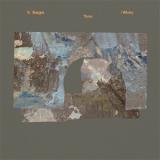
Tender / Wading zeigt Matthew Sage, alias M. Sage, in den Ausläufern und Weiden Colorados, wo er schreibt, aufnimmt und zu einem Stück seiner Heimat und Identität zurückkehrt, wobei ein Akt der Fürsorge den nächsten nach sich zieht. Das Album, das hauptsächlich auf Klavier und Klarinette aufgebaut ist und dann mit Gitarre, modularem Synthesizer, Percussion und Feldaufnahmen aus der Umgebung seines Zuhauses verziert wurde, ist eine weitreichende, ruhige Vision von Vitalität, radikaler Sanftheit und dem beruhigenden Gefühl, nach Hause zu kommen, auch wenn sich das Zuhause verändert hat. Seit den frühen 2010er Jahren hat Sage ein eigenwilliges Musikrepertoire zusammengestellt, das sich in verschiedene Klangrichtungen erstreckt, sich in Veröffentlichungen auf Geographic North, Orange Milk und Moon Glyph manifestiert und sowohl kritische Aufmerksamkeit als auch eine treue Zuhörerschaft für jede neue Wendung erlangt hat. 2023 debütierte Sage bei RVNG Intl. mit Paradise Crick, das zeitgleich mit seiner laufenden Arbeit im improvisierten Ambient-Jazz-Quartett Fuubutsushi erschien. Nun präsentiert er sein nächstes Soloalbum und seine neue Richtung. Tender / Wading folgt auf Sages Rückkehr nach Colorado nach fast einem Jahrzehnt in Chicago, wo er nun mit seiner jungen Familie dreißig Meilen außerhalb seiner Heimatstadt ein paar Hektar verwildertes Land bewirtschaftet. In einem ganzheitlichen Kontrast zu Cricks synthetischer Klangwelt schafft Sage Kunst aus dem Akt des Pflegens neuen Wachstums, hinterfragt Konstrukte des häuslichen Lebens und versteht die Spuren seines früheren Selbst durch die schmutzverschmierte, schweißvernebelte Linse der Gegenwart. Das Ergebnis ist sein bisher autobiografischstes Material, geprägt von Zeit und Veränderungen in der Wahrnehmung sowie bedeutungsvollen Details aus Sages psychischer Suche. Sage vergleicht das Gefühl, verschiedene Versionen von sich selbst zu sehen, mit der berühmten Hase-Ente-Theorie des Philosophen Ludwig Wittgenstein. ,Es ist dieselbe Zeichnung, aber je nachdem, wer man ist, wo man ist und wann man ist, sehen manche Menschen einen Hasen und manche eine Ente oder beides", erklärt Sage. Hier sind das Subjekt und der Betrachter, zurück in vertrauten Landschaften, als Partner und Elternteil, der Gestrüpp zurückschneidet, gedemütigt von invasiven Pflanzen, Schädlingsbefall und verdichtetem Lehmboden, seine Prioritäten haben sich grundlegend geändert. Und doch ist auch dieses andere Ich da: ein gewiefter Akademiker, der oft in Memes denkt und das Ziehen seines Handys in der Hosentasche spürt. ,In diesem Album geht es darum, diese Wahrnehmungsverschiebungen zu ergründen und ihnen Raum zu geben, beides zu tun: hüpfen und quaken." Es ist ein inneres Kind, das Sages intermediale Praxis in seinem Atelier leitet, einer Scheune, die nach dem großen Umzug im Jahr 2022 im Rahmen einer hausweiten DIY-Renovierung umgebaut wurde. Im Inneren werden Gedichte zu Zeichnungen, zu Skulpturen im Hinterhof und darüber hinaus, und alberne Ausflüge in den Vogelgesang oder die Freude an der Herausforderung, Klarinette zu lernen, weichen ernsthafter Musik. ,Ich glaube, ich habe entdeckt, dass es diese Linien gibt, die alles miteinander verbinden", sagt er. ,Und dieses Album ist voller hartnäckigem Optimismus und Hoffnung, aber auch der Bewusstheit, dass wir uns in einer späten Phase befinden, und dem Versuch, mit der Rhetorik dieser Phase umzugehen." Für Tender / Wading setzt Sage einen unverwechselbaren Sound ein: eine pastorale Art von Folk Kosmiche, kontemplativer elektroakustischer Barn Jazz für die Front Range, voller blasser Puddle Blues und rostigen Oil Drum Reds. Die meisten Songs entstanden auf einem 1910er Hamilton-Klavier, das kurioserweise in Chicago gebaut, von den Vorbesitzern zurückgelassen und von Mäusen bewohnt worden war. Die zufällige Begegnung mit dem Instrument fühlte sich kosmisch an, nicht nur wegen seiner Verbindung zur Windy City, sondern auch wegen Sages sich weiterentwickelnder Herangehensweise an das Songwriting nach Fuubutsushi. Er fühlt sich hinter den Tasten wohler und kehrt zurück zum Schlagzeug (seiner Jugendliebe). In einem passenden Raum für Holzblasinstrumente umarmt er das Elementare und Absichtliche und verleiht der Musik von Anfang an mehr strukturelles Gewicht und Wärme. Tender's M. Sage verbindet die Studioexperimente und Improvisationen seiner Vergangenheit mit einem geschärften Ohr für melodische Phrasierungen und Akkordwechsel und hat seine übliche Fülle an Demos auf neun finale Stücke reduziert. Seine charakteristischen Weltbilder bleiben erhalten, von Holzhauskröten, die in statischer Elektrizität schwimmen, über raschelndes Gras und Regen, der in die Dachrinnen plätschert, bis hin zu walzenden Sternbildern im Mondlicht. Während Cricks Universum aus magischem Realismus und digitaler Fantasie entstanden ist, greift Tender / Wading direkter auf menschliche Erfahrungen zurück. Er weist schnell Vorwürfe zurück, es handele sich um ein hochkonzeptionelles Album: ,Ich mache einfach die Musik, die ich selbst gerne in meinen Kopfhörern hören würde, während ich Unkraut jäte oder so." Es könnte beides sein, wie der Hase und die Ente behaupten würden: zutiefst persönlich und abstrakt, eine faszinierende und natürliche Wendung eines experimentellen Künstlers des 21. Jahrhunderts, dessen Vermächtnis sich in Echtzeit weiterentwickelt und wächst.
expected to be published on 12.09.2025
