
pre-ordina ora30.01.2026
dovrebbe essere pubblicato su 30.01.2026
23,49 €
dovrebbe essere pubblicato su 30.01.2026

The journey through French-speaking pop archives continues with this fifth volume, packed with fuzz, gimmicks, and dissent. Far from the charts, the selected tracks display a great creative freedom, often backed by corrosive humor. Welcome to the surprising, kaleidoscopic, and colorful world of the late sixties and early seventies, Wizzz!
Born in Montauban, Robert Pico stumbled into music by chance when he met René Vaneste, then artistic director at Pathé-Marconi. René brought him to Paris to record his first 45 RPM EP in 1964. A year later, Pierre Perret introduced him to Vogue, where he recorded his second album with Claude Nougaro’s orchestra. Sylvie Vartan then introduced him to RCA, where he recorded four singles, including the astonishing "Chien Fidèle," a track backed by a hair-rising fuzz guitar. Alongside his solo career, he also composed for other artists like Alain Delon (the song was recorded but remains unreleased), Magali Noël, Bourvil, and Georges Guétary. In the Paris of the sixties, he mingled with Mireille Darc, Elsa Martinelli, Marie Laforêt, France Gall, Françoise Hardy, Petula Clark, Régine, Dani, Serge Gainsbourg, Joe Dassin, Franck Fernandel, Charles Level, and Roland Vincent. Despite his efforts and winning a Grand Prix Sacem for his final record, Robert Pico didn’t achieve the expected success in show business and decided to leave Paris and return to the Southwest, where he devoted himself to writing. He is the author of 23 books (including Delon et Compagnie, Jean-Marc Savary Editions 2025, a memoir about his youth and his many encounters). Today, he is relieved to never have become a celebrity and devotes himself to his work with passion.
In 1969, the Franco-Italian movie Erotissimo was released, directed by Gérard Pirès (who later directed Taxi in 1998, written and produced by Luc Besson). This pop comedy features Annie Girardot, Jean Yanne, Francis Blanche, Serge Gainsbourg, Nicole Croisille, Jacques Martin, and Patrick Topaloff. The soundtrack was written by Michel Polnareff and William Sheller, with lyrics by Jean-Lou Dabadie. "La Femme Faux-cils," performed by Annie Girardot. It recounts the feelings of a rich CEO's wife who seeks to develop her sex appeal under the influence of advertisement and magazines. Groovy, sparkling and light, this track, with ITS lush arrangements humorously critiques consumer society and feminine beauty standards.
“Je suis l’Etat” (1967) is the flagship track of the first EP by singer-songwriter Spauv Georges, aka Georges Larriaga, better known as Jim Larriaga (1941-2022). Born into a family of bakers, the young man was initially planning to become a hairdresser when he discovered English-speaking music through Elvis Presley and the Beatles. After this revelation, he decided he would become a songwriter and gave himself five years to succeed. He recorded his first two EP’s independently for RCA under the pseudonym Spauv Georges; meaning “that poor George”, a nickname given to him by the mother of her friend Jean-Pierre Prévotat (future drummer of the Players, Triangle, or Johnny Hallyday). Portraying a depressed and eccentric young man, Spauv Georges created corrosive and amusing songs that didn’t reach a wide audience, despite a TV appearance with Jean-Christophe Averty.
Supported by his loyal friend and fellow songwriter Jean-Max Rivière, Georges Larriaga met the future singer Carlos in the early '70s, then Sylvie Vartan’s assistant. He wrote songs for Carlos, including the popular "La vie est belle," "Y’a des indiens partout," and "La cantine", which went onto become a huge hit in 1972. He also composed for Claude François (“Anne-Marie”, 1971), Charlotte Julian (“Fleur de province”, 1972), helped launch child singer Roméo (who sold 4 million records), and later wrote the hit "Pas besoin d’éducation sexuelle" (1975) for the young Julie Bataille. In 1971, Jim recorded an album for Disc'Az: “L’univers étrange et fou de Jim Larriaga”, which featured pop gems like “La maison de mon père”.
The story of the song "Zoé" began when Pierre Dorsay, artistic director at Vogue Records, asked Swiss singer and musician Pierre Alain to write a song for a new female singer. The inspiration came when he realized that Zoé (the artist's name) was also the name of France's first atomic battery, created in 1948, which consisted of uranium oxide immersed in heavy water! The lyrics reflect a bubbling energy that must be handled with caution, while the instrumentation echoes this atomic theme, notably with the use of a theremin.
Zoé’s career lasted only as long as a single 45 RPM, but it seems Christine Fontane was the vocalist behind this pseudonym, who is known for several EPs, a good "popcorn" album in 1964, and a handful of children’s singles in the '70s. Regardless, the photograph on the cover is of a different girl entirely.
Later, Pierre Alain continued his career, writing songs for himself, Marie Laforêt, Danièle Licari, Alice Dona, Arlette Zola (3rd place in Eurovision 1982), and achieving multiple gold and platinum records in Canada. Also an inventor with several patents, president of the Romande Academy, and head of the French Alliance in Geneva, he now composes atonal music, books, and poetry. Moreover, he is also the host of "Les Mardis de Pierre Alain" at "Le P'tit Music'Hohl" in Geneva.
Filled with oriental choruses and fuzz guitar, "Fou" is from Jacques Da Sylva's only EP released by Vogue in 1967. Despite the quality of this recording, all traces of this singer disappear after this first effort.
Valentin is a baroque pop singer born in Belgium. He is the songwriter and composer of most of the tracks on his three singles released in the late 60s in Canada. A legend says that he reincarnated himself as Jacky Valentin during the 1970s for a rock'n'roll revival career in Belgium, but his older brother sadly debunked this story. Valentin's first two singles were arranged by Claude Rogen, a Parisian session pianist who had come to Canada to promote the song “Mister A Gogo”, a cover of David Bowie’s “Laughing Gnome”, adapted by singer Delphine, his wife at the time. Far from his usual network, Claude Rogen arranged music for Polydor, including the arrangements for “Je suis un vagabond” in 1969, a jerk tune with string arrangements and a furious optimism.
Jacques Malia wrote, composed, and recorded his only 45 EP for Festival in 1966. “Histoire de gitan” is an incredible beat track with bohemian scat that tells the story of a gypsy musician who came to Paris to make it in the Music-Hall, to no avail. The hero of the song and its author probably shared a similar fate, as Jacques Malia faded into anonymity after this remarkable attempt.
Bernard Jamet recorded two EPs for Barclay in the late sixties and co-wrote several songs with Christine Pilzer, Pascal Danel, and prolific songwriters Michel Delancray and Mya Simile. The track “Raison Légale” (1968), his masterpiece, immerses the listener in a courtroom right when a murderer is being judged, with jerk rhythm and free arrangements. A unique, paranoid, judicial, and psychedelic oddity.
Jean-Pierre Lebrot-Millers started his career in show business in 1967 as a singer and songwriter for the Philips label. After three singles, he wrote several songs of a new kind with his friend Pierre Halioche, in the midst of the sexual liberation movement and the democratization of drugs. With provocative lyrics, “Les filles du hasard” and “Barbara au Chapeau Rose” were released on a Philips singles in 1968. The character of Barbara was inspired by a queen of Parisian nightlife during the psychedelic years: model Charlotte Martin, who dated Eric Clapton from 1965 to 1968, then Jimmy Page from 1970 to 1983. Jean-Claude Petit’s arrangements, with a table-filled intro, soul brass, and Hendrixian guitar, emphasize the flamboyance of a hedonistic and sexy character, whose dog is named Junkie because “Junkie est un nom exquis”! The track was recorded live in three takes with a full orchestra.
Upon its release, the record was censored by Europe 1 and RTL due to its references to drug use. Jean-Pierre Lebrot was then banned from the airwaves and later dismissed by his record label. He changed his artist name to Jean-Pierre Millers, while his companion Pierre Halioche became D. Dolby for a new dreamy composition, “Chilla”, which Jean-Pierre produced himself with arrangements by Jean Musy. Once again, the song was immediately censored everywhere. After this setback, he decided to stop singing and started taking on odd jobs to support his Swedish wife and their son until the day he met Jean-Pierre Martin, then production manager at Decca, who had worked with Manu Dibango. Martin offered Jean-Pierre Lebrot-Millers, then employed at Rank Xerox, the position of artistic director at Decca. He accepted and became, a year later, promotion director (radio, press, TV). He worked on Julio Iglesias’s first album for Decca, which became a massive hit and allowed him to meet Claude Carrère. The latter asked him to write new songs and find their performers, much like a “talent scout.” It’s through him that Jean-Pierre discovered Julie Pietri and Corinne Hermès. He composed “Ma Pompadour” for Ringo, Sheila’s husband, and took the microphone again for the syncope hit “Rendez-Vous” in 1982.
That same year, Jean-Pierre Lebrot-Millers tried to release a track for which he had heavily gone into debt: “Si la vie est un cadeau”. Having recorded it in London, he presented it to numerous professionals, all of whom refused to get involved. The same thing happened with Antenne 2 and the Sacem when he proposed the song as France’s entry for Eurovision. He then met Haïm Saban, who was producing cartoon soundtracks and had just launched the Goldorak theme song. Saban, having listened to the song, declared it had the potential to become a hit. He sent Jean-Pierre and Corinne Hermès to meet the CEO of the Luxembourg radio and television network. The latter received them, asked to hear a verse and chorus a cappella in his office, and immediately hired them to represent Luxembourg at Eurovision 1983. They reworked the arrangements and recorded a new version with Haïm Saban as co-producer. The song ended up winning Eurovision 1983, a great comeback for our hero. He continued producing and hung out with the band Nacash in Belgium when a couple came to introduce their daughter for an impromptu audition in a hotel room. The girl sang “Les démons de minuit” while dancing to a radio cassette. Impressed, he had her take singing lessons for a year and composed a song for her (for which he had the melody and title, but no lyrics). This required him to go on the hunt for a lyricist, who ended up being Guy Carlier. They recorded the song, which was initially a ballad, at Bernard Estardy’s CBE studio, and gave the singer a new name: Melody. They showed the song around their industry network without success. Later, Estardy called Jean-Pierre to suggest changing the rhythm and making it pop-rock. Orlando, Dalida’s brother, liked the result and decided to co-produce the track. “Y’a pas que les grands qui rêvent » became a classic hit. The song has since been covered by Juliette Armanet (as a ballad, like the original) and Valentina.
Born into an aristocratic Breton family, Hervé Mettais-Cartier worked as a DJ at Queen Kiss, a nightclub in Poitiers, where he formed the band Les Concentrés with Michel (an actor) and Christian (a radio technician). Together, they created a repertoire of whimsical songs (“Ma bique est morte”, “J’suis un salaud”, “Fils de dégénéré”...) that they performed on stage dressed in white (in homage to “concentrated milk”). They performed at Bliboquet and Olympia in 1968 for the 10th edition of the “Relais de la chanson Française” organized by L’Humanité-Dimanche and Nous les Garçons et les Filles, sponsored by Pepsi Cola. Winners in the author-composer category, alongside Danish singer Dorte, their visibility allowed them to record a 45, and appear on television in Jean-Christophe Averty’s show. The A-side of the disc features Bruno le ravageur, a casatchok dedicated to Bruno Caquatrix, the director of Olympia, nicknamed in the song “Coq Atroce” or “croque-actrices”. The B-side is dedicated to “Fils de dégénéré”, a quirky tribute to Hervé's aristocratic roots, mixing absurdity with sophisticated vocal harmonies.
After Les Concentrés, Hervé Mettais-Cartier formed the duo La Paire et sa Bêtise with his friend Olivier Robert. They performed in Parisian cabarets and toured with Pierre Vassiliu. In the late 1970s, Hervé began a solo career. He recorded two albums for the Motors label in 1978 and 1979, which did not achieve their anticipated success due to lack of promotion. In 1980, he met Bernadette, with whom he started a family and created a “Chansons à voir” (songs to see) show that he performed until his death at the end of 2024.
Publicité comes from the final EP by the Missiles (Ducretet Thomson, 1966), a disc that also includes “La (nouvelle) guerre de cent ans”, featured on Volume 4 of our Wizzz! series. Please refer to the booklet for the story of the band.
“He’s 1.82 meters tall, 28 years old, weighs 135 kg, is black and Belgian”: this is the description of singer Hegesippe on the back of his sole single (Decca, 1967). He appears on the album cover wearing a Greek toga, like a hippie gag – we are at the end of the year 1967. In “Le crédo d’Hegesippe”, this former bodyguard of Antoine and the Charlots plays the delightful card of the thick brute converted to Flower-Power and non-violence, with arrangements by Jean-Daniel Mercier, aka Paul Mille.
“Ethéro-disco” was released on a promotional record for clients of the Maréchal company (Liège, Belgium) for the New Year 1979. Over a funky rhythm, celebrity impersonations (Brigitte Bardot, Jacques Dutronc, Fernandel…) deliver an enigmatic text about pharmaceutical products like ether, bismuth, and aspartate. The track was composed by Dan Sarravah (responsible for Joanna's “Hold-up inusité” featured on Wizzz! Volume 3) and Tony Talado, who was also a singer (one 45 in 1967), songwriter (with over a dozen credits between 1964 and 1985 in various styles from surf music to disco), author (Devenez Végétarien, Dricot Editions, 1985), ad designer, and psychologist.
Décollez-les is on the A-side of Mamlouk's only single, a pseudonym for Marsel Hurten, who is known for his work on several EPs in the late sixties, as well as composing music for Hervé Vilard’s “Capri, c’est fini”, Claude Channes' “La Haine”, Annie Philippe’s “On m’a toujours dit”, and Nancy Holloway’s “Panne de Cœur”.
This strange song, with Afrobeat horns and absurd dialogues between a chef and his kitchen staff, is the result of a collaboration between Marsel Hurten and one of his neighbors, a photographer from Pavillon-sous-Bois (93), where the musician settled after returning from the Algerian War. A music video was shot to promote the record.
Marsel Hurten was born in Tourcoing (59) into a musical family. At a young age, he joined the brass band founded by his grandfather, playing the piston before studying trumpet at the conservatory, as well as teaching himself how to play the guitar. As an orchestra musician, he toured in France, Belgium, Germany, and England. He released a series of solo 45’s between 1965 and 1968 for the DMF and Az labels before stopping recording to focus on working for other artists (Gilles Olivier, Noëlle Cordier…).
“L’amour nu” (Vogue, 1971) is the work of the short-lived Belgian band Mozaïque. The track, written by singer Jacques Albin, closely resembles another of his compositions, “Carré Blanc”, which he recorded in 1969 for Disc’AZ.
Represented by the Lumi Son micro-label based in Marignane (Côte d'Azur), Jean-Marc Garrigues released two 45 RPMs in the late sixties, defending the French jerk sound. The song “Je dis Non” is a short, joyful ode to youth, pop music, and rebellion.
Songwriter and performer Jacques Penuel released three singles. The first one, “Astronef 328” (Fontana, 1969), features a dizzying series of chords punctuated by sound effects, a sci-fi story, and arrangements by Jean-Claude Vannier.
We would like to sincerely thank Pierre Alain, Moon Blaha, Marsel Hurten, Bastien Larriaga, Jean-Pierre Lebrot-Millers, Bernadette Mettais-Cartier, Robert Pico, Olivier Robert, Claude Rogen, Micky Segura.
Ordina ora e ordineremo l'articolo per te presso il nostro fornitore.

Childhood Intelligence Six coming from German-Austrian Audio/Visual Pioneers of digital Culture "STATION ROSE“. Gary Danner & Elisa Rose have been continuously progressing their own Vision of Music and Art since the late 80s, f.e through their own Label Gunafa, Sony Music, PIAS, International Deejay Gigolo Records & collaborations with producers like Atom Heart. Their Project has been highly respected by Media & Press (Hr-fernsehen/ARD Digital, Wire, Mixmag, FAZ) since the early days. With the Child Six Mini Lp we are celebrating their Gunafa 30.0 anniversary.
Ordina ora e ordineremo l'articolo per te presso il nostro fornitore.

red vinyl[30,46 €]
dovrebbe essere pubblicato su 23.01.2026

Ordina ora e ordineremo l'articolo per te presso il nostro fornitore.

Space is a place in Kongsberg/Norway. Meadows & io fire up their spacerock jet engines for a double album release. An enchanting escapade into the ether and fabric of dreams. Claus A. Breda Gulbrandsen with Vegard Eggum, Svein Olav Eriksen and Julian Bugge Moe deliver soothing and gritty guitars intertwined, Lucious synts, and a cinematic and pleasantly drifting trip into a celestial plane. "Above and Below" just keeps on giving with those delicious keyboard leads and atmospheres... This is superb stuff that shouldn"t be overlooked by any prog and psychedelic space-prog nerd." - The Progspace.
dovrebbe essere pubblicato su 28.11.2025

Following three acclaimed albums, a string of sought-after 45s, and collaborations with vocalists including Yurika and Sophia Solompon, championed by esteemed tastemakers such as Gilles Peterson, Cerys Matthews, and Jeremy Sole, "Nadir" finds Sababa 5 at their enigmatic and irresistible. Sababa 5"s latest album, "Nadir", delves into a darker, more sophisticated, and cinematic fusion of psychedelic soul and Middle Eastern rock. The title, Nadir, is an astronomical term referring to the point on the celestial sphere directly beneath an observer, diametrically opposite the zenith. Metaphorically, it signifies the lowest point or a moment of adversity. This duality resonates with the band"s exploration of contrasting musical themes-melding the cosmic and the terrestrial, the ethereal and the grounded. The name encapsulates the album"s essence, reflecting a journey through deep, introspective soundscapes that are both otherworldly and rooted in raw, earthly grooves.
Ordina ora e ordineremo l'articolo per te presso il nostro fornitore.

dovrebbe essere pubblicato su 21.11.2025

Blazing with raw energy and searing guitar riffs, the second album from Blues Creation—the legendary rock band led by guitarist Kazuo Takeda—is a cornerstone of Japan’s hard rock legacy. Drawing heavy inspiration from the likes of Black Sabbath and Led Zeppelin, this record delivers a powerful, riff-driven sound that helped shape the dawn of Japanese hard rock. What sets it apart is its hypnotic blend of British-style heavy rock with vocals sung in English tinged with a distinctly Japanese flavor—creating a one-of-a-kind psychedelic atmosphere that continues to mesmerize rock enthusiasts across the globe.
dovrebbe essere pubblicato su 14.11.2025

Die legendären NYHC-Pioniere AGNOSTIC FRONT melden sich in Form von „Echoes In Eternity“ mit ihrem wildesten und durchschlagskräftigsten Alben seit Jahrzehnten zurück. Über Reigning Phoenix Music erscheinend, liefert die Band darauf 15 Tracks voller glühender Riffs, kompromissloser Wahrheiten und der Straße entstammender Authentizität. Vom politisch aufgeladenen Opener ‚Way Of War‘ über das hymnische ‚Turn Up The Volume‘ bis hin zu ‚Matter Of Life & Death‘, einer überzeugenden Kollaboration mit Hiphop-Ikone DMC, ist die Scheibe ein schonungsloser Beleg von Widerstandsfähigkeit und Rebellion. Ungefilterte Energie, pittaugliche Hooks und lyrische Ehrlichkeit machen „Echoes In Eternity“ zu einem Musterbeispiel des wahren
NYHC-Geistes. Auch nach über 40 Jahren Bandgeschichte stehen AGNOSTIC FRONT noch immer an der Spitze der Szene: lauter, härter und wichtiger denn je.
dovrebbe essere pubblicato su 07.11.2025

dovrebbe essere pubblicato su 31.10.2025

èMeL, the maestro of trance induced Tekno returns to Violent Cases delivering three long trips pumping like hell or high water.
Against The Grain riding the warp of space into the womb of night freedom at the speed of light from gravity’s planetary chain.
Symphony of Construction orchestrates a swarm of ant-like nanobots in space assembling the mothership of the raving tribe at warp pace.
Reverse termites moving in unison creaking and clanking away at the metal shell to escape this man made hell.
Darkness seduction is the siren’s hum pulling the mentalnaut to the fluffy bottom it feels good to let go, further than you can fathom, to the sound of a giant tardigrade nibbling at atoms.
This publication is illustrated by Darkam, designed by TDSiGNZ, and mastered by Stefan ZMK.
Each EP comes with 2 posters, a digital download code, and 2 artwork stickers.
dovrebbe essere pubblicato su 30.10.2025

Edward J delivers big on IDM, jungle and breaks, combining fast, intricate percussion with deeply emotional melodic flourishes. Formerly producing under the alias Generate, he has remixed artists such as Kettel and Roel Funcken and appeared on compilations for respected labels like Kaer'Uiks. Surprisingly, despite years of activity, this marks his first EP. Though the highly advanced, technical and detailed sound is anything but that of a debutant.
Ordina ora e ordineremo l'articolo per te presso il nostro fornitore.

In March 2024, Jim White released his first-ever solo album, All Hits: Memories. Coming forty years into his career, it felt like some kind of breakthrough happening. His second solo album confirms it: Jim"s deep percussive intuition is fueling a new musical vehicle in his life. Inner Day finds him dancing ever more deftly with himself on an expressionistic set of drum kit and keyboard duets. Developing meditations on his personal arcana into expressive keyboard feels, he crafts parts as he would on the kit, further interacting with them on drums as well. Jim takes another big step on Inner Day, singing on two standout tracks, "Inner Day" and "I Don"t Do / Grand Central," his words and voice in the mix for the first time. A drummer of exquisite powers, great and small - his Dirty Three compatriot Warren Ellis contends his playing long ago "split the atom" - Jim"s capable of driving a band one minute, then slipping past accompaniment and into the cracks of the subliminal in the next breath. He"s got qualities - deep pockets, a lovely sense of the moment - that serve him and those he drums with well. His collaborators include Bill Callahan, Cat Power, Marisa Anderson, Daniel Blumberg, T. Griffin, Phosphorescent, Jess Ribeiro, Ed Kuepper and Mess Esque, alongside communal experiences in Xylouris White, The Double, Beings, The Hard Quartet and Dirty Three. And all that"s just in the past five years!
dovrebbe essere pubblicato su 24.10.2025

dovrebbe essere pubblicato su 24.10.2025

Originally released on Mon 22 August 2005, the Furries’ third and final album to be recorded by Epic Records, Love Kraft is to be reissued on double vinyl, 2CDs, including the 22-track bonus CD, Kiss Me With Apocalypse and digital formats on Fri 24 October 2025 via the Cardiff-based independent label, Strangetown Records. Four previously unheard tracks are drawn from the vaults, including the squidgy ELO-stomp of drummer, Daf Ieuan-led Rock ‘N’ Roll Flu, plus the distorted space-jam of Cae Marw, the band’s deep-bass sketch of Palo Alto and ghostly, percussive morsel of Bedw Arian.
The album followed six previous albums by the band, including their statement debut album, Fuzzy Logic in 1996, melding an attention-demanding mix of literary, narcotic and musical influences. Maintaining a shape that was ill-fitting in the jigsaw of other 90’s guitar bands, their follow-up, UK Top Ten album, Radiator brought the hooky squelch of the bona fide indie dancefloor classic, The International Language of Screaming. The next decade saw the release of the first Top 20-charting, Welsh language album, Mwng (2000), followed by further experimentation and commercial success with Rings Around The World (2001) and Phantom Power (2003).
Love Kraft’s sense of cohesion, collaboration and free-flow of rich harmony has been credited to the five-piece escaping Wales to record in the shimmering heat of Figueres, Catalunya. Bringing famed Beastie Boys producer, Mario Caldato Jr along with them for the ride, the travelling band’s stay in the Catalonian hometown of Salvador Dali included found sounds, boozy petrol stations, gastronomic revelations and, finally, a rich album of strings, synths and opulent vocal harmonies.
While eventually finding their way to Baha, near to Rio di Janeiro to mix the album Love Kraft’s story began in Wales and Pleasure Foxxx Studios, where the band began to craft the album’s songs. Embracing the landmark of a seventh album, notably coming after the 2004 release of their first ‘best of…’ package, Songbook: The Singles, Vol. 1, Super Furry Animals pooled ideas and affected further democracy in their songwriting, taking a load off traditional lead-writer and front man, Gruff Rhys, and sharing in lead vocal duties (aside from the microphone-averse bassist, Guto Pryce).
Love Kraft was the first Super Furry Animals album recorded to hard disc instead of multi-track tape, and found the band typically explorative and open to happenstance. Zoom’s opening splash into the recording studio’s swimming pool is accompanied by the on-location, pool table samples found elsewhere on the album.
Updated packaging features the original, meticulously built diorama design by long-time collaborator Pete Fowler. Constructed by hand in his studio, complete with bulb-lit illumination, then photographed, the sleeve’s depiction of a monolith-rich desert landscape reflects the sense of other space and time depicted by Love Kraft’s woozy songs. The final sleeve design again comes courtesy of Mark James.
dovrebbe essere pubblicato su 24.10.2025
dovrebbe essere pubblicato su 17.10.2025

dovrebbe essere pubblicato su 17.10.2025
Black Vinyl[22,27 €]
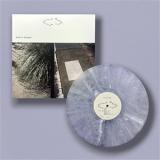
Emily A. Sprague's Cloud Time traces an audio-spiritual journey through time and place, recorded across a long-awaited debut tour of Japan in the fall of 2024. Compiled from environmental improvisations captured in and for the moment, material at once welcoming, responsive, and inimitable, the album distills a voyage guided by psychic wayfaring, unbound presence, and activating performance for a reciprocal exchange with space, listener, and each fully engaged instant. The Japanese tour documented on Cloud Time held an almost mythic significance for Sprague, taking on properties of her own sonic white whale. After many near-departures and dropped plans to play in the country, "the empty spaces of cancelled trips and forgotten music turned into strange little misty spirits that I felt followed by," she says. "When I began preparing for the tour, I couldn't shake a sense that the invitation to Japan was more about opening myself up to this new place instead of bringing something into it tightly under my control. Improvisation has always been such a pillar in my music practice, and I really wanted to meet the country, spaces and people through that process." To amplify these intuitive whispers on-stage, Sprague reimagined her time-tested live rig, designed to be as free from error as possible, as a looser, more flexible set up that would allow her to interface with what was essentially a blank sonic canvas every night. Each performance became a collaboration between environment and instinct, Sprague processing the events, energies, and emotions informing the evening through her new sound ecosystem, and projecting an entirely present and unique version of herself to each open-eared and hearted crowd. "It was very much more than just an act of playing for me, but a total experience of time and place," she says. The seven long-form pieces that plot the course of Cloud Time, excerpted from over eight hours of recordings archived on the artist's on-stage recorder and generously shared on the album with no additional mixing and only minimal editing, invite listeners to become still in these deep-rooted moments of presence as the album moves from city to city, venue to venue. Cloud Time chronicles material recorded at each tour stop, Sprague selecting and sequencing the album around mood-based storytelling more so than linear chronology. "I tried to make the whole album flow in the way that any one of the complete live performances did," she explains, "while also keeping the spirit of the whole thing as a journey." The result is equal parts travelog, love letter, and impressionistic collage channeled from the potent ferment of a now encased in the glowing amber of memory. Intrinsically inspired by kankyo ongaku, an environmental music philosophy, known both in and widely outside of Japan that tunes into the similarly expansive ethos as Pauline Oliveros' deep listening practice and posits the listener as composer, Cloud Time is ambient music that seems to be listening right back, grounded in heartfelt synthesized frequencies that abundantly hold and heal. Pieces like "Nagoya," "Tokyo 1," and the ten minute "Matsumoto" in particular hum with the atomic resonance of gently tended landscapes, offering space for tuning way in and dropping far out from perspectives that stifle and bind. Cloud Time is an invitation to embrace each moment as both fleeting and eternal, floating by with nothing to grasp onto and absolutely everything to gain. The exercise in acceptance and letting go that Sprague practiced throughout the tour deeply impacted her understanding of self as both a guest and venerable performer. "The process of loving wherever I am, being present and focusing on a clear channel of communication for mind and emotion, rooted so deeply in respect for the space, those within it, and myself, ended up being profoundly healing," she says. "My vision and hope is that this album can be released as a gift back to anyone who either was or wasn't there. A cloud time of life passing by."
dovrebbe essere pubblicato su 16.10.2025

Cloudy White Vinyl[31,89 €]
Emily A. Sprague's Cloud Time traces an audio-spiritual journey through time and place, recorded across a long-awaited debut tour of Japan in the fall of 2024. Compiled from environmental improvisations captured in and for the moment, material at once welcoming, responsive, and inimitable, the album distills a voyage guided by psychic wayfaring, unbound presence, and activating performance for a reciprocal exchange with space, listener, and each fully engaged instant. The Japanese tour documented on Cloud Time held an almost mythic significance for Sprague, taking on properties of her own sonic white whale. After many near-departures and dropped plans to play in the country, "the empty spaces of cancelled trips and forgotten music turned into strange little misty spirits that I felt followed by," she says. "When I began preparing for the tour, I couldn't shake a sense that the invitation to Japan was more about opening myself up to this new place instead of bringing something into it tightly under my control. Improvisation has always been such a pillar in my music practice, and I really wanted to meet the country, spaces and people through that process." To amplify these intuitive whispers on-stage, Sprague reimagined her time-tested live rig, designed to be as free from error as possible, as a looser, more flexible set up that would allow her to interface with what was essentially a blank sonic canvas every night. Each performance became a collaboration between environment and instinct, Sprague processing the events, energies, and emotions informing the evening through her new sound ecosystem, and projecting an entirely present and unique version of herself to each open-eared and hearted crowd. "It was very much more than just an act of playing for me, but a total experience of time and place," she says. The seven long-form pieces that plot the course of Cloud Time, excerpted from over eight hours of recordings archived on the artist's on-stage recorder and generously shared on the album with no additional mixing and only minimal editing, invite listeners to become still in these deep-rooted moments of presence as the album moves from city to city, venue to venue. Cloud Time chronicles material recorded at each tour stop, Sprague selecting and sequencing the album around mood-based storytelling more so than linear chronology. "I tried to make the whole album flow in the way that any one of the complete live performances did," she explains, "while also keeping the spirit of the whole thing as a journey." The result is equal parts travelog, love letter, and impressionistic collage channeled from the potent ferment of a now encased in the glowing amber of memory. Intrinsically inspired by kankyo ongaku, an environmental music philosophy, known both in and widely outside of Japan that tunes into the similarly expansive ethos as Pauline Oliveros' deep listening practice and posits the listener as composer, Cloud Time is ambient music that seems to be listening right back, grounded in heartfelt synthesized frequencies that abundantly hold and heal. Pieces like "Nagoya," "Tokyo 1," and the ten minute "Matsumoto" in particular hum with the atomic resonance of gently tended landscapes, offering space for tuning way in and dropping far out from perspectives that stifle and bind. Cloud Time is an invitation to embrace each moment as both fleeting and eternal, floating by with nothing to grasp onto and absolutely everything to gain. The exercise in acceptance and letting go that Sprague practiced throughout the tour deeply impacted her understanding of self as both a guest and venerable performer. "The process of loving wherever I am, being present and focusing on a clear channel of communication for mind and emotion, rooted so deeply in respect for the space, those within it, and myself, ended up being profoundly healing," she says. "My vision and hope is that this album can be released as a gift back to anyone who either was or wasn't there. A cloud time of life passing by." Emily A. Sprague's Cloud Time will be released Friday, October 10th in vinyl, Japanese import CD (via Plancha), and digital editions.
dovrebbe essere pubblicato su 10.10.2025
