
Поиск:atr
Стили
Все

An unheard production unit entirely geared towards hi-octane live explosiveness and spine-tingling studio hustle-and-bustle, Hysteria Temple Foundation step up with their anticipated debut platter, "Atrahasis EP" - a four-track EP by way of manifesto, due out for release on September 13 / 21.
Elusive and haunting by nature, skirting Shackleton-esque dub meanders, polyrhythmic folk instrumentation and further left-of-centre sonic divagations, the sound of Hysteria Temple Foundation is one that sheds skins when you expect it least. Scanning out a baroque timeline where no-holds-barred floor traction wildly clashes along deeper sound investigations, "Atrahasis" ushers us into a twirly pit of tribal drums and bow echoes.
Summoning the spirits of Muslimgauze and African Headcharge for a hectic ride in a sandstorm-caught bazaar of processed darbukkahs and further steely industrial tropes, "Annunaki" gets the ball rolling in sheer immersive fashion. Cranking the heat up a notch, "Gamesh" rushes us headlong into ruthless rapids of accelerated ritual drums and mind-expanding acid onslaughts breathing in some squelchy spaciousness into its intricately-woven web of sound.
Flip sides and here's the proper grime-steppish number "Ziuziu" taking over your brainwaves with a fierce unloading of harnessed machine rage and dystopian cybernetics turned into some club-optimised weaponry. Back to a dubby kind of vibe, "Chmanze" raises an army of louder-than-loud kicks, FX-laden percs, sizzling spurts and ankle-snapping breaks, all fit to breeze across the bulkiest sound systems with utmost sangfroid and nonpareil trenchancy.


- A1: Velhas Maos Novos Tapas
- A2: Ai Meu Deus
- A3: Passarinho
- A4: Cama Do Estoque
- A5: Movimento
- A6: Burkina
- A7: Lucca
- A8: Novo Velho
- A9: Atraso Granular
- A10: Tender Strings
- B1: Marvin Jorge
- B2: Quebra Coco
- B3: Doutor Contrafacc¸a~O
- B4: Jazzlofi Da Morte
- B5: Batebate
- B6: Geraldo
- B7: Brazileiro Com Z
- B8: Amigão
- B9: Decepcionado
- B10: Samora
20
Residing in Rio de Janeiro, Vasconcelos Sentimento is a self-taught composer, producer and multi-instrumentalist. A mosaic of lo-fi breaks, cosmic ambient jazz and wonky chromatic funk, the eccentric Brazilian DIY wizard’s debut album Furto beautifully pieces together a huge range of seemingly disparate sonic elements. Calling himself an “amateur euphoric sound researcher”, he has no formal training in either music theory or production, and it’s simply by following his ear that has led him to creating his debut album for Far Out Recordings.
It was his fascination with his fellow countryman, the enigmatic, psychedelic 70s folk artist Jose Mauro, that led the young Vasconcelos Sentimento (real name Guilherme Esteves) to first make contact with Far Out. Coincidentally living in the same region as Mauro, Sentimento managed to track him down and put label boss Joe Davis in touch, after Davis had spent years of what felt like hopeless searching for the man many assumed dead.
When Joe and the Far Out team heard Guilhermes’ own music, there was a sense of shock. “It was unlike anything we’d heard before, but it also sounded curiously at home on Far Out. Like it had taken little pieces of different releases from the catalogue, and all the music from the ‘60s onwards that influences everything we do, and recreated all that magic in such an exciting new way”.
Indeed, Sentimento is not afraid to admit what he himself sees as acts of theft. (Furto=Theft in Portuguese). But while the debate surrounding the ethics of sampling is a never ending one, Sentimento’s music - while it does contain the odd sample, including an interview with Joe Davis himself, “One For The Masta Digga”) - steals in an entirely different way. His creative process involves an intensive period, in which he’ll listen to just one artist or song over and over, for days and weeks on end. Then he’ll head to his rudimentary bedroom studio, which, as he puts it, is “built for speed”, hit record and “blurt” whatever comes out. “I never spend more than a day working on any one song idea”...
Picasso once said “lesser artists borrow; great artists steal”. And it’s through this process of ‘Furto’ that Vasconcelos Sentimento has somewhat ironically cultivated a sound that is unmistakably his own.
Furto is due for vinyl, CD and digital release on 30th July 2021, via Far Out Recordings.

- 1: Don’t Ever Pray In The Church On My Street (02:46)
- 2: I Hope I Never Fall In Love (0:56)
- 3: The Biggest Fan (02:47)
- 4: Uncommon Weather (01:5)
- 5: A Kick In The Face (That’s Life) (02:01)
- 6: I Wouldn’t Die For Anyone (02:35)
- 7: I’m Sorry About Your Life (02:05)
- 8: The Record Player And The Damage Done (02:22)
- 9: Pictures Of The World (03:11)
- 10: Life At Parties (02:52)
- 11: Sing Red Roses For Me (03:54)
- 12: The Songs You Used To Write (02:49)
- 13: Sympathetic (03:11)
13
From the many musical lives of artist Glenn Donaldson emerges The Reds, Pinks and Purples, a project that sifts out the purest elements of pop music and in the process chronicles the point of view of an assiduous San Francisco-based songwriter. The Reds, Pinks and Purples’ third album, called Uncommon Weather, is both an elusive portrait of San Francisco––during one of its fluctuations as an untenable place for musicians and artists––and also a self-portrait, however inverted, of a songwriter who has dispatched another treasured collection of timeless sounding DIY-pop songs.
How The Reds, Pinks and Purples arrived here is a story with many roots, the most consequential of which is perhaps the musical aftermath of his earlier band, The Art Museums, whose brief tenure in the late ’00s coincided with an explosive period of the Bay Area rock scene and was followed by a hermetic musical period of Donaldson’s. Disenchanted with the dissolution of his band, Donaldson averted the DIY-pop sound with an instrumental, conceptual project called FWY! but meanwhile started a habitual songwriting practice, sharing nascent songs with friends in an email exchange. In 2013–2014, The Reds, Pinks and Purples took shape as the moniker for Glenn’s most direct expressions in the DIY-pop mode, enabled by this new disciplined output. By then, San Francisco was already a changed place. The tragic loss of his former bandmate in Art Museums was another source of discontinuity and rupture. You can hear in The Reds, Pinks and Purples’ earliest songs this grappling with life, anxiety, and atrophying subcultures. For an artist with an overriding interest in the aesthetic principles of discrete musical genres, this turn toward his immediate world for subject matter was a major shift, setting The Reds, Pinks and Purples apart from Donaldson’s other musical ventures.
Preceding the release of Uncommon Weather was the Reds, Pinks and Purples’ 2nd album, one of the record buying joys of 2020, You Might Be Happy Someday, and, earlier, their first proper full length Anxiety Art, a title that might nod to the classic Television Personalities song “Anxiety Block.” Donaldson’s music continuously reckons with the influence of Dan Treacy, whose own forays into drum-machines, echo, and reverb in the early 1990s is an important reference point for The Reds, Pinks and Purples’ musical template. Paul Weller, Robert Smith, and Sarah Records also come to mind. But, as important, Donaldson sees his projects as visual expressions too, often blurring the lines of records and physical art objects. They could just as well be “art multiples” as well as records. The pattern for Reds, Pinks and Purples’ records is to document San Francisco’s Inner Richmond district in photographs: the muted, pastel colours and unpeopled compositions unfold in a series of images that read like counter-melodies to Donaldson’s distinctive voice, a vocal tone that always complements the colours.
Self-recorded and mostly self-performed, Uncommon Weather features pinnacle versions of songs Donaldson has honed since the beginning of the project. The album arrives with grateful timing, quick on the heels of You Might Be Happy Someday, and alleviating, for a brief window at least, whatever it is that keeps us coming back to this elemental music. Donaldson imagines his listeners are just like himself: fascinated and addicted to the spiritual power of uncomplicated pop classics. Anthony Atlas

- A1: Alf Layla
- A2: Hazihi Laylati
- A3: Fakarouni
- B1: W Marrat El Ayam
- B2: Amal Hayati
- B3: Men Ajel Aaynayk
- B4: Anta Oumri
Omar Khorshid (9-Oct-1945 – 29-May-1981) is an Egyptian musician, composer, accompanist, and actor.
Born in Cairo, Omar Khorshid was a well-known guitarist who accompanied many Arabic singers, including Farid Al Atrach, Oum Koulsoum, Mohammed Abdel Wahab, and Abdel Halim Hafez.
From 1973 to 1977, Khorshid moved to Lebanon and began recording albums under his own name, working with sound engineer Nabil Moumtaz at Polysound Studios in Beirut.
Khorshid's musicality in orchestra performances, original songs, and film scores was considered revolutionary at the time in the Middle East. His extensive theoretical knowledge, fusion of Western sounds with Eastern sounds, and incorporation of different, more modern instruments (e.g. the electric guitar, electric keyboard, and synthesizer) in Arabic music was previously unheard of.
Khorshid's unique style sparked inspiration from many aspiring musicians not only in the Middle East, but in Europe and the Americas as well. His mixing of "modern" instruments with older Arabic tunes spawned a new, more modern sound of Arabic music that many use for belly-dancing today.

On 22nd June, 1971, Joni Mitchell released Blue, concluding her prolific four album run for Reprise Records with an album considered by many to be one of the greatest of all time. Its stirring, confessional songs have been celebrated by music lovers and critics alike for decades while inspiring a wide variety of artists as diverse as Prince and Taylor Swift. Even today, its stature as a masterpiece continues to grow. Just last year, the album was named #3 on Rolling Stone’s list of the “500 Greatest Albums of All Time.”
To celebrate the album’s 50th anniversary, Rhino is releasing THE REPRISE ALBUMS (1968-1971), the next installment of the Joni Mitchell Archives series, featuring newly remastered versions of Blue (1971) and the three albums that came before it: Song To A Seagull (1968), Clouds (1969), and Ladies Of The Canyon (1970). In the case of Song To A Seagull, the original mix has been recently updated by Mitchell and mixer Matt Lee. “The original mix was atrocious,” says Mitchell. “It sounded like it was recorded under a jello bowl, so I fixed it!”
THE REPRISE ALBUMS (1968-1971) will be available on 25th June in a 4-LP 180-gram vinyl boxset (Limited Edition Of 10,000).
The cover art for THE REPRISE ALBUMS (1968-1971) features a previously unseen self-portrait Mitchell sketched during the time period. The collection also includes an essay by Grammy winning singer-songwriter Brandi Carlile, another artist who’s been influenced greatly by Mitchell. She writes: “In my opinion Blue is the greatest album ever made. Blue didn’t make me a better songwriter. Blue made me a better woman… No matter what we are dealing with in these times we can rejoice and know that of all the ages we could have lived through, we lived in the time of Joni Mitchell.”

Arpege Records come back on the turntable for their fourth release with the great german ATREE who was already there on their first various. But for this time, they selected three clubby / housy tracks + a bassy remix from the producer ROB AMBOULE.

"A bold chapter in the band's never-ending story of determination, Baptize is a definitive work for a new era. Like 2018's In Our Wake, ATREYU recorded Baptize with producer John Feldmann. Guests include Jacoby Shaddix (Papa Roach), Travis Barker (blink-182), and Matt Heafy (Trivium). Songs like “Warrior,” “Catastrophe,” “Save Us,” and “Underrated” are massive. They stand confidently alongside ATREYU bangers like “The Time is Now,” “Becoming the Bull,” and “Bleeding Mascara.”
Available on softpak CD, on cardinal red 140g LP and on winter wind blue 140g LP."

- 1: Beyond Cremation (Remaster 2020)
- 2: Obscured Velitation (Remaster 00)
- 3: Euphoric Bloodfeast (Remaster 2020)
- 4: Viral Hemorrhagic Pyrexia (Remaster 2020)
- 5: Atrocious Calamity (Remaster 2020)
- 6: Ethereal Erosion (Remaster 2020)
- 7: Still Suffering (Remaster 2020)
- 8: Sleepless Cadavers (Remaster 2020)
- 9: Viral Hemorrhagic Pyrexia (Live In Tokyo 2016)
- 10: Homicidal Pulchritude (Live In Tokyo 2016)
- 11: Sub-Zero Termination (Live In Tokyo 2016)
- 12: Anthropophagy (Live In Tokyo 2016)
12
Beyond the Flesh (Re-issue) Almost ten years since its initial release Century Media re-releases "BEYOND THE FLESH" on CD and vinyl with remastered sound! After a phenomenal demo tape, SKELETAL REMAINS from California (USA) released their first full length album in 2012 which offers classic Death Metal from the rotten crypt and awakes the spirit of late 80s/ early 90s Morrisound stuff. If you like the early hymns of Gorguts, Pestilence, Death or Morgoth surely, you'll freak out with Skeletal Remains! "BEYOND THE FLESH" will be re-released on May 21st and will be available as Ltd. CD Edition (+ 4 Bonus tracks from “Desolate Isolation” Demo) and Gatefold LP (180g vinyl). Condemned to Misery (Re-issue) Half a decade since its initial release Century Media re-releases “CONDEMNED TO MISERY” on CD and vinyl with remastered sound! Three years after having released their studio debut album SKELETAL REMAINS dropped their second kick-ass Death Metal album. This is a Must-Have for fans of well-groomed Oldschool Death Metal. “CONDEMNED TO MISERY” will be re-released on May 21st and will be available as Ltd. CD Edition (+ 4 “live in Tokyo 2016”-tracks) and Gatefold LP (180g vinyl). Desolate Isolation – 10th Anniversary Edition Founded in 2011 Califonian Death Metal force SKELETAL REMAINS quickly evolved into one of the new driving forces within the hard-contested Death Metal landscape after releasing four powerful studio records. To celebrate the bands 10th anniversary Century Media releases something special and reissues the 2011 “Desolate Isolation” demo tape on 180g vinyl including various bonus content (4 “live in Tokyo 2016”-tracks, 3 bonus tracks) compiled from one decade of SKELETAL REMAINS band history. Featuring a brand-new artwork by Mark Riddick this release is the definitive SKELETAL REMAINS collectors’ item for every die-hard fan out there. “Desolate Isolation – 10th Anniversary Edition” will be re-released on May 21st and will be available as black LP and on all digital platforms.

Conrad Clipper is the pseudonym of an anonymous composer and multi-instrumentalist, with a focus on prepared,
programmed & played piano. He lives and records in Berlin.
His debut album, Cycle of Liminal Rites, was released on Emily Elhaj’s Love Lion label (Angel Olsen). He is set to releasehis follow-up release, Heron’s Book of Dreams, on Luau Records (Theo Alexander, Sontag Shogun, Segal) on March 26th 2021. It was recorded in Arizona and Berlin, and was mixed and mastered by Deerhoof’s John Dieterich.
Conrad on the recording of Heron’s Book of Dreams:
Through the window at Arcosanti, I could see the desert, vast and transformative. Inside the room was an upright piano, a Fender
Rhodes, and several synths. For five days - every morning, afternoon and evening - I sat in this room with the circular window and wrote the music you can hear on this record. Outside, intimate crowds gathered to watch some of the world’s best musicians play unique and unrepeatable sets.
“Arcosanti, AZ is a prototype arcology designed by Paolo Soleri. Picture, if you can, moonbase architecture inspired by late-60s sustainable ideologies. Concrete atriums screened with poplar and olive trees. Shady, calm apses to keep the desert sun off. The low roar of the iron forge, casting the famous Arcosanti bells that are shipped around the world.”

10
Tape
The arcane enigma from the caucasian mountains that is Natalie Beridze, treats us with a reflective concept album, her 9th solo album, focussing on buried chapters in her own work history.
“I sought after material, piled up on my old hard drives; - various sound debris, recorded and produced in the past. I recycled them beyond recognition and fudged them together into new samples to compose this album.
Mapping Debris is a term used during an investigation of a plane crash.
Special agency collects millions of infinite small pieces of shattered metal and wiring from the crash site. They later try to reconstruct an original fuselage of the plane from assembled debris, in order to recreate its story and reveal the reason that lead up to the catastrophe.
Mapping Debris is a manifestation of dematerialization in physical domain and time: shedding skin turning into dust, decaying objects, corrosion, atrophy, rot, nonsense and factual forgetfulness, which mirrors chilling fear of perishing, losing integrity, memory of events, images, smells and sensation of touch of those, who have already perished in their earthly archetype.
Yet in the aftermath of realization, one no longer dwells in colossal dead weight of inevitability of the end. The pattern perishing has a golden thread on one end - the one that makes us dwell in ceaseless possibility of rebirth, translation and remembrance.
This album is a continuation of series of works I have dedicated to my parents lives, as well as their death...”
It is an intricate poetic net one enters while surrendering to Natalies music. The spiky grit and her heartwarming, harmonic swashes that touch you like a hug, belong inseparably together and spread that multilayerd consolation, manifesting the force of music in its most glistening form. (Thomas Fehlmann/ Natalie Beridze)

8
For a good number of Spanish musicians, attracting attention from somewhere outside of Madrid was a mission impossible for several decades. While the Movida Madrileña, commonly referred to as the “Madrid scene” in English, stirred things up and made front page news on the basis of new wave music, musicians that were on the fringe or directly beyond it had few platforms from which to be heard.
Although Javier Segura has been recording music in his studio almost continuously since the 70's, his relevance and recognition as a musician has been limited to underground music circles. The fact
that he worked outside of the country's spotlight of power kept his name relatively unknown for years, something which even the arrival of the internet could not illuminate. Only the appreciation of a few collectors and disc jockeys kept the light on.
Passat Continu delivers here the first ever compilation by the spanish musician Javier Segura (born 1955), who worked as an isolated cell from his home studio in San Cristóbal de La Laguna, in the Canary Islands. Working for decades from the underground, Segura build up some brilliant ideas producing dozens of richly textured songs, stretching borders on ambient, experimental rock, dreamy folk or concrete music. Using guitars, rhythm boxes, trumpets synths or simply pedals, Segura managed his own career and produced while published a handful of albums by himself: El ser y el tiempo (1976), No mires atrás (1983), Nostalgia de lo humano (1986), Lamento bereber (1989), El ángel caído vol I, la lluvia azul (2004), Levántate (2005) and El orden y el caos (2006).
He also teamed up with Juan Belda on only impro project Arte Moderno (1981-1982), using the Roland TR-808 rhythm box as a main actor for the first time in the post-Franco’s Spain era.
'El sol desde oriente' uses three of that songs and add six more previously unreleased productions from 1980 to 1990, probably his most active period of time. Available on vinyl and digital through
Bandcamp. Digital version includes two extra tracks. Vinyl comes with insert with unseen photos and liner notes by Javier Segura and Passat Continu’s curator David G. Balasch.
All music written by Javier Segura except Jardín marroquí, written by Javier Segura and Juan Belda
under the name of Arte Moderno.

10
HIGHLIGHTS 180g vinyl reissue of the mega rare Mexican-only Luiz Eça album from 1970 in facsimile artwork and remastered sound. The Brazilian pianist and founder member of Tamba Trio is accompanied here by a large group of top-notch Brazilian musicians including Joyce, Nana Vasdoncelos, Wilson Simonal and Claudio Roditi delivering an outstanding mix of energetic arrangements and delicate vocal harmonies. A samba jazz masterpiece. Exclusive RSD 2020 release. DESCRIPTION Tamba Trio (Helcio Milito, Bebeto Castilho and Luiz Eça) released their first LP in 1962 and quickly became one of the most popular bossa jazz combos out of Brazil. By the mid 60s the band would expand becoming Tamba 4 and Luiz Eça would record his first albums as a leader. Trained as a classical pianist, Eça's style was a mix of jazz and pop then blended into bossa resulting in a fresh and unique sound that evolved over the years towards an even more eclectic blend. "La Nueva Onda del Brasil" was recorded in 1970 by Luiz Eça accompanied here by " La Familia Sagrada", a large group of top-notch Brazilian musicians including Joyce, Nana Vasdoncelos, Zeca do Trombone, Mauricio Maestro, Claudio Roditi_ even Wilson Simonal joins the group on Jorge Ben's 'Pais Tropical'. The album was released years later on the tiny Mexican label RVV, run by Rogelio Villareal, also home to the very rare LPs by Primo Quinteto or Rozana in a similar vein. Villareal was the owner of the Camino Real hotels group and the RVV records were exclusively available for sale at the hotels premises, as souvenirs for visitors. The band spent some periods of time touring Mexico, performing at different Camino Real locations. The album distribution was very limited and never got a local release in their native Brazil (or anywhere else) making this LP a very sought-after record that has reached cult status among Brazilian music collectors Worldwide. "La Nueva Onda del Brasil" includes both standards and originals, all performed in a very free style, an outstanding mix of energetic arrangements and delicate vocal harmonies, a sort of very late and evolved bossa mixed with jazz, emphasizing the rhythmic elements with an afrosamba twist. A samba jazz masterpiece.

- 1: Death Sequence I (Live) 05:27
- 2: Calypso (Live) 03:38
- 3: Death Sequence Ii (Live) 0:48
- 4: Death Sequence Iii (Live) 06:05
- 5: Holy Caves / Surrogate Head (Live) 12:20
- 6: Obeliskmonolith (Live) 03:52
- 7: Obidant (Live) 03:56
- 8: Impolex (Live) 04:34
- 9: The Astral Wave (Live) 03:43
- 10: Mobius Strip Ii (Live) 01:30
10
The Physics House Band present METROPOLIS. A 50-minute mind warping performance recorded live at Metropolis Studios, to a small invited audience. The set brings together pieces from across our diverse back catalogue, weaved together with furious energy. On this record we explore light and dark themes in jazz fusion, prog, noise and electronic music.
We teamed up with world leading product developers, BOSS and Roland to present the sessions, incorporating a diverse range of instruments from synthesizers to a wide range of effect pedals, alongside acoustic instruments such as vintage drums, grand piano and saxophone.
It was inredible to use the Studio 1 live space at London's Metropolis Studios (while Future was recording his new album next door in Studio 2). We were able to experiment with some of the amazing equipment on offer at the studio, and bring along our producer Mark Roberts to direct the session. Also, Arctangent Festival brought along some competition winners to watch the session being filmed and recorded from the control room and atrium over looking the studio space
6
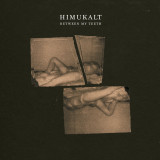
Dark, psychosexual electronics lurk between the teeth of Ester Kärkkäinen, the Las Vegas based artist also known as Himukalt. For the past six years, she has tirelessly pursued an avenue of bleak industrial productions that parallel the extremist works of Genocide Organ and Atrax Morgue. She has built a considerable reputation for uncompromising, full-frontal noise, releasing albums on Total Black, Malignant Records, Found Remains, and Foul Prey, amongst others. Between My Teeth was originally a cassette which came out in 2018 as a tiny edition on the Greek imprint Several Minor Promises and sold out immediately upon release. Himukalt returns to The Helen Scarsdale Agency with the necessary reissue of Between My Teeth as a vinyl edition with expanded artwork.
The album is a maelstrom of ill-tempered noise and blackened frequencies, sutured to a foundation of primitive, raw rhythms. Kärkkäinen cuts up her own voice with the digital equivalent of a rusted razor blade through her proclamations of misery, rage, and desire. The albums' opening track "Cataclysm" a turgid industrial production with Kärkkäinen adopting two distinct voices that, while they remain mostly indecipherable in content, the context presumes an inevitable, catastrophic and emotionally violent collapse in the relationship between two people. A tense rhythm clicks below the full spectrum bursts of harsh noise on "She Went Mad" followed by the smoldering power electronic moves of "I No Longer Belong" and "Not Proper." And the death disco groove of "Mine" is far more hellish than danceable through its scalded distortion and Kärkkäinen's vocal mantras about bodily self-loathing.
Another bold, declarative album in the ever impressive Himukalt discography. Remastered by James Plotkin and features a 12 page booklet of Kärkkäinen's signature collaged xerography.


12
Los ingenieros oníricos se sirven de los artefactos para poder manipular su conciencia y diseñar mundos oníricos por los que viajar. De origen incierto, los artefactos se encuentran dispersos entre planos y han intentado ser rediseñados en nuestro mundo mediante el uso de frecuencias, convirtiéndose en elementos de estudio plenamente funcionales para el ingeniero onírico del plano físico. La correcta correlación de uso entre artefactos permite al onironauta saltar entre los diferentes estados de la experiencia para la formación de universos.
El artefacto Onirógeno es capaz de inducir al sueño. Sirve de puerta de enlace al mundo onírico y está presente en un estado de semi-consciencia. Dicho artefacto esférico, de naturaleza cromada, reproduce de manera cíclica el proceso de encendido de la máquina de sueños por un operador en un espacio ilusorio. El ingeniero sucumbe a un estado aletargado que permite el vínculo con otros artefactos al ser testigo de una de estas reproducciones.
El artefacto Hipnagogia es capaz de provocar alucinaciones visuales de intensidad creciente. Permite formar protomundos inconexos. Es un artefacto propio del plano semi-consciente. Debido a lo efímero de los protomundos formados, el ingeniero es incapaz de controlarlos y dotarlos de sentido.
El artefacto Efialtes es uno de los más inestables y volátiles. Este ente del plano semiconsciente provoca la incapacidad transitoria para realizar movimientos voluntarios durante la transición entre el sueño y la vigilia. Permite al ingeniero crear un canal al plano transitorio. Su presencia o interacción puede darse en los primeros o últimos estadíos. Está muy presente en el mundo semi-consciente y puede ser atraído por el uso de otros artefactos. Emite un zumbido muy característico cuando interacciona.
El artefacto Proyector, toroide derivado de Efialtes, solo presente en el plano transitorio. Crea un canal y permite al ingeniero ingresar, precediendo a la separación física, y materializar la consciencia en el nuevo plano.
Extracorpóreo es un derivado del artefacto Proyector, presente en el plano transitorio y con influencia en el plano físico. Permite a la conciencia materializada del ingeniero comunicarse con los impulsos básicos motrices y órdenes cerebrales del plano físico, traduciendo los diferentes protocolos implicados.
El artefacto Vacío es un espacio unidimensional que interconecta el plano transitorio con el plano onírico.
El artefacto Arquitecto, presente en el plano onírico, forma y diseña espacios acorde con las órdenes del ingeniero onírico en el caso de que el canal de comunicación sea lo suficientemente consciente. Es una pequeña recreación esférica del universo elevado a infinito en forma de fractal.
El artefacto Escultor, de hormigón y presente en el plano onírico, crea las diferentes imágenes e inteligencias que habitan el mundo onírico en construcción. Aunque puede ser controlado, a menudo actúa con un mayor libre albedrío, creando imágenes recurrentes.
El artefacto Programador, de código en cascada y presente en el plano onírico, es la inteligencia encargada de dotar a los mundos oníricos de acontecimientos.
El artefacto Devoramundos es el artefacto más inestable conocido y con mayor rango de influencia entre planos. Destruye el mundo creado como un agujero negro engulle todo a su paso.
El artefacto Cordón, de plata y presente en todos los planos, sirve como nexo entre el cuerpo físico y la consciencia materializada. A menudo, debido al influjo de otro artefacto, o a la inestabilidad en el canal creado por correlación, es capaz de obligar a la regresión, clausurando el canal de comunicación. Existe un artefacto Cordón que une cada una de las conciencias proyectadas con sus correspondientes cuerpos así como del cuerpo físico. Se desconoce que ocurre en caso de fisión.
El artefacto Regreso, presente en el plano transitorio-semiconsciente permite al ingeniero recuperar la consciencia y restablecer sus signos vitales.

10
The Amity Affliction’s first album released on Roadrunner Records back in 2012, Chasing Ghosts delivered the band’s message of triumph over heartbreak with even more intense power.
They arrived onto the scene from Australia, bringing with them the full-on sing/scream assault of early Atreyu, the metallic adventurous bite of Poison the Well, the gang-vocal-chant inspiring stomp of Bring Me the Horizon and the skillfully melodic angst of Alexisonfire
The album was originally only released on CD and digitally in the UK, now appearing on Lemon Coloured vinyl for the first time.

13
New album from the Parisian producer.
Label say:
Because, at La Creme Garcia Club, a private circle of discerning smokers in Barcelona, Blundetto was in heavy rotation in the playlists. So heavy that these people of good taste for legal activity on this side of the Pyrenees yet prohibited from profits, had the idea of becoming the privileged partners of a new album. Without scrutiny, without intervention in the artistic, but with a single watchword: let Blundetto return to his first love of world sound.
The result is a stereo trip illustrated by Mossy Giant's artwork. A trip around the world without leaving your couch.
An offer that cannot be refused.
Ten years had passed since Bad Bad Things; it was the occasion to celebrate this decade by reviving its state of mind. The one who mixes collaborations, atmospheres, and styles. Exiled to the green, in musical autarky from several albums, Blundetto has therefore returned to the rhythm of city life and studios. He has changed his way of operating, opened his repertoire, and invited friends to new titles that he had written for them.
The circle of intimates already present on Bad Bad Things (Hindi Zahra, General Electric, Chico Mann) has widened to include regular accomplices (Biga Ranx) and to extend to artists with whom Blundetto felt an obvious connection (Crime Apple, Leonardo Marques). Guided by this roadmap written by Blundetto, all succeeded in painting with their colors and spreading their musical soul in the project, either taking the rhythmic direction of Brazil, Africa, or Latin America, getting dizzy in Jamaican fumes or chopping at the salient angles of hip hop.
Dive into the new openings of Clément Petit’s arrangements, now more sophisticated than those on which Blundetto evolved, and now capable of bringing an orchestral dimension made of strings and brass, creating a direct opening on the emotions, an automatic generator of images to accompany the soundtrack by the producer Blackjoy.
Whatever the orientation, each guest becomes a unique and essential part while Blundetto remains the common thread, the cement and the final varnish of a musical mosaic called Good Good Things.
