“Paradigm of Tomorrow” is the representation (or sound) of concepts related to an innovative future and the radical changes brought about by technology in society that is, a way of thinking that redefines the present and opens up new possibilities. Published by Biometric-Audio (DE) Mastered by Paul Mac (UK) Lacquer cutting by Simon Exchange (UK) Release Management: Daniele Angelo (IT) Distribution: Triple Vision (NL) Artwork: Yuki Raw (DZ) A3 – She Spoke in a Detached Way Voice recorded by Hamza (Zahham) in Algiers (DZ) Mixed by Basic in collaboration with Punchlines Room (IT) Recorded at Neoromatik Studio (DE)
The fifth edition of Meganesia’s annual vinyl release, this year featuring AWHM & Shugo Noss, two leading forces in the fast trance and psytek scenes.
Striving to imagine these two artists as creatures inhabiting the same environment and imbuing it with their sonic identity, we arrived at the idea of a tidal zone in which AWHM’s sound inhabits and defines the warmed, sunlit state of low tide, while Shugo Noss’ sound inhabits and defines the submerged, watery state of high tide.
The resulting release creates a trance-focussed environment inhabited by both the deep, multi-textured, audio-hallucinatory sound of Shugo Noss and the driving, energising force of AWHM.
This release comes out on vinyl and digital on October 27, 2026.
Mastering by Chris Scholz and Dave Miller at Audiosculpture NL
Artwork the THEAJM
Vinyl distribution by One Eye Witness
SHUGO BIO
Shugo Noss is a producer/DJ from Naarm who explores the intersection of sound and form through a blend of hypnotic rhythms, eclectic soundscapes and sonic experimentation. His work aims to exist outside genre binaries, weaving through a multitude of emotional experiences that both relate to, and contradict, one another in an attempt to formulate their own identity. There are no limits that restrain these journeys.
AWHM BIO
A dedicated consumer and creator of trance music, AWHM’s production style draws clear influence from old school goa, psytrance, jungle breaks, and tekno, most easily recognised by his ability to combine driving basslines, hypnotic rhythms, and scattered percussions to transport audiences through uncharted psychedelic realms of fast trance music.
Evolutionary by nature, he’s managed to leverage extensive experiences that led to a self-taught studio process which now stands out in one of the more niche corners of electronic music.
MEGANESIA BIO
Meganesia is an independent music label operating in the broad genres of trance and techno. Drawing its name from the continental plate beneath Australia’s landmass, Meganesia focuses distinctly on developing and platforming artists living and working in Australia.
Since the start of 2022 Meganesia has grown to a catalogue of 12 releases. Across these releases, the label has directly platformed over 40 individual artists on digital and vinyl gaining us recognition as one of Australia’s strongest and most dynamic electronic labels.
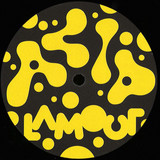
Welcome to the first release on Acid Lamour
A sub label for Lamour Records started in 2018 with a focus on techno and acid dedicated DJs. Releases are limited to 303 vinyls, no re-press.
Anders Ilar and John H are no newcomers to the electronic music scene.
Born in 1973, Anders Ilar began his explorations of electronic music in the mid 80s. Growing up in the small town of Ludvika in Sweden, Ilar spent all of his spare time playing with synthesizers, drum machines, keyboards and sequencers, learning the ins and outs of analogue and digital sound and music creation. Inspired by the early industrial and EBM wave he formed several bands with friends, started playing live shows
at smaller local parties, and released several demo tapes in very limited quantities. In the 90's he gradually shifted his creative influences towards ambient techno and acid and also started to DJ. He started using computer software to produce his music around 1999 and his first vinyl EP was released in 2001 on the german label Plong!, soon to be followed by
many more releases on labels such as Shitkatapult, Audio.nl and Echocord.
Developing his own flavor of deep minimal dub techno and ambient he gained critical acclaim with his album Nightwidth (2006) for Narita Records in the USA. Followed by highly appraised album Sworn on the german label Level Records in 2008. Ilar has also made remixes for celebrated artists such as Apparat, Mikkel Metal and Ripperton and has
appeared on numerous compilations and DJ-mixes. He's performed live on stage through-out most European countries and Japan, as well as doing a small tour with Notch Festival in China in 2008.
Up to 2018 Anders Ilar has produced 13 albums and 25 vinyl EP's and performed in over 15 countries.
Born in 1984 and based in Gothenburg. John H has been DJing, as well as producing tracks, since the late 90s, with Anders as his mentor and teacher, giving John early musical influences spanning across a wide range of genres, from Swedish techno to IDM, Cologne acid craziness and
the sound of Chicago house tracks. The musical output of his DJ-sets usually varies between techno, house, acid, electro and everything in between, depending on the time and location. John has performed on several locations all around Sweden, but also done appreciated gigs in other European countries at clubs like Tresor and Culture Box, and his music has been featured in sets by DJs such as Sven Väth, Adam Beyer,
Joris Voorn, Dense & Pika, Cari Lekebusch, Alan Fitzpatrick, Karotte,
Gregor Tresher, The Hacker and many more.
Coming For Your Tongue EP is Anders and John's 4th collab release, after
acclaimed releases on Flight Recorder and New York Haunted, recorded
during a jam session at John's studio in Bergsjön outside of Gothenburg,
Sweden, using a small setup of analogue synths and drum machines such as
the Roland TR-606, TR-808, a Devil Fish modified TB-303, Minimoog Voyager
and the Arturia Microbrute. After recording Anders spiced things up by
cutting and puzzling loops as well as adding extra effects and drums.
Limited edition of 303, no repress. Vinyl exklusive for 3 months
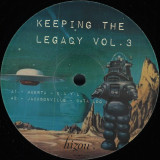
Hizou Deep Rooted Music is thrilled to introduce its latest vinyl release, featuring a carefully curated selection of top-notch electronic music that's destined to delight audiophiles.
On the A-side of this vinyl gem, you'll be enchanted by the sonic artistry of Huerta, as his track takes you on a mesmerizing musical journey that embodies his distinctive vision. Following suit on the same side, you'll encounter Jacksonville, whose music effortlessly immerses you in a captivating world of entrancing rhythms and enveloping melodies.
Flipping the record over to the B-side, prepare to be captivated by the talents of Nico Lahs, operating under his NLXLB alias. His production is nothing short of a sonic masterpiece, seamlessly melding eclectic elements into a mesmerizing sonic tapestry.
To round off this sonic odyssey, we bring you a track from 100 Hz that's guaranteed to elevate the energy on any dance floor with its potent and infectious rhythms.
This vinyl is an essential addition to any discerning music collection, offering a chance to own these remarkable tracks in a physical format. Reach out to us for more information and secure your order before these limited-edition gems disappear from the shelves!
NEIL ARDLEY – KALEIDOSCOPE OF RAINBOWS The Definitive 2LP Reissue of a Landmark in British Jazz Fusion
Analogue October Records proudly presents the long-awaited reissue of Kaleidoscope of Rainbows, Neil Ardley’s 1976 masterpiece, originally released on Gull Records. Produced by Neil Ardley and recorded at London’s famed Morgan Studios, the sessions were engineered and mixed by Martin Levan, capturing one of the most ambitious and beloved works in British jazz. Following the acclaimed reissues of Courtney Pine’s Journey to the Urge Within (AOR-001-ST) and Neil Ardley’s Harmony of the Spheres (AOR-002-ST)—both praised by the audiophile press including The Tracking Angle—this third release confirms Analogue October as one of today’s most meticulous and exciting reissue labels.
A Suite of Sound and Colour
Commissioned for the 1975 Camden Jazz Festival, Kaleidoscope of Rainbows is structured as a seven-part suite, each movement reflecting a colour of the spectrum. Ardley’s composition weaves together jazz improvisation, progressive rock energy, and orchestral elegance in one of the most imaginative British jazz recordings of the era. Featuring Ian Carr, Barbara Thompson, Tony Coe, Trevor Tomkins, and Geoff Castle, the album is a who’s who of the UK’s vibrant 1970s jazz scene.
Cut at Abbey Road, Pressed at Record Industry
For this definitive edition, Analogue October worked directly from the original Gull master tapes. Mastering was entrusted to Miles Showell at Abbey Road Studios, using his renowned half-speed process to extract every detail and dynamic from Ardley’s score. To give the music the headroom it deserves, the reissue has been expanded to a deluxe 2LP set, pressed on the highest-quality vinyl at Record Industry in Haarlem, Netherlands. The result is a presentation that finally does justice to the scope and brilliance of Ardley’s vision.
Deluxe Package – Restored from the Source
The artwork has been meticulously restored from the original film elements, ensuring a sleeve of unmatched vibrancy and fidelity. Inside, a 12-page booklet printed on heavyweight card features an in-depth essay on Neil Ardley and the making of Kaleidoscope of Rainbows, written by Jazzwise magazine editor Mike Flynn, alongside rare photographs from the period.
Curated and Produced by Craig Crane
As with every Analogue October release, Kaleidoscope of Rainbows has been curated and produced by label founder Craig Crane with a collector’s eye for detail and a deep respect for the music’s legacy. This reissue is not only the definitive vinyl edition of one of the great British jazz fusion albums—it also continues the label’s mission to restore and celebrate the most vital recordings of the era.
Neil Ardley’s Kaleidoscope of Rainbows—vivid, expansive, and timeless—returns as the essential edition for audiophiles and jazz lovers alike.
Retail-ready product description (short form):
Produced by Neil Ardley and recorded in 1976 at London’s Morgan Studios, engineered and mixed by Martin Levan, Kaleidoscope of Rainbows is a cornerstone of British jazz fusion. This definitive 2LP reissue, mastered at Abbey Road by Miles Showell from the original Gull master tapes and pressed at Record Industry (NL), finally gives the music the dynamic headroom it deserves. The deluxe edition includes restored artwork and a 12-page booklet featuring an in-depth essay by Jazzwise editor Mike Flynn.
In ,Library Copy Do Not Remove" präsentiert JJ Weihl von Discovery Zone eine digitale Verzauberung der Realität, in der er das Materielle und das Immaterielle miteinander verwebt, um zu zeigen, dass es sich dabei tatsächlich um zwei Aspekte ein und desselben handelt. In Weihls Welt sind Natur und Technologie keine Feinde, sondern erschaffen sich gegenseitig in einem unendlichen Tanz aus Bedeutung und Reflexion. Ursprünglich als Raumsound für das Zeiss-Groß-Planetarium in Berlin geschaffen, ist ,Library Copy Do Not Remove" eine Schöpfungsmythologie für das simulierte Universum. Dabei handelt es sich jedoch nicht um eine trockene, bostromische, maskuline Fantasie einer digitalen Realität, der die Geheimnisse der Natur fehlen. Stattdessen fordert Weihl den Zuhörer auf, im Rahmen einer Simulation Raum für die beeindruckende Realität der natürlichen Welt zu lassen. Wenn unsere Welt simuliert ist, dann muss die Simulation in der Lage sein, die Schönheit und Pracht der Natur zu erschaffen. Auf diese Weise betreibt Weihl eine ambient-artige Alchemie, die eine große Versöhnung von Natur und Technologie fordert, während sie uns auffordert, darüber nachzudenken, wie und wo die Erfahrung transzendenten menschlichen Bewusstseins zwischen ihnen existieren könnte. Die Songs auf ,Library Copy Do Not Remove" entstanden, während Weihl gleichzeitig ihr zweites Album ,Quantum Web" fertigstellte, und spiegeln einen weitreichenden, inspirierenden Zustand aus Aufregung und Angst wider, der mit der Aufgabe einherging, Musik für einen so einzigartigen Raum zu komponieren. Die Songs selbst wurden durch Ambisonics geformt, ein spezielles Format für räumliches Audio, das direktional ist, anstatt auf Kanälen zu basieren (wie Stereo), und wurden über ein Mosaik aus 49 Lautsprechern übertragen. Da es für Live-Auftritte geschrieben wurde, war ,Library Copy Do Not Remove" nie als Album im eigentlichen Sinne gedacht, sondern als dreidimensionales Ereignis. Auf diese Weise spiegelte die Klanginszenierung wider, wie wir Klang in unserem Alltag wahrnehmen: uns aus allen Richtungen umgebend. Für diese Albumveröffentlichung hat Weihl alle Songs gemeinsam mit ihrem langjährigen Produzenten E/T von Grund auf neu abgemischt und die Konstellation der Tracks für ein Stereoerlebnis neu konzipiert und überarbeitet. Inspiriert von den Werken von James Gleick, LD Deutsch, Johannes Kepler und Jorge Luis Borges, erforscht ,Library Copy Do Not Remove" die kreative Spannung zwischen Realität und Wahrnehmung, Information und Mythologie, Harmonie und Unordnung. Im gesamten Album fragt Weihl, wie wir als Menschen das Universum um uns herum und den zugrunde liegenden Code, der es belebt, verstehen lernen. Was dabei entsteht, ist ein klanglicher Mythos, der von spiralförmigen digitalen Universen erzählt, die ineinander verschachtelt sind und in denen jeder teilnehmende Akteur gleichzeitig sowohl Teil als auch das Ganze der Realität ist. Auf diese Weise ist ,Library Copy Do Not Remove" ein cyber-Ausdruck zeitloser Weisheit: Anstelle von ,wie oben, so unten" könnte Weihl vorschlagen: ,wie der Input, so der Output".
In ,Library Copy Do Not Remove" präsentiert JJ Weihl von Discovery Zone eine digitale Verzauberung der Realität, in der er das Materielle und das Immaterielle miteinander verwebt, um zu zeigen, dass es sich dabei tatsächlich um zwei Aspekte ein und desselben handelt. In Weihls Welt sind Natur und Technologie keine Feinde, sondern erschaffen sich gegenseitig in einem unendlichen Tanz aus Bedeutung und Reflexion. Ursprünglich als Raumsound für das Zeiss-Groß-Planetarium in Berlin geschaffen, ist ,Library Copy Do Not Remove" eine Schöpfungsmythologie für das simulierte Universum. Dabei handelt es sich jedoch nicht um eine trockene, bostromische, maskuline Fantasie einer digitalen Realität, der die Geheimnisse der Natur fehlen. Stattdessen fordert Weihl den Zuhörer auf, im Rahmen einer Simulation Raum für die beeindruckende Realität der natürlichen Welt zu lassen. Wenn unsere Welt simuliert ist, dann muss die Simulation in der Lage sein, die Schönheit und Pracht der Natur zu erschaffen. Auf diese Weise betreibt Weihl eine ambient-artige Alchemie, die eine große Versöhnung von Natur und Technologie fordert, während sie uns auffordert, darüber nachzudenken, wie und wo die Erfahrung transzendenten menschlichen Bewusstseins zwischen ihnen existieren könnte. Die Songs auf ,Library Copy Do Not Remove" entstanden, während Weihl gleichzeitig ihr zweites Album ,Quantum Web" fertigstellte, und spiegeln einen weitreichenden, inspirierenden Zustand aus Aufregung und Angst wider, der mit der Aufgabe einherging, Musik für einen so einzigartigen Raum zu komponieren. Die Songs selbst wurden durch Ambisonics geformt, ein spezielles Format für räumliches Audio, das direktional ist, anstatt auf Kanälen zu basieren (wie Stereo), und wurden über ein Mosaik aus 49 Lautsprechern übertragen. Da es für Live-Auftritte geschrieben wurde, war ,Library Copy Do Not Remove" nie als Album im eigentlichen Sinne gedacht, sondern als dreidimensionales Ereignis. Auf diese Weise spiegelte die Klanginszenierung wider, wie wir Klang in unserem Alltag wahrnehmen: uns aus allen Richtungen umgebend. Für diese Albumveröffentlichung hat Weihl alle Songs gemeinsam mit ihrem langjährigen Produzenten E/T von Grund auf neu abgemischt und die Konstellation der Tracks für ein Stereoerlebnis neu konzipiert und überarbeitet. Inspiriert von den Werken von James Gleick, LD Deutsch, Johannes Kepler und Jorge Luis Borges, erforscht ,Library Copy Do Not Remove" die kreative Spannung zwischen Realität und Wahrnehmung, Information und Mythologie, Harmonie und Unordnung. Im gesamten Album fragt Weihl, wie wir als Menschen das Universum um uns herum und den zugrunde liegenden Code, der es belebt, verstehen lernen. Was dabei entsteht, ist ein klanglicher Mythos, der von spiralförmigen digitalen Universen erzählt, die ineinander verschachtelt sind und in denen jeder teilnehmende Akteur gleichzeitig sowohl Teil als auch das Ganze der Realität ist. Auf diese Weise ist ,Library Copy Do Not Remove" ein cyber-Ausdruck zeitloser Weisheit: Anstelle von ,wie oben, so unten" könnte Weihl vorschlagen: ,wie der Input, so der Output".
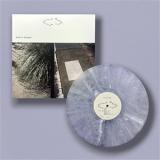
"Graze the Bell" ist eine Sammlung von bewegenden, faszinierenden Solo-Klavierstücken und das bisher reinste Werk von David Moore. Bekannt für seine atmosphärischen Kompositionen mit Bing & Ruth sowie seine Zusammenarbeit mit dem Gitarristen Steve Gunn und Cowboy Sadness, ist dies Moores erstes weit verbreitetes Solo-Klavieralbum. Wie das Albumcover - ein Foto, das Moore von Hand bestickt hat - abstrahiert die Musik persönliche Erfahrungen zu transzendenten Eindrücken. Moore nutzt sein Klavier, um meditativ die Conditio Humana zu erforschen, und macht "Graze the Bell" zu einem Zufluchtsort des Klangs. Im Laufe ihrer zahlreichen Veröffentlichungen haben Bing & Ruth häufig ihre Form und ihren Sound verändert, sich zu einer fünfzehnköpfigen Gruppe entwickelt und sind schließlich zu einer Trio-Konfiguration gelangt. Ihr jüngstes Album ,Species" stellte Moores Farfisa-Spiel in den Vordergrund, während eine nachfolgende EP mit dem gleichen Namen seine Solointerpretationen des Albums enthielt. Dieser lange Prozess der Destillation konzentrierte sich stets auf Moores Kompositionen für das Klavier und sein Verständnis davon. Nach zwei Jahrzehnten gefeierter Ensemblearbeit ist das Erscheinen von ,Graze the Bell" ein Moment, in dem sich der Kreis schließt, eine Heimkehr - nicht einfach zu einem Ort oder einer Zeit, sondern zu einem leuchtenden Zentrum, das beides übersteigt. Einige der Stücke auf ,Graze the Bell" waren ursprünglich für ein Album von Bing & Ruth geplant, wurden aber schließlich als Soloprojekt neu konzipiert. Moore nutzte nur das Klavier und versuchte, die bewährten Methoden, die er im Laufe der Jahre entwickelt hatte, weiter auszubauen. ,Ich möchte mich weiterentwickeln", sagt er, ,und dogmatische Denkweisen hinterfragen." Er öffnete sich aktiv für Experimente und suchte nach einer tieferen Präsenz in seinem Spiel, wobei er seine Beziehung zum Klavier und zum Leben neu bewertete. Moores Musik basiert zwar auf komponierten Noten und schöpft aus Lebenserfahrungen, doch die Quelle seiner Inspiration bleibt eher unbeschreiblich. Indem er Letzteres bewusst pflegte, entwickelte er eine natürliche Fähigkeit, sich in einen tranceähnlichen Zustand zu versetzen. Moore kann sich mit dieser Absicht hinsetzen und ist ,innerhalb weniger Sekunden" ,vollkommen dort". Von der ersten bis zur letzten Note basiert das Album auf dem atemberaubenden Klang eines ,bestialischen" Steinway Model D aus Hamburg von 1987. Dies hängt zum Teil mit seinem subtilen Spielstil zusammen, der manchmal an Stille grenzt. Moores anmutige Herangehensweise gibt dem Klang Raum und offenbart Nuancen des Klaviers, die viele Spieler gewöhnlich ignorieren würden. Solche Nuancen wurden während der Aufnahmen des Albums im renommierten Oktaven Audio in Mt. Vernon, New York, gepflegt. Der Klang des Steinway-Flügels des Studios wurde unter der Produktionsleitung des Grammy-Gewinners Ben Kane mit Unterstützung von Owen Mulholland lebhaft eingefangen. Um Moores experimentellen Ansatz zu unterstreichen, setzten sie Pitch-Correcting-Software kreativ ein, um die verschiedenen Register des Klangprofils des Klaviers zu orchestrieren. Der Ausdruck ,graze the bell" (die Glocke streifen) kam Moore vor Jahren aus heiterem Himmel in den Sinn. Er fand ihn poetisch und blieb ihm im Gedächtnis haften. Moore, der lange Zeit daran geglaubt hatte, dass das Leben eine Reise ist, an deren Ende man etwas erreicht oder ankommt, und dies zunehmend in Frage gestellt hatte, fand zunehmend mehr Sicherheit darin, einfach da zu sein, wo er ist. ,Es gibt keinen Gipfel - und keinen Weg dorthin", schreibt er. ,Nur die Hoffnung, dass wir, wenn wir Glück haben, gelegentlich die Glocke streifen." Und diese Erkenntnis hat er in sein Klavierspiel einfließen lassen. Mit diesem Album hat er sich bewusst dafür entschieden, Eigenheiten, sowohl seine eigenen als auch die des Instruments, voll und ganz anzunehmen. Anmut, subtile Klänge, rohe Gesten und glückliche Zufälle werden hier geschätzt. Die Stickerei auf dem Cover zeigt seine Frau beim Drachensteigen an der Küste von North Carolina. Sie wurde während der Abmischung des Albums über zehn Monate hinweg methodisch mit Kreuzstich gestickt, und viele persönliche Lebensereignisse - traurige und hoffnungsvolle - sind in seine Handwerkskunst eingewoben. Da Moore selbst mit einer bipolaren Störung zu kämpfen hat, dienten sowohl das Album als auch die Stickerei als kathartische Mittel der Meditation für ihn. Moores Klavierspiel enthält eine versteckte Karte persönlicher Erfahrungen, die bezaubernde Wiederholung seiner Melodien navigiert seinen Weg und unseren durch die Skalen des Raums. Moores Musik weckt verborgene Gefühle, erweckt uns und erinnert uns an unser gemeinsames Zentrum. In einer Zeit, in der unsere Menschlichkeit regelmäßig abgelenkt und beeinträchtigt wird, lässt ,Graze the Bell" das Herz erklingen, das wir als unser wahres Zuhause kennen. David Moores "Graze the Bell" wird über RVNG Intl. veröffentlicht - eine spirituelle Heimkehr, wenn man so will.
2LP, 180gm vinyl, “Impex Style” Heavy Duty Outer Sleeve w/Flap, Sealed with Analogue October Records Sticker, Hype Sticker
Abbey Road Half speed master from the original tapes
380 gsm Invercote G Sleeve 300 gsm 12 page insert
4.5/5 RECOMMENDED / Editors Choice in Jazzwise magazine
‘And much as audiophiles will savour the tech achievement of this re-issue, the point is the Kaleidoscope of Rainbows
remains joyous, optimistic music that embraces difference and divergence. It needs celebrating not as a revived fossil but as a timeless artwork. Enjoy. And enjoy again’
RIYL Ian Carr / Nucleus / Weather Report / Clips and Art: https://we.tl/t-PfY9QXSjlt
NEIL ARDLEY – KALEIDOSCOPE OF RAINBOWS The Definitive 2LP Reissue of a Landmark in British Jazz Fusion
Analogue October Records proudly presents the long-awaited reissue of Kaleidoscope of Rainbows, Neil Ardley’s 1976 masterpiece, originally released on Gull Records. Produced by Neil Ardley and recorded at London’s famed Morgan Studios, the sessions were engineered and mixed by Martin Levan, capturing one of the most ambitious and beloved works in British jazz. Following the acclaimed reissues of Courtney Pine’s Journey to the Urge Within (AOR-001-ST) and Neil Ardley’s Harmony of the Spheres (AOR-002-ST)—both praised by the audiophile press including The Tracking Angle—this third release confirms Analogue October as one of today’s most meticulous and exciting reissue labels.
A Suite of Sound and Colour
Commissioned for the 1975 Camden Jazz Festival, Kaleidoscope of Rainbows is structured as a seven-part suite, each movement reflecting a colour of the spectrum. Ardley’s composition weaves together jazz improvisation, progressive rock energy, and orchestral elegance in one of the most imaginative British jazz recordings of the era. Featuring Ian Carr, Barbara Thompson, Tony Coe, Trevor Tomkins, and Geoff Castle, the album is a who’s who of the UK’s vibrant 1970s jazz scene.
Cut at Abbey Road, Pressed at Record Industry
For this definitive edition, Analogue October worked directly from the original Gull master tapes. Mastering was entrusted to Miles Showell at Abbey Road Studios, using his renowned half-speed process to extract every detail and dynamic from Ardley’s score. To give the music the headroom it deserves, the reissue has been expanded to a deluxe 2LP set, pressed on the highest-quality vinyl at Record Industry in Haarlem, Netherlands. The result is a presentation that finally does justice to the scope and brilliance of Ardley’s vision.
Deluxe Package – Restored from the Source
The artwork has been meticulously restored from the original film elements, ensuring a sleeve of unmatched vibrancy and fidelity. Inside, a 12-page booklet printed on heavyweight card features an in-depth essay on Neil Ardley and the making of Kaleidoscope of Rainbows, written by Jazzwise magazine editor Mike Flynn, alongside rare photographs from the period.
Curated and Produced by Craig Crane
As with every Analogue October release, Kaleidoscope of Rainbows has been curated and produced by label founder Craig Crane with a collector’s eye for detail and a deep respect for the music’s legacy. This reissue is not only the definitive vinyl edition of one of the great British jazz fusion albums—it also continues the label’s mission to restore and celebrate the most vital recordings of the era.
Neil Ardley’s Kaleidoscope of Rainbows—vivid, expansive, and timeless—returns as the essential edition for audiophiles and jazz lovers alike.
Retail-ready product description (short form):
Produced by Neil Ardley and recorded in 1976 at London’s Morgan Studios, engineered and mixed by Martin Levan, Kaleidoscope of Rainbows is a cornerstone of British jazz fusion. This definitive 2LP reissue, mastered at Abbey Road by Miles Showell from the original Gull master tapes and pressed at Record Industry (NL), finally gives the music the dynamic headroom it deserves. The deluxe edition includes restored artwork and a 12-page booklet featuring an in-depth essay by Jazzwise editor Mike Flynn.
Emily A. Sprague's Cloud Time traces an audio-spiritual journey through time and place, recorded across a long-awaited debut tour of Japan in the fall of 2024. Compiled from environmental improvisations captured in and for the moment, material at once welcoming, responsive, and inimitable, the album distills a voyage guided by psychic wayfaring, unbound presence, and activating performance for a reciprocal exchange with space, listener, and each fully engaged instant. The Japanese tour documented on Cloud Time held an almost mythic significance for Sprague, taking on properties of her own sonic white whale. After many near-departures and dropped plans to play in the country, "the empty spaces of cancelled trips and forgotten music turned into strange little misty spirits that I felt followed by," she says. "When I began preparing for the tour, I couldn't shake a sense that the invitation to Japan was more about opening myself up to this new place instead of bringing something into it tightly under my control. Improvisation has always been such a pillar in my music practice, and I really wanted to meet the country, spaces and people through that process." To amplify these intuitive whispers on-stage, Sprague reimagined her time-tested live rig, designed to be as free from error as possible, as a looser, more flexible set up that would allow her to interface with what was essentially a blank sonic canvas every night. Each performance became a collaboration between environment and instinct, Sprague processing the events, energies, and emotions informing the evening through her new sound ecosystem, and projecting an entirely present and unique version of herself to each open-eared and hearted crowd. "It was very much more than just an act of playing for me, but a total experience of time and place," she says. The seven long-form pieces that plot the course of Cloud Time, excerpted from over eight hours of recordings archived on the artist's on-stage recorder and generously shared on the album with no additional mixing and only minimal editing, invite listeners to become still in these deep-rooted moments of presence as the album moves from city to city, venue to venue. Cloud Time chronicles material recorded at each tour stop, Sprague selecting and sequencing the album around mood-based storytelling more so than linear chronology. "I tried to make the whole album flow in the way that any one of the complete live performances did," she explains, "while also keeping the spirit of the whole thing as a journey." The result is equal parts travelog, love letter, and impressionistic collage channeled from the potent ferment of a now encased in the glowing amber of memory. Intrinsically inspired by kankyo ongaku, an environmental music philosophy, known both in and widely outside of Japan that tunes into the similarly expansive ethos as Pauline Oliveros' deep listening practice and posits the listener as composer, Cloud Time is ambient music that seems to be listening right back, grounded in heartfelt synthesized frequencies that abundantly hold and heal. Pieces like "Nagoya," "Tokyo 1," and the ten minute "Matsumoto" in particular hum with the atomic resonance of gently tended landscapes, offering space for tuning way in and dropping far out from perspectives that stifle and bind. Cloud Time is an invitation to embrace each moment as both fleeting and eternal, floating by with nothing to grasp onto and absolutely everything to gain. The exercise in acceptance and letting go that Sprague practiced throughout the tour deeply impacted her understanding of self as both a guest and venerable performer. "The process of loving wherever I am, being present and focusing on a clear channel of communication for mind and emotion, rooted so deeply in respect for the space, those within it, and myself, ended up being profoundly healing," she says. "My vision and hope is that this album can be released as a gift back to anyone who either was or wasn't there. A cloud time of life passing by."
Emily A. Sprague's Cloud Time traces an audio-spiritual journey through time and place, recorded across a long-awaited debut tour of Japan in the fall of 2024. Compiled from environmental improvisations captured in and for the moment, material at once welcoming, responsive, and inimitable, the album distills a voyage guided by psychic wayfaring, unbound presence, and activating performance for a reciprocal exchange with space, listener, and each fully engaged instant. The Japanese tour documented on Cloud Time held an almost mythic significance for Sprague, taking on properties of her own sonic white whale. After many near-departures and dropped plans to play in the country, "the empty spaces of cancelled trips and forgotten music turned into strange little misty spirits that I felt followed by," she says. "When I began preparing for the tour, I couldn't shake a sense that the invitation to Japan was more about opening myself up to this new place instead of bringing something into it tightly under my control. Improvisation has always been such a pillar in my music practice, and I really wanted to meet the country, spaces and people through that process." To amplify these intuitive whispers on-stage, Sprague reimagined her time-tested live rig, designed to be as free from error as possible, as a looser, more flexible set up that would allow her to interface with what was essentially a blank sonic canvas every night. Each performance became a collaboration between environment and instinct, Sprague processing the events, energies, and emotions informing the evening through her new sound ecosystem, and projecting an entirely present and unique version of herself to each open-eared and hearted crowd. "It was very much more than just an act of playing for me, but a total experience of time and place," she says. The seven long-form pieces that plot the course of Cloud Time, excerpted from over eight hours of recordings archived on the artist's on-stage recorder and generously shared on the album with no additional mixing and only minimal editing, invite listeners to become still in these deep-rooted moments of presence as the album moves from city to city, venue to venue. Cloud Time chronicles material recorded at each tour stop, Sprague selecting and sequencing the album around mood-based storytelling more so than linear chronology. "I tried to make the whole album flow in the way that any one of the complete live performances did," she explains, "while also keeping the spirit of the whole thing as a journey." The result is equal parts travelog, love letter, and impressionistic collage channeled from the potent ferment of a now encased in the glowing amber of memory. Intrinsically inspired by kankyo ongaku, an environmental music philosophy, known both in and widely outside of Japan that tunes into the similarly expansive ethos as Pauline Oliveros' deep listening practice and posits the listener as composer, Cloud Time is ambient music that seems to be listening right back, grounded in heartfelt synthesized frequencies that abundantly hold and heal. Pieces like "Nagoya," "Tokyo 1," and the ten minute "Matsumoto" in particular hum with the atomic resonance of gently tended landscapes, offering space for tuning way in and dropping far out from perspectives that stifle and bind. Cloud Time is an invitation to embrace each moment as both fleeting and eternal, floating by with nothing to grasp onto and absolutely everything to gain. The exercise in acceptance and letting go that Sprague practiced throughout the tour deeply impacted her understanding of self as both a guest and venerable performer. "The process of loving wherever I am, being present and focusing on a clear channel of communication for mind and emotion, rooted so deeply in respect for the space, those within it, and myself, ended up being profoundly healing," she says. "My vision and hope is that this album can be released as a gift back to anyone who either was or wasn't there. A cloud time of life passing by." Emily A. Sprague's Cloud Time will be released Friday, October 10th in vinyl, Japanese import CD (via Plancha), and digital editions.
In contemporary usage, genius loci refers to a location's distinctive atmosphere, or a "spirit of the place"...
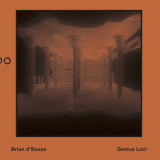
Genius Loci is a new audio work by sound artist Brian d'Souza (fka Auntie Flo). Referencing the notion of the protective 'spirit of place' from ancient Roman times, d'Souza used a vintage accordion to capture the acoustic properties of the Het Hem building in Zandaam, Netherlands. A former munitions and gun testing factory, Het Hem is a space full of character made up of a range of rooms that each hold a different acoustic property. d'Souza is interested in the connection between sound and space, using the accordion as a sound source with a variety of microphones placed around each room to capture the resonance and reverberation. The results are presented as part of an immersive audio visual website which incorporates generative audio technology developed by d'Souza's Swell Studio in collaboration with The University of Arts in London and is now available at https://thecouch.hethem.nl/genius-loci/ .
The original artist versions of Genius Loci are available on this release for the first time, available on 12 inch vinyl and download.
A State of Flo supports Earth Percent. 10% of the revenue generated from this release will be paid to environmental charities.
Splash splash what huh! Millennial breeze is the new EP by duo Lander & Adriaan - whirling like a 90s underground rave. Rapid rhythm roller coasters, breaky bumper car rides & retro-futuristic sound sweets - raw & glossy at the same time!
Call it keta-jazz, gabber wave, neurodance, nu-step, call it heartcore business. Free your mind, let your body go!!
"SOME kind of mind blowing jazz version of Rustie, Hudson Mohawke and the bangers released on Hessle Audio." - 3 VOOR 12 (NL)
“Ecstatic jazz, overwrought electronica and hi-NRG post-club oddities crossed with instrumental drum & bass” - INVERTED AUDIO (UK)
No en stock
Última entrega hace 2 años disponible para reposición sin garantía
NSRTAPE005Promo - Memories Mixtape Live in Hoorn, 1995.Never Sleeps charity tape series returns with hardcore legend DJ Promo and this one is straight from the heart.Recorded in Hoorn in the summer of 1995, it circumnavigates the youthful punk testosterone fueled teenage years of this legendary selector and features quickfire vinyl only blends + rare Gabber from that era.50 tapes are beautifully hand wrapped after printing on old 90's Dutch rave magazines pages and lovingly filled with a limited edition posterAll proceeds go to child cancer foundation Kika -kika.nl
No en stock
Última entrega hace 3 años disponible para reposición sin garantía
180 Gram Vinyl Following the success of the 2021 reissue of Ambient Warrior’s cult classic Dub Journey's (1995), Isle of Jura is pleased to present their unreleased second album, II. Born from the same oceanside fusion of instrumental dub, reggae, bossa nova and tango music that made Dub Journey's so distinctive and memorable, II is an equally sublime collection of eleven unheard tracks from the brilliant minds of Ronnie Lion and Andrea Terrano.
Evoking the delights of white sands, palm trees and sunsets, all set against clear waters and endless blue skies, Dub Journey’s and II document the golden moment when Ambient Warrior came together during the mid-90s to create some of the most Balearic Dub ever made. “Music is the greatest traveler, isn’t it?” says Ronnie. “It gets to places the actual artists can’t even get to really.”
The son of an orphaned Jamaican jazz trumpet player and professional boxer who enlisted in the military after stowing away on a boat to London, Ronnie grew up between Germany, Singapore and the UK before becoming a working musician in his mid-teens. A bass player by trade, he honed his skills playing in a series of soul, jazz-funk, blues, rock and reggae bands that performed throughout the UK.
By the time Ambient Warrior released Dub Journey’s, Ronnie and his business partner Ras Joseph were running the Lion Inc. recording studio and record label in Brixton, London. Having set up distribution arrangements with Roots Records (UK) and Semaphore (DEU/NL), they recorded and released a series of singles, compilations and solo albums from a who’s who of roots reggae artists, including Twinkle Brothers, Delroy Washington, Michael Prophet, Alton Ellis, Little Roy, and Ronnie’s own band The Amharic. “Lion was a regular port of call for visiting Jamaican artists,” reflects Ronnie. “When you were in London, it was on the route.”
An accomplished guitarist, producer and recording engineer from Trieste, Italy, Andrea grew up listening to Russian folk, Klezmer and the Italian harmony tradition in a Sicilian-Ukrainian family. After completing compulsory Italian military service, he moved to London to continue studying music. One night, he turned up at Lion Inc. and approached them about running audio engineering classes from the studio.
In Andrea, Ronnie found a collaborator who shared his desire to create borderless music that reflected the diversity of their backgrounds. “I wanted to do something that had no boundaries,” Ronnie explains. “If you’re working on a roots album, it has to sound a certain way, but with Ambient, especially in the nineties, it was just a license to let off. You could do whatever you wanted to do.” “It was a melting pot of influences like London itself,” adds Andrea.
Although they wrote most of II at the same time as they were recording Dub Journey’s, it took them several years to finish off the album. “Things never got done quickly,” Ronnie remembers. By the time it was complete, Roots Records had gone out of business, leaving Lion Inc. without UK distribution. Not long after, their Brixton studio flooded, bringing the label to a close.
These days, Andrea continues to work as a session guitarist, recording engineer and producer in London. Over the last two decades, he has collaborated regularly with Basement Jaxx and released several solo albums. Ronnie, on the other hand, lives on a boat equipped with an onboard studio, where he has recorded a series of oceanic dub albums off the British coast. Twenty-eight years after the release of Dub Journey’s, he recently started working on demos for a third Ambient Warrior album he hopes to record with Andrea in the not-so-distant future.
Artwork By Bradley Pinkerton.
No en stock
Última entrega hace 16 meses disponible para reposición sin garantía
Freshly signed artist named Ian Ash (also know as “H” and Sunny G) delivers a massive filtered boogie house track. So What U Want will also come with a Lord Funk remix which sound a bit more electro funk to blast the dancefloor.
This track is a radio killer and should be loved by many musiclovers including DJs, producers or simply people who like to listen to mainstream vocal house as French touch production. A bunch of samples and played instruments make it efficient and support the
sweet voice of the singer Djemaïli. He is known first as an R’n’B singer, but he liked to perform on this future classic – and you can hear it! Ian Ash is known as a resident DJ of the World-famous Montreux Jazz Festival where he has spun records yearly between 2001 and 2019. Including 1st and 2nd parts of George Clinton Parliament Funkadelic, Spearhead feat. Michael Franti, Doctor L, Tony Allen,Jean Grae, Raphael Saadiq, Will Calhoun, Common,Dj Cam, Mister Mike, Benji B, Souljazz, Andy Smith,Buddah Monk, Jimmy Cliff back band, Jamie Lidell, and Claude Nobs himself! He spun also at Cargo (London), SPACE (Ibiza), NL (Amsterdam), Divans du Monde
(Paris), etc. He surely is in the top 10 Funk DJs in Europe. He also has been stage and studio audio engineer for 2 decades and has mixed a couple of live artists such as Joe Sample, Mandrill or even AIR. He has mixed more than 90 concerts at Montreux Jazz Festival 2002 and deeply participated in producing 4 Days in Geneva by Ohmega Watts
more recently.
No en stock
Última entrega hace 5 años disponible para reposición sin garantía
Faitiche presents a new album by Frank Bretschneider. abtasten_halten was made as part of the raster.labor installation first presented at CTM Festival in 2019. It is perhaps the most radical work in Bretschneider’s distinctive oeuvre: abtasten_halten is a self-generating composition for synthesizer modules whose sole sound source is the movement of two VU meter needles. The resulting percussive sounds coalesce into rhythmic combinations – all random, without repetition. The album resembles a meditation on infinite rhythmic variation. abtasten_halten is Frank Bretschneider’s first release on Faitiche.
One sound can give birth to thousands of tones through self-fertilization. Pierre Henry, 1982
Frank Bretschneider on abtasten_halten:
abtasten_halten (sample_hold) is a largely self-generating composition for a modular synthesizer system. Self-generating here means that as soon as a current flows, the various modules interact, but within limits set by the composer via the connections between the modules (patches): timing, tempo, timbres, dynamics. These conditions are kept variable to a certain extent or left to chance, so that the composition created is always similar but never the same. On the one hand, the use of random generators opens up possibilities that would not otherwise have been considered. On the other, it offers the fascination of the unfinished and the unique: totally unexpected musical events that you might hear only once.
abtasten_halten combines my preferences for percussive music in general and electronic music in particular. Largely avoiding repetitive structures, the piece is more like a free improvisation, quiet and diffuse, but also extremely dense, in ever-changing contrasts and transformations.
The tone generators are two modified VU meters whose needles, driven by trigger impulses, create a simple one-bar pattern by hitting against a metal spring that is connected to a piezo element (thanks to Gijs Gieskes / Gieskes.NL). The tempo is continuously varied over a period of about ten minutes by several mutually modulating LFOs, ranging from about 0.06 Hz up to the lower audio range of about 18Hz.
The percussive sounds thus obtained are then passed through low-pass filters with moderate resonance and random frequency modulation to additionally colour the sound. Further processing is then executed by an echo module whose tempo and repetitions are again determined by random parameters. Finally the audio signal is occasionally enriched with reverb to add more spaciousness to the sound.
The concept for the installation raster.labor was developed by Olaf Bender, Frank Bretschneider and David Letellier. Many thanks to raster - artistic platform.
On Frank Bretschneider:
Frank Bretschneider works as a musician, composer and video artist in Berlin, making mainly electronic work based on complex rhythmic structures and interlocking textures, whose many-layered sound is inspired by the experimental set-ups of modern physics, often supplemented by perfectly synchronized computer-generated visualizations. In 1986, he founded AG Geige, one of the most influential underground bands in East Germany. In 1996, he co-founded the label raster-noton and has since released many solo albums.
No en stock
Última entrega hace 6 años disponible para reposición sin garantía
This new set of compositions retreats towards a quieter and more contemplative zone, weaving together the soft accents of field-recordings, microscopic sound fragments and modular synthesis. The result is a hypnotic mesh of musique concrète, drone, prepared sounds and shimmering electronic synthesis. The pieces fluctuate between the machine-like and the organic, and sometimes combine the two to create a beguiling sonic ecology. It's with a kind of forensic precision that Prudence has reconstructed from his palette these unexpected chance encounters of sound. Modular rhythmic collages are grafted onto subtle melodic phrases, stuttering percussive structures are held in orbit by elliptical sinusoidal drones. Prudence talks about these compositions as being audio-visual experiences without the visual part. The tracks create a sense of motion in space, kinetic activity and the existence of teeming entities.
No en stock
Última entrega hace 7 años disponible para reposición sin garantía
Frans de Waard (born 1965) has been producing music since 1984. First as Kapotte Muziek (a group that fully concentrates on recycling through musique concrete), but throughout the years, he also worked as Beequeen (with Freek Kinkelaar), Goem (with Roel Meelkop & Peter Duimelinks), Zebra (with Roel Meelkop) and various solo projects. Frans de Waard also founded Korm Plastics, Bake Records, My Own Little Label and co-founded Audio.nl and Plinkity Plonk Records. He worked for Staalplaat from 1992 to 2003 and in 2016 published his auto-biography on that subject.
He performed concerts in Europe, UK, USA, Canada, Japan, Russia and also played improvised music with artists like Steven Wilson, Sindre Bjerga, Jos Smolders, Giuseppe Ielasi, Howard Stelzer, Radboud Mens and many others.
Radio support from Benji B & B Traits (BBC Radio 1), Nemone (BBC 6 Music), . DJ support from Ben UFO, Joy Orbison, Caribou, Tessela, Mosca, Kowton, Ron Morelli, Bok Bok
Print features confirmed in Groove, Beat Mag, Faze (DE), Tsugi (FR), DJ Mag (IT), Volkskrant (NL), The Gap (Austria)
Print reviews confirmed in Mixmag, The Wire, Crack, DJ Mag, Uncut (UK), Blow Up, Rumore, Rockerilla (IT), Irish Times (IE), Musikexpress, Doppelpunkt, Westzeit (DE), Exclaim (CA)
Online features / premieres: The Fader, NPR, XLR8r (USA), The Quietus, Dummy (UK), Wasabeat (JP),
Hessle Audio are excited to announce the release of the self-titled debut album by Pearson Sound, aka label co-head David Kennedy. Characteristically minimalist in approach, its nine tracks use a handful of elements to craft mesmerising, self-contained worlds, alive with motion and near-subliminal detail: from vast and inky landscapes, to electrifying rhythm tracks, where layers of percussion and bass tumble over one another like rocks in a landslide. Recorded between 2013-4, Pearson Sound documents a distinct phase of Kennedy's studio explorations. "I had a signal chain set up that I was really happy with, and I started sending my machines through the same processes" he says. Expanding upon the techniques underpinning his recent REM and Starburst 12"s, its tracks emerged swiftly through improvised jam sessions, some were captured in a minimum of takes, while others later took shape through extensive sculpting and post-processing. "A lot of it was made by feeding the the same sounds between two different pieces of equipment and they'd end up feeding back between each other and snowballing. On some tracks it's about harnessing that and taking it to the brink before it disintegrates, and some of them are about just letting it go full-blown out of control." The result is a record of striking contrasts: bold, stark and visceral, yet also subtle, harmonically complex and deceptively playful. While Pearson Sound's livewire percussive energy remains inextricably rooted in the club, this exploratory studio process has created Kennedy's most wide-ranging yet coherent body of work to date: a suite of thrillingly impulsive, expressive and open-ended music, untethered from restrictions of form.