- A1: The Skatalites – El Pussycat Ska
- A2: Carlton & The Shoes – Love Me Forever
- A3: Sound Dimension – Rockfort Rock
- A4: Johnny Osbourne – Sing Jah Stylee
- A5: The Heptones – Pretty Looks Isn't All
- B1: Slim Smith – Rougher Yet
- B2: Lone Ranger – Automatic
- B3: Horace Andy – Fever
- B4: Prince Jazzbo – School
- B5: The Wailers – Simmer Down
- C1: Burning Spear – Rocking Time
- C2: Alton Ellis – I'm Just A Guy
- C3: Sugar Minott – Oh Mr Dc
- C4: Jennifer Lara – Consider Me
- D1: Don Drummond – Confucious
- D2: Michigan & Smiley – Rub A Dub Style
- D3: Sound Dimension – Full Up
- D4: Dennis Brown – No Man Is An Island
Поиск:automatic
Все
'Since 2018, João Pais Filipe (drums) and Burnt Friedman (electronics/synth) have investigated into automatic pattern–composition rooted in doubling and halving; the unimpeachable laws of motion. The offer of freedom can be seen as a way to get in touch with necessity.
On "Mechanics Of Waving" the attempt is made to succumb to such a mode of action, the drilling of a method, not through individual cunning or displayed musicianship.
Through constant practise Friedman & Pais discover the principles of rhythmic phenomena while dis–associating the music from cultural idioms. Inspired by rare infrasound–ratios ranging from 11 to 23, Nonplace releases the results of a 4 years long operation.'
Drums recorded and engineered by José Arantes.
Mastered by Kassian Troyer, Dubplates & Mastering.
- 1: Hold On Tight
- 2: He's Coming Out
- 3: No One Rides For Free
- 4: One Summer Sunday
- 5: Are We There Yet
- 6: Ludlow 18
- 7: Battle Song
- 8: I Want A Pony
- 9: Till We Meet Again
- 10: Come Down Now
- 11: Automatic
- 12: Who Can Really Know
- 13: Sunshine Tonight
- 14: Good Sounds
- 15: In And Around Greg Lake
- 16: Today Will Be Yesterday Tomorrow
- 17: Another Myself
- 18: Right Idea
- 19: Mahnsanto
- 20: Probleme Romantique
- 21: Fantastic Pantsuit
Richard Lamb’s second and (presumably) final release under this moniker is a bit of a special one. Lamb starts off with ‘Salt Lick’. A track with beautiful, lush, sunny sounds that lure you into an unexpected world of electro, heavy bass and more dance orientated tracks like ‘A Life In Harmony’.
Following up his first EP ‘Automatic Tango’ on his own Montreal based Temple imprint, there’s still hints of early Moog greasiness but overall it’s a more decisive production compared to the previous one. Intricately layered percussion mixed together with dreamy pads take you on a journey to a hidden Utopia where tight arrangements and tribal-esque rhythms dictate the pace. Once more we are shown how versatile Lamb’s productions are and how he juggles genres freely, ranging from dub to electronica, experimental, idm and techno.
The second side of this EP features two remixes by non other than Norwegian DJ and producer DJ Sotofett. A heavyweight in the electronic music scene who needs little introduction takes on the EP’s title track ‘A Life In Harmony’ and turns it into two electro-acid pieces ready to tear up any dance floor, or anything else for that matter. Surrender to the acid and indulge in these masterful tracks.
- A1: Electric Light Orchestra - Mr Blue Sky
- A2: Gerry Rafferty - Baker Street
- A3: Rod Stewart - Da Ya Think I'm Sexy?
- A4: 10Cc - Dreadlock Holiday
- A5: Justin Hayward - Forever Autumn
- A6: Wings - With A Little Luck
- A7: Kate Bush - The Man With The Child In His Eyes
- B1: Bonnie Tyler - It’s A Heartache
- B2: Suzi Quatro - If You Can't Give Me Love
- B3: Clout - Substitute
- B4: Crystal Gayle - Don't It Make My Brown Eyes Blue
- B5: Elton John - Part-Time Love
- B6: Billy Joel - Movin' Out (Anthony's Song) (Anthony's Song)
- B7: Joe Walsh - Life's Been Good
- B8: Blue Öyster Cult - (Don't Fear) The Reaper (Don't Fear)
- C1: Donna Summer - Macarthur Park
- C2: Chic - Le Freak
- C3: A Taste Of Honey - Boogie Oogie Oogie
- C4: The Three Degrees - Givin' Up Givin' In
- C5: Chaka Khan - I'm Every Woman
- C6: Yvonne Elliman - If I Can't Have You
- C7: Odyssey - Native New Yorker
- C8: Earth Wind & Fire - Fantasy
- D1: The Boomtown Rats - Rat Trap
- D6: Elvis Costello & The Attractions - (I Don't Want To Go To) Chelsea (I Don't Want To Go To)
- D7: The Jam - Down In The Tube Station At Midnight
- D8: Patti Smith - Because The Night
- E1: Abba - Take A Chance On Me
- E2: Baccara - Sorry, I'm A Lady
- E3: Boney M - Rivers Of Babylon
- E4: Althea & Donna - Uptown Top Ranking
- E5: Blondie - Denis
- E6: Olivia Newton-John - Hopelessly Devoted To You
- E7: Renaissance - Northern Lights
- E8: Dean Friedman - Lucky Stars (With Denise Marsa)
- F1: Marshall Hain - Dancing In The City
- F2: Eruption - I Can't Stand The Rain
- F3: Dee D Jackson - Automatic Lover
- F4: Sarah Brightman & Hot Gossip - I Lost My Heart To A Starship Trooper
- F5: Hot Chocolate - Every 1'S A Winner
- F6: Commodores - Three Times A Lady
- F7: Rose Royce - Wishing On A Star
- D2: The Undertones - Teenage Kicks
- D3: Buzzcocks - Ever Fallen In Love (With Someone You Shouldn’t’ve) (With Someone You Shouldn’t’ve)
- D4: Siouxsie & The Banshees - Hong Kong Garden
- D5: The Rezillos - Top Of The Pops
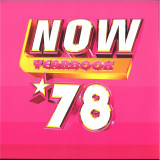
NOW Music is proud to present the next instalment in our ongoing ‘Yearbook’ series, NOW – Yearbook 1978; 85 tracks from a magical year in Pop! The 85 track special edition CD is housed in ‘hard-back-book’ packaging, including a 28-page booklet featuring a summary of the year, a track-by-track guide, a quiz, and original singles artwork. NOW – Yearbook 1978; 46 tracks on a 3LP set pressed on translucent pink vinyl - from a magical year in Pop!
"No Control" is one of the albums that helped bridge the band"s more reckless earlier direction with their more focused (but just as pissed-off) "90s-era. The strength of such cuts as "Big Bang," "Automatic Man," the title track, and "I Want to Conquer the World." No Control is one of the bands best all-time albums and an archetypal blueprint for the genre.
- 1: I Want To Conquer The World
- 1: 2 Do What You Want
- 1: 3 You Are (The Government)
- 1: 4 Modern Man
- 1: 5 We're Only Gonna Die
- 1: 6 The Answer
- 1: 7 Flat Earth Society
- 1: 8 Against The Grain
- 1: 9 Generator
- 1: 0 Anesthesia
- 1: Suffer
- 2: 1 Faith Alone
- 2: No Control
- 2: 3 1St Century Digital Boy
- 2: 4 Atomic Garden
- 2: 5 No Direction
- 2: 6 Automatic Man
- 2: 7 Change Of Ideas
- 2: 8 Sanity
- 2: 9 Walk Away
- 2: 10 Best For You
- 2: 11 Fuck Armageddon...this Is Hell
Spanning some eight albums and multiple line-ups, "All Ages" contains the very best of Bad Religion"s Epitaph years. It includes live versions of "Do What You Want" and "Fuck Armageddon..." with artwork that is culled from original show flyers! The lyrics sheets are also the original hand-written versions; some of which were scribed on bedroom walls!
»Nifbin Circle« is the fourth release by Detlef Funder, aka Konrad Kraft, on the Cologne label aufabwegen. Sounds generated with two apps on the iPad,provided the basic structures and the sound space. The strangely enraptured textures created in this way, with a subtle percussive touch, were partly combined with supporting beats in the course of further processing. Thus, after more than 30 years, tracks with rudimentary melodies and rhythms were created again.
- A1: Beyond The Rising Sun (Il Faut Trouver Son Coin De Ciel) - Sylvie Vartan
- A2: Third Degree - Andy Ellison & Boz Boorer (Exclusive)
- A3: Pictures Of Purple People - Automatic Shoes
- A4: Stacey Grove - Marsha Hunt
- A5: Chateau In Virginia Waters - Swervedriver
- A6: Child Star - Witchwood
- B1: Cosmic Dancer - Mair (Exclusive)
- B2: Wind Cheetah - Catherine Lambert
- B3: Elemental Child - The Charms
- B4: Visit - Tarwater
- B5: Cat Black (The Wizard’s Hat) - Chris Connelly & The Liquid Gang
- C1: Children Of The Revolution - Burn It To The Ground
- C2: Lofty Skies - Automatic Shoes
- C3: Ballrooms Of Mars - Kelly Reilly
- C4: Spaceball Ricochet – Speedtwinn
- C5: Jeepster - The Polecats
- C6: Soul Of My Suit - Chris Braide
- D1: Calling All Destroyers - Rachel Stamp
- D2: Menthol Dan (Dan The Sniff) - Andy Ellison & Boz Boorer
- D3: Raw Ramp - Black Bombers
- D4: Life’s A Gas - Mexican Dogs
- D5: Life Is Strange - Illa Falazynski
- D6: Visions Of Domino - Schwefel
• A globe spanning (France, Italy, Germany, USA, Belarus, Sweden, Russia, Australia, Canada) covers album of the late great Marc Bolan songs starting with the earliest cover in 1965 • Covering a huge range of genres and styles • A response to the U.S Hit album Angel Headed Hipster which opened up the songs of Bolan to a new American audience by using big names and TV advertising…this concentrates on quality recordings by lesser known artists • Presented in deluxe gatefold sleeve. • Reviews in Record Collector, Vive le rock R2, Shindig, Classic Rock.
Farron enters faster territories on this record, telling the story of the hunt after the mysterious jade antique that is hidden in the infamous 'House Of Traps'.
After entering the house, one already feels the oppressive atmosphere. The ubiquitous feeling of not being welcome here is obvious when the golden walls invert and you come to face countless swordsmen ready to attack. The vigorous atmosphere of 'Penny At The Chain' boosts up your confidence for what is about to come.
But what if the intruder is skilled in kung-fu? The mob retreats automatically and bars of iron come down to confine you. 'Wilshire 1015' and its driving bassline, warm pads and whirling breaks will calm you down a bit. But what's next?
In the twinkling of an eye, a field of razor-sharp nails come through the floor that you are standing on, and the escape route up the stairway becomes perilous as the stairs suddenly form into an array of sharp blades. 'Hiatus Phase' keeps you focused and light-footed, so you can manage the jump up to the next floor.
However the next stirring event quickly follows. The moment you feel safe, a giant golden net unexpectedly launches from every direction and traps you in the middle of the room, hung over the floor. As if this wasn't enough, the mob is rushing back again - armed with bows and arrows. But the varied atmosphere of 'All In CST', its floating pads and filtered breaks energize you, and so you are able to make a getaway from the most lethal attack.
After dodging the giant blades suddenly swinging in from each side, you are finally there. The golden cage and its arcane content. The warmth of 'Conback' and its sparkling pads slowly fill the room as you open up the cage. Another trap, or a bright future? Find out...
Entirely remastered from the original analogue tapes and featuring brand new artwork designed by Luke Insect, this Four Flies reissue finally brings back to life one of the most surprising albums from the strange phenomenon that was the Italian library music of the Seventies.
Gianni Safred's Electronic Designs was released in 1977 on the Milanese label Jump, in their "Music Scene" series, simply as a collection of musical pieces intended for use in television programmes. However, hidden behind a nondescript cover were twelve electronic music tracks revealing a recognizable style of composition; twelve little gems masterly combining experimentation, catchiness and practical functionality thanks to a unified and unique style. Each through a specific mood, these tracks give expression to Safred's distinctive sound, where irresistible mechanical grooves are over-layered with melodic lines perfectly played on a Polymoog or ARP Odyssey.
A native of Trieste, Safred started out with little swing bands soon after WW2, before eventually playing with great soloists like Django Rheinhardt. Ultimately, it is his background as a jazz pianist that makes Electronic Designs so special. As with other Italian jazzmen who got into synthesizers (above all, Piero Umiliani), Safred's blend of complex harmonies and (quasi-) bebop virtuoso flourishes, with its obsessive repetitions and refined tone colours, gives a retro-futuristic quality to this library album, whose electronic music islight-years ahead ofthe 'pop' electronic music of the time and, in many ways, anticipates the best stylistic features of early-Nineties dance music.
Safred best expresses his experimental verve – and does a great job in creating the 'electronic designs' of the title – in "Mystification", "City Problems", "Trapdoor", "Planetarium" and "Poe's Clock", all of which unfold through hypnotic beats and sinusoid or square wave explosions. In other tracks, however, the compositional style is less unconventional, with relaxed yet not banal atmospheres ("Spheres", "Elastic Points", "Sacred Interlude"), as well as flashes of irresistible groove inspired by Herbie Hancock's more pop-oriented work ("Automation Age", "Jazz Motion Study", "Bottom Up"). The album's masterpiece is arguably "Hasty Chant", a detective-funk ride with an unforgettable theme, which manages to pull all of the album's various strands into a cohesive whole – as a side note, the allusive and apt description of the song on the back cover reads: "Things are happening".
Wicked unreleased tunes from Protockick, dancefloor bassy stuff, with a medium attack and twirling high freqs... Solid structures and crazy drops... A must have !
Over the past 20 years, The New Pornographers have proven themselves one of the most excellent bands in indie rock. The group's ninth album and first for Merge establishes them alongside modern luminaries like Yo La Tengo and Superchunk when it comes to their ability to evolve while still retaining what made them so special in the first place. A dazzling and intriguing collection of songs, "Continue as a Guest" finds bandleader A.C. Newman and his compatriots Neko Case, Kathryn Calder, John Collins, Todd Fancey, and Joe Seiders exploring fresh territory and shattering the barriers of their collective comfort zone. Newman began work on "Continue as a Guest" after the band had finished touring behind 2019's "In the Morse Code of Brake Lights". Themes of isolation and collapse bleed into this album, as Newman tackles the ambivalence of day-to-day life during the COVID-19 pandemic. But Newman says that the album's title track also addresses the concerns that come with being in a band for so long. "The idea of continuing as a guest felt apropos to the times," he explains. "Feeling out of place in culture, in society, being in a band that has been around for so long_not feeling like a part of any zeitgeist, but happy to be separate and living your simple life, your long fade-out. Living in a secluded place in an isolated time, it felt like a positive form of acceptance: find your own little nowhere, find some space to fall apart, continue as a guest." Newman discovered new vocal approaches within his own talent. There are new and rich tones to Newman's voice throughout Continue as a Guest, from his dusky lower register over "Angelcover" to his slippery slide over the glimmering synths of "Firework in the Falling Snow," to bold tones he embraces on the soaring "Bottle Episodes." Another sonic change comes courtesy of saxophonist Zach Djanikian, whose tenor and bass luxuriate all over Continue as a Guest's alluring chassis, especially on the menacing build of "Pontius Pilate's Home Movies." Along with Newman's usual collaborators, several songwriters contribute. The bursting opener and first single "Really Really Light" is a co-write with Dan Bejar (Destroyer, the New Pornographers). Then there's "Firework in the Falling Snow," a collaboration with Sadie Dupuis of Speedy Ortiz and Sad13. Even as Newman embraces a collaborative spirit more than ever, his new album is a testament to his ability to discover new artistic sides of himself. "Continue as a Guest" sounds like a thrilling path forward for The New Pornographers, with songs that generate a contagious feeling of excitement for the future as well.
Ltd. Green & Blue Vinyl
Over the past 20 years, The New Pornographers have proven themselves one of the most excellent bands in indie rock. The group's ninth album and first for Merge establishes them alongside modern luminaries like Yo La Tengo and Superchunk when it comes to their ability to evolve while still retaining what made them so special in the first place. A dazzling and intriguing collection of songs, "Continue as a Guest" finds bandleader A.C. Newman and his compatriots Neko Case, Kathryn Calder, John Collins, Todd Fancey, and Joe Seiders exploring fresh territory and shattering the barriers of their collective comfort zone. Newman began work on "Continue as a Guest" after the band had finished touring behind 2019's "In the Morse Code of Brake Lights". Themes of isolation and collapse bleed into this album, as Newman tackles the ambivalence of day-to-day life during the COVID-19 pandemic. But Newman says that the album's title track also addresses the concerns that come with being in a band for so long. "The idea of continuing as a guest felt apropos to the times," he explains. "Feeling out of place in culture, in society, being in a band that has been around for so long_not feeling like a part of any zeitgeist, but happy to be separate and living your simple life, your long fade-out. Living in a secluded place in an isolated time, it felt like a positive form of acceptance: find your own little nowhere, find some space to fall apart, continue as a guest." Newman discovered new vocal approaches within his own talent. There are new and rich tones to Newman's voice throughout Continue as a Guest, from his dusky lower register over "Angelcover" to his slippery slide over the glimmering synths of "Firework in the Falling Snow," to bold tones he embraces on the soaring "Bottle Episodes." Another sonic change comes courtesy of saxophonist Zach Djanikian, whose tenor and bass luxuriate all over Continue as a Guest's alluring chassis, especially on the menacing build of "Pontius Pilate's Home Movies." Along with Newman's usual collaborators, several songwriters contribute. The bursting opener and first single "Really Really Light" is a co-write with Dan Bejar (Destroyer, the New Pornographers). Then there's "Firework in the Falling Snow," a collaboration with Sadie Dupuis of Speedy Ortiz and Sad13. Even as Newman embraces a collaborative spirit more than ever, his new album is a testament to his ability to discover new artistic sides of himself. "Continue as a Guest" sounds like a thrilling path forward for The New Pornographers, with songs that generate a contagious feeling of excitement for the future as well.
- 1: Come And Find Me
- 2: Drone Club
- 3: The Forgotten One
- 4: Japan On My Mind
- 5: Run Man Run
- 6: Calling Me Home
- 7: Dead On
- 8: Not Enough
- 9: Keep On Dreamin
Pressing Info: 180g clear blue vinyl, printed inner-sleeve. Based between Brussels and Berlin, Golden Hours is comprised of past and present members of Gang Of Four, The Brian Jonestown Massacre, Tricky, The Fuzztones and The Third Sound, to name just a few. A band with mileage and stories, they trade in rock'n'roll missives that are at times dark, tense and hypnotic, at others sweaty, relentless and danceable. Made up of Hákon Adalsteinsson (Guitar/Vocals), Rodrigo Fuentealba Palavacino (Guitar), Tobias Humble (Drums/Vocals) and Wim Janssens (Bass/Keys/Vocals), Golden Hours' self-titled debut album is due for release March 31st 2023 on Fuzz Club Records. Wim says of the project and its incoming debut: "The musical backgrounds of each member are pretty broad but somehow when we come together there's a pretty clear definition of what our music should sound like. There's a beautiful friction between the noise we produce and the love for melody that seems to overtake at just the right moment. There never seems to be a lack of ideas when we come together. In silent agreement, every idea gets tried and will be further developed into a song or skipped in a heartbeat. No time is wasted. It all happens pretty automatically."
Over the past 20 years, The New Pornographers have proven themselves one of the most excellent bands in indie rock. The group’s ninth album and first for Merge establishes them alongside modern luminaries like Yo La Tengo and Superchunk when it comes to their ability to evolve while still retaining what made them so special in the first place. A dazzling and intriguing collection of songs, Continue as a Guest finds bandleader A.C. Newman and his compatriots Neko Case, Kathryn Calder, John Collins, Todd Fancey, and Joe Seiders exploring fresh territory and shattering the barriers of their collective comfort zone. Newman began work on Continue as a Guest after the band had finished touring behind 2019’s In the Morse Code of Brake Lights. Themes of isolation and collapse bleed into this album, as Newman tackles the ambivalence of day-to-day life during the COVID-19 pandemic. But Newman says that Continue as a Guest’s title track also addresses the concerns that come with being in a band for so long. “The idea of continuing as a guest felt apropos to the times,” he explains. “Feeling out of place in culture, in society, being in a band that has been around for so long—not feeling like a part of any zeitgeist, but happy to be separate and living your simple life, your long fade-out.
Living in a secluded place in an isolated time, it felt like a positive form of acceptance: find your own little nowhere, find some space to fall apart, continue as a guest.” Newman discovered new vocal approaches within his own talent. There are new and rich tones to Newman’s voice throughout Continue as a Guest, from his dusky lower register over “Angelcover” to his slippery slide over the glimmering synths of “Firework in the Falling Snow,” to bold tones he embraces on the soaring “Bottle Episodes.”
Another sonic change comes courtesy of saxophonist Zach Djanikian, whose tenor and bass luxuriate all over Continue as a Guest’s alluring chassis, especially on the menacing build of “Pontius Pilate’s Home Movies.” Along with Newman’s usual collaborators, several songwriters contribute. The bursting opener and first single “Really Really Light” is a co-write with Dan Bejar (Destroyer, the New Pornographers). Then there’s “Firework in the Falling Snow,” a collaboration with Sadie Dupuis of Speedy Ortiz and Sad13. “I was feeling like I wanted some help, so I sent it to Sadie and she sent me back this complete song that had these great lyrics,” Newman says. “She included the line ‘A firework in the falling snow,’ and I was like, ‘Yeah, that’s great.’ Sometimes you need that one thing to center the song, and even though I only used a few lines of hers in the end, I couldn’t have finished it without her.”
Even as Newman embraces a collaborative spirit more than ever, Continue as a Guest is a testament to his ability to discover new artistic sides of himself. “I started out as a songwriter more than as a singer, but at some point, you have to sing your own songs,” he says with a chuckle. “For a long time, I felt like the idea of changing a song because I couldn’t hit a note wasn’t okay—I could just get someone else to sing it. But I’m learning now that my songs can actually be a lot more malleable than I thought.” And it’s in that spirit that Continue as a Guest sounds like a thrilling path forward for The New Pornographers, with songs that generate a contagious feeling of excitement for the future as well.
Based between Brussels and Berlin, Golden Hours is comprised of past and present members of Gang Of Four, The Brian Jonestown Massacre, Tricky, The Fuzztones and The Third Sound, to name just a few. A band with mileage and stories, they trade in rock’n’roll missives that are at times dark, tense and hypnotic, at others sweaty, relentless and danceable. Made up of Hákon Adalsteinsson (Guitar/Vocals), Rodrigo Fuentealba Palavacino (Guitar), Tobias Humble (Drums/Vocals) and Wim Janssens (Bass/Keys/Vocals), Golden Hours’ self-titled debut album is due for release March 31st 2023 on Fuzz Club Records. Wim says of the project and its incoming debut: “The musical backgrounds of each member are pretty broad but somehow when we come together there’s a pretty clear definition of what our music should sound like. There’s a beautiful friction between the noise we produce and the love for melody that seems to overtake at just the right moment. There never seems to be a lack of ideas when we come together. In silent agreement, every idea gets tried and will be further developed into a song or skipped in a heartbeat. No time is wasted. It all happens pretty automatically
For a quarter of an hour, Zürich was the navel of the world. Let's look back: at New York's CBGB's, pre-punks were shredding away, Malcolm McLaren, as a man with a fine-tuned taste for the hip, imported the sound to London, where his sweetheart Vivienne Westwood dressed the test-tube band The Sex Pistols. A few pop magazines later (we are in an analog world!) punk bands sprouted everywhere, like shiny pimples on poorly fed teenagers. Contrary to legend, even back then, it was often those with a musical background who were the most successful. One such example, Henrich "Wüste" Zwahlen, who had learned the violin, attended a jazz school and went into prog-rock before joining the Nasal Boys, one of the first punk bands in Zürich. The scene included the female band Kleenex (cover: Fischli of art heroes Fischli/Weiss), whose minimalism was praised by the London music press, while the world's most important rock theorist, Greil Marcus, wrote an ode highlighting Zürich's role as the birthplace of Dadaism. A fertile ground for the militant youth movement that exploded in 1980 and stirred up the city of banks, protestantism and boredom with raw wit and expressive violence. Gathering at concerts of local bands and fueled by endogenous and artificial substances - they paid homage to exuberance and self-indulgence.
The mantra of "everything-is-possible" was driven forward on the musical front by progress in terms of means of production: analog electronic instruments were no longer reserved for hippie nerds, who sat in front of large plug-in boards like autistic-psychedelic switchboard operators connecting cables for their sound carpets. Now snazzy stage personnel elicited fast-paced sounds from handy devices often made in Japan. Kraftwerk was fashionable, the Zurich duo Yello experimented with new synthetic sounds, and the groundbreaking album "Alles Ist Gut" by the Düsseldorf based duo D.A.F. (Deutsch Amerikanische Freundschaft) was released, which chanted its program of provocation times danceability with lines such as "Tanz den Jesus Christus, tanz the Mussolini, tanz the Adolf Hitler." In England meanwhile, electronically backed New Romantic bands were replacing New Wave. The Human League, Heaven 17, Duran Duran, OMD, Depeche Mode or Visage stormed the charts.
In Zürich's underground, the duo Aboriginal Voices caused a stir at that time. A couple, good-looking, styled, looking cool into the cold neon light, with a danceable beat and sequenced electro sounds, to which Micheline gave a very unique touch when she sang in French and English. Micheline had a classical piano education, had left home early, worked as a lighting technician in a strip joint and at Booster, the hottest boutique in town (one of the relicts that still exists). Voilà: a musician who was as stylish as she was tough. She was already playing with Wüste in the band "Doobie Doos", a band where everyone played an instrument they didn't master. In 1980 the Aboriginal Voices were formed, initially with vocalist Magda Vogel (of later UnknownmiX fame), who was trained as a classical singer.
Frustrated by organizational friction and constant hassles with band lineups, Wüste and Misch decided to do everything as a twosome: self-mixed, self-styled, self-produced. With the top-of-the-line Linn drum machine clocking the beat, Wüste's guitar and Micheline on the Yamaha synthesizer created a unique sound of danceable electronic music. Whereby the Aboriginal Voices acted as a kind of proto-influencer, receiving the latest equipment to try out, especially since they made it a point not to work with tapes, but to design everything for live shows. They had an interface built for the legendary Roland MC-4B, who sequenced the modular Roland System 100M but where one output controlled a light show synchronized with the sound. A pioneering act that fit well into the DIY spirit of punk, with its self-distributed tapes and fuck-you attitude towards the cretins of the music industry. Consequently only two cassettes and an EP were released. There was something futuristic about the sound, the vestiary style and the electronics, while the attitude remained rebellious. Of course something so deeped in the Zeitgeist wasn't meant to last. Wüste moved to New York, Micheline stayed in Zurich, both still active in the music scene to this day.
Sven Regener, head of the band Element of Crime and one of Germany's most successful pop writer said a few years ago when asked if he knew of any Swiss music: "Of course! In 1983, a Swiss band called Aboriginal Voices played with us at a festival in Zurich. Great, avant-garde electro-pop. That was my first encounter."
If you ever saw them live, you never forgot them, and so over the years you belonged to a teeny-tiny circle of insiders, happy to be joined after all these years by new aficionados who appreciate the sound of that quarter-hour, when Zurich was ravishing, creative and exciting.
- Thomas Haemmerli
A Flock of Seagulls gleichnamiges Debütalbum wurde
1982 veröffentlicht und erreichte die Top 10 der
US-Charts, wobei die Hitsingle "I Ran" bis auf Platz 9 der
US Billboard Hot 100 kletterte. Das Album - mit seinen
bahnbrechenden New-Wave-Produktionstechniken - erhielt
damals begeisterte Kritiken und wurde von Produzent Phil
Spector als "phänomenal" bezeichnet.
Diese Sonderausgabe zum 40-jährigen Jubiläum enthält
das Originalalbum in remasterter Form sowie B-Seiten,
Singles, BBC-Sessions und ein BBC-Konzert im Paris
Theatre, London, das ursprünglich im Januar 1982
ausgestrahlt wurde. Darüber hinaus enthält "A Flock Of
Seagulls (40th Anniversary Edition)" als 3CD Edition von
dem Journalisten John Earls zusammengestellte Liner
Notes, die ein Interview mit dem Leadsänger und
Gründungsmitglied der Band Mike Score enthalten. Des
Weiteren erscheint das Album als limitierte remasterte
1LP-Edition auf orangefarbenem Vinyl
Eva Louise Goodman’s Nighttime project locates itself on a musical tree planted on the British Isles, perched atop the branch of folk leaning into sixties rock. Her upstate New York environs don’t stray far from that image. With tempered percussion, floating mellotron, and singing that evokes Bleecker & MacDougal on a fervent Saturday afternoon, her new album Keeper Is The Heart reaches deep into the essence of musicians such as Vashti Bunyan, Sibylle Baier and Pentangle, breaking down the decades into a sound thoroughly and bizarrely modern.
Through her years performing with Mutual Benefit, Goodman fell in love with life on the road and the collaborative energy of a band. In this third Nighttime album, she channels these experiences into her own music. The creative journey from writing to recording to mixing drove her deeper into a sense of self while expanding her sound. In the process, she put aside lo-fi origins and challenged herself to achieve the same intimacy with a bigger production.
Like most paths of self-discovery, the journey started with displacement. In October 2019, Goodman set out to record the album on her own, while cat-sitting at a friend’s empty Brooklyn apartment. Rather than recording, she was drawn to the overgrown garden, where she spent her days listening to music and reading old journals. Charlie Megira, The Incredible String Band and Roy Montgomery invoked the spirit of the album, as she realized that a new, more collaborative approach would be necessary to bring the songs to life.
In March 2021, after a pandemic year immersed in sound experimentation and writing, she entered the upstate New York studio of recording engineer Rick Spataro (Florist). Together, Spataro and Goodman dove into creating the album, recording one song a day, letting the spark and excitement of spontaneity be their guide. “I've always been fascinated with ‘automatic’ arts,” Goodman says, “where things are created intuitively and without premeditation, from the subconscious.” In this light, they worked with abandon–pushing through the heaviness of songs written years earlier with the same energy as songs which were not yet fully developed. Taking chances, improvising, they sought to strip away pretense, and elude perfectionism at all cost.
Among their experiments, the duo manipulated tape speeds–slowing or speeding up different instrument tracks, imbuing passages with altered perspectives. Improvisation was the key in track five, ‘The Way,’ a song about “the magical act of carving out a path through life, amidst all possibility.” After a long day of recording, the song was feeling heavy and uninspired. As night fell, Spataro picked up the Stratocaster and, in one take, laid down a rolling, roiling guitar line that defined the track.
This spirit of surrender weaves through the album. “Break free from time, and sink in the pool of the mind,” begins ‘Garden of Delight’, an energetic highlight, propelled by 60’s-era organ and Jefferson Airplane-esque vocals. The song was accidentally deleted after the first day of recording. By luck or fate, the one surviving file captured the song’s loose and free-wheeling essence. Inspired, Goodman encouraged her circle of collaborators to work similarly: “I gave everyone trust and total freedom to contribute as they felt called to, encouraging an intuitive approach of simply improvising, playing through the song a few times and then sending over the results.” Synth, cello, violin, saxophone and flute all appear, but often in unconventional ways.
Keeper Is the Heart reflects Goodman’s process towards greater creative freedom. The first words she sings: “Lift the veil of all of this hate/To see the fear at its base.” Her last lines: “We’ll follow the fates across the great expanse of time/To the source of the light within our mind.” In between is a work of art awash in personal awakenings that revel in the freedom of intuition, the lifting of veils, and the beauty of transformation. As Goodman states, “What is it you find when you look inward to see beyond, past your fears, to your heart's true desires?”
This mini album was originally published on Semantica Records in 2010 as a extremely limited 100 copy only reference. 12 years later we recover this for the Drivecom’s catalogue and fans of the label. This is a re-press edition with a new mastering and cutting, focused in the audio quality more than trying to get a maximum volume or gain. So this is one of the reasons that the side A cutting is trying to keep the tracks in the outside area of the vinyl in the most possible way, trying to avoid distortions or other artifacts from the inner vinyl curvature.
This 12” contains the same tracks on vinyl as the original edition but a couple of bonuses as a digital download. Those tracks called "Axonal Destruction (1999 Rework)" and "Automatic Reconstruction" were never released.
Note: For the people who purchase a physical copy in the shops, please take a picture of your purchase and share it on social networks, then we’ll send you a special download code.
In the musical eld, this reference was introduced with minimal and repetitive mental synth lines, mainly triggered from TB303 sequenced lines as the vertebral spinae, slow and progressive cadence rhythms with a touch of experimental electro and vocoders on board, exception is the rst tittle “Ultralink” which gives the name to the reference and it’s also the most club-oriented track in the mini album. About the thematic is all surrounded of such as mental driving musical lines so all the tittles were focused in the neuroscience
Tape
By its very nature, intuition is something of which we easily lose sight. Music however, as both bridge and secret technology, connects the natural, artificial, and the earned. It can act as both a reminder of cultures and people gone, while materialising and alchemising from thin air elements not to be found on any periodic tables, and visions no human can see.
»Pin down the dust« is the first meeting of Nighte - Christina Carter (Charalambides) and Mari Maurice (more eaze) - and it feels both automatic and natural. The collaboration stems from a spontaneous decision by the duo to start playing together weekly. “That's how this music was made,” explains Carter, “with gut feeling as the guiding principle. Mari understands the music I've made on such a deep level that playing with her feels so natural.”
The result of this meeting is inarguably some of the most beautiful music to ever emerge from either Carter or Maurice. The structures are spacious, generous, and gentle, with scraped violin strings and seemingly ancient moans strewn sparingly like falling leaves on a picnic blanket. Having begun life as freeform interplays between the duo recorded live at Maurice’s house, overdubs were later added and the material mixed by Maurice alone into finalised pieces.
Maurice’s varied instrumentation litters the background with distant and oneiric miscellanies, from groaned saxophone phrases and heavenly organ drones to glissandi guitars. Carter’s voice sits in the centre, embodying and channelling (mostly) wordless human ecstasy - and at times unease - amidst the allotment of blossoming sounds. Maurice & Carter’s clairvoyant connection notwithstanding, music always offers a portal back to our buried intuitions. “Pin Down The Dust” is both a tribute and a guide to this spontaneity and instinct, putting aside thought in favour of feeling.
First trained in his church choir, Print played in R&B bands in high school and later developed a reputation as a standout rapper. On Adventures in Counter-Culture, he experiments with the synths, keyboards, and drum machines that connected the musical dots of those early days.
Print began pursuing his career as a musician in 2001, working on several hip hop projects including his collaborative project Soul Position with DJ/Producer RJD2. Releasing The Unlimited EP & 8,000,000 Stories on Rhymesayers Entertainment with RJ, Blueprint began work in 2004 on what would become his first solo album, 1988. The success of that album allowed him to tour extensively
throughout North America and Europe, before returning home to focus on writing and recording his next album. When he sat down to work on this sophomore effort, Print began with the dark, soulful and sample heavy hip hop of the early 90's, but soon found himself
hitting a creative wall. What shook him loose was a new mission: to create an album that encompassed every facet of music he knew, blurring genre lines and bringing it back home as one cohesive listening experience. The more he worked to pair new found interest in rock & electronic music with his love of hip hop, the more he was able to break down that creative barrier.
Thus began his Adventures in Counter-Culture, a monumental undertaking that would involve reinventing himself as a musician and person. His growing cynicism with the world, his disdain for pop culture, the state of politics, and an apathetic, uninspired society, all worked as fuel to inspire this sophomore album. Moved by the impact that sampling lawsuits were having on the music community, Blueprint also decided to return to his roots and began writing and producing his own original content.
Tom Jenkins hails from the high country of the South Wales Valleys, surrounded by the ex-coal mining communities and rugged landscape where he works on a sheep farm. Having previously been signed to Xtra Mile with his rock band Straight Lines (released two albums and toured with Motörhead, The Presidents of the USA and many more) he’s back with his second solo album. Written and recorded during lock down Jenkins worked alongside life-long friend and producer Todd Campbell between an old barn on the farm and Todd’s studio in the local area. The album features guest appearances from Phil Campbell (Motorhead), Marc Ford (The Black Crowes) and Paul Mullen (YOURCODENAMEIS:MILO, The Automatic) , Elijah Ford ( Gary Clark Jnr) and a few others that he has shared the road with over the years. Various singles from the album to be released throughout the year.
- A1: Selah Collins - Pick A Sound
- A2: Mikey Murka - Version
- A3: Errol Bellot - We Try
- A4: Kenny Knots - Version
- A5: Richie Davis - What A Wonderful Feeling
- B1: Peter Bouncer - Watch How The People Dancing
- B2: Richie Davis - Lean Boot
- B3: Kenny Knots - Version
- B4: Mikey Murka - Ready For The Dancehall Tonight
- B5: Mikey Murka - Version
- C1: Jack Wilson & Demon Rockers - You Ha Fe Cool
- C2: Mikey Murka - Version
- C3: Kenny Knots - Ring My Number
- C4: Version
- C5: Back Your Automatic
- D1: Control The Dancehall
- D2: Version
- D3: Chuck It
- D4: Ride The Rhythm
- D5: Version
- D6: Run Come Call Me
Blue Vinyl
Throughout his productive career, Carl Oesterhelt has proven to be an artist who finds it easy to move between musical genres and concepts. Much of his work has been within classical and chamber music, but he has also scored museum exhibitions and he is sometimes part of The Notwist crew as an angular figure on the Munich scene.
In Umor Rex we have been lucky enough to publish an array of Oesterhelt's universes. In Eleven Pieces for Synthesizer (Umor Rex 2019) we heard his kosmische side, where the connections with Harmonia or Klaus Schulze were amalgamated with ecclesiastical organ pieces and intense semi-automatic rhythms. A deeply melodic, fresh album. Pure syntax of the modern synthesizer. Further, in The Aporias of Futurism (Umor Rex 2021), in collaboration with Andreas Gerth (Driftmachine, Tied & Tickled Trio), Oesterhelt showed what is perhaps his darkest side —a work full of nuances within concrete music and midnight atmospheres. As deep and cerebral an album as it is surprising and catatonic.
Yet it seems that Carl Oesterhelt has another ace up his sleeve. Now he surprises us with The Dualistic Principle, a fantastic album full of weird but charming electronic melodies, rhythms that push the body to movement, sometimes syncopated and abstract, others permanent and fluid. In this work, Oesterhelt invited Johan Simons to give voice to the lyrics. The Dualistic Principle is a sort of rendition of a philosophical review or a nostalgic memory of the glamorous years. There is also underlying humor in the Post / Space-pop / Munich-disc assortment. The Dualistic Principle is the score to an imaginary film of contemporary hedonism.
All music & lyrics by Carl Oesterhelt. Voice by Johan Simons. Additional strings played by the Ensemble für synkretische Musik. Recorded in Munich & Bochum, Germany. Mastered by John Tejada in Sherman Oaks, USA. Artwork by Daniel Castrejón in Mexico City.
"Most of this record was created in the shadow of COVID and deep in the maw of Melbourne’s 2020 long winter lockdown. It is a meditation on the nature of connection.
Restricted to a 5km zone, one of the only people I saw outside my family during this time was my old friend and teacher, Ania Walwicz. We met in the overlap between our zones on the waterfront near Docklands to walk and talk on bright, cool winter afternoons. Those conversations became large in my thoughts when Ania suddenly passed away in September. Her voice was in my head as I worked on this music, trawling through threads of ideas, recordings made on my phone, and thoughts jotted down in notebooks.
Ania’s practice as a writer relied on ‘automatic’ processes. Her work was informed by everything she had read (a lot) but it was created in the manner of dreams. In a state where the subconscious might bubble up and the words arrange themselves into meaning bearing forms that resonate more than represent. I thought a lot about that as I made this music. I recorded everyday using the trumpet, my old Revox reel-to-reel, a couple of synths, a harmonium I lent from a friend, and whatever else was around. I worked mostly on just diving a little deeper each time I sat down to it.
Through the simple process of exhalation, I explored my relationship with the trumpet, which has been through so many twists and turns. I let the tones produced by my breath unfurl on long tape loops and degrade beyond recognition through pedal and plugin chains, until the only imprint of the initial gesture remained.
My process also involved long bike rides during which I’d listen to the work of previous days on ear buds, gliding through familiar streets made slightly strange by the absence of people and movement. Often my rides took me along Footscray Rd next to the port, and as I washed down towards Docklands past the old boat moorings I stopped pedalling to coast. The sounds from my darkened studio mingled with the low rush of air past my helmet, the click and whirr of my bike gears, a squalling bird, a whooshing car. And I remembered my last conversation with Ania. Sitting in the late afternoon sun, squinting against the light that raked across the water, she was telling me about all the different words for they have for blue in Polish and Russian, and how words don’t just change our perception of things, but also actually change the thing being perceived.
As I rode home that afternoon, I felt like anything was possible. "
Peter Knight
Los Angeles' Zen 2000 returns with its third release, the third and final chapter in its kick-off string of 7-inches. For this episode, we once again dip into the deep and diverse well of local talent for a single from Tim Jones, a.k.a. Ex.Pontoon.
“Coming Back” is a slinky, off-kilter slow burn, a slinky vocal groove snaking through SoCal G-funk refashioned into a crackly reggae dub wobble. The other side is a delirious and psychedelic trip into the desert, the fiery sun scorching the earth below. Icy guitars and a cavernous arrangement turn the sonic horizon into a shimmering mirage. For the digital bonus, an instrumental version of the B-side, further revealing the nuanced and delicate composition of the piece.
Locklead arrives on LOCUS in style as he drops a quartet of cuts via his ‘Blue Monday’ EP.
An artist undeniably in a purple patch following releases via Dungeon Meat, Vatos Locos, Dark Side Of The Sun and his debut album ‘Square One’ on Up The Stuss, Utrecht’s Locklead continues to flourish as one of the Netherlands’ hottest emerging house talents. Showing no signs of slowing down, his next release provides another signal of intent as he heads to FUSE sister imprint LOCUS for the first time. Following multiple appearances for the label at their London showcases, he now unveils four diverse and expansive offerings showcasing his far-reaching sound across his ‘Blue Monday’ EP.
A track that’s been the subject of ID requests for months, title cut ‘Blue Monday’ kicks things off in style as infectious vocals and spiralling synths go to work above a wormhole of a bassline to provide a peak-time cut already proven to work dancefloors. ‘Join The Tribe’ leans on tight rolling grooves guided by crisp organic drums licks, rumbling low-ends and off-kilter samples, while ‘Orbiting’ is a spacey journey into the late night hours. To close, Locklead takes things deeper as he layers rich chords, swinging drums and hazy vocals across a classy house effort to wrap up proceedings.
Winter’s glittery, holographic image takes on a darker shade in the grooves of their 4th album, What Kind of Blue Are You? The record sees Samira Winter return to the kind of hooky shoegaze of her early recordings. A darker, more world-weary perspective informs the honest and emotionally unguarded lyrics. Sonically, What Kind of Blue... is Winter’s greatest achievement yet. Texturally,, bellowing fuzz and wirey guitars evoke a new sonic territory. Tracks like “Atonement” (ft. Hatchie), “Good” (ft. Sasami) and “Fool” claw, scrape and wriggle their way into your ear. Produced by Joo Joo Ashworth (Sasami, Automatic, Dummy). Recently completed a US and Europe tour as part of Hatchie’s band. 4 pre-release singles and a video for “Atonement”. Featured guest peformances from Sasami Ashworth and Hatchie. Recent collaborations with Pachyman, Mile High Club, and Jorge Elbrecht. “Utterly charming kaleidoscopic dreampop... her perfect palette of sounds draws you in but she’s got the tunes to keep you around” Brooklyn Vegan // Tour Dates Europe & Australia (Supporting Hatchie). Sept 25th Bristol @ Louisiana, Sept 26th Manchester @ YES, Sept 27th London @ Village Underground. // Track Listing: Side A 01. Wish I Knew 02. Atonement 03. Good 04. Sunday 05. Crimson Enclosure Side B 06. Write It Out 07. Lose You 08. Fool 09. Mr. On-My-Mind 10. Kind Of Blue
- A1: Only Happy When It Rains
- A2: Queer
- A3: Stupid Girl
- A4: #1 Crush
- A5: Push It
- B1: I Think I’m Paranoid
- B2: Special
- B3: The World Is Not Enough
- B4: Androgyny
- B5: Cherry Lips (Go Baby Go!)
- B6: Why Do You Love Me
- C1: Bleed Like Me
- C2: Witness To Your Love*
- C3: Blood For Poppies
- C4: Automatic Systematic Habit
- C5: Empty
- D1: Even Though Our Love Is Doomed
- D2: No Horses
- D3: The Men Who Rule The World
- D4: No Gods No Masters
Two LP best of collection including all the hits and classic album tracks from the bands 1993 breakthrough album Garbage to their recent 2021 release No Gods No Masters.
The collection is being released on transparent yellow coloured vinyl and features brand new liner notes and a rare recording called ‘Witness to Your Love’.
When IANNIS XENAKIS (1922-2001), who had fought against the occupation as part of the communist Resistance, moved to Paris in 1947 it was the start of a highly creative and impressive career. XENAKIS not only studied composition with MESSIAEN and became one of the most innovative composers of the 20thcentury, he also worked as assistant to LE CORBUSIER and realized a.o. the Philips Pavilion for the World Exhibition in Brussels 1958. His compositions often are based on mathematical principles (in 1966 he founded the CEMAMu - Centre d'Etudes de Mathematique et Automatique Musicales), which give his music an unprecedented aesthetic and "shocking otherness" (The Guardian). The most famous works of XENAKIS, who won the Polar Music Prize (considered the unofficial Nobel Prize for music) in 1999, are his compositions for orchestra Metastasis, Pithoprakta and Terretektorh (where the 88 musicians are spread within the audience) and the electroacoustic compositions Persepolis (to be re-released later on as part of the PERIHEL series), Concret PH, Bohor and La Legende d'Eer where XENAKIS integrated his stochastic synthesis sounds for the first time. As legendary as this piece itself is the impenetrable thicket of versions and stories around La Legende d'Eer - it exists in different releases, wrong sample rates, digitized backwards ..., this now is a new version, using the 8-track-version that XENAKIS himself presented at Darmstädter Ferienkurse in august 1978. As the automatic spatialization is lost, this became the only original version of this composition and is presented here (mixed down to stereo by MARTIN WURMNEST who tried to preserve the spatial movements as perceptible as possible - mastered by RASHAD BECKER at D&M) for the very first time. La Legende d'Eer not only became a milestone of electroacoustic music but is also an important reference for noise and industrial musicians up to the present day!
- A1: The Poet Acts
- A2: Morning Passages
- A3: Something She Has To Do
- A4: “For Your Own Benefit”
- B1: Vanessa And The Changelings
- B2: “I'm Going To Make A Cake”
- B3: An Unwelcome Friend
- B4: Dead Things
- C1: The Kiss
- C2: “Why Does Someone Have To Die?”
- C3: Tearing Herself Away
- D1: Escape!
- D2: Choosing Life
- D3: The Hours
‘Was there ever a more perfect film for Glass’s lyrical manner? He refers to his own past, but the way in which the material is treated transforms it inevitably into that eternal present. Such a feeling of fragile beauty is a rare achievement.’ – Gramophone
‘Simple and complex by turn, Glass’s score adds dignity and depth to the movie, and to the tragedies and triumphs, big or small, of ordinary life.’
– Guardian
‘Underpinning the anguish at the heart of The Hours a beautiful score. Glass’s motifs capture the passage of time and the universality of human experience.’ – Classic FM’s Best Soundtracks
Nonesuch releases Philip Glass’s award-winning soundtrack to The Hours on vinyl for the first time to coincide with its 20th anniversary and Glass’ 85th birthday concert season. Originally released in December 2002, Glass’s score to the Academy Award-winning film was itself nominated for an Academy Award, as well as a Golden Globe and a Grammy, and went on to win a BAFTA and a Classical BRIT.
Directed by Stephen Daldry, The Hours is the story of three women searching for more potent, meaningful lives. Based on Michael Cunningham’s 1999 Pulitzer Prize–winning novel, with a screenplay by David Hare, the film interweaves the stories of three women – a book editor in New York (Meryl Streep), a young mother in California (Julianne Moore), and the author Virginia Woolf (Nicole Kidman). Their stories intertwine, and finally come together in a surprising, transcendent moment of shared recognition.
Philip Glass’s score was conducted by Nick Ingman, with Michael Reisman on piano and the Lyric Quartet, and recorded at Abbey Road Studios and Air Studios, London. The score was a key element in this acclaimed triptych of dramatic tales. ‘The inter-cutting of personal stories over a wide span of time,’ said NPR, ‘is held together by a single music approach.’
In his original liner note, Michael Cunningham wrote, ‘Each novel I’ve written has developed a soundtrack of sorts; a body of music that subtly but palpably helped shape the book in question. The one constant since I started trying to write novels, however – my only ongoing act of listening fidelity – has been the work of Philip Glass. I love Glass’s music almost as much as I love Woolf’s Mrs. Dalloway. Glass, like Woolf, is more interested in that which continues than he is in that which begins, climaxes, and ends; he insists, as did Woolf, that beauty often resides more squarely in the present than it does in the present’s relationship to past or future. So, when I heard he’d agreed to contribute the music to the film version of The Hours, it seemed both inevitable and too good to be true. I’m not sure if I can offer any higher praise than this: When I saw the movie with the music added, I thought automatically of how I could use the soundtrack, when it came out, to help me finish my next book.’
“This is a movie about art and how art affects life," explains Philip Glass. “The story is very complicated and the music could take on a very important role in the film, as I saw it – to make it viewable, to make it comprehensible, so the stories of the three women in the film didn’t seem separate, that they were tied together. The music had to be the thread that tied the movie together. There’s no question that the emotional point of view is conveyed by the music. Music is the arrow you shoot in the air. Everything follows that.’
Born in Baltimore, Maryland, in 1937, Philip Glass is a graduate of the University of Chicago and the Juilliard School. By 1974, Glass had created a large collection of music for The Philip Glass Ensemble. The period culminated in the landmark opera, Einstein on the Beach. Since Einstein, Glass’s repertoire has grown to include music for opera, dance, theater, orchestra, and film. His scores have received Academy Award nominations (including Kundun and The Hours, both released on Nonesuch, as well as Notes on a Scandal) and a Golden Globe (The Truman Show). Recent works include Glass’s memoir, Words Without Music, Glass’s first Piano Sonata, opera Circus Days and Nights, and Symphony No. 14. Glass received the Praemium Imperiale in 2012, the US National Medal of the Arts from President Barack Obama in 2016, and 41st Kennedy Center Honors in 2018.
Nonesuch’s relationship with Glass began in 1985, with the release of the score for Paul Schrader’s Mishima. In addition to The Hours (2002) and Kundun (1997), over the years other Glass works on Nonesuch have included Einstein on the Beach (1993), Music in Twelve Parts (1996), the soundtracks for Powaqqatsi (1988) and Koyaanisqatsi (1998), Glass Box (2008), and Kronos Quartet’s Performs Philip Glass (1995), amongst others.
- A1: Fredi - Se Outoa On (Magic Fly) (Magic Fly)
- A2: Stiina - Automaattirakas (Automatic Lover) (Automatic Lover)
- A3: Stressi - Tatsia
- A4: Digital Dance - Cairo C
- A5: Emilia - Satan In Love
- B1: Argon - San Salvador
- B2: Leevi & The Leavings - En Tahdo Sinua Enaa
- B3: Belaboris - Kuolleet Peilit
- B4: Tyhjat Patterit - Liian Myohaan
- B5: Raya - Harhaa
- B6: Heinasirkka - Rakkaus
- C1: Bb - Computer Talk
- C2: Tapa Paha Tapa - Vanha Suola Janottaa
- C3: Tapa Paha Tapa - Mennyt Maailma
- C4: Syntax - Help Me
- C5: Tuija - Fiilis
- D1: Meiju Suvas - Pida Musta Kiini
- D2: Jerry - Nyt Tanssitaan
- D3: Mick Hanian - 17-Up
- D4: Fresco - Jousimiehen Kuolema
- D5: Press - Fashion Maailma
- D6: Juha Ahlgren - Puutarha (Don't Cry Tonight) (Don't Cry Tonight)
This explosive set of 22 floor filling synth-italo-tech-disco blasts from the past charts the rise and heyday of the synthesizer in Finnish pop music. Compiled by renowned Helsinki DJ and music historian Mikko Mattlar, these 22 choice cuts from 1978 to 1992 include many cult hits and impossibly rare tracks, such as the Fenno-Italo-disco cult classic Satan in Love by Emilia and the synthetic experiments of Argon and Syntax.
Port Sulphur : In contrast to the methodology deployed on the first album,
'Speed Of Life' features no collaborations or vocals, the instrumental
pieces were recorded by Douglas MacIntyre, Paul Turnbull and Samuel
Joseph Smith (at the later's Green Door studios in Glasgow)
The album was constructed using 'automatic' writing and recording techniques
based on an reimagined soundtrack for Andrei Tarkovsky's film, 'Nostalghia'.
Photographer Gavin Fraser and film director Grant McPhee were very much part
of the 'Speed Of Life' team.Speed Of Life features 10 tracks, all of which were cut
live before being reconstructed by editing, in much the same way that Can and
Harmonia shaped their music.
Paperback: 272 pages
• 70 hilarious, bizarre and harrowing stories from pro DJs across the globe.
• An anonymous cast featuring mystery superstars, underground legends and breakthrough talents from the superclubs of Ibiza to the London gay scene to the basement clubs of Berlin.
• An access all areas pass to what life’s really like behind the decks that you’ll not find on social media or in magazines: what goes on tour, goes in this book!
The Secret DJ’s first two books lifted the lid on what really happens behind the decks in the sometimes hilarious, sometimes harrowing world of the superstar DJ. Now they’ve reached out to dozens of DJs from around the world - and from every scene and genre - for their own true stories of the DJ life
Tales From the Booth raises the BPM, rounding up an all-star cast of Secret DJs to tell their anonymous stories of what it’s really like to rock dancefloors for a living. From strange encounters on tour, to side-splitting debauchery and afterparty excess, to the seamy and even dangerous side of the industry, this is your access-all-areas backstage pass. You’ll never look at a DJ quite the same again.
"I never read books about electronic music, why would I? But I guess The Secret DJ is more an anarchist handbook for shattered dreamers than a manual on how to make it big on the scene. Can’t wait for his new adventures."
Ivan Smagghe
"We all have war stories, us jobbing night-lifers. From having sets ended by soldiers with automatic weapons in Juarez to coming-round in Glasgow city centre suddenly best pals with a gangster who’s most affectionate nickname was ‘Wolf’. I’ve bagged a couple over the years. And yours are undoubtedly more vivid, funnier or more ludicrous than mine. The Secret DJ’s are better still."
Ewan Pearson