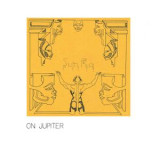
"Self-released avant garde jazz – reissued for the first time! Recalling Kraftwerk precursor the Organisation, or contemporaries like Faust, Hünerberg employs flute, organ, bass and balloon to his DIY compositions.
Over top of Gillespie's nimble, pointillist drumming (he also plays piano and harpsichord), Hünerberg employs flute, organ, bass and balloon (that’s not a saxophone on “Cucumber”). The disorienting opener “Cro Magnon/Two” recalls Kraftwerk precursor the Organisation, or contemporaries like Faust. There’s a strange, disconsolate atmosphere to the proceedings, almost as if the air had been sucked out of a recording session booked for some avant-garde jazz heavies.
Instead of Impulse, Phase Murmur should have been bound for ESP-Disk. Alas, the duo were experimenting out in the relative vacuum of southwestern Ohio. Far from any bustling metropolis or curious record labels, Phase Murmur was truly a DIY affair. Not only did the duo press the LP up themselves (down the road at Cincinnati's Rite Record Productions), but the evocative and mysterious photo on the cover is by Gillespie while the layout, with accompanying poem on the back, was assembled by Hünerberg.
It was on Phase Murmur where Hünerberg first found his voice, and the rest is the sound of history, unspooling on a reel-to-reel tape machine.
Includes new liner notes by Erick Bradshaw (Host of Spin Age Blasters with Creamo Coyl on WFMU)"
Cerca:avant garde
- Dark Magus - Moja
- Dark Magus - Wili
- Dark Magus - Tatu
- Dark Magus - Nne
It’s safe to assume no one in the audience at Carnegie Hall on March 30, 1974 anticipated what Miles Davis would play at the concert documented on Dark Magus: Live at Carnegie Hall. Recorded near the tail end of his electric period, the double album remains the darkest, most ferocious statement of Davis’ career — a visionary effort that foresaw developments in jungle, noise-rock, funk, and drum ‘n’ bass.
Initially issued in Japan in 1977, Dark Magus waited two decades for U.S. release. Now, more than 50 years after Davis and his ensemble blew minds at the famous New York venue, it gets its first-ever domestic issue on vinyl — and on a definitive-sounding pressing at that.
Mastered at Mobile Fidelity's California studio, housed in a Stoughton gatefold jacket, and pressed at Fidelity Record Pressing, this numbered-edition 180g 33RPM 2LP set of Dark Magus invites you to pull up a seat and wrap your head around an exhilarating performance that simultaneously functions as an audition, experiment, release, and magnificent explosion of jazz-rock fusion. We hope your turntable and speakers are up to the challenge.
This collectible reissue presents the improvisational magic that unfolded onstage — the skronking tonalities, wah-wah-pedal bluster, acid-washed effects, furious drumming, run-the-voodoo-down grooves, menacing riffs, crashing cymbals —with incredible detail, color, and pace. It also captures the band’s unbelievable energy, rendering both instruments and on-the-fly changes with revealing depth, definition, and dynamics. At its core, MoFi’s audiophile set takes you deep into the boundless mystery, promise, and uncertainty of Davis and company’s efforts like never before.
The story behind Dark Magus is nearly as unbelievable as the spur-of-the-moment compositions that resulted when Davis brought drummer Al Foster, bassist Michael Henderson, percussionist James Mtume, horn virtuoso Dave Liebman, and guitarists Pete Cosey and Reggie Lucas together, and, in a new twist for the concert’s second half, added guitarist Dominique Gaumont and tenor saxophonist Azar Lawrence to mix. That the latter two instrumentalists had never seen each other until that night adds to Davis’ legend — and penchant for bold, unorthodox moves.
Ditto Davis’ own actions that spring evening, which reportedly included showing up to the show an hour late and taking the stage with his back facing the crowd. The strategy worked. Davis inspired the group to play in a bold manner that few, if any, had heard before. Dark Magus is a rhythmic bonanza. Rooted in Afro-centrist techniques, avante-garde sensibilities, and exploratory moods, the songs eschew set arrangements and solos, and, for the most part, melodic devices.
For Davis, Dark Magus represented a personal triumph amid a period marked by health issues, addictions, and critical decline. The latter slight would be corrected, but not until decades later when Dark Magus saw Stateside release in 1997 via a CD reissue. Of course, the free-form patterns, unpredictable passages, dense structures, and distorted blues that course through the songs — titled after Swahili numerals — are not for everyone. And certainly not for the fainthearted. Though Dark Magus contains majestic moments marked by quiet restraint and something on the level of balladry, its rich and radical concoction of tormented thwacks, thumps, cracks, clatters, wails, bleeps, burbles, stomps, and enigmatic beats remains its adventurous heart and soul.
Primal and enigmatic, fierce and jagged, forceful and revolutionary, jolting and terrifying, Dark Magus seemingly attacks from any and all directions. Turn it up loud and let the prophetic brilliance of this inimitable and relentlessly funky album wash over you.
"577 Records’ The Sea, The Space, and Egypt, Vol. 1 is what happened when old friends and a new connection united in the name of music. A heartfelt tribute to the great Sun Ra, the otherworldly album debuts the collaborative gifts of Michael Sarian (on the trumpet), Matthew Putman (on the keys), Federico Ughi (on the drums), and up-and-coming Cuban bassist Ledian Mola.
Sure, most of these musicians have played together in the past. Sarian and Putman have made many albums together, while Putman and Ughi have conspired on melodies for fifteen years. However, we guarantee you have never heard them all in one spot like this.
Alabama’s Sun Ra rose to the top of the Chicago music scene in the 1940s with something unprecedented. A cosmic pioneer of Afrofuturism, he became known for his diverse and unique avant-garde experimentalism. Modern artists champion him as a true innovator.
The new band revives the late Sun Ra’s magic in this appropriately named new release. Matthew Putman even plays the same keyboard model as the experimental music icon (the Rocksichord). Even the cover art is a nod to Sun Ra's ancient Egyptian influences, featuring an upside-down pyramid over a galactic setting created by Robert Mirolo.
Meanwhile, Ledian Mola adds vocals inspired by Cuban folklore to these incredible improvisations. The album marks Mola’s first time recording with the other artists in the group (and 577 Records), but you would never know it. Their abstract rhythms sound like they’ve been playing together for a lifetime! He was hand-chosen for this project from 577 Records’ 2022 SOF music residency in Italy and has performed at several of the New York Forward Festival's live events."
Trumpet by Michael Sarian.
Keyboards by Matthew Putman.
Bass by Ledian Mola.
Drums by Federico Ughi.
- Success
- Feinds Don't Lose
- Monotones
- N.y. Frills
- Inoy
- Take It From Me
- House
- Bullseye
- Julo
- Palace Quarters
- Catacomb
Open Head is a 4 piece experimental ensemble from Kingston, New York. With a taste for the concrete and the spectral, their new album What Is Success sources beauty in brutalist architecture, holography, and the remnants of industrialism that ornament the Hudson Valley landscape. The result is expansive, stratospheric in volume, and brutally material in its punctuation and delivery. Drawing on New York no-wave and the avant-garde history of punk, noise, hip-hop and electronic music, Open Head presents a sound that is itself a landscape-immediate, colossal, ruined and essential. Open Head is Jared Ashdown (v,g), Brandon Minervini (g,v), Jon McCarthy (b), and Dan Schwartz (d).
Alkisah Versi Hitam is a radical deconstruction and reimagination of Indonesian duo Senyawa's most recent album Alkisah by Hamburg's Marc Richter aka Black To Comm. The original album was released to critical acclaim in February of this year as a decentralized release on a multitude of labels from all corners of the world, Germany’s Dekorder being one of them. Richter is now completely reinventing the original album from scratch by doing an almost Teo Macero-level production job here, cutting up the originals and (re)constructing new material from scratch.
Arcane chants and vocal cut-ups, fierce freeform percussion, grimy No Wave collage, monochrome drones exploding into multicolour streams, unearthly psychedelic Noise and sheer sonic mayhem, warped discordant rhythms between moments of calming beauty - it's never easy to digest but the outcome is both ecstatic and transcendental - never sounding anything less than a fully formed singular album.
A special cassette version of the album will be released by Jordanian label Drowned By Locals.
BLACK TO COMM is the moniker of Hamburg composer/musician Marc Richter who is creating intricate multi-layered collage based works for labels like Thrill Jockey, Type and Dekorder. His 2019 album "Seven Horses For Seven Kings" revealed an increasingly angry, transcendental and fearless approach, attaining new levels of urgency through noise, volume, rhythm, repetition, atonality and beauty.
Jogjakarta’s SENYAWA embody the aural elements of traditional Indonesian music whilst exploring the framework of experimental music practice, pushing the boundaries of both traditions. Their music strikes a perfect balance between their avant-garde influences and cultural heritage to create truly contemporary Indonesian new music. Their sound is comprised of Rully Shabara’s deft extended vocal techniques punctuating the frenetic sounds of instrument builder, Wukir Suryadi’s modern-primitive instrumentation. Inventions like his handcrafted ‘Bamboo Spear’; a thick stem of bamboo strung up with percussive strips of the animal skin along side steel strings. Amplified it fuses elements of traditional Indonesian instrumentation with garage guitar distortion. Sonically dynamic, the instrument can be rhythmically percussive on one side whilst being melodically bowed and plucked on the other.
They have collaborated and performed with many notable musicians such as Stephen O'Malley of Sunn o))), Otomo Yoshide, KK Null, Keiji Haino, Rabih Beiani, Trevor Dunn, Greg Fox, Arrington De Dionysus, Melt Banana, Damo Suzuki and Oren Ambarchi.
Black Truffle is thrilled to begin 2025 with a rare solo release from Konrad Sprenger, alias of elusive Berlin composer-producer-instrument builder Jörg Hiller. A prolific collaborator, Sprenger has worked extensively with icons of American minimalism such as Ellen Fullman (with whom her recorded the gloriously eccentric song album Ort) and Arnold Dreyblatt (as a core member of the Orchestra of Excited Strings since 2009), as well as releasing their music on his impeccably curated label, Choose. As an instrument builder and installation artist, he has overseen the creation of a computer-controlled multi-channel electric guitar and, with Phillip Sollmann, a modular pipe organ system designed to be reconfigured from space to space.
In much of Hiller’s work, a scientific approach to acoustic phenomena co-exists with a pop sensibility and a sly sense of humour. Nowhere is this unique combination more in evidence than in his slim body of solo work, beginning with the startling diversity of instrumentation and compositional approaches heard on the short pieces of Miniaturen (2006) and Versprochen (2009), followed by the more single-minded exploration of the computer-controlled electric guitar on Stack Music (2017). Set brings together these various strands of Sprenger’s work into a wildly infectious, playful epic, performed by the composer and the mysterious Ensemble Risonanze Moderne. On the LP’s second side, we are also treated to a guest appearance from longtime collaborator Oren Ambarchi, on whose recent solo releases Simian Angel and Shebang Sprenger has made key production contributions. Ambarchi’s signature stuttering, swirling harmonics weave through a sparkling assemblage of electric guitars, acoustic instruments, percussion and electronics—though, given the deft use that much of Sprenger’s recent production work makes of midi-controlled sampled instrumentation, it’s anyone’s guess where the acoustic ends and the digital begins here.
As soon as the needle drops on the first side, we are inside a musical world that Set will inhabit for its 33 minutes: sparkling guitar harmonics and palm-muted notes, tuned percussion, crisp electronic drum hits, flashes of horns, and untraceable bursts of synthetic sound are arranged into a skittering polyrhythmic framework calling up the detail-rich percussive constructions of contemporary techno filtered through the pointillism of the post-serialist European avant-garde. Behind this shifting mist of particulate sound, winds and strings sound out held chords, reminiscent of Arthur Russell’s Tower of Meaning in their epic yet seemingly aimless drift. The relationship between elements is mysterious, appearing both carefully considered and almost random. Though never straying too far from where it begins, as the piece moves along, it spotlights increasingly bizarre instrument choices (shakuhachi and steel drums, anyone?) as well as momentary liftoffs into motorik propulsion. Set is a fascinating, mercurial thing: at once propulsive and fragmented, essentially static in form yet ever-changing in detail, unabashedly egghead in its construction yet sure to get the feet tapping.
- Limehouse Blues
- Stars Fell On Alabama
- Wabash
- Grand Central
- You're A Weaver Of Dreams
- The Sleeper
Cannonball Adderley Quintet in Chicago is revered among jazz aficionados as an essential document of late 1950s hard bop
It captures two of the greatest saxophonists in jazz, Adderley and Coltrane, at a time when they were both at a creative peak. The album is a vital recording from a golden era in jazz, featuring a rare and electric partnership between two saxophone giants. Its hard bop foundation, infused with hints of modal jazz, places it among the most important recordings of its time. The album was recorded the February 3, 1959 during a time when Adderley was playing as part of Miles Davis' group, and it captures the quintet during a pivotal moment in jazz history. On Cannonball Adderley Quintet in Chicago, you can hear Coltrane at a transitional stage, balancing between his earlier bebop style and the modal, more avant-garde approaches he would later pursue. His interaction with Adderley is fascinating because it blends his dense harmonic language with Adderley's more traditional, bluesy approach.Cannonball Adderley had been recruited by Miles Davis in 1957, joining what would become one of the most influential jazz groups of all time. Adderley's style was deeply rooted in the blues, and he brought a strong sense of soulfulness and swing to the Davis group. While Davis' style was often cool and restrained, Adderley's alto saxophone was the opposite: robust, fiery, and emotional. Adderley's command of the instrument was remarkable, and his ability to balance technical prowess with a highly accessible, bluesy feel is on full display throughout Cannonball Adderley Quintet in Chicago . His solos are expressive and lyrical, often imbued with a sense of joy and exuberance. This makes for a perfect contrast to Coltrane's playing, which at this point was becoming more dense and harmonically complex
- A1: The Anti Universe
- A2: Transcended Before Me Feat. Horace Andy
- A3: Fake Prophets
- A4: Phoenix Life
- A5: Battles Pt.ii Feat. Sebastian
- B1: Professional Loving X
- B2: Violin Momente
- B3: Windows To My Right
- B4: Archangel
- B5: Meet Me At The Gateway
- B6: Nowhere Land
- C1: Angel Come Feat. Liela Moss
- C2: Wild Is The Wind
- C3: Knew Your Name Before You Were Born Feat. Rødhad
- C4: My Consciousness
- C5: Broken Pieces Feat. Anna Phoebe
- D1: What Other People Think
- D2: Forwards
- D3: Shadow World
- D4: Sleep In The Day
- D5: Double Edge X Feat. Robert Ames
- E1: What Other People Think (Impxins Ensemble Version)
- E2: Bass Chaos
- E3: Intuition 17 (Impxins Ensemble Version)
- F2: Lemptilos (Impxins Ensemble Version)
- F3: Lemptilos
- E4: Dem Worlds X
- F1: Konstruktionswerk
*Avant-garde Pop. Mixing meditation, sacred-geometry, searching for meaning behind the notes, Emika lost her mind trying to escape the reality of the lock-downs. Creativity in overdrive, determined to discover new dimensions: She produced VEGA. Named after the second brightest star after the Sun, VEGA is in the northern constellation of Lyra; one of the most beautiful sounding- instruments in Greek mythology. Vocals. Electronic. Classical. Collabs with Horace Andy (Massive Attack) +more.
Composer Ahmed Essyad was born in Salé, Morocco, in 1938. After studying music at the Rabat Conservatoire (Morocco) he moved to Paris in 1962, where he became a student of Max Deutsch and, later, his assistant. Trained in the avant-garde practices of Western musical composition, he also claimed the Amazigh folk music of Morocco as a fundamental source of inspiration for his work.
In 1965, he was already incorporating elements of oral tradition in his work so as to question the language of his time, and therefore had to cope with the limits of musical notation and communication with musicians who did not share his cultural references. It was difficult to agree on what was implicit, 'behind the notes,' especially regarding the management of musical time and micro-intervals. In search of new compositional tools, he turned to electro-acoustic music. Working in a studio made it possible for him to be the interpreter of his own work, which ensured a certain continuity with music of oral tradition. The pieces presented here were produced between 1972 and 1974 in a studio dedicated to electro-acoustic music, the S.M.E.C.A, which was part of the Music Workshop founded by Jorge Arriagada in Paris. The studio was equipped with EMS and Minimoog synthesizers, a piano, a marimba, a xylophone, as well as various percussion instruments and a tape delay system.
With Toubkal (1972), Ahmed Essyad's interest in ethnomusicology dates back to his training at the Rabat Conservatoire. In 1958, along with Maryvonne Sauvage and Ouahid El Omari, he took part in a campaign to collect popular and traditional music. In his subsequent compositional work, he frequently relied on this experience to further his research on gesture, vocal technique, timbre and instrumental playing. Sultane (1973) is the fruit of a reflection on the ground and the land. Inspired by a war song recorded in Taza in the 1950s, the first movement is festive. The five movements show a clear alternation between dense, rhythmic sections and slower passages from which electronically distorted voices emerge. One of the voices is that of Ahmed Essyad himself. The two parts of Lectures pour bandes magnétiques (1974) are based on two different poems, one by Rainer Maria Rilke, and the other by Bona de Mandiargues. This work celebrates the fundamental role of the body in the musical act: the voice is the body, breathing is the origin of all musical phrasing.
The practice of electro-acoustics may have been a mere parenthesis in Ahmed Essyad's long and prolific career as a composer of contemporary music, but the works presented here are nonetheless important. They show how strongly he both supported North African popular forms of expression and opposed its folklorizing through simplistic and 'exotic' representations. It's not about fusing together East and West - impossible, he says: "the real point is to open up an imaginary space where another modernity can exist outside the largely Eurocentric framework of avant-garde music. Synthesis means anticipation, knowledge. As for me, I'm increasingly ignorant. I write to discover what I don't know. Music feeds me, it pollinates me. It's my daily wine."
Writing music, for singer-songwriter and producer Fine, “feels like being entrusted with a secret.” On Rocky Top Ballads, the Copenhagen-based musician’s debut album, these secrets take the form of minimalist compositions that search for glimpses of beauty in the everyday. Recorded, produced, and mixed by Fine, the album is a mystical soundtrack to a captivating songwriter’s explorations of process and intuition.
“The whole album is about the moments when you see a crack in something,” Fine explains, “where you briefly see another side of yourself or of someone you've known forever.”
Fine grew up in Denmark’s rural Northern Jutland; there, her father’s guitar and banjo playing formed the sonic backdrop of her childhood. In the years since, her musical curiosity has led her to work across a range of styles and sounds. In her early twenties, she became part of Danish electronic trio Chinah, which released three albums. You might also have caught her sampled vocals on the joyfully rollicking Two Shell song “Home,” from 2021. Then, last year, she — along with Erika de Casier and Smerz — co-wrote three songs for the massive, critically lauded K-pop group New Jeans. Fine is also a part of Clarissa Connelly Canons group back home in Denmark, and writes music under the moniker Coined with composer and songwriter Astrid Sonne.
But Rocky Top Ballads is a turn back towards a more personal, stream-of-consciousness songwriting style. Fine wrote and recorded these songs sporadically over the course of the last few years. In light of Chinah’s collaborative, piecemeal production style, Fine craved a more organic, intuitive process for these songs. Her work on the record combines sample-based production with the sounds of instruments she and her collaborators could hold in their hands, ones that inspired free-flowing improvisation: electric and acoustic guitar, even the Ensoniq keyboard that was in her childhood home. The resulting songs are equally inspired by the country and folk of her childhood, the hazy beauty of Mazzy Star, the avant-garde pop of Dean Blunt, and the songwriting of ’90s singer-songwriters like Suzanne Vega.
Fine describes her songwriting process as a “magical thinking method”: being in contact with the present moment and pretending as if she already knows the song she’s about to write. Many of the songs on Rocky Top Ballads use the original takes of Fine’s vocals, an attempt to capture a song’s initial essence and avoid disturbing the song’s generative idea as much as possible. You can hear that well-preserved spark on songs like “Losing Tennessee,” a minimalist and wistful reflection on the inherent loss and change of growing older. She wrote other tracks, like the piano-led “Whys” and the woozy “Coasting,” through a process of cutting and layering her improvisations, carefully merging multiple musical snippets into newly seamless compositions. And the stunning closing track “A Star” is the product of a slow process of evolution: beginning as an understated expression of sincerity before dissolving into a rich, distorted guitar-driven exploration.
As a songwriter and producer, Fine’s work often peers into the universes of experience that can be hidden inside a fragmentary moment. Sometimes she explores this literally — as in “Days Incomplete,” which she built off a short sample from “A Star.” This impulse — to zoom in, to recontextualize, to excavate — threads throughout her lyrics, too. What happens, her songs ask, when we pay close attention to those everyday images and physical realities we might otherwise ignore: the sky, the rain, the sun, the sea? On the spacious and swoony “Big Muzzy,” with its gentle sway and Cocteau Twins-inflected vocals, Fine sings about watching the “summer turn blue”; the grooving, propulsive “Remember The Heart” is a love letter to the sea where she grew up. In her airy voice, Fine traces meandering melodies that continually unspool with fresh insights.
A particular mantra guided Fine’s songwriting throughout the creation of Rocky Top Ballads: “Everything has potential.” In these songs, small moments are worthy of deep contemplation, and gentleness can evoke worlds of emotion. The resulting songs offer a gift of momentary pleasure, flowing and unhurried as a gentle breeze.
Marissa Lorusso
Roberto Cacciapaglia is an Italian composer and pianist who started out in the fertile Milan avant-garde scene of the 1970s, which included Franco Battiato, Giusto Pio, Lino Capra Vaccina, Francesco Messina, among others. After studying at the conservatory, he worked at RAI's Studio of Musical Phonology – an electronic music laboratory similar to NDR/WDR in Germany, GRM/IRCAM in France or BBC Radiophonic Workshop.
Sonanze (Sonatas) is Cacciapaglia's debut album, a monumental work that was recorded over a two-year period and released in 1975 via seminal German label Die Kosmischen Kuriere (Ohr). While a "sonata" is traditionally performed by easily distinguishable instrumentalists (often soloist and accompaniment) and with repeated structural themes, Cacciapaglia flips this hierarchical form on its head – blending harpsichord, strings, brass and analog synths to create ambient mini-soundtracks.
As the composer writes in the original sleeve notes, "I am aware, unfortunately, that I am a few millennia late in how I would like music to be understood, which today I find diluted in its primary powers, in an era that is destructive of essential values. Precisely for this reason, I want to search for it in depth and not on the surface, perhaps alternating the knob of a synthesizer with a marranzano (mouth harp)."
Mixed in quadrophonic surround-sound under the auspices of Rolf-Ulrich Kaiser (celebrated producer of Tangerine Dream and Ash Ra Tempel), Sonanze remains on the fringe of Kosmische realms. Each movement explores hypnotic rhythms, intuitive arrangements, musique concrète techniques and a pure psychedelic awakening.
New Source gladly welcomes Juan Bozzolasco aka Juan Dairecshion, unveiling a four track in which he confirms his innovative approach to electronic music production. His works, full of creativity and unexpected interactions between elements, are shown here in full display. His music is a result of a life-long exposure to some of the most seminal works of dance-floor oriented electronic music, ranging from Chicago’s and Detroit’s House and Techno passing through mid-century American Jazz and avant garde Latin-American music. House music composed by a techno-head and housey techno for your grooving pleasure are unequivocally found in his release.
Recorded in the 1980's and snapped up upon arrival in Europe by the Soho Boho's, Acid Jazzuals,Cuboppers, Jazz Massivists and Mojo Jazzmuziker, "Le-Le" by The Arpeggio Jazz Ensemble is a unique one off Spiritual Soul-Jazz outing with Avant Garde touches and more than a hint of Afro-Cuban Orientalism.
The percussion drenched title track has that special Worldwide Sound and the Cool Jazz Get Down Groove of "Wet Walnuts and Whipped Cream" is a DJ's delight, whether played over the Airwaves or to a crowded Dancefloor.
An adventurous jazz outfit that has been playing around Philadelphia since its formation in 1979. The Ensemble was founded by Warren Oree, an acoustic bassist, producer and composer who continues to lead the band. Eclectic and far from predictable, on this album the Ensemble has embraced a variety of acoustic and electric jazz styles combining them with African and Middle Eastern influences and mixed together with the "New Thing" have managed to make a timeless underground classic.
- Come Here
- It's Just A Dream
- Forget About Him
- A Homeless Dream
- Who You Are
- You And I Keep Falling
- Can't Rise To Your Feet
- What Is Really Beautiful
- Fall Again
- Sand In My Shoe
- We Crossed Over
- I Wanna Love
- In Your School
- Finally
Kath Bloom is an American legend of folk, country, blues and avant-garde music. She has been making records since the late 70s, and has had her music featured in the movie Before Sunrise by Richard Linklater (starring Ethan Hawke and Julie Delpy), but from 1984 up until Finally released no new material of her own, bar a few self-distributed cassettes and CD-Rs.Born in Connecticut, Kath met avant-garde guitarist Loren Mazzacane Connors in 1976, teaming up with him for a series of now highly sought-after albums of traditional blues, folk, and Bloom originals. Four of these albums have been reissued as double disc CDs by Chapter Music. Finally compiles Kath Bloom's heartbreaking, lovelorn and remarkably beautiful songs recorded since the early 90s. They reveal a mother-of-three songwriter as accomplished and affecting as any of her more acclaimed colleagues such as Lucinda Williams, Gillian Welch or Hazel Dickens.
WRWTFWW Records is honored to announce the first ever vinyl release for esteemed Japanese producer, composer, and environmental music luminary Yoshio Ojima’s rare forgotten album Club, previously only released as a limited edition of 50 cassettes back in 1983. The electronica/proto-techno/experimental gem is available as an LP reissue supervised by the artist, sourced from the original masters and housed in a heavy 350gsm sleeve. Only 500 copies were made.
A precious and sought-after item among collectors and enthusiasts of early Japanese electronic music, Club is a stunning and timeless collection of avant-garde electronica, proto-techno, mecha-ambient, and ear-pleasing experimentations from Yoshio Ojima, the ambient/environmental master behind the pivotal Music for Spiral albums released in 1988 (aka Une Collection Des Chaînons I and II reissued on WRWTFWW), and producer of Hiroshi Yoshimura’s Pier & Loft, Motohiko Hamase’s #Notes of Forestry, and Satsuki Shibano's iconic Rendez-Vous.
Filled with quirky minimalist acid-synth-and-drum-machine-handiwork, bouncy collages of beautifully childlike techno and pre-IDM, and the irresistible DIY charm of humble beginnings, the 8-track album is a fun, adventurous and risqué-but-catchy-in-the-most-peculiar-way piece of Japanese electronic music history neatly capturing the incredible creative energy boiling through the country’s scene in the 1980s.
Experience the roots of Japanese electronica!
The Equatoguinean Norberto de Nöah established in Madrid in the early 80s, where he became a firebrand of African culture in the vibrant Movida. In 1988 he self-released his first solo album, a blend of homeland sounds —modern and traditional— with new synth and drum machine touches. The vanished album finally gets its well-deserved reissue.
Edition of 500 albums on vinyl (Bandcamp download code included) - Original artwork with new 14 pages insert and poster
In the mid-1980s, the European media, music industry and public became increasingly interested in African music. This was a period of international success for King Sunny Adé, Salif Keita, Youssou N’Dour, Ray Lema, Touré Kunda, etc. Spain, with its own particular conditions, wasn’t oblivious to the phenomenon and the Equatoguinean Norberto de Nöah may be its best exponent.
Norberto moved in the early eighties from his hometown in the island Fernando Po (now known as Bioko) to its former colonial capital, Madrid. While studying dramatic arts, he created and led the band Nohkis, made up of African and Spanish musicians. In 1985 they released the maxi-single “Mujer española” / “África, ¿dónde está tu gloria?”, and the song “El loco”, was released on a compilation LP called Esto es increíble, both on the label Lollipop. According to the journalist Patricia Godes, they were first artists to record an African music record in Spain. It received positive reviews and a great impact on the most independent side of Madrid’s La Movida movement. Very soon afterwards, Nohkis’ band split up.
Afterwards, Norberto would concentrate on his solo career, and Norberto de Nöah and The Böhöbé Spirits Müsic was released in 1988, definitely a solo album. Norberto created his own label, Kilimandjaro Productions, and composed, arranged and produced all the songs of the LP. Moreover, he sang and played all the instruments: a vast selection of organic instruments, a Yamaha RX-5 drum machine and a Roland D-50 synthesizer.
In the album he exposed his deepest roots, updating the lexicon of traditional Bubi music, the musician’s ethnic group, a compendium of ceremonial melodies that ancient troubadours composed for the court. Doing so he showed new possibilities to one of the oldest ethnic groups in the world. Besides all this, he was also inspired by American music such as funk, R&B, Latin American music and also by a wide range of African and Caribbean rhythms.
Mixing the traditional and the avant-garde in a spontaneous and natural way, the music contained in the record’s grooves flows freely and takes you to places full of magic and mystery, while still transmitting new and exciting sensations. Even more, according to the Equatoguinean musician and writer Baron Ya Búk-Lu based in Madrid, the album’s sound was “the perfect combination of all characteristics that defined the Equatoguinean Afropop music made in Madrid during the 1980s”, a story that still needs to be told in all its depth and intensity!
Following the release of two LPs and several singles, the activity of Norberto de Nöah and Kilimandjaro Productions (and the subsequent Bananas Podridas) ceased. Nevertheless, Norberto’s links to music continued, as a promoter and DJ in Madrid’s nightlife.
Norberto de Nöah contributed greatly to changing Spain’s musical landscape, breaking barriers and mental frameworks. He was the first to make contemporary and popular Guinean music known to the Spanish public.
The repercussions in the African market of a Spanish (and Bube) speaking African musical project, where English and French dominate, was very difficult. In addition, the passage of time and changes in phonographic formats have diluted the memory of Norberto's legacy. Now it’s time to reverse the situation and break all the outdated frontiers!
Norberto de Nöah and The Böhöbé Spirits Müsic, as every important music piece, was at the same time part of a universal phenomenon of recognition of African music and a very personal project, based on the artist’s nostalgic and heartfelt need to show and homage his ethnic group, the Bubis. In this process he also refreshed his hometown music legacy, giving it a new air and opening the door to lots of other great Equatoguinean artists coming afterwards, as well as being an inspiration for many musicians in Spain.
- 1: Moss Lung
- 2: Even When All Was Silent I Was Not Alone
- 3: The Mountain
- 4: To Cry Out In The Wilderness
- 5: Fight Song
- 6: Equals In Hope
- 7: Over
Scions are a new innovative experimental ensemble. The group features members from the award-winning minimalist chamber-jazz quartet New Hermitage, the Polaris-nominated drone-hymn duo Joyful Joyful, and the acclaimed producer and composer Michael Cloud Duguay. Their collaboration began at the Sappyfest music festival in Sackville, New Brunswick, in August 2022. During this event, New Hermitage and Joyful Joyful connected for the first time and teamed up with Duguay for a spontaneous improvisational performance based on his song writing. The enthusiastic response, capped by a standing ovation, solidified the ensemble's decision to pursue the project further, with Duguay deftly shifting from front-person to producer and musical director. After being awarded a Canada Council project grant in early 2023 the group took residence in Hotel Wolfe Island on Wolfe Island. Over a week the seven core members lived and worked together, culling material from sunrise improv sessions and collaboratively shaping it into a unique body of work that would later become To Cry Out In The Wilderness. In June 2023, the ensemble, now joined by double bassist Gabriella Ciurcovich, recorded their debut album in Halifax’s north end. Led by Duguay’s distinctive approach to site-specific production, the recording took place in the sanctuary of St. George’s Round Church, with engineering by Jake Nicoll, known for his sustainable recording methods using a solar-powered, mobile control room. The resulting album, To Cry Out In The Wilderness, finds the ensemble expertly exploring and powerfully combining their skills in jazz, devotional, classical, drone, folk, ambient, metal, improvisational, minimalist and avant-garde music. The project culminated in a week of production, with contributions from numerous artists from Halifax’s creative music community. Scions then presented their work live, performing on the opening night of Halifax’s Everyseeker festival of experimental music, where they shared the spotlight with the renowned Sun Ra Arkestra. Speaking on the narrative of To Cry Out In The Wilderness vocalist and lyricist Cormac Culkeen said: "When we came together to make this body of work, we started from a narrative seed; a post-apocalyptic humanity relearning and recreating itself, after a total ecological collapse." Speaking on "Fight Song" they add, "“Fight Song” became the song we thought the last of us might need. It is sung for an imagined last stand. It is a rallying cry to wholeheartedly fight a losing battle. So it is for us now, in this time of great dismay and unease. The axe must be disobeyed.
Obscure & outstanding free jazz album reissued for the first time since it’s original release in 1969. Old-style gatefold sleeve LP, with liner notes by Ed Hazell.
In the late 1960s, young jazz musician Bobby Naughton, a keyboardist and vibraphonist, faced significant challenges as he sought to record his first album. With major record labels and jazz clubs catering only to big names, Naughton and other creative musicians of his generation found themselves sidelined by the mainstream music industry. They turned to self-reliance and self-production, becoming part of a movement of independent musicians. Naughton’s debut album, Nature’s Consort, was a DIY effort in every sense—recorded on home equipment and featuring a hand-printed woodblock cover. The album was distributed independently at concerts and by mail, receiving little attention initially, but over the years it gained a reputation as a rare, sought-after artifact of the period.
Though recorded during an outdoor concert in Connecticut, Nature's Consort reflected the "loft jazz" scene in New York City. This avant-garde jazz movement centered around musicians who lived and played in loft spaces in lower Manhattan. Naughton commuted from his home in Southbury, Connecticut, to play with his bandmates Mark Whitecage, Mario Pavone, and Laurence Cook in New York's lofts. These musicians regularly performed at venues like Studio We, a key gathering spot for free-form jazz, where musicians could experiment and develop their sound, often with no audience present.
Naughton’s journey into jazz was a winding one. Originally from Boston, he played rockabilly and blues-rock before transitioning into free jazz. Inspired by avant-garde artists like Carla Bley and Paul Bley, Naughton sought to explore new forms of music that went beyond traditional jazz structures. His bandmates, Mark Whitecage and Mario Pavone, were both deeply affected by the death of John Coltrane in 1967, which prompted them to quit their day jobs, attend Coltrane’s funeral, and move to New York to pursue jazz full-time.
Nature’s Consort was a collective project, with band members sharing equally in any profits. However, Naughton was the driving force behind the group’s creative direction. He composed much of the original material and selected pieces by Ornette Coleman and Carla Bley for the band’s repertoire. Jazz critic Nat Hentoff praised the album for its “high-risk improvisation” and the musicians' ability to anticipate each other’s moves. Though Nature’s Consort received little press at the time, it has since been recognized as a significant early document of the loft jazz era, representing Naughton’s disciplined, improvisational approach to music.
As Odysee celebrates its 30th anniversary, the label’s original founder Atila Kemal (T-Mirage) steps up to deliver this jaw-dropping E.P.
In 1994, Tilla was just 17 years old, and an integral part of the original St Albans collective that comprised Jim Baker & Phil Aslett (Source Direct) and Rupert Parkes (Photek), when he set up the Odysee imprint and released the first Source Direct record (Future London/Shimmer). With a follow-up release from Photek (Phaze 1/Try A Style) and a second from Source Direct, the profile of the label began to grow exponentially.
It was the 3 Mirage releases however that really put the label on the map. These tracks were engineered by Jim Baker but heavily co-produced by Tilla himself with a major focus on his keen ear for dark 70’s Noire samples and eerie abstract electronica pitted against soulful R&B vocals. In hindsight, the impact of this rather different soundscape on the Source Direct material that followed is unmistakable.
The A side track Dark Rhodes is a showcase of T-Mirage’s production skillsets. From the opening atmosphere of utter menace and spacious percussion, to the trademark call and response between the different breaks and speaker shaking subs; this track will take the listener straight back to that infamous dark 1995/6 sound that emerged from both the Odysee & Source Direct studios. What is particularly noticeable is the distinctive pairing of sets of samples to form unique sections within the piece, whilst maintaining the consistent rolling energy of the drums & bass. This was a clear stylistic trait the earlier tracks like Feel My Dreams, and is very much on display in Dark Rhodes; leaving us in no doubt that we are listening to the work of one of the OG St Albans Jungle masters!
One of the most important aspects of each Odysee release was to demonstrate versatility on the B side tunes. As a label that was an important part of the mid 90’s Atmospheric scene, it would be remiss not to revisit that style on this seminal E.P. The first of the two B-side tracks is the incredible Existence.
Everything about this piece is a pure distillation of Tilla’s musical style; from the intricacy of the break work and the depth of the subs, to the masterful dovetailing of the 70’s Noire and Jazz samples that build a cohesive arrangement drawing the listener deeper into the tune’s narrative- “A piece of music that’s just a pure expression.... A celebration of existence!” There is no need to re-invent the wheel, or to force groundbreaking new tricks when the strength of this classic sound is so overwhelmingly persuasive!
With the final track Flawless, Tilla delivers an absolute heart-breaker of a tune that rivals the very best of the original Odysee & SD B-sides. Misty-eyed pads and Jazzy rides launch the crisp rolling Think breaks. The deep melodic sub line and haunting guitar riffs draw the listener in, then hold the listener in suspense for a moment before dropping down in the body of the track. The gorgeous guitar motifs are paired with achingly gorgeous vocal ad-libs and avant-garde electronica, emerging orchestral flutters with that unmistakable 70’s Noire flavour. Once again it is
Tilla’s ear for those ‘special sounds’ that really sets this track apart, and as if that wasn’t enough, some 4 minutes down the track Flawless nonchalantly unveils another primary motif; well worthy in of itself of being the tracks centrepiece!
Absolutely stunning heritage-style Atmospheric Jungle at its finest!
Red Brut’s third album, "On Bare Ground", is a sonic tapestry woven from the final threads of her Rotterdam existence. Entirely composed of soundscapes captured during her last two years in the city, the album evolves into a poignant farewell as its creation mirrors the passage of time, culminating in a profound departure from her life there.
A Coherent States, Dead Mind Records and Econore co-release. 200 copies on white vinyl, comes with obi-strip.
“On Bare Ground” is a sculptural work blending its lo-fi with haunting melodies, field recordings, and ethereal soundscapes. Uncompromising in its approach, the album evokes the echoes of experimental music from a spectrum that ranges from dark bedroom pop to rhythmic noise, crafting a cloudy and dreamlike atmosphere. With meticulous attention, it unfolds as a strong hypnotic journey, where intricate sounds emerge from a hidden center, while, in a parallel narrative, they gradually expose On Bare Ground’s underlying deep melancholic core.
Red Brut is the artistic alias of Dutch artist Marijn Verbiesen, who recently moved to Groningen and has been a vital force in Rotterdam's art scene. Her work reveals a particular sensitivity to everyday sounds, the soundscapes of cassette music, musique concrète, and spontaneous sound collage, combining these elements into a unique and truly personal avant-garde expression. This expression is present in various forms, in a wave of releases that began with limited-edition underground cassette releases in the mid-2010s and culminated in her two full-length albums, "Red Brut" (2018) on the Belgian label (K-RAA-K)³ and "Cloaked Travels" (2020) on the Finnish labels Lal Lal Lal and Ikuisuus. She has appeared at many important European festivals such as Rewire, KRAAK festival, Inversia, Colour Out Of Space and in numerous smaller venues worldwide. In addition to her career as Red Brut, Marijn is a member of the free improv/weirdo electronic pop duo Goldblum and before in the experimental no wave/noise trio Sweat Tongue.
“On bare Ground works as like an homage to self discovery amid urban malaise” The Wire
Roberto Cacciapaglia is an Italian composer and pianist who started out in the fertile Milan avant-garde scene of the 1970s, which included Franco Battiato, Giusto Pio, Lino Capra Vaccina, Francesco Messina, among others. After studying at the conservatory, he worked at RAI's Studio of Musical Phonology – an electronic music laboratory similar to NDR/WDR in Germany, GRM/IRCAM in France or BBC Radiophonic Workshop.
Originally released in 1979, Sei Note In Logica (Six Notes In Logic) is Cacciapaglia's second album. While his debut, Sonanze, offers a series of ambient mini-soundtracks, Sei Note presents a singular, sinuous piece. The composition is based on a finite set of musical notes, yet this limitation is the point of departure for a grand tour of possible combinations and enthralling timbres (marimbas, strings, reeds and human voice).
Like Steve Reich's Music For 18 Musicians, the joyous experiment of Sei Note is grounded in constant variation. Often doubled by multiple instruments, non-repeating patterns are exquisitely layered, while electro-acoustic signals transform and further refract through visceral effects. Within this conceptual framework, Cacciapaglia does not so much juxtapose rigid dichotomies – acoustic vs. electronic, melodic vs. dissonant, simple vs. complex – as fuse them into an expansive whole.
What started as an inspired study in Minimalism becomes a bold feat of 20th century music. Sei Note In Logica is deeply sincere and, at the same time, quite playful. With one foot firmly planted in the past and the other steeped in technology, Cacciapaglia's influence can be heard in the work of Jim O'Rourke, Fennesz and Ben Vida.
- A1: Munich (Feat Alice Silvestrini)
- A2: Polaroid De Une Promenade (Feat Fabrizio Massara)
- A3: Darling (Feat Anita Dada & Fabrizio Massara)
- A4: The Right Words (Feat Fred Ventura)
- A5: Crystal (Feat Alice Silvestrini & Andy)
- A6: You Are So Beautiful (Feat Killme Alice & La Tosa)
- B1: Summer On A Solitary Beach (Feat Johnson Righeira)
- B2: Italopop (Feat Anna Soares & Eugene)
- B3: My Love In Tokyo (Feat Terrienne - French Version)
- B4: Betty Blue (Feat Alice Silvestrini & Margo)
- B5: Everybody Say Oh Oh (Feat Chiara Camillieri)
After the surprising debut with ‘Monochromatic’, Milano 84 - the musical project of Fabio Di Ranno and Fabio Fraschini - returns with a new album that brings the formula into even sharper focus. Synth pop, new wave, Italo disco acquire a contemporary dimension and an international flavour.
‘Ultradisco’ brings together eleven tracks, some in English, others in Italian. They are velvet dancefloor songs, emotional and romantic, elegantly distant from the obvious. Milan 84's fellow travellers include, among others: Johnson Righeira, here in the futurist reinterpretation of a Franco Battiato classic (Summer on a solitary beach); Anita Dadà – a well-known avant-garde artist - is with Fabrizio Massara (Baustelle) in the languid and intense ‘Darling’; Andy (Bluvertigo) and Alice Silvestrini (Laison) illuminate the prismatic ‘Crystal’; Anna Soares - a revolutionary performer - and Eugene - electro songwriter - colour ‘Italopop’, a manifesto made up of décollage quotations; Fred Ventura ignites the engines of the new wave to come with ‘The right words’. And he is also artistic supervisor of this unmissable album for all lovers of the 80s, the decade that never ended.
“La Morte Ha Fatto l’Uovo” (1968), here reissued for the very first time on vinyl, is a unique score characterized by avant-garde sounds that combine with the bright tones of an atypical thriller that pays homage to the cinema of Luis Buñuel.
- Wednesday Night Prayer Meeting
- Cryin' Blues
- Moanin
- Tensions
- My Jelly
- Roll Soul
- E's Flat Ah's Flat Too
Blues & Roots is not only a cornerstone in Charles Mingus' body of work but also a testament to the enduring power of the blues as a foundation for jazz
Mingus managed to both honor tradition and push the boundaries of jazz, all while making a deeply personal and politically charged musical statement. The album remains one of the most vital and influential recordings in the history of jazz music. Released in 1960 this album stands out in Mingus' discography as a raw, vibrant homage to the roots of blues and gospel traditions in jazz. Mingus sought to return to his musical roots, drawing from blues and gospel traditions he grew up with, particularly from the African American church music of his youth. The album is a powerful statement of how deeply the blues tradition influenced modern jazz. It combines the unfiltered emotional intensity of the blues with Mingus' forward-thinking and often unconventional compositional techniques. The album's tracks are imbued with a strong sense of the blues, which is especially apparent in songs like "Wednesday Night Prayer Meeting" and "Moanin'." The album carries a loose, jamsession feel, reflecting the church and street-based roots of blues music. The use of call- and- response patterns in several tracks also hints at gospel traditions. Blues & Roots is often cited as a critical album in the development of jazz as a genre that embraced both its past and future. Mingus' ability to integrate traditional musical forms (such as blues and gospel) with more modern, experimental elements opened up new possibilities for jazz. His compositional style, which juxtaposed tightly arranged sections with freewheeling solos, influenced generations of musicians, from avant-garde jazz artists to rock musicians and composers in other genres
- Stolen Moments
- Hoe Down
- Cascades
- Yearnin
- Butch And Butch
- Teenie's Blues
The Blues and the Abstract Truth is not just a landmark album in Oliver Nelson's career but in the history of jazz itself
The album features an incredible ensemble of top-tier jazz musicians, often referred to as a "supergroup": Oliver Nelson (alto saxophone, tenor saxophone), Freddie Hubbard (trumpet), Eric Dolphy (alto saxophone, flute), George Barrow (baritone saxophone), Bill Evans (piano), Paul Chambers (bass), Roy Haynes (drums). The early 1960s were marked by a shift from the hard bop of the 1950s to more experimental forms, including modal jazz, free jazz, and the incorporation of avant-garde elements. Musicians like John Coltrane, Ornette Coleman, and Charles Mingus were all pushing the boundaries of jazz, and Oliver Nelson's work fits within this broader movement: in this album there's a perfect combination of modern compositional techniques, virtuosic performances, and emotional depth make it an essential listening experience for any jazz fan. It captures the moment when jazz was evolving into new, exciting directions while staying connected to its roots in the blues. The Blues and the Abstract Truth is considered one of the essential albums in modern jazz where Oliver Nelson's compositional style blends hard bop, modal jazz, and blues influences with sophisticated harmonic structures and striking arrangements. The album is noted for ts rich orchestration despite having a relatively small ensemble with use of textures and colours, particularly in tracks like "Stolen Moments," created a new standard in azz arranging.
The Invisible Road: Original Recordings, 1985–1990 compiles an unheard, previously unreleased body of recordings by Sussan Deyhim and Richard Horowitz, dissidents from diametric backgrounds who met during the heady days of Downtown New York in the 1980s. This collection reveals the creative and life partners’ radical shared vision of avant-garde pop in all of its boundary pushing freedom, combining Deyhim’s singular approach to vocalization, Horowitz’s invention of new musical languages, and touchstones of traditional music from around the world, creating a new music that ultimately retains a voice entirely its own. Despite their difference in backgrounds and respective journeys, at the time of their meeting in the early 1980s in New York City, Sussan Deyhim and Richard Horowitz were both products of the search for freedom and understanding (and resultant awakenings) that swept the globe and helped culturally define the late 1960s and 70s. Deyhim, born and raised in Tehran, spent her teens dancing with Iran’s Pars National Ballet company, performing weekly on Iranian national television, and travelling her home country studying with master folk musicians and dancers, before relocating to Belgium and joining Maurice Béjart’s prestigious Béjart Ballet of the 20th Century. Horowitz, born and raised in Buffalo, New York, had spent much of the decade before abroad, first departing for Paris under the shadows of the Vietnam War, where he studied piano, Eastern philosophy, and became entrenched the city’s free jazz scene, playing with the likes of Steve Lacy, Anthony Braxton, and Alan Silva, before embarking south to Morocco where his friendship with Paul Bowles helped cultivate a deep passion for the country’s musical traditions and a shift in his musical practice.
The pair met by chance sometime in 1981 at Noise New York, a small studio on West 34th Street founded by the musician and recording engineer, Frank Eaton, as a utopian creative laboratory that beckoned artists and bands like Arthur Russell, Christian Marclay, Liquid Liquid and Butthole Surfers into its orbit. Both artists had recently relocated to the city, Horowitz having recently released his debut album, Oblique Sequences (Solo Nai Improvisations), on the legendary Paris based imprint Shandar, and fallen in with members of New York avant-garde like La Monte Young, Jon Hassell, David Byrne, and Brian Eno, and Deyhim having begun to more actively incorporate singing into her practice, notably recording a vocal score for choreography she was doing at La MaMa Experimental Theatre.
Initially bonding over a cassette tape of field recordings made by Paul Bowles that had been given to mutual friend and writer Brian Cullman (seeking answers for Ornette Coleman’s question “what is the sound of sound”), their earliest collaboration was documented on Horowitz’s 1981 album, Eros In Arabia, with Deyhim contributing vocals to the track “Queen Of Saba.” Over the coming years, their deep connection would routinely gravitate them into the studio, culminating in the body of recordings that would appear on their 1986 album for Crammed Discs, Desert Equations: Azax Attra. Unknown to nearly all but the artists, laying in wait over the decades on numerous multi-track and stereo reels, DAT tapes, and reference cassettes, were a vast array of recordings made by Deyhim and Horowitz bookending Desert Equations. The 13 pieces represented on The Invisible Road: Original Recordings, 1985–1990 were recorded largely between Noise New York and Daylight Studio in Brussels, during a period that Deyhim describes the partnership between herself and Horowitz’s as seeking a music “free of any specific cultural reference, with a personal musical signature,” blossoming into a body of sonority that embraced the energy of contemporary boundary pushing pop and the avant garde, filtered through their mutual love and study of various musical traditions from across the globe and deep engagement with the ideas and tactics of experimental music.
Undeniably rooted in Horowitz’s study of the North Africa ney and the music of the Berber and Gnawa cultures during his time in Morocco, Deyhim’s deep engagement with the folk traditions of Iran, and the couple’s immersion in the interconnected Downtown underground music scenes, each piece on The Invisible Road offers its own vision creative and cultural hybridity. Deyhim sings in both English and Farsi, as well as a composite tongue that she developed by drawing upon numerous indigenous vocal techniques from around the world, intuitively responding to Horowitz’s simultaneous sound syntax forming and combining a wide range synthetic and acoustic instrumentation, and experimental tape techniques, within a visionary series of free-standing expressions.
'Loukoumades' is the latest album from the Dave De Rose led international improvisation project Agile Experiments, released in full on November 15th on None More Records.
The title 'Loukoumades', which is the Greek word for doughnut, was inspired by J Dilla's album "Donuts", tipping the hat at the connection between the Greek location of the sessions, the musical style of Penka's hip-hop/funk drumming and the Agile Experiments avant-garde sonics the project was founded on. The record is built on breaks and beats layered with eerie loops and effects, calling on hip hop, post-punk, psychedelia, dub and further out-there experimental textures. 'Loukoumades' brings to mind the textures of El-P's production work for the likes of Cannibal Ox or DJ Shadow in his Endtroducing era, whilst the live drums and bass guitar give the album a real energy and tightness reminiscent of Portishead's Third or Can at their funkiest.
The work of GMM carries the echo of folk wedding melodies inspired by Oskar Kolberg's collections, interpreted in modern arrangements with electrifying sound.The trio, consisting of Michał Górczyński, Michał Marecki and Patryk "TikTak" Matela, explores the roots of the Mazovian tradition, translating them into the language of contemporary music. Oskar Kolberg's descriptions and a collection of melodies specific to the Polish region of Mazovia give the GMM band a foundation for creative existence in this old world and transferring it to the modern world.The freshly recorded album opens the traditional wedding gates in an unexpected way, where folk nostalgia meets contemporary avant-garde. The contrabass clarinet weaves deep, warm sounds into the compositions, adding them mystery, while the spinet boldly carries a note of baroque sophistication, creating a pleasantly contrasting texture. The modernity of synthesizers and dynamic beatbox balancing between stillness and dense, dirty tones, gives the whole mix a modern touch.In this characteristic journey full of rhythmic complexity and harmonic discoveries, you will find depth, a cynical smile and plenty of room for your own reflections.Michał Górczyński - specializes in playing the double bass clarinet, in 2004 he graduated from the clarinet class at the Fryderyk Chopin University of Music in Warsaw. Composer, soloist and chamber musician. Co-founder of Kwartludium - a band specializing in performing contemporary music. Member of the band Bastarda. Author of music for theatre performances.Michał Marecki - instrumentalist, producer, composer. Collector of electronic and electroacoustic instruments. Associated with the bands Warsaw Village Band & Bassałyki, Mamadou & Sama Yoon, T.Love, Sidney Polak, among others. He is interested in creativity in artistic processes. Master of social sciences.Patryk TikTak Matela - beatboxer and beatbox activist. For over 20 years he has been giving concerts and teaching the art of vocal percussion. He conducts workshops for preschoolers, students, young people from orphanages and community centers. Author of the first book in Poland about beatbox (Human Beatbox -Personal Instrument!), organizer of the Polish Beatbox Championships, promoter and musician in film and theater. Creator of advertising and reportage films, megafan of Lego Technic.
With "Ululo", pianist and composer Koki Nakano immerses us in the depths of his emotions, carried by the striking voices of Jordy, WAYNE SNOW and Yael Naim. For his fourth album, Japanese pianist and composer Koki Nakano moves beyond the conceptual to reveal an intimate and visceral musical expression, a reflection of his deep emotions. Each piece conveys the desire and passion of a cry. The title "Ululo" (which translates to "Howl" or "Cry" in Latin) echoes a childhood memory of being in his father"s arms, yearning to touch the moon. This unfulfilled desire, reminiscent of a famous haiku by famous poet Issa Kobayashi, symbolizes his early realization of his limitations in the face of the vastness of the world and the seemingly unattainable. Koki reinvents himself with a unique fusion of piano and modern vocal collaborations. He is joined by UK rap sensation Jordy and the captivating voices of WAYNE SNOW and Yael Naim. He offers an avant-garde music style distinguished by its emotional simplicity and sonic depth. Beyond virtuosity, Koki explores his classical sensibilities by blending subtle ambient textures with his poignant and sophisticated melodies. While "Ululo" is a cry of frustration with melancholic tones, it is also romantic, filled with beauty, humor, and light.
VSION 02 is the soundtrack to when the club's heartbeat matches yours; the first sip of water while cavernous drums engulf you. Kasra V's latest offering appeals to the glory days of the tribal side of 90s electronic music: sacred rhythms that echo influences from NYC clubs of past times and the freaky side of abstract dance music, while still retaining a unique flavor from his creative V-sion. Drawing a direct line from the shadowy corners of late 90s club culture to the avant garde, Kasra's world building is on full display, calling to mind both the full-bodied spirit of Victor Calderone's primal grooves and the voodoo beats of Exquisite Corpse. His most dancefloor oriented work to date, Kasra infused the energy of spontaneous jams into refined and layered sonic alchemy, utilizing vintage gear and pedals to evoke spiritually timeless flavors. The record is artistically represented by a Pierrot-esque visual, a perfect symbol for the playful psychedelia that is still entrenched in a hedonistic flair. There's more time in our ritual dance, take another sip.
Okokon returns to Other People with his sophomore album, 'Offering', delving deeper into the lush and cinematic soundscapes he first explored on his debut album, 'Turkson Side'. While primarily working in visual arts, Africanus Okokon, who records under his surname, bridges his artistic practices in 'Offering', using his masterful collage techniques to create his most personal work yet. Defying easy
categorization, the album melds influences from dream pop, avant-garde folk, psychedelia, trip hop, and dub, with traces of field recordings seamlessly blended throughout to form a cohesive whole.
'Offering' sees Okokon confronting and negotiating a sudden and unexplained death that occurred in his childhood and the complex emotions left in its aftermath, acting as his main inspiration when
making the album. This ambiguity is something that permeates throughout, with Okokon wanting to explore the ambivalence and sometimes uneasiness of contradicting emotions appearing
simultaneously, alluded to in the album title. This is also reflected in how the album tracks each inhabit different narrators with varying perspectives on the same events. The result being a hauntingly
beautiful album, with recurring themes of death, growth, sacrifice and spirituality ever present.
kaoru inoue is a japanese veteran producer and dj since late 90’s.
he has been releasing from his own label “seeds and ground” and some other labels like
mule musiq,groovement.
the original release of this album was released in 2013 in only japan.
it’s a very own style mix of world music, field recording, ambient and electronic music.
the album is started by minimal gamelan ambient “malam”,the second track “selva” is minimal afro brazilian house which reminds us early luciano or villalobos.
third track “kamui fuchi” is electric jazz fusion house, fourth track “sphere” is like joan bibiloni in late 80’s.
on b side,”etenraku” is avant-garde tribal break beats,”she was in ecstasies”&”escape dub” are typical his style balearic slow house.
the album is closed with beautiful melancholic new age music “healing force”.
this album is a timeless masterpiece for us.
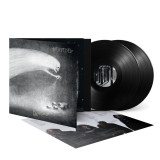
Did you know there are horses on the cover of Earth 2: Special Low Frequency Version? There are at least three in the right hand corner, gathered inexplicably near a white canvas tent, a human possibly perched among its folds. As widescreen and vast as the cover may seem, those little details-the horses, the possible human, the faint wisp of white clouds-give it depth and wonder, something to which the imagination can return. Did you know that the music on Earth 2-repressed now for its 30th anniversary, back in its original artwork, and accompanied by a riveting set of remixes that demonstrate the reach of what Dylan Carlson long ago called "ambient metal"-works much the same way? The surface is massive and obvious, the meatpaw riffs of Carlson and bassist Dave Harwell pounding and swiping and pawing at the speakers, a true bludgeon in three-dimensional sound. Listen, though, for the details in the corners, for the finesse beneath the force, and Earth 2 reveals new levels of depth and wonder. The widespread impact of Earth 2 suggests that others have indeed been leaning in, listening to these minutiae and making something new of them. A masterpiece without many genre precedents, Earth 2 surely helped send doom metal down its more modern drone, ambient, and avant-garde avenues. Those descendants are obvious. Perhaps more surprising and gratifying are the ways it has influenced electronic music, modern composition, and even hip-hop by realigning our senses of tempo, time, and texture. Earth 2 engendered a rearrangement of expectations, regardless of preferred form.
*Includes download code
In the performance of this work, "Plan for Sleep" (1986), created simultaneously with “Every Dog Has His Day” (1985), Yamanaka took on the role of sound operation. The performance begins with a minimal piece where the tones of the electronic organ and striking phrases from the piano and saxophone race forward in syncopation. Following this, various sound fragments drift over a deafening industrial beat reminiscent of machine noises. There are also pieces that transform the typing sounds of a typewriter into rhythm, showcasing a range of experiments inspired by the then-novel sampling technology, beautifully intertwining with the physicality of the performance.
Additionally, influenced significantly by film music, Yamanaka incorporates a rich tapestry of colors through melancholic melodies that evoke various scenes, from secular jazz to other influences. This work constructs a uniquely original and sophisticated worldview that stands out even when surveying the canon of avant-garde performance art from around the globe in the postmodern era.
DUMB TYPE is a multimedia performance art group based in Kyoto that was formed in 1984 and continues to be active at the forefront of the art scene. We are excited to announce the simultaneous release of two cassette book works produced by musician Toru Yamanaka and the late Teiji Furuhashi, a central figure of the group, for works from the early DUMB TYPE Theatre era: "Every Dog Has His Day (recorded in 1985)" and "Plan For Sleep (recorded in 1986)," now available for the first time on vinyl.
Since the founding of DUMB TYPE, Yamanaka has primarily been responsible for music production, while the late Furuhashi played a crucial role in translating Yamanaka’s compositions into stage direction. Their collaboration began with previous groups ORG and R-STILL, and was influenced by the NEW WAVE and progressive rock trends they were pursuing at the time, as well as by artists like Laurie Anderson, Meredith Monk, and Robert Wilson, who fused minimal music and avant-garde performance. Moreover, their bold incorporation of cutting-edge sampling and house music during that era laid the foundation for DUMB TYPE's sound, marking an important intersection in the history of minimalism, ambient music and performance art in Japan.
*Includes download code
The two works which comprise this retrospective release project - "Plan for Sleep” (1984) and "Every Dog Has His Day” (1985) - are collaborations between Yamanaka and Furuhashi which were foundational to the music development of Dumb Type's aural legacy and intermedia innovations at large. Their early stage music possessed a unique charm and innovation, serving as an essential element at the core of their art. Through this project, the legacy of these works is to be re-evaluated, and the essence of the music contributing to the evolution of Dumb Type's sound through this day will be introduced to a new generation.
DUMB TYPE is a multimedia performance art group based in Kyoto that was formed in 1984 and continues to be active at the forefront of the art scene. We are excited to announce the simultaneous release of two cassette book works produced by musician Toru Yamanaka and the late Teiji Furuhashi, a central figure of the group, for works from the early DUMB TYPE Theatre era: "Every Dog Has His Day (recorded in 1985)" and "Plan For Sleep (recorded in 1986)," now available for the first time on vinyl.
Since the founding of DUMB TYPE, Yamanaka has primarily been responsible for music production, while the late Furuhashi played a crucial role in translating Yamanaka’s compositions into stage direction. Their collaboration began with previous groups ORG and R-STILL, and was influenced by the NEW WAVE and progressive rock trends they were pursuing at the time, as well as by artists like Laurie Anderson, Meredith Monk, and Robert Wilson, who fused minimal music and avant-garde performance. Moreover, their bold incorporation of cutting-edge sampling and house music during that era laid the foundation for DUMB TYPE's sound, marking an important intersection in the history of minimalism, ambient music and performance art in Japan.
Black Vinyl[27,69 €]
LP Ltd vinyl picture disc version w/ DL card, 500 pressed. Vanishing Twin furthers their exploration of decidedly experimental territories with Afternoon X. Crafted with a playful balance of humour and rigour, with each member embracing the role of the multi-instrumentalist and process, over outcome. Following a series of line-up changes, Vanishing Twin is now the tightly honed collective of singer and multi-instrumentalist Cathy Lucas, drummer Valentina Magaletti (Holy Tongue, Tomaga, Moin) and bassist Susumu Mukai (Zongamin). Harnessing the diverse touchstones of its members; Lucas' left-field song-craft, Magaletti's singular approaches to experimental percussion, and Mukai's long history in the production of electronic music, the band has refined a hypnotic sound at the juncture of minimalism, kosmische, post-punk, and dream-laden, psychedelic pop. These eight fluttering abstractions, culled, collaged, and built upon from a vast constellation of instruments, samples, and unclaimed sources. Lucas employs her voice as an instrument and a generator of raw sound, weaving surreal imagery and uncanny juxtapositions amongst the dance and propellant drive. From infectious grooves of the album's title track and the constrained minimalism of "Subito", to the ambitious heights of pieces like 'The Down Below' and Lazy Garden, which unfurl a psychedelic avant-gardism on the scope and scale of David Axelrod and Scott Walker. Vanishing Twin embark upon a new multifaceted journey that collectively culminates as the bands most forward-thinking and groundbreaking release to date.
Ltd White Vinyl, DL card. 1992's 'Untitled' brought the band's third album that re-cemented the duo once again as the progenitors of the "lo-fi" genre. This breakthrough set transitioned "The Trux" into a never ending all-inclusive rotating cast of musicians. Continuing Fire Records' series of classic remastered albums from Royal Trux, 'Untitled' is released on white vinyl and features updated monochrome and silver artwork. As unpredictable as ever, Neil Hagerty and Jennifer Herrema shook off the next level layering and noise of 'Twin Infinitives' to embrace the history of rock 'n' roll in all its deformed grandeur. Utilizing their ever present mind set of macro-inclusivity, they allowed the subconscious "radio stations" of their lives to infiltrate, lead, and dictate. Culling from their collective minds and memories twisted tunes that touched them. After the blood rush of their much-hailed avant-garde masterpiece 'Twin Infinitives' (1988), this eight-song opus added to the lo-fi genre that originated on 'Twin Infinitives'. On 'Untitled' Hagerty uses his 5-string blues roots and hails rock's twisted potential, while Herrema slurs and snarls in ecstasy. They sound like they're locked in a fourth-floor boudoir at the Chelsea Hotel; bottles clink, an album clicks on its run-out groove, the band plays on. In the mix are the characters and casualties of the 90s, a roll call of swaggering misfits. These aren't superficial sketches, the Trux cut much deeper than that_ "'Junkie Nurse' isn't just about addiction; it's about the twisted hope that even the most broken people can somehow mend others, even when they're falling apart themselves." Jennifer Herrema, Royal Trux. With 'Untitled' Royal Trux justifiably increased their coterie of convicted followers, becoming the cult heroes for a transgressive generation, and the Rosetta Stone for male/female duos (ie:The White Stripes, The Kills etc... ) over the years inspiring everyone from The Silver Jews (David Berman) & Sonic Youth through to melodic blue-eyed soulsters like Hot Chip - "I urge and encourage you to enter the harmolodic multiverse of their music." Alexis Taylor, Hot Chip. "Royal Trux were nothing if not fearless." Pitchfork.
Only Love Remains is Yemen Blues’ boldest offering yet. The eleven-track album embraces the strengths of all four accomplished musicians and the richness of their individual cultures – the traditional to the modern and the sounds of the East to the West.
Co-produced by the band and New York-based Yemen Blues’ bassist Shanir Ezra Blumenkranz, known for his avant-garde work with John Zorn and Yo-Yo Ma, Only Love Remains is simultaneously a very direct and visceral emotional connection and an enigmatic spiritual quest, both enlightening and questioning.
At a time of dangerous political, religious, and cultural polarization and xenophobia, Yemen Blues and Only Love Remains lead by example, creating a color-blind, all-embracing celebration of gyrating togetherness with love firmly at its pulsing core.