We are proud to welcome Fear-E for his Dark Entries debut ‘Grey Skies In A Dear Green Place’ out February 28th. Fear-E is the moniker of Scott McKay a Glasgow based DJ and producer. Scott has already made a name for himself as one of Glasgow’s most technically-gifted and diverse selectors over the past decade. Then a slew of releases on the home-grown Dixon Avenue Basement Jams and Super Rhythm Trax introduced Fear-E, equally skilled studio operator, to the world.
‘Grey Skies In A Dear Green Place’ contains six club-ready tracks to “smash sound systems and illuminate sweaty warehouses.” The title is a reference to a nickname that Glasgow has, coming from Cumbric, means 'green hollow' or (dear) 'green place'. Layering cut-up vocals with warm thumping beats, Scott creates a stripped-back yet deeply jackin’ vibe. Call these tracks what you will, “acid attacks”, “club destroyers”, “pickle ticklers?!” All songs have been mastered by George Horn at Fantasy Studios. For the cover, Scott commissioned legendary Detroit illustrator Alan Oldham, who’s artwork has graced established an identity for Transmat and DJAX-UP-BEATS, to create a futuristic portrait of Glasgow in black & white and with green kryptonite flourishes by Eloise Leigh.d
Mit Hurra! Hurra! So nicht. veröffentlichte Gisbert zu Knyphausen 2010 den Nachfolger seines vielbeachteten Debüts und festigte damit seinen Ruf als eine der prägendsten Stimmen des deutschsprachigen Singer-Songwriter-Genres. Das Album wirkt gegenüber dem Erstling reifer, melancholischer und musikalisch ausgearbeiteter, ohne dabei die unmittelbare emotionale Kraft seiner Songs zu verlieren. Entstanden im renommierten Electric Avenue Studio von Tobias Levin und eingespielt mit seiner damaligen Liveband, profitiert die Aufnahme von der Erfahrung zahlreicher Konzerte und einer außergewöhnlich eingespielten Besetzung. Mit der Wiederveröffentlichung auf dem bandeigenen Label Rastplatz Krachgarten wird ein zentrales Werk im Katalog von Gisbert zu Knyphausen erneut verfügbar gemacht und richtet sich sowohl an langjährige Hörer als auch an eine neue Generation von Songwriter-Fans.
Kick'n Dance Records strikes again with it's third release, "Vert Emeraude EP" by
parisian producer Lucas Moinet. Infused with nature sounds, deep atmospheres
and jazz elements, this four-tracker goes from spiritual jazz deep house to club
groove with a distinctive french signature. All tracks were composed and recorded
by Lucas Moinet at Studio 937, with a traditional 90's house music set up. "Vert
Emeraude" & "Dark Woods" are paying tribute to the sound of the infamous Dance
Culture party at Djoon and it's dancers community. On the other hand, "The Deep"
explores deeper territories while "Franklyn Avenue" brings more energy to the
record, with a faster and powerful track. For the ones into deep chords and
musical explorations
"Spiritual Jazz 19" besteht aus zwei Doppel-LP-Sets, die den Einfluss und die Ausdrucksformen jenes Underground-Jazz beleuchten, der sich in der zweiten Hälfte des 20. Jahrhunderts in Kalifornien und den angrenzenden Bundesstaaten entwickelte. Die insgesamt 24 Titel erscheinen in Gatefolds und enthalten Liner Notes, Fotos und Download-Codes.
Die US-Westküste wird oft mit dem Boom des Cool Jazz in den 1950er Jahren in Verbindung gebracht; doch überall dort, wo Jazz gespielt wurde, florierten auch modale, afrozentrische und spirituell geprägte Strömungen – und die Westküste bildete da keine Ausnahme. In der Nachkriegszeit rangierte die Central Avenue in L.A. als bedeutendstes Jazz-Viertel Amerikas direkt hinter Manhattan. Auch wenn Manhattan in jenen Jahren das faktische Zentrum des Jazz-Universums war, übte Kalifornien eine stärkere Anziehungskraft auf die Kultur im Allgemeinen aus und zog Menschen aus dem ganzen Land in den Bann seiner aufkeimenden Gegenkultur der 1960er Jahre.
Hier untersuchen wir die Auswirkungen dieser Gegenkultur auf den Jazz. Wir beleuchten den Einfluss der Black Panthers – der prägendsten Kraft innerhalb der schwarzen politischen Bewegung nach der Ära der Bürgerrechte – und widmen uns den neuartigen spirituellen Praktiken und Religionen des aufkommenden New Age. In Kalifornien waren zahlreiche eigenwillige Independent-Labels wie Arhoolie, Theresa und Nimbus sowie viele weitere private Unternehmungen ansässig; wir präsentieren die Ergebnisse ihres Strebens nach musikalischer Freiheit. All diese Faktoren beeinflussten die Entwicklung und Blütezeit des Jazz und der Jazzmusiker an der Westküste – und die Evolution des Spiritual Jazz in dieser Region wird hier eingehend betrachtet.
out of Stock
Last delivered 7 days ago available to reorder, subject to availability
Spiritual Jazz 19" besteht aus zwei Doppel-LP-Sets, die den Einfluss und die Ausdrucksformen jenes Underground-Jazz beleuchten, der sich in der zweiten Hälfte des 20. Jahrhunderts in Kalifornien und den angrenzenden Bundesstaaten entwickelte. Die insgesamt 24 Titel erscheinen in Gatefolds und enthalten Liner Notes, Fotos und Download-Codes.
Die US-Westküste wird oft mit dem Boom des Cool Jazz in den 1950er Jahren in Verbindung gebracht; doch überall dort, wo Jazz gespielt wurde, florierten auch modale, afrozentrische und spirituell geprägte Strömungen – und die Westküste bildete da keine Ausnahme. In der Nachkriegszeit rangierte die Central Avenue in L.A. als bedeutendstes Jazz-Viertel Amerikas direkt hinter Manhattan. Auch wenn Manhattan in jenen Jahren das faktische Zentrum des Jazz-Universums war, übte Kalifornien eine stärkere Anziehungskraft auf die Kultur im Allgemeinen aus und zog Menschen aus dem ganzen Land in den Bann seiner aufkeimenden Gegenkultur der 1960er Jahre.
Hier untersuchen wir die Auswirkungen dieser Gegenkultur auf den Jazz. Wir beleuchten den Einfluss der Black Panthers – der prägendsten Kraft innerhalb der schwarzen politischen Bewegung nach der Ära der Bürgerrechte – und widmen uns den neuartigen spirituellen Praktiken und Religionen des aufkommenden New Age. In Kalifornien waren zahlreiche eigenwillige Independent-Labels wie Arhoolie, Theresa und Nimbus sowie viele weitere private Unternehmungen ansässig; wir präsentieren die Ergebnisse ihres Strebens nach musikalischer Freiheit. All diese Faktoren beeinflussten die Entwicklung und Blütezeit des Jazz und der Jazzmusiker an der Westküste – und die Evolution des Spiritual Jazz in dieser Region wird hier eingehend betrachtet.
out of Stock
Last delivered 7 days ago available to reorder, subject to availability
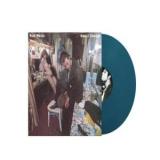
50th Anniversary on limited edition 180g aquamarine vinyl. Small Change is a masterpiece that contains some of Waits" best early work. Classic jazz, Tin Pan Alley, and Stephen Foster filtered through Tom"s unique worldview and lyrical genius. Heartbreaking, hilarious and always vivid, songs like "Step Right Up", "Tom Traubert"s Blues", "I Wish I Was in New Orleans", "The Piano Has Been Drinking", and "Invitation to the Blues" are all classics that have influenced generations of songwriters since. Recorded with a live orchestra and featuring jazz legend Shelly Manne on drums, Small Change is a classic and stands as one of Tom Waits" most popular recordings.
The fifth LP in the long history of the label comes from another Belgian producer who is ready to fly high. After San Soda, Metrobox, Uni Son and label boss Red D it is now time for Tom Smeyers to step up and take us into his universe of warm grooves and sweet house music…with a twist.
Taking in influences from around the full spectrum of electronic music these six tracks represent what Tom is about at the moment. From deepest old school inspired house to more broken beat action right into drum’n’bass territory, with an attention to detail and experienced sound design.
As if that wasn’t enough Tom also took care of the artwork to match his music. We here at WPH call that a 360 artist. Welcome to the family Tom Smeyers!
DTM Funk: Super Dope!
DJ Bone: Really great release. I love every track!
Owain K: Classy grooves for dancefloor moves.
Séa: Lovely!
Simon Caldwell: Beautiful machine house music. Takes me back and takes me forward.
Satoshi Fumi: Really love all!
Severino Panzetta: Great sound.
Ame: Thanks for these.
DJ Merci: Top release!
Red D: So good I just had to release these J
out of Stock
Last delivered 21 days ago available to reorder, subject to availability
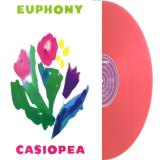
Japanese crossover and fusion are hot again now. As either an outgrowth of, or a spin-off phenomenon from, the global reappraisal of city pop,
Japanese fusion has been rapidly rising since around last year.
This was the second release on AURA, the band’s own label established under Polydor, and their 13th studio album overall.
Because they had continued recording overseas for some time, they chose not to bring in guest musicians for this album, instead settling into their
home base at STUDIO JIVE and creating it solely with the band members.
As a result, the album offers a fresh and lively sound that returns to the group’s roots.
Alongside the live staple "SUPER SONIC MOVEMENT," it is also packed with new attempts, including the Japanese-flavored "Old Times," the technodriven big band-style jazz track "SOLID SWING," and the high-speed Latin funk number "RED ZONE."
This also became the final CASIOPEA album for the duo of Tetsuo Sakurai and Akira Jimbo.
Trá Pháidín are a mutable collective of musicians who are geographically, culturally and mentally torn between Conamara Theas, Cathair Chorcaí, Ciarraí, Uíbh Fhailí, Sligeach and Port Láirge, active in one form or another since 2019. The music they make, which to date has mostly been self-released, is of an ambitious breadth, embracing traditional Irish absurdity, jazz, folk and krautrock influences, whilst remaining tantalisingly beyond any one specific understanding of either the world around them or even themselves. More defined however, is their overall conceptual approach, focusing upon original Gaelic music and what lies beyond simply “conas atá tú?”.
Cloch ‘s Claí (trans. Stone & Wall), their first record to be released by World of Echo, develops their established interests into more adventurous waters (and walls!) than ever. Based on the historical significance embedded into dry-stone walls, the album presents a satirical view of Éire’s relationship with her native tongue and the Gaeltacht (regions where Gaeilge - Irish Gaelic - remains the primary language). Constructed of ten tracks, each representative of a stone in a metaphorical stone-wall, Cloch ‘s Claí draws from styles of improvisation in Irish traditional music, exploring avenues of ornamentation and accompaniment in the tradition. As such, the arrangement changes in every performance, a new stone-wall articulated each time - the recording on this album represents just one such arrangement in one such performance. Inspired by Myles na gCopaleen’s An Béal Bocht, the wall comes to embody a variety of themes scattered across the landscape and psyche of na Gaeltachtaí - tokenism, housing, gentry politics, ribbon developments and so on. The result is a music expressive of regional styles in traditional music, krautrock, free jazz, post-rock, minimalism and drone presented in a way that feels instinctively fluid and reflective of a hushed existentialism from the west of Ireland.
On Cloch ‘s Claí, Trá Pháidín are: Conal Ó hAinmhuighe, Ultan Ó Labhradha, Peadar-Tom Mercier, Micheál Fitzgerald, Pól Ó Lionáird, Ruairí De Búrca. Cloch ‘s Claí will be released digitally and as a limited edition LP on 25th September via World of Echo. This record was created through the support of the DEIS Recording Grant & Ealaín na Gaeltachta.
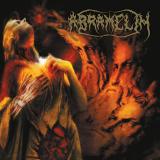
Abramelin’s self-titled 1995 debut is a landmark in the Australian Death Metal scene, featuring some of the heaviest riffs ever recorded Down Under and deranged lyrics brimming with unbridled brutality and violence! Australian Death Metal for the most part has been really solid. Abramelin does nothing to deter from that thought and “Abramelin” is known by many death metal fans as a classic. These Aussies laid forth a chunk of brutal death metal in 1995. Around that time, the established sound of the Florida scene and even in other areas such as Sweden had begun to morph into something else as bands attempted to prevent stagnation. One such new avenue of creativity was to simply get heavier, louder, and more punishing, and by those standards Abramelin’s self-titled debut delivers on every level. Now available again on CD and vinyl, this long overdue re-issue brings back a true underground classic from one of Australia’s most overlooked Death Metal bands.
Some recordings herald the future in ways that are impossible to see in real time. Teodros Makonnen With His Organ (ቴዎድሮስ መኮንን ከኦርጋኑ ጋር), by the artist Teodros Makonnen, also known as Teddy Mak, is one of those. Today, electronic sounds, synthesizers, and digital production are taken for granted in Ethiopian music, but in the early 1980s, they were novelties that polarized opinion. Even to this day, the story of Teodros Makonnen’s legacy has never been properly told. He played a decisive role in defining the sound of the digital era of Ethiopian music that emerged in the 1980s and beyond, both as a keyboard player and as a producer, songwriter, performer, and sound designer.
Ethiopian music was at a crossroads in the early 1980s. Much like music in the rest of the world, technology and automation heralded either a quantum leap in musical development or the annihilation of musicianship, depending on who you’d ask. The changes were incremental nonetheless, but with the benefit of hindsight one can clearly see that the changes meant different things in different contexts. Drum machines and electric organs came to replace many hotel bands because, all of a sudden, one musician could control drums, melody, and accompaniment. Teodros was one of the first musicians in Ethiopia to explore the possibilities this opened up.
Teodros’ father, Captain Makonnen Beri, was a chief pilot at Ethiopian Airlines and a music enthusiast at that. This would prove important to his development, as Makonnen brought back a piano from Germany, which would lead to the first steps in Teodros’ long musical career. Captain Makonnen’s work as Head of Flight Operations and as a pilot exposed him to the wider world that was far from commonplace for most Ethiopians. In a house where music captivated the whole family, the piano gave Teodros’ talent an outlet. Not only was a piano at home rare in Ethiopian households, his father also brought an Indian teacher to their home to teach Teodros and his brother, Captain Samuel Makonnen, music theory (solfeggio or ear training) and piano. Teodros and his youngest brother, the late great Dereje, a member of both the legendary Ibex Band and the Ethiopian reggae group Dallol, took up music from that point onward, with Teodros beginning to develop his proficiency at the age of eight. His father encouraged him to practice tirelessly at home, and Teodros later received musical schooling at the German School in Addis Ababa. His obvious talent led to studies and formal education at the Yared School of Music, followed by continued studies in American jazz at Northern Virginia Community College in Virginia. Teodros cut his teeth professionally in his mid-teens, not only as a keyboardist, but also as an arranger for the Wabi Shebelle and Dahlak bands in the 1970s. He mastered electronic sequencing early, rising to prominence through the midnight recording sessions held during the military curfew. The pressures imposed by the curfew required precise and disciplined recordings, and Teodros delivered just that. This, in turn, led to collaborations with iconic artists such as Mulatu Astatke, Aster Aweke, Menelik Wossenachew, Tilahun Gessesse, Mahmoud Ahmed, and Alemayehu Eshete. In those days, he sat in as a keyboardist with the Dahlak Band when Dawit Yifru took a hiatus to study in Russia, and also with the Ethiostar Band. He secured a residency at the Wabi Shebelle Hotel with the Shebele Band, together with Zelalem Tadese (drums), later succeeded by Elias Bekele, Mulugeta Hailu (bass), Teferi ‘Bibisha’ Mengesha (guitar), Kumelachew G/Selassie (trumpet), and Teshome Deneke (saxophone). A friendly competition developed between the bands associated with the Ras Hotel (the Ibex Band), Ghion Hotel (the Dahlak Band), and Wabi Shebelle Hotel (the Shebele Band). The music scene at Wabi Shebelle saw teenagers commanding the spotlight in an industry otherwise dominated by musicians of an older generation. At the Wabi Shebelle Hotel, Teodros met a diplomat from Saudi Arabia and later visited him at his home in Addis Ababa, a meeting that had unexpected musical consequences. The man owned a Yamaha double-deck keyboard. That evening, they recorded Teodros Makonnen With His Organ (ቴዎድሮስ መኮንን ከኦርጋኑ ጋር) in one take. This recording, a cornerstone in the early digital sound of Ethiopian music, came about almost by chance, simply because Teodros got the opportunity. Traditional Ethiopian songs were cast in a wholly electronic style. Once freed from backing duties, Teodros’ keyboards could explore dreamlike soundscapes that took Ethiopian music in new directions. Even though the cassette contained well-known Ethiopian songs, they were given highly original arrangements, performed on an electric organ with drum machine backing and rhythm patterns that left the listener with suggestive, lingering sounds. “Libesh Kabashen” (also known as “Anchi Bale Game”) and “Odu Gol Golesa” wrap you in the very stuff that dreams are made of. Originally released on cassette only, this recording exudes a mystique that surpasses even some of the most obscure Ethiopian recordings of the day. It remained more or less unknown outside of Ethiopia until now. Some of the tracks, like “Addis Fikir,” are permeated with an almost naive buoyancy, free-floating sounds that lost contact with the ground the moment they were conceived. Others, like “Meche New Hageren Yemayew” and “Lelitu Alnega Alegn,” carry a moodier, quirkier timbre, with pulsating rhythms in the background. Yet even the darker pieces contain an unmistakable wave, something essentially Ethiopian. If most recordings of Teodros’s contemporaries at the time were teeming with atmosphere, his songs seem instead at home in the stratosphere, almost ethereal. Some of the music here could be filed under “lullabies,” were it not for the recurring, almost brooding feeling that engulfs the listener on the aforementioned tracks. You could easily be forgiven for drifting into a blissful haze as the music washes over you.
Up to the advent of electronic music production, Ethiopia was totally dominated by big bands on the one hand, and small groups on the other. The former were tied to large institutions such as the military, the latter emerged from the entertainment industry, in hotel bars and nightclubs. These groups were commercially driven, and bands ultimately had to foster a mercenary approach to employment, albeit not to the passion for music. In the light of this, Teodros’ musical legacy can be seen in two ways. On the one hand, he is a key player in Ethiopian music from the 1970s onwards, leaving an indelible mark through hundreds of compositions and arrangements, including soundtracks for numerous documentary films and advertisements for different companies. On the other hand, the way he and others employed electronics brought Ethiopian music onto a fork in the road.
The replacement of traditional instruments with electronic equipment was seen as impending doom by some. Others, like Teodros, saw new avenues for performance, production, and creativity. Just as later producers like Abegasu Shiota of Admas, Teodros was a trailblazer who opened paths that it took Ethiopian music as a whole more than a decade to rush into. The hotel scene had already been pushed toward electronic music by financial necessity and cost-cutting. Today’s revived global interest in Ethiopian music from the seventies and eighties, alongside a broader resurgence, has changed the reasons for using digital means of music production. They have become tools for musical dreaming. This is where the dreaming began.
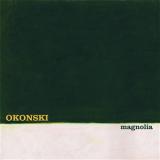
Das Studio in der 122 West Loveland Avenue war für Steve Okonski, den Leiter seines gleichnamigen Trios Okonski", kein unbekannter Ort. Seitdem sich das Label Colemine in Loveland, Ohio, niedergelassen hat, war es Gastgeber für eine Reihe von Bands, die auf der Durchreise waren, darunter auch Durand Jones and the Indications, zu denen alle Mitglieder dieses Trios Verbindungen haben. Nachdem er sich im Winter 2020 etwas Zeit genommen hatte, lud Okonski, der ursprünglich als klassischer Pianist ausgebildet wurde, Michael Isvara Ish" Montgomery und Aaron Frazer ein, an einem Album zu arbeiten, das ursprünglich als beatgetriebene und vollständig komponierte Trio-Instrumentalstücke geplant war. Nachdem diese erste Session mit einigen Improvisationen abgeschlossen war, wurde im Sommer 2021 eine zweite Woche gebucht, um zu versuchen, noch mehr von dieser spontanen Energie einzufangen. Während dieser Session wurden alle Stücke improvisiert und live auf einem Tascam 388 während mehrerer später Nächte im Colemine-Hauptquartier aufgenommen. Sie waren so strukturiert, dass die kollektive Intuition der Gruppe die Melodien und den Verlauf der Musik voll und ganz prägen konnte. Das Album beginnt mit Runner Up", wo eine triumphale und doch melancholische Melodie am Klavier zu einem zurückhaltenderen B-Teil überleitet, der von Schlagzeug und Bass von Frazer und Montgomery getragen wird. Auf deiner Reise durch den Rest des Albums begegnest du einer Fülle von hervorgerufenen und erforschten Emotionen. Die Ruhe, die man empfindet, wenn man nach Mitternacht eine mondbeschienene Straße entlanggeht, die Verbindung zu einer Person, die nur für einen Moment oder ein ganzes Leben in deine Welt tritt, und die Nervosität und Katharsis, die man spürt, wenn man sich auf eine neue, unbekannte Reise begibt. Magnolia" endet mit Sunday", einem Titel, der spät in der Nacht am Ende ihrer ersten Aufnahmesession aufgenommen wurde. Ohne die Spontaneität von Sunday" wäre der Rest von Magnolia" wahrscheinlich nie zustande gekommen. Magnolia" entstand aus dem Herzen und dem Geist derer, die in jenen späten Nächten in Loveland im Studio waren. Es ist der Höhepunkt einer emotionalen und künstlerischen Befreiung, die erst möglich wurde, als die Band sich an ihre Instrumente setzte und gerade deshalb ist das Album introspektiv, meditativ, spirituell und neuartig.
The studio at 122 West Loveland Avenue was not an unfamiliar space for Steve Okonski, the leader of his eponymous trio Okonski. Ever since the Colemine label set up shop in Loveland, Ohio it has been a host to a number of groups passing through town, including Durand Jones and the Indications who all of this trio's members have connections to. After setting aside some time in winter of 2020, Okonski, trained initially as a classical pianist, invited Michael Isvara "Ish" Montgomery and Aaron Frazer to work on an album that was initially planned to be beat driven and fully composed trio instrumentals.
After finishing this first session with some improvisations, a second week was booked in the summer of 2021 to try and capture some more of that spontaneous energy. During this session, the tracks were all improvised and recorded live to a Tascam 388 during several late nights at the Colemine HQ. They were structured to allow the group's collective intuition to fully shape the melodies and arcs of the music.
The album opens with Runner Up, where a triumphant yet melancholic melody in the piano leads to a more reserved B-section driven by the drums and bass of Frazer and Montgomery. As you journey through the remainder of the album you are met with a plethora of evoked and explored emotions. The calmness one has walking down a moonlit street after midnight, the connection one has for a person who comes into their world for just a moment or a lifetime, and the nerves and catharsis one feels when starting upon a new, unknown journey.
Magnolia closes with Sunday, a track that was recorded late into the night at the close of their first recording session. Without the spontaneity of Sunday, the remainder of Magnolia would likely have never come to fruition.
Magnolia was composed from the heart and from the spirit of those in the studio those late nights in Loveland. It is the culmination of an emotional and artistic release that was not afforded or recognized before the band sat at their instruments, and because of that it is introspective, meditative, spiritual, and new.
Noch bevor Brian Eno dies tat, schuf Mort Garson zurückhaltende Musik. Garson, der an der Juilliard School ausgebildet wurde und in der Nachkriegszeit als Session-Musiker tätig war, komponierte Lounge-Hits, schrieb die Musik zur Mondlandung von 1969 und schuf opulente Arrangements für Doris Day sowie die sehnsuchtsvollen ,Countrypolitan"-Streicherbegleitungen für Glen Campbells ,By the Time I Get to Phoenix". Mitte der 1970er Jahre fegte eine Naturgewalt über die kontinentalen Vereinigten Staaten hinweg, die alle Schichten unabhängig von Rasse und Klasse durchdrang und sich in unseren Köpfen, unseren Häusern und unserer Kultur festsetzte. Es war weder ,Der Exorzist", noch ,Goodbye Yellow Brick Road" oder gar Schlaghosen, sondern ein Buch mit dem Titel ,Das geheime Leben der Pflanzen". Das Werk des Okkultisten/ ehemaligen OSS-Agenten Peter Tompkins und des ehemaligen CIA-Agenten und begeisterten Wünschelrutengängers Christopher Bird schoss an die Spitze der Bestsellerlisten und breitete sich wie Kudzu über das Land aus, bis es zu einem Phänomen wurde. Scheinbar über Nacht blühte das Geschäft mit Zimmerpflanzen in voller Pracht auf, und photosynthetische Eukaryoten aller Gattungen hingen an den Wänden, thronten über Bücherregalen und sonnten sich auf sonnigen Fensterbänken. Die wissenschaftlichen Ansätze hinter ,Secret Life" waren fadenscheinig: Pflanzen können unsere Gebete hören, sie sind Lügendetektoren, sie sind telepathisch, in der Lage, Naturkatastrophen vorherzusagen und Signale aus entfernten Galaxien zu empfangen. Doch das hielt Millionen Menschen nicht davon ab, ihre neuen Pflanzen zu kaufen und zu pflegen. Die vielleicht verrückteste Behauptung des Buches war, dass Pflanzen auch Musik mögen. Und ganz gleich, ob Sie eine Schlangenpflanze, einen Spargelfarn, eine Friedenslilie oder was auch immer bei ,Mother Earth" auf der Melrose Avenue in Los Angeles erwarben (oder eine Simmons- Matratze bei Sears kauften) - Sie nahmen auch ,Plantasia" mit nach Hause, ein Album, das speziell für sie aufgenommen wurde. Mit dem Untertitel ,Warm Earth Music für Pflanzen _ und die Menschen , die sie lieben" war es voller idyllischer, charmanter, kiff-freundlicher und entschieden unwissenschaftlicher Melodien, die auf einem neumodischen Gerät namens Moog eingespielt wurden. Das Album erlangte Jahrzehnte nach seiner Veröffentlichung eine enorme Kult-Anhängerschaft. Die Neuauflage von Sacred Bones aus dem Jahr 2019 trug dazu bei, ,Plantasia" einem breiteren weltweiten Publikum bekannt zu machen, und bescherte Garsons ungewöhnlichem Meisterwerk ein bemerkenswertes zweites Leben. Was einst ein seltsames Relikt der Pflanzenbegeisterung der 1970er Jahre war, ist zu einem geliebten Evergreen geworden, der von einer neuen Generation von Hörern wiederentdeckt und neu geschätzt wird und weit über seinen ursprünglichen Moment hinaus gedeiht, wobei er sich von einer obskuren Kuriosität zu einem geliebten Kultklassiker und einem Meilenstein des Streaming-Zeitalters entwickelt hat. Nun, 50 Jahre nach seiner ursprünglichen Veröffentlichung, markiert ,Plantasia" von Mother Earth einen bedeutenden Jubiläumszeitpunkt. Ein halbes Jahrhundert später hallt es weiterhin nach - eine bleibende Erinnerung an Mort Garsons Fähigkeit, das Synthetische seltsam lebendig und das Skurrile auf merkwürdige Weise tiefgründig wirken zu lassen.
out of Stock
Last delivered 25 days ago available to reorder, subject to availability
A deluxe double LP reissue of a rare 1997 indie cult classic, expanded with bonus material and featuring the formative recordings of musicians who would later create The Essex Green and The Sixth Great Lake. Originally released in 1997, Jeffersonville is a hidden gem of late-'90s American indie rock, blending heartfelt songwriting, melodic guitars, and the raw charm of the DIY underground. Formed in Burlington, Vermont, Guppyboy served as an early creative home for musicians who would later go on to form The Sixth Great Lake and The Essex Green, making this album an important chapter in the story of American independent music. This deluxe double LP edition presents Jeffersonville in its most complete form to date, featuring previously unreleased and non-album tracks not included on the original release. Expanding on the original album while preserving its intimate, homespun spirit, this definitive edition shines a new light on a long-overlooked cult favorite. With its blend of indie rock, power pop, and timeless melodic songwriting, Jeffersonville offers strong appeal to fans of the Elephant 6 universe and the wider American indie underground, while providing lasting catalogue value for retailers and collectors alike.
10 years after the original, The Devil Wears Prada 2 picks up in a new era of fashion, ambition, and shifting power—where old rivalries resurface and the runway is fiercer than ever. The soundtrack matches every moment with Lady Gaga, Doechii, Dua Lipa, Miley Cyrus, SZA, RAYE, Laufey, Olivia Dean, and more, delivering the perfect mix of glamour, edge, and reinvention
ABOUT THE FILM
20th Century Studios’ The Devil Wears Prada 2:
Twenty years after making their iconic turns as Miranda, Andy, Emily and Nigel—Meryl Streep, Anne Hathaway, Emily Blunt and Stanley Tucci return to the fashionable streets of New York City and the sleek offices of Runway Magazine in 20th Century Studios’ The Devil Wears Prada 2, the eagerly awaited sequel to the 2006 phenomenon that defined a generation. The film is directed by David Frankel, written by Aline Brosh McKenna, produced by Wendy Finerman, and executive produced by Michael Bederman, Karen Rosenfelt and Aline Brosh McKenna.
out of Stock
Last delivered 78 days ago available to reorder, subject to availability
10 years after the original, The Devil Wears Prada 2 picks up in a new era of fashion, ambition, and shifting power—where old rivalries resurface and the runway is fiercer than ever. The soundtrack matches every moment with Lady Gaga, Doechii, Dua Lipa, Miley Cyrus, SZA, RAYE, Laufey, Olivia Dean, and more, delivering the perfect mix of glamour, edge, and reinvention
King Tubby and Producer Bunny ‘Striker’ Lee are intertwined in the birth of Dub Music. After discovering a mistake that made a ‘serious joke’ (more of which later...) they went on to release the first pressings of this new musical genre namely ‘Dub Music’. Tubby’s vast knowledge of electronics and Bunny’s vast catalogue of rhythms would lay the foundations of what today is taken as a standard... the Remix / Version cuts to an existing vocal tune.
Osbourne ‘King Tubby’ Ruddock was born in Kingston, Jamaica on 28th January 1941 and grew up in the High Holborn Street area of downtown Kingston. He studied electronics at Kingston’s National Technical College and also on two correspondence courses from the U.S.A... When he had qualified Tubby began repairing radios and other electrical appliances in a shack in the back yard of his mother’s home. His work in the early days included winding transformers and building amplifiers for Kingston’s Sound Systems. Tubby built his first Sound System in 1957 playing jazz and Rhythm & Blues at local weddings and birthday parties. His reputation as a man who knew and understood both electronics and music grew steadily and as the sixties drew to a close. Tubby purchased his own basic two track equipment. He installed this alongside his dub cutting machine, a homemade mixing console and his impressive collection of Jazz albums in the back bedroom of his home at 18 Dromilly Avenue which he christened his music room.
Tubby and Striker were at Treasure Isle Studio’s one day while Ruddy from Spanish Town was working with the engineer Byron Smith....
“Tubby and myself was talking when Ruddy was cutting some dub but Smithy (engineer) made a mistake through we were talking and forgot to put in the voice. It was two track recording in those days. Ruddy said ‘No Man! Make it stay! and so they cut the rhythm. When I went over to Ruddy’s that Saturday night a dance was in progress and when they played the vocal to the tune... then he said we’re going to play ‘Part Two’. They never called it ‘Version’..and then he played the rhythm track. The song was a catchy song and everybody started to sing along and the deejay started to toast so everything went down well. On Monday morning I went up and I said ‘Tubbs the mistake we made was a serious joke. It mash up Spanish Town! The people went wild. So you have to start to do that now ‘cause when the man put on the ‘Part Two’ everyone start singing this song. It played about twenty times. I said you try Tubbs!’...Well the next Saturday night now when Tubby strung up down the farm U Roy said he’s going to play ‘Part Two’ but Tubby did it different now. He started with the voice then dropped it out and let the rhythm run and then he brought in the voice in the middle and from there Tubby started to get really popular.’’
Bunny ‘Striker’ Lee
Dynamic Sounds upgraded to sixteen track recording in 1972 and Tubby purchased, again with the help of a deal brokered by Bunny Lee. The old four track equipment and the MCI console from their Studio B. The four tracks now gave him far wider scope to work with and he began to create a new musical form where the bass and drum parts were brought up while the faders allowed Tubby to ease the vocal and rhythm in and out of the mix. It was only a matter of time before Tubby’s dub plate experiments began to make it on to vinyl and the first ever long-playing King Tubby releases would feature a collection of his mixes to a selection of Strikers rhythms. So please sit back and enjoy this historic set of sounds, mixed by King Tubby and Mr Prince Phillip Smart and another set of scorcher Bunny Lee rhythms.
Reissue of the debut album by Laghonia, one of the most important bands of Peruvian rock. Originally released in 1960, "Glue" will be cherished by lovers of Latin American rock, pop and psychedelia as practiced by other similar classic bands such as Traffic Sound, We All Together, Black Sugar and Telegraph Avenue. After four brilliant singles, in 1969 the Peruvian band New Juggler Sound, formed by Saúl Cornejo (guitar), David Levene (lead guitar), Ernesto Samané (bass), Carlos Salom (organ) and Manuel Cornejo (drums), changed their name to Laghonia and released their debut LP "Glue" on the MAG label. The album included those previously released tracks, which were very influenced by the British rock scene of those years, to which they added fiery guitars bursting with fuzz and wah-wah, the ever present and hypnotic Hammond organ sound and Latin American percussion and rhythms. The result was a wonderful mix of mid-60s British beatmelodies, Jimmy Hendrix's intense rock, Cream's heavy blues and Santana's Latin rock. "Glue" is regarded as one of the key albums of Latin American psych and garage rock and is an essential record for any fan of those genres. Deluxe edition: 180g vinyl LP in tip-on jacket and insert with liner notes.
Friday Fuzz are a collec#ve of professional musicians now presen#ng “Much Funk About Nothing,”
an excellent piece of work with a retro flavor. With years of high-profile collabora#ons under their belts, Marco Leo, Cesare Pizze:, Elvin Be:, and Niccolò Barozzi have worked with some of the
greatest Italian musicians—including Tullio De Piscopo, Fabrizio Bosso, Paolo Tommelleri, Alessio
Bertallot, Rocco Hunt, Casinò Royale, and Aereoplani Italiani, just to name a few.
The album features a primarily instrumental sound that evokes 1970s funk and soundtracks. The
band is defined by its ability to create sonic atmospheres ranging from more sparse, introspec#ve
moments to rock and psychedelic horizons, always with funk as the common thread. The result is
“Much Funk About Nothing,” an album that represents the perfect synthesis of their sonic
explora#on and crea#vity.
out of Stock
Last delivered 3 months ago available to reorder, subject to availability
Fenomenon are a trio hailing from Stavanger, on the west coast of Norway. Throughout their career they have released four full-length records, effortlessly moving between future jazz, downtempo, soul, and broken beat.
Their lush debut 12" Pacific Memories on Nuphonic made considerate waves and made the ears of many DJs perk up. As a result, the tracks "Pacific Memories" and "Solara" were featured on many big-name compilations and mix CDs such as Tom Middleton's The Sound Of The Cosmos, Hed Kandi, and MTV Summer Lounge. The latter was also featured in Michael Bay's sci-fi thriller The Island, featuring Scarlett Johansson. The follow-up single visjon.nord was only released as a white label promo due to the unfortunate demise of Nuphonic in 2002.
Pacific Memories: The Early Tapes collects tunes from both these EPs complemented by songs recorded around the same time. Originally released on CD only in 2006 by the Norwegian label Beatservice, it's now available on vinyl for the first time for its 20th anniversary. If you're a fan of Jazzanova, The Cinematic Orchestra, Kinobe, and Blue States, you can't miss this.
Pacific Memories: The Early Tapes is available as a 20th anniversary edition of 250 copies on turquoise and yellow vinyl.
Fenomenon are a trio hailing from Stavanger, on the west coast of Norway. Throughout their career they have released four full-length records, effortlessly moving between future jazz, downtempo, soul, and broken beat.
Their lush debut 12" Pacific Memories on Nuphonic made considerate waves and made the ears of many DJs perk up. As a result, the tracks "Pacific Memories" and "Solara" were featured on many big-name compilations and mix CDs such as Tom Middleton's The Sound Of The Cosmos, Hed Kandi, and MTV Summer Lounge. The latter was also featured in Michael Bay's sci-fi thriller The Island, featuring Scarlett Johansson. The follow-up single visjon.nord was only released as a white label promo due to the unfortunate demise of Nuphonic in 2002.
Pacific Memories: The Early Tapes collects tunes from both these EPs complemented by songs recorded around the same time. Originally released on CD only in 2006 by the Norwegian label Beatservice, it's now available on vinyl for the first time for its 20th anniversary. If you're a fan of Jazzanova, The Cinematic Orchestra, Kinobe, and Blue States, you can't miss this.
Pacific Memories: The Early Tapes is available as a 20th anniversary edition on black vinyl.
The mighty Channel One Studios,Kingston, Jamaica, has its place set in Reggae's Musical History.Its distinctive sound the studio created on opening its doors in 1972 to its closure in the early 1980's made it the Producers, Singers and Musicians studio of choice during this furtive period. Achieving that vibe and clarity, separated it from the other Kingston establishments.
Run by the Hookim Family's four sons, Jo Jo the eldest followed by Paulie, Ernest and Kenneth. Their father originally came from China and married a Chinese Jamaican lady and settled in the St Andrews district before moving to Kingston Town itself. The family business was built on jukeboxes and one armed bandit machines in and around Kingston. A lucrative venture until the gaming laws changed in 1970, outlawing the gaming machines. So the music side of the business would have to be expanded. So it was decided to open a studio to make the music to supply their already established Jukebox enterprise. The four brothers opened Channel One Recording Studios in 1972 at 29 Maxfield Avenue, Kingston 13. Initially as we stated the purpose of the studio was for the brothers use only, but this would soon change when the various Producers all looking for that Channel One sound came asking for studio time.
The brothers had used the services of Bill Garnet a renowned and well respected technical engineer on setting up the studio. They spent a lot of time laying out the space to get the right acoustics and picking the right quipment. They went with a four track API desk and the best quality microphones such as Neuman, Sony and AKG, vital in obtaining the quality sound and track separation that would prove so worthwhile after the music was recorded to give the best flexibility on the final mix downs. Jo Jo would take over the production duties after the initial hiring of Syd Bucknor a producer who had worked closely with Coxonne Dodds Studio 1 stable. The first release on the Channel One label would be 'Don't Give Up The Fight' by Stranger Cole and Gladstone 'Gladdy' Anderson.The initial two thousand run being swallowed up by their Jukebox interests and so the steady flow of hits would run up to the brake through hit of 1975 'Right Time' by the Mighty Diamonds.
1977 saw Jo Jo extending his stays in New York to a semipermanent status, returning mainly to oversee recording sessions and then taking the results back to America for worldwide distribution. His brother Paulies senseless killing in that year also added to Jo Jo's decision to spend more time with his Hit Bound Manufacturing set up in New York. The Channel One studio would be upgraded in 1979 to sixteen tracks and although Jo Jo and Ernest still covered the mixing and engineering duties Kenneth would now supervise sessions. An often untold part of Channel Ones history is the involvement of Producer Niney The Observer. The mid to late 1970's were heavy times both musically and politically and Maxfield Avenue was in the heart of this crossfire. Some artists and musicians were weary of using the establishment especially when sessions ended late at night and exiting the studio at these times could be somewhat dangerous. But Niney’s fearlessness seen him over running and in many cases running the all night sessions with his trusted set of musicians loosely called The Soul Syndicate. Having the run of the mighty Channel One studio's allowed Niney to build up and work on a stockpile of rhythms that he still has yet to unleash on the world. We have been lucky to select a bunch of material from Niney's vaults for this release. Some great unreleased rhythms and some different cuts to some tracks you might already know. Niney's work with Dennis Brown and his own distinctive heavy roots style productions have been documented and indeed his work on Channel Ones Yellowman releases stand tall also. We hope this fine set of Niney Productions set inside the hollowed walls of Channel One will sit beside them as they so richly deserve.
out of Stock
Last delivered 5 years ago available to reorder, subject to availability
Dennis Brown has always been cited as Jamaica's favourite singer.
While Bob Marley set out to conquer the world, Dennis's popularity on the island grew with every year.
His most prolific period is said to be with producer Niney the Observer,who led the singer down a more Roots avenue.He put Dennis on some of his heaviest rhythms.
Throwing also into the pot the fact that these rhythms were also to be mixed by the Dubmaster himself King Tubby we are bound to get one of the best Dub albums around.
Here is where the Crown Prince of Reggae Meets Niney the Observer at King Tubbys.
It's from this period that we have focused on and it's these tracks that were taken to King Tubby's studio to produce this stunning album.
Hope you enjoy the set.......
‘Richness of tone; precision of articulation; ingenuity of timbre that, when Akinmusire pursues microtonal avenues, creates the sense that particular sounds are almost hermetically sealed before being slowly squeezed and pinched into the air. In other words there is a high degree of technical mastery, but, tellingly, it underpins a profound and often engrossing sense of narrative.’ - Jazzwise
‘Halvorson has formulated a guitar style with few precedents. One inspiration might be the painter George Seurat, whose Impressionist paintings of a hundred isolated dots cohere into a picture if one steps back from the canvas. Halvorson’s pointillist approach to the guitar works much the same way.’ - JazzTimes
Slo-Mo Neon Luminate Hoverings, the new album by trumpeter/composer Ambrose Akinmusire and guitarist/composer Mary Halvorson, features four new compositions by each musician as well as one collaboration. The duo, long admirers of each other’s musicianship, met at Halvorson’s Brooklyn apartment and began playing together periodically, going back as far as 2009. They rehearsed the music on Slo-Mo Neon Luminate Hoverings in January 2025, just before performing it at the New York City club The Stone; they recorded this album the next day at Sear Sound.
Akinmusire and Halvorson made two previous attempts at recording an album but felt that they got it right with this third session. Halvorson says of their rapport, which developed over those years of friendship and collaboration, “I think it’s partly a shared aesthetic and an ease of communication. I feel comfortable to try whatever.” Akinmusire concurs, “I think it’s rare to find an improviser that all goes and nothing has to go at all. It’s rare to feel like you don’t have to do anything and you can do anything. And that’s what I love about playing with Mary.”
Though Halvorson regularly uses effects pedals on her guitar, Akinmusire’s use of one on Slo-Mo Neon Luminate Hoverings is new. Having recently gotten an updated model of the Line 6, Halvorson was passing her old ones along to friends. “Ambrose was interested in trying a Line Six. I gave him one five minutes before the rehearsal and was amazed how quickly he was able to do incredible shit on it ... in literally five minutes,” she says.
“But I’ve been watching you, I’ve been watching Bill Frisell and other people use it for a long time,” Akinmusire says. “I approached it as if it were its own musician. I played and it would process the sound and then I would choose to react to that or not. The people like Mary that I love to listen to who use delay, I like being able to hear the process of the texture that’s being built. With some people, when they use it, you don’t really hear it. But with Mary, she’ll play a line and then she’ll react to that line and then react to that,” he continues. “It’s really cool to hear how something is being built. So I kind of stole that.”
Halvorson says, “I’ve never seen someone pick up a pedal and then immediately do something with it that felt like, ‘Oh, this is a sound,’ as opposed to just tinkering, you know? It felt like he was making music on it right away, and then also doing things that surprised me, like the vocalizing really surprised me. I wasn’t expecting that, and it was awesome.”
In the world of Smote, going further out means going inward. Less a metaphysical journey into inner space, more a physical journey into the ground itself, converging with its roots and vibrations. What's more, a journey right to the heart of its principal architect's daily experience. Smote's fifth release for Rocket Recordings, and their deepest, most fully realised to date. Forged from repetition and mantric intensity and possessed of formidable psychic fortitude, this album prove that the only retro-chic Smote indulge in is liable to go back several centuries. The megalithic monomania of last year's A Grand Stream set a formidable precedent, and Smote's live shows in its wake have gradually built a reputation as visionary seers building audial monuments by cranked amplification and atmospheric intensity alike. Yet these five gnostic serenades offer portals and paradigms anew. Continuing Smote's exploratory mission into heaviness in all its forms. Songs From The Free House sees Foggin exploring a variety of new avenues. Therefore, whilst listeners might align the pantheistic forays into drone-based abandon with previous travellers like Earth and Om, the influence of folk songs and legends, as well as electronic music make their presence felt. "I've been listening to heavy electronic stuff like Puce Mary and The Body" adds Daniel, "Stereotypically guitars are often seen as the instrument for "heavy" music, but the sheer force that's available from electronics is something that will crumble most guitar centred music." Elsewhere a more melodic vocal based structure is writ large amidst these rites and revelations, particularly on The Linton Wyrm, which proceeds from devotional chant to a potent conclusion, also inspired by Foggin's everyday surroundings. Wrought from the earth, transposed to the ether, and now shared with the world at large, this album marks a transcendental journey where Smote render ancient and modern indivisible. Just as traditional music is passed down through generations, Songs from the Free House is where the primal collides with the eternal.
the producer, multi-instrumentalist, DJ and record collector Gabriel Cyr AKA Teleseen releases 5th album 'The Emotional Life of Savages' via French imprint Goldmin Music.
African rhythms, Latin heat and otherworldly electronics collide like neurons, processed through a New York state of mind. The pancontinental sounds are mirrored in his own life, which has oscillated back and forth between various countries.
A jazz background combined with a love for house and techno are ingrained in the grooves. Also key is the samba, baile funk and MPB that inspired him while living in Rio de Janeiro, plus the sounds he reabsorbed on returning to NYC's club scene.
This wide range of influences spanning the global underground coalesces into a rich, vital and coherent whole. Warm and soulful, but also evoking an intoxicating, heady atmosphere, the hypnotic and ultra-rhythmic tracks subtly shift and build to fever pitch, due primarily to deft polyrhythmic drums and percussion - both played and sequenced.
"Working on this record I finally found myself able to manifest a certain sound I'd been hearing in my head for years, combining the rhythmic intensity of afro-house and afro-Brazilian music with the more cosmic sounds of Detroit and deep house", explains Cyr on his musical vision.
The gentle sundowner glow of 'Myrtle Avenue' with its textured synth waves and wandering Parrish-esque keys acts as a precursor to the potent nocturnal adventure to follow: 'Espelhos' captures a similar essence to Black Science Orchestra's classic 'Save Us (The Jam)', before the heat goes up and heads go down for the eastern-tinged, autotune-laden fire of 'Khalil'.
The album then intensifies further still on the percussion-heavy, big bottomed cosmic throb of 'Jaguar', whilst Brazilian flavour meets tech house rush on 'Fundos', before the party reaches its feverish close on the wiggling batucada- meets-tribal-house of 'Temporada De Seca'.
Born in the north eastern United States, as an adult Cyr has always been nomadic. He has sought to live and immerse himself in other cultures and absorb their sounds, but eventually always succumbs to the Big Apple's magnetic pull. Back home, a key inspirational catalyst for the album was the Brooklyn-based party Africainoir, where he's a resident DJ.
Alongside cutting his teeth producing illbient/hip hop and working as an engineer, he ran his own studio for period, before starting his own label Percepts, on which to release his dub techno style debut. He has since released on 100% Silk, Boomarm Nation and Feel Up Records, and now 'The Emotional Life Of Savages' marks Teleseen's first album for Goldmin.
Inner City Sound Archives is the work of a small crew of obsessive DJs, diggers, and archivists. For years, they hunted lost reels — digging through basements, flea markets, forgotten storage rooms — until they uncovered a batch of mysterious acetate tapes. No credits, no labels. Just cryptic handwriting and the hiss of time. What they found were raw, extended disco cuts — played once or twice at underground NYC loft parties in the late '70s, passed hand to hand among a tight circle of selectors, then lost to history. Now, after painstaking transfers and full analog remastering, these tracks are back. Unpolished, hypnotic, physical. Restored with love. Cut loud. Pressed right. For our debut release: six unreleased NYC disco bombs, presented in their original long versions across Sides A & B. Once championed behind closed doors by the likes of Larry Levan, Francis Grasso, Steve D’Acquisto, Walter Gibbons, and Richie Kaczor.
out of Stock
Last delivered 7 days ago available to reorder, subject to availability
Nonesuch Records releases Let X=X, by Laurie Anderson with Sexmob. This triple-LP/double-CD set was recorded live during a 2023 tour by Anderson and the jazz band Sexmob – Steven Bernstein and Briggan Krauss on brass, Kenny Wollesen on percussion, Douglas Wieselman on winds and guitar, and Tony Scherr on bass. Its cover and interior packaging feature paintings by Anderson. The album features 23 songs, including many favourites from throughout Anderson’s career, performed in new arrangements – plus one by Lou Reed and Metallica, ‘Junior Dad’. Anderson and Sexmob play more US and international dates this spring and summer (details below).
The New York Times said Anderson and Sexmob’s concert at the Brooklyn Academy of Music (BAM) ‘wasn’t a historical recreation of past recordings; Sexmob’s sound is a beefier one than on Anderson’s albums. With musicians who can double on electric guitar and bass clarinet, its members offered a rich range of textural variation throughout the evening.’
Laurie Anderson is one of America’s most renowned – and daring – creative pioneers. Her work, which encompasses music, visual art, poetry, film, and photography, has challenged and delighted audiences around the world for more than 40 years. In a recent 60 Minutes profile, Anderson Cooper said she ‘is a pioneer of the avant-garde, but... that doesn’t begin to describe what she creates... It’s experienced by audiences who come to see her perform: singing, telling stories, and playing strange violins of her own invention... she blends the beautiful and the bizarre, challenging audiences with homilies and humor. She blurs boundaries across music, theater, dance, and film.’ The Washington Post has said she ‘doesn’t just tell stories; she draws out every word with a kind of physical pleasure, tasting its flavor as she probes the everyday mysteries of life.’
Anderson released her first album with Nonesuch Records, the critically lauded Life on a String, in 2001. Her subsequent releases on the label include Live in New York (2002); Homeland (2010); the soundtrack to her acclaimed film Heart of a Dog (2015); and her Grammy-winning collaboration with Kronos Quartet, Landfall (2018). Nonesuch released a re-mastered edition of Big Science in 2007 for its 25th anniversary, followed by a vinyl LP re-issue in 2021; the album includes Anderson’s beloved, surprise hit, song, ‘O Superman’, which also is featured on Let X=X. Her recent Nonesuch release was 2024’s Amelia, about renowned female aviator Amelia Earhart’s tragic last flight.
Anderson’s virtual-reality film La Camera Insabbiata, with Hsin-Chien Huang, won the 2017 Venice Film Festival Award for Best VR Experience, and, in 2018, Skira Rizzoli published her book All the Things I Lost in the Flood: Essays on Pictures, Language and Code, the most comprehensive collection of her artwork to date. Recent exhibitions and installations of Anderson’s work include Habeas Corpus at New York’s Park Avenue Armory; her largest exhibition to date, The Weather, at Washington, DC’s Smithsonian’s Hirshhorn Museum of Modern Art; and Looking into a Mirror Sideways at Stockholm’s Moderna Museet, which was her largest European exhibition to date.
Laurie Anderson was awarded the 2024 Stephen Hawking Medal for Science Communication, along with Christopher Nolan and David Attenborough, and the International Astronomical Union named a minor planet in her honour: Asteroid 270588, Laurieanderson. That same year, she was awarded a Grammy Lifetime Achievement Award.
For their first musical outing of 2012, Dubkasm take a walk down the avenues of digital 80s reggae, showcasing the fresh vocals of Rudey Lee and Solo Banton. 8 bit sounds meet tough JA riddims, with shades of Jammy's, Gussie Clarke and Steely & Cleevie, expertly mixed by UK veteran Nick Manasseh with razor-sharp precision. A key figure in Bristol's reggae ancestry, Rudey Lee helped connect the Bristol Sound with its dub origins through collaborations with legendary pioneers Smith & Mighty during the 90's. On his first outing since his appearance on Pinch's debut album 'Underwater Dancehall', Rudey takes us back to his reggae roots with 'Emotion', a soulful dancefloor bubbler with a conscious edge. Solo Banton, ever powerful in his hard-hitting delivery, proceeds to nail the message home with 'Are You Ready', a no-compromise deejay version taking things to a higher level. This cut guarantees a rewind in any dancehall, building on Solo's hit-after-hit track record, proven through his work with Jahtari, Maffi and Reality Shock.
Nach der Veröffentlichung von „We Still Shine“ im letzten Jahr – Tony Christies erstem neuen Album seit 13 Jahren – bringt das Jahr 2025 eine brandneue Sammlung von Neuaufnahmen seiner größten Hits! Das neue Album wurde vollständig in Nashville in einem der weltweit besten Aufnahmestudios, den Blackbird Studios, aufgenommen und enthält brandneue, reduzierte Country-Versionen seiner größten Hits, darunter „(Is This The Way To) Amarillo“, „I Did What I Did For Maria“, „Avenues and Alleyways“ und viele mehr. Unter dem Titel „A New Life“ und mit einem brandneuen Cover-Design mit großartigen Illustrationen von Gillian Martin wird dieses Album Tonys von seinen Fans geliebtes Repertoire sicherlich zu neuem Leben erwecken.
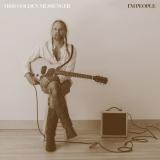
The brand- new album from Hiss Golden Messenger and the first release with Chrysalis Records. I'm People is a vivid, deeply human album born from a period of rupture, renewal, and vast American wandering. Written across Bolinas, the North Carolina Piedmont, and a Santa Fe motel room, the record traces the artist's search for clarity through landscapes both external and internal. These songs move through heartbreak, aging, fatherhood, desire, disillusionment, and the hard- won hope that remains after the spirit has been scraped bare.
Produced with Josh Kaufman at Dreamland, a decommissioned church outside Woodstock, the album carries the warmth of musicians playing live in a circle, stained- glass light filtering across guitars, drums, and upright bass. Contributions from Bruce Hornsby, Sam Beam, Marcus King, Sara Watkins, Amy Helm, Eric D. Johnson, and members of Dawes enrich a sound world that feels immediate, vulnerable, and fully alive. "I'm People is an intensely human record, and so one that needed to feel immediate, vulnerable, and fully dancing; something you could touch, sing along to, know about, recognize, relate with. I know what the record is to me and I bet it's not so dissimilar from what it's about to you, at least in the broad strokes: The heartbreak and exhilaration, the absolute black comedy of being a person on this razor's edge that is America circa 2025. What other choice do we have than to be hopeful?" - MC Taylor on I'm People. Hiss Golden Messenger is a Grammy nominated artist based in North Carolina, with multiple Album Of The Year and Best Americana Album awards, reaching #2 in the Americana Charts and performances and tours across the world, including the UK and Europe + performances on US TV; Late Night With Seth Myers.
A personal record for Mike shaped by memory, places, and renewal. Walking the streets of his birthplace, St. Louis, Zito reconnects with the sounds, stories, and hard lessons that forged his signature blend of soul-driven blues and fearless storytelling. Thirteen years after Gone to Texas, this album feels like a defining moment, marking a new chapter for Mike, his family, and a life reclaimed in the city that started it all. The songs paint vivid snapshots of city life and personal reckoning, from late- night regret and self-awareness to raw portraits of neighbourhood survival and street-level truth. Tracks like "Downtown at Midnight" and "Grand Avenue" capture the grit, temptation, and consequences of the past with unflinching honesty, grounding the album in lived experience and emotional weight . Zito's writing is direct and cinematic, pairing tough reflection with compassion and hard-earned wisdom.
At its heart, Outside Or The Eastside is a celebration of second chances, an album dedicated to better days, family, friendship, love, and joy found in everyday moments. Life's unpredictable paths open doors you never expect, and for Mike Zito, this record embraces that truth with warmth, humour, and swagger. It's a record about choosing connection over chaos and moving forward with gratitude, purpose, and the volume turned up
For if their first album ALLOMBON could be seen as the opening of a secret passage, this second record, FLOWERS TOO, is something else entirely: no longer the discovery of a world, but its methodical exploration, its feverish mapping, its deepening down to the underground layers. At a time when contemporary psychedelia seems at a standstill, when ecstasy has lost its effect, when the vast territories of the imagination have been parceled out, signposted, monetized they keep digging. And deeper still. Esoteric pop the noblest, the most dangerous kind is no longer practiced on the surface. It has abandoned the grand avenues to retreat into hidden laboratories, mental back rooms, basements more deeply buried than those of garage, punk, or black metal. It is there that the secret society Dorian Pimpernel has been working for years, with a stubbornness that feels less like a career than a calling.
A delve into the murky avenues of sonic territories, exploring off-grid zones & askew worlds – Daisy Moon leans harder into her 4/4 vision in this dancefloor-ready EP – the first release for Off-Kilter.
Each track pulses along to its own singular logic, with Daisy’s distinctive voice and vocal manipulations playfully drizzled throughout, marking an elegant collision of her sonic worlds.
Spirit Princess is a breakneck peak-time explosion – club-ready and bouncy with a pulsing bassline fit to burst from the subs of any system underpinning waves of textured ambience, nagging synths and granular gusts of found sound.
Fuelled with late night techno energy, Grain Pip offers a heads down counterpoint to the title track, while the B side serves up different energies again. Perhaps the most playful track on the record – The Stuff – demonstrates Daisy’s cheekier side as a producer and person, as inspired by a summer of fun with friends on festival dancefloors: a house banger stuffed with melodic stabs, pitched vocals and swung hats, made for the joys and follies of the 3am dancefloor. Drop Cycle rounds things off with a trippy, rolling excursion of delays and warped synths.
Dizzying sonics and relentless dancefloor energy with razor-sharp precision and uncompromising force.
out of Stock
Last delivered 6 months ago available to reorder, subject to availability
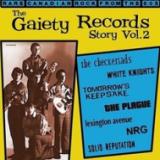
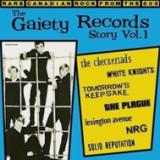
Highlights include more terrific songs from the Plague and Lexington Avenue, bands whose members would be better known when they created the Jarvis Street Revue. Twelve tough tracks by the Checkerlads, White Knights, Tomorrow's Keepsake, NRG, and Solid Reputation . The Gaiety roster was rich in talent (the 49th Parallel, Jarvis Street Review, and Souls of Inspyration, not to mention the Checkerlads, White Knights, Dewline, Tomorrow's Keepsake, NRG, Merriday Park, and Portland Street South) -- but it was not rich in resources, which is why these singles are as relatively unknown as they are even today
Formed by Don Grashey and Lloyd Palmer in Winnipeg, Manitoba, Gaiety Records was an outlet for many relatively obscure but excellent Canadian garage and rock bands during its existence. They released their own singles as well as sub-licensing material to other labels, such as RCA (49th Parallel), Columbia (Jarvis Street Revue and Souls of Inspyration), Decca, Epic, Musicor, and others. Features the Checkerlads , White Knights , Tomorrow's Keepsake, Lexington Avenue, NRG , Solid Reputation, and the Plague , including their face melter, 'Face of Time' and the essential psych classic 'High Flyin' Bird'.