For decades, any sound system worth their salt headed to the dub cutters to get a piece of the “Late Night Blues” riddim. Acetate after acetate of the riddim rumbled through speakers from Brixton to the Bronx, making it a certified sound system classic. Now, Pressure Sounds comes with four exclusive cuts of the Late Night Blues rhythm. The first 2 cuts combine Diggory Kenrick’s always-in-demand flute with the legendary Matic Horns on Side A. The flipside takes the riddim into deep, dubbed-out territory with two dangerous cuts, one laden with dreamy chimes, the other snatches of vocal.
A welcome addition to the Late Night cult!
Cerca:b legend
Repress in soon, note new price. ORIGINALLY RELEASED IN 1982. Back in 1981, NEGATIVE APPROACH (along with The Meatmen and the Necros) were one of the dominant forces in the Detroit underground. The ravages of the Motor City made it a perfect breeding ground for this cacophony, later termed "hardcore." Hordes of punks packed the legendary Freezer Theatre to hear John Brannon's jagged, gruff vocals, the McCulloch brothers' (Rob and Graham) guitar/bass gnash, and OP Moore's pounding fury. The band's minimalist (read: 30 second songs) and aggressive brand of punk has inspired countless hardcore bands around the globe. SIDE A Can’t Tell No One * Sick of Talk * Pressure * Why Be Something That You’re Not * Nothing.. SIDE B Fair Warning * Ready To Fight * Lead Song * What Ever I Do * Negative Approach
Acclaimed Japan “minyo footwork” duo WaqWaq Kingdom - aka Shigeru Ishihara (DJ Scotch Egg / Seefeel) and Kiki Hitomi (ex-King Midas Sound) - return with feverishly joyous new album Hot Pot Totto, a bubbling hot pot of dance music that responds to ecological anxiety.
“Two words are conjoined: hot pot and ottotto,” vocalist Kiki Hitomi tells us. “Ottotto is the Japanese equivalent of “oops”, or said when someone nearly falls over but manages to get their balance back: “it was dangerous but now we are safe!” Combined with the heady brew of their musical styles (“like a psychedelic Nabe hot pot: melting traditional Japanese Minyo with Jamaican dancehall, footwork, dub, techno, tribal polyrhythms and Super Nintendo soundtracks”), producer Shige Ishihara’s time in East Africa working with local musicians, and the dayglo hallucinogen of the duo’s visual aesthetic, WaqWaq Kingdom’s thumping, thrilling, irresistible third release is a unique ride.
Thematically - despite its ostensibly celebratory impact - Hot Pot Totto addresses the world’s grave ecological state. “Now our earth is on the way to catastrophe, as global warming becomes a serious problem through humanity’s fault. We are on the edge,” Hitomi writes. “We need to get back on the right track.” The ottotto of the album title refers to this experience - the need to get back on track. However, this is not lamenting music: it is fiercely defiant, full of colour and rapture, maintaining an optimism that we can.
Opening single “Hakke Yoi” ties treated voice, a floor-shaking beat, and a dizzying, transforming colour palette to a heart-quickening BPM. The track is named after the traditional cry of a sumo wrestling match, shouted by the referee to maintain tempo, commonly translated as “put some spirit into it!” The lyrics refer to humanity’s sacrifice of our planet for our own material gains. Later, key track “Buri Buri” features Ugandan experimental dance producer Catu Diosis and centres around the lyric “Turn disaster to our advantage / good fortune and happiness will come to those who smile,” offering not regret but encouragement and empowerment with its neon alien sonics and relentless vibrancy.
Kiki Hitomi was formerly a member of Ninja Tune / Hyperdub’s King Midas Sound (along with The Bug and Roger Robinson), and co-founded iconic Japanese dubstep-noise duo Dokkebi Q. She is also a celebrated illustrator and designer, having created artwork for countless record sleeves (including this one) and brands. Shigeru Ishihara - aka DJ Scotch Egg - has been orbiting the dance music galaxy for over a decade, releasing radiantly unpredictable solo records through Lightning Bolt’s Load Records, as a member of Warp Records’ legendary Seefeel, and performing with both projects across the world. He recently undertook a residency at the Nyege Nyege Villa in Uganda, working with Phantom Limb alumnus MC Yallah. More recently, Ishihara has been releasing music under the guise of Scotch Rolex, collaborating with the likes of Shackleton, Swordman Kitala, Lord Spikeheart and more.
Hot Pot Totto is WaqWaq Kingdom’s third release for Phantom Limb, following the rapturously received album Essaka Hoisa in 2019 and follow-up EP Dokkoisho in 2020. The band recently performed at the label’s sold out 5th anniversary event in London, setting an ecstatic venue alight with energy.
f B1 Buri Buri feat. Catu Diosis
The king is dead, long live the king, as they say - except in this case the late king is DJ Bone's legendary Subject Detroit label, which has now been shuttered after 25 years, and the newly anointed king is his new outlet Further, taken from his Amsterdam parties of the same name. It kicks off with a pair of new EPs on the same day and this is the first from Yeti Mind Tricks. 'We Ain't Like Them' is a hammering Motor City techno cut for the peak time which Bone remixes into a more stripped-back but no less edgy and potent cut. On the flip are 'Bimini Road' and 'Vandelay,' both of which bring stylish techno drenched in machine soul.
Cam aka Cam the Wizard is a Canadian MC from Edmonton, Alberta. Gram, aka Graham Murawsky, better known as Factor Chandelier, is a Canadian producer from Saskatoon, Saskatchewan and owner of Side Roads Records. G.A.M. aka Giovanni Allen Marks, aka Subtitle, is an MC/producer hailing from Los Angeles, California. He is affiliated with the legendary Project Blowed Crew and one half of Lab Waste, with partner Thavius Beck.
Released in 1960, Giant Steps was a watershed album for John Coltrane, solidifying the saxophone legend's reputation as one of the most influential and innovative musicians in jazz history, as well as delivering jazz to an increasingly mainstream audience, while garnering significant critical acclaim.
Although this was John Coltrane's debut for Atlantic, he was concurrently performing and recording with Miles Davis. Within the space of less than three weeks, Coltrane would complete his work with Davis and company on another genre-defining disc, Kind of Blue, before commencing his efforts on this one.
Coltrane (tenor sax) is flanked here by essentially two different trios. Recording commenced in early May of 1959 with a pair of sessions that featured Tommy Flanagan (piano) and Art Taylor (drums), as well as Paul Chambers — who was the only bandmember other than Coltrane to have performed on every date. When recording resumed in December of that year, Wynton Kelly (piano) and Jimmy Cobb (drums) were instated — replicating the alternate non-Bill Evans lineup featured on "Freddie the Freeloader" on Kind of Blue, sans Miles Davis of course. At the heart of these recordings, however, is the laser-beam focus of Coltrane's tenor solos.
All seven pieces issued on the original Giant Steps are Coltrane compositions. He was, in essence, beginning to rewrite the jazz canon with material that would be centered on solos — enabling the solo to become infinitely more compelling. This would culminate in a frenetic performance style using melodic phrasing that noted jazz journalist Ira Gitler accurately dubbed "sheets of sound."
The Giant Steps chord progression consists of a distinctive set of chords that create key centers a major third apart. Jazz musicians ever since have used it as a practice piece, its difficult chord changes presenting a "kind of ultimate harmonic challenge", and serving as a gateway into modern jazz improvisation. Several pieces on this album went on to become jazz standards, most prominently "Naima" and "Giant Steps."
The Penguin Guide to Jazz selected this album as part of its suggested "Core Collection" calling it "Trane's first genuinely iconic record." In 2003, the album was ranked No. 102 on Rolling Stone magazine's list of The 500 Greatest Albums of All Time, 103 in a 2012 revised list, and 232 in a 2020 revised list.
Undeniable music perfection deserves definitive sound and top-notch packaging. This reissue was mastered directly from the original master tape by Ryan K. Smith at Sterling Sound and cut at 45 RPM. Pressed on 180-gram vinyl at Quality Record Pressings, and housed in tip-on old style gatefold double pocket jackets with film lamination by Stoughton Printing.
Overall, Giant Steps is not only a critical triumph but also a defining moment in John Coltrane's career. Its innovative compositions, masterful performances, and profound influence on jazz make it an essential entry in Coltrane's discography and a timeless masterpiece in the history of the genre.
The WYLDE TRYFLES from Bordeaux sound wild and out of control, playing their modern take on ultra-fuzzed female-fronted 60s garage-punk, full of snotty garage vocals, screams, back from the grave vibes and hypnotic dangerous dancing beat! So, what do they serve on their third Soundflat Records-release 'Outta Tyme'? It's a brand-new killer 60's-garage-mayhem-punk-LP with 10 astounding tunes in the tradition of US-garage and British R&B/Freakbeat with an amazing vintage studio sound. You can expect the obvious classic fuzzy 60's garage-punk influence by the likes of LITTLE PHIL AND THE NIGHT SHADOWS, THE FIVE CANADIAN, THE OMENS, THE MUSIC MACHINE and THE YARDBIRDS; at the same time a great portion of 80's garage-revival-legends inspiration like THE PANDORAS or THE CYNICS, and of course the WYLDE TRYFLES' unique approach to their signature sound. You get nine smashing melodic TRYFLES-originals like the breathtaking 'Don't Leave Me This Way' or the catchy 'Don't Press Your Luck', plus one wylde coverversion of THE SAVOY's 'Can It Be', which seems to be tailormade for the band and will keep you dancing all night long. This LP is definitely among the top 60's garage revival records. 'Outta Tyme' is a fantastic new album by French garagepunkers THE WYLDE TRYFLES - don't miss out on this wylde nugget! Ready, steady, go and get it!
- A1: Theo Beckford – Easy Snapping
- A2: The Skatalites – Guns Of Navarone
- A3: Delroy Wilson – Dancing Mood
- A4: Michigan And Smiley – Nice Up The Dance
- B1: Heptones – Baby
- B2: The Abyssinians – Declaration Of Rights
- B3: Alton Ellis – I'm Still In Love With You
- B4: Tommy Mccook – Tunnel One
- C1: Sugar Minott – Jah Jah Children
- C2: The Skatalites – Man In The Street
- C3: Dub Specialist – Banana Walk
- C4: Dennis Alcapone – Run Run
- D1: Larry Marshall – Nanny Goat
- D2: Brentford Allstars – Throw Me Corn
- D3: Lone Ranger – Love Bump
- D4: Jackie Mittoo – Freak Out
Soul Jazz Records’ feature-length documentary/CD/Book ‘Studio One Story’ is being re-released on 1 August 2011, and is also available for the first time as a stand alone DVD. The DVD is being issued as a prelude to the forthcoming deluxe-hardback book ‘Original Cover Art of Studio One Records’ released this autumn by Soul Jazz Records as well as a new Studio One album compilation on Soul Jazz to coincide with the new book.
Studio One Story is a documentary this is both a staggering slice of musical history and a definitive guide to Studio One, Jamaica’s greatest ever record company, and its legendary founder, Clement ‘Coxsone’ Dodd. ‘Studio One Story’ was filmed in 2002, two years before the death of the legendary Clement ‘Sir Coxsone’ Dodd, a man famously reticent of being interviewed - until the making of this film. Described by Chris Blackwell as the Motown of Jamaica, or ‘The University of Reggae’, Studio One is where the careers of literally hundreds of reggae artists began: Bob Marley and the Wailers, Alton Ellis, The Heptones, Ken Boothe, The Skatalites, Burning Spear and Sugar Minott, to name but a few! Studio One is the ‘foundation’ label of Jamaican Reggae and Clement ‘Sir Coxsone’ Dodd is seen by many as its father.
One and a half years in the making, Studio One Story is a truly unique documentary in which the late Clement Dodd gave unprecedented personal access to tell the previously untold story of how he and the many artists and musicians at Studio One literally shaped the rise of Reggae music from the 1950s onwards through to the late 1970s. This is the true story of reggae music and its Jamaican roots told from the inside: From the rise of Kington’s sound systems in the 1940s and 1950s, through to the evolution of a Jamaican music industry (and Studio One’s dominance) in the 1960s and the worldwide success of reggae in the 1970s.
The 4 hour documentary (including over an hour of extras) was filmed on location in Kingston, Jamaica and features interviews with Horace Andy, Alton Ellis, Ken Boothe, Sugar Minott, Denis Alcapone, The Ethiopians, Sylvan Morris, Johnny Moore, Lone Ranger, King Stitt and many others. The DVD also includes rare footage of The Skatalites, Jackie Mittoo, Count Ossie, Marcia Griffiths and others. As well as the stand-alone DVD, Soul Jazz Records are reissuing the original (DVD +CD+Book) original box set.
IF YOU ARE ORDERING THIS PLEASE CHECK IF YOU NEED NTSC (AMERICA, JAPAN, ETC) OR PAL (EUROPE, AUSTRALIA, ETC).
THE DVD HAS FRENCH AND ENGLISH SUBTITLES.
NB.MP3 Release is for the audio CD only.
REVIEWS ‘Studio One was Jamaica’s Motown. This documentary brings it brilliantly to life.’ The Telegraph ‘The history of Clement ‘Coxsone’ Dodd’s legendary Jamaica studio is fantastically told through interviews, copious amounts of music and historical footage and more.’ Uncut ‘Studio One Story is no mere historical document; it is a map that will lead you directly to a massive seam, endlessly mineable, of musical gold’ The Observer ‘A fascinating documentary’ The Telegraph ‘Compulsive viewing for anyone with an interest in Reggae’ The Wire
Standard EP[18,45 €]
Warehouse find!
Three major players from the now multi-generational broken beat scene: Henry Wu, Dego (2000black) and IG Culture have assembled for an irresistible late summer bruk-samba trip.Brazilian rhythms have always been foundational influences on the broken-beat and future jazz movements, and this EP continues to explore these connections, a running theme throughout Far Out's 23 year history with Seiji, Mark Pritchard, Afronaught, Domu, Da Lata and Jazzanova being just a few of the names to have contributed to this particular avenue of the label's pantheon of dance music.The joyful samba-soul in the title track of Sabrina Malheiros' latest album features the bass and keys of Brazilian Jazz-funk legends Azymuth, and is inspired by the quest for clarity in the face of difficult times, Clareia in Sabrina's own words means to clear, light, brighten or illuminate'. But this remix EP beautifully ruptures the 'clarity' in style, each crafting the breezy Brazilian beats into their own distinct brand of future-thinking club-funk... these beats were made to be broken!
Repress.
Studio One's music in the 1970's took the label to new heights. The new style of Disco Mix brought many areas of Reggae together Roots, Lovers, Disco and Dub all came together in extended form, re-versioning classic hits, experimenting with new studio technology, over-dubbing, syn-drums and more producing what many fans describe as the most creative and innovative phase in the history of the legendary Studio One Records.
This Studio One Disco Mix album includes many sought after classic tunes only ever released in very small quantities (on Studio One's very first 12" records as well as it's infamous Music Lab 10"s out of New York) and consequently many of these track s have been unavailable since their day of release. Studio One Disco Mix features many of the classic Studio One artists such as Alton Ellis, Sugar Minott, Jackie Mittoo and Willie Williams (with his classic re-versioning of his own "Armigideon Time") alongside less well artists such as Doreen Schaeffer, Judah Eskender Tafari and George Dudley and many more.
...Finally repressed! No more words needed... Classic!
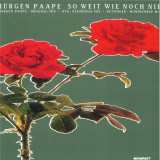
The original version of this gorgeous schlager techno track, released in august 2001 on Kompakt's Total 3, would put a smile on a lot of people's faces. Apart from the reworked original version, you'll get two sensational remixes: The one from Frankfurt's high-aesthete, super hipster, club- and label-owner with a three-letter name: Ata. Since the very beginning, his Playhouse label has always been a guarantee for finest German House music. It's his first (!) remix ever and his first studio work since the legendary first Playhouse release 'Holy Garage' in 1993. The 'Playhouse Mix' turns the original version into a mega-hip, late-night monster and reminds a bit of the great Larry Levan and Metro Area's congenious adaption of early-80s disco music. The 'Robert Johnson' club is going down on its knees. Wonderful. The other remix comes from one of Kompakt's in-house pioneers of pop ambient: it's Olaf Dettinger. Who didn't want to miss this chance and has interrupted his creative pause only for doing this wonderful 'Moonlight Mix'. Dettinger's cosy hi-tech sounds and Sonja Luebke's seraphic voice, both singing a duet to the moon. Very, very beautiful, indeed.
DER SMARTE HIT VON JÜRGEN PAAPE MIT REMIXEN VON PLAYHOUSE'S ATA UND DETTINGER. HERRLICH !
What can you say about the bass playing (and way more) legend that is Ade Shaw? During a long and mind-altering career, Ade has played with many outfits, most notably psych warlords Hawkwind, for whom he provided his trademark basslines for several years in the mid 70s. He has also played with Atomic Rooster (albeit briefly), Magic Muscle, Rustic Hinge, The Hawklords, Keith Christmas, Mike Moorcock’s Deep Fix and many more. More recently, (well, the last 30 years actually!) he has been the bass player in The Bevis Frond. For the last year or two, however, he has had to stand down from touring and gigging for personal reasons, but happily this has not prevented him from recording a new album. So it is with great pride and delight that we are now able to release ‘A Dark Reflection’ on Blue Matter. Eleven brand Adrian Shaw new songs ranging from out and out psychedelia, through rock to even a splash of lilting balladry. With Ade playing all the instruments bar a couple of guest appearances from Nick Saloman & Bari Watts, this is the Ade Shaw album we’ve all been waiting for. It’s a real stormer, and it’s a great privilege to be able release it on our label. Give it a listen & hopefully you’ll see what we mean
Reggae and Jamaican music have long embraced a symbiotic relationship with the movies. Rooting back to the island's golden era, countless arrangements have either been direct covers, or inspired by, the musicality and mood found in both cinema and television. These reinterpretations would become part of the backbone of the instrumental sound that accompanied the Jamaican record industry's acceleration from the mid-60s and beyond. Talented young musicians, rising from Alpha Boys School and the early studios of Coxsone, Duke Reid and others, found a showcase for their unique playing style on hundreds of different recordings, while appealing to the country's own love affair with Westerns, James Bond canon, and other rebellious themes and motifs that were projected from Hollywood during this time.
In this same tradition, in a new interval, arrives the debut release of Anant Pradhan and Larry McDonald, the latter a master percussionist with direct participation in some of Jamaica's earliest recordings. McDonald, although often uncredited, was a legitimate influence in helping to bridge the Afro-Caribbean sound from calypso into ska and later reggae with his iconic style on hand drums and percussion. A kindred spirit of McDonald, despite 50 years separating them, Anant Pradhan is a bonafide member of the next generation. Although this is his first "solo" record, the talented saxophonist has already played on dozens of incredible sessions for the likes of Victor Axelrod, The Inversions, Andy Bassford, Channel Tubes, Ralph Weeks and Combo Lulo. As an official member of the current touring group of the legendary Skatalites, Pradhan has honed his musicianship under some of the greats of reggae music. His particular soulful, instrumental arrangements are an homage to that influential era of Jamaican music. Pradhan and his band's performance retain the skill and innovation of the old vanguard, and like the generations before, capture a magic that may only be possible when cinema goes reggae.
A cult favorite from A Nightmare Before Christmas, Danny Elfman's "Sally's Song" was immortalized in Tim Burton's 1993 classic stop-motion film. It's immediately recognizable in all its haunting charm, and now, Pradhan and McDonald have managed to transform it into an irrefutable reggae classic, reinvented with its melancholic lead sax and bombastic percussion. The prolific Henry Mancini is already entrenched in the Jamaican canon, yet nobody has knowingly attempted to recreate one of his most magical numbers, "Meglio Stasera" aka "It Had Better Be Tonight," that of the riveting one-take scene in 1963's The Pink Panther. The galloping percussion of the original is transposed through a cloud of smoke, slow and low in a roots style at the hands of McDonald. Pradhan's sax leads the way over the locked-in rhythm section, both deep and cheeky all at once. These first two productions of Anant Pradhan and Larry McDonald are a deserving entry into the canon of reggae covers, and are equally adept to be heard on the screen and or at the dance alike.
Bogotá's La Pambelé steps into the ring for their debut release on Names You Can Trust, and with it, they've joined a storied history in Colombia's prized salsa tradition. This new generation of talented musicians have come out for the 1st round with fire, grit and determination. Brass, keys, percussion and lyrics blast at you from all angles, evocative of the way the orchestra's namesake, the legendary Palenque boxer, used his flashing fists within the squared circle.
Featuring a full album of original compositions that have been faithfully recorded and mixed under the guidance of Mario Galeano Toro (Frente Cumbiero) and Daniel Michel (La Boa) at Mambo Negro Records, the approach is a return to the roots of salsa dura that continues to thrive in Colombia's deep musical training grounds. The promising future of the genre shines in the capable hands of La Pambelé and its players, and this introduction is sure to help vault the group from up-and-comer to title contender status.
Das Debütalbum der irischen Post-Punk Newcomer.
"Madra" (was auf Irisch "Hund" bedeutet) ist ein
gitarrenlastiges, instinktgeleitetes Album, auf dem sich die
irischen NewDad auf eine Reise der Selbsterkundung,
Selbstsabotage und Reflexion begeben. Durchtränkt von
Dysfunktion sucht "Madra" Trost im Schmerz und setzt
sich mit Themen wie Mobbing,
Selbstmedikation/Depression, Zerstörung, Co-Abhängigkeit
und Widerstand auseinander. Geschrieben in ihrer
Heimatstadt Galway, Irland, fanden die Aufnahmen des
Albums in den legendären Rockfield Studios (Black
Sabbath, Queen) in London statt, wo die Band inzwischen
auch wohnt. Julie Dawson, Cara Joshi und Fiachra
Parslow gründeten ihre Band, um bei der
Musik-Abschlussprüfung der Secondary School nicht solo
antreten zu müssen; kurz darauf stieß Sean O'Dowd
dazu, erst nur als Toningenieur, bald aber festes
Bandmitglied. Ihren Bandnamen NewDad ließen sie von
einem Zufallsgenerator erzeugen, und ein weiterer Zufall
kam ins Spiel, als kurz nach der Bandgründung Anfang
2020 die Welt plötzlich fast zum Stillstand kam. Trotzdem
schafften es die vier, im März 2021 ihre Debüt-EP
"Waves? zu veröffentlichen und im Januar 2022 den
Nachfolger "Banshee?. NewDad erinnern uns an die
Rastlosigkeit, all die Ängste und Beziehungsprobleme, mit
denen wir alle im Laufe unseres Lebens konfrontiert
werden. Sie verschmelzen Fantasie und Autobiografie mit
Einflüssen aus dem modernen Kino und Fernsehen - und
der ruhigen Küstenlandschaft von Galway, die den
Hintergrund ihrer prägenden Jahre bildet.
2024 REPRESS
RAWAX proudly welcomes The Legend Adonis the the Family!
We're very honoured to present you on the 30th edition of our Chiwax Classic series the man who produced 1986 his fist of many House Anthems, "No Way Back"! Now in the rebound: The 1989 originally on Jack Trax released "Do You Wanna Jack/ Lost In The Sound". As bonus track Adonis gave us "My Space". Another outstanding track, he did with Virgo aka Marshall Jefferson! This release is quite unique in this combination - so don't sleep on it! We'll have it on black solid vinyl and also on purple vinyl - it's up to you!
For more than 30 years, singer-songwriter and guitar hero Mary Timony has cut a distinctive path through the world of independent music, most recently as vocalist and guitarist of acclaimed garage-pop power trio Ex Hex (Merge) but also as a member of seminal postpunk band Autoclave (Dischord), celebrated leader of the deeply influential Helium (Matador), multifaceted solo artist (Matador, Lookout!, Kill Rock Stars), and a co-founder of supergroup Wild Flag (Merge). Described by Sleater-Kinney's Carrie Brownstein as "Mary Shelley with a guitar" and dubbed "a trailblazer and an innovator" by Lindsey Jordan a.k.a. Snail Mail, Timony has distinguished herself as one of her generation's most influential. Although she has remained a cult hero and critical favorite since the early '90s, Timony's many triumphs have long been counterbalanced by crippling doubt and self-nullification. Her fifth solo album, Untame the Tiger, approaches these emotions head on. Her first solo release in 15 years is a startling document of an artist fully coming into her own power during the fourth decade of her career. It is the product of lessons learned during life-altering struggle. The mystical, acoustic-driven Untame the Tiger emerged after the dissolution of a long-term relationship and was bookended by the deaths of Timony's father and mother. The album was recorded during a two-year period during which she was the primary caregiver for her ailing parents. The tectonic psychic shift Mary experienced due to this loss informs many of her lyrics. Standout track "No Thirds" "is a song about losing everything and having to keep on going," says Timony. "I wanted the verses to sound like a wide-open barren space, like driving across a desert, because that is what the song is about - losing people and the feeling that your future is a giant, wide-open blank space." The stripped-back acoustic instrumentation of "The Guest" conjures Sweetheart-era Byrds. Timony describes it as a song sung directly to loneliness: "I was imagining loneliness as a house guest who keeps knocking on your door. I thought it would be funny to say loneliness is the only one who always comes back." Untame the Tiger does not eschew Timony's guitar hero reputation; in fact, "Summer" relishes in it, a straight-up banger that you'd be half tempted to call "no frills" until its initial garage rock stomp breaks into the unexpected bliss of a twin guitar solo conclusion. "I wanted the recording to have the energy of the Kinks, early Dio and Elf, or Rory Gallagher," she explains. "I was also listening to a lot of Gerry Rafferty's first solo album and was inspired to have two simultaneous guitar solos." Untame the Tiger picks up the thread woven through Timony's freak-folk-anticipating solo albums of the early '00s. Basic tracks were recorded at Studio 606 in Los Angeles, with Timony backed by Dave Mattacks, drummer of legendary British folk-rock band Fairport Convention. "Mattacks is a hero of mine and one of my favorite musicians of all time. He is a true legend. I never in a million years thought he'd agree to play on my record," says Timony. "Before the session, I had a panic attack and had to go sit alone in the parking lot_ Once we started playing together, it felt so great that the fear subsided and turned into excitement. His playing felt instantly familiar, which makes sense because it's the foundation of many of my favorite records." Untame the Tiger was produced by Mary Timony, Joe Wong, and Dennis Kane. The album was recorded over the course of two years at Studio 606, Magpie Cage, 38North, and in Mary's basement Additional engineering by J. Robbins (Jawbox, Burning Airlines). Musicians include Chad Molter (Faraquet, Medications), David Christian (Karen O, Hospitality), and Brian Betancourt (Cass McCombs, Devendra Banhart, Hospitality). The album was mixed by Dave Fridmann (MGMT, The Flaming Lips, Mercury Rev), Dennis Kane, and John Agnello (Dinosaur Jr., Kurt Vile, Waxahatchee).
Les Disques du Crepuscule presents a unique anthology by artful Brussels postpunk-funk band Marine, fondly remembered for their dazzling debut single ‘Life In Reverse’ in 1981, and now back with a clutch of brand new studio tracks.
The cover art is by LDDC art director Benoit Hennebert and based on the ‘Same Beat’ single sleeve from 1982. The vinyl edition s of TWI 143 is limited to 500 copies pressed on blue vinyl and includes a digital link. All tracks are newly remastered in 2023.
Formed in late 1980 around charismatic frontman Marc Desmare together with musicians from infamous punk band Mad Virgins, Marine made an early splash supporting Orange Juice and Josef K at the legendary Plan K venue, Postcard Records afterwards keeping tabs on the Sound of Young Brussels.
Snapped up instead by chic boutique label Les Disques du Crepuscule, Marine released their infectious debut single ‘Life In Reverse’ in April 1981, attracting rave reviews in the Belgian and UK press, reaching the giddy heights of #6 on the NME indie chart, and even being invited to record a radio session for John Peel - a world first for a Belgian band.
Soon favourable comparisons were being drawn with The Pop Group, A Certain Ratio, Defunkt, James White and Fire Engines, some pundits even sensing a new Haircut 100. ‘We’re not a fashion band,’ insisted Marc in UK rock weekly Sounds, ‘and it’s not really dance music. But all the same I’m glad people dance to it.’
Alas, artistic differences caused the fast-rising group to part ways in a London studio, when half the band quit to form pop-funk sophisticates Allez Allez. With new Marines on board, Marc and bassist Paul Delnoy went on to release two further singles (‘How to Keep Cool’ and ‘Same Beat’), gigged extensively around France and the Low Countries, and played a headline show at The Venue in London. ‘Fine, disciplined and gleeful rhythm workers,’ enthused Chris Bohn in NME. ‘A happy, contagiously clean aural equivalent to a Serge Clerc cartoon.’
Alas by the summer of 1982 Marine were all washed up, with Marc going on direct films and documentaries as Marco Laguna. Four decades later, finally heeding desperate pleas from Crepuscule that his sensational first band never cut an album, Marc has written and recorded another 6 remarkably authentic sounding Marine songs with help from like-minded friends in Brussels and Paris, once more drawing on a heady mix of supercool funkabilly, jazz and soundtrack influences.
‘It was an incredibly strange experience to revisit my past,’ says Marc, ‘but definitely fun. I’m glad, and I’m proud!’
Auf ihrem Album "Intermundia" befasst sich die auf dem Land in der ostitalienischen Region Marche lebende Pianistin und Komponistin Olivia Belli mit spirituellen Orten, die eine besondere Verbindung zwischen Himmel und Erde haben sollen. "An diesen heiligen Orten treffen Himmel und Erde zusammen. Sie beruhigen und besänftigen oder betören und verzaubern und eröffnen einen Blick auf das Transzendente", erklärt Olivia Belli. "Hier wird man von allem Unwesentlichen der modernen Welt befreit und es gibt nur dich und deine Seele".Für die Komposition ihres Albums hat Olivia Belli acht spezielle, spirituelle Orte in ganz Mittelitalien besucht. Jedes Stück auf "Intermundia" repräsentiert das besondere, tiefe Gefühl, das sie dort empfunden hat. So ist erste Single "Valadier" von der einmaligen Atmosphäre des in einer Felsengrotte errichteten Tempels "Tempio di Valadier" inspiriert - ein Jahrhunderte altes Heiligtum in den Frasassi-Höhlen in der Provinz Ancona. Olivia Bellis ruhige, wehmütige Miniatur vermittelt die Hoffnung und das Gefühl der Absolution, das sie an diesem Ort erlebte."'Tempio di Valadier' ist mein Zufluchtsort, an dem ich versuche das wahrzunehmen, was real aber unsichtbar ist, um über die physischen Dinge hinaus den Geist zu formen," erörtert Olivia Belli. "Der Tempel vermittelt eine einzigartige Schönheit und eine besondere Atmosphäre, die von seiner Perfektion ausgeht und im Kontrast zum kahlen Felsen steht." Der Titel "Bet Ha Chaim" ist von dem gleichnamigen, alten jüdischen Friedhof in Pesaro inspiriert. Dieser Friedhof gilt seinem hebräischen Namen nach als "Haus des Lebens". In "Pian Perduto" vertont Olivia Belli die auf einer von drei Tälern umschlossenen Hochebene gelegene Landschaft, in der einst das Dorf Castelluccio zu finden war, bevor es durch ein Erdbeben unwiederbringlich zerstört wurde. "Sybil" ist dem Gipfel des Monte Sibyl im italienischen Apennin gewidmet, wo der Legende nach die Hellseherin Sibylle in einer Höhle lebte. "Sibyl" schließt das Album als Höhepunkt von Olivia Bellis musikalischer Pilgerreise ab. Kompositorisch ließ sich Olivia Belli für ihr Album durch das mittelalterliche Modalsystem der Kirchentonarten inspirieren. Sie ordnet die acht bekannten Modi den jeweiligen Stimmungen der von ihr besuchten Orten zu. Die so entstandenen acht Kompositionen unterbricht sie in der Reihenfolge des Albums mit vier nach dem italienischen Begriff für Atem "Respiro" benannten, ruhigen Klavierzwischenspielen. Sechs der Titel werden von einem Streichtrio begleitet. "Die Orte, die ich auf Intermundia vertonte, sind Plätze, an denen Menschen spirituelles Wachstum suchen und wir uns selbst besser wahrnehmen können. Solche Orte können überall sein - wir müssen sie nur finden" so Olivia Belli.