2024 Repress
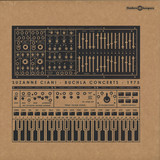
Finders Keepers invite you to witness the incredible first ever Buchla synthesiser concerts/demonstrations providing a distinctive feminine alternative to The Silver Apples Of The Moon if they had ever been presented in phonographic form. This is history in the remaking.
This spring Finders Keepers Records are proud to release an archival project that not only redefines musical history but boasts genuine claim to the overused buzzwords such as pioneering, maverick, experimental, groundbreaking and esoteric, while questioning social politics and the evolution of music technology as we've come to understand it. To describe this records as a game-changer is an understatement. This record represents a musical revolution, a scientific benchmark and a trophy in the cabinet of counter culture creativity. This record is a triumphant yardstick in the synthesiser space race and the untold story of the first woman on the proverbial moon. While pondering the early accolades of this record it's daunting to learn that this record was in fact not a record at all... It was a manifesto and a gateway to a new world, that somehow never quite opened. If the unfamiliar, modernistic, melodic, pulses, tones and harmonics found on this 1975 live presentation/grant application/educational demonstration had been placed in a phonographic context alongside the promoted work of Morton Subotnick, Walter Carlos or Tomita then the name Suzanne Ciani and her influence would have already radically changed the shape, sound and gender of our record collections. Hopefully there is still chance.
In short, Suzanne was a self-imposed twenty-year-old employee of the Buchla modular synthesiser company, San Francisco's neck and neck contender to New York's Moog. Buchla was run by a community of festival freaks and academic acid eaters whose roots in new age lifestyles and the reinvention of art and music replaced the business acumen enjoyed by its likeminded East Coasters. In the eyes of the consumer the creative refusal to adopt rudimentary facets like a piano keyboard controller rendered the Buchla synthesiser the more obscure stubborn sister of the synth marathon, steering these incredible units away from the mainstream into the homes and studios of free music aficionados, art house composers and die-hard revolutionaries. Championed and semi-showcased by composer Morton Subotnick on his albums The Bull and Silver Apples Of The Moon, Buchla's versatility began to open the minds of a new generation, but the high-end design features and no-compromise modus operandi was often confused with incompatibility and, in the pulsating shadow of Moog's marketing, the revolution would not be televised nor patronised. Suzanne Ciani, as one of the very few female composers on the frontline (and also providing the back line) did not lose faith.
These concerts' are the epitome of rare music technology historic documents, performed by a real musician whose skills and academic education in classical composition already outweighed her male synthesiser contemporaries of twice her age. At the very start of her fragile career these recordings are nothing short of sacrificial ode to her mentor and machine, sonic pickets of the revolution and love letters to an absolutely genuine vision of and 'alternative' musical future. In denouncing her own precocious polymathmatic past in a bid to persuade the world to sing from a new hymn sheet, Suzanne Ciani created a bi-product of never before heard music that would render the pigeon holes ambient' and futuristic' utterly inadequate. Providing nothing short of an entirely different feminine take on the experimental records' of Morton Subotnick and proving to a small, judgmental audience and jury the true versatility of one of the most radical and idiosyncratic musical instruments of the 20th century. These recordings have not been heard since then.
The importance of these genuinely lost pieces of electronic musics puzzle almost eclipses the glaring detail of Suzanne's gender as a distinct minority in an almost exclusively male dominated, faceless, coldly scientific landscape. Those familiar with Suzanne's work, a vast vault of previously unpublished non-records', will already know how the creative politics in her art of being' simultaneously reshaped the worlds of synth design, advertising and film composition before anyone had even dropped a stylus in her groove. Needless to say this record, finally commanding the archival format of choice, courtesy of the Ciani and Finders Keepers longstanding unison, was not the last first' with which this hugely important composer would gift society, and the future of a wide range of exciting evolving creative disciplines.
You have found a holy grail of electronic music and a female musical pioneer who was too proactive to take the trophies. With the light of Buchla and Ciani's initial flame Finders Keepers continues to take a torch through the vaults of this lesser-celebrated music legacy shining a beam on these non-records' that evaded the limelight for almost half a century. You can't write history when you are too busy making it. With fresh ink in the bottomless well, let's start at the beginning. Again. You, are invited!
Cerca:b line
To experience Justin R. Cruz Gallego's pulverizing Sub Pop debut is to get burned down to ashes and burst forth, born anew. Grim Iconic...(Sadistic Mantra), the Tacoma-based artist's second album, is driven by opposing forces: noisy abstractions and tightly structured beats, anguish and dissolution at the outside world and empowerment within, apathy and catharsis. Grim Iconic...(Sadistic Mantra) weds scouring electronics to hooky songs and Gallego's powerful drumming in a way that feels visceral and new. It's his most personal statement to date, at once playful and intent, driven and combustible, total fucking chaos mixed into glints of broken-glass beauty. Born in Tucson, Arizona, Gallego experienced culture shock as a child after relocating to the frigid climes of the Pacific Northwest. He found solace in the Seattle punk scene centered around Iron Lung Records and has since remained a fixture in the underground community. "I see this record as first and foremost a musical statement," Gallego says. "I grew up in punk and DIY subcultures, but before that I had Latin music playing in the background through my childhood and every phase of adolescence. It was surprisingly natural to incorporate. I realized I wanted to go deeper into these rhythms. I wanted to make a record that felt as experimental as much as it felt from the perspective of a Latino. When I got a glimmer of that possibility, it felt exciting." Lead single "Dogear" is a face-melting party starter that sounds like someone forced Talking Heads and Rudimentary Peni to share a practice space. "I wanted a song that felt playful in the way it attempted to be dissonant without taking itself too seriously," Gallego says. "Cholla Beat" is even more ambitious, an anthemic mix of WAR and Wire led by unruly synthesizers spiraling down a labyrinth of production. Gallego's influences for the album are vast, ranging from British documentary filmmaker Adam Curtis to electric Miles Davis to audio miscreants like Demdike Stare and Oneohtrix Point Never. But it's Gallego's assured sonic vision that resounds the loudest. And, while J.R.C.G. is a solo project, conceived and executed primarily in Gallego's home studio, he found strength in opening the project to others, starting with Seth Manchester as co-producer. Manchester's penchant for bone-rattling frequencies, as seen in his production work with The Body, Battles, and Mdou Moctar, made him a natural fit for Gallego. Together, they retained the intimacy of Gallego's home recordings while taking advantage of the hi-fi stylings of his Machines With Magnets Studio in Rhode Island. The closing song, "World i," offers a glimpse into the live experience of Grim Iconic...(Sadistic Mantra), with upwards of seven band members blasting off. The album features a fascinating mix of supporting players, many of whom cycle through J.R.C.G.'s live lineup: Morgan Henderson (The Blood Brothers, Fleet Foxes), Jason Clackley (Dreamdecay, The Exquisites), Jon Scheid (Dreamdecay, U Sco), Erica Miller (Casual Hex, Big Bite), Veronica Dye (Terminator) Phil Cleary (U Sco), and Alex Gaziano (Dreamdecay, Kidcrash, Science Amplification). Taken as a whole, G.I.S.M. is a whirlwind of sound, pummeling, and cleansing. It's a sweaty, thrilling aural adventure and, like a great basement show, it'll leave you breathless, exhausted, and wanting to repeat it all over again. As any good mantra should.
Heaven Born and Ever Bright is the third studio album by British rock band Cardiacs. It was produced by Tim Smith, engineered by David Murder and mixed by both Available on CD Digifile and Single Sleeve Violet coloured vinyl (pressed from the 1991 master) Cardiacs are an English rock band formed in Kingston upon Thames by Tim Smith (guitar and lead vocals) and his brother Jim (bass, backing vocals) in 1977 under the name Cardiac Arrest. One of Britain's leading cult rock bands, Cardiacs' sound folded in genres including art rock, progressive rock, art punk, post-punk, jazz, psychedelia and heavy metal (as well as elements of circus, baroque pop, medieval music, nursery rhymes and sea shanties), all of which was topped by Smith's anarchic vocals and impressionistic lyrics. Their bizarre sound and image made them unpopular with the press, but they amassed a devoted following Tim Smith was the primary lyricist, noted for his complex and innovative compositional style. He and his brother were the only constant members in the band's regularly changing lineup. The band created their own indie label, the Alphabet Business Concern, in 1984 and found mainstream exposure with the single "Is This the Life?" from their debut album A Little Man and a House and the Whole World Window (1988). Their second album, On Land and in the Sea (1989), was followed by Heaven Born and Ever Bright (1992), which displayed a harder edged, metal-leaning sound retained in the subsequent albums Sing to God (1996) and Guns (1999). Tim Smith was hospitalised with dystonia resulting from a cardiac arrest in 2008, which brought increased and belated critical recognition to Cardiacs, with several music outlets calling Sing to God a masterpiece. His death in 2020 saw a raft of tributes on social media
In 1995, English rock band Ned’s Atomic Dustbin released their third and final studio album with their original lineup; Brainbloodvolume. It spawned two singles: “All I Ask Of Myself Is That I Hold Together” and “Stuck”. The album embraces a variety of styles, stepping beyond their straight-up thrash/pop roots and creating an exciting new sound. In 1995, after an extensive US tour in support of the new album, Ned’s Atomic Dustbin split up in New York City following what would be their final show. Brainbloodvolume is available on vinyl as a limited edition of 1500 individually numbered copies on silver & black vinyl and includes an insert.
Continuing our exploration of Sao Tomé and Príncipe with DJ Tom B., Les Disques Bongo Joe proudly announces the release of Africa Negra Anthology Vol. 2. We"ve carefully selected and remastered 13 standout tracks for this volume, digitized from studio tapes by their tour manager. The album includes a booklet with updated liner notes and vintage photos of the group.
To this day, jazz pianists are influenced by Bill Evans by his use of impressionist harmony, interpretation of traditional jazz repertoire, and his trademark rhythmically independent, “singing” melodic lines. Evans gained his first spotlight when joining Miles Davis’ sextet during the time Kind of Blue was recorded. After leaving the sextet, Evans began his career as bandleader, which he finished in his last trio with Marc Johnson on bass and Joe LaBarbera on drums. This trio recorded The Brilliant in 1980 live at the Keystone Jazzclub, San Francisco, just before Evans’ passing. The Brilliant is available on black vinyl.
Released via Sony CMG - This is a reissue of HiM's album, "Deep Shadow & Brilliant Highlights". HIM's third album, remains a standout in their discography. Opening with 'Salt In Our Wounds,' the album showcases a perfect blend of slow build-ups and heavier choruses, featuring a cool solo. 'Heartache Every Moment,' a single, grows on you with its poignant lyrics. 'Lose You Tonight' offers a unique intro with a bass line and intriguing background sounds, while 'In Joy And Sorrow' captivates with soothing guitar riffs and beautiful vocals. 'Pretending' stands out with memorable lyrics and an impressive solo. Although 'Close To The Flame' and 'Beautiful' are slower tracks, they add depth to the album. 'Don't Close Your Heart' and 'Love You Like I Do' close the album on a high note that create a lasting impact on the listeners. Single Black LP Vinyl.
“I personally feel this is a great record and recommend it to everyone. It’s positive and hot and simply
excellent.” – Gary Burton, in the liner notes.
Pat Metheny hatte sein Debüt bei ECM als Mitglied von Gary Burtons Band auf dem Album Ring im
Jahr 1974 gegeben, aber Bright Size Life, seine erste Studioaufnahme als Leader überhaupt, war das
Album, das ihn schlussendlich als neue kreative Kraft mit einem frischen Ansatz im Kontext des zeitgenössischen Jazz profilierte. Das im Dezember 1975 in Ludwigsburg aufgenommene und von Manfred Eicher
produzierte Album wurde von Methenys damaliger Stammband mit Bob Moses am Schlagzeug und dem
virtuosen, aber damals weitgehend unbekannten Jaco Pastorius am Bass eingespielt.
”Ich könnte die gesamte Musik von Bright Size Life auch jetzt noch spielen”, sagte Pat Metheny in
einem Interview für die Library of Congress im Jahr 2021. ”Es fühlt sich immer noch relevant an; die
Argumente darin erscheinen mir immer noch gültig und sie sind es wert, darüber zu reflektieren.... Damals
hatte ich das Gefühl, dass ich eine Platte machen wollte, die vielleicht die einzige sein würde, die ich je
machen würde. Ich hoffte, ein Statement zu Dingen abzugeben, die mir in Bezug auf Melodie, Harmonie,
Triospiel und sogar das Leben im Allgemeinen wichtig waren.”
Diese Luminessence Vinyl Edition des Albums erscheint in einem Tip-on Klappcover und enthält Fotos
aus dem Archiv.
Summer and the seventh part of Running Back‘s revered various artist series are here. This time consisting of five tracks across the spectrum of cunning and contemplative dance music. Taking over the a-side duties, Ricardo Baez and Josh Micky demonstrate the uncanny alliance of pianos and Italo bass lines for heavy modern disco hitters: high times, fun stuff. BSS‘ Jannis puts that concept on its head with a different kind of piano track. Hypnotic deep house minus all its cliché-ridden traps. Bryolfur and Running Back mainstay Storken opt for trippy and tricky disco with Twist, while Jonus Eric ticks all the IDM and brain dance boxes with Ribbon.
Easy to swallow and value for money.
NZM features the incredible vocals/keyboardist Nick Marino. NZM is high energy Power Metal band
with strong melodic vocal lines and edgy riffs. NZM is based in South Florida and was formed in 2010.
Artists such as Yngwie Malmsteen, Symphony X, Deep Purple, AC/DC, Dio, Iron Maiden, Queen and
Scorpions had a strong influence on NZM's music.
- A1: Call Off The Search
- A2: Crawling Up A Hill
- A3: The Closest Thing To Crazy
- A4: My Aphrodisiac Is You
- A5: Learnin' The Blues
- A6: Blame It On The Moon
- B1: Belfast (Penguins And Cats)
- B2: I Think It's Going To Rain Today
- B3: Mockingbird Song
- B4: Tiger In The Night
- B5: Faraway Voice
- B6: Lilac Wine
- C1: Call Off The Search (Demo)
- C2: Tiger In The Night (Demo)
- C3: Faraway Voice (Demo)
- C4: I Think It's Going To Rain Today(Demo)
- C5: My Aphrodisiac Is You (Demo)
- C6: September Song (Demo)
- C7: It Seemed Like A Good Idea At The Time (Demo)
- D1: Downstairs To The Sun
- D2: Shirt Of A Ghost
- D3: Deep Purple
- D4: Turn To Tell
- D5: Jack's Room
- D6: Anniversary Song (Live)
2x12"[37,66 €]
Katie Meluas Debütalbum "Call Off The Search" machte sie sofort zu einem außergewöhnlichen neuen Talent. Das Album, welches dieses Jahr sein 20-jähriges Jubiläum feiert, zeigt ihren einzigartigen Gesangsstil, der Jazz-, Blues- und Folk-Einflüsse mit zeitgenössischer Pop-Sensibilität vermischt. Das Album wurde von Mike Batt mitgeschrieben und produziert, der eine zentrale Rolle bei der Entwicklung des prächtigen und anspruchsvollen Klangs des Albums spielte. Das zentrale Thema von "Call Off The Search" ist die Liebe und die Selbstfindung, ausgedrückt durch eine Sammlung von gefühlvollen und introspektiven Songs, darunter die Leadsingle "The Closest Thing to Crazy", die mit ihrer gefühlvollen Performance und der fesselnden Melodie das Publikum weltweit sofort in ihren Bann zog. Von Kritikern und Zuhörern wurde das Album für seinen reifen und gefühlvollen Sound gelobt, vor allem wenn man bedenkt, dass Katie Melua zum Zeitpunkt der Veröffentlichung erst 19 Jahre alt war. Call Off The Search" fand bei einem breiten Publikum Anklang, wurde ein kommerzieller Erfolg und zu einem der meistverkauften Alben des Jahres 2003.
Diese Neuauflage zum 20-jährigen Jubiläum wurde in den Metropolis Studios in London neu gemastert und enthält B-Seiten sowie sieben bisher unveröffentlichte und unverfälschte Demos, die Katie und Mike Batt 2002 aufgenommen haben. Die von Pete Paphides verfassten Liner Notes enthalten Beiträge aus einem neuen Interview mit Katie.
Jorge Velez returns to L.I.E.S. with his first effort since 2012's Hassan lp. Through this six track lp we see the ultra versatile Velez weave seamlessly through numerous strains of electronics.
From menacing drones to EBM influenced floor tracks to Sakamoto-esque melodic experiments, he creates an atmosphere equally suitable for home listening or adventurous club play. All of this very much reminding us of the days when Mute, Factory, Cherry Red, or Fetish Records were at their best.
The Acido family in full effect: leftfield, lo-fi Acid, ace Ambient trips, Disco vibes & what not.
Repress.
The re-release series of original Ethiopian classic vinyl continues -- the finest Ethio jazz by Mahmoud Ahmed and his band from 1975 plus two tracks from 1978.The liner notes: 'Melancholy blues, piercingly minimalist country airs, brassy, danceable urban jazz, heart-wrenching, off-key crooners: a rich and stirring patchwork of sounds, crossing Afro-beat, Latino-swing moves and Eastern arabesques (Ana�s Prosa�c).' Such were the first -- informed and enthusiastic -- opinions of the music press when the first strains of modern Ethiopian music sounded on our shores. This was in 1984-1985. Such a positive note, struck about such a country at such a time, created plenty of reverb. The country had been so thoroughly trashed by the media's feeding-frenzy, which spewed out a mix of horror and pious pity, bitter denunciation and humanitarian appeals, wallet-tickling clich�s and refusal of identity. In one brutal swoop, TV-reality transformed Ethiopia into a cursed nation, forsaken by God and by man. In contrast to these tragedies, but in the same hackneyed tones, Mahmoud Ahmed's life resembles an edifying fairy-tale where destiny, talent and achievement combine to triumph over poverty, fate and the evil eye. Biography, history and legend, with the help of God, infallibly weave the lesson of merit rewarded. But who can argue, in spite of the mockery that celebrities invariably draw, when faced with one of the greatest voices in all of Africa? Once upon a time, there was a street urchin in Addis Ababa, who started off as a shoe-shine boy and went on to become one of his country's biggest stars, opening the door to Ethiopian music to Western audiences. --Francis Falceto
Sumer Is Icumen In is Quentin Thirionet's (Dhavali Giri, Pairi Daeza) debut album. Still, his musical escapades are vast and varied, based almost entirely on improvisation and live recordings, of which he occasionally distributes tapes without further information. Elusive to categorization and identification, unwilling to fix his musical activity under a stable pseudonym, his projects have ranged from gypsy jazz guitar swings, French traditional songs from Auvergne, and various experimental collaborations. Increasingly closer to electronic instrumentation, he crafted what Belgian label KRAAK presents here as Maibaum, his first ever solo output. As the title goes, this may be a maypole on which his multicolored sonic visions spring about.
Former rope access worker and currently a farmer of organic greens, Thirionet lives up to these lines of work as a musician. He assembles precisely what seems like a subtle balance between high manmade structures and soft fertilized soils; a high voltage pylon placed in a biotic landscape. It's all an even blend, spontaneous and steady, but this contraption comes from profound considerations. "I chose these tracks among many others," says Quentin, "because I heard the melodies all the time in my mind, and because I cried while playing them without really understanding why."
Armed with nothing more than a blackbox, a sequencer, a freeze pedal, and a tape player, Thirionet orchestrates a vivid rite of polished futures. At times reminiscent of Hans-Joachim Roedelius' enveloping arrangements, Maibaum's ambiances rely on mild repetitive patterns subsequently textured by prickling sprouts, mechanic dislocations and revamps that stoke and brighten the stirring motions. Jim O'Rourke's I'm Happy and I'm Singing comes to mind in terms of its detailed and prismatic nature, but Sumer Is Incumen In has its particular narrative. It's a tale of regeneration, of spring's delicate procedures and allure, a celebration of gracious and fortunate junctions between nature and machinery.
The album unfolds like a massive engine being made flesh to drift along the ether of a sultry land. The terrain turns pleasant and fertile in the title track; the colors and melodies of May start to unravel. Chromatic columns rise and define the scenery's depth of field breeding a synesthetic stream between crystal lights and warbling organisms. Grande Albero Buono Magico Uoma's brisk kaleidoscopic arpeggios sound like scanning a tree's litmus foliage. Then Ciguri takes us back to the foggy swamp of the beginning but is suddenly lit by an insect’s labyrinthine roundabout. The Jeweled Grid is a poem Quanta Qualia's lustrous metallic voice recites as a report of the album's phenomena. "Shiny revelations jump out. Pearls of thought flicker about." Images from within that distill to swirl around among us. The thicket dissolves as the album concludes calmly in Le Concept De Chien N'aboie Pas. Swaying under sieved solar light, leaves and branches tingle until the winds grow weak. All the warm creatures gathered along the way, and all those who danced around the maypole's splendid equilibrium now withdraw, folding up small to foster rebirth once again.
José Badía Berner
Repress!
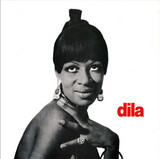
Far Out Recordings proudly presents the first and only album from the mysterious Brazilian vocal sensation Dila (pronounced “Jee-la”). Having reportedly died in a car crash shortly after the album’s release in 1971, there is very little known about the woman behind the voice. But the joyous music Dila left behind, gives us a picture as good as any, of a powerful feminine soul at the top of her game.
The liner notes on the elusive original LP, written by composer Arnoldo Medeiros attest: “Friend, look out! Because when this girl starts to sing, you’re in trouble. Hold the railing so you don’t fall down the stairs, because she’s coming this way and shaking up everything.”
Arranged and produced by Durval Ferreira, alongside his studio band affectionately known as “Os Grillos” (The Crickets), Dila (1971) is a rare glimpse into the authentic soulful Samba sound of Rio’s favelas in the late sixties and early seventies.
A blast of funky, percussive Brazilian breaks, scorching hot brass and swing-laden piano, the music is as iconic as the album’s stark cover, as is clear on opener ‘Inez’, composed by The Crickets’ bassist Romildo. There’s a fantastic interpretation of the Ivan Lins classic ‘Madalena’ (made famous by Elis Regina), a moving version of the Tom Jobim and Vinicius De Moraes classic ‘O Morro Não Tem Vez’, and a number of sunny original compositions by Arnold Madeiros, who’s other writing credits include music for Marcos Valle, Wanderlea, Evinha and Dom Salvador.
With original LPs extremely hard to come by, this rare treasure of Brazilian soul, which fans of Gal Costa, Celia, Evinha and Elis Regina will love, gets a much-deserved official reissue: remastered and pressed to 180g vinyl.
OTOROKU is proud to reissue Evan Parker's first solo LP "Saxophone Solos". Recorded by Martin Davidson in 1975 at the Unity Theatre in London, at that time the preferred concert venue of the Musicians' Co-operative, Parker's densely woven and often cyclical style has yet to form; instead throaty murmurs appear under rough hewn whistles and calls - the wildly energetic beginnings of an extraordinary career. Reissued with liner notes from Seymour Wright in an edition of 500. "The four pieces across the two sides of Saxophone Solos - Aerobatics 1 to 4 - are testing, pressured, bronchial spectaculars of innovation and invention and determination. Evan tells four stories of exploration and imagination without much obvious precedent. Abstract Beckettian cliff-hanging detection/logic/magic/mystery. The conic vessel of the soprano saxophone here recorded contains the ur-protagonists: seeds, characters, settings, forces, conflicts, motions, for new ideas, to delve, to tap and to draw from it story after story as he has on solo record after record for 45 years. 'Aerobatics 1-3' were recorded on 17 June 1975, by Martin Davidson at Parker's first solo performance. This took place at London's Unity Theatre in Camden. 'Aerobatics 4' was recorded on 9 September the same year, by Jost Gebers in the then FMP studio in Charlottenburg, Berlin. Music of balance and gravity, fulcra, effort, poise and enquiry. Sounds thrown and shaken into and out of air, metal and wood. It is - as the titles suggest - spectacular." - Seymour Wright, 2020.
- A1: Princess Aya Sarah – O Wina Tienge
- A2: Meta & Feza – Mivé Temoin
- B1: The African House Party Project Feat. Splash, Patricia Majalisa & Dalom Kids – P-Coq
- B2: V-Mash – Naughty Boy
- B3: Di Groovy Girls – Ririmi Rotsombela
- B4: Tshala Muana – Djepué
- C1: Lady Isa – Djambo
- C2: Pembey Sheiro – Sala Ni Toto
- C3: Princesse Mansia M’bila – Ngoma Mansia
- D1: Samba Mapangala And Orchestra Virunga – Mashariki
- D2: International Zaistars & Nene Tshaku – Je T’aime Au Pluriel
- D3: M.d. Shirinda & Gaza Sisters – Mabazi
- D4: “Bwaluka” Founders Band – Kimbera
Strut introduces a pioneering new compilation 'A Dancefloor In Ndola,' curated by revered East African DJ, Kampire. This release marks an evolution in Strut's approach to compilations, showcasing emerging DJ talent from across the world and embracing an innovative approach to musical discovery from the next wave of selectors. Forging her reputation through memorable sets for the Nyege Nyege Festival in Uganda over the last decade, Kampire now tours worldwide and is celebrated for her brilliantly curated sets spanning the full range of African music styles from the ‘70s and ‘80s to the present day.
Although born in Kenya to Ugandan parents, Kampire spent her formative years in Ndola, Zambia. ‘A Dancefloor In Ndola’ is inspired by artists and songs that formed part of her soundtrack during that time. “It is important for me to continually reference Africa’s own musical history,” she explains. “At 17, I didn’t pick up on my Dad’s music but now I love and collect those records. I’m constantly referencing them in my music sets today. I love that feeling of shared nostalgia where people recognise a song they haven’t heard in a long time. It is a touchstone for me when I’m playing.”
The compilation flows through different East African and South African genres from Congolese rumba and soukous to 1980s township bubblegum and the rich guitar-led sounds of Zambian kalindula. “There are styles of music on the compilation which are often considered unsophisticated from rural areas. I and other contemporary African artists and DJs draw inspiration from them; it is part of what makes us ourselves.” Kampire also shines the spotlight on many incredible women in African music from the ‘80s, including Congolese legends like Pembey Sheiro, Feza Shamamba and Princesse Mansia M’bila to V-Mash and Di Groovy Girls from South Africa.
‘A Dancefloor In Ndola’ is released on 2LP and CD and features exclusive new edits by Kampire alongside personal liner notes tracing her links to the music. Cover artwork montage is by Canon Rumanzi and vinyl restoration / mastering by The Carvery
Debut compilation by one of East Africa’s leading new generation DJs, Kampire.
Mix of African classics and rarities spanning 1970s – 1990s from Congolese soukous, South African bubblegum and Zambian kalindula.
Shining the spotlight on women in African music Pembey Sheiro, Feza Shamamba and Princesse Mandisa M’bila.
Exclusive cover artwork collage by Canon Rumanzi.
Worldwide DJ dates supporting release during Summer and Autumn 2024.
- 1: (We Don't Need This) Fascist Groove Thang
- 2: Penthouse And Pavement
- 3: Play To Win
- 4: Soul Warfare
- 1: Geisha Boys And Temple Girls
- 2: Let's All Make A Bomb
- 3: The Height Of The Fighting
- 4: Song With No Name
- 5: We're Going To Live For A Very Long Time
Original members of Sheffield’s Human League, Martyn Ware and Ian Craig Marsh left after the first two albums
and formed Heaven 17 in 1980. Named after a fictional band in Anthony Burgess’s “A Clockwork Orange”, they
recruited Glenn Gregory on vocals (who had been the original choice for lead singer of the Human League).
Signed to Virgin Records, debut single “(We Don’t Need This) Fascist Groove Thang” attracted a lot of attention in
March 1981, and a BBC Radio 1 ban. Recorded in Sheffield and London, debut album “Penthouse And Pavement”
was released in September 1981 and was certified Gold the following year, and also contained the singles “Play To
Win”, “Penthouse And Pavement”, and “The Height Of The Fighting”.
This new edition has been expertly mastered by Barry Grint at AIR Mastering from the original stereo tapes using
precision half-speed mastering. Half-speed mastering is a vinyl cutting technique that improves groove accuracy
and transient information creating an incredibly detailed stereo image with a natural high frequency response.
Presented in its original sleeve, pressed on 180-gram heavyweight black vinyl, featuring an obi strip and housed
in a poly-lined inner sleeve, with all the lyrics and credits plus photos on the 4-page insert.