Three years after the release of Volume 1, Innershades returns to home turf with a second entry in his Heritage series. The New Beat territory that its predecessor tackled serves as the starting point for the A-side of Volume 2 as well. The glistening arpeggios and choir patches on "Mind State", alongside the unyielding kicks, alarm-like synth lines and plodding tempo of "System Breakdown," reaffirm how the genre's hallmarks smoothly align with the artist's own inclinations. The B-side draws from the broad spectrum of styles that emerged a bit later, in the beginning of the nineties, when it seemed the dance floor would move unimpeded between and bridge genres, its boundaries often not as firmly established. "Fuse Memory" nudges the pace forward, driven by the 909 and a staple hypnotic lead. When the drums come to a halt, a 303 emerges to flesh out the break. "Rhythm Composer" continues in a similar early techno vein, but pulls the track into outer space via its formant-heavy leads and Detroit-tinged sci-fi sweeps. On ALT023 Innershades appears in fine fettle, providing another batch of up-front club tracks that approach history as motion rather than memory, translating the past into forward momentum.
Buscar:b line
Budapest-based concept label, Blue Sun is launching their new line of vinyl focused releases, aimed primarily on DJs and collectors: the Blue Series. A counterpart to the Orange Series launched last year that showcases a more upbeat side of the label, the new collection presents a darker, more experimental, and introspective musical vision.
The first release in the Blue Series is a six-track EP by Budapest based multimedia artist, Virág Réti. Choosing her legal name as her artist persona (“Flower of the Meadow" in Hungarian) also with the track titles capturing the folk names of local fauna, Peremidő evokes the artist's innate connection to nature as a place of refuge from the noise of Eastern European urban life.
The EP’s motifs point back to early memories of sitting by a river, simply observing time flowing by. The arc of the songs follow the passage of a day, beginning with the hesitant sounds of early morning, gradually moving on toward more defined, rhythm-driven forms. As the airy textures slowly give way to structure and percussion comes to the forefront, the sense of direction becomes clearer, letting moments of gentle disorder and unexpected sounds to surface.
Virág previously appeared on the label’s Blue Sun VA II compilation with her track Bíbic. Since launching her ambient music project in the fall of 2024, she has become one of the promising newcomers in the Hungarian experimental electronic music scene. Her debut EP, Minden Ami Megmaradt (All That Remains), was released last November as the final offering of temporary nites label (2023–2025). She is also the founder and organizer of the Budapest-based experimental electronic event series Still Places.
Symphonieorchester des Bayerischen Rundfunks, Sir Georg Solti
R. Strauss: An Alpine Symphony (Eine Alpensinfonie) [Decca...
Nur wenige Orchesterwerke erfordern so viel Präzision wie Richard Strauss’ „Alpensinfonie“. Die DeccaAufnahme von Sir Georg Solti und dem Symphonieorchester des Bayerischen Rundfunks entstand 1979 und
war eine der letzten analogen Produktionen von Decca vor der Umstellung auf Digitaltechnik. Solti kannte
Strauss persönlich und studierte die Aufnahmen des Komponisten, bevor er diese einzigartig authentische
Aufführung in München aufnahm.
Die neue audiophile Vinyl-Reihe DECCA PURE ANALOGUE präsentiert legendäre Aufnahmen aus den
Archiven von Decca und Philips in einer völlig neuen Klangqualität. Die renommierten Emil Berliner Studios haben diese in 100 % analoger Qualität (AAA) mit speziell für diese Reihe entwickelten Technologien
neu gemastert.
Jede Veröffentlichung der Serie wird auf 180 g schweren Virgin-Vinyl-Schallplatten gepresst und in einer
luxuriösen Gatefold-Edition präsentiert, mit Original-Artwork und Liner Notes, zusätzlichen Fotos und
Faksimiles der Bandboxen und Aufnahmedokumentation. Darüber hinaus enthält jede handnummerierte
Limited Edition neue Liner Notes, in denen die Geschichte der Aufnahme sowie der technische Prozess der
Neu-Veröffentlichung detailliert beschrieben werden.
Los Angeles Philharmonic, Zubin Mehta
Varèse: Arcana; Intégrales; Ionisation [Decca Pure Analogue]
Zubin Mehtas klanglich spektakuläres Album mit Orchesterwerken von Edgar Varèse aus dem Jahr 1971,
aufgenommen mit dem Los Angeles Philharmonic, wurde von Gramophone für sein „virtuoses Spiel“ und
seine „vorbildliche Aufnahme“ gelobt. Mehta wird dieses Jahr 90 Jahre alt, und diese Aufnahme – mit
ihrem beeindruckenden Artwork – erinnert uns an Mehta in seiner besten Zeit, dynamisch und mit jugendlichem Verve, als er, auch wegen der atemberaubenden Aufnahmen, die Decca in LA produziert hat,
die internationale Bühne eroberte.
Die neue audiophile Vinyl-Reihe DECCA PURE ANALOGUE präsentiert legendäre Aufnahmen aus den
Archiven von Decca und Philips in einer völlig neuen Klangqualität. Die renommierten Emil Berliner Studios haben diese in 100 % analoger Qualität (AAA) mit speziell für diese Reihe entwickelten Technologien
neu gemastert.
Jede Veröffentlichung der Serie wird auf 180 g schweren Virgin-Vinyl-Schallplatten gepresst und in einer
luxuriösen Gatefold-Edition präsentiert, mit Original-Artwork und Liner Notes, zusätzlichen Fotos und
Faksimiles der Bandboxen und Aufnahmedokumentation. Darüber hinaus enthält jede handnummerierte
Limited Edition neue Liner Notes, in denen die Geschichte der Aufnahme sowie der technische Prozess der
Neu-Veröffentlichung detailliert beschrieben werden.
San Francisco Symphony, Seiji Ozawa
Dvořák: Symphony No.9 ”From the New World”; Carnival Overture...
Seiji Ozawas Antritt als Musikdirektor des San Francisco Symphony Orchestra im Jahr 1970 wurde später
von Barack Obama anschaulich beschrieben: „Mit seinem Mop-Haarschnitt, seinen Rollkragenpullovern
und seinen Liebesperlen sah er fast aus wie ein Beatle“. Diese Aufnahme von Dvořáks Sinfonie „Aus der
Neuen Welt“ aus dem Mai 1975 war eine der letzten, die von Philips in Quadrophonie aufgenommen und
speziell für diese Neuauflage neu abgemischt wurde.
Die neue audiophile Vinyl-Reihe DECCA PURE ANALOGUE präsentiert legendäre Aufnahmen aus den
Archiven von Decca und Philips in einer völlig neuen Klangqualität. Die renommierten Emil Berliner Studios haben diese in 100 % analoger Qualität (AAA) mit speziell für diese Reihe entwickelten Technologien
neu gemastert.
Jede Veröffentlichung der Serie wird auf 180 g schweren Virgin-Vinyl-Schallplatten gepresst und in einer
luxuriösen Gatefold-Edition präsentiert, mit Original-Artwork und Liner Notes, zusätzlichen Fotos und
Faksimiles der Bandboxen und Aufnahmedokumentation. Darüber hinaus enthält jede handnummerierte
Limited Edition neue Liner Notes, in denen die Geschichte der Aufnahme sowie der technische Prozess der
Neu-Veröffentlichung detailliert beschrieben werden.
Bernard Haitink, Concertgebouw Orchestra of Amsterdam
Mahler: Symphony No.5 & Adagio (Symphony No.10) [Decca Pure...
Bernard Haitinks Mahler war schon immer einer der Höhepunkte des Philips-Katalogs, und die Aufnahme
der 5. Sinfonie und des Adagios aus der 10. Sinfonie stammt aus dem analogen Zyklus, den er Ende
der 1960er und Anfang der 1970er Jahre aufgenommen hat. Diese Aufnahme aus dem Jahr 1970 wurde
im Concertgebouw in Amsterdam quadrophonisch aufgenommen und von Gramophone für „die besondere
Klarheit, die durch eine ausgewogene Balance entsteht” gelobt.
Die neue audiophile Vinyl-Reihe DECCA PURE ANALOGUE präsentiert legendäre Aufnahmen aus den
Archiven von Decca und Philips in einer völlig neuen Klangqualität. Die renommierten Emil Berliner Studios haben diese in 100 % analoger Qualität (AAA) mit speziell für diese Reihe entwickelten Technologien
neu gemastert.
Jede Veröffentlichung der Serie wird auf 180 g schweren Virgin-Vinyl-Schallplatten gepresst und in einer
luxuriösen Gatefold-Edition präsentiert, mit Original-Artwork und Liner Notes, zusätzlichen Fotos und
Faksimiles der Bandboxen und Aufnahmedokumentation. Darüber hinaus enthält jede handnummerierte
Limited Edition neue Liner Notes, in denen die Geschichte der Aufnahme sowie der technische Prozess der
Neu-Veröffentlichung detailliert beschrieben werden.
This album plays like an invitation rather than a record - a slow boarding pass to an imagined retreat somewhere beyond gravity. Analogue synths shimmer like gold, bubbling rhythms drift in gentle orbits, and playful melodies sketch out distant galaxies with an easy, unforced charm. There's a strong lineage here, with the music echoing classic library and soundtrack recordings cherished by deep diggers, yet it never feels nostalgic for its own sake. The grooves are light but nourishing - 'Uranium Jungle' has a touch of Luke Vibert's frisky funk about it, while 'Martian Sunset' is interstellar bossa nova with a light dusting of 70s analogue magic to boot - designed as much for sofa-bound drifting as for attentive listening. Musicianship is front and centre throughout, with smart, accessible compositions that reward repeat visits. A fully realised concept - sign us up for a stay.
"Late '80s and early '90s electronic music has had a steering influence on the Altered Circuits catalog curation, so we are delighted to present an EP by one of the pioneers of that era: Olivier Abbeloos. His 40 years of experience as a producer and DJ translate into a Discogs profile so extensive it reveals his real name alone can be (mis)spelled in 20 different ways. "1993-1994: Rare & Unreleased 1" features five tracks produced under three different aliases, all sourced from the artist's DAT tapes vault, dating back to the prolific two-year period referenced in its title. ALT024 opens with two "Conga Squad" tracks. "Combo" is a high-energy cut driven by a savory staccato chord progression, and "Substitute" works a similar, yet more restrained dynamic, that is, until a boisterous vocal sample enters. The quirky bass lines and moody synth work of "Under The Ground", the first "Holographic Hallucination" inclusion, concludes the A-side. Its twilight atmospherics fit right in amid the B-movie horror electro trending on contemporary dancefloors. The flip opens with "Psychosky", which caters slightly more to a slow-burner vibe and sets the stage for extensive piano work. "Dj Flavour", composed under the "Warp Factor One" alias, closes the EP. Here, the Latin-tinged percussion that runs as a subtle thread throughout the release takes the spotlight, while funky basslines and manipulated vocals add layers of detail. It is the only track on the EP that was already released in 1994, appearing as part of a - by the standards of that era - obscure and very limited 300-copy pressing. Those times sure have changed, but the music still sounds as fresh as ever."
- A1: Unfelt Loss
- A2: So Easy To Love
- A3: Teardrops (Classic Hell On Earth)
- A4: Whiplash
- A5: Morning Doctor
- B1: Cherry Blossoms In Leschi
- B2: Southward Equinox
- B3: Velvet Rope
- B4: Backward Path
- B5: Don’t Remind Me
- C1: Season Of The Wish C2. The Last Resort
- C3: Two Rivers
- C4: A Little Game
- C5: Lilies Of The Field
- D1: Lifelong Sellout
- D2: Out Of My Mind
- D3: Golden Era
- D4: Sweet Routine
For two decades, Gun Outfit has been a band defined less by genre than by continuity, patience, and a commitment to making music that reflects their lived experience.
Formed in Olympia, Washington in 2006 but long since rooted in Los Angeles, the group has evolved from a raw duo into a quietly formidable five-piece, their sound growing from scrappy post-punk beginnings into something spacious yet intimate, and always underpinned by an experimental edge.
On Process & Reality, Gun Outfit return with their most ambitious and immersive work to-date, a sprawling 80-minute double album shaped by time, environment, and philosophy. Recorded over the course of a single month in the late summer of 2020, on an 80-acre ranch in Pine Flat, California, while a massive forest fire burned less than ten miles away, the seeds of these songs were stark and strange.
Its title, Process & Reality, draws from the central work of philosopher Alfred North Whitehead, whose philosophy places intuition, experience, creativity, and relationality at the center of existence.
The band’s current lineup reflects both longevity and openness. Sharp and Keith remain the band’s primary architects, joined by longtime drummer Daniel Swire, multi-instrumentalist Henry Barnes, and bassist Kayla Cohen. Additional collaborators include Chris Cohen, Warren Lee, and Danny Sasaki all of whom add further depth, leaving subtle fingerprints across the album.
Musically, the album expands the band’s palette without abandoning its core sensibility. Dulcimer, autoharp, sitar, melodica, keyboards, homemade electronics, and a wide range of acoustic and electric textures appear throughout. The sound is mellow yet expansive, songs move between fragility and hefty atmospheric passages.
Influences surface obliquely rather than overtly. Elements of reggae and dub inform the production’s spatial sensibility. Echoes of long-form European jam bands coexist with sharp post-punk. British folk traditions, American country, and classic West Coast songwriting drift in and out of focus; the band is never afraid to lead or follow.
- 1: Amidst Things Uncontrolled (2026 Remaster) 05:00
- 2: Pigeon Hurt (06 Remaster) 03:3
- 3: Roots Growing (2026 Remaster) 04:42
- 4: From Verse To Verse (2026 Remaster) 03:9
- 5: Refrain From (2026 Remaster) 01:13
- 6: Tentative Growth (202 Remaster) 04:28
- 7: Across From Golden (Remix) (2026 Remaster) 05:08
- 8: Standing On A Hummingbird (2026 Remaster) 04:54
- 9: Pattern For A Pillow (2026 Remaster) 07:14
- 10: Difficult To Light (2026 Remaster) 05:00
Originally released on Ezekiel Honig's Anticipate label in 2007, Standing on a Hummingbird is the debut album by Canadian sound artist Mark Templeton, now appearing for the first time on vinyl, newly remastered by Giuseppe Ielasi and cut by LUPO. Working at the intersection of post-glitch, electroacoustic ambient, and textural minimalism, Templeton composes through restraint and erosion, building patient and richly tactile pieces primarily from acoustic sources - fingerpicked guitar, plaintive banjo, muted accordion tones - subjected to careful processes of granulation, filtering, and environmental masking. These gestures never overwhelm the source material; instead, they wonderfully destabilize it. Melodies appear briefly, only to dissolve into dense atmospheres of field recordings: distant streets, birds, water, air. Sounds hover, vibrate, and vanish, much like the wing beating latent in the album’s title.
Tracks such as “Pattern For a Pillow” and “Amidst Things Uncontrolled” articulate this approach with particular clarity, setting languid acoustic figures against churning granular backdrops that feel at once sheltering and unstable. Elsewhere, moments of fragile clarity - fluttering guitar lines, reedy accordion tones - briefly break the surface before being absorbed back into the field.
Heard today, the record offers a clarion, almost spartan strain of textural ambient music: intricate yet unforced, shaped by human touch rather than automated excess. Its refusal of spectacle feels especially vital in a landscape saturated with maximalist digitalia - a reminder that electronic music’s most enduring gestures often occur where sound is allowed to tremble and hold itself just long enough to be felt before disappearing once again. (Alex Cobb, 2026)
- 1: Layer After Layer
- 2: Indalo
- 3: No Abiding City
- 4: Rising Falling
- 5: The Bridge
- 6: Mama Carries
- 7: Eating The Other
- 8: What Did The Rain Say?
- 9: Tulip
Shimmering Xhosa traditions and deep electronic futures vibrate as South African sonic poet and composer Dumama unveils her groundbreaking debut solo album, Towards An Expanse. Sometimes gospel, sometimes electro-psychedelic space travel, Towards An Expanse unfurls from a languid lament into an ever-expanding sonic universe. Dumama defies conventional genre boundaries while excavating deep personal and cultural histories in this concise but boundaryless collection, recorded between New York, Johannesburg and Berlin. Dumama first gained international attention with her acclaimed 2020 collaborative album, Buffering Juju, created with fellow South African musician and artist Kechou, and lauded as Global Album of the Month by The Guardian. Her new solo work draws on a rich lineage of South African voices. Gugulethu Duma (aka Dumama) is a musician / composer / sonic poet / creative producer from the Eastern Cape Province of South Africa. Dumama is one of the few uhadi players in the world. Her use of the traditional Xhosa bowed instrument guides her profound story-telling, blending ancestral roots into an urgent electro-acoustic palette. The album was born out of sessions with acclaimed musician and producer Shahzad Ismaily in New York and South African powerhouse Nandi Ndlovu in Johannesburg.
- 1: Slab
- 2: Thirty-Seven Forever
- 3: How You Gonna Get Even
- 4: Someone You Forgot
- 5: Lonely Heart Pyramid Scheme
- 6: Soulseeker
- 7: Jukebox Weepie
- 8: Casio
- 9: High Hopes (Ballad Of Rural France)
- 10: Electrical Tape
Much like the duo’s music, the story of Rural France is both mundane and magical. Tom Brown (also of transatlantic janglepunks Teenage Tom Petties) and Rob Fawkes moved to London in their mid-twenties. Despite living under the same roof, they never picked up a guitar – except for one drunken, failed attempt at writing a Spoon song (“Big Chops” …don’t ask). It was only after both separately relocating to Wiltshire and starting families that they began assembling songs as a way of meeting up. Tom had amassed a pile of sprightly slacker jams that were calling out for Fawkes’ messily melodic guitar lines. Rural France was born.
After a debut album on their hero, ex-Lemonhead Nic Dalton’s Half-a-Cow Records, they retreated to a garage to record their next two albums: RF (2021) and Exacamondo! (2024), both released on much-respected jangle label Meritorio Records. Despite being lo-fi in the truest GbV sense, both records were warmly received by the DIY indie blogosphere, with their short, scrappy, but supremely melodic songs landing on numerous AOTY lists. RF even won Album of the Year at Janglepop Hub.
Raven Sings The Blues probably summed up the sound best: “With drunken visions of Beach Boys harmonies playing in the back of their heads and hooks that consume Teenage Fanclub cheeriness with the same beautiful brevity that drives Tony Molina, the pair have knocked out eleven rumpled classics.” Album four, SLOTHS, arrives via Meritorio Records and Safe Suburban Home Records on 08/05, and is a slightly different beast. For one, it’s been mixed by a professional – Rob Slater (Westside Cowboy, Yard Act, Thank) – giving the guitars and drums room to breathe. It’s easily their most high-fidelity record to date. It’s also their jangliest, most baroque and thoughtful album yet. But alongside added organ, horns and mellotron – and drums from Tom’s Teenage Tom Petties bandmate Jeff Hamm – it still retains the buzzes, hums and little freak-outs that stick to the duo’s original “Pavement playing Teenage Fanclub” mission statement. “Rob and I both wanted to do something a little slower and a little more melancholy,” says Tom. “We resisted our usual urge to hit the distortion pedal and made something that fitted where we are now and celebrates how we still listen to Meatloaf when we get drunk.”
SLOTHS is also the most thematically consistent Rural France record to date. While it wouldn’t be right to call it grown-up, it definitely has homeowners’ insurance. From the Silver Jews-esque Americana of “Slab” and mid-life rallying cry of “Thirty Seven Forever”, to the horn-embossed loser anthem “Lonely Heart Pyramid Scheme,” the songs celebrate (and rail against) the absurdities of getting older, forming a band in your thirties, and the strange phenomenon of time passing. Because no matter how slow you move, everything else goes fast. SLOTHS.
2026 Repress
- Linen Paper, Foil Printed Box Set
- Includes 6 Double LPs + 1 Single LP, 13 Discs In Total
- All LPs Pressed on Coloured Vinyl
-Each Disc is Housed in a Printed Inner with PMS Print, Finished with Spot Gloss Printing. Each Sleeve Features an Abstract of the Original Album’s Artwork
- Also included are a 4 page Insert + Poster
Skintone Edition commemorates the singular talent of this music pioneer with the re-release of all of his albums released via his own Skintone label.
Over a 20 year period Yokota released 30 albums and countless 12s under a variety of aliases, across more than a dozen pre-eminent labels. Yokota received domestic and international acclaim as a house and techno DJ and producer throughout the nineties. Part of the vanguard of the Tokyo scene, his influential release Acid Mt. Fuji inspires techno artists to this day.
In 1998 though, at the height of his success, he established his Skintone imprint, which came to eclipse all of his previous achievements. Skintone shone a light on the diverse new directions in which his creativity had blown, from delicate, cyclical tape-loop meditations to neo-classical compositions. It also gave him the autonomy to combine his visual and music-making practices and, importantly, to create at his own pace. The label was a great success and his experiments proved foundational in the global 00s ambient canon.
Skintone Edition will be available as 2 box sets - the first volume coincides with the 10th anniversary of Yokota’s untimely death and the 30th year of Lo Recordings. All music has been fully re-mastered. This edition is presented with the generous assistance of the Yokota family.
Albums Included:
Magic Thread 1998
Image 1983-1998 [1998]
Sakura [1999]
Grinning Cat [2001]
Will [2001]
The Boy and the Tree [2002]
Laputa [2003]
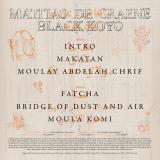
With Black Koyo, Mattias De Craene enters a sound world at once intimate and vast. Born from journeys in Morocco and Brussels, the project traces the rhythms, chants, and spirits of the Gnawa tradition, revealing a quiet resonance that echoes De Craene's own search for depth and presence. Guibri, qraqueb, call-and-response chants, saxophone, loops, and electronics come together in a trance-induced dialogue - ritualistic, elemental, and dreamlike - creating a space where listening becomes immersion, tradition meets imagination, and music unfolds as a shared act of reflection and wonder.
About Mattias De Craene
Mattias De Craene's artistic path is marked by rare coherence. As a central voice in Nordmann and MDC III, he developed a physical, rock-inflected jazz language driven by propulsion, volume, and trance-like collective energy. Over time, a period of personal rupture - burnout, tinnitus, depression - shifted his focus inward. The saxophone became a breathing, textural presence, and in his solo work, he weaves saxophone, electronics, loops, and minimal forms into a cinematic, hushed world where repetition, resonance, and silence slow perception. Rooted in ambient and introspection, his music prizes attention over impact, precision over excess - a quiet intensity recognized with a nomination as Musician for the Music Industry Awards (MIA's).
About Black Koyo
Black Koyo is a Brussels-based ensemble and one of the most compelling voices of the Gnawa tradition outside Morocco. Led by maalem Hicham Bilali, the group brings guibri, qrraqueb, and call-and-response chants to life with trance-like intensity and ritual precision. Their music is both rooted and contemporary, weaving earthbound rhythms and vocal invocations into ecstatic, immersive soundscapes, creating a space where ancestral resonance meets present-day imagination.
About Jan Bang
Jan Bang is a pioneering Norwegian producer and musician, celebrated for his mastery of live sampling and his ability to merge electronics with improvisation, rhythm, and texture in real time. He mixed the album and occasionally joins live performances, bringing his signature approach to sound as co-founder of the influential Punkt Festivaland collaborator with artists such as Jon Hassell, David Sylvian, Arve Henriksen, and ECM Records' roster. As a performer and sound architect, Bang creates immersive, trance-like sonic textures where silence and sound carry equal weight. Within Mattias De Craene ftBlack Koyo, his live sampling becomes an organic instrument, weaving saxophone, electronics, and Gnawa rhythms into hypnotic, physically charged soundscapes.
Line-up & credits
Mattias De Craene - sax, electronics | Hicham Bilali - guibri, vocals, qraqueb |Ismael Akhraz - vocals, qraqueb | Marwan Abantor - vocals, qraqueb
All tracks are original gnawa traditionals played by Black Koyo and arranged by Mattias De Craene.
Album produced & recorded by Mattias De Craene in Essaouira, Morocco and hometown Ghent, Belgium 2025.
Text by Hicham Bilali.
Mixed by Jan Bang at Punkt Studio
Mastered by Lieven Van Pee
Artwork by Marina Sviridova
Design by Benoit Van Geel
Manufactured and distributed by N.E.W.S.
Executive production by W.E.R.F. records
Supported by Flemish Government, Jazzlab, nona, HA Concerts, Aubergine artist Management,
KAAP, La Bestia (Wout Van Putten) & mdcmu.sic vzw.
2026 (c) W.E.R.F. records
Italian producer Gledd has been quietly carving out a reputation for groove-led house music that balances raw dancefloor energy with rich musicality.
Drawing on influences that span gospel, afrobeat, and classic deep house, his productions channel both heritage and forward-thinking club culture. My House Is Your Church marks his debut release on Delusions Of Grandeur - a fitting home for his expansive, souldrenched sound - and signals a bold new chapter in his evolution as an artist. The EP opens with On His Way, a percussion-heavy deep roller built for maximum dancefloor impact. Anchored by fat, heavyweight production and a massive low-end presence, the track surges forward with relentless energy. An incredible gospel vocal cuts through the mix, elevating the groove into something transcendent - equal parts spiritual and physical.
On It’s Not That Easy, Gledd leans further into his gospel house influences. Highimpact and rhythmically rich, the track weaves together organ fills and subtle tropical flourishes, creating a vibrant, sun-soaked energy while keeping the pressure firmly on the floor.
It’s a track that feels both uplifting and commanding. Flipping to the B-side, Habibi Gospel pushes into more “outernational” territory. A wild, expressive lead vocal takes center stage, riding atop a heavy, driving groove. Organ stabs punctuate the rhythm, locking dancers into a hypnotic flow that bridges cultures and styles with effortless confidence. Closing the EP, Can You Hear My Noise? brings things to a richly textured finale. Slightly more organic in feel, it blends echoing synth stabs, percussive melodic lines, and chopped vocals into a melting pot of sound. The result is a seamless fusion of gospel, afrobeat, and classic house - deep, emotive, and undeniably danceable. With My House Is Your Church, Gledd delivers a statement of intent: music as ritual, the dancefloor as sanctuary.
Italian producer Gledd has been quietly carving out a reputation for groove-led house music that balances raw dancefloor energy with rich musicality. Drawing on influences that span gospel, afrobeat, and classic deep house, his productions channel both heritage and forward-thinking club culture. My House Is Your Church marks his debut release on Delusions Of Grandeur - a fitting home for his expansive, souldrenched sound - and signals a bold new chapter in his evolution as an artist.
The EP opens with On His Way, a percussion-heavy deep roller built for maximum dancefloor impact. Anchored by fat, heavyweight production and a massive low-end presence, the track surges forward with relentless energy. An incredible gospel vocal cuts through the mix, elevating the groove into something transcendent - equal parts spiritual and physical. On It’s Not That Easy, Gledd leans further into his gospel house influences. Highimpact and rhythmically rich, the track weaves together organ fills and subtle tropical flourishes, creating a vibrant, sun-soaked energy while keeping the pressure firmly on the floor.
It’s a track that feels both uplifting and commanding. Flipping to the B-side, Habibi Gospel pushes into more “outernational” territory. A wild, expressive lead vocal takes center stage, riding atop a heavy, driving groove. Organ stabs punctuate the rhythm, locking dancers into a hypnotic flow that bridges cultures and styles with effortless confidence. Closing the EP, Can You Hear My Noise? brings things to a richly textured finale. Slightly more organic in feel, it blends echoing synth stabs, percussive melodic lines, and chopped vocals into a melting pot of sound. The result is a seamless fusion of gospel, afrobeat, and classic house - deep, emotive, and undeniably danceable. With My House Is Your Church, Gledd delivers a statement of intent: music as ritual, the dancefloor as sanctuary.
On the label's latest, Oath are proud to present 'Times', the latest morphological masterclass from Ukrainian producer extrodinaire Vakula, on which his boundless and intuitively captivating sound remains as absorbing as ever.
Drawing deeply from a rich palette of genres such as deep house, ambient, dub techno, and jazz, and feeding in inspirations from natural and philosophical spheres, Vakula's musical ethos has allowed him to continuously explore the inner and outer reaches of his universal soundscape. By feeling things out through hardware, he allows his music to grow organically, blending humanistic tendencies with technological outputs that always bring harmonious musical riches to the surface.
'Times' represents another seismic chapter in his story, one which contains a series of genre-defying blends that twist, turn, and enthrall with their ever-evolving beauty. 'Atmos Time' plays out as the EP opens up, and draws the listener close with a textured melodic chime and spaced out groove.
Floating along on a bed of cosmic ambience, the groove and melodic features cascade as one, drifting further through the layers of time and thought. 'Break Time' ups the urgency ever so slightly, with a similar atmosphere unraveling above an energised broken beat.
'Drum Time' brings in side B, and this one shifts perspective once more. The melodic sways up above merge and blend with the poly-rhythmic undertones, with the jungle-lite broken beat creating an enchanting energy. 'Soul Time' wraps things up, which moves into a distinctly ambient techno sort of realm. Dreamy pads and looping key lines intertwine amongst a captivating sea of mood and tone, as a laid-back beat shimmers underneath with poise and elegance. . A fitting end to a record filled with moments of tonal excellence, ever-shifting melodic feeling and rhythmic sequencing - an experience that forever drifts through the memory, always capturing the imagination….
Alt Dub boss Federsen once again joins forces with cv313 and Echospace Detroit to deliver a second instalment in their ‘Altering Dimension’ series, once again merging hazy textural sonics with delicate dub leaning aesthetics.
Detroit’s dub techno lineage continues to evolve as cv313, Stephen Hitchell of Echospace, teams up with Federsen for Altering Dimensions Part Two, another collaborative EP set to land on Federsen’s Alt Dub imprint.
A defining figure in the genre, cv313 has long shaped its language through seminal works like Seconds to Forever and the Dimensional Space LP, fusing enveloping atmospheres with tactile rhythmic structures. Alongside him here,
Federsen whose music can also be found on Echospace Detroit as well as Grayscale, Synchrophone, Lempuyang and Avant Roots, has carved out a distinct voice rooted in precision and analogue-rich depth. Altering Dimensions Part Two again captures the intersection of these two perspectives, linking Detroit’s enduring sonic heritage with a refined, forward-facing approach to dub techno.
‘First Dimension’ opens the release, laying down heavy doses of sub bass, bubbling percussion and ever evolving, murky dub echoes amidst a crisp, stripped-down rhythm section.
‘Second Dimension’ follows and leans into vacillating atmospherics, a swaying bottom end groove and hypnotic, subtle evolution that’s synonymous with the cv313 sound.
‘Third Dimension’ kicks off the b-side next, further embracing this introspective and immersive style as textural elements shift and mutate atop intricately modulating percussive hits, bubbling synth tones and weighty low-end percussion.
‘Fourth Dimension’ then concludes the release, reducing things down to bare bones of hypntic dub, embracing a beatless construction the composition relies on spatial depth, nuanced delays and an underlying tension that decays
- A1: Hard Time Killing Floor
- A2: Crawlin' Kingsnake
- A3: Lucy Mae Blues
- B1: Can't See Baby
- B2: I Love The Life I Live
- B3: Louise Mcghee
- C1: Moanin' And Groanin
- C2: Black Cat Blues
- C3: Bad Life Blues
- D1: Sally Mae
- D2: Anna Lee
- D3: Lonesome Home Blues
The album is all acoustic and dedicated to John Lee Hooker with the line, "In Memory of John Lee Hooker. You are missed."
Not known for his acoustic work, Buddy Guy unplugs on Blues Singer for a rare album-length excursion into folk blues. The guitarist gets down and dirty with 12 tracks that sound like they were recorded after hours in his living room or on his back porch.
Guy’s stinging leads are still evident as is his emotive voice, but both are less flamboyant in the unplugged setting. Accompanied by spare stand-up bass and brushed drums, Guy sounds nearly supernatural on covers from Skip James ("Hard Time Killing Floor"), Johnny Shines ("Moanin’ and Groanin’"), Son House ("Louise McGhee"), and John Lee Hooker ("Sally Mae") among others. It’s a low-key, low-down affair made for late nights, rainy days, and the saddest of moods.
Buddy Guy is just as convincing here, arguably more so, as on his barnstorming electric albums, making Blues Singer one of the bravest and most poignant albums in his catalogue.
Blues Singer is available as a limited edition of 1500 individually numbered copies on red vinyl and includes a 4-page booklet.
Repress
The Collaboration - Having toured together over the years, Lattimore and Barwick now join forces to co-write and record this full-length album. Their creative synergy brings together harp, voice, and analog synths in a deeply emotional, immersive sound journey. The album was recorded at the Philharmonie de Paris with co-producer Trevor Spencer (Fleet Foxes, Beach House). This album continues a unique series of collaborations between the label and the Musée de la Musique, featuring historical instruments in contemporary composition. Since 2017, InFiné and the Philharmonie de Paris have co-developed a series of albums designed to highlight the extraordinary instrument collection of the Musée de la Musique. Following the albums InBach by Arandel (2020) and Saturn 63 by Seb Martel (2022), this third release is a meeting of two iconic contemporary ambient voices: Mary Lattimore and Julianna Barwick. The project offers the artists full access to the museum’s playable instruments for recording, sound conservation, and creative reinterpretation.
--
Tragic Magic brings together Julianna Barwick and Mary Lattimore, two of contemporary ambient, experimental and electronic music’s most celebrated composers, for a unique collaboration at the Philharmonie de Paris, with extraordinary access to the Musée de la Musique’s instrument collection, in partnership with the French label InFiné. The album features seven immersive, evocative compositions guided by the human spirit – intimate, grounded in friendship, both earthly and cosmic – and part of a greater continuum, reflecting the solace and transformative power of artistry across generations.
Co-produced by Trevor Spencer (Fleet Foxes, Beach House), Tragic Magic was created in just nine days, a testament to the “musical telepathy” that has developed between Barwick and Lattimore over years of touring and friendship. Arriving in Paris from Los Angeles shortly after the 2025 wildfires, their sessions combined improvisation with the emotions and experiences they carried, in a setting both inspiring and deeply supportive. Lattimore selected harps tracing the instrument’s evolution from 1728 to 1873, while Barwick chose several iconic analog synthesizers, including the Roland JUPITER and Sequential Circuits PROPHET-5. In freeform dialogue between voice and instrument, they create a meditation on tragedy, wonder, and the restorative power of shared experience.
The duo, often joined by Spencer, also explored the city, sharing meals and visiting museums and landmarks, each encounter leaving an impression on their next session. The experience allowed them to work intimately with rare instruments, blending their personal sensibilities with centuries of history, resulting in music that honors the past while remaining a deeply authentic expression of the present.
Throughout Tragic Magic, Barwick and Lattimore find something beyond themselves: a sense that while everything may not be okay, beauty persists. Their approach – transforming life into music, observing, feeling, and creating – continues a lineage of creative expression and visionary invention, embodied in the very instruments they employed for this project.


![Symphonieorchester des Bayerischen Rundfunks, Sir Georg Solti - R. Strauss: An Alpine Symphony (Eine Alpensinfonie) [Decca Pure Analogue]](https://www.deejay.de/images/l/1/0/1234810.jpg)
![Los Angeles Philharmonic, Zubin Mehta - Varèse: Arcana; Intégrales; Ionisation [Decca Pure Analogue]](https://www.deejay.de/images/l/1/3/1234813.jpg)
![San Francisco Symphony, Seiji Ozawa - Dvořák: Symphony No.9 ”From the New World”; Carnival Overture [Decca Pure Analogue]](https://www.deejay.de/images/l/1/6/1234816.jpg)
![Bernard Haitink, Concertgebouw Orchestra of Amsterdam - Mahler: Symphony No.5 & Adagio (Symphony No.10) [Decca Pure Analogue] LP 2x12"](https://www.deejay.de/images/l/1/9/1234819.jpg)