Anthony Linell's Lundin Oil project suggests a politic and an aesthetic in one swift movement. We may make certain deductions about each, but we must work backwards from where they meet.
Through the brutalising industrial mechanisms to which titles cryptically allude, we are given an exponentially urgent image of devastation. This is projected, pitch-perfectly, into a rapacious and erosive aural demonstration that barely meet metrical demands.
Exploit Divisions, the first Lundin Oil release since 2016, redoubles this threatening realisation. The album pivots between seismic static waves and jagged rhythmic noise, seeking a wider vantage with melodic drone ensembles. A ferocious departure from his primary work, Exploit Divisions is a purposeful reminder of the savagery of brevity.
Recorded by Anthony Linell in Sofia, Sweden 2022-2024
Visual by AL
Mastered by Giuseppe Tillieci at EnissLab, Rome
Поиск:b line
Все
In May, fans were treated to the first new music from Trentemøller since 2022. A new single, "A Different Light," showcased a stunning blend of prismatic space rock and folk. For anyone wondering if it foreshadowed the release of a full-length, Dreamweaver will drop in September, on Friday the 13th.
Featuring 10 tracks that traverse Trentemøller's many musical strengths, Dreamweaver also represents an obvious artistic leap, treading new ground while retaining the overall plot. Tracks featuring vocals come courtesy of of Iceland's Disa, who has been in Trentemøller's fold since the Memoria tour.
Dreamweaver's nylon string-led opening track, and first single from the album, "A Different Light," contains many of Trentemøller's trademarks: exploring dichotomies, musical shadowplay, Nordic frigidity, and warm waves. It opens the door for the steady, hypnotic "Nightfall," with its tetherless vocal, wistful guitars, and early morning desert chill. The third track in the opening trifecta, "Dreamweavers" finds its footing with a percussive soft trot, which starts after what feels like a shortwave radio scan in search of the right chords, eventually dialing in a weightless voice. Ostensibly keeping a ruminative pace with the previous two tracks, the song and, by extension, album soon opens up as the rest of the elements drop into place with a grand, luxurious burst.
Dreamweaver is about to enter its next phase. With the hatch blown off of the portal, the noisy "I Give My Tears," driven by its glissed and fuzzy bass line, pours into the void. It's followed by its sibling, the most chaotic track on Dreamweaver, "Behind My Eyes." Arriving as a piece of noise rock pandemonium, "Behind My Eyes," can't be contained in its plush vault. A whip-crack snare and convulsing guitars smash against each other in the song's verse chamber. The tension builds, as the particles collide, pushing past the point of critical mass, kicking off the chain reaction which is the chorus. At times it harkens back to the proto-gaze tracks that gave birth to dream pop, at others it newly defines what that is. There's no time to contemplate it, though, as the song disintegrates in a microphonic feedback instant.
A respite follows with the somnambulistic pair of "Hollow" and "Empty Beaches." Then, a moment of intensity returns as the soaring textures and tribal drum bursts of "In A Storm" take control, before being taken out with the ambient slo-core of "Winter's Ghost" and "Closure." This diptych wraps up an album which certainly feels on-script for Trentemøller, but is also much more psychedelic than previous offerings.
Dreamweaver will be released on Trentemøller's own In My Room label. It is an exceedingly immersive experience, bound to release any dormant hallucinations you may be harboring.
- A1: Juanita Bonita
- A2: Cumbia Candelosa
- A3: El Mecanico
- A4: Tus Ojos
- A5: Que Te Pasa
- A6: Brisa, Mar Y Arena
- B1: Venenosa
- B2: Uey’ Je’ Je’ Pa’
- B3: El Canje
- B4: Dime Pa’ Quien
- B5: El Guarachero
- B6: Solo Estoy
- C1: La Luna Y El Pescador
- C2: Noche De Fiesta
- C3: Acuarela Cumbiambera
- C4: Las Diez Velas
- C5: El Chontaduro
- C6: Orlandito
- D1: Fiesta Tropical
- D2: Cumbia Del Caribe
- D3: Guepa…Je
- D4: Buenas Noches Diciembre
- D5: Alma Quibdoseña
- D6: Asi Se Baila Cumbia
This album takes you back to Colombia of the 50s and 60s. In those days, the tropical music of the Caribbean and Pacific coasts took over the country's mainland music scene by storm. One of the key figures during this period was Edmundo Arias. Together with Lucho Bermúdez and Pacho Galán, Arias is seen as one of the ‘big three’ composers of Colombian tropical music.
He was a rather introverted person who avoided being in the spotlight at all cost, leading to his work being less known than his contemporaries. With this album we hope to highlight the amazing legacy Edmundo Arias has left us. Think of big bands with sharp dressed musicians playing the finest cumbias, porros and other tropical sounds in fancy ballrooms on a hot evening in Medellin or Bogota.
Liner notes:
Edmundo Dante Arias Valencia was born in Tuluá, Valle del Cauca, on the 5th of November 1925. He came from a family of musicians. His father, Joaquín Arias Cardoza was a band leader and composer who taught his children to play music. Arias learned to play many instruments such as the guitar, bass, bandola (pear shaped string instrument related to the mandolin), tiple (12 string guitar), clarinet and saxophone. He proved to be a very talented musician and together with his father and his older brother Ricaurte he formed the ‘Trio Arias’. The family lived in different cities across Colombia depending on where they found work. When his father died unexpectedly in 1948, Edmundo and Ricaurte had to support their family working as musicians. In 1951, Arias decided to move to Medellín, in those days the heart of the Colombian music industry and the city where the most important record companies and the best musicians were based. It didn’t take long before Arias made a name for himself as a musician, composer, arranger and band leader for Colombia’s leading labels at the time; Zeida, Ondina, Silver and Sonolux. For the latter, he would eventually become the artistic director. Over the years, he wrote hundreds of songs, recorded many albums with his own orchestras or with the Orquesta Sonolux and collaborated with a countless number of musicians, often uncredited.
Together with Lucho Bermúdez and Pacho Galán, Edmundo Arias is seen as one of the ‘big three’ composers of the tropical music of Colombia. But despite the fact that Arias was renowned, very little is known about his personal life. He was a humble man who preferred to work in the background and avoided being in the spotlight at all cost. He declined interviews and kept away from public life. On some live performances of the orchestra that carried his name, Arias asked one of his musicians to pretend to be him, so that he wouldn’t have to come on stage. You might think that Arias was shy or anti-social, but this was not the case. Most people he worked with described him as a very jovial, good humoured person and enjoyed working with him.
His invisibility in public life belied how present he was behind the scenes. If he wasn’t working on his own productions, he was regularly collaborating with other musicians. Arias had his hand in the work of many of his colleagues and was a mentor for young artists. Some even say that in those days all the musicians in Medellín had worked with Arias in one way or the other. He had a strict working regime: composing, arranging and recording at night while sleeping during the day. He was also very productive. The story goes that on one occasion, he wrote arrangements for a 16 piece band in just a few minutes while the band was recording another song. His hard work and productiveness resulted in hundreds of compositions and many records that carry his name.
Edmundo Arias’ career ran over 6 decades until his death on the 29th of January 1993. Over the years, he left us a huge legacy. The songs on this record are a selection of his work during the 50s and 60s. Many see this period as the absolute highlight of his career. We picked out the songs we consider to be the most outstanding recordings from this period. The title of this compilation Guepa Je! is Colombian slang often used in cumbia to express joy or to celebrate. A free translation would result into something like ‘yeah’, ’let’s go’ or ‘groovy’. I guess this title says enough. Enjoy the music. Guepa Je!
how do we live in times when nothing seems safe, how do we listen to music when rockets and bullets make the air scream, how do we produce music when the building with our studio is simply no longer there?
over the last 2 years, AMAS and KONSTANTIN KOST have been trying to produce a techno EP across the borders of the war in ukraine. KONSTANTIN KOST was never able to leave ukraine for this, while we were able to move freely through europe.
this ambivalence is part of this album, it is part of every note and every line of the poems that can be heard here. we all associate techno with bass-heavy and dancing through the night, but ODESSA is more, it is a journey without being able to travel, an experience without being able to experience, an escape without being able to escape and a life without really being able to live ...
neither AMAS was able to travel to odessa during this time, nor KONSTANTIN KOST to europe, neither was able to experience the other personally. however, the exchange of music and lyrics has built up a relationship to a country at war, as well as to its people, musicians, women and children.
while we were dealing with our everyday problems in germany, the situation in ODESSA became increasingly confusing. the constant fear of being drafted and producing videos and images for the album at the same time were extremely ambivalent moments.
how do you deal with your counterpart in such moments and what do you say to someone in a situation that we can hardly imagine? we often talked about friends simply disappearing and corrupt officials and soldiers embezzling money and in the next sentence it was straight back to the vinyl production. these conversations were very rational and at the same time extremely surreal.
this EP is not meant to be a political EP, it is meant to be a human album and to take away the feeling of powerlessness from the people who were and are involved. this production and its music is a triumph over the destructive and dark side of war, it is meant to show that art is boundless and that people are connected all over the world even in the darkest times.
in the first track RED GLOW our guest TANYA (musician and djane from Odessa) stoically repeats the words LOVE and FEAR, followed by the words: “i meet you with red glow, in your eyes i quickly dissolve!” the track is part of everyday life, everywhere you meet this red glow and yet everything has to flow on and yet people still live and dance ...
in NIGHTCALL we walk through the streets and follow the call of darkness. the words “through the night” are used here repetitively like a percussion. but the highs and lows also give us hope and the belief that we will wake up again tomorrow and start a new day. in the dark there is always light, which must be preserved and found.
OLD KINGS is also the title of the poem we have written, based on the poem OZYMANDIAS by percy bysshe shelley. OLD KINGS determine our times and our political systems, seemingly unteachable old men hold the world in a stranglehold and it seems as if there are an infinite number of them. yet we continue to fight against these people, we cannot and do not want to do otherwise ...
in TALK TO GOD, KONSTANTIN KOST reads from the well-known ukrainian poem “a cloud floating behind the sun” by TARAS SHEVCHENKO, a famous ukrainian poet and writer. he is considered the founder of modern ukrainian literature and, in part, of the ukrainian language. it is about red fields, the fog and its darkness, as well as the sea and the calmness of the heart in nature, the longing for peace and peace with god.
in addition to poetry and music, all photographs and videos are original recordings by KONSTANTIN KOST of his city ODESSA. although we cannot visit each other, we still share strong visual impressions of a city that, in all its beauty and resilience, will hopefully soon be open to the world again. the cover is therefore also a picture of the port of odessa, a place where people and goods from all parts oft he world will soon be able to sail in and out again.
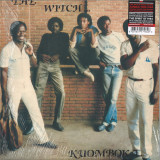
Sourced from the analog master tapes for the first time, Sharp-Flat presents the WITCH disco albums as you've never heard them before in sleeves that replicate the original album artwork.
Over the course of the 1970s, WITCH delivered an impressive run of garage, rock and prog releases. By 1980, the band was ready to embrace the exciting dance sounds of a new era. Shuffling their lineup and relocating to Zimbabwe, they undertook their mythical transformation into an African R&B, soul and funk powerhouse. With access to a state of the art recording studio in Harare, WITCH produced two exquisite recordings during their disco years.
A full-throttle boogie outing, Kuomboka was issued in 1984 and features rising star Patrick Chisembele stepping in on lead vocals. Despite the album's modern vision for African pop, its title refers to a traditional migration ceremony practiced by the Lozi people of the Zambezi floodplains. The album documents a seasoned ensemble with an ambitious vision and is considered the group's sonic masterpiece.
Released in 1981& the last in a decade-long run of Top 50 R&B albums, ‘The Electric Spanking Of War Babies’ was the band’s twelfth studio LP & featured several players new to the Funkadelic line-up, notably Sly Stone. With its allusions to the Vietnam War & US imperialism, George Clinton’s project was destined to court controversy from the start, not least for its uncompromising sleeve art which original label Warner Bros. censored. Described by Robert Christgau as “the solidest, weirdest chunk of P-Funk since one nation gathered under a groove” & originally conceived as a double LP, many tracks saw release on Clinton’s later P-Funk projects. Arguably, it is better for having been précised down to a single album while still spawning two hit singles, the title track (US R&B No. 60) & ‘Shockwaves’ (US R&B No.53). FUNKADELIC Masterminded by the larger-than-life figure of George Clinton, Funkadelic was a key component of his influential P-Funk empire. Funkadelic’s unique combination of Rock, Psychedelia, R&B & Soul led to the band crossing over to the pop mainstream & gaining a vast international following, becoming one of the most important & influential groups in music. On 6 May 1997, Parliament / Funkadelic were inducted into the Rock & Roll Hall Of Fame by Prince. To commemorate six decades of thrilling & delighting fans, George Clinton returned to the stage in 2022 for a series of concerts. To celebrate, Charly have reissued Funkadelic’s classic four albums ‘Hardcore Jollies’; ‘One Nation Under A Groove’; ‘Uncle Jam Wants You’; & ‘The Electric Spanking Of War Babies’ (originally released by Warner Bros during a golden period for the band between 1976-1981). Each album will be available as deluxe gatefold Digi-Sleeve CDs in PVC wallets + obi-strip & facsimile-edition gatefold LPs on 180-gram black vinyl & limited edition 180-gram colored vinyl + 1970s-style obi-strip in a protective PVC sleeve. “They played a HUGE role in creating the future of music.” PRINCE
- A1: Documentation
- A2: Block Rocker
- A3: Corals In Space
- A4: Meeting: Palermo
- A5: Astral Snow
- A6: Tooty Cutie
- B1: Coordinates Meeting
- B2: Mars Close Up
- B3: Alarm
- B4: Hammond A Lolo
- B5: Under Control
- B6: Lazer
- B7: Galaxy Fall-Out
- C1: Funky Flower
- C2: Power Boost
- C3: Lobby And Supercomputer
- C4: Schwarze Spinne
- C5: Wings
- C6: The Real Mccoy
- D1: Evening Air A
- D2: International Espionage
- D3: Milky Way
- D4: Electric Cats
- D5: Nightmare On Lsd
- D6: Cruising Crooner
Vol.2[28,78 €]
25 killer library music cuts by the German film music maestro on audiophile pressing in deluxe 2x10" set. Uberrare and never released before material from 1968-1976, sourced from Peter Thomas' personal reel-to-reel tape archive. Limited edition of 500 pieces.
From brassy big band funk, space jazz, krauty synth experiments to proto-hiphop, cosmic schlagers, heavy easy listening, soulful soundtrack moods and absurdly dreamy LSD ballads, this compilation encompasses the composer's most obscure and yet most transcendent work.
Peter Thomas is widely acknowledged as Germany's most inventive film music composer of the 1960s and 1970, best known for his iconic soundtrack work. He scored over 600 films and episodes, from the crime blockbusters of Jerry Cotton and Edgar Wallace to indie arthouse films like Playgirl, Bruce Lee's The Big Boss and the extraterrestrial Space Patrol and Chariot of the Gods.
His recordings for music libraries often provided an even more leftfield approach. Their visionary 'dope beats' appeal provoked a keen interest from vinyl aficionados, beatmakers and rare groove DJs alike. Unavailable for the public, the original "for professional usage only" albums are now sought-after collector's items that fetch astronomic prices on the 2ndhand market.
This double 10" album is the definite selection of Thomas' best library cues from the Golden Ring Records, KPM and DeWolfe catalogues, many of them available publicly for the first time - plus four recently unearthed "lost" tracks from Warner Chappell's CPM Archive series that have never been released on vinyl before. All music was carefully transferred from Peter Thomas' private master tapes and cut in full dynamics, housed in a beautiful fold-out cover with liner notes and private pictures. The compilation was realised in cooperation with Peter Thomas' son Philip who takes care of the Peter Thomas Sound Orchester catalogue after his father's death in 2020.
DJ support: Tim Sweeney, Make A Dance, Parris, Pleasure Voyage, Camillo Miranda
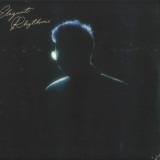
Back yard - Back yard is the first single from the new Teen Daze album, Elegant rhythms, and features singer-songwriter Andy Shauf on drums, and LA jazz staple, Sam Wilkes, on bass. This is a stark change in sound for Teen Daze, who’s last album Interior was an exploration of neon-lit House music. Back yard is a mellow groover, conjuring up images of Laurel Canyon in the 70s, yet still with its flourishes of contemporary sounds.
We’re out of phase again - We’re out of phase again is another vulnerable glimpse into the inner world of Teen Daze, and marks the release of his most personal album to date, Elegant rhythms. In contrast to the synthesized, digital world of his prior album, Interior, here we’ve been brought into a lush, organic arrangement, brought to you in large part to the stunning bass playing by Sam Wilkes. While the verses pulse forward, the chorus slows things down, and evokes the sophisti-pop sounds of The Blue Nile. This track is a stunning showcase of the world of Elegant rhythms.
Nothing’s gonna change my love - Teen Daze returns with his second single of the year, Nothing’s gonna change my love. The stark change in sound, as heard on previous single Back yard, is on display here again: a smouldering, 2 and a half minutes of slow jazz-pop, indebted to the great Sade, or perhaps the feeling of leaving downtown LA at 2 AM. Lyrically, we hear a story of a love, challenged by the unpredictable nature of our lives. This may be Teen Daze’s smoothest song to date.
Neighbourhood - Neighbourhood is the third single from the recently announced LP from Teen Daze, Elegant Rhythms. Along with Andy Shauf on the drums, and Sam Wilkes on the bass, Teen Daze gives us a languid tour of his quiet neighbourhood. The sun has set on the pleasant, tree-lined streets, and a stranger, more surreal environment presents itself. The song plods forward at an extremely comfortable pace, held down by the paradoxically loose-yet-tight rhythm section. Lyrically, we walk around the Neighbourhood at night, and while the chorus reveals a type of sobriety, the vibe of the song makes it easy to feel a little…effected.
Fade away - Fade away sets the tone for Elegant Rhythm’s side B: a deeply personal, though somewhat veiled, confession of loss. How does it feel to grieve something that was never really here? A smouldering, slowly progressing first half erupts in synthetic noise, and then fades into the ether with it’s repeating refrain, “I can feel you / feel you fade away / when there’s nothing / nothing left to say”.
Fall ahead - A sweet piano tune which serves as a quiet break in the record, intended to help the listener reflect and take a moment of pause before we reach the final two songs on the album.
HST underwater - The penultimate track on the record tells a story where the narrator finds themself in an alien, yet oddly familiar place. Arpeggios soaked in crystal blue water flow through the stereo field, while the narrator, vocoded and drenched in autotune, searches for meaning and purpose in a confusing world. This is one of Teen Daze’s most cinematic, emotional songs yet.
In the rain - It’s never really made explicitly clear on this record, but a lot of these songs find Teen Daze wrestling with life as a new father, and this song, the final on the album, expresses the fears of generational trauma. A touching, tender ode to his children, we hear Teen Daze at his most personal and vulnerable. The falling rain surrounds some absolutely breathtaking bass playing from Sam Wilkes, and Teen Daze’s signature ambient keyboard sounds.
Radio Support: Ruf Dug (Soup To Nuts on NTS)
Slush Records are back for their second outing, remastering and rereleasing Sedona’s highly sought-after 1995 track, ‘Pulsation’. A portal to the underground of the ‘90s, Sedona’s original mixes and the remix from Robert Vaughan, fuse progressive house, trance and breakbeat, each oscillating to their own unique frequency. Not stopping there, Slush Records enlist the expertise of Seoul-born, Amsterdam-based Naone for a mesmerising new remix that harnesses all of that early ‘90s energy, with a fresh dynamism.
The story of Sedona begins with Dale Charles and Benny Blanco. As a touring DJ and buyer at Boston Beat Records in the mid ‘90s, Dale Charles was in diggers paradise. Freestyle was big business at the time and as a progressive house and breaks DJ, Dale couldn’t help but notice how good the drum programming was on some of the tracks. He spent endless hours trawling through the shops near 10,000 freestyle records, hoping to find that elusive secret weapon.
One day Dale found the break he was searching for and took it to Benny’s studio. Benny was an aspiring DJ and, more crucially, a producer with a conveniently concreted basement apartment he was slowly filling with synths, samplers and drum machines. Sampling and chopping up this gem of a break, utilising two TB-303’s that Benny recorded live for the acid lines and creating that signature throbbing arp on a Roland JD-800, the basis of ‘Pulsation’ was born.
The duo created a series of different mixes to tweak the feeling of the track. The ‘Ascending Mix’ and ‘Sinister Mix’ bookend this reissue. The former, a club-focussed cut with subtle to squelching 303 lines, rumbling sub bass frequencies and pulsating arps that anchor the track, as the sacred drum break fires your brain into trance-infused euphoria. The latter, an ominous slice of teleportational ambient electronica, sucking you into a wormhole of galactic synthesis and dream-state harps.
The first of the remixes sees Slush draft in the progressive wizardry of Naone to provide a fresh new take on the track. Leaning into the otherworldly ‘90s atmosphere of the original, Naone radiates the pulsating theme through swelling synth stabs and a driving acid bassline. Switching up the feel with an electro-tinged drum beat, she distorts the acid dials till the track explodes into a dystopian realm of twisted techno.
The second is Robert Vaughan’s ‘Test Tube’ mix from the original 12 Inch. A no-nonsense prog headspinner, that garnered plays from the likes of Sasha and Digweed. An acclaimed DJ and producer across the ‘90s, with releases on the likes of Space Records and Metropolis, Vaughan injected the track with added breakbeat energy and swirling, tripped-out breakdowns to masterful effect.
A timeless dancefloor classic, expertly remastered and reissued with a remix that both honours and updates the original.
It is on dark and sweaty dance floors that we get inspired, connect and leave our differences away to live in the present. With this compilation of music pressed in two parts and written by a set of artists from very diverse horizons, it is Polychrome’s perspective on the rave that we want to share. One where sound and light are the only points of reference, opening the space for liberating experiences.
The dance floor is also a space of self-reflection. The A-side is catered by two artists from one of our favorite collectives, De Lichting. With “A Reflection”, RDS opens up and shares a beautifully crafted house gem, providing for a soft and introspective yet groovy “eyes closed” dance. Nathan Kofi takes on the A2 with his unique deep house sound, layering sweet and cinematic synth sounds over an Afro-induced drum sequencing, creating a warm sonic envelope. On the B-side, James Free mixes acid synthesis, roaring bass line, and breaks to create a progressive and subtly melodic dance floor track, one that leaves you positively triggered. With the final track of the record, Rotterdam’s Mata Disk offers a glowing light over polyrhythms and very electronic noises, offering this body of work a deserved radiating curtain close.
Highly original material on a very limited EP... be quick!
POLYPHONIC WAVES OF SOULFUL MADRIGALS
The power of duality is an inscrutable thing: we’re endlessly fascinated by the interplay between light and darkness, East and West, voice and silence, our senses tingling from the compelling synergies that thrive in perceived opposites. Drawing from an urbane Antwerpian upbringing and a Moroccan family lineage, the Brussels-based multidisciplinary artist Younes Zarhoni, embraces these very dualities in all of his projects, exploring those murky areas of contrast and bringing all their ambiguous energy to crystal clear focus.
A longtime staple of the local electronic music scene with his hypnotic techno outings as YZ, Zarhoni’s latest focus is on the compositional power of pure harmony and silence: namely, his polyphonic renditions of medieval mystical poetry, sung in multiple voices and left to solemnly radiate beyond their given spatial grounds. Stripped of all instrumental accompaniments, what you get is Gregorian chant meets Boyz 2 Men, articulated by the lyrical ineffability of Arabic tongues and finding their rhythm in the silences that act as the juncture between observation and anticipation.
These sparse stanzas tread under an elusive referential threshold, conjuring visions of architecture and archaism, madrigals and MTV, the sacred and the profane ~ ostensibly disparate elements that seamlessly fold themselves into the radicality of the compositions. In these 20 minutes of verse, Zarhoni oversteps the margins of categorization to deliver an immersive story of song, flowing freely and sustaining the arc of the narrative long after it has ebbed into silence.
‘Vulnerable’: a champion of Broken Beat and Garage, offering a distinct and uplifting arp that sits on the warmest of bass lines and the coolest of beats. One for the radio, dancefloor, car or just about anywhere else.
‘Tuesday’: Hammered keys, rusty nails, 808 beats and crafted tech noise help hold together this strange piece of clunk funk which knocks and thuds its way through the unsettling but subtle groove all the way to the end.
In Mr Bongo’s opinion, 'Imprevisto' is one of the most unmistakable Brazilian jazz records ever made. Dramatic intro and hypnotic piano line, decorated with panned percussion before the hats come in. Then the upright bass. A true classic.
Bossa Três formed in 1961 in Rio. They spent most of their early years touring jazz clubs in the USA, before the original line up and their pianist (and perhaps most well-known band member) Luis Carlos Vinhas, returned to Brazil. This is the final track on their Em Forma! LP from 1965, released on Forma. The original pressing of this Brazil 45 was the first time ‘Imprevisto’ had been released on a 7”.
We know very little about Ana Rosely. She released four 7” 2-track records between 1975 and 1984, the latter featuring the brilliant ‘Skim Dum Dum Dum’. The original version was released by RGE Discos in 1984, which came as a surprise to us given the sound. It is very difficult to find an original copy in good condition and they are, as ever, increasing in price.
Sasha returns with atmospheric gem 'How to Wear Raybans Well' Featuring remxes from heavyweights Roman Flügel and Nathan Fake.
Electronic luminary Sasha has had a busy 2024 that has so far yielded standout collaborations with the likes of Super Flu & Sentre and a solo single 'Florian Drift' that proves he remains at the cutting edge. His Last Night on Earth label continues to serve up a rich mix of melodic house and techno from the most exciting names in the scene and this latest solo single finds the boss head into new realms once more.
The superb 'How to Wear Raybans Well' is awash with fizzing dub chords and electric lines that flash about the mix. The deep rooted drums have a subtle bounce as they serve to sweep the floor off its feet and lock them into a state of melodic techno bliss.
First to remix is Nathan Fake, a UK talent who has always had his own unique sound. It's based on his mastery of synths and melody and has arrived on labels like Ninja Tune and Border Community as well as his own Cambria Instruments. His remix ups the ante and strips things away to bring more defined drums and crisp hits. The synths bring a range of emotions as they unfold with a mind of their own throughout this most captivating track.
Roman Flügel has been an ever present in the electronic world almost since the start. The German's output has covered endless ground from micro house to acid to techno on the most tasteful labels from his own Playhouse to Mule, Dial and Live At Robert Johnson. His remix is timeless surging techno that comes with waves of warming synths and unrelenting drum pressure designed for peak time dance floor wig-outs.
Polish multi-instrumentalist and prolific producer Charlie lands on Wrong Era with her earth-shattering EP 'Spacewoman'. As a revered live act and spearhead within the Italo-Proto scene, Charlie’s record is a testament to her unique and impactful sound design, which is on full display in her thunderous progressions.
Having garnered a following with her DJ and live performances at some of the most influential clubs in Europe, the record sees the Polish producer integrate her infectious rhythmic flair into another standout release, capturing the consistently mind-opening energy of her live sets and hooking us in with potent synth lines and vocals.
DJ Support: Louie Vega, Ralf Gum, Jihad Muhammad, Zepherin Saint, Mr. V, Doug Gomez DjPope, DJ Beloved & Brutha Basil to name a few.
Sean McCabe’s Good Vibrations Music label opens the vault doors for a peek inside some of its closely guarded & much-loved releases courtesy of this special limited edition 12 inch. Featuring 4 new to vinyl releases & including a raft of luminary names from across the soulful spectrum this is sure to be a be a hot fave with long standing fans of the label.
Glenn Underground’s Jazz-Funk fuelled rework of 'This Place' kicks things off and needs no introduction… heavily supported & much loved through the soulful circles & beyond with the likes of Louie Vega, Dave Lee, Jimpster, Jamie 3:26 & Fred Everything (to name a few!) all loudly banging the drum – people have been clamouring for this to be on vinyl. You spoke, we listened!
Up next is 'Modulate', a collaborative force of the highest order between Sean & long-time friend Black Sonix. Expertly fuzzying the lines across Deep, Soulful & House is somewhat of a speciality for the duo respectively and there’s bags of all 3 intertwined throughout alongside a hefty sprinkling of sun-kissed, Latino-inspired pianos.
'Still Standing Here' kicks things off on the B-side and begin in March 2022 as vocalist Madeeha recorded an accapella vocal idea in a phone voice message, quietly singing into her phone to avoid waking the neighbours. She sent the idea to drum & bass producer from Bristol, DJ Mixjah, who then approached friend Sean McCabe with the idea. Together they produced a hypnotic afro-tinged soulful backing track to fit with the voice message, with an intention to re-record it in a studio environment. Sean and Mixjah soon realised that the music they had created blended perfectly with the sincerity, intimacy & rawness of Madeeha's heartfelt performance in the original voice message and decided to stick with it. A firm fave for Atjazz, Crackazat , DJ Spen & Emmaculate.
Wrapping things up is 'You Don’t Know', a slick & energetic dancefloor bubbler from London based producer/DJ ‘David Bailey’ and Canadian soulful songstress ‘MissFly’. David Bailey is a firm favourite amongst the London house music community. He’s produced standout releases on labels such as Idris Elba's 7wallace, Makin Moves, Good Vibrations Music, Rhemi Music & Unquantize. MissFly is known for her soulful serenades and ability to write songs 'on the fly' in the studio. She has carved out an impressive discography on soulful house nuggets such as '1972,' 'Wanna Love You' and 'Thankful'
Delphic Iris Records is pleased to announce the release of Drox's debut solo 12” EP, "Hexameter." This EP features a high energy remix by 16 Faces, adding a distinct clattering 160 bpm 808 beatdown to the collection.
“Hexameter” brings together a diverse range of sounds,
from machine funk and intricate acid lines to engaging detroit-styled dystopian and alien-like synth scapes. Each track offers a unique auditory experience, inviting listeners to explore new otherworldly sonic territories.
Drox emphasizes rhythmic interplay throughout the EP, with a strong focus on groove. The use of rhythmic hexameters and their accents creates a series of tough, dancefloor-focused electronic groove tools.
Romania’s Floog has grown to become a reputed figure in the microhouse scene for his releases on the likes of Visionquest, TARTOUFFE, Moscow, Enfasi and Atipic among many others and here we see him teaming up with Brizman the minimal alter ego of Techno stalwart Gel Abril, his music under this guise has found a home on the likes of Caprices Records, Subtil Records and SCI + TEC. This new collaborative project however will see its release via Adam’s Bite and follow recent output from IULY.B, Lumieux and Audio Werner.
Title-track ‘Lose Connection’ leads, laying down a bouncy sub bass line underneath a crunchy saturated drum groove, twitchy synth licks and glitched out vocal lines before ‘That Hook’ edges into more dynamic and meandering realms, fusing an amalgamation of synth lines, modulating flutters and vocal whispers atop a heavily swung rhythm section.
‘True Believer’ then rounds out the EP, featuring Stockholm, Sweden’s Linn Stern, the powerful collabrative closing cut embraces a more anthemic feel with cinematic atmospherics, robotic voices, fluttering arpeggio licks and skippy, raw drums intertwined with powerful vocal lines.
A veteran producer (Who prefers to separate this incarnation from past works) working within many disciplines in sound, Silent Cubes demonstrates a particular skill in atmospherics and mood in their productions, creating three tracks of original UKG driven sound that speak in a dialect as familiar to the progeny and brethren of Clubroot, Sorrow, and Congi as that of Chez Damier, Mr Fingers, and Ron Trent. An exercise in deepness, Draped in the framework and immediacy of Garage.
Showing how evocatively these elements can be transformed is MOY, himself straddling a line between classic IDM, Old Skool, and Acid, and with releases on Analogical Force, Vinyl Fanatiks (AmenTec), and a slew of others. MOY comes forward with a hybridized remix of “The Stream”, which really is in a class of its own and closes outside B.
“Sound And Motion”. Presented as a 4-track vinyl EP, in a numbered/limited edition, and bundled with access to 2 exclusive Poly Cut/Digital tracks, only ever available via the access provided through ownership of this record.