The upcoming debut solo album, Lee Richards And Friends, marks an ambitious milestone for American musician, songwriter, and producer Lee Richards. Best known as an original guitarist for Godsmack and a core songwriter for Dropbox and Another Animal, Richards wrote, performed, and produced the entire record himself.
Joining him on this project is a powerhouse lineup of seasoned rock veterans: late drummer Justin Pacy (Digital Summer), legendary guitarist Billy Loosigian (The Boom Boom Band, The Joneses), and bassist/vocalist Sean Corcoran (RA, Fight or Flight).
Combining decades of high-caliber hard rock heritage and exceptional craftsmanship, Lee Richards And Friends delivers a captivating fusion of hard-hitting riffs, rich melodies, and pristine production. Reflecting Richards' extensive musical journey—from touring with international legends to writing alongside rock icons—the album stands as a compelling testament to his enduring artistic vision.
Shaken & Stirred by Earl & the Agitators, the blues-rock project featuring Roger Earl, Bryan Bassett, Scott Holt, and Rodney O'Quinn (the current Foghat line-up). Originally released in 2018, explores the band's shared passion for blues, roots rock, and classic American music.
Nearly a decade after the acclaimed 2017 release of Hometown, Victor, the mind behind Module One is back with his highly anticipated follow-up album, dropping early November.
Now settled in Berlin, Victor's sound deeply reflects his integration into the city's vibrant cultural cosmos. Moving beyond earlier blueprints, his music has matured into a nuanced, fully developed aesthetic based on the personal reflections, artistic environment of the city, and live performances played and heard. Adding an intimate, personal dimension to the project, Soela and D'Loive lend their delicate vocal touch, weaving seamless melodic textures into Victor's refined production.
The upcoming Album HOMETOWN II stands as both a personal milestone and a captivating new chapter for Module One. Vinyl Tastes Better…
Mit TechnoBase.FM Vol. 6 geht die beliebte Compilation-Reihe auf Vinyl in die nächste Runde. Die limitierte Pressung bringt den Sound von TechnoBase.FM direkt auf den Plattenteller und verbindet aktuelle Dance-Tracks mit dem typischen HandsUp-, Dance- und Electro-Sound der Reihe.
Für Fans elektronischer Musik und Vinyl-Sammler ist auch die sechste Ausgabe ein Muss. TechnoBase.FM Vol. 6 – einfach das Beste für den Plattenteller.
Analoge Eleganz trifft auf urbane Gelassenheit. Jeder Track auf diesem Album fängt die Magie des Moments ein - perfekt für urbane Nächte, fokussiertes Arbeiten oder den stilvollen Ausklang des Tages. Ein musikalischer Zufluchtsort, der sanfte Melancholie mit beruhigender Wärme verbindet und die Vielseitigkeit in ein modernes, elektronisch angehauchtes Gewand kleidet. Jetzt die limitierte Edition sichern und den perfekten Soundtrack für die ruhigen Stunden des Lebens nach Hause holen
Der ultimative Weihnachtsklang: Legendärer Chorgesang aus dem King’s College auf Vinyl Erleben Sie mit dieser Vinyl den Inbegriff weihnachtlicher Musik. Sie wurde in der atemberaubenden Akustik der Kapelle des King’s College in Cambridge aufgenommen. Diese LP vereint den legendären Choir of King’s College, Cambridge – den wohl weltweit berühmtesten Weihnachtschor – unter der Leitung von drei seiner bekanntesten Dirigenten: Sir David Willcocks, Philip Ledger und Stephen Cleobury. Von der festlichen Erhabenheit von „Hark! The Herald Angels Sing” und „O Come, All Ye Faithful” bis zur intimen, ergreifenden Schönheit von John Taveners „The Lamb” und Harold Darkes „In the Bleak Midwinter” fängt diese Sammlung den reinen Zauber der Weihnachtszeit im warmen Klang des Vinyl-Formats ein.
After two releases of disco edit material, Blauwdruk Records now releases the first EP with original material by contemporary producers. Sediments features music by Amsterdam mainstay Rob Manga, Nijmegen's Stan Reynen and Den Haag's Blay.
Three forward thinking, soul-infused and club-ready tracks for different hours of the night.
COUNTRY GREAZE is the 2nd independent album released by multi-Platinum-selling artists, Sigma - their 5th studio album overall. COUNTRY GREAZE is a bold, high-concept body of work that visually and sonically collides the raw, underground energy of Drum & Bass with the refined grandeur of a country manor backdrop. Sigma’s idea of blending high-octane basslines, heavyweight lyricism and tongue-in-cheek cultural contrasts flips expectations — pairing gritty rave culture with aristocratic imagery to create a striking, rebellious aesthetic. Its muddy boots on marble floors, signet rings next to gold chains. Sigma say, “The COUNTRY GREAZE concept was to create an exaggerated version of our lives in the countryside and then pull our guest vocalists into to it to see what happened. Obviously, we don’t live in grand manors, but for this we do! Its great having the creative freedom to bring an idea like this to life and we’ve had a lot of fun making it.”
The 12 tracks incorporate a variety of influences including the reggae-infused WATCHIN’ U, the hip-hop inspired NEED U NOW and BACK 2 LIFE featuring legends of UK Sound System culture, Soul II Soul. These influences, together with garage, jungle and grime, can be heard throughout the album. One of Sigma’s aims for this album was to celebrate the scenes and artists that have shaped their journey whilst pushing their sound firmly forward. COUNTRY GREAZE has certainly delivered on this with the project showcasing fresh sounds whilst bringing together a heavyweight cast of UK talent including Danny Byrd, Professor Green, Kurupt FM, Basslayerz, Dutch & Graft and many more. In addition to the 6 singles that Sigma have released in 2026, COUNTRY GREAZE unleashes another 6 bangers which have only been heard in their DJ sets this Summer and whose release has been highly anticipated by many fans of Drum and Bass. In addition to the 6 singles that Sigma have released in 2026, COUNTRY GREAZE unleashes another 6 bangers whose release has been highly anticipated by DnB fans since Sigma started playing them at their 45 gigs this Summer.
The first of these is the album’s focus track, THE DAYZ, featuring the spoken words of Jude Moore who hits the proverbial nail on the head with his nostalgic look back at life growing up in the UK around the turn of the millennium. It’s no surprise that he has a massive 670k TikTok followers as his words speak profoundly to an entire generation. With talk of house parties and care-free fun layered over space-disco synths, THE DAYZ exudes a nostalgic vibe before skilfully blending it with punchy drums and a chunky bassline bringing it straight to the here and now. This uplifting track is guaranteed to inspire any listener to think about the best nights of their lives and say, “Ah geez, those were the days!” Similarly, FABRIC, named after the club that helped shape the Sigma sound back in the 2000s, has the same ethos – classic sounds with cutting edge production. Its euphoric multi-layered synths and deep sub bass fully encapsulate the many late nights spent by Cam and Joe in Room 2.
Sigma also unleash the mighty ALLIGATOR. This much-hyped track has been killing dancefloors one snap at a time since the start of the Summer. The old movie samples and ominous synths in the intro give warning of the impending doom before attacking the listener with its enormous bassline and ferocious drums. Its 36ft long and weighs over 2000lb and its coming to a dancefloor near you.
Jotel’s new EP on Warning calls upon long-time family and scene staples for a masterclass in stripped-back, high-impact dancefloor mesmerism. Shifting between rough-edged modular electronics and deep, organic aesthetics, the EP transforms the finest raw machine funk and 2000s-era progressive into mind-bending club anthems.
Opening the A side ‘Udo Suppi’ sets the tone with a rolling, space-infused groove. Driven by a buzzing, high-voltage bassline and fluid synth work it’s nodding to that golden crossover era where progressive house, early trance, and dark, driving techno collided. Followed by non other than the legend S.O.N.S, for many years a regular fixture behind the Warning decks, takes the track into his own sonic vortex, re-imagining the original with his signature deep-psy precision and intricate percussive drive.
On the flip, ‘Absolvere’ pushes deeper into trippy territory. A long-form, evolving journey built on rolling stabs, fluid arrangements, and an electric undercurrent. A track designed for special hours, late-night car rides, and fog-filled rooms. Closing out proceedings, Düsseldorf’s Trancesetter of Westphalia return to the label to rework ‘Absolvere’, injecting their trademark tribal energy and acid-laced, peak-time madness into the fold.
More than just a genre exercise, whether you call it Retro Goa for the club, Dark Progressive, or simply pristine, full-flavored dance music. WAR1211 is a celebration of long-standing friendships, raw hardware exploration, and strictly unlimited dancefloor fuel.
The Cadets sind eine Indie-Rock-Band aus Gainesville, Florida, die Mitte der 1990er Jahre entstand und Einflüsse aus Surf Rock, Indie-Rock und College-Rock miteinander verbindet. Musikalisch erinnern sie an eine Mischung aus den frühen Built to Spill, den Ventures und Superchunk, geprägt von treibenden Drums, kantigen Gitarren und eingängigen Melodien. Diese Retrospektive dokumentiert die lange Geschichte der Band, zu der auch ein junger Chad Matheny (Emperor X) gehörte. Zwischen 1995 und 2007 tourten The Cadets durch die USA und Japan und entwickelten einen eigenwilligen Sound voller Energie, Experimentierfreude und DIY-Geist. Ihre Songs verbinden nervöse Gitarrenhooks, Surf-Rock-Einflüsse und fantasievolle Texte über Außenseiter, Mythen und Science-Fiction zu einer charmant ungewöhnlichen Variante des amerikanischen Indie-Rock.
Today we are happy to announce that we are reissuing Merucry Rev’s 1993 album Boces in the UK & EU! Available from the 13th of November, Boces has been newly remastered by Henry Rudkins at Air Studios and is available on black vinyl and CD.
Hailing from Buffalo New York, Mercury Rev are one of the US’s most well-respected bands, always experimenting and continually reinventing. The Guardian called them “a rarity in indie rock: a band who have continually evolved their sound, pushing at the boundaries of what rock music actually means…borrowing from jazz, funk, doo-wop, techno, folk and more along the way.”
Boces is such an important record in their discography, a grand and epic part of their story. The songs on the album came from the whole band. Everyone contributed and the recording process really allowed everyone’s freak flags to fly – partly thanks to their first ever major label recording budget. The opening 10-minute epic track “Meth of a Rockette’s Kick” really let’s you know that this album will be like nothing you have ever heard before.
Space Afrika, das in Manchester und Berlin ansässige Duo aus Joshua Tarelle Reid und Joshua Inyang, schafft rohe, detailreiche und eindringliche Musik mit Anklängen an Ambient, Trip-Hop, Techno und moderne Klassik, wobei es aus den Konturen seiner Stadt weitläufige urbane Dub-Landschaften entwirft. ,Quiet Storm" erweitert ihren Klang und ihre Bandbreite zu einer weitläufigen, kollaborativen Vision, die mit tiefer Geduld und Absicht geformt wurde und ihre eigene Coming-of-Age-Geschichte in eine bewegende Suite kathartischer Abstraktion einbettet. Die Songs spielen auf Spiritualität und die conditio humana an, auf die Spannung zwischen Kühnheit und Sanftheit, Ehrgeiz und hartnäckigen inneren Dämonen. ,Quiet Storm" ist eine Antwort auf den Werdegang des Duos seit der Veröffentlichung von ,Honest Labour" im Jahr 2021. ,Wir haben uns selbst und unsere eigenen Vorstellungen von Identität herausgefordert, insbesondere in Bezug auf Klasse und Diaspora, und wie dies in verschiedenen Musikgenres dargestellt wird. Wir wollten die Charakteristika unseres Projekts durch die Menschen zeigen, mit denen wir zusammenarbeiten wollten", sagt Reid. Inyang merkt an: ,Bei der Entstehung dieses Albums haben wir keine Kompromisse gemacht. Die Idee begann als eine Hommage an die Kunst der Schwarzen. Unsere Kooperationen waren sehr bewusst gewählt, als wir die Grundpfeiler der Geschichte entdeckten." Von der multidisziplinären Natur des Projekts zeugt die Beteiligung des gefeierten Künstlers Glenn Ligon, dessen Werk sich mit schwarzer Identität und Queerness befasst. Ligon, der zu Beginn der Aufnahmen eine zentrale Inspirationsquelle darstellte, stellte sein Werk ,Figure #30" (2009) für das Cover-Artwork zur Verfügung und erklärte sich nach Abschluss der Aufnahmen bereit, dem Projekt seinen Namen zu geben - eine beispiellose Geste dieses wegweisenden Künstlers. Beim Anhören der endgültigen Fassung dachte Ligon an ,Quiet Storm", das Radioformat der 1970er Jahre, das für seine sanfte Late-Night-Programmgestaltung mit Themen rund um Leben und Liebe bekannt war. ,Quiet Storm" führt den Hörer durch verschiedene Szenen, Zwischenspiele und Handlungsbögen, geprägt von dem Gefühl, dass seine Bewegung fließend und seine Figuren flüchtig sind. Monologe vor dem Spiegel setzen sich mit dem Existentiellen und dem Unmittelbaren auseinander: Überleben, Autonomie, Sinn. Das Album beginnt mit dem explosiven, von Streichern begleiteten ,Vanity", bei dem die Grammy-Preisträgerin Axelle Fanyo zu hören ist. Zunächst auf die Spalten eines stillen Raumes fixiert, entfaltet sich ,Vanity" unter Fanyos ausdrucksstarkem Sopran und durchläuft ein breites emotionales Spektrum von erhabener Kontemplation bis hin zu ergreifendem, herzzerreißendem Schmerz. Auf dem gesamten Album werden gesprochene und gesungene Worte sparsam eingesetzt, um eine kraftvolle Wirkung zu erzielen. Die Schönheit und Katharsis von ,MLN" ist ein kollektiver, langsamer Marsch, bei dem der britisch-nigerianische Künstler Tony Njoku mitwirkt, begleitet von Gabriel Evans an Gitarre und Lead-Bass, PIKE aus London am Schlagzeug und GB aus Kopenhagen an Keyboards und Streichern. Der letzte Satz verleiht ,Quiet Storm" seinen krönenden Höhepunkt. ,If This Is Hell" ist in einem einzigen Take als Bewusstseinsstrom des New Yorkers Deuén aufgenommen, dessen nachvollziehbare Spirale geistiger Aktivität von jazzigen, frenetischen Percussion-Klängen begleitet wird. Das Druckventil öffnet sich, als die phasenverschobenen Drums und die scharf beobachtenden, dialogartigen Phrasen abrupt nach der Zeile ,I wonder if that's what heaven's like?" abbrechen. Wir bleiben in der Behaglichkeit des Album-Closers ,Regards" zurück. Regentropfen treffen auf Orgel, Drone, Streicher und Keyboards, während das Nachladen von Waffen dem ruhigen Summen gegenübergestellt wird. Schwer und doch hoffnungsvoll erinnern Joshua Tarelle Reid und Joshua Inyang an ihre bisherige Reise. Als passend geheimnisvolles und mitreißendes Outro für ihr offenes Opus ist ,Quiet Storm" ein Meilenstein: selbst produziert, selbst finanziert und aus purer Tatkraft und Überzeugung entstanden. Durch verzerrte Zeit und schummrigen Dunst ist Space Afrika zweifellos angekommen
,J'ai pensé sans paroles" dokumentiert die erste Zusammenarbeit des schottischen Filmemachers und Komponisten Luke Fowler mit dem US-amerikanischen Musiker und Komponisten David Grubbs. Das Album bewegt sich zwischen elektroakustischer Musik, Musique concrète, Improvisation und experimenteller Komposition. Das titelgebende Hauptstück verarbeitet Archivmaterial, Feldaufnahmen, Klavier, Stimme und Elektronik, inspiriert von Fowlers Filmarbeiten über die französisch-deutsche Komponistin Brunhild Ferrari. Ergänzt wird die Veröffentlichung durch ,Verbal Equinox", ein freieres Stück, das den Schwerpunkt stärker auf das intuitive Zusammenspiel der beiden Musiker legt. Gemeinsam erschaffen Fowler und Grubbs eine atmosphärische Klangwelt, in der Erinnerung, Ort und Klang aufeinandertreffen und die Grenzen zwischen Komposition und Improvisation verschwimmen.
Maryos Syawish (b. 1993, Iraq) is a Chaldean Iraqi artist and musician based in Naarm/Melbourne working fluidly across visual art, sound and curatorial practice. His creative work spans more than 15 years and is defined by a lawless, unorthodox approach that resists traditional genre boundaries.
His Research Records debut is an introspective and meandering exploration of place, legacy and personal history. It’s a marked change of pace for the Melbourne-based producer, who has carved his name into the Australian underground as one half of Sleep D and Butter Sessions Records, but his first full length under his own name feels like an extension rather than a departure from what those attuned to his productions will already know.
Qurmami – which translates to “my roots” – functions as an audio collage that bridges the artist’s dual experiences of growing up in Australia and his heritage as a Chaldean Assyrian. Developed over the course of eight years, the record is anchored by field recordings captured during a pivotal trip to Iraq which are sewn into lush ambient electronics over two sides.
Over 42 minutes the production swells and grows; a delicate and mind-transporting beginning gives way to a more rhythmic, body-moving tail end, drawing subtle influences from dub, ambient, and traditional music from the Northern Iraq region along the way. Syawish’s contemporary, friend and fellow Research artist Khaled Kurbeh features, as does Melbourne-based cellist Abby Sundborn, while Sarah Ujmaia – Maryos’ cousin – contributed the album art and a familial through line that rounds out a cohesive, evocative exploration of identity, memory and the spaces that shape who we are.
Tension, contradiction, curiosity, animosity and affection - these are all essential to the collaboration between The Body and Cel Genesis. Also essential are the sounds of trance music, the weight of distortion and the grinding of experimental electronica - all counterpointed against the viscerality of two live drummers. The intensity of the vocals are such that experience and emotion are often conveyed wordlessly and intuitively, with the meaning bending to each vocalists" intent. And whilst some of the vocals were recorded separately, there are goosebump-inducing moments on the record - such as the opening to the whole record - where the two bands come together to chant in unison. Whole Wide World is a dense and heavy album, but one that nevertheless feels joyful and fresh - an uncategorisable ode to egoless invention. It"s a work born of artists with disparate approaches, who feel compelled and comfortable to surrender them, in service of the birth of new art. Whilst the album was made with joy, the themes of the album confront today"s harsher realities; we see this play out as through the eyes of an unrelenting optimist processing the death of possibility itself.
Tension, contradiction, curiosity, animosity and affection - these are all essential to the collaboration between The Body and Cel Genesis. Also essential are the sounds of trance music, the weight of distortion and the grinding of experimental electronica - all counterpointed against the viscerality of two live drummers. The intensity of the vocals are such that experience and emotion are often conveyed wordlessly and intuitively, with the meaning bending to each vocalists" intent. And whilst some of the vocals were recorded separately, there are goosebump-inducing moments on the record - such as the opening to the whole record - where the two bands come together to chant in unison. Whole Wide World is a dense and heavy album, but one that nevertheless feels joyful and fresh - an uncategorisable ode to egoless invention. It"s a work born of artists with disparate approaches, who feel compelled and comfortable to surrender them, in service of the birth of new art. Whilst the album was made with joy, the themes of the album confront today"s harsher realities; we see this play out as through the eyes of an unrelenting optimist processing the death of possibility itself.
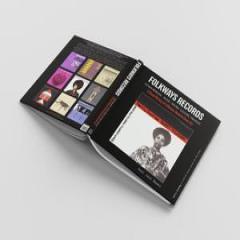
"Folkways Records: A Visual History" (Format: 12"x12", 208 pages, 2kg) showcases hundreds of iconic sleeve designs from the legendary label founded by Moses Asch, whose groundbreaking catalogue documented musical and cultural traditions from around the world. The book highlights the striking artwork of Ronald Clyne and celebrates Folkways' unique legacy through recordings spanning folk, jazz, world music, avant-garde sound and spoken word.
RADYO BOMBERO - ABOUT THE LABEL
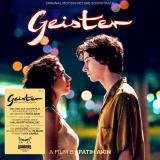
Radyo Bombero is the record label founded by acclaimed filmmaker, author, DJ and record collector Fatih Akin. Born out of his personal passion for vinyl and film music, the label will initially focus on soundtracks from his films: previously unavailable works will be released on vinyl for the first time, while out-of-print titles will return as carefully produced reissues. Its inaugural release is the soundtrack to Akin's new film Geister, scheduled for release in November 2026. Further projects are already in development.
ABOUT THE RELEASE
MALAKOFF KOWALSKI - GEISTER
ORIGINAL MOTION PICTURE SOUNDTRACK
Composed by Malakoff Kowalski, the soundtrack to Fatih Akin's Geister is the inaugural release on Radyo Bombero.
Born in the United States, raised in Hamburg and now based in Berlin, Kowalski is a composer, pianist and multi-instrumentalist whose work moves between film music, contemporary classical composition, theatre and pop. He composed the music for eleven films by Klaus Lemke, as well as for productions including Schweigend steht der Wald and Stasikomödie. His solo work has been released by MPS and Sony Classical, and he has collaborated with artists including 2raumwohnung, Igor Levit, Chilly Gonzales and Nils Frahm. His sound combines elegiac melodies with a warm, cinematic atmosphere and a subtle sense of unrest beneath the surface.
For Geister, this distinctive musical language meets Fatih Akin's vision of a deliberately anachronistic and romantic score: a tribute to Ennio Morricone's great love themes that plays a defining role in the film's tragic love story and atmosphere.
LP 1 contains Kowalski's complete original film score.
LP by JUGGLERZ opens up a second musical world, bringing together four productions by the internationally successful Jugglerz on a four-track 12-inch disc at 45 RPM: the film's title song Ya Mami, performed by Aya Samra; Mood by Cloudee, Milaa and Jugglerz; Tip by Jugglerz, Limitlezz, Maureen and Demarco; and Beirut Nights Riddim. The four tracks bring Arabic tarab and contemporary Levantine pop together with hip-hop, urban beats and dancehall rhythms.
FATIH AKIN ON RADYO BOMBERO
"Radyo Bombero is on the air. Don't miss a tune!
"
Music is - alongside cinema and literature - a fundamental source of inspiration for me. Having grown up in the 1980s, the way I listen to music has hardly changed: I buy records, listen to them carefully and then copy them onto a portable device. It used to be a Walkman, then an iPod - today it is my smartphone with my playlists.
I do not use Spotify or any other streaming services. Why that is, I do not know. In most other areas, I try to keep up with technological developments. Not with music. I like unpacking a record, cleaning it before listening, holding the sleeve in my hands and reading who worked in the studio, who wrote the music and where the record was made. These things interest me. And they lower my cortisol levels.
Music plays a major role in my films. It is not that, as a director, I want to impose my favourite music on the audience. The music must always serve the story. In Head-On, for example, it tells us something about the characters and their biographies. Crossing the Bridge - The Sound of Istanbul is the musical portrait of a city. Its music tells us about the people who live there: where they come from, the cultures they brought with them and how those cultures have merged with local traditions. The Cut was conceived as a Western, and the music had to help reinforce that idea.
Geister tells a tragic love story. The music was meant to be gloriously anachronistic. And romantic. Just like the light and colours, it had to shape the atmosphere of the film. My films are often about cinema itself, and Geister is no exception. Its music is a tribute to Ennio Morricone's great love themes.
In Malakoff Kowalski, I found the perfect creative partner. He immediately understood my idea and realised it brilliantly. That made it all the more painful when I was told by the music industry that there could be no soundtrack release for Geister because soundtracks were too expensive to produce and would simply sit on the shelves.
It is not as though I am a spoiled child who absolutely has to have a lollipop. But this music is simply too good to withhold from the audience. The idea that there would be no soundtrack release felt like a great injustice.
Then several friends and collaborators advised me to release the record myself. No sooner said than done. But Radyo Bombero is not a one-off project. Geister is only the beginning.
Finally, I have the opportunity to gradually release all the soundtracks from my films that have remained unavailable. Soundtracks that were previously released but have since gone out of print will also return as reissues.
Hainbach's soundtrack to Amrum is already in development, as is a double album featuring the unforgettable German pop songs from The Golden Glove. And, finally, a vinyl soundtrack to Head-On.
Fatih Akin
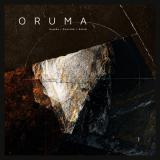
ORUMA is a trio formed by Ola Rzepka (drums, zither, percussion), Artur Rumiński (electric guitar) and Mat Barski (electric guitar). At its foundation is the musical dialogue previously developed by Rumiński and Barski as a guitar duo and documented on the albums “On the Margin” and “At the Junction”. Their encounter with Ola Rzepka during Kraków’s Kakofonie series opened this music to a new sense of dynamics, pulse and
collective form.
ORUMA’s music exists at the intersection of free improvisation, noise, experimental postrock and post-kraut repetition. It avoids the conventional division between soloist and accompaniment. Instead, two electric guitars and drums gradually abandon their individual roles to form a single, constantly shifting sound organism — moving from silence, open space and isolated gestures towards dense masses of sound.
The trio’s debut album consists of five pieces: “Satellites”, “Stranger”, “This Mountain Is Alive”, “A Rough Plan For Nostalgia” and “Hyperborea”. Together, they form a coherent journey: from distant signals and the first moment of contact, through friction and increasing physical intensity, to an expansive fourteen-minute finale.
Ola Rzepka
Drummer, pianist, composer and performer. She graduated from the Karol Szymanowski Academy of Music in Katowice, where she studied at the Faculty of Composition, Interpretation, Education and Jazz. She was also a scholarship student at the Rhythmic Music Conservatory in Copenhagen, studying piano and percussion. She teaches piano improvisation at the Wojciech Kilar State Music School Complex in Katowice and runs her own music lessons and workshops. As a composer, she collaborates with acclaimed theatre directors in Poland, Germany and Switzerland. Her musical collaborators have included Raphael Rogiński and Antoni “Ziut” Gralak. She has performed her original music at numerous avant-garde, popular, jazz, improvised and contemporary music festivals across Poland and Europe. In Jazz Forum magazine’s 2024 Jazz Top critics’ poll, she was named among Poland’s leading drummers.
Artur Rumiński
Guitarist and member of bands including Furia, Thaw and ARRM. He also composes and improvises under his own name and performs in the experimental duo Marmur, which he co-founded with Macio Moretti. He has released several solo albums on labels including Antenna Non Grata, Gusstaff Records, Zoharum and Szara Reneta.
Mat Barski
Guitarist associated with the Kraków and Tricity music scenes. His projects include the duo Ekotonika, the Rumiński / Barski duo. He has released albums through Gusstaff Records and Antenna Non Grata. Alongside music, he works in motion design and visual postproduction. He is a member of the Kraków-based Skład Solny Association, where he coorganises concerts and exhibitions.
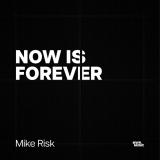
Dutch-born and Singapore-based, Mike Risk has spent more than three decades immersed in house music. As a DJ, producer, promoter and agent, he has experienced the culture from multiple angles, building relationships and sharing dancefloors across Amsterdam, London, Ibiza, New York, Chicago, Singapore and beyond.
Now Is Forever is a full-circle moment. A statement. A celebration of a lifelong relationship with house music.
Mike first made his mark in the Dutch underground through Club Risk and later RiskSoundSystem, two platforms that helped shape nightlife culture in the Netherlands throughout the 1990s and 2000s. After decades spent championing the music of others, Now Is Forever is Mike adding his own chapter to the culture that shaped his life.
Created with longtime collaborator Greg van Bueren (Hardsoul) between Amsterdam and Singapore, the album is a deeply personal tribute to the music, people and places that shaped him. From the clubs of Amsterdam and London to the sounds of Chicago, New York and Detroit, it distils decades of dancefloors, record stores, studios and late-night conversations into one body of work.
From deep and soulful grooves to raw house cuts and acid-tinged late-night moments, Now Is Forever explores house music in its full spectrum. It reflects the way Mike has always approached a dancefloor as a DJ: not as a collection of tracks, but as a journey through the many moods and moments that make a greatnight unforgettable.
Featuring Mike Dunn, Bluey Robinson, Marc Evans and John Agesilas, the album brings together years of experience, inspiration and dedication. Crafted not out of commercial pressure but out of creative necessity, it is the product of pure love-for the culture, for the craft, for the music.
Now Is Forever is a past-forward record: rooted in the music, dancefloors and relationships that shaped Mike, while carrying their spirit firmly into the present. At its heart, it is about honouring the kid who first fell in love with house music-and never let go.
Because when you are truly lost in music, there is no past and no future. There is only now.
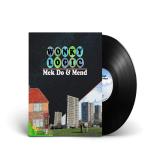
This November, Brownswood Recordings will release Mek Do & Mend, the debut album from self-taught producer, multi-instrumentalist, composer and artist Wonky Logic. Although his name may not yet be familiar to everyone, Wonky Logic (AKA Dwayne Kilvington) has spent the past two decades quietly becoming one of the UK's most respected musical collaborators. His career has moved comfortably between London's jazz, electronic and contemporary music scenes, performing and recording with artists including Nala Sinephro, Yussef Dayes, Nightmares On Wax, Shabaka Hutchings and Emma-Jean Thackray. Alongside his work as a producer and composer, he's been musical director for projects with Eddie Chacon, John Carroll Kirby and I.G Culture's LCSM, scored the feature documentary Zandra With A Zed, contributed music to A24's The Smashing Machine, and continues to lead music workshops with young people, refugees and people experiencing incarceration.
Far more than a collection of compositions, Mek Do & Mend is a deeply personal reflection on the people, places and experiences that have shaped Kilvington throughout his life. It's the story of growing up on a Leeds council estate, where music became both a creative outlet and a way of understanding the world. Making music often meant working with whatever was available: a second-hand keyboard, a makeshift studio desk or ageing equipment that simply had to last a little longer. The title itself came from a conversation with his mother, capturing the resourcefulness that defined his upbringing and continued into the making of the album itself, which was written and produced to a tight deadline around touring, family life and Kilvington's work as a musician and educator.
Built from material spanning more than fifteen years, Mek Do & Mend brings together some of Wonky Logic's earliest compositions alongside brand new pieces written during the making of the record itself. Childhood ideas sit alongside music conceived only months before recording, creating an album that draws together a lifetime of writing rather than documenting a single moment. Running throughout are voice notes from family members, teachers, friends, mentors and collaborators—not simply as interludes, but as a reminder that no creative life is ever self-made. Rather than telling his own story outright, Kilvington invites listeners to discover him through the people who've shaped him: an aunt remembering him playing in church as a child, lifelong friends recalling early experiments making beats together, fellow musicians from different stages of his career and his mother describing him in her own words. Together they reveal the invisible network of relationships, philosophies, communities and experiences behind the music. "The album exists somewhere between being a biography and an autobiography," says Dwayne. "The biography is in the voice notes and how other people see me. The autobiography is in the music."
That same philosophy extends to the musicians who appear on the record. Every contributor has played a meaningful role in Wonky Logic's life beyond the studio. Long-time collaborator Luke Wynter, Steam Down drummer Benji Appiah, partner Vanessa Rani, Jonathan Enser, Joe Bristow, Brother Portrait and Nubiya Imani all feature not simply because of their musicianship, but because they form part of the album's story.
Across its fourteen tracks, Mek Do & Mend moves effortlessly between dynamic jazz arrangements, pulsating broken rhythms, delicate, twinkling piano passages, interstellar synth textures and elegant brass lines. Album opener and first single 'Strange Attractor' begins with a shimmering introduction before unfolding into an exhilarating surge of rhythm and momentum. Named after the mathematical concept of the same name, it serves as the conceptual point of origin for the album. Written when Kilvington was just seventeen, the composition reflects the idea that even the most unpredictable lives are guided by hidden patterns that often only become visible with time. Second single 'A Thousand Hands' features the unmistakable vocal tones of Brother Portrait, whose cerebral lyricism drifts over a low-slung, constantly shifting groove as woozy synth lines ebb and flow overhead. At its heart, the track celebrates the family, friends, mentors and collaborators whose often unseen influence shapes who we become, echoing the album's belief that every achievement is, in some way, a collective one. LP focus track 'BAME (Beyond All Marginalised Expectations)' is a lush, spiralling composition, brimming with both emotion and resolve. Reclaiming an acronym long imposed on racialised communities in the UK, the piece transforms it into a statement of possibility rather than limitation: a defiant rejection of stereotypes and a refusal to let identity be defined by other people's expectations.
The album itself only exists because other people believed in it. Isabel Gracefield made the RAK sessions possible, Rick David brought the record together with his characteristically thoughtful mix, and Gilles Peterson committed to releasing it on Brownswood before hearing any of the music. Away from the stage, Kilvington works with the charity Finding Rhythms, writing and producing original records with people experiencing incarceration, while also leading workshops with Arts Train and Dovetail Orchestra.
Recorded live in a single day in Studio One at RAK, Mek Do & Mend was mixed by Rick David through an analogue Cadac console before being mastered by Stuart Hawkes at Metropolis. The aim wasn't nostalgia or audiophile perfection, but to create a record people could return to throughout their lives, discovering something new with each listen.
As Dwayne puts it: "I don't want this body of work to be reduced to a jazz record. It's more like a novel about life told through music."
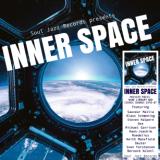
Soul Jazz Records’ new ‘Inner Space’ collection is a mixture of Cosmic electronic music and proto-New Age sounds. The album features a wide range of European, British and American auteur electronic artists, including Hans-Joachim Roedelius, Steven Halpern, Michael Garrison, Ose, Klaus Schønning, Bernard Xolotl and others.
Their cosmic, exploratory music sits somewhere between the worlds of personal, inner space and galactic outer space. All of the music featured here was recorded in the 1970s and 1980s, much of it released on small bespoke private-press record labels, often owned by the artists themselves.
The album also features rare tracks from a number of Library Music artists, all of whom used electronic music to explore a variety of common celestial or Gaian themes – cosmology, spirituality, science, mother earth, wellness, technology, consciousness, exploration, healing and harmony – in their work. These include pieces by Sauveur Mallia, Keith Mansfield and Sven Torstenson.
Here on this album you will find the Sun Ra’s of New Age, the Picassos of Library Music and the Burroughs of space-related electronic music. Away from contemporary music fashions, these unique and highly individual artists remained free in their music to explore new ideas of sound and technological experimentation – together with the larger concepts of time, space and matter – a freedom rarely granted, and one that we celebrate here.
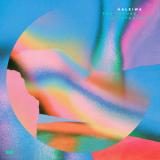
With »The Future Is Futuristic«, the fifth album for Haleiwa (and third with Morr Music), Stockholm’s Mikko Singh draws from a deep well of nostalgic feeling, while making music that feels razor-sharp, on point, and full of hazy dream-pop pleasure. After 2019’s »Cloud Formations« and 2022’s »Hallway Waverider«, which imagined psychedelic post-shoegaze and mantric pop songs into being, »The Future Is Futuristic« feels like both consolidation and magnification; the noise-drenched songs feel thicker, heftier; the electronic interludes playful and kinetic; the rhythms boundless. It’s as though Singh has truly found his metier, his voice, a place from which he’s comfortable to indulge in the kind of home-recorded worldmaking that has always marked Haleiwa out as something special.
»The Future Is Futuristic« passes by in a rush of whiteout tones and scurrilous energy; the whole thing is over within half an hour, Singh ensuring his songs say exactly what they need to say – no more, no less – before bustling through into the next ecstatic pop moment, pushing the music further into the zone. While his music often has a similar, drenched quality to shoegaze, on »The Future Is Futuristic«, Singh seems to be settling in alongside other spirits – there are touches of the experimentation of both A.R. Kane and Flying Saucer Attack here; the more motoric tunes recall New Zealand’s Snapper; the glitchtronics have a City Centre Offices sensibility, while the sparkling folksiness of the melodies can recall Bristol bands like Light or AMP.
But it’s ultimately not about influence, beyond perhaps Haleiwa nestling alongside some like-minded souls in perceptive listeners’ minds. Instead, thrill to the rush of rhythms that float between jungle and punk on »Flourishing« and »96«, the latter a reference, from Singh, to moments of early revelation – »it’s about being thankful for having found punk rock and skateboarding at a young age, in 1996.« There’s also the hypnotic dream-rush of the opening »Smoke Will Rise«, the beautiful Cure-esque guitars swimming through »Sunset Street« and »Strange Notes«, the tumbling rhythms and heady, elated chord changes that grant lift-off to »Wave Chaos«… A real panoply of pleasures, in fact.
»The Future Is Futuristic« was recorded solely by Singh on four- and eight-track in his home studio, with a quick trip to Telefonstudion to record drums. Recording at home grants a certain intimacy to »The Future Is Futuristic«, even as the songs, at times, bliss their way off into the skies; there’s something both expansive and intimate about the music here, as though Singh is grappling immensities into intimacies. It also feels deeply personal for Singh, a summation of much of what he’s done over the years; as he says, simply and clearly, »The album is in my interpretation a mix between punk, electronic music, and dream pop.« The threads that connect these creative phenomena? Energy, texture, melody, tone, sensuality; pure pop pleasure.
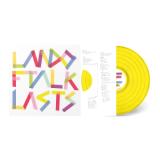
Land of Talk is still here. That wasn’t always a guarantee. Over the multi-faceted twenty year history of their project, Lizzie Powell has drifted from and back to music, always interrogating their role as an artist. In the time since 2023’s Performances, they found themselves utterly worn down by the vicissitudes of the music industry and wracked with worry around their aging parents. Yet the music didn’t stop: Powell heard songs in traffic and in birds chirping, in their downstairs neighbor’s daily prayers and in the babble of children on the street. Melodies slowly cohered over time. “Life can become so unbearable, and music is where I go to metabolize it,” they explain. “I know the music was the only thing that was going to help me.” Soon Powell reemerged with the sixth Land of Talk album, LASTS.
LASTS is full of double meanings — both resilience and finality, acting as a noun and a verb. Though LASTS is haunted by crises including climate collapse, political upheaval, and genocide, the mangitude of global turmoil led Powell towards smaller, humane depictions of suffering and grief. As both their parents became ill, Powell reflected on the last time a person might walk, might talk to a loved one. Yet watching their parents near the other side of life’s arc also made Powell consider all they had survived across their own decades on this earth, their new songs channeling both gratitude and rage. LASTS became a phrase, honoring Land of Talk’s circuitous route and all Powell’s reckoned with through the years. “I think of this record as a love letter to life,” they say.
The end result is an album both lean and winding, allowing Powell’s words and melodies to take centerstage, uncrowded in visceral, shot-no-chaser arrangements. LASTS jumps right in with “Broken Tongue,” a wiry track built on thrumming electric guitar and ghostly synths as Powell rails against the lack of justice for victims of abuse. The trio’s interplay is readily evident in “Saffron” and “4:44,” two earworm songs that also allow themselves to unspool into extended instrumental codas. Early in the record, there are seething tracks like “Dogs” — “Just your basic instinct / Even dogs know better,” Powell growls in the chorus, before the song quiets into a plaintive plea of “Leave us alone now” — and later there are more vulnerable, wandering moments. In “Projections” and “Cedars,” Powell ventures deep into their head, inviting their co-conspirators and listeners alike to follow the songs wherever they meander.
Tectonic Recordings presents Tectonic Sound: Vol. 2, the second instalment of the various artists series curated by label founder Pinch. Following the first Tectonic Sound collection, released in 2025 to mark the twentieth anniversary of the label, the series continues Tectonic’s forward-facing approach; bringing together artists from their wider family and connecting dots across the underground.
Longstanding figures of the UK Bass scene such as J:Kenzo and Roska sit alongside a new gen of artists including Ehua, Manami, Cimm, Denham Audio, Henry Greenleaf and SHXCXCHCXSH. Beatrice M. also returns following the release of their acclaimed debut album Sinking earlier this year, while Jay Carder and Sir Hiss make their first outings as solo artists on the label, after both appearing as collaborators on Sinking.
Pinch says: ““As Tectonic enters its third decade, the spirit and passion behind the music hold true to its roots. I love every single track on this compilation and how it shows off the various corners of the label's sound. Each artist has delivered something truly special!”
Each artist arrives with a distinct sound and history of their own, but across these twelve original tracks there’s a shared understanding of what Tectonic represents. Different strains of the UK bass continuum come together, creating a space where sounds collide, and new forms take shape.
Pinch leads the charge with ‘Hold On!’, an upfront, high-definition 4x4 propulsion tool that pairs rolling momentum with seismic bass pulses. Manami enters with ‘Turning Point’, further solidifying her newer direction, leaning into deep, dubbed-out territory with a sound that feels both vast and exploratory, while remaining heads-down and locked in. Henry Greenleaf steps in with ‘Whist’, an ominous and otherworldly offering, reminiscent of early dubstep productions that fell somewhere between the lines of dark garage, 2-step and grime.
Elsewhere, SHXCXCHCXSH’s ‘NexxxD’ and Sir Hiss’s ‘2TUFF’ form a middle climatic point of pure chaos, with Sir Hiss serving up a raw slab of gnarled grime waveforms and cascading claps. Beatrice M. & Cimm bring things back down with ‘Pad City’, a cool, meandering cut of shuffling house, while Lorem closes the compilation with ‘Console Corners’, exploring the outer rims of sound manipulation and deconstruction before tying it all together.
Since its formation in 2005, Tectonic has been a trailblazing force in electronic music, helping to define and continually redraw the boundaries of dubstep and its surrounding sounds. The compilation arrives in the middle of a serious run for the label. Earlier this year, Tectonic released Beatrice M.’s debut album Sinking, a major moment for the label that was embraced across the electronic music community. Pinch has also continued his long-running creative relationship with legendary grime MC Trim this year, following their joint 2025 EP No Caller ID, with recent single Striker.
Across Tectonic Sound Vol. 2, those different strands of Tectonic’s history and present day meet head-on. The music moves between familiar forms and stranger territory, with rhythms and frequencies refracting across the collection. It’s a record that feels cohesive without being uniform, reflecting a label whose sound has always been defined by forward movement.
Spring Back, Ball Forward is the Soda Gong debut from Jung dj, nom de plume of shapeshifting multi-instrumentalist Randy Riback. Following a series of uniformly great self-releases and cassettes on the dearly missed Lillerne Tapes, this collection observes the spacious and angular dynamics of 1990s Midwestern post-rock through the lens of the bedroom electronic music producer.
Perhaps surprisingly, amp worship lies at the center of the album: a fascination with the grain, pressure, and emotional charge of amplification and gain, refracted through the strange remove of digital amp modeling. Tubes, speakers, sag, and in-the-red textures are a critical part of the album’s expressive vocabulary, imparting density and colorful saturation while lending even its most weightless passages a vital sense of physical presence. Over the course of twelve tracks, wistful ambience gives way to blunt heaviness and roiling catharsis, underpinned by a palpable sense of loss and grief.
The album’s auspicious cast of collaborators further complicates its emotional terrain. Spoken contributions from Natalia Panzer and Angelina Nonaj occupy strikingly different registers: Panzer’s diffuse and oblique, drifting in and out of the music’s contours; Nonaj’s a vivid travelogue, grounding the record in place and lived experience. Elsewhere, Soda Gong veteran Mister Water Wet joins a small constellation of guests whose playing folds naturally into Riback’s arrangements, blurring the boundaries between computer and ensemble music.
For all of its attention to texture, process, and the material qualities of sound, Spring Back, Ball Forward is first and foremost an emotionally potent work, possessed of a directness that can feel rare within experimental electronic music. Riback draws from a rich and idiosyncratic musical vernacular, arriving at something deeply felt and difficult to place: a singular statement whose pathos exceeds the sum of its references.
The Tango N'Vectif: Sessions 2LP contains tracks from the original CD version, the 2001 2CD reissue, remixes and alternate versions of album tracks, music from the Phi*1700 u/v EP on R&S and other exclusives, selected by Mike, completely remastered from DATs by Beau Thomas. µ-Ziq's Tango N'Vectif was released in 1993, a classic year for auteurist electronic music that didn't always fit on the dancefloor. Written by Mike Paradinas in his late teens with some help from Frank Naughton, it still stands up really well today and its influence on electronic music in the decades since is obvious. Across an expanse of ideas, taking influences from early Aphex, Detroit Techno and UK Hardcore, Mike created this spirited, funky, jerry-rigged, lo-fi version of rave; with crunchy drums and a knack for melody that fell somewhere between John Barry and classic TV themes. Without owning a computer, Mike had been writing techno, house and industrial tracks on and off since 1990, playing live keys alongside drum machine rhythms on his 4-track recorder. µ-Ziq started when Mike linked up with Frank who was also writing dance-influenced music, and importantly owned an Atari 1040ST computer with Cubeat software. They pooled their equipment and Mike would travel up to Frank's house a couple of miles away in Wimbledon to record together. By 1992, and after a false start when a proposed EP for Mark Pritchard and Tom Middleton's Evolution label got shelved, Mike had started at Kingston University where he deejayed and met like-minded people including a couple of guys who knew Aphex Twin who was also a student at Kingston too, and they passed Aphex a demo of Mike's material. A few days later Mike got a message from his mum to 'call Aphex Twin' and he gave Mike some advice, and seemed interested in releasing something. So when Frank and his family went on holiday that summer Mike borrowed his Atari and synths and wrote the majority of the Tango N'Vectif album during that 2 weeks. By the end of 1992 a release with Aphex Twin and Grant Wilson Claridge's Rephlex label had been agreed - Aphex had moved to the house in Clissold Crescent where he recorded a lot of his early classic albums and Mike went over to collect his advance, in the form of his very own Atari computer.
Eight years ago, a deep tragedy struck the West Coast and global electronic music world when Navid Izadi and his mother, Floria Hakimi, died in a plane crash in Southern California. Navid was a true rising star, as anyone who heard his earlier works or felt his magnetic stage presence can attest to, and we all mourn the loss of his creative gifts and one of a kind spirit. In the years that followed, through the diligent efforts of his cousin, Lily, and brother, Aden, Navid's destroyed laptop and hard drive were miraculously restored, recovering crucial files for his work-in-progress debut album, Ayande. Those files were then placed in the adept and careful hands of fellow studio maestro Dave Aju, to complete Navid's mission, along with a gathering of musical family collaborations throughout the wondrous LP
"Birds Of Prey" kicks things off, setting the scene with the deep, spacey, soulful feels Navid was well known for. It includes live drums by John Bryars and additional production work by Tavish DJ & Dave Aju (aka DX3) that send the otherworldly vocoder and arpeggios into the next dimension. Keeping the interstellar vibe high, Diagnostics/Escape" sees Navid take the Trans-LA Express electro flex a step further with cyborg vocals waxing love poetic, leading to an entrancing second movement to finish as an Escape, indeed.
"Andromeda" follows with excellent updated production work by Charles Levine of Soul Clap/Crew Love fame, along with harp bliss from Caroline Campbell, vocal chorus duties by Ayako, Jackson Englund, and Shuggie Quezada, with some bonus piano plot twists and turns from Rodney of Elbow Grease.
"Islands" is an irresistible West Coast boogie jam of the highest order, with the gorgeous lead vocals of Angelica Bess blessing the floor-filling piece perfectly.
"Chica Go,” as the title implies with a wink, functions as a beautiful homage to the windy city, which tactfully ropes in not just deep house flavor but also hip hop via a couple of witty Nav freestyle verses, as well as Chicago blues and jazz motifs via harmonica and trumpet stylings by Matias Tasley and Greg Paulus, respectively.
"IMX" acts as an excellent mid-tempo interlude piece, with bonus hypnotic production by former studio mate and fellow Cali to Berlin brethren Lando Roy, before "Keep It Movin" sends us through the stratosphere complete with a trippy narrative intro by Nima Barsarani and soaring build-up to bridge vox by long time collaborator Sammy D of Pillowtalk. The family collabs continue at scorching temps on "Space Race" where Jesse Rennix lays down beyond heavenly vocal layers, and other other studio sistren Dina Moursi then drops an emotive posthumous duet on "Fingertips" with Paulus again tying lovely horn ribbons in.
"Stardust" launches straight into the cosmos with crisp co-production work by C-Love and appropriately free vocal finesse by Sisters Of Z, before Navid's brother Aden Hakimi offers up a stylized lyrical intro to the new jack-shouting production-prowess touting "Mm Mm,” followed by the grand finale "Never" which flows to a finish lushly with sultry Navid vox, classy harp touches by Campbell again, along with guitar by Chase Aldridge, E-Bow by Cole Odin, and very special guest flute blessings by King George of Sade fame.
Executive produced and mixed by Dave Aju at the Point Winona Sound Labs studio in LA, mastered by Thomas Baanks of Psychemagick, with album cover artwork hand-bedazzled by Sundeep Grewal and package design by Lando Roy,
Ayande (meaning Future in Farsi) is equal parts an incredible debut album and a true family affair tribute to one of the most inspired creative souls we've ever known and so dearly miss. It is dedicated in full to his beloved son, Tesla.
__________
Early DJ/Radio support feedback:
Sandro Bianchi:
"What magic to have this gem, it's like a miracle. Love the whole release, hard to pick a fav. He's still with us thru his music! Honored to receive this one!! Eternal!"
Horse Meat Disco:
“BEAUTIFUL”
Masha Mar:
"incredible from start to finish. I just played islands on NTS yesterday, will be listening to and playing this album forever. Navid is so missed and his legacy and music lives on
Ashley Beedle:
"Downloaded for forthcoming Mixcloud mix."
Brett Johnson:
"Wow, this is massive. Sadly i never had the pleasure of knowing Navid but remember his passing. So far everything I've heard sounds great, looking forward to absorbing the rest. Thanks and RIP."
Sean Innit/Midnight Riot:
"Wonderul to see these tracks see ethe light of day against the odds . Really feeling the slower jam IMX here Chica Go and Andromeda are really heavy too. I'll be playing some oif these out and giving them the attention they deserve. Thank you for Sending."
Rainer Trueby:
"i just love everything that Navid touched musically. His talent was very special. I really wish he would be still with us. This is great. Thanks for revealing & retouching this. May his legacy live on xxx"
Ross Allen/NTS:
"Lots of great tracks here Never, Birds of Prey, Diagnostic/Escape, Andromeda, Chica Go - IMX - Fingertips - Stardust - All have something for me.
So sad he's not here. What a great record"
Jaye Ward/Netil Radio:
"wow what a tribute to lost talent!! beautiful set of super deepness. it's an honour to recieve. thx x"
214/Klakson:
"This is a beautifully finalized album that I'm glad was completed"
David Lopez/KZSU
"Wow, the talent really shines through on this moving release. Especially like the cerebral ones."
Jensen Interceptor:
"Love at first listen! thank you for sharing and congratulations on a very fab album
Tottie/SOS:
"Rest in peace to a legend, so nice to see the music genius out in the world."
Mr Beatnick/NTS:
"Really like diagnostics escape, birds of prey and andromeda in particular!"
James Zabiela:
"What a wonderful body of work! Big love x"
The debut Peacefrog album from Kenny Dixon Jr. aka Moodymann originally released in 1998 is an album of truly epic proportions, a must have for any and all collectors and lovers of house music. Utilising soul, funk, gospel, and even hip hop production techniques and alternating from mellowed-out disco dubs like "Mahogany Brown" and "Stoneodenjoe” to more raw and dirty tech-house tracks like "Me and My People's Eyes.”. Mahogany Brown delivers a slice of Black American music that affirms Kenny's reputation as a major influence on house music today.
Born in West Palm Beach, Florida, to a mother of Indian and Congolese heritage and a father of Slovak and Belgian descent, Siân grew up between Belgium and New York before finally letting her travelling wings come to rest in Paris. What could have become a story of fragmentation instead became a source of creative strength. Singer, songwriter, composer and photographer, Siân has always turned borders into bridges.
She first honed her voice in the jazz clubs of Paris and New York, performing alongside renowned artists such as Richard Bona, Jon Batiste and Mike Stern. Yet her path has always extended far beyond the stage. For nearly a decade, she led cultural initiatives with women and children living through exile, violence and poverty across India and Southern Africa, weaving together music, photography and artistic transmission as tools for dialogue and empowerment.
The true turning point came when she discovered the kamele ngoni, the West African harp whose ethereal sound seemed to echo something long buried within her. The instrument became her musical alter ego—the invisible thread binding together her many inheritances. Guided by Malian master Abou Diarra, Siân embarked on an inward journey towards her African roots. Yet this return to her origins was never an act of retreat into identity. Instead, it gave rise to a body of work that remains profoundly open to the world, where Africa enters into conversation with jazz, folk, soul, alternative pop and the rhythms of Brazil.
Along the way, she has crossed paths with remarkable artists including Rogê, Chico César, Fatoumata Diawara, Lokua Kanza, Flavia Coelho, Thomas de Pourquery and Philippe Baden Powell. On stage and in the studio, Siân continues to shape a musical universe that refuses labels. Like artists such as Björk, Joni Mitchell and Laura Mvula, she moves forward as an explorer, guided not by genre but by intuition.
Today, Siân stands as one of the most distinctive voices of the new Francophone music scene an artist capable of uniting musical sophistication with emotional power, introspection with collective celebration, depth with an irresistible urge to dance.
Animal — The New Album
With Animal, produced by British musician Tom Excell (Nubiyan Twist, Africa Express...), Siân delivers her most intimate and assured work to date. Every song feels like a shedding of skin, a quiet metamorphosis, exploring self-acceptance, femininity, the freedom to be oneself, cultural heritage, and the reconciliation of one's own imperfections.
From Stereotype, a fearless manifesto against the expectations imposed on women, to the title track Animal, an anthem celebrating the beauty of imperfection ("I've turned my cracks into a crown"), the album gives a voice to everyone who refuses to fit into predefined boxes. In Terre, je danse sur toi, featuring Fatoumata Diawara, Siân pays tribute to Mother Earth and to the roots that unite us all. Oh! Congo, recorded with Lokua Kanza, reconciles her cultural heritage with an ancestral homeland that feels both distant and intimately familiar. En équilibre, with Flavia Coelho, embraces the exhilaration of risk and the courage to leap, while Put a Mask and I Could Kill confront hidden wounds and the invisible violences that quietly shape who we become.
In ADé, Siân addresses Adenomyosis as though speaking to an unwanted housemate. "My body is your battlefield," she sings, giving voice to an intimate shadow lodged deep within herself. This bittersweet lullaby transforms a pain so often left unspoken into an act of profound tenderness towards oneself.
The album also holds a rare treasure: Reste tel(le), an unpublished text by Pierre Barouh, the founder of the Saravah label. Never before set to music or performed, this elusive poem of free love finds new life through Siân's voice, becoming a dialogue across time between two artists united by the same devotion to freedom, métissage and openness to the world.
Driven by Tom Excell's vibrant Afro-pop pulse, the spiritual breath of the kamele ngoni, organic arrangements and deeply personal songwriting, Animal is an album of liberation. It invites us to lay down our masks, embrace our contradictions and reconnect with the free, instinctive and powerful animal that lies dormant within us all. More than a collection of songs, it is a radiant manifesto for the richness of identity, the passing on of memory, and reconciliation with oneself.
Animal is not simply the title of an album, it is a declaration of independence. An invitation to live fully, unapologetically, and without instructions.
A citizen of the world, travelling freely between continents, languages and memories, Siân Pottok delivers with Animal her most personal, and perhaps her most universal work to date: an album that reminds us that our fragilities, our roots and our differences are, beyond doubt, our greatest strength.
— Christophe Tison
Das Repertoire des aus Brooklyn stammenden Komponisten, Arrangeurs und Multi-Instrumentalisten Sammy Weissberg umfasst intime Stücke für Gitarre und Holzblasinstrumente, Filmmusik für Kammerorchester und alles dazwischen. Im Mittelpunkt seiner zeitgenössischen klassischen Werke stehen liebevoll geschwungene Melodien, markante Akkordfolgen und insgesamt eine grenzenlose musikalische Fantasie. ,Music for Strings and Brass", Weissbergs neueste Veröffentlichung (und sein Debüt bei Dear Life Records), enthält zwei Werke, die den Umfang seines künstlerischen Schaffens neu definieren und Techniken einbeziehen, die er während seiner Arbeit als Arrangeur für Songwriter (The Lemon Twins, Allegra Krieger, June McDoom, Frances Chang und viele mehr) verfeinert hat. Das Album enthält sein beeindruckendes, impressionistisches Streichquartett Nr. 2 und ein Blechbläserquintett, das die ergreifende, stimmähnliche Ausdruckskraft jedes einzelnen Instruments auslotet. In beiden Fällen erweist sich Weissberg als Komponist, dessen humanistische und unmittelbare Musiksprache keinen großen dramatischen Rahmen benötigt, um tief im Herzen nachzuklingen. Inspiriert von Komponisten der Spätromantik und der Moderne spricht Weissberg eine musikalische Sprache, die manchmal so klingt, als käme sie direkt aus einer anderen Zeit. An verschiedenen Stellen greifen seine Werke die anmutigen und eingängigen Instrumentalthemen von Antonín Dvorák und Sergej Prokofjew, das atomare rhythmische Zusammenspiel von Igor Strawinsky sowie die üppigen Klangwelten von Claude Debussy und Nino Rota auf. Doch stets verwandelt er diese nostalgischen Anknüpfungspunkte in zeitgemäß klingende, zutiefst persönliche Kammermusikwerke, die man unmöglich missverstehen kann: ausgefeilt und unprätentiös, außergewöhnlich und zeitlos. Seine Werke spiegeln die grundlegendsten Instinkte und die Struktur des Alltags wider - das Gefühl, dass wir ständig von irgendwoher kommen und irgendwohin gehen, auf der Suche nach einfachen, zugrunde liegenden Mustern, die komplexen Phänomenen Sinn und Sinnzusammenhang verleihen, und voller Sehnsucht nach jenem Gefühl der Leichtigkeit, das uns über das Vertraute hinaustreibt. ,Music for Strings and Brass" ist der perfekte Einstieg in die Art und Weise, wie Sammy Weissberg das Leben in Klängen verarbeitet - ein Album, das zu den warmherzigsten und zielstrebigsten Instrumentalveröffentlichungen des Jahres zählen dürfte.
For over three decades, Berlin-based DJ, producer, and curator Marcel Dettmann has remained a central force in electronic music, continuously pushing the boundaries of the craft. Deeply rooted in early influences ranging from post-punk and industrial to synth-pop, his dynamic DJ sets and expansive discography, including seminal releases on Ostgut Ton and Dekmantel, effortlessly weave together raw techno, Chicago house, electro, and avant-garde soundscapes.
Far beyond club booths and releases on his own imprints, MDR and Bad Manners, Dettmann’s multidisciplinary ethos has led him into artistic territories spanning gallery soundscapes, ballet compositions, and cinematic film scores. This relentless creative curiosity defines a career built at the intersection of dancefloor functionality, collaborative experimentation, and perpetual sonic evolution.
Dettmann introduced My Own Shadow last year, a project where music, visual art, and photography converged in two EPs, Approaching (2025) and Faultline (2026) prior to the release of the full album this coming Autumn. More than just a name, this project lets sound, image, and vision blend organically, reflecting his intuitive process of deconstruction, resonance, and emotional discovery.
Speaking about the project Marcel says “My Own Shadow wasn’t born from a big concept. I simply liked the idea of working under another name and started following it. Different things I was doing - music, photography, visual work - slowly began to connect.
It happened quite naturally. My Own Shadow is me - just seen from another perspective.” Neither an alter ego nor a departure, My Own Shadow: Album is an intimate reflection of the artist; a transient, ever-shifting form that dances with the light and subtly reshapes its contours to reveal new depths.
My Own Shadow: Album is built with textural minimalism through rhythm, tension and release, embarking on a path through the recollections and experience of the dancefloor. This space remains the ultimate proving ground where history, instinct, and transcendence collide, guiding Dettmann through his musical interests.
My Own Shadow - Album is driven by rhythm, texture, space and tension. Across tracks such as ‘Gravitational Scar’ and ‘Resolution Vector’, these elements are constantly reshaped, connecting Dettmann’s past with a sound that remains firmly in motion.
Dame-Music celebrates its 55th release with Second State Of Reality EP, a special reissue of two acclaimed Bloody Mary tracks, “Reality One (Acid Mix)” and “Reality Three (909 Mix)”, alongside a brand new remix by techno legend Chris Liebing, one of the genre’s most influential and enduring artists.
For the A-side, Bloody Mary invited Liebing to reinterpret “Reality One (Acid Mix)”. A long-time supporter of his work, she wanted to hear her track through his distinctive sonic approach. The result is a heavy, driving techno remix, pushing the original’s acid energy into darker and harder territory.
The B-side returns to Bloody Mary’s hardware roots, with crunchy TR-909 drums, crisp highs and mind-melting 303 sequences across two raw, hypnotic cuts.
A special reissue celebrating the 55th release on Dame-Music, bringing Bloody Mary’s acclaimed hardware productions back together with a fresh Chris Liebing interpretation.
The 2013 action-adventure game The Last Of Us was originally published in 2013 by Sony Computer Entertainment and was developed by Naughty Dog. The game is played in a third-person perspective and the player controls Joel, a smuggler who is escorting the teenager Ellie across a post-apocalyptic America. The game received critical acclaim, with praise for its narrative, gameplay, visuals, sound design, characterization, depiction of female characters. The Last Of Us became one of the best-selling video games, selling over 1.3 million units in its first week. The game won multiple Game of the Year awards and has been cited as one of the greatest video games ever made.
The Last Of Us also received acclaim for its score, which was made by composer Gustavo Santaolalla. Santaolalla is also known for his work on Brokeback Mountain and Babel, for which he both won the Academy Award for Best Original Score. The Argentinian composer also created the music for the series Jane The Virgin and Netflix’ Making A Murderer. His soundtrack to The Last Of Us was his first in the video game industry. In 2020, he also returned to compose the music to the sequel, The Last Of Us Part II.
The soundtrack of The Last Of Us: Season 1 is available as a limited edition of 4000 individually numbered copies on yellow marble vinyl. This 2LP is packaged in a deluxe gatefold sleeve with linen laminate finish. It includes printed innersleeves and an 8-page booklet with liner notes by writer and creative director Neil Druckmann.
POD & Edward Richards return for the third and final of their series of hand stamped vinyl with a very unique outing. In contrast to the slower tempo of the the Polar Phase and Temporal Loop Trascendance EP’s, the pair up the ante with a blend of bass music meets dub techno. With the addition of drummer Miles Henry, the sound transcends basic genre descriptions into a liminal space between live music and the repetitive machine form of electronic music. Miles contributes both acoustic kit and electronic drums to the title cut and Nautilus, and in his own words he seeks to capture the impossibility of playing like a machine. On the flip side Quadratic Illumination progressively builds, with layers of hardware synths atop a foundation of deep sub-bass, broken beat drums, and hints of electro. And to cap of proceedings there is an incredible remix by Evigt Mörker that embodies a sense of serene bliss, and is a near perfect end to not only this record, but to the series as a whole.
“Interpretation”
The act of explaining, reframing, or otherwise showing your own understanding of something. This captured me. We can all look at the same thing but what we see, hear or experience may differ. This word ended up being the title of my new album. I want to share my interpretation of music with listeners and take them on a musical journey. Through my music, I hope to bring about many interpretations. Your interpretation.
With great joy and pride we announce that The Night Service Commute second album Interpretation is a fact. The release is set for November 13th. You can expect cinematic vibes driven by breakbeats, bass, rhodes, violin, poetry, trumpet and field recordings. This turned out fantastic, and gave the album the groove, feel and vibe I was looking for. During the making, It was so great to learn how to capture the sound and get it to sit well in the mix.
The cover was made by my dear friend Saša Ostoja. His illustrations resonate greatly with me and put a smile on my face. The setting of the cover artwork is urban with hints of forest. Behind the windows, you can see the characters playing music and doing studio stuff. It has loads of hidden jokes and details. I can look at it again and again and discover new things every time.
Tekamolo is the anonymous project of a renowned musician who chose to hide their identity and leave the listener alone with the music. Their debut, best tunes for your answering machine, was an album of absolute solitude: minimalist electronic songs that felt like messages from an unknown caller, perhaps destined never to be heard. On Friends to Keep Silence With, solitude gives way to dialogue for the first time.
The album was made in close collaboration with drummer and composer Elizabad Volkova, a current member of Mirage, one of Russia's best-known pop groups, and the electroacoustic project INDEX III, which has collaborated with acclaimed contemporary composer Vladimir Martynov and violinist Tatiana Grindenko, a key figure in Russia's experimental classical scene. Before making the record, Volkova and Tekamolo barely knew each other. They'd only crossed paths on Instagram, and Tekamolo had never even seen her play live, only on video. They met in Berlin, where Tekamolo lives, and decided to try making something together, with no stylistic framework, no references, and no idea of what the result should be. To their own surprise, it worked almost immediately. Despite barely knowing each other, they found a shared musical language that felt completely natural. Those first sessions became the starting point for an album Tekamolo would continue working on over the following year.
The new album expands Tekamolo's retro-futurist world of altered voices, fragments of memory and free-form electronics into something more spacious and physical. Rhythm becomes a voice of its own: Volkova's live drums do not simply accompany the music, but enter into a constant dialogue with it. The result exists somewhere between groove and ambient, movement and stillness, melancholy and warmth.
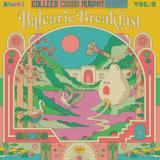
Take a look at the sonic landscape of club culture today and Colleen ‘Cosmo’ Murphy stands out as one of the pioneers on many fronts. Whether she’s dropping Cosmedelica remixes on her Love Dancin’ sound system at We Out Here festival, hosting listening sessions for her hugely influential Classic Album Sundays, or telling Turntable Tales for BBC’s Radio 4, she has created new avenues for experiencing music and thinking deeply about how it affects us and our communities.
· So here we are at ‘Volume 5’ of this series that once again captures Colleen’s unique take on Balearic. “Anger is Divisive,” runs the spoken word sample weaved into the pastoral ambience of ‘Quiet Storm’ from Sewell and The Gong’s ‘Patron Saint Of Elsewhere’ on Chris Coco’s DSPPR label from 2025. It’s a fitting opening to a collection put together with and for love.
· Born from the same lockdown isolation as ‘Balearic Breakfast’, ‘Fruits of Life’ from Sakura Murakami’s 2020 album ‘Hot Liquor’ offers a Tiki flavoured cocktail of tropical psychedelia.
· Digging deeper into her crates, Colleen then uncovers Flayer’s ‘Wanna Get Back Your Love’, a slow and sleazy piece of cosmic soul from Italy in 1983.
· Richard Earnshaw’s ‘Rise’, featuring Roy Ayers and spoken word artist Ursula Rucker, was hidden away on his only album from 2019.This slow jazz infused groover proves to be the perfect segue record as the collection hits the dancefloor with the Spiritual Life style deepness of ‘Ore Yeye O’ by Moroccan house producer Cee El Assaad and vocalist QVLN (Quetzal Guerrero).
· We then return to spoken word with Joshua Idehen’s diasporic club anthem ‘Everything Everywhere All At Once’. You’re in it deep now, head down next to the speakers as The Seven Ups bring you ‘A Cosmic Scale’, a heavy slab of psych rock meets Afrobeat by way of Melbourne. We then take a trip over to Sheffield where Richard Barratt under his Crooked Man alias reunites with his dance music subverters All Seeing I for a wonderfully skewed mutant disco classic.
· Bringing things down gently with the sun kissed 1980s soul of Lovetempo ft Wattison’s ‘Wanna Be With You’ (ft. Mattison) out of Brooklyn, Colleen eases into the perfect exit to her eclectic journey with Santana drummer Michael Shrieve joined by Kevin Shrieve and the great Klaus Schulze for the Berlin new age cosmic epic from 1984, Transfer Station Blue’. Music for the head and feet brought to you with love by one of our masters of sonics and selection.