The Pleased As Punch crew have every right to be as they roll out another eccentric disco 12". It's Saison that kicks off with the expressive and true 'I Can Make Good Music', a freewheeling collage of excitable loops, florid strings and disco drums with loopy vocals building the heat. 'You Are The One' from Fresco Edits is a chunky, drum-first sound with bobbling bass notes and great swing. Mainline's 'Heat Up The House' calms the vibe and sinks into a deeper, more smooth house sound for when the mood switches once the sun sets and DiscoPlex's 'The Funk' then brings a big finish with monstrous kicks and chopped and smeared synths bring the colour to a Kerri Chandler style groove.
A collaboration of Rob Gee, Buzz Fuzz, & DJ Gizmo together on this one! 30 years later it still sounds great! Just as you would expect from these 3 hardcore legends. This release is the most sought after 12” from Rob Gee with 3 tracks that still stand out on this classic vinyl from 3 decades ago! Drop The Bomb is one of my favourite solo tracks from Rob Gee. Great to have this record out again at a reasonable price for supporters. Comes on a limited edition blue vinyl as well as the standard black 12”
Four beings from the same universe, long unable to collide on the same planet, are released on the one record. This is music at the intersection of underground junglism and the existentialism of cosmic nomads, where every sound is precisely in its place and, at the same time, adrift in chaos.
Music: Stanislav Sevostianikhin, Dmitrii Vasilev, Zemine Ibadullaeva, Eduard Iskhakov.
2026 WOW Signal Records
Executive production by MixCult Records
Berlin's Hypersoft crew launch their new vinyl label with Clínica Electrónica by Italian DJ, producer and Evasione Digitale co-founder Andrea Dama. Following the start of their new residency at Panorama Bar, the label opens its catalogue with a strictly limited five-track EP recorded at Buenos Aires' legendary La Siesta del Fauno, bringing Dama's Berlin dancefloor sensibility together with the peculiar chemistry of one of the world's most extraordinary electronic music studios. Forged through extended jam sessions on an array of vintage analogue instruments, including the original Korg PS-3300, Moog modular and Yamaha CS-80, the spontaneity of the sessions translates directly into the finished tracks, where ideas mutate, collide and develop into unexpected forms. Switching gears between hypnotic, mechanical, groove-driven house, and stuttering, furious, off-kilter techno, Dama moves deep into more atmospheric territory, conjuring worlds that are at once lush, organic, paranoid and extraterrestrial. An analogue vision of a future past, built by machines that were already imagining it decades ago.
Obelix is the brainchild of UK producers Richard George and Corine Trembath, whose timeless take on house and techno has long been cherished by underground heads and vinyl collectors alike.
With releases on Pacific Records, Mosaic and Stickman, their music occupies a distinctive space between early house and techno, raw, hypnotic and deeply musical, built around rolling 909 rhythms, expertly programmed 303 acid lines and the unmistakable character of analogue hardware.
Following an extensive dive into their DAT archives, Pariter presents The Lost Tapes, a collection of previously unreleased recordings made in the mid-1990s. Carefully restored and curated by Yossi Amoyal, the material retains all the rawness, warmth and analogue
character of the original tapes, offering a rare glimpse into a particularly fertile period of UK underground dance music.
The two part release is completed by Whatever, their sought after classic originally released on Offshoot, a timeless slice that stands alongside the unreleased recordings as an essential piece of the Obelix story.
The Lost Tapes documents a sound that has lost none of its power, raw, hypnotic and unmistakably timeless.
High Voltage returns for its fourth outing, digging deep once again to unearth two forgotten gems. Both are brought right up to date, reimagined and transformed into club-ready classics for a new generation.
Sucre Discos returns with its second vinyl release, continuing to shape the label’s identity with music made for the dancefloor.
For SUCRE02, Donnie Cosmo, Andy Somoza and Santiago Ritacco join forces across four cuts packed with groove, personality and pure club energy.
Rooted in the spirit of 90s house, but with a fresh and contemporary approach, the EP moves through infectious basslines, playful rhythms and timeless grooves designed to keep bodies moving.
SUCRE02 keeps the label’s essence alive: club music with personality, made for the dancefloor and for selectors looking for house with groove, soul and quality.
LUCIANO LAMANNA — A CARLO Blackwater Label — 2026 Distributed by Triple Vision More than ten years in the making, A CARLO is a single-sided EP by Luciano Lamanna for Blackwater Label, dedicated to Carlo Giuliani and to the memory of the events that unfolded during the G8 protests in Genoa in 2001. This record is the result of a long process, one that began more than a decade ago and has remained unfinished until now. Two tracks, both carrying the name and memory of Carlo, finally complete a circle that has been open for years. The first track, “Il Giorno del Sole”, was previously released on physical CD through Blackwater Label. The second, “Amore Infinito”, arrives more than ten years later, completing the dialogue between the two pieces and giving the project its long-awaited counterpart. Together, the tracks form a deeply emotional and personal statement: melancholic, haunting and at the same time driving and hopeful. Lamanna moves through the industrial language that has always characterised his work, while “Amore Infinito” explores a darker, more intimate territory, evoking the emotional intensity of Coil. A CARLO is not intended as a historical reconstruction or a conventional political statement. It is an act of memory.
Savor Music celebrates a landmark 15 years in the scene with a three-part compilation series. This second installment continues the momentum, bringing together a powerhouse selection of artists that define the label's sophisticated, groove-oriented sound.
Side A opens with a major track on A1, as Dani Labb unveils a hypnotic Detroit meets Aphex Twin spiritual bomb. This track serves as a masterclass in production, delivering a fluid, dark room ready flow. Following this, A2 showcases the refined artistry of Cosenza, who brings a groovy funky stylish number to the record. His contribution is characterized by an infectious energy that keeps the groove effortlessly sophisticated.
Side B shifts into deeper territory, starting on B1 with Franco Cinelli teaming up with Lucio de Rosa for a classy subtle morning piano house track. True to their reputation, they deliver a detailed number that showcases the technical precision and steady momentum for which they are renowned. Finally, B2 rounds out the EP with a deeper hypnotic track by Shine On You boss, Travis. Combining unique creative perspectives, Travis weaves together profound atmosphere and mysterious depth while keeping a steady groove to close out this chapter.
Sounds of Sirius Music presents SOSNZ014 Balouk – Binary Whispers EP
A distant signal moving through the universe. Fragments of consciousness appearing between silence and noise. A transmission crossing the space between stars.
Somewhere between zero and one, something speaks.
Rooted in classical music, Balouk explores the unknown through modular synthesis and intuition. His sound drifts between structure and chaos, where machines breathe, patterns shift, and every transmission takes a different form.
Balouk opens the transmission with the original cut, followed by a deeper interpretation from r.hitect.
On the B-side, Herman Saiz and Daniel Meister reshape the signal, each revealing a different frequency of the same unknown message.
Relieves debuts with its very first release, “Layers 1,” a timeless journey into house music with old-school and minimalist undertones on vinyl-only format. This foundational first chapter comes to life under the direction of producers Ronan Portela and Ariel Rodz, the label owners, who join forces with Franco Cinelli and Jorge Savoretti to solidify the sonic identity of this compilation.
On the A1, "Unison" by Ariel Rodz showcases his signature sound engineered for the dance floor, featuring wrapping basslines, percussive rhythms, musical textures, and a hypnotic groove inspired by the West Coast wave.
Followed on the A2, Franco Cinelli takes the reins with his remix of "Unison," delivering a track of his minimalist footprint with perfectly defined elements and that organic, characteristic sound that defines him.
Opening the other side on the B1, Jorge Savoretti delivers "Speziale Spaziale," a piece that radiates his signature aesthetic by flawlessly blending dancefloor flow and purist sounds with soulful melodies inspired by classic house.
Finally, the closure of this compilation arrives on the B2 with Ronan Portela's remix of Jorge's track, showcasing his rawest house music persona where he fuses percussive rhythms, synths, and a baseline that drives great dynamism and character into the end of the record.
His sophomore LP for Limousine Dream, Secrets, is his most expansive and refined to date. Borrowing from after-hours techno, tech house, minimal, and deep house, Secrets is a tour de force of the outer fringes of house music. Wallace leans into the darker hours of the night and the tracks are heavier and headier, but still imbued with his trademark funk. Across 8 hi-definition nuggets, Wallace crafts bespoke bangers for the sound systems of the world’s best clubs.
Paul Guido and Laron McNally, AKA Locomotive & Swan, conjured up ‘Way Out Here…’ in the living room of a tiny apartment in San Francisco in 2003. The duo were part of a bustling West Coast scene inspired by the pioneers that came before them, pushing the music into a more experimental direction. Their sound was a hybrid of looping tech-house with a freshly dubbed-out soul, soft-edged pumpers made with long sessions on the dance floor in mind.
The four versions of ‘Way Out Here…’ contain the same tripped-out samples and driving percussion, but with their own distinct attitude. The ‘Breakbeat Mix’ provides the most bone-rattling bassline of all time, balanced by the more restrained and stripped back ‘Bonus Breaks’. The ‘House Mix’ subtly plays with pressure and release, while ‘Posse Up’ goes full throttle lift-off.
With this four tracker all bases are covered - each track is suited to different moments across a night’s arc from warm up, to peak time, to after hours. This EP is a testament to the grooves and groovers of the time, reflecting an era of music that informed much of what we cherish today. The shimmy is strong with this one, and we are happy to give it another lap.
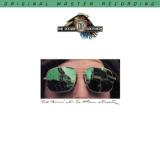
The Doobie Brothers faced a serious predicament as they prepared to record Takin’ It to the Streets. That the group navigated a potentially serious personnel problem that would’ve tanked lesser bands and scored its fourth straight Top 10 album — while again expanding its range — speaks to the collective’s chemistry, broad-mindedness, and songwriting abilities. Known as the effort on which vocalist-keyboardist Michael McDonald makes his debut, the 1976 set stands as an all-encompassing representation of the various styles the Doobie Brothers explored during their heyday.
Sourced from the original analog master tapes, mastered by engineer Krieg Wunderlich, pressed at Fidelity Record Pressing in California, and housed in a Stoughton gatefold jacket, Mobile Fidelity’s numbered-edition 180g 45RPM 2LP presents Takin’ It to the Streets in definitive sound. Given the luxurious room of a 45RPM version for the first time and benefiting from the wider grooves, the music unfolds amid large soundstages replete with ultra-quiet backgrounds, big dynamics, and accurate imaging. By then a key component of the Doobie Brothers' success, Ted Templeman’s production is brought to light with stellar clarity and definition.
As is the case on Mobile Fidelity's four other acclaimed Doobie Brothers 45RPM reissues, myriad facets that help make Takin’ It to the Streets timeless, natural, and organic — minimal overdubs, voices that realistically rise and fall, notes that properly carry and decay, warm tones, bass lines that pop with color, well-placed percussive accents, defined separation between the players — emerge with incredible presence, openness, and fullness. Nothing is overdone or out of place. No small feat given Templeman and company didn't know how everything would unfold when they first met up in Southern California.
Confronted with a change in plans by co-founder Tom Johnston, whose contributions to the band up to that point in its career identified him as an indispensable member, the Doobie Brothers were thrown for a loop when he curtailed pre-planning work and retreated home to deal with ongoing health problems. Thankfully, Jeff "Skunk" Baxter, the group's newest full-time recruit, had a possible solution in his former fellow Steely Dan colleague McDonald. The singer-keyboardist had already sat in with the Doobie Brothers on their recent tour. So, why not give it a shot?
McDonald's prodigious talents notwithstanding, he couldn't technically replace Johnston. For starters: McDonald's soulful timbre bore little resemblance to Johnston's grittier voice. And McDonald played keyboards, not guitar. No wonder Templeman initially expressed reservations. He also knew the Doobie Brothers needed additional material before they could consider wrapping the record. Yet the skepticism began to dissipate on the first day of the sessions. Still waiting for second drummer Keith Knudsen, the band gathered in the studio with former roadie Bobby LaKind on congas and Little Feat drummer Richie Hayward for a live run through "Wheels of Fortune." The instrumental parts of that take landed on the record. Johnston would even return to share the lead vocal duties with Patrick Simmons.
Those magical results, and the experience of hearing McDonald woodshed the title track at the piano, turned Templeman into a believer and cheerleader. Spurred by their veteran producer's encouragement and McDonald's ideas for songs, the Doobie Brothers embraced new directions just as they did after their debut LP and on subsequent efforts with orchestral and horn treatments. The latter return on Takin’ It to the Streets courtesy of the five-piece Memphis Horns. Yet outside of viola accompaniment on "Losin' End," string elements step aside in favor of McDonald's pianos, synthesizers, and clavinet. And, on five cuts, lead singing.
As the new face of the band, McDonald ended up crafting all or portions of four tunes. His fingerprints are all over two of the singles, including the jazzy, blue-eyed-soul delight “It Keeps You Runnin’” and irresistibly melodic title track, which cracked the Top 15 and became one of the Doobie Brothers’ signature numbers. He and Baxter’s penchant for smoothness, and a precursor to the band’s coming transition into rhythmically oriented yacht rock, informs the brassy sway of “Carry Me Away.”
Further enriched by Tiran Porter’s gorgeous, time-signature-shifting ballad “For Someone Special,” Simmons’ peppy, spring-loaded “8th Avenue Shuffle,” and Johnston’s “Turn It Loose” — the move-your-feet boogie serving as kind of apt farewell to the band’s prior rock ‘n’ roll sound — Takin’ It to the Streets spun uncertainty into gold. Altered yet unbowed, the Doobie Brothers once again offered countless listeners “the best kind of remedy” with feel-good music that holds up amid any era.
Devo Marries Gritty Guitars with Expansive Keyboard Canvasses on Duty Now for the Future:
Transitional Album Furthers the Band’s Satirical Stance, Includes Cover of “Secret Agent Man”
Hear the 1979 Record in Audiophile-Grade Sound and at 45RPM for the First Time:
Mobile Fidelity’s Numbered-Edition 180g 45RPM 2LP Set
Benefits from Enhanced Definition and Presence
1/4” / 15 IPS Dolby A analogue master to DSD 256 to analogue console to lathe
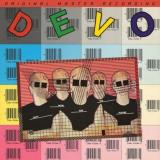
“Pop music needs a big enema.” Devo created Duty Now for the Future with that mission statement, relayed to the press by co-founding bassist/vocalist Gerald Casale, in mind. Though unfairly pegged by some as an example of the common sophomore slump, the record spurred the group’s interest in electronic instrumentation, extended its penchant for biting social satire, and contained another transformative cover song in the form of “Secret Agent Man.” Above all, the 1979 work proved the Ohio pranksters were anything but a joke even if they would have to wait one more year until for their mainstream breakthrough.
Sourced from the original master tapes, mastered by engineer Krieg Wunderlich, pressed at Fidelity Record Pressing in California, and housed in a Stoughton gatefold jacket, Mobile Fidelity's numbered-edition 180g 45RPM 2LP set presents Duty Now for the Future in audiophile-grade sound. Benefitting from the extra groove space on this first-ever 45RPM version, it plays with enhanced definition, deep-black backgrounds, and ultra-quiet surfaces.
Though certain band members later expressed regret with some of his decisions, the merits of Ken Scott’s production emerge like never before. A lurking edginess serves as a signpost in Devo’s progression before it fully embraced keyboards as a primary tool. Guitars possess punch and grit and, along with the crisp arrangements, are sharpened with an ear toward accuracy and vibrancy. It all helps give Duty Now for the Future a direct immediacy that answers the complaints of listeners who felt the affair too processed or sterilized.
Notably, a majority of the material here stems from the same grab bag of songs Devo banked before Warner Bros. signed it to a deal. The album marks a capstone to Phase One of a career that for all intents and purposes began in 1973. And just like many of the group’s performances of that era, Duty Now for the Future remains just as famous for the critical disdain it inspired as the music itself. A vicious review in Rolling Stone — the very publication that a few decades later would trumpet the band as one of the most important of its age — ended with the writer offering to send readers shards of the LP he planned on smashing to bits.
Perhaps he just needed to experience this new-wave effort with the restored sound that makes everything now feel so explosive and urgent. Whatever the case, the songs hold up and, amid a contemporary period which gives increasing license to artificial intelligence and behemoth conglomerates, seem more apt than ever before.
Consider “Blockhead,” which skewers the predictable appearances and numb-to-the-world actions of a rule follower. Or the similarly themed “Clockout,” an uptempo ditty whose thumbing-its-nose bravado and sardonic lyrics send up corporate culture with an irresistible smirk. As for the wiry, hard-hitting urgency of “Wiggly World” and Mark Mothersbaugh’s loud declaration that “They say the fittest shall survive/Yet the unfit may live”: Evidence these art-school rabble-rousers still had some punk fury to flush out of their system. And the sincere allure of the charged power pop and wishful circumstances of “The Day My Baby Gave Me a Surprize” cannot be denied.
To point to an interesting bit of history that makes Duty Now for the Future all the more intriguing, particularly for the most committed Spuds, more than half its tracks were selected for Greatest Misses — a 1990 anthology that celebrates lesser-known cuts and functions as a rejoinder to a hits compilation from the same year. (The only track from the 1979 album to make the “hits” disc: “Smart Patrol/Mr. DNA.”)
Indeed, tunes like the riff-driven albeit controversial “Pink Pussycat,” atmospherically twitching “S.I.B. (Swelling Itching Brain),” and ceremonial instrumental “Devo Corporate Anthem” may lack the catchy appeal and all-together coherence of what follows on the group’s third and most commercially successful effort, Freedom of Choice. Yet in order to get there, to de-evolve if you will, the band needed the smorgasbord that is Duty Now for the Future.
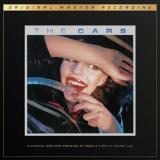
Move in Stereo: The Cars’ Eponymous Debut Album Functions as a Greatest-Hits Set with Classics Such as "You're All I've Got Tonight," "Good Times Roll," and "Just What I Needed"
Experience the Six-Times-Platinum Record in Definitive Sound on
Mobile Fidelity’s UltraDisc One-Step 180g 45RPM 2LP Box Set:
Strictly Limited to 4,000 Numbered Copies,
It Plays with Reference Definition and Presence
1/4” / 15 IPS analogue master to DSD 256 to analogue console to lathe.
Among the most critically and commercially successful debuts in history, the Cars' eponymous album doubles as a greatest-hits collection. Not one song on it is widely unrecognized or unknown. Consider the list: "You're All I've Got Tonight." "Good Times Roll." "Just What I Needed." "Moving in Stereo." "My Best Friend's Girl." "Don't Cha Stop." “Bye Bye Love.” Just call The Cars the best new-wave rock album ever made. And a natural candidate for preservation on a Mobile Fidelity UltraDisc One-Step pressing.
Sourced from the original analog tapes, pressed at Fidelity Record Pressing in California, mastered by engineer Krieg Wunderlich, and strictly limited to 4,000 numbered copies, MoFi’s UD1S 180g 45RPM 2LP box set presents the six-time platinum record in the most vivid, wide-spanning, three-dimensional sound it has enjoyed on vinyl. Compared to the label’s outstanding and out-of-print 180g 33RPM version, this collectible edition features richer textures, broader openness, greater presence, and bigger dynamics.
Benefitting from the extra groove space on 45RPM by playing with enhanced definition, deep-black backgrounds, and ultra-quiet surfaces, this reissue portrays the band’s oscillating rhythms, futuristic keyboard passages, and panned images with stunning realism. Songs take on an absolutely surreal quality. The Cars and producer Roy Thomas Baker manipulate arrangements at will to mesmerize listeners' senses. The concept of "moving in stereo” has likely never been truer.
The industry-leading packaging of the UD1S set gives fans another reason to gravitate towards the 1978 album. A deluxe slipcase, two foil-stamped jackets, faithful-to-the-original graphics, and MoFi inner sleeves make for a premium tactile experience. It invites you to immerse yourself in everything about the record, including the now-familiar cover art depicting Nataliya Medvedeva behind the wheel. Enhanced by her glistening ruby-red lips, her face flashes an expression caught between surprise, ecstasy, and disbelief — an apropos way of responding to The Cars whether you’re hearing it for the first or 1,115th time.
Introduced in 2024 into the National Recording Registry for its significance, and ranked the 353rd Greatest Album of All Time by Rolling Stone, The Cars explodes with emotion, energy, and hooks. Its songs unite then-disparate styles: bubblegum melodies, art-rock angularity, progressive structuralism, terse minimalism, and power-pop sheen. The stylish arrangements also benefit from a laidback cool and understated irony that remain uncommon in the world of contemporary mainstream music.
Equally rare is the deep chemistry the members shared before they entered London’s AIR Studios and knocked out the record in less than a month. Benjamin Orr and Ric Ocasek began their first band together in the early ‘70s. A subsequent group with future Cars keyboardist Greg Hawke preceded Orr and Ocasek bonding further by temporarily performing as a duo. One final pre-Cars ensemble, Cap’n Swing, brought guitarist Elliot Easton into the fold. A decision by Ocasek to take the band in a rock direction, a crucial lineup shuffle, and a name change begat the Cars so many listeners know and love.
Already a going concern in Boston, the quintet cut its teeth and woodshopped songs for nearly a year and a half before signing with Elektra and partnering with Baker. The Cars enjoyed success right out of the gate, hitting No. 18 on the Billboard Top 200 chart and netting a pair of Top 40 singles in the form of “Just What I Needed” and deceptively happy “My Best Friend’s Girl.” The sarcastic “Good Times Roll” climbed to No. 41, but soon enough, almost every track on The Cars became a radio staple — an honor far more meaningful than chart positions.
Obsessed with incorporating the latest technologies and sounds into its palette, the band spiced tunes with delightful and quirky accents — country-tinged guitar fills, echoing Syndrums, reggae splashes, hard-rock tones, robotic pulses. Orr's low, nuanced deliveries and Ocasek's cool, detached vocals lend shades of doubt and double meaning to the lyrics, which are further counterbalanced by synthesizer flourishes and electronic beats.
Accessible and eccentric, edgy and catchy: The results comprise a landmark whose characters come to vivid life with nuclear boots, dry-drip gloves, ribbon-festooned coiffures, suede-blue eyes, and rock ‘n’ roll hair. It's practically impossible to avoid humming along to every song, all enhanced by Baker's stellar production. Best known for his work with Queen, he ensured the record packed a punchy midrange, opened up with instrumental and vocal separation, and breathed with airy harmonies.
Indeed, from the timeless music to the sleek production and sonic restoration, The Cars on UD1S is just what you needed.
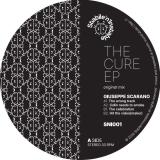
Giuseppe Scarano returns with The Cure EP, four cuts of underground house music that draw on the genre's rich heritage while embracing a more playful and unpredictable approach to the dancefloor.
A1, The Wrong Track, kicks things off with a driving groove and a restless rhythmic energy, setting the pace for what's to come. Colin Needs To Smoke follows on A2, taking things into more eccentric territory, where repetition and unexpected twists keep the rhythm moving.
Flipping over, B1's The Celebration brings a more uplifting spirit to the record, shifting the mood without losing its dancefloor focus. Closing the EP, Hit The Videomaker delivers another dose of playful house music, rounding off a four-track selection that moves between different moods while remaining firmly rooted in the groove.
Rather than chasing a particular sound or formula, Scarano lets rhythm, instinct and his musical background do the talking. A record that pays respect to the past without standing still.
The Cure EP also marks the birth of STABILE'N'INSTABLE, Scarano's new imprint rooted in record culture, self-discovery and the freedom to explore beyond established boundaries. A space where musical identity is never fixed, but constantly shaped by curiosity, transformation, and self-discovery.
Backing it up can mean so many things. According to the urban dictionary, it means to carry on drinking the next day in spite of a rather large one the night before. According to Apple, it means to take your I-phone and attach it to an I-pad or Apple Mac - and copy the information to the cloud. Or the device. But in music.....what we mean is basically this....."Damn......that was a big hit......how the hell are they going to emulate that success on the next one."And it's hard for so many reasons. Was it luck Timing That one in a million sample With all the pressure, soon the artist can start second guessing themselves........and that's when backing it up becomes a real problem.But not for our boy PURPLE DISCO MACHINE. If BODY FUNK, his last outing on CLUB SWEAT, wasn't one of THE biggest songs of last year, from Ibiza to Miami and back again.....played by every single DJ under the sun, from BLACK MADONNA to JAMIE JONES to your mama......then I'm not sitting at my lap top writing this shpeel....which I'm very sure I am. AND I'm going to back myself (see what I did there) - and say that DISHED (MALE STRIPPER) is the best way to back up a hit ever. With another hit. Doesn't sound the same....doesn't worry about what the last one did...just does what it does.....which to be honest - is GO OFF!!!! It builds and builds and builds and......In the same way that BODY FUNK masterly made the sum of 2 disco songs bigger than their parts had ever been, this time PDM takes some Italo Disco from MAN TO MAN MEET MAN PARRISH's MALE STRIPPER and mashes it with the aptly named ELLIS D's DISHAPELLA to create a 12/10. Back it up PDM - you are a legend!!!!
Creativity has no borders and our artist have no boundaries, no genres attached just freedom.
Deep in Dis intl. proudly presents "SHAHRZAD" (DIDWAX001) by Parisian dj/producer Noiro. We are extremely gassed to showcase Noiro's eclectic and unique approach to club music with this 5 trax EP.
We start the journey with the highly experimental 'Kata Pulse', an intergalactic and powerful trip-hop influenced tune with a strong vocal game.
A2. 'Rude' follows the cosmic vibe perfectly with a bit more aggressive breakbeat but keeping a warm feeling at the same time. Where the b-boys at??
To wrap up the A-side, 'Aube Session' brings those mysterious and high cloud walker feelings. The dance floor is starting to get warm... crashy bells, dj scratches and twisted synth/bass lines turns on the auto pilot for what's to come flipping the record to the other side where Noiro depicts the rest of the story.
B1. '1F' is a club banger, structured around frenzy and hypnotic synths, solid drum patterns and an unflagging muffled bassline.
Closing the EP B2. 'Show Me' confirms it wasn't just fluke ladies and gentlemen, Noiro's distinctive and unique sound is here.
Electric Mud is the fifth studio album by Muddy Waters, with members of Rotary Connection serving as his backing band. Released in 1968, it imagines Muddy Waters as a psychedelic musician. Producer Marshall Chess suggested that Muddy Waters recorded it in an attempt to appeal to a rock audience. The album peaked at number 127 on Billboard 200 album chart. It was controversial for its fusion of electric blues with psychedelic elements.
Nobody thinks it is strange anymore that an artist changes his nom de plume to reflect a new direction; a metamorphosis of his art. As listeners, we must resist the temptation to compare a new expression with previous works but instead allow the artist the necessary leeway to follow where his muse leads. So it is with Lone Wolf & Friends. There is a departure from his previous work that is his alone to define. We are simply recipients and must let the work wash over us like waves on the beach and be slightly moulded by the force of each one.
By definition, a Lone Wolf has no friends so we are left with the nagging question of why the name has significance. Perhaps Lone Wolf’s friends are his previous artistic incarnations and although he alone created this work, those earlier versions were there to encourage his creative drive. We are never truly loners, are we?
Written, composed and produced in Vancouver, Canada, by Lone Wolf & Friends.
Mastered in Groningen, the Netherlands, by Johanz Westerman at Balyhoo Studio Mastering.
Designed in London, UK, by Irene Fo + Agente Morillas + Positivland.
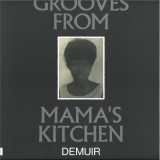
Label boss Demuir steps up for the 8th 12" from Purveyor Underground Limited and uses the opportunity to dedicate the music to his mother. This Grooves From Mama's Kitchen EP has already picked up some notable plays from the likes of Jimpster, Masters At Work and Kerri Chandler and is a swinging house offering with great depth and musicality. 'Beat 6 (Luv Is Complicated)' is majestic and soulful house with diva vocals and brilliant melodies, while the dub is more paired back. 'In Awe Of You' brings the jazz with its bright lead synths and soulful grooves, while closer 'In Awe Of You Ma' (Gabriel's Strings) is more loose-limbed and playful with some fine horns. .
Nippon Psychedelic Soul 1970-1979 is Time Capsule’s continuation of the deep dive into Japan’s rich history of folk and psychedelic soul music.
Vinyl LP with 4 page insert, original artwork and photos
The kaleidoscopic psychedelia of 1970s Japan captured a fragile and fertile moment as the country sought its future in funk grooves, heavy reverb and lyrical hallucinations.
The follow-up compilation to Time Capsule’s Nippon Acid Folk, Nippon Psychedelic Soul takes myriad pathways into the tripped-out undergrowth of 1970s Japan. Finding their feet at home and looking for inspiration abroad, the musicians featured here were engaged in the communal soul-searching that followed the breakdown of the 1960s protest movements. Some made it big, others drifted into oblivion. The music they left behind shimmers with intensity.
At the core was Happy End, the first project of YMO’s Haroumi Hosono, whose distortion-heavy guitar and crisp back-beat laid the foundations for Japanese lyrics that flipped the paradigm of Japanese rock music on its head. With it came a new found sonic ambition, such as in the bold Philly-soul style arrangements of producer Yuji Ohno, whose work with occult wandered Yoshiko Sai shares some of the bittersweet grandeur of Rotary Connection or David Axelrod.
Then there was Jun Fukamachi, a pioneer of Japanese synthesis, whose debut album was a carnival of orchestral funk, euphoric horn lines and rich production, complete with soaring guitar solos, psychedelic organ and a truly cinematic finale. The first and only time Fukamachi would sing on record, ‘Omae’ rips like the ultimate end-of-nighter.
Influenced by giants of the US soul scene, maverick composer Hiroshi “Monsieur” Kamayatsu (otherwise known as ‘the Brian Wilson of Japan’) went one step further, enlisting Tower of Power to play on ‘Have You Smoked Gauloises?’ The B-side to Monsieur’s biggest-selling single, it coasts with sophisticated cool - a liquid bassline and suave keys comping under a roaring trademark ToP sax solo. No surprise it found favour once more on the Acid Jazz dance floors of ‘90s London.
Such was the spirit of experimentation that big studio productions and private press releases sat side-by-side, with the likes of Momotaro Pink and Kazushi Inamura, taking their hopes of success into their own hands with the resources available to them. More reflective but no less robust, theirs was a heavy, fat-backed drum sound, soaked in dramatic, soulful psychedelia.
If some were dreamers and others space cadets, none were further out than sci-fi writer, musician, activist and self-made scientist Tadashi Goino, who transformed his own fantasy novel Messenger from the Seventh Dimension into an operatic prog odyssey with few discernible musical reference points – a majestic and completely bonkers outlier even among company as strange and brilliant as that which is collected here.
Less a compilation of a scene, as a compilation of a sentiment, Nippon Psychedelic Soul is a wild ride from start to finish, shattering the narratives of the Japanese folk and rock tradition into a million tiny pieces.
Yore Records presents: Craig Alexander - Phenomenal Woman / Across My Mind (12" Maxi Reissue)
Following his recent appearance on the label, Craig Alexander returns to Yore Records with a carefully curated reissue of two standout House Workouts: Phenomenal Woman and Across My Mind.
Originally released on earlier records, these tracks are now brought together on one 12" - each presented in two distinct mixes - capturing the raw, emotional depth of Chicago House in its purest form.
At the heart of this release lies Phenomenal Woman, a track that draws inspiration from Maya Angelou's iconic poem of the same name. Rooted in the African-American cultural context, the piece carries a subtle but powerful message of identity, strength and self-definition - translated here into deep, jazz-infused House music.
Across My Mind complements this with a more introspective tone, driven by warm chords, understated grooves and a timeless sense of space.
Together, these recordings embody what House music has always been at its core:
music with a message, shaped by lived experience, culture and emotion.
Stripped down, honest and deeply rooted, this is Chicago House in its most original and authentic form - a sound that continues to resonate far beyond the dancefloor.
FELT wade deeper into the murky waters of contemporary Scandinavian electroacoustic music following the recent reissue of Johan Wieth’s Health & Safety project on sub-label LEFT and established gems from the likes of Civilistjävel!
Gintė Preisaitė, a Lithuanian artist and graduate of Copenhagen’s Rhythmic Music Conservatory, reveals her first solo release under her own name, following a collaborative effort with Toshimaru Nakamura in 2025 and a number of cassettes as “Baraboro”. The deliberately genre-blurring sound Preisaitė deploys works with composed pop vignettes, sustained drones, FX manipulations and guttural bursts of noise. Sparse piano movements, sample-laden psychedelia and moments of big beat/trip-hop rhythms gel with crowd noise, close mic’d intimacy and experimental percussion with a focus on instrumental timbres and extended techniques.
With a background in composing for large ensembles, Preisaitė's multi-instrumental approach is evident across the eight tracks, moments of dense concrète-style sound collages anchored by the human voice never being far away. She laments on fantasy, absurdity and relationships as a cast of players contribute string, brass, accordion, and guitar parts. Passages move from delicate acoustic folk motifs through to wide-eyed, cut-and-paste glitch electronics and spectral melodic riffs, making the album an unorthodox and welcome addition to Denmark's current world-class music scene.
2026 Repress
The Greek artist comes back with a fully realized EP this time, that goes deeper into his personal world. This is not pointless or flashy music. It has soul and character.
It is music that you can listen the personality of the artist beneath the layers and sound design.
Another strong statement from a producer who is quietly building his own language.
Adam Freeland relaunches Marine Parade with the ‘Transhuman’ EP, a collaboration with Spooky’s Duncan Forbes and the first of three releases set to arrive throughout the year. Available to stream now, the title track previews a deeper, more atmospheric direction ahead of Freeland's first solo material in sixteen years and the first new music on Marine Parade since 2009.
Across Adam Freeland and Duncan Forbes’ ‘Transhuman’ EP, broken rhythms sit subtly beneath spacious arrangements, while flickering synths, sci-fi -infused vocals and static-charged textures create an immersive, cinematic feel. It's a sound that reflects both Freeland's longstanding love of dub and Techno and the distance gained from stepping away from the dance music landscape in the 2010s.
Best known for his seminal ‘Coastal Breaks’ mix album and a run of acclaimed releases, remixes, and mix compilations spanning Fabric Live, Global Underground and Back To Mine, Adam Freeland spent a decade living off -grid in California’s Mojave Desert, while also working with Ry X to form The Acid, a band that has since released the ‘Liminal’ LP on Mute/Infectious, penned a film score and toured to great acclaim from well outside the electronic world.
Joining Adam Freeland is Duncan Forbes, one half of pioneering UK duo Spooky, whose landmark releases on Guerilla Records and influential debut album ‘Gargantuan’ helped define the early ambient Techno and progressive House movements. In the decades since, Forbes has continued to evolve through projects including collaborations with Mr. G and Sasha, as well as recent solo releases via Enzo Siragusa’s Fuse London and his own 49North imprint.
The ‘Transhuman’ EP marks the beginning of a new chapter for Marine Parade, with two further EPs from Freeland scheduled throughout 2026. The label will also expand with forthcoming material from longtime friends and previous label artists Evil Nine, alongside a new generation of talent joining the roster.
Telfort continues his considered run of self‑releases with a sixth outing of deep, expressive house music that captures the warmth, emotion and subtle evolution of his signature sound.
Across three cuts, he balances classic dancefloor instinct with a deft melodic touch – from driving grooves and warm, rolling low‑ends to lush, uplifting turns and hazier, introspective closes. The result is a rich, diverse yet cohesive statement from an artist still refining what makes his music resonate, further reaffirming the inimitable style that has defined Telfort’s output since the label’s first release over ten years ago.
Handpicked by MoBlack, here are eight tracks that lended the dynamic vision and artistic stimulation for what is now a bastion of Afro House. Collected from the label's artists, friends and inspirations of past and present, "House of Mo'" comprises musical snapshots from Mimmo Falcone's journey as a DJ, producer and label head. Reverberating rhythms and grooves attached to memories made on and off dancefloors, these sonic wonders are part and parcel of the House the label built, go-to jams that speak of the spirit that binds its growing family.
Maltese producer and live performer Melchior Sultana returns with Rhodes In The Middle, Built around Sultana's signature Rhodes piano work, the title track unfolds with effortless elegance, combining fluid musicianship with a hypnotic dancefloor pulse.
acclaimed German selector and Running Back boss Gerd Janson delivers a remix that transforms the original into a finely tuned club weapon.
Luca “DJ Rocca” Roccatagliati isn’t just a producer, he’s a shapeshifter of sound. Emerging from the late ’90s under the Maffia Soundsystem alias, he’s spent decades bending genres, dissolving boundaries, and reconfiguring the DNA of club music.
From cosmic disco to leftfield house, Rocca’s catalogue reads like a map of underground excellence. He’s collaborated with a roll call of innovators—Howie B, Dimitri From Paris, Daniele Baldelli, François K, Jazzanova, Zed Bias and many more. Crafting releases for some of the most respected imprints in the game: like Rekids, Toy Tonics, International Feel, Defected, Rush Hour, Hell Yeah, Rotters Golf Club among others.
His output is prolific, restless, constantly evolving.
Partnership is central to Rocca’s universe. With Dimitri From Paris, he co-created Erodiscotique, a sleek electro-disco project that fuses vintage sensuality with future-facing production. Alongside Daniele Baldelli, he’s explored deeper, more psychedelic terrain, delivering albums like Podalirius and Quagga—records that blur the line between Balearic mysticism and dancefloor propulsion.
His aliases Ajello, Supersonic Lovers, Crimea X are parallel auditory dimensions. Each one pushes a different facet of his sound, from Italo-tinged grooves to raw, analog-driven club cuts. As a remixer, Rocca has reworked everyone from Andrew Weatherall to Soul Clap, always imprinting his unmistakable signature.
To say we are excited about this new EP is kind of a massive understatement……
Having been huge fans for over two decades, when he reached out to us it was a bit of an eye rubbing and arm pinching moment.
We have been graced with a 3 track EP titled “Tonight is the Night”
A1. Sun Deck – A link-up with Athens mainstay Lex, drifting somewhere between yacht funk and late-night boogie. Sun-washed grooves, crisp synth leads, and just enough 80s energy to keep it moving without trying too hard.
B1. Italo Boogie Stomp – Does exactly what it says. Rolling Linn drums, sharp synth lines, and a nostalgic flute motif that nods to NYC’s street soul era without getting stuck in it.
B2. Ferroso – Picks up the pace slightly. Deep house drums meet a driving electro bassline, with arpeggiated synths and warm pads rounding it out—focused, functional, and built for the floor.
Zeta-Kognition is a rarely documented perceptual phenomenon in which thoughts are no longer experienced in the order in which they are formed.
The first reports appeared shortly after the promo release of this EP. Listeners described a strange effect while listening to pdqb's signature electro tracks: while the music was playing, memories, expectations, and present perceptions seemed to exchange places. Some felt they had already completed a thought before it had even occurred to them. Others reported that half an hour vanished in what felt like seconds, while a few minutes seemed to contain an unusual depth and density of experience.
Intriguingly, those who experienced side effects after listening could restore their normal perception by playing the entire EP in reverse. It was said that the reverse playback would unwind the cognitive displacement caused by the original sequence, gradually returning memories, expectations, and present awareness to their natural alignment.
Dr. Sascha Dornhöfer, who first documented the phenomenon, speculates that the remix by Carsten Nicolai (Alva Noto) may contain a unique balance of repetition and symmetry that survives both forward and reverse playback. This would explain why listeners experiencing the effects of Zeta Cognition consistently identify it as the point from which normal perception can be restored.
In any case, dear listener, there is no cause for concern - the antidote is hidden in reverse.
P.S. Then again, who knows. Persistent rumors suggest that Adam Pendleton's exclusive black-and-white artwork conceals a visual counterpart to the phenomenon, though no one has yet determined exactly what it reveals - or to whom.
This disparate collection of material formed Kold Funk Vol. 1, showcasing The Surfers’ sweeping palette developed through 15 years of playing music. Igor Zhukovsky, the band’s frontman, himself selected the tracks. Enjoy your trip to the enchanting world of The Soul Surfers! TSS are the ground-breakers and a vivid example of how authentic world-class groove may be produced anywhere — what matters is the right feeling and the concept.
60 artists from 9 countries gathered in Armenia for the first edition of Notations Laboratory: a two-week interdisciplinary platform initiated and curated by hosq Foundation, bringing together musicians, sound artists, composers, and visual artists to collaboratively explore new artistic forms. Using Avet Terterian’s Symphony No. 3 as a conceptual and sonic point of departure, the participants created 11 original compositions during the laboratory through collective experimentation, improvisation, electroacoustic composition, and cross-disciplinary exchange. Rather than a fixed-genre compilation, the record captures the energy of a temporary artistic ecosystem formed in real time through shared process and collective creation, moving between ambient, drone, contemporary electronic music, experimental folk, and electroacoustic sonic practices. Recorded and produced during Notations Laboratory 2025 at the State Philharmonia of Armenia.
Love On Vinyl is headed up by K.C. aka K Civ, an American with deep roots in the scene and a legendary Boston selector who has now assembled the first instalment in a new Soul Tickler Essentials compilation series. It's drenched in love and soul and features a ton of timeless artists, starting with Ralf GUM's sunny, Omar-featuring 'Love Core.' Elsewhere, the musicality flows through subtle jazzy keys and Afro drums on Don Kamares's 'Batie' then Moodymann drops one of his deep and dusty soul grinders with a remix of Ralf GUM's 'With Her Hand'. Further gems from Trinidadian Deep and Aaron K Gray & Conway Kasey make this one a faultless selection of grown-up grooves.
London based Reposition Records return with ‘Electric Dream Romance’ - celebrating a brand new beautiful piece of braindancing house music from trailblazer Kim Cosmik. DMX Krew, dBridge, El Prevost and Kim herself all provide 4 distinct remixes.
With deep roots in UK soundsystem free party culture as a member of the legendary Spiral Tribe, Kim remains a fixture in the underground regularly DJing in spaces from London's FOLD to The Advent's Technoclub. Past releases across 20/20 Vision and her own label Cybersoul have explored the harder, industrial edge of techno. Electric Dream Romance turns toward the more heartfelt side of her production, finding a feel for classic dancefloor house, tantalising vocals and seductive chords wrapped around playful acid lines and Kerrier District-esque synth work.
The unique remixes then glide from DMX Krew's patient electro workout through to an off-kilter shuffling dnb remix from Exit Records boss Dbridge, an emblematically stripped back workout from Reposition co-founder El Prevost, and finally a broken techno interpretation from the EDR innovator herself, Kim Cosmik.
This has been a very personal project and a mammoth undertaking for us folks here PACE HQ: 12 tracks unearthed from the cult Scottish figure’s completely overlooked back catalogue. Collected archive material from the past 25 years, originally composed as an OST for the feature length film The Flesher (1992) which was also written, shot and directed by Rae. No copies remain. Deep cuts that span G-funk, hip-hop, house, synth-pop, electro, dub, downtempo, funk/soul, R’n’B with appearances from Rae’s heavyweight list of frequent collaborators… Bernie Worrell, Adrian Sherwood and Jimmy Douglass.
"In 1991, the Scottish Rugby Union & the Royal Bank of Scotland, commissioned me tae make the world's first Scotland World Cup music video... they didn’t pay me so I fought back. It took 18 years tae win, and I nearly lost everything. I turned to audio visual art: under the pseudonym Jock Pleasure - I wrote and directed a feature length film called The Flesher as well as creating 100s of full length DVDs and tracks” (Jesse Rae).
One man took on the banks and won, but it took its toll and in this totemic corpus of work Jesse Rae counts the cost. The Flesher is art as pure defiance: “this stuff is very dark and deep, it is such a vast body o’ work, but when I won my battle against the bank, I secretly returned tae Hodge Close (in the Scottish borders) and dropped the entire work sealed in stone intae the deep deep murky depths of that water, where it has remained since 2009. There are no mair copies."
What we have here then is the salvaged remains. A hopeful dunt of Scottish erotica that gets you right in the pits.
Splice DJ Screw with Dean Blunt, Moodymann, Prince, Cocteau Twins, MF DOOM, Luther Van fuckin’ Dross, Barry fuckin’ White; run that through the B-movie videotape static meets Harmony Korine, Les Blank & early Grand Theft Auto. Empty boulevards. Small-town strip joints. Late-night dial-up. Sacrifice and solace. Outside of the OST, there’s a cast of forgotten characters: primary school kids making house jams, teenage popstars from the Scottish Borders, and the rhapsodic Ayrshire soprano NIKA laying down haunting vocals in Miami.
Celebrated as a cult figure in the USA, Jesse’s work has never fully had the appreciation it deserves at home. Not really. Aye, we know Inside Out and The Thistle. But he’s too easily fobbed off as an eccentric outsider: a helmet-wearing, claymore-wielding gimmick. But do we really know the extent of what this man has done - and gone through - for the sake of art?
Common Language is a project of the Community Library label. We started it as a way to reconnect with the ideas that drove ComLib’s inaugural releases back in 2005, uncompromising and eclectic DJ 12’s. We’ll be focused on this imprint for a while, and near-term, putting the emphasis on releases by label cofounders and our closest friends.
On CLANG02, the Middlemarch 12” EP, Solenoid transmutes his signature buoyant syncopated acid, electro, and mutant techno into moodier, reverberant territory. If you previously knew Solenoid for his restless, sophisticated Braindance-adjacent stuff, this EP is totally consistent with his long discography. Here though, he gets into a dreamier, and also bassier zone that is equally rewarding either in the innerspace immersion of headphones or in the warmth of your favorite local underground club’s sound system--lots of detail and atmosphere to sink into.
“Middlemarch” is moody deep techno-- a clatter of distant percussion encircles eerie pads and an extra-bassy, double-filtered TB303 bassline. “Ways and Means” rotates perplexing polyrhythmic patterns driven by bright, elasticchords that keep it moving (reminding me of The Martian’s stuff on Red Planet a bit). “A Winter Walk” offers a skeletal, skittering rhythm that wouldn’t be out of place next to a Livity Sound track; and the closer, “Dvv Waltz” reserves a 3/4-time experiment for the bravest / most inquisitive DJs.
Edition of 300 vinyl copies includes special full- color insert
Mastered by Dietrich Schoenemann
About Solenoid
Solenoid is the primary musical vehicle of David Chandler, a lifer underground producer, musician, and visual artist. As a lone electronic voice in the wilderness of early-90s Portland (which was at the time a grunge-saturated third backwater) he started out releasing adventurous, now- unobtainium tapes on his DIY Pharmacy label. Solenoid then became known internationally at the turn of the millennium as one of Portland’s persistent ambassadors for underground crossover electro and techno, releasing on labels like Outward Music Company, Emanate, Orac, and many others (most recently, on the Paris label Partout). He’s a real legend honestly--doggedly clocking in almost 40 years of uncompromising experimentalism with a signature sound and vision running all the way through.
-- Paul Dickow (Strategy)