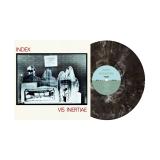
When Index moves, it’s in lockstep, as a single, indivisible unit. Alan Creedon and Alex Lichtenauer (both ex-Control Top) started the project in the summer of 2025, and it quickly became clear that its sound would be an outgrowth of their close friendship. Eschewing the densely orchestrated compositions of their previous band, Index would instead focus on sweaty, visceral physicality, with Creedon’s guitar intuitively latched to Lichtenauer’s drum kit, navigating corridors of tricky rhythm as one. Creedon and Lichtenauer recorded Vis Inertiae in NYC with acclaimed producer Arthur Rizk (Power Trip, Show Me The Body). Despite a litany of freak injuries that befell Lichtenauer before and during the band’s studio time, they say it was the best experience they ever had in a recording session, and Creedon concurs. Rizk was brought into the process early on, when the band played him some bare-bones demos that impressed him, and he was critical in helping ferry the songs to their final forms.
Asake’s fourth studio album, M$NEY, marks a major evolution in his career, trading the frantic energy of his early hits for a more polished, cinematic sound. The project explores the intersection of material wealth and divine favor, framing his global success as a spiritual journey. Rather than just celebrating the "soft life," Asake uses this record to reflect on the discipline and faith required to maintain his position at the top of the music world.
Sonically, the album expands his signature Fuji-fusion and Amapiano roots with help from long-time collaborator Magicsticks and international producers like DJ Snake. Tracks like "Worship" bring high-octane electronic energy, while "Badman Gangsta" featuring Tiakola offers a sleek, R&B-influenced collaboration. Throughout the project, Asake balances these high-energy moments with orchestral strings and jazz elements, creating a rich, textured listening experience that feels both global and deeply rooted in Lagos street culture.
At its heart, M$NEY is a balance of celebration and introspection. In tracks like "Forgiveness" and "Gratitude," Asake addresses the pressures of fame and the personal growth he has undergone since his debut. He remains grounded in his Yoruba heritage, blending boastful lyrics with sincere thanks for his trajectory. Ultimately, M$NEY proves that Asake is more than a hit-maker; he is a visionary artist documenting his life and legacy with newfound maturity and style.
NEXT WORLD SOUND SERIES vol. 5 continues the line of experimental compilations featuring one side of an artist exploring their individual take on the ambient genre. Pressed in clear green vinyl.
Knox Chandler is an American musician, producer, arranger, and visual artist whose career spans over four decades. He has worked with The Psychedelic Furs, Siouxsie and the Banshees, Cyndi Lauper, R.E.M., Depeche Mode, Grace Jones, and Dave Gahan, among others. After a decade in Berlin, where he developed his layered guitar technique called Soundribbons, he returned to the U.S. and settled on the Connecticut shoreline.
ANNA HOMLER, is a vocal, visual and performance artist based in Los Angeles. She has performed and exhibited her work in venues around the world. With a sensibility that is both ancient and postmodern, Homler sings in an improvised melodic language. Her work explores alternative means of communication and the poetics of ordinary things.
Anna is accompanied by: Jeff Schwartz, a very active Los Angeles-based improvised and experimental double bassist. He leads the Present Quartet, Intangible, and the Soapbox; performs with a variety of ensembles and orchestras; and has written books on music for SUNY Press and Routledge.
David Javelosa a composer, producer, recording artist and technologist based in Mar Vista California. Performing on modular, electronic instruments, he has created soundtracks for many of the major game platforms, and most recently has been performing with Microwave Buddha, a retrospective of his synth pop work in the 1980's.
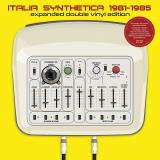
New 3-sided double vinyl edition with bonus tracks. The first album contains the original album, while the second features a collection of bonus tracks originally included on the first bonus cd edition.
This album represents the musical mutation that occurred after the post-punk hangover gave way to more frigid emotional shores, in-line with the synth-wave moment that was sweeping Europe and the white cliffs of Albion. This scene flourished in Italy between 1981-1985, and the musicians that came out of it are still revered today (particularly in the US). Robotic rhythms and intuitions that, besides sharing common ground with the electronic movements that had come before, also knew how to fill up the dancefloor! Featuring four previously unreleased tracks by Der Blaue Reiter, along with tracks by Modo, Actor’s Studio and La Maison, as well as the still fresh sounding contributions by true pioneers of the genre Neon and Naif Orchestra.
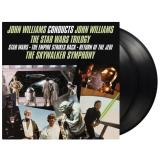
In 1990, John Williams created the compilation album John Williams Conducts John Williams – The Star Wars Trilogy, which features 13 of his most memorable tracks from the original Star Wars Trilogy. All performed by the Skywalker Symphony Orchestra, it features the iconic “Main Theme” and “Throne Room / Finale” from Episode IV – A New Hope, “The Imperial March” from Episode V – The Empire Strikes Back, and “Luke And Leia”. The album brings together some of the best-known themes from the original trilogy in one collection. The result is a varied selection of music from across the three films.
John Williams Conducts John Williams – The Star Wars Trilogy is available on black vinyl. This 2LP package includes an insert with liner notes by the creator of the Star Wars franchise, George Lucas.
With this album, Ballake pays tribute to his father, Djelimady Sissoko, a brilliant kora player of whom very few recordings remain. His father was affectionately nicknamed Djelimady No. 1 because of his prominent role in Mali's national orchestra (the Instrumental Ensemble of Mali), which he co-founded in 1962. Ballake has brought together a small ensemble for the project: two additional koras, a ngoni, and a sokou (violin). On vocals, he has invited Piers Faccini and singer Fatim Kouyate.
Der Komponist, Produzent, Musiker und DJ Floating Points, alias Sam Shepherd, präsentiert „Mere Mortals“, seine erste Ballettpartitur in voller Länge. Das Ballett, das von Tamara Rojo, der künstlerischen
Leiterin des San Francisco Ballet, in Auftrag gegeben und inszeniert wurde, mit Choreografie von Aszure
Barton und Bühnenbild sowie visuellen Elementen von Hamill Industries, interpretiert die Geschichte von
Pandora in einer Verschmelzung von Mythos, Musik und Bewegung neu. Das mit dem San Francisco Ballet
Orchestra für die Deutsche Grammophon aufgenommene Album mit 14 Titeln ist eine kraftvolle Mischung
aus elegischen Streichern, apokalyptischen Blechbläsern und pulsierender Elektronik. Von der lyrischen
Solovioline in „Hope“ über die Dissonanzen und die hämmernden Percussions in „Rage of the Gods“ bis
hin zur exquisiten Harfenmelodie in „Her Gift“ vor der unheimlichen Atmosphäre von „Opening of the Jar“
ist die Partitur reich an Textur und Wirkung. Orchesterklänge tauchen aus einem elektronischen Dunst auf
und spiegeln die zentrale Frage des Balletts wider: Wo endet der Mensch und wo beginnt die Maschine?
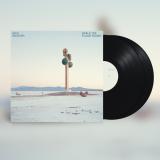
Oscar-nominated composer Max Richter's new album While The Flood Rages, drawn from Richter's latest collaboration with choreographer Wayne McGregor, MaddAddam, inspired by Margaret Atwood's trilogy.
Across 15 tracks split into three acts, Richter blends orchestral writing, electronics, processed field recordings, choir and piano to create an immersive sonic journey.
Themes of ecological collapse, technological acceleration and resilience run throughout, with recurring piano motifs providing moments of reflection amid dense, cinematic soundscapes.
Next Fuori Orario installment comes from the mastermind of Sancra: three weapons for late nights and early mornings, moving between techno and electro. Available on limited-edition transparent blue vinyl.
nesreh's third release turns to italy. mirco magnani aka t.c.o. has been active shaping his sound since the mid 80s under various guises such as minox, 4d killer and technophonic chamber orchestra to name a few. nesreh003 presents a mixed bag of mid 2000's reworks of older and more recent tracks.
On June 9, 2025, Rolling Stone Magazine - Australia captured the significance of PARKWAY DRIVE's landmark performance at the Sydney Opera House with the headline: "The AC/DC of Their Generation': Parkway Drive deliver career-defining performance at Sydney Opera House." The one-night-only event brought the Byron Bay metalcore legends into the Concert Hall for an unprecedented black-tie affair, pairing their explosive live show with the grandeur of a full symphonic orchestra. Bringing PARKWAY DRIVE's music to one of the world's most recognizable venues was an ambitious move for a band already celebrated for pushing the boundaries of live performance. Yet seeing the group's signature intensity framed by a symphony orchestra revealed a new emotional dimension to songs built for arenas and festivals. The result was both intimate and monumental-a rare collision of metal, orchestration, and occasion that transformed the Concert Hall into something entirely its own. The context of the performance only heightened its impact. Marketed as a historic black-tie celebration that would never be repeated, the event became one of the most coveted PARKWAY DRIVE shows in the band's history, selling out instantly and leaving countless fans outside the room. For those unable to witness it in person, Home - Live at the Sydney Opera House finally brings this extraordinary night to a wider audience, alongside a feature film and live album documenting this career-spanning performance. At its heart, Home is also a reflection on what "home" has meant to PARKWAY DRIVE over two decades. As their reach has expanded from Byron Bay to stages around the world, their connection to the landscapes, people, and community that shaped them has remained central. Now, that journey comes full circle at one of Australia's most iconic landmarks.
On June 9, 2025, Rolling Stone Magazine - Australia captured the significance of PARKWAY DRIVE's landmark performance at the Sydney Opera House with the headline: "The AC/DC of Their Generation': Parkway Drive deliver career-defining performance at Sydney Opera House." The one-night-only event brought the Byron Bay metalcore legends into the Concert Hall for an unprecedented black-tie affair, pairing their explosive live show with the grandeur of a full symphonic orchestra. Bringing PARKWAY DRIVE's music to one of the world's most recognizable venues was an ambitious move for a band already celebrated for pushing the boundaries of live performance. Yet seeing the group's signature intensity framed by a symphony orchestra revealed a new emotional dimension to songs built for arenas and festivals. The result was both intimate and monumental-a rare collision of metal, orchestration, and occasion that transformed the Concert Hall into something entirely its own. The context of the performance only heightened its impact. Marketed as a historic black-tie celebration that would never be repeated, the event became one of the most coveted PARKWAY DRIVE shows in the band's history, selling out instantly and leaving countless fans outside the room. For those unable to witness it in person, Home - Live at the Sydney Opera House finally brings this extraordinary night to a wider audience, alongside a feature film and live album documenting this career-spanning performance. At its heart, Home is also a reflection on what "home" has meant to PARKWAY DRIVE over two decades. As their reach has expanded from Byron Bay to stages around the world, their connection to the landscapes, people, and community that shaped them has remained central. Now, that journey comes full circle at one of Australia's most iconic landmarks.
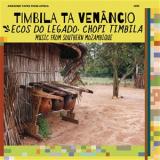
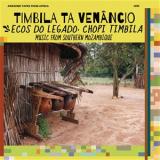
GERDie Chopi Timbila zählt zu den großen Orchestertraditionen Afrikas und ist tief in der Kultur der Chopi im mosambikanischen Distrikt Zavala verwurzelt. Ihre charakteristischen Mwenje-Holzxylophone sind in sieben gleichmäßigen Tonabständen gestimmt und erzeugen eine mikrotonale Klangwelt, die sich deutlich von westlichen Tonsystemen unterscheidet. Die Ensembles vereinen Musiker verschiedener Generationen und Erfahrungsstufen, während jährlich neue Kompositionen entstehen, die Gemeinschaft, Geschichte und das Leben der Vatxopi widerspiegeln. 2008 wurde die Tradition von der UNESCO als Immaterielles Kulturerbe anerkannt und gilt bis heute als eine der komplexesten und schönsten musikalischen Ausdrucksformen Mosambiks. Mit Ecos Do Legado (Echoes Of The Legacy) ehren die Brüder von Timbila Ta Venancio, allesamt Söhne des legendären Timbila-Meisters Venancio Mbande, das Lebenswerk ihres Vaters und die kulturelle Bedeutung der Chopi-Musik. Die 2026 im Studio Bom Dia in der Provinz Inhambane entstandene Aufnahme interpretiert Mbandes Erbe neu und bewahrt zugleich dessen Geist und Tradition. Die zehn Stücke folgen der überlieferten Reihenfolge einer klassischen Timbila-Aufführung und entfalten eine zusammenhängende musikalische Erzählung. Ecos Do Legado ist damit zugleich Hommage, kulturelles Dokument und eindrucksvoller Beweis für die lebendige Zukunft dieser einzigartigen Tradition.[ENG]The Chopi Timbila is one of Africa's great orchestral traditions, deeply rooted in the culture of the Chopi people of Zavala, Mozambique. Its distinctive mwenje wood xylophones are tuned in seven equidistant pitches, creating a microtonal sound world markedly different from Western musical systems. Timbila ensembles bring together performers of different ages and skill levels, with new compositions created each year to reflect community life, history, and tradition. Recognized by UNESCO as Intangible Cultural Heritage in 2008, the tradition remains one of Mozambique's most celebrated and sophisticated musical forms. On Ecos Do Legado (Echoes Of The Legacy), Timbila Ta Venancio honors the legacy of revered timbila master Venancio Mbande through the work of his sons, who perform and reinterpret his enduring musical vision. Recorded in 2026 at Studio Bom Dia in Inhambane Province, the album serves as both a tribute to Mbande and a celebration of Chopi cultural heritage. The ten pieces follow the traditional sequence of a timbila performance, unfolding as an interconnected musical narrative. Ecos Do Legado stands as a powerful testament to a living tradition whose cultural significance continues to resonate across generations.
Die Chopi Timbila zählt zu den großen Orchestertraditionen Afrikas und ist tief in der Kultur der Chopi im mosambikanischen Distrikt Zavala verwurzelt. Ihre charakteristischen Mwenje-Holzxylophone sind in sieben gleichmäßigen Tonabständen gestimmt und erzeugen eine mikrotonale Klangwelt, die sich deutlich von westlichen Tonsystemen unterscheidet. Die Ensembles vereinen Musiker verschiedener Generationen und Erfahrungsstufen, während jährlich neue Kompositionen entstehen, die Gemeinschaft, Geschichte und das Leben der Vatxopi widerspiegeln. 2008 wurde die Tradition von der UNESCO als Immaterielles Kulturerbe anerkannt und gilt bis heute als eine der komplexesten und schönsten musikalischen Ausdrucksformen Mosambiks. Mit Ecos Do Legado (Echoes Of The Legacy) ehren die Brüder von Timbila Ta Venancio, allesamt Söhne des legendären Timbila-Meisters Venancio Mbande, das Lebenswerk ihres Vaters und die kulturelle Bedeutung der Chopi-Musik. Die 2026 im Studio Bom Dia in der Provinz Inhambane entstandene Aufnahme interpretiert Mbandes Erbe neu und bewahrt zugleich dessen Geist und Tradition. Die zehn Stücke folgen der überlieferten Reihenfolge einer klassischen Timbila-Aufführung und entfalten eine zusammenhängende musikalische Erzählung. Ecos Do Legado ist damit zugleich Hommage, kulturelles Dokument und eindrucksvoller Beweis für die lebendige Zukunft dieser einzigartigen Tradition. ENGThe Chopi Timbila is one of Africa's great orchestral traditions, deeply rooted in the culture of the Chopi people of Zavala, Mozambique. Its distinctive mwenje wood xylophones are tuned in seven equidistant pitches, creating a microtonal sound world markedly different from Western musical systems. Timbila ensembles bring together performers of different ages and skill levels, with new compositions created each year to reflect community life, history, and tradition. Recognized by UNESCO as Intangible Cultural Heritage in 2008, the tradition remains one of Mozambique's most celebrated and sophisticated musical forms. On Ecos Do Legado (Echoes Of The Legacy), Timbila Ta Venancio honors the legacy of revered timbila master Venancio Mbande through the work of his sons, who perform and reinterpret his enduring musical vision. Recorded in 2026 at Studio Bom Dia in Inhambane Province, the album serves as both a tribute to Mbande and a celebration of Chopi cultural heritage. The ten pieces follow the traditional sequence of a timbila performance, unfolding as an interconnected musical narrative. Ecos Do Legado stands as a powerful testament to a living tradition whose cultural significance continues to resonate across generations.
Die Rare Groove Collection: Ethiopian Rare Groove beleuchtet einen der faszinierendsten Schmelztiegel moderner Musikgeschichte. In den Clubs und Cabarets des vibrierenden Addis Abeba der 1960er und 1970er Jahre entstand ein einzigartiger Sound, der äthiopische Traditionen mit Soul, Funk, Jazz und Disco verschmolz. Diese Edition versammelt rare und prägende Aufnahmen einer Szene, die bis heute weltweit nachhallt. Künstler wie Mulatu Astatke, Mahmoud Ahmed oder Getatchew Mekurya stehen für eine Musik von hypnotischer Kraft, getragen von polyrhythmischen Grooves, markanten Bläserlinien und unverwechselbaren Melodien. Das Doppel-Vinyl ist mehr als eine Compilation: Es ist ein musikalisches Zeitdokument, das die kreative Energie einer urbanen Hochphase einfängt - rau, elegant und zeitlos zugleich.
Al Wahem (“The Illusion”) is the new full-length release by PRAED, the Swiss–Lebanese duo of Raed Yassin and Paed Conca. Recorded between Beirut and Berlin, the album returns to the group’s central aesthetic: a rhythm-driven weave of Egyptian shaabi, electronics, improvisation and the gritty pulse of street-level sound. Nearly twenty years into the project, PRAED have distilled their approach into four pieces that subtly shift the listener’s bearings, reordering grooves and fragments until familiar elements take on new identities.
The twenty-minute title track sets the tone. A tightly interlocking two-drum foundation from Pascal Semerdjian and Ayman Zebdawi shapes a structure that expands steadily: synth figures branch outward, clarinet and bass lines act as internal guideposts, and brief vocal calls from Yassin and guest singer Mayssa Jallad sit inside the texture rather than leading it. PRAED’s shaabi keyboard language is present, but the duo stretch it outward, building tension and movement through patient accumulation.
“Al Hathayan,” at 4:46, tightens the focus. Conca’s clarinet moves between melodic arcs and clipped rhythmic gestures, threading through electronic loops that surface and disappear. Zebdawi’s percussion adds a raw, tactile quality, placing acoustic patterns and electronics in direct conversation. The piece acts as a bridge between the album’s two long-form compositions.
Side B begins with “Al Maraya,” a thirteen-minute piece that relies on electronic, bass and clarinet interplay. The atmosphere nods to the breadth of PRAED Orchestra!, but remains anchored in the duo’s rhythmic foundations. Rather than building mass, the layering creates a sense of depth, as if new spaces were opening inside the groove.
The album closes with “Assarab,” featuring keyboardist Amr Said. Semerdjian and Zebdawi again form a dual percussive axis, while synths hover between melody and pulse, and themes recur in widening circles rather than building vertically. The porous boundary between electronic and acoustic sources — processed clarinet mistaken for a sequencer, rhythmic figures springing from live drums — is where the album’s theme of “illusion” shows itself most clearly.
Al Wahem follows a long arc: early releases on Annihaya, a key appearance on Ruptured Sessions Vol. 5 – Live at Radio Lebanon (2013), later albums on Akuphone, and the large-scale PRAED Orchestra! documented on Morphine Records. This new Ruptured/Annihaya co-release brings the duo back to a concentrated format, reorganizing their familiar materials with renewed clarity and intent.
Epicentre was an R&B/funk group formed in Seattle, Washington by keyboardist Ric Ulsky. The band developed a loyal following, playing the extensive NW club, concert and dance venues throughout the mid-to-late 1970s. Their sound was a blend of melodic R&B and powerhouse funk that dependably filled music venues throughout the Western US. Bernadette Bascom was the lead vocalist, who captivated audiences with her powerful yet velvet-smooth voice and commanding, magnetic stage presence.
In 1978, Epicentre worked with Seattle producer Don McKinney to record their music in Seattle's now legendary Kaye-Smith studios. The result was seven strong, fully -produced R&B songs, with occasional horn and string orchestrations tastefully added to the final versions.
Their music quite literally sat on a shelf for decades until McKinney decided that all the hard work and talent should no longer remain undiscovered and it needed to find its audience. He restored and digitized his copies of the master tapes and looked for an opportunity. A chance call to the former leader of the group, Kell Houston, led to a serendipitous introduction to UK boutique/funk/R&B label founder Russell Paine. The result was an agreement to release their music, starting with two songs, "When You Were In Love With Me", and "Magic Carpet."
And now the follow up single of "Searchin/Tongue Tied"
Footnotes: Lead singer Bernadette Bascom became a protegé of Stevie Wonder, and was the first artist to be signed to his label Black Bull , starting a period of collaboration between the two. Bermadette is the daughter of Reverend Dr. Marion C. Bascomb (1925-2012), one of Baltimore's major civil rights voices and pastor emeritus of Baltimore's Douglas Memorial Community Church. Ric Ulsky eventually left the group to play keyboards and tour extensively with The Association. You can also find Epicentre's music on the compilation album "Seattle Funk, Modern Soul & Boogie: Volume II 1972-1987." In addition to Bernadette, the musicians on the 1978 sessions are Kell Houston, keyboards, Michael Cox, bass, John Carmondy, guitar, and Ricky Lynn Johnson, drums and vocals. While their recorded material is primarily original, Stacy Christensen from Seattle's Gabriel contributed two of his compositions.
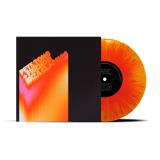
5th Anniversary Edition of Pete Tong + Friends - Ibiza Classics, a 10 x track LP featuring a selection of new collaborations with Armin van Buuren, Kölsch, Poppy Baskcomb, Ewan McVicar, MNEK, Oden & Fatzo and Paige Cavell. Pressed on Ibiza sunset inspired orange splatter-effect vinyl.
‘veneration for the sacred action’ is the first compilation release by london-based independent record label ‘lifeis beautiful records’ released in celebration of the three-year anniversary of the label (& the gesamtkunstwerk that it exists within), the compilation brings together members of the life is beautiful septet collective, as well as various collaborators and special guests from previous life is beautiful events of the past three years. it highlights a range of the various solo, group projects, and alias’ of the septet, as well as various artists from the wider orbit of the life is beautiful constellations. the project was executively produced and curated as an album by label founder aloisius, as a selected works of the life is beautiful constellations. it stands as a comprehensive yet intentionally incomplete representation of the past three years of life is beautiful
Nippon Psychedelic Soul 1970-1979 is Time Capsule’s continuation of the deep dive into Japan’s rich history of folk and psychedelic soul music.
Vinyl LP with 4 page insert, original artwork and photos
The kaleidoscopic psychedelia of 1970s Japan captured a fragile and fertile moment as the country sought its future in funk grooves, heavy reverb and lyrical hallucinations.
The follow-up compilation to Time Capsule’s Nippon Acid Folk, Nippon Psychedelic Soul takes myriad pathways into the tripped-out undergrowth of 1970s Japan. Finding their feet at home and looking for inspiration abroad, the musicians featured here were engaged in the communal soul-searching that followed the breakdown of the 1960s protest movements. Some made it big, others drifted into oblivion. The music they left behind shimmers with intensity.
At the core was Happy End, the first project of YMO’s Haroumi Hosono, whose distortion-heavy guitar and crisp back-beat laid the foundations for Japanese lyrics that flipped the paradigm of Japanese rock music on its head. With it came a new found sonic ambition, such as in the bold Philly-soul style arrangements of producer Yuji Ohno, whose work with occult wandered Yoshiko Sai shares some of the bittersweet grandeur of Rotary Connection or David Axelrod.
Then there was Jun Fukamachi, a pioneer of Japanese synthesis, whose debut album was a carnival of orchestral funk, euphoric horn lines and rich production, complete with soaring guitar solos, psychedelic organ and a truly cinematic finale. The first and only time Fukamachi would sing on record, ‘Omae’ rips like the ultimate end-of-nighter.
Influenced by giants of the US soul scene, maverick composer Hiroshi “Monsieur” Kamayatsu (otherwise known as ‘the Brian Wilson of Japan’) went one step further, enlisting Tower of Power to play on ‘Have You Smoked Gauloises?’ The B-side to Monsieur’s biggest-selling single, it coasts with sophisticated cool - a liquid bassline and suave keys comping under a roaring trademark ToP sax solo. No surprise it found favour once more on the Acid Jazz dance floors of ‘90s London.
Such was the spirit of experimentation that big studio productions and private press releases sat side-by-side, with the likes of Momotaro Pink and Kazushi Inamura, taking their hopes of success into their own hands with the resources available to them. More reflective but no less robust, theirs was a heavy, fat-backed drum sound, soaked in dramatic, soulful psychedelia.
If some were dreamers and others space cadets, none were further out than sci-fi writer, musician, activist and self-made scientist Tadashi Goino, who transformed his own fantasy novel Messenger from the Seventh Dimension into an operatic prog odyssey with few discernible musical reference points – a majestic and completely bonkers outlier even among company as strange and brilliant as that which is collected here.
Less a compilation of a scene, as a compilation of a sentiment, Nippon Psychedelic Soul is a wild ride from start to finish, shattering the narratives of the Japanese folk and rock tradition into a million tiny pieces.
No, we’re not yelling at you. That’s the answer. WHO ASKED? is the long-awaited sophomore album from the French-born Domi Louna and Texas native JD Beck. Following two GRAMMY nominations, including Best New Artist for a debut album (2022’s NOT TiGHT), WHO ASKED? is unlike anything they’ve done before. Bringing together a small sinfonietta of seasoned classical players, WHO ASKED? showcases the duo’s incredibly singular, super maximalist, and strikingly beautiful orchestral vision.
How enduring is the signature song from Harry Chapin’s Verities & Balderdash? So timeless that it became the subject of a 2025 documentary in which artists from multiple generations weigh in on its impact on their lives and craft. “Cat’s in the Cradle” doubtlessly remains the main event on the singer-songwriter’s 1974 album. The legendary opening track also serves as a guidepost for the bold personal and social material that follows — as well as the gorgeous folk-rock arrangements that underpin the New York native’s most commercially successful work.
Sourced from the original master tapes, pressed at Fidelity Record Pressing, housed in a Stoughton jacket complete with a four-page insert, and strictly limited to 3,000 numbered copies, Mobile Fidelity’s 180g 33RPM LP of Verities & Balderdash presents Chapin’s fourth full-length in audiophile quality for the first time on vinyl. Captured during a golden era for sonics and production, the Top 5 effort features remarkable tonal balance, instrumental separation, and organic naturalism. Those valued aspects come into supreme focus on this reissue, which plays with dead-quiet surfaces and a low noise floor.
The newfound clarity, openness, and imaging underscore the lasting appeal of Chapin’s tender deliveries, soulful timbre, and careful phrasing. Every word comes across with incredible realism, while his underrated guitar playing occupies its own distinctive space. Also notable: The extension of the tasteful string accents; airiness of the backing vocals; depth and shape of the spare bass lines; and width and depth of the soundstaging. When on “Six String Orchestra” Chapin calls out names of instruments, they appear like magic, the band performing feet from you. Chapin has never sounded so lifelike on record.
Certified double platinum, Verities & Balderdash resonated with the times and public. “Cat’s in the Cradle” reached No. 1 on the chart on its way to being inducted into the Grammy Hall of Fame. The romantic ballad “I Wanna Learn a Love Song” flirted with the Top 40 and wrapped listeners in the equivalent of a cozy blanket. The record’s other single, the mini-epic “What Made America Famous?,” helped establish Chapin as one of the country’s most incisive and insightful commentators.
Verities & Balderdash teems with situational devices and topical matters. Chapin observes everything from the polarization of the nation to changes in moral standards and cultural priorities. He investigates pressing themes without ever turning preachy or elevating himself above the matters at hand. On “Halfway to Heaven,” whose coda races to the finish and ranks as the most urgent moment on the record, Chapin inhabits the mind of his frustrated protagonist akin to an eagle-eyed novelist.
Conveying emotions that range from melancholic to carefree, Chapin is as much of a singer as a storyteller. He assumes the voice of multiple characters within a single narrative. During the quirky “30,000 Pounds of Bananas,” a tale based on a delivery-truck accident in 1965, Chapin alters his delivery, pronunciation, and diction to become an old man reflecting on the mishap and mess. The tempo, too, adjusts to match the speed of the vehicle Chapin describes.
Adorned with timely laugh tracks to reinforce the bittersweet humor, the stripped-down “Six String Orchestra” takes everything up another notch, with Chapin intentionally missing guitar notes or playing a broken passage to illustrate the failures of the hopeful protagonist who doesn’t have what’s required to make it as an artist.
Chapin, of course, did not have any such problem. The lynchpin of a career cut short by a tragic traffic incident, Verities & Balderdash is Exhibit A of the savvy craft, feeling, and perspective he lent to American music.
Next up in our Cuban Classics series, one of the jewels of record label Areito’s extensive and sought-after catalogue. Ricardo Eddy Martinez’s Expreso Ritmico from 1978 is a prized album fusing funk, disco, and orchestrated influences with Afro-Cuban percussion, Latin breaks, and lush vocal harmonies.
Whilst maintaining its distinctive Cuban identity, Expreso Ritmico is one of the more American / Western-influenced Cuban titles of the time drawing inspiration from jazz funk, disco, and library music. The album was directed, written, and orchestrated by keyboardist and drummer Ricardo Eddy Martinez, who was also the mastermind behind the orchestration of the Los Reyes 73 album (that was recently reissued by Mr Bongo). Martinez would later go on to work with international musicians and singers such as Gloria Estefan, José Feliciano, Chick Corea, and many more, whilst also working as a sound engineer in the US.
Produced by Adolfo Pichardo, who worked on much of Areito’s output, Expreso Ritmico is packed with gold. The opening title track carries a loose, breezy Latin-disco-funk vibe that breaks into a brilliant Afro-Cuban workout. ‘Que La Tristeza Se Fue’ was expertly sampled and looped by Jazzanova on their 2008 song ‘Look What You Are Doing To Me, featuring Phonte from the hip hop group Little Brother. Elsewhere, ‘Tambo Iya’ has an Afro-funk, Soul Makossa-esque groove, while tracks such as ‘Te Quedas’, ‘Mi Conga Es La Que Es’ and ‘La 132’ run with a heavy pulsating Latin-funk sound. Head to the sultry psych funk of ‘Este Tumbao’ for a spacey journey that blends and morphs through genres.
Pure class as always from Gal Costa! The record is her first after the immediate Tropicalia years, and it's a stunning blend of styles that seems to draw heavily from changes going on in the American rock scene at the time. The core of the music is still steeped in Brazilian elements – but there's a lot of influences coming into play on the album, like bluesy rock phrasing, showy nostalgia-heavy arrangements, psychedelic production elements, and some of the baroque orchestrations that would show up on Gal's later albums in the 70s.
Carly Simon’s quietly intense sophomore album comes across like an assertive notice nailed to a telephone pole for all to see. Bold, personal, and autobiographical, Anticipation announces the arrival of an artist who won’t back down. While Simon stands her ground on her eponymous debut, she elevates her passion and persona to heightened levels throughout this gold-certified record, dealing in private matters related to love, relationships, and desire. At times, Simon is nothing short of primal. She reflects on the difficulties of retaining your own identity while also giving yourself to a partner. Simon’s connection to her folk roots would never be stronger.
Sourced from the original master tapes, strictly limited to 3,000 numbered copies, pressed at Fidelity Record Pressing in California, and housed in a Stoughton gatefold jacket, Mobile Fidelity’s 180g 45RPM 2LP set of Anticipation lays bare the rich tapestries afforded by the spare blend of soft guitars, mellow orchestration, and dreamy melodies. Audiophiles and record collectors, take note: This is the first time Anticipation has been available on 45RPM. The wider grooves and dead-quiet surfaces prove extremely rewarding.
The rhythmic framework anchored by session pro Andy Newmark’s drumming sounds dynamic and balanced, with songs benefiting from a focused midrange and taut low-end. Simon’s attachment to and investment in each lyric is made evident by way of the intimate, hushed atmospherics and expansive responsiveness. And just as Simon’s vocals feel more transparent and direct, so, too, do the supporting choral arrangements.
Released before the singer-songwriter movement reached full bloom, Anticipation remains remarkable for the high-quality songwriting and Simon’s gutsy stance. The album cover — depicting the vocalist holding the gates at Queen Mary’s Garden in Regent’s Park and seemingly defying anyone to take her on — serves as a metaphor for the content within.
Known for having relationships with high-profile partners, Simon was heavily involved with Cat Stevens leading up to the recording of Anticipation. She draws from her experiences to craft tunes that resonate because of their honesty, realism, and strength. Few of those moments are better known than the Top 20 title track, which Simon composed in just 15 minutes as she waited for Stevens to pick her up for a date. Imbued with the nervousness, tension, and excitement that accompany the moments when a romance could go either way, the Grammy-nominated song presages the feminist-minded vulnerability and burning longing that informs a majority of the record.
On the soulful “Legend in Your Own Time,” also inspired by Stevens, Simon harnesses yearning as a conduit to feel-good paradise. Deemed by Rolling Stone an “absolute clincher, an awesome description of the psychic ravages of gone-nuts, know-nothing love,” her cover of Kris Kristofferson’s “I’ve Got to Have You” moans with no-holds-barred desire and breathtaking sensuality.
For all the wanting Simon pursues on Anticipation, her way of staying in control — vocally and personally — make the record a courageous statement of contemporary femininity. For further evidence, look to the bossa nova of “Summer’s Coming Around Again,” somber “Share the End,” soothing “Three Days,” and sincere “Julie Through the Glass,” a tribute to her young niece.
Simon would achieve international fame with her next album, No Secrets. Yet as this definitive reissue shows, Anticipation suggests the rest of the world was just a little late catching up to her.
In 2023, Kraków-based composer Martyna Basta and Los Angeles-based sound artist claire rousay were invited to Poland by Unsound for a short residency, where they spent a few days trading ideas and concepts, and brainstorming their first collaboration. Initially motivated to create lengthy, expansive pieces together, they also ended up experimenting with shorter vignettes, and ‘hotel room’ expresses these two extremes, featuring three long-form tracks and three brief, euphoric songs. “It wasn’t something we specifically planned,” explains Basta. “It just unfolded that way.” The most important stage of the process, however, was the period that followed the residency, when rousay and Basta began working on their sketches in isolation, trading drafts and sculpting the sounds independently before rousay handled the final mixdown. In the comfort of their own bedrooms, they were better able to reflect their individual creative routines, organically reaching a junction where their music felt truly unified. Even while they were in Poland, the duo joked that it might have been easier if they’d been holed up in separate rooms emailing each other.
Both artists have had an energetic few years: after steadily building a reputation for her diaristic and candid concrète experiments, rousay signed to Thrill Jockey in 2023, releasing the acclaimed ‘sentiment’, ‘a little death’ and the more eaze collaboration ‘no floor’; Basta, meanwhile, followed up 2023’s hallucinatory ‘Slowly Forgetting, Barely Remembering’ and her debut for Belgium’s Stroom imprint, ‘Diaries Beneath Fragile Glass’ with a studio album on !K7’s 7K sublabel: ‘Winged in Collapse’. The title of their collaboration reflects rousay and Basta’s hectic touring schedules in the wake of these releases, the constant feeling of displacement and the emotions that emerge when the environment is in flux. “I know we aren’t the only musicians traveling and creating work at the same time,” says rousay, “but being able to speak about that experience and all the things that come with it was comforting.” And the music itself, assembled from hypnagogic field recordings, spectral voices, electronics and filtered instrumental improvisations, sounds bewitchingly unmoored, not tied to a specific location but hovering around the uncanny space in-between.
Scratchy ASMR sounds introduce us to the opening track ‘zoom’, initially obscuring the duo’s elegiac harmonies. They are careful to let the various elements evolve at their own pace, with the fictile guitar drones melting into the foreground while Basta’s dissociated whispers and rousay’s illusory synths pick out the subtlest subliminal shades. It all builds to the piece’s dramatic third act, when layered chords ring out like organ blasts, enveloping the negative space. The shorter, more anxiety-provoking ‘denim’ is remarkably divergent, a dismantled folk memory pieced together from skeletal piano notes, vaporous choral echoes, haunting string plucks and pulsating feedback. Where the music aligns is in the mood itself, capturing a feeling that’s neither completely abstract nor fully referential. Not ambient exactly, ‘hotel room’ is a suite of soundscapes that gesture towards structure while repeatedly folding in on themselves.
On ‘Lost and Found’, wordless Autotuned ad-libs spiral around delicate guitar plucks and washing waves, coalescing into a faded Polaroid of opiated Americana, and on ‘Where Are You Now’, operatic squeals and corroded orchestral scrapes are juxtaposed with nauseous low-end tones. Evaporating until only industrial whirrs and music box chimes remain, the latter encapsulates the entire album’s chilling liminality, smudging saturated voices with casual electro-acoustic interjections before it erupts abruptly, transforming into a dense, pitch-skewed hymn. ‘hotel room’ plays like a surreal travelogue, teasing listeners with airy familiarities as it humidifies dry, awkward spaces. More a labyrinth of catacombs than a single, fixed chamber, it’s Escher-like – cryptic and seductive – and decked out with personal asides and intimate details that reward the most patient, curious listeners.
The Doobie Brothers faced a serious predicament as they prepared to record Takin’ It to the Streets. That the group navigated a potentially serious personnel problem that would’ve tanked lesser bands and scored its fourth straight Top 10 album — while again expanding its range — speaks to the collective’s chemistry, broad-mindedness, and songwriting abilities. Known as the effort on which vocalist-keyboardist Michael McDonald makes his debut, the 1976 set stands as an all-encompassing representation of the various styles the Doobie Brothers explored during their heyday.
Sourced from the original analog master tapes, mastered by engineer Krieg Wunderlich, pressed at Fidelity Record Pressing in California, and housed in a Stoughton gatefold jacket, Mobile Fidelity’s numbered-edition 180g 45RPM 2LP presents Takin’ It to the Streets in definitive sound. Given the luxurious room of a 45RPM version for the first time and benefiting from the wider grooves, the music unfolds amid large soundstages replete with ultra-quiet backgrounds, big dynamics, and accurate imaging. By then a key component of the Doobie Brothers' success, Ted Templeman’s production is brought to light with stellar clarity and definition.
As is the case on Mobile Fidelity's four other acclaimed Doobie Brothers 45RPM reissues, myriad facets that help make Takin’ It to the Streets timeless, natural, and organic — minimal overdubs, voices that realistically rise and fall, notes that properly carry and decay, warm tones, bass lines that pop with color, well-placed percussive accents, defined separation between the players — emerge with incredible presence, openness, and fullness. Nothing is overdone or out of place. No small feat given Templeman and company didn't know how everything would unfold when they first met up in Southern California.
Confronted with a change in plans by co-founder Tom Johnston, whose contributions to the band up to that point in its career identified him as an indispensable member, the Doobie Brothers were thrown for a loop when he curtailed pre-planning work and retreated home to deal with ongoing health problems. Thankfully, Jeff "Skunk" Baxter, the group's newest full-time recruit, had a possible solution in his former fellow Steely Dan colleague McDonald. The singer-keyboardist had already sat in with the Doobie Brothers on their recent tour. So, why not give it a shot?
McDonald's prodigious talents notwithstanding, he couldn't technically replace Johnston. For starters: McDonald's soulful timbre bore little resemblance to Johnston's grittier voice. And McDonald played keyboards, not guitar. No wonder Templeman initially expressed reservations. He also knew the Doobie Brothers needed additional material before they could consider wrapping the record. Yet the skepticism began to dissipate on the first day of the sessions. Still waiting for second drummer Keith Knudsen, the band gathered in the studio with former roadie Bobby LaKind on congas and Little Feat drummer Richie Hayward for a live run through "Wheels of Fortune." The instrumental parts of that take landed on the record. Johnston would even return to share the lead vocal duties with Patrick Simmons.
Those magical results, and the experience of hearing McDonald woodshed the title track at the piano, turned Templeman into a believer and cheerleader. Spurred by their veteran producer's encouragement and McDonald's ideas for songs, the Doobie Brothers embraced new directions just as they did after their debut LP and on subsequent efforts with orchestral and horn treatments. The latter return on Takin’ It to the Streets courtesy of the five-piece Memphis Horns. Yet outside of viola accompaniment on "Losin' End," string elements step aside in favor of McDonald's pianos, synthesizers, and clavinet. And, on five cuts, lead singing.
As the new face of the band, McDonald ended up crafting all or portions of four tunes. His fingerprints are all over two of the singles, including the jazzy, blue-eyed-soul delight “It Keeps You Runnin’” and irresistibly melodic title track, which cracked the Top 15 and became one of the Doobie Brothers’ signature numbers. He and Baxter’s penchant for smoothness, and a precursor to the band’s coming transition into rhythmically oriented yacht rock, informs the brassy sway of “Carry Me Away.”
Further enriched by Tiran Porter’s gorgeous, time-signature-shifting ballad “For Someone Special,” Simmons’ peppy, spring-loaded “8th Avenue Shuffle,” and Johnston’s “Turn It Loose” — the move-your-feet boogie serving as kind of apt farewell to the band’s prior rock ‘n’ roll sound — Takin’ It to the Streets spun uncertainty into gold. Altered yet unbowed, the Doobie Brothers once again offered countless listeners “the best kind of remedy” with feel-good music that holds up amid any era.
pre-order now
Pre-order now
88,66 €
0 Cart
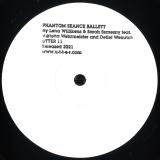
Lena Willikens & Sarah Szczesny feat. Viktoria Wehrmeister and Detlef Weinrich
"Phantom Seance Ballett is a boombox orchestra, Nō mimes, Vicky’s protection spells, Detlef’s psychic shuffles, a smoke machine, a strobe light chamber, painting, Margit Carstensen’s chiffre, Susie Greene’s insults, Schleim, Ebichu’s echoes and Anna Oppermann’s limbo."
Thus we welcome Lena Willikens & Sarah Szczesny's ethereal Phantom Kino Ballett project to Utter with 'Phantom Seance Ballett', an unusually tangible manifestation of what has become an on-going series of live performances and installations that incorporate sound, video, costume, still imagery and beyond. The themes explored weave in and out of grasp, touching on the otherworldly and mysterious, on hypnotic rites and ceremonies, on the fetishisation of cultural tropes and curios.
While carefully documented, these happenings had not been distilled or presented in a cohesive format until now. Of course, an attempt to harness and package such an experience required an imaginative leap beyond the traditional 'record-in-sleeve' approach and Lena and Sarah have overseen every aspect of this remarkable collection themselves.
Working with designer Till Sperrle, Lena and Sarah have conjured up a fold-out box containing an LP, a riso-printed credits poster detailing the samples and snippets collaged into the sound, a 36 page book with imagery from various shows and an essay by Thomas Vorreyer plus sticker pack. The limited 50 copy artist edition contains an additional 10 special riso-prints within an artist stamped hand-numbered box. For all, the LP contains twenty hidden locked grooves cut into the run-out on each side presenting snippets from the artists' archive.
The first of these pieces - 'Identikit Arkaden Seance' - took place on the 2nd of October 2019 at NAK Neuer Aachener Kunstverein and is a live recording. This performance was part of their exhibition "Chambers of Phantom Kino Ballett", where they showed new video works and displayed the now infamous costumes and slippers worn by Lena, Sarah and a rotating cast of guest phantoms.
At this performance, the seven performers carried boomboxes playing individual audio tracks inside and outside the Kunstverein, while Viktoria Wehrmeister and Detlef Weinrich improvised music alongside the phantoms' moving soundtracks of sonic snippets, poetry, field recordings and soundscapes.
The second piece - 'Studio Chamber Seance' - contains diverse audio tracks of performances that were held by Willikens and Szczesny in collaboration with Wehrmeister and Weinrich. It has been deconstructed and rearranged with additional sound material from the Lena Willikens & Sarah Szczesny archive, then edited and mixed by Lena and Sarah in Amsterdam and Cologne last year. Additional music by Detlef Weinrich and Viktoria Wehrmeister features throughout, recorded live in Aachen 2019 and Frankfurt 2020.
Mastered by Gordon Pohl. Transfer, additional mastering & lacquer cut by Helmut Erler at D&M.
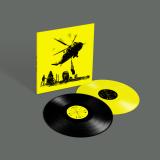
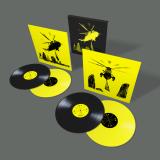
Mogwai release this new 30-year, career-spanning compilation. As with their debut single ‘Tuner’ in 1996, Happy Tears is being released via the band’s self-owned and run record label Rock Action Records, also celebrating its 30 year anniversary. The album features the physical release of the incredible dream-come-true pairing of Mogwai and Iggy Pop with the single “Underground”. Happy Tears also features highlights from across the band’s discography, including a previous digital only single and a special new re-working of a Mogwai classic, titled ‘Brand New Paths to Helicon 1,’ featuring the Budapest Art Orchestra, and orchestrated by Adam Wiltzie
(A Winged Victory For The Sullen, Stars Of The Lid).
• The DLP features 13 tracks on one artwork matching black and one yellow vinyl.
Mogwai release this new 30-year, career-spanning compilation. As with their debut single ‘Tuner’ in 1996, Happy Tears is being released via the band’s self-owned and run record label Rock Action Records, also celebrating its 30 year anniversary. The album features the physical release of the incredible dream-come-true pairing of Mogwai and Iggy Pop with the single “Underground”. Happy Tears also features highlights from across the band’s discography, including a previous digital only single and a special new re-working of a Mogwai classic, titled ‘Brand New Paths to Helicon 1,’ featuring the Budapest Art Orchestra, and orchestrated by Adam Wiltzie
(A Winged Victory For The Sullen, Stars Of The Lid).
• The DLP features 13 tracks on one artwork matching black and one yellow vinyl.
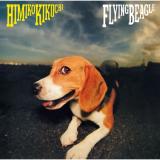
One of Japan’s most world-renowned female keyboardists, Himiko Kikuchi released "Flying Beagle" in 1987, and this classic album now returns on vinyl. Having collaborated with artists such as Takuro Yoshida and Junko Ohashi, and performed as a member of prestigious bands like Nobuo Hara’s Sharps & Flats and Minoya Central Station, Kikuchi — along with guitarist Masatsugu Matsumoto — became a key figure in Japan’s live fusion scene. From the 1980s onward, she consistently released solo albums, including several recorded overseas, establishing herself as a legend in the crossover and fusion genres.
Featuring Kikuchi (piano, keyboards, synthesizer, organ), Matsumoto (guitar), Akira Okazawa (bass), Naoki Watanabe (bass), Katsuo Okamoto (drums), Yasushi Ichihara (drums), Yuichi Tokashiki (drums), Keiichi Ishibashi (bass), Yoshikazu Kishi (trumpet), Kenji Yoshida (trumpet, flugelhorn), Michio Kaguwada (trombone), Jake H. Concepcion (alto saxophone, flute), Hirofumi Kinjo (tenor saxophone, flute), Masamichi Takano (baritone saxophone), and Yoshinori Nomimi (percussion), the album assembles top-tier musicians — including members from Spectrum, AB’S, Yuji Ohno’s You & The Explosion Band, and Toshiyuki Miyama’s Inner Galaxy Orchestra.
A masterpiece of Japanese fusion, reissued as a 180g heavyweight, limited-edition analog pressing. Originally released on October 21, 1987.
A counterculture movement united by an expansive, experimental and deeply soulful sensibility, Japan’s rebel protest music challenged the status quo and changed the country’s music industry in the process.
The birth of Japan’s nascent acid folk scene was rooted in the messy and invigorating political climate of the late 1960s. It is a story of Dadaists, communists, pharmacists and cult leaders, led by a young generation of upstart students, artists and dreamers hellbent on turning their world upside down.
Born on the campuses of Tokyo, Kyoto and Osaka, and centred around newly formed independent label and left-wing stronghold URC, this uniquely Japanese form of folk expression provided an outlet for musicians who were tired of aping Western sounds and instead found ways to sing in Japanese and integrate traditional forms in new ways.
At the forefront of this movement was Yellow Magic Orchestra’s Haroumi Hosono, a polymath innovator whose band Happy End released the first Japanese language rock album, and whose influence would go on to be felt across Japanese music for decades. Alongside, and informed by the Kansai scene’s Takashi Nishioka and Happy End collaborator Ken Narita, they experimented with cadences and accents of the Japanese language to open the door for others to experiment with their own forms of psychedelic folk too.
Some, like Nishioka, were more inspired by Dadaism than drugs, while others, like Kazuhisa Okubo, would ultimately find work as a chemist, having founded two further folk groups that flirted with varying levels of success. Obstinately uncommercial, relentlessly creative, the music featured on Time Capsule’s Nippon Acid Folk represents a broad church of influences.
Perhaps the wildest addition to this congregation however was Hiroki Tamaki, a classically-trained violinist and committed iconoclast, whose synth-prog odysseys hinted at his obsession with the divine. Subsumed by the teachings of Bhagwan Shree Rajneesh, he penned an album in praise of the infamous religious leader of which two superbly mind-bending tracks are featured on this compilation.
Charting the decade from 1970 to 1980 as the dreams of political and spiritual liberation seeded in the ‘60s turned to dust, Nippon Acid Folk surveys a little explored corner of Japanese music history, but one which ultimately laid the foundations for an independent music industry, launching the careers of Hosono and others in the process.
Nippon Acid Folk 1970-1980 is pressed on 12” vinyl and represents the start of Time Capsule’s deep dive into Japan’s rich history of folk and psychedelic soul music.
Limitiertes Silber mit schwarzem Splatter Vinyl im Klappcover! Ein leeres Fotoalbum. Instinktiv blätterst du jede Seite durch, ob sich nicht doch irgendwo ein Fetzen deiner Erinnerungen, deiner Vergangenheit findet. Doch die Fotos sind längst herausgerissen oder verloren gegangen. Und doch spürst du etwas. Auf jeder Seite, die du aufschlägst, eröffnen sich Welten. Gedanken und Gedenken an Vergangenes macht sich in dir breit. Das Gefühl von Vergänglichkeit unterdrückst du, jetzt und hier ist alles ewig und für immer. Und mit geschlossenen Augen blätterst du weiter und fliegst an Orte, die wie Relikte aus deinem Leben aus der Landschaft emporragen. Es sind deine Orte und nur das Gedenken hält sie lebendig. "Memorial", ist das fünfte Album von RUSSIAN CIRCLES und balanciert von Metal beeinflusste Sounds mit nuancierten orchestralen Elementen. In den zwei Jahren nach der Veröffentlichung von ,Empros" war das Trio aus Chicago fast unaufhörlich weltweit auf Tour und traf dabei auf viele härtere Bands, deren Musik unnötig kompliziert schien. "Also machten wir uns auf, eine unkomplizierte, geradlinige, intensive, heavy Platte aufzunehmen" so Cook. "Unbewusst strebten wir nach dunkleren und düstereren Klängen. Wir wollten weg von der offenen Aufdringlichkeit." Auf der Suche nach dem optimierten Sound konzentrierte sich das Trio auf jeden einzelnen Song mit seinen eigenen emotionalen und musikalischen Eigenschaften. Und so fühlt sich "Memorial" fast so an, als würde man die Stufen der Trauer erklimmen und wieder hinabsteigen. Das Konzept wird durch die clevere Struktur des Albums unterstützt, da es an der gleichen Stelle endet in der es beginnt, und natürlich durch den Auftritt der Gastsängerin CHELSEA WOLFE, die mit ihrem ergreifend düsteren Gesang im abschließenden Titeltrack dem Album das angemessene Ende verleiht. Bis zu einem gewissen Grad sind die monolithischen, nebeneinander existierenden Stimmungen auf "Memorial" die Reaktion der Band auf die Verbreitung und den Einfluss der iPod Kultur und wie diese die Songwriting-Prozesse von Bands neuerdings beeinflusst. Heutzutage versuchen viele Musiker aus unvereinbaren Elementen einen Sound-Brei zusammenzurühren und die Ergebnisse klingen so ungenießbar, wie eine Mahlzeit nach Kochen mit verbundenen Augen. RUSSIAN CIRCLES hingegen umgehen klug und geschickt die Fallen der Genre Verschmelzung. "Ich möchte Bands mit einer breiten Palette hören," sagt Cook, "aber sie sollte diese seltsame Balance zwischen Bandbreite und Weite finden. Wir wollten ein Album mit mehr extremen Höhen und Tiefen. Ich hoffe, dass wir damit durchkommen, eine schizophrene Platte gemacht zu haben."
The Signum Recordings label celebrates its 30th-year anniversary with a limited edition 7" single of 200 copies on green vinyl. The title track, "Fire Them Liars", presents a powerful fusion of leftfield ambient electronics, urban beats, orchestral strings and guitarsounds. Vocals and lyrics are provided by label founder Maarten van der Vleuten. The Bside, titled "The Story Of Nuffsy Nuff", is exclusive to this 7" release. Musically quite unexpected with its postpunk/psychedelic rock-influenced sound, on which Maarten plays drums (and some sparse vocals). The release includes a hand-stamped inner sleeve with a download code and sleeve featuring the lyrics.
Second album of french incendiary fake big band Parasite Jazz. A krautrock, jazz-non-jazz, experimental album recorded along four seasons by three musicians (Alex Larsen, Tamara Goukassova & Théo Delaunay) from the french fringes ; members of Succhiamo, Diagonale des Yeux, Simple Music Experience, Violent Quand on Aime ... featuring Radio Hito, Kyle Knapp (Deliluh) & Hochiwah.
—
After its first release in 2023, the tiny big band Parasite Jazz brings its public iterations to fruition with “♫”, a testament to an alternate reality, matured voyaging across France over the span of four seasons.
It sees the music flee through exuberant forests and steep troglodytes ; a parallel genre movie with a soundtrack of diluvian rhythms, mocking chants, jazz noir and voodoo accidents. In this shifting, autonomous world, the elastic orchestra—whose members Radio Hito, Valentin Noiret, Kyle Knapp, and Hochiwah keep on appearing and disappearing—plays for nocturnal secrets and feverish cavalcades.
LP,180, 2018 REISSUE - REMASTERED FROM ORIGINAL TAPES, CAREFULLY REPRODUCED ORIGINAL ART
The two sides of 1973's Big Business / Wind of Change are mainly the work of thegreat Keith Mansfeld but there's a killer cameo each from Alan Hawkshaw and David Snell to help deliver a thematic suite, diverse in mood, applicable to dramatic and environmental situations'. A Be With favourite and truly one for the heads.
The Big Business of side A is all the work of Keith Mansfeld. It's heavy on the suspense and features the vital Hot Property', an insistent groove so good that Madlib sampled it to lace the ace Long Awaited' by Lootpack with Dilated Peoples.
Sleeping Giant 1' is a more feshed out version of the equally-dazzling Fatal Error', evoking the orchestral magic of David Axelrod. Indeed, it conjures images of Diamond D falling over himself in the early-to-mid 90s to loop its intoxicatingly
eerie soundscape. Complete with guitar flls that recall Paris, Texas-era Ry Cooder, you need this record for this piece alone.
The horn-and-fute-led "Tycoon" is a head-nodder and "Power Complex" has some fantastic percussion. Other highlights include the breezy glide of Whistle Stop Tour' and its sister groove Clean Air.'
Over on Side B is the more expansive Wind Of Change, which includes the David Snell and the Alan Hawkshaw contributions. But these ain't no fller. Snell's shufing International Flight' sounds like a smooth Dorothy Ashby track tossed from the heavens. Hawkshaw's Road And Rail' is about as luxurious and strung-
out as the great man gets and it might just be the highlight of this whole set.
Not to be outdone, if Mansfeld's Balance Of Power' doesn't make you feel like king of the world then you must be playing it wrong. Oh, and did we mention World In Action'!
As with all ten re-issues, the audio for Big Business / Wind of Change comes from the original analogue tapes and has been remastered for vinyl by Be With regularSimon Francis. We've taken the same care with the sleeves, handing the reproduction duties over to Richard Robinson, the current custodian of KPM's
brand identity.
Two rare recordings from the archives of legendary producer Richard Hewson.
Rising Star (Cosmix) began life in 1984 as a vocal single performed by Debbie Sharp. Hewson reworked the original track into a percussive cosmic disco interpretation, aptly titled the “Cosmix”, experimenting with his newly acquired Bel Delay effects unit, which became central to his studio explorations at the time.
Deep Song dates back even further, to the late-70s Richard Hewson Orchestra period - the creative blueprint that would later evolve into Hewson’s cult studio project, The RAH Band. Written, produced and assembled by Hewson in his home studio before additional strings and vocals were layered in, the track was inspired by his deep admiration for Miles Davis, particularly the landmark album Kind of Blue. Deep Song was originally released as a B-side under a mysterious alias in 1979.
In the beginning of the 1970’s, Guinea-Bissau was a country broken up into many ethnic groups and at the heart of a war for independence. By reviving traditional musical genres as Gumbé and singing in guinean Kriol, José Carlos Schwarz & Cobiana Djazz established an immediate affective bond with their audiences. Through its music and politically engaged spirit of the lyrics, the band played a significant role in shaping the social and political consciousness of the masses. As well as influencing local bands like Super Mama Djombo and giving back a deep sense of cultural identity to bissau-guineans.
The explosive birth of Cobiana Djazz brought about other kinds of detonation. Schwarz became involved in urban guerilla activities which resulted in several bombings in the centre of Bissau, leading to his imprisonment and torture. He remained in lockup for a total period of about 2 years, between 1972 and 1974.
The process of decolonisation, in the wake of the Portuguese revolution of 25 April 1974, led to the recognition, during the same year, of the sovereign nation of Guinea-Bissau.
Schwarz, a key figure in the fight for independence, played an important part in the transition to the democratic regime, profiting from his popularity as an artist. Soon, his criticism (underscoring opportunism and irresponsibility in high places) became a thorn in the side of the political elite. Uneasy with the disquieting effects of his work, government officials effectively separated the author from the masses by assigning him to the embassy in Havana.
José Carlos Schwarz met a tragic and untimely death at the age of 27, when his plane crashed on arrival at Cuba's José Martí International Airport, on May 271th 1977.
Hailed by african giants like Orchestra Baobab, Letta Mbulu or Miriam Makeba (with whom he recorded his first and only solo album), “Zé Carlos” and his poetry won a lasting position in the annals of Guinea-Bissau. However, this collection of songs remains relatively unknown outside the country and its diasporas.
We are proud to offer, in close collaboration with the Schwarz family, this first official reissue on vinyl. Remastered and pressed on heavyweight vinyl.
Seit der Veröffentlichung seines von Kritikern hochgelobten Debütalbums 'Come Around and Love Me' im Jahr 2023 hat Jalen Ngonda eine kometenhafte Karriere hingelegt. Der Song 'If You Don’t Want My Love' wurde zum viralen Hit und wurde bis heute 253 Millionen Mal gestreamt. Jalen war in einer Reihe von großen Fernsehsendungen zu Gast, darunter 'The Graham Norton Show', 'The Late Show with Stephen Colbert' und 'Later with Jools Holland'. Er war Support-Act für Thee Sacred Souls auf ihrer US-Tournee und hat als Headliner unzählige Clubkonzerte auf der ganzen Welt ausverkauft. Jetzt, im Jahr 2026, während die Glut seines Debüts noch hell lodert, bereitet sich Jalen Ngonda auf die Veröffentlichung seines mit Spannung erwarteten zweiten Albums 'Doctrine Of Love' vor.
Die harte Arbeit und die unermüdlichen Tourneen nach seinem Debüt haben sein Handwerk gestärkt. Seine Botschaft: 'Die Lehre der Liebe besagt, dass jeder Gedanke und jede Handlung in erster Linie von Mitgefühl für andere geleitet sein sollte, denn Liebe ist der höchste Maßstab für den Wert eines Menschen.' Die Titel des neuen Albums sind aus diesem Credo entstanden. Mit seinem tiefen Wissen und seiner Liebe zum klassischen Soul vermittelt Jalen Ngonda Authentizität in Hülle und Fülle. 'Doctrine Of Love' verbindet Pop-Sensibilität und soulige Melodien mit roher Kraft und Groove und erweitert die orchestralen Arrangements von 'Come Around And Love Me' um bläserreiche und gospelartige Backing Vocals, wodurch ein äußerst stilvolles Beispiel für moderne Soul-Kunst entsteht. Tipp!




![PARKWAY DRIVE - HOME [LIVE AT THE SYDNEY OPERA HOUSE] LP 3x12"](https://www.deejay.de/images/l/4/8/1270248.jpg)
![PARKWAY DRIVE - HOME [LIVE AT THE SYDNEY OPERA HOUSE] LP 3x12"](https://www.deejay.de/images/l/4/9/1270249.jpg)