Twenty-eight Years Ago, Pissed-off Twelve-year-olds Around The Universe Discovered A New Planet, A Black Planet. Public Enemy's Aggressive, Benihana Beats And Incendiary Lyrics Instilled Fear Among Parents And Teachers Everywhere, Even In The Border Town Of Laredo, Texas, Home Of The Future Founders Of The Latin-funk-soul-breaks Super Group, Brownout. The Band's Sixth Full-length Album (out May 25th) Fear Of A Brown Planet Is A Musical Manifesto Inspired By Public Enemy's Music And Revolutionary Spirit.
Chuck D., The Bomb Squad, Flava Flav And The Rest Of The P.e. Posse Couldn't Possibly Have Expected That Their Golden-era Hip Hop Albums Would Sow The Seeds For Countless Public Enemy Sleeper Cells, One That Would Emerge Nearly Three Decades Later In Austin, Texas. Greg Gonzalez (bass) Remembers A Kid Back In Junior High Hipped Him To The Fact That Public Enemy's bring The Noise' Is Built On James Brown Samples, While A Teenaged Beto Martinez (guitar) Alternated Between Metal And Hip-hop In His Walk-man, And Adrian Quesada (guitar/keys) Remembers Falling In Love With Public Enemy's Sound At An Early Age. when I Got Into Hip Hop, I Was Looking For This Aggressive Outlet . . . And I Didn't Even Understand What They Were Pissed Off About, Because I Was Twelve And Lived In Laredo . . . But I Loved It And I Felt Angry Along With Them.'
Joseph Abajian (fat Beats' Owner) Must Have Sensed The Deep Hip-hop Well Lying Beneath The Versatile Band's Latin-funk Veneer. i Thought Their Sound Would Work Covering Public Enemy Songs,' Abajian Says, And, it Was Good To Know They Were P.e. Fans . . . We Came Up With A Track Listing And They Went To Work.' Despite The Band's Eagerness To Work On New Original Material (an Album Of Original Songs Is Slated For Next Year), They Couldn't Pass Up The Opportunity To Pay Homage To This Iconic And Influential Posse.
Translating Sample-based Music To A Live Band Turned Out To Be More Of A Challenge Than They Anticipated. Adrian Tried To Get Inside The Bomb Squad's (public Enemy's Producers/beat-making Team) Head In Order To Find The Inspiration To Reinterpret P.e.'s Songs: imagine The Bomb Squad Going Back In Time And Getting The J.b.s (james Brown's Funky Backing Band) In The Studio And Setting Up A Couple Analog Synths And Then Playing Those Songs.' While Some Songs Closely Follow The Original Musical Blueprint, Others Use The Source Breakbeats As Jumping-off Points Later Sweetened By Trombonist Mark speedy' Gonzales' Horn Arrangements, Synth Wizardry Courtesy Of Friend-of-the-band Peter Stopschinski, And Dj Trackstar's Turntable Scratches. But Don't Listen Expecting To Hear Paint-by-numbers Recreations Of Classic Public Enemy Jams. our Approach Is Never In The Tribute Sense,' Adrian Explains. we've Always Taken It And Made It Our Own, Whether It's The Brown Sabbath Thing Or This Public Enemy Thing.' Coming Off Numerous Tours As Brown Sabbath And Even A Stint Backing The Late Legend Prince, Brownout Is Arguably The Tightest And Funkiest Band On The Road Today And They're Psyched To Bring This Revolutionary Music To The People. For A Band Without An Overt Political Agenda, They Collectively Couldn't Resist The Opportunity To Play This Music Live, Especially Now. if There's Any Way That We Can Use The Already Political And Protest Nature (of P.e.'s Music), We Would Like To Try,' Beto Says. the Album's Title, Fear Of Brown Planet Is Definitely A Relevant Idea Today And We're Not Afraid To Put It Out There, Because We Want To Speak Out.' By Reinterpreting These Hip Hop Classics In Their Unique Style And Channeling The Spirit Of Public Enemy That First Echoed Around The World And Captured Their Imaginations All Those Years Ago, Brownout Is Doing Exactly That.
Brother And Sister Eric And Arrontette Mcclinton Had Been Recording For Many Years. Around 1976 They Did A 45 Release Together On Honey Records Called "where You Are" Under The Their Christian Names, Although Eric Was Spelled Eryke! The Single Didn't Have Much Success But Both Brother And Sister Still Went On To Be Amazing Backing Singers Working For Legendary Producers Mike Theodore And Dennis Coffey. Whilst They Were Under The Watchful Eye Of The Production Team They Recorded Some Material Again And A Duo For Theo/coff In A Bid To Get Them Another Record Deal And Show Their Capabilities. These Songs Never Got Releases. Eric Became And Prolific Song Writer And Also Joined The Group High Fashion .
We Are Super Pleased To Finally Release The Shelved Songs From 1978.
This In One Of Two Releases By The Duo.
After a first EP, Chasse is coming back with a new release on Javi Frias label 'Night Shift Records' including 4 groovy tracks. Influenced by the old school sounds of Chicago, the duo offer us a powerful and disco EP, where sampling is at its peak. Their efficient beats mixed with samples from disco to funk make us remember the old times of House music. Once again, the belgian boys got the job done!
A continuation of his kaleidoscopic sun-dappled cosmic-disco, Neon Leon was the much-loved CD-only sophomore album by Sorcerer. Just in time for Spring/Summer, we present the first ever vinyl issue, released as a deluxe double LP.
A perfectly formed suite of ten tracks featuring soft guitars, subtle synths and lightly grooving percussion, Neon Leon magically evokes that elusive summer feeling throughout. The guitar-driven "Algorhythm" serves as the album opener, blasting bold, sun-drenched jazz chords atop bright synths and groove-based drum programming. "Ride The Serpent" and "Distort Yourself" are guided by a more sultry, slo-mo disco impulse whilst the staggering "Chemise" and strident "Face It" merge 80s West Coast production sheen with Sorcerer's trademark laid back, gentle disco. "Raydio"'s undeniable head-nod groove adds a rare vocal to the proceedings, joyously combining with the bubbling cosmic funk.
Since its initial release in 2009, exceptional producers have created vibrant variations on the dreamy, dubby, melodic nu-disco theme. Happily, the emergence of such luminaries as Jex Opolis, Harvey Sutherland, Suzanne Kraft, Tornado Wallace et al has only served to make the master - Sorcerer - sound ever more brilliant and vital.
Utilising his array of guitars, drum machines, synths, and trusty MPC, the loved-up Sorcerer sound inspires halcyon memories of warm days, endless sunsets and pure youthful abandon. Influenced by surf, 80s dance pop, acid-R&B, space jazz, krautrock, disco, dub, and am radio gold, his music maps a tour through a uniquely Californian lifestyle. Yet when music so vividly captures a vibe and a feeling, it can make writing about it appear almost redundant. Instead, to glean the full colour of what your turntable will soon gratefully radiate, we prescribe the generous soundclips presented here.
And, for a unique insight into the process behind the wonderful sounds conjured up, here's Sorcerer himself:
"Neon Leon's is the name of a bar in a Elmore Leonard book I was reading on a vacation to Belize with my future wife. I was soaking up his brand of noir during the making of the songs on this record, along with another favorite Ross Macdonald. We were living in a small apartment in the Mission District of San Francisco where i had my own room to jam. It was painted Orange and Turquoise and was a very inspiring place to create and focus. I could walk out of my house to any number of hole in the wall bars where people were deejaying, hanging-out, and knew about me and my music.
After White Magic I developed more confidence in my style and process so I stuck with it and I believe it shows in the tunes I selected for the record. The sounds are rich and I dug deeper into sampling from obscure dollar records and getting looser musically. I made a handful of collage videos for the tracks at this time as well, which represent where my mind was at visually. In my mind it's Cosmic Funk that rules the day and I am thankful to have the opportunity to share it with the world again."
Lovingly remastered by the esteemed Simon Francis, cut reassuringly loud on to heavyweight double vinyl and presented in a deluxe gatefold jacket with freshly commissioned artwork throughout from original designer Rich Robinson, this limited edition of 500 copies is sure to fly.
WHEN YOU'VE FINISHED LOOKING AROUND THE WEBSITE, YOU CAN FIND US ON THESE SOCIAL CHANNELS
As we enter the Summer months, Excursions welcomes back The Showfa, with A Gospel Excursion Volume Two. Four more dishes of hot spiritual gumbo for your mind, body & soul.
Once again The Showfa has expertly cut together a concoction of gospel, soul, disco, latin, jazz, funk, and spiritual rhythm & blues. The glorious disco rework of a track called 'Amazing' sets the tone with an infectious piano riff and powerfully uplifting vocal. 'Surely Surely' follows, with a more vigorous strut, a short, sweet slice of disco funk, no messing about. 'Praising' keeps the groove and tempo solidly in a delicious eighties boogie formation, slap bass and sax in tow. The set closes out with beautiful latin-jazz tinged vibrations sauntering through 'I'll Show You The Way', before switching to the sweetest sweet soul you ever did hear. Soul food of the highest calibre.
The previous volume was shown love last year by an assortment of selectors and tastemakers, including Tony Humphries, Horse Meat Disco, Gilles Peterson, Craig Charles, BBC 6Music, Mi-Soul, Rinse FM and Mixmag, and also saw The Showfa spinning on the airwaves on NTS with Charlie Bones, and for Wax Poetics.
Another joyously ethereal platter, and another one that will never leave the box.
A near-perfect record, White Magic was the lauded CD-only debut album by Sorcerer (Californian native Dan Judd, one half of Windsurf with Hatchback). Just in time for Spring/Summer, we present the first ever vinyl issue, released as a deluxe double LP.
Back in summer 2007, this majestic set gently nestled itself into the Balearic soundtrack-to-summer slot for many, making him a household name for Cosmic Disco heads alongside the likes of Lindstrom, Metro Area, Todd Terje, Mudd, Studio and Quiet Village. In the intervening years, exceptional producers have created vibrant variations on the dreamy, dubby, melodic nu-disco theme. Happily, the emergence of such luminaries as Jex Opolis, Harvey Sutherland, Suzanne Kraft, Tornado Wallace et al has only served to make the master - Sorcerer - sound ever more brilliant and vital.
Utilising his array of guitars, drum machines, synths, and trusty MPC, the loved-up Sorcerer sound inspires halcyon memories of warm days, endless sunsets and pure youthful abandon. Influenced by surf, 80s dance pop, acid-R&B, space jazz, krautrock, disco, dub, and am radio gold, his music maps a tour through a uniquely Californian lifestyle. Yet when music so vividly captures a vibe and a feeling, it can make writing about it appear almost redundant. Instead, to glean the full colour of what your turntable will soon gratefully radiate, we prescribe the generous soundclips presented here.
And, for a unique insight into the process behind the wonderful sounds conjured up, here's Sorcerer himself:
"White Magic is a reflection of personal freedom and discovery. Having been in bands for years, this was a chance to develop music that stood alone and for me to be in full control.
I was living alone and worked on jams whenever I could. I was highly inspired by a new openness to music as a pure inspiration, not being part of any scene. I tapped into the mixes I was hearing coming out the UK where deejays were playing "cosmic" sounds that were so strangely familiar.
I was picking up all kinds of $1 vinyl and throwing bits of it into my sampler almost randomly to see what would come out.
In my mind, I was making music to be played at my friend's Broker/Dealer Pop nights where they fused golden German techno sounds with the new disco emerging at the time. Also, I took vacations and reconnected with the Pacific Ocean where I spent so much time as a kid: it spilled out into the sounds.
Lastly, I forged a partnership with Hatchback (Sam Grawe) who was working on music in the same way. I learned so much about arrangement and the colors of music. We began recording together as Windsurf and released our own stuff. It all seems like a small glorious moment in time, so I am so excited to keep the legacy alive and I continue to work on my music with these spirits inside of me."
Lovingly remastered by the esteemed Simon Francis, cut reassuringly loud on to heavyweight double vinyl and presented in a deluxe gatefold jacket with freshly commissioned artwork throughout from original designer Rich Robinson, this limited edition of 500 copies is sure to fly.
out of Stock
Last delivered 3 years ago available to reorder, subject to availability
FINA Records welcome Jad & The for a new EP that shows off the Australian-born, Berlin-based producer's majestically melodic house sound. A special dub from 6th Borough Project makes this another essential release.
Before now Jad & The has served up tracks of the year ('Strings That Never Win' - Mixmag 2017), fronted four piece live act Mitzi—who played alongside the likes of Nile Rodgers—and also produced as Jad & The Ladyboy, all the while picking up fans like Moxie and Bradley Zero. Sonar Kollektiv and Toy Tonics have put out his charming sounds before and this new one is another joyous offering.
The feel good '2 Getha (4 Eva Mix)' kicks things of with old school drum breaks and loved-up vocals. Big smeared pads, a new age melody and classic bassline line finish it off and carry you away to summery house heaven. 'Twist Club' then drops into lush deep house with a long legged bassline tumbling beneath organic drums. It's a dreamy and romantic cut before 'Disco Hold Down' has live sounding jazz drums, choppy vocals and rough edges that take you to the heart of a vibe-fulled basement party. Delusions Of Grandeur's 6th Borough Project serve up a Dub that's more stripped back and built on a big rubber bassline. Jacking drums and a more rapturous vocal make it a truly steamy jam.
Buy the EP digitally and you get a bonus track, '2 Getha (Neva Mix)' which is another blissed out and rave tinged house cut which oozes pure euphoria. It closes out a brilliantly heartfelt EP of varied and vital house sounds.
Smoove & Turrell return with the first new single from their forthcoming album 'Mount Pleasant' - a storming double-A side with disco cut - 'You're Gone' and the gorgeous and ironic 'A Deckham Love Song'.
From the moment John Turrell heard label mate Izo FitzRoy's debut album "Skyline" he knew they had to work together and started adapting a song he was working on "You're Gone" with her in mind.
The result is an absolute ear worm of uplifting chic style instrumentation combined with haunting lyrics - disco dynamite delivered with feeling as John & Izo's vocals perfectly encapsulate the balance of frustration, pride and vulnerability present in a lovers argument.
The flipside is the undeniably pretty 'A Deckham Love Song' - a smooth slice of sublime songwriting with a Richard Hawley-esque tongue-in-cheek look back at a childhood spent in Deckham. The beautiful and sentimental imagery conjured up in the lyrics and tasteful musical arrangement inspired by Gene Wilder's Willy Wonka, ironically offsets the subject matter of a childhood growing up on an estate in the North East of England.
out of Stock
Last delivered 7 years ago available to reorder, subject to availability
A great compilation can open the gate to another world. Who knew that some of the most exciting Afro-funk records of all time were actually made in the small West African country of Benin Once Analog Africa released the first African Scream Contest in 2008, the proof was there for all to hear, gut-busting yelps, lethally well- drilled horn sections and irresistibly insistent rhythms added up to a record that took you into its own space with the same electrifying sureness as any favourite blues or soul or funk or punk sampler you might care to mention.
Ten years on, intrepid crate-digger Samy Ben Redjeb unveils a new treasure- trove of Vodoun-inspired Afrobeat heavy funk crossover greatness. Right from the laceratingly raw guitar fanfare which kicks o Les Sympathics' pile-driving opener, it's clear that African Scream Contest II is going to be every bit as joyous a voyage of discovery as its predecessor. And just as you're trying to get o the canvas after this one-punch knock out, an irresistible Afro-ska romp with a more than subliminal echo of the Batman theme puts you right back there. Ignace De Souza and the Melody Aces' Asaw Fofor" would've been a killer instrumental but once you've factored in the improbably-rich-to-the-point-of-being-Nat-King-Cole-influenced lead vocal, it's a total revelation.
The screaming does not stop there, in fact it's only just beginning. But the
strange thing about African Scream Contest II's celebration of unfettered Beninese creativity is that it would not have been possible without the assistance of a musician who had been trained by the Russian secret services to "search and destroy" enemies of the country's (then) Marxist-Leninist president Mathieu Kerekou.
Already familiar to fans of the first African Scream Contest as a mainstay of ruthlessly disciplined military band Les Volcans de la Capitale, Lokonon André vanished in a cloud of dust at Ben Redjeb's behest with a list of names and some petrol money, only to return a few days later having miraculously tracked down every single name he'd been given. The source of this Afrobeat bounty-hunter's impressive people-finding skills - his training with the KGB - highlights the tension between encroaching authoritarian politics and fearless expressions of personal creative freedom which is the back-story of so much great African music of the 60s and 70s. Happily, in this instance, Lokonon was tracking the artists down to oer them licensing deals, rather than to arrest them.
Where some purveyors of vintage African sounds seem to be strip-mining the
continent's musical heritage with no less rapacious intent than the mining companies and colonial authorities who previously extracted its mineral wealth, Samy Ben Redjeb's determination to track this amazing music to its human sources pays huge karmic dividends.
Like every other Analog Africa release, African Scream Contest II is illuminated by meticulously researched text and eortlessly fashion-forward photography supplied by the artists themselves. Looming large - alongside Lokonon André - in the cast of biopic-worthy characters to emerge from this seductive tropical miasma is visionary space-nerd Bernard Dohounso, who laid the foundations for Benin's vinyl predominance by importing and assembling the turntables that would play the products of his Bond villain-acronymed pressing plant SATEL, a factory that would revolutionise the music industry in the whole region.
The scene documented here couldn't have been born anywhere else but in the Benin Republic , and the prime reason for that is Vodoun. It's one of the world's most complex religions, involving the worship of some 250 divinities, where each divinity has its own specific set of rhythms, and the bands introduced on the African Scream Contest series and other compilations from that country were no less diverse than that army of dierent Gods. At once restless pioneers and masters of the art of modernising their own folklore, the mystic sound of Vodoun was their prime source of inspiration.
One especially irascible Vodoun-adept was Antoine Dougbe, who styled himself The devil's prime minister' while turning ancestral rhythms into satanically alluring modern beats. As Orchestre Poly-Rythmo songwriter Pynasco has observed sagely, Evil is not elsewhere, evil extends into the house'. And African Scream Contest II is a gloriously cinematic road-trip through an undiscovered realm of music lore whose familiarity is every bit as thrilling as its otherness.
Recorded in Philadelphia in 1969, The Deirdre Wilson Tabac's sole album is a beautiful blend of funk, jazz and soulful pop. Possessing the complex grooves, thrilling breaks and ethereal weirdness that The Rotary Connection pedalled so brilliantly, the LP failed to connect with audiences upon its original release.
In the decades since, it has deservedly attracted a considerable cult following. However, almost inevitably, it has become increasingly tricky to pick up a copy in good condition for anything less than eye-watering sums. As such, we're delighted to present the first officially licensed vinyl reissue of this undoubted masterpiece of freaky funk-rock, limited to just 500 copies.
The Tabac were, in fact, a trio. Discovered, managed and produced by Svengali Sonny Casella (who'd earlier managed garage band The Magic Mushrooms), they comprised Deirdre Wilson, Stu Freeman (formerly of said Mushrooms) and Barbara Payne (formerly with the James Brown Revue). They were backed by session players including jazz guitarist Chuck Anderson, bassist Hugh McDonald and keyboardist Roy Bittan (who went on to be a long-term Bruce Springsteen sideman).
Their first single coupled two fine Casella compositions, each featuring powerhouse vocal workouts, the supremely funk-fuelled blues beat of "The Other Side Of Life" and the psychedelic-flavoured "Look In My Face" - both of which are featured here. This 7" picked enough up airplay to merit an album, which duly appeared early the following year, but, as is often the way with these lost classics, it received barely any press. Correspondingly, sales where low and the trio didn't last long.
And herein lies the real tragedy. The rest of the LP deserves to be heard from start-to-finish - it's that good. A beguiling mix of funky folk and rocky jazz tracks, with some deep, string-drenched harmony soul ballads and a handful of remarkable covers elegantly presented througout. Indeed, they put some sauntered head-nod funk into The Beatles' "Get Back" whilst tearing through a version of "Sittin' On The Dock Of The Bay" which gives Otis' original a real run for its money.
But the real standout cut for most - with its soulful, haunting vocals, swinging hammond organ and stabbing horns, is the incredible 6/8 time jazz dancer "I Can't Keep From Cryin' Sometimes." Staggering.
Discover Le Deltaplane, fifth album by Andre Solomko, and third produced on Favorite Recordings, pursuing a collaboration that started more than 5 years ago.
Born in Ukraine in 1965 and now based in Finland, Andre Solomko is primarily a rich and engaging personality, but above all, a brilliant saxophonist, composer and engineer, whose contagious passion cannot leave anyone indifferent. After beginning a meteoric career in USSR, fate led him to Finland, where he started the adventure Vinyl Jam, a label / studio / group. It resulted in two self-produced albums that will capture the attention of some international collectors, including Pascal Rioux (founder of Favorite Recordings). Between 2012 and 2014, they released 2 albums together, Où es-tu maintenant and Le Polaroid, hailed by many tastemakers and meeting notable success in Japan.
Following Le Premier Disco Sans Toi, an acclaimed single released earlier this year and unveiling two new compositions with Disco flavors, Andre Solomko and Favorite Recordings also proudly present Le Deltaplane. Fully composed and arranged by Andre Solomko, the 6 tracks of the album are deeply infused with his longtime passion for Jazz-Funk and Movie-Soundtracks, this time also injecting more influences from WestCoast and Modern-Soul music.
Andre's backed again by a team of great musicians, recording and producing the album in analog like he always did. As for vocals and lyrics, he teams up with Charlotta Kerbs, a young emerging and talented singer from Helsinki.
Andre Solomko, an artist who spreads love like in the good old days!
Here We Are Releasing The Second Album Of Cologne Born Producer Thyladomid Who Is Familiar To Many Through His Work On Hamburg Label Diynamic Which Has Lead Him To Perform Around The World, Together With Artists Such As: Adriatique, Solomun, Kollektiv Turmstraße, Hosh, David August, Stimming, And Many More. More Then 30 Minutes Playing Time, 6 Tracks And Artwork By Florian Kramer Offer A Lot To Discover. Thyladomid Is Famous For His Forward Thinking Deep Melodic Dance Music Which Earned Him Respect And Support From Many People Of The Scene And Evolved Also In Cooperations With Adriatique And The Singer Mahfoud. You Can Find Two Tracks Featuring Mahfoud On The Album. With His First Album "interstellar Destiny" In 2015 Thyladomid Has Already Changed Towards More Introspective Music And You Will Hear He Has Taken That A Step Further Here. In Comparison To His First Album, "places" Refers To Different Places Which Inspired Him To Write The Album And Offers A Higher Level Of Complexity In The Making Of Music Which Has Helped Thyladomid To Enhance The Moody Quality In A Dazzling Way Sometimes Even Spine Tingling When You Let Yourself Go To Explore The Abundance Of The Trax. As He Said In His Own Words: - the Albums Intention Was That Of An Organic Produced Album With Different Moods. Instruments Such As Piano And And Violin As Well As Field Recording Bring Alive A Special Quality. The Bouncing Of Stones On A Frozen Pond Recorded With Multiple Microphones Suggest For Example An Authentic Spacious Quality. The Self Recorded Percussion, Sometimes Quite Exotic Were Included In All Of The Tracks. The Combination Of Synthetic Sounds With Traditionally Instruments Was One Of The Big Challenges For Me. The Piano And Prophet 6 Und The Moog Sub37 Were The Main Instruments Used For The Album'. Thyladomid Started Working On The Album 2 1/2 Years Ago. His Classical Training On The Piano Helped To Quickly Come Up With A Musical Theme Which Is Based On Different Tonalities Which Were Then Linked To Each Other And Which Actually Helped To Structure The Whole Release. The Good Weather In Summer Was A Good Inspiration And Finally Led To The Idea To Dedicate Tracks To A Certain Place, A Place Which Means A Lot For Him. From That Idea The Title Of The Whole Album Derived: "places ". "a Little Church In Amsterdam" As He Says "is Such A Track Encouraged By The City Of Amsterdam I Love And Respects So Much And Actually Have Spend So Much Time In. It Is A Track I Played Outside In My Garden To Friends And Which Works Perfectly For Me.' "a Little Church In Amsterdam" Is A Track Where Melodies Bloom And Flourish. It Feels Like Zooming In On Nature Grasping A Time Lapse Symphony. "blossoming Limburg Ft Mahfoud" Was Born In The Capital Of Limburg Which Is Located In The South Of The Netherlands And Reflects The Summer Of 2017 And Was Recorded In A Warehouse. It Reflects The Intimacy And Synergetic Level Between Mahfoud And Thyladomid. The Fantastic Deep Vocal Track Is Spiced Up With Lots Of Acoustic Details Which All Happen In The Background But Effectively Surface To Pull The Listener Into His World. "night Owl" Is A Lyrical Dreamy Piano Piece With A Melancholic Note And An Ear For Details. Acoustic Finesse Presented On An Episodic Scale. We Guess The Track Was Influenced By The Works Of Four Tet Or Pantha Du Prince. "kollwitzplatz" Is A Small Park In Berlin's Prenzlauer Berg Which Was Thyladomid's Home For 2 Years . - the Cafes And Restaurants Laced By The Alleys Of The Kollwitz District Resemble A Piece Of Home For Me And Represents The Time Of My Stay In Berlin'. Musically "kollwitzplatz" Is Full Of Life. You Can Hear Children Talking While The Piano Attracts Sounds Like Moths Are Attracted To Light. The Track Offers This Richness Of Percussive Elements And Sound Sources Creating A Stunning Complexity Which Does Not Limiting Itself But Rather Creates This Free Flow Of Acoustic Signals. You Instantly Will Feel: There Is A Lot To Discover At "kollwitzplatz". "underwater Rhapsody", The Title Says It All: It Has That Episodic, Free-flowing Structure, Featuring A Range Of Highly Contrasted Moods, Color And Tonality. What It Actually Means To The Listener Is That Grande Chords Meet Dissonances Of Sound That Fly In Like Drones Cross The Big Time Melodies That Gain A Centrifugal Force At Times... And All This Leaves You Dizzy And Creates Another Big Listening Experience As The Whole Album Is Directed To Entertain You In A Smart And Distinguished Way.
It's A Funny Old World, And Yet Again, The Black Dog Have Provided The Soundtrack. Our Fast-approaching Dystopia Has Been Envisioned And Documented By The Band For Decades. Now, The Black Dog's Two New Albums, Post -truth And Black Daisy Wheel, Translate Their Growing Horror Into Some Of Their Most Accessible And Impactful Music, Translating Our Manufactured Reality Into High Energy Dancefloor Constructions On Post -truth, And Reflective Ambient Excursions On Black Daisy Wheel.
Long Familiar With The Tropes And Pitfalls Of Esoteric Undergrounds, In Both The Pre- And Post Internet Eras, The Black Dog Have Ventured Deep Into Contemporary Conspiratorial Cultures With A Trenchantly Critical Eye. In The 80s, Conspiracy Theories Were A Tonic For A Sceptical Mind, A Stimulant To Agile Thinking. Today, They Have Become The Stock In Trade Of Mainstream Political Influence. The Scene Has Morphed Into A Rabbit Hole Where Nothing Is 'really' Real, Everything Is A Hoax, And Everyone Is Out To Get You. The Mindset Is Beyond Paranoid, The Discourse So Far Post-fact That Only Opinion And Assumed Identity Matter. Arguing Against Proven Science Is A Part Of The Entry Criteria, And Wilful Pedantry Its Standard Currency. The Impact On Mental Health Is Corrosive: Fear, Uncertainty And Doubt Multiply And Replicate Until The Most Ridiculous Theories Are Invented To Explain The Most Basic Things: Tarmac, Banana Skins, Duvets. Auto-suggestion Is Rife, Where Willing Victims Drink Bleach (mms) At The Behest Of Youtube Videos, Flat-earthers Are Taken Seriously, And The Manufactured Fearful Believe They Are Being Gang-stalked For Finding Monsters On Pixelated Screens. The Distinction Between The Real World And The World Of An Auto-hoaxer Is So Blurred That Reality Melts Away; You're Only Ever One Personal Detail Away From Being Doxxed, At Which Point Reality Bites Back, Hard.
You Couldn't Make It Up, Even Though That Is Exactly What The Conspiratorial Fringe (now One Sharp Corner From The Mainstream) Always Do. The Fact That There Are Real People Involved In This Scene Creates A Real Sense Of Pathos And Anger Which Is Deeply Embedded In The Music On These Two Albums. As Soon As You Start Engaging With People In The So-called 'truth Movement', One Minute It's Painful, But The Next Can Be Genuinely Funny; These Are People Who Are Both On Edge And Upon The Edge Of A Larger Social And Political Reality That, For Worse And For (even) Worse, Defines Our Times. Hence These Two Very Different Albums. Black Daisy Wheel Is Reflective, Often Intense, Frequently Compassionate; While Post -truth Was Written While The Black Dog Was Fully Engaged With People Whose Paranoia Was In Full Swing.
It's A Funny Old World, And Yet Again, The Black Dog Have Provided The Soundtrack. Our Fast-approaching Dystopia Has Been Envisioned And Documented By The Band For Decades. Now, The Black Dog's Two New Albums, Post -truth And Black Daisy Wheel, Translate Their Growing Horror Into Some Of Their Most Accessible And Impactful Music, Translating Our Manufactured Reality Into High Energy Dancefloor Constructions On Post -truth, And Reflective Ambient Excursions On Black Daisy Wheel. Long Familiar With The Tropes And Pitfalls Of Esoteric Undergrounds, In Both The Pre- And Post Internet Eras, The Black Dog Have Ventured Deep Into Contemporary Conspiratorial Cultures With A Trenchantly Critical Eye. In The 80s, Conspiracy Theories Were A Tonic For A Sceptical Mind, A Stimulant To Agile Thinking. Today, They Have Become The Stock In Trade Of Mainstream Political Influence. The Scene Has Morphed Into A Rabbit Hole Where Nothing Is 'really' Real, Everything Is A Hoax, And Everyone Is Out To Get You. The Mindset Is Beyond Paranoid, The Discourse So Far Post-fact That Only Opinion And Assumed Identity Matter. Arguing Against Proven Science Is A Part Of The Entry Criteria, And Wilful Pedantry Its Standard Currency. The Impact On Mental Health Is Corrosive: Fear, Uncertainty And Doubt Multiply And Replicate Until The Most Ridiculous Theories Are Invented To Explain The Most Basic Things: Tarmac, Banana Skins, Duvets. Auto-suggestion Is Rife, Where Willing Victims Drink Bleach (mms) At The Behest Of Youtube Videos, Flat-earthers Are Taken Seriously, And The Manufactured Fearful Believe They Are Being Gang-stalked For Finding Monsters On Pixelated Screens. The Distinction Between The Real World And The World Of An Auto-hoaxer Is So Blurred That Reality Melts Away; You're Only Ever One Personal Detail Away From Being Doxxed, At Which Point Reality Bites Back, Hard. You Couldn't Make It Up, Even Though That Is Exactly What The Conspiratorial Fringe (now One Sharp Corner From The Mainstream) Always Do. The Fact That There Are Real People Involved In This Scene Creates A Real Sense Of Pathos And Anger Which Is Deeply Embedded In The Music On These Two Albums. As Soon As You Start Engaging With People In The So-called 'truth Movement', One Minute It's Painful, But The Next Can Be Genuinely Funny; These Are People Who Are Both On Edge And Upon The Edge Of A Larger Social And Political Reality That, For Worse And For (even) Worse, Defines Our Times. Hence These Two Very Different Albums. Black Daisy Wheel Is Reflective, Often Intense, Frequently Compassionate; While Post -truth Was Written While The Black Dog Was Fully Engaged With People Whose Paranoia Was In Full Swing. Welcome To Our Disinformation.
Caused Corruption & Spilled Blood is a soundtrack to the tragic drama of humanity's fatal flaws. Inspired by an anecdote shared across the Abrahamic faiths, the release is a meditation on humanity's destructive
potential. It forces us to confront the ugly side of our nature and pose the question, were the angels right to fear our creation would cause corruption and spill blood
Same Script, No Solution provides one answer. The sonification of 'Ordo ab Chao,' the opening track guides the listener through the process of public manipulation, providing a backtrack to the obstruction of the truth for personal gain.
Third Degree Arson touches on humanity's second vice: the affinity for intentional destruction. Is there hope against these demons of our own nature
No Divine Savior suggests not. If we cannot rely on divine intervention for our salvation, that leaves only ourselves to overpower our own vices.
Yet with the discord of the final track, Sects, the listener is reminded of the deep cultural fissures that keep us from doing so.
The Caused Corruption & Spilled Blood EP is a powerfully provocative examination of human nature, a compelling first release from the collaborative efforts of Chafik Chennouf & Katsunori Sawa.
Mount Liberation Unlimited strikes back! After releases on Tim Sweeney's Beats In Space label and everyone's favourite oddball house institution Studio Barnhus, the swedish duo, consisting of Tom Lagerman and Niklas Janzon, land on planet Permanent Vacation.
"Body Language" is the fifth release for MLU and you can feel that they have been places and come some ways, since their debut ep in 2014: This Ode to dancing sees Lagerman and Janzon heading into more pop-y territories than before. "The Swedish Version" is a full on pop disco track with rich instrumentation and infectious vocals that underline MLU's status as one of the best disco and house live acts around these days. While the "Mouth Mix" is the Swedish interpretation of Chicago House and gets even more physical with its drum-heavy beats and computerized vocals. For your Karaoke party and to round up the package, we also included the instrumental of the "Swedish Version". Rocka Din Kropp!
Since '87 a 13 year old Jan Svensson AKA Villa Abo has been the back bone of Swedish electronic experimentalist group Frak and behind one of the biggest inspirations for Butter Sessions, Borft Records. As always, Jan keeps pushing the boundaries on this 4 tracker.
' Kicking it off, 'Just a 309' is a stripped-back rough and ready house track in true 90's Borft style.
On 'Mission Just Pam Pom' we are blasted with space zaps and bizzaro chords melted together with an irresistible beat and SFX from tomorrow.
The weird-o-meter is stepped up a few notches on the B Side with the sluggish yet hypnotic burn on 'Separated Together'.
A bonus collaborative effort on 'Pony-Flute' by Jan and another Frak member Duo J encapsulates us with a dramatic introduction of flute like synths and dark atmospheres taking us into the underworld...
Scottish producer & DJ Graeme Clark AKA The Revenge releases his second album 'When The Thrill Comes' on his own Roar Groove imprint on 11th May 2018.
'When The Thrill Comes' is a demonstration of a producer achieving a point of maturity in their work, able to exercise a sense of restraint, to allow for their sound to have space. It is also the opportunity for The Revenge to explore his own electronic music roots with a deeper pared-back sound more in touch with his earliest production experiences in house and techno.
Clark is no novice to the art of production and the sweaty alchemy of animating bodies on dance floors. He has been producing and playing electronic music since 1995, in many forms, though is well known for 'some of finest modern disco dubs and re-edits on the block' (DJ Mag). This passion for dusty disco and deep cuts is reflected in his long-standing collaboration with Craig Smith as 6th Borough Project which has yielded 3 albums and provided the foundation for the influential but now defunct Instruments Of Rapture label.
2015 was a momentous year for Clark with the release of his debut album 'Love That Will Not Die' on his own Roar Groove imprint. The LP picked up 'Best British Album' from DJ Mag, was shortlisted for Scottish Album Of The Year and drew support from leading DJs including Jackmaster, John Talabot, Solomun, Craig Richards, Axel Boman amongst others. Recent production work has both cemented and extended his reputation; with his future-facing remix for Auntie Flo being re-touched by Dixon for the Philomena label and his two EP's for Berlin's Dirt Crew Recordings reinforcing his love for solid club jams
Truly nuts and really kind of essential... the Starship Commander had his whole approach to the Synthesiser Voice technique. B-Boys/Girls delight. Check the instrumental cut, Mastership - a head nod synth voyage of the highest order. Limited copies. TIP!
.
'How are you doing, Earthling' That's how Omer Coleman, Jr. addressed his public in the 80s, driving around Kansas City, Missouri in the electric space-car built especially for his alter ego Starship Commander Wooooo Wooooo.
Left Ear Records went back to Coleman's original master tapes for their vinyl reissue of the Commander's 1981 private press album Mastership, a lost electronic funk classic. Coleman performs in an alien voice that comes not from electronic filtering but from his own natural vocal distortions. This visitor from Mars wants people to be happy and, like his song goes, 'Laugh and Dance.' It's an endearing and very personal space-age funk that blends George Clinton and Kraftwerk in a vision of a better and happier world.
Born and raised in Kansas City, Coleman was musically inclined from an early age. His parents couldn't afford to buy him a real drum for orchestra, so he took up electrical wiring and wood shop instead, which fed his muse in a different direction. Omer built enormous speaker cabinets. In the late '70s he was a DJ, and ran a Mobile Disco business that took him across the country, hosting parties. After a trip to California, he came back to Kansas City inspired to dress up as Commander Wooooo Wooooo.
The future commander began working at the Armco Steel Mill in Kansas City when he was 18. He was inspired by older machinists who demanded perfection in their work and in their character. It was while he was working at the steel mill that Coleman came up with Starship Commander Wooooo Wooooo. One day coworker John Manley came up to Coleman with a vision of an electric car, and built it. His coworkers built all of his equipment, from lighting and fog machines to big steel eyeglasses. Coleman's sister, a seamstress, created his outfits.
Coleman started his own label in 1985 but took some time off from music to raise his children, and when they came of age his son recorded with Coleman as a gospel vocalist. When his son was killed in an auto accident in 2004, it took something out of him, and he stopped making music. But he's starting to get the feeling again.
Now 62, he's currently enjoying his retirement from a long stint with the IRS. The former Commander is in the middle of a house project where he's using metal ceiling tiles to line his walls. It's starting to look like a spaceship. Coleman promises, 'There is a real good possibility that we have not seen the last of Starship Commander Wooooo Wooooo!
Pat Padua'
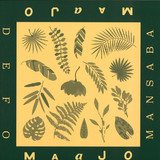
The Finnish tropical troupe Maajo is back with a two-track EP. In contrast to the Afro-Balearic sound of their 2016 debut Tropic of Tulli, the new Defo / Mansaba EP is a step in a deeper and sometimes darker direction.
Defo kicks off the EP with a driving 5/4 rhythm. Reminiscent of Mark Ernestus' Ndagga sounds, it is a tribal tune with Maajo's signature ethereal disco elements.
Trevor Deep Jr.'s version straightens out the original's unconventional time signature and focuses on a four-to-four beat and plenty of Berliner dub. The remix is a solid dancefloor tool, traversing the original like a train making its way through a dark rainforest.
The B-side is entirely covered by Mansaba, a 14-minute long journey into inwards. This studio jam, recorded largely live, is a wild mixture of polyrhythmic sequences, krautrock guitar licks, equatorial forest percussion and violin synths. The trip starts slow and soothing, sneakily picks up pace and keeps grow and growing, eventually exploding into a full-on tribal dance.
It's taken almost 3 years to get the man like Medlar back on Delusions fol- lowing his 2015 release with Dan Shake but finally it's come together. That release, along with his regular output for Wolf, Riverette and For Discos Only has helped cement Medlar's reputation as one of the leading UK un- derground house producers and led to official remixes and approved edits for legendary labels TK Disco and West End no less! The Medlar seal of quality has led to support from such influential heavyweight selectors as DJ Harvey, Gilles Peterson and DJ Koze.
Kicking things off we see Medlar in straight up dance floor mode on title track NRG, coming through with a drum-heavy workout that utilises a gnarly bassline, echoing synth stabs and rasping hats to excellent effect.
Flip over for his own Dub Version which strips things back further placing all the emphasis on the bassline and going heavy on the Space Echo for a tripped out, dubby warehouse vibe tailor made for the freaky hours.
Closing the EP we have the aptly named Tripped which drops the BPM's for a low-slung mood-setter to warm up the floors with. A simple groove lays the foundation for a rolling bassline while chiming synths weave in and out of the spacious mix.
Far Out Monster Disco Orchestra returns with Black Sun, its second full-length album of 100% original, unadulterated disco sophistication, featuring all three original members of pioneering Brazilian jazz-funk trio Azymuth, a full orchestra with arrangements split between Arthur Verocai and Azymuth's late maestro Jose Roberto Bertrami, plus members of the legendary Rio funk group Banda Black Rio.Since its critically acclaimed self-titled debut album in 2014, the FOMDO imprint has released a string of remixes by some all-time greats of dance music, including John Morales, Theo Parrish, Mark Pritchard, Marcellus Pittman, Andres, Dego, Volcov, Kirk Degiorgio and Al Kent. To huge effect in clubs and festivals around the globe, some of the more recent remixes teased the new album material, which for the first time, is presented in its original, soul-heavy incarnation, alongside instrumental versions highlighting the album's stunning arrangements and compositional brilliance.Far from a throw-back - with disco music firmly entrenched in the modern club vernacular - Black Sun is ecstatic dance music at its finest.
"The kind of melancholia I'm talking about, by contrast, consists not in giving up on desire, but in refusing to yield. It consists, that is to say, in a refusal to adjust to what current conditions call 'reality' - even if the cost of that refusal is that you feel like an outcast in your own time." (Mark Fisher, Ghosts Of My Life, Zero Books 2014, p. 24) In Ghosts of My Life: Writings on Depression, Hauntology and Lost Futures', the author Mark Fisher outlines - to put it in a big way - a resistant melancholy. This stands in contrast to leftist melancholy resignation', as well as something which Fisher does not talk about: its common masculine counterpart, habitual post-left cynicism - as in seen it all before'. Fisher calls this hauntological melancholy. Haunting, spooks, ghosts and apparitions are an almost constant presence on I Started Wearing Black', the second album by the Cologne-based artist Sonae (pronounced so-nah'). The term hauntology shares a fate with retro-futurism when it comes to inflationary overuse and abuse. It's a conceptual container that looks good and can hold a lot, indeed, too much. Furthermore, hauntology has its peak season behind it, a term on the threshold of its expiration date. Nevertheless, I would like to rehabilitate hauntology and use it properly to characterize I Started Wearing Black', because the term is rarely as compelling to describe music as is the case here. The most recent other example could be Asiatisch' by Fatma Al Qadiri, but with a completely different frame of reference. What are the ghosts of this music It rustles, crackles, ruffles, crunches, rattles, scrapes, sometimes a beat emerges from the constant noise, sometimes an obscure voice mumbles incomprehensibly, sometimes a melancholy piano figure is prevented by this noise from coming too much to the foreground. It definitely is eerie - to bring into play another term used by Fisher in the title of his latest book, The Weird and the Eerie'. In British pop-jargon, eerie first occurred to me more often when referring to particularly leftfield, spooky and... well... ghostly dub, a bass-heavy, echoing noise, from Augustus Pablo to Creation Rebel to Burial. Unlike the Wald & Wagner records by Wolfgang Voigt, Sonae is not a kind of neo-romantic veiling with a tendency for escapist nebula. It is more a noise of latency. The noise signals a latent - not necessarily acute - threat, a latent uneasiness about... yes... about what About a System Immanent Value Defect' That's the name of a track on I Started Wearing Black' where something that sounds like a French Horn (or a foghorn) battles for attention through or against the background noise. An email from Sonae: The piece 'System Immanent Value Defect' should actually be called 'I See Turkey'. I wrote it for my fellow student Elif - she is a pianist and Gezi Park activist from Istanbul. Through her I witnessed the inner conflict and agitation that political circumstances can create: her feelings of guilt when there was an attack, with her safe in Germany as a student, watching the events from afar. It was horrible. When her mother begged her not to come home because she feared for her safety, I felt a cold shiver run down my spine. I started with the piece from this mood, beginning with the piano, then the noise (modulated sinusoidal curves), which reminded me of waves and the then heatedly discussed Mediterranean sea: atmospheric, melancholy motifs. In contrast is the anger, the pressure, represented in corresponding sounds - hopefully audible! - During this time I started to think about world views as they can be found around the globe, in how far they held by societies and their political representation. I realized that I know of no political system that is actually about the people and what would do them good. It's always about positions, power, money. I thought that was a lot more frightening on a global scale than merely viewing Turkey in isolation. That's why the piece is called "System Immanent Value Defect", because our world suffers from precisely that. Everywhere, it's all about the wrong things.' Between the wrong things there are happy moments. In the title track, after 184 seconds of rattling and hissing, a beat is unleashed, like an arrow released from a spanned bow, a beatific relief, if there is such a thing. White Trash Rouge Noir' first meanders along spookily, then after 144 seconds it transforms itself into a distant cousin of Einstu¨rzende Neubauten's Yu¨ Gung', but there is no Big Male Ego to be fed here, and the black in the album title is a completely different type of black from that of the Neubauten. Furthermore, I Started Wearing Black' was finished long before the black dresses were worn at the Golden Globes as a sign of protest against sexual violence. Sonae writes that she herself started wearing black some time ago. Her reasons are so-called personal ones: ... resulting from an individual situation (lovesickness), I started to wear black (gaining weight and feeling ugly).' The political dimension of gaining weight, feeling ugly and therefore dressing in black in I Started Wearing Black' lurks within the noise and never becomes explicit and only rarely manifest - or a manifesto. Sonae writes about the track We Are Here': A piece for minorities... in this case, considering the current pop-feminist discourse, explicitly for women. Female artists have long been saying loud and clear that 'we are here' and 'electronic music is not a boys club!' But this pop-feminist moment should only be seen as one part of the dedication of the piece. It is for minorities, for the oppressed, who didn't belong enough.'
A wonderful companion piece to the totemic Fed, we proudly announce the first ever vinyl edition of Korp Sole Roller by Plush. Liam Hayes' magical fourth full-length LP was previously only available on a rare Japanese import CD. Produced and arranged in 2010 by Pat Sansone (Wilco / The Autumn Defense), it finally arrives in a limited edition of 500 copies.
The common impression of Plush is that of an underground rock myth, lent greater poignancy by the lofty vision that galvanised his music. Yet while he has long been a cult concern, clued-up celebrity fans periodically declare their profound love for Hayes' maverick genius. Indeed, after Jason Schwartzman introduced Plush to Roman Coppola, several stunning songs from Korp Sole Roller soundtracked Coppola's A Glimpse Inside The Mind Of Charles Swan III.
As ever with Plush, it's easy to imagine you are listening to a privately pressed rarity from the mid-late 1970s. Or one of the criminally neglected jewels from the discography of Jimmy Webb or Burt Bacharach. The sound on Korp Sole Roller does differ crucially from Fed, however. It is more streamlined. These 10 gorgeously seductive creations careen around ornate string and wind instrument arrangements and producer Sansone's deft work is likely the reason for this. Yet, brilliantly, it still possesses that sun-warped take on classic pop-rock, that Plush specialises in. That peculiar "down-lifting" phenomenon of performing upbeat songs in an enigmatically mournful way.
Upon completion, Korp Sole Roller barely received anything resembling a release. Press coverage was zero because none of the major magazines or blogs knew of its existence. His management at the time essentially buried the album in order to concentrate on other releases. Looking back on this decision, it really made little sense. Everyone involved in its creation of these near-perfect gems is extremely proud of it. Liam himself has described it as the favourite of his albums. Pat's delicate work is astounding. Remastered especially for this special limited edition, it is presented in a sumptuous gatefold jacket with high-end art photography throughout, including full colour inner sleeves. Finally, here's your chance to own a slice of kaleidoscopic pop history.
* Sixteen carefully selected tracks including their most renowned work
* Covering Funkadelic at the height of their career (1970-1976)
* Double LP set that comes with OBI-strip, Limited to 1000 copies
Tidal Waves Music proudly presents: FUNKADELIC Finest
Compilations are tricky and hard to get right ... Finest is that rare one that knocks it out of the park. This release focuses on George Clinton and crew at the height of their career & on their most renowned work.
Comprised out of sixteen carefully selected tracks and covering a six-year period (1970-1976) Finest may be the best-assembled Funkadelic collection from this period yet, as both renowned band standards share space with several oft-overlooked tracks.
The early tracks "I Got a Thing" and "I Wanna Know if It's Good to You" show the band-members still honing their rich 'n' funky sound, before they hit their stride with selections from the classic 'Maggot Brain' album. As a result, you get a healthy sampling of some of the best funk the '70s had to offer, including "Hit It and Quit It," "You and Your Folks, Me and My Folks," "Loose Booty," "Cosmic Slop," "Red Hot Mama," and "Get Off Your Ass and Jam."
Finest is an exceptional sampler for those discovering the wild and wacky universe of Funkadelic. Out of print since 1997 and transferred from the original analogue master tapes, now finally back available as a deluxe Double-LP set with some of the craziest psychedelic crumb-style artwork you'll ever see.
For over 4 years, David Coccagna aka Chaperone has been a constant part of Great Circles, as musician, art director, and muse. With Snapback Balaclava he once again fully embodies all of those roles, delivering three inspiring tracks, selecting his remixers with specific attention to their musical histories, and designing his cover art.
Across the A-side, Chaperone scrapes away at the grit - personal grit, the grit of anxiety, and Philly grit. These are meditations on loops, and loops on meditations. Each one appears on the surface to be a brief quote, but time dilation takes over, and minutes later we discover that Chaperone has welcomed us into and back out of his own healing moment.
Like Chaperone's P O N D release (GRCR-009), the B-side of Snapback Balaclava is a Great Circles extended family affair with a trio of diverse remixes that expose and exploit fragments of the chaos Chaperone so carefully contained.
Hitoshi Kojima (Thrive) reinterprets Pulse Feels Swells Beating with relentless syncopated rhythms and synth lines that hang like massive string drones. M//R lays down a signature percussion ensemble palette, zeroes in on otherwise peripheral elements of Grit Neglect, and then deftly navigates sea change with both. Matt Korvette and Sean McGuinness of Philly punk band Pissed Jeans open up the pit and finish the story, taking Femur Baseball Bat to its literal and brutal potential with monstrous vocals and kicks.
For our third Leroy Hutson 45 Acid Jazz have commissioned an exclusive edit by London DJ stars the Disco Freaks.
This see's Mr. Hutson's seminal classic Lucky Fellow make it's first appearance on 7 inch vinyl. Backed by his dance-floor winner 'Don's it make you feel good'.
This release forms part of Acid Jazz's ongoing reissue campaign of the recordings Mr. Hutson made for Curtom in the 1980s. All these releases are fully approved my Mr. Hutson, we are committed to honouring his legacy.
The cornerstone track from Chloe´'s new album, an adventurously dark landscape dotted by Montreal rock band Suuns' singer Ben Shemie's vocals, Recall deserved this long-awaited quartet of astounding remixes, which serve as extensions of her latest full-length Endless Revisions' second single, released last October on Lumie`re Noire, the label founded by Chloe´.Moire´, Matthew Dear's latest signing to his Ghostly International label (which released the London artist's debut album in early 2017), retained a smattering of Ben's syllables, setting them to a captivating retro- futuristic remix that straddles two worlds, along the milestones of a restrained beat in a mesmerizingly ethereal and ghostly road trip that could last forever.German Crosstown Rebels signee Jonathan Kaspar's version is a more banging techno version, rounding out the EP's wide array of moods and genres. Over a formidably progressive build-up, the mood remains dark thanks to Ben's stretched-out vocals, and Recall's original universe is made more dynamic with a sped-up tempo, added percussions, and a concluding harmonisation finale that brings it all into the light. Douglas Greed, previously remixed Chloe´'s Driven (released on BPitch Control back in 2015,) similarly chops up the vocals, but takes them down a different road, reassembling the original's elements to create a different track, resulting in a fascinating free-form re-reading, an adroit upcycling, a long detour through the German producer's favoured poetic techno backroads - possibly inspired by the surroundings of Jena, Greed (a.k.a. Mario Wilms') hometown, and homebase of the Freude Am Tanzen label, the serious stable of geniuses directed by the incomparable Robag Wruhme.In a more motoric register, Autarkic's re-imagines Recall via a different narrative lens, re-populating and grounding it all at once. The Israeli Red Axes accomplice, who released an excellent debut album (I Love You Go Away) on Disco Halal last April, has a knack for propelling fanatics of rock urgency straight to the dancefloor. A gang of machines amplifies Shemie's voice, highlighting its minutiae of suffering and pleasure, leading the listener into dawn.
To those familiar with the output of Cologne-based imprint Firm from back in the early '00s, the name of Geiger, alias Nass, shall undoubtedly ring a bell. Herald of an hedonistic melange of funk- soaked electro pop and guitar-riddled synth music, sitting somewhere close to acts like Ween and Junior Boys, Alexander Geiger is about to break a eight-year hiatus with the drop of his debut album under the newly-founded moniker of Fahrland. A release that both encompasses a healthy dose of the discoid tropes from the Firm era but also aspires to split with a segment of it, geared towards exploring further undisclosed fringes of his shape-shifting sound universe, 'Mixtape Vol.1' is the fruit of a decisive move from the sleepless Berlin to the peaceful countryside landscapes of Fahrland - a lushly forested area near Potsdam which you'll have understood played an essential role in Geiger's longed-for return. Versatile and inclusive, the album sweeps a polyamorous gamut of styles and tempos like an answer to the virtual prisons that inhibit us on a daily basis, straying away from normative standards and classic full-length calibration as a result. Instead weaving a singular narrative course, clear from all type of shackles and chains, Geiger navigates on sight, reflecting on notions as wide and universal as freedom, friendship and love across a multiversal patchwork of sounds and feels. From the languid sexy vibe of 'Beggin', 'Plastic People' and 'Yesterday' - all three featuring the sensual whispers of multi-talented vocalist and artist MZ Sunday Luv, through the heavily vocodized, chip- implemented groove of I AM ROBOT - reminiscent of Telex and Space Art, balearic jazz & rap shine of 'Sky So High', smokey lounge ambience of 'L AND H' onto broader ambient-friendly spans such as 'Suspension', 'Windshield Gently Wipers' and the smooth, sun-basking closer 'Get Down', each track holds a fragile cocooned world at its heart.
Bei denjenigen, die mit dem Output vom Kölner Label Firm aus den frühen Nullerjahren vertraut sind, sollte der Name Geiger alias Nass zweifellos die Glocken klingeln lassen. Als der Herold einer hedonistischen Melange aus Funk durchdrungenem Elektro-Pop und Gitarren durchzogener Synthie-Musik irgendwo zwischen Ween und den Junior Boys, bricht Alexander Geiger seine achtjährige Schaffenspause mit der Veröffentlichung seines Debüt-Albums unter neuen Pseudonym: Fahrland.
Ein Release, das sowohl die diskoiden Tropen der Firm-Ära affirmiert, als auch danach strebt ein bestimmtes Segment davon zu spalten. Aufgenommen um ungeahnte Interferenzen seines gestaltverändernden Sounduniversums zu entdecken, ist 'Mixtape Vol.1' das Resultat eines bewussten Umzugs aus dem schlaflosen Berlin in die friedliche Landschaft von Fahrland - einem üppigen Waldgebiet in der Nähe von Potsdam, das eine entscheidende Rolle in Geigers ersehnter Rückkehr zur Musik gespielt hat.
Vielfältig und offen erforscht das Album polyamorös eine Skala von Stilen und Tempi als Antwort auf die virtuellen Ketten, die uns tagtäglich hemmen. Bewusst vergessen werden dabei normative Standards und klassische Langspieler-Kategorien. Geiger webt stattdessen ein einzigartiges Narrativ, frei von jeglichen Fesseln und Ketten und führt uns auf seinem multiversalen Flickenteppich aus Sounds und Gefühle mit Sichtkontakt an so allgemeingültige und universelle Begriffe wie Freiheit, Freundschaft und Liebe.
Vom nochalanten Vibe von 'Beggin', 'Plastic People' und'Yesterday' (alle drei mit der sinnlich wispernden und vielseitigen Sängerin MZ Sunday Luv), bis zu dem durch den Vocoder gejagten und computergenerierten Groove von I AM ROBOT; Reminiszenzen an Telex und Space Art, balearischen Jazz und Rap erklingen in 'Sky So High', rauchiges Loungeambiente auf 'L AND H' bis zu völliger Ambient-Anschlussfähigkeit in 'Suspension', 'Windshield Gently Wipers' und dem sanften, Sonne anbetenden Schlusslied 'Get Down' - jeder Track hält eine Welt für sich in seinem Herzen.
To those familiar with the output of Cologne-based imprint Firm from back in the early '00s, the name of Geiger, alias Nass, shall undoubtedly ring a bell. Herald of an hedonistic melange of funk- soaked electro pop and guitar-riddled synth music, sitting somewhere close to acts like Ween and Junior Boys, Alexander Geiger is about to break a eight-year hiatus with the drop of his debut album under the newly-founded moniker of Fahrland. A release that both encompasses a healthy dose of the discoid tropes from the Firm era but also aspires to split with a segment of it, geared towards exploring further undisclosed fringes of his shape-shifting sound universe, 'Mixtape Vol.1' is the fruit of a decisive move from the sleepless Berlin to the peaceful countryside landscapes of Fahrland - a lushly forested area near Potsdam which you'll have understood played an essential role in Geiger's longed-for return. Versatile and inclusive, the album sweeps a polyamorous gamut of styles and tempos like an answer to the virtual prisons that inhibit us on a daily basis, straying away from normative standards and classic full-length calibration as a result. Instead weaving a singular narrative course, clear from all type of shackles and chains, Geiger navigates on sight, reflecting on notions as wide and universal as freedom, friendship and love across a multiversal patchwork of sounds and feels. From the languid sexy vibe of 'Beggin', 'Plastic People' and 'Yesterday' - all three featuring the sensual whispers of multi-talented vocalist and artist MZ Sunday Luv, through the heavily vocodized, chip- implemented groove of I AM ROBOT - reminiscent of Telex and Space Art, balearic jazz & rap shine of 'Sky So High', smokey lounge ambience of 'L AND H' onto broader ambient-friendly spans such as 'Suspension', 'Windshield Gently Wipers' and the smooth, sun-basking closer 'Get Down', each track holds a fragile cocooned world at its heart.
Bei denjenigen, die mit dem Output vom Kölner Label Firm aus den frühen Nullerjahren vertraut sind, sollte der Name Geiger alias Nass zweifellos die Glocken klingeln lassen. Als der Herold einer hedonistischen Melange aus Funk durchdrungenem Elektro-Pop und Gitarren durchzogener Synthie-Musik irgendwo zwischen Ween und den Junior Boys, bricht Alexander Geiger seine achtjährige Schaffenspause mit der Veröffentlichung seines Debüt-Albums unter neuen Pseudonym: Fahrland.
Ein Release, das sowohl die diskoiden Tropen der Firm-Ära affirmiert, als auch danach strebt ein bestimmtes Segment davon zu spalten. Aufgenommen um ungeahnte Interferenzen seines gestaltverändernden Sounduniversums zu entdecken, ist 'Mixtape Vol.1' das Resultat eines bewussten Umzugs aus dem schlaflosen Berlin in die friedliche Landschaft von Fahrland - einem üppigen Waldgebiet in der Nähe von Potsdam, das eine entscheidende Rolle in Geigers ersehnter Rückkehr zur Musik gespielt hat.
Vielfältig und offen erforscht das Album polyamorös eine Skala von Stilen und Tempi als Antwort auf die virtuellen Ketten, die uns tagtäglich hemmen. Bewusst vergessen werden dabei normative Standards und klassische Langspieler-Kategorien. Geiger webt stattdessen ein einzigartiges Narrativ, frei von jeglichen Fesseln und Ketten und führt uns auf seinem multiversalen Flickenteppich aus Sounds und Gefühle mit Sichtkontakt an so allgemeingültige und universelle Begriffe wie Freiheit, Freundschaft und Liebe.
Vom nochalanten Vibe von 'Beggin', 'Plastic People' und'Yesterday' (alle drei mit der sinnlich wispernden und vielseitigen Sängerin MZ Sunday Luv), bis zu dem durch den Vocoder gejagten und computergenerierten Groove von I AM ROBOT; Reminiszenzen an Telex und Space Art, balearischen Jazz und Rap erklingen in 'Sky So High', rauchiges Loungeambiente auf 'L AND H' bis zu völliger Ambient-Anschlussfähigkeit in 'Suspension', 'Windshield Gently Wipers' und dem sanften, Sonne anbetenden Schlusslied 'Get Down' - jeder Track hält eine Welt für sich in seinem Herzen.
Dublin based musician Lerosa has built an impressive discography throughout the years. With his first efforts dating back to 2005 the producer who has a broad palette of sounds has already been around for over 10 years with releases for a vary of respected labels.
For the first release on SAFTX , Lerosa hands out a taster of the labels new series ambitions. Vivrant house music is most definitely the back bone of Playa De La Guancha as a whole. The opening is packed with a strapping rhythm section and a vocal cut that is reminiscent of the Trax Records classic House Nation . Julius Steinhoff (of Smallpeople fame) gives Soul Tracing a modern sounding treatment that completely shifts the feel of the original and turns it into an adventurous piece of contemporary electronics.
Lerosa opens up the B side with Bruised which is a work out of alternating basslines and brutal machine claps that give the piece a club oriented feel. Acidic sounds cut through the mix with determination and wobbly synth sounds serve as a pleasant sauce for this intergalactic sounding work. Marauder is a hefty bit at a slower tempo than it s predecessors. A loose rhythm section is causing for the listener the focus on the immense LFO threated sounds that float on to and the low down bassline that supports the overall atmosphere in a grounded manner. Playa De La Guancha will be available through all specialized retailers starting early April.
Includes 12' Vinyl and Deluxe CD album, 30 page hard back book
Now that I've been to Nashville,' Kylie Minogue says with audible affection, I understand. It's like some sort of musical ley-line...'
Golden, Kylie's fourteenth studio album, is the result of an intensive working trip to the home of Country music, a city whose influence lingered on long after the pop legend and her team returned to London to finish the record: We definitely brought a bit of Nashville back with us,' she states. The album is a vibrant hybrid, blending Kylie's familiar pop-dance sound with an unmistakeable Tennessee twang. It was Jamie Nelson, Kylie's long-serving A&R man, who first came up with the concept of incorporating a Country element' into Kylie's tried-and-trusted style. That idea sat there for a little while, with Minogue and her team initially unsure about how to bring it to life. Then, when Grammy-winning songwriter Amy Wadge's publisher suggested Kylie should come over to collaborate in Nashville, a city Kylie had previously never visited, something clicked. You know when you're so excited about something,' she recalls, that you repeat it an octave higher and double the decibels I was like that. 'Nashville! Yes! Of course I would!'. I hoped it would help the album to reveal itself. I thought 'If I don't get it in Nashville, I'm not going to get it anywhere.''
Kylie's Nashville trip involved working alongside two key writers, both with homes in the city. One was British-born songwriter Steve McEwan (whose credits include huge Country hits for Keith Urban, Kenny Chesney and Carrie Underwood), and the other was the aforementioned Amy Wadge, another Brit (best known for her mega-selling work with Ed Sheeran). It was then a truly international project: Golden was mainly created with African-German producer Sky Adams and a list of contributors including Jesse Frasure, Eg White, Jon Green, Biff Stannard, Samuel Dixon, Danny Shah and Lindsay Rimes, and there's a duet with English singer Jack Savoretti.
However, the album's agenda-setting lead single Dancing was, significantly, first demoed with Nathan Chapman, the man who guided Taylor Swift's transition from Country starlet to Pop megastar. If anyone knows how to mix those two genres, Chapman does. Nathan was the only actual Nashvillean I worked with. He's got a huge studio in his house, which is probably due to his success with Taylor... there's plenty of platinum discs of her, and others on his walls.' There's something of the spirit of Peggy Lee's Is That All There Is, of Dylan Thomas' Do Not Go Gentle Into That Good Night, even of Liza Minnelli's Cabaret about Dancing, a song which not only opens the album but sets out its stall, providing a microcosm of what is to come. You've got the lyrical edge, that Country feel, mixed with some sampling of the voice and electronic elements, so it does what it says on the label. And I love that it's called 'Dancing', it's immediately accessible and seemingly so obvious, but there's depth within the song.'
The experience of simply being in Nashville was an overwhelming one, before Kylie had even arrived. Once I knew I was going to Nashville, people talked about the place with such enthusiasm. They said without doubt I would love it and, I would come back with songs. They were sending lists of restaurants, coffee shops and bars. It really was a beautiful and genuine response and it felt like I was about to have a life changing experience and in a way, I did.' The reality came as something of a surprise, when she found a far more modern metropolis than the vintage one she'd envisaged. I thought it would be like New Orleans: little houses and bars, with music spilling out onto the street. It reminded me more of Melbourne: apartment blocks going up everywhere! The main strip, Broadway, where the honky tonk bars are, that's where the street was filled with music and it was just amazing.' Mainly, Minogue remembers the heat and humidity. It was 100 degrees. It was like it was raining with no rain.' She also relished the chance to wander around unrecognised, visit a few venerable music bars and soak in the atmosphere. I didn't get to the Grand Ole Opry or the music museums but I managed to go to a couple of the institutions there like The Bluebird Cafe and The Listening Room, and just by being there, through some kind of osmosis, you get this rejuvenated respect for The Song, and the writing of The Song. There's no hoo-hah around it. There's a singer-songwriter there, talking about the song and singing the song, to an audience who are there to listen. Although, I have to confess I was guilty of starting to clap too soon during a long pause at the end of one of the songs. The guy made a bit of a joke out of it and got a laugh from it, but I thought 'Of all people in the audience, no...''
It's probably no coincidence, therefore, that every track on Golden is a Kylie co-write, making it arguably her most personal album to date. The end of 2016 was not a good time for me,' she says, referring to well-documented personal upheavals, so when I started working on the album in 2017, it was, in many ways, a great escape. Making this album was a kind of saviour. I'd been through some turmoil and was quite fragile when I started work on it, but being able to express myself in the studio made quick work of regaining my sense of self. Writing about various aspects of my life, the highs and lows, with a real sense of knowing and of truth. And irony. And joy!'
The songwriting process allowed Kylie to get a few things out of her system. Initially, she admits, it was cathartic, but it also wasn't very good. I think I was writing too literally. But I reached a point where I was writing about the bigger-picture, and that was a breakthrough. It made way for songs like Stop Me From Falling and One Last Kiss. It also meant I had enough distance to write an autobiographical song, like A Lifetime To Repair, with a certain amount of humour. The countdown in that song: 'Six-five-four-three, too many times...'. I don't know if that will be a single, but I can just imagine a girl with framed pictures of past boyfriends, and kind of going 'Oh god, when am I going to get this right'' When she listens back to Golden, Kylie can vividly hear the Nashville in it. It is, she'll agree, probably the first time that a Kylie album has sounded like the place it was made. You wouldn't normally relate my songs to the cities. Can't Get You Out Of My Head sounds more like Outer Space than London. But Shelby '68, for example, was written in London but it was done with Nashville in mind. It's about my Dad's car, and my brother recorded Dad driving it! I don't think I'd have written a number of the songs, including Shelby '68 and Radio On without having had that Nashville experience.'
The latter, she says, is about music being the one to save you.' Throwing herself into the making of the record, she says, crystallised that idea. If there's one love that will always be there for you, it's music. Well, it is for me, anyway.' That song, in particular, carries nostalgic echoes of the golden age of Country, as heard through Medium Wave transistors and tinny home stereos in the distant past. Like any child of the Seventies, Kylie had a basic grounding in Country music, mainly absorbed from older family members. My Step-Grandfather was born in Kentucky and though he lived most of his adult life in Australia, he never stopped listening to his beloved Country artists.' If there's any classic Country singer whose imprint can be heard on Golden, it's Dolly Parton.
Kylie saw Dolly live for the first time at the end of 2016, at the Hollywood Bowl. It was like seeing the light,' she beams. It was incredible. Everyone, whether they know it or not, is a Dolly Parton fan. When I was in Nashville, I did pick up a T-shirt that said 'What Would Dolly Do' Maybe that should be my mantra.' And, whether consciously or otherwise, there's a timbre and trill to Kylie's vocals on Radio On that is distinctly Parton-esque. My delivery is quite different on this album,' she says. A lot of things are 'sung' less. The first time I did that was with Where The Wild Roses Grow. On the day I met Nick Cave, when I recorded my vocals, he said 'Just sing it less. Talk it through, tell the story.' This album wasn't quite to that extreme, but a lot of the songs were done in fewer takes, to just capture the moment and keep imperfections that add to the song. I remember on my last album, a lot of producers were trying to take out literally every vibrato they heard. And that's not natural to my voice. I mean, I can make myself sound like a robot, but it's nice to sound like a human!' Working within the Country genre also gave Kylie permission to write in the Nashville vernacular. Because we were going there, I wasn't afraid to have lines like 'When he's fallen off the wagon we'd still dance to our favourite slow song', 'Ten sheets to the wind, I was all confused', 'I'll take the ride if it's your rodeo'. The challenge of bringing a Country element to the album made the process feel very fresh to me, kind of like starting over. I started to look at writing a different way, singing a different way.'
If ever Kylie lost confidence in the Country-Pop concept, and found herself pondering This is great, but back in the real world - my real world - how will this work', Jamie Nelson was there to badger her into sticking to the path. We found a way to make it a hybrid with what we'll call my 'usual' sound. It had to stay 'pop' enough to stay authentic to me, but country enough to be a new sound for this album. The closer we zoomed in, and the more we honed it, I knew Jamie was right. We sacrificed good songs that weren't right for this album, because we wanted it to be as cohesive as possible. The songs that were hitting the mark were these ones, so we decided to be strong, and that's how we wrapped up the album. What he said, that stuck with me, was that 'I'd hate to get to the end of this and really wish we'd gone for it.'' Having worked with Kylie for so long, Nelson was able to put this latest shift of direction into perspective. He said 'You've traditionally done it throughout your career. You had your PWL time, then you did a complete turn when you went to deConstruction, then another complete turn with Spinning Around, and R&B dance-pop, and then another turn with Can't Get You Out Of My Head, icy synth-pop, and this is another one.' He was right. It felt like the right time to have a change sonically. New label, new stories to tell, and a new decade almost upon me.'
Kylie Minogue will, it's scarcely believable, turn 50 this year. This looming milestone is partly behind the album's title, and title track. I had this line that I wanted to use: 'We're not young, we're not old, we're golden' because I'm asked so often about being my age in this industry. This year, I'll be 50. And I get it, I get the interest, but I don't know how to answer it. And that line, for my personal satisfaction, says it as succinctly as possible. We can't be anyone else, we can't be younger or older than we are, we can only be ourselves. We're golden. And the album title, Golden, reflects all of this. I liked the idea of everyone being golden, shining in their own way. The sun shines in daylight, the moon shines in darkness. Wherever we are in life, we are still golden.' One of the album's shiniest moments is Raining Glitter, an exuberant banger which ventures closest to Kylie's traditional dance-pop comfort zone. Eg White, who is one of the producers and writers and a great character, was talking about disco one day. I said 'I love disco, but you know the brief.' We needed to be going down the Country lane, so to speak. But we managed to bring them both together. When I wrote it, I was thinking about the Jacksons video for Can You Feel It where they're sprinkling glitter over everyone. And I think there's a Donna Summer record that's got that feel to it. I think that's my job: I basically leave a trail of glitter after every show I do anyway.'
Kylie is looking forward to the challenge of incorporating the Golden material into her live shows. Mixing these songs in with my existing catalogue is going to be fun. And it could be fun to do some of those songs with just a guitar. It'll make my acoustic set interesting...'Her incredibly loyal fans - to whom one Golden song, Sincerely Yours, is intended as a love letter' - will, she believes, have no problem with her latest stylistic shift. My audience have been with me on the journey, so I shouldn't be afraid that they won't come with me on this part. I've had fun with it, and I'm sure they will too.'
The time spent making Golden has, Kylie says, been a time of creative and personal renewal. I've met some amazing people, truly inspiring writers and musicians. My passion for music has never gone away, but it's got bigger and stronger.' And if there's an overriding theme to the record, it is one of acceptance. We're all human and it's OK to make mistakes, get it wrong, to want to run, to want to belong, to love, to dream. To be ourselves.'
I was able to both lose and find myself whilst making this album.'
With its latest reissue, Majik's Back Into Your Heart - Melodies International dug deep into the back catalogue of Hi Records, legendary soul label from Memphis found ed in the 1950s.
Originally signed as a recording artist, Willie Mitchell took the reigns of the label and guided it through its most successful period in the 1970s, notably producing a string of studio recordings for Al Green, Syl Johnson and O.V. right among other eminent soul musicians of the time. Whilst the Hi Records catalogue shifted hands multiple times since the late 1970s, it was mainly exploited as a means to reissue recordings from Al Green and other high profile Hi Records artists (notably by Motown) while the label's more obscure back catalogue remained largely untouched. Years later, a few lesser known one offs from the label's vaults holding the distinctive raw Hi Records production sound and a circling hypnotic quality that makes them potential successful records for modern day dance floors have been getting a second life with record collectors, DJs and on dance floors worldwide. As such, recordings such as Africano's Open Your Hearts have become You're A Melody classics for some years now and Melodies International are glad to bring you one more reissue which in our hearts hold at least the same level of quality and potential as the former. With Back Into Your Heart, Majik pull through with a strong up-tempo disco tune that embodies Mitchell's sound as well as a level of modernity that might explain why it has remained largely unnoticed up until now.
Licensed and re-mastered, MEL010 comes forth in its original 7' format with a folded 14'x14' poster designed by Mafalda.
There are some records that manage to sound both of a time and utterly timeless and Bon Voyage Organisation's Jungle Quelle Jungle (a nod to Supertramp's Crisis What Crisis) is one of those albums. Its silken-smooth production, irresistible grooves, funk-tinged guitars, lush soundscapes and general glowing presence could easily lead one to believe that have dug up a lost disco gem from the 1970s. However, behind the disco-pop gleam lies eerie dystopian sci-fi ruminations of a futuristic bent and tones that can often feel as French as they do Asian or African.
This sort of cross-continental exploration is an expansion on BVO's previous two EPs, the man behind the Organisation, Adrien Durand, says. 'I tried to continue the musical expedition between dystopian Science-Fiction Haunted Africa - plus Haitian Vaudou on 'Soleil Dieu' - and futuristic Asia. Addressing, in a double entendre manner, some of the political issues that I am sensitive to.' In fact the jungle in question in the album's title is a metaphorical one and one that creates a vast series of environments for Durand to explore such subjects as world trade, utopian ideals and themes of idols, as well as of time and communication. However, one will need to speak French to decipher such explorations, as well as shake off the natural impulse to move with every glorious beat on its 13 tracks, of which are moved along by Maud Nadal and Agathe Bonitzer's golden vocals.
Durand is a full-time producer based in Paris, working with the likes of Amadou & Mariam, so it makes sense that this record would absolutely sparkle in this department. Durand feeds off the variety of musicians coming and going during recording sessions as well as the rotating members and numbers of people involved with the band but fundamentally he writes all songs on piano first before bringing them to record live. 'We recorded a rhythm section of five - drums, percussion, guitar and myself on bass/synth bass and keyboards - at La Frette which is a studio located in a mansion outside of Paris and fitted with a beautiful 1973 NEVE desk. We only used analogue gear, by taste really, and found it a pretty reliable way of doing things. This simply consists of putting good players together in a room and waiting for the right take to happen.' Two four-day sessions and a 'cooling off' period (to let the recordings settle) soon followed before Durand picked the material back up to give it a final polish.
The resulting album is one loaded with intricacies and idiosyncrasies, something that Durand puts down to his own unique approach. 'I don't consider myself much of a songwriter but I love arranging rhythm sections and I'm pretty proud of the ones on this record.' This applies when it comes to working with such musicians as Inor Sotolongo Zapata, who with Durand used traditional Cuban percussive instruments and explored Haitian rhythms. When Durand expands on some of the ideas and influences that were funnelled into the record, you begin to get a sense of the vastness of the sounds that fill his world, from Trevor Horn's production work on ABC's Lexicon of Love, to the literary work of JG Ballard to the visual flair of the original Blade Runner and even the Tuareg sounds of Tinariwen, due to the fact that his studio neighbours their manager's and he would hear their rhythms bleeding through the walls. You therefore end up with an album that offers tracks such as 'GOMA' that fuses Chinese and African rhythms as well as 'SI D'Adventure' a piece of pop music that is dazzlingly hook-laden.
As a result of this cooking pot of sounds, influences, thoughts and creations, Durand has more of a gumbo approach to making this music than a set-out scientific formula. 'There is no definite recipe for me to like the production of a record,' he says. 'Of course it really sticks out that my work is really influenced by the 1978-1983 period, the golden age and last stand of analogue studios and session musicians.' Whilst Durand adores the traditional and conventional music, he really views this as something bigger and wider. 'I have a taste for the otherworldly vibe from records coming from less sought-after musical scenes, particularly Poland, Haiti, Ethiopia, Somalia, Congo and early Cantonese pop. Languages and the rapport of the people involved in the making of those records really inspires me. I particularly hate the use of the word 'World Music' as a potpourri for everything that doesn't sound quite western enough.'
Its not often you stumble upon a 9 piece soul band, who were so close to signing a deal with mca's new subsidiary Source records. But group politics and other factors got in the way, and the band shelved what music they had recorded. No reels surfaced but fortunately a member had kept some of those 1978 recordings. BETWEEN THE TWO seemed to fuse great soul compositions without the durge of the disco era circa 1978. . With well thought out lyrics, backed by keys, trumpets and a driving bassline we really are pleased to add the group to the Super Disco Edit roster
Ghanaian music legend Ebo Taylor returns with perhaps his finest album to date.
But don't take our word for it. That's coming straight from the man himself.
And he should know after more than 60 years in the business.
The 81-year-old composer, arranger, guitarist and vocalist has been a key figure in the evolving afro-funk sound since the Seventies, working with the likes of Apagya Show Band, CK Mann and Pat Thomas.
Famously, he rubbed shoulders with Fela Kuti while studying in London in the Sixties, before going on to lead the Ghana Black Star Band (featuring Osei and Sol Amarfio from Osibisa) and later the Uhuru Dance Band back in Ghana. Like Fela, he is always pushing forward, constantly reconceptualising his sound and
attuning it for a new generation. Part teacher, part messenger.
Listen to Yen Ara and you will not only hear the high-energy afrobeat, sweet highlife, jazz and konkoma influences that he's famous for. There is also a disco pulse and hard-hitting percussive edge to the tracks, which were produced by Justin Adams (Tinariwen, Rachid Taha, Robert Plant) and recorded in the live room at Electric Monkey Studio in Amsterdam. An Ebo Taylor for these times, you might say.
His group, the Saltpond City Band, are all handpicked local musicians featuring two of his sons. An appropriate line-up on an album whose titles means we'.
And they are on fine form, ripping through tracks such as 'Krumandey' (a surefire party starter) and 'Mind Your Own Business' (a simple message delivered over a frenetic drum rhythm).
Elsewhere, 'Aboa Kyirbin' will please fans of tough afrobeat grooves, while Taylor could well be inciting a riot at his next gig with 'Mumudey Mumudey', We hear him calling for 'preshaaah' and leading us into a call and response as the trumpet takes us higher. And the lift of those horns on 'Ankoma'm' evokes some
of his finest work such as 'Love & Death' and 'Come Along', the latter recorded with the Pelikans and featured on a recent Mr Bongo reissue.
A mixture of live recording and studio post-production, 'On Jupiter' sounds unique to any other album Sun Ra made. The arkestra reflects a disco pulse right back on itself, and delivers one of the most cohesive albums of their career. The title track is a masterpiece of gentle atonal harmony, while 'UFO' pushes along at a cracking disco-ish pace with fierce brass and spacey dub effects. This a timeless Ra classic.
Emotional Rescue delves deep in to the past with the release of the first ever recordings by UK post-industrial, ambient pioneers O Yuki Conjugate (OYC). Recorded in Nottingham in 1983, the EP's four tracks showcase OYC's early sound: a beat-driven, lo-fi that places them alongside the early British electronic pioneers.
OYC, celebrating their 35th anniversary this year, are known for their "dirty ambient" sound - but it wasn't always thus. In their earliest incarnation OYC explored a more industrial approach characterised by tortured analogue drum machines, one-finger synth lines, played bass, tape loops and even flute. This naive sound template lasted until their debut album 'Scene in Mirage' (1984) before being jettisoned in favour of more ambient explorations.The story behind these recordings is one of brotherly love between bands. OYC swapped time in their rehearsal space for a day's use of a four-track cassette portastudio owned by their associates, Metamorphosis. Three of the tracks included were recorded on May 1st 1983 at The End Room (literally a studio at the back of one of OYC's parents houses) with the remaining track (live favourite "The Clattering Song") being produced a couple of months later.
To date OYC have remained largely unknown in the UK due to their wilfully obscure approach. They have released a series of very well regarded studio albums and innumerable spin-off and side projects that has recently seen a revival of interest in their early years, including appearances on Cherry Red's compilation of formative UK electronic scene 'Close to the Noise Floor' and Optimo's compilation of Fourth World-style music 'Miracle Steps'.
Accepting their fate as musical outsiders, OYC continue to make music with little reference to the wider world. This EP makes a fine addition to that body of work.
Returning to Giallo after the as-played-by-Helena-Hauff et al split 'Black Gloves II', Bogdan Dražic is back with 'Four Trax On Black Wax'. Three new blisteringly blown out grained to fuck voodoo bangers plus a remix from the mighty Dmitry Distant. Haunted organs, lost jungle tribes, hot cannibal nights... all documented under piles of dirt and ancient spells. Not to be missed!