Members went on to Sinkane, and Pompeii, This Morning. Originally recorded in the
summer of 2005 out west, while on tour, by Vince Tennant. The recording had been
shelved and unreleased. In 2023, Expert Work Records reached out to Sweetheart and
got the recording re-mastered. It will be released on limited vinyl and digital.
This is also a companion piece/ record with EW018 (Sweetheart- The Process of
Making Us Well). We highly suggest getting both records.
Sweetheart's "The Unbearable Tightness Of Being" is one of those records you should
put on your radar as soon as possible. A rediscovered artifact from 2005, the album is
a sonic panorama that intricately incorporates post- hardcore, noise rock, punk,
screamo, and indie elements into an innovative and complex sonic landscape. The
guitars, wielded with finesse, serve as the driving force behind Sweetheart's sonic
assault. From the opening chords to the closing refrains, they deliver a relentless
barrage of riffs that defy predictability. The interplay between the two guitarists
manifests as a dynamic dialogue - a musical conversation that seamlessly transitions
from chaotic dissonance to moments of clarity. Catchy, intricate, and hypnotic chord
progressions unfold, evoking the spirit of At The Drive-In and Fugazi while carving a
distinct sonic identity.
However, it's not merely about sonic assault; Sweetheart infuses the album with a
nuanced approach to melody. Amidst the aggressive riffage, this material treats
listeners with moments of harmonic beauty and unexpected melodic twists. Themes,
leads, melodies, and harmonies intermingle, creating a rich auditory experience that
transcends the boundaries of conventional post-hardcore.
The production quality of this long- lost gem further accentuates its brilliance.
Recorded in 2005 but kept in the shadows due to financial constraints and a desire for
perfection, the album has now found its moment in the sun. Expert Work's decision to
release the LP in 2024 has allowed audiences to appreciate the intelligent
craftsmanship that went into its creation.
"The Unbearable Tightness Of Being" is more than a musical journey; it's a sonic
exploration transcending all the possible sonic boundaries. Sweetheart's commitment
to experimentation and honesty, as emphasized by band members reflecting on their
creative process, is palpable. The act of listening, treated as a discipline, is evident in
the careful construction of each track - a result of repetitive practice, internalization,
and an unwavering dedication to their craft. In the grander narrative of the album's
release, the band's reflections on the passage of time and the meaning of their work
imbue the music with a poignant depth.
"The Unbearable Tightness Of Being" is a mandatory addition to any record collection.
It's not just a revival of the early 2000s scene; it's a sheer example of Sweetheart's
enduring brilliance and a celebration of a significant part of their musical legacy.
Поиск:bar musica
Все
Capturing phantom drones behind dusty beats and haunted twangs, Ellis Swan and James Schimpl return for their third album as Dead Bandit. Locked into a musical language unique to their collaboration, the duo once again put us out to pasture across broad sonic plains, drums flapping like loose fence panels in the prairie breeze and bass rumbling like distant thunder. True to their previous two records, Swan and Schimpl keep the strung out guitars at the front of what they do, whether playing a naked, desolate strum or running six strings through disruptive effects processing until they're barely recognisable.
But while there are details of disturbance when listening to Dead Bandit's self-titled record up close, the wider impression is a smoother, more direct affair that toys with post-rock complexity and matches it with the emotional weight of melodic simplicity, gentle grooves and conscious arrangements. 'Weeds' offsets its languid fuzz guitar with shimmering sustained notes before settling into a patient, heavy-hearted composition charged with heartbreak leads pealing out in the middle distance.
By comparison, 'Glass' has a smoky, half-hidden backroom quality. Its brushed whisper of a beat, lingering guitar drones and subtle sub bass come on like a dub wise flip of a sad-eyed country ballad. The mood maintains on 'Half Smoked Cigarette', which captures the grey sky sullenness of post-punk and reframes it in the seductive isolation of rural America. While there's a thickness to the sound on these most direct of tracks on the album, there's also fragility inherent to the sound world Dead Bandit have been shaping out over these past few years.
'Buttercup' swaps sadness for sinister undercurrents, once more drawing on fulsome low end to fill out the sparse threads of instrumentation up top. 'Pink' finds a steady momentum for its own brand of brooding mystery, the sharp end of the beat bringing focus to the many-layered approaches to the guitar which roundly define the Dead Bandit sound. There's an even clearer direction mapped out in the vintage drum machine pulse of 'Koyo', all the better to carry swirling effects treatments and moody melodic figures. Even in these ominous climes there's space for plaintive, endearing hooks which land as the most direct phrases in Dead Bandit's musical lexicon to date.
The fundamental sound across this album holds true, but Dead Bandit are never bound to a singular practice. 'Lucien's Bitters' strikes up a pronounced drum machine beat which comes on like 90s downtempo, and it feels like a natural vessel for the heavy, shoegaze tinted lament of the guitars. At every turn, Swan and Schimpl prove their affinity for all kinds of approaches, and yet the end product is a deeply cohesive, immediate listen that shows just how clear their creative vision really is.
- Anonymous Iv
- Blest Age!
- Richmond Rd
- Courante
- Anonymous V
- Materiadiscipuli
- Novus Lumen
- Pentaarc
- Flit
- Arislei Bone
- Strewn
T. Gowdy returns with a major statement and luminous stylistic expansion on his third album for Constellation. Trill Scan is an exquisite suite of songs literally and figuratively about alchemy, where Gowdy melds his background in choral and medieval music with his trademark analogue electronics. Following the acclaimed Miracles (Bleep Album of the Week / Albums of the Year 2022), Gowdy's bar-raising new LP centers human voice for the first time. Choral set-pieces and solo lead vocals, along with his own lute playing, are novel elements in Gowdy's work, and draw on strains of Middle Ages polyphony and the Baroque "broken style" to further distinguish Trill Scan from anything in his discography to date. Gowdy sees "the modal language of medieval Europe as a less distant cousin to indigenous traditional music practice" compared to a Classical-colonial "patriarchal order of tonality that honours a system of domination." The 12th century Notre Dame School of choral music and 17th century style brisé each carry tonal materiality, heterodox technique, and cultural-historical symbolism central to Trill Scan's conceptual and compositional alchemy. Gowdy coheres these beautifully into his palette of serpentine slowburn electronics, a minimal analogue-driven techno shaped by aleatory strategies and tinged with post-punk grit. Gowdy's sound has been aptly described as "gently transportative, flickering like a busted halogen lamp" and his overriding pursuit of psychoacoustic immanence likened to "getting your brain massaged" and praised as "blissful work that bristles with effervescent energy, like brain waves coming in and out of focus." Trill Scan expands this sonic sensibility with more conspicuous harmonic complexity, stylistic variety, and humanistic narrative arc. Alternately sacramental and intimately personal vocals, sometimes wordless and sometimes lyrical, are worked into superlative instrumental tracks, yielding a warmly immersive concept album that's equally Gowdy's most musical. Gowdy sings explicitly of alchemy on the hypnotic album centerpiece "Novus Lumen" with lyrics that gesture at these medieval processes of material investigation. The tension between the scientific and esoteric is crucial; the separation and synthesis of physical substances in medieval alchemy maps onto his fixation with the interplay between the materiality of sound and psychoacoustics. Gowdy follows the Jungian interpretation of classic alchemical texts as an historical bridge to theories of the psyche, where consciousness itself is treated as materiality and similarly subjected to methodical analysis and experimentation, to deconstruction, dissolution, transformation, reintegration, metamorphosis. Song titles like "Arislei Bone" and "Materiadiscipuli" further reference these mythopoetic throughlines from medieval alchemy to modern psychology. Gowdy chooses disruptive forms from the history of Western music that symbolize and prefigure the modern psychological subject and its struggle for/against order, even as they also evoke liturgy and the Renaissance court. The sacramental adds a potent dimension to his pursuit of psychoacoustic activation, meditation, and transcendence, as choral passages intersperse with electronic drone and pointillism throughout the album. His gorgeous Fennesz-meets-lute rendition of the Baroque composition "Courante" by François Dufault offers idiomatic salon-secular counterpoint. Album closer "Strewn" is bookended by a final recurrence of choral invocation, with pulsing earworm motorik techno in between, over which Gowdy whisper-sings a dreamlike vision quest of mythic-alchemical imagery: "as I washed my eyes they turned to metal / and the memories melted to the metal / the metal of my heart." A mesmerizing final song that explicitly invokes Gowdy's search for materialized abstraction and substantive musical immanence wrought from his own psycho-therapeutic subjectivity, and encapsulates the album's turn towards more harmonic, historicized, and humanistic elements. Trill Scan commingles empyrean and earthly electronic songcraft to genuinely original and absorbing effect. Thanks for listening. RIYL: Coil, Nicolás Jaar, Alessandro Cortini, Pantha Du Prince, Fennesz, Visible Cloaks, Actress,
- By The Line
- Casa Di Riposo, Gesu' Redentore
- Seventeen Fabrics Of Measure
- Bruststärke (Lung Song)
- Schloss, Night
- Neither From Nor Towards
Aunes is a rare solo album from peripatetic Australian cellist-composer-performer Judith Hamann, presenting six pieces recorded across several years and countries. Developing the collage techniques and expanded sound palettes heard on their previous releases, Aunes makes use of synthesizers, organ, voice and location recordings alongside the dazzlingly pure, enveloping tones of Hamann's cello. The record takes its name from an old French unit of measurement for fabric, varying around the country and from material to material. Unlike the platinum metre bar deposited in the National Archives after the Revolution as an immovable standard, an aune of silk differed from an aune of linen: the measure could not be separated from the material. In much the same way, in these six pieces_which Hamann thinks of as `songs'_formal aspects such as tuning, pacing, melodic shape and timbre are not abstractions applied universally to musical material but are inextricable from the instruments and sounds used, even from the places and communities in which the music was made. Audible location sound embeds the music in its place of making, as in the delicate duet for church organ and wordless singing `schloss, night', where shuffles and cluttering in the reverberant church space form a phantom accompaniment, gradually displaced by a uneasy shimmer of wavering tones from half-opened organ stops. `Casa Di Riposo, Gesu' Redentore' documents a walk up a hill to an outdoor mass in Chiusure, layering voices near and far with footsteps, insects and other incidental sounds. Like in the work of Moniek Darge or Luc Ferrari, location recordings are folded on themselves in space and time, their documentary function dislocated to dreamlike effect. On other pieces, it is the emphatic presence of the performing body that grounds the music, whether in the intimate fragility of Hamann's softly sung and hummed vocal tones or the clothing that rustles across a microphone on the opening `by the line'. The idea of a music inextricable from its material conditions is perhaps most strikingly communicated on the album's briefest piece `bruststärke (lung song)', composed from layered whistling recorded while Hamann suffered through an asthma flare up, the results halfway between field recordings of an imaginary aviary and the audiopoems of Henri Chopin. More than any of Hamann's previous solo works, a strong melodic sensibility runs through Aunes, even when, like on `seventeen fabrics of measure', the music hangs together by the merest thread. At other points, Hamann's love of pop music is more obvious: the rich synth harmonies of `by the line' could almost be a melting fragment of a backing track from Hounds of Love. The expansive closing piece `neither from nor toward' exemplifies the highly personal musical language that Hamann has developed in recent years through constant solo performance (and a rigorous discipline of instrumental practice), pairing two overdubbed voices with the boundless depth and harmonic richness of just-intoned cello notes, calling up Ockegham or Linda Caitlin Smith in its elegiac slow motion arcs. Hamann's most personal work yet, Aunes arrives in a striking sleeve reproducing a section of a painting made from sewn pieces of dyed wool by Wilder Alison, a friend and fellow resident at Akademie Schloss Solitude, one of the temporary homes where much of this music was recorded.
- A1: Summer Of Love
- A2: South Coast
- A3: Theremini
- A4: Libretto
- A5: Albatross
- B1: Sally's Beauty
- B2: Drugstore Drastic
- B3: You're Clouds
- B4: Moonlight Concessions
‘Moonlight Concessions’ goes back to basics, a return for Throwing Muses to their esoteric off-kilter best courtesy of Kristin’s pin-sharp sketches and their suitably abrasive musical arrangements. The album follows their acclaimed ‘Sun Racket’ from 2020, a heady set filled with tough and tender tales spiked with surreal imagery. Produced by Kristin Hersh at Steve Rizzo's Stable Sound Studio in Portsmouth, Rhode Island, ‘Moonlight Concessions’ is a collection of snippets from everyday life writ large - think Raymond Carver Short Cuts, overheard conversations, recounted happenings and telling one-liners, all sewed together to illustrate the times as they slowly mature, fully peppered with original Muses’ vim and vigour. ‘Drugstore Drastic’ is a kerbside soliloquy caught en route to a more alluring rendezvous. Built on a brisk acoustic strum with a guitar sub-melody underpinning proceedings, it’s an unfolding tale of social awareness from a blurred sub-conscious. ‘Summer Of Love’ began as a bet with a guy for a dollar that revolved around the idea that the seasons don’t change us. The album opener, it’s a haunting baroque overture, bowed and brooding. ‘Libretto’s strings offset the acoustic ambience, the hot and cold of longing at the very heart of it, a thematic driver filed with warmth in a safe haven lubricated by tequila. Written in the differing South Coast environs of The Gulf Of Mexico and Southern California, ‘Moonlight Concessions’ pulls from the star clusters that light both, generating optimism and hope in varying degrees. Hersh explains, “In New Orleans the stars look greenish-blue, as it’s below sea level and swamp-lit. But on Moonlight Beach, they glow icy white. All these songs were written in these two glowy places, which helped our sonic technique find itself.”
When it comes to musical discovery, sometimes the stars just align. DJ and record collector, Steve KIW, put Mr Bongo onto this amazing Chilean cover version of Jamie Principle & Frankie Knuckles' all-time classic 'Your Love'. Despite being originally released 13 years ago, it had recently started to prick the ears of house and Balearic connoisseurs in the UK, further cemented by inclusions in the Idjut Boys epic sets. Steve heard them play it, tipped us off and it soon became a favourite at Mr Bongo HQ.
By pure chance when the Mr Bongo DJs joined Luke Una to play at La Paloma ballroom in Barcelona a few weeks later, Luke dropped this incredible interpretation at the peak of his set. A good friend of his, Michelle from Huddersfield, had also put him onto the track and he instantly fell in love. A serendipitous coming together, 'Tu Amor' seemed like the perfect next instalment in the E Soul Cultura discography. The version in question was released in 2012 as part of a digital-only EP.
It came courtesy of the Chilean DJ, producer and singer Mamacita (Carolina Vallejos) and producer Sebastian Roman, aka Persona RS. Meeting Sebastian while out partying in Santiago during a boom time for electronic music in Chile, their shared passion for making house music in Spanish and their admiration for Frankie Knuckles led to the creation of this raw and unique cover version. Recorded on lo-fi equipment, including an old Windows laptop and a borrowed Neumann microphone, it nods to the DIY ethos of the early Chicago productions. The result is a stripped-back, quirky cosmic take on a stone-cold classic, full of squelching synthlines and Carolina's stunning Spanish vocals, that became a club hit on Chile's underground circuit. However, aside from some Latin American and US DJs picking it up, it never got the international recognition it deserved.
Fast forward to 2025, and E Soul Cultura is proud to present the glorious 'Tu Amor' on vinyl for the first time, backed with a new, extended, club re-edit by E Soul Cultura captain Luke Una and Luke Solomon (Classic Music). On first hearing 'Tu Amor' Luke Una recalls, There was a real charm to it, it was quite an unorthodox arrangement, a huge wonkiness and just sounded so DIY in a brilliant way. I was chatting to Luke (Solomon) about how much we loved it and we decided to re-edit it together. Accentuating the wonk of those crazy synths, we've extended it to make a fiercer underground club tool, without taking away that very charming cosmic feel.
Imbued with the spirit of their late uncle, the qawwali master Nusrat Fateh Ali Khan, Rizwan-Muazzam Qawwali have returned with another deeply accomplished, moving collection of songs that ache with the frenzied anxiety of falling in love and dreamy desire of devotion, At the Feet of the Beloved. Their vocals and arrangements are refined and, together with their party, they build a world that helps the listener connect to another one. Brothers Rizwan and Muazzam Ali Khan are the contemporary torchbearers of the rich Qawwali musical tradition using their extraordinary voices to transport listeners to another, spiritual dimension. Performing together since the late 1990s, Rizwan-Muazzam Qawwali have developed a devoted worldwide following with their exceptional live shows and acclaimed albums, including A Better Destiny and Days of Colour. In great demand with global followers, Rizwan-Muazzam Qawwali have performed at festivals and venues including Barbican London, WOMAD festivals in the UK, Australia and New Zealand, and some of North America’s most prestigious performing arts centres.
- La Trappe
- Lower East Side
- Tides
- Wrapped
- Evenfall
- A Walk With Jean Sibelius
- There's Something About The Wind That Feels Holy
- Moonriver Mark
- Skerries
- Second Sleep
- Baudelaire Drone
- Angel
AM Higgins, the project of American singer-songwriter Annie Meredith Higgins, based in France, blends mystical poetry with influences from Kate Bush, Low, and Fiona Apple. Her new album, The Dream Trap, explores dreamy and deep atmospheres, fusing folk, electronics, and sonic experimentation. Recorded in a barn and a mill converted into a studio, the album captures contrasting dynamics, with arrangements combining organs, drums, synthesizers, and silences. Annie's warm, intimate, yet cosmic voice is at the heart of the project, supported by both organic and electronic instruments. For this album, she reunites with collaborator Casey Foubert (regular contributor to Sufjan Stevens, among others) for production and mixing, with contributions from sound creator Tana Barbier. The Dream Trap, set for release in February 2025 on the We Are Unique! label, promises to be a significant step forward in their musical evolution, both introspective and expansive.
- A1: Cosmic Trigger
- A2: Lowered Shelf
- A3: A Pale Horse In Roswell 1947
- A4: Weathered Underground
- A5: Vallee
- A6: Saxxas
- B1: Amalgamated
- B2: Black Triangles
- B3: Lying On The Ground
- B4: Solar Consiousness
- C1: I'm So Tired (Four Songs Ep / Fugazi Covers)
- C2: Long Division (Four Songs Ep / Fugazi Covers)
- D1: Version (Four Songs Ep / Fugazi Covers)
- D2: Cashout (Four Songs Ep / Fugazi Covers)
Ltd Classic Black Vinyl with bonus 7inch, DL card. Monde UFO, LA-based duo of Ray Monde and Kris Chau, are a monochromatic sunset for the senses. A sonic journey through psychedelia, space rock and jazz. A cosmic space where Spacemen 3 meets Vanishing Twin, by way of Sun Ra. 7171 perfectly embodies the framework of lo and hi-fi sounds which have helped define the band. Included in this expanded package is Four Songs, Monde UFO's radical interpretation of Fugazi's music, housed for the first time on LTD 7" with new artwork. In a downtown Los Angeles warehouse, on 7th Street, Ray Monde began writing songs on an old Yamaha church organ for a project that eventually became Monde UFO. Utilizing the organ as a bass, alongside keyboards and a drum machine, he began making demos on a four-track cassette recorder. Heavily influenced by the musician Sandy Bull, sonically landing in a similar no-man's land of Worldly Jazz and Psych Folk. Monde experimented with the themes mostly of meditation and UFO lore. In time Ray moved in with the artist Kris Chau. With little crossover in musical tastes, they exclusively started listening to jazz, ambient and new age music in the house. Increased interest in sound baths and experimental music led to seeing music in a different light. Envisioning something that would sound like Don Cherry making a record with Yo La Tengo. '7171' is an amalgam of influences, interpretations and otherworldly sounds channeled through genre bending experimentation. This expanded edition of '7171' includes the sought after 'Four Songs' EP, a reimagining Fugazi's early classics, songs that take on a life of their own, lost amongst the haze and sugar sweet psych. Ray Monde explains, "Long Division was one of my favorite tracks off 'Steady Diet of Nothing' the first Fugazi record I ever owned; more than ever, it also feels truly poignant in the times we live in.Version 2 is our interpretation of Version from 'Red Medicine', my favorite Fugazi Record." "A slice of low-key bedroom pop-psychedelia in the vein of Syd Barrett." Aquarium Drunkard "Monde UFO wander through a humid mist of exotic samba shuffles, shamanic whispers, and reverberating laser beam synthesizers." New Commute
- A1: Mieko Hirota - Soul Lady
- A2: Shinji Maki &Amp; Black Jack - Nabeyoko Soul
- A3: Tan Tan - Happy Day
- A4: Kenji Niinuma - Airenki
- A5: Hatsumi Shibata - Furui Fuku Nanka
- B1: Strawberry Jam - Arimasen
- B2: Mieko Hirota - Anata Ga Inakute Mo
- B3: Akira Yasuda &Amp; Beat Folk - Kaeroka Kaeroka (Single Version)
- B4: Miki Hirayama - Hatachi No Koi
- B5: Masaaki Sakai - Baby, Yuki Wo Dashite
At the start of the 60s, a new wave of gospel-influenced jazz started to emerge, with hits such as Art Blakey & The Jazz Messengers' "Moanin'" and Cannonball Adderley's "Work Song" epitomizing this evolution in the genre. The terms "soul jazz" and "funky jazz" were coined as a way to describe this new sound that was making an impact in the US and also on the other sides of the Atlantic and Pacific oceans.
In 1964, Ray Charles made his first visit to Japan. Then, in 1968, Martha & The Vandellas and Stevie Wonder set foot in the country, followed by Sam & Dave in 1969, Ike & Tina Turner in 1970, and B.B. King in 1971. The TV show "Soul Train" also began airing in Japan in the early 1970s. A watershed moment happened in 1973 when Sammy Davis Jr. was cast in a TV commercial for Suntory whisky — and the influence of the US Black entertainment world had really landed, with soul, jazz, and funk artists becoming household names.
Nippon Columbia played a pivotal role during this turning point. The company had contracts with Buddah Records and Blue Thumb Records, releasing notable works by artists such as Gladys Knight & The Pips, Curtis Mayfield, The Crusaders, and The Pointer Sisters. At the same time, the label was also releasing several Japanese soul, jazz, and funk projects under the lead of music director Jiro Inagaki. Inagaki, a saxophonist who began his professional career in the early 1950s, honed his skills at U.S. military camps, where he shared his love of music with the Black servicemen. In the 1960s, he played with drummer Hideo Shiraki's band, which was widely considered to be Japan's representative group of the funky jazz movement. Later, Inagaki went on to pursue more cutting-edge sounds with his Soul Media project, including being a pioneering figure in the "jazz rock" genre. By working closely with Inagaki and his various musical projects, Nippon Columbia really placed the company at the center of an exciting and important period in Japanese music.
In 1965, Nippon Columbia opened a recording studio in Tokyo's Akasaka neighborhood. Akasaka was also home to the first ever discotheque in Japan, the legendary MUGEN, which ran from 1968 to 1987 and where many acts performed, including Con Funk Shun, the Bar-Kays, Ike & Tina Turner, B.B. King, Sam & Dave, Three Degrees, and Edwin Starr, as well as many local Japanese singers and musicians. This melting pot of creativity in the area led to the recording of many singles and albums by Japanese artists that were infused with the sounds of soul and funk. Most of these recordings were not available outside of Japan and remain rare and unknown musical gems. The selection you are holding in your hands is an explosive collection of 10 essential tracks released by the legendary Nippon Columbia label between 1969 and 1977, capturing the raw, unapparelled energy that was flowing through the air of the Akasaka streets at this electrifying time. Enjoy!
---
180GWALP07 - Manufactured and distributed by 180g.
Modern Obscure Music is proud to present Pierre Bastien & DJ Low's "Swing Low", a work that fuses the poetic inventiveness of Pierre Bastien with the visionary legacy of the late DJ Low (Tom Deweerdt), a central figure in Belgian independent music and founder of the influential Lowlands label. This album, which interweaves memory and experimentation, represents Bastien's debut on the Barcelona label's catalog and a testament to the creative bond between the two artists.
The album, composed of seven pieces, stands out for its hybrid nature: five reinterpretations of Bastien's previous works, some of them coming from his influential Mecanoid (originally released by Rephlex), and two unreleased improvisations, A Pupa and Reviver, which seal the unique character of the project.
Pierre Bastien, recognized as a composer, inventor and builder of sound machines, has been a tireless explorer of the frontiers between the mechanical and the musical. From his contribution to the Belcanto Orchestra, his collaboration with the PRSNT project to his participation in Pedro Vian's Earth, Our Planet or his collaboration with Tomaga for the Other People label, his career illustrates a constant commitment to experimentation and the intersection of disciplines. Among the artists he has worked with are names such as Robert Wyatt, Jac Berrocal, Jaki Liebezeit and designer Issey Miyake. His works have found homes on iconic labels such as Marionette, Morphine and Discrepant to name a few.
The album is presented with a visual design by Koen Bruyneel, reinterpreted as a tribute to Tom Deweerdt, a decade after his departure.
- The Pages Of History (Opening)
- Full Steam Ahead
- Uranium
- Paika
- Fat American Lies
- Dog Bones
- When The Music Stops
- Gorya
- There’s A Date On Every Dream
- Crystal Cave
- I Was Made To Rain On Your Parade
- Deeper
"There is great power in secrecy. Detached from the world, brewed under a strict code of confidentiality, a new lifeform came into existence. Led by none other than Sonata Arctica frontman Tony Kakko, this new beast of his gained momentum in the massive shadow of his wildly successful power metal superheroes, slowly, steadily, biding its time, waiting for the right moment. This moment is now: With his self-titled debut, Tony Kakko opens the curtains into this strange new world of his just enough to take a first peek – and instantly hunger for more. A master story teller and a wizard of conjuring musical emotions, Himmelkraft stages Kakkos trademark talents in a wholly new, unexpected and thrilling way. To him, the sky truly is the limit, bestowing upon us an album that sounds like nothing else out there – brooding and dark, menacing and eerie, stomping and monumental.
This project sees Tony Kakko enter a fascinating new era. Much like the legendary Elven smiths of old, forging away in solemn silence, Kakko has stopped the wheel of time to reinvent himself and his bold musical vision. Shrouded in mystery, a new being appears in the fog, barely discernible and yet distinct the very moment Tony Kakko starts to sing.
Yet, everything else remains just what it was from the very start – a mystery. Call them songs for a dying world or songs for a world reborn – either way, you will be intrigued how this extraordinary project will develop. And that’s a promise
"
- A1: The Milkman (Blackburn)
- A2: Campus Blues (Lancaster)
- A3: Castle Bandstand (Clitheroe)
- B1: What Lurks Behind Those Illuminations? (Blackpool)
- B2: Pass The Sushi Pon The Lef? Hand Side (Burnley)
- B3: Caribbean Club (Preston)
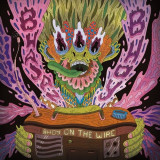
Ajay Saggar is BHAJAN BHOY. "With BHAJAN BHOY, Saggar synthesizes all of the stylistic approaches he’s explored over the years, swirling them into an intoxicating musical blend, with an earthy spirituality. Even the project’s name reflects the dual aspects of Saggar’s upbringing coming together in harmony. In Hindi, a “bhajan” is a devotional song, sung in the mandir, or temple, while “bhoy” is a Scottish and Irish derivation for a young man. There’s a searching quality to Bhajan Bhoy, as if Saggar is still hunting for transcendence with each track, whether through an expansive drone, an orchestral facility on the piano, or an electronics-augmented raga that threatens to dip into noise” (Erick Bradshaw / writer and WFMU DJ). This album presents a rich and varied set of compositions that showcase Saggar’s skills as an incredibly talented and accomplished composer and musician. With each and every Bhajan Bhoy LP, you are are carried to a higher place. With ‘Bhoy On The Wire’, the 35 minutes laid out unfolds like a cosmic tapestry, an extraordinary exploration that shimmers and reverberates with newfound vibrancy. The songs were broadcast as part of a session on Steve Barker’s “On The Wire” radio show in April 2024. They were a gift to Steve and his team for 40 years of broadcasting. “On The Wire” is simply the greatest radio show in the world. As Ajay explains in his own words : “In September 1984, I started a degree course at the University of Lancaster. On a wet and soggy Sunday afternoon towards the end of September, I sat in my room staring out at the grey Lancashire landscape, and decided to alleviate the boredom by seeing if there was anything to listen to on the radio. Most of the stations I tuned into were as dull as the weather outside. However, as I neared the end of the FM dial (and was about to give up hope), I chanced upon a station where I was taken by the music being played. That show was “On The Wire”, introduced by Steve Barker. From there on in, every Sunday, between 2-5pm, I tuned into Radio Lancashire to listen. Steve’s shows had an incredible and wide reaching selection of music and genres, that thrilled your ears and left you wanting more. Tied to that, his deep knowledge of the material he played helped the listener dig into the sounds even more, and also left you in admiration of this trait. In 1985, I started putting on DIY shows in Lancaster (inviting the likes of Bog-Shed, bIG fLAME, The Membranes, The Wedding Present, etc etc) and Steve was kind enough to mention the shows on-air, which helped in getting people from different parts of the county to come to the shows. At the tail-end of 1985, he invited me to the studio to come and hang out. When in 1988, the group I was in, Dandelion Adventure, released our first (demo) cassette, it was Steve, who not only played tracks off it, but invited the group to the studio for an interview. Now if you’re a young band, that is a massive thrill! And in 1990, when Dandelion Adventure did a John Peel session, I actually used “On The Wire” jingles (that Steve had put on a cassette and given to me a few years before) on the track “All the World’s A Lounge”. Since then, the show has been a mainstay for me, and so many others around the world, to get turned onto incredible sounds from around the world. And over the course of 40 years, Steve has always supported my music. These six tracks are a 40th birthday gift to the “On The Wire” team (Steve, Michael “Fenny” Fenton (an absolutely critical part of the show), and Jim Ingham (engineer who keeps the technical side of things going)) for sharing so much amazing music, and making the world a better place. They were originally broadcast as an exclusive session in April 2024 on “On The Wire", and are here for your listening pleasure. Music like shower”. Artwork by Jake Blanchard
Tuning the Wind was created in 2022 as an installation piece. Since then, it has been adapted into multichannel, 4DSOUND, and stereo installations, as well as performed live on numerous occasions around the world. The piece has a duration of 36 minutes and 15 seconds. For the vinyl pressing, it has been divided into two parts.
Composer Aimée Portioli, known professionally as Grand River, recorded various types of wind and then reworked them through layering and pitch adjustment to create a musical piece where the wind itself becomes a prepared instrument. At times, the sound of the wind is tuned to the 440 Hz reference, while at other times, the instruments are tuned to the sound of the wind. In Tuning the Wind, nature and music merge seamlessly. Synthesizers and wind recordings become indistinguishable, blending natural sounds with human-made instruments. The boundary between a gust of wind and an instrument-generated sound fades away. Human artistry and nature’s symphony merge to become one.
Wind is air in motion. It makes no sound until it encounters an object. The sounds it produces depend on the strength of the wind and the shape and material of the object it touches. When the wind blows, trees sway, buildings rattle, materials move, and sound waves are generated. Some believe that temperature changes create layers of air, and that the friction between them forms a unique sound—perhaps the true voice of the wind, which birds may be the only creatures capable of recognising. Sometimes the wind howls; at other times, it sings or whistles, shifting from a gentle murmur to an angry roar. The wind’s range of frequencies, tones, and timbres is vast and varied. Tuning the Wind is a piece about the wind, made with the wind—an abstract expression of our ongoing conversation with nature.
Concept, composition and production by Aimée Portioli. Wind recordings by Aimée Portioli and Pablo Diserens.
Mastered by Rafael Anton Irisarri. Front cover photo by Bárbara Cameán and Aimée Portioli. Back cover photo by Maria Louceiro. Design by Daniel Castrejón.
"Formed by Brandon Hagen (guitar, vocals) and Drew McDonald (drums), and later joined by Zack Abramo (bass), Vundabar have always been imbued with a fiercely independent spirit, their sound forged in mythical underground Brooklyn venues such as Silent Barn and Shea Stadium. Musically, they exist almost as a fever dream of many genres, melding arty post-punk, tangled math-rock, sun-dappled surf-guitar, shimmering jangle-pop and grunge scuzz into sharp, compact songs. Across six albums the band have netted them a wide fan base and a reputation for a killer live show, not to mention a platinum record for their song 'Alien Blues'. "
- A1: Fiesta En La Jungla
- A2: Fuga En La Selva
- A3: Tu Partida
- A4: Agua De Cachilde
- A5: La Chicharra
- A6: Dolor Y Pena
- B1: Izango
- B2: El Shiringuero
- B3: A Jenny
- B4: Linda Tocachina
- B5: Para Mi Gente
- B6: Tragedia En Uchiza
Carrying the torch of psychedelic cumbia, with a healthy dose
of surf guitar and Amazonian dancefloor flourishes from Peru
and Brazil alike, Fiesta en la Jungla by Los Dexter’s de Uchiza
is the first release from the newly formed London-label Ritmo
del Barrio. Originally released in 1982, it captures the finest
cumbia being made in Peru at the time, decked out with
frenetic surf-rock guitar riffs, rhythms floating on crisp
cumbia percussion and occasionally punctuated by carimbó
breakdowns native to the Pará region of north-eastern Brazil.
The album is filled with energy, a gem that was always
intended to animate any dancefloor. Peruvian cumbia came to national attention in the late 60s
through the recordings of Juaneco y su Combo, Los Destellos
and Los Wembler’s de Iquitos, but it’s had many revivals, and
Fiesta en la Jungla arrived when the style was going through a
major transition. In 1977, a passenger plane carrying most of
the members of Juaneco y su Combo crashed, killing everyone
on board. In 1980, Los Destellos retired, and Los Wembler’s
released their tenth and final record, they were ready for a
break. This left a big void in Peruvian music. Wasting no time,
Los Dexter’s Emerson Ruiz Mosquera took the opportunity and
gave his band new life, filling the band’s ranks with young and
energetic musicians who were hungry for success. He built the
new band around a solid base of dexterous guitars, a dynamite
rhythm section, and added oodles of percussion and an electric
organ, giving them a powerful psychedelic sound that called
back to the sounds of the original chichamasters, but added a
new sheen. Along with bands like Los Shapis and Los Walkers
de Huánuco, Peruvian cumbia was reborn as chicha in the
1980s, and was now the sound of Peru’s barrios up and down
the country.
Based in the city of Uchiza, on the edges of the Amazon basin,
Los Dexter’s were uniquely located in central Peru, closer to the
largest urban centres of the country than Amazonian outposts
like Pucallpa or Iquitos, and therefore better positioned to
travel to the furthest reaches of the country with ease. In a
sense, Los Dexter’s were a bridge between the Amazon and the
rest of Peru, a bridge over which the sounds of Amazonian
cumbia could travel to the rest of the country on their way to
becoming one of the most ubiquitous elements of Peru’s musical
identity. Fiesta en la Jungla represents Los Dexter’s in their third
iteration. Led by Emerson Ruiz Mosquera, who was just a
young boy in 1970 when his older brother founded the group
with four of his friends, the ensemble by the time of Fiesta en la
Jungla included Orlando Abad on the timbales and lead vocals,
Lucho Bendezú on lead guitar, Javier Quiroz as second
guitarist, Alejandro Almeira on bass, Rufino Bustamante on
keyboard, Ramon Siu on bongos and bells, Ivan Rios on conga,
and Emerson as musical director and composer. Remarkably,
most of the group’s members helped to write at least one
track, Los Dexter’s were a collective endeavour.
Reissued on vinyl for the first time by Ritmo del Barrio, this
record is essential for any collector of Peruvian cumbia.
Showcasing the unique sound of Los Dexter’s, it carries hits
like “Fuga en la Selva” and “El Shiringuero”, which are sure to
set any dancefloor on fire, combined with slower, carimbó-
infused cumbias like “Fiesta en la Jungla,”and “Agua de
Cachilde.” Its closing track, “Tragedia en Uchiza'', is a key
piece of local history and tells of the flooding of the
Chontayacu River in 1982, a mortal tragedy that affected
thousands of people. Despite the subject matter, the album
maintains a joyful vibe throughout, with high energy riffs and
irresistible rhythms, contrasted with terse love ballads, like “A
Jhenny.” It is both a piece of musical history, and a sure-fire
tool for the dance floor.
Los Dexter’s became a fixture of festivals and celebrations in
the provinces of San Martin and Huánuco, and from expanded
across the country, taking Amazonian cumbia from the
Peruvian Amazon, to the heights of the Peruvian sierra, the
coastal plains, and the capital city of Lima.
third album, "Magic Seeds". The record represents his most personal and collaborative work and blends live recordings and analogue synths to create an organic, rhythmic sound reminiscent of trip-hop and hip-hop.
"Magic Seeds" explores themes of growth and reconnection, featuring unexpected musical moments and influences from 90s electronic music to neoclassical. Tracks like "Smoke in the Air" and "Inner Child" highlight his ability to balance emotional peaks with deep, moody atmospheres. The album’s dynamic range and authenticity reflect James's commitment to musical freedom and societal reflection, making it a compelling sonic collage of his recent experiences.
Over the past few years, Leifur James has steadily built a reputation as a vital new voice in electronic music on both sides of the Atlantic. He’s played prestigious London venues like the Barbican and Village Underground in London and toured Europe, as well as being named Pitchfork and KCRW’s ‘best new music’ in the US, and his music has been championed by the likes of tastemakers Gilles Peterson, Mary Anne Hobbs, Bradley Zero and actor Cillian Murphy, and from BBC 6Music to NTS via KCRW and RMC Italia. James has also enjoyed further flagship press support from Consequence of Sound, Clash, CRACK, Passion of the Weiss, XLR8R, Complex, MixMag, DJ Mag, The Vinyl Factory, and more
(Limited edition to 500 copies, remastered audio, pressed and printed in Indonesia) The 13 tracks contained in this compilation “Begadang: Soneta Group Best Songs, 1975-1980” are some the most innovative music that came out of Indonesia’s music scene in the 1970s, tunes that has cemented Rhoma Irama’s status as the king of the genre.
Dangdut is the biggest musical genre in Indonesia. Dangdut, onomatopoetic name from the sound of hand drums used in this type of music, is what reggae to Jamaicans, country to Americans or skiffle to mid 20th century British people. And in this genre of dang dut, the name Rhoma Irama looms large. He is until today the undisputable king of dangdut and his role as pioneer of the music is already in the history book. In fact, there's one book documenting the outsized role of Rhoma in establishing dangdut as the father of this music. The book is aptly titled Dangdut Story, written by Pittsburgh University music professor Andrew N. Weintraub.
Among Indonesian fans of dangdut, there’s this one misconceptions that dangdut music is that it is an indigenous art form from Indonesia and that it constitutes an amalgamation of local, traditional music of this Southeast Asian nation, with Malay music being the most prominent feature in the mix.
Dangdut pioneer Rhoma Irama is among the first to reject this assertion. “Dangdut music may have originated in Deli (in North Sumatra) but then got the influences from the West and India”, he said.
Indeed, most of Rhoma’s well-known compositions may have been influenced by Indian tunes but some of his best quality works owed much to the West.
Rhoma had long found home in Western pop music. In the early 1960s, after honing his guitar playing skill, Rhoma set up his first band Gayhand to play the tunes of The Beatles, Paul Anka and Tom Jones. In 1972, Rhoma won best singer title in a Southeast Asia singing competition in Singapore playing Tom Jones “I Who Have Nothing.”
Yet, nothing changed Rhoma’s fortune in the music industry, to a point where he decided to leave pop and switched to playing Orkes Melayu (Malay Orchestra) music, first with Orkes Melayu Purnama and later with Soneta Group.
His career soon took off with Soneta, especially after he introduced what ethnomusicologist William H. Frederick considered as “theatre”, through which Rhoma borrows many elements from stage performances of British and American rock bands. These elements, kitsch and pomp, he liberally adopted and became an inseparable part of dangdut itself; tight pants, long hair, platform shoes, glitter and glamour which would not be out of place in Elton John and David Bowie stage show.
And this is actually the contradiction of Rhoma’s brand of Malay music. “One might legitimately ask how imaginative, not to say bizarre, costuming and dancing with abandon could be related to some of the objectives of Rhoma has set for himself and soneta group”, Frederick wrote on his seminal work on the singer, Rhoma Irama and the Dangdut Style: Aspects of Contemporary Indonesian Popular Culture, published in 1982.
From technical point of view, Rhoma not only replaced the acoustic elements from Melayu Music with electric instruments but also created new synthetic sounds that has never been attempted before in Indonesia’s music industry.
Detractors like to point out how much he was indebted to Deep Purple, but a closer inspection reveals how he in fact had mined his influences even deeper.
Notice how Rhoma reproduced funk, which is all the rage in early 1970s, in the song “Santai” (Relax), this album’s closer or “Credit Title (Instrumentalia)” which opens this Darah Muda (Young Blood) soundtrack. The rubbery bass lines that open both songs can easily find home in any Sly and the Family Stone’s or Isaac Hayes’ tunes from that era. Other highlights of the song is the funky guitar licks and the droning Hammond a la George Clinton that stabs deep in the record groove. In the guitar solo, you can also hear the bark of George Harrison’s licks from “Taxman”.
The 13 tracks contained in this compilation “Begadang: Soneta Group Best Songs, 1975-1980” are some the most innovative music that came out of Indonesia’s music scene in the 1970s, tunes that has cemented Rhoma Irama’s status as the king of the genre. Only 500 copies were pressed for this compilation.
Mannequin Records proudly presents the debut release from Children Of The Night, a dynamic duo whose music is rooted in cinematic soundscapes. The project brings together Mexican techno producer Alejandro Barba, also known as Dellarge, and French documentary/film producer Pierre Labret, forging a distinctive creative partnership. Their collaboration masterfully combines dark, atmospheric elements with driving electronic rhythms, drawing heavily from the worlds of classic horror and psychological thrillers. The result is a collection of soundscapes that are as eerie as they are captivating, creating an immersive and haunting listening experience.
This album stands as an unconventional horror soundtrack for a film that never came to be—a tribute to the legendary Spanish filmmaker Jess Franco, known for his prolific work in the exploitation and horror genres. Born out of the quiet chaos of the pandemic, this project was originally intended to accompany a slasher film that was halted due to financial constraints. Despite the film’s cancellation, the duo pressed forward, turning the unfinished narrative into an imaginative auditory experience. The soundtrack will serve not only as a homage to Franco but also as a nod to Juan Mendez, better known by his alias Silent Servant, whose dark, minimalist electronic productions have left a deep mark on the underground music scene.
Dellarge and Labret’s creative process is shaped by an eclectic array of inspirations, pulling from both literature and cinema. They’ve cited films such as Franco’s "Paroxismus," "Gritos," and "Faceless" as vital to their sonic direction, as well as the eerie black-and-white imagery of F.W. Murnau's "Nosferatu." Additionally, the duo draws on the disturbing psychological tension of Stephen King’s "Carrie" and "Misery," and the surreal dystopian world of Stanislaw Lem's "Congreso de Futurología." The giallo horror aesthetics of Dario Argento's "Deep Red" also serve as a significant influence, merging surreal visuals with nerve-racking, visceral soundtracks—elements mirrored in Dellarge and Labret's own compositions.
The LP is not only rich with atmospheric storytelling but also boasts a range of remarkable remixes by prominent artists in the electronic music scene. Contributions from Alessandro Adriani, David Carretta, Legowelt, and Broken English Club inject new life into the original tracks, offering reinterpretations that span from industrial techno to Italo disco, further enhancing the project’s depth and versatility. Each remix complements the overarching horror theme while adding a modern, avant-garde twist to the duo’s work.
This debut album promises to be more than just a musical release—it's a vivid exploration of the horror genre through sound, creating a sensory experience that brings forgotten films, unrealized visions, and nightmarish stories to life through music. As the lines between fiction and reality blur, Dellarge and Labret invite listeners into a world where the echoes of lost films can finally be heard.
As one of the brightest and most prolific new songwriters to emerge from the Birmingham music scene over the past few years, Will Stewart has made a name for himself as both an imaginative storyteller and six string gunslinger whose detailed accounts of life around the Deep South seem to capture the essence of not just the humid, kudzu-covered environs they come out of, but also the creative cultural milieu that makes such narratives possible in the first place. Taking cues from everyone from Big Star and R.E.M., to Phosphorescent and the Drive-By Truckers, and even classic Southern literary figures like Eudora Welty and Barry Hannah, Stewart has managed to carve out a place for himself as a conjurer of time, place and characters— and the stories that swirl around them— in a way that’s simultaneously reflective, empathetic and unapologetic in their presentation.
Now on his fourth solo LP, over his past three studio efforts Stewart has shown a deft touch for not just engaging character arcs and succinct studies in the human condition, but also a range of musical modes that span everything from quiet dissertations on love and loss, to brash rockers and moody explorations of the complicated nature of modern Southern living. As someone who also wears the hat of a highly sought after sideman who lends his talents to friends and fellow travelers like Birmingham locals The Blips, Terry Ohms and Sarah Lee Langford, there are few sonic spaces that Stewart’s hands haven’t touched in some way.
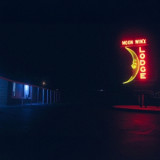
Stewart’s newest offering sees him poised to deliver his most ambitious project yet, with a 10-track song cycle centered around the iconic, and now defunct, Moon Winx Lodge in Tuscaloosa, AL, and some of the characters and scenarios that have played themselves out there over the years.