On Left At Sunset, Tornado Wallace taps into those fragile, glowing moments after a long night in the club, when the lights come up just enough, the bass softens, and the first hint of morning slips through the windows. Time feels suspended.
The lead track Asahi Ga Yondeiru (“the morning sun is calling”) captures that feeling perfectly. Built around Courtney Bailey’s gentle vocal, it drifts somewhere between late-night house and early morning reflection. It is not about the peak. It is about what comes after it. That quiet euphoria when you realize the night gave you something you will carry back into the real world. The rest of the EP stays in that same emotional zone: warm, slightly melancholic, but full of light. These are tracks for the very last dance, when the floor is half-empty, hearts are wide open, and every sound feels a little more meaningful. Not an ending, really. Just the beginning of whatever comes next.
SECOND REISSUE ON THIS HEAT’s OWN NEW IMPRINT FOLLOWING ‘THIS HEAT’ (TH01LP) WHICH WAS UNCUT ‘REISSUE OF THE MONTH’ RECENTLY WITH 9/10 REVIEW + 4-PAGE FEATURE WITH Q+A.
*24 bit/96 kHz re-master from original analog tapes.
*Heavyweight 180gm vinyl and heavyweight sleeve with pantone printing to match original 1979 release.
Simon Reynolds on Health and Efficiency:
“For some fans, Health and Efficiency is This Heat’s peak achievement – their most concentrated blast of visceral intensity and wayward experimentalism….Lead track “Health & Efficiency” combines fierce angular rock that fully lives up to Cunningham’s belief that This Heat could become a postpunk King Crimson, with a multi-part babble of vocals, clattering percussive timbres, and found sounds.’’
Flipside “Graphic/Varispeed” is more subdued and hypnotic: a wavering tonescape whose duration depends on whether you play it at 45 rpm or 33 rpm. This reissue reproduces the original release’s striking cover image of a human figure painted in blue by Pete Cobb, along with the cryptic flipside of text in many different languages.
Although widely considered to be Post-Punk’s finest, This Heat actually began performing and recording their music in 1976, the early days of London’s punk era. Within their two albums and an EP they perfected a strange and volatile new strain of avant-garde rock that time has proved to be massively influential, a blueprint for much that would follow: post-rock, math rock, homemade musique concrète, experimental electronica. Numerous critics have recognised the band's influence on the music of Sonic Youth, Glenn Branca, Steven Wilson, Public Image Ltd., Radiohead, Swans, Shellac, Young Knives, Black Dice, Lightning Bolt and numerous other experimental and post-rock bands.
Disbanding in 1982 they have left an undeniable legacy that has only continued to grow in stature and relevance.Having recently passed the 50 year anniversary of their first gig, and the recording of material that appears on their debut album, the group’s surviving members Charles Bullen and Charles Hayward, true to their DIY roots, have set up an imprint to release their recordings for their growing fan base that is increasingly recognising their influential place in music history.
‘They went beyond punk before punk had properly started…the entire album is a controlled explosion of ideas. Nearly fifty years on, This Heat’s debut is something the world has still not completely caught up with.’ - Simon Reynolds
‘Over the years, there have been bands to play as aggressively, or even as strangely, but very few have been able to rise from their collective influences and histories to create music so singularly distinctive and inspiring.’ – Pitchfork 9/10
‘This Heat sounded like the future then ... and still do now.’ - Dan Snaith (Caribou)
‘This Heat had a certain kind of force the post-punk bands were unable to adequately control without falling foul of rawk excess, and which the punk bands—albeit blitzing and rowdy—were too basic in form to build.’ – John Calvert , The Quietus
2026 Repress
Oh yes! First ever official reissue of the positively sublime and very rare Butterfly LP, recorded in Tokyo in 1979 by Japanese songstress Kimiko Kasai and jazz legend Herbie Hancock.
Due to it's super-rare status as a Japan-only release, this exquisite collection of covers never got the recognition it deserved at the time, despite incredibly inspired performances from Kimiko, Herbie and the supremely talented musicians assembled for the project. From heavenly drummer Alphonse Mouzon and renowned organist Webster Lewis to bassist Paul Jackson, reedman Bennie Maupin and the master percussionist Bill Summers, the legendary performers crafted amazingly good vocal versions of Herbie / Headhunters jazz-funk. Unsurprisingly, it has been heavily in demand for many years.
The LP opens with Kimiko's highly desirable version of "I Thought It Was You", an elegant take on Herbie's own anthem. Other superb re-workings include the delicately soulful "Butterfly", jazzy groover "Sunlight", the smooth and sexy "Tell Me A Bedtime Story" and the beautiful ballads "Maiden Voyage" and "Harvest Time". A wonderful example of perfectly understated and masterful jazz-funk soul fusion that shouldn't be missed, the set closes with a jaw-dropping version of Stevie Wonder's "As".
This lovingly curated reissue enables a long overdue reappraisal of this hitherto unavailable masterpiece. The stunning artwork which adorned the original jacket - complete with OBI strip and sumptuous
4 page folded insert - has been faithfully restored. Simon Francis' sensitive mastering elevates the sound throughout and, as ever, it has been pressed at a reassuringly weighty 180g. Essential.
Keen listeners who have dug below the surface of Oren Ambarchi"s triple-digit discography know that alongside hypnotic minimalism, veins of irreverent and joyously wayward exploration run deep. Cooked is something of a landmark in Oren"s work, bringing this gloriously cuckoo sensibility right into the heart of his most high-profile solo work. Carrying on the grand Ambarchi tradition of meticulously constructed all-star studio jams (which reached new heights with Shebang), Cooked brings together collaborators from Australia, Germany, Japan and Sweden for two side-long epics where the foot keeps tapping even as the mind boggles. Cooked is a long way from the spacious, light-dappled grooves of Ghosted, but Oren"s Swedish bandmates play starring roles here, with Johan Berthling"s double bass anchoring both sides, and drummer Andreas Werliin lending his delicate touch to the second piece, "Sleight of Hand". Beginning with glistening layers of electric 12-string guitar, "Sleight of Hand" takes some key cues from electric Miles touchstones like "Feio" or his epic take on David Crosby"s "Guinnevere", with Berthling"s sparse basslines punctuating an almost weightless cornucopia of shifting detail, glimmering with subtle contributions from Michiko Ogawa on sho and James Rushford on a panoply of acoustic keyboards. Suddenly, everything is overwhelmed by a knotty, hyper-complex "solo" from Marcus Pal on digital synthesis, teleporting us to an alternate history where Allan Holdsworth traded the SynthAxe for Xenakis" UPIC. Building with additional drums and percussion from Will Guthrie to a peak of sizzling intensity, the music then goes sideways into a gently surreal coda, where some distinctly Zawinul-esque chords and Fredrik Rasten"s guitar float over a sprightly rhythm box, the avian inventions of Swedish virtuoso whistler Isak Hedtjärn wafting atop the sunlit stew.
Welcome Tori Kudo back to A Colourful Storm with a new edition of Maher Shalal Hash Baz's Faux Départ, a document of a stateside tour that culminated in a recording session at the legendary Dub Narcotic Studio with a one-time ensemble of Greg Saunier and Chris Cohen (Deerhoof), Andrew Maxwell, McCloud Zicmuse, Arrington de Dionyso, Takashi Ueno, Saya Ueno, Naoki Otani, Akiko Hotaka, Masaaki Endo and Naoki Otani. Always spontaneous, never rehearsed. Music in and of this world, seemingly teetering on the verge of collapse.
"We flew to the US for a show with Red Crayola in Los Angeles and initially stayed at Rick Potts' house. There, I met up with The Curtains and hit the road in their car. We headed north, writing down every melody that came to mind. I slept in the gap between the wall and the sofa and got interrupted by a herd of cows along the way, but I finally arrived in Olympia and recorded all the melodies I'd written down, which became Faux Depart. There, I found McCloud, a noble beggar who was sleeping in the studio and playing the bassoon on the street." - Tori Kudo, 2026
"Chris Cohen, who played in Deerhoof from 2001-2006 or so, was an obsessive Maher fan. When our other band, The Curtains, was given a chance to support Maher on a West Coast tour, we got to see up close how Tori leads - often by not leading. He is an unpredictable, wild musical genius and card-carrying eccentric." - Greg Saunier, 2026
Special poster on 250gram paper. Postcard with photo taken by Sandrien. Hand-numbered sticker. Shrinwrap
After more than a decade without releasing new music, Amsterdam DJ and producer Sandrien returns with her debut album Compass, released on her own new label, inspi. Created during a stay in Spain, where she finally found the space to create freely again, the album marks a new chapter: no genres, no expectations, just music made purely on feeling. Compass is an album about finding your own path, personally and musically, a cycle of searching and finding, letting go and beginning again. Lead single 'Life' laid the foundation for it all. The visual world of the album is just as personal: photographs Sandrien took around her house formed the basis for its artwork and imagery. With 27 years of experience behind her, Compass proves that mastery doesn't lead to routine, but to exploration. This double LP includes a beautiful double-sided poster featuring two original artworks of ‘Compass’ by Dutch artist Pieter Jan Boterkoek. Releases October 9, 2026 Written and produced by Sandrien Mixed by Julien Chaptal Mastered by Giuseppe Tillieci at Enisslab Artwork by Studio Pieter Jan Boterhoek This album is made with love in Spain, Volkshotel Amsterdam and Groenekan.
Die Welt war nie bereit für The Monsters, und The Monsters waren nie bereit für diese Welt. Nach vierzig Jahren, in denen sie zu einem echten Monster aus Fleisch und Blut herangereift sind, präsentieren sie ihr neuntes Album: gut ein Dutzend kompromissloser, wilder, lärmiger und fuzz-geladener Tracks. Ein Mix aus Ein-Riff-Beat, Trash, Garage, "Bern Metal", Boogie, Punk und Grunge - Songs, die einen von innen nach außen stülpen, aufgenommen mit "Miracle" Robert "Worker" Butler und abgemischt von Jim "Dirtbomb" Diamond - ein echtes Garage-Punk-Dreamteam. Vor vierzig Jahren, 1986, war die Jugendkultur-Revolution in Bern (Schweiz) in vollem Gange, Jugendliche und junge Erwachsene wollten sich aus den konservativen Fesseln befreien. Die Straßen brannten, Clubs entstanden und eine neue Schweizer Musikkultur wurde geboren. Dies markierte auch den Beginn von The Monsters. Vierzig Jahre später hat sich der Zustand der Musikkultur - oder vielmehr der Welt im Allgemeinen - wohl eher verschlechtert. Individuelles Denken und Schaffen sind nach wie vor nicht sonderlich anerkannt oder gar erwünscht (Hey KI!). Im März 2026 blieb der Band also nichts anderes übrig, als ihre Instrumente, das Aufnahme-Equipment und ihre Ideen in den Proberaum zu verfrachten. Sie verbrachten einen Monat mit Robert Butler (u. a. The Miracle Workers) und seinem mobilen "Two Cent Recording Studio". Sie schrieben Texte (insgesamt etwa 100 Wörter - mal sinnvoll, mal unsinnig, über das ganze Album verstreut), tüftelten am Sound und nahmen Gitarren in allen erdenklichen Variationen auf. Das Ganze wurde gewürzt mit Percussion, Schlagzeug, Bass sowie obskuren Orgeln und Synthesizern, die sie auf Flohmärkten oder in den Kellern von Freunden aufgetrieben hatten. Nach diesem vierwöchigen Trip schickten sie das gesamte Chaos an Jim Diamond (Ghetto Recorders Studios in Detroit, Dirtbombs, White Stripes, Gories, André Williams... klar, worum es geht, ne?!), um es einem umwerfenden Mix-Abenteuer zu unterziehen. Das Ergebnis ist ein Dutzend Songs ohne Kompromisse, Schwächen oder Stärken. Einfach nur roher, ungeschliffener Lo-Fi-Garage-Punk'n'Roll voller Energie - und das mit vierzig Jahren "Nicht-Erfahrung". Erhältlich sind schwarzes Vinyl und eine pinke Picture-Disc (beide mit Insert & DLC), eine höchst audiophile CD sowie Kassette, die bei doppelter Geschwindigkeit leiert! Für Fans von Reverend Beat-Man, VRR, The Mummies, Oblivians, Billy Childish, Damaged Goods, Monks, very early Hives, Garagepunk, Lo-Fi-Roll, Alternative Beat
Die Welt war nie bereit für The Monsters, und The Monsters waren nie bereit für diese Welt. Nach vierzig Jahren, in denen sie zu einem echten Monster aus Fleisch und Blut herangereift sind, präsentieren sie ihr neuntes Album: gut ein Dutzend kompromissloser, wilder, lärmiger und fuzz-geladener Tracks. Ein Mix aus Ein-Riff-Beat, Trash, Garage, "Bern Metal", Boogie, Punk und Grunge - Songs, die einen von innen nach außen stülpen, aufgenommen mit "Miracle" Robert "Worker" Butler und abgemischt von Jim "Dirtbomb" Diamond - ein echtes Garage-Punk-Dreamteam. Vor vierzig Jahren, 1986, war die Jugendkultur-Revolution in Bern (Schweiz) in vollem Gange, Jugendliche und junge Erwachsene wollten sich aus den konservativen Fesseln befreien. Die Straßen brannten, Clubs entstanden und eine neue Schweizer Musikkultur wurde geboren. Dies markierte auch den Beginn von The Monsters. Vierzig Jahre später hat sich der Zustand der Musikkultur - oder vielmehr der Welt im Allgemeinen - wohl eher verschlechtert. Individuelles Denken und Schaffen sind nach wie vor nicht sonderlich anerkannt oder gar erwünscht (Hey KI!). Im März 2026 blieb der Band also nichts anderes übrig, als ihre Instrumente, das Aufnahme-Equipment und ihre Ideen in den Proberaum zu verfrachten. Sie verbrachten einen Monat mit Robert Butler (u. a. The Miracle Workers) und seinem mobilen "Two Cent Recording Studio". Sie schrieben Texte (insgesamt etwa 100 Wörter - mal sinnvoll, mal unsinnig, über das ganze Album verstreut), tüftelten am Sound und nahmen Gitarren in allen erdenklichen Variationen auf. Das Ganze wurde gewürzt mit Percussion, Schlagzeug, Bass sowie obskuren Orgeln und Synthesizern, die sie auf Flohmärkten oder in den Kellern von Freunden aufgetrieben hatten. Nach diesem vierwöchigen Trip schickten sie das gesamte Chaos an Jim Diamond (Ghetto Recorders Studios in Detroit, Dirtbombs, White Stripes, Gories, André Williams... klar, worum es geht, ne?!), um es einem umwerfenden Mix-Abenteuer zu unterziehen. Das Ergebnis ist ein Dutzend Songs ohne Kompromisse, Schwächen oder Stärken. Einfach nur roher, ungeschliffener Lo-Fi-Garage-Punk'n'Roll voller Energie - und das mit vierzig Jahren "Nicht-Erfahrung". Erhältlich sind schwarzes Vinyl und eine pinke Picture-Disc (beide mit Insert & DLC), eine höchst audiophile CD sowie Kassette, die bei doppelter Geschwindigkeit leiert! Für Fans von Reverend Beat-Man, VRR, The Mummies, Oblivians, Billy Childish, Damaged Goods, Monks, very early Hives, Garagepunk, Lo-Fi-Roll, Alternative Beat
Die Welt war nie bereit für The Monsters, und The Monsters waren nie bereit für diese Welt. Nach vierzig Jahren, in denen sie zu einem echten Monster aus Fleisch und Blut herangereift sind, präsentieren sie ihr neuntes Album: gut ein Dutzend kompromissloser, wilder, lärmiger und fuzz-geladener Tracks. Ein Mix aus Ein-Riff-Beat, Trash, Garage, "Bern Metal", Boogie, Punk und Grunge - Songs, die einen von innen nach außen stülpen, aufgenommen mit "Miracle" Robert "Worker" Butler und abgemischt von Jim "Dirtbomb" Diamond - ein echtes Garage-Punk-Dreamteam. Vor vierzig Jahren, 1986, war die Jugendkultur-Revolution in Bern (Schweiz) in vollem Gange, Jugendliche und junge Erwachsene wollten sich aus den konservativen Fesseln befreien. Die Straßen brannten, Clubs entstanden und eine neue Schweizer Musikkultur wurde geboren. Dies markierte auch den Beginn von The Monsters. Vierzig Jahre später hat sich der Zustand der Musikkultur - oder vielmehr der Welt im Allgemeinen - wohl eher verschlechtert. Individuelles Denken und Schaffen sind nach wie vor nicht sonderlich anerkannt oder gar erwünscht (Hey KI!). Im März 2026 blieb der Band also nichts anderes übrig, als ihre Instrumente, das Aufnahme-Equipment und ihre Ideen in den Proberaum zu verfrachten. Sie verbrachten einen Monat mit Robert Butler (u. a. The Miracle Workers) und seinem mobilen "Two Cent Recording Studio". Sie schrieben Texte (insgesamt etwa 100 Wörter - mal sinnvoll, mal unsinnig, über das ganze Album verstreut), tüftelten am Sound und nahmen Gitarren in allen erdenklichen Variationen auf. Das Ganze wurde gewürzt mit Percussion, Schlagzeug, Bass sowie obskuren Orgeln und Synthesizern, die sie auf Flohmärkten oder in den Kellern von Freunden aufgetrieben hatten. Nach diesem vierwöchigen Trip schickten sie das gesamte Chaos an Jim Diamond (Ghetto Recorders Studios in Detroit, Dirtbombs, White Stripes, Gories, André Williams... klar, worum es geht, ne?!), um es einem umwerfenden Mix-Abenteuer zu unterziehen. Das Ergebnis ist ein Dutzend Songs ohne Kompromisse, Schwächen oder Stärken. Einfach nur roher, ungeschliffener Lo-Fi-Garage-Punk'n'Roll voller Energie - und das mit vierzig Jahren "Nicht-Erfahrung". Erhältlich sind schwarzes Vinyl und eine pinke Picture-Disc (beide mit Insert & DLC), eine höchst audiophile CD sowie Kassette, die bei doppelter Geschwindigkeit leiert! Für Fans von Reverend Beat-Man, VRR, The Mummies, Oblivians, Billy Childish, Damaged Goods, Monks, very early Hives, Garagepunk, Lo-Fi-Roll, Alternative Beat
Larry June has built a career on making hard work look effortless, and his album Who Coppin’ stands as a masterclass in smooth, lifestyle-driven West Coast hip-hop. The album delivers a high-grade mix of Bay Area luxury, entrepreneurial motivation, and unbothered charismatic flows. Spanning a laid-back audio palette designed for early-morning juice runs and late-night freeway cruises alike, Uncle Larry balances the discipline of a hustle-first mindset with warm, sun-drenched production anchored by crisp organic instrumentation and heavy-knocking bass.
The album features a tightly curated roster of collaborators who align seamlessly with Larry's signature aesthetic. Spoken-word encouragement from Wallo267 sets an intentional tone on the opener "Go Outside Intro," framing the record around execution and focus. Soulful contributions from Jhené Aiko on "California Dream" and Musiq Soulchild on "Pretty Green Eyes" provide lush R&B textures, while NorCal legend B-Legit and longtime partner DJ.Fresh reinforce June’s deep West Coast roots. Meanwhile, Swizz Beatz injects high-energy bounce into "Flex," offering a vibrant contrast to Larry’s understated, cool-headed cadence.
Behind the boards, top-tier producers like Cardo, Teeko, Beat Butcha, Jay Versace, and June Santana craft a nostalgic yet modern backdrop filled with warm sample flips, smooth G-funk synthesizers, and relaxed soul grooves. The project builds to an emotionally grounded conclusion on "God Got Us (Ain't Too Many)," where June strips away the flexes to offer direct encouragement to his audience, proving once again that consistency, self-belief, and steady progress remain the ultimate luxuries.
Ian Pooley returns with a brand-new collection of original productions, delivering exactly what you'd expect from one of house music's true craftsmen.
Road-tested throughout his recent live shows, these tracks have already proven themselves where it matters most: on the dancefloor. Staying faithful to his unmistakable MPC-driven approach, Ian delivers groove, feel and musical restraint in equal measure. Crisp drums, warm sampling, infectious basslines and subtle arrangements come together in a way that only he can deliver.
No overproduction, no unnecessary breakdowns, no gimmicks-just pure, functional house music built for DJs. Timeless, stripped-back and effortlessly effective, this is another reminder why Ian Pooley remains one of the genre's most respected producers.
In Living Color proudly presents Wasi Wasi EP, the debut label release from
Kenyan-born, Berlin-based artist Emo Rugene.
A striking first statement from one of the most exciting emerging voices in African electronic music, Wasi Wasi introduces Rugene's distinctive sound while reflecting the bold, forward-thinking vision at the heart of Living Color. Blending deep cultural roots with contemporary electronic production, the EP marks the arrival of an artist helping shape the future of the genre.
Deeply rooted in African rhythm and musical heritage, Wasi Wasi is a body of work that embraces the past while looking confidently toward the future. Blending hypnotic grooves, organic percussion, and contemporary electronic production, the EP reflects a new generation of artists drawing inspiration from their roots while carving out their own unique artistic identity.
The release features two compelling vocal collaborations that enrich its storytelling. “Wasi Wasi (Vocal Mix)” features Alai K, whose deep ancestral vocal brings a powerful spiritual presence to the title track. “Sahara Dena” features Soukou, whose soulful vocal performance adds warmth, emotion, and depth, creating a beautiful dialogue between tradition and contemporary sound.
With Wasi Wasi EP, Emo Rugene stands among a new generation of African electronic music artists redefining the future on their own terms. His music is deeply connected to where it comes from, yet unafraid to explore new ideas, proving that heritage is not something to preserve behind glass, but something to carry forward with imagination and purpose.
More than a collection of tracks, Wasi Wasi EP is a celebration of movement, identity, and possibility, a record that honours the voices of those who came before while contributing to the sound of tomorrow.
There is a hush most of us only knew as children, the warm drift between familiar household sounds and being carried to bed, a place that belongs to you and to some self you have not met yet. June McDoom’s debut full-length, Follow the Light, lives in that dream space and then keeps walking, slipping out of time and waking somewhere new, barely familiar enough to feel like home yet wholly your own. She came up in a Jamaican household on the edge of the Florida Everglades, an existence built of extended family, communal care, bass and harmonics. Her father, a carpenter and a student of sound, built his own speakers and kept three sound systems going across as many rooms. His low end would rise through her bedroom floor like some wayward cat while she lay above it with folk records, finding harmonies that were new and hers alone. Two musics in one room. Lushness as past and premonition. She found folk on her own, somewhere between the cast recording of The Sound of Music and Simon and Garfunkel, while everyone around her called it sleepy music. She did not mind being the only one. The solitude let her fall for harmony first, before words, before anything else, and harmony is still the thing she reaches for. Generationally speaking, the music was already in the air. Her grandfather, Colin Smith, is a distinguished mento man who played banjo and guitar and built his own rumba boxes, worked to keep Jamaica’s oldest acoustic folk form alive. Mento is the root of all of it: ska, rock steady, reggae, dub and everything after. He is the one who put a guitar in her hands. An inheritance, a gift and a map. Even her name is part of it, though she will tell you she landed on it more by feel than reason. She records as June McDoom, born Alyssa, June being a nickname one of her grandmothers, Joan, went by, a name she thought was cool to carry and simply liked the sound of. An etheric channel that reverberates all the same. A dub all its own.
Made slowly and by hand with her longtime partner Evan Wright, Follow the Light lays the harmony of folk over the rhythm of dub, with Dionne Warwick, Minnie Riperton, Pentangle and the washed guitars of Cocteau Twins haunting its outer edges. Voice and guitar seeking each other out first, then everything else stacked across long days in the studio they keep at home, restraint kept on purpose. The lead single “Without You” is the whole method surfacing, split open and sparkling like a geode in a creek bed. Angelic heroics, and nothing less.
At the heart is family. Her grandmother Aggie, the light behind “Memory,” guiding still. And underneath, the quieter truth the record keeps: none of us are only one person, but a continuum of selves, the ones who shaped us and the ones we have yet to meet. Future you is an ancestor your current self gets to greet. Press play and the same invitation is yours: A few minutes out of time, a place that turns familiar the longer you stay until you surface somewhere new and find it was yours all along
There is a hush most of us only knew as children, the warm drift between familiar household sounds and being carried to bed, a place that belongs to you and to some self you have not met yet. June McDoom’s debut full-length, Follow the Light, lives in that dream space and then keeps walking, slipping out of time and waking somewhere new, barely familiar enough to feel like home yet wholly your own. She came up in a Jamaican household on the edge of the Florida Everglades, an existence built of extended family, communal care, bass and harmonics. Her father, a carpenter and a student of sound, built his own speakers and kept three sound systems going across as many rooms. His low end would rise through her bedroom floor like some wayward cat while she lay above it with folk records, finding harmonies that were new and hers alone. Two musics in one room. Lushness as past and premonition. She found folk on her own, somewhere between the cast recording of The Sound of Music and Simon and Garfunkel, while everyone around her called it sleepy music. She did not mind being the only one. The solitude let her fall for harmony first, before words, before anything else, and harmony is still the thing she reaches for. Generationally speaking, the music was already in the air. Her grandfather, Colin Smith, is a distinguished mento man who played banjo and guitar and built his own rumba boxes, worked to keep Jamaica’s oldest acoustic folk form alive. Mento is the root of all of it: ska, rock steady, reggae, dub and everything after. He is the one who put a guitar in her hands. An inheritance, a gift and a map. Even her name is part of it, though she will tell you she landed on it more by feel than reason. She records as June McDoom, born Alyssa, June being a nickname one of her grandmothers, Joan, went by, a name she thought was cool to carry and simply liked the sound of. An etheric channel that reverberates all the same. A dub all its own.
Made slowly and by hand with her longtime partner Evan Wright, Follow the Light lays the harmony of folk over the rhythm of dub, with Dionne Warwick, Minnie Riperton, Pentangle and the washed guitars of Cocteau Twins haunting its outer edges. Voice and guitar seeking each other out first, then everything else stacked across long days in the studio they keep at home, restraint kept on purpose. The lead single “Without You” is the whole method surfacing, split open and sparkling like a geode in a creek bed. Angelic heroics, and nothing less.
At the heart is family. Her grandmother Aggie, the light behind “Memory,” guiding still. And underneath, the quieter truth the record keeps: none of us are only one person, but a continuum of selves, the ones who shaped us and the ones we have yet to meet. Future you is an ancestor your current self gets to greet. Press play and the same invitation is yours: A few minutes out of time, a place that turns familiar the longer you stay until you surface somewhere new and find it was yours all along
R.M.F.C. sound like? Let’s stay with the overused descriptors – I think R.M.F.C. is rock music band, more specifically a post-punk band. Indulge me. If you could say anything about post punk it means post-Wire, who were past punk before punk had an opportunity to codify and become everything brilliant and stupid that we’ve spent 40 years unpacking. Wire’s opening Pink Flag jab – Chairs Missing straight – and 154 hook knockout has haunted the mixing desks of ambitious post-punk bands since, and every major city in the western world has at least one Pink Flag band, one Chairs Missing band, one 154 band. Few bands manage to sound like all 3 records, but R.M.F.C. are a Rock Music Fan Club...
Anyone paying attention to underground Australian guitar overdose would relate: the R.M.F.C. Club Hits LP has been the culmination of five years of work, patience and discipline. If you’ve heard these songs live at any of their shows over the past couple of years you’ll understand – the wait is over and the result is exhilarating.
‘Bands like Devo, The Fall, and The Birthday Party have set the way for this type of post-punk rock (all in their own way). Surely, also, the rock scenes of the past fifteen years in Australia have also been influential. Thinking of bands like Royal Headache, Dick Diver, and Eddy Current Suppression Ring, there’s even been a fairly recent tradition of expanding styles of rock and roll (let alone the bigger, famous rock-centered acts). The Sydney based R.M.F.C., and the scene (or friend circle) from which it’s emerging, is carrying a torch of rock music which has the potential of a wider appeal.’ - POST-TRASH
Rocksteady Disco comes through with more tasteful and timeless edits on this fourth volume of its series which focuses on sounds from Detroit. Gino steps up on the A-side with the leggy grooves and funky bassline soft 'Funk Beyond' then 'Sunshine Ramp' pairs a classic vocal sample with a bubbly, percolating groove full of fun. On the flip, things get more textured and expressive with the busy jazz horns of DJ Righteous's '6 Minutes Of NRG' then 'Never Forget' brings heavyweight drum-first funk with warm organ chords and a busy mix of bass and melodies under the soaring vocals. Scorching stuff.
OFF / GRID makes a captivating debut on Life In Patterns with his 'Sonic Spectrum' EP. Previously recognized as an underground gem in the techno scene due to his acclaimed, self-released EP, 'Time To Shine,' the Hamburg-based producer has garnered significant attention in 2023 with EP releases on labels like Planet Rhythm, Uncage, DifferentSound, and Entourage Concept.
On LIP009, he presents four meticulously crafted vinyl tracks and a digital bonus track, each a testament to his remarkable talent for creating hard-hitting, euphoric DJ tools. His music is distinguished by cutting stabs, hypnotic acid lines, and a distinct dub influence, all seamlessly woven together with powerful drum sounds.
Transmitting after a short signal break, the Detroit operatives of Luke Hess and Brian Kage reactivate on Michigander with the Northward EP. Voltage modulations derived from intensive analog lab sessions, these four precision-engineered cuts yield high-density, sub-bass heavy propagations. Built to transport body, mind, and soul northward into a higher dimensional frequency, this is pure sonic utility for deep-space technicians across techno, house, and dub coordinates.
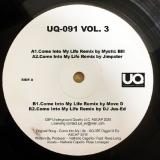
The third and final volume of remixes of 'Come Into My Life' by Nathalie Capello and Rose Lonegran is yet another doozy for lovers of emotive, meaningful deep house. Another bunch of heavyweights step up, starting with Mystic Bill who teases out a steamy-hot lead and builds a vibe around it. UK mainstay Jimpster plays with a dubby and bubbly low end, while Move D finds jazz-funk in the squelchy bass. Last of all, Underground Quality head DJ Jus-Ed steps up with his remix and explores more dusty textures, a slightly unsettling synth vibe and roomy, hypnotic grooves for late-night dancing.




![Maher Shalal Hash Baz - Faux Départ [LP]](https://www.deejay.de/images/l/6/9/1252969.jpg)