
No en stock
Haga su pedido ahora y le encargaremos el artículo en nuestro proveedor.
Ültimo hace: 3 Días
13,40 €
Haga su pedido ahora y le encargaremos el artículo en nuestro proveedor.
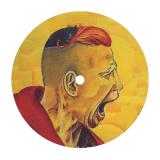
The third in a series of releases from the Digi Dub archives, Like it Here is a tribute to the poet laureate of Special Brew, the late Iffor Clarkson-Denbigh, who sadly departed us in 2021 to drink in the great park in the stars.
The infectious and futuristic late 90s vocal space dub of the A side finds Iffor waxing lyrically about both the nature of impermanence and the sentient ocean of Solaris over an irresistible bassline and low winding groove. The flip side features a suitably chugging version of the rail riding classic Loveborough Junction and a percussive early 90s acid dub of Heart like a Lion, the original of which dropped on the South East of the Thames collection. None of the tracks are traditional style dubs, but happily exist in the gaps between genres.
Iffor was a well-known multi-instrumentalist and vocalist on the South East London underground scene who lived life to the max without an off switch. He and label owner Lee Berwick truly had a laugh in the studio, producing Purple Boy (the classic ode to drinking in the park), the suitably named Clevor but Stupid album and many other uncategorisable musical wanderings.
“The hope is that Iffor, the dark son of Clenby, is cackling as he cracks another can while looking down on us from the great park in the stars.” Lee Digidub Berwick
debe ser publicado en 02.10.2026
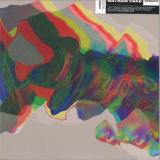
As Nathan Fake rises from the nocturnal subterranea and rave catharsis of his previous records, on Evaporator, he resurfaces into the domain of daylight, bringing a tangible sense of air rushing against your face, of big skies, and endless landscapes. The idea of pop accessibility that trickled into 2023’s Crystal Vision is refracted here through the prism of sweeping ambient, deep electronica, and trance uplift. Evaporator is Fake’s idea of “airy daytime music”, with each track a different barometer reading across the album’s varying atmospheres, which range from vibrant sunbursts, bracing rainscapes, and fine mists of clement melodics. “It’s not overtly confrontational electronic club music,” states Fake. “It’s quite pleasant, it’s accessible. As I was progressing through making the tracklist, I called it a daytime album. It doesn’t feel like an afterparty album.” For the past decade Fake has been gingerly introducing collaborations with heroes and friends alike into his lone, idiosyncratic working process. Border Community alumni Dextro AKA Ewan Mackenzie transmutes his ferocious drumming for Pigs Pigs Pigs Pigs Pigs Pigs Pigs into the blurred choral thump of ‘Baltasound’. ‘Orbiting Meadows’, meanwhile, is his second collaboration with Clark, an eerily idyllic duet where microtonal 18EDO piano clangs slowly twirl around wailing pads. Evaporator marks the junction point of old technology and ever fresh creativity for Nathan. The trusty “dinosaur” age software, particularly Cubase VST5, that has powered two decades of music is rarely updated. “I used to sort of feel a bit ashamed of using such old software, and then I kind of had an epiphany – that’s just how I work”, comments Fake. “That’s just how I play. I’m very fond of these old tools, and I get the most joy out of them, but now I’ve incorporated new technology too.” When an artist accumulates so much synergy with their instrument, music making becomes instinctual. By Fake’s account, much of Evaporator just fell into place. The album title arrived randomly in his head (“it felt completely perfect. Airy.”), ideas looped and developed until things locked into place and just felt right. ‘The Ice House’ is a fleeting glimpse of the sonic world he taps into in this creative state, its glassy FM synths built around a counterpoint between rough-hewn crystalline arpeggios and sparse yet gravitas-bearing bass. “That riff I just wrote out on the keyboard, I just played it forever and ever and ever. The original track ended up being really short. Here you go, and it’s gone!” These unplanned channellings of sound call forth records from Fake’s past while he looks ahead, perhaps getting at the very essence of his musicianship. The opener ‘Aiwa’ (“the breeziest,” he muses) reminds of the introspection that characterised Providence, excited by the fire and grit of Steam Days’ textural experiments, its chunky slams and clatters surging into a flood of harmonic buzzing as they reach out for old wisdom. ‘Hypercube’ stampedes in a similar chronological confluence, infusing an incessant synth line reminiscent of the golden age of rave with the crackling, ecstatic energy of modern festival anthems. Like the vaporisation of liquid to particles, everything that Evaporator presents has a mutant desire to be amorphous. Sounds rarely settle; the irradiated garage beat of ‘Bialystok’ is pitched downwards to driving, rebounding effect, while ‘You’ll Find a Way’ warps static into shivering energy, cinematic synth strings building anticipation into a gradual gush of chords. This translates into a more expansive stereo field than Fake has explored before. ‘Slow Yamaha’ saves the wildest, most kinetic transformations for last with a cornucopia of crispy melodies and fried drums; a sibilance of cymbals on the left, a susurrus of shakers on the right, and kaleidoscopic lasers pulsing and fizzing all around. Evaporation culminating in pure excited atoms. In a world where music has increasingly become background content, making albums remains lifeblood for Fake: “It makes me realise how long; twenty years is ages! It’s weird to see how much the world has changed. Release day back then you did fuck all, now you spend all day on socials. When I grew up the people who made the electronic music I was into were quite mysterious, and the artwork was very abstract. There was a massive distance between you and that music, and that was a key part of it, really. Now it helps to be an extrovert, and I'm just not, but the album marks the first time my face has graced the cover art. I’ve never wanted to do this before, I'm very shy, and generally I don’t like being seen,” he professes. “But, twenty years in, I supposed I could try something new. I'm very lucky that I'm somehow surviving in this world, where the media world favours extroverts and interesting looking people. It’s not my world but somehow I’m still in it.” Evaporator continues to prove Nathan’s necessary presence, with some of his most engaging, varied, and magical music yet.
En el almacen y preparando para el envío
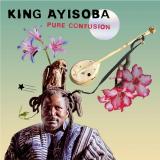
Pioneering Ghanaian musician King Ayisobareturns September 4, 2026 with his forthcoming seventh album Pure Confusion, recorded and produced by On-U-Sound’s Adrian Sherwood.
Ayisoba is one of Ghana’s most distinctive musical voices. The world’s foremost player of the kologo - a homemade two-string lute fashioned from a calabash and covered in goatskin - he delivers fiercely political and socially observant songs using three different voices, including the voice of his grandfather that possessed him as a child. Sherwood meanwhile is the pioneering British producer and founder of On-U Sound whose hugely influential career has connected dub, post-punk, industrial, hip hop and experimental music through collaborations with artists including Lee “Scratch” Perry, Mark Stewart, Horace Andy, Sinéad O’Connor, Nine Inch Nails and Depeche Mode.
Ayisoba and Sherwood first collaborated during a BBC Radio 3 Late Junction session at Maida Vale in 2017, organised by Ayisoba’s long-time collaborator Arnold de Boer/Zea of The Ex. The pair immediately connected, and during the pandemic, when Adrian’s long-time African Head Charge collaborator Bonjo Iyabinghi Noah was in Ghana looking for musicians to collaborate with Sherwood suggested Ayisoba, who eventually featured on two tracks on African Head Charge’s 2023 album A Trip To Bolgatanga (Bolgantanga is the region Ayisoba is from). Ayisoba then returned to the UK in late 2024 and travelled to Sherwood’s Ramsgate studio where the pair laid down the songs that would become Pure Confusion: “All the songs were already in my head,” says Ayisoba. “This album is all recorded live, over one afternoon. Adrian only plays live, and I like that. And he works hard - he doesn’t sleep. I woke up in the night and he was still working.”
“In my role producing it, I just let it roll to make a good vibe,” says Sherwood. “We recorded it completely live, did some programming and processing on some tracks, using dub techniques live on the mixing desk and adding some slick touches. We wanted the colours on the album to swing off what Ayisoba was doing, so we invited some friends to participate. Doug Wimbish (Sugar Hill Gang) arrived from America and lent his services playing bass on a couple of tracks; the wonderful Ivan Hussey (Celloman) played bass, keyboards and cello - cello is not really featured on African recordings so we thought it would be really cool to try it. I'd been working with Alex White (Fat White Family/Primal Scream) on my album (The Collapse of Everything) and so he added sax to a few tracks and I brought Alan Glenn down especially - Alan was in Little Axe but also Nine Below Zero and played in the Yardbirds – to add some mouth organ; Mark Bandola added a bit of flavour with his Juno, Ayisoba’s long-time Ghanian collaborator Ayuune Sule added some percussion and vocals and Matt Smith did some programming.”
“King Ayisoba is quite amazing, so unique,” Sherwood continues. “He’s got his own handmade instrument and three different voices - when you’re listening you think it’s three different people. He’s a breath of fresh air, full of love for the music which he wants to share with everybody. Some tracks we kept very straight and others we experimented with - adding dubby psychedelic little touches to trip you out a bit. The added production we did at On-U has given it a shine while still keeping it vibrant, live and spontaneous. I’m really proud of this record”.
On Pure Confusion, Ayisoba documents the anxieties, contradictions and changing social realities of contemporary Ghana. “Land is a problem for everyone,” says Ayisoba of the opening track “Property”. “If you don’t build on your land they will take it away. Plenty corruption in Ghana, plenty confusion. They sell the land to two, three, four people and then everybody fights.”
Elsewhere Ayisoba explores illness, spirituality and social stigma on “Bemba”, warning against hiding sickness out of shame or fear of “bad juju”: “People hide their sickness and the sickness kills them.” “Tewigiloge” reflects on cultural difference and open-mindedness encountered through world travel: “We will tour the whole world and we will see many things we may not like or understand… your eyes will see, but don’t talk - you have to be open-minded.”
Spirituality runs deeply throughout the album. Ayisoba’s grandfather was a respected spiritual healer whose presence the musician says still guides him today. “The grandparents’ spirits are the ones you can contact,” he explains of the spiritual chant “Nkaase”. “This song talks about the forefathers.” The closing track “Leeda-Mampanga (It’s Not My Strength)” acts as a statement of humility and gratitude: “You have to be humble, even if you have talent. God gives you the power.”
For more than two decades, King Ayisoba has been one of Africa’s most distinctive musical innovators, transforming northern Ghanaian kologo traditions into a bold contemporary sound rooted in hypnotic rhythms, social commentary and spiritual intensity. Since the breakthrough success of 2006’s Modern Ghanaians, Ayisoba has built an international following through acclaimed albums, relentless touring and collaborations with artists including Lee “Scratch” Perry, Orlando Julius and African Head Charge. Performances at Roskilde, WOMAD, Le Guess Who? and the Barbican have further cemented his reputation as a singular live performer and cultural force.
debe ser publicado en 18.09.2026

Exit were a five-piece ensemble of journeymen musicians from the lone star state of Texas who came together in the early 1980’s to record a handful of popular local 45’s including two Football-mania songs. The groups line-up consisted of lead guitarist and vocalist Clennis High, rhythm guitarist Lonnie Jones, his brother Johnny K. Jones the groups keyboardist, bassist Frank Houston Jr and George Oliver on Drums.
Clennis High, a promising Football player with a flair for playing the guitar began his early musical career while attending Wheatley High school. Aged 17, Clennis played on several Crazy Cajun, Huey P Meaux’s recording sessions for Eugene Gamble and Barbara Lynn. Further recording sessions on Roy Head followed before he accepted an invitation by his neighborhood friend Willie Parnell to play alongside a group of fellow students in a band called ‘The Drells’. ‘The Drells’ had been founded by Archie Bell in 1966 pulling together neighborhood friends James Wise, base singer Cornelius Fuller, Billy Butler, Willie Parnell joined later by Archie’s brother Lee Bell. Clennis would play with ‘Archie & The Drells’ through their time on Skipper Lee Frazier’s Ovide label often accompanied by the ‘Texas Southern University Toronadoes’ where they scored a hit with the dance instruction song “Tighten Up” which on the strength of Atlantic Records picked the group up. Clennis played on all 3 of the Drells studio albums “Tighten Up”, “I Can’t Stop Dancing” and There’s Gonna Be A Showdown” under Gamble and Huff’s tutelage before quitting to return home to complete his degree. He continued to play with several local Houston bands including the Cold Four who recorded the sort after “Love And Care/Low Riden” (Drells).
Clennis later formed ‘The Reality Band’ with his friend Jerald Grey which introduced him to George Oliver and Frank Houston Jr. Occasionally ‘The Reality Band’ played with other groups, one group in particular (which Jerald previously knew) being an outfit from Conroe, Texas called the ’58 Engineers.
‘The 58 Engineers’ were founded by Johnny and Lonnie Jones, taking their name from the Army unit Johnny served with during his time in the service. By 1973 having grown to 8 members the group entered the studio to record the highly collectable and popular funk outing “The Funky Fly (Part1 & 2)” on their own Bryant Records label (Bryant being the Jones brother’s mother’s maiden name).
As members of the ‘58 Engineers’ moved on, the Jones brothers found themselves working more and more with the ‘Reality Band’ so when Jerald Grey too later moved on the remaining ‘Reality Band’ members Clennis, George and Frank having grown fond of the two “Country Brothers from Conroe” as they affectionally called the Jones’s made the decision to continue working with them, which led to the foundation of the group, Exit.
During 1980 the recently formed Exit recorded the first of their two Football -mania songs but it is from the groups 1981 release “Success/One More Hour” (Dat-Tex 105) that Soul Junction have taken the splendid ballad “One More Hour” to pair with the flipside of the groups third release “The Little Green Monster” (Dal-Tex 106) which is now highly regarded and sort after by sweet soul/lowrider connoisseurs alike. Both of these songs have been put back-to-back to feature on Soul Junction’s forthcoming September 45 release.
Haga su pedido ahora y le encargaremos el artículo en nuestro proveedor.

Get ready for a musical journey like no other as Apollo Junction, the dynamic and innovative indie rock sensation, prepares to launch their eagerly awaited new album, ’What In The World’ on August 22nd. The members of Apollo Junction hail from Leeds, UK. Known for their electrifying live performances and genre-blurring sound, the band has captured the hearts of music enthusiasts worldwide.
With a strong and dedicated fan base, Apollo Junction continues to push the boundaries of their craft, creating music that resonates on a profound level. Apollo Junction’s new album ‘What in the World’ has been years in the making - born from highs, lows, countless gigs, and all the chaos in between. It’s the most honest version of the band yet, a record shaped by every late-night argument, every breakthrough, every crazy story they have ever told each other.
Recorded at Chairworks Studio with David Watts (The Reytons, OMD, Paul Heaton, and Kaiser Chiefs) the album also features tracks co-written with Eliot Kennedy (known for his work with Bryan Adams and the Spice Girls) and includes a track with a powerful guest vocal from Brianna Corrigan of The Beautiful South. Lead singer Jamie Williamson explains the importance of the album: “This album feels exactly right for where we are now. Every track is a snapshot—of getting lost, finding our way back, and remembering why we started. It’s about making something that feels like home. We went looking for meaning and realised it was right in front of us: the band, the songs, this record. ‘What in the World’ isn’t just a title—it’s the answer we’ve been chasing all along.” Leeds-based quintet Apollo Junction is made up of Jamie Williamson (singer) Matthew Wilson (guitarist), Ben Hope (bassist), Jonny Thornton (drummer) and Sam Potter (keyboards). Their shared love of live music and dedication to performing, coupled with an incredible hard-work ethic has taken them on this magical journey which has included support slots for Shed Seven, Kaiser Chiefs, Richard Ashcroft and performing at festivals including the prestigious Isle of Wight Festival. Coming up this summer, the lads will be playing with Blossoms, Manic Street Preachers and Doves
debe ser publicado en 22.08.2025

Haga su pedido ahora y le encargaremos el artículo en nuestro proveedor.

Repress of 2018’s classic compilation from Brownswood.
A primer on London’s bright-burning young jazz scene, this new compilation brings together a collection of some of its sharpest talents. A set of nine newly-recorded tracks, We Out Here captures a moment where genre markers matter less than raw, focused energy. Looking at the album’s running order, it could easily serve as a name-checking exercise for some of London’s most-tipped and hardworking bands of the past couple of years. Recorded across three long, fruitful days in a North West London studio, the crossover between each of the groups speaks to the close-knit circles which make up the scene.
Surveying the way that London’s jazz-influenced music had spread outside of its usual spaces in recent years, this album bottles up some of the vital ideas emanating from that burgeoning movement. Giving a platform to a scene where mutual cooperation and a DIY spirit are second-nature, it’s a window into the wide-eyed future of London’s musical underground.
Ubiquitous, much-lauded saxophonist Shabaka Hutchings is the project’s musical director. His own recent projects span from South Africa-connected, spiritually-minded jazz players Shabaka and the Ancestors to Sons of Kemet, who match diasporically-connected compositions with viscerally-direct live shows. His entry on the album, ‘Black Skin, Black Masks’, is typically difficult-to-define: with an off-kilter, shifting rhythmic backbone, repeated phrases – mirrored between clarinet and bass clarinet – shape the track with an alluring hue. His input ties together a deft, genre-agnostic sensibility that’s shared through all the players on the record.
Theon Cross – who’s also part of Sons of Kemet with Hutchings – starts his track, ‘Brockley’, with the solo, distinctive low rumble of his tuba. Winding and mesmeric, it sees tuba and sax lines winding together in rhythmic and melodic parallels. Ezra Collective – whose drummer and bandleader Femi Koleoso has toured with Pharaohe Monch – run a tight, Afrobeat-tipped rhythm on ‘Pure Shade’, with the final third changing gear into a melodic, momentous closing stretch.
Joe Armon-Jones, whose ludicrous chops on the piano have seen him touring with the likes of Ata Kak, showcases earworm-like, insistent motifs on ‘Go See’, balanced with a playful, improvisatory approach with room for ad-libbing and solos a-plenty. Taking a softer tact than many of the other entries, Kokoroko – whose guitarist Oscar Jerome has been making waves with his solo material – spin a lyrical, steady-paced meditation on ‘Abusey Junction’, matching chanted vocals with gently-played guitar.
Nodding to spiritual jazz influences, Maisha’s ‘Inside The Acorn’ is a wandering, explorative rumination, balancing delicate washes of piano and percussion with sharp interplay between flute and bass clarinet. In contrast, Nubya Garcia’s ‘Once’ is taut and carefully-poised, her tenor sax guiding a carefully-built energy to an explosive conclusion. And finally, Triforce’s ‘Walls’ is a performance in two parts: starting with Mansur Brown’s languorous, lyrical guitar, the second half switches up to a low-slung, g-funk-tipped groove.
Haga su pedido ahora y le encargaremos el artículo en nuestro proveedor.

Chicago recording artist Reggie Soul (real name Reginald Stone) recording career consisted of three 45singles spread over 3 separate labels. Firstly, the funk outing “I Got Jody” backed with the soulful “I Feel So Bad” for the Red Balloon label. “I Feel So Bad” was a Lee Sain composition which Lee himself recorded under the title of “Baby Don’t Leave Me” for the Broach label. Reggie’s “I Got Jody” also came out a second time on Nation Time Records as the flipside to “Soul Walkin’” a cover version of the James Brown song but mis-credited as the performing artist Reggie Smith?
Reggie’s third release “My World of Ecstasy/Mighty Good Loving” was released on the Scott Brothers owned Capri Records label in 1968. The fledgling Capri Records Company having been set up in premises at 409, East 47TH Street in Chicago’s Southside, used the front of the building as a record store with the rehearsal studios situated at the rear, the final recording sessions took place initially at some of the smaller independent studios across the city before using the major Columbia and RCA Recording Studios as Capri Productions grew. Reggie co-wrote both sides of his Capri 45 with Charles and Walter Scott respectively. The arrangements were provided by John Jackson and Bill McFarland who alongside Claude Williams provided the horn section to many of the Scott’s future productions. The Scott Brothers were also the house band at one of the Southside’s most popular night clubs ‘The Bonanza Lounge on 7641, South Halsted. Besides performing, they used the club to scout for potential artists for their label and it is believed that’s where their business relationship with Reggie Soul initially began.
Surviving witness accounts always cite Reggie as a solo performer which begs the question who are the credited ‘The Soul Swingers’ on the Capri 45? Well, it transpires that this was a pseudonym used by the Scott Brothers present on the recording, Charles (Chuck) drums, Tommy (bass guitar) and Walter (Rhythm guitar).
At the beginning of Soul Junction’s working relationship with Scot-Tees a further Reggie Soul unissued session was mentioned and sure enough two tape boxes arrived one containing “My World Of Ecstasy/Mighty Good Loving”, great, but disappointingly the second named tape had been reused as a rehearsal tape of several recognizable riffs of later Scott-Tees productions, doh!
Then months later lady luck intervened, a box containing two unmarked acetates held together with a nut and bolt was found. After considerable investigation, it transpires that they are the missing Reggie Soul tracks which we now present to you. Both songs are A.C Carson compositions, The A-side “So Many Miles Away” is a wonderful crossover song that shares some lyrical similarities to fellow Capri stablemate Judson Moore’s released Chicago Music Bag 45 “Lisa” while the flipside of our release features Reggie’s interpretation of Judson’s “Groovy Thang”. So, at long last Soul Junction are able to present to the lost Reggie Soul sessions that several veteran soul scribes who known their onions have likened to another great Chicago recording artist, the mighty, Tyrone Davis.
debe ser publicado en 13.06.2025
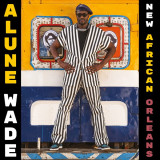
In his sixth and latest album “New African Orleans”, released by ENJA and Yellow Bird, bass guitarist and composer Alune Wade explores the multiple junctions between his native West African rhythms, the Afrobeat and juju rhythms from Lagos and the brass band repertoire immortalized in New Orleans. “I’m exploring a world that goes from my roots to the lost branches on the other side of the Atlantic,” explains the musician from Senegal. He has whittled down around 50 compositions – both original and standards - to a dozen which Alune recorded in Paris, Dakar, Lagos and New Orleans. “The idea first came to me during the Jazz à Gorée festival I organized back in 2014,” he explains. “It had me reflect on the notion of reversing the musical trip most people take from the United States to the African continent. I wanted to set out westward and begin a musical conversation with the best artists, both in Nigeria and the US.”
To achieve this, Wade has invited top artists from both sides of the Atlantic, including the Nigerian talking drummer Olaore Muyiwa Ayandeji, the percussionist Weedie Braimah and the jazz drummer Herlin Riley from New Orleans. The musical inspirations are equally transatlantic, ranging from Dr. John to Manu Dibango and Charlie Parker. But the 45-year-old also pays homage to his father who was a brass band star in his native Senegal back in the Sixties.
BACKGROUND
We only have a partial idea of the birth and remarkable development of the music born of the transatlantic slave trade. From Malinke ballads to Cuban son, from call-and-response patterns to field hollers and hip-hop, Yoruba rhythms to Argentinian tango, from Angolan percussions to the New Orleans brass band sounds… all have roots in Africa and a shackled migration that lasted four centuries. No more so than Congo Square in the Louisiana capital. In 2024, we mark the 300th anniversary of the implementation of the Code Noir which “gave enslaved Africans Sundays off to dance”. A drop in the ocean, but one which shows the importance of culture as a lifebuoy against this barbaric trade. As the Guadeloupian writer Daniel Maximin once claimed: “Our music guided us from the scream to the song, from dragging our chains to dancing.”
debe ser publicado en 30.05.2025

The Delights formerly unissued recording “Listen To Me Girl” first made it’s vinyl debut during 2017 when released back to back with Tearra’s modern soul anthem “Just Loving You” (SJ1008). Having sold out very quickly this release now commands a price of £60.00 a copy. So, with demand still high we have decided to release “Listen To Me Girl” for a second time with the addition of two recently found unissued master tape tracks, which make their vinyl debut as part of this 3 track EP.
The Delights story began in the early 1960’s while as a children’s group from Chester PA. known as ‘The Twilights’ they began entering local talent shows which culminated in a performance at Philadelphia’s prestigious ‘Uptown Theatre’ during 1963. ‘The Twilights’ made their professional recording debut in 1964 for Weldon McDougal III, Johnny Stiles and Luther Randolph’s Harthon Production’s label with “It’s Been So Long/She Put Me Down” (TW-34). A second Twilights 45 came in 1967 “Shipwreck/For The First Time” (TW-35) which sold sufficiently well to be picked up for national distribution by Cameo Parkway. The group consisted of four male vocalists, brothers Kemp “Toppy” Hill, Ellis “Butch” Hill (the eldest) and Jaime “Peanut” Hill and their friend Raymond, plus lead singer and only female member Brandi ‘Peaches’ Wells (born Marquerite J. Pinder) who was only 9 years old when she sang on the group’s first Harthon 45, (Jaime Hill reputedly never featured on either of the two Harthon 45 recordings).
The Hill Brothers were cousins of Manny Campbell and it’s through this family connection that the group came to Emandolynn Productions initially as backing singers before being persuaded by Manny to drop their former performing name of ‘The Twilights’, to become ‘The Delights’. Under Manny and fellow Philadelphian Charles J. Bowen’s tutelage they recorded the delightful crossover dance track “Listen To Me Girl” during the months of July and August of 1968. Recent unearthed master tape finds from these early sessions have since yielded the featured “Come And Rejoice” an energetic subtle gospel influenced dance track which Manny wrote and produced on them in the hope of giving them a wider body of work and appeal as he shopped their demos around local record companies. The original backing track to “Listen To Me” is also featured on this release.
During the mid-1970’s ‘The Delights’ under the tutelage of respected Philly producer, arranger and songwriter Morris Bailey Jr recorded two 45 releases for the Jamie/Guyden distributed Phil-L.A Of Soul label “It’s As Simple As That/I’ve Got Enough Sense” (PH-374) and “Face The Music/Things Ain’t What They Used To Be” (PH-379). Brandi Wells had left the group prior to the Phil-L.A Of Soul releases to firstly join Major Harris’s backing singers ‘Brown Sugar’ before forming the group ‘Breeze’ who backed fellow WMOT label stable mates Billy Paul, Fat Larry & Philly Cream (a.k.a Ingram). Breeze later evolved into the group Slick who recorded the self-named album which produced the chart hits “Space Bass” and “Sexy Cream”. In 1981 Brandi recorded her first solo debut album ‘Watch Out’ which reached #37 on the Billboard R&B Chart, her second solo album entitled “20TH Century Fox” followed in 1985 for the Omni label. She recorded the Butch Ingram penned “I Love You” 12” single for Butch’s Society Hill records in 1992. Sadly, Brandi Wells passed away in 2003 at the age of 47.
Haga su pedido ahora y le encargaremos el artículo en nuestro proveedor.

Releasing now for well over a decade - Neue Grafik: known to friends as Fred, has successfully transplanted from Parisian rookie to one- man London Institution. Beginning as a solo producer and DJ,Fred spread his wings upon relocating to South London - at first with his Neue Grafik Ensemble and later with his now iconic twice-weekly Orii Jam - the latter of which has given agency to an entire new generation of musicians; spawning an aesthetic, nurturing a unique sound and becoming a launchpad for countless artists.
Dalston Tape Volume 1 is Fred’s attempt to fall back in love with beatmaking - taking it back to the roots of
where the project began. I say “attempt” because he’s simply learnt too much and made too many friends
along the way to make a mere DIY beat tape. Since his early MPC-led productions on Parisian label, Beat
X Changers, Fred has learnt to play the keys to a concert hall standard, he has become proficient in double bass and built up a dense network of collaborators who he has composed, recorded, engineered and produced for both at home in SE London and in the iconic Total Refreshment Centre Studios in Dalston.
This experience adds unavoidable dimensions to his toolbox - resulting in something more akin to a miniature-magnum-opus than a simple beat-tape.
Yes, we hear the influences of Pete Rock, Mad Lib, J Dilla and Al Dobson Jr but we also hear the musicality of D’Aneglo, James Blake and live contributions from an ever growing army of young graduates of the Orii School.
Haga su pedido ahora y le encargaremos el artículo en nuestro proveedor.

The Petersons’ were a vocal trio from Waycross, GA, their performing name came from their founder, lead vocalist and drummer Kenneth Peterson, along with Keyboard player Salem Chatman and vocalist/bassist Johnny Members. The trio regularly performed shows along America’s East Coast, and it was while working in Philadelphia during early 1973 that the group answered an advertisement in Billboard Magazine quote “Masters Turned Down? We Are Looking for New Acts to Sign, Contact Omega Sound Productions, Philadelphia, PA”.
Omega Sound was a fledgling independent Recording Company formed by Frank Fioravanti a budding songwriter and former Encyclopedia Britannica Salesman for the initial purpose of find some extra work for the musicians of The Philadelphia Orchestra who were looking to earn some side money. As a result of answering the Billboard advertisement ‘The Petersons’ found themselves booked into Frank Virtue’s recording studio to record two Fioravanti and the late Alan Felder penned songs, the up-tempo “What’s It Gonna Be” backed by the melodic “Just What I’ve Been Looking For” Mel Omega (1833). With the release failing to make much noise, The Petersons returned to their native Georgia where they continuing to perform and record but under the group name of ‘Toll Darkness’. Fast forward circa 30 years and a couple of copies of this obscure Mel Omega 45 was introduced into the UK by Soul Bowl’s John Anderson where they gained belated recognition initially at the Soul Essence Weekenders through resident DJ Steve Guarnori with “Just What I’ve Been Looking For” being his chosen side. These initial copies had a paper sticker on them crediting the Artist as ‘Toll Darkness’ but the subsequent find of further copies with no sticker coverings, revealed the real artist to be ‘The Petersons’, intriguing? The reason behind the differing artist names is reputedly assumed to be that Ken Peterson took some copies of the Mel Omega 45 back to Georgia and pasted the ‘Toll Darkness’ group name stickers over the Petersons label credits to enable him to sell them at shows with his other ‘Toll Darkness’ 45 “Party/Love Makes Me Do Foolish Things on Alpha Records. The up-tempo backing track of The Peterson’s “What’s It Gonna Be” was a Frank Virtue arrangement that he had great faith in, hence it’s usage on plethora of other Philly artists recordings, i.e. Fred Mark, Liza Mae, Michael Christian, Cody Michaels etc over different record labels, Melomega, Concept, Fox Century Plaza and Merben.
Frank Fioravanti also founded the Sound Gems label which brought us the timeless classic “Your My Main Squeeze” recorded on the New Beford, MA group ‘Crystal Motion’. Omega Sound’s most notable achievement would be William DeVaughn’s 1974 hit “Be Thankful For What You Got”.
Haga su pedido ahora y le encargaremos el artículo en nuestro proveedor.

Impulse’ was a band of Milwaukee, Wisconsin musicians whose members included Michael Reese (Rhodes Piano and background vocals), Cedrick Rupert (Lead and Rhythm guitar), Jeffrey Williamson (Drums and background vocals) and Robin Gregory (Bass and background vocals). They would become a group in their own right with the eventual addition of another local artist John Gee, who joined them as their lead singer. The Impulse musicians formed the backing/touring band for another Milwaukee outfit, a vocal quartet, The Quadraphonics who recorded the solitary 45 single “Betcha If You Check It Out/Prove My Love To You” for the Carl Davis/E. Rodney Jones owned ‘Innovation II’ Record label during 1974. This release would later be nationally distributed by the major Warner Brothers label. With import copies of “Innovation II” single finding their way into the UK the record became popular with the devotees of Blackpool Mecca’s Highland Room.
During 1976 the members of Impulse migrated to Oakland California, they had hoped that, The ‘Quadraphonics’ would join them but instead The Quadraphonics chose to remain in Milwaukee and eventually broke up. It was fellow Brewtown producer/recording artist Harvey Scales who was responsible for inviting ‘Impulse’ to the west coast. Under the auspice of Scales, Impulse recorded their self-titled debut album project at Wally Heider’s Studio in San Francisco. The album was initially offered to Casablanca Records but no firm interest was to materialise, a subsequent approach to Jerry “The Ice Man” Butlers newly formed Chicago label, Fountain Records again failed to secure a release of the album, sadly leaving the project unreleased in the can. In the ensuing years, the former group members have continued with their respective careers, the late John Gee embarked on a solo career, recording the 1980 release “Not Enough Love Makin’/ you Are That Man (Why Don’t You Be That Man)” for Leroy Smith’s Oakland C.A, Pashlo label followed by his 1985 modern favourite “So Good To Me/Just Get On” recorded under the artist name of Jon Pierre Gee on his own newly formed Kandi Inc, Record label. Later Kandi projects included the 1995 Jon Pierre Gee & Touch album and the 2005 Ah’VantSoul cd album project, which featured Jon’s business and real-life partner, Kathryn Hannemann (a.k.a the performing artist Kat Webb).Throughout all the aforementioned projects Jon continued to use and enjoy performing with his former fellow ‘Impulse’ musicians of which the two surviving members Robin Gregory and Michael Reese can still be found jamming to this day in the renowned Milwaukee Restaurant/Coffee House by the name of ‘Coffee Makes You Black’. Sadly, drummer Jeffrey Williamson passed away during 2015 with Coley Jackson coming in to pick up the sticks! Lead and Rhythm guitarist Cedrick Rupert left the group in the 1970’s moving to Lake Charles, LA, sadly, he too passed away in 2020.
The Impulse album project having lain dormant since the 1970’s was resurrected during 2018 when Jon Pierre Gee in conjunction with Stephen Chin of Nice Choice Records (USA) and Soul Junction Records (UK) breathed new life into the project. Beginning with the release of the first of two ‘Impulse’ 45 singles on Jon’s Kandi imprint. Firstly “What’s that Sound/You Changed Me” followed in 2020 by a second 45 “I Really Love You/Get The Funk Off my Back” with all four soul and funk tracks receiving worldwide acclaim. Initial plans for the release of the whole album project had been set in place but we’re unfortunately brought to an unexpected halt with the passing of Jon Pierre in November 2020.
Undetered Soul Junction have finally been able to bring this amazing ‘Impulse’ project to life as a limited vinyl press I’m sure once heard, the old adage of “Good Things Come To Those Who Wait” will certainly ring true, enjoy.
Haga su pedido ahora y le encargaremos el artículo en nuestro proveedor.

Seven Steps to Heaven arrived at a crucial junction in Miles Davis' career. Recorded at two separate locations in spring 1963, it served as Davis' first release in more than a year – a layoff that was then unprecedented for the jazz visionary who had issued at least one LP a year since debuting in the early '50s. Equally notable, Seven Steps to Heaven marks the point at which the core of Davis' Second Great Quintet started to assemble. The twice Grammy-nominated effort is also Davis' final studio record to blend standards with originals. And it happens to be one of the expressive, well-played albums in the jazz canon.
Sourced from the original master tapes, pressed at RTI, and housed in a Stoughton gatefold jacket, Mobile Fidelity's 180g SuperVinyl LP of Seven Steps to Heaven adds yet another step (or more) towards the bliss suggested by the album title. Playing with standout clarity, detail, tone, and balance, this audiophile reissue pulls back the curtain on the instrumentalists. Afforded the tremendous advantages of SuperVinyl – including a nearly inaudible noise floor, dead-quiet surfaces, and superb groove definition – this numbered-edition version presents Davis and Co. amid a wide, deep soundstage whose dimensions and solidity help bring the record's historical importance and musical merit into focus. Warm, organic, and present, the SuperVinyl LP of Seven Steps to Heaven is what great-sounding hi-fi is all about.
And there's nary a passage on this 1963 landmark that isn't great. That Davis manages to make it feel so cohesive and seamless is a testament to the inspired performances and engaging compositions. Davis didn't draw it up the way it unfolded. No matter. He held trump cards that stayed up his sleeve for the next three decades: A drive to be nothing less than superb, a refusal to settle for mediocrity, and standards to which nearly no other composer or player could match. "The toughest critic I got, and the only one I worry about, is myself," Davis wrote in the liner notes. "The music has to get past me."
Davis' demanding approach partly explains why he switched up his band between the first and second sessions – and underscores how fast his mind was racing with new ideas. Seven Steps to Heaven acts as the stable bridge between the transitional period that followed the dissolution of his First Great Quintet and formation of the Second; without it, Davis perhaps doesn't invite then-23-year-old Herbie Hancock and a still-teenage Tony Williams into the fold. The trumpeter not only got his men – he preserved in amber for the only time (well, magnetic tape anyway) the chemistry and vibe he achieved with pianist Victor Feldman, drummer Frank Butler, tenor saxophonist George Coleman, and bassist Ron Carter.
That line-up gels for half of the six songs on Seven Steps to Heaven. Captured in Los Angeles April '63, the quintet stretches out on a luxurious reading of the late '20s New Orleans staple "Basin Street Blues"; lays on the romance for a candlelit stroll through the '40s standard "I Fall in Love Too Easily"; and explores the rounded contours and melodic crevices of the early blues "Baby Won't You Please Come Home." The performances are refined, elegant, emotional; the band lets the feelings linger and gives the listener time to absorb the colours and textures.
A month later, Davis returned to New York City with Coleman and Carter, and partnered them with Hancock and Williams. Tellingly, the quintet tried its collective hand at the title track and "Joshua" – Feldman-penned songs already recorded in Los Angeles – as well as the yearning "So Near, So Far." Those are the tunes that comprise the other piece of Seven Steps to Heaven, with the revised quintet's liquid pulse, articulate dynamics, and timing shifts a harbinger of things to come.
It's also worth mentioning that the interpretations of the bounding "Seven Steps to Heaven" – a showcase for Davis' trumpet – and interlocking "Joshua" netted considerable radio airplay and attracted the attention of other contemporaries who covered the songs. Keeping Carter and Williams as the rhythmic engine, and Hancock as the anchor between solo flights and structural motifs, Davis would soon soon welcome Wayne Shorter into the family and transform jazz. Again. The aptly – and, in hindsight, perhaps prophetically titled Seven Steps to Heaven – is how he got there.
debe ser publicado en 15.12.2023

WHITE VINYL[49,16 €]
It would be difficult to overstate the importance of the Jones brothers Thad, Hank and Elvin on the world of jazz. Between the three of them, their performances can be heard on literally thousands of recordings, including some of the most legendary sessions ever recorded with some of the greatest artists. Post-War Detroit was really taking notes on the new sounds of jazz coming into favor and the group of former Detroiters included on this album include some of its most virtuosic students. Thad Jones, (although he was technically from nearby Pontiac, MI) on trumpet, Kenny Burrell on guitar, Tommy Flanagan on piano and Billy Mitchell on saxophone. Jones’ first for Blue Note from 1956 stands as a fantastic sounding announcement that the Detroiters had landed in New York and were about to take off. Including legendary players Shadow Wilson on Drums and Oscar Pettiford on Bass; Detroit - New York Junction, a long sought after rarity and a true testament to the importance of Detroit on the evolution of jazz music through Blue Note Records. Recorded at Audio Video Studios - New York, NY 1956 by Alfred Lion and Rudy Van Gelder
debe ser publicado en 04.08.2023

Black Vinyl[49,16 €]
It would be difficult to overstate the importance of the Jones brothers Thad, Hank and Elvin on the world of jazz. Between the three of them, their performances can be heard on literally thousands of recordings, including some of the most legendary sessions ever recorded with some of the greatest artists. Post-War Detroit was really taking notes on the new sounds of jazz coming into favor and the group of former Detroiters included on this album include some of its most virtuosic students. Thad Jones, (although he was technically from nearby Pontiac, MI) on trumpet, Kenny Burrell on guitar, Tommy Flanagan on piano and Billy Mitchell on saxophone. Jones’ first for Blue Note from 1956 stands as a fantastic sounding announcement that the Detroiters had landed in New York and were about to take off. Including legendary players Shadow Wilson on Drums and Oscar Pettiford on Bass; Detroit - New York Junction, a long sought after rarity and a true testament to the importance of Detroit on the evolution of jazz music through Blue Note Records. Recorded at Audio Video Studios - New York, NY 1956 by Alfred Lion and Rudy Van Gelder
debe ser publicado en 04.08.2023

‘Energy MC2’ began as an energetic bunch of 10 and 11year old neighborhood kids, who initially formed a band under the name of ‘Congressional Funk’. The founding members were Vincent Bonham, Opelton Parker (the brother of Ray Parker Jr) and brothers Ufuoma and Eric Wallace, with the later addition of Fred Gordon. Later becoming the backing band for local Detroit act Mad Dog & The Pups. Featuring on some of the ‘Pups’ earliest Magic City releases “Hep Squeeze” (MC-007) and the follow up release “Funky Monkey” (MC-009). A name-change to ‘The Soulful Hounds’ followed which they are credited as on the instrumental flipside of Mad Dog & The Pups vocal version of “Why Did You Leave Me Girl” Magic City (MC-012).
After leaving Magic City, the band went through several changes in both name and personnel, upon hiring bass player Ben "Rat Bass" Adkins, they adopted the name of his former band, ‘Energy’ to which they added Albert Einstein’s formula for special relativity (E=MC2) to finally became ‘Energy MC2’. As Energy MC2” they soon began seriously recording their own original material which included the two previously unissued 70’’s tracks “If You Break It” and “Other Side Of The Mirror” first released on Soul Junction in 2016. The group’s line up on these songs included Vincent Bonham, Ufuoma Akill-Wallace, Arnell Carmichael, Ernestro Wilson, Opelton Parker, Gordon Carlton, Eric Wallace, Leon Lopez, Marvin Carlton and Marlene Rice. A further unissued song the mellifluous ballad “Juliane” also the gained release on the ‘We Got A Sweet Thing Going On’ volume 2 SJCD 5011 cd compilation album.
During 1974 several members of the group boarded a Greyhound bus for Los Angeles. During their week long stay there under the supervision of Ray Parker Jr they recorded the two featured songs the mellifluous “You And Only You” and “Love To Make Love To You” featuring Arnell Carmichael on lead vocals with the session remaining unissued Energy MC2 returned to Detroit. Vincent Bonham and Arnell Carmichael in 1977 returned to L.A. to join
Ray Parker Jr and Jerry Knight to form the band ‘Raydio” later becoming Ray Parker Jr & Raydio when Jerry Knight left to go solo. Ray Parker later too chose to persue a solo career leading to him recording the title track of the box office hit movie “Ghostbusters” a song he will forever be remember for. During 2014 Arnell Carmichael, Vincent Bonham, James Carmichael and Giovanni Rogers revived ‘Raydio’ but only as a touring band. The remaining members of Energy MC2 all enjoyed successful careers as session and backing musicians with many major artists, The Four Tops, The Temptations, Areatha and Carolyn Franklyn, Michael Henderson, Cheryl Lynn, Bettye Lavette, and Parlet’ (part of the P-Funk family) that help George Clinton Land the Mothership!
debe ser publicado en 03.02.2023

Eugene Lamont Johnson a.k.a E Lamont Johnson or Lamont Johnson holds the distinction of being the first internationally recognized fretless bassist in R&B music. Born April 20th 1955 in Highland Park, Michigan. Lamont rose to prominence as a session musician on Gloster Williams &The King Vision’s 1977 gospel album project “Together” (Gospel Roots -5005). In the same year Lamont featured as part of the celebrated Detroit based band Brainstorm their best-selling 1977 album “Stormin’” for Tabu Records. Brainstorm was initially formed during 1975 by bandleader and saxophonist Charles ‘Chuck’ Overton, and included lead vocalist Belita Woods, Lamont Johnson on Fretless bass, Renell Gonsalves on drums, Trenita ‘Treaty’ Womack on percussion, flute and backing vocals, Bob Ross (a.k.a Professor RJ Ross) on keyboards, Gerald ‘Jerry’ Kent on guitar, Jeryl Bright on trombone and ‘Leaping’ Larry Sims on trumpet and flugelhorn. The album was recorded during 1976 and released the following year. It contained the disco hit “Loving Is Really My Game” the popular “Wake Up And Be Somebody” and the radio hit “This Must Be Heaven” a beautifully crafted ballad featuring the lead vocals of Lamont which still receives continued airplay to this day. Lamont did not feature on the band’s two subsequent album projects “Journey To The Light” (Tabu 35327) in 1978 and “Funky Entertainment” (Tabu 35749) in 1979.
The year1978 was to prove to be one of the most prolific of Lamont’s recording career, playing bass on three studio albums. Firstly, on Hamilton Bohannon’s “On My Way” (Mercury SRM-i-3710), Jimmy McKee’s “First Time Out” (Champion- 8083N5) and Keith Barrows “Physical Attraction” (Columbia JC-35597) albums respectively. The final project of that year would be Lamont’s own album project “Music Of The Sun” (Tabu-35455) featuring Lamont on both bass guitar and vocals, the album also spawned two lead 45’s “Sister Fine/Yours Truly, Discreetly” and “Hey Girl/Differently”.
During 1979 Lamont would feature as a guest bassist on a further two studio album projects, firstly the self-titled debut album of fellow Detroit musicians Chapter 8 (Ariola 50056) followed by another self-titled album “Nightflyte” (Ariola 50060) who’s line-up included Howard Johnson prior to him embarking on a solo career. During 1980 Lamont began work on a second solo album for Tabu. Two lead 45 singles were recorded “Rock You Baby/Something More” (Tabu ZS9-5521) followed by the album’s title song “Rhumba” backed with the modern soul favourite “Masta Luva” (ZS9-5525) for whatever reason CBS/Tabu decided to shelve the remainder of the project. Later recording projects to feature Lamont instrumental talents were Was Not Was ‘s “Tell Me I’m Dreaming and Robert Lowe’s “Double Dip” jazz funk album. Later solo CD album projects from Lamont, “This Must Be Heaven” arrived in 2004 and “Amore’ Dance” in 2001 both on his own Allee Records Label. From the mid 70’s through to the present day, Lamont has been a notable electric bass instructor in the Detroit area and beyond. As well as the previously mentioned projects, Lamont and many of his prot’eg’es work can be found on many other world renown artists recording projects the most notable being, Earth Wind & Fire, The Dramatics, Anita Baker, Lady Gaga, Alicia Keys, Phyllis Hyman, Beyonce, Howard Johnson, David T. Walker, Aretha Franklyn, Stevie Wonder, Herbie Hancock, George Duke, The Temptations, The Winans amongst others.
Fast forward to the present and Soul Junction have licensed two previously unissued dance orientated Lamont Johnson produced compositions for this 45sinlge release with more to come. Under the project/artists name of “Lamont Johnson & Eugene” the recordings feature several different local Detroit musicians and vocalists. The a-side is a male vocally led early 90’s mid-tempo feel good dance number. While the b-side in contrast is a more synthesized bass driven 80’s female dancer which should appeal to the Boogie crowd,
Enjoy.
Haga su pedido ahora y le encargaremos el artículo en nuestro proveedor.

Born of chance meetings in Accra, the band brings together a Burundian producer and vocalist, Betina Quest; with a Ghanaian singer-songwriter, Eli A Free; and a German percussionist and multiinstrumentalist, Ma.ttic. Nyamekye Junction take their name from a bustling junction in the Ghanaian capital, where a number of major roads merge, embodying the musical approach of the band: a singular sound at the junction of their cultural heritages.
In Eli’s words, ‘Dasein’ (from the German for ‘existence’, ‘being there’), captures “the need to live in this moment here and now with a heart full of gratitude” while exploring a number of interlinked themes, including the importance of one's environment – cultural and political, as well as physical - in situating, shaping and explaining each individual’s identity.
The band adeptly channel a wide range of influences, from the Ghanaian legends Ebo Taylor and Osibisa through to US mainstays such as Nina Simone and Erykah Badu; with equal regard given to UK innovators like Benjamin Clementine and Mala. The resulting debut EP ‘Dasein’ is a stunning collage which showcases the band’s impressive range and evolving sound by traversing a diverse range of moods, rhythms and textures.
The lead single ‘GMT’ (short for ‘Ghana Man Time’) is a dancefloor-ready track that carries a deft political message. Driven by a weighty bassline alongside punching drums and percussion, for a rhythm section that would be at home in any broken-beat set, the song explores and emphasises differing conceptions of time between the West and Africa with a playful irony.
debe ser publicado en 02.09.2022

Improvisation and experimentation are at the core of Robocobra
Quartet’s DNA, almost intentionally at odds with their roots as a
post punk band.
Including members with no musical training alongside European
music conservatoire innovators, the result is a groove-driven but
cerebral blast, invoking the likes of Fugazi, Talking Heads and
contemporaries such as Squid and Black Country, New Road.
The eclectic free nature of their live shows allows them to
channel hop from moments of joy and playfulness to periods of
intense fury, creating a unique sound that has earned them
invitations to Montreux Jazz Festival and Latitude.
Robocobra Quartet have a rule: No Guitars Allowed. Their
unique sound, concocted and self-produced in Belfast, Northern
Ireland, sees that ‘middle’ space filled by other instruments such
as saxophones, samplers, keyboards and sound effects,
swirling around the melodic basslines and powerful drum
rhythms which prop up the core of each of their songs.
On top of this music sits a single vocal from behind the drum kit
amid a fury of rhythm, sometimes marrying perfectly with the
pulse of the drums and occasionally at complete odds with it.
Live dates / tour to be announced.
“I genuinely don’t think there is another band like ‘em, anywhere
in these islands” - Tom Robinson
“Free-floating musical explorers” - Hannah Peel
“Fugazi meets Mingus.” - Drowned in Sound
“Exploratory pioneers.” - BBC Radio 3 Late Junction
“A cunning marriage of jazz, spoken word and punk” - The
Quietus
debe ser publicado en 22.04.2022

The Hill District were a group of working musicians assembled by bassist Walter “Sonny” Hughes who following one afternoon rehearsal session together the very same evening recorded their only ever 45 outing the somewhat elusive and now sort after amongst group harmony collectors “Your Scared Of Falling In Love”. The other group members were Sonny’s brother Richard Hughes (Lead Guitar), Anthony Law (Keyboards), William M. Standard Jr (Piano), Mark Smith (Drums) and Daniel S. Lee Jr (Lead Vocals). The groups name was taken from a grouping of African American neighbourhoods in the city of Pittsburgh P.A. locally referred to as ‘The Hill’. The recording session was held under the direction of record producer and song writer James Richard Calloway (A.K.A) Rich Calloway. Calloway would go on to release “Your Scared Of Falling In Love” on his own ‘C-Way Records’ label featuring a instrumental version on the flipside. Rich Calloway hailed from Uniontown P.A. with Uniontown being known affectionately by the local black community as ‘Oniontown’ the name which Calloway adopted for his publishing company. Unfortunately for the Hill District the final mastering of their song left something be desired (a scenario we’ve now rectified with our release) and as a result local Pittsburgh Disc jockeys refused to plug their song leaving their one and only 45 outing to fade into obscurity with the group members going their own separate ways to continue their careers as session musicians with other ensembles. Producer and lyricist Rich Calloway also continued with his own C-way Productions company later composing both sides of The Cleveland Ohio group ‘The Entertains’1975 outing for Steel Town records “Love Will Turn It Around/Why Couldn’t I Believe Them”. Calloway was no stranger to Cleveland having been earlier employed by Way Out Records owner Lester Johnson to compose the lyrics to Jesse Fisher’s “Your Not Loving A Beginner”, the songs arrangement’s being originally laid down by members of the Way Out group The Soul Notes, William Bell (A.K.A Bill Spoon), John Washington and Ricki Dannison under the working title of “I’ve Been Waiting For Your Love”. Prior to the Hill’s District release Rich Calloway had penned and released a 45 single on another local Pittsburgh artist Richie Merrett. The 1973 outing You’ll Always Have Yesterday Standing By” b/w “I Gave It Up” (C-Way 103). Merritt a professional singer who performed with several groups including The Electron’s on their 1968 outing “Turn On Your Lovelight (Shock 209) recorded his first solo outing on the Nashville Deltron label “Can I Get A Rebate/It’s Never Too Late” which he later released again on his own R.A.M label followed by two early 90’s outings, the modern soul favourite’s “Where Did I Go Wrong” and “You Got Problems”. Richie still performs today doing one off shows in between his solo performances aboard 7 Day Cruise ships travelling between Los Angeles and Sant Cabos, Mexico. “You’ll Always Have Yesterday Standing By” was later produced by Walt Maddox under the shortened title of “Yesterday’s Standing By” on his own group ‘These Gents’.
Therefore Soul Junction brings you two 70’s soul/Lowrider in demanders back to back for your delectation.
debe ser publicado en 11.04.2022

Room is a female-led early progressive rock group with minor orchestrations, simple jazzy vocals, heavy guitars and extended tracks. Like most early progressive rock-groups there's also some blues-rock and jazz-rock. The mix of genres works great for variety and is a good example of its time. The use of a small orchestra (violins, violas, cellos, bass, trumpets, horn, trombone) is always risky business for progressive rock-groups, but Room excels in its limited and effective use. Way better integrated then, for example, the silly orchestrations on Salisbury. Another key-element of the listening experience is the recording quality, which is remarkably good for such an unknown record - especially when it comes to the spacious feeling. The instruments are well spread in the musical landscape.
debe ser publicado en 06.12.2021

Blind, Chicago soul singer Willie Williams was first discovered performing in clubs in and around the Windy City. He was signed to ABC records by their A&R Director for the Midwest Johnny Pate a former Jazz bassist, independent producer, arranger and songwriter in his own right. Pate was a friend and colleague of fellow musician, songwriter and founding member of one of ABC’s prolific vocal groups The Trends, Tom Dorsey. Pate and Dorsey would contribute heavily as writers and producer throughout Willie’s recording career, beginning with his first ABC 45 release in 1966 “Have You Ever Been Played For A Fool/With All My Soul”. The release’s b-side became a popular radio play at the time with Willie becoming known as Willie “Soul” Williams for a while. Two further ABC releases were to follow “It Doesn’t Pay/Just Because” (1967) and “I’m Through With You/Strung Out” (1968).
Willie’s next 45 release although recorded in Chicago under Johnny Pate’s supervision found it’s way to another major label, RCA, although credited as a GWP Production (Gerrard W. Purcell). The 45 in question being the excellent Tom Dorsey penned songs “Just To Be Loved By You/Name It” released during 1969.
Two Willie Williams 45 releases did appear on the Gamma label but I’m unsure if one or both of these are by the same Willie Williams in question.
Throughout his recording career Willie continued to work the clubs with his own band which was led by his bass guitarist and confidant Bradley (Brad) Bobo a man who featured as a session musician on many recording sessions including the creation of The Notation’s album of the same name for Curtis Mayfield’s Curtom subsidiary label Gemigo.
On the 22nd of December 1970 a recording session was held in RCA’s Studio B, on North Wacker Drive, Chicago with sound engineer Russ Vestuto. The session was financed by Tom Dorsey who amongst other song writing gratuities had been paid handsomely for the 3 songs “Love Machine”, “My Baby’s Love” and “How Are You Fixed For Love” which he had wrote and contributed to the blue-eyed hit group, The O’Kaysion’s “Girl Watcher” ABC album. The result of this session yielded four Willie Williams tracks. Brad Bobo played bass guitar on the session, the composer of the four songs Tom Dorsey supplied the arrangements and Tom’s wife Carolyn (also a former group members of The Trends) joined both he and Brad on backing vocals.
The four songs were then offered to Eddie Thomas who chose two of them to release on a 45 single. The two songs being “Must Mean Love” which was later renamed “The Baa Baa Song “and “Psyched Out” which Eddie then released on his own Lakeside label, thus leaving the two other songs to remain unissued in the can.
Willie has now sadly passed away but in his later life once the opportunity’s for performing artists began to dwindle he chose a different path in his life, gaining a Doctors degree, he went on to become a College Lecturer. Tom Dorsey too turned his back on the music industry apart from his publishing company to concentrate on his family life as well as founding a very successful business involving one of his other great life passions, photography. Luckily for us he never lost the master tape of Willie’s sessions and after several years of tentative enquiries he graciously relented to my request to put them out. So now before you we have the two excellent previously unissued Willie Williams songs that Eddie Thomas passed on, the delightfully soulful “Give It All I Got” backed with the funky, social conscience themed “Do You Understand”, lost early 1970’s Chicago Soul at its finest.
debe ser publicado en 24.09.2021

Following on from their 'Junction EP' at the tail end of last year, My Nu Leng return to provide a selection of rave-tinged cuts that further cement their status as one of the leaders in the bass music scene. Following a packed-out summer tour diary, the 'Alter EP' consolidates elements from the duo's previous releases and influences into five tracks of low-end damage. Harking back to the pair's underground roots with inspirations from Techno, House and Breakbeat, opener 'Spaced' sets the tone.
Featuring their classic bass growls amongst hardcore pad stabs, an acid-esque synth line and raucous interjections from legendary drum & bass MC GQ, this one's designed to make you move. Takura returns to Maraki on 'Echoes', lending his distinctive vocals over a lethal distorted bassline and uncompromising 2-step beat. 'City Lights' provides momentary respite, a scintillating arpeggio motif over blissful chords and an enchanting vocal hook. My Nu Leng team up with DRS on 'Sinking Sand'. The Mancunian host leads the charge into a warping climax, showcasing his penmanship through relentless triplet flow. 'Signal' closes off the EP in sombre fashion, atmospheric synths and lamenting strings building into an emotive vocal and reflective bassline.
Haga su pedido ahora y le encargaremos el artículo en nuestro proveedor.

The 12" EP A Momentary Convergence of Differently Paced Trajectories is a heterogenous dj-oriented release, prelude and companion of Maurizio Ravalico's first solo percussion album Nobody's Husband, Nobody's Dad, released in November 2018 with the Funkiwala label. It comes in 180gms vinyl on a hand-numbered run of 300 individually screen-printed 320gsm brown card sleeves.
THE MUSIC
Side A opens with a full-size batucada version of Fear of Mapping, one of the tracks from No Fiction Now!, the 2013 debut album of Maurizio's trio Fiium Shaarrk.
It is followed by a personal take on one of Collocutor's second album tracks, Here to There to Everywhere, arranged here as a spacey 5/4 drum'n'bass epic.
Side B contains an old-school jungle remix of Just Bring Your Toys, one of the tracks from Maurizio's forthcoming album, by the Italian d'n'b veteran Enjoy (Omni Music, Bustle Beats). The EP closes with an edited version of the same track: a taste of the album.
Despite being both loosely presented as remixes, neither of the two arrangements on side A makes use of samples from the respective releases, and any material not progammed or played anew by Maurizio comes from either unreleased off-cuts or preliminary demos.
"One of the finest avant-garde percussionists in the world. Maurizio Ravalico is incredible to watch and hear. Catch him live somewhere soon!"- Jean-Claude Thompson, IfMusic uk
"Creative, deep and intriguing. Percussion avantgarde at its best." - Vince Vella, Dj, producer, Havana Cultura
Italian-born visionary cross-genres percussionist Maurizio Ravalico has been one notably eclectic presence in the London music scene since his arrival in the UK, in 1991.
Regularily seen on stage and on releases with the like of Jamiroquai and the James Taylor Quartet throughout the nineties, as well as with virtually every salsa and Cuban-oriented projects to originate from London in the same period, he has subsequently collaborated on many of the projects of the experimental music label Not applicable (Icarus, Isambard Khroustaliov, Alex Bonney, Tom Arthurs) since 2005, and is now an established name in both the London and Berlin improv and experimental scene, having played with John Edwards, Oren Marshall, Steve Beresford, Pat Thomas, Frank Paul Schubert and many others.
Maurizio Ravalico's peculiar approach to percussion is one of the distinctive traits of Tamar Osborn's modal jazz 5-piece band Collocutor (On the Corner records) and of the pan-European trio Fiium Shaarrk (on BBC3 Late Junction's 12 Best Albums of 2017). Maurizio Ravalico also collaborates with the string quartet Phaedra Ensemble, the composer Fred Thomas and the French contemporary dance company Silenda.
Haga su pedido ahora y le encargaremos el artículo en nuestro proveedor.

Total Refreshment Centre is proud to present a brand new mini-LP from Neue Grafik Ensemble entitled 'Foulden Road'. French producer, instrumentalist and DJ, Neue Grafik, has been building a strong rep for himself over the past few years, releasing records previously on labels such as Rhythm Section, 22a, CoOp Presents and Wolf Music.
His sound is a hybrid of jazz, house and hip hop, all with his unique geographical flavours of African ethnicity, Parisian roots and a love for London sounds like broken beat & grime thrown into the mix. In his own words "this mini album has been conceived as a journey from Deptford to Dalston, right through Peckham. During a personal period of transition, I put this music forward at a crossroad of all my influences, taking the time to share and experiment with a band more than that, an ensemble. The idea is to incorporate musicians with their own sensibilities, collaborating together as a reflection of our society; unreal & rebellious, but with magic moments, and full of hope.
The best representation of that is Total Refreshment Centre. This building and its community were a perpetual source of inspiration for me over the past two years & gladly allowed the creation of this project". Having been first properly introduced to the community of the TRC during an after-hours jam, it came to TRC founder Lex Blondel's attention that New design had some exquisite compositions of his own. A few weeks later, it was decided that Neue Grafik would form a band and that they would do their first gig at TRC, a week after the first day of rehearsals. No pressure … Lex continued; "we paired him up with Emma-Jean Thackray, to arrange his compositions for a quartet, added Vels Trio's Dougal Taylor on drums, Matt Gedrych from MaddAddam on bass and Jordan Saintard on sax.
Then the band got to work…" Title track 'Foulden Road' commences the session in truly energetic fashion, named after the street in North London where TRC is based, and where these sessions were largely laid down. Keeping with the geographical vibe, next we have 'Dalston Junction', a two-part affair starting on a sci-fi boom-bap tip, before switching to the ethereal flute playing of Brussels musician Esinam, and the first outing on the collection for Brother Portrait.
'Voodoo Rain' is next, a sweet slice of afro-funk, featuring the incredible talents of London's own Nubya Garcia on sax, and the tempo picks up once again for 'Something Is Missing' - this live version comes from the afore-mentioned infamous first gig at TRC.
The goosebump-enducing vocals of Melbourne soulstress, Allysha Joy, set off the second half of the record with the beautiful downtempo track 'Hotel Laplace', recorded at a live session at Giant Steps, before kicking the energy levels back up with 'Hedgehog's Dilemma', once again featuring the vocals of Brother Portrait, as does the closing track, 'Dedicated to Marie Paule', a mid-tempo piece akin to 90's golden era jazz-hop, bringing the set to its conclusion.
This collection of tracks reflect the many moods and various genres indicative of Neue's creative approach illustrated above.
Haga su pedido ahora y le encargaremos el artículo en nuestro proveedor.

We are very excited to present you this new signing and debut EP by Dampé. A studio and live project from South East London. Since moving to the city, Dampé has been intimately involved in its club culture " from running warehouse spaces and booking venues to DJing and performing in groups across the city and Europe, under a slew of different aliases.
The music is made on a boat on the Thames and is a combination of dusty analogue gear, live instrumentation, and samples. For Dampé, influential parties were "Co-Op, FWD>>" and "You're A Melody" and echoes of those dances can almost be felt in the sound. Across five original tracks, the EP explores weirder and worldlier ends of house music, all with a nod to undeniably UK sounds.
"Peach Shuffle" is a made-for-the-floor, broken beat work-out that has this great warped and chopped Persian vocal sample giving the track a unique and world-wide touch, followed by "St James" Road", a crunchy live Rhodes jam and ode to a favourite street south of the river. "Move Me" is all garage-infused vocal loops and singing bowls and acts as an experiment-come-DJ tool. "Carn" is a super-swung hip hop beat featuring "SMBD" aka "Simbad" providing additional keys. Closing out with "Zongo Junction, At Night", a late night roller with material pieced together from saturated CR 78 samples and field recordings made when Dampé was recording sound for a film about witchcraft and the internet across rural Ghana.
To round up this exciting EP we ask a fellow SE London enthusiast "Nebraska" to make a remix of the title track "Peach Shuffle". Cutting up the vocal of the original, adding some mean bass and pouring a smooth "dance floor" sauce over it. The delicious end result is something we are very proud off and we hope you will enjoy as much as we do!
Haga su pedido ahora y le encargaremos el artículo en nuestro proveedor.

'Eagles & Butterflies has taken storm in electronic wonderland' - Boiler Room Arpeggiator was originally titled '14 minutes of Arps' and its exactly that. Its one of the simplest tracks I'v ever made with probably only 8 layers that your weaves in and out the whole way through, really love the subtleness of this track where at the same time it is also a beast! Oyeme is maybe the E&B sound people are familiar with, big marimba melodies, fat sub and rolling hats with a big break, love this one Prophet was originally just an experiment when i purchased a prophet 6, its a little crazy and pretty full on, love the funky bass in the one from the SH 101. All the parts for this where recorded in a few takes live and two whole track was made in 2 hours!
U.K.-born, L.A.-based producer/DJ, Chris Barratt - aka - Eagles & Butterflies breaks all boundaries across the electronic music spectrum. His productions flow seamlessly through Downtempo, Techno, House and beyond, with releases on Innervisions, Bedrock, Exit Strategy, Sapiens and his own imprint Art Imitating Life. From remixing Underworld, RY X, Agoria, Moby, Andhim and Ludovico Einaudi, Eagles & Butterflies is the newest toast of the underground. His live sets have electrified stages around the world at events such as Circoloco, Awakenings, Mosaic By Maceo, Coachella, Junction 2, Lightning In A Bottle, Sacred Ground, Secret Garden Party, Tomorrowland and many more. With support from dance music heavyweights such as Dixon, Ame, DJ Tennis, John Digweed, Maceo Plex, E&B was also named one of Mixmag's Breakthrough Acts this year, was featured numerous times in DJ Magazine and was plucked for a guest mix on Pete Tong's BBC Radio show. Upcoming releases on Agoria's fresh imprint Sapiens, Art Imitating Life 003, features on Nic Fanculli's debut LP, a collab with John Digweed and a remix for RY X, the Eagle has most certainly landed.
Haga su pedido ahora y le encargaremos el artículo en nuestro proveedor.

Vakant comes back with a very special release from an unknown group of creative entities. Three cuts of tribal space techno weaponry aimed at the dancefloor. We have received a message from entities lost in between the stars in the vacuum of interstellar space. The transmission was encrypted in an ancient code we were able to translated into frequencies understandable to earthlings. A psychic telegram has been sent to us, activating the body and the mind, divided into aggregations of codes that form three tracks of straight in your face, high-octane fueled, acidic tribal techno, riding on solid bass lines, trippy synths, shiny percussions and abstract ambiences.
Haga su pedido ahora y le encargaremos el artículo en nuestro proveedor.
