Ground-breaking afro-rock and jazz with Memphis soul roots on this lost 1972 gem. Lovingly restored and reissued by Matsuli Music
'Black Soul' from 1972 is the third and last known album by The Anchors, a soul group originally formed in Johannesburg's Alexandra township in 1968. Their first two albums, 'Soul Upstairs' from 1969 and 'Everything' from 1971, were issued on Teal's City Special label alongside other prominent South African soul groups of the era like The Beaters, The Movers and The Flaming Souls.
On 'Black Soul', The Anchors undergo a notable shift, moving away from their early Memphis soul influences towards a pioneering African-driven sound. These changes laid the foundations for an emerging afro-fusion scene in the years to come from groups like Batsumi, The Drive and Harari.
'Black Soul' features a who's who of intergenerational musicians from great South African bands over the decades. In addition to Zacks Nkosi, the renowned bandleader of the Jazz Maniacs and long-time member of the African Swingsters in the 1940s and 50s, this album includes kwela star Little Kid Lex Hendricks, known for his Columbia recordings of the late 1950s; as well as Zack's son Jabu Nkosi who would go on to play with The Drive, Roots and Sakhile; and Banza Kgasoane later a member of The Beaters, Harari and then Mango Groove.
Now remastered for its first release since the original 1972 pressing, this lost gem offers a revealing glimpse into the evolution of South African music during a transformative era.
Zacks Nkosi (Sax), Patrick Jabu Nkosi (Organ and Flute), Anderson Nkosi (Lead Guitar), Given Sabela (Bass Guitar), Kid Lex Hendrix (Sax), Banza Kgasoane (Trumpet), Peter Morake (Drums), Hamilton Nzimande (Musical Director).
Original LP issued in South Africa on GRC’s CBS label (LAB 4037) in 1972.
Produced for reissue by Chris Albertyn and Matt Temple at Matsuli Music, and Siemon Allen at Flatinternational.
Original vinyl sourced from the Flatinternational Archive.
Artwork restoration and design by Siemon Allen.
Audio restoration, mastering and lacquers by Frank Merritt at The Carvery.
Manufactured at Pallas, Germany.
Search:bass t
- Facing The Faceless
- Master's Voice
- The Age Of Insanity
- Flesh To Rot To Ashes
- Realm Of Madness
- Those Of The Morbid Inclination
- Apocalypse Whore
- Creature From The Deep
- A Story In Red
LEPER COLONY kreuzen den deutschen und schwedischen Death Metal Stil mit klassischen Einflüssen aus der US-Szene. Die Band entstand aus der langjährigen Freundschaft und der gemeinsamen Liebe zum Death Metal der alten Schule, die den deutschen Sänger Marc Grewe und den schwedischen Gitarristen Rogga Johansson dazu brachten, im Jahr 2020 ein gemeinsames Album zu produzieren. Das Duo holte sich CONSUMPTION-Schlagzeuger Jon Skäre und Lead-Gitarrist Kjetil Lyngahug (PAGANIZER) ins Boot, um das selbstbetitelte Debütalbum aufzunehmen, welches im Jahr 2023 veröffentlicht wurde. Das Werk wurde von Kritikern und Fans gleichermaßen positiv aufgenommen. Es wurde schnell klar, dass es sich bei LEPER COLONY keineswegs bloß um ein weiteres "Superprojekt" handelte, sondern dass eingefleischte Death Metal Fanatiker mit einer Vielzahl von frischen Ideen aufwarten. Marc Crewe hat sich als ehemaliger Frontmann von MORGOTH, und später mit INSIDIOUS DISEASE sowie ASINHELL einen klangvollen Namen in der Szene erworben. Gitarrist und Bassist Rogga Johansson prägte den schwedischen Death Metal in einer Reihe von Bands wie PAGANIZER, RIBSPREADER und REVOLTING entscheidend mit. WOMBBATH-Gitarrist Håkan Stuvemark übernahm mittlerweile die Leadgitarre und Jon Rudin wurde ebenfalls als neues Mitglied verpflichtet. Der britische Schlagzeuger ist unter anderem von MONSTROUS und DEAD SUN bekannt. Mit "Those of the Morbid" geben LEPER COLONOY allen Old School Death Metal Fans exakt das brutale und kompromisslose Album, auf das sie lange warten mussten!
Emerging from the Minneapolis underground and heading straight towards the sky, IE arrive on Quindi with a full-length album of sparkling, sophisticated wonder. Touching on kosmische grandeur, Riley-esque cyclical patterns, lounge pop and dubbed out psychedelia, the five-piece allow their songs to unfurl with a natural, hypnotic elegance which can take many different forms.
There's a loose, live quality to the recordings IE's members commit to record, which reflects their steady presence gigging in Minneapolis and the surrounding area. Since putting out their first release in 2016, they've glided from drone and synth-led jam band ambience (2018's Pome) to strung out, stoner-tinted slowcore (on 2023's outstanding Junk Body). For Reverse Earth they strike a smoky note that wraps itself around your skull across extended run times that evolve with a meditative poise.
From the deceptively driving 4/4 thrum of the opening title track through 'Divination Bag's snaking tryptamine mantras on to 'Simplify's slow and smouldering indie-soul, IE's sound is bathed in a sumptuous warm glow that rounds out the lows and the mids, creating a nocturnal shroud in which their nebulous song structures can feel deliciously endless.
Meredith Gill's drums provide rolling and tumbling undercurrents for the slowly shifting phases of the instrumental players, as Michael Gallope and Travis Workman trade keyboard parts and Workman and Sam Molstad chop and pick at their six-strings. Atop the thrum of her bass, Mariel Oliviera's vocal adapts to the scenery, from a distant, dreamlike siren song on 'Reverse Earth' to a spoken word meditation on 'Babel'.
There's space in each track for every instrument to cut through and have its moment, from a spiralling key vamp to a chicken-scratch guitar flex. The gently twisting, head-feeding groove exercises of the first four tracks give way to a slow and powerful march on 'Dark Rome', closing the record on a noirish anti-ballad fit to peal out in the closing slot at Twin Peaks' Roadhouse (circa season three).
As much as the tracks teem with composition, musicianship, and production to savor, a sound like IE's has a soporific quality that soaks in unconsciously. It's an evocative portal where the band feel as if they could just play on each piece ad infinitum - where the time itself seems to dislodge from its moorings.
- 01: Luminescence (Feat. Marysia Osu, James Akers, Daniel Casimir, Lyle Barton &Amp; Tilé Gichigi-Liperé)
- 02: Sonder (Feat. Marysia Osu, James Akers, Daniel Casimir, Lyle Barton &Amp; Tilé Gichigi-Liperé)
- 03: Into The Storm (Feat. Marysia Osu, James Akers, Daniel Casimir, Lyle Barton &Amp; Tilé Gichigi-Liperé)
- 04: Serenity (Feat. Marysia Osu, James Akers, Daniel Casimir, Lyle Barton &Amp; Tilé Gichigi-Liperé)
- 05: Ascendance (Feat. Marysia Osu, James Akers, Daniel Casimir, Lyle Barton, Tilé Gichigi-Liperé &Amp; Regis Molina)
- 06: Chrysalis (Feat. Marysia Osu, James Akers, Daniel Casimir, Lyle Barton &Amp; Tilé Gichigi-Liperé)
- 07: Beam (Feat. Marysia Osu, James Akers, Daniel Casimir, Lyle Barton &Amp; Tilé Gichigi-Liperé)
- 08: Nightfall (Feat. Marysia Osu, James Akers, Daniel Casimir, Lyle Barton, Tilé Gichigi-Liperé &Amp; Baely)
- 09: Levitate (Feat. Marysia Osu, James Akers, Daniel Casimir, Lyle Barton, Tilé Gichigi-Liperé &Amp; Regis Molina)
Chiminyo is a UK-based jazz/electronic artist and the founder of the new label NRG Discs (having previously released on Brownswood, Nightdreamer, Gearbox, and Astigmatic, with artists such as Gary Bartz, Shabaka Hutchings, Maisha, Nubya Garcia, Cykada, Uniri, as well as solo). Chiminyo is a versatile musician who blends the raw energy of live drums and percussion with cutting-edge electronic production.
His early solo releases showcased his knack for unique approaches to making music, using self-coded software to trigger synths and samples from every cymbal crash and drum hit, eliminating loops and click-tracks. This DIY, tech-driven methodology allowed Chiminyo complete, spontaneous control over his music—all from the stool behind his drum kit—creating a sound that is both daring and innovative.
Chiminyo's latest project, NRG, continues this trend of innovative thinking. Born from discussions around the UK jazz scene, Chiminyo concluded that this musical expression is less about "jazz" and more about the energy (NRG) that fuels it. As a result, NRG has evolved into a semi-regular event where Chiminyo brings together some of London's finest musicians for live, improvised performances that encapsulate the spirit of the scene. These live recordings are then given the magic production treatment by Chiminyo and co-producer Aviv Cohen, transforming them into the masterpieces we get to hear on wax.
The first three NRG LPs were a massive success, generating over 600,000 streams, selling over 800 copies (without distribution support), and receiving airplay on BBC Radio, Jazz FM, NTS, Soho Radio, and many more. High-profile DJs like Gilles Peterson and Jamz Supernova championed the albums, which were also covered in print by The Guardian, Jazzwise, Echoes Magazine, and various online channels. This success led to an invitation to record a live album at Ronnie Scott's, one of London's most iconic jazz venues—an incredible opportunity for any artist.
NRG 4 brings together some of the best jazz and electronic musicians in London. The album features Marisia Osu (harp), James Akers (tenor saxophone), Daniel Casimir (double bass), Lyle Barton (synthesizers), and Tilé Gichigi-Liperé (live electronics)—an all-star lineup whose members have released multiple records on Concord, Brownswood, Jazz Re:freshed, Astigmatic and more, and have collaborated with artists such as Laura Misch, Nubya Garcia, Blue Lab Beats and Emma-Jean Thackray. Three tracks are graced with features from Jorja Smith's backing vocalist BAELY and Cuban saxophone maestro Regis Molina.
Limited to 400 12" LPs (350 standard, 50 screen-printed limited edition).
Keith Hudson’s Nuh Skin Up Dub is a deep, heavyweight dub album that stands as one of the most potent statements in the genre’s history. Released in 1979, this sonic masterpiece showcases Hudson’s signature dark, almost mystical production style, where heavy basslines, echo-drenched drums, and ghostly fragments of vocals swirl together in a hypnotic haze. Unlike the more polished, accessible dub records of the time, Nuh Skin Up Dub is raw, unfiltered, and experimental, pushing the boundaries of rhythm and space. Tracks like "Nuh Skin Up" and "Felt We Felt the Strain" pulse with an eerie, almost menacing energy, while Hudson’s masterful use of reverb and delay creates a soundscape that feels simultaneously expansive and claustrophobic. Often referred to as the “Dark Prince of Reggae,” Hudson had an uncanny ability to craft music that was both deeply meditative and unsettling, and Nuh Skin Up Dub is a prime example of his genius. It's a record that rewards deep listening—every spin reveals new layers of sonic detail, hidden textures, and dub wizardry. For fans of heavy, atmospheric dub, Nuh Skin Up Dub is an essential listen, a landmark recording that solidifies Keith Hudson’s status as one of the most visionary figures in reggae history.
- A1: (Exitatio)
- A2: Embers
- A3: Chains
- B1: Petrified
- B2: Ascend
- B3: (Ire Sub)
- B4: Anguish (Bonus Track)
Kavrila sind zurück - kompromisslos und ungefiltert. "Heretics I", der erste Teil einer neuen EP-Trilogie, entstand spontan und ohne nachträgliche Bearbeitung. Vier Tracks, direkt auf Tascam aufgenommen, roh und ungeschönt, verleiht dieser direkte Sound der EP ihre ungezügelte Intensität. Zudem gibt es in der physischen Version - neben Intro und Outro - als Bonus einen weiteren Track aus den "Mor"-Sessions. Die Band setzt bewusst auf analoge Direktheit und eine rohe, ungeschönte Ästhetik. Während Drums und Bass live eingespielt wurden, fügte Gitarrist Andreas seine Parts später hinzu, ohne den Charakter des Albums zu verwässern. Gemischt und gemastert wurde "Heretics I" von Hauke Albrecht im Studio Altona in Hamburg - ein kompromissloses Statement echter, ungefilterter Intensität.
Berlin-based French-Irish multimedia artist Zoe Mc Pherson levels up on their third full-length "Pitch Blender", mangling years of experience DJing and performing live into a tight set of cybernetic soundsystem experiments that flicker between the rave and the art space.
Cast your mind back to February 2020 for a moment, when Mc Pherson released their last album "States of Fugue". The world seemed less tangled somehow, and yet Mc Pherson's precision-engineered fusion of exploratory sound design and visceral club pressure seemed to hint at a cataclysmic event none of us were really expecting. Only a few weeks after its release the world changed forever, and the majority of us were grounded - forced to consider our lives and the movement (or lack thereof) surrounding us. The philosophy of this extended time period is welded into the bones of "Pitch Blender", Mc Pherson's supple third album. They have learned plenty in the last two years, and infuse all of that anxiety and spiky emotionality into a spread of tracks that sound as powerful in headphones as they do over a well-tweaked soundsystem, soldering vocals, environmental recordings and instrumental flourishes to unpredictably pneumatic, cybernetic beats.
Anyone that's caught one of Mc Pherson's energetic live performances over the last few months will have an idea of what "Pitch Blender" is made of. They're an artist who's somehow able to match the raw energy of post-punk and no-wave music with the brain-altering potential of the best experimental club tracks, vocalizing an incongruous post-lockdown reality over beats that sound as if they're in a permanent state of flux. 'On Fire' splutters to life in a frenetic patter of drums that blur into oddly soothing hoover sounds, snaking lysergically towards a drop that's teased constantly, and never comes. We're forced to wait until 'The Spark' for that, fighting through choppy, pitch-mangled guitar and rolling beats until a gruesome kick drum forces its way through the psilocybin mists and heaving Bristol-inspired bass clonks. Backed up with just the inverted traces of recognizable breaks, this vigorous pulse lies at the heart of "Pitch Blender", the driving force that powers Mc Pherson's sound even when it's only hinted at.
'Blender' is the moment where Mc Pherson show their full hand, using crackling sound effects, ghost vocals and uneven rhythms to build a textural landscape that's so evocative you can almost taste it. Squealing modular synth effects sound like gameshow buzzers being triggered in another dimension and propel the track forward - it's club music, just about, but Mc Pherson's motivation is world-building, and their world is colorful, abstract, and dizzyingly surreal. "Obsolete user," their voice echoes over driving airlock kicks. But they take a swift left turn with 'Lamella', reducing the kinetic club rhythms to a longing simmer and letting loose with powerful vocals, intoning with robotic, gender-fluxed intensity. On 'Wait', New York City's clacking crosswalk signal - already an effective club track on its own - is transformed into a reminder to slow down, juxtaposed with booming sub-heavy kicks, acidic synths and effervescent percussion that rattles in time with the vibrations. It's foley rave, built for pure psychedelic intensity to blur the line between real life and sonic fiction.
One of the album's most galvanic tracks, 'Power Dynamics' curves a double-time rhythm around breathless HQ sound design squiggles until it hits a polyrhythmic crescendo, striking a queasy balance between rave hedonism and ritualistic hand drum energy. It all builds towards eerie closing track 'Outside' that acts as an important wind down, spotlighting Mc Pherson's ability to operate outside of the rhythmic spectrum, using cinematic scrapes and flickering neon synths to create music that's tense but never terrifying. The track feels like the end credits of a particularly bewildering movie - something between the cyberpunk dystopia of "Ghost in the Shell" and the vivid, sky-scraping beauty of "Koyaanisqatsi". Mc Pherson has managed something special with "Pitch Blender": mashing together genres with rare focus, and sharpening their engineering skills to a fine point, they've concocted an antidote to contemporary malaise - a wakeup call that's begging us to loosen our limbs and move.
- Gummy
- Etch
- Chainsaw
- Heaven's Leg
- Philadelphia Get Me Through
- Mainstage
- Snare
- Uno
- Bonehead
- Ring Size
Growing up is painful, brutal, and sometimes beautiful _ something Brooklyn-based indie-rock band Bedridden knows all too well. The band's name is even a nod to that ineffable period between childhood and the jagged edges of the real world. "When I was 21, I kind of lost my home," says frontman/guitarist Jack Riley. "I was couch-surfing. I was having a hard time.The next iteration in the band's maturation, then, is their debut, LP Moths Strapped To Eachother's Backs, 10 fuzzed-out (and sometimes gnarly) ruminations on dating, drugs, and survival out April 11 on Julia's War. The title came from a mysterious missive Riley received on astrology app Co-Star. "Last year I was way too reliant on other people _ my partner at the time, my friends," he says. "I was strapped to them in a weird way _ and flying in circles. This album is about that time."The current incarnation of Bedridden encompasses a patchwork of styles, influences, and friends Riley accumulated over the years. A Chicago native who first started making music at age five on a thrift-store guitar emblazoned with Kurt Cobain's name, Riley moved to New Orleans for college where he dabbled in punk before falling in love with shoegaze. There, he launched the first version of Bedridden. Sebastian Duzian (bass) _ a jazz musician and Pasadena native _ linked up with Riley in NOLA along with his bandmate, drummer Nick Pedroza. Pedroza, from Claremont, grew up on rock, metal, and jazz, honing his style after joining the band. Wesley Wolffe _ a guitarist fed on a steady diet of New Wave and `90s alt _ rounded out the crew just a few months back. Bedridden's previous lineup released their first EP, Amateur Heartthrob, in 2023 _ a noise-washed blend of shoegaze, DIY, and indie that Riley says is a "coming-of-age EP _ these formative stories about not having a bed, dating, being kind of a jackass. I was making fun of myself a lot." That release caught the attention of Douglas Dulgarian from Philly Label Julia's War (and TAGABOW), who signed them for Moths."Some of these songs have been around for years," says Riley, adding that they were recorded last February at Studio G Brooklyn; the album was produced by Aron Kobayashi Ritch (Momma). "As opposed to Amateur Heartthrob, we attempted to blend more clean guitars into a driving sound to capture more clarity _ one that also sounds live_ and raw," Riley says. That rawness thrums through the record, which kicks off with the thrashed "Gummy," about an incident when Riley had to gently fend off a co-worker's unwanted advances while both drunk and high on an MDMA gummy. And then there's mournful rager "Etch," which sees Riley daydreaming about beating up a meddler in his personal life _ in the minor key.The annihilating "Chainsaw" revs in next, a lightning-fast Lemonheads-inspired track that recalls Riley moving in with new roommates who were unnaturally obsessed with purchasing a lamp. "For some reason that pissed me off," he laughs; that rage is evident in the album cover, which shows said power tool demolishing a lampshade. Heavy-shredding "Heaven's Leg" showcases the band's affinity for `90s mainstays like Smashing Pumpkins while telling the tale of a gig at a local church. "The lyrics are about a pastor I had met that had lost his leg," Riley says. "The church had signs about not cussing and I had a feeling that neither of us had anything to talk about without potentially offending the other."The band's not afraid to get confrontational, though, on the anger-fueled, drum-heavy "Philadelphia, Get Me Through," which deals with a dead-end relationship and the mistaken assumption that getting drunk in the titular city would be a balm against the pain. And the nasty, brutist, and short hardcore-adjacent "MainStage"? "It's about being disrespected at a show on New Year's and how I lashed out," Riley says. "I then began to take it out on other people, which was a quality that I despise."Things get contemplative and mournful from here on out _ the emo-edged "Snare" is about bringing flowers to a hospital room where you're not welcome, while the Smiths-inspired "Uno" wrestles with self-loathing. "I guess the big finale of that song was my response to dealing with this recurring experience of feeling like I wasn't good enough by getting really into whippets," Riley says. Nu-metal bop "Bonehead," then, recalls an embarrassing dinner that turned into an argument _ the name applies both to that incident and the delicious simplicity of the guitar parts.After all that turmoil and pain, the band caps everything off with their eyes to the future on the jangle-pop "Ring Size." "All my friends are getting married _ do I follow in their footsteps? Or is it all a waste of time?" Riley says of the song. "At the end, through it all, I guess that's what I've been trying to figure out _ how to grow up, how to move on. I'm trying to navigate things as an adult and I'm not very good at it. But this is just the first record. This is just the beginning."And, hey, at least now he has a bed.
3024 is excited to announce "Panta Rei", the long-awaited debut album by London-based, Italian artist Ehua. This album, which comprises a collection of songs crafted over the span of a year and a half, is not just an exploration through sound but also a significant milestone in Ehua's personal and artistic development. For the first time, she explores her vocal expression while also incorporating a range of percussive and other analog and acoustic instruments, resulting in a distinctive set traversing various corners of the bass music continuum.
Accompanied by unique artwork created out of concrete by Jeroen Erosie, a booklet with background and photography and a short eponymous film, 'Panta Rei' represents an intricate 'gesamtkunstwerk'. An exciting blend of various media with contributions from a range of artists, of course all centered around Ehua's beautiful and intimate music.
"Panta Rei" will be released in May, available on vinyl, as well as digitally and in booklet format. 3024 X Planet Wax are hosting a launch event on April 24th in South London.
- Hej
- Banana Kitchen
- In The Middle (Feat. Nate Dailey)
- Dreaming Of Okapis
- Change The Game (Feat. Nico-Alexander Wilhelm)
- Agustin
- Four Voices Intro
- Four Voices (Feat. Mareike Riegert)
- Ciao
- We Will Remain (Feat. Nate Dailey)
Lisa Wilhelms neues Album SO CLOSE erscheint am 9. Mai 2025 bei BERTHOLD records und bringt eine spannende Weiterentwicklung ihrer Musik. In Zusammenarbeit mit Lukas Wögler (Saxophon), Moritz Langmaier (Klavier), Franz Blumenthal (Bass) und Lisa Wilhelm (Komposition und Schlagzeug) kombiniert sie lyrischen Jazz mit verträumten Pop-Klängen. Das Album erweitert das ursprüngliche Jazz-Quartett um Gesangseinlagen von Mareike Riegert, Nate Dailey und Nico-Alexander Wilhelm sowie ein Streichquartett. Wilhelms Kompositionen sind tief von persönlichen Erlebnissen und literarischen Entdeckungen inspiriert. Die Reise von SO CLOSE führt die Hörer durch intime Erinnerungen und emotionale Momente, die in Klänge übersetzt werden. Lieder wie "Change the Game", geschrieben für ihren Bruder, sprechen von den Herausforderungen von Druck und Erfolg, während "Four Voices" die inneren Kämpfe junger Frauen thematisiert. Mit SO CLOSE setzt Wilhelm mehr auf arrangierte Kompositionen, während sie ihre jazzigen Wurzeln und improvisierten Elemente beibehält. Die Klanglandschaften des Albums, inspiriert von unerwarteten Begegnungen und Geschichten, bieten eine tiefgründige emotionale Reise, die Pop, Folk und Jazz vereint. SO CLOSE stellt Lisa Wilhelm als Komponistin und Schlagzeugerin auf ein neues kreatives Niveau und verspricht ein berührendes und vielschichtiges Hörerlebnis.
- Gone Sovereign
- Absolute Zero
- A Rumor Of Skin
- The Travelers, Pt.1
- Tired
- RU486:
- My Name Is Allen
- Taciturn
- Influence Of A Drowsy God
- The Travelers, Pt.2
- Last Of The Real
House of Gold & Bones – Part 1 is the fourth studio album by American rock band Stone Sour. It is the first Stone Sour album without bass player Shawn Economaki, who left the band in 2012, his studio replacement was Rachel Bolan from Skid Row. Musically, Corey Taylor also described the album's sound as "Pink Floyd's The Wall meets Alice in Chains' Dirt". House of Gold & Bones – Part 1 was released on October 22, 2012 and debuted at number 7 on the Billboard 200 music album charts. The album has sold just under 130.000 copies in the United States alone and got raving reviews all over the globe. The album hasn't been available on vinyl for over 10 years and is now available as a limited edition of 1500 individually numbered copies on gold coloured vinyl and includes a 4 page booklet.
Marty Willson-Piper is an English guitarist, singer, and songwriter best known as a longtime member of the Australian band The Church (1980–2013). With a career spanning over 45 years, he has contributed to a wide range of musical projects, including his solo work, collaborations with All About Eve and The Saints, and his own band, Noctorum.
In 2025, Willson-Piper launched Archaeological Dig - Volume 1, the first in a planned trilogy of releases where he re-records over 30 songs from his extensive catalog. This re-imagined collection features ten songs from different time periods, played with strings, acoustics, piano, and keyboards while still incorporating bass, drums, and multi-layered vocals. The album revisits material from his solo career—including selections from In Reflection (1987), which also received a Record Store Day 2025 reissue, and Art Attack (1988)—as well as songs from his tenure with The Church, drawing from landmark albums like Heyday (1985) and Starfish (1988).
Included in Volume 1 are fan favorites like "Tristesse," originally featured on Heyday (1985), and "Spark," from the platinum-selling Starfish (1988). These songs highlight the diversity of Willson-Piper’s catalog and showcase his evocative songwriting and signature guitar work.
Adding to the album’s distinctive presentation, the cover art for Archaeological Dig features a themed sci-fi illustration, with each of the three volumes depicting Willson-Piper in a different setting alongside UFOs. The release is available across all planets and throughout the galaxy via the In Deep boutique label in conjunction with Schoolkids Records.
Blending psychedelic rock, folk, and alternative influences, Willson-Piper’s music remains deeply atmospheric and introspective. Beyond his recording career, he is also an avid vinyl collector, music historian, and passionate champion of independent artistry.
Volume 2[22,48 €]
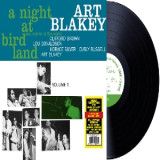
A Night at Birdland Volume 1 is a live album by drummer Art Blakey, recorded in 1954 at the famous Birdland club. This first volume highlights his quintet, featuring Clifford Brown on trumpet, Lou Donaldson on alto saxophone, Horace Silver on piano, and Curly Russell on bass. The album captures the raw energy of emerging hard bop, with intense tracks like “Split Kick” and “A Night in Tunisia.” Blakey asserts his explosive drumming style, foreshadowing the era of the Jazz Messengers.
Parisian mambo " is the second album by " Cecilya & the Candy Kings ". The entire LP is an homage to the city of Paris, that has made musically grown up the catalan singer since she settled down in the capital of love. The 11 songs of the album take you to a musical journey back to the 1950"s by the hand of a woman with a powerful and luminous voice committed to the causes of her time. Cecilya"s lyrics, intimate and universal at the same time, not only speak about love and celebrationas the old rhythm"n"blues did. She speaks about dreams (broken or not), internal struggles, healing,emigration, her native Mediterranean sea, the chance to be a freewoman, the superficiality of the world we live in and the nostalgia for better times.The music, signed Rodolphe Dumont, has been carefully created and produced to sublimate Cecilya"s personal universe. The retro sound ambiances and catchy melodies truly take us back to the times of Elvis and Marilyn Monroe. "Parisian mambo" captures the essence of the cream of rhythm"n"blues from the golden era: a mix of blues,rock"n"roll, boogie-woogie, mambo and far more.The musicians on the album are:Cecilya Mestres on vocals, Rodolphe Dumont on electric guitar, Sax, Gordon on tenor and baritone saxophones, Olivier Cantrelle on piano, Abdell B. Bop on double bass and Denis Agenet on drums.
James Taylor has been writing/recording albums and touring for the past 43 years, starting with The Prisoners and then The James Taylor Quartet (JTQ) from 1986 onwards, to great acclaim. Taylor was the pioneering force that spear-headed the Acid Jazz movement in the 90's, which saw a renaissance in live music. He has also virtually single-handedly driven the rediscovery of the Hammond organ, his trademark keyboard. He has developed his composition and arrangement skills and with these has recorded over 20 library albums. The most recent of the library albums include the four tracks on this very EP, which feature Taylor's innovative horn arrangement skills, placing JB style horns over a funk groove, but in this case he had the novel idea of incorporating two guitars; one funky, one rocky. Sort of James Brown meets The Rolling Stones, and the result can be heard on this slab of vinyl. The current live line-up for The James Taylor Quartet is James Taylor (keyboards and orchestration), Mark Cox (guitar), Andrew McKinney (bass) and Pat Illingworth (drums).
- Muppet Show Theme Song - Go, Ok
- Rainbow Connection - Weezer
- Mahna Mahna - Fray, The
- Movin' Right Along - Alkaline Trio
- Our World - My Morning Jacket
- Halfway Down The Stairs - Lee, Amy
- Mr. Bassman - Lerche, Sondre
- Wishing Song - Airborne Toxic Event, The
- Night Life - Saller, Brandon
- Bein' Green - Bird, Andrew
- I Hope That Something Better Comes Along - Nathanson, Matt
- I'm Going To Go Back There Someday - Yamagata, Rachael
- Perseverance
- Never Gonna Run Away
- Beyond The Reach Of Our Eyes
- We, Ota Benga
- Wisdom; Terrace On St. Paul St
- Real Love Pt. 1
Die Jazzwelt darf sich freuen, dass Blue Note Records das außergewöhnliche Talent von Trompeter Brandon Woody erkannt hat. Der junge, in Baltimore geborene und ansässige Künstler hat in den letzten Jahren in der US-Jazzwelt aufhorchen lassen. „Brandon ist einer der seltenen Künstler, der sowohl eine lebendige Vision als auch die Fähigkeit und das Wissen besitzt, diese umzusetzen“, sagt Blue-NotePräsident Don Was.
Der vielseitige Musiker hat trotz seiner jungen Jahre bereits einen ganz individuellen Sound zwischen Modern Jazz und souligen Elementen entwickelt, der an seinen großen Kollegen Freddie Hubbard erinnert. Um sich herum hat er eine herausragende Band versammelt und für sein Debütalbum sechs mitreißende Eigenkompositionen aufgenommen. „For The Love Of It All“ bezeichnet er als Hommage an die Kraft der Liebe. Die Besetzung besteht aus Troy Long (Klavier, Orgel, Rhodes, Keyboards), Quincy Phillips (Schlagzeug) und Michael Saunders (Bass), sowie den Special Guests Imani Grace (Gesang) und Vittorio Stropoli (Aux-Synthesizer).
- Muppet Show Theme Song
- Mr. Bassman
- Wishing Song
- Rainbow Connection
- Night Life
- Mahna Mahna
- Movin’ Right Along
- Bein’ Green
- Our World
- I Hope That Something Better Comes Along
- I’m Going To Go Back There Someday
- Halfway Down The Stairs
Kermit der Frosch hatte 1955 seinen ersten Fernsehauftritt. Siebzig Jahre später feiern wir ihn und die Muppets in ihren sieben Jahrzehnten voller Gesang, Tanz und Freude!
Zu diesem Jubiläum ist „Die Muppets: Das grüne Album“ jetzt erstmals auf grünem Vinyl erhältlich – mit einer besonderen Botschaft von Kermit dem Frosch.
- Zen And The Art Of Nonsense
- Fun On The Floor
- The Blessed West
- Taken For Granted
- Looks Can Kill
- Sacred Measure
- Flare
- Black Five
- Vigilante
- Zor Gabor
- Tightrope
The Scream, Siouxsie & the Banshees' first album, was released late enough in the punk era to bear some claim as the first post-punk album, with only a minor traces of 'punk' (one lingering early song, "Carcass" comes to mind) and enough hints of what had come even earlier, Andy MacKay-like saxophone flourishes - to feel utterly new. Not to mention the effort producer Steve Lillywhite must have put into the album, his first fully-credited major label production. Siouxsie was clearly the focus of the band, with her unique vocal style and lyrics, but the real star, we've always known, was John McKay, who wrote most of the album's music (as well as singles like "Hong Kong Garden"), creating a wholly new guitar sound - harsh and brittle, yet melodically intoxicating . . . best articulated by a somewhat confounded Steve Albini years later ". . . only now people are trying to copy it, and even now nobody understands how that guitar player got all that pointless noise to stick together as songs". McKay's influence lives on; many of the most influential guitarists of the past four decades credit him as a major influence - Geordie from Killing Joke, Jim Reid of The Jesus And Mary Chain, U2's The Edge, Thurston Moore, Johnny Marr and even the two guitarists - The Cure's Robert Smith and Magazine's John McGeoch - who followed him in The Banshees. McKay's burgeoning status as the anti-guitar hero was halted when he and Banshees drummer Kenny Morris - at odds with Siouxsie and bassist Steve Severin - fled the band just after the start of a tour supporting the group's second album, Join Hands. It was a weekly music paper scandal, later the subject of a BBC documentary, and Siouxsie's vitriol working its way into the lyrics of a later Banshees b-side, "Drop Dead / Celebration". Aside from a solitary single on Marc Riley's In Tape label nearly a decade later, no music was heard from McKay again. So it comes as a major surprise to learn of a pile of excellent recordings made in the years just after he left The Banshees, unheard by all but a very few, some of which feature drummer Kenny Morris, plus Mick Allen from Rema Rema, Matthew Seligman of the Soft Boys and longer-term collaborator Graham Dowdall and John's wife Linda . . . the latter three of whom now all sadly deceased. Sixes And Sevens is an historic lost album. Brazenly genius and bearing fair claim as the lost treasure of the post-punk era, the album collects eleven studio tracks, carefully mastered from original tapes. It's a masterpiece which best speaks for itself.
Barbara Moore was a British singer, composer and arranger, best known for her work in the 1960s and 1970s, especially in jazz, pop and easy-listening music. She gained recognition as a session vocalist and arranger, working with artists and bands such as Jimi Hendrix and Dudley Moore. Barbara was a prominent figure in the UK’s music industry during the height of the "library music" era, where composers created music for television, film and radio.
One of her most notable works was her arrangement and vocal work for the *Vocal Shades and Tones* album, which became iconic in the world of library music. Her compositions, like "Hot Heels" and "Steam Heat," are renowned for their catchy, funky, and soulful elements, often featuring groovy bass lines, smooth vocals, and jazzy arrangements.
Barbara Moore’s work continues to be appreciated by fans of vintage and retro music, and her compositions have appeared in various films, television shows, and commercials, adding to her legacy as a significant contributor to the UK's music scene.