One of the greatest enigmas of the music scene in mid to late 1970s Harare was The New Tutenkhamen, a band which played an eclectic brand of Zimbabwean township music combining
traditional rhythms and western influences. The band included some luminaries of Zimbabwean township music. Elisha Josamu was an alumnus of the fabulously-named Hallelujah Chicken Run Band (alongside Thomas Mapfumo), and Green Jangano’s long-running Harare Mambos, and would later form Two Plus Two with bassist Christopher “Chex” Tavengwa. Jethro Shasha played the drums, and would arguably become the New Tutenkhamen’s most famous export, making continental waves working with likes of Salif Keita. Paul Sekerani played the rhythm guitar, with Amos Chatyoka on the organ, while the enigmatic Maggie Mbuli provided vocals and F. Manda played the sax. The New Tutenkhamen recorded I Wish You Were Mine at Teal Records, produced by Crispen Matema, a talented jazz drummer in his own right who had played drums on the all-time classic Skokiaan, and had backed Louis Armstrong on his 1960 Rhodesia visit. Combining the
heavyweight producing talents of Matema and the writing chops of Josamu, The New Tutenkhamen band created an album howcasing various musical styles popular at the time. From the afro-jazz jam session aesthetics of “Tutenkhamen Theme”, “Big Brother alcom” and “Forever Together”, to the almost Van Morrison-sounding “Sunday Morning”; from the upbeat rock ballad “True Love”, to the funk-infused dance song “Togetherness”; from the bouncy jazz
exhortations to work hard in “Ane Nungo”, to the brassy, raunchy foot-stomper “Me & Dolly”. The title track “I Wish You Were Mine” is a ska-infused ballad that wouldn’t be out of place in post-war
Birmingham, while the star of the show is “Joburg Bound”, itself a fast-paced rock piece with Motown undertones and funky guitar lines. As a collective effort, I Wish You Were Mine provides a fascinating insight into a fraught time in Zimbabwe’s history, and the bands plying their trade through the turmoil, making music for young people, by young people.
Cerca:bassi m
Neurot Recordings are proud to reissue the landmark collaboration Neurosis & Jarboe, which was originally released in 2003. This latest version is fully remastered and with entirely new artwork from Aaron Turner.
Very limited silver metallic and black swirl 2LP - Non-Returnable
Steve Von Till explains the idea behind the remastering; "Bob Weston (Chicago Mastering Service, and member of Shellac) worked closely with Noah on making these new versions sound as good as the possibly can. Noah has the most trained critical ear for fidelity out of all of us being an engineer himself. We recorded this ourselves with consumer level Pro Tools back then, in order to be able to experiment at home in getting different sounds and writing spontaneously. The technology has come a long way since then and we thought we could run it through better digital to analog conversion and trusted Bob Weston to be able to bring out the best in it....This new mastered version is a bit more open, with a better stereo image, and better final eq treatment."
He continues about the original artwork..."Aaron felt he could create something that would unify the energy of both Jarboe and Neurosis in an elegant manner. We let him do his thing and I think it definitely adds to mystery of the album and sets it apart from the rest of our catalog."
When two independent and distinct spheres overlap, the resulting ellipse tends to emphasise the most striking and powerful characteristics of each body. Such is the case with this particular collaboration between heavy music pioneers Neurosis and the multi-faceted performer Jarboe (who performed in Swans and who has collaborated with an array of people from Blixa Bargeld, J.G. Thirlwell, Attila Csihar, Bill Laswell, Merzbow, Justin K. Broadrick, Helen Money, Father Murphy, the list goes on...) The musicians pull from one another some of the most harrowing and unusual sounds ever heard from either artist at the time - a sentiment which also rings true to some 15 years later.
Neurosis & Jarboe opens with a high-pitched whirring sound winding up as Jason Roeder's ominous tom-drum beat and Noah Landis' slinking synth line writhe in unison until Jarboe drops in, drawling in her characteristic, corrupted Southern belle voice, "I tell ya, if God wants to take me, He will." From there on in, the album is a series of abrupt shifts and cleverly juxtaposed themes that flows in a rhythm of its own. The sinister and ethereal sounds, vocal coos and electro-pulses of "His Last Words" seem like the perfect soundtrack to a David Lynch film. On "Erase," song parts are dissected and grafted one atop the other, continually building tension as Jarboe wails and yelps with Banshee fervor.
The project began with the artists working in seclusion, recording the elements that would best highlight their own characteristic integrity and personality, rather than either attempting to mimic one another's familiar elements. As recorded ideas were passed back and forth, the collaboration proved to bring out the most unhinged and urgent talents of all those involved.
Throughout the album, that signature "Neurosis note" - the sound of something simultaneously recoiling and erupting, the apocalyptic tone announcing the birth of a new world - reaches its apex and becomes evermore icy and eviscerating. Guitarists Steve Von Till and Scott Kelly trim their tones for cleaner, chorus-drenched effects layered between the thunderous distortion blasts of bassist Dave Edwardson. Likewise, Jarboe's operatic wail and other vocal contortions sound perfectly suited to the eruptive emotional fray of the music.
The collaboration is a deeply textured mosaic that is a culmination of merged aesthetics from two major influences on free-thinking sounds. It unlocked the hidden potential of electronic music as a new force in heavy rock. At a time when groups like Oneida, Wolf Eyes and Black Dice were beginning to experiment with technology in making mind-numbing leaden electro-drone freed from any essence of "dance music," Neurosis & Jarboe redefined all notions of their past - and outlined the course of heavy music to come. It's interesting to look back through the lens of this release, and think about these ideas and concepts in the present.
Neurosis & Jarboe remains the meeting point of all art that takes us beyond ourselves.
Vegan straight edge outfit SECT unites vocalist Chris Colohan (Cursed, Burning Love, Left For Dead), guitarists James Chang (Catharsis, Undying) and Scott Crouse (Earth Crisis, The Path Of Resistance), bassist Steve Hart (Day Of Suffering), and drummer Andy Hurley (Racetraitor, The Damned Things). .
The result is a caustic, riotous, belligerent style of vile hardcore fed by a boundless well of socio-political vitriol. Blood of Beasts was recorded with Kurt Ballou at GodCity Studios and mastered by Alan Douches at West West Side Music.
.
"Blood of the Beasts" is ten reflections on the myth of progress, the new old tribalism, the single face of all subjugations, the broken promise of automation, love, loss & obsolescence set against the dying light of a better tomorrow.
Koma Saxo is a highly potent new five-piece produced by the visionary Berlin-based Swedish bassist-producer Petter Eldh. The lineup brings together five heavy jazz names on the Berlin–Nordics axis, including Eldh on bass, Christian Lillinger on drums and the frontline of three saxes: Otis Sandsjö, Jonas Kullhammar and Mikko Innanen. Despite the top-billing names, make no mistake: this is not just another "supergroup", but a real working band with their own sound and musical trejectory.
Eldh's vision for the Koma Saxo sound is one step ahead of what groovy avantgarde jazz could sound like in 2019, involving postproduction work with the raw material recorded in Helsinki in connection to Koma Saxo's successful debut at the We Jazz Festival. Both studio and live tapes exist side by side, and Eldh goes deep in molding the final music to be heard on the upcoming Koma Saxo releases.
The first introduction into the world of Koma Saxo comes in the form of a 7"/digital single "Port Koma / Fanfarum For Komarum". Side A presents a restlessly dubby beat track, which would be ripe for hiphop sample use. The flip launches into a joyful full-on groovy free jazz fest which is hard to resist. Think Art Ensemble of Chicago at their swingingest but add a little "Nordic Noir" dropped right into the busy streets of Berlin's Kreuzberg.
On 28th June 2019, drummer / producer / composer Myele Manzanza will release his eagerly anticipated third album 'A Love Requited' on First Word Records (winner of Worldwide Awards 'Label of the Year' 2019).
Produced with award winning Australian bassist & long time musical collaborator Ross McHenry and featuring a plethora of New Zealand and Australia's finest young instrumentalists, 'A Love Requited' is as much a musical journey as it is an attempt to process, work through and come to terms with the life around him.
"The music on this record was written often as a place of psychological refuge from the tensions of an ultimately failed relationship at home, as well as an attempt to come to grips with thought patterns and personal history that caused an often problematic relationship to music itself. Meditating on themes of love, fear, family, anger, death, ego and acceptance has helped create a narrative arc that grounds the album as well as a mode of therapy to begin working through these issues for myself.
'A Love Requited' is easily my most personal work to date and my hope is that beyond the music itself it may be of help to others, if only to say that your not alone in your struggle to make sense of the world".
This album also features the stellar talents of APRA award winning NYC based pianist Matthew Sheens (John Pattitucci, Cecil McBee, Ross McHenry Trio), alto saxophonist Jake Baxendale (Antipodes, The Jac), trumpeter Ben Harrison (Dave Douglas, Horns Of Leroy), trombonist James Macaulay (The Lagerphones, Epic Brass), multi-reedist Jason McMahon (The Shaolin Afronauts), flautist Adam Page (NZSO, John Psathas, Noel Gallagher), guitarist Django Rowe (Wizard Tone Records) as well as additional keyboard contributions by longtime collaborator Mark de Clive-Lowe (Ropeadope Records, Mashibeats), Brenton Foster and Jack Strempel.
Where Manzanza's debut album 'One' presented his ability as a producer / beatmaker, and his sophomore album 'OnePointOne' showcased his live performance and band leader prowess, 'A Love Requited' puts Manzanza's skills as a composer to the fore.
"Over the last few years I've really enjoyed the process of getting away from music software tools and just sitting at a piano with some manuscript paper and a cup of coffee and seeing what comes of it. I'm a very amateur pianist and my music theory knowledge is fairly limited, but in some ways that's an advantage as I'd be starting with a basic barometer of "does this sound good to me?", without too much consideration for formal rules and structure. From there, developing the arrangements to present to musicians forced me to get a better understanding of melody, harmony and orchestration and to really hone in on refining my ideas to a point where I now feel as much satisfaction and confidence putting myself out on the world stage as a composer as I do playing the drums."
'A Love Requited' will be available on vinyl & digital from the 28th June 2019.
Southern Lord announce the next Caspar Brötzmann Massaker reissues in the ongoing series, continuing with Der Abend Der Schwarzen Folklore and Koksofen this July. Read on for more insight into these albums, and for information about incoming live dates supporting Sunn O))).
Caspar Brötzmann is one of the most unique and innovative guitarists of the last 40 years. With his Berlin-based trio Massaker, he evolved a whole new autonomous approach to writing rock songs, starting from sounds that were widely considered ornamental if not detrimental ‘sonic waste’, such as shrieking feedback and droning overtones. This plethora of sounds were arranged into tracks to sound like breaking concrete, grinding metal, or bursting glass, at once monumental and threatening, impenetrable and hermetic, yet also archaically tender and loving.
Even today, as the art of noise has reached a level of sophistication that no one could have imagined 30 years ago, Caspar Brötzmann Massaker’s music is resoundingly singular. Ultra heavy riffs and beats, ominous tribal chants and a raw physical force is conjured up by these three sinister and proud minds of their era. Their unhinged, unified stream of energy is captured on these remastered reissues and the results are thrilling.
Koksofen (which translates as blast furnace), originally released in 1993, has become one of Massaker’s most popular albums. Like it’s predecessor, ...Schwarzen Folklore, the album took shape in Massaker’s rehearsal room below the Berlin subway station Schlesisches Tor, and was recorded at Conny Plank’s studio near Cologne, with Plank’s former associates Ingo Krauss and Bruno Gephard producing.
There’s a different kind of intensity to Koksofen. The features of Massaker’s sound are in full bloom. Mountainous noises tower up and crash down, and tormented sounds rise from ominously seething grounds, haunting the entire song-scape. The feel of doom and dread hangs heavily over the five songs, and the title song rumbles, shrieks and wails, plagued by Caspar’s guttural growls of war, suffering and death.
Caspar recalls one anecdote from shortly after the original release whereby Bassist Edu Delgado called him asking to turn on the TV, thus discovering that “Hymne“ was being used as background music to a report about the death penalty in the US. A different kind of intensity indeed.
Reflecting on the album to this day Caspar remarks “Koksofen is still a mystery to me,'' he continues “I can still feel the troubled times in these songs.” - the effects are certainly potent for the listener too. And the album undoubtedly affirms Massaker as the fiercely original and compellingly raw musicians that they are.
Australian band Pleasure Symbols enter a new phase in 2019, physically and stylistically with the forthcoming release of their first full length record Closer and Closer Apart. Three years have passed since the release of their debut, self-titled EP through Avant!. The time away being a necessary moment of reflection and regeneration for singer, songwriter and bassist Jasmine Dunn. Joined by fellow musician Steven Schnorrer, the duo began the push towards a more 80’s inspired post-punk sound with a ‘pop noir’ twist. Deciding to record and produce the album themselves, gave the freedom to take time to grow and explore their new direction as a song writing duo. Despite current trends in popular music, Pleasure Symbols continues to focus on a more guitar based post punk, dream-pop sound, while slowly diverging from a previous minimal wave, synth based musical output. With themes of desire for desires sake and self confrontation, the new musical direction may seem initially harrowing, but look closer and you will see vulnerability and tenderness triumph over the struggle of the human experience.
Vanishing Twin is songwriter, singer and multi-instrumentalist Cathy Lucas, drummer Valentina Magaletti, bassist Susumu Mukai, synth/guitar player Phil MFU and visual artist/film maker Elliott Arndt on flute and percussion; and on this album they have made their first artistic statement for the ages.
Some of its great power comes from liberation. The album was produced by Lucas in a number of non-standard, non-studio settings. 'KRK (At Home In Strange Places)' summons up the spirit of Sun Ra's Lanquidity and Broadcast And The Focus Group Investigate Witch Cults Of The Radio was simply recorded on an iPhone during a live set which crackled with psychic connectivity on the Croatian island of Krk.
The magical Morricone-esque lounge of 'You Are Not an Island', the blissed-out Jean-Claude Vannier style arrangement of 'Invisible World' and burbling sci fi funk ode to a 1972 cult French animation, 'Plane`te Sauvage', were all recorded in nighttime sessions in an abandoned mill in Sudbury. The only two outsiders to work on the recording were '6th member' and engineer Syd Kemp and trusted friend Malcolm Catto, band leader of the spiritual jazz/future funk outfit The Heliocentrics, who mixed seven of the tracks (with Lucas taking care of the other three).
Vanishing Twin formed in 2015 - their first LP, Choose Your Own Adventure, which came out on Soundway in 2016; followed by the darker, more abstract, mostly instrumental Dream By Numbers EP in 2017. The band explored their more experimental tendencies on the Magic And Machines tape released by Blank Editions in 2018, an improvised session recorded in the dead of night, offering a glimpse into their practice of deep listening, near band telepathy, and ritually improvised sound making. These sessions formed the basis of The Age Of Immunology.
Over the years, Claremont 56 has played host to some memorable collaborative
projects, most notably Bison, an unlikely super-group whose members included
Holgar Czukay, Ursula Kloss, Liquid Liquid’s Sal Principato, Ben Smith and label
boss Paul ‘Mudd’ Murphy. Now Murphy is at the helm of another collaborative
outft, Hillside, whose seductive debut single contains two deliciously pie eyed
instrumental workouts.
Hillside is very much a family affair, with Murphy joining forces with two old
friends: bassist/guitarist Alex Searle and percussionist Patrick Dawes. The trio
has a collaborative history that stretches right back to Murphy’s time in Akwaaba
in the mid nineties. For their debut outing, Hillside has also welcomed a very
special guest musician: award-winning jazz violinist and long-time Bert Jasch
collaborator Mike Piggott.
As opening gambits go, “Hidden Port” is an emphatic statement of intent. The
audio equivalent of sailing slowly around a cluster of sun-baked islands in
search of shelter from an approaching storm, the track sees Searle wrap bluesy,
Peter Green style guitar passages around a shuffing, Latin-tinged groove rich
in Dawes’ distinctive percussion patterns and Murphy’s languid electric piano
and synthesizer lines. As the track progresses, Piggott steps up to make his
mark, with his undulating electric violin lines complimenting Hillside’s impeccable
instrumentation while adding extra emotional weight to proceedings. It’s a
stunning beginning to the Hillside story.
Piggott also makes a big impression on accompanying cut “The King’s Tun”,
delivering fuid and energy-packed solos that weave in and out of a bright
and breezy instrumental track rich in jangling acoustic guitars, subtly spacey
electronics, freside-warm bass and more sparse-but-intricate percussion
courtesy of the effervescent Dawes. Searle’s eyes-closed, rock style guitar solos
cap another memorable excursion from Claremont 56’s latest in-house band.
Alt-rock icon Josephine Wiggs is best known as bassist in The Breeders, rising to superstardom in the '90s and continuing to draw crowds and critical acclaim in the wake of their 2018 album All Nerve.
But over the years, Wiggs has released several of her own albums, all of which delightfully defy genre. Her new solo record, We Fall, is both a departure and a distillation of an enduring personal aesthetic: moody and spare but also melodic, at once contemporary and nostalgic.
Some influences are clear: We Fall is reminiscent of the experimentalism of Brian Eno's Another Green World and recalls the delicate, languid minimalism of Harold Budd. The album's classical inflections, sharpened by a dialog with electronic elements, evoke Alva Noto and Ryuichi Sakamoto. This is an album of juxtapositions: minimalist at moments, richly layered in others; ambient while also sharply focused; melancholy yet resolute.
There's something both dreamy and scientific about We Fall. Wiggs, an enthusiastic amateur mycologist, has an impressive collection of mushrooms she's photographed in her travels. We Fall could be the soundtrack to what can't be captured in a single photo—the growth and decay of miraculous creatures that a less astute and sensitive eye might overlook entirely.
Composed, performed and recorded by Wiggs, with drums and electronics by her longtime friend and collaborator Jon Mattock (Spacemen 3, Spirit , We Fall is a lyrical, bucolic album with an undercurrent of disquiet. Think of a wintertime walk in the woods as dusk falls too soon. True to the classic album form, the 10 almost entirely instrumental tracks on We Fall form a compelling whole: a crystalline meditation on paths not taken and words unspoken, an elegy for moments lost and last embraces.
JOSEPHINE WIGGS BIO
Josephine Wiggs grew up in an unconventional family north of London. Returning home from a summer holiday with a donkey riding in the back of the family's 1927 Rolls Royce was not considered at all bizarre. Wiggs studied cello as a child, segued from college in London to undertake a master's degree in Philosophy, and then, in a move few would have predicted, joined a rock band.
After making three albums with The Perfect Disaster (1987-1990), Wiggs left to join Kim Deal (Pixies), Tanya Donelly (Throwing Muses), and Britt Walford (Slint) in forming indie supergroup The Breeders, whose debut album Pod came out in 1990. Following a shift in line-up—with Kelley Deal on guitar and new drummer Jim Macpherson—The Breeders released Last Splash in 1993; with its hit single 'Cannonball' and 'Divine Hammer,' they became alternative rock superstars.
During the same period, Wiggs released two lower-key albums with Jon Mattock (Spacemen 3, Spiritualized): Nude Nudes (1992) under the name Honey Tongue, and Bon Bon Lifestyle (1996) using the moniker The Josephine Wiggs Experience. She also recorded and produced Klassics with a K (1996), the beloved and only album by the Kostars (Luscious Jackson's Jill Cunniff and Vivian Trimble). During a brief run of shows, Wiggs joined the band on drums, showing her range of musical ability.
In the late '90s Wiggs collaborated with Vivian Trimble as Dusty Trails, whose eponymous 2000 album is an homage to neo-noir soundtracks, spaghetti westerns, and Gallic pop. Time Out described it as 'one of the most subtly suggestive, understatedly elegant...things likely to have caressed your cochlea in years.'
Allusions in Dusty Trails to film music foreshadowed the next stage of Wiggs's career, writing scores for feature and documentary films—from Happy Accidents by Brad Anderson in 1999 to Appropriate Behaviour by Desiree Akhavan in 2014. Her new album We Fall began as a suite of short pieces for the documentary film Built on Narrow Land. Wiggs has also composed and recorded music to accompany live performance and short films by the acclaimed Brazilian choreographers chameckilerner.
In 2013, following the 20th anniversary of Last Splash, the classic lineup of The Breeders reunited for a world tour. Five years later in 2018 they released All Nerve, with Wiggs co-writing two songs and singing lead on the standout track 'Metagoth.' We Fall, Josephine Wiggs' third album of her own design and ninth album in a career spanning three decades, will be released on vinyl and available for download and streaming on April 12, 2019 by Sound of Sinners.
Kalim Shabazz looks to find common ground between the old and the new. Electronic music with a soul. Organic electronic music that moves the dancefloor in a new, but not unfamiliar, direction…
This 3 track EP with keyboardist Jerrell Battle signify the true organic deep house vibe with "Bassic" a deep melodic journey with guitar riffs that moves you. On the flipside "Dana Byrd" beautifully demonstrates the power of the voice as "She" is dedicated to the most important women in our lives. Delivering that true NY Soulful vibe you would hear at the Shelter. Lastly "Sound Module" finishes the record with straight deepness.
Shabazz a true Brooklyn native, made his mark in New York in 1993 with his legendary Afterlife party with Kim Lightfoot. Since the early 90's Kalim has been working with partner Nick Jones; recording history together with their first release, “Wake Up People”, on Bobby Konders’ Massive B Records which featured Satoshi Tomiie & Cassio Ware. Shabazz and Jones continued this partnership under various studio monikers including ‘Moments of Soul’ and ‘Soul Movement’ with releases on labels like Wave Music, King Street Records and Shelter Records. The rest is history!
By the late '70s, Alice Coltrane had largely gravitated away from jazz, incorporating Hindu chants and hymns into her music to reflect a newfound sense of creative omnipotence. However, in April 1978, she would return to her roots, performing at University of California, Los Angeles to make her first and only live album.
Transfiguration, featuring drummer Roy Haynes and bassist Reggie Workman, showcases Alice's many compositional talents and fierce improvisatory abilities. Throughout this double LP set, her playing evokes the time spent in her late husband John Coltrane's band and the avant-garde music of her earlier years.
As biographer Franya J. Berkman writes, "Her up-tempo keyboard work here is the most exciting of her commercial career. With its rapid-fire transpositions of short figures; its long modal passages, rhythmic play, and timbral inventiveness; its sustained energy and burning pace; and the unrelenting support of Haynes and Workman, she takes leave of the jazz business with a truly breathtaking swan song."
Alice Coltrane would not revisit jazz on record for another 26 years, turning instead to spiritual music made with students at her Vedantic Center and self-releasing a series of cassettes under her Sanskrit name, Turiyasangitananda. It is hard to imagine a better farewell than the intense and spellbinding Transfiguration.
Repress!
Following on from the standout D.J. Rogers release, South Street Disco turn their sights to reissuing two seminal and much sought after '70s jazz funk Loft classics. One side houses Miroslav Vitouš' cosmic disco delight 'New York City', the other uncovers the Latin infused whirlwind 'Whistle Bump' from Eumir Deodato.
First up, the Czech jazz bassist and founding member of Weather Report, Miroslav Vitouš, supplies the infectious vibrations of 'New York City'. Harnessing the spirit of the bubbling NYC underground club scene of the mid '70s, Vitous lays down a proto Arthur Russell flavoured jam, that blends whirling new-wave-esque vocals and brazen basslines over trademark cosmic keys from the master, Herbie Hancock. Combined with tight drumming and fiery, overdriven riffs it paved the way for this to become a dancefloor hit and a clear precursor to the early house scene. With originals trading hands for £120+ it's high time 'New York City' got an official remastered reissue.
On the flip side, a timeless Brazilian instrumental jazz-funk gem from Eumir Deodato that likewise became a certified classic through heavy rotations on New York's revered dancefloors, most notably via David Mancuso at The Loft. Feel good feelings amplified by spirited Rhodes, psychedelic strumming and that sure-fire Latin infused bongo / whistle carnival combo. Carefree, unbridled energy that sees Pops Popwell's funk bass perfectly accompanying blazing guitar solos and a horn section from heaven, it's impossible not to get down to. Pure South American sunshine bottled up and ready to be supplied at will.
Dead Fader jumps from Kimochi Sound over to Tesuji with a rolling, dreamy, euphoric rendition of future electro. Essential, optimistic, forward-thinking. On the other side, Bassiani's HVL flips the beat on its head for more ominous perspective, complete with klaxon acid line and sinewy breakbeats.
A cat may have nine lives, but Peter Cat Recording Co. has a multitude of dimensions. Formed in New Delhi around 2010 by the crooner Suryakant Sawhney, it's a group that's mutated over time, shedding members and accruing more, always evolving musically with each album: from gypsy jazz to psychedelic cabaret; ballroom waltzes to epic space disco; bossa supernova to uneasy listening. What's more they play jajj, which you've almost certainly never heard of.
'Gypsy jazz is the description we used around the time of our first album Cinema that we sound nothing like now,' says Sawhney, before adding: 'At the time I was really into Strauss.'
Portrait of a Time 2010 - 2016 is the first taste many Europeans will have of this highly original, musically capricious and deeply inscrutable New Delhi four-piece. The compilation helps you get to know a band who are essentially unknowable, not that that will stop you from trying. Furthermore, in a capital city known for its mystery, madness and mayhem, Peter Cat Recording Co. is something of ananomaly there too.
While Suryakant's crooning is spookily reminiscent of a hipster 50's Sinatra, it was more his intention to ape legendary Bollywood playback singers like Kishore Kumar, Mohammed Rafi and especially Hemant Kumar. There are diverse American influences in the mix too, including Sam Cooke, Etta James and even Tom Waits, and time spent in San Francisco studying film may have contributed to the cinematic melange. Thrown together it becomes something unique that equates less to a listening experience and more to an out-of-body experience.
They were signed to new French record company Panache after label boss Alexandre Rabia was trawling through YouTube one day and happened upon their remarkable promo for 'Love Demons'. It's a mind-blowing eight minute epic featuring the desert, one camel, a movie theatre, swirly organs over coruscating beats, dancing girls, more police and a cavernous pit that then-bassist Rohan Kulshreshtha falls into.
You can try to compartmentalize them all you want, but just when you think you've got them pegged, they will evolve and transmogrify and the description you have in your hand will slip through your fingers like sand. Who knows if Peter Cat Recording Co. has nine lives, but you can listen to a past life on Portrait of a Time, and a future incarnation - much of it recorded in Paris - will be available in the autumn. Just remember, unlike a cat, you'll never put them in a box.
- A1: Birth Of The Sparkchild (Ft. O. Watson & S. Novsky)
- A2: Schizophrenia (Ft. H. Feraud & J. Jt Thomas
- A3: We Play What We Want (Ft. The Insane Vocal Society, No Dfinition+Brother P.)
- A4: Bobby Sparks Sr.s Famous Chili (Ft. M. Miller, K. Anderson & M. Letteri)
- A5: The Comanche Are Coming (Ft. R. Sput Searight & Mononeon)
- B1: Girls From Tahiti (Interlude)
- B2: So Fine (Ft. J. Rob, I. Sharkey & E. Gales)
- B3: I Miss U (Ft. F. Mccomb)
- B4: Black Man Running From The Police (Ft. S. Novsky, M. Mitchell & T. Parsnow)
- B5: Stono River (Ft. L. Peterson & M. Simmons)
- C1: Lio Is Weird As Hell (Ft. M. Letteri & Mononeon)
- C2: All Mine (Ft. Mental Chaos & Damascus)
- C3: Lets Take A Journey (Ft. S. Novsky & G. Maret)
- C4: Too Late Now, Boss Man!(Interlude)(Ft. C.sweet Thang Sparks & B.r. Sparks S
- C5: Islam (Hadjdj From India) (Ft. S. Novsky & Dj Ernie G.)
- D1: Take It! (Ft. R. Hargrove & Rev. H.l. Stegar)
- D2: Zelin (Ft. D.g. Bonaventure & Y. Edorh)
- D3: Black Change (Ft. J. Rob, Verb & S. Carrol)
Bobby Sparks II ist vielen ein Begriff. Sei es als Keyboarder bei Snarky Puppy, Marcus Miller, Prince oder Liz Wright, Bobby hat überall markante musikalische Spuren hinterlassen. Und nun ist es endlich soweit: Mit "Schizophrenia - The Yang Project" steht Bobby Sparks Debutalbum (2CD Set) zur Veröffentlichung bei LEOPARD an. Es hat gedauert, um diese außergewöhnliche Sammlung unterschiedlichster Songs zu produziern. Aber es hat sich mehr als gelohnt: zeigt sich darin doch das breite musikalische Vokabular und der schier unerschöpfliche Schaffensdrang des Keyboarders. Vom slammenden Funk bis zu langsamen, groovigen Soul-Balladen und Streifzügen in die Genres Straight-ahead-Jazz, Fusion, Orchester- und Weltmusik: das sehr passend betitelte Album "Schizophrenia - The Yang Project" vereinigt eine Vielzahl verschiedener Musikstile in sich, ohne dabei das Gesamtbild aus den Augen zu lassen. Mit an Bord auf dieser außergewöhnlichen musikalischen Reise sind eine Reihe seiner alten Freunde aus Dallas, sowie viele Stars des Genres - etwa die Bassisten Marcus Miller, Pino Palladino, MonoNeon und Hadrien Feraud, der Trompeter Roy Hargrove, die Sänger Frank McComb und James - J. Rob' Robinson, Snarky Puppys Michael League und Jason - JT' Thomas, die Gitarristen Lucky Peterson und Eric Gales sowie die Drummer Mark Simmons, Brannen Temple und John - Li'l John' Roberts.
- A1: Roots Manuva & Doug Wimbish - Spit Bits
- A2: Sherwood & Pinch (Ft. Daddy Freddy & Dubiterian) - One Law For The Rich
- A3: Horace Andy - Mr Bassie (Play Rub A Dub)
- A4: Neyssatou & Likkle Mai - War
- B1: Lee 'Scratch' Perry - African Starship
- B2: Denise Sherwood - Ghost Heart
- B3: Higher Authorities - Neptune Version*
- B4: Sherwood & Pinch Ft. Lsk - Fake Days
- B5: Congo Natty - Uk All Stars In Dub
- C1: Mark Stewart - Favour
- C2: Lsk And Adrian Sherwood - The Way Of The World
- C3: Gary Lucas With Arkell & Hargreaves - Toby's Place
- C4: Nisennenmondai - A' - Live In Dub (Edit)
- D1: African Head Charge - Flim
- D2: Los Gaiteros De San Jacinto - Fuego De Cumbia / Dub De Sangre Pura (Dub Mix)
- D3: Little Axe - Deep River (The Payback Mix)
- D4: Ghetto Priest Ft. Junior Delgado & 2 Bad Card - Slave State
- D5: Coldcut Ft. Roots Manuva - Beat Your Chest
Vol. 8[25,42 €]
Fortsetzung Der Legendären On-u Sound Compilationreihe Mit Neuen Adrian Sherwood-produktionen, Einzigartigen Mixes Und Unveröffentlichten Tracks Von U.a. Roots Manuva, Lee "scratch" Perry, Coldcut, Gary Lucas (captain Beefheart's Magic Band), Mark Stewart Und Horace Andy. "pay It All Back" Startete 1984, Die Letzte Ausgabe Erschien 1996. Die Tracks Sind Wie Üblich Durch Spezielle Effekte Im Piratensender-style Miteinander Verknüpft. 15 Von 18 Tracks Sind Unveröffentlicht, Ein Track Befindet Sich Exklusiv Auf Den Physischen Formaten, Die Beide Zusätzlich Ein Umfangreiches Booklet Mit Detailierten Illustrationen Und Kommentaren Zum On U Sound-katalog Enthalten.
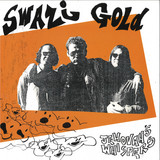
Swazi Gold have created a debut album that shimmers like the coast. There are six songs, two created by each member; through pure collaboration and participation. Swazi Gold are a true democracy.
Formed by the chief songwriters from Melbourne bands Crepes, Dreamin' Wild and Sagamore, this new band brings old friends together. Chris Jennings and Sam Cooper grew up in the Victorian coastal towns of Barwon Heads and Ocean Grove, while TimKarmouche was an inland man, hailing from Ballarat in the state's north-west
"We've been playing together for so long; in different mediums and in different bands. We've played our own key roles, but now we know what each other wants. Swazi Gold shows off our relationship from over the years, which is really cool," says guitarist and bassist Jennings.
Swazi Gold's other guitarist and bass player, Cooper, has a theory about the unifying power of their regional origins:
"It's this kind of small town thing where you strive to be different and creative. Because you're more isolated, you focus on your creativity and align yourself to similar people. I think growing up down the coast has meant I've continued to be drawn to people from other isolated places," he says.
It's this togetherness that's at the heart of Swazi Gold's debut album,Jehovah's Whispers.Recorded in a single weekend in 2017 at the Cooper's family home in Ocean Grove (affectionately termed the "Cooper Ranch")Jehovah's Whisperscaptures a musical intimacy and deep friendship between the three members.
"The bond with all the tracks on the album isn't necessarily lyrical, but it's 100% sonic. The simplicity of the instruments we use and the set-up we have is what's really rad," says Jennings.
"It's a fantasy of what we imagined Jehovah might be whispering in your ear," he adds, grinning.
Drawing from their collective love of African music, American funk, and quirky, melody-driven pop music, the album explores the space between conventional genres and styles of production.
"Using drum machines has made the song-writing process a lot quicker and opened up a whole new avenue stylistically.
Fifth part of the Strata-East Dolphy Series, Glass Bead Games is arguably the crown jewel of the Strata East movement, an amorphous genre that treads an unusual path between post-bop, 70's avant-garde and spiritual jazz, with a groove.
Glass Bead Games is full of revelations at many levels. First, the decade of the 1970s did produce genuinely creative, "human" new music flowing from the jazz mainstream; second, Bill Lee was more than Spike's dad: he was a superlative bassist, a team player of the first order, a powerful catalyst who, if anything, deserves to be better known than his son; third, Billy Higgins was, as so many musicians insist, a once-in-a-lifetime drummer—the bellows inspiriting the collective flame.
Most importantly, Clifford Jordan was an artist of the first order, his playing so effortless and unforced, unselfconscious and focused, mature and wise that, at a time when altissimo fury was all the rage, it's small wonder his authentic voice frequently went unheard. His musical rhetoric is so personally expressive, its substance so compelling, the listener couldn't care less about the extraordinary technique required to convey its captivating message. Compared to some of his more acclaimed peers he's a less aggressive yet paradoxically more directive and shaping influence. The climaxes, rather than spelled out, are merely suggested, registering with deep and lasting impact on the listener. It all comes down to learning the language, those precious little beads. Not every player, including Jordan or the listener, can use it like Shakespeare, but all can learn to read Shakespeare and understand its principles of arbitrariness and serendipity, of invariance and transformation.
Jordan, no less than Shakespeare, requires a like-minded cast of players—in this case four musicians of such redoubtable proficiency that each remains committed to keeping the beads in play. He's not a man content with a mere musical "dialogue" with his fellow musicians nor is he about to take the initiative in pulling his troops up to his level. Instead he begins to tell a musical story that's so compelling his three comrades are inspired equally to contribute to a collaborative narrative. This is brilliant music-making by a Coltrane- influenced successor who feels no obligation to mime the predecessor. It may be the most significant saxophone performance on record since Coltrane and, providing the listener stays with it for any length of time, the most deeply satisfying. Jordan's game—so effortless, unforced, and "level"—erases distinctions between composed and improvised, soloist and ensemble, narrator and narrative, the dancer and the dance. It seems incapable of wearing out its welcome.
By Samuel Chell/All About Jazz