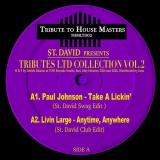
St David's ongoing remix project - Tributes To House Masters - takes a second swipe at the reworks form, probing deep below the surface layer of house music history for another worthy four-track V/A. Paul Johnson's production style is unmistakable before we've even read the name, and shines through even after a remix from St David Swag; 'Take A Lickin'' features several of his sonic blazons, from sticky MIDI brass to ticklish vocal chops. Johnson also famously remixed a Bohannon record, so the latter's inclusion here on the B2 makes this one feel just that bit more knowledgeable. DJ Pierre's MLK-sampling hooter 'Meet Hate With Love' is the favourite big, flabby soulful house chooer in between.
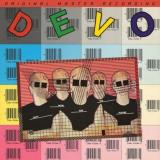
Devo Marries Gritty Guitars with Expansive Keyboard Canvasses on Duty Now for the Future:
Transitional Album Furthers the Band’s Satirical Stance, Includes Cover of “Secret Agent Man”
Hear the 1979 Record in Audiophile-Grade Sound and at 45RPM for the First Time:
Mobile Fidelity’s Numbered-Edition 180g 45RPM 2LP Set
Benefits from Enhanced Definition and Presence
1/4” / 15 IPS Dolby A analogue master to DSD 256 to analogue console to lathe
“Pop music needs a big enema.” Devo created Duty Now for the Future with that mission statement, relayed to the press by co-founding bassist/vocalist Gerald Casale, in mind. Though unfairly pegged by some as an example of the common sophomore slump, the record spurred the group’s interest in electronic instrumentation, extended its penchant for biting social satire, and contained another transformative cover song in the form of “Secret Agent Man.” Above all, the 1979 work proved the Ohio pranksters were anything but a joke even if they would have to wait one more year until for their mainstream breakthrough.
Sourced from the original master tapes, mastered by engineer Krieg Wunderlich, pressed at Fidelity Record Pressing in California, and housed in a Stoughton gatefold jacket, Mobile Fidelity's numbered-edition 180g 45RPM 2LP set presents Duty Now for the Future in audiophile-grade sound. Benefitting from the extra groove space on this first-ever 45RPM version, it plays with enhanced definition, deep-black backgrounds, and ultra-quiet surfaces.
Though certain band members later expressed regret with some of his decisions, the merits of Ken Scott’s production emerge like never before. A lurking edginess serves as a signpost in Devo’s progression before it fully embraced keyboards as a primary tool. Guitars possess punch and grit and, along with the crisp arrangements, are sharpened with an ear toward accuracy and vibrancy. It all helps give Duty Now for the Future a direct immediacy that answers the complaints of listeners who felt the affair too processed or sterilized.
Notably, a majority of the material here stems from the same grab bag of songs Devo banked before Warner Bros. signed it to a deal. The album marks a capstone to Phase One of a career that for all intents and purposes began in 1973. And just like many of the group’s performances of that era, Duty Now for the Future remains just as famous for the critical disdain it inspired as the music itself. A vicious review in Rolling Stone — the very publication that a few decades later would trumpet the band as one of the most important of its age — ended with the writer offering to send readers shards of the LP he planned on smashing to bits.
Perhaps he just needed to experience this new-wave effort with the restored sound that makes everything now feel so explosive and urgent. Whatever the case, the songs hold up and, amid a contemporary period which gives increasing license to artificial intelligence and behemoth conglomerates, seem more apt than ever before.
Consider “Blockhead,” which skewers the predictable appearances and numb-to-the-world actions of a rule follower. Or the similarly themed “Clockout,” an uptempo ditty whose thumbing-its-nose bravado and sardonic lyrics send up corporate culture with an irresistible smirk. As for the wiry, hard-hitting urgency of “Wiggly World” and Mark Mothersbaugh’s loud declaration that “They say the fittest shall survive/Yet the unfit may live”: Evidence these art-school rabble-rousers still had some punk fury to flush out of their system. And the sincere allure of the charged power pop and wishful circumstances of “The Day My Baby Gave Me a Surprize” cannot be denied.
To point to an interesting bit of history that makes Duty Now for the Future all the more intriguing, particularly for the most committed Spuds, more than half its tracks were selected for Greatest Misses — a 1990 anthology that celebrates lesser-known cuts and functions as a rejoinder to a hits compilation from the same year. (The only track from the 1979 album to make the “hits” disc: “Smart Patrol/Mr. DNA.”)
Indeed, tunes like the riff-driven albeit controversial “Pink Pussycat,” atmospherically twitching “S.I.B. (Swelling Itching Brain),” and ceremonial instrumental “Devo Corporate Anthem” may lack the catchy appeal and all-together coherence of what follows on the group’s third and most commercially successful effort, Freedom of Choice. Yet in order to get there, to de-evolve if you will, the band needed the smorgasbord that is Duty Now for the Future.
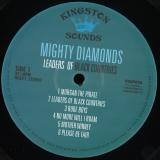
The Mighty Diamonds are one of the most famous vocal groups to come out of the Jamaican Reggae scene.
Their perfect harmonies ride over the wholesome and Garveyite influenced lyrics to such great effect that they will always evoke memories of that time and place, but also like all great music never seems to date.
The Mighty Diamonds consist of Donald ‘Tappy’ Shaw (lead vocals) Fitzroy ‘Bunny’ Simpson and Lloyd ‘Judge’ Ferguson providing those fantastic harmonies.
They began their recording career working with producers Stranger Cole and Rupie Edwards but found their breakthrough success with producer Joseph ‘Joe Joe’ Hookim at the legendary Channel One Studios recording ‘Hey Girl’ and covering two foreign tunes namely ‘Country Living’ (The Stylistics) and ‘Stoned Out of Mind’ (The Chi-lites) which suited their vocal styles perfectly.
The vocal group also cut tracks with other famous producers of the time Joe Gibbs ,Gussie Clarke and Mr.Tappa Zukie of which we focus this release on.On listening, these tunes work perfectly with harmonies weaving together and lifting the songs to another level.
The group also leave some room for a history lesson in the shape of ‘Morgan the Pirate’ and the thought provoking ‘Do You Want to Spend Your Time Wasting Time’.
Well waste no more and enjoy this set by one of Jamaica’s finest vocal groups….
The album from an association of Ukrainian artists called Noneside brought musicians and painters together under the famous words of the writer Lina Kostenko "Sometimes I'm Blinded By Beauty..".
The painting by contemporary figurative artist Danik Manzhos “Decadence/Zaruba” frames the prog, trance housy music of such performers as Saturated Color (Neptune Discs, Nerang Recordings), with a real acid test for you, JJ Fortune’s (Late Night Superglue, BOOOoo! Rizzwax) LSD trip remix on Lostlojic’s tune, Brooht (Mr.Banger, Silias Records) with summer electro fairy-tale, and Slava Los backs with his timeless work “M-14”.
Mastered by Taras Bril, also awesome typefaces of Ivan Tsanko-Khlibovich used in design as always.
First of all, this is the music of love and unity, wherever you are - at home dancing in the kitchen or on the big festival floor - common feelings will unite and spin you in a crazy rhythm, will make you understand that we are not strangers to each other. Together we dance for a better future!
Around 1970, musician, music producer, and entrepreneur Fernando Arias founded the record label Discos Fernando Arias (Difa) in Lima, the capital of Peru. This label was crucial for the musical production, promotion, dissemination, and development of Peruvian tropical music; more specifically, the so-called “carretero style”, so named because it was rooted in the famous Central Highway (Carretera Central) of Peru, which crosses the country from west to east, from the coast to the jungle, through the Andes mountain range. This style is defined by sudden changes from ballad to fast and aggressive tropical music, with electric guitar lines drenched in fuzztone, reverb, and wah-wah. To this must be added the plaintive, melancholic vocal style characteristic of Andean Peruvian music.
The latest edition of 'Downtownsounds Classics' arrives from Dublin disco messers Fatty Fatty, just in time for the summer sunshine !
Fully licensed and cut loud on 12 inch vinyl the way God (aka Walter Gibbons) intended, it sees in-house producers Pablo and Shoey take on two choice cuts from the legendary Salsoul label.
Salsoul was the very first label to release a commercially available 12 inch remix - the aforementioned Gibbons and his 9 minute extension of Double Exposure's '10 Per Cent'. They would go on to issue a raft of underground disco classics with mixes by the legendary likes of Larry Levan, Tom Moulton and Shep Pettibone. Having robbed the famous 'Baker-Harris-Young' rhythm section from Philadelphia Records, they defined the disco sound in the second half of the 1970's and kept roaring well into the next decade.
The new mixes pay explicit tribute to two hugely formative influences on the Fatty fellas - The A extends the mysterious and wondrously wonky Big Bear edit of Bunny Sigler's 'By The Way You Dance'. Back in the day, these cosmic under-the-counter 12s helped show the Fatties how to disco real right, and they've stood the test of time wonderfully. This one has been at the front of Pablo's bag for longer than he cares to remember, and now the rest of the world can enjoy it, with some extra Pablo and Shoey disco magic thrown in for good measure...
Speaking of cosmic, the flip sees the lads turn in a stripped-back, ever-building mix of First Choice 'Hold Your Horses'. Having first heard this played by the Cosmic King himself, Danielle Baldelli, they found themselves let down by the commercially available mix. Through the disco haze, and with some subtle stemming, several outer-space whooshes and a string/vocal climax to die for, they've tried to recreate the way they heard Baldelli play it...
With the classic Salsoul artwork also present and correct, this is a love letter to perhaps the most important label in dance music history, with music that still sounds amazing five decades on... Don't sleep!
LP,180g, 2027 REISSUE - REMASTERED FROM ORIGINAL TAPES, CAREFULLY REPRODUCED ORIGINAL ART
Hot Wax is an assured KPM masterclass from a dream team line-up of Brian Bennett, Alan Hawkshaw and John Fiddy. Here we're treated to what happens when all three decide to explore the latest trends in production music'. The latest as of 1976, of course.John Fiddy's numbers are sumptuous, string-led and light. Floaty soft-psych underpinned by a solid groove, particularly on Taste For Living' and "Fresh Start". If you're into Koushik and those early Manitoba/Caribou records - and you should be - you'll appreciate these.
For us, the Bennett and Bennett/Hawkshaw stuf is on another level. Capitol City' oscillates between driving funk and downbeat sentiment. Name Of The Game' is tough, smokin' funk, famously sampled in 2007 by Madlib for Percee P's Who With Me'. Bop On The Rocks' knocks hard and Full Throttle' features a guitar solo with some of the nastiest, about-to-explode fuzz you're ever likely to hear.
As with all ten re-issues, the audio for Hot Wax comes from the original analogue tapes and has been remastered for vinyl by Be With regular Simon Francis. We've taken the same care with the sleeves, handing the reproduction duties over to Richard Robinson, the current custodian of KPM's brand identity.
40 years after Dave curated the 'Garage Sound of Deepest New York' series featuring the cream of the crop of American US Garage, the series ran for 4 instalments. Dave re-ignites the torch to bear once more and champion the sound more locally, the leafy area of Crouch End, London, to be precise. This four tracker is a testament to the knowledge and expertise Dave Lee has with this particular soulful sound & genre. First up is 'Everybody Needs Somebody' with its powerhouse gospel vocal performance from Rance backed up with swathing chords, piano & organ work by Matt Cooper and Dave's swinging heavy drums. 'Every Second Every Minute Every Hour' is next from Dave Under, his new Hillman Avenger alias, who takes things in a more jazz funk direction, with masterful piano & brass work and scorching synth solo as the cherry on top. 'Our Love' is an updated rework of a vintage Republic Records track featuring the dynamic vocals of AJ Lewis. Bouncy house drums backbone the syncopated chord stabs before a gear change around the halfway mark signals a big heads down, hands up moment. Before the famous clock tower of Crouch End strikes 12, we have time for one more cut by the name of 'No Excuses' featuring the legend that is Lifford, who does what he does best, soulful yet mighty vocals. This is a peak time, feel-good slab of the Garage house that would have maybe made it onto one of Dave's original comps back in the day.
'Electronic lullabies and folk songs from Ethiopia! A landmark recording from Ethiopia’s vibrant cassette era of the 1980s, Resonance of Time features pioneering composer Wesenyeleh Mebreku reimagining Ethiopian folk melodies through the humble circuitry of an early Casiotone keyboard.
'Historically, the works featured on Resonance of Time (የጊዜ ቃና Yegizie Kana) stand as quiet documents of Ethiopian musical memory. Many of the original songs included in this release emerged during important moments in Ethiopian history when music carried the collective emotion of the nation - love, loss, resistance, dignity, and hope. By arranging these pieces from Ethiopia’s musical heritage instrumentally, Wesenyeleh Mebreku aimed to preserve their essence while protecting them from being confined to a single era or performance style. In doing so, his preservation of Ethiopia’s musical heritage became a contribution to his country’s musical legacy itself, as Resonance of Time serves as an important musical milestone of this composer’s innovative recordings and musical developments in the prolific era of Ethiopia’s 1980s cassette tape culture.
'On Resonance of Time, Wesenyeleh made use of the first Casio electronic keyboard - the Casiotone CT-201 - to arrange and perform Ethiopian folk songs in his own unique style. Implementing the soulful, lo-fi character of the keyboard, Wesenyeleh’s interpretations of these works take on a life of their own. Charming analog tones interpret swirling sounds of organ and piano in kignit modality to the beat of a nostalgic rhythm machine while twinkling synthesizer sounds carry the melodies drifting out of time. The recordings reflect a watershed moment in Ethiopian musical history - when traditional melodies started being interpreted on electronic keyboards, and the advent of cassette tape recording allowed for music to be transmitted more accessibly than centuries-old oral traditions. During this time, Ethiopian musical modes were syncretized with new technology and budding musical experimentation, and Wesenyeleh’s interpretations on Resonance of Time are a landmark recording of this era, following in the tradition of reflecting upon and re-interpreting historical Ethiopian music for a new generation.
'Featured on the release are timeless Amharic folk songs and lullabies, Tigrinya love songs, Gurage and Oromifa popular songs, and even works closely associated with performers from Ethiopia’s 1970s popular music era such as Tiz Alegne Yetintu (ትዝ አለኝ የጥንቱ) which was famously performed by Tilahun Gessesse. Each piece, thoughtfully chosen by Wesenyeleh, is beautifully transformed into instrumental music of his own style - allowing these worlds of song to echo into the future while they are synthesized with the electronic innovations of the 1980s and Wesenyeleh’s own musical history.
'Wesenyeleh says this about his musical approach - ”Instrumental music, for me, is a space of reflection. Without words, the listener is invited to remember, imagine, and feel freely. In Resonance of Time, I hear my own musical philosophy: respect for Ethiopian kignit, careful dialogue with Western harmony, and a deep trust in melody as a storyteller.”
'Each piece performed on Resonance of Time speaks to a time when Ethiopian music was shaped by oral transmission through live performance and communal listening. In today’s fast-moving musical environment, revisiting these works is an act of cultural responsibility. These works remind us that melody once traveled slowly, settling deeply in the listener’s heart. The instrumental format allows these works to cross linguistic and generational boundaries, making them accessible to audiences who may not know the original lyrics but can still feel their spirit.
'Resonance of Time also reflects a broader historical dialogue: the meeting of tradition and adaptation. Ethiopian music has always evolved while holding onto its core identity. These arrangements affirm that evolution does not mean abandonment. Instead, it can be a form of safeguarding - ensuring that the musical wisdom of the past continues to resonate in the present and inspire the future.
'In this sense, the album is both personal and collective. It carries Wesenyeleh Mebreku’s own musical fingerprint, shaped by decades of practice, but it ultimately belongs to a wider cultural continuum. It is the artist’s contribution to keeping time audible so that memory, history, and sound may continue to speak to one another.'
After ten years 12 Inch Lovers has become a household name not only because of their parties but also because of the fantastic vinyl samplers they released over the past few years, which were sold out in no time and have become true collector's items.
They now continue in the same vein and once again bring a fresh and contemporary mix of hard to find, original house classics or even classics that never had a vinyl release.
These samplers should therefore not be missing from any 12 Inch Lovers collection.
Sampler 5 begins with the breakthrough record from Norwegian producer "Finnebassen". "If You Only Knew" was a big hit for him in 2012, the record was best known for that hypnotic Aaliyah sample used throughout the entire track. A2 brings the very rare remix of this uber classic "The Sound Of Violence" by "Cassius". The "Franco Cinelli" remix is a very successful approach to this classic.
On B1 we find a real anthem. "World Cup" by "Kiko" is a delightful classic from 1999 but to this day it is impossible to imagine today's DJ sets without it. B2 then brings the delicious "Still In The Groove" from "Reckless", of course in that famous "Def Offenders" remix.
"Phil Fuldner" is still very active as a DJ and producer today. You can find his dreamy "Lights Off" from 2010 on C1. And speaking of dreams. "Winter" by "Aril Brikha" is another incredible classic that should definitely not be missed in your collection.
On D1 we find the Australian and headstrong singer "Sia" with her classic "The Girl You Lost On Cocaine", but in that fantastic and hard to find "Stonebridge Vocal" mix.
Last on Sampler 5 we dive back into the nineties with the memorable club classic "Closer" by "Liquid" on D2.
Two stone cold classics right here from the Roy Ayers masterminded RAMP, taken from the holy grail album Come Into Knowledge. Sampled the world over, influentially positive and as prized as they get, South Street’s new sub-label South Street Soul couldn’t have picked a more perfect double header to reissue as their inaugural release.
Although the RAMP acronym Roy Ayers Music Productions bared Ayers’ name, he did not perform with the Ohio band instead writing, arranging and producing the tracks alongside Edwin Birdsong and also William Allen. Drafting in some of the best session musicians in the game, from vocalists Sibel Thrasher and Sharon Matthews, The Spinners drummer John Manuel, guitarist Landy Shores and Cincinnati bass maestro Nate White, the result was pure ethereal excellence.
Rare groove at its finest ‘Daylight’ is one of the standout cuts from RAMP’s only album - soulful, sumptuous and laced with a celestial touch that takes this track to another realm of conscious. A track that was famously sampled by A Tribe Called Quest for their hit ‘Bonita Applebum’ and J Dilla’s remix of Common – Come Close.
On the B side, a Roy Ayer’s masterpiece 'Everybody Loves The Sunshine' given the RAMP revamp, an end of the night masterpiece, a hazed-out dreamer - just downright blissful grooves from start to finish. Ready-made to ride out into the sunset with.
The original album + 6 bonus tracks - limited edition pressing on 180g vinyl
The most talented bossa nova group of the '60s, Tamba Trio perfected a breezy,
swinging version of bossa nova vocal jazz that proved incredibly influential in Brazil
and throughout the world.
Comprising pianist Luiz Eca, bassist Bebeto, and drummer Helcio Milito, the trio not
only played a wide range of instruments but also contributed incredibly close vocal
harmonies. Presented here is their debut album, 'O Barquinho' (Little Boat), which was
a huge hit in Brazil and throughout South and Central America.
One of their later recordings, a rendition Jorge Ben's ' Mas, que nada!' ( But That Is
Nothing!) and included here as a bonus, became their best-known hit, and used most
famously by Nike in a 1998 World Cup television commercial.
New album by FLOCKS, the duo of drone specialist WERNER DURAND and percussionist ULI HOHMANN. Musical landscapes that move between traditional as well as experimental sounds with influences from Krautrock and JON HASSELL's "fourth world" aesthetics.
WERNER DURAND has made himself a name with various projects with Dhrupad singer AMELIA CHRISTIANSEN, DAVID CHRISTER HENNIX, as the co-founder of THE 13th TRIBE, ARMCHAIR TRAVELLER and TONALIENS (with ROBIN HAYWARD and HILARY JEFFERY) plus numerous solo albums, released on labels like Black Truffle, Unseen Worlds or Edition Telemark. Having studied saxophone as well as Indian / Persian flutes, the Berlin based DURAND is a highly reputated protagonist in the drone scene, famous for his self-built wind instruments like buzz-clarinets or his PVC neys & horns.
His partner in FLOCKS (and longtime personal friend) is ULI HOHMANN whose early encounters with music from Asia, India and Africa led to studies with the Ghanaian master drummer MUSTAPHA TETTEY ADDY and later Tombak and Daf with NEMAD DARMAN (Iran). HOHMANN played in a couple of projects that explored the language of classical Persian music, and started building his own stringed instruments (being an educated carpenter). In 2014 he joined DURAND and AMELIA CUNI for the album "Clearing", and 2018 DURAND and HOHMANN decided to con- tinue as a duo: FLOCKS was born.
On “Lagoon”, the duo further explores the aesthetics it has crafted on its selftitled debut (2023, on the now defunct ZEHRA imprint): DURAND and HOHMANN shape drone-y soundscapes based on their self-built wind- & stringed instruments, Persian percussion and subtle electronics, drawing ad- ditional inspiration from Krautrock (listen to the irresistible, hypnotique, ever-changing rhythmic pattern of the title track) as well as JON
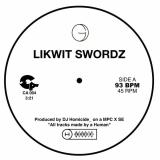
American DJ Homicide aka Craig Anthony Bullock is best known as the former DJ for Sugar Ray but also does a fine line in club-ready hip-hop jams and remixes. 'Likwit Swordz' kicks off his latest on the small but well-formed CA label out of the USA. It's got nimble drums that have a clipped bounce and vamping chords, vocal grit that echoes Cypress Hill and an infectious roll. On the flip, 'Day Coastin'' is more deep and smooth - the bars as silky as BIG and the drums rolling with crisp boom-bap style. Both have been made on an MPC and that sampler's famous textures elevate the final jams no end.
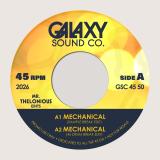
Release #50 celebrates the digging, care & musical curiosity that’s made the GSC series essential for DJs, collectors & break seekers alike.
For years GSC has built a catalog that earns immediate “cop-on-sight” status. Thoughtful edits. Deep respect for the OG recordings. Breaks that knock w/out feeling heavy-handed. The kind of taste that reminds you these are real heads behind the decks.
Side A pulls from Jerry Butler’s “I’m Your Mechanical Man,” released in ’74 on the Sweet Sixteen LP. The track contains a raw drum break hip-hop producers recognized instantly. Most famously it powers Method Man’s “Bring The Pain,” 1 of the defining solo joints from the Wu-Tang Clan era. The break later resurfaced in Missy Elliott & Method Man’s 2002 version & Snoop Dogg’s “I Miss That Bitch.”
On the flip, GSC draws the source into pure DJ tooling: a sample break edit, a full drum break edit & the “Mechanical Wu” mix — built for selectors who know the power of letting a break breathe.
Then they deliver a beautiful surprise. Instead of leaving empty wax, GSC slides in Les McCann’s “Vallarta,” from the 1977 album Music Lets Me Be. Jazz-funk heads know it instantly — the hypnotic groove behind Biggie’s “Ten Crack Commandments.”
This is why Galaxy Sound Co. matters. They’re not just pressing edits — they’re curating moments. Unearthing grooves DJs need back in rotation. Some originals now cost serious money on Discogs. Others simply faded from memory. GSC dusts them off & hands them back to the community.
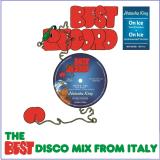
"This majestic Italo-Disco tune, arranged by Pierluigi Giombini, possesses something magical and mysterious. "On Ice" begins with Natasha King's a cappella vocals and a sweet piano melody by the same composer who wrote "Masterpiece" and "I Like Chopin" for Gazebo. A classic Italo-Disco piece from the mid-1980s, which, more than its sales, achieved success in live performances and on TV shows for the grace and charm exuded by the artist, who was also a dance teacher at the time. The elegance and precision of every move are the foundation upon which Natasha builds her technique. The reissue of "On Ice" was never fully embraced by lyricist Natascia ''Nati'' Maimone, straying from her tastes in soul, blues and jazz. It was also overshadowed by her previous hip-hop track, "AM-FM" - released from Best Record in 1983 - which made the artist world-famous at the age of twenty. This reissue in both original versions was also created to allow new generations to relive, at least in part, the great musical era of the 1980s, a period of incredible musical richness combined with a carefree spirit."
Released independently and on her 30th birthday, "Water Baby" is Giorgia-May's stunning debut album. Spanning over 8 tracks & recorded live at The Famous Goldwatch Studios in Berlin, Giorgia collaborates with some of Berlin's finest musicians to enhance her craft at putting emotions into songs. Each track highlights something different in her ability to channel pain, desire, lust and heartbreak, all whilst (most of the time) making you want to dance & smile.
Stemming originally from Brighton (UK), Giorgia-May has been pursuing a musical career through the means of travel. Now based in Berlin, she combines sensual lyrics, mesmerising tones and exciting arrangements which draw upon her personal experiences of love, loss and coming into womanhood. Blending soulful melodies with jazzy chords and hints of RnB, she takes influence from writers such as Olivia Dean & Amy Winehouse.
Extensive independent European tour in August & September 2026 through the following cities: Berlin, Paris, Bilbao, Porto, Lisbon, Valencia, Barcelona, Marseille, Cannes, Milan, Lake Como, Zurich, Luxembourg, Brussles, Cologne, Amsterdam and more ...
For his sixth solo album, Ezéchiel Pailhès returns with a new collection of songs infused by a sunny wandering spirit.
Within each of the twelve songs on SOL is a thread of melancholic happiness that has permeated much of Pailhès’ music and songwriting. He addresses love, the passing of time, hope, lost illusions, fleeting moments of grace, the temptation of forgetting, a need to escape, and desire. All this is
insulated by understated orchestrations that blend acoustic and electronic instrumentation with deft confidence.
The Portuguese and Brazilian concept of saudade—a form of melancholic longing and nostalgia— pervades, thanks in part to Pailhès decision to record the album in Rio de Janiero and to reinterpret some of the finest works of Música Popular Brasileira (MPB). In particular, he revisits a handful of
lesser known classics from the mid-century samba and bossa nova era—originally written or performed by talents including Vinícius de Moraes, João Gilberto, Tom Zé, Dorival Caymmi, João Donato, Os Tincoãs, and Ataulfo Alves.
The shift from Brazilian Portuguese to French and the decision to adapt rather than perform a straightforward cover versions, allows Pailhès to invent a form of prosody and euphony (the musicality and harmonious combination of words) that feels vibrant and unlike anything else in today’s French
chanson landscape.
“Some lyrics are simple translations from Portuguese, in what I’d call an expanded version. For others, I started from a single word or a single phrase and embroidered an entirely new text that carried me elsewhere,” explains Pailhès. “I allowed myself great interpretive freedom, while preserving the humanist dimension of the original songs. I’ve always been deeply moved by the way Brazilians transfigure reality through heightened emotion. I love this visceral and spontaneous country, which always seems to live through emotion. And above all, I love its music both popular and unifying,
bringing together all social classes. In that sense, it’s very political music, but even more so utopian, made by the people and for the people.”
On this new album, however, the French artist was keen to avoid cliché. Each song is therefore built around a carefully balanced interplay between Pailhès’ piano and synthesizers, alongside restrained arrangements of percussion, brass, bass, and cavaquinho (a small four-string plucked guitar). These parts were recorded in Rio de Janeiro with two musicians who regularly perform alongside the legendary Caetano Veloso—Kainã Do Jêje and Alberto Continentino—joined by Thomas Harres, Antônio Neves, Eduardo Neves, and Gabriel Loddo.
Since the 1960s, France and Brazil have shared a long-standing cultural and musical relationship. Some Brazilian artists, most famously Gilberto Gil, took refuge in France during the dictatorship years (1964–1985). But above all, French chanson quickly fell in love with the richness and ingenuity of
bossa nova and samba, translating and reinventing them in the language of Molière. Throughout the 1960s and 1970s, albums and hits by Henri Salvador, Georges Moustaki, Pierre Barouh, Pierre Vassiliu, and Claude Nougaro all drew from the MPB repertoire.
Fifty years later, with SOL, Ezéchiel Pailhès reinvents this rich Franco-Brazilian musical legacy, bringing to it a personality and modernity that stand confidently alongside those of his forbears.
Five years after their radiant debut Ufo Bar, Italian cinematic funksters Banda Maje are back with Costa Sud to take us deeper into their land of ‘Salifornia’—a Southern province of sun-drenched coastlines and decaying buildings where dreams of exotic escapism sprout and bloom.
Once again, behind the eight tracks in the album—and behind the wheel of the fiery red Alfasud on the cover—is composer and keyboardist Peppe Maiellano. He has meticulously tailored each piece to his virtuoso partners in crime: a 'family' of exuberant musicians spread between Salerno and Naples, all bound by deep-rooted ties to the region and a shared belief in the grit of independent artistry.
The Costa Sud (South Coast) imagined by Banda Maje is a shimmering ribbon of sun-baked asphalt stretched between the sea and the ancient pine forests of the Gulf of Salerno. It is a land of enchanting but wounded places, where the grace of Ancient Greek civilization sits in a restless silence alongside the scars of rampant building and neglect. “But if truth is beauty and beauty is truth,” Maiellano explains, inverting Keats’s famous line, “with the right eyes, you can find beauty and poetry even under a layer of moral and material filth."
Conceived and recorded entirely in the South, the album nevertheless looks beyond the horizon. While Neapolitan funk and golden-age Italian soundtracks remain the double helix of the band's DNA, this album welcomes new influences from across the ocean, weaving Italy, Brazil, Africa, and contemporary sounds into its unique vision of the 'global South.'
Side A is an immersion into Salifornian territory and its myths: from the carefree instrumental disco-funk of the title track, which sublimates local contradictions into enveloping cinematic atmospheres, to the mellow groove of “Baia”—a fusion of Neapolitan funk, afrobeat, and disco that pays homage to Salerno’s famous beach, squeezed between millennia-old sea rocks and mountains of shipping containers. The band’s heartfelt sense of belonging shines in their fresh soul-disco version of “Mo…” (a 1981 cult classic by Neapolitan legend Peppino di Capri) featuring Maiellano’s own vocals, while the reimagining of Tonico 70's “Jet Lag” celebrates a fraternal partnership with the Salerno-based rapper/producer, charting a musical itinerary that unites Brazil, the States, and Salifornia through evocative grooves, sharp synths, and Gianfranco Campagnoli’s exquisite trumpet.
On Side B, the sound becomes even more eclectic with the samba-funk warmth of “Samba Maje”, where Mediterranean melodies and lush vocal harmonies marry jazz-funk arrangements and disco-inflected Brazilian rhythms. The next track, “Africana”, is dedicated to a legendary dolce vita nightclub on the Amalfi Coast (and its founder Luca Milano); here, a rhythmic mantra incorporating tribal African elements blends with synths that evoke RAI television themes of the late 70s. The journey concludes under the sign of the silver screen: the disco-funk elegance of “Black Glamour Girl” (from the early-80s road-trip comedy In viaggio con papà), a tribute to the compositional genius of Piero Piccioni, and “Lovebossa”—an easy-listening homage to the "Cine Bossa" atmospheres that characterized so many Italian soundtracks of the 60s and 70s, finally carrying the listener ‘ncopp’ ‘e nuvole (above the clouds—which is basically Salifornian for "somewhere over the rainbow").
Thirty years. That is how long it has been since 1996, when European electronic music was
overwhelmed and reshaped by a wave of melody, melancholy, and rhythm. At the center of that
big bang was Roberto Concina, known ar1s1cally as Robert Miles—a visionary capable of bringing
Dream Trance to the global stage. Today, to celebrate three decades of pure sonic magic, "Fable"
returns to the turntable in a splendid celebratory reissue that stands as a well-deserved act of love
for an ar1st who passed away far too soon.
If Children was the programma1c manifesto of that era, Fable was its emo1onal evolu1on—the
track that proved dance music could touch in1mate and cinema1c chords. Listening to it today,
remastered for vinyl, is an experience that goes way beyond a simple nostalgia trip. This 30th-anniversary reissue splits into two versions to sa1sfy both purist DJs and avid collectors,
offering two excep1onal vinyl op1ons:
The Standard Edi3on (Black Vinyl): Perfect for audiophiles and DJs who want to spin this
track in their sets without the fear of wearing out a museum piece. The warmth of the
black groove enhances the dynamics of the famous piano line and the depth of the
enveloping bass.
The Limited Edi3on (Transparent Blue Vinyl - Limited & Numbered): The true crown jewel
of this release. Visually stunning, the transparent blue vinyl seems to evoke the dreamlike,
liquid, and suspended atmosphere of the track itself. The fact that it is a limited, handnumbered edi1on instantly makes it a grail for collectors worldwide.
Wewantsounds is delighted to continue its extensive reissue program of Meiko Kaji"s early discography, originally released by Teichiku Records in Japan between 1972 and 1974. The Quentin Tarantino muse-famous for her starring roles in Lady Snowblood and Stray Cat Rock-was also a gifted singer. Otoko Onna Kokoro No Aika is another collection of superb cinematic songs featuring Kaji"s signature mix of Japanese Pop and Groove, backed by lush, atmospheric orchestrations. This includes her rendition of "Tokyo Nagare Mono," the theme song for Seijun Suzuki"s cult 1966 film Tokyo Drifter. This reissue features the original artwork, an OBI strip, and a four-page insert with new liner notes by Hashim Kotaro Bharoocha, who interviewed Meiko Kaji for the occasion.
The Godfather of Hardcore, Marc Acardipane, needs no introduction. His outstanding releases over the past 30 years speak for themselves. He has been instrumental in helping to create electronic music history, with countless well-known productions which have been unsurpassed by any other artist of this calibre. His timeless masterpieces have been and always will be heard at hardcore raves spanning the circumference of the Planet. With "9 Is A Classic", "Slaves To The Rave", "Pitch-Hiker", "Stereo Murder" and "We Have Arrived", just to name a few, he clearly proves who's the boss. "The Most Famous Unknown" is a well compiled collection of Marc's music, which showcases a mere portion of what he has composed and produced since the early nineties! The vinyl and digital selection of "The Most Famous Unknown" features remixes by Body Sushi a.k.a. VTSS & Randomer, Dasha Rush, Gabber Eleganza feat. Delirio, Jasss, Kilbourne, Minimum Syndicat, Nina Kraviz, Perc, Solid Blake, Stranger, Umwelt and VTSS, which all deliver excellent interpretations of tracks they have chosen to revamp. All original tracks have been re-mastered to the highest possible standard of quality.
The original mix of one of the biggest ever rave-classics is on this 12”-record. And that’s not all, Mr Sam made a massive remix of one of the most groundbreaking EDM-tunes of all times.
Belgian/French DJ-producer Mr Sam turned this amazing classic in a massive peaktime trance-gem for the future. Using the iconic parts of the 1991 original and adding the well-know futuretrance sound that made him famous.
Our latest Holy Grail reissue is this private press spiritual jazz gem out of California from Rickey Kelly and his vibes & marimba. Features Diane Reeves (vocals) & Adele Sebastian (flute)!
Heavyweight 180g LP with tip-on sleeve, individually numbered 1-1000, card enclosed for liner notes & audio download
"Rickey, I know these are your friends, the guys you went to school with, but if you wanna record an album, you record with musicians who have been playing their whole life; whatever you write, they'll put their whole life into it. You play with your friends; they may not even play in tune."
These are the words of Slave guitarist Kevin Johnson, and they were to change the course of young Rickey Kelly's life.
It was 1978, and music student Kelly had approached Johnson with a tape of rough demos of some songs he'd written. A San Francisco native, Kelly had recently moved the short distance south to study music at LA City College in East Hollywood. He was a member of E.W. Wainwright Jr.'s African Roots of Jazz, and was spending up to 10 hours a day in practice on both vibes and marimba. He also played with Horace Tapscott, and had his own band made up of fellow students, but it was his ambition to make an album that led to the conversation with Johnson. It was a turning point in his education, and a decision was looming.
The next thing Johnson said was "You call the best jazz musicians. How'd you like to play with Billy Higgins?", a line that would seal it for anyone; for a youngster like Rickey just starting out in the business, you just don't turn down the opportunity to play with the likes of highly accomplished musicians, especially those of the calibre of legendary jazz drummer Billy Higgins.
Some calls were made and the date was set to record at Studio Masters on Beverly Blvd, a studio set up just a few years previous in 1973, owned and operated by Dot Records founder Randy Wood with his son John. Some of the other music professionals set to record with Kelley that day were flautist Adele Sebastian, bass player Tony Dumas, saxophonist Charles Owens and vocalist Diane Reeves, none of whom had previously played with Kelly before.
Kelly was impressed with the studio, with the gold records displayed on the walls and the famous musicians hanging out. 'It took a lot of humility for me to record with them, I mean I was nobody, nothing, and for not a lot of money either' remembers Rickey in a later interview with Calvin Lincoln, 'It taught me a lot, to practice hard, and study for the rest of your life, to give your all, and there's a lot of all to give'.
As the recording session took place, John Wood was listening in. He was impressed. Kelly didn't have the funds to manufacture and release the album himself, so Wood suggested it was pressed up on his in-house studio label, Los Angeles Phonograph Records, and thus the LP 'My Kind of Music' was released early in 1979. The album also saw a subsequent pressing soon afterwards on Dennis Sullivan's New Note label.
Kelly remains humble and proud of his debut album to this day. 'I was still a beginner' he says, 'These masters walked in, smiling, and gave me something worth gold'.
Anané’s colourful life in music has seen her do everything from singing at the famous pre-game show at Super Bowl XLI as part of the group Elements of Life, DJ at hotspots like Hi Ibiza, Pacha NYC and Ushuaïa to name a few, while also curating her own monthly residency Nulu Movement, now ten years strong at Le Bain NYC, release unique blends of Afro, house, and pop on labels like Vega Records, and head up her own imprints, Nulu Music and Nulu Electronic. The Cape Verdean-born DJ, producer, vocalist, and songwriter has had countless club hits and has released acclaimed albums like ‘Ananésworld’ and ‘Chapters Of Becoming’, often with a lush, live, and orchestrated style that is truly unique.
With this release, Anané steps forward with her first solo production to date. Here she serves up the sumptuous ‘It Looks Like Love’, a poised, elegant house sound with her own smoking, soulful vocals and classy strings bringing colour to an Afro groove packed with infectious bounce. Neat guitar riffs and silky synths all enrich this most sophisticated sound. The first mix sees Anané link up with veteran Italian Christian Mantini, who has hosted Sunset Ritual parties with Anané and Louie Vega since 2013. Their dub is rooted in warm, rubbery drums that are even deeper and more immersive than the original.
Manda Moor & Sirus Hood are a red-hot contemporary pair who run the Mood label and are defining the contemporary underground. Their remix is more driving, but it retains the soulful vibe with breezy pads and jazzy motifs drifting in and out above the swaggering groove.
Rotterdam-based Chicagoan Jamie 3:26 is a master at blending disco, soul, and house into timeless sounds, and here he delivers a loopy rework that pairs deep drive and sun-kissed vibes with funky, Chic-style bass guitar motifs.
2026 Repress Favorite Recordings proudly presents Voiciii, the 3rd and new album by Voilaaa, an immersive dip into its Afro-Disco universe spread across 14 tracks. Needless to say you’ll find in this new LP all the ingredients that made him famous: strong dancefloor-friendly festive bangers, irresistible funky arrangements and an undeniable sense of humor and irony.
Bruno “Patchworks” Hovart, behind Voilaaa, is as often surrounded by amazing vocal featurings from previous LP’s regulars (Pat Kalla, Lass) but also new voices you may already have heard on its recent EPs (David Walters, Rama Traore, Ayuune Suule), as well as the saxophonist Boris Pokora. The LP is also an occasion to pay tributes to major artists of the African sound, such as Fela Kuti (on “Water No Get Enemy”), or Manu Dibango (“Manu Écoute Ça” and “Tenor Jam For Manu”).
Since the release of Voilaaa’s previous LP’s Des Promesses and On Te L’Avait Dit and their massive international support, the Voilaaa Soundsystem did travel through the world to deliver its message of infectious joy and groove, from Equator to Thailand, from Kazakhstan to the infamous French “Fête de l’Huma”. Now you know: Voilaaa is everywhere and Voiciii (“here it is”) their new album.
In 1998, Carsten Nicolai, also known as Alva Noto, visited a sound installation created by Robert Lippok for a group exhibition in Weimar, Germany. Soon after, he invited Lippok to release music on his label raster-noton. »Open Close Open« was released in 2001 and marked the beginning of Lippok's solo career. Before, Lippok had already played in Ornament und Verbrechen (with his brother Ronald Lippok) and To Rococo Rot (with Ronald Lippok and Stefan Schneider).
The title of the EP is a linguistic reference to the instructions found on everyday objects. In fact, the sound of birds or a closing door can be heard. Besides field recordings, cultural fragments were used – including the sample of the famous Adagietto from Gustav Mahler's Symphony. No. 5. – and integrated into three loop-based pieces, that have been praised by Fact Magazine as »a masterclass in collage, looping and tactile processing.«
The source material for »Open Close Open« initially served as a soundtrack for a video by Takehito Koganezawa, a visual artist from Japan. For this remastered vinyl reissue, Lippok revisited the original sound material and produced a new track called »Licht.«
Cory Wong's eagerly awaited new studio album, Lost In The Wonder! The collection spotlights Wong's remarkable gifts as a producer, writer, arranger, band leader, and master of modern pop craftsmanship, while of course never losing sight of his trademark guitar virtuosity. Lost In The Wonder further affirms Wong's enduring love of musical collaboration, boasting a truly eclectic range of guest artists that includes Taylor Hanson, Devon Gilfillian, Stephen Day, Cody Fry, Yam Haus, Louis Cato, Ellis, Elysia Biro, Benny Sings, Theo Katzman, and Magic City Hippies.
“My auntie asked me what’s my path?” spits Lord Jah-Monte Ogbon on his de but from the celebrated Lex Records. The lyric relatably references the cross roads he’s at in his current life, especially as someone right on the cusp of rap stardom. “Recently I’ve been thinking more and more about what comes next in my life,” the artist reveals.
It’s fair to say Ogbon’s Lex LP features less of the sh*t-talking court jester of old. Instead, there’s more of an imperfect man re-examining past mistakes so he can avoid any future forks in the road. There’s a particular focus on over coming heartbreak, inspiring Ogbon to admit he’s haunted by an ex so badly he now needs to call up the Ghostbusters for assistance.
Since emerging in the late 2010s, Lord Jah-Monte Ogbon has consistently lit up America’s underground rap scene and this is thanks to a refreshingly honest writing style. Amid the exquisitely wavy strings of 2021’s The Missing Link / The Sneaky Link, for example, he rapped: “Everyone thinks they’re play er, until their bitch doesn’t come home.” Biting and snappy, the nasally vocals carry the playful verve of comedian Richard Pryor bravely excavating personal Demons to solicit giggles.
All this brash, wry Redman-inspired storytelling continues on the new pro ject. Its first single is titled I’m Signed to Lex, Now I’m Up – a name that mirrors what a big moment releasing a project on the label that once housed MF DOOM represents for Lord Jah-Monte Ogbon’s legacy. “I’m really driven by being able to level up and give my family more financial freedom,” he hopes.
And, if auntie asked what his path was right now, what exactly would the rap per say? Lord Jah-Monte Ogbon concludes: “Auntie: this rapping thing feels like it’s finally about to pay off!”
(die-cut sleeve, 45 RPM) Jef Neve, Belgium’s most-famous jazzpianist, media-personality Kobe Ilsen and topproducer Serge Ramaekers are VALKYRIE.
At the end of Spring 2026 a full album of VALKYRIE will be released and the band will start touring. As a tastemaker of what they are up to, they release a unique version of THE FIRST REBIRTH, originally released by Jones & Stephenson in 1993 on Bonzai Records.
To celebrate the birth of this new supergroup, a release in a very special packaging is due for March 2026.
Besides the original mix, there’s also a ravemix by harddance/hardstyle-hero MI37 and an unplugged version where the original melodies are stripped to the bone.
To honour the enduring appeal of a great musical rework, Hell Yeah is launching The Art of Remix. This essential new series collects the best remixes from a range of label favourites. First up is Japanese downtempo master Calm with exclusive, never-before-on-vinyl versions of originals by Cantoma, Aura Safari, DJ Sofa’s Dream Baby Dream, Seahawks, Gallo, Yuichiro Kato and more. The release comes with rich liner notes by the authoritative Dr Rob from Ban Ban Ton Ton, and a second volume from Is It Balearic's Coyote will follow soon.
Remixes have always been at the heart of Hell Yeah's output as a way of reworking classic sounds into different contexts, allowing artists to explore outside their usual remit and also to introduce new talents. Clam has long perfected the art with his famously laidback takes on all sorts of Balearic, house, dub and acid under the Mellow Mellow Acid subtitle. He's remixed many a Japanese legend but also a wealth of artists from across the world, and eight of those reimagined gems balance euphoria with solitude on this first volume.
First, his take on Cantoma's 'Way To The Sun' infuses drones and chimes with bubbly acid. 'Sur Mon Balconett' shimmers with Spanish guitar and sultry sax, ghosts of yesterday still shuffling. 'Banana Trance' jolts with breakbeats while taking a Balearic leap into hedonism. Mininn’s 'Vertigo' drifts dubwise, from monastic chants to operatic bursts. Maho’s 'Bakuhatsu' growls dark and sleazy as acid and riffs collide, 'Abysso' floats with strings and sirens in symphony, 'Blue Surround' lulls before exploding with jazz fire and Kato’s 'Kiss of Life' closes with a cosmic, romantic serenade. Calm's The Art of Remix sets a high standard for a series which will soon turn to Coyote and Scandi-house great Bjorn Torske.
Since 2020, 12 Inch Lovers have been releasing new samplers every year, eagerly anticipated by collectors. These samplers have now become a staple and are easily added to vinyl collections across Europe. They offer timeless classics and rare tracks that are often hard to find elsewhere.
With Samplers 11 & 12, they surprise again with a mix of modern classics and tracks that have never been released on vinyl or are difficult to find. By adding unique and exclusive tracks, the 12 Inch Lovers samplers remain innovative and high-quality. They are a must-have for DJs, collectors, and fans of contemporary classics!
SAMPLER 11
A1) Paul Kalkbrenner - No Goodbye (2019)
Berlin techno producer Paul Kalkbrenner became world-famous with his 2008 hit Sky & Sand. Since then, he has released one record after another and performed all over the world in the biggest venues and at the most renowned festivals. No Goodbye is one of his more recent hits, released in the summer of 2019.
The track was created using an a cappella he received on a demo tape while on tour. He was immediately inspired by the vocal and built his own sound and production around it. Interestingly, Kalkbrenner rarely uses vocals, but for No Goodbye he collaborated with Australian singer Chiara Hunter, giving the track a unique and instantly recognisable character. The result is a stylish, dance-floor-friendly track with a rolling house groove that quickly became a modern classic on dance floors worldwide.
A2) Water World - Give Me Love (2000)
This trance classic by Water World appeared in 2000 on the French label Adequat Records and is the perfect tune for a sunny summer evening. Warm melodies and pulsing beats instantly create that beach feeling, as if you were dancing with your feet in the sand. The record recalls Beachball by Nalin & Kane, sharing the same dreamy, sun-drenched vibe.
Behind Water World were producers Laurent David and Frédéric De Backer-names well known to many trance fans. In the nineties De Backer was active with projects such as Global Trance Mission (Dream Mission) and Y-Traxx, the trio that released the 1997 classic Mystery Land.
Give Me Love clearly bears their combined signature: euphoric, warm and melodic, with a timeless build that perfectly balances emotion and energy. The track was released on vinyl as part of Trance E.P. Vol. 01 and remains a fixture in retro-trance sets to this day.
B1) Panoramic - Colors (1996)
Colors by Panoramic is a Belgian trance classic released in 1996 on the legendary label XTC Records, a sub-label of Bonzai Records. Panoramic was a collaboration between Belgian techno icon Marco Bailey and Mauro Mirisola. The duo, also known under playful aliases such as The Coke Man & Sniff, released an EP featuring two powerful trance tracks.
We chose Colors, a tune with pure Belgian trance DNA: driving rhythm, dreamy synths and a catchy female vocal. The combination of Bailey's production expertise and Mirisola's creative touch resulted in a timeless track that still appears in many classic playlists.
B2) Natasha Bedingfield - Pocketful Of Sunshine (StoneBridge Club Remix) (2008)
British singer-songwriter Natasha Bedingfield released the album Pocketful of Sunshine in 2008, featuring the title track as a single. The original pop version became a major hit in North America, reaching the Top 5 in the US. Swedish DJ and producer StoneBridge (Sten Hallström) reworked the song into a groovy house version, released in the summer of 2008.
StoneBridge gave the upbeat pop tune a club-ready beat and an infectious piano riff that made it shine on dance floors worldwide. It was not his first time transforming pop into house gold-he had already achieved global fame with his remix of Robin S - Show Me Love (1992), one of the greatest house anthems of all time. He also remixed Sia - The Girl You Lost to Cocaine in 2008, another club favourite.
The StoneBridge Club Remix of Pocketful of Sunshine appeared on a special remix EP in July 2008 and was played endlessly in clubs-by us too, in the venues where we performed. The result is a timeless, sun-soaked house classic thatmakes sitting still impossible.
C1) Y-Traxx - Mystery Land (Fred Baker vs Mr Sam's Magical Mystery Dub Mix) (original release 1995)
Y-Traxx was a nineties trance project by DJs Laurent David and Fred Baker. This trance classic first appeared in 1995 as a B-side but gained real attention when it featured on a Paul Oakenfold mix album. Thanks to that success it received an official re-release in 1998 on the respected French label FFRR (Full Frequency Range Recordings).
In 2003 an excellent remix by Mr. Sam & Fred Baker followed on the Nebula label. That version is highly sought after on vinyl by trance collectors, and we are proud to feature it on our new sampler.
C2) Weiss - Feel My Needs (2018)
Feel My Needs by British producer Weiss (alias Richard Dinsdale) is the tune with that unmistakable old-school piano and catchy vocal that instantly pulls you onto the dance floor. Released in May 2018on the UK label Toolroom Records, the track is pure feel-good house with a modern touch. From the very first piano riff, hands go up in the air.
Toolroom even called it a "future anthem" for the summer of 2018, and indeed Feel My Needs became a huge floor-filler. The record charted high on global dance lists and gained massive popularity at festivals and clubs that year. With its warm piano chords, tight beat and soulful vocal, this is a modern house classic that will stay in the collective club memory for a long time.
D1) The Killers - Mr. Brightside (Jacques Lu Cont's Thin White Duke Mix) (2005)
American band The Killers formed in 2001 and scored a massive hit a few years later with Mr Brightside. Taken from their debut album Hot Fuss (2004), it became their biggest and best-known track-a true rock-pop anthem.
In 2005 the song was given an electronic twist when renowned producer and remixer Jacques Lu Cont (the alias of Stuart Price) created an eight-minute dance version titled Mr Brightside (Jacques Lu Cont's Thin White Duke Mix). This remix replaced the raw rock energy with a more progressive and electronic vibe, driven by a steady beat and long build-up.
The track found a second life in club culture and quickly became a dance-floor favourite. For vinyl collectors it was an instant must-have, and to this day it stands as the perfect party closer. The Killers themselves loved it so much that they often used the remix live as an outro, followed by the original version. A remix that perfectly bridged rock and club culture-and has since become a genuine classic.
D2) Sia - Drink To Get Drunk (Different Gear Remix) (2001)
The legendary ice-cube sleeve says it all: Drink to Get Drunk was a huge club hit in the early 2000s. Released in 2001 on the UK label INCredible, a sub-label of Sony Music, it was a collaboration between British DJ duo DifferentGear (Gino Scaletti & Quinn Whalley) and singer Sia.
The producers took Sia's original song Drink to Get Drunk from her album Healing Is Difficult and gave it a complete transformation, keeping her distinctive vocal and placing it over a hypnotic progressive-house groove.
The combination of Sia's unmistakable voice and the deep, driving production hit hard: the track became hugely popular in Belgian clubs and turned into an anthem of its time. In Belgium it even reached number one in the dance chart in early 2001, and it also performed strongly in the UK and the Netherlands.
To this day it remains a nostalgic crowd-pleaser that perfectly captures the atmosphere of the early 2000s.
DJ Support: David Morales, Dimitri From Paris, Tedd Patterson, Dj Spen, Terry Hunter, Hector Romero, Dr Packer, Da Lukas, Sebb Junior, Jo Paciello, Shabi and many others.
The friendship between Sarah Jane Morris and Mario Biondi is the basis of this collaboration, born from the desire to pay homage to Roberta Flack. The idea, proposed by Sarah Jane, to reinterpret "Back Together Again" was born a few months before the death of the famous American singer. The original song, published in 1980 on the album "Roberta Flack Featuring Donny Hathaway", included the posthumous participation of Donny Hathaway, who died in 1979. Mario Biondi enthusiastically welcomed the proposal, and considering that the original song had a strong dance component, entrusted the production to Micky More & Andy Tee, one of the most important Soulful Disco House production teams on the contemporary world scene. The duo of DJs and producers from Ancona Italy have been at the top of the charts of digital dance stores for years. The package includes a fantastic DUB version of Jazz-N-Groove, Courtesy Of Brian Tappert & Marc Pomery, The legendary American Dance producers Duo. A MUST HAVE.
nagoyaka na kaze / 和やかな風 (quiet wind): a collection of forward-thinking electronic experiments sourced from central Japan - co-curated by Nagoya artist abentis for Facta & K-LONE’s Wisdom Teeth imprint.
The project profiles a close-knit community of music makers operating in and around the Japanese city of Nagoya: one of the country’s most populous and industrial cities, but one all too often overlooked in terms of its cultural significance.
Curated in close collaboration with local scene organiser Yuya Abe - aka abentis - the record seeks to capture the creative energy of a community of artists making hard-to-define, future-facing electronic music away from the clamour of the bigger cities. “In Nagoya, there’s a strong culture of supporting artists. Even if you pursue music in your own way, as long as it’s good, you’re encouraged to keep doing what you want”, explains abentis. “Within that environment, my generation has been able to freely bring in elements we like from all kinds of genres, combine them in our own way, and express ourselves individually. If you go to Tokyo or Osaka, that kind of freedom isn’t something you can take for granted.” Spiritually, Nagoya fits the mould of cultural hotbeds like Bristol, Detroit or Melbourne, showing that some of the most innovative creative communities form away from the glare of the capital cities. Like Detroit, Nagoya is principally known for being a major auto manufacturing hub, famous for being the home of Toyota Motors - but behind the scenes, it is quietly harbouring one of Japan’s most vibrant and forward-thinking electronic music scenes. “In a good way, Nagoya is a bit removed from the cutting edge, so you find people making all kinds of music”, explains Karnage. “If you’re making music, you feel like part of the crew, and people of different ages mix together without much hierarchy.” The city’s music scene is characterised by a freedom to mix genres and an open-door approach to creatives of all disciplines. The artists featured come from a diverse set of backgrounds, ranging from hip-hop to noise music, but have found a common collective identity in their omnivorous approach to genre. As such, the record moves fluidly between shimmering ambient and new age (Am Shhara, DHYAN, daiki hayakawa), psychedelic minimal house (Methodd, abentis), abstract, low-slung downtempo (baptisma, Nasty Soupman) and spaceage steppas (Karnage). “I’d say the way ambient, new age and that kind of sound design are blending nicely with dance music feels somewhat new”, says baptisma, the crew’s eldest member and de-facto scene leader. Responsible for bringing artists like Basic Channel, Mala and Jan Jelinek to the city, baptisma has been crucial in establishing underground electronic music in Nagoya since the 90s, and now helps cultivate the next generation of local talent. “Artists and DJs are seamlessly mixing ambient and new age with techno, house and bass music. I think that’s a really interesting development.” nagoyaka na kaze has its roots in a one-off event held in October 2024 as part of the 10 Years of Wisdom Teeth Japan tour. Curated by abentis in collaboration with Facta & K-LONE, the showcase featured live sets from eight artists based in and around Nagoya at one of the city’s key dance music hubs, Club JB’s. Each of the artists features again here, on record, presenting an original commission produced especially for the project. The record’s art direction was led by Yudai Osawa - in-house designer for Kankyō Records, the much-loved Tokyo record shop run by H. Takahashi - and features original photos by Hayato Watanabe.
Sauna Radio presents its first compilation, a sonic snapshot of Stockholm's vibrant underground.
Born from the weekly community radio and event series hosted on a floating sauna in the city center, the compilation brings together local and international artists connected to the project - including Peder Mannerfelt, MOLØ, Abstraxion & Bella Sarris, Staffan Lindberg, Julia Wallin, and more.
Blending hypnotic techno, leftfield house, and introspective electronica, the release captures the raw, emotional, and communal energy of Sauna Radio.
Limited to 100 vinyl copies, Sauna Radio Compilation SR001 will be released on December 12th, 2025 via Biologic Records.
ANiML comprises accomplished and storied electronic artists. Their Stratasonic label has become a respected home for their freeform musical explorations, with no genre restrictions. They often call on friends and influential pioneers to collaborate on releases, and the originals they produce are defined by improvisation, creative songwriting, and intentional collisions of different moods and grooves.
'Unioness' is a tender but crisp late-night sound. Soft, jazzy melodies drift over orchestral swells with drum breaks cascading below. Abstracted vocals and serene strings further enrich this sophisticated sound, which draws on soundtracks and instrumental soul groups.
Stoned Autopilot is an alias of long-time studio magician Martin Buttrich, who is also part of Better Lost Than Stupid and has a fulsome catalogue on many of the scene's most recognisable labels. His dub rides smooth waves with aching vocals melting into the mix, and the melodies looped, smudged, and smeared in hypnotic fashion.
The second rework comes from DJ Sneak, the hugely prolific and consistent Chicago house innovator whose famously raw, tracky sound keeps him in a class of one. His fantastic Big Bawse Re-Rub brings a rolling four-four groove, a delicate sprinkling of percussion, and a loopy rhythm that locks you in and zones you out as curious melodies unfurl up top.
A Missy Thing is a simple MPC work out of a famous female rapper, with a bouncy bassline and deep chords. A Badoo Thing is a deep slice of early 2000s west coast deep house, featuring the best neo soul singers of all time. Both produced by the same producer uknowho. And if you don’t, we can’t help you!
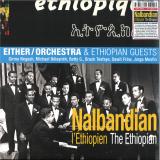
The Éthiopiques series returns! Essential archive recordings from an extremely fruitful period in Ethiopian music.
Before “Swinging Addis” took over the world, there was Moussié Nerses Nalbandian — the Armenian-born composer who shaped modern Ethiopian music. Mentor, arranger, and pioneer, he laid the foundations of Ethio-jazz.
This Éthiopiques volume revives his forgotten legacy, recorded live by Either/ Orchestra First issue ever with new exclusive photos and in depth liner 8-page insert.
“Ethiopian jazzmen are the best musicians that we have seen so far in Africa.
They really are promising handlers of jazz instruments.”
Wilbur De Paris
(1959, after a concert in Addis Ababa)
አዲስ፡ዘመን። *Addis zèmèn* **A new era.**
The time is the mid-1950s and early 1960s, just before "Swinging Addis" bloomed – or rather boomed – onto the scene. Brass instruments are still dominant, but the advent of the electric guitar, and the very first electronic organs, are just around the corner. Rock’n'Roll, R’n’B, Soul and the Twist have not yet barged their way in. Addis Ababa is steeped in the big band atmosphere of the post-war era, with Glenn Miller's *In the* *Mood* as its world-wide theme song, neck and neck with the Latin craze that was in vogue at the same period. Life has become enjoyable once again, with the return of peace after the terrible Italian Fascist invasion of Ethiopia (1935-1941). The redeployment of modern music is part and parcel of the postwar reconstruction. *Addis zèmèn* – a new era – is the watchword of the postwar period, just as it was all across war-torn Europe.
The generation who were the young parents of baby boomers** were the first to enjoy this musical renaissance, before the baby boomers themselves took over and forever super-charged the soundtrack of the final days of imperial reign. Music is Ethiopia's most popular art form, and very often serves as the best barometer for the upsurge of energy that is critical for reconstruction. Whether it be jazz in Saint-Germain-des-Prés or the *zazous* who revolutionised both jazz and French *chanson* after the *Libération*, be it Madrid's post-Franco Movida, or Dada, the Surrealists and *les années folles* that followed World War I, the periods just after mourning and hardship always give rise to brighter and more tuneful tomorrows. Addis Ababa, as the country's capital, and the epicentre of change, was no exception to this vital rule.
**Two generations of Nalbandian musicians**
Nersès Nalbandian belonged to a family of Armenian exiles, who had moved to Ethiopia in the mid-1920s. The uncle Kevork arrived along with the fabled "*Arba Lidjotch*", the** "*40 Kids*", young Armenian orphans and musicians that the Ras Tafari had recruited when he visited Jerusalem in 1924, intending to turn their brass band into the official imperial band. If Kevork Nalbandian was the one who first opened the way of modernism, pushing innovation so far as to invent musical theatre, it was his nephew Nersès who would go on to become, from the 1940s and until his death in 1977, a pivotal figure of modern Ethiopian music and of the heights it. Going all the way back to the 1950s. Nothing less. And it is Nersès who is largely to thank for the brassy colours that so greatly contributed to the international renown of Ethiopian groove. While the younger generations today venture timidly into the genealogy of their country's modern music, often losing their way amidst a distinctly xenophobic historiographical complacency, many survivors of the imperial period are still around to bear witness and pay tribute to the essential role that "Moussié Nersès" played in the rise of Abyssinia's musical modernity.
Given the year of his birth (15 March 1915), no one knows for sure if Nersès Nalbandian was born in Aintab, today Gaziantep (Turkiye/former Ottoman Empire) or on the other side of the border in Alep, Syria... What is certain is that his family, like the entire Armenian community, was amongst the victims of the genocide perpetrated by the Turks. Alep, the place of safety – today in ruins.
Before Nersès then, there was uncle Kevork (1887-1963). For a quarter of a century, he was a whirlwind of activity in music teaching and theatrical innovation. *Guèbrè Mariam le Gondaré* (የጎንደሬ ገብረ ማርያም አጥቶ ማግኘት, 1926 EC=1934) is his most famous creation. This play included "ten Ethiopian songs" — a totally innovative approach. According to his autobiographical notes, preserved by the Nalbandian family, Kevork indicates that he composed some 50 such pieces over the course of his career. This shows just how much he understood, very early on, the critical importance of song as Ethiopia's crowning artistic form. Indeed, for Ethiopian listeners, the most important thing is the lyrics, with all their multifarious mischief, far more than a strong melody, sophisticated arrangements or even an exceptional voice. (This is also why Ethiopians by and large, and beginning with the artists and producers themselves, believed for a long time — and wrongly — that their music could not possibly be exported, and could never win over audiences abroad, who did not speak the country's languages).
Last but not least, one of Kevork's major contributions remains composing Ethiopia's first national anthem – with lyrics by Yoftahé Negussié.
Nersès Nalbandian moved to Ethiopia at the end of the 1930s, at the behest of his ground-breaking uncle. Proficient in many instruments (pretty much everything but the drums), conductor, choir director, composer, arranger, adapter, creator, piano tuner, purveyor of rented pianos,... he was above all an energetic and influential teacher. From 1946 onwards, thanks to Kevork's connexion, Nersès was appointed musical director of the Addis Ababa Municipality Band. In just a few years, Nersès transformed it into the first truly modern ensemble, thanks to the quality of his teaching, his choice of repertoire, and the sophistication of his arrangements. It was this group that would go on to become the orchestra of the Haile Selassie Theatre shortly after its inauguration in 1955, which was a major celebration of the Emperor's jubilee, marking the 25th anniversary of his on-again-off-again reign.
At some point or other in his long career, Nersès Nalbandian had a hand in the creation of just about every institutional band (Municipality Band, Police Orchestra, Imperial Bodyguard Band, Army Band, Yared Music School…), but it was with the Haile Selassie Theatre – today the National Theatre – that his abilities were most on display, up until his death in 1977. To this must be added the development of choral singing in Ethiopia, hitherto unknown, and a sort of secret garden dedicated to the memory of Armenian sacred music, and brought together in two thick, unpublished volumes. Shortly before his death (November 13, 1977), he was appointed to lead the impressive Ethiopian delegation at Festac in Lagos, Nigeria (January-February 1977).
His status as a stateless foreigner regularly excluded him from the most senior positions, in spite of the respect he commanded (and commands to this day) from the musicians of his era. Naturally gifted and largely self-taught, Nerses was tirelessly curious about new musical developments, drawing inspiration from the very first imported records, and especially from listening intensely to the musical programmes broadcast over short-wave radio – BBC *First*. A prolific composer and arranger, he was constantly mindful of formalising and integrating Ethiopian parameters (specific “musical modes”, pentatonic scale, and the dominance of ternary rhythms) into his “modernisation” of the musical culture, rather than trying to over-westernise it. It even seems very probable that *Moussié* Nerses made a decisive contribution to the development of tighter music-teaching methods, in order to revitalise musical education during this period of prodigious cultural ferment. Flying in the face of all the historiographical and musicological evidence, it is taken as sacrosanct dogma that the four musical modes or chords officially recognised today, the *qǝñǝt* or *qiñit* (ቅኝት), are every bit as millennial as Ethiopia itself. It would appear however that some streamlining of these chords actually took place in around 1960. It was only from this time onward that music teaching was structured around these four fundamental musical modes and chords: *Ambassel*, *Bati*, *Tezeta* and *Antchi Hoyé*. A historical and musical “details” that is, apparently, difficult to swallow, especially if that should honour a *foreigner*. Modern Ethiopian music has Nersès to thank for many of its standards and, to this day, it is not unusual for the National Radio to broadcast thunderous oldies that bear unmistakable traces of his outrageously groovy touch.
Arguably one of the most memorable house music moments, born out of the black LGBT scene in Chicago at the legendary Warehouse and known as one of Frankie Knuckles earliest productions; ‘Your Love’ is a stone cold classic. A record that is up there with the greats, instantly recognisable and a song that only get better with time.
Written by Jamie Principle and originally released in 1986, ‘Your Love’ has become a seminal recording over the past 34 years. Originally an underground club anthem, famously borrowed on the crossover hit ‘You’ve Got The Love’ (The Source feat. Candi Staton), and most recently re-produced by as part of the Director’s Cut project which aimed to update a number of classic cuts for the modern dancefloor, this is a record that endures the test of time. Working alongside The Frankie Knuckles Foundation and Eric Kupper, SoSure Music now releases two new remixes for 2020 from Darrius Syrossian and Alan Dixon.
First up, House music aficionado and legendary Sankey’s resident Darius Syrossian offers his unique blend of beats to the remix package. With releases on the likes of Get Physical, Viva Music and Hot Creations, Darius’ production is heavily influenced by some of the greats – think of the finest spinners from Detroit, New York and Chicago – and is well placed to approach this huge task. Darius introduces a rolling house beat and some old skool breakbeats into his mix, keeping the energy high throughout; bringing a feeling of a euphoria and hitting the peak time moment.
Charting a rapid rise through the ranks in a relatively short time Alan Dixon is already building a name for himself in House and Nu Disco scene and has recently released on labels including Glitterbox, Permanent Vacation, Running Back and True Romance. Alan’s remix aims directly at the centre of the disco dancefloor. A strong beat dominates a unique energy through the mix along with a slightly nostalgic vibe. With a beautiful floaty interlude and a raw emotion this remix updates a classic with respect while also giving a fresh new twist.