Soul Jazz Records’ special new 20th anniversary one-off limited-edition heavyweight special-edition yellow coloured vinyl pressing (+ download code) exclusively for Record Store Day 2025 of their out-of-print classic ‘Sugar Minott - Sugar Minott at Studio One’.
Legendary singer, record producer and sound system operator who brought 'lovers rock' reggae to worldwide recognition with a string of massive hits in the 1970s and 80s. Minott is renowned as one of the most important and renowned reggae artists of all time.
This is the first retrospective of Sugar Minott at the label and most of these recordings have never been widely available outside Jamaica.
Long-out-of-print re-release of this classic Sugar Minott album on Soul Jazz Records bringing together the best of his groundbreaking material recorded at Studio One in the 1970s.
This definitive collection brings together all of Sugar Minott's hits at Studio One. Tracks such as Vanity, Never Give Up, Roof Over My Head laid down the template for much of Jamaican music that followed and signalled the arrival of dancehall around the world.
Soul Jazz Records’ special new 20th anniversary one-off limited-edition heavyweight special-edition yellow coloured vinyl pressing (+ download code) exclusively for Record Store Day 2025 of their out-of-print classic ‘Sugar Minott - Sugar Minott at Studio One’.
Legendary singer, record producer and sound system operator who brought 'lovers rock' reggae to worldwide recognition with a string of massive hits in the 1970s and 80s. Minott is renowned as one of the most important and renowned reggae artists of all time.
This is the first retrospective of Sugar Minott at the label and most of these recordings have never been widely available outside Jamaica. Long-out-of-print re-release of this classic Sugar Minott album on Soul Jazz Records bringing together the best of his groundbreaking material recorded at Studio One in the 1970s. This definitive collection brings together all of Sugar Minott's hits at Studio One. Tracks such as Vanity, Never Give Up, Roof Over My Head laid down the template for much of Jamaican music that followed and signalled the arrival of dancehall around the world.
out of Stock
Last delivered 18 months ago available to reorder, subject to availability
They say nothing good happens after midnight, but in the case of creativity, that’s just not so. The night fosters a different kind of creativity: something urgent, spontaneous, carved out of necessity. Tracking the past, present and future of this complex dynamic, Selling The Night explores what happens when after-dark creativity influences wider culture and converges with everything from media, advertising, design and to gaming, fashion, hospitality, alcohol, beauty, tourism and far beyond. Also, as importantly, the implications of brands taking space within dance music as sponsors and supporters.
Author Andy Crysell speaks to DJs, promoters, marketers, academics, activists, archivists, policymakers, photographers, writers and designers. He samples KFC through to Fiorucci, Absolut and Red Bull, and moves from New York disco to the modern global underground.
Selling The Night witnesses how ideas migrate from subculture to influence the creative industries. It searches for lessons in improving the value exchange between dance music and brands, seeking something more symbiotic and less parasitic. All the while, it celebrates what makes after-dark ideas so special – the unique and democratising role they play.
“So much has changed in dance music over the decades. Selling The Night offers a very timely look at the role that brands and culture marketing have played in the past and will play in the future.” Kazim Rashid (Resident Advisor)
“The friction created when youth subcultures meet corporate cultures is long overdue a deconstruction, Selling The Night is necessary reading on how and why there is a transfer of time and money between consumer brands and cultural ecosystems; and what both sectors have to gain and lose through these relationships.” Finlay Johnson (Association For Electronic Music)
Denzel Curry's forthcoming King Of The Mischievous South Volume 2 finds him presenting a sequel to the project, and bringing back the sound, that helped launch his career. While the first installment of King Of The Mischievous South was performed from the perspective of his Raven Miyagi persona, a name bestowed upon him by Raider Klan founder SpaceGhostPurrp, Volume 2 finds Curry operating under his Big Ultra persona -- an elevated version of Raven Miyagi that is bragadocious and revels in the success that Curry has seen over the last decade of his career. Creating King Of The Mischievous South Volume 2 has been a goal of Curry's for some time, though his earliest attempts to do so ultimately morphed into other projects, namely his 2016 album Imperial and 2020's 13LOOD 1N + 13LOOD OUT. It wasn't until he stopped overly attempting to create Volume 2 that its songs started to emerge naturally.
Given the project's sound, which pays homage to the great musical heritages of the South -- from Memphis to Houston and Curry's own South Florida -- its features include the region's greats, both old and new, as well as others whose style is indebted to the South's musical legacy. Features include fellow former Raider Klan member Key Nyata, Memphis stalwarts Juicy J and Project Pat, Texas' Maxo Kream, That Mexican OT and Mike Dimes, North Carolina’s TiaCorine, Atlanta's 2 Chainz and Kenny Mason and South Florida's Ski Mask The Slump God and PlayThatBoiZay, as well as ASAP Ferg and ASAP Rocky, among others. The project more broadly and the intentional inclusion of Rocky and Ferg is Curry's attempt to show what could have been had relationships not soured with SpaceGhostPurrp, fulfilling the promise that existed at the rise of their respective careers in the early 2010s.
With all of the otherworldly adventures Denzel has taken listeners on over the course of his last few conceptually-driven albums, this project serves as a showcase for the fun, spontaneity and technical mastery that has made him one of rap's most in-demand talents over the course of the last decade.
out of Stock
Last delivered 18 months ago available to reorder, subject to availability
Presenting an official reissue of Coke’s audacious, engrossing self-titled album from 1972, originally released on Manuel J. Mato’s collectible Sound Triangle Records imprint. It’s a heavy hit of Miami Latin-funk, dosed up with psychedelic garage rock and gritty soul excellence, making for an intoxicating blend of styles and genres on this highly sought-after LP.
Predominately sung in English, Coke’s only album under this moniker is a sumptuous melting pot of influences, tied together with bright funk drumming, flavourful organs and zesty horns. With a garage band attitude and sensibility, the lineup consisted of Paul Garcia on guitar, Ariel Hernandez on bass, Ruben Perez on drums, Jose Rubio on the keys, a host of guest horn players and Peter Fernandez on vocals, whose tone and delivery was often mistaken for that of a woman.
Produced by Mato, the record and band were well-received in Miami and Southern Florida at the time. Due to a lack of promotion outside of Florida and the threat of a lawsuit from the Coca-Cola corporation for usage of their name, the band fell into relative obscurity, becoming Opus following the dispute.
They say the cream always rises to the top though, with Coke being rediscovered by diggers and collectors searching for a rare groove. One of the standout cuts on the album 'Na Na' was recently featured on the soundtrack to the Netflix drama 'Griselda' (a biopic of Miami/Cuban crime boss Griselda Blanco). Other highlights include the crooner-jazz-rock ‘Got to Touch Your Face’, the psych ballad 'You Turn Me On' with a guitar line reminiscent of The Doors, and the Latin-rock groover, 'Te Amo Mas'.
Coke is a sensational crossover record, that draws from a sea of different influences. Fans of early Santana, garage-pysch, Nu Yorican and Latin-funk productions should all investigate this cherished album - it will have something for you.
out of Stock
Last delivered 18 months ago available to reorder, subject to availability
Max Buchalik has been shaping Frankfurt’s music scene for many years now. Thanks to the deep connection to his hometown and the artists surrounding him, Max has constantly developed his production skills that now fuel his rising career.
His debut EP “Higher State” released in 2024 turned heads and his remix for Lauer’s “Don’t Let The Music Stop” on the Spanish imprint SOULMEEX truly made waves. Now, the Madrid-based label proudly presents Max Buchalik’s latest EP: Lucid Dreams.
With “Lucid Dreams”, reality blurs into fiction: a personal dreamscape entwines with the pursuit of perfection. The track soars into cosmic dimensions – timeless and weightless. Driving basslines blend with sparkling synth textures and shimmering pads, crafting an immersive, emotional atmosphere. It takes you on a journey where your feet stay grounded while your mind takes flight – Lucid Dreams become endless!
“Soar and Sway” is a pulsating ode to life – a celebration of constant growth despite the ups and downs of reality. The soundscape ventures through rhythmic percussion and radiant harmonic melodies. At times, ethereal pads take center stage; at others, punchy kicks and sharp hi-hats dominate. Continuously evolving, Soar and Sway radiates a vibrant aura, seamlessly merging energy, motion and harmony.
By teaming up with the charismatic and passionate artists Chinaski and Llewellyn for the remixes both tracks have been infused with fresh perspectives and luminous energy, making the EP shine even brighter.
out of Stock
Last delivered 14 months ago available to reorder, subject to availability
London favourites FUSE continue their busy start to 2025 with the latest offering from eb_flow, the previously anonymous project from founder Enzo Siragusa and Burnski, as they officially reveal their identities for the first time. A project shrouded in mystery since its debut in late 2022, eb_flow has captured the attention of the global underground house and minimal realm with their signature fusion of deep grooves and hypnotic soundscapes. With speculation surrounding the masterminds behind the alias since its launch, the ‘Boundless EP’ officially confirms what many had suspected – that two of the scene’s most respected producers are at the helm. The EP marks the duo’s second release on FUSE and their third overall, following their debut on the label and their ‘Sunshine’ EP on Burnski’s Constant Sound.
The three-track EP showcases eb_flow’s dynamic sound, perfectly balancing signature and trademark touches from both artists. ‘Celestial’ is a cosmic journey through sweeping pads, shimmering textures, and crisp drums, bringing a simmering cut to the fore. The title track, ‘Boundless,’ is a dancefloor weapon, built on tight percussion, heavy low-slung basslines, and atmospheric flourishes that take things deeper. Closing the EP with a hypnotic and immersive groove, ‘Illusion’ layers wonky yet intricate drum programming with subtle electronic elements to craft a trippy late-night roller.
Essential fixtures in both Siragusa and Burnski’s sets, this latest instalment cements the project’s status as a driving force with a reveal many have been patiently awaiting.
out of Stock
Last delivered 11 months ago available to reorder, subject to availability
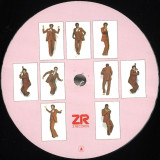
Z Records returns with a Hustle-tastic 12" to light up both your life and DJ sets. It's the boss himself Dave Lee who kicks off with his extended rework of a bonafide Brit Funk classic in the shape of Hi Tension's 'British Hustle'. Featuring David Josephs's signature vocals over the chugging Caribbean rhythm track, its a song that's never received an extended club mix from the tapes since its first release in 1978. His second cut is a Re-Wriggle of a Funky Worm volume pumping classic that becomes a fat-bottomed house jam with stomping brass, ear-worm vocal hooks and Latin inspired keys. "On the flip' (as they say) is Foreal People's 'Tango Hustle' - a driving clav heavy, jazz funk workout complete with chanting dance instructions over various solos. Add in an Acapella and some 'Hustle Beats' and you have a very muscular package.
out of Stock
Last delivered 18 months ago available to reorder, subject to availability
Finally, it's here: the new Kettel! And we certainly know we're on the Kettel estate: the delicate melodies, complex orchestrations, and the crisp sound design offer familiar musicality. The new Kettel hasn't skimped on ideas and details, and each track opens a courtyard that rewards surrender and attention--we want to linger there. One thing is clear from Dubio: if you thought you'd heard all of Kettel by now, you're mistaken. In the new Kettel, doubt (dubio in Latin) and dissonance have also become part of the beauty--and in doing so, it breathes more character and liveliness than ever.
out of Stock
Last delivered 12 months ago available to reorder, subject to availability
Scowl is a band that sounds exactly like their name implies. Venomous, fierce, antagonistic. A sneer not to be crossed. Over the last five years, the Santa Cruz, California, band has firmly planted their flag in the hardcore scene with their vicious sound and ripping live show, sharing stages around the world with Circle Jerks, Touché Amoré, and Limp Bizkit, and filling slots at prominent festivals like Coachella, Sick New World, and Reading and Leeds. But with their new album, Are We All Angels (Dead Oceans), Scowl is aiming to funnel all that aggression through a more expansive version of themselves. Much of Are We All Angels grapples with Scowl’s newfound place in the hardcore scene, a community which has both embraced the band and made them something of a lightning rod over the past few years. Standout single “Not Hell, Not Heaven” outright rejects the narratives cast onto them by outsiders. “It’s about feeling victimized and being a victim, but not wanting to identify with being a victim,” explains vocalist Kat Moss. “It’s trying to find grace in the fact that I have my power. I live in my reality. You have to deal with whatever you're dealing with, and it ain’t working for me.” The band breaks from a sense of disassociation to seek deeper connections on “Fantasy.” “It’s incredibly challenging to try to balance my love for the scene while also feeling, in some spaces, extremely alienated and hated,” Moss says. “‘Fantasy’ is about feeling like I don't know how to connect with these people anymore, because I have shelled myself away so hard.” The album ends in a philosophical place on the closing, titular track, “Are We All Angels,” asking questions like, “Is this all there is?” and ultimately putting it on the listener to decide. “It’s about the personal struggle between good and evil. It doesn’t matter how ‘good’ or ‘bad’ you are, there are systems that will try to rewrite your narrative no matter what you actually do,” explains Moss, noting that punctuation on “Are We All Angels” has been deliberately omitted in an attempt to leave the statement open-ended. Are We All Angels is the highly anticipated follow-up to Scowl’s debut, 2021’s How Flowers Grow, a 16-minute primal scream over punishing riffs. But amidst the pounding chaos, it was the record’s sonic outlier, a cleaner interlude called “Seeds to Sow,” that, true to its name, planted the seed for what was to come for the band. “It kind of laid out this destiny for us, and I feel like now we’re fulfilling that,” says drummer Cole Gilbert. The band continued to expand their sound on 2023’s widely acclaimed Psychic Dance Routine EP, incorporating more pop hooks and favoring gentler singing over heavy screaming, paving the way for what would come next. Scowl’s growth got a huge boost from producer Will Yip (Turnstile, Title Fight, Code Orange, Balance and Composure), who broadened the band’s scope. “Will would say, ‘Everything you have here is correct, but it’s in the wrong place,’” says Gilbert. Moss adds: “Will really helped restructure a lot of the material. Some songs he tore apart to make more space for the really good hooks and choruses.” But even through this more eclectic approach, Scowl loses none of their edge, and still manages to convey the anger and frustration that lies underneath. They are deeply committed to carrying the ethos of punk and its sense of community. “Hardcore and punk have sculpted how we operate, what we want to do as a band, and how we participate,” says guitarist Malachi Greene. “At our core, we are a punk and a hardcore band, regardless of how the song shifts and changes.
Scowl is a band that sounds exactly like their name implies. Venomous, fierce, antagonistic. A sneer not to be crossed. Over the last five years, the Santa Cruz, California, band has firmly planted their flag in the hardcore scene with their vicious sound and ripping live show, sharing stages around the world with Circle Jerks, Touché Amoré, and Limp Bizkit, and filling slots at prominent festivals like Coachella, Sick New World, and Reading and Leeds. But with their new album, Are We All Angels (Dead Oceans), Scowl is aiming to funnel all that aggression through a more expansive version of themselves. Much of Are We All Angels grapples with Scowl’s newfound place in the hardcore scene, a community which has both embraced the band and made them something of a lightning rod over the past few years. Standout single “Not Hell, Not Heaven” outright rejects the narratives cast onto them by outsiders. “It’s about feeling victimized and being a victim, but not wanting to identify with being a victim,” explains vocalist Kat Moss. “It’s trying to find grace in the fact that I have my power. I live in my reality. You have to deal with whatever you're dealing with, and it ain’t working for me.” The band breaks from a sense of disassociation to seek deeper connections on “Fantasy.” “It’s incredibly challenging to try to balance my love for the scene while also feeling, in some spaces, extremely alienated and hated,” Moss says. “‘Fantasy’ is about feeling like I don't know how to connect with these people anymore, because I have shelled myself away so hard.” The album ends in a philosophical place on the closing, titular track, “Are We All Angels,” asking questions like, “Is this all there is?” and ultimately putting it on the listener to decide. “It’s about the personal struggle between good and evil. It doesn’t matter how ‘good’ or ‘bad’ you are, there are systems that will try to rewrite your narrative no matter what you actually do,” explains Moss, noting that punctuation on “Are We All Angels” has been deliberately omitted in an attempt to leave the statement open-ended. Are We All Angels is the highly anticipated follow-up to Scowl’s debut, 2021’s How Flowers Grow, a 16-minute primal scream over punishing riffs. But amidst the pounding chaos, it was the record’s sonic outlier, a cleaner interlude called “Seeds to Sow,” that, true to its name, planted the seed for what was to come for the band. “It kind of laid out this destiny for us, and I feel like now we’re fulfilling that,” says drummer Cole Gilbert. The band continued to expand their sound on 2023’s widely acclaimed Psychic Dance Routine EP, incorporating more pop hooks and favoring gentler singing over heavy screaming, paving the way for what would come next. Scowl’s growth got a huge boost from producer Will Yip (Turnstile, Title Fight, Code Orange, Balance and Composure), who broadened the band’s scope. “Will would say, ‘Everything you have here is correct, but it’s in the wrong place,’” says Gilbert. Moss adds: “Will really helped restructure a lot of the material. Some songs he tore apart to make more space for the really good hooks and choruses.” But even through this more eclectic approach, Scowl loses none of their edge, and still manages to convey the anger and frustration that lies underneath. They are deeply committed to carrying the ethos of punk and its sense of community. “Hardcore and punk have sculpted how we operate, what we want to do as a band, and how we participate,” says guitarist Malachi Greene. “At our core, we are a punk and a hardcore band, regardless of how the song shifts and changes.
Every so often an album of such deceptive genius, of such aesthetic clarity, comes across our desk and transfixes us. Thought Leadership's III Of Pentacles is one such work of art. It's an instant classic and glides into the pantheon of timeless guitar-soul totems. Originally out on cassette only, we present the first ever vinyl issue. It's a hideously limited pressing of 300 for the world, so don't sleep on this.
Thought Leadership has already garnered big support from such tastemakers as Ruf Dug, Jason Boardman, Nathan Gregory Wilkins, J Walk, Evan Woodward, Justin Robertson and Heavenly's Jeff Barrett. The first time we heard III Of Pentacles, we nearly wept at the thought that something so beautiful, so bursting with real hope, could even exist in this brutal world. To quote the Quietus, "imagine if Stockport was situated somewhere along the Pacific Coast Highway rather than the M60, and you’ll have some idea of the coordinates to the post-industrial, sunburnt dream space opened up here."
So, who is Thought Leadership? What do we know about them? They reside in Stockport and are obsessed with ethereal guitar records. That’s about it. That and these X ideas shared with you, the listener.
Captured on a multitrack recorder in a terraced house in Stockport, this is as DIY as it gets. Glaringly obvious is a love for classic Factory and early 4AD. Perhaps it is the proximity to the River Mersey where the ideas arrived, and there being but three miles between where this and the Durutti Column’s classic “LC” was recorded, as the two operate across a familiar aural plain. Be it geographic or otherwise, limited by a true economy of means, namely guitar, pedals and drum machine, the fruit borne from these humble tools has been indelibly shaped by the perma-gloom that hangs low over the Manchester and Stockport environs.
Ushered in on 808 kicks, “I” opens the record as a beautiful Sketch for Stockport; a chiming maj7 chord dripping in chorus and delay sets us on our way. The Vini Reilly comparisons are unavoidable. “II” is all John McGeoch, with its trippy goth-psyche arpeggiated pattern cascading across the stereo image. Do those drums swing? But goths don’t swing?! They do here. We’re treated to a bit of crunch on the lead guitar part and some really lush reverb. We even step forth into shoegaze territory, albeit briefly, for the middle eight. “III”, a firm Be With favourite, continues the dreamy psyche leanings of the previous track, with an even bigger melody this time. We’re hearing The Teardrop Explodes on quaaludes here. A proto-dream pop cut soaked in melancholy. But watch out! The coda finds Johnny Marr has gotten into the ‘ludes and gatecrashed the final bars with some incredibly ignorant B minor pentatonic noodling.
“IV” ditches the drum machine for the first in a suite of three beatless electric guitar duets. The first of these semi-improvised rubato ideas is a striking departure from the earlier playful pieces, coming over emo and moody. Greyscale sulking for Stratocaster. Sign us up. “V” contains some really lyrical phrasing; a gorgeous conversation between two guitars. Real Stopfordian Primitive; meditative, crude, rain-soaked. We cycle through the same feels, then end on an alluring chord that breaks the pattern. Sometimes thoughts are like this. “VI” creeps in all plaintive, then a huge reverberating descending guitar line comes tumbling in like something off those classic Dif Juz 12”s. There’s some Maurice Deebank in there too, for sure, and the coda nods to early Meat Puppets.
“VII” rounds out the A Side, and succinctly presents a summary of all ideas explored thus far on our journey. The drum machine is back, this time with some wispy delay, before both guitars enter together playing interlocking lines. As we start, we end, with the delayed 808 guiding us out.
Opening Side B, “VIII” sees us embark on the other side of our journey as we slow down and space out. The drum machine is here, but the guitars are different now. Think Sensations Fix or Göttsching at his most peeled out. Drones, ambient drifts of broken chords and distorted lead lines all swirl round the mix. Side B is one for headphones for sure. “IX” is almost too exquisite for words. A New Age Mixolydian voyage through the cosmos. If you’re unmoved by the end you’ve probably got no pulse. We were left blunted ineffable by this one, such is the smudged elegance radiating from this idea. All hail the Thought Leader.
“X” is a full circle moment, and a fitting end. If you’ve not already elsewhere across the platter, you will be getting heavy Robin Guthrie vibes from this piece. Like the rest of Side B, this improvised jam sticks within a framework of related chords but the celestial energies channelled might invite us to wander “outside”, especially when the Tubescreamer is engaged.
RIYL Durutti Coulmn, Cocteau Twins, Dif Juz, Sensations Fix, Spike and adjacent guitar musicks – but, ultimately, this is just its own thing; such is the strength of ideas presented. "It’s good music to chill out to." (??)
Be With is honoured to present the first ever vinyl release of III Of Pentacles, carefully remastered by Be With's engineer Simon Francisco to ensure it sounds better than ever after its initial tape release. Cicely Balston's expert skills have made sure nothing is lost in the cut whilst the records have been pressed to the highest possible standard at Record Industry, in Holland. The original tape cover artwork, so crucial to Thought Leadership's striking visual aesthetic, has been rejigged for vinyl issue here at Be With. Its stark presentation befits the music contained within. They inform us that they shuffled their tarot deck to ask what the album should be called and the card you see on the cover popped out. The III Of Pentacles tarot card represents teamwork, shared vision and the ability to achieve goals through collaboration. We like to think Thought Leadership and Be With have nailed this one.
out of Stock
Last delivered 18 months ago available to reorder, subject to availability
It’s always fun to let our audience peer through the party peephole with some hot behind-the-scenes info. For months, Black Light Smoke’s Control EP has supplied several of label head Tiga’s secret DJ weapons. In fact, he’s been sneaking out constantly after 9pm to play it out anywhere they’ll have him. And it’s little wonder to those who wonder why, as the Chicago-born producer’s top-flight mix of EBM, electro and Benadryl-soaked vocals has all the right people dancing.
Leadoff track "New York Is Dead” eulogizes the famous Big Apple Dance Party Scene in a way that will confuse the many who have embraced the city’s thriving “Groove With the Avengers” day rave series in Times Square. But the nihilism-liking doesn’t stop there, with the Friday-Til-I-Die attitude of “Black Hole at the Disco,” the pleather-dreaded post-cyberpunk of “Last Song Before Sunrise”, and the oxygen-deprived acid of “Break Your Back” culminating in the 11:45am-peak-time industrial trance of closer “Mind Control.”
Because we want this to be available to as many inhabitants of the blasted apocalyptic landscape we have pencilled in for 2034 or so, we have decided to make this release available both digitally and on vinyl. So whether you’ve managed to jack in illegally to a Spotify Wind Farm or you’re relegated to the hand-cranked misery of a Victrola while living in a barn or something, we’ve got you covered!
out of Stock
Last delivered 10 months ago available to reorder, subject to availability
“On course towards future raucous, beer-soaked headline festival
sets.” - NME
“Screw-you power, relentless motorik rhythms and impressively large
choruses.” - The Guardian
“Unrelenting, gritty energy” - Daily Star
Sprints unearth their frenzied new EP, ‘Manifesto’, out via Nice Swan
Records.
Produced by Daniel Fox of Girl Band - Dublin’s answer to Steve Albini
- the four tracks make for a hard-hitting gloom-punk journey you
can’t miss. Like the Irish guitar acts who have paved the way for
them - Fontaines D.C., Silverbacks and Girl Band - Sprints sound
urgent and vital at every turn.
‘Swimming’ is a confluence of rabble-rousing stadium rock, sleazy
garage rock and Sonic Youth experimentation. Lyrically, there’s a lot
to hang on to too, which is unsurprising given how topical the band
are: ‘Drones’ took on imposter syndrome; ‘Manifesto’ tackled
homophobia.
‘Swimming’ scorns on the increasing lack of opportunity after
following prescribed paths to become society’s idea of a ‘success’.
Sprints singer Karla Chubb explains: “While the homeless crisis
worsens, the city is sinking in debt and everyone can barely keep
their heads above water, you see an article stating that a new €25
million white water rafting centre is being developed after approval
by Dublin City Council. Sometimes you’d just rather drown.”
Sprints have hit a nerve. The velocity of this argument comes from
personal anguish but will chime with a generation. And with such
honesty running through their core it’s no wonder The Guardian,
NME and BBC Radio 1 and 6Music have tipped them for big things.
Tourdates - October 7 Roisin Dubh Galway, 8 Kasbah Limerick, 9 The
Grand Social Dublin, 21 The Waiting Room London, 23 Heartbreakers
Southampton, 26 Sneaky Pete’s Edinburgh, 27 The Attic Glasgow, 28 The
Castle Manchester, 30 The Sunflower Lounge Birmingham, 31 Bootleg Social
Blackpool, November 2 Surf Cafe Newcastle, 3 Sidney & Matilda Sheffield, 6
Mutations Festival Brighton, 7 Festival of Voice Cardiff, 9 The Shipping
Forecast Liverpool, 10 Oporto Leeds.
LORCO aims to evoke an ancient Naturalism, like a relic brought back to light from the depths of the sea, a buried simulacrum rescued from the pyre that sought to erase the philosophical legacy of Giordano Bruno.
"Stories are battle axes to be unearthed" (Wu Ming).
In Giordano Bruno Will Have His Revenge on Rome, the human presence is sparse. Voices are rare, words remain in listening.
It’s industrial music played “as forests think” (Eduardo Kohn), speaking the language of waterfalls, hurricanes, and serene lakes Far from the factories, it listens to something we still belong to.
*180g virgin leaded vinyl in a deluxe textured heavy gatefold cover, with paste-on artwork and special anti-static innersleeve.* Note: The pressing is absolute on point!!!!
Vincent Gallo and Harper Simon with a beautifully recorded suite of songs and instrumentals.
" More than two decades since he blew minds with a suite of brilliant releases on Warp, Vincent Gallo returns to the world of music at long last in Butterfly, his duo with Harper Simon, with the project’s full-length debut, “The Music of Butterfly”. A gesture of gentle, DIY / bedroom left-field pop, falling within the rough territory for which Gallo became renowned during the late '90s and early 2000s, while interweaving fascinating flirtations with minimalism and experimentalism, it’s a truly captivating piece of work that’s hard to get off the turntable after the first needle drop.
In the arts, the lines between genius and madness, as well as fact and fiction, often blur. Such, it seems, has always been the life of the artist, filmmaker, actor, musician, and composer Vincent Gallo. A cult figure and a member of various creative undergrounds for the better part of half a century, Gallo has courted controversy, ruffled feathers, and made some of the most singular statements to flirt at the outer edges of popular culture that can be called to mind. Arguably most well known for his work in film, during the late '90s and early 2000s - notably with his soundtrack for “Buffalo 66” and a suite of releases on Warp - Gallo became something of a sensation in the world of independent music for a visionary, incredibly unique and sensitive approach to sonority. For a time, the world was abuzz, waiting on bated breath for more, and yet time passed. Bar a few fragments, appearing here and there, almost nothing has been heard from Gallo, within the world of music, for more than 20 years. That is, until now, with the release of “The Music of Butterfly”, the debut full-length of Butterfly, his duo with Harper Simon: beautifully produced and issued by Family Friend Records - Gallo’s own label, founded in 1981 - in a deluxe edition that simply left us speechless: 180g vinyl in textured heavy gatefold cover with paste-on artwork and thick anti-static innersleeve. More or less picking up from where we last encountered him, spinning captivating melodies and gentle song-craft within the quieter temperaments of DIY, left-field pop, once again, and at long last, Vincent Gallo, encountered in an incredibly successful collaboration with Harper Simon as Butterfly, reminds us that he’s as much a force within the realm of music as he is within film. Not to be missed. This one isn’t going to sit around for long.
Vincent Gallo’s biography reads like the stuff of blaring beauty: a figure of moderate fame in his own right, who has remained at the centre of cultural ferment as the decades have rolled by. Born in 1961, in Buffalo, New York, as the story goes he ran away to New York City at the age of 16 and fell into the brewing counterculture of the Downtown scene, William Burroughs and John Giorno, in addition to the cream of his own peers, and began making paintings, music, and experimenting with film. In addition to being a member of the now legendary band Gray, with the artist, Jean-Michel Basquiat, and the filmmaker, Michael Holman, Gallo appeared in the cult 1981 film “Downtown 81”, before slowly beginning a career as an actor and catching the eye of Claire Denis, who brought his talents into the broader cultural gaze. Catapulted into the public by his own subsequent career as a filmmaker with “Buffalo '66” (1998) and “The Brown Bunny” (2003), both of which were marked by controversy and praise, Gallo further captivated the public with a partially brilliant, if not relatively brief, flurry of activity in the realms of music.
While Gallo had already been making music for roughly two decades at the time of his release of the “Brown Bunny” soundtrack, and the four release issued by Warp in rapid succession between 2001 and 2002 - “When”, “Honey Bunny”, “So Sad”, and “Recordings of Music for Film” - the almost fanatical fandom reached a fever pitch at the moment, allowing him, for some, to be regarded as much, if not more, as a musical artist than an actor and filmmaker. Anyway you cut it, in a few short years, he proved himself to be a polymath of rare talent. Somewhere along the way, while both were working as members of Yoko Ono's Plastic One Band, Gallo met the New York based, highly regarded singer-songwriter, guitarist, and producer, Harper Simon, who also happens to be the son of Paul Simon. The pair fell into an incredibly fruitful duo collaboration, which came to be called Butterfly, and “The Music of Butterfly” being their debut full-length release.
Written, performed, and recorded by Vincent Gallo and Harper Simon in New York City between the winter of 2018 and the spring of 2019, the ten tracks comprising “The Music of Butterfly” are cumulatively a gesture of gentle, DIY / bedroom left-field pop, falling within the rough territory for which Gallo became renowned during the late '90s and early 2000s, making one feel like barely a moment had passed since we’d encountered his graceful hand at song-craft. Stripped back and raw, while retaining a sense of warmth and intimacy, across the length of “The Music of Butterfly” the duo of Gallo and Simon weave something completely captivating at the juncture of minimalism, experimentalism, and pop: meandering moments of texture and tone, slowly forming toward flirtations of melody that flower into song and back again. Somehow playful and light, while also remarkably emotive and personal, it’s almost as though each of these tracks crystallised out the air, unlabored and exactly as they should be without a note or beat more.
An engrossing immersion into both Gallo and Simon’s remarkably accomplished minds, having followed the path toward one another after radically different experiences and careers, “The Music of Butterfly” is one of those records that’ll be hard to get off the turntable after that first needle drop, and rarely leave the listening pile for some time to come. Issued by Family Friend Records in a beautiful deluxe edition that is unmatched even among the most stunning recent productions we can call to mind - 180g vinyl in textured heavy gatefold cover with paste-on artwork and thick anti-static innersleeve - it’s lovely to have Gallo back in the musical mix after so many years. "
Kneading dough is tricky – you should know how it’s supposed to feel. If you try too hard you could make it worse. It’s a beautiful practice – creation with a gentle touch, to work at something so it can be left alone. “If it’s too drawn out it’s awful. It’s easy to give too much.” Dance in the mirror. Contemplate your veiny hands. Who do they remind you of?
You begin by mixing flour and water. “What happens when your people die? Why’d they move the rock to the other side of Ulster Park?” Eliza Niemi asks two seemingly unrelated questions in a rising melody with guitar accompaniment, like fingers playing spider up to the nape of your neck. Gentle pressure. Strands of gluten form to bind the mix. A new question lingers in the binding. When she admits “but I don’t know how to tell if I’m feeling it or not,” that question surfaces through the text. It is reiterated throughout the album. When I’m working with dough I think the same thing to myself.
On Progress Bakery, her second album as a solo artist, Eliza knows to leave some questions alone – to let juxtaposition and tension be the proof. It doesn’t have to be hard. The feelings and revelations they provoke rise in the heat. The smell is sweet. Crispy on the outside and soft all the way through. She playfully slip-slides through words and sounds and images, delighting in surprise, skimming ideas like stones cast across clear water, touching down briefly with uncommon grace.
The question provoked between those opening lines resurfaces in the strands between songs – “Do U FM” is fully formed and beautifully layered, while “Novelist Sad Face” is a short, acapella rendering of gentle curiosity. What is holding these ideas together? Some songs demand more, seem to carry a whole load – eventually the skipping stone will halt to sink and resume its idle duty – while others drift in and out of focus, the way thoughts and dreams become interwoven before the mind is sunk into true sleep.
Music and words don’t always have to interact. Where she decides to keep them apart gives a new contour to where and how she puts them together. The kind of thing you’re supposed to take for granted with songs and their singers comes alive in Eliza’s hands – the little miracle of mixing, kneading, stretching, and stopping.
So often on Progress Bakery, Eliza teases out truth and meaning by asking questions. “Do I wanna be crying?” “Do you want me good or do you want me bad?” “Do I need an eye test?” “I’m writing songs in my head while you’re going over stuff with me — is that cruel??” In “Pocky” Eliza ends with a question that feels to me like the actual biography, succinct and revealing:
I don’t wanna be made to see
I just wanna ask “what’s that?”
Grace that ought to be rare, but in its care and precision is offered humbly, with great generosity, and without announcing itself. Eliza’s simple, miraculous music is given further form and shape by a group of collaborators – invaluable guest musicians Jeremy Ray, Evan Cartwright, Steven McPhail, Kenny Boothby, Ed Squires, Carolina Chauffe, Dorothea Paas, Louie Short, and Avalon Tassonyi. Together with Louie Short, who recorded, mixed, and produced the album along with Jeremy Ray and Lukas Cheung, Eliza has cultivated a richness in sound and texture that prods and provokes the ticklish ear. Barely audible guitar tinkering, a brief lo-fi field recording of trumpets, the harmonic clicking of a looped synthesizer, a flourish of reeds, a child’s conversation, each uncanny sound perfectly placed, rippling out under a soft breeze.
Lay in bed alone at night and ask aloud to the stillness,
“What were you doing at the Albuquerque Airport?
What were you doing there??”
And hear your question answered by a dream of swelling, undulating cellos. Try to grasp at the melody and structure. It’s not an answer (if there could be one), but it moves deeper, closer to the weird layer of fleeting moments and disconnected images, barely perceptible at its core. Wait for the dream reel to click into place.
Eliza took me for a ride in Nicole (her beloved Dodge Grand Caravan) and told me she’d been thinking of the album as an embodiment of transition – and I think every transition, known or unknown, carries the weight of new meaning, skittering off the surface tension of life as you know it, creating ripples, sometimes bouncing off and sometimes breaking through. There is a trick you can use to tell if a dough is glutinous enough. You’re supposed to stretch it out as thin as you can without breaking it and hold it up to the light. If you can see through, even if it renders the world murky and uncertain, you should leave it alone. I love this trick. It’s one that Eliza seems to know intuitively: work gently and ask questions and don’t always expect answers, and when you can, take a glimpse at something new, and then leave.
Buffet Lunch have been a band since 2017. They are a pop group formed of musicians based in Glasgow, Edinburgh and (sometimes) Newcastle. Described previously as a band that creates 'a hodgepodge of noises' who are 'lyrically ridiculous'. Both claims are strongly denied by the group.
Buffet Lunch have released 3 EPs & 2 LPs since 2019 and 6 months after self-releasing 'For Display Purposes Only' are back on Upset the Rhythm with their third album 'Perfect Hit!'
‘Perfect Hit!’ was recorded in the West Highlands, in the shadow of the UK’s Biggest Ben, during Leap Year week 2024. George Horler (Holy Loaf) joined the band as recording engineer along with new members Matthew Lord and Jack Shearer plus founding members Perry O’Bray & Luke Moran, to spend a week writing and creating the record. The majority of the record was completed in the studio, with as much recorded ‘live’ as possible and the week flew by, and we had such a lovely time we forgot to go on a walk. Most of the songs are new and only been played a few times live.
Lyrically, the album contains more deliberately personal lyrics than previous records, with several songs addressing ancestry and becoming a parent (Quarrymen, Shoes, Blue Chairs). Elsewhere, the songs deal with thorny issues such as; identity & full face tattoos, hands, legs & a swordfish sighting (Perfect Hit), the importance of kindness (Blip), disgraced Presbyterian John Knox (Merchandise), a potentially disgraced sportsman featuring star turn from Beef Jerk front man Jack Randall Lee (King Conker) and historical consciousness via Wikipedia (List of Walls).
Musically, the aim (as ever) was to make an album which is as fun to listen to as it was to make. These are mostly playful pop songs with a focus on melody and hooks. There are approximately 40% more guitar chords featured on ‘Perfect Hit!’ than on previous records.
Entering its 26th year of activity, the morphing, Los Angeles based experimental outfit, Sissy Spacek, joins Shelter Press with Entrance, among the project's most captivating outings to date. Encountering the duo of John Wiese and Charlie Mumma joined in various configurations by an incredible cast of collaborators - Tim Barnes, Marco Fusinato, Aaron Hemphill, Brad Laner, Katsura Mouri, Ralf Wehowsky, and C Spencer Yeh - collectively transformed into a series a deeply intimate and delicate gestures of musique concrète, Entrance radically repositions the possibilities presented by group improvisation outside of time and place. Founded at the end of the last millennium, the Los Angeles based project, Sissy Spacek, initially emerged from the knotted, fiery context 1990s American noise and grindcore, producing sheets of visceral sonority that quickly set the scene on its head. Going through numerous evolutions, before eventually settling as a duo of John Wiese and Charlie Mumma - joined by a rotating and often recurring cast collaborators - over the last 25 years the band has continuously entered states of evolution that have defied the expectations of its own context, seeding the sonic extremes noise with subtle and sophisticated approaches to free improvisation and musique concrète. Fiercely positioning its efforts within the outer reaches of contemporary experimental music, while resisting the constraints of a singular sound or proximity, Wiese regards Sissy Spacek as being primarily centred around the practice of musique concrète and the pursuit of extremes. From its earliest releases - collage treatments of material gathered from the band's full throttle practice sessions - the project's conceptual framework has continuously evolved within a deeply engaged process of experimentation, not only reworking tactical approaches, but also definitions and perception regarding the location and action of their work. In recent years, this has led to an increasingly varied and diverse output. Percolating within, is a thread marked by a striking sense of delicacy and intimacy, driving forward while doubling as an unexpected challenge, in real time, to perceptions connected to the band's past. Entrance is the most recent of these. Embarking upon the four compositions that comprise the finalized four sides of Entrance, Wiese and Mumma enlisted longstanding collaborators, Tim Barnes, Marco Fusinato, Aaron Hemphill, Brad Laner, Katsura Mouri, and C Spencer Yeh, as well as new initiate, Ralf Wehowsky (of the seminal German electronic noise collective P16.D4), requesting a contribution of sounds from each, determined by a general set guidelines that dictated certain qualities the given sonorities, while allowing for the expression of each player's distinct creative voice. The sets of resulting recordings were then chopped, harvested, manipulated, and reassembled as the four tape compositions that make up the album - Web Of Unfolding Appearance, Figure Of Reflected Light, Trancher And The Inheritors, True Dimension (From The Opaque - Spike) - each blurring the lines of authorship and clear creative proximity in remarkable ways. Where historical gestures of musique concrète tend to draw upon non-instrumental sound sources - regarding its sonorous material as raw elements, unburdened by inherent meaning or association, to be transformed and imbued with musicality - Sissy Spacek turns this position on its head. Entrance comprises works of musique concrète that not only draw upon instrumental sound sources, with all their possible meanings or associations, but also individual characters and personalities of their players, crediting each resulting piece to its respective configuration of contributors. As such, Entrance is an effort of sound collage defined by a rare sense of intimacy and humanity: four pieces that often take on the resemblance of group improvisation, but have, in fact, been assembled outside of time and place. Bent under the ever-present hand of Wiese's tape treatments and manipulation, each of the album's four compositions unfurl startling states of sonic abstraction and percolating texture, marked by a striking sense of hard-shifting structure, that culminate as tense, driven manifestations of ambient music: scrapes, squeals, rattles feedback, rolling drums, bouncing tones, whispers, bent electronics, electric artefacts, and seemingly everything else under the sun, configured into immersive, sublime mediations in sound from the most improbable events.
"1984 was a truly incredible year in pop music, and we have included a fabulous selection of tracks on the 1984 Yearbook and the 80-84 Final Chapter as part of our appreciation of the year.
Those tracks were generally the bigger hits of the year, with their chart achievement a factor in their inclusion. However, that’s not the whole singles story of the year, and our celebration of 1984 wouldn’t be complete without shining a light on some of the years’ singles that have been compiled much less frequently over the past 40 years…Welcome to THE VAULT for 1984… Some of the tracks included were Top 40 hits, some missed the chart completely. Some were representative of massive selling albums, and some were big hits in the U.S. and not in the U.K…. but all are part of the wonderful pop story of 1984. Released on a LTD edition pressing of a stunning 3LP transparent blue vinyl with 45 tracks.
SYML is the solo venture of artist Brian Fennell. Welsh for “simple”—he makes music that taps into the instincts that drive us to places of sanctuary, whether that be a place or a person. Born and raised in Seattle, Fennell studied piano and became a self-taught producer, programmer, and guitarist. Says Fennell about his album Nobody Lives Here, "We change, the world changes, and there is so much unknown. About a year ago I started writing songs that represent the change that is happening in front of my face, a group that have emerged to become the third SYML album. Many of these songs are about getting older, and the intimate, and sometimes frightening, passing of time. Some are about how getting older revolves around looking forward to things happening, and when they don’t happen, or they feel different than anticipated, we can be left with surprise and sadness. I’m actually reminded of this watching my 2 year old! We learn to live with disappointment. I recorded some of these songs with kids and dogs making noise in the background, and others in silent studios with musicians I’ve listened to and admired for many years. These songs are meant to be pieces of clothing to wear as you need (or I need). Some are bright and bold and others are gentle, but they were all made with a sense of comfort in mind, even when things feel bleak. My wife jokes that when our friends hear some of these songs, they might think we are not “ok”. Thankfully, putting myself inside a sad song is still a good place to feel happy. There's this generally unspoken feeling that musicians don’t listen to their own music. That isn’t true for me. I love living with my songs because their meaning changes as I change. There is as much fear and beauty in the big questions as there is wonder and possibility in the simple, everyday shit we live through.”
Scientist's name will be found on many dub releases in peoples record collections.His connection to King Tubby's studio is inseparable and many say when the dub end of Reggae music had fallen on quieter times it was Scientist with his often stripped back style and at other times, wild off the wall remixes that breathed life back into the dub cannon.
Scientist (born Overton Brownie,1960, Jamaica) was in many ways King Tubby's apprentice. Having helped his own father out repairing televisions and such like, he would help Tubby on winding transformer coils, that the amps of the day all needed. His interest in recording grew as he watched the many sessions taking place at Tubby's Dromilly Avenue Studio, learning the ropes as the musicians came and went. His first break happened when King Jammy (then Prince Jammy) was too tired to work on a session booked for producer Errol 'Don' Mais. Scientist engineered the session to every one’s bewilderment and great satisfaction.
His first hit would be a mix of Barrington Levy's 'Collie Weed' and his reputation built on the many versions he cut at Tubby's where he would become the engineer of choice. His pared down mixing style suited the new Dancehall reggae sound that came at the tail end of the 1970's and rolled into the 1980's. Such was his stature that albums were now sold with his name on their jacket, 'Scientist Vs Prince Jammy, 'Scientist meets The Space Invaders' to name but two.
His time at King Tubby's was followed as chief engineer working for the Hookim Brothers at the mighty Channel 1 Studio's and on many of top producer Henry 'Junjo' Lawes tracks, that were hit after hit at the time.
We have compiled some tuff tracks from the late 70's / early 80's just before everything went digital. Some great dub versions to some killer tracks that rocked the dancehalls around this golden time.The mighty Tristan Palmer whose killer cuts 'BadBoys','Stop Spreading Rumours','Eveready' and 'The Greatest Lover’ alongside Michael Palmer's debut release 'Mr Landlord' and Robert Trench's 'Mr Babylon'. The songs stand back-to-back with Tony Tuff's timeless 'Never Trouble Trouble' and the biblical Rod Taylor's 'The Lord is My Light'. Sammy Dread's 'Wah Dah Wah' and the always respectful Dennis Brown's 'Time and Place' all benefited a touch of magic from The Scientist and his laboratory of effects.
Hope you enjoy the set.....
out of Stock
Last delivered 11 months ago available to reorder, subject to availability
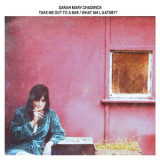
Take Me Out To a Bar / What Am I, Gatsby? marks a deliberate pivot. The album’s open, introductory chords evoke seem fit to score a scene in a Michael Haneke movie in which some stern German woman stomps down a whitewashed hallway. By the time that Chadwick’s crackly soprano joins in, it figures almost as a kind of intrusion upon what had been, up until that point, a pure mood. “You don’t have to listen to all the lyrics,” she attests. Chadwick's calling card since her earliest releases — a jagged, one-take immediacy — has been dialed back, leaving room to inconspicuously crowbar as much poeticism into the songs as she possibly could.
Long coveted by diggers, connoisseurs and beat makers, here we have the first-ever reissue of Amedeo Tommasi's "Industria 2000", released in 1974 via RCA's "Original Cast" series under his Jarrell alias. These 12 sonic experiments - totally devoted to synthesizers - offer tense tonalities, dissonant ambiences, complex textures, white noise rides and muted rhythms that can easily be seen as cornerstones of what would become later known as Industrial Music, also anticipating the sonic landscapes found in some of the early Warp Records releases.
Comprising 12 tracks entirely devoted to synthesizers, Industria 2000 explores a range of stark, tense tonalities and dissonant atmospheres. The album’s complex textures, white noise swells, and muted rhythms can be seen as precursors to industrial music, anticipating the aggressive, abrasive soundscapes that would later come to define the genre. It is clear that Tommasi's work was not only ahead of its time, but was also laying the foundations for the sound realms explored in the early days by major electronic record labels of the 1990s and future electronic pioneers.
Pat Kelly out of all the Jamaican singers was influenced most by the voice of American soul singer Sam Cooke.As were indeed many of the singers from that time,few however could carry out this daunting task as well as Pat Kelly.
His delivery was perfect and so was his ability to carry any song that came his way.
Pat Kelly (born 1949,Kingston,Jamaica) began his singing career in 1967 when he replaced Slim Smith as lead singer of The Techniques,his voice working so well with the impeccable harmonies of Winston Riley and Bruce Ruffin.
Their first hit for the mighty Duke Reid stable was a version of Curtis Mayfield's tune 'You'll Want Me Back' retitled 'You Don't Care' which held the Number 1 slot in Jamaica for the six weeks.
For this release we have focused on material that Mr.Kelly had recorded with legendary Jamaican prodcer Bunny'Striker'Lee.
A match made in heaven and one that produced some of their finest work.
Tracks such as 'One In a Million','One Man Stand','Man Of My Word','I Started a Joke'.. .
So sit back and you better get ready for an albums worth of great songs sung and delivered as only the great Pat Kelly could...
Respect Jah Floyd........
out of Stock
Last delivered 16 months ago available to reorder, subject to availability
Definitive Recordings is proud to announce the reissue of deep house classic "Liferaft" by Juicy Fruit (aka Meredith Ledger), fully remastered and set to breathe new life into one of the 90s' most iconic releases. Originally dropped in 1993, this EP features the original as well as remixes by John Acquaviva and The Stickmen.
The standout title track, "Liferaft", is a rich and soulful deep house gem, built around a captivating piano house theme that harks back to the golden era of house music. The track's groove is driven by a classic house beat and a funky, rhythmic guitar lick that perfectly complements its melodic core. The fresh remaster brings new clarity to its timeless warmth, elevating it for modern sound systems while keeping the vintage charm intact.
House music legend John Acquaviva takes the funky guitar lick and pushes it further into the groove, layering it with a robust and simplistic bassline. His remix evolves into a deep yet vibrant soundscape, showcasing Acquaviva's signature house influence.
The "The Stickmen Dub" intensifies the original's foundation by supplementing it with a hypnotic organ sound. This remix enriches the track with subtle but powerful layers, creating a mood that's both dancefloor-ready and deeply immersive.
Definitive Recordings is excited to share this release with long-time fans and newcomers alike. Whether you're a die-hard house aficionado or just discovering the classics, the "Liferaft" EP is a must-have addition to any collection.
out of Stock
Last delivered 17 months ago available to reorder, subject to availability
Andrew Duhon has a knack for telling the kind of stories that clearly cost the writer something to tell- the kind of honesty that feels noble and never half hearted. When a song written by a stranger heals you, even in the smallest way, that's a connection beyond entertainment, and that is the journey Andrew Duhon sets out on from his home in Louisiana. His songs are about recognizing our story as much as they are about telling his, and his coast to coast pursuits have given him a clearer view of the American Landscape than most are privy to. Still, after years of voyaging off to every corner of the country, a new sensation arises with each return home to New Orleans. From that familiar return comes The Parish Record, a snapshot of life venturing from and returning to one of America's purest cultural vignettes, and the beauty, conflict, and stories that come with it. The Parish Record was recorded at Dockside Studios in Maurice, LA, where deep in Cajun country sits a wood-panel barn engulfed in oak and cypress trees along the slow butterscotch bayou pace of the Vermillion River. In this isolated hub of Acadiana, Andrew Duhon embarked with his trio of most trusted musicians - Myles Weeks (James Hunter Six, Eric Lindell) on Bass, Jim Kolacek (Feufollet) on Drums, and Daniel Walker (Heart, Ann Wilson, Amy Ray) on Keys - to harness of the sound and feeling of their surroundings. "I wanted this record to feel like home. It wasn't time to get out of town or try out something new on this one. It was about believing in the songs from where the songs came from," Duhon says.
Rerelease of the fourth album of the Intercommunal Free Dance Music Orchestra recorded with the Guinean saxophonist Jo Maka. The title says it all: Vol.4 – Jo Maka.
The Intercommunal Free Dance Music Orchestra was created in 1971 by an “old hand” of French free jazz, François Tusques. Free Jazz, was also the name of the recording made by the pianist and other like-minded Frenchmen (Michel Portal, François Jeanneau, Bernard Vitet, Beb Guérin and Charles Saudrais) in 1965. But, six years later Tusques had had his fill of free jazz.
So he then founded the Inter Communal, an association a name under which the different communities could become closer and compose, simply. In 1976, on the first album: L’Inter Communal, we can already hear Tusques playing without borders in the company of Carlos Andreu, Ramadolf, Michel Marre and Jo Maka (as a conclusion to this Vol. 4, we can hear them in 1977 at the Moulin de Prades Le Lez). Over the next decade, the, association kept going with concerts at the Dunois theatre, in 1980 and 1981, it welcomed old hands and new recruits (Bernard Vitet, Jean-Jacques Avenel, Jacques Thollot, Sylvain Kassap…).
If Vol. 4 – Jo Maka is an homage to the Guinean saxophonist, who passed away a few months before the release of this selection of concert recordings, it also displays a proud collective inspiration! One foot in the blues, and ears open to everything else, Tusques begins with a lament that the Company rapidly transforms into a joyful dance (“Vive la Commune”), weaves a full-blown party piece (“Poses ton fardeau et remets la machine en route”, “7 rue des prêcheurs”, “Mazir”) or gets fabulous with Mingus (“Fable Of Faubus”). And there you have it, with so many revolutions François Tusques is almost back to free jazz.
Nicolás Melmann (born in Buenos Aires and now based in Barcelona) explores sound's social and poetic dimensions through transdisciplinary projects. Drawing inspiration from Erik Satie's concept of "furniture music," Melmann's compositions transform the listening experience into havens of calm and contemplation.
Música Aperta is a fusion of acoustic and electronic sounds, rich in beautiful harmonies, where carefully soft elements interplay with delicate raspiness. Made up of three parts, the music unfolds slowly, immersing the listener in time. Música Aperta resonates with echoes of Satie, the meditative minimalism of Arvo Pärt, the roughness of Phill Niblock, and the nostalgic reflections of Richard Skelton.
Another way of listening to Música Aperta is through its digital encore – an extension of the album experience that brings the concept of open music to life – "a work that remains unfinished and open to transformation." The website features a reactive audiovisual interface where images dynamically respond to the music's behavior, translating electroacoustic frequencies into real-time cinematic landscapes. The album blends instrumental and electronic textures while allowing listeners to interact with different layers through a virtual mixer, enabling them to create unique sound combinations and personal sonic experiences.
All songs written and performed by Nicolás Melmann in Château Éphémère.
Mastered by Rafael Anton Irisarri at Black Knoll Studio, NY.
Artwork by Daniel Castrejón.
Electronic music at its best offers a tantalising glimpse of the future, capturing the moment of conception where new worlds and genres are brought into being. Amsterdam-via-Berlin label Q1E2 (standing for “quality first, ego second”) embodies this expansive promise on their new various-artists compilation, a thrilling speed-run through the cosmic outer-reaches of contemporary club sounds that highlights the work of essential emerging producers from around the globe.
Milan producer Jack Bags opens the proceedings with “Natural Thing”, an astral deep-dance immersion with zero-gravity synthesizer pads and skeletal dub percussion that echo out through the void, sensuous vocal samples arriving like scattered transmissions from the stereo of some long-lost spacecraft. datSIM’s “Influx” races through kaleidoscopic sci-fi spacescapes, presenting a futuristic reimagining of UK bass sounds with dextrous organ melodics and widescreen atmospherics. Mike Riviera and Marco Ohboy bring us back down for a more earthly kind of ecstatic experience, cranking up the humidity and coaxing out the endorphins with the appropriately-titled “Euphoria” - a rugged, rave-adjacent heater that cleverly rearranges elements of classic house and garage into a decidedly modern club workout.
Elsewhere there’s a distinctive undercurrent of jazz flowing through the compilation, mapping out thrilling new evolutions of the music on and off the dancefloor. Dr Sud’s mesmeric rhythm excursion “Zaffiro” unfurls like the coils of a cosmic serpent, tessellating percussion and slinking subs tracing intricate beat geometries. A Soft Mist Production’s “Upside Down Rainbows” settles in for the afters with smoked-out soulful atmospherics, syrupy vocals curling and turning in the air like smoke vapors from the last vestiges of a still-lit cigarette. The Rabbit Hole’s “Tail Groove” closes out the proceedings with a surprising bait-and-switch - opening on lustrous lounge piano that could have been comped straight from a Bill Evans record, the track quickly gives way to interstellar bass ‘n’ breaks. The producer’s canny use of cello licks adds a grounded, organic feel, jazz futurism that recalls Photek or LTJ Bukem’s sampling experiments.
Taken together, the label’s new compilation provides a snapshot of a scene in constant evolution, taking the temperature of the modern electronic scene and finding it to be in rude health.
Written by Matthew Fidler
out of Stock
Last delivered 18 months ago available to reorder, subject to availability
A deluxe version of the newest studio album from award winning artist Bright Light Bright Light following #1 UK Dance Album 'Fun City'. Whereas today's artists have been sampling 90s acts non-stop, he has invited 90s hitmakers to create new work with him, featuring dance icon Ultra Nate, Top 5 hitmaker Berri and the voice of Air's 'Moon Safari' Beth Hirsch.
Happy Birthday, Ratboy combines the old and new — containing 10 brand new recordings of their earliest material + a newly-written bonus track, this record celebrates a decade of Ratboys: a 10-year songwriting partnership, an evolving live show, a D.I.Y. project, a web of friendships, and every thing in between. Almost as soon as Julia Steiner and Dave Sagan met during their college orientation, they started playing music together. What came out of their dorm rooms was the 5-song RATBOY EP, uploaded to Bandcamp on April 1, 2011 to share with friends and family. Now, to mark a decade since (to the day), Ratboys have hit the studio to re-inhabit these songs and bring them back to life. New recordings of the 5 original RATBOY EP songs make up the A-side of Happy Birthday, Ratboy, with 5 new versions of rare college-era tracks and the newly-written standout, “Go Outside” on the B-side. Featuring mainstays from their live show over the years, including “The Stanza” & “Space Blows,” pressed to vinyl for the first time and given the full band treatment, Happy Birthday, Ratboy introduces new Ratboys fans to the band’s beginnings while also raising a toast to those who’ve been there from the start.
'Wherever You Are' is a new solo piano album, played and composed by John Foxx. Most of the recordings were made at home and in the early hours of morning in the weeks following his rare live performance at Kings Place, London in October 2023, as part of the BBC Radio 3 'Night Tracks' event. 'Around dawn is the best time to play piano,' says Foxx. 'Self-critical mechanisms mostly dormant, so I'm free to invent and enjoy for a while. The piano faces a window overlooking a valley surrounded by hills, where the sun comes up. There's often an early mist in the valley - and quite often, it rains. Some notes and sounds resonate with remembered experiences and you get glimpses of times and people. It's valuable. Quiet. Free association, myriad moments orbiting - and off you go.' He adds: 'Lately I'm realising how we get formed by other people. Everyone we know or knew, who affects the way we think and the way we see things - even in a small way, has a voice, and all those voices remain in a sort of lifelong conversation. I hear them all the time. It's not at all frantic, it's more oceanic - calm and pleasant and it eventually makes us the way we are. Luckily, I seem to have met - and meet - mostly good, generous, bright people and I'm still learning a great deal from all of them. They give you the touchstones, the maps, the weather. It's how we find our way. So - simply, thanks. Wherever you are.'
Label head Len Faki continues his legacy of personalized remixes with this two-tracker, combining a personal favorite of him with a more recent output from his peers.
First up is the euphoric 010X by Benjaming Damage, whose anthemic chords have been ringing in our ears ever since its first release back in 2013. Faki reframes the standout lead and packages it neatly within his own jacking percussion, beefing up the low end and giving the melodic original a pronounced bassy drive.
Rewinding yet another decade, Aquatrax' Stabilize pulsates with the relentless energy of late 90's techno, formative years for Len Faki as an artist and also club regular. His take on the UK classic introduces a hypnotic dubby swirl, one of those perfect loops that is captivating from start to finish. The details ebb and flow with a subtlety unusual for his Hardspace alias, creating an immersive journey that's impossible to tap out of.
out of Stock
Last delivered 62 days ago available to reorder, subject to availability
The term Miao is a very ancient Chinese misleading pseudo-ethnic categorisation, what we call the Hmong in western languages, a term recognised by colonial French Indochina. Miao became a generic term which does not reveal the diversity of 38 subgroups or 9 million people, mostly in Southern China Guizhou Province.
China having moved towards the market economy, a large number of minority regions have marketed a commodity available only to them: their ethnicity itself. Ethnic tourism has developed in a big way in China since the 1990s for Chinese and foreign tourists, and is often promoted as the way to create income in those areas for development. I usually stay away from ethnotouristic shows and try to get music which is not a commodity! I was based in Dali, Yunnan, China between 2006 and 2013.
»Even The Horizon Knows Its Bounds« explores sound’s relationship with architecture, inspired by the Naala Badu building at the Art Gallery of NSW. Created from sound prompts responded to by artists like Jim O’Rourke and claire rousay, the work reflects on space, collaboration, and the fluid nature of sonic environments.
I like to think that sound haunts architecture.
It’s one of the truly magical interactions afforded by sound’s immateriality. It’s also something that has captivated us from the earliest times. It’s not difficult to imagine the exhilaration of our early ancestors calling to one another in the dark cathedral like caves which held wonder, and security, for them.
Today the ways in which sound occupies space, the so-called liquid architecture, holds just as much wonder, albeit one that is often dominated by functionality and form. Beyond those constraints however, how sound operates in the material world is something that exists at the fundament of our understanding of music, and moreover within the broad church we know as the canon of sound arts.
Even The Horizon Knows Its Bounds is a record born out of these relations. In a direct sense, the record is the product of an invitation by curator Jonathan Wilson to create a sound environment, reflecting on the Naala Badu building at the Art Gallery Of NSW. The building’s name, which translates from the Gadigal language to ‘seeing water’, was opened in 2022 and this piece was offered as an atmospheric tint to visitors walking through the building throughout the year following its opening.
It’s also a record born out of a recognition for the porousness sound affords, especially as a device for collaborative endeavour. This composition is one born out of generosity and acoustic solidarity. Even The Horizon Knows Its Bounds is comprised not just of my sounds, but also that of an incredible array of artists who have also operated in the orbit of the Art Gallery Of NSW. The players include Amby Downs, Chris Abrahams, Chuck Johnson, Claire Rousay, Dean Hurley, Jim O’Rourke, JW Paton, Madeleine Cocolas, Norman Westberg, Stephen Vitiello and Vanessa Tomlinson.
The piece was constructed around two long form sound prompts that each musician responded and contributed to. These materials there when digested into the final piece you hear. The work could not exist without the substantial offerings these artists made, and I am immensely grateful to each of them.
I’ll finish with a little note that appears on the LP itself.
Place is an evolving, subjective experience of space. Spaces hold the opportunity for place, which we create moment to moment, shaped by our ways of sense-making.
Whilst the architectural and material features of space might remain somewhat constant, the people, objects, atmospheres, and encounters that fill them are forever collapsing into memory.
Lawrence English
Performed by Amby Downs, Chris Abrahams, Chuck Johnson, Claire Rousay, Dean Hurley, Jim O’Rourke, JW Paton, Madeleine Cocolas, Norman Westberg, Stephen Vitiello, Vanessa Tomlinson
Chris Ryan Williams (trumpet & electronics) and Lester St. Louis (cello & electronics) work together as HxH (H by H). Their skills have seen them move smoothly across various situations, constantly carving out new terrain and working in new configurations of musicians at a rapid pace. While worth reading, their biographies capture only a part of their complex rhizome.
HxH started about three years ago. The project is a direct response to all their activity with others and more importantly all their future leaning sonic desires. Their debut album STARK PHENOMENA is both their first studio recording and their first physical release. The album is appropriately set to be released by KMRU on his growing label OFNOT. It’s an ideal introduction to their sound world and their approach.
HxH describe their music as “electroacoustic,” but until recently the presence of Black musicians in this field has been greatly overlooked and largely ignored, making this phrase only partially appropriate. What HxH do really is to always be unpredictable. Every gig is a new soundscape. Sometimes you might hear echoes of Autechre or Robert Hood but then the sound-field will open up into a new terrain all their own. Chris and Lester bring together techniques from across the sound spectrum of electronic music and also draw on their deep backgrounds in Jazz, Improvisation, Classical and Noise scenes to create a sound that is true to them. After all, these two have worked with the likes of Bennie Maupin and the music of Black Fluxus artist Ben Patterson. Their rhizome is deep.
One of the ways that their unique approach manifests is in their merging of both acoustic instruments and electronic instruments in real time. This is something few have managed to do – but their spontaneous leanings work in both complex and accessible ways because of their deep understanding of landscape crafting. You can hear this clearly on the track “Pyrex Vision.” Their approach makes it tempting to compare their music to Sun Ra jamming with Laurel Halo – a comparison that would be only partly accurate.
Chris and Lester note that the sounds on STARK PHENOMENA are “imbued with such hopeful, gracious care; one that is far flung from obsessive carefulness or fuck the world carelessness, but more a caring embrace without the fuzziness of nostalgia.”
They note that when they began working together, they would “always come back to speaking on our concepts of an architecture of the expanse,” noting that their live sets often take on the joyfully noisy task of “dreaming big.” For HxH it was essential that STARK PHENOMENA have a quality that is “almost sculptural.” They consider the album “an object to be viewed from all sides.” This kind of thinking has resulted in them directly engaging with numerous sculptors and artists including Torkwase Dyson. Shape wise HxH’s sound fields work in a parallel to Dyson’s black architectural works.
They also note that the opening cut “BEACH” (the opening and longest track from the album) was “written weeks after our first gig in a studio session donated to us by our dear friend jaimie branch.” And that Pyrex Vision “was continually being edited months after sending our ‘final mixes’ to KMRU.” Their sound sources and samples come from studio sessions, live gigs, durational installations, 3am improvised downloads and more.
KMRU notes: "I think there is an in-between layer on this record. I was first caught by the Pyrex Vision track which organically flows between monologue, subtle field recording, and instrumentation. It's such a beautiful track, evoking deep emotion through simplicity. STARK PHENOMENA effortlessly glides in between imaginative mosaics of sounds — free yet complex — unlocking memories within its layers."
out of Stock
Last delivered 5 months ago available to reorder, subject to availability
Firstly, I want to thank Soulox & Soeneido for their patience because I have slept on their music for years haha
They have both been sending me music for a long time which I was pretty slack on checking (as a lot of people may have also noticed when sending me music, there's a huge backlog to get through and not enough hours in the day!) but it wasn't until Pete Dev/Null was in London for an event and we met up in person to record a mix for Blog To The Oldskool (our show on Jungletrain) that I realised what these two were capable of. Pete started the show with Lavish and I had to know what it was straight away, he told me it was by Soulox & Soeneido and I felt so bad that I had probably not bothered to check this tune if they had sent it to me, but I knew I had to have it!
I messaged Soen the next day asking about this tune and thankfully it was still available, one thing led to another and this release now exists. Big thanks to both of them for their wicked tunes, big up Comfort Zone on his quality remix of Lavish and a special mention to Jay Vaz (of Dreaming Vinyl) who did the design for the b-side of this release.
out of Stock
Last delivered 18 months ago available to reorder, subject to availability
Another foggy day in Yorkshire. A steel grey sky. Raindrops tracing one another down the windowpane. Kirk Barley sits in his studio and assembles compositions from scraps of found sound and live instrumentation. Melodies swell, withdraw and repeat like waves. Time slows. Accelerates. Slows again. The light bends, tweaked at the edges. Twisted by rhythms that never quite resolve.
Written, recorded and produced by Barley in Yorkshire in early 2024, Lux picks up where 2023 LP Marionette leaves off, conjuring a mystical, reflective space between formal minimalism and sonic imaginaries of northern landscapes.
And yet, where Marionette relied at times on more recognisable field recordings, Lux leans into Barley’s skill as an instrumentalist and sound designer, working from a palette of short samples and utilising a variety of alternate tuning systems to build, layer and coax his compositions into being. Most evident on tracks ‘Vita’, ‘Sprite’ and ‘Descendent’, these tunings create an otherworldly harmonic language that is easier to perceive than describe.
Alongside more familiar instruments of guitar, bass, drums, organ and clarinet, here Barley draws on plastic saxophones and bells, and recordings of glass, wood and metal sound objects to provide the organic matter. Rather than directly representative of the natural world, Lux enters into a dialogue with it which, like the grasses and flowers of the album’s cover, exists somewhere between reality and artifice.
On album opener ‘Cache’, Barley constructs his own sense of time from a recording of an umbrella crank, a sparse and spectral piece which hints at memories embedded in the track’s title. Introspection blossoms into new life on ‘Vita’, crumpling again into the percussive ambience of ‘Verre’. A track that takes its harmonic lead from the clinks of glass, it features Barley’s long-time collaborator Matt Davies on drums, whose nuanced, tonally sensitive playing gives ‘Verre’ a fizzing, ice-like quality.
There are several moments where Lux picks up on themes Barley explored under electronic moniker Church Andrews on recent works with Davies, stretching and distorting temporalities most explicitly on ‘Descendent’, whose ritualistic air unfurls around a pattern in exponential decline.
Embracing the surrealism Barley absorbed over years watching classic film noir and the works of David Lynch and Federico Fellini, Lux wends its way through the enchanted sound worlds of ‘Sprite’ and ‘Balanced’ before arriving at the album’s title track.
An expression of his recent experiments in live, prepared guitar, ‘Lux’ brings the album back to earth, returning us to the room where the rain has stopped, the clouds have parted, and the soft warmth of the spring sun is pouring in through the open window.
out of Stock
Last delivered 17 months ago available to reorder, subject to availability
After a 30-year interstellar silence, the enigmatic producer Alien Signal—pioneering alias of Italian electronic composer Alex Silvi—reemerges with Whispers from Distant Suns, a transcendent odyssey that bridges retro-futurism and modern electronica. Hailed as a magnum opus, this album transcends genre boundaries, captivating ambient purists, downtempo aficionados, and even experimental listeners with its hypnotic fusion of analog warmth and digital precision.
Cosmic Tapestry of Sound
Drawing comparisons to Vangelis’ Antarctica and Alpha—but reimagined through a 21stcentury lens—Whispers from Distant Suns marries nostalgic synth textures with cuttingedge production. Silvi’s mastery of melody shines through in tracks like “Stardust
Memories” and “Fragile Eden” where shimmering arpeggios and celestial pads drift over robotic, glitch-infused drum patterns and sparse, meditative percussion. The result is a paradox: a retro-futuristic soundscape that feels simultaneously ancient and alien, familiar yet unexplored.
Listener Testimonials
Fans and critics have flooded forums with praise:
“An auditory revelation! It’s like Vangelis met Jon Hopkins in a nebula—vintage soul with a futuristic heartbeat.”
“The textures are gorgeously cinematic. Closing your eyes, you’re adrift in a Tarkovsky film scored for the Andromeda galaxy.”
The Vinyl Experience
Pressed on heavyweight vinyl, the album’s physical release amplifies its immersive qualities. The gatefold sleeve, adorned with surrealist astrophotography and metallic
foiling, mirrors the music’s cosmic ethos. Side A leans into Balearic serenity, with sundappled grooves and aquatic synth ripples, while Side B delves into darker, more
experimental terrain—think Aphex Twin’s Selected Ambient Works colliding with the organic rhythms of Jon Hopkins.
Maturity in Motion
This album is a testament to Silvi’s evolution. Tracks like “Seeds Of Light” and “Message from Andromeda Galaxy” showcase his refined ear for dynamics, balancing silence and sound with surgical precision. Vintage drum machines spar with glitches, while field recordings of crashing waves and interstellar static blur the line between Earth and cosmos. The closing track, “The Star Charts We Shared” crescendos into a 6-minute ambient requiem, leaving listeners suspended in a state of weightless awe.
Final Transmission
Whispers from Distant Suns is more than an album—it’s a transcendent odyssey. Spanning time, space, and the artist’s own creative evolution, this immersive work invites listeners to lose themselves in its ebb and flow. Designed for moments both intimate and expansive, its balearic-tinged atmospheres resonate equally through dawnlit Mediterranean terraces or the solitary glow of headphones in darkness. These are compositions that pulse, morph, and haunt the air long after the final note fades. A living soundscape meant to accompany life’s quiet revelations and clandestine joys—a soundtrack to your most personal moments, crafted as what the artist calls ‘private dance music.’
Tailored for the Discerning Listener
Whispers from Distant Suns is designed with the true connoisseur in mind. This album is a must-have for:
Vinyl Collectors & Audiophiles: Those who value the warmth and tactile experience of heavyweight, limited edition pressings
Electronic Ambient and Downtempo Fans: Listeners who appreciate immersive soundscapes that merge retro analog charm with modern digital innovation.
Retro-Futurism Enthusiasts: Fans of pioneering artists like Vangelis, Boards of Canada, and early Warp Records who seek music that bridges nostalgic synth textures with futuristic experimentation.
Experimental Music Explorers: Individuals drawn to sonic narratives that invite deep, contemplative listening—perfect for both introspective moments and immersive listening sessions.
This release is not just an album; it’s a curated experience for those who desire music as a multidimensional art form, merging the vintage allure of analog sound with a contemporary, cosmic vision.
For fans of: Vangelis, Biosphere, Jon Hopkins, early Warp Records.
out of Stock
Last delivered 17 months ago available to reorder, subject to availability