Hot Piroski Boss Robin 12Tree Beams Back with “Interstellar Vibes Vol. 1” A Balearic Odyssey in 5 Tracks.. Strap in and sunscreen up - Robin 12Tree is back with Interstellar Vibes Vol. 1, a scorching 5-track EP of cosmic Nu Disco and Balearic goodness inspired by strobe lights, sunsets and surfside odysseys. Opening blast The Wriggler is a peaktime disco/house rocket, all teasing arps and synth liftoffs. Feelin Free glides into deeper territory, with lush strings giving nods to deep house royalty. Then comes Who Will Heal Us, a slo-mo sunset serenade featuring new Barcelona rising soul queen, MaYa. Things get extra-terrestrial with Need You In My Life, a deep-house jam born from a Barcelona afters with Soul Mekanik’s Danny Mekanik. Finally, Tupambame brings us gently back to Earth, dripping sunshine and jazzy warmth thanks to Tanzanian vocalist Miss Vivandra. Robin 12Tree launched Hot Piroski from his Barcelona bunker in 2018, scoring early BBC Radio 1 love with his N’Gwode edit. His studio passport is stamped by the likes of Jose Padilla, Stanton Warriors, Visage, Keith Flint and more. Whether as one half of Bubble Club, founder of The Backstage Sluts, or Slyde co-pilot, he’s brought Balearic vibes to Fabric, Bugged Out!, and far-flung festivals from Australia to South America - often as The Prodigy’s tour DJ. Check out this latest release from the man with disco in his blood and chorizo in his lunchbox… Interstellar Vibes Vol. 1 will be released in digital stores from July 14th with vinyl availability from July 30th.
Buscar:beam up
- Woozy
- Pistachios
- Big Tings (Feat Tune-Yards)
- J.o.y
- Assumptions
- Gratitude
- Ask 4 Help
- Palma Wise
- Dsntrlymttr
- Untitled (Swirl)
- Sun Baby
JayWood - the nom de plume of Jeremy Haywood-Smith - is embracing new pastures having moved his music-making from Winnipeg, Manitoba to Montreal, and his new album Leo Negro chimes with a different tone as it looks to reconnect the self and grapple with one's identity. Marking a moment of meaningful change where controlled chaos takes the lead, it philosophises on what it truly means to be an experimentalist building a multi-faceted world where genre is infinite through sounds braver, more playful, and truthful than he's dared deliver before. Despite its astute sampling with layers of twists and turns, Leo Negro doesn't showboat but roars in the presence of vulnerability as it considers one's absolutes as a way of navigating the identity crisis. "Always looking for attention, I admit it, I can't help it, I'm a Leo," he reasons between vintage hip-hop scrubs on `Pistachios,' recalling a childhood need to be the centre of attention then stepping out of the spotlight as a grown-up. "Leos are confident and sure about themselves, but this record isn't that; so really, when translated, the title inspires `black confidence.' It's an uncomfortable, weird, and surreal term which bends the truth and embodies everything within." Experimenting in both life and music, Leo Negro and its first cut, `Big Tings' (feat. California, art-pop duo Tune-Yards) couldn't be further from 2023's Grow On EP and the previous year's slick LP Slingshot. Moving with flow akin to D'Angelo with Toro Y Moi textures, its twinkling intro of whirling synth and playful approach circles back to Jeremy's adolescence when he'd reverse, slow down, and speed up his favourite songs through the media player on his computer. Encouraged by his musical squad Will Grierson, Arthur Antony, Brett Ticzon, and enlisting his stylist and thrifter friends to capture the Leo Negro aesthetic, JayWood's big `in' for 2025 is collaboration, with the tight-knit crew of likeminded musical colleagues captured in session photo grins beaming from his Instagram grid. Nominated for Canada's coveted Polaris Music Prize, it'd be easy to be the cowardly lion; to rinse and repeat what's worked up to this point. But for JayWood, leaning into his natural `what if?' curiosity to make up his own rules as he goes along ("I never really knew what they were to begin with") and venture into honesty's unsafe space to seek comfort, confidence and make even greater connections, really is the only option. After all, he can't help it; he's a Leo.
- A1: Through Air
- A2: For Goodbyes
- A3: Dancing
- A4: An Upward Motion
- A5: Five Corners Of Blue
- A6: Miscellaneous Trio For Viola
- A7: Movement Of Dawn
- B1: Zero
- B2: Spirit Of Mind
- B3: Eternal Daydream
- B4: Shape Of Solace
- B5: By The Sea
- B6: Sunlight On The Beams Of Hollow
- B7: Dim / Fading
- B8: Like Leaves
Emil Friis’ neues Album Moving Images, seine erste Soloveröffentlichung für das Klassik-Imprint 130701 des Labels FatCat, ist ein Zeugnis der menschlichen Verfassung und der Dinge, die uns als Spezies zusammenbringen. Es ist inspiriert von den Bewegungen des menschlichen Geistes und den Geschichten, die wir durch Musik, Worte, Kunst und Film teilen.
Das Album umfasst ein breites Spektrum an Instrumenten und Emotionen: düstere Kammermusikstücke wie „For Goodbyes“, bedrohliche, aber hoffnungsvoll hypnotische Ambient-Stücke wie „Zero“, sanfte Solo-Piano-Stücke wie „Dancing“, poetische und verspielte Flöten- und Synthesizer-Stücke wie „Through Air“ und spannungsgeladene, filmische Streicher-, Synthesizer- und Klavierstücke wie „An Upward Motion“.
„Moving Images“ ist auch ein gemeinsames Projekt zwischen Friis und ausgewählten Filmemachern. Jeder der 15 Albumtracks wird von einer Videoarbeit begleitet. Die Filmemacher Kevin Brooks, Shaun Hart, Morgan Jon Fox und Jonathan Meyers hatten kreative Freiheit, die Stücke zu interpretieren, die ihnen am meisten zusagten.
Das aus nur wenigen Elementen bestehende Arrangement sorgt für ein enges Zusammenspiel aus Instrumenten und Emotionen sowie der Tiefe der Texturen. Die Originalkompositionen werden auf Synthesizern, Streichern, Holzbläsern und Klavier dargeboten. Mit Beiträgen von Künstlern wie dem renommierten Streicher Davide Rossi werden sie in cineastische, moderne klassische Werke verwandelt. Die Stücke sind so voller Helligkeit, Sensibilität, Spannung und düsterer Schönheit, dass es oft den Anschein hat, als würden die Instrumente miteinander sprechen. Die Phrasen wirken manchmal einsam. An anderer Stelle schweben und fliegen sie. Trotz ihrer Kürze sind die Resultate von Wärme und Inbrunst erfüllt.
- Jayda G - All I Need
- Fred Again.. - Diana (You Don't Even Know)
- Lns - Bitumen
- Jennifer Loveless - In 10, 000 Places
- Haai - Good Ol'fashioned Rugs
- Dj Boring - Gardenia
- House Of Jazz - Hold Your Head Up
- Glass Beams - Taurus
- Royale - I Want Your Body
- Benny Sings - Summerlude
In celebration of !K7"s 40th anniversary year, Jayda G"s seminal DJ-Kicks is re-issued on a beautiful gold 2LP with a brand new Jayda G DJ-Kicks playing card. Jayda G"s mix takes you on a journey that moves through loved classics and new bubblers. This includes original productions from HAAi, DJ BORING, LNS and Australia- based friend Jennifer Loveless.
- In The Beginning
- Demolition
- Reality Of Living In A Construction Site
- Water Song
- Steel I-Beams
- Taking Out The Trash
- The First Dinner
- The New Neighbors
- House For Sale
- And Now The Memory
LP comes with 24 page 8.5x11 full color booklet. In the blurred and memorial hallways of bygone time, to remember is to wander between the rooms of our own experiences, to appear and disappear, like a play of overlapping shadows. In music set drifting through the architecture of his own memories, Moses Brown weaves a story that oscillates between the past and the present, like a mason turning over stones to reconstruct his childhood home in this beautiful and disquieting soundtrack to growing up. On Stone Upon Stone, Moses' first solo LP attributed to his given name after several releases under the brilliant and despondent "Peace de Resistance" moniker, he moves sidelong into the realm of soundtracks with this score to the construction of his childhood home in a story spanning 1993-2023. Laid out in lush and provocative minimalist instrumentals, the album unfolds a story about the planning, partial construction, and dissolution of a home in constant state of becoming through the lens of its only child, coming of age under flux. Influenced by the approach of friends and collaborators Straw Man Army's OST to Charles Darwin's Voyage of the Beagle, Stone Upon Stone was originally intended as a soundtrack to a novel of the same name by Wieslaw Mysliwski, an epic set in Poland about a family's construction of a mausoleum. Struck by the story's parallels with his own family's project, he got the idea to complete the work as a personal narrative. Created from layers of different mellotron voices then separated, re-amplified, and recorded as if they were a sitting chamber orchestra, the music eerily blurs the line between human and synthetic, giving way to something akin to a memory with it's blurriness of fact and fiction. In the same spirit of association, this record is certainly influenced by other minimalists working within the confines of "soundtrack", like Philip Glass' North Star and the film work of Michael Nyman. But Brown's soundtrack works within its own peculiar depth of field, living in the listener's imagination, thriving in its own sense of loneliness, aspiration, and confusion that only childhood can evoke. Listeners will feel the entropy of aging in Stone Upon Stone, like a memoir in cascading tones, that sets it apart from so much else in DIY music, and rewards with repeated listens. For Fans of Philip Glass, Kali Malone, Julius Eastman, Mica Levi, Roedelius.
A decade has passed since Infinity Night graced Bordello A Parigi with his wonderful Winter and Summer EPs. After too long a wait, the French producer returns with the aptly titled Le Temps Qui Passe. Six slices of select synthesizer music make up the 12”, tracks lovingly crafted with Frederic Bergamaschi’s trademark analogue warmth. A melancholic melody meanders through brightness in “Tu Ne Me Réponds Pas”, dulcet words hidden under the machine gauze of a vocoder. Skittish percussion gives way to the refrain of “It’s Full of Stars”. Hazy keys appear as an arpeggiator rumbles below a shimmering sky. “Les Souvenirs De Valerie” picks up where its predecessor left off. Astral notes are beamed into the heavens, echoing into the while crisp cymbals tether the piece. Infinity Night has always sought that point of balance in his music, a bittersweetness he accentuates and explores. This is true in the darker shades of “Nymphomania”. Beats are bolstered, key stabs piercing the tenderness of analogue trills. The title track is a rich patchwork. A burbling undercurrent supports forays into diverse tangents with lyrics surfacing through key shifts and sliding scales. Marching to militaristic rhythms, “I Comme Icare” is the curtain call. The stringent drums are broken by sailing synthlines, vocals masked in a familiar mesh to close. Le Temps Qui Passe, well worth the wait.
VERY LIMITED 2025 REPRESS ON BEAM OF LIGHT VINYL .
Everything changed for The Beths when they released their debut album, Future Me Hates Me, in 2018. The indie rock band had long been nurtured within Auckland, New Zealand’s tight-knit music scene, working full-time during the day and playing music with friends after hours. Full of uptempo pop rock songs with bright, indelible hooks, the LP garnered them critical acclaim from outlets like Pitchfork and Rolling Stone, and they set out for their first string of shows overseas. They quit their jobs, said goodbye to their home town, and devoted themselves entirely to performing across North America and Europe. They found themselves playing to crowds of devoted fans and opening for acts like Pixies and Death Cab for Cutie. Almost instantly, The Beths turned from a passion project into a full-time career in music.
Songwriter and lead vocalist Elizabeth Stokes worked on what would become The Beths’ second LP, Jump Rope Gazers, in between these intense periods of touring. Like the group’s earlier music, the album tackles themes of anxiety and self-doubt with effervescent power pop choruses and rousing backup vocals, zeroing in on the communality and catharsis that can come from sharing stressful situations with some of your best friends. Stokes’s writing on Jump Rope Gazers grapples with the uneasy proposition of leaving everything and everyone you know behind on another continent, chasing your dreams while struggling to stay close with loved ones back home.
"If you're at a certain age, all your friends scatter to the four winds,” Stokes says. “We did the same thing. When you're home, you miss everybody, and when you're away, you miss everybody. We were just missing people all the time.”
With songs like the rambunctious “Dying To Believe” and the tender, shoegazey “Out of Sight,” The Beths reckon with the distance that life necessarily drives between people over time. People who love each other inevitably fail each other. “I’m sorry for the way that I can’t hold conversations/They’re such a fragile thing to try to support the weight of,” Stokes sings on “Dying to Believe.” The best way to repair that failure, in The Beths’ view, is with abundant and unconditional love, no matter how far it has to travel. On “Out of Sight,” she pledges devotion to a dearly missed friend: “If your world collapses/I’ll be down in the rubble/I’d build you another,” she sings.
“It was a rough year in general, and I found myself saying the words, 'wish you were here, wish I was there,’ over and over again,” she says of the time period in which the album was written. Touring far from home, The Beths committed themselves to taking care of each other as they were trying at the same time to take care of friends living thousands of miles away. They encouraged each other to communicate whenever things got hard, and to pay forward acts of kindness whenever they could. That care and attention shines through on Jump Rope Gazers, where the quartet sounds more locked in than ever. Their most emotive and heartfelt work to date, Jump Rope Gazers stares down all the hard parts of living in communion with other people, even at a distance, while celebrating the ferocious joy that makes it all worth it -- a sentiment we need now more than ever.
Samosa Records comes at you with all the elements for Earth, Wind & Funk Vol. 2 – a succulent double slice of vinyl heaven!
DeGama unlocks his ReGroove toolkit for A1 – Leslie Lello’s house stomper ‘R U Doing’. The bass does all the talking before a glorious synth arrangement washes over your ears. The filtered, soaring, time stretched breakdown will have you in raptures. Pure late night dance floor territory, ‘R U Doing’ is simply relentless.
Frank Virgilio gets his ‘Juice’ flowing for track A2. A fusion of furious acid style synth bass, rolling beats, organ stabs and bongos, ‘Juice’ doesn’t waste any time at all in revealing all of its glory. There’s so much goodness going on in this track – no less than the glorious, uplifting tribal vocal that weaves its way in and out.
A3 gives a reprise of Leslie Lello’s ‘R U Doing’ with the original cut making a welcome appearance on the disc. All the ingredients are here – tight bongo led rhythm, gorgeous sequenced synth and driving bass. ‘R U Doing’ is one of those smile inducing tunes that lights up the floor, be that sunset or sunrise.
On the B-side of this Part.2 we return to the company of Dirtyelements & Drunkdrivers with ‘Hey You’ and another DeGama Re-Groove. Coming in at 124pm, ‘Hey You’ leads you up the piano dazzler path – a pounding, funk fuelled story set in the big city after midnight with no cabs home available.
On B2 Iberian groove master Javi Frias bakes all his funk in one big pie with ‘The Big Dance’. At a heady 128bpm, ‘The Big Dance’ wastes no time in setting its stall out. Javi’s recipe is electric, elaborate and fast-paced – oodles of bongos, laser beams and a disco bass to die for, ‘The Big Dance’ does exactly what it says on the tin.
In Earth, Wind & Funk Vol. 2 Samosa Records has produced a stunning double slab release, featuring a good mix of some of the label’s most prolific artists and some welcome newcomers.
Long, long overdue reissue of this gem from the depths of The Skaters dreamweaving dimension, released as a limited tape through Spencer Clark's Pacific City imprint back in 2008. Comprising a period of extreme and vital activity for both Clark as Monopoly Child Star Searchers and Black Joker and his kindred spirit James Ferraro under his own name - 'Marble Surf' or 'Discovery' - and a myriad of identities like Liquid Metal or Edward Flex, this split finds these intrepid explorers on each side of a scrying mirror.
Conjuring the Angel Snake entity as a vessel for unlocking the unconscious, Ferraro takes up the A-side with hypnotic wooden percussion sustaining queasy tape processed keyboard lines that intertwine amidst a growing haze of hiss. About halfway through the digression an announcer boombox voice cuts up the scenery for a serpentine dance around the discarded remnants of civilisations past and future. Clark's Monopoly Child rides a beaming synth and muffled percussion accents on his trademarked keyboard thrills, all ascending and descending runs brimming on the horizon, not quite here, not quite out of reach, fading out to a galloping murk smeared by hallucinatory flute-like sounds and portamento accents that float in harmonic suspension.
Truly visionary and arresting stuff from these true purveyors of the netherworld, due to be rediscovered in these times of poor half-reassessments of the given past. It was never a dream, it was always a dream.
- A1: Ransum Records - Soca Panda Riddim
- A2: Viral Riddims - Smash Or Pass Riddim
- A3: Shazdown Mmw - Bouyon Beam Riddim
- A4: Dj Demafidem - On Di Road Riddim
- A5: G6 Productions - 2 Stroke Riddim
- A6: Bad Sound, Dj Marfox - Both Twanche Riddim Refix
- A7: Veaygel Productions - Dirty Lows Riddim
- B1: Krome Productions - Tic Tac Toe Riddim
- B2: Lmt Mafia - Daf Riddim
- B3: Viral Riddims - Heat Wave Riddim
- B4: Veaygel Productions - Fire Ball Riddim
- B5: Slaughter Arts Media - Bad Weather Riddim (Part 2)
- B6: Ransum Records - Walk It Riddim
- B7: Scarnx - Midnight Fever Riddim
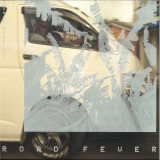
New Generation Carnival Riddims from St. Lucia and Dominica A hurricane of turbo-charged, body-buzzing tracks collide on Road Fever, a compilation of razor-produced, road-tested instrumental riddims from St. Lucia, Dominica & Guadeloupe that showcases the producers forging the future of Caribbean music in 2025. Road Fever draws together instrumental Dennery Segment and Bouyon riddims originally made for vocalists, presented for the first time as stand alone pieces of music. Distilling carnival riddims down to the bare bones, producers push minimal 150+bpms, FL-percussion packs, DJ/vox samples & synth riffs, bridging trap, drill, dancehall, sped-up Haitian konpa & Angolan kuduro. Ricocheting at the intersection of TikTok culture, best heard blasted through walls of speakers travelled by stage-sized carnival trucks or via bluetooth car speakers, St.Lucia"s "Dennery Segment" sound, (as iconic producer, G6 described in an interview), "sparks your inside; a sound you can"t hear and not move". Amsterdam-based, Curaçao-raised compiler Rozaly echoes G6: "Once you hear it, you can"t unhear or unfeel it. This is a musical movement with an entire history with so many relevant reasons why it still exists, and why it exists the way it exists right now". Rozaly concludes, "there is nothing more simple, let the artists speak."
Only the first plate of the LP. (AB side)
New Zealand drum & bass titans The Upbeats have galvanized the global turbulence and turmoil during COVID to create their most explorative and emotionally heavy album to date "Not Forever". Featuring the likes of Fat Freddys Drop frontman Joe Dukie, Jordan Dennis, Levine Lale, Sylvee, Syrene Favero and US MC don Armanni Reign, "Not Forever" is unlike anything the duo has released before. Written in a different way, approached from another perspective, created with a newfound love for the creative process and the scene at large; It's a whole new side to the duo who have continually pushed themselves and their sound into the unknown...
- A1: Future Sand (Feat. David Lackner)
- A2: Soft Power (Feat. David Lackner)
- A3: Pose Beams (Feat. Jefre Cantu-Ledesma, Robbie Lee)
- A4: Flutter Intensity (Feat. Russell Greenberg)
- B1: The Big Clock (Feat. David Moore, Britt Hewitt)
- B2: There Was Somebody There (Feat. David Moore, Jefre Cantu-Ledesma)
- B3: Get Some Rest (Feat. Mary Lattimore)
Ezra Feinberg's third album Soft Power sees the composer-guitarist enlist an impressive array of fellow musicians including Mary Lattimore, David Moore (Bing & Ruth), Jefre Cantu-Ledesma, Robbie Lee and share the life affirming lead single 'Future Sand'.
Defined by its abundance of melodies, repeating figures and ecstatic improvisations, Soft Power exudes an enlightened and transformative spirit to empower the listener. Feinberg, a practising psychoanalyst and former founding member of the San Francisco psychedelic collective Citay (Dead Oceans / Important Records) resides in the artistic enclave of upstate New York's Hudson River valley. Initial recordings emerged in the late summer of 2020, before added synthesis with collaborator John Thayer (Arp, Sunwatchers) during early 2021. Soft Power follows previous albums 'Recumbent Speech' (2020) and 'Pentimento and Others' (2018).
Feinberg artfully transcends the listener to an enriched place, his compositions distinguished by the deep humanity that lies at their core, plugging the listener into a state of wide eyed being, open and alive. Soft Power then is Ezra's own mantra but also one of power giving - a colourful catharsis translated into music.
Feinberg's music always speaks to the listener, but Soft Power, in whispering, speaks loudest.
"Much like everyday life, I wanted to convey these very plain, simple, tranquil, nearly quotidian aspects, but each piece contains this arc in which that form expands, is broken out of, so what starts out like a painting of flowers in a seaside motel turns into a riot of color and sound, or you feel slipped into a dream that feels like it could go on forever"
- The Static God
- Nite Expo
- Animated Violence
- Keys To The Castle
- Jettisoned
- Cadaver Dog
- Paranoise
- Cooling Tower
- Drowned Beast
- Raw Optics
The Oh Sees wasted no time in racing headlong into nightmarish battle with the mighty Orc, clawing even farther up the ghastly peak stormed so satisfyingly by their previous A Weird Exits. The band is in tour-greased, anvil-on-a-balance beam, gut-pleasingly heavy form, nimbly braining—with equal dashes of abandon and menace—on this fresh batch of bruisers and brooders, hypnotically stirred into to the cauldron of chaos you’ve come to expect. On Orc, fresh blood Paul Quattrone joins Dan Rincon to form a phalanx of interlocking double drums, alternately propelling and fleet-footing shifting ground to pinion John Dwyer’s cliff-face guitars to the boogie. Tim Hellman keeps it swinging like a battle-axe to the eyebrows. The tunes veer toward the violence of their live shows, with a few tasty swerves into other lanes: heavy to lush, groovy to stately. Throughout, it remains sinister in its swaggering skulk, manic in its fuzz-fried fugues. They hit all the sweet spots the heads foggily remember, and there’s plenty to sweat over if you just hopped into the sauna. More evil…more complex…more narcotic…more screech… more blare…more whisper…there’s even more Brigid. Less “Thee,” but more of everything else.
Profile 1
KONISHI yasuharu
Band leader, songwriter, arranger and producer of the now disbanded Pizzicato Five (1985- 2001). Although having 2 successful world tours and 5 international albums under his belt, with fans ranging from London’s Karminsky Experience to Karl Lagerfeld, many of his fans know him as a DJ, spinning in Tokyo’s hotspots such as Shibuya’s ‘Organ Bar’. He tours regularly throughout Japan and abroad. In the Jackson 5 Remix Album, his remix ‘I want you back (readymade 524 mix)’ received an extraordinary amount of national radio play.
The remix album itself has scored healthy rankings in major record stores. In 1998, his own project ‘Punch the Monkey!’ (in which he remixes the theme tune of a popular Japanese cartoon series ‘Lupin the Third’) sold over 700,000 records, and this, some say, began Japan’s remix rush. His achievements truly invaded the mainstream when in 2000, he produced the No.1 single ‘Oha-Rock’ which became a social phenomenon in itself. Most
recently, he set up his own record label, ‘readymade international inc.’ from he which he plans to release new exciting solo works.
His talents also embrace film and photography and he is well known as a director in promotional videos, shows and advertisements. T-shirts and original goods which Konishi personally designed are sold in select shops such as BEAMS of Shibuya.
He is also a writer having regular columns in various magazines, and has also written several books. A collection of his essays have been published under the title ‘Kore wa koi de wa nai’ (’This is not love’
)
Profile 2
IKEDA masanori (Mansfield)
Began his DJ career in London, 1991, while working in Soho’s Soul Jazz Records. After becoming resident DJ at ‘Blow-Up’ in London’s Wag Club, he has toured the country and the rest of Europe. With his friends Karminsky Experience and Gentle People, he has also organised numerous club events, compiled CDs and produced radio programs. Returning to Japan in 1997, as the DJ with the rarest records in the East, he immediately made his name Djing at many popular events up and down the country. He is recognised for rocking dancefloors on a global scale having completed a very well-received European tour in 2000.
Apart from his DJ work, he has contributed remixes for Konishi Yasuharu’s ‘Punch the Monkey!’. His solo releases include his mix CD series ‘Spin Out’ , ‘Spin Out 2’ (V2 Records Japan). His albums ‘6 Complexions of Mansfield’ and ‘It’s a mans’s man’s field’ (readymade records) released under his alias Mansfield have established his name as a sound creator. He is expecting to release a new album from readymade international early 2002. This
is the DJ/composer that everyone’s talking about.
Band leader, songwriter, arranger and producer of the now disbanded Pizzicato Five (1985-2001). Although having 2 successful world tours and 5 international albums under his belt, with fans ranging from London’s Karminsky Experience to Karl Lagerfeld, many of his fans know him as a DJ, spinning in Tokyo’s hotspots such as Shibuya’s ‘Organ Bar’. He tours regularly throughout Japan and abroad. In the Jackson 5 Remix Album, his remix ‘I want you back (readymade 524 mix)’ received an extraordinary amount of national radio play.
The remix album itself has scored healthy rankings in major record stores. In 1998, his own project ‘Punch the Monkey!’ (in which he remixes the theme tune of a popular Japanese cartoon series ‘Lupin the Third’) sold over 700,000 records, and this, some say, began Japan’s remix rush. His achievements truly invaded the mainstream when in 2000, he produced the No.1 single ‘Oha-Rock’ which became a social phenomenon in itself. Most
recently, he set up his own record label, ‘readymade international inc.’ from he which he plans to release new exciting solo works.
His talents also embrace film and photography and he is well known as a director in promotional videos, shows and advertisements. T-shirts and original goods which Konishi personally designed are sold in select shops such as BEAMS of Shibuya.
He is also a writer having regular columns in various magazines, and has also written several books. A collection of his essays have been published under the title ‘Kore wa koi de wa nai’ (’This is not love’)
SUNAGA tatsuo (sunaga t'experience)
DJ and Music Producer. Basing his activities around his own club ‘Shibuya Organ Bar’, holds regular club nights throughout Japan. Apart from his own mix CDs such as the ‘Organ b. SUITE’ which many say is in a class of its own, has produced remixes for the ‘Soul Source 2: Jackson 5 Remix’ and Yasuharu Konishi’s ‘Punch the Monkey’. He began his own label ‘AFTERS OR’ in 1998,acting both as artist and producer. Releasing records under the alias of ‘Sunaga t experience’ on avex/cutting edge records, the ‘It’s you’ 12 inch made record sales of 7,000 records, an incredibly large number in the vinyl market. His name is known in Europe through such labels as IRMA and SCHEMA records, and has remained in the forefront of the industry since the beginning of the Tokyo club scene.
- A1: Inni
- A2: Kyrrð
- A3: Ókyrrð
- A4: Var
- B1: Í Ösku Og Eldi
- B2: Ólga
- B3: Gráminn
- B4: Flækjur
“Eerie, wailing sounds over distorted feedback drones… Vibrato-heavy harmonies chirrup and throb in agonisingly slow motion.”
The Guardian, Album of the Month
“Cinematic...carefully orchestrated...delicately explores unfamiliar territory with uncanny finesse.”
The Wire
Acclaimed Icelandic theremin musician Hekla returns with Turnar, her third album of devastatingly heavy, spectral soundscape-songwriting, entering a sublime paranormal plane of haunting dread.
Now augmenting her virtuosic solo theremin work with cello, voice, and the sacred church organ of Icelandic master Kristján Hrannar, the evolution of Hekla’s unique magic summons new worlds with Turnar. The album was recorded partly in (and named after) a medieval castle tower in rural France, its ruinous black broken in spare beams of angelic stained-glass light. But, writes Hekla, “the sound of theremin kind of opens up a portal into a new realm that both looks into a dark old world and to the future.” The record is an alternately beautiful and crushing space voyage into a glacial underworld cascading with phosphorescence and cave drip, conjuring ancient choral ritual just as readily as redolent sci-fi gloam.
Opener “Inni” begins with swooning and shimmering lines of theremin that shiver with electrified energy before subfrequency bass elevates them into a glowing plasma, hovering above a crystallised surf. Key moment “Gráminn” wails with ghostly harmonics while distorted drones crash together in a stormy and blackened netherworld sea. It traces a neat progression from Hekla’s last album - the acclaimed Xiuxiuejar - while also welcoming an expanded timbral palette and flourishing compositional confidence. At the end of side A, “Var” delicately places sonic artefacts about a desolate negative space, creating a dense inverse gravity. As with the rest of the record, a claustrophobic gauze hangs over music that could otherwise be called subverted songwriting, aligning Hekla’s sonics with avant-garde, musique concréte and sound-art.
1/4" / 15 IPS / Dolby A Analogue Copy to DSD 256 to analogue console to lathe
Carlos Santana and Company Return to a Dynamic Blend of R&B, Latin, Funk, and Rock: Amigos Aims for the Hips, Spreads Joy, and Includes “Europa (Earth’s Cry Heaven’s Smile)” Amigos has been beloved for decades by both long-time and recent Santana admirers, with multiple generations of fans drawn in by the record’s contagious blend of R&B, Latin, rock, and funk elements. As well as its immense accessibility. Coming off a series of albums that heavily leaned into jazz fusion, the band returns to the more dynamic and concise approaches of its earlier works without losing the sense of adventurousness, craftsmanship, and virtuosity that turned it into a juggernaut embraced by both the mainstream and experimentally minded communities.
Mastered at Mobile Fidelity’s in-house studio in California, pressed at Fidelity Record Pressing, and strictly limited to 3,000 numbered copies, Mobile Fidelity’s 180g 33RPM LP of Amigos presents the 1976 album in audiophile sound for the first time on a domestic release. Part of the reissue label’s Santana series, this collectible version features quiet surfaces and black backgrounds that help reveal the intricate details, distinguished tones, and cohesive interplay that cause Santana’s music to take flight.
The enhanced aural perspectives extend not only to Carlos Santana’s intoxicating fills and solos, but to the rich tapestry of the rhythmic, melodic, and vocal elements that help Amigos feel as fresh today as it did several decades ago. This LP shines a beaming light on the surrounding musicians that simultaneously feed off and inspire their bandleader. The solidity and depth of the bass lines; the wash of the organ; the scope and carry of the vocals; the grip and weight of the low-end frequencies; and, possibly the most enticing traits, the textures of the acoustic guitars, numerous percussive devices, and then-modern synthesizers: all come across with tremendous presence and energy.
Entirely appropriate for a set that kicks from the start, with the opening “Dance Sister Dance (Baila Mi Hermana)” true to the song title’s combination directive-invitation meaning. Tropical, soulful, upbeat, and liberating, it beckons hips to shake and delicious libations to pour. Clinking cowbells, spirited background vocals, hand-tapped congas, and Carlos Santana’s six-string magma pour forth with abundance. The song sets the mood and expectations for a record that contains not an ounce of filler, and which inspires and spreads joy at practically every turn.
On the gold-certified Amigos, the ensemble never seems to run short of zest or happiness. Key in on the Latin bite and searing guitar architecture of “Take Me With You,” an instrumental that shifts tempo at its midpoint and sparkles with a samba-like outro that aims to put everyone in earshot on the dance floor. Surrender to the slow-burn of “Tell Me You Are Tired,” sent up with Greg Walker’s sympathetic vocals and spun around with whirling funk accents. Marvel at the Spanish guitar introduction, Mexican folk foundation, group vocals, and extroverted grooves of the forward-propulsive “Gitano,” with lead singing by conga/bongo expert Armando Peraza.
Having reached the Top 10 in the United States and spawned the hit “Let It Shine,” Amigos marked the final stint for bassist David Brown, the last of the group’s famed Woodstock lineup to depart. His contributions feel especially spirited throughout the album, compass readings that the group uses to chart their course. Just listen to how his passages pop on “Let Me” and frame the can’t-get-it-out-of-your-head “what you need is what you want” refrain. And while Carlos Santana remains the centerpiece of the brilliant and meditative “Europa (Earth’s Cry Heaven’s Smile),” Brown serves as a trustworthy anchor and friendly advocate.
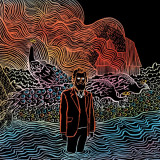
Kiss Each Other Clean, Iron and Wine’s fourth full-length record, was originally released in 2011 and came three years after his biggest selling record up to that point, The Shepherd’s Dog. The bands two earlier albums had been sparse, intimate solo affairs that offered no hint of the direction he would take with records three and four. Like The Shepherd’s Dog, Kiss Each Other Clean is layered with textures, poly-rhythmic sounds and a more is more approach.
The album's 10 tracks were recorded in Chicago and Beam's hometown of Austin and produced by Brian Deck and sounds like the music people heard in their parent's car growing up. clarinet and saxophone on the album comes courtesy of Dave Sitek collaborator Stuart Bogie. Beam has also experimented with other genres on the record as well as classic AOR. There are straight-up jazz, blues, and african elements.
- A1: Tycho - Spectre (Bibio Remix)
- A2: Casino Versus Japan - It's Very Sunny
- A3: Lancaster - Last Sunset
- A4: Nate Mercereau - Of Course That's Happening
- A5: Craft Spells - Our Park By Night
- B1: Panama - Destroyer
- B2: Muddy Monk - Divine
- B3: Schneider Tm - Frogtoise
- B4: Luke Abbott - Modern Driveway
- C1: Little Dragon - Little Man (Tycho Remix)
- C2: Weval - You Made It (Part Ii)
- C3: Tourist - Elixir
- C4: Octo Octa - Beam Me Up (Please Take Me Away Mix)
- D1: Tycho - Local
- D2: Ulrich Schnauss - In All The Wrong Places
- D3: Tycho - Pbs (Live Edit)
- D4: Slowdive - Sugar For The Pill (Radio Edit)
Tropical Pearl Vinyl[31,05 €]
It has been twenty years since the first Back To Mine release but still the series is going strong. These personal after-hours soundtracks have never sounded more relevant than now, and next up is GRAMMYr Award-nominated, San Francisco-based artist Tycho. It finds him going deeper than one of his famous Burning Man sets as he heads into otherworldly, cinematic headphone territory with tunes from Lancaster, Little Dragon, Octo Octa, Ulrich Schnauss and many more across four fantastic sides of vinyl.
Pete Rogers is half of D&B Duo Technimatic, releasing numerous albums on Shogun Audio and further singles on a range of other labels such as Good Looking Records, RAM, Hospital and their own label Technimatic Music, garnering acclaim from the likes of Resident Advisor, Mixmag, Thump, UKF and tastemaking DJs such as Annie Mac and Giles Peterson.
JS is an alias of James Zeiter and is also the name of his own label. This seventh transmission once again showcases his signature take on minimal, dub and techno. 'JS-07' rolls out with deep, pillow drums and well buried sub bass that slowly sweeps you up and locks you into a state of hypnosis. 'JS-07R' on the flip side is run through with slightly more warmth and light, like beams of sun piercing the surface of an ocean and catching microscopic organisms floating on the sea bed. It's a heady sound full of soul.
Camelot, the legendary seat of King Arthur's court in Early Middle Ages Britain, was probably not a real place. A corruption of the name of a real Romano-Briton city, the word "Camelot" accumulated symbolic, mythic resonances over centuries, until achieving its present usage as a near-synonym of "utopia." In the mid-20th century alone, Camelot inspired an explosion of representations and appropriations, among them the violent, affectless Arthurian court of Robert Bresson's 1974 film Lancelot du Lac and the absurdist iteration of Monty Python's 1975 Holy Grail, both of which feature armored knights erupting into fountains of blood; the mystical Welsh world of novelist John Cowper Powys's profoundly weird 1951 novel Porius, with its Roman cults, wizards and witches, and wanton giants; and the nationalist nostalgia of President John F. Kennedy's White House. Unsurprisingly there are fewer Camelots in more recent memory. Camelot, Canadian songwriter Jennifer Castle's extraordinary, moving 2024 chronicle of the artist in early middle age, charts a realer, more rooted, and more metaphorical place than the fabled Camelot of the Early Middle Ages (or its myriad depictions), but it too is a space more psychic than physical. In Castle's Camelot, the fantastic interpenetrates the mundane, and the Grail, if there is one, distills everyday experience into art and art into faith, subliming terrestrial concerns into sublime celestial prayers to Mother Nature, and to the unfolding process of perfecting imperfection in one's own nature. Co-produced by Jennifer and longtime collaborator Jeff McMurrich, her seventh record is at once her most monumental and unguarded to date, demonstrating a mastery of rendering her verse and melodies alike with crisply poignant economy. For all their pointedly plainspoken lyrical detail and exhilarating full-band musical flourishes, these songs sound inevitable, eternal as morning devotions. "Back in Camelot," she sings on the lilting, vulnerable title track, "I really learned a lot / circles in the crops and / sky-high geometry." The album opens with a candid admission of sleeping "in the unfinished basement," an embarrassing joke that comes true. But the dreamer is redeemed by dreaming, setting sail in her airborne bed above "sirens and desert deities." If she questions her own agency_whether she is "wishing stones were standing" or just "pissing in the wind"_it does not diminish the ineffable existential jolt of such signs and wonders. This abiding tension between belief and doubt, magic and pragmatism, self and other, sacred and profane, and even, arguably, paganism and monotheism, suffuses these ten songs, which limn an interior landscape shot through with sunstriped shadows of "multi-felt dimensions" both mystical and quotidian. The epic scale and transport of "Camelot," with its swooning strings, gives way dramatically to "Some Friends," an acoustic-guitar-and-vocals meditation in miniature on Janus-faced friends and the lunar and solar temperatures of their promises_"bright and beaming verses" versus hot curses_which recalls her minimalist last album, 2020's achingly intimate Monarch Season. (In a symmetrical sequencing gesture, the penultimate track, the incantatory "Earthsong," bookends the central six with a similarly spare solo performance and coiled chord progression, this time an ambiguous appeal to _ a wounded lover? a wounded saint? our wounded planet?) Those whom "Trust" accuses of treacherous oaths spit through "gilded and golden tooth"_cynics, critics, hypocrites, gurus, scientists, doctors, lovers, government, the so-called entertainment industry_sow uncertainty that can infect the artist, as in "Louis": "What's that dance / and can it be done? What's that song / and can it be sung?" Answering affirmatively are "Lucky #8," an irrepressible ode to dancing as a bulwark against the "tidal pools of pain" and the "theory of collapse," and "Full Moon in Leo," which finds the narrator dancing around the house with a broom, wearing nothing but her underwear and "big hair." But the central question remains: who can we trust, and at what cost faith, in art or angels or otherwise? Castle's confidence in her collaborators is the cornerstone of Camelot. Carl Didur (piano and keys), Evan Cartwright (drums and percussion), and steadfast sideman Mike Smith (bass) comprise a rhythm section of exquisite delicacy and depth. This fundamental trio anchors the airiness of regular backing vocalists Victoria Cheong and Isla Craig and frames the guitars of Castle, McMurrich, and Paul Mortimer (and on "Lucky #8," special guest Cass McCombs). Reprising his decennial role on Castle's beloved 2014 Pink City, Owen Pallett arranged the strings for Estonia's FAMES Skopje Studio Orchestra. On the ravishing country-soul ballad "Blowing Kisses"_Pallett's crowning achievement here, which can be heard in its entirety in the penultimate episode of the third season of FX's The Bear_Jennifer contemplates time and presence, love and prayer_and how songwriting and poetry both manifest and limit all four dimensions: "No words to fumble with / I'm not a beggar to language any longer." Such rare moments of speechlessness_"I'm so fucking honoured," she bluntly proclaims_suggest a state "only a god could come up with." (If Camelot affirms Castle as one of the great song-poets of her generation, she is not immune to the despairing linguistic beggary that plagues all writers.) Camelot evinces a thoroughgoing faith not only in the natural world_including human bodies, which can, miraculously, dance and swim and bleed and embrace and birth_but also in our interpretations of and interventions in it: the "charts and diagrams" of "Lucky #8," a daydreamt billboard on Fairfax Ave. in LA in "Full Moon in Leo," the bloody invocations of the organ-stained "Mary Miracle," and all manner of water worship, rivers in particular. (Notably, Jennifer has worked as a farmer and a doula.) The album ends with "Fractal Canyon"'s repeated, exalted insistence that she's "not alone here." But where is here? The word "utopia" itself constitutes a pun, indicating in its ambiguous first syllable both the Greek "eutopia," or "good-place"_the facet most remembered today_and "outopia," or "no-place," a negative, impossible geography of the mind. Utopia, like its metonym Camelot, is imaginary. Or as fellow Canadian songwriter Neil Young once sang, "Everyone knows this is nowhere." "Can you see how I'd be tempted," Castle asks out of nowhere, held in the mystery, "to pretend I'm not alone and let the memory bend?"
. For Fans Of: The Weather Station, Weyes Blood, Adrianne Lenker, Phoebe Bridgers, Joan Shelley, Lana Del Rey, Cass McCombs, Angel Olsen & Neil Young. Camelot, the legendary seat of King Arthur’s court in Early Middle Ages Britain, was probably not a real place. A corruption of the name of a real Romano-Briton city, the word “Camelot” accumulated symbolic, mythic resonances over centuries, until achieving its present usage as a near-synonym of “utopia.” In the mid-20th century alone, Camelot inspired an explosion of representations and appropriations, among them the violent, affectless Arthurian court of Robert Bresson’s 1974 film Lancelot du Lac and the absurdist iteration of Monty Python’s 1975 Holy Grail, both of which feature armoured knights erupting into fountains of blood; the mystical Welsh world of novelist John Cowper Powys’s profoundly weird 1951 novel Porius, with its Roman cults, wizards and witches, and wanton giants; and the nationalist nostalgia of President John F. Kennedy’s White House. Unsurprisingly there are fewer Camelots in more recent memory. Camelot, Canadian songwriter Jennifer Castle’s extraordinary, moving 2024 chronicle of the artist in early middle age, charts a realer, more rooted, and more metaphorical place than the fabled Camelot of the Early Middle Ages (or its myriad depictions), but it too is a space more psychic than physical. In Castle’s Camelot, the fantastic interpenetrates the mundane, and the Grail, if there is one, distills everyday experience into art and art into faith, subliming terrestrial concerns into sublime celestial prayers to Mother Nature, and to the unfolding process of perfecting imperfection in one’s own nature. Co-produced by Jennifer and longtime collaborator Jeff McMurrich, her seventh record is at once her most monumental and unguarded to date, demonstrating a mastery of rendering her verse and melodies alike with crisply poignant economy. For all their pointedly plainspoken lyrical detail and exhilarating full-band musical flourishes, these songs sound inevitable, eternal as morning devotions. “Back in Camelot,” she sings on the lilting, vulnerable title track, “I really learned a lot / circles in the crops and / sky-high geometry.” The album opens with a candid admission of sleeping “in the unfinished basement,” an embarrassing joke that comes true. But the dreamer is redeemed by dreaming, setting sail in her airborne bed above “sirens and desert deities.” If she questions her own agency whether she is “wishing stones were standing” or just “pissing in the wind” it does not diminish the ineffable existential jolt of such signs and wonders. This abiding tension between belief and doubt, magic and pragmatism, self and other, sacred and profane, and even, arguably, paganism and monotheism, suffuses these ten songs, which limn an interior landscape shot through with sunstriped shadows of “multi-felt dimensions” both mystical and quotidian. The epic scale and transport of “Camelot,” with its swooning strings, gives way dramatically to “Some Friends,” an acoustic-guitar-and-vocals meditation in miniature on Janus-faced friends and the lunar and solar temperatures of their promises—“bright and beaming verses” versus hot curses which recalls her minimalist last album, 2020’s achingly intimate Monarch Season. (In a symmetrical sequencing gesture, the penultimate track, the incantatory “Earthsong,” bookends the central six with a similarly spare solo performance and coiled chord progression, this time an ambiguous appeal to … a wounded lover? a wounded saint? our wounded planet?). Those whom “Trust” accuses of treacherous oaths spit through “gilded and golden tooth” cynics, critics, hypocrites, gurus, scientists, doctors, lovers, government, the so-called entertainment industry sow uncertainty that can infect the artist, as in “Louis”: “What’s that dance / and can it be done? What’s that song / and can it be sung?” Answering affirmatively are “Lucky #8,” an irrepressible ode to dancing as a bulwark against the “tidal pools of pain” and the “theory of collapse,” and “Full Moon in Leo,” which finds the narrator dancing around the house with a broom, wearing nothing but her underwear and “big hair.” But the central question remains: who can we trust, and at what cost faith, in art or angels or otherwise? Castle’s confidence in her collaborators is the cornerstone of Camelot. Carl Didur (piano and keys), Evan Cartwright (drums and percussion), and steadfast sideman Mike Smith (bass) comprise a rhythm section of exquisite delicacy and depth. This fundamental trio anchors the airiness of regular backing vocalists Victoria Cheong and Isla Craig and frames the guitars of Castle, McMurrich, and Paul Mortimer (and on “Lucky #8,” special guest Cass McCombs). Reprising his decennial role on Castle’s beloved 2014 Pink City, Owen Pallett arranged the strings for Estonia’s FAMES Skopje Studio Orchestra. On the ravishing country-soul ballad “Blowing Kisses” Pallett’s crowning achievement here, which can be heard in its entirety in the penultimate episode of the third season of FX’s The Bear Jennifer contemplates time and presence, love and prayer and how songwriting and poetry both manifest and limit all four dimensions: “No words to fumble with / I’m not a beggar to language any longer.” Such rare moments of speechlessness “I’m so fucking honoured,” she bluntly proclaims suggest a state “only a god could come up with.” (If Camelot affirms Castle as one of the great song-poets of her generation, she is not immune to the despairing linguistic beggary that plagues all writers.) Camelot evinces a thoroughgoing faith not only in the natural world including human bodies, which can, miraculously, dance and swim and bleed and embrace and birth but also in our interpretations of and interventions in it: the “charts and diagrams” of “Lucky #8,” a daydreamt billboard on Fairfax Ave. in LA in “Full Moon in Leo,” the bloody invocations of the organ-stained “Mary Miracle,” and all manner of water worship, rivers in particular. (Notably, Jennifer has worked as a farmer and a doula.) The album ends with “Fractal Canyon”s repeated, exalted insistence that she’s “not alone here.” But where is here? The word “utopia” itself constitutes a pun, indicating in its ambiguous first syllable both the Greek “eutopia,” or “good-place” the facet most remembered today and “outopia,” or “no-place,” a negative, impossible geography of the mind. Utopia, like its metonym Camelot, is imaginary
On 4 October 2024 Universal Music Recordings and Decca Records are making Jamaican/British jazz saxophonist Joe Harriott’s album ‘Movement’ available again for the first time since it was released in 1964. Long sought after by collectors and connoisseurs, original copies now sell for upwards of £1,000.
This new edition was mastered at Abbey Road using high definition 24bit/192kHz audio files, copied directly from the original stereo analogue master tapes (previously only the mono version has been on vinyl). Images of those tapes are included in the package alongside new sleeve notes written by noted author, compiler and documentary maker Tony Higgins, who also acts as Executive Producer for Decca’s ‘British Jazz Explosion’ series.
Recorded in 1963, ‘Movement’ was released as part of the Lansdowne Series, overseen by the influential Denis Preston, one of the UK’s first independent record producers, and engineered by Adrian Kerridge. Of the nine tracks, seven are Harriott originals, whilst the other two were written by another pioneer of British Jazz, Michael Garrick. Playing alongside Joe were bassist Coleridge Goode (b. 1914 Jamaica, d. 2015 London), drummer Bobby Orr (b. Scotland 1928, d. 2020), pianist Pat Smythe (b. Scotland 1923, d. 1983), and trumpet/flugelhorn player Ellsworth ‘Shake’ Keane (b. St. Vincent 1927, d. 1997).
Born in Jamaica in 1928, Joseph Arthurlin Harriott was a pupil at the Alpha Boys School (alma mater to Harold McNair, Dizzy Reece, and a myriad of Ska greats). He arrived in Britain in the early ’50s, initially touring with the Ozzie Da Costa Band, followed by a brief spell with the Ronnie Scott Big Band, and sessions backing the likes of George Chisholm, and Lita Roza.
By the mid ’50s Joe was a big enough draw to release records under his own name, and whilst these early recordings conform to the then popular bop style, the following decade would see him release albums whose titles chart his development; ‘Free Form’ in 1960, and ‘Abstract’ in 1963.
‘Movement’ is a testament to Joe Harriott’s visionary approach to jazz. It blends structure with freedom, tradition with innovation, and individual expression with collective creativity. His development of free-form jazz represents a significant contribution to the genre, paralleling yet distinct from the work of Ornette Coleman and other American free jazz artists. It is an essential listen, not only for fans of British jazz, but jazz fans in general.
It is perhaps best summed up by the epitaph that now adorns Joe’s gravestone; “Parker? There’s them over here can play a few aces too.”
As many artists before them (Gainsbourg, Snoop Dogg, Lavilliers, Sinead O'Connor…), DA BREAK embarques us to revisit their best tracks “Inna Reggae Vibe”, and invites us listeners to rediscover their repertoire with a more than ever “Roots” sound. An enchanted break that will seduce the early fans as well as reggae connoisseurs; A suspended moment with a band on their new musical quest, assuming a different side of their DNA.
The idea of an “old school reggae auto remix” had bloomed for quite a long time, with the will to dive into the 60s & 70s sound esthetics and to pay tribute to this reggae culture - this unique cultural temple they love and respect so much.
DA BREAK concerts are always rich and intense musical moments, thanks to a crew of solid musicians, so the choice to record LIVE, all in the same room, was quite obvious; with “vintage” instruments and microphones, to enjoy this warm and authentic sonic texture. The result is a “Roots & Rock Steady” album without electronics, leaning towards sweaty and rough Jazz, tropical Soul or even Gospel with sand between the toes… definitely Reggae!
DA BREAK remains DA BREAK, with its inner light, this time looking towards the Caribbean musical culture.
Given the historical influence of Jamaican Sound Systems on the American Block Parties, it seemed logical for DA BREAK to pay tribute to the artists that influenced them since day one, and still do today: Bob Marley & the Wailers, Jimmy Cliff. Culture, Toots & the Maytals, Burning Spears, The Gladiators, YellowMan, Israel Vibrations, LKJ & Mad Professor, UB40, Shaka Demus, Peter Tosh... Just to name a few.
“I am OBSESSED with the 80s. I love the loud neon colours and fashion and the kinetic energy of the music. It’s uplifting and bittersweet with a ton of keyboards, what’s not to like?” reasons Morgane when asked what it is she likes about the decade. This exuberance is brightly reflected in the mirror ball synthpop of her third album released at the end of September. It is her second long player to appear on vinyl after the release of Between The Funk And The Fear debut on the Polytechnic Youth label.
Morgane was the keyboard player in Stereolab between 1995 and 2001 during which time they released Emperor Tomato Ketchup (her favourite) and Dots And Loops. As a teenager though she first played the drums, then guitar and bass. She only learnt the keyboards one month before joining the group. “They gave me 40 songs to learn, it was a baptism of fire”.
After leaving Stereolab, Morgane first moved to New York for nine years; she’d always planned to move to America having spent a lot of time there with her parents and of course those space-pop pioneers. The warmer weather of LA enticed her though and you can hear its pulse in Day-Glo Chaos. The album’s thumping heart is pumped by the city’s night sky and when asked she cites three particular albums as her favourites: the oddball analogue electro of Jacno’s 1979 debut; John Carpenter’s ‘Escape From New York’ and The B-52’s ‘Cosmic Thing’. There’s also a strong nod to the playful computerised harmonies of Yellow Magic Orchestra whilst she’s somewhat partial to the synth prog of Yes and Soft Machine. “I actually created a synth on Ableton Live named after Rick Wakeman’. I should create one after Mike Ratledge next!”
Throughout her work (but especially on this record) you can hear the influence of computer games. “I’m an avid gamer and have been one since I was a teenager and fell in love with my Commodore 64”. Though not a fan of Hotline Miami or the GTA series (“too violent”) she liked Hang On and loved Outrun which she used to play a lot on her Sega Master System. “I just got the soundtrack reissue from Data Disc and it is beautiful” she enthuses.
You’ll see and hear such influences on the lead single from the album ‘Midnite Rogue’ the video to which pays (im)perfect juddering homage to such arcade culture. Car tyres glued to sticky tarmac, French pop music lost in the air. The title was inspired by a Fighting Fantasy book which she adored as a kid. “I love the idea of this entity causing mischief during night time”, she beams. It’s not hard to see why.
Limited Edition of 1000 Opaque Pink 180 Gram Vinyl LP. Kiss Each Other Clean, Iron & Wine's fourth full length record was originally released in 2011 and came three years after his biggest selling record up to that point, The Shepherd's Dog. The bands two earlier albums had been sparse, intimate solo affairs that offered no hint of the direction he would take with records three and four. Like The Shepherd's Dog, Kiss Each Other Clean is layered with textures, poly-rhythmic sounds and a more is more approach. His lyrics sprung to life in ways initially unimaginable to early fans and critics helping each song tell its story and build to climaxes thru various sounds and editing techniques. However what remained at the core of KEOC, and what fans of the band had come to love, was the song writing and singing of principle songwriter Sam Beam. Beam's ability to invite you in with his hushed singing tone and knack for a melody remained front and center even in his drive to replicate something in the vein of Waits' Swordfishtormbones Principle recording for KEOC was at home in Dripping Springs, Texas where Beam resided at the time. After laying down the bulk of the record Beam moved recording to Chicago to work with Brian Deck. A cast of musicians helped Beam find his sound and see his vision for KEOC including Joe Adamik (Califone), Jim Becker (Califone), Thomas Bartlett (Doveman), Stuart Bogie (Antibalas), Rob Burger (Tin Hat Trio), Benny Massarella (Red Red Meat/Califone), Chad Taylor (Chicago Underground Duo) and Matt Lux (Isotope 217). With KEOC Beam and company brought in soft rock smoothness, dub reggae textures, and instruments that hadn't been featured on previous records. The vintage synths on 'Monkeys Uptown', the Stevie Wonder funk on 'Big Burned Hand,', the strum and drang of 'Walking Far From Home' all give the otherwise very organic-sounding arrangements a welcome cheesy kick. The record also produced the biggest radio single of the bands career with the vintage AM friendly vibes of 'Tree by the River.' It was an adventurous period in the career in Iron & Wine and one in which Beam was defying categorization.
Limited Edition of 1000 Opaque Light Blue 180 Gram Vinyl LP. Ghost on Ghost is Iron & Wine's fifth full length record and was originally released in 2013. The album found Sam Beam the bands principle member working once again with longtime associate Brian Deck (Modest Mouse, Califone). The record marks the last time the two would work together on a journey that began with the bands second record, Endless Numbered Days. It also marked a shift for the two from working in Chicago to setting up in New York City. The idea behind the move was to tap into the creative musical community New York had to offer. The line-up that helped bring Beam's vision for Ghost on Ghost to life included a who's who from the jazz community as well as the deep wells of outside art including Steve Bernstein (Sex Mob/Levon Helm Band), Rob Burger (Tin Hat Trio), Brian Blade, Curtis Fowlkes (The Jazz Passengers), Tony Garnier (Bob Dylan Band), Marika Hughes, Briggan Kraus, Maxim Moston, Tony Scherr (The Lounge Lizards), Doug Wieselman, Kenny Wolleson (Tom Watis/John Zorn) and Anja Wood. The level of talent on Ghost on Ghost far surpassed anything Beam ever imagined when he first began writing songs as Iron and Wine on his four-track. Upon completing the Ghost on Ghost Beam jokingly referred to the recording process as "a reward to myself" after years of chasing sounds by himself. Being able have the finest in musicians in New York City perform on the record, elevating these songs into places he never imagined Beam stated, "it was an honor -- really inspiring." Beam stated at the time that Ghost on Ghost takes it's inspiration from records like Nilsson Schmilsson, Ram, Mingus Moves and What's Going On. The record they all crafted is warm and inviting and was like anything up to that point in the Iron & Wine catalog.
Reissue
Nachdem sie uns den technotropischen Pop von Supersempfft durch die Wiederveröffentlichung ihrer zweiten LP "Metaluna" vorgestellt haben, beamen sich die trittsicheren Leute vom Hamburger Bureau B ein paar Jahre zurück, um uns das unverschämte Debüt der Hessen zu präsentieren. Das kollaborative Vehikel karrt durch den Kosmos wie ein Hochleistungsclownsauto, das gewagte Akkordprogressionen, technische Innovationen und einen Haufen Hooks hinter seinem Cartoon-Chassis verbirgt und uns glückliche Hörer auf die Spritztour mitnimmt.
Dutch septet Personal Trainer churn out songs that sound like all your favorite indie rock luminaries jam-packed into big-beaming pop psalms. Off the back of their self-released debut LP Big Love Blanket (2022), the band return this year with Still Willing, released this August via Bella Union.
The band's formative years were marked by a revolving door of plucky scenesters, with Willem Smit – the band’s conductor and cheerleader – as its affable pivot figure. But now with shows at festivals such as SXSW (US), Best Kept Secret (NL), End of the Road Festival (UK), Great Escape (UK) and Wilderness (UK) under their belt, the band nascent state-of-flux has cemented into a steady seven-piece renowned for their rousing and unpredictable live shows.
Finland has long had a uniquely progressive underground, with thriving punk, avant, jazz, and rock scenes with oversized output and impact. Jussi Lehtisalo’s (Circle, Pharaoh Overlord, Mahti, etc) label Ektro has been at the center of this activity for the last three decades, with a stream of excellent and conceptually bonkers releases covering music of all types. Here Lehtisalo joins up with Jan Anderzén (of Kemialliset Ystävät among others) for an album of absolutely fun and unusual miniature duets that sound like alien Library music beamed in from the outerlands. Tracks like “Luukku Yksi” and “Puistossa” use a charmingly retro synth-y sound palate and Cluster-like melodic sensibility to make accessible some deceptively “out” music. Some cuts (like “Kylpy”) have a vague hint of early ’80s post-punk / new wave vibes, bouncing along in a friendly way with odd interjections of sample debris and electronics jumping out of the mix to keep it weird. The surging “Hymy yössä” could be music for the credits of the world’s hippest newscast. Beautiful jacket by renown Helsinki-based artist Dylan Ray Arnold, bringing the die-cut techniques of their gallery pieces like “Growth of the Night Plants” to LP form.
Annechoic, the force of consciousness behind the acclaimed cult label Audiofugitives, steps out of the shadows once again to present her latest sonic endeavour, 'Eclectic Sugar'. Ana De Giles, whose career has been shrouded in secrecy since the early 2000s, continues to captivate audiences with her eclectic mix of electro, techno and the ethereal sounds of ambient, leaving a trail of enchanted listeners in her wake.
"Eclectic Sugar" represents an exciting new chapter in Annechoic's musical adventure, demonstrating her unparalleled ability to traverse sonic environments with sophistication and refinement, the EP's emotional depth and strength resonates profoundly.
Annechoic's musical journey has been marked by a dedication to sonic exploration and a keen ear for genre-bending compositions. She has carefully curated her craft, spending much of her career balancing roles in film post-production and co- running the label Audiofugitives. Nowadays, her DJ sets have earned her residencies and performances alongside esteemed artists.
With Eclectic Sugar, Annechoic invites listeners into her world - a world where boundaries blur, emotions soar and sonic landscapes unfold in fascinating ways. As you delve into her latest offering, prepare to embark on a border-crossing journey unlike any other, guided by the masterful hand of Annechoic herself.
"The seven songs of Tombeaux comprise the Brooklyn-based composer and multi-instrumentalist’s third full-length recording, and her first written and arranged for a large ensemble. Frustrated by the limitations of self-production and solitary home recording, Sridharan set out to create something sonically broader, featuring sitar, vibraphone, woodwinds, horns, strings, and piano. Tombeaux is richly textured and deeply felt, weaving medieval and classical influences into a distinct art pop tapestry that will be much loved by fans of Laurie Anderson, Bel Canto, Anna von Hausswolf, and Julia Holter, who produced the record.
The record’s subject is as expansive as the ensemble; each song is a discrete tale of a death, imagined by Sridharan and told in the first person. From reimagining the work of 16th-century Indian poet Mirabai to exploring Ursula K. Le Guin’s Earthsea afterworld, The Dry Land, to writing about her own grandmother’s death, Sridharan teases out the varied nature of death, applying a broad range of historical and cultural lenses to this great inevitability.
Sridharan was raised by an Indian father who exposed her to Indian classical music and a mother whose passion for history, archeology, and medieval music informed and inspired her from an early age. Her upbringing in the woods of Michigan and high school years on the shores Lake Michigan perhaps further inspired her tendency toward reverie, imagined narratives, and the drama that unfolds between this shore and the next.
Though not intended as an exhaustive survey of ideas of death across cultures, Tombeaux’s scope is impressive, shot through with the feel of a book of short stories, or a performance of tales. It is enchanting and elegantly executed, sensitively shepherded by Holter’s production."
2024 Reissue
Limited Clear w/ Silver Splatter vinyl. 15 years after the band's debut album was release, Sargent House is set to do a special anniversary re-issue with updated artwork and limited-edition clear w/ silver splatter vinyl with Silver/Red foil jacket available. Upcoming tour dates include multiple festival appearances and a UK/EU headline tour in August. 12th Nottingham Rescue Rooms, 13th Manchester Gorilla, 14th London Underworld, 15th Bristol ArcTanGent. For Fans of Fu Manchu / Melvins. This the debut is being repressed. Red Fang is the formation of long time friends and collaborators Bryan Giles (Last of the Juanitas, Party Time), Aaron Beam (Dark Forces, Lachrymator), David Sullivan (Party Time, facedowninshit, Shiny Beast) and John Sherman (Party Time, Bad Wizard, Trumans Water, All Night). Unleashed on New Year's Eve of 2006 in Portland, Oregon, Red Fang stormed out of the gates, introducing a sweaty, seething basement to a new kind of unforgettable fist-pumping, beer-chugging rock music. Since that night, the band has continued with the same intensity, energy, and intimacy to quickly become a touring juggernaut, playing shows all over the US with bands like The Melvins, Big Business, and The Sword, to name just a few. Residing somewhere between Black Flag and Black Sabbath, Red Fang recall a time when rock was more urgent and horrifying. Synthesizing a variety of heavy music influences into their own distinct musical identity, the band easily shifts from barn-burning punk to mid-tempo, hyper-distorted bass destruction all while maintaining a cohesive sound. Red Fang create gigantic rock songs that are easy to listen to (not easy listening, mind you) and qualify the simultaneous usage of both the thinking and the banging head, which are usually mutually exclusive. Their instrumentation is fluid and effortless, and the vocals are delivered melodically and forcefully, with enough rasp and effect saturation to fit nicely within the music. Paired with elemental imagery, the lyrics are immense and satisfying without any pretense.
A band who have justifiably been championed across the world, Tokyo’s Melt-Banana have been responsible for some of the most complex punk rock ever made … that far outshines ninety-nine percent of most other bands out there. The band once described their live show as “Shooting machine gun and laser beam, chaos in order.” And I think that pretty much sums them up. — Olli Siebelt, BBC No wave without the self-conscious pretension, avant garde composition compressed into one-minute-or-less bursts, urgency, intricate destruction, pure glorious abandon. Melt-Banana play the same way that Repulsion, Naked City, The Ruins, or The Boredoms all make you want to scream and dance and kill your neighbors. This is not music that we are conditioned to accept. This is you delirious with joy scraping your five senses off the floor. —Matthew Moyer, Ink19 Melt-Banana are in a league of their own. There are other extreme hardcore bands out there who are experimental and unique but Melt-Banana are more than that. They area giants amongst infants. Masters amongst pupils. Kings amongst serfs. Nobody can do what they do and nobody can adequately use words to describe them. —Jeb, Crass Menagerie
"Trails" is a 7-track EP by Guitarist and composer Robbie Belchamber, which draws upon elements of jazz, brazilian, west african and folk music. The compositions are centered around the soft timbre of fingerstyle nylon-string guitar, with subtle arrangements incorporating voice, flute, percussion, mandolin, accordion and electric guitar filling out the texture.
"During lockdown I spent a lot of time exploring Melbourne's northern waterways, riding my bike along the Birrarung, Darebin creek and Merri creek. These opportunities to slow down, reflect, observe and spend time in nature formed the genesis of many of the compositions. "Trails" sonifies these experiences, the bubbling rhythms of water, melodic inventions of currawongs and magpie-larks, pervasive scents of the bush, all changing with the seasons."
"Trails" is the first release under Robbie Belchamber, and features collaborations Melbourne musicians such as Lucky Pereira (Glass Beams, 30/70), Hannah McKittrick, Grace Robinson (Empress), Moses Carr, Aidan Ryan (NoLess) and Erica Tuccerri.
Aerials live, dials tuned, Transmission Towers broadcasting. On either side of the river Mersey, transcendental communications are traded back and forth. Two late-night revellers, one firing messages filled with music, the other returning them laced with lyrics. The result, a dopamine hit of oddball machine soul, melded with a highlife, Afrofuturist touch. Wonky and murky yet deeply emotional, Transmission One, is a debut album that also marks the first release on Luke Una’s É Soul Cultura label, encompassing expertly the off-kilter atmosphere the label sets to orbit.
A synthesised landscape with a Northern charm, Transmission Towers marry the musical worlds of two artists that last collaborated over a decade ago. 10 years have passed, lives have been led, but a gravitational pull has placed Mark Kyriacou and Eleanor Mante back in each other’s spheres on opposite sides of the city of Liverpool. Energised with a newfound desire to strip it all back to the sounds that influenced their formative years in the late ‘80s and ‘90s - astral travelling, intoxicated on Motor City techno, Black Dog IDM and mystical Sun Ra.
Mark half Irish, half Greek Cypriot, Eleanor half Nigerian, half Ghanian, the music contained within is an alchemy of those roots and the pivotal acts that buried deep into their minds. A cosmic contrast, part machine-made, part distinctly human. Take the opener ‘UP’, an ESG-channelling, sci-fi punk beatdown or the polychromatic hyperspace anthem ‘Roller Skater 23’.
Transportive throughout, you ride the solar waves, pace and emotion ebbing and flowing. Tracks like ‘Go Slow Heart’ and ‘Cosmic Trigger’ step to a slower beat but hit with a punch. The former, a slo-mo blast of celestial tenderness, the latter an otherworldly, chugged-out lunar excursion, micro-dosing on whacked-out Wah Wah and Eleanor’s ethereal vocals. Beaming love letters to space and back, ‘Sparse’ marries the organic with the artificial, pianos and percussion circling around synth pads and broadcasting bleeps.
Elsewhere, vibrations move faster. ‘Mega’ strikes, fusing sonic tribalism with psychedelic swirls, as ‘Everything’ sweeps you up in its extra-terrestrial new wave grip. Synth stabs and basslines fizzing from every angle.
Demos of Transmission Towers music surfaced on Luke Una’s radar, making him stop in his tracks. Something magical was emerging, perfectly aligned with the E Soul guardian’s tastes. Guidance followed, quickly turning into conversations about Transmission One becoming the first release on Luke’s own label.
Escapist and futurist yet grounded and relatable. Transmission One is synthesis meets sentiment with a deep, spine-tingling soul at its core.
"All our dreamers lose to the light" - from "Angels Go Home" When the pandemic began, and the world shut down, so did the process of creating for Iron & Wine's Sam Beam. In its place was a domesticity that the singer hadn't felt in a long time, and although it was filled with many rewards, making music was not one of them. Reflecting on that time, Beam notes: "I feel blessed and grateful that I and most of my friends and family made it through the pandemic relatively unscathed compared to so many others, but it completely paralyzed the songwriter in me. The last thing I wanted to write about was COVID, and yet every moment I sat with my pen, it lingered around the edges and wouldn't leave. This lasted for over two years." The journey back began with a recording session in Memphis to record a handful of Lori McKenna tracks for the EP Lori with friend and producer Matt Ross-Spang. The cathartic experience reconnected Beam with his love for making music, and soon enough the paralysis had passed, and he was finishing lyrics and booking studio time for what would become Light Verse. Light Verse was recorded with engineer and mixer Dave Way at his studio Waystation high up in Laurel Canyon (with an additional session at Silent Zoo Studio with a 24-piece orchestra), with a host of talented musicians joining Beam: Tyler Chester, Sebastian Steinberg, David Garza, Griffin Goldsmith, Beth Goodfellow, Kyle Crane, and Paul Cartwright. And, Fiona Apple joined Beam on vocals for the duet "All In Good Time." Beam lyrically once again takes focus on a series of both fictional and personal insights, filled with desperate characters and wide-eyed optimists, offering promise and a dose of heartache, tears and laughter, life and love. Taking stock in the album's title, he jokes, "Light verse is a form of poetry about playful themes that often uses nonsense and wordplay, and it's my first official Iron & Wine comedy album!_. Just kidding_." While true this may be Iron & Wine's most playful record, Beam says the title mostly reflects the way the songs were born with joy after the heaviness and anxiety of the pandemic. Where recent records like Beast Epic or Weed Garden gave air to the disquiet of middle-aged frailty and brokenness, these songs trade that for the focus acceptance can bring. Moment by moment, they delight in being pointed or silly (or both) and attempt beauty over prettiness. Light Verse arrives April 26th, and it's Iron & Wine's seventh full-length overall and fifth for Sub Pop Records. Fashioned as an album that should be taken as a whole, it sounds lovingly handmade and self-assured as a secret handshake. Track by track, its equal parts elegy, kaleidoscope, truth, and dare.
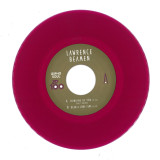
IZIPHO SOUL are incredibly proud to announce our 100th 7” single!
LAWRENCE BEAMEN - THINKING OF YOU
The unsurpassable bass-baritone voice of LAWRENCE BEAMEN originally recorded THINKING OF YOU in 2008. After years of pleas for a vinyl release; it’s finally here and sounding fresher than ever.
THE 7 REMIX has added a magic touch and beefed up this classic even further!
Arranged and produced by Narada Michael Walden and Lawrence Beamen. Music Produced by Narada Michael Walden. Lyrics by Lawrence Beamen.
On the flip is a new recording entitled BEEN A LONG TIME - a banger of a tune, straight outta Oakland, California.
Packaged in a hole backed picture sleeve.
IZIPHO SOUL are incredibly proud to announce our 100th 7” single!
LAWRENCE BEAMEN - THINKING OF YOU
The unsurpassable bass-baritone voice of LAWRENCE BEAMEN originally recorded THINKING OF YOU in 2008. After years of pleas for a vinyl release; it’s finally here and sounding fresher than ever.
THE 7 REMIX courtesy of Don Turney at DKS Productions has added a magic touch and beefed up this classic even further!
Arranged and produced by Narada Michael Walden and Lawrence Beamen. Music Produced by Narada Michael Walden. Lyrics by Lawrence Beamen.
On the flip is a new recording entitled BEEN A LONG TIME - a banger of a tune, straight outta Oakland, California.
Packaged in a hole backed picture sleeve.