Search:beat joe

Styles
All
MOSS - Marching The Sound Of My Own Drum LP + 7"
  • 1: Introduction (feat. Ill Bill, Inspectah Deck)
  • 2: Started (feat. AZ, DJ Premier, Joe Budden)
  • 3: More (feat. Chuuwee)
  • 4: Lost In My World (feat. Reks)
  • 5: Day & Night (feat. Eternia)
  • 6: Nobody Move (feat. Havoc & Onyx)
  • 7: Jealousy & Envy (feat. Slaine & Termanology)
  • 8: Arm & Hammer Man (feat. Red Cafe)
  • 9: Boombastic (feat. Slum Village)
  • 10: BQP (feat. Illa Ghee, Peedi Crakk, Royal Flush, Sean Price)
  • 11: Kids (feat. Joell Ortiz)
  • 12: Hard Hitters (feat. Skyzoo, Supastition)
also available

Color Vinyl[19,54 €]


Back in November 2015, after years of collaborations with such as Ghostface Killah, Raekwon, Obie Trice, Sean Price, Kool G Rap, Eternia and countless others, Toronto-based producer MoSS released his debut producer album entitled "Marching To The Sound Of My Own Drum". Since the beginning of his career, the Canadian beatsmith, record digger and music connoisseur has been making a name for himself with his signature sound and on this record he gives an amazing display of what he's capable of doing being backed up by an all stars team that features AZ, Havoc, Slum Village, Onyx, Inspectah Deck, Ill Bill, Skyzoo, Guilty Simpson and 20+ other legendary MC's. A few years after its original release, we've decided to team up with MoSS to bring you this masterpiece on wax and, for the occasion, he's also added an unreleased bonus track called "We Here" that features Smif-N-Wessun that, together with "Emotional Redux", we've put on a 7" together with its instrumental. Limited edition of 500 hand-numbered copies, with the first 200 pressed on orange/black A-side B-side vinyl, and 300 on black vinyl.

BONUS 7”

A1. Emotional Redux (feat. Big Gov, Guilty Simpson, Jon Connor, Vstylez, Willie The Kid)
B1. We Here (feat. Smif-N-Wessun) UNRELEASED
B2. We Here (Instrumental)

pre-order now18.09.2026

expected to be published on 18.09.2026

17,86 €
Claude Cooper ft. Joe Talbot - Perfect Execution (7")
  • A1: Original
  • B1: Instrumental

Illusive Bristolian beatmaker Claude Cooper returns with a visceral blast of psychedelic-hip-hop, enlisting IDLES frontman Joe Talbot and BEAK> bassist Billy Fuller for ‘Perfect Execution’, a limited edition 7" single in aid of War Child UK.

Claude Cooper has found a kindred spirit in Joe Talbot. The IDLES frontman has long worn his hip-hop influences as openly as his post-punk ones, and on ‘Perfect Execution’ that affinity finds its fullest expression yet. Cooper's raw, dissonant production collides with Talbot's breathless, confrontational lyricism in a track that draws its lineage from Public Enemy as readily as it does from Bristol's own bruised musical history.

The lyrics pull no punches. Talbot inhabits a landscape of public spectacle and private suffering, circling images of crowds, chains, hanging and the hollow comfort of slogans. The repeated refrain of “No pain no gain” hits differently when set against the track's subject matter, its bludgeoning repetition somewhere between protest chant and bitter irony.

Joe says, “It’s an honour to work with some beautiful Bristol heads on this track for Warchild. All is love”.

pre-order now28.08.2026

expected to be published on 28.08.2026

14,71 €
ME FIRST AND THE GIMME GIMMES - BLOW IN THE WIND

Me First and the Gimme Gimmes show that they have truly matured as song-thieves on this album! Running at 45 RPM, the 25th anniversary pressing comes with silver foil and silver 25th anniversary labels. But if you like you can buy the original CD still too. Punk pranksters, Me First and the Gimme Gimmes, came forth with their third full length album, Blow In The Wind. That time around the band pays tribute to the tunes of the late 50s and 60s. Once again Me First and the Gimme Gimmes have woven their punk rock magic into the threads of the classics from the likes of The Beach Boys, The Beatles, Del Shannon, and Cat Stevens, just to name a few. On Blow In The Wind, Me First and the Gimme Gimmes don't simply cover 13 songs whose future was dependent upon the AM dial, they breathe the breath of new life into songs that were on the verge of being forgotten! Me First and the Gimme Gimmes is comprised of the following punk rockers: Spike Slawson (Swingin' Utters), Joey Cape (Lagwagon), Fat Mike (NOFX), Chris Shiflett (ex No Use For A Name, present Foo Fighters), and Dave Raun (Lagwagon)

pre-order now14.08.2026

expected to be published on 14.08.2026

24,33 €
Various - Tchic Tchic: French Bossa Nova 1963-1974  Colored Edition LP 2x12"
 
22

Ever since the late 1950s bossa-nova revolution, Brazil’s influence on French music has been undeniable. Pierre Barouh, Georges Moustaki and a vast array of lesser known artists, all made the Musica Popular Brasileira (MPB) an axis of promotion at the service of a cool and metaphysical, modern and mixed Brazilian lifestyle. Some were seduced by the poetic languors of the bossa, some were looking for fun, and others just loved the American hybridization of jazz-bossa, jazz-samba.


What is bossa nova? One of its creators, Joao Gilberto said: "Its style, cadence, everything is samba. At the very start, we didn't call it bossa nova, we sang a little samba made up of a single note - Samba de uma nota so .... The discussion around the origins of bossa nova is therefore useless”. It is nevertheless useful to remember that these magnificent Brazilian songs, which the guitarist describes as samba, were shifted and balanced around improbable chords. "I like things that lean, the in-betweens that limp with grace," said Pierre Barrouh, quoting Jean Cocteau.


With emotion, arrangements for violin and supple guitar licks, bossa nova rapidly changed. A transformation that can be heard in the Tchic, tchic, French Bossa Nova 1963-1974 compilation, the result of a cultural reappropriation, which traveled through the United States and supplemented itself in France.

A musical revolution that has remained significant, bossa nova was born in Rio. From 1956 to 1961, Brazil lived through its golden years. In five years, the country had invented its modernist style. Elected president in 1956, Juscelino Kubitschek de Oliveira, an elegant man with a broad forehead, brandished a promising slogan: "Fifty years of progress in five years". He quickly got to work. Not worried about increasing debt, he launched the project for a new federal capital, Brasilia, designed by the communist architect Oscar Niemeyer. Volkswagen opened state-of-the-art factories and created the “fusquinha”, the Beetle. In Rio, the Vespa made its first appearance. The Arpoador Surf Club crew run into the “girl” from Ipanema, Helô Pinheiro - the tanned garota ("chick"), between a flower and mermaid, who at 17 walked by the Veloso bar, where the fiery author and composer, Tom Jobim and Vinicius de Moraes, were getting drunk on whiskey. From then on, bossa symbolized cool.

In 1958, Joao Gilberto recorded Chega de Saudade, which the directors of Philips denied, calling it "music for fagots". The marketing director, who believed in it, secretly pressed 3000 78-inch vinyls and distributed them at schools around Rio, creating a tidal wave.

American jazzmen then took over. In particular, trumpeter Dizzy Gillespie and guitarist Charlie Byrd. In November 1962, the Brazilian Ministry of Foreign Affairs funded a "Bossa-Nova" concert at Carnegie Hall in New York, inviting the genre’s pioneers. Unprepared, the show soon turned to disaster. But the troupe was invited to the White House by Jackie Kennedy. The first lady loved "the new beat" and in particular Maria Ninguem, a song by Carlos Lyra, later covered by Brigitte Bardot.

In Brazil, the 1964 military coup quickly ended this euphoria. The destructive atmosphere that ensued pushed many Brazilian musicians to leave, if not to exile. Thus, Tom Jobim, Sergio Mendes and Joao Gilberto arrived to the United States. In New York, Joao Gilberto met saxophonist Stan Getz. At the time, he was married to the Bahianese Astrud Weinert Gilberto, who had a German father. She had never sung before, but she knew how to speak English. Getz therefore asked her to replace her husband on The Girl From Ipanema. The Getz/Gilberto record with Tom Jobim on piano, was released in March 1964. Phil Ramone, the "pope of pop" was in charge of sound.

Bossa nova arrived in Paris through the classic “guitar-voice” channel (Pierre Barouh, Baden Powell, Moustaki…) But France loved jazz and Paris had already welcomed its American contributors. All these good people were to pass through Saint-Germain-des-Prés. The cabaret l'Escale became the Mecca of Latin American sound where one could find Pierre Barrouh and his friends, such as the Camara Trio, samba-jazz aces, whose only record was published by the Saravah label. With a band strangely called Les Masques (a band that included Nicole Croisille and Pierre Vassiliu, among others), the Camara Trio recorded an interesting Brazilian Sound, including the track Il faut tenir which is present on this tasty compilation of rarities.

Other enlightened musicians can also be found on the compilation, such as Jean-Pierre Sabar (songwriter for Hardy, Auffray, Leforestier ...) and the French pop rock organist Balthazar. In 1975, Sabar recorded Aurinkoinen Musiikkimatka on a Finnish label, which featured the crazy Vai, Vai, included on this record. We are now following the footsteps of Brazilian electronic musicians such as Sergio Mendes, Eumir Deodato or Marcos Valle who created funk and disco sounds on their keyboards and synthesizers. A style that influenced Véronique Sanson when she wrote Jusqu’à la Tombée de la nuit in 1969 for Isabelle de Funès, the niece of Louis and a great friend of Michel Berger - Sanson did end up singing this track on her 1992 Sans Regret record.


The pinnacle of exoticism and travel, Sylvia Fels’ Corto Maltese includes bongos, sea mist and ocean sounds. The title was taken from Jacky Chalard’s concept album written in 1974, Je suis vivant, mais j’ai peur (I am alive, but I am scared), based on Gilbert Deflez’s science fiction novel.


However, bossa nova extended the scope of popularity. "In the 1970s, I was a fan of Sergio Mendes, Getz / Gilberto. I fell in love with this music that I knew because I had been an orchestral singer, " explained Isabelle Aubret, who in 1971 delivered a composite record of covers by the very funky Jorge Ben, Orfeu Negro, Tom Jobim, Vinicius de Morais and Jean Ferrat. "I recorded this album for Meys Records in Paris, far from Brazil, with wonderful musicians, François Raubert, Roland Vincent, Alain Goraguer...". The latter wrote the arrangements for Casa Forte, a very percussive title borrowed from Edu Lobo, one of the initiators of the bossa who spent time in California. "Jazz and bossa came together and produced very rhythmic music. I love singing, it allows me to dream, to have fun, to feel a high on stage, and these songs brought me joy, made me swing, my singing felt like a dance.”


The world tours of French singers and their desire for the tropics, often brought them to Rio with its hills, forests, caipirinhas and tanned bodies. There are surprises though, like this Iemenja (Iemenja is the goddess of the sea in the Afro-Brazilian candomblé religion). Not unlike the composer and musician Jean-Pierre Lang, based in Sao Paulo, Claire Chevalier taught Brazil to Brazil. In 1970, the singer and painter published a 45-inch vinyl, Mon mari et mes amants (My husband and my lovers), under the improbable pseudonym of Clarinha (little Claire). She was then living in Rio, with her husband, Joël Leibovitz, who founded a band called Azimuth, and who owned a record label specialized in "sambas enredos" songs for samba school parades.


For its B side, she asked Pierre Perret to come up with lyrics for a song composed by Carlos Imperial: "Oh goddess of the sea, o goddess Iemenja, I bring a white rose to adorn your long hair ..." . "Perret came to see us, and we had fun, remembers Joël Leibovitz. We wrote Lemenja for fun, we recorded it at the Havaí studio, behind the Central do Brasil the central station. Erlon Chaves, the arranger who worked with Elis Regina, joined us" adding his share of Afro-Brazilian percussions and funky brass to the mix.

There is a common misunderstanding in Franco-Brazilian history: that bossa, admittedly hedonistic, is perceived as funny, even though the poets who wrote the texts are often philosophizing on the human condition. Its French interpreters pull it towards a carnival inspired universe, far removed from its fundamental essence. Thus, Jean Constantin covered the famous Samba da minha terra, an ode to the art of samba written by the classic Bahian composer Dorival Caymmi, renaming it with the enticing title of Pas tant de tchi tchi pompon: "On your pier there is no tchi tchi / when you arch your back, you know everything is alright ”(lyrics by Gérard Calvi). This expedited bossa aims for the absurd, but retains a certain elegance.

Indeed, Jean Constantin was not an idiot, the rather large man had a huge mustache and liked fantasy, (Les pantoufles à papa, Le pacha, inspired by cha-cha-cha-cha, salsa and jazz) but he was also the lyricist of Mon manège à moi interpreted by Edith Piaf, the composer of Mon Truc en plume by Zizi Jeanmaire and the soundtrack of François Truffaut’s 400 Blows. Le Poulpe, published in 1970, from which this bossa is extract, was arranged by Jean-Claude Vannier, an accomplice of Serge Gainsbourg’s Melody Nelson. In short: "There is enough of samba / By looking at the parasol / Because my poor cabeza / Is going to die in the sun".

Even the American actress Marpessa Down, who was at the heart of the bossa nova revolution with her role as Euridyce in Marcel Camus’ film Orfeu Negro, winner of the 1959 Cannes Palme d'or, fed the clichée with Je voudrais parler au petit cuica - "Tell me how you manage to always make people want to dance / It's true, I must admit that I cannot resist your magic" - in consequence, once can hear the cuica, a little drum inherited from the Bantu.


But bossa nova had many angles. Societal, of course, pushing actresses who were symbols of women's liberation like Brigitte Bardot, Jeanne Moreau, or Sophia Loren to engage in the exercise of accelerated bossa. In February of 1963, Sophia Loren made a record in French in Rome, Je ne t'aime plus, featuring the song De jour en jour, a bossa written by two Italians, Armando Trovajoli and Tino Fornai, which was released a little later by Barclay. Bossa accompanied the 1960s, a decade of moral liberation. Ann Sorel, who interpreted La Poupée des favellas, caused a sensation with L’amour à plusieurs, a provocative song written by Frédéric Bottom and Jean-Claude Vannier. As for the actress Andrea Parisy, she displayed her bourgeois cheekiness in Marcel Carné's Les Tricheurs before interpreting Les mains qui font du bien. And Magalie Noël, the friend of Boris Vian, who sung Johnny fais-moi mal, was hired to sing Une énorme Samba, composed by Alain Goraguer (arranger to Gainsbourg, Bobby Lapointe and Jean Ferrat) with lyrics by Frédéric Botton.

But in the end, of what wood is bossa nova made of? The answer is given by Christianne Legrand, daughter of Raymond the conductor, and sister to Michel the composer: "With me, with jà" - jà means "immediately" in Portuguese. In 1972, the singer, an expert in vocal jazz and a member of the Double Six, published Le Brésil de Christianne Legrand. Two songs included on the Tchic Tchic compilation that demonstrate how bossa, jazz, funk, rock, etc. work like a swiss army knife: the music is used to denounce broken systems, or miracles, HLM et ciné roman, Cent mille poissons dans ton filet, two songs from the O Cafona soundtrack, a successful telenovela broadcast, at the time in black and white, on TV Globo. The first was adapted in French by the fighter and friend of the Legrand tribe, Agnès Varda. The second is content with a play on words, jostling them into a summer fun.


Véronique Mortaigne

out of Stock

Order now and we will order the item for you at our supplier.

Last In: 3 months ago
27,31 €
Various - Inner Circle Vol. 1

Various

Inner Circle Vol. 1

12inchCHUWANAGA018
Chuwanaga
03.07.2026

Parisian label Chuwanaga announces the upcoming release of Inner Circle Vol. 1, the first installment in a series of house music releases bringing together artists from the label’s close circle. Available on limited 12" vinyl (300 copies) and digital.

The VA opens with “We All Got To Feel” by Argentine producer J. Koen (Nervous Records / Nite Grooves), a track that encapsulates the essence of deep house. Classy, colorful stabs, refined melodies, and a warm, funky bassline come together in a club-ready cut. It's exactly what you expect when you need a track that delivers — just drop it.

It is followed by “Sunny California” from French producer Kaffe Crème (Floors Records), an ode to the sun — both a celebration and a form of incantation recalling the spiritual energy of Ron Trent and Joe Claussell. The track builds toward a break filled with deep, jazz-inflected harmonies before returning with an electrifying melody carried by layered percussion, leading to an emotional climax.

On the flip side, “It’s A Feeling (House Music)” by the French duo Milk & Honey (Chuwanaga) draws clear inspiration from the Chicago lineage, in the vein of Boo Williams. A looping bassline, deep silky chords, and steady drums create a hypnotic, flowing texture with a myriad of ear candy. It's a feeling, it's a vibe!

The record closes with “The Gatekeeper” by French producers Saint-James (Chuwanaga) & KX9000 (Pont-Neuf Records), a track influenced by the London boogie sound and its broken beat scene. Fans of Dego and Kaidi Tatham will recognize its syncopated grooves and percussive depth, bridging house and broken beat aesthetics.

out of Stock

Order now and we will order the item for you at our supplier.

Last In: 63 days ago
13,66 €
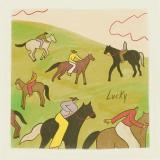
LUCKY - LUCKY LP

LUCKY

LUCKY LP

12inchDE0069ROLP
Royal Oakie
26.06.2026
  • 1: Falling Through
  • 2: Traveler
  • 3: Friends
  • 4: Lines
  • 5: Bougainvillea
  • 6: Colder
  • 7: Olden Goldy

LUCKY is the self-titled debut album by the San Francisco band, born of a collaboration between songwriters Andrew St James (French Cassettes, Juan Wayne) and Peter Kegler (Half Stack). Now a full band featuring, the group combines anthemic indie-rock with y’allternative twang, the perfect soundtrack for long drives and late night revelries.
The story begins when St James booked Kegler’s band Half Stack for a show with Juan Wayne at the Rickshaw Stop in San Francisco. The two immediately recognized each other as kindred spirits and before long they were spending late nights at The Lucky Horseshoe in Bernal Heights, where they pledged to make an album together. Much like Lennon-McCartney or Jagger-Richards, St James and Kegler showed up with their own songs and helped each other dial them in, the songs becoming something totally unique in the process. Pretty soon they recruited Elsasser and headed into the studio with producer Joe Santarpia (Mac DeMarco), where they blazed through more than half a dozen songs in a few days, capturing first takes of raw energy.
Album opener “Falling Through”, written by Kegler on a long drive over HWY 17 to Santa Cruz, pairs talkin’ country vocals on the verse with a hard hitting chorus, eventually ramping up to a phased out guitar solo and a truly epic bridge with gang vocals and an ad lib from St James. Meanwhile, lead single “Traveler” was the first song written for the album, originally a folky shuffle, St James thought it was a goner but Kegler helped recast it as a mid-tempo rocker with a twangy alt-country edge. “Friends” is a true-to-life account of St James’ lifestyle as he shuttled between San Francisco and Los Angeles, paying homage to the City’s legendary House of Prime Rib with a propulsive beat that recalls Girls, Kings of Leon, and the grandiose energy of the E Street Band.
Highly anticipated debutalbum from LUCKY. Press coverage includes reviews and features in Various Small Flames, Glide Magazine, Broken Dreams Club, and more.
“...equal parts laidback swagger and earnest emotion…” - Various Small Flames
“LUCKY is becoming one of the most exciting figures to emerge in alt-country in some time.” - Glide Magazine.

pre-order now26.06.2026

expected to be published on 26.06.2026

23,49 €
Seven Letters - The Singles Collection LP
  • 01: Please Stay
  • 02: Special Beat
  • 03: Flour Dumpling
  • 04: Equality
  • 05: Call Collect
  • 06: Mama Me Want Gal
  • 07: Sentry
  • 08: Soul Crash
  • 09: Throw Me Things
  • 10: There Goes My Heart
  • 11: Wish
  • 12: Bam Bam Baji
  • 13: Hold Him Joe

Seven Letters is an alias for Symarip, one of the best-selling artists of all time on Trojan Records

Their songs have been covered by The Specials, Bad Manners, Special Beat, Judge Dread and many more

Seven Singles collected on LP for the first time.

Includes liner notes with interviews and pictures with original members.

pre-order now19.06.2026

expected to be published on 19.06.2026

22,06 €
SILVAN STRAUSS - FLUKIN'

Producer, Drummer und Hamburger Jazzpreisträger Silvan Strauss war bereits eine feste Größe der Szene, als er 2021 sein Debüt "FACING" veröffentlichte - eine Mischung aus Madlib-inspirierten Beats und atmosphärischem Jazz. Seitdem erreichte er internationale Bühnen wie das Montreux Jazz Festival und begeisterte mit viralen Drum-Videos Musikgrößen wie Pete Rock und Queen Latifah.Für sein zweites Album "FLUKIN"" kehrte Strauss zurück zum Ursprung: Drei Tage intensive Live-Sessions in den Hamburger Clouds Hill Studios mit hochkarätigen Gästen. Im Gegensatz zum loop-orientierten Vorgänger setzt "FLUKIN"" auf echte Interaktion, Improvisation und organische Kommunikation in Echtzeit. Das Ergebnis ist ein unkomplizierter, lebendiger Sound, der die Magie des gemeinsamen Spielens einfängt.Unterstützt wurde er dabei von Künstlern wie Farhot, SALOMEA, Oscar #Worldpeace, Joe Armon-Jones und Mehdi Qamoum. Der Titel leitet sich vom Begriff "Fluke" (Zufallsglück) ab und beschreibt Strauss" Ansatz, bewusste Räume für glückliche, unvorhersehbare Momente in der Musik zu schaffen. Mit diesen 10 Tracks reiht sich Silvan Strauss in die klangliche Welt von Terrace Martin oder Hiatus Kaiyote ein.

pre-order now12.06.2026

expected to be published on 12.06.2026

22,27 €
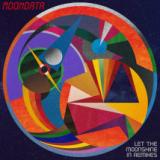
Moondata - Let The Moonshine In (Remixes)

Moondata’s little-known sole single, 1984’s decidedly Balearic, jazz-funk/boogie fusion gem ‘Let The Moonshine In’, is a very important record to the Rotation Sound System crew. It has become a familiar favourite at their annual Rotation Garden Party micro-festival and formed the centrepiece of their first compilation, summer 2025’s superb Everything You’re About To Hear Is True Volume 1. It’s increasingly rare these days for an artist from the 80s to still have their master tapes but even rarer still for them to have the multitrack tapes too. This is something of the holy grail when it comes to licensing old music so when it happens the opportunity to remix and create new versions needs to be grabbed with both hands.

The original record, a genuine rarity beloved of synth-loving crate-diggers, had an unusual gestation. Originally recorded in demo form by musician Jean-Marie Gogniat, it was turned into a finished single by a group of German musicians with a little help from lyricist and vocalist Joe Mwenda, and a crew of backing vocalists whose number included a locally based American singer – a pre-fame Jennifer Rush. Fittingly, the pre-vocal instrumental mix, which has sat unreleased since 1984, is included as a bonus track on the digital edition of this new remix package. The Rotation Sound System crew’s mixes, headed up by long-serving producer Dean Meredith, sprinkle 21st century magic across Gogniat’s one-off masterpiece while retaining core elements of the original and offering nods aplenty to club-focused sounds of the 1980s. They are, in effect, the versions the track deserved – but never got – back in the mid 1980s.

To begin, Meredith reunites with long-time production partner Andrew Meecham for the pair’s first remix as Chicken Lips in three years – a typically sparse and spaced-out ‘Malfunction Dub’ with delay-laden synths, vocals and guitar snippets sit over a sparse post-electro beat and bass guitar. Meredith then joins forces with fellow Rotation Sound System member Ben Shenton for takes under their two bestknown aliases. First, they don the T-Kutt guise for some dubbed out, funky bass guitar-propelled boogie-meets-proto house action that rocks out a killer, Clavinet-expanded groove while spinning in talkbox and backing vocals.

The pair then re-emerge as Mind Fair, famed for their releases on Golf Channel Recordings and their own Rogue Cat Sounds, and deliver a warmer, deeper and more organic-sounding take that’s as languid and tactile as it is warm and saucereyed. To round off the vinyl version of the EP, Rotation Sound System’s other core members – Rob J, Rich Hall and Stuart Robinson – don the now-familiar Wrekin Havoc guise and re-invent the track as a raw, analogue-rich shuffle through 1980s electro – all squelchy synth-bass, stabbing, cut-up vocal samples, chiming synth melodies and echoing beats. The expanded digital download edition of the EP contains a trio of additional bonus rubs. Alongside instrumental versions of the T-Kutt and Mind Fair mixes, we also get a full vocal T-Kutt rework that adds back in Joe Mwenda’s beautifully delivered verses. These additional DJ tools round off a beautifully rendered set of re-imaginations of a genuine cult classic. Gogniat, the man who started it all way back in the summer of 1984, certainly approves.

out of Stock

Order now and we will order the item for you at our supplier.

Last In: 3 months ago
18,07 €
Various - Purveyor Underground Limited All Stars Vol 1

Not all 'All Stars' style releases live up to their name, but this multi-artist extravaganza from Demuir's Purveyor Underground Ltd label most certainly does. The Canadian artist has snapped up tracks from some genuinely impressive deep house talents, with predictably fine results. For proof, check the deliciously dreamy, hazy and rolling opener from Atlanta star Byron The Aquarius, the jazzy bass, locked-in beats and lightly psychedelic layered aural textures of Fred P's 'Sunny Rain Drops (Cosmic House Edit)' and the softened DJ Sneak-style sample-rich peak-time bump of Demuir's own 'Alone In Chicago'. Elsewhere, M Squared reaches for elongated electric piano chords, eyes-closed samples and jazzy house grooves on 'Dance', before Justine Joe delivers an exquisite exercise in jazz-house jauntiness ('AFaOA (As Far As Our Attitude)').

out of Stock

Order now and we will order the item for you at our supplier.

Last In: 89 days ago
17,23 €
Peter Thomas Sound Orchester - The Tape Masters Vol. 2 - Soul Power West Germany (2x10")

The second installment of The Tape Masters series by German film music maestro Peter Thomas. Audiophile pressing in deluxe 2x10" vinyl set, limited to 500 copies.
While volume one of the series compiled Thomas' dopest library music cuts, this album dives deep into the soulful side of the Peter Thomas Sound Orchester, featuring the mystique house band of Afro-American Munich GI club Tabarin Bar, Donna Summer's first solo recordings, stunning cinematic funk instrumentals and a healthy amount of breaks and beats.

Out of the 20 scorching tunes on this compilation, only three were released at the time of their recording and are nearly impossible to find on the 2ndhand market, ten have never been released anywhere before, others celebrate their first outing on vinyl or in stereo.

Peter Thomas is widely acknowledged as Germany's most inventive film music composer of the 1960s and 1970s, best known for his iconic soundtracks. Today, his work is cherished not least for its incredible groove factor. The story of this compilation traces the origins of the Peter Thomas Sound Orchester's rhythm section and its soul music background, shines a light on unsung heroes like singer Joe Quick and unearthes nuggets that have been lying dormant on tape for decades.

All music was carefully transferred from Peter Thomas' private master tapes and cut in full dynamics, housed in a beautiful fold-out cover with liner notes and private pictures. The compilation is released in cooperation with Peter Thomas' son Philip who represents the Peter Thomas Sound Orchester catalogue since his father's passing in 2020.

out of Stock

Order now and we will order the item for you at our supplier.

Last In: 5 months ago
28,78 €
Atjazz / Fred Everything - 8 Days

Atjazz / Fred Everything

8 Days

12inchLZDLP22
Lazy Days
15.05.2026

The creative bond between Atjazz and Fred Everything is a story decades in the making. It began in 1998 at The Bomb in Nottingham during a DiY label night—a label through which they both released music. That first encounter sparked a lasting friendship and a steady exchange of ideas that would continue for many years. While they collaborated regularly and remixed each other’s work, it wasn’t until the summer of 2022 that they committed to making a full-length album.

The project took shape during an 8-day stay at Martin’s (Atjazz) home in the Midlands of England, where they set themselves the challenge of writing one track per day. Their shared musical language allowed ideas to move quickly, with some tracks forming in under an hour. Over the next three years, the material was carefully developed alongside their respective album projects: Atjazz’s Starbase 17, Fred Everything’s JUNO Nominated Love, Care, Kindness & Hope, and All Is Well’s A Break In Time.

A final session in Montreal in 2024, coinciding with Fred’s 50th birthday, brought the album into focus. From there, the duo invited a select group of world-class collaborators, including Jorge Bezerra (The Joe Zawinul Syndicate / St Germain), Octavio N. Santos (SiR, Lupe Fiasco), Clyde Beats, Ernesto & The Basement Gospel, and Dominique Fils-Aimé.

The result is a personal, well-constructed record that draws on the spirit of 90s deep house while applying three decades of experience to a deeply rooted, forward-thinking sound. It is a sonic testament that honours their mutual love of synthesizers, beat making, and sound design.

It is a project that took 8 days to start, 3 years to finish, and 30 years to perfect.

out of Stock

Order now and we will order the item for you at our supplier.

Last In: 19 days ago
20,59 €
RADIOHOP - Hard to Handle LP
  • 1: DUMMY
  • 2: TONS OF FUTONS
  • 3: MAD FLUTE
  • 4: omw
  • 5: WHERE MY KEYS
  • 6: IN THE RAIN
  • 7: SPOOKY TOWN
  • 8: 1BOWL OF CROUTONS
  • 9: WHO CARES
  • 10: BUT THIS
  • 11: EXCHANGE
  • 12: hard to handle, hard to hold

Radiohop are a four-piece jazz / hip-hop band from Amsterdam, exploring the boundaries between groove, texture and improvisation. Hard to Handle is their second album and the first drop on Melting Pot Music. As the title suggests, Radiohop are going hard on this one.

Radiohop are Joshua Lutz (keys), Euan Jenkins (drums), Johnny Biner (guitar) and Joel Svedberg (bass). All four of them moved to Amsterdam around 2020 to study jazz and quickly plugged into the city’s bubbling scene.

Each band member plays an equal role in shaping the music as a single organism, emphasising feeling and atmosphere rather than ego or individual spotlight.

The compositions arise from experimentation, intuitive collaboration and deep listening, an approach that has as much to do with their backgrounds as improvisers and beat-makers as it does with their roots in jazz.

Radiohop have performed as the rhythm section for artists like Soul Supreme and Juju Rogers. Beat-heads might be familiar with Joshua’s solo project, Halfpastseven, which has collaborated with FloFilz and Jake Milliner

pre-order now08.05.2026

expected to be published on 08.05.2026

25,17 €
DoYeon Kim - Wellspring LP

DoYeon Kim

Wellspring LP

12inchTAO20LP
TAO FORMS
01.05.2026
  • The Beats of Distant Thunder
  • Whispers Among Dawn
  • Sun Shower
  • Diffraction
  • Linear System
  • Calculus of Our Souls

Masterful composer- improviser DoYeon Kim is an unparalleled practitioner of the Korean gayageum (a silk-string zither), and is also in possession of a purposeful vocal intensity. This is her debut album as a bandleader, featuring fellow master musicians Tyshawn Sorey (drums), Mat Maneri (viola), Henry Fraser (bass). Armed with an unlikely traditional instrument, flanked by three extraordinary improvisers, radiating a brash, acoustic strategy that simultaneously invokes folk universalism and a No Wave battle- stance, the Brooklyn- based virtuoso will drop a volcanic sonic statement with grand humanist goals on May 1. Kim mingles Korean lullabies, fervent interactions between drums and strings, and pure instrumental expressions of musical self. At times, she sounds like she can halt armies. Wellspring is a call for society to come together.

How the Seoul, South Korea- born 34- year- old came to be the centuries- old zither's leading (only?) practitioner of contemporary improvised music, reflects an expansive embrace of her own culture, her place in modern society, and her ascending recognition of music's liberatory power. DoYeon Kim 's teachers at Seoul National University recognized that her roving musical mind - less interested in ancient repertoire than in speaking to the modern world - needed challenges. America beckoned, with the New England Conservatory offering a non- ethnomusicological pathway via its Contemporary Improvisation department. It set off a process of analysing, absorbing, digesting, and, most of all, listening. Under the guidance of NEC instructor and legendary guitarist Joe Morris, in came the methodologies of Ornette, Braxton and Derek Bailey, to name a few.

pre-order now01.05.2026

expected to be published on 01.05.2026

28,36 €
Candi Staton - When You Wake Up Tomorrow

When Henry Street & Sacred Rhythm Music join forces for a remix outing, it should be obvious the source material and resulting productions are of the utmost caliber. This record proves such a case in point: Johnny "D" DeMairo & Joe Claussell team up for two takes on Candi Staton’s 1979 disco opus 'When You Wake Up Tomorrow.’ The original, whose pedigree could be inferred simply by reading Patrick Adams’ and Jimmy Simpson’s names on the label, is a faultless dance floor cut featuring all the elements you’d expect—lavish horn and string arrangements, sparkling synthesizer accents, and plenty of hand-beat drumming—along with with Staton’s peerless voice. Johnny D’s mix starts carefully, the vocal refrain accented with auxiliary percussion until the rug is pulled out from under us, the ensuing chasm making the following thrust of the track that much more powerful. On the flip.

Claussell’s take starts with reinforced four-on-the-floor, along with a studio count-in, perhaps alluding back to his previous ‘It Seems To Hang On’ edit. As the track establishes itself, ample room is afforded for interplay between bass and guitar, with all the interlacing elements aggrandizing the mood with careful shots of delay and expertly-timed pivots in atmosphere. Both sides are proof of what shouldn’t need evidence: two masters of their craft assembling two wholly new mixes that far surpass the banal copy and paste, add and subtract methodology slung by the less blessed. Pressed on white vinyl, with a custom jacket to boot.

out of Stock

Order now and we will order the item for you at our supplier.

28,78 €
Enos McLeod - Moods Of A Genius

Reissued for the first time ever, here’s the remastered debut album of jamaican singer/producer Enos McLeod, originally released in 1983 on Soul Beat record. An ultra rare affair recorded at Joe Gibb's studio with a great backing band featuring Sly & Robbie, Earl Chinna Smith, Winston Wright and more…

pre-order now18.04.2026

expected to be published on 18.04.2026

27,52 €
THE LIGHTMEN - FREE AS YOU WANNA BE

THE LIGHTMEN

FREE AS YOU WANNA BE

12inchVAMPI352
Vampisoul
17.04.2026

Free As You Wanna Be", the first album by drummer Bubbha Thomas and his band The Lightmen, predates the deep-set, maverick jazz issued by the likes of Tribe and Strata East: This album is a harbinger of the collective voice of resistance to the musical and cultural status quo that emerged in the 1970s jazz underground. Drummer, bandleader and activist Bubbha Thomas had toured America with R&B revues, served as a session musician for peacock and back beat records, and played straight ahead jazz with legends before the political and social upheaval of the late 1960s led him to a path first charted by Coltrane. Most of the tracks remain strongly groove-based with a clear sense of cohesion, but a few of the performances push further out than you might expect from later Lightmen releases, revealing the band's deep roots in avant-jazz. This lineup includes a very young Ronnie Laws sounding noticeably removed from the jazz-fusion style he'd adopt in the late '70s. Alongside Thomas on drums, the ensemble is rounded out by Doug Harris on tenor sax, Carl Adams on trumpet, Kenny Abair on guitar, and Joe Singleton on trombone.

pre-order now17.04.2026

expected to be published on 17.04.2026

22,27 €
HEDVIG MOLLESTAD WEEJUNS - BITCHES BLUES
  • 1: BITCHES BLUES
  • 2: KOMPET BLIR
  • 3: FOR A MOMENT I THOUGHT I COULD HEAR YOU
  • 4: LIMITE
  • 5: DYNAMAX
  • 6: RECOLLECTION OF SORROW
also available

Clear Vinyl[25,00 €]


"Weejuns is all about interplay,"erklärt Gitarristin Mollestad. ,Bitches Blues besteht aus sechs Instrumentalstücken oder Musikabschnitten mit einer extremen Bandbreite an Dynamik. Einige basieren auf kräftigen Beats, während andere Stücke weitaus lyrischer und rubato sind. Die Bandbreite reicht von riffbasierten rockigen Stücken über lautes Chaos bis hin zu melancholischen Balladen und sogar völlig freien Improvisationen." Mit einem kultivierten und dennoch erfrischend instinktiven Ansatz, Instrumente und Einflüsse miteinander zu verflechten, wechselt Bitches Blues (ein ironischer Verweis auf Miles Davis' Album Bitches Brew) unvorhersehbar zwischen langsamen und sanften, klar gegliederten Songs mit disziplinierten Akkordfolgen und explosiven Ausbrüchen kathartischer und komplexer Strukturen. Weejuns (eine Slang-Abkürzung für ,Norwegians") stellten sich 2023 mit einem selbstbetitelten Doppel-Live-Album vor. Ursprünglich von Mollestad für das Kongsberg Jazz Festival zusammengestellt, wo sie mit dem renommierten Musicians Prize ausgezeichnet wurde, hat sich die Chemie innerhalb von Weejuns als dauerhaft und verlockend erwiesen, auch als Gegenpol zum bisher härtesten Album des Hedvig Mollestad Trios, Bees in the Bonnet aus dem Jahr 2025. Mollestad hat mit ihrem gleichnamigen Trio acht gefeierte Alben veröffentlicht. Das Markenzeichen ihrer 15-jährigen Karriere ist die Verschmelzung von ernsthaftem Können mit einem offensichtlichen Fokus darauf, Spaß am Klang zu finden. Als Tochter eines Jazzmusikers vertiefte sie sich in dessen Plattensammlung und studierte klassische Werke von Miles Davis, Charlie Parker, Joe Pass und Jim Hall, bevor sie in ihren 20ern Riff-gewaltige Titanen wie Led Zeppelin, Black Sabbath und Mahavishnu Orchestra entdeckte. Dies führte zur Gründung des Hedvig Mollestad Trios, dessen unermüdlicher Aufnahme- und Tourneeplan seit Anfang der 2010er Jahre der Gitarristin eine Reihe von Auszeichnungen einbrachte, darunter zwei norwegische Grammys (Spellemannprisen) und die Ernennung durch das DownBeat-Magazin zu einer der 25 Künstlerinnen, die ,den Jazz für Jahrzehnte prägen könnten". Ståle Storlokken (Bass, Synths) ist Gründer und langjähriges Mitglied von Supersilent und Elephant9, seit Mitte der 90er Jahre die ,rechte Hand" von Terje Rypdal und hat mit Motorpsycho auf Platte und auf der Bühne sowie mit unzähligen anderen zusammengearbeitet. Ole Mofjell (Drums) ist das jüngste Mitglied und spielt bei Krokofant, Signe Emmeluths Amoeba und seinem eigenen Free-Jazz-Trio 3 Days Of Maceration.

pre-order now17.04.2026

expected to be published on 17.04.2026

23,49 €
HEDVIG MOLLESTAD WEEJUNS - BITCHES BLUES

"Weejuns is all about interplay,"erklärt Gitarristin Mollestad. ,Bitches Blues besteht aus sechs Instrumentalstücken oder Musikabschnitten mit einer extremen Bandbreite an Dynamik. Einige basieren auf kräftigen Beats, während andere Stücke weitaus lyrischer und rubato sind. Die Bandbreite reicht von riffbasierten rockigen Stücken über lautes Chaos bis hin zu melancholischen Balladen und sogar völlig freien Improvisationen." Mit einem kultivierten und dennoch erfrischend instinktiven Ansatz, Instrumente und Einflüsse miteinander zu verflechten, wechselt Bitches Blues (ein ironischer Verweis auf Miles Davis' Album Bitches Brew) unvorhersehbar zwischen langsamen und sanften, klar gegliederten Songs mit disziplinierten Akkordfolgen und explosiven Ausbrüchen kathartischer und komplexer Strukturen. Weejuns (eine Slang-Abkürzung für ,Norwegians") stellten sich 2023 mit einem selbstbetitelten Doppel-Live-Album vor. Ursprünglich von Mollestad für das Kongsberg Jazz Festival zusammengestellt, wo sie mit dem renommierten Musicians Prize ausgezeichnet wurde, hat sich die Chemie innerhalb von Weejuns als dauerhaft und verlockend erwiesen, auch als Gegenpol zum bisher härtesten Album des Hedvig Mollestad Trios, Bees in the Bonnet aus dem Jahr 2025. Mollestad hat mit ihrem gleichnamigen Trio acht gefeierte Alben veröffentlicht. Das Markenzeichen ihrer 15-jährigen Karriere ist die Verschmelzung von ernsthaftem Können mit einem offensichtlichen Fokus darauf, Spaß am Klang zu finden. Als Tochter eines Jazzmusikers vertiefte sie sich in dessen Plattensammlung und studierte klassische Werke von Miles Davis, Charlie Parker, Joe Pass und Jim Hall, bevor sie in ihren 20ern Riff-gewaltige Titanen wie Led Zeppelin, Black Sabbath und Mahavishnu Orchestra entdeckte. Dies führte zur Gründung des Hedvig Mollestad Trios, dessen unermüdlicher Aufnahme- und Tourneeplan seit Anfang der 2010er Jahre der Gitarristin eine Reihe von Auszeichnungen einbrachte, darunter zwei norwegische Grammys (Spellemannprisen) und die Ernennung durch das DownBeat-Magazin zu einer der 25 Künstlerinnen, die ,den Jazz für Jahrzehnte prägen könnten". Ståle Storlokken (Bass, Synths) ist Gründer und langjähriges Mitglied von Supersilent und Elephant9, seit Mitte der 90er Jahre die ,rechte Hand" von Terje Rypdal und hat mit Motorpsycho auf Platte und auf der Bühne sowie mit unzähligen anderen zusammengearbeitet. Ole Mofjell (Drums) ist das jüngste Mitglied und spielt bei Krokofant, Signe Emmeluths Amoeba und seinem eigenen Free-Jazz-Trio 3 Days Of Maceration.

pre-order now17.04.2026

expected to be published on 17.04.2026

25,00 €
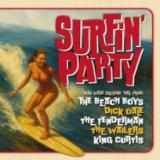
Various - Surfin' Party LP

Various

Surfin' Party LP

12inchVPL90179
Vinyl Passion
17.04.2026
  • The Beach Boys - Surfin' Safari
  • Duane Eddy His Twangy Guitar And The Rebels - Ramrod
  • Johnny & The Hurricanes - Crossfire
  • The Fireballs - Bulldog
  • The Marketts - Surfer's Stomp
  • The Fenderman - Torture
  • Joe Jones - California Sun
  • The Gamblers - Moon Dawg!
  • The Ventures - Lullaby Of The Leaves
  • Dick Dale - Surf Beat
  • The Tornadoes - Bustin' Surfboards
  • Belairs - Mr. Moto
  • Johnny Bond - Hot Rod Lincoln
  • Dick Dale - Peppermint Man
  • Ritche Valens - La Bamba
  • Surfmen - El Toro
  • The Champs - Tequila
  • The Wailers - Tall Cool One
  • King Curtis And The Noble Knights - Beach Party
  • The Beach Boys - Surfin

Featuring iconics like The Beach Boys, Dick Dale, Ritchie Valens, The Wailers , The Champs ... and many more! Whether you're a crate digger, surf rock purist, or just vibin' for summer, this LP is your sonic wave to a vintage beach party. Catch it before it's gone

pre-order now17.04.2026

expected to be published on 17.04.2026

20,13 €
Guilty Razors - Complete Recordings 1977 - 1978

UILTY RAZORS, BONA FIDE PUNKS.


Writings on the topic that go off in all directions, mind-numbing lectures given by academics, and testimonies, most of them heavily doctored, from those who “lived through that era”: so many people today fantasize about the early days of punk in our country… This blessed moment when no one had yet thought of flaunting a ridiculous green mohawk, taking Sid Vicious as a hero, or – even worse – making the so-called alternative scene both festive and boorish. There was no such thing in 1976 or 1977, when it wasn’t easy to get hold of the first 45s by the Pistols or the Clash. Few people were aware of what was happening on the fringes of the fringes at the time. Malcolm McLaren was virtually unknown, and having short hair made you seem strange. Who knew then that rock music, which had taken a very bad turn since the early 1970s, would once again become an essential element of liberation? That, thanks to short and fast songs, it would once again rediscover that primitive, social side that was so hated by older generations? Who knew that, besides a few loners who read the music press (it was even better if they read it in English) and frequented the right record stores? Many of these formed bands, because it was impossible to do otherwise. We quickly went from listening to the Velvet Underground to trying to play the Stooges’ intros. It’s a somewhat collective story, even though there weren’t many people to start it.
The Guilty Razors were among those who took part in this initial upheaval in Paris. They were far from being the worst. They had something special and even released a single that was well above the national average. They also had enough songs to fill an album, the one you’re holding. In everyone’s opinion, they were definitely not among the punk impostors that followed in their wake. They were, at least, genuine and credible.

Guilty Razors, Parisian punk band (1975-1978). To understand something about their somewhat linear but very energetic sound, we might need to talk about the context in which it was born and, more broadly, recall the boredom (a theme that would become capital in punk songs) coupled with the desire to blow everything off, which were the basis for the formation of bands playing a rejuvenated rock music ; about the passion for a few records by the Kinks or the early Who, by the Stooges, by the Velvet mostly, which set you apart from the crowd.
And of course, we should remember this new wave, which was promoted by a few articles in the specialized press and some cutting-edge record stores, coming from New York or London, whose small but powerful influence could be felt in Paris and in a handful of isolated places in the provinces, lulled to sleep by so many appalling things, from Tangerine Dream to President Giscard d’Estaing...
In 1975-76, French music was, as almost always, in a sorry state ; it was still dominated by Johnny Hallyday and Sylvie Vartan. Local rock music was also rather bleak, apart from Bijou and Little Bob who tried to revive this small scene with poorly sound-engineered gigs played to almost no one.
In the working class suburbs at the time, it was mainly hard rock music played to 11 that helped people forget about their gruelling shifts at the factory. Here and there, on the outskirts of major cities, you still could find a few rockers with sideburns wearing black armbands since the death of Gene Vincent, but it wasn’t a proper mass movement, just a source of real danger to anyone they came across who wasn't like them. In August 1976, a festival unlike any other took place in Mont-de-Marsan – the First European Punk Festival as the poster said – with almost as many people on stage as in the audience. Yet, on that day, a quasi historical event happened, when, under the blazing afternoon sun, a band of unknowns called The Damned made an unprecedented noise in the arena, reminiscent of the chaotic Stooges in their early adolescence. They were the first genuine punk band to perform in our country: from then on, anything was possible, almost anything seemed permissible.

It makes sense that the four+1 members of Guilty Razors, who initially amplified acoustic guitars with crappy tape recorder microphones, would adopt punk music (pronounced paink in French) naturally and instinctively, since it combines liberating noise with speed of execution and – crucially – a very healthy sense of rebellion (the protesters of May 1968 proclaimed, and it was even a slogan, that they weren’t against old people, but against what had made them grow old. In the mid-1970s, it seemed normal and obvious that old people should now ALSO be targeted!!!).
At the time, the desire to fight back, and break down authority and apathy, was either red or black, often taking the form of leafleting, tumultuous general assemblies in the schoolyard, and massive or shabby demonstrations, most of the time overflowing with an exciting vitality that sometimes turned into fights with the riot police. Indeed, soon after the end of the Vietnam War and following Pinochet’s coup in Chile, all over France, Trotskyist and anarcho-libertarian fervour was firmly entrenched among parts of the educated youth population, who were equally rebellious and troublemakers whenever they had the chance. It should also be noted that when the single "Anarchy in the UK" was first heard, even though not many of us had access to it, both the title and its explosive sound immediately resonated with some of those troublemakers crying out for ANARCHY!!! Meanwhile, the left-wing majority still equated punks with reckless young neo-Nazis. Of course, the widely circulated photos in the mainstream press of Siouxsie Sioux with her swastikas didn’t necessarily help to win over the theorists of the Great Revolution. It took Joe Strummer to introduce The Clash as an anti-racist, anti-fascist and anti-ignorance band for the rejection of old-school revolutionaries to fade a little.

The Lycée Jean-Baptiste Say at Porte d’Auteuil, despite being located in the very posh and very exclusive 16th arrondissement of Paris, didn’t escape these "committed" upheavals, which doubled as the perfect outlet for the less timid members of this generation.
“Back then, politics were fun,” says Tristam Nada, who studied there and went on to become Guilty Razors’ frontman. “Jean-Baptiste was the leftist high-school in the neighbourhood. When the far right guys from the GUD came down there, the Communist League guys from elsewhere helped us fight them off.”
Anything that could challenge authority was fair game and of course, strikes for just about any reason would lead to increasingly frequent truancy (with a definitive farewell to education that would soon follow). Tristam Nada spent his 10th and 11th unfinished grades with José Perez, who had come from Spain, where his father, a janitor, had been sentenced to death by Franco. “José steered my tastes towards solid acts such as The Who. Like most teenagers, I had previously absorbed just about everything that came my way, from Yes to Led Zeppelin to Genesis. I was exploring… And then one day, he told me that he and his brother Carlos wanted to start a rock band.” The Perez brothers already played guitar. “Of course, they were Spanish!”, jokes their singer. “Then, somewhat reluctantly, José took up the bass and we were soon joined by Jano – who called himself Jano Homicid – who took up the rhythm guitar.” Several drummers would later join this core of not easily intimidated young guys who didn’t let adversity get the better of them.

The first rehearsals of the newly named Guilty Razors took place in the bedroom of a Perez aunt. There, the three rookies tried to cover a few standards, songs that often were an integral part of their lives. During a first, short gig, in front of a bewildered audience of tough old-school rockers, they launched into a clunky version of the Velvet Underground's “Heroin”. Challenge or recklessness? A bit of both, probably… And then, step by step, their limited repertoire expanded as they decided to write their own songs, sung in a not always very accurate or academic English, but who cared about proper grammar or the right vocabulary, since what truly mattered was to make the words sound as good as possible while playing very, very fast music? And spitting out those words in a language that left no doubt as to what it conveyed mattered as well.
Trying their hand a the kind of rock music disliked by most of the neighbourhood, making noise, being fiercely provocative: they still belonged to a tiny clique who, at this very moment, had chosen to impose this difference. And there were very few places in France or elsewhere, where one could witness the first stirrings of something that wasn’t a trend yet, let alone a movement.

In the provinces, in late 1976 or early 1977, there couldn’t be more than thirty record stores that were a bit more discerning than average, where you could hear this new kind of short-haired rock music called “punk”. The old clientele, who previously had no problem coming in to buy the latest McCartney or Aerosmith LP, now felt a little less comfortable there…
In Paris, these enlightened places were quite rare and often located nex to what would become the Forum des Halles, a big shopping mall. Between three aging sex workers, a couple of second-hand clothes shops, sellers of hippie paraphernalia and small fashion designers, the good word was loudly spread in two pioneering places – propagators of what was still only a new underground movement. Historically, the first one was the Open Market, a kind of poorly, but tastefully stocked cave. Speakers blasted out the sound of sixties garage bands from the Nuggets compilation (a crucial reference for José Perez) or the badly dressed English kids of Eddie and the Hot Rods. This black-painted den was opened a few years earlier by Marc Zermati, a character who wasn’t always in a sunny disposition, but always quite radical in his (good) choices and his opinions. He founded the independent label Skydog and was one of the promoters of the Mont-de-Marsan punk festivals. Not far from there was Harry Cover, another store more in tune with the new New York scene, which was amply covered in the house fanzine, Rock News (even though it was in it that the photos of the Sex Pistols were first published in France).
It was a favorite hang-out of the Perez brothers and Tristam Nada, as the latter explained. “It’s at Harry Cover’s that we first heard the Pistols and Clash’s 45s, and after that, we decided to start writing our first songs. If they could do it, so could we!”
The sonic shocks that were “Anarchy in the UK”, “White Riot” or the Buzzcocks’s EP, “Spiral Scratch” – which Guilty Razors' sound is reminiscent of – were soon to be amplified by an unparalleled visual shock. In April 1977, right after the release of their first LP, The Clash performed at the Palais des Glaces in Paris, during a punk night organised by Marc Zermati. For many who were there, it was the gig of a lifetime…
Of course, Guilty Razors and Tristam were in the audience: “That concert was fabulous… We Parisian punks were almost all dressed in black and white, with white shirts, skinny leather ties, bikers jackets or light jackets, etc. The Clash, on the other hand, wore colourful clothes. Well, the next day, at the Gibus, you’d spot everyone who had been at this concert, but they weren’t wearing anything black, they were all wearing colours.”

It makes sense to mention the Gibus club, as Guilty Razors often played there (sometimes in front of a hostile audience). It was also the only place in Paris that regularly scheduled new Parisian or Anglo-Saxon acts, such as Generation X, Siouxsie and the Banshees, the Slits, and Johnny Thunders who would become a kind of messed-up mascot for the venue. A little later, in 1978, the Rose Bonbon – formerly the Nashville – also attracted nightly owls in search of electric thrills… In 1977, the iconic but not necessarily excellent Asphalt Jungle often played at the Gibus, sometimes sharing the bill with Metal Urbain, the only band whose aura would later transcend the French borders (“I saw them as the French Sex Pistols,” said Geoff Travis, head of their British label Rough Trade). Already established in this small scene, Metal Urbain helped the young and restless Guilty Razors who had just arrived. Guitarist for Metal Urbain Hermann Schwartz remembers it: “They were younger than us, we were a bit like their mentors even if it’s too strong a word… At least they were credible. We thought they were good, and they had good songs which reminded of the Buzzcocks that I liked a lot. But at some point, they started hanging out with the Hells Angels. That’s when we stopped following them.”

The break-up was mutual, since, Guilty Razors, for their part, were shocked when they saw a fringe element of the audience at Metal Urbain concerts who repeatedly shouted “Sieg Heil” and gave Nazi salutes. These provocations, even still minor (the bulk of the skinhead crowd would later make their presence felt during concerts), weren’t really to the liking of the Perez brothers, whose anti-fascist convictions were firmly rooted. Some things are non-negotiable.
A few months earlier (in July 1978), Guilty Razors had nevertheless opened very successfully for Metal Urbain at the Bus Palladium, a more traditonally old-school rock night-club. But, as was sometimes the case back then, the night turned into a mass brawl when suburban rockers came to “beat up punks”.

Back then, Parisian nights weren’t always sweet and serene.

So, after opening as best as they could for The Jam (their sound having been ruined by the PA system), our local heroes were – once again – met outside by a horde of greasers out to get them. “Thankfully,” says Tristam, “we were with our roadies, motorless bikers who acted as a protective barrier. We were chased in the neighbouring streets and the whole thing ended in front of a bar, with the owner coming out with a rifle…”
Although Tristam and the Perez brothers narrowly escaped various, potentially bloody, incidents, they weren’t completely innocent of wrongdoing either. They still find amusing their mugging of two strangers in the street for example (“We were broke and we simply wanted to buy tickets for the Heartbreakers concert that night,” says Tristam). It so happened that their victims were two key figures in the rock business at the time: radio presenter Alain Manneval and music publisher Philippe Constantin. They filed a complaint and sought monetary compensation, but somehow the band’s manager, the skilful but very controversial Alexis, managed to get the complaint withdrawn and Guilty Razors ended up signing with Constantin with a substantial advance.

They also signed with Polydor and the label released in 1978 their only three-track 45, featuring “I Don't Wanna be A Rich”, “Hurts and Noises” and “Provocate” (songs that exuded perpetual rebellion and an unquenchable desire for “class” confrontation). It was a very good record, but due to a lack of promotion (radio stations didn’t play French artists singing in English), it didn’t sell very well. Only 800 copies were allegedly sold and the rest of the stock was pulped… Initially, the three tracks were to be included on a LP that never came to be, since they were dropped by Polydor (“Let’s say we sometimes caused a ruckus in their offices!” laughs Tristam.) In order to perfect the long-awaited LP, the band recorded demos of other tracks. There was a cover of Pink Floyd's “Lucifer Sam” from the Syd Barrett era – proof of an enduring love for the sixties’ greats –, “Wake Up” a hangover tale and “Bad Heart” about the Baader-Meinhof gang, whose actions had a profound impact on the era and on a generation seeking extreme dissent... On the album you’re now discovering, you can also hear five previously unreleased tracks recorded a bit later during an extended and freezing stay in Madrid, in a makeshift studio with the invaluable help of a drummer also acting as sound engineer. He was both an enthusiastic old hippie and a proper whizz at sound engineering. Here too, certain influences from the fifties and sixties (Link Wray, the Troggs) are more than obvious in the band’s music.

Shortly after a final stormy and rather barbaric (on the audience’s side) “Punk night” at the Olympia in June 1978, Tristam left the band ; his bandmates continued without him for a short while.

But like most pioneering punk bands of the era, Guilty Razors eventually split up for good after three years (besides once in Spain, they’d only played in Paris). The reason for ceasing business activities were more or less the same for everyone: there were no venues outside one’s small circuit to play this kind of rock music, which was still frightening, unknown, or of little interest to most people. The chances of recording an LP were virtually null, since major labels were only signing unoriginal but reassuring sub-Téléphone clones, and the smaller ones were only interested in progressive rock or French chanson for youth clubs. And what about self-production? No one in our small safety-pinned world had thought about it yet. There wasn’t enough money to embark on that sort of venture anyway.

So yes, the early days of punk in France were truly No Future!

out of Stock

Order now and we will order the item for you at our supplier.

Last In: 5 months ago
21,43 €
The Tornados - No More You And Me/ You Always Did What You Wanted (7")

In Joe Meek's last months, he produced some of his best, hard-edged mod and proto-psychedelic records - like this one. But still he clung on to the name of the Tornados, like a touchstone, reminding him of his greatest success with the 1962 hit single ‘Telstar’.

This Tornados in 1966 was very different to the original line-up, based around an entirely different group called the Saxons, and had an entirely different sound. ‘No More You And Me’ has blistering guitar lines, and an intense soulful vocal; it's a British popsike monster that drives along like the Eyes or Wimple Winch. On the flip, ‘You Always Did What You Wanted’ is British blue-eyed soul, a terrific beat ballad with hypnotic swirling piano.

Both point to directions Meek could have headed in had he lived, and are A-grade 60s beat. It's the first time on vinyl for both tracks. And it's another brace of dancefloor-friendly tracks from Bob Stanley's Measured Mile label.

out of Stock

Order now and we will order the item for you at our supplier.

Last In: 6 months ago
13,66 €
Carnivore A.D. - Transmutation

Carnivore A.D.

Transmutation

12inch426239083198
Apostasy Records
27.03.2026
  • 1: Prologue
  • 2: Transmutation
  • 3: I Stand Alone
  • 4: Social Decomposition
  • 5: Mine Is The Hand

The Evolution Has Begun. Dedicated with love and honor to the memories of Peter Steele and Keith Alexander, Carnivore A.D. emerged as a post armageddon neo barbaric soundscape - a relentless force keeping the primal energy of Carnivore alive on stages and festivals around the world. Formed by NYC Hardcore and Metal veterans Baron Misuraca (vocals & bass – ex-SHEER TERROR), Chuck Lenihan (guitar – ex-CRUMBSUCKERS), and Joe Cangelosi (drums – ex-KREATOR, WHIPLASH, MASSACRE). Co-founded with full endorsement by original drummer Louie Beateaux, Carnivore A.D. has honored its roots by performing the explosive and brilliant works of Peter Steele with intensity, respect and raw power. But now, with the release of their first-ever studio EP "Transmutation", Carnivore A.D. transcends tribute.

They have challenged themselves to write new material - not to replace the original legacy, but to continue its spirit through their own lens. While the legacy of Carnivore remains sacred, Carnivore A.D. has become something more than its origin - a band with its own scars, its own instincts, and now, its own songs. “Think of Carnivore AD as a renowned dining establishment where it’s Chef passed on years ago but the recipes remain and folks still want to dine there instead of cooking the food themselves. And Chef Pete wouldn’t mind because his friends are making it with love.”- Louie Beateaux.

pre-order now27.03.2026

expected to be published on 27.03.2026

20,59 €
Brandon De Carlo / Joey Beltram - A Thousand Cuts Vol 2

Two legends from New York City here for the price of one, as Downside Up Recordings boss Brandon De Carla - noted for his incendiary PAs and DJ sets around the Big Apple from the 90s onwards, as well as releases for labels as luminary as Kevin Saunderson's KMS - enrols the even more celebrated Joey Beltram to add a remix to his three originals here. De Carla's productions sure are uncompromising, not so much as inviting you onto the dancefloor as prodding you on with their itchy, wriggly sense of metallic funk and spaced out atmospherics, especially the latter on the beatless but substantial, grungy DJ tool that is closing track 'Valley Of The'. Beltram's mix, meanwhile, is pinned down by handclaps that sound like they were forged in a steelworks, but again manage to wrangle a sense of irresistible funkiness from the heaviest duty ingredients. Proper 3am techno gear, make no mistake.

out of Stock

Order now and we will order the item for you at our supplier.

Last In: 4 months ago
31,89 €
Demetrio Castellucci & Massimo Pupillo - Sleep Technique LP
  • 1: Skull Chamber
  • 2: The Venus and the Sorcerer
  • 3: Panel of the Lions
  • 4: Hillaire Chamber
  • 5: Candle Gallery
  • 6: Chamber of the Bear Hollows (North)
  • 7: Chamber of the Bear Hollows (South) & Brunel Chamber
  • 8: Entrance Chamber

Demetrio Castellucci and Massimo Pupillo present the music of Sleep Technique, a performance by Dewey Dell inspired by the Chauvet cave and its ancient cave paintings.
The music comes to life anew on record, an immersion into the depths of sonic particles, moist electroacoustic rhythms, the repeated forms of speleothems, and the electric bass that scrapes the walls, shaping them into concave or convex surfaces. A voice that moves incredibly slowly, yet is in constant motion, like the millennia-old, unceasing erosion of water.
The album’s journey follows the geography of the cave in reverse, moving from its deepest chamber back to the entrance.

Demetrio Castellucci is a composer and sound designer who has been involved in theater productions, choreography, and film since 2004. Around the same time, he began performing as a DJ, favoring an omnitemporal approach geared toward dance that transcends musical genres. Since 2006, he has been a member of the dance company Dewey Dell, and since 2007, he has been active as Black Fanfare, a maximalist electroacoustic project. He has collaborated on performances by Andreco and Enrico Ticconi/Ginevra Panzetti, as well as on films by Ahmed Ben Nessib, Beatrice Pucci, and Ilaria di Carlo. After living in London and Berlin, he settled in Vilnius, where in 2018 he founded Unarcheology, a digital platform that publishes music and radio programs. He is also active as Airport Gad, an ambient project which, together with Unarcheology, launched its own “Airline Company”: concerts in a flight simulator built from cardboard, where the pilots are also the musicians.

Massimo Pupillo is best known as a founding member of the band Zu, with whom he has released 18 albums and performed over 2,000 live shows worldwide. He has maintained a highly open and multidisciplinary approach that has led him to work with some of the most acclaimed figures in the contemporary art world: South African photographer Roger Ballen, actors Malcolm McDowell and Marton Csokas, Romeo Castellucci and Chiara Guidi of Societas Raffaello Sanzio, American choreographer Meg Stuart, poet Anne Waldman, and Italian poet Gabriele Tinti, among others. He has collaborated live and in the studio with avant-garde musicians and composers such as Alvin Curran, piano duo Katia & Marielle Labèque, and classical virtuosos like Viktoria Mullova and Giovanni Sollima. He has also worked with some of the most influential names in the international rock scene, including Mike Patton, Thurston Moore, Jim O’Rourke (Sonic Youth), Guy Picciotto & Joe Lally (Fugazi), Buzz Osborne (Melvins), and Damo Suzuki (CAN).

In the field of improvised music, he has collaborated with Peter Brötzmann, Toshinori Kondo, Mats Gustafsson, Ken Vandermark, and Tony Buck, among others. Within the experimental music scene, his collaborations include Oren Ambarchi, David Tibet (Current 93), Thighpaulsandra (Coil), Stephen O’Malley (Sunn O))), Abul Mogard, Mick Harris (Scorn), Gordon Sharp (This Mortal Coil), FM Einheit (Einstürzende Neubauten), and many more. In cinema, he composed the score for Kirill Serebrennikov’s film LIMONOV, presented at Festival de Cannes in 2024.

pre-order now13.03.2026

expected to be published on 13.03.2026

25,17 €
Communards - Red (35th Anniversary Edition) 2x12"

Red Vinyl

The Communards’ sophomore album ‘Red’ consolidated the genius of the musical partnership between Bronski Beat singer Jimmy Somerville and pianist Richard Coles. Fusing synths and hi-NRG production with lush string and horn arrangements, The Communards straddled pop and the political, the album’s themes set against the political unrest and moral panic of late 80s Britain. A global smash upon its release, this remastered and expanded 35Th Anniversary Edition features an extensive array of B-sides, live tracks, demo versions and remixes, including classic mixes by legendary 80s club doyens Shep Pettibone, Clivilles & Cole (better known as C&C Music Factory) and a euphoric new 2022 remix of ‘Never Can Say Goodbye’ by UK outfit The 2 Bears (Hot Chip’s Joe Goddard and DJ Raf Rundell). Available on Deluxe Double CD , Collector White & Red Double Vinyl , Black Vinyl. All editions remastered , with new sleeve notes.

out of Stock

Order now and we will order the item for you at our supplier.

Last In: 7 months ago
40,97 €
George Harrison - Wonderwall Music

Als direkte Folge des großen Interesses der Beatles an experimenteller Musik und anderen avantgardistischen
Kunstformen gründete Apple Records im Februar 1969 das kurzlebige Tochterlabel Zapple. Es sollte ein Forum für ungezügelte Klangexperimente bieten, oder, wie es damals hieß, für „noch abgefahrenere Sounds“.
Georges „Electronic Sound“ und John Lennons und Yoko Onos „Unfinished Music No. 2: Life With the
Lions“, beide im Mai 1969 erschienen, waren Zapples einzige Veröffentlichungen vor der Schließung des
Labels. Das von George gemalte Cover von „Electronic Sound“ zeigt seinen Moog IIIp (der später von den
Beatles auf vier Stücken ihres Albums „Abbey Road“ verwendet wurde) mit den vier Modulen, aus denen
der Klang synthetisiert wurde. Jede Seite der LP „Electronic Sound“ enthielt ein experimentelles, längeres
Werk.
George Harrisons „Wonderwall Music“, erschienen im November 1968, war das erste Soloalbum eines
Beatles-Mitglieds und die erste LP, die von Apple Records veröffentlicht wurde. Der Soundtrack zu Joe
Massots Spielfilmdebüt „Wonderwall“ ist ein überwiegend instrumentales Album, das einen komplexen und
lebendigen Klangteppich aus westlicher Rockmusik und Kompositionen im Stil der indischen Klassik bildet.
1992 erinnerte sich George: „Ich entschied mich für eine Art Mini-Anthologie indischer Musik, weil ich die
Öffentlichkeit für indische Musik begeistern wollte.“

pre-order now20.02.2026

expected to be published on 20.02.2026

35,08 €
George Harrison - Electric Sound

Als direkte Folge des großen Interesses der Beatles an experimenteller Musik und anderen avantgardistischen
Kunstformen gründete Apple Records im Februar 1969 das kurzlebige Tochterlabel Zapple. Es sollte ein Forum für ungezügelte Klangexperimente bieten, oder, wie es damals hieß, für „noch abgefahrenere Sounds“.
Georges „Electronic Sound“ und John Lennons und Yoko Onos „Unfinished Music No. 2: Life With the
Lions“, beide im Mai 1969 erschienen, waren Zapples einzige Veröffentlichungen vor der Schließung des
Labels. Das von George gemalte Cover von „Electronic Sound“ zeigt seinen Moog IIIp (der später von den
Beatles auf vier Stücken ihres Albums „Abbey Road“ verwendet wurde) mit den vier Modulen, aus denen
der Klang synthetisiert wurde. Jede Seite der LP „Electronic Sound“ enthielt ein experimentelles, längeres
Werk.
George Harrisons „Wonderwall Music“, erschienen im November 1968, war das erste Soloalbum eines
Beatles-Mitglieds und die erste LP, die von Apple Records veröffentlicht wurde. Der Soundtrack zu Joe
Massots Spielfilmdebüt „Wonderwall“ ist ein überwiegend instrumentales Album, das einen komplexen und
lebendigen Klangteppich aus westlicher Rockmusik und Kompositionen im Stil der indischen Klassik bildet.
1992 erinnerte sich George: „Ich entschied mich für eine Art Mini-Anthologie indischer Musik, weil ich die
Öffentlichkeit für indische Musik begeistern wollte.“

pre-order now20.02.2026

expected to be published on 20.02.2026

35,08 €
JOE ALLOTTA - ME vs ME vol.1

JOE ALLOTTA

ME vs ME vol.1

10inchSGH00018
Irma Records
13.02.2026
  • A1: LULLABY
  • A2: THE MESS YOU LEFT
  • B1: HOUSE PARTY
  • B2: SHE SAD

Me vs Me, Vol. 1 is the debut album by Joe Allotta, a drummer, singer, and multi-instrumentalist active as a session musician for various
artists (Davide Shorty, Johnny Marsiglia, Funk Shui Project, Mario Biondi, Nick The Nightfly, etc.). The album was conceived in London,
Trapani, and Bologna and features performances by various musicians Joe has worked with in recent years.
The EP embodies a sound rich with emotion, expressed through four tracks that blend jazz with cutting-edge urban rhythms, with drums as
the central element of his compositions.
The four tracks on the EP thus have distinct personalities inspired by soul, breakbeat, and funk, souls that coexist in the artist's emotional
experience: the song "Lullaby" is a hip-hop beat with a funk flavor, while "The Mess You Left" moves through dreamlike sounds that crystallize
into a drum 'n' bass storm. House Party is very reminiscent of UK club sounds, it is full of synths and with a square drumming, it closes the
EP She Sad, a sort of skit that leaves room for an improvisation of guitar and drums.

pre-order now13.02.2026

expected to be published on 13.02.2026

24,79 €
Various - Wizzz! French Psychorama Volume 5 (67-75)

The journey through French-speaking pop archives continues with this fifth volume, packed with fuzz, gimmicks, and dissent. Far from the charts, the selected tracks display a great creative freedom, often backed by corrosive humor. Welcome to the surprising, kaleidoscopic, and colorful world of the late sixties and early seventies, Wizzz!
Born in Montauban, Robert Pico stumbled into music by chance when he met René Vaneste, then artistic director at Pathé-Marconi. René brought him to Paris to record his first 45 RPM EP in 1964. A year later, Pierre Perret introduced him to Vogue, where he recorded his second album with Claude Nougaro’s orchestra. Sylvie Vartan then introduced him to RCA, where he recorded four singles, including the astonishing "Chien Fidèle," a track backed by a hair-rising fuzz guitar. Alongside his solo career, he also composed for other artists like Alain Delon (the song was recorded but remains unreleased), Magali Noël, Bourvil, and Georges Guétary. In the Paris of the sixties, he mingled with Mireille Darc, Elsa Martinelli, Marie Laforêt, France Gall, Françoise Hardy, Petula Clark, Régine, Dani, Serge Gainsbourg, Joe Dassin, Franck Fernandel, Charles Level, and Roland Vincent. Despite his efforts and winning a Grand Prix Sacem for his final record, Robert Pico didn’t achieve the expected success in show business and decided to leave Paris and return to the Southwest, where he devoted himself to writing. He is the author of 23 books (including Delon et Compagnie, Jean-Marc Savary Editions 2025, a memoir about his youth and his many encounters). Today, he is relieved to never have become a celebrity and devotes himself to his work with passion.
In 1969, the Franco-Italian movie Erotissimo was released, directed by Gérard Pirès (who later directed Taxi in 1998, written and produced by Luc Besson). This pop comedy features Annie Girardot, Jean Yanne, Francis Blanche, Serge Gainsbourg, Nicole Croisille, Jacques Martin, and Patrick Topaloff. The soundtrack was written by Michel Polnareff and William Sheller, with lyrics by Jean-Lou Dabadie. "La Femme Faux-cils," performed by Annie Girardot. It recounts the feelings of a rich CEO's wife who seeks to develop her sex appeal under the influence of advertisement and magazines. Groovy, sparkling and light, this track, with ITS lush arrangements humorously critiques consumer society and feminine beauty standards.
“Je suis l’Etat” (1967) is the flagship track of the first EP by singer-songwriter Spauv Georges, aka Georges Larriaga, better known as Jim Larriaga (1941-2022). Born into a family of bakers, the young man was initially planning to become a hairdresser when he discovered English-speaking music through Elvis Presley and the Beatles. After this revelation, he decided he would become a songwriter and gave himself five years to succeed. He recorded his first two EP’s independently for RCA under the pseudonym Spauv Georges; meaning “that poor George”, a nickname given to him by the mother of her friend Jean-Pierre Prévotat (future drummer of the Players, Triangle, or Johnny Hallyday). Portraying a depressed and eccentric young man, Spauv Georges created corrosive and amusing songs that didn’t reach a wide audience, despite a TV appearance with Jean-Christophe Averty.
Supported by his loyal friend and fellow songwriter Jean-Max Rivière, Georges Larriaga met the future singer Carlos in the early '70s, then Sylvie Vartan’s assistant. He wrote songs for Carlos, including the popular "La vie est belle," "Y’a des indiens partout," and "La cantine", which went onto become a huge hit in 1972. He also composed for Claude François (“Anne-Marie”, 1971), Charlotte Julian (“Fleur de province”, 1972), helped launch child singer Roméo (who sold 4 million records), and later wrote the hit "Pas besoin d’éducation sexuelle" (1975) for the young Julie Bataille. In 1971, Jim recorded an album for Disc'Az: “L’univers étrange et fou de Jim Larriaga”, which featured pop gems like “La maison de mon père”.
The story of the song "Zoé" began when Pierre Dorsay, artistic director at Vogue Records, asked Swiss singer and musician Pierre Alain to write a song for a new female singer. The inspiration came when he realized that Zoé (the artist's name) was also the name of France's first atomic battery, created in 1948, which consisted of uranium oxide immersed in heavy water! The lyrics reflect a bubbling energy that must be handled with caution, while the instrumentation echoes this atomic theme, notably with the use of a theremin.
Zoé’s career lasted only as long as a single 45 RPM, but it seems Christine Fontane was the vocalist behind this pseudonym, who is known for several EPs, a good "popcorn" album in 1964, and a handful of children’s singles in the '70s. Regardless, the photograph on the cover is of a different girl entirely.
Later, Pierre Alain continued his career, writing songs for himself, Marie Laforêt, Danièle Licari, Alice Dona, Arlette Zola (3rd place in Eurovision 1982), and achieving multiple gold and platinum records in Canada. Also an inventor with several patents, president of the Romande Academy, and head of the French Alliance in Geneva, he now composes atonal music, books, and poetry. Moreover, he is also the host of "Les Mardis de Pierre Alain" at "Le P'tit Music'Hohl" in Geneva.
Filled with oriental choruses and fuzz guitar, "Fou" is from Jacques Da Sylva's only EP released by Vogue in 1967. Despite the quality of this recording, all traces of this singer disappear after this first effort.
Valentin is a baroque pop singer born in Belgium. He is the songwriter and composer of most of the tracks on his three singles released in the late 60s in Canada. A legend says that he reincarnated himself as Jacky Valentin during the 1970s for a rock'n'roll revival career in Belgium, but his older brother sadly debunked this story. Valentin's first two singles were arranged by Claude Rogen, a Parisian session pianist who had come to Canada to promote the song “Mister A Gogo”, a cover of David Bowie’s “Laughing Gnome”, adapted by singer Delphine, his wife at the time. Far from his usual network, Claude Rogen arranged music for Polydor, including the arrangements for “Je suis un vagabond” in 1969, a jerk tune with string arrangements and a furious optimism.
Jacques Malia wrote, composed, and recorded his only 45 EP for Festival in 1966. “Histoire de gitan” is an incredible beat track with bohemian scat that tells the story of a gypsy musician who came to Paris to make it in the Music-Hall, to no avail. The hero of the song and its author probably shared a similar fate, as Jacques Malia faded into anonymity after this remarkable attempt.
Bernard Jamet recorded two EPs for Barclay in the late sixties and co-wrote several songs with Christine Pilzer, Pascal Danel, and prolific songwriters Michel Delancray and Mya Simile. The track “Raison Légale” (1968), his masterpiece, immerses the listener in a courtroom right when a murderer is being judged, with jerk rhythm and free arrangements. A unique, paranoid, judicial, and psychedelic oddity.
Jean-Pierre Lebrot-Millers started his career in show business in 1967 as a singer and songwriter for the Philips label. After three singles, he wrote several songs of a new kind with his friend Pierre Halioche, in the midst of the sexual liberation movement and the democratization of drugs. With provocative lyrics, “Les filles du hasard” and “Barbara au Chapeau Rose” were released on a Philips singles in 1968. The character of Barbara was inspired by a queen of Parisian nightlife during the psychedelic years: model Charlotte Martin, who dated Eric Clapton from 1965 to 1968, then Jimmy Page from 1970 to 1983. Jean-Claude Petit’s arrangements, with a table-filled intro, soul brass, and Hendrixian guitar, emphasize the flamboyance of a hedonistic and sexy character, whose dog is named Junkie because “Junkie est un nom exquis”! The track was recorded live in three takes with a full orchestra.
Upon its release, the record was censored by Europe 1 and RTL due to its references to drug use. Jean-Pierre Lebrot was then banned from the airwaves and later dismissed by his record label. He changed his artist name to Jean-Pierre Millers, while his companion Pierre Halioche became D. Dolby for a new dreamy composition, “Chilla”, which Jean-Pierre produced himself with arrangements by Jean Musy. Once again, the song was immediately censored everywhere. After this setback, he decided to stop singing and started taking on odd jobs to support his Swedish wife and their son until the day he met Jean-Pierre Martin, then production manager at Decca, who had worked with Manu Dibango. Martin offered Jean-Pierre Lebrot-Millers, then employed at Rank Xerox, the position of artistic director at Decca. He accepted and became, a year later, promotion director (radio, press, TV). He worked on Julio Iglesias’s first album for Decca, which became a massive hit and allowed him to meet Claude Carrère. The latter asked him to write new songs and find their performers, much like a “talent scout.” It’s through him that Jean-Pierre discovered Julie Pietri and Corinne Hermès. He composed “Ma Pompadour” for Ringo, Sheila’s husband, and took the microphone again for the syncope hit “Rendez-Vous” in 1982.
That same year, Jean-Pierre Lebrot-Millers tried to release a track for which he had heavily gone into debt: “Si la vie est un cadeau”. Having recorded it in London, he presented it to numerous professionals, all of whom refused to get involved. The same thing happened with Antenne 2 and the Sacem when he proposed the song as France’s entry for Eurovision. He then met Haïm Saban, who was producing cartoon soundtracks and had just launched the Goldorak theme song. Saban, having listened to the song, declared it had the potential to become a hit. He sent Jean-Pierre and Corinne Hermès to meet the CEO of the Luxembourg radio and television network. The latter received them, asked to hear a verse and chorus a cappella in his office, and immediately hired them to represent Luxembourg at Eurovision 1983. They reworked the arrangements and recorded a new version with Haïm Saban as co-producer. The song ended up winning Eurovision 1983, a great comeback for our hero. He continued producing and hung out with the band Nacash in Belgium when a couple came to introduce their daughter for an impromptu audition in a hotel room. The girl sang “Les démons de minuit” while dancing to a radio cassette. Impressed, he had her take singing lessons for a year and composed a song for her (for which he had the melody and title, but no lyrics). This required him to go on the hunt for a lyricist, who ended up being Guy Carlier. They recorded the song, which was initially a ballad, at Bernard Estardy’s CBE studio, and gave the singer a new name: Melody. They showed the song around their industry network without success. Later, Estardy called Jean-Pierre to suggest changing the rhythm and making it pop-rock. Orlando, Dalida’s brother, liked the result and decided to co-produce the track. “Y’a pas que les grands qui rêvent » became a classic hit. The song has since been covered by Juliette Armanet (as a ballad, like the original) and Valentina.

Born into an aristocratic Breton family, Hervé Mettais-Cartier worked as a DJ at Queen Kiss, a nightclub in Poitiers, where he formed the band Les Concentrés with Michel (an actor) and Christian (a radio technician). Together, they created a repertoire of whimsical songs (“Ma bique est morte”, “J’suis un salaud”, “Fils de dégénéré”...) that they performed on stage dressed in white (in homage to “concentrated milk”). They performed at Bliboquet and Olympia in 1968 for the 10th edition of the “Relais de la chanson Française” organized by L’Humanité-Dimanche and Nous les Garçons et les Filles, sponsored by Pepsi Cola. Winners in the author-composer category, alongside Danish singer Dorte, their visibility allowed them to record a 45, and appear on television in Jean-Christophe Averty’s show. The A-side of the disc features Bruno le ravageur, a casatchok dedicated to Bruno Caquatrix, the director of Olympia, nicknamed in the song “Coq Atroce” or “croque-actrices”. The B-side is dedicated to “Fils de dégénéré”, a quirky tribute to Hervé's aristocratic roots, mixing absurdity with sophisticated vocal harmonies.
After Les Concentrés, Hervé Mettais-Cartier formed the duo La Paire et sa Bêtise with his friend Olivier Robert. They performed in Parisian cabarets and toured with Pierre Vassiliu. In the late 1970s, Hervé began a solo career. He recorded two albums for the Motors label in 1978 and 1979, which did not achieve their anticipated success due to lack of promotion. In 1980, he met Bernadette, with whom he started a family and created a “Chansons à voir” (songs to see) show that he performed until his death at the end of 2024.

Publicité comes from the final EP by the Missiles (Ducretet Thomson, 1966), a disc that also includes “La (nouvelle) guerre de cent ans”, featured on Volume 4 of our Wizzz! series. Please refer to the booklet for the story of the band.

“He’s 1.82 meters tall, 28 years old, weighs 135 kg, is black and Belgian”: this is the description of singer Hegesippe on the back of his sole single (Decca, 1967). He appears on the album cover wearing a Greek toga, like a hippie gag – we are at the end of the year 1967. In “Le crédo d’Hegesippe”, this former bodyguard of Antoine and the Charlots plays the delightful card of the thick brute converted to Flower-Power and non-violence, with arrangements by Jean-Daniel Mercier, aka Paul Mille.
“Ethéro-disco” was released on a promotional record for clients of the Maréchal company (Liège, Belgium) for the New Year 1979. Over a funky rhythm, celebrity impersonations (Brigitte Bardot, Jacques Dutronc, Fernandel…) deliver an enigmatic text about pharmaceutical products like ether, bismuth, and aspartate. The track was composed by Dan Sarravah (responsible for Joanna's “Hold-up inusité” featured on Wizzz! Volume 3) and Tony Talado, who was also a singer (one 45 in 1967), songwriter (with over a dozen credits between 1964 and 1985 in various styles from surf music to disco), author (Devenez Végétarien, Dricot Editions, 1985), ad designer, and psychologist.

Décollez-les is on the A-side of Mamlouk's only single, a pseudonym for Marsel Hurten, who is known for his work on several EPs in the late sixties, as well as composing music for Hervé Vilard’s “Capri, c’est fini”, Claude Channes' “La Haine”, Annie Philippe’s “On m’a toujours dit”, and Nancy Holloway’s “Panne de Cœur”.
This strange song, with Afrobeat horns and absurd dialogues between a chef and his kitchen staff, is the result of a collaboration between Marsel Hurten and one of his neighbors, a photographer from Pavillon-sous-Bois (93), where the musician settled after returning from the Algerian War. A music video was shot to promote the record.
Marsel Hurten was born in Tourcoing (59) into a musical family. At a young age, he joined the brass band founded by his grandfather, playing the piston before studying trumpet at the conservatory, as well as teaching himself how to play the guitar. As an orchestra musician, he toured in France, Belgium, Germany, and England. He released a series of solo 45’s between 1965 and 1968 for the DMF and Az labels before stopping recording to focus on working for other artists (Gilles Olivier, Noëlle Cordier…).
“L’amour nu” (Vogue, 1971) is the work of the short-lived Belgian band Mozaïque. The track, written by singer Jacques Albin, closely resembles another of his compositions, “Carré Blanc”, which he recorded in 1969 for Disc’AZ.
Represented by the Lumi Son micro-label based in Marignane (Côte d'Azur), Jean-Marc Garrigues released two 45 RPMs in the late sixties, defending the French jerk sound. The song “Je dis Non” is a short, joyful ode to youth, pop music, and rebellion.
Songwriter and performer Jacques Penuel released three singles. The first one, “Astronef 328” (Fontana, 1969), features a dizzying series of chords punctuated by sound effects, a sci-fi story, and arrangements by Jean-Claude Vannier.

We would like to sincerely thank Pierre Alain, Moon Blaha, Marsel Hurten, Bastien Larriaga, Jean-Pierre Lebrot-Millers, Bernadette Mettais-Cartier, Robert Pico, Olivier Robert, Claude Rogen, Micky Segura.
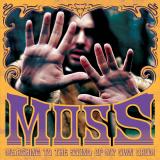
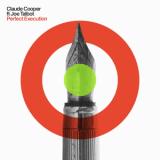
out of Stock

Order now and we will order the item for you at our supplier.

Last In: 8 months ago
23,11 €
Various - Little Bangers from Richard Hawley's Jukebox Volume 2 (2x12")
 
28

In 2023 Ace Records released the album “28 Little Bangers From Richard Hawley’s Jukebox” where the acclaimed Sheffield musician, singer and songwriter compiled together some of his favourite records. These were instrumentals and vocals records that he had collected over the years and found musically addictive. The album received fantastic reviews and allowed his
extensive fanbase to discover and enjoy tracks like Ronny Kae’s ‘Swinging Drums’ and King Curtis’ ‘Hot-Rod’ that were on the juke box in his home.

Now, three years later, Richard has lifted the lid, taken those 7” out and replaced them with another favoured selection. One again, this second version of “Little Bangers” is full of cracking records such as Chet Atkins ‘Boo Boo Stick Beat’, Frank Minion’s ‘Watermelon’, Johnny Todd’s ‘Pink Cadillac’, Sunshine Theatre’s ‘Mountain’, Jet Harris’ ‘Man From Nowhere’, Tracy Rogers ‘Baby’ and the Ventures ‘Fuzzy And Wild’.

A with the first album there are 28 tracks spread across two albums or shoehorned onto one CD. The extensive liner notes see Richard discussing each and every track and what the record or artist meant to him. As he states himself in the introduction, “the record you hold in your hand is the result of a lifetime obsession.”
Listen for yourself and you will discover that this was time well spent.

pre-order now20.01.2026

expected to be published on 20.01.2026

31,72 €
NOW JAZZ NOW - 100 Essential Free Jazz & Improvisation Recordings [1960-80] (BOOK)

London, UK— Musicians Mats Gustafsson, Neneh Cherry, Joe McPhee, Thurston Moore, along with music writer Byron Coley have contributed to an illustrated collector’s guide to records — replete with 277-pages pages of beatific album art, labels, sleeve notes and collector musings on their life-long obsessions of record collecting, with a distinct focus on the recorded history of Free Jazz and Free Improvisation.


Compiling personal archives with discussions and debates of their selections of recordings which could be contenders within a list defined by a parameter of 100 most essential releases presented in chronologic order, acknowledging the music to be preternaturally non-competitive, non-hierarchical, and of equal value. NOW JAZZ NOW is a book for all adventurous music lovers, whether ravenous record collectors, avant-garde jazz enthusiasts, students of radical culture, or simply curiosity seekers in wonder to this music’s illustrious history and lineage.
The gleanings of Cherry, Coley, Gustafsson, McPhee and Moore will enlighten, delight, amuse, and bemuse all who follow their streams of consciousness, knowledge, perception, and, most importantly, unbridled respect and regard for a genre of music dedicated to the dignity of practicing freedom.

AUTHOR BIOS:


Mats Gustafsson is an improviser, musician, composer and record collector aka “discoholic”. His own work is influenced by noise, free jazz, and rock. The artwork from this book comes from his collection and the selection process was curated in part by Gustafsson.


Neneh Cherry is a Swedish singer, songwriter, actor, occasional DJ, and author who recently published her memoirs A Thousand Threads about growing up daughter of West African percussionist Amadu Jah and artist Moki Cherry and being raised by her mother and her trumpeter stepfather Don Cherry. Cherry penned an introductory text for this book.


Joe McPhee is an American jazz multi-instrumentalist who plays tenor, alto, and soprano saxophone, trumpet, the flugelhorn and valve trombone. McPhee has contributed a poetic afterword musing on the expression free jazz.


Thurston Moore is a musician and composer. His latest album Flow Critical Lucidity was a Rough Trade ‘Album of The Year’. Moore recently published Sonic Life: A Memoir (Faber, UK / DoubleDay, US) about his band Sonic Youth.


Byron Coley is a collector and writer based in Western Massachusetts. He turned a serious focus towards free jazz in the early '80s, when working at the Rhino Records store in Westwood, CA. Under the stern tutelage of Jon Williams, Nels Cline, John Breckow and Richard Grossman, he was revelated.

pre-order now12.01.2026

expected to be published on 12.01.2026

50,00€
MANTECA - OYE

MANTECA

OYE

12inchGR38
GROSSO RECORDINGS
07.11.2025
  • QUE PASA
  • OYE
  • GROOVY SAMBA
  • DESCARGA CHINA
  • BOMBA CHÉVERE
  • PARA PELLO
  • THE JODY GRIND
  • COMO FUE
  • DESCARGA CHINA (GROOVE VERSION)

Manteca’s 2014 album, first time on vinyl. Manteca, the London Latin jazz/salsa funk combo, are back with a first-time vinyl release of their brilliant digital album “Oye” from 2014. “Oye” is a collection of heavy-duty Latin music that reaches well beyond the standard salsa or Cuban dance-band style, appealing to anyone and everyone, from mambo dancers to B-boys, jazz brothers to soul sisters! Led by Colombian singer Martha Acosta and bassist Javier Fioramonti, who have played with everyone from Roberto Pla and Candela, to Alex Wilson’s groups and Salsa Celtica, as well as backing Latin legends such as Joe Bataan, Jack Costanzo, Henry Fiol and Azuquita, this band really cooks! “Que Pasa” is smoking Latin funk, this will get your head nodding and foot tapping for sure.“Oye”, a lovely mid-tempo Afrobeat/Latin jazz fusion number with punching brass and super-funky kit playing. There are three cover versions on the album: Horace Silver’s “The Jody Grind”, a 1960s Blue Note Records soul jazz classic. Manteca does it justice, taking the original and turning it into a heavy Mongo Santamaria style funky Latin soul belter. Sergio Mendes’s “Groovy Samba” is also given the 1960s Mongo “Watermelon Man” style Latin soul jazz treatment. Very hip arrangement, and some fantastic brass soloing in there too. The last one is a brave choice. It’s the timeless bolero standard “Como Fue”, which the band plays beautifully. “Para Pello” (“For Pello”), a conga-style big percussive beat that evolved from Afro-Cuban street carnivals. Secondly, “Bomba Chevere”, a blend of Puerto Rican bomba and Colombian cumbia. The big Afro-Cuban track of the album is “Descarga China”, which has two different mixes. One is a descarga funk mix with some heavyweight kit playing and smoking trumpet soloing, while the other is a more straight-ahead Latin jam with Javier’s upright bass playing underpinning the whole number in a very Cachao way. Big shouts to the whole band, which features some of the best musicians from the London Latin music scene of the last three decades. These cats are as good as you’ll get in Latin music from anywhere across the world.This London Latin music gem has been crying out for a vinyl release for over a decade. At last, it's here. Slap it on the turntable, drop the needle on track one, turn the volume up, press play and be ready to dance. Standing still is NOT an option! DJ Lubi (One Jazz / Totally Wired Radio)

pre-order now07.11.2025

expected to be published on 07.11.2025

25,42 €
Molly Nilsson - Amateur (LP)

The word "amateur" originates from the Latin word "amator," meaning "lover" or "admirer". This Latin term is derived from "amare," which means "to love". The French adopted "amateur" from Latin, and the English then borrowed it from French, initially retaining the sense of someone who loves or is devoted to something. Over time, the English usage of "amateur" also developed a meaning related to a lack of professional skill or experience. How did a word derived from love become a slur? Is love really so defenseless? They say love conquers all, but in reality isn’t love quite ridiculous? It has no intention, no motive, no agenda. How could it possibly prevail? It can’t be bought or sold, or so they say.Its mere existence can't be proven or even measured. What an impossible thing. Trying and failing, time and time again, no wonder cynicism always seems to win. I see “amateurism” as a delighted, even foolish, protest. Protest against everything. Of what’s expected of someone, or expected of someone to desire or strive for. To be elite, to be expert, to be professional, to be a master, to excel and succeed. Where’s the joy in that? I just want to have fun. I want to want. I want to love. And keep doing it, forever. I want to have fun, even when it’s tiring and sometimes even heaven is boring as hell. I want to be bad. I want to do my own thing. “I vant to be alone”. I want to be someone so dedicated to their passion that it starts to seem like there’s something wrong with them. All the way. We can take it all the way, and never get it back. ” - Molly Nilsson Amateur is the 12th studio album by Molly Nilsson. Deep in the teeth of a career that threatens to tip into something resembling a “legacy,” Molly Nilsson celebrates with an album recorded instinctively, quickly and bursting with so many moments of emotional brilliance and clarity it may be her greatest yet. Hers has been a career spent reaching out, perennially powerful in her earnestness, a warrior ridiculously defenceless and armed with a glittering sincerity. Shearing herself of the machinations of the music industry, recording at home, writing direct to the heart. Amateur is a jubilee for losers. A treatise in 13 songs, Amateur states clearly that we should live our life with eternal curiosity, offers us an open hand of comradeship out of the rat race. The songs on the album are both some of the most personal of Nilsson’s career and the most anthemic. First single How Much Is The World asks us to re-evaluate value in the face of a Neo-liberal system squeezing the life out of our loves. Pulsing opener Die Cry Lie satirises the commercialisation of emotion in the form of a shout-along diss-track. With a pounding rhythm track held down by gorgeous chord changes, heartbreaker Valhalla carries the torch for the main themes of the album: never growing up, making mistakes with kindness, moving on. When the drums crash in on the line “It’s going to get better now, you’ll see, going to be much better off without me” there is a world of feeling swirling about in the vocal delivery. One reading of the track might be that it’s a break up song but the subtext is classic Molly Nilsson: by living truthfully, making mistakes, we’re active agents against the myriad oppressions of the world. All The Way takes the theme for a run into the eternal sunset. It’s a manifesto for living fully. “Take it all the way, and never get it back” - it’s the process that’s the important point. The journey not the destination. Big Life, follows on like a part 2: An ode not only to Molly Nilsson’s career of endless gigs, endless connections with people, it’s a massive ode for following your dreams, doing it yourself. Closer The Bitter End is a powerful anthem for friendship, another definition of love infused in Nilsson’s work, A beautifully poignant ode to comradeship til the end, it seems to be the songwriter approaching aging, approaching life’s inevitability with the same vigour and earnestness, the same love of life she enjoyed at the onset of her career. There are moments on Amateur shrouded in reverb, slightly out of focus, forcing the listener to step deeper into the Mollyverse.. Nilsson’s open-armed beseeching to the world permeates every beat, every chord. These are songs exploding with life: the chunky, aggressive bassline on the punker Get A Life can’t hide its massive, catchy chorus. The sweeping Swedish Nightmare might be a tongue-in-cheek self-reference, but at its heart it’s a song about the duality of living life large, what is a dream, what is a nightmare? Molly Nilsson says you can’t have one without the other, and why would you want to? Here’s to making mistakes.

out of Stock

Order now and we will order the item for you at our supplier.

Last In: 11 months ago
23,32 €
Recloose ft. Joe Dukie - Dust (Incl. Natasha Diggs / Aroop Roy Remixes)

Recloose’s ‘Dust’ returns to the spotlight on The Remedy Project, with the remaster of the original joined by remixes from Natasha Diggs, Aroop Roy and a never before available accapella.

First championed by Gilles Peterson on BBC Radio 1 in the noughties, ‘Dust’ is now a cult favourite as it effortlessly bridged genres and soundtracked dancefloors across the globe. The track’s warm groove, featuring Joe Dukie’s unmistakable vocals and Recloose’s signature production, cemented it as an underground classic; Dallas Tamaira, occasionally releasing under the alias Joe Dukie, is best known as the lead singer of New Zealand band Fat Freddy’s Drop.

A pioneering figure in the Detroit electronic scene, Recloose (aka Matt Chicoine) first broke through in the late 90s with support from techno legend Carl Craig, releasing on Planet E and later building deep ties with New Zealand’s fertile soul and jazz community. His music fuses house, funk, and broken beat with a distinct warmth and musicality that have made him a trusted name across generations of selectors.

To mark its 20th anniversary, ‘Dust’ is renewed with a package of remixes from some of the scene’s finest tastemakers. Natasha Diggs injects her soulful New York finesse, while Aroop Roy brings his global dancefloor touch. With the two new remixes sitting alongside the both the original record and the accapella, ‘Dust’ is ready to gain a new generation of fans.

out of Stock

Order now and we will order the item for you at our supplier.

Last In: 4 months ago
13,87 €
DANCE ARTS CENTER - DANCE ARTS CENTER PRESENTS
  • OVERTURE
  • JOEY KNOWS
  • EVERYONE WAS TALKING ABOUT YOU LAST NIGHT
  • PHONE GAMES
  • ENTR'ACTE
  • YOU WANT TO
  • VIDEO
  • GOOD LISTNER

Das Dance Arts Center ist ein maximalistisches, genreübergreifendes Musik- und Performance-Projekt der in Los Angeles lebenden Künstlerin Nicolette Norgaard. Angetrieben von Tanzmusik und verwurzelt im Geschichtenerzählen, ist DAC der Ort, an dem Club auf Theater trifft und die Seele des Performers auf das Werkzeug des Produzenten. Ihr Debütalbum ,dance arts center presents" ist ein Konzept-Mixtape im Stil einer fiktiven Broadway-Cast-Aufnahme, komplett mit Ouvertüre und Entr'acte. Es untersucht, wie wir uns in Beziehungen verhalten, uns emotional verkleiden, uns für die Liebe verwandeln und wie die Show manchmal auch nach dem Fallen des Vorhangs nicht endet. Klanglich bewegt es sich in einer Welt aus synthlastiger, grooviger Tanzmusik, die von Indie-Pop-Sensibilität und durchdachtem Songwriting geprägt ist. Jeder Song ist eine Geschichte, und jeder Beat trägt etwas Schwereres in sich, als er vermuten lässt. Aber DAC ist nicht nur aufgenommene Musik, sondern ein sich ständig weiterentwickelndes Live-Erlebnis. Norgaard bringt das Projekt mit der Präzision einer ausgebildeten Performerin und der Freiheit einer Person, die auf der Tanzfläche erwachsen geworden ist, auf die Bühne. Die Live-Show ist theatralisch, narrativ, verspielt und selbstbewusst. Sie bezeichnet es als ,dekonstruiertes Theater" und verwendet von Fosse inspirierte Choreografien, Personas, Metafiktion und Sketche, um etwas zu schaffen, das die Grenzen dessen, was Musik und Theater ,sein sollten", sprengt.

pre-order now24.10.2025

expected to be published on 24.10.2025

22,65 €
Billy Arnell - Tough Girl (7")

Billy Arnell

Tough Girl (7")

7"-Vinyl1001A
Holly
10.10.2025

An extremely rare Northern Soul 45 RPM single originally released in 1965 on the Holly label, Billy Arnell And The Sparkles "Tough Girl" was the product of two childhood friends that lived less than a block apart in suburban Fairlawn, New Jersey in the early 1960s - Billy Smith and Lou Hemsey.

Billy played guitar and sang; Lou played guitar and wrote songs, so they decided to form a band. They added friends Eddie Hoffman on organ and Jack Gullone on drums and began playing lots of gigs locally as Little Willie & The Sparkles. They were young, ambitious, and imagined themselves as the next Beatles. By a stroke of fate, they met Joe Martin of Apex-Martin Distributors in Newark, NJ, who caught the band's live show and was duly impressed. That meeting led to the recording session for the "Tough Girl" single. When they recorded the first version of the song, the producer wasn't happy, nor was Joe Martin - so he fired that producer and brought in the young, up and coming producer, George Kerr. Kerr didn't care much for the band, so they redid the entire thing without Hoffman and Guilone - with just Billy singing and Lou playing guitar.

The pair of old friends were buoyed by session aces Eric Gale on guitar, Bernard Purdie on drums, Bobbie Banks on organ, as well as a bass player whose name has been lost to time. In addition to those changes, they used the studio horn section that Hemsey arranged for, plus two trumpets, two saxes and two vibes players. The resulting single was an infectious amalgamation of rock and soul. Billy changed his surname to Arnell for the 45 release (because he thought it sounded more "show-biz") and the rest is pop history. Arnell later started a record company (Fire Sign Records) and purchased a recording studio (112 Greene Street Recording) in the trendy SoHo section of Manhattan with Steve Loeb.

As for the rest of The Sparkles, Hoffman became a teacher somewhere on Long Island, Guilone graduated from the Culinary Institute of America in Massachusetts and ended up living in Northern New Jersey. Hemsey became a well-known recording engineer, composer (Lou was the one who wrote "Tough Girl"), guitarist, arranger, orchestrator, editor, film director and producer for records and commercials.

pre-order now10.10.2025

expected to be published on 10.10.2025

12,56 €
Fabulous Lover - Remember The Future EP

Adam Wise, you may know, is Fabulous Lover and this new record marks his first for Pete Herbert's Music for Swimming Pools. It's a mature mix of 80s-inspired Balearic electro-funk with a tropical twist straight from his Bali studio. This sun-soaked collection bridges sunset vibes and dancefloor energy with 'It's Lonely At The Top' a funky opener with a squelchy bassline and playful riffs. 'Elevate' douses you in 80s synth sounds that glow warm, and label head remixes into a more buoyant Balearic house beat. Elsewhere is the gentle swagger of 'Low Bounce' and lush synth disco buzz of 'Automatic.' Feel-good grooves, for sure.

DJ Feedback

Ed Templ�:
"Stunning release!!"

Ben Gomori:
"Another beaut from Pete, gorgeous stuff"

Dicky Trisco:
"Nice chilled Balearic vibes"

Pathaan:
"Top release! Top package!"

S/A/M:
"Chunky, squelchy delights just how we like it :)"

Mat Anthony:
"Brilliant EP of 80's infused machine funk"

Justin Deighton:
"Will be playing a selection of these"

Joey Fitzgerald:
"Nice work!"

Bill Brewster:
"It's Lonely At The Top is the best track"

out of Stock

Order now and we will order the item for you at our supplier.

Last In: 4 months ago
20,13 €
Items per Page:

Language