FLO are leading the modern revival of the British girl group — and doing so at a scale not seen in over two decades. With over half a billion global streams, the trio have delivered the highest-selling tour by a British girl group in more than 20 years, becoming the first since the Spice Girls to reach that milestone. They are also the first British girl group to receive a Grammy nomination in two decades, alongside three MOBO nominations in 2026, cementing their status as both a commercial and cultural force. Rather than simply revisiting the past, FLO are reshaping the possibilities for what a contemporary girl group can be.
Comprised of Renée Downer, Stella Quaresma and Jorja Douglas, FLO’s story is one of intention, craft and deep-rooted connection. The trio had long been aware of one another through theatre school circles, social media and shared creative worlds before coming together as a group in 2019. That early familiarity quickly grew into a sisterhood, shaped behind the scenes through years of studio work, vocal development and trust. Raised by strong single mothers and immersed in performance from a young age, each member brings resilience, emotional intelligence and discipline into the group — qualities that underpin both their sound and their dynamic.
Individually, FLO’s balance comes from contrast. Renée is the group’s compass: composed, business-minded and creatively precise, grounding the trio with clarity and vision. Stella is the spark and the glue — sociable, emotionally intuitive and collaborative — shaped by a childhood between England and Mozambique where music was communal, expressive and felt. Jorja is the fire: outspoken, instinctive and vocally commanding, with a natural ear for harmony and arrangement. Their roles shift and evolve, but together they form a unit built on mutual respect, honesty and shared authorship.
That chemistry is central to FLO’s music. Drawing from classic R&B and soul while pushing it forward through modern production, their sound centres vocal harmony, emotional nuance and storytelling that reflects the realities of young womanhood. FLO reject the idea that strength requires emotional distance; instead, they explore power through vulnerability, confidence and control. From independence and self-worth to intimacy and desire, their writing is direct and unapologetically theirs. As Jorja puts it, FLO are “the brains, the heart and the soul” behind everything they do.
The success of their debut album marked a defining moment — not only for FLO, but for British pop more broadly. It confirmed the appetite for harmony-led, female-fronted groups operating with creative agency, and propelled FLO onto global stages, from sold-out headline tours to major festivals and international television. Along the way they have earned respect from R&B legends and peers alike, performing during Grammy Week for icons including Mariah Carey, Brandy and Chaka Khan, and showcasing their vocal chemistry on NPR’s Tiny Desk — a moment that further underlined the trio’s technical precision and emotional depth.
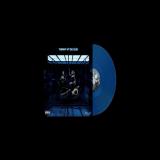
With their next chapter, Therapy At The Club, FLO expand this emotional honesty into a fully realised creative universe. The concept reimagines the club not just as a place of nightlife, but as a site of release, confession and self-possession — encompassing the moments before, during and after the night out. From mirror affirmations and pre-game chaos, to late-night Uber conversations, dance-floor catharsis and the clarity of the morning after, Therapy At The Club captures how women process desire, heartbreak, confidence and healing in real time, together. It is both fantasy and reality: cinematic, fashion-led and emotionally raw, grounded in sisterhood as a form of survival.
Sonically, the new music leans into dark, euphoric R&B and pop with sharper edges, built on vocal mastery and diaristic storytelling. Lead single “Leak It” sets the tone for the era — playful, charged and unapologetically self-aware — exploring what happens when desire spills over, secrets surface and control is reclaimed. Across the new songs, FLO move fluidly between intimacy and euphoria, turning the club into a space where vulnerability is power and feeling everything is the point.
As a trio built on discipline, joy and deep creative trust, FLO represent a new model for the British girl group: one rooted in authorship, harmony and cultural impact. Balancing softness with strength and ambition with authenticity, they are shaping the future of R&B and pop on their own terms. FLO are not looking backwards — they are setting the standard for what comes next.
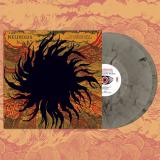
Evolution can be ugly and beautiful, painful and euphoric. An Undying Love For A Burning World is the first new release from Neurosis in a decade, and a potent statement of intent and rebirth - one that marks the first new steps of resolve and resilience.
An Undying Love For A Burning World is an epic album of colossal hypnotism - beautiful, fearsome and utterly compelling in a way that only Neurosis can be. Aaron Turner (Sumac, Isis) joins the band on vocals and guitar, a name whose legacy is intertwined with the band’s own and a true kindred spirit.
“From the moment I first heard Neurosis over 30 years ago, I felt this was the music my heart and mind had been seeking but not yet heard. Now after many years travelling along various musical paths of my own, the singular sound and spirit embodied by Neurosis continues to speak to the depths of my being. It is an honor and a true pleasure to have been welcomed so warmly into a band that not only shaped my perspective on the limitless possibilities of music - but has lived and exemplified the necessity of upholding creative integrity and camaraderie above all else.” - AARON TURNER
Neurosis have never been afraid of change, and here they embrace endless regeneration, surrendering to the emotional exorcism through heaviness and distortion that their music incites. Just as the universe tends towards balance, Neurosis’cacophony of noise, rhythm and dissonance always resolves towards moments of beauty. The addition of Turner's powerful vocals and wildly creative and unhinged approach to guitar proves to be a vital force as Neurosis find themselves again at the mercy of evolution and expression.
On every song in the band’s history, Neurosis shifts restlessly between tension and relief, invoking a feeling both feral and transcendent in listeners. The band describe their songwriting process as an inescapable impulse to create with each other - a need rather than a choice. Indeed, the band insist that their return is “not a reunion - we never broke up.”
The album was recorded by Scott Evans (Kowloon Walled City, Sumac, and Great Falls) at Studio Litho in Seattle during three weekends this winter, and mixed in three days just six weeks before release at Evan's Antisleep Audio in Oakland.
Neurosis will play their first show in seven years on the traditional lands of the Blackfeet Nation in Montana as part of Fire in the Mountains festival by special invitation of Firekeeper Alliance, a non-profit dedicated to reducing youth suicide in Indian Country.
FITM, is a unique festival known for bringing epic music to epic landscapes with the intent of reconnecting and immersing oneself with the natural world, and strengthening our ancestral roots as human beings - an aim which aligns directly with Neurosis’ deep-rooted power.
out of Stock
Last delivered 86 days ago available to reorder, subject to availability
It’s hard to believe that it’s been over 40 years ago that we started out as a cover band in the night clubs of California before writing and recording our own songs and selling millions of albums. Just like our musical heroes The Beatles, Rolling Stones, or even Jimi Hendrix, all artists who honed their craft by learning cover songs from the legends before them, we did the same as youngsters and still enjoy paying tributes and recording cover songs today. HOMAGE is our new album that not only pays tribute to legends but gives us a chance to showcase our lead singer’s diversity as well as the musical dynamics we learned as a band many years ago. And now, our new album HOMAGE is a thank-you note written in sound. An offering to the great singers and songs that shaped the music we grew up listening to and the songs we would eventually write.
Each track showcases Jeff Keith’s incredible vocal ability Something that may have been overlooked throughout our long career. But not by our fans.........!!! HOMAGE isn’t about imitation. It’s about acknowledgment. About tracing the line from influence to identity, from listening to becoming. You ask why ? .....why not! It felt like a good thing to do, it’s been 20 years since we did Real to Reel.....It sparked writing a new original Tesla song called “Never Alone” And it’s what bands are supposed to do ..make music. These songs were picked for various reasons… Mostly because they’re some of the greatest singers of all time: Elvis Presley Freddie Mercury Sam Cooke David Ruffin Etta James James Brown And some of the others because we liked the songs and grew up hearing them on the radio or on our turntables. Anyway, we hope you all enjoy this as much as we did making it....Thank you for all the years ..Keep it Real and keep Rockin!!!!!
Sacred Leather is a traditional heavy metal band from the heart of Indianapolis, consisting of Dee Wrathchild (vocals), Lynn St. Michaels (lead guitar), Cvon Owens (rhythm guitar), Magnus Legrand (bass) and Don Diamond (drums). Following a privately manufactured live cassette, 2018’s debut album »Ultimate Force« and numerous (digital) singles, the new »Keep The Fire Burning« is the band’s most definite statement yet. Produced by the legendary Arthur Rizk (Eternal Champion, Power Trip), every track on the record is a call to arms. High-octane compositions such as “Spitfire At Night”, “Phantom Highways” or “Malevolent Eyes” show that Sacred Leather are true defenders of the faith. All songs breathe the raw power of classic 80s metal. Bassist Magnus Legrand comments: “Judas Priest has been a massive influence on us - not just aesthetically or stylistically, but in their ability to cover a wide range of sounds while always remaining unmistakably themselves. That balance is something we actively strive for: to explore every facet of heavy metal without ever losing our identity. The same can be said for KISS, Scorpions, and Queensrÿche - bands that can rock, rip, soar, go epic, or strip it down to something tender, all while keeping their signature intact. That versatility, anchored by a strong sense of self, is the standard we hold ourselves to.” According to Magnus Legrand, »Keep The Fire Burning« is a clear progression from the debut album »Ultimate Force«: “It’s sharper in its songwriting, stronger in its musicianship, and more focused in its execution. Where »Ultimate Force« laid the foundation, this record pushes further into those same territories with greater intent and refinement. It builds on what we established before, expanding the scope while tightening the strike. As a whole, »Keep The Fire Burning« is a relentless ride through the heart of traditional heavy metal - familiar in spirit, but undeniably Sacred Leather in execution.“
Having built a reputation through an impressive run of standout releases on labels such as Life and Death, United Identities, HOME//GRXWN. and Berg Audio, coupled with an ever-growing presence behind the scenes, Dutch DJ/producer M-HIGH arrives on Up The Stuss for his label debut with ‘What’s Going On’ - a four-track collection that shifts shape as it moves.
A friendship dating back years, with Chris having been a key early supporter of M-HIGH’s productions, regularly digging through fresh sketches and unreleased ideas while both artists carved their own individual paths, that connection now comes full circle here with a heavily anticipated first outing on the label that has long felt inevitable - it was simply a case of when.
Never holding still in one form for too long, he plays with tension and release across the individual tracks, balancing airy, vocal-led moments with weightier, more grounded rhythms, allowing each idea room to unfold without losing momentum. There’s a constant sense of motion that runs through the record from the first minute to the last, yet it’s an EP that showcases distinct sides to his growing sound across each production. Melodic passages drift in and out of focus, giving way to tougher, more angular sections before circling back again.
Subtle nods to classic house touches, from organs to retro-leaning motifs, are reframed through a more off-center lens and direction, while flashes of electro influence and low-slung grooves keep things unpredictable for the later hours. It’s a record that feels built for both peak dancefloor use and also the in-between moments, when the energy shifts, the room resets, and the direction isn’t quite locked yet.
out of Stock
Last delivered 88 days ago available to reorder, subject to availability
Foreign Tongues, the new album from The Rolling Stones, is an incredibly vibrant 14-track collection arriving less than three years after the band’s universally acclaimed, GRAMMY-winning album Hackney Diamonds, which topped charts worldwide and achieved multi-platinum status. The new album is introduced by the upbeat and infectious lead single In The Stars.
Leading up to the announcement, the band subtly built anticipation around the project, including the limited white label release of the track Rough and Twisted, issued exclusively on vinyl under the name The Cockroaches. Circulating among fans and collectors, the release has already sparked excitement and speculation about the sound and direction of Foreign Tongues, offering an early glimpse into the album’s raw and experimental energy. Recorded during an exceptionally creative period, Foreign Tongues was brought to life in under a month at Metropolis Studios in West London, with Mick Jagger, Keith Richards and Ronnie Wood reuniting with GRAMMY-winning producer Andrew Watt, who also helmed Hackney Diamonds. The result is a dynamic and forward-looking record that captures the band’s unmistakable sound while venturing into new sonic and lyrical territory—further cementing their unmatched legacy.
The album showcases standout performances from Jagger, Richards and Wood, alongside their long-time collaborators, including Darryl Jones, Matt Clifford and Steve Jordan. It also features a special guest appearance from Charlie Watts, recorded during one of his final studio sessions before his passing in 2021. Additional contributions come from an impressive lineup of guest artists, including Steve Winwood, Paul McCartney, Robert Smith of The Cure, and Chad Smith from Red Hot Chili Peppers.
Speaking about the recording process, Mick Jagger said: “I love doing these recording sessions in London at Metropolis. It was a very intense few weeks recording Foreign Tongues. We had 14 great tracks, and we worked as quickly as we could. I like the room there because it’s not too big, so you can really feel the passion in the room from everyone.”
Keith Richards added: “The album Foreign Tongues has a connection to Hackney Diamonds, and it was great to be working in London again and to have that London vibe around us. It was a month of concentrated punch. For me, it’s all about the joy of it. I’m blessed to be able to do this—may it continue for a long time.”
Ronnie Wood commented: “The atmosphere in the room was so creative, and the whole band was in top form throughout the process. Very often, we nailed it on the first take. I hope everyone will love it.”
The album’s striking cover artwork is a painting created by the acclaimed American artist Nathaniel Mary Quinn
Newly signed to EMI Records, seven-piece boyband December 10 are ushering in a new era in pop music. Formed on camera during Netflix’s Simon Cowell: The Next Act (released globally on 10 December 2025), the hugely fun, utterly joyful, incredibly charismatic, often rambunctious and completely endearing group consist of Cruz (20), Danny (17), Hendrik (19), John (17), Josh (17), Nicolas (17) and Seán (19).
Within weeks of the series airing, the pace was relentless. December 10 sold out their Introducing! run of live dates across the UK and Ireland, adding extra shows twice in response to demand before all 13 dates sold out within minutes; built a huge online following, with millions of followers across social media; and released their debut single “Run My Way” on 30 January 2026.
Since then, the band have released the singles “Infinity (123)” and “Angel”, landed in the Official UK Top 10 best-selling vinyl singles of 2026 so far, and made their festival debut at Ultra Teens Fest Japan, performing to a crowd of more than 12,000 fans.
Summer 2026 will see December 10 embark on their headline UK and European tour, December 10: The Next Step, (which kicks off in Amsterdam on 26 June and wraps up in Dublin on 21 July,) release their debut EP, On Your Side, on 10 July, and make appearances at Summer Sonic Festival in Japan and Reading & Leeds Festival in the UK.
They’re not just brilliant singers, but accomplished musicians too, playing 14 instruments between them: Nicolas plays guitar and harmonica; Danny plays guitar; Josh plays guitar, cajón and drums; Hendrik plays guitar, bass and piano; Seán plays guitar, piano and harmonica; while John was due to take Grade 8 clarinet and piano this year - until life got a bit busy.
December 10 are very much a boyband for our times: a truly inclusive group representing Chorley, Rochester, Dublin, London, Lisbon and Walsall, with Irish, Brazilian, Indian, Nigerian and Jamaican heritage between them, and musical influences that are just as expansive.Pre-order our debut EP ‘On Your Side’ now!
Ever since the late 1950s bossa-nova revolution, Brazil’s influence on French music has been undeniable. Pierre Barouh, Georges Moustaki and a vast array of lesser known artists, all made the Musica Popular Brasileira (MPB) an axis of promotion at the service of a cool and metaphysical, modern and mixed Brazilian lifestyle. Some were seduced by the poetic languors of the bossa, some were looking for fun, and others just loved the American hybridization of jazz-bossa, jazz-samba.
What is bossa nova? One of its creators, Joao Gilberto said: "Its style, cadence, everything is samba. At the very start, we didn't call it bossa nova, we sang a little samba made up of a single note - Samba de uma nota so .... The discussion around the origins of bossa nova is therefore useless”. It is nevertheless useful to remember that these magnificent Brazilian songs, which the guitarist describes as samba, were shifted and balanced around improbable chords. "I like things that lean, the in-betweens that limp with grace," said Pierre Barrouh, quoting Jean Cocteau.
With emotion, arrangements for violin and supple guitar licks, bossa nova rapidly changed. A transformation that can be heard in the Tchic, tchic, French Bossa Nova 1963-1974 compilation, the result of a cultural reappropriation, which traveled through the United States and supplemented itself in France.
A musical revolution that has remained significant, bossa nova was born in Rio. From 1956 to 1961, Brazil lived through its golden years. In five years, the country had invented its modernist style. Elected president in 1956, Juscelino Kubitschek de Oliveira, an elegant man with a broad forehead, brandished a promising slogan: "Fifty years of progress in five years". He quickly got to work. Not worried about increasing debt, he launched the project for a new federal capital, Brasilia, designed by the communist architect Oscar Niemeyer. Volkswagen opened state-of-the-art factories and created the “fusquinha”, the Beetle. In Rio, the Vespa made its first appearance. The Arpoador Surf Club crew run into the “girl” from Ipanema, Helô Pinheiro - the tanned garota ("chick"), between a flower and mermaid, who at 17 walked by the Veloso bar, where the fiery author and composer, Tom Jobim and Vinicius de Moraes, were getting drunk on whiskey. From then on, bossa symbolized cool.
In 1958, Joao Gilberto recorded Chega de Saudade, which the directors of Philips denied, calling it "music for fagots". The marketing director, who believed in it, secretly pressed 3000 78-inch vinyls and distributed them at schools around Rio, creating a tidal wave.
American jazzmen then took over. In particular, trumpeter Dizzy Gillespie and guitarist Charlie Byrd. In November 1962, the Brazilian Ministry of Foreign Affairs funded a "Bossa-Nova" concert at Carnegie Hall in New York, inviting the genre’s pioneers. Unprepared, the show soon turned to disaster. But the troupe was invited to the White House by Jackie Kennedy. The first lady loved "the new beat" and in particular Maria Ninguem, a song by Carlos Lyra, later covered by Brigitte Bardot.
In Brazil, the 1964 military coup quickly ended this euphoria. The destructive atmosphere that ensued pushed many Brazilian musicians to leave, if not to exile. Thus, Tom Jobim, Sergio Mendes and Joao Gilberto arrived to the United States. In New York, Joao Gilberto met saxophonist Stan Getz. At the time, he was married to the Bahianese Astrud Weinert Gilberto, who had a German father. She had never sung before, but she knew how to speak English. Getz therefore asked her to replace her husband on The Girl From Ipanema. The Getz/Gilberto record with Tom Jobim on piano, was released in March 1964. Phil Ramone, the "pope of pop" was in charge of sound.
Bossa nova arrived in Paris through the classic “guitar-voice” channel (Pierre Barouh, Baden Powell, Moustaki…) But France loved jazz and Paris had already welcomed its American contributors. All these good people were to pass through Saint-Germain-des-Prés. The cabaret l'Escale became the Mecca of Latin American sound where one could find Pierre Barrouh and his friends, such as the Camara Trio, samba-jazz aces, whose only record was published by the Saravah label. With a band strangely called Les Masques (a band that included Nicole Croisille and Pierre Vassiliu, among others), the Camara Trio recorded an interesting Brazilian Sound, including the track Il faut tenir which is present on this tasty compilation of rarities.
Other enlightened musicians can also be found on the compilation, such as Jean-Pierre Sabar (songwriter for Hardy, Auffray, Leforestier ...) and the French pop rock organist Balthazar. In 1975, Sabar recorded Aurinkoinen Musiikkimatka on a Finnish label, which featured the crazy Vai, Vai, included on this record. We are now following the footsteps of Brazilian electronic musicians such as Sergio Mendes, Eumir Deodato or Marcos Valle who created funk and disco sounds on their keyboards and synthesizers. A style that influenced Véronique Sanson when she wrote Jusqu’à la Tombée de la nuit in 1969 for Isabelle de Funès, the niece of Louis and a great friend of Michel Berger - Sanson did end up singing this track on her 1992 Sans Regret record.
The pinnacle of exoticism and travel, Sylvia Fels’ Corto Maltese includes bongos, sea mist and ocean sounds. The title was taken from Jacky Chalard’s concept album written in 1974, Je suis vivant, mais j’ai peur (I am alive, but I am scared), based on Gilbert Deflez’s science fiction novel.
However, bossa nova extended the scope of popularity. "In the 1970s, I was a fan of Sergio Mendes, Getz / Gilberto. I fell in love with this music that I knew because I had been an orchestral singer, " explained Isabelle Aubret, who in 1971 delivered a composite record of covers by the very funky Jorge Ben, Orfeu Negro, Tom Jobim, Vinicius de Morais and Jean Ferrat. "I recorded this album for Meys Records in Paris, far from Brazil, with wonderful musicians, François Raubert, Roland Vincent, Alain Goraguer...". The latter wrote the arrangements for Casa Forte, a very percussive title borrowed from Edu Lobo, one of the initiators of the bossa who spent time in California. "Jazz and bossa came together and produced very rhythmic music. I love singing, it allows me to dream, to have fun, to feel a high on stage, and these songs brought me joy, made me swing, my singing felt like a dance.”
The world tours of French singers and their desire for the tropics, often brought them to Rio with its hills, forests, caipirinhas and tanned bodies. There are surprises though, like this Iemenja (Iemenja is the goddess of the sea in the Afro-Brazilian candomblé religion). Not unlike the composer and musician Jean-Pierre Lang, based in Sao Paulo, Claire Chevalier taught Brazil to Brazil. In 1970, the singer and painter published a 45-inch vinyl, Mon mari et mes amants (My husband and my lovers), under the improbable pseudonym of Clarinha (little Claire). She was then living in Rio, with her husband, Joël Leibovitz, who founded a band called Azimuth, and who owned a record label specialized in "sambas enredos" songs for samba school parades.
For its B side, she asked Pierre Perret to come up with lyrics for a song composed by Carlos Imperial: "Oh goddess of the sea, o goddess Iemenja, I bring a white rose to adorn your long hair ..." . "Perret came to see us, and we had fun, remembers Joël Leibovitz. We wrote Lemenja for fun, we recorded it at the Havaí studio, behind the Central do Brasil the central station. Erlon Chaves, the arranger who worked with Elis Regina, joined us" adding his share of Afro-Brazilian percussions and funky brass to the mix.
There is a common misunderstanding in Franco-Brazilian history: that bossa, admittedly hedonistic, is perceived as funny, even though the poets who wrote the texts are often philosophizing on the human condition. Its French interpreters pull it towards a carnival inspired universe, far removed from its fundamental essence. Thus, Jean Constantin covered the famous Samba da minha terra, an ode to the art of samba written by the classic Bahian composer Dorival Caymmi, renaming it with the enticing title of Pas tant de tchi tchi pompon: "On your pier there is no tchi tchi / when you arch your back, you know everything is alright ”(lyrics by Gérard Calvi). This expedited bossa aims for the absurd, but retains a certain elegance.
Indeed, Jean Constantin was not an idiot, the rather large man had a huge mustache and liked fantasy, (Les pantoufles à papa, Le pacha, inspired by cha-cha-cha-cha, salsa and jazz) but he was also the lyricist of Mon manège à moi interpreted by Edith Piaf, the composer of Mon Truc en plume by Zizi Jeanmaire and the soundtrack of François Truffaut’s 400 Blows. Le Poulpe, published in 1970, from which this bossa is extract, was arranged by Jean-Claude Vannier, an accomplice of Serge Gainsbourg’s Melody Nelson. In short: "There is enough of samba / By looking at the parasol / Because my poor cabeza / Is going to die in the sun".
Even the American actress Marpessa Down, who was at the heart of the bossa nova revolution with her role as Euridyce in Marcel Camus’ film Orfeu Negro, winner of the 1959 Cannes Palme d'or, fed the clichée with Je voudrais parler au petit cuica - "Tell me how you manage to always make people want to dance / It's true, I must admit that I cannot resist your magic" - in consequence, once can hear the cuica, a little drum inherited from the Bantu.
But bossa nova had many angles. Societal, of course, pushing actresses who were symbols of women's liberation like Brigitte Bardot, Jeanne Moreau, or Sophia Loren to engage in the exercise of accelerated bossa. In February of 1963, Sophia Loren made a record in French in Rome, Je ne t'aime plus, featuring the song De jour en jour, a bossa written by two Italians, Armando Trovajoli and Tino Fornai, which was released a little later by Barclay. Bossa accompanied the 1960s, a decade of moral liberation. Ann Sorel, who interpreted La Poupée des favellas, caused a sensation with L’amour à plusieurs, a provocative song written by Frédéric Bottom and Jean-Claude Vannier. As for the actress Andrea Parisy, she displayed her bourgeois cheekiness in Marcel Carné's Les Tricheurs before interpreting Les mains qui font du bien. And Magalie Noël, the friend of Boris Vian, who sung Johnny fais-moi mal, was hired to sing Une énorme Samba, composed by Alain Goraguer (arranger to Gainsbourg, Bobby Lapointe and Jean Ferrat) with lyrics by Frédéric Botton.
But in the end, of what wood is bossa nova made of? The answer is given by Christianne Legrand, daughter of Raymond the conductor, and sister to Michel the composer: "With me, with jà" - jà means "immediately" in Portuguese. In 1972, the singer, an expert in vocal jazz and a member of the Double Six, published Le Brésil de Christianne Legrand. Two songs included on the Tchic Tchic compilation that demonstrate how bossa, jazz, funk, rock, etc. work like a swiss army knife: the music is used to denounce broken systems, or miracles, HLM et ciné roman, Cent mille poissons dans ton filet, two songs from the O Cafona soundtrack, a successful telenovela broadcast, at the time in black and white, on TV Globo. The first was adapted in French by the fighter and friend of the Legrand tribe, Agnès Varda. The second is content with a play on words, jostling them into a summer fun.
Véronique Mortaigne
out of Stock
Last delivered 3 months ago available to reorder, subject to availability
For some time now, followers of Field Medic have been piecing together clues about Floral Prince. The name has been mentioned in late night Twitter hints, secret YouTube leaks, teaser riddles, Instagram live sets, and standalone single drops. This unconventional approach paints a bigger picture for the 11-track project as a whole, set for release October 2nd from Run For Cover Records. Part mixtape, part album, part collection, part musical patchwork quilt, Floral Prince is the latest offering from Field Medic, aka the preeminent Bay Area freak folk artist Kevin Patrick Sullivan. It’s a reflection of his unique approach to songwriting and a creative drive that can’t be contained to the traditional album format. Field Medic’s songwriting rarely slows down; even after the release of his 2019 full-length fade into the dawn and the busy touring schedule that followed, Sullivan still found himself flush with new songs and ideas. As he attempted to earmark certain songs for his next release Sullivan began to chafe at the pressures of a follow-up album. Longing for the spontaneity of Field Medic’s earlier work, Sullivan found inspiration in what he calls the “full-time freestyle” mindset where he writes and records songs on the fly with a four-track, usually with a self-imposed limit of three takes. “This style lends itself to more off-the-cuff lyrics and recordings that communicate their point much clearer to my ears,” he explains. “It’s also fun.”
The process proved surprisingly satisfying, often capturing the diary-like nature of Sullivan’s songwriting more accurately than some of the music he’d been poring over. “The songs born from this method aren’t always ‘hits,’ he says. “But they feel much more important to me…closer to how I really feel.” Some of these charming homespun missives made their way onto the internet, spurring fans to follow the breadcrumbs towards these first glimpses into Floral Prince and the ever-expanding Field Medic mythology. “I realized the songs I was saving for another album were much less focused and effective than some of the freestyles I had been creating and subsequently leaking,” Sullivan says. “I think that’s because I really enjoyed the process of writing and recording the freestyles, whereas the ‘hits’ I was attempting to make were being approached as more of a chore.” Floral Prince officially began to see the light of day through a series of stand-alone singles released throughout early 2020 in tandem with episodes of Sullivan’s homemade webseries, the field medic show. To invite fans further into Field Medic’s unique world of achingly beautiful melodies and conversational lyricism, songs like the atmospheric ballad “better way” and the Alex Menne (pickleboy/Great Grandpa) collaboration “talkin johnny & june (your arms around me)” were shared alongside the YouTube show’s accompanying live versions. Other tracks—like rousing opener “-h-o-u-s-e-k-e-y-z-” and the longing “i want you so bad it hurts”—were repurposed from the fade into the dawn sessions to finally find a home on Floral Prince. Elsewhere “it’s so lonely being sober” exemplifies the unvarnished appeal of the full-time freestyle attitude. The song’s direct lyrics and single-take phone recording preserve the deeply personal storytelling, relatable details, and palpable emotions that make Field Medic’s work so intimate and enthralling.
Although Floral Prince is culled from several years of Field Medic songs, its 11 tracks have a sense of cohesion that can be attributed to Sullivan’s singular vision and willingness to allow the listener into his life. “These songs were written through different seasons of my life but they all share a common theme of quiet, nagging, yet somehow defiant insecurity,” he explains. “To hear them all grouped together reminds me that I’ve always felt more or less the same way, and have had the same obsessive tendencies my whole life that have often led to self-destructive behavior. Maybe this is catharsis.” In the end Floral Prince is actually many things at once: a snapshot of an artist shaking off the perceived boundaries of his medium; a document of years of Sullivan’s life preserved in musical form; the closing of one songwriting chapter and the start of another. Or perhaps as Sullivan puts it, “All songs have their day…”
H- side is etched
The American cable-television industry exploded in the 1980s, pushing broadcasts of diverse programming and emissions of low-laying cultures into homes. Community stations piggybacked on the digital developments of the time, extending their existence through telephony and broadcast a iliates. For those growing up in this time, in locations such as New York City, the localized communications beamed into their homes exposed them to an impressionable array of disparate sounds and visions.
Move into the 1990s and New York was filled to the brim of emergent cultures drawing from this ebullition of communication. From Rammellzee’s shapeshifting to the late Judy Russell and Frank and Karen Mendez’s Nu Groove imprint fusing reggae, poetry and house, nascent ideas emanated from the city walls, from within stores such as Sonic Groove store and on VHS releases such as Stakker’s The Evil Acid Baron Show, a legendary technicolor psychedelic trip along the wildest frontiers of acid house. As scenes expanded and identities developed, such individuals weather the events of the visceral now, expressing themselves right into an unpredictable future.
Function’s long career has seen him uncover a vast range of sonic identities, a mainstay through house, techno and industrial with collaborations with the likes of Regis, Damon Wild alongside his highly influential Infrastructure imprint. With influences deeply tied to pop art, rave and gay scenes, and early memories of block-parties emitting Kraftwerk and Strafe, he found himself seeking out the undercover illegal nights of the 90s on a quest of sexual unearthing, mixing the ever-yearning escapology mission of disco with the influential DJ sets of Jeff Mills.
For his new album Existenz, he marks a clear step away from the corporeal techno of his recent releases. Pivoting around themes of religion, sexuality, trauma and healing, it is a work expansive and celebratory, a clear liberation from a deeply internalized past. Formed from a collection of recordings made in a period from late 2016 to mid 2019, Existenz takes the form of a creative outburst in reaction to a number of traumas - recent, childhood and throughout Function’s life. Life partner Stefanie Parnow assisted the production process in its entirety, providing inspiration, spiritual healing and featuring vocal contributions.
Cosmic synths soar and swoop in ‘Pleasure Discipline’ through towering stacks of rhythm that stutter and creak to a halt before rebooting, a firm robotic response to human intervention. ‘Zahlensender’ reflects a spatial tetris of urban life, as digitalization set within an XYZ matrix confronts the sprawling city. Constant arpeggiated meditations echo synaptic transmissions, e ecting a dissolution of boundaries. ’The Approach’ recalls the unification of the self, a state of delirium non-subjective and smooth, as all connections and functions give way to simple intensities of feeling, crossing the threshold into spirituality. ’Golden Dawn’, featuring Stefanie Parnow, marks a further elevation of dubbed-out euphoria, as once more positive rays emerge. His ode to the effortless short-trip urban navigation 'Kurzstrecke' finds Function in motion, upfront and bold, snapshots of conversation and flickers of light. 'Ertrinken' finds metallic bass jabs swamping snipped synthetic voices, with hidden stores of emotion set as a nod to the history of vocoders as a tool for encrypted military communication. House icon Robert Owens features on 'Growth Cycle' and 'Be', entrenching a celebratory atmosphere over Function's clubwise leanings. Closing track 'Downtown 161' reflects the unmistakeable filtered and squashed interjections of television, and sampled dance vocals - a sound for the curious, dreamers and dancers.
With Existenz, Function reveals an essential body of work, spread over 4LP - thought experiments on the role of identity and spirituality after a lifetime of upheaval and trauma. Leading up until the release date, Function will undertake an album promo tour with select dates - A/V shows at Berlin Atonal and Rural festival in Japan, and three dates as part of his Bassiani residency.
out of Stock
Last delivered 31 days ago available to reorder, subject to availability
Sasha & Franky Wah reunite for second collaborative single, 'Get On My Level'.
The club-ready cut blends marries inviting darkness with meticulous synth craft.
Seasoned electronic favourite Sasha and contemporary trailblazer Franky Wah have shown great creative chemistry in both the studio and the DJ booth: their fi rst hook-up was on Last Night On Earth back in 2020 when they dropped the huge four-track 'Haunted EP.' Since then, they’ve reunited for multiple b2b sets across the globe - from Sydney to Ibiza. Now they have once more combined their respective nous into a new track destined to become an Ibiza anthem this summer.
'Get On My Level' is primed and ready to shake up the dance fl oor. It's powered by a warped, dark bassline that throbs underneath subtle percussion. Plenty of open space lets a moody atmosphere draw you in, while skeletal drums and percussion keep things moving before a big drop, and wispy synths inject future energy as a grainy, ominous voice lurks in the shadows. Dub and instrumental versions are also included to cover all bases.
out of Stock
Last delivered 24 days ago available to reorder, subject to availability
‘Falling Backwards’ is the debut album from Him & Earl via Wah Wah 45s, serving up a mystic brew of desert blues, English folk, Americana and stirring southern soul, with tentacles stretching out into psychedelia and prog, across 11 hot and hazy tracks.
Singer-songwriter Olly Him and DJ, producer and composer Wyndham Earl both have deeply-dug roots in the south coast of England, with the former making his name as a solo artist before exploring his soulful folk/prog sound with a number of live acts, and the latter collaborating on albums and sharing stages with Bonobo, Khruangbin, Alice Russell and TM Juke, having remixes released by Tru Thoughts and Mr Bongo Records and releasing his solo projects on his Time Spun imprint.
The pair first met in 2015 when Wyndham produced some songs for now defunct hypnotic Afro-folk outfit Creatures Of The Deep, of which Olly was a founder member. They instantly clicked, but after the group broke up it was a few years before serendipity brought them back together; a chance encounter at a gig saw them begin hatching plans to make a full album under the name Him & Earl with Olly writing the songs and Wyndham arranging and producing the project.
After so long floating in the creative ether, the connective power of these songs has been strikingly immediate. The debut Him & Earl live show in early 2026, before any tracks had even come out, blew Olly and Wyndham’s expectations out of the water as their five-piece band found themselves toe-to-toe with a sellout crowd – a sweaty room full of happy music fans, on an otherwise bleak January night, throwing shapes to live percussion showdowns, losing themselves in psychedelic guitar and bass wig-outs, and singing along to choruses they’d never heard a note of before.
Since then, the first two singles “Bottled Up” and “Away” have had high profile airplay from the likes of BBC 6 Music’s Huw Stephens and Cerys Matthews, and Radio X’s John Kennedy, adding to widespread tastemaker and specialist support around the world, as excitement builds for the album.The LP’s introspective and philosophical lyrics are brought to life by a sonorous yet strangely uplifting sound palette that morphs by stealth into a darkly propulsive, psychedelic and bluesy trip.
Opening song “Away” taps straight into a key theme of the record – journeying, in both a physical and mental sense, and the quest to move on and embrace the unknown – and its sunny guitars, trumpet and violin barely even hint at the tumultuous sonic adventure that’s set to unfold. A stronger indication comes in the title track,“Falling Backwards”, as its elegant web of staccato finger-picked hook, fluid piano melodies and strings unfurls into a six-minute exploration of what Olly describes as “going through every day normality while feeling close to chaos and like things could fall apart at any moment… when there is a myriad of different things holding everything together and if one thing goes wrong everything can fall apart around it.”
“Better Days” swiftly restores a sense of upbeat calm, with lively Kora and Afrobeat-inspired guitar licks, atmospheric trumpet and a harmony-clad mantra of hope on the horizon; the folky “Bottled Up” continues that blissful notion with undulating finger-picked guitar, earthy clarinet counter-melodies and celestial murmurations of delicately plucked strings. The magnetic pull toward more mysterious horizons comes via the dusty twang of Wild West-esque guitars on “Open Road”, a nomadic journey of self-discovery through spacious sonic plains embellished with eerie flickers of flute and clarinet. This leftward turn gathers pace in the trancelike
psych-prog depths of “Preside”, an instrumental cut at the album’s pivotal halfway point. Hypnotic, guttural desert blues-infused riffs on “Inside” channel the feeling of a psychedelic or spiritual trip where, in Olly’s words, “something clicks and you understand things on a different level – it makes you see inside yourself and see things in a different way.” “Shadow overhead” brings a lighter touch to a darker subject – the feeling of paranoia and being locked away from the world – drawn from Olly’s own experience and also his years of working in and around mental health.
Exuberant horns lend hope to loosely looping suspense on “Blindside” (about being caught out by the unexpected, and searching for something to see or hear to pick you up again) and then mesh with urgent strings, low-slung guitars and subterranean bass on “Around Again”, which explores the modern fight to stay afloat amid the endless churn of information and distractions. Still plumbing the bassy, bluesy depths of this journey into the psyche, “You Can Only Know” is a dreamlike revelation about finding someone or something that helps to make sense of the world. Luminescent synths duck and weave, while a rock-solid bass riff is tracked by a soul-soothing four-part “hey hey” harmony, reassuring as a glowing lamp in the window at the end of a life-changing trip.
Shady Nasty subvert expectations. In a world bound by modded cars, immigrant heritage and digital obsessions, Kevin Stathis, Haydn Green and Luca Watson craft a left-field breed of punk that pushes their formal training in jazz and classical music to its most uncustomary extremes. Influences like King Krule and Low Life surface not as reference points, but as undercurrents absorbed and reconfigured into something unmistakably their own. Debut album TREK has surpassed 2M streams - named one of Rolling Stone Australia's 50 Best Australian Albums of 2025. Fred again.. co-sign ("literally my favourite band in the world right now") drove a major viral surge, leading to collaborative singles "Air Maxes" and "HARDSTYLE 2" (with Fred again.. & KETTAMA), BBC Radio 1 Hottest Record. Sold-out UK debut at The Windmill, London; sold-out album shows across Australia; national support for The Streets (Sydney Opera House Forecourt, Palace Foreshore Melbourne, Fremantle Arts Centre).
Live dates continue into 2026 with Shady Nasty returning to the UK/EU as part of their TREK Tour, hitting up venues in London (Moth Club), Bristol (Strange Brew), Leeds (Hyde Park Book Club), Glasgow (SWG3 Poetry Club), Dublin (Whelan's), Cologne (Garagen), and Berlin (Mikropol), as well as Marrapalooza in Newcastle, Best Kept Secret Festival (NL), and Outbreak Festival in Manchester, before heading to Australia for shows in Brisbane (The Tivoli), Newcastle (King Street Bandroom), Wollongong (UOW Unibar), and Canberra (Fun Time Pony), then back to the UK for All Points East festival, curated by Tyler, the Creator, in August, and a full North American run supporting Militarie Gun (Sept-Oct 2026).
They offer a path towards hippiesque stage shows, classic E-organ hues, excess and Sixties rock flair - played by young faces. Their genre is psychedelic rock - but do not miss out on the subtle Blues and Folk traces hidden in there! Established in 2022, the band is already awaiting the release of their second studio album called "Dawns on Mental Highways" in June and making their way onto the various stages of their home region - the Nuremberg Metropolitan area, Southern Germany. The Citadel - Vintage mixed with contemporary vibes, freshly served psychedelic lifestyle! Album description: Here is the second studio album by the German Psychedelic Rock Band The Citadel.
It is a curious mixture of musical styles reminiscent of the time around 1967, when bands experimented in the studio and paved new paths. So maybe, the album title "Dawns on Mental Highways" reflects the stance towards their music. Or maybe it hints at something different. Who can tell? All you need to do is listen, and there is a lot to hear: The singer seems to have a fragile voice, yet shouts her Dylanesque lyrics angrily from time to time. The organ player soaks half of the songs with a classic acid sound. The guitar player acts a folky one, throwing in acoustic tunes and flute, before bashing into heavy electric riffs. The bass player is unusually jumpy on his Tropicana-fused lines while the drummer dances and stomps easily as needed.
They offer a path towards hippiesque stage shows, classic E-organ hues, excess and Sixties rock flair - played by young faces. Their genre is psychedelic rock - but do not miss out on the subtle Blues and Folk traces hidden in there! Established in 2022, the band is already awaiting the release of their second studio album called "Dawns on Mental Highways" in June and making their way onto the various stages of their home region - the Nuremberg Metropolitan area, Southern Germany. The Citadel - Vintage mixed with contemporary vibes, freshly served psychedelic lifestyle! Album description: Here is the second studio album by the German Psychedelic Rock Band The Citadel.
It is a curious mixture of musical styles reminiscent of the time around 1967, when bands experimented in the studio and paved new paths. So maybe, the album title "Dawns on Mental Highways" reflects the stance towards their music. Or maybe it hints at something different. Who can tell? All you need to do is listen, and there is a lot to hear: The singer seems to have a fragile voice, yet shouts her Dylanesque lyrics angrily from time to time. The organ player soaks half of the songs with a classic acid sound. The guitar player acts a folky one, throwing in acoustic tunes and flute, before bashing into heavy electric riffs. The bass player is unusually jumpy on his Tropicana-fused lines while the drummer dances and stomps easily as needed.
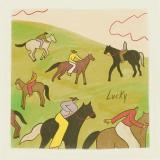
LUCKY is the self-titled debut album by the San Francisco band, born of a collaboration between songwriters Andrew St James (French Cassettes, Juan Wayne) and Peter Kegler (Half Stack). Now a full band featuring, the group combines anthemic indie-rock with y’allternative twang, the perfect soundtrack for long drives and late night revelries.
The story begins when St James booked Kegler’s band Half Stack for a show with Juan Wayne at the Rickshaw Stop in San Francisco. The two immediately recognized each other as kindred spirits and before long they were spending late nights at The Lucky Horseshoe in Bernal Heights, where they pledged to make an album together. Much like Lennon-McCartney or Jagger-Richards, St James and Kegler showed up with their own songs and helped each other dial them in, the songs becoming something totally unique in the process. Pretty soon they recruited Elsasser and headed into the studio with producer Joe Santarpia (Mac DeMarco), where they blazed through more than half a dozen songs in a few days, capturing first takes of raw energy.
Album opener “Falling Through”, written by Kegler on a long drive over HWY 17 to Santa Cruz, pairs talkin’ country vocals on the verse with a hard hitting chorus, eventually ramping up to a phased out guitar solo and a truly epic bridge with gang vocals and an ad lib from St James. Meanwhile, lead single “Traveler” was the first song written for the album, originally a folky shuffle, St James thought it was a goner but Kegler helped recast it as a mid-tempo rocker with a twangy alt-country edge. “Friends” is a true-to-life account of St James’ lifestyle as he shuttled between San Francisco and Los Angeles, paying homage to the City’s legendary House of Prime Rib with a propulsive beat that recalls Girls, Kings of Leon, and the grandiose energy of the E Street Band.
Highly anticipated debutalbum from LUCKY. Press coverage includes reviews and features in Various Small Flames, Glide Magazine, Broken Dreams Club, and more.
“...equal parts laidback swagger and earnest emotion…” - Various Small Flames
“LUCKY is becoming one of the most exciting figures to emerge in alt-country in some time.” - Glide Magazine.
After 25 years out of print, El Baile Alemán — the cult album by Señor Coconut (one of Atom™’s many aliases) — returns on vinyl via Transamericas. What began as a half-joke (“The only way I’d cover Kraftwerk is as chachachá or death metal…”) became a fever-born epiphany: Kraftwerk’s electronic minimalism recast through a tropical imagination — where chachachá, mambo, and cumbia intertwine with glitch, breakbeats, and distressed samples.
Long before reggaeton and trap filled stadiums and playlists, Señor Coconut was already mapping the fault lines between Latin rhythm and electronic form.
Originally released in Japan in 2000, El Baile Alemán caught the ear of Kraftwerk’s Florian Schneider, who unexpectedly championed the project. This reissue has been cut from Atom™’s 2022 remasters, preserving the album’s detail for a new generation of listeners. In the second half of 2026,
Transamericas will also reissue El Gran Baile (1997), his first outing — a rawer but equally idiosyncratic fusion of what Atom™ was going to frame as electrolatino.
out of Stock
Last delivered 57 days ago available to reorder, subject to availability
On June 5th, Tectonic Recordings will release Beatrice M.’s debut LP, Sinking, on a vinyl triple pack and digital download. The vinyl edition will be split across 3 separate 12” vinyl releases, packed in matching printed disco bags. This is part 2 of 3.
Beatrice M. pushes the needle forward for a sound and scene that nestles among a niche that blends UK dubstep, techno, and the golden era of tech house. The Paris-born artist is in their mid-20s and has been building up a grassroots following and plenty of momentum over the last few years, through their Bait label and its output of sonically resonant artists, alongside numerous remixes and collaborative and solo releases for labels such as Tectonic, Tempa, and Rinse. There are plenty of accolades coming in for Beatrice's work too, with notable DJ mixes for respected heavyweights such as Mixmag as well as featuring in Resident Advisor’s best mixes of 2025.
Beatrice is known for making deep explorations into the history of the scenes that have interested them, tracking and highlighting connections between dubstep, tech house, jungle and beyond across various self-produced, one-off radio shows, often taking a journalistic approach to subjects of true passion. They travel across Europe on a packed-out DJing schedule, avoiding air travel, and doing it mainly by train. Many of the LP's tracks started life as sketches put together on these long journeys, as the sights of different countries rolled past the window.
Having taken inspiration from Tectonic artists such as 2562, the label – a home to music that was originally placed in the dubstep-techno crossover spectrum—feels like the perfect place to host Beatrice M.'s debut album Sinking, beginning a new chapter for this kind of sound.
Given Beatrice M.’s reputation as a prolific collaborator, the LP naturally features a few heavy-hitting joint efforts. Bristol-based Sir Hiss features on the subby, 140bpm techno thumper ‘Juice’, while the LP title track, ‘Sinking’, brings forward Beatrice M.’s fresh take on influences from Tectonic’s past in a bass-driven 4/4 number that demands physical movement. ‘Dear Dubstep’ allows a moment to reflect, placing us in a spacious aqua-cave where atmospheric sounds are punctuated by wumping sub-bass, before we surface with ‘Help’ to catch our breath in the melancholy of the moment.
out of Stock
Last delivered 86 days ago available to reorder, subject to availability
Nobody knew. Not the crowd packed into Circolo Kessel that Sunday evening, not even the six musicians on stage. When Giardini di Mirò played on March 19, 2023, it was supposed to be just another homecoming show in Cavriago, the kind of night where you play for the people who’ve known you longest. Some were missing from the audience, though: “Our closest friends stayed home to watch the football match tonight,” Jukka quipped from the stage. “But that’s fine, we’ll deal with them tomorrow.” In hindsight, even Juventus fans who celebrated their 1–0 victory over Inter made the wrong choice.
Seventy minutes in, all the instruments converged into a one-chord riff, driven by the drums and punctuated by screaming guitars. A repetitive rhythm that paired brutal volume with hypnotic precision. Even those at the back of the room felt it: that trance-like state where sound becomes physical. Then the wall of sound collapsed. Guitar feedback lingered in the air for a few seconds before fading into nothing.
This was the last sound Giardini di Mirò made. They haven’t played since, and there are no plans to do so again. But in that moment, nobody knew.
The closing song that night was also the opener of their debut full-length, recorded more than two decades earlier. Its title, A New Start, carries an unintended irony the band would likely appreciate. It is also oddly fitting that their final show took place in the same building where they began. Circolo Kessel, previously known as Calamita, served as the band’s rehearsal space for many years. Yet since their rise to becoming one of Europe’s defining post-rock acts, they had never performed a concert there.
In a fortunate coincidence, Markus Mathis – a longtime fan who had recorded several of their shows before – also captured this final concert using two room microphones and a feed from the mixing desk.
Quasi Casa is the complete, unfiltered document of that night: an “official bootleg” spanning over 70 minutes of purely instrumental music, drawing on material from across their entire career, from the earliest releases to Del Tutto Illusorio. It captures, with striking clarity, the intensity that defined the band’s live performances.
Rather than simply uploading the recording and calling it a day, the band chose to assemble a physical release as a parting gift to their fans. The double LP includes a 16-page booklet with extensive liner notes and visual material.
Futurismo are proud to present DEVO’s NITROUS NIGHTMARE, Halloween Live ‘75. Never before released, or heard in it’s entirety, this legendary live performance is presented here in it’s full chaotic glory on limited edition 2xLP and 2xCD. The live release all hardcore Devo fans have been waiting for, Nitrous Nightmare demonstrates a band harnessing their artistic greatness in the purest of forms. This mythic performance captures Devo perfecting some of their most iconic concepts in the raw. Expertly restored, this live recording makes for a thrilling experience, it also captures Devo as a lightening rod for hostility. On Halloween 1975, Devo took the stage at the WHK Auditorium in Cleveland, in a supporting capacity for jazz legend Sun Ra, to perform for a raucous crowd dressed in the finest of Halloween cliché. Already riding high on Nitrous Oxide and booze supplied by the sponsoring radio station, this unaware horde was expecting to see a slick cover band churning out renditions of Bad Company hits, only to be subjected to an act of subversive performance art that would send the growingly aggravated crowd into eventual meltdown. Physical threats ensued, but Devo played on. Acting as a live companion release to Futurismo’s much lauded Art Devo, the tracklist featured here showcases the origins of de-evolution theory in a live setting. These songs would become some of their most famous material, with this recording believed to be the very first time ‘Jocko Homo’ was performed in front of a live audience; the full 12 minute version documented here is sure to please fans, even if it displeased the urban hippies and horror masked onlookers that evening. Whilst Devo may have felt they were trapped inside a negative energy vortex during that era, it is clear in retrospect that the band was using this energy to carve out the genesis of a sonic and visual art that has truly stood the test of time. The music performed that evening would mutate culture for decades to come, long after the denizens of the auditorium packed away their cheap vampire costumes and returned to their day jobs. Spanning 2xLP’s of unreleased live material, most of which has never been heard before, this wondrous performance draws purely from that integral early history. Mixed and mastered directly from recordings kept in the bands personal vaults, this live collection showcases why Devo was, and still is, one of the most important bands in American history. De-evolution is real. The art of DEVO is real. Here is the evidence. This 2xLP is housed in a gloss laminated wide spined sleeve. It has a tracklist that has been sourced directly from the archives, and contains colour inner sleeves and a fold-out containing archival imagery and liner notes by Gerald V Casale.
Are You Alien's first vinyl missive, a compilation style affair showcasing the work of four label affiliated artists, is genuinely packed to the rafters with cuts designed to be played loud on "deep dancefloors and late-night transmissions". HearThuG kicks things off with 'Relax', a post-punk/dark disco inspired slab of early morning hedonism inspired by DFX's 'Relax Your Body' (which itself borrowed heavily from the KLF's 'What Time Is Love'), before Light Blue File charges towards darkened warehouses on the tactile tech-house/stab-happy rave fusion of 'Guante El En Mic'. Over on side B, Briki opts for squelchy acid bass, trippy vocal snippets and spacey sounds on 'Droppin The Pressure', before Ahmet Mecnun adds spoken word vocals and French Touch flourishes to a deep tech-house groove.
out of Stock
Last delivered 80 days ago available to reorder, subject to availability
ProleteR returns with a warm and playful blend of swing and nu jazz.
The first single, “Things of the Past,” introduces the album with a smooth fusion of neo-soul and sampling, enhanced by subtle swing elements. “Do It” (focus track) leans into a more vibrant electro-swing energy, featuring Lyre le Temps, a major figure in the global electro-swing scene.
The worldwide tour kicks off in the US this May and August, before heading to Europe in September (20 shows) alongside Blockhead and Arms & Sleepers.
Justin K Broadrick (GODFLESH) and Mick Harris (Napalm Death) drop militant, hard techno on split LP.
New album doubles the track count (and runtime) of the duo's last collab.
Stalwart Birmingham, UK innovators Justin K Broadrick and Mick Harris have connected again as JK FLESH and MONRELLA to deliver the warehouse-destroying hard techno LP SHOUTING THE ODDS, five years after their last EP, SEE RED.
Featuring four tracks from each artist, SHOUTING THE ODDS invokes both the feeling of listening to late night pirate radio and sweating in a darkened warehouse as the rafters shake, complete with the perfect amount of analog wow and flutter. Brimming with gnarled, unrelenting kicks hovering between 130–140bpm, the split format deftly showcases both artist's individual strengths, while displaying undeniable commonality.
Broadrick's side leans traditional hard techno, filled with mesmerizing, minimal synth arpeggios and contrasting toplines, all aligned and maligned by shrewd transitions. Harris' section presents more experimental and house influences, using bright, distorted synth hits and a touch of forlorn melody. The tracks take on a life of their own through expert use of filters and just the right amount of delay, stutter, and glitch.
Never before has an album filled with such shining, shimmering synths been so black and threatening. JK FLESH and MONRELLA have hard techno down to a science.
“No-nonsense old school flavoured techno bangers. We're flying the flag for outsider techno." - Justin K Broadrick
out of Stock
Last delivered 4 months ago available to reorder, subject to availability
Harry Romero, Brothers Macklovitch, and Austin Ato team up on Rekids.
Harry Romero and Austin Ato return to Rekids alongside the debuting Brothers Macklovitch, aka A-Trak and Dave 1, with the ‘The Corner’ EP, arriving 5th June 2026. Romero has more than two decades of house pedigree behind him, continuing to refi ne a signature sound rooted in expert drum work and undeniable attitude. With a catalogue spanning seminal imprints from Nu Groove to Classic Recordings and Defected, the Bambossa Records boss builds on his 2025 debut with ‘Nice To Meet You’, once again showcasing his knack for balancing functional, floor-ready grooves with rich musical character.
Joining Harry Romero are Brothers Maklovitch, consisting of legendary turntablist A-Trak alongside his brother, David “Dave 1” Maklovitch of Chromeo, bringing decades of experience across the electronic spectrum, alongside versatile Scottish producer Austin Ato, who previously contributed to Oliver Dollar’s 2025 album on Radio Slave’s Rekids imprint.
Harry Romero, Brothers Macklovitch, and Austin Ato’s ‘The Corner’ (Piano Mix) opens the release, a warm and energetic house cut driven by bold, bouncy drums and jazzy melodic touches, as lively guitar licks and rolling piano lines inject an uplifting, expressive feel primed for the dancefloor. The ‘Deep In Jersey Dub’ follows, maintaining the heat with a more stripped-back approach, where filters and breakdowns build tension before a punchy drop, with teased-out guitars adding to its dynamic impact.
out of Stock
Last delivered 18 days ago available to reorder, subject to availability
The fourth instalment in the Hutson Sevens 7‑inch series finds Home of the Good Groove Records taking a slight detour away from the vaults of unreleased material this time, but back to a pivotal moment in LeRoy Hutson’s creative journey.
Fear not: more unheard gems are on the horizon. But for this chapter, the label rewinds to 1994, a year that marked a meaningful renaissance for the soul legend.
After years of legal battles and persistence, Hutson finally reclaimed partial ownership of his catalogue in 1989 — a hard‑won victory that opened the door to a new era. Though celebrated as a musician, composer, lyricist and performer, the world of publishing was uncharted territory for the musical legend. By 1994, Hutson stepped confidently into that new chapter, signing his first licensing agreement with a Japanese label and publisher.
From that landmark agreement come two recordings now making their debut on 7‑inch vinyl, presented with the care and reverence they deserve.
The A‑side brings us “Lucky Fellow (’94 Mix)”, a track with a storied lineage. First recorded by Maurice Jackson in 1971, it became one of Hutson’s signature moments when he released it on his 1975 album Hutson — a version that remains a fan favourite to this day.
Nearly two decades later, Hutson returned to the studio to revisit the song once more, applying his unmistakable production finesse to craft a fresh, radiant mix. Initially released in Japan on Lucky Fellow: The Best Vol. 2 and then later resurfacing on a Deepbeats Hutson compilation album in 1997.
Now, for the first time, this ’94 version arrives on 7‑inch vinyl — a lovingly curated snapshot of Hutson’s evolution, and a reminder of just how timeless his artistry remains.
Hutson’s “Lucky Fellow” gets a striking reimagining here, trading the warmth of the original for a brighter, crisp production, lifting the melody into sharper focus. While the added vocal riffs don’t just embellish the track — they give it a fresh, expressive identity.
Think of “Lucky Fellow (94 Mix)” as the cool cousin who shows up uninvited and immediately steals the spotlight. It tightens the groove, brightens the melody, and sprinkles in a handful of sly vocal riffs that flip the familiar tune into something delightful and freshly polished.
The flip side of this release digs a little deeper into Hutson’s 1994 chapter, bringing the track “Reality” to the 7‑inch format for the very first time — a moment many collectors and soul devotees have been waiting on.
Originally recorded in 1982, the track spent twelve quiet years on the shelf before finally surfacing on a 1994 P‑Vine CD Hutson compilation. It reappeared twice again on CD throughout the following years and made its first vinyl appearance on a Deepbeats Hutson compilation in 1998.
Nearly two decades later, in 2017, French record label Saph Records reintroduced the track to a new wave of listeners as part of its Unreleased Boogie Tracks 12‑inch series, cementing somewhat of a cult status among Hutson boogie fans.
Cut during the sessions for Hutson’s Paradise era, “Reality” carries the unmistakable sheen of early‑’80s soul — a buoyant, melodic groove wrapped in Huston’s recognisable warmth.
Now freshly remastered in 2026 by UK’s Phil Ward, the track gains an added depth and clarity that enhances its rhythmic glide without losing its vintage charm.
It’s a notable moment in Hutson’s catalogue and a killer selection to finally receive the 7‑inch treatment — a long‑overdue spotlight for a track that has spent far too long in the 7-inch shadows.
out of Stock
Last delivered 3 months ago available to reorder, subject to availability
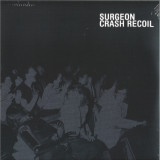
In March 2023, Tresor Records will release "Crash Recoil", a new album by Surgeon. It marks Anthony Child's first techno LP in five years, following a period in which he felt uncertainty in his role as a techno producer and found it tough to locate inspiration. This new album encounters him drawing on spontaneous techniques to arrive at unchartered topographies.
"Crash Recoil" originates from Surgeon's recent live sets, where he experimented with constraints in performing and embracing the twists, turns and paradoxes that arrive from this. Each fresh iteration on consistent MIDI sequences and hardware reconfigured tracks into dierent constellations, creating an inspiring vortex of unpredicted events where ideas could flourish. This new approach allowed him to capture the spontaneous energy of his live shows in a way he had never done before. "This is not a live album, since it has not been recorded in one go during a live performance. In the same way that bands tour songs before going into the studio to record an album, I was able to explore these songs and hone their eectiveness during my live performances before creating a studio version."
The result is eight tracks that emphasise a new techno sound for Surgeon, drawing in references from across the musical spectrum. "I can hear Coil, King Tubby, Detroit Techno and The Cure all wrapped up with 30 years of DJing," Surgeon says of the album. Melancholic hum-like ambiences smudge around unadorned, near-droning basslines, crunching rhythm and percolating arpeggiations. The tracks carry unique and potent locomotion, with a low-slung grind through toughened terrains, breathing with a free spirit, untethered by a studio-based perspective. We hear manifestations of the same raw material across the album, like a textural motif, carving new variants and creating a cohesive work full of recollection.
out of Stock
Last delivered 4 months ago available to reorder, subject to availability
Irgendwann um das Jahr 2024 tauchte Vorhex Angel scheinbar aus dem Nichts auf: keine Social-Media-Präsenz, keine Identitäten, lediglich ihr Name tauchte hier und da auf einem Flyer in Nashville oder New Orleans auf. Wer neugierig genug war, um ihre Live-Show zu besuchen, konnte mit einer Vielzahl unerwarteter Dinge konfrontiert werden, die die Sinne anregten: aufwendige Bühnenbilder, Stroboskoplichter (oder alternativ völlige Dunkelheit), brennende Gegenstände, vor dem Auftritt eingenommene Rauschmittel. Die Musik bei diesen Auftritten passte zu dem Mysterium. Sie war laut, unberechenbar und verdammt viszeral. Wenn die beiden Live-Veröffentlichungen der Gruppe und ihr Debüt ,Heavenly" tatsächlich viszeral sind (Raven Sings the Blues nannte sie ja ,Erben des Strudels von High Rise"), dann ist der Nachfolger ,Drain" sicherlich ihr intellektuelles Werk. Seine sieben Tracks führen den Hörer vom Morgen bis zur Nacht, ein weitläufiges experimentelles Doppelalbum mit überlebensgroßen Gitarrensoli, spacigen Drone-Exkursionen und Momenten von kraftvoller Intensität durch das gesamte Werk. Zum ersten Mal sehen wir, wie Vorhex Angel ihren hämmernden Klangangriff gegen stimmungsvolle und dramatischere Gefilde eintauschen. Die Band - bestehend aus den Brüdern Jake und Jamin Orrall von JEFF the Brotherhood und Kunal Prakash von Silver Synthetic - erweitert die Grenzen des Vorhex-Angel-Konzepts, lädt neue Musiker in ihren Kreis ein, geht mehr Risiken ein und erntet dafür umso mehr. ,Drain ist keine Musik, die man im Hintergrund beim Kochen laufen lässt", warnt Kunal, bevor er zwinkert: ,Vielleicht ist sie etwas für besonders abenteuerlustige Köche." Vorhex Angel verspricht, dass noch mehr kommen wird. Mehr Jams, mehr unerwartete Wendungen - allein in diesem Jahr können wir mindestens eine Tour und mindestens zwei (!) weitere Alben erwarten. Vorerst gibt es ,Drain" zu feiern, sich damit auseinanderzusetzen, damit der Hörer wie die Musik selbst ein- und ausatmen kann, mit reichlich Raum für gedankliche Kontemplation. SPA Sometime around 2024, Vorhex Angel emerged seemingly out of the ether: no social media presence, no identities, simply their name popping up in Nashville or New Orleans on a flyer here and there. Those with enough curiosity to attend their live show could be met with any number of unexpected things to spike the senses: elaborate stage dressing, strobe lights (alternatively, complete darkness), burning things, pre-performance ingestibles. The music at those functions matched the mystery. They were loud, unhinged, and visceral as all hell. If the group's two live releases and debut Heavenly are indeed visceral (Raven Sings the Blues did name them "heirs to the maelstrom of High Rise"), then followup Drain is surely their cerebral offering. Its seven tracks guide the listener from morning to night, a sprawling experimental double album with larger than life guitar solos, spaced-out drone excursions, and moments of potent intensity throughout. For the first time, we see Vorhex Angel trade their pummeling sonic onslaught for moody and more dramatic pastures. The band-revealed to be brothers Jake and Jamin Orrall of JEFF the Brotherhood and Silver Synthetic's Kunal Prakash-push the parameters of the Vorhex Angel concept outward, inviting new players into their circle, adding more risk and generating more reward. "Drain is not in-the-background cooking-type music," warns Kunal, before winking: "Maybe it is for particularly adventurous chefs." Vorhex Angel promises there will be more. More jams, more left turns-just this year, we can expect at least one tour and at least two (!) more albums. For now, there is Drain to celebrate, to sit and chew on, to allow the listener to breathe out and in like the music does, with ample room for cerebral contemplation.
Jeffrey Alexander and the Heavy Lidders return with their best album yet, and a UK tour this August. Press by Silver PR
‘’On the alternate timeline where the Meat Puppets inherited the bulk of the Grateful Dead’s tourheads when Jerry Garcia died in 1995, none of this would be necessary, because Jeffrey Alexander and the Heavy Lidders are a household name for evolving their own musical space that overlays dusty folk, cosmic jazz, deep psych, free improv, and even (gasp!) indie rock, building an audience that ranges from open-eared curiosity seekers to deep committed music weirdos that’s also yielded the Heavy Lidders, an infamous sub-cult of concert tapers that you’re already sick of hearing about. A lot of other things are better over on that timeline, too.
But in this consensus reality (and probably the other one, too), Liquid Donnon catches the Lidders at their heaviest, “heavy” in the Lidderverse being far from a monolithic musical idea. There’s heavy like the album-opening “From Loch Raven to Fells Point,” one of several tracks with elegant and gnarled conversational jams featuring the core Lidders lineup of Alexander alongside guitarist Drew Gardner and bassist Jesse Sheppard (both of Elkhorn) and drummer Scott Verrastro. But there’s heavy, too, like “Calliope Walker” and “Tightroping,” featuring Gardner shifted to dream-space vibraphone, the former with saxophonist Tacuma Bradley, the latter with Christina Carter of Texas noise-psych legends Charalambides on veil-crossing wordless vocals, her first collaboration with Alexander in some 20 years.
But then there’s also heavy like the cover photo of Alexander’s late friend and album namesake Donnon, taken at a Dead show at Rich Stadium in Buffalo in 1989, a spirit threading through the songs and weaving unexpectedly into Alexander’s life decades later, emerging especially when Alexander passed through a near-death experience of his own. But, taken together, the different heavies of Liquid Donnon add up into a state of musical grace, where all the Heavy Lidders from all the universes come together as one. Just, like, imagine.
Convened in 2019 on Alexander’s relocation back to his native east coast, the Heavy Lidders are the latest hard-touring expression for the guitarist’s music, joining a vast and tangled discography (and tape list) that includes the beloved long-running west coast Dire Wolves Just Exactly Perfect Sisters Band and, before them, the Iditarod and Black Forest/Black Sea, as well as a bushel of solo play-all-the-instruments projects, a stint with Jackie-O Motherfucker, sessions with Kemialliset Ystävät and Avarus and others, and you’ll have to keep digging for the rest.
And while it’s not hard to find tapers at Lidders gigs (and they encourage you to be one), or to track themes and songs over Alexander’s many live releases, Liquid Donnon makes a new primary text, the original versions of six new pieces for the repertoire. The album closes with a devastating pairing of “Reservoir Drop” into “The Summer Song,” floating into a duo between Alexander’s guitar and Carter’s voice. Catch a half-dozen Lidders shows this summer, and you might not ever catch them playing it like that again, but you just might open the doorway back to that better place." - Jesse Jarnow (writer, WFMU DJ, producer and host of The Good Ol’ Grateful Deadcast)
2x GRAMMY® Award winning R&B powerhouse Kehlani releases her highly anticipated self-titled fifth studio album, KEHLANI, today on her birthday, April 24, 2026. The project captures her at her most honest, blending soul-baring storytelling with the lush, genre-bending sound that has made her one of modern R&B’s most influential voices. The album was anchored by a trio of defining singles, beginning with “Folded,” a breakout anthem that has become one of the defining R&B records of the decade. “Folded” delivered major award recognition, including 2x GRAMMY® wins for Best R&B Song and Best R&B Performance, an iHeartRadio Music Award for R&B Song of the Year (where she made her debut award show performance), NAACP Image Awards nominations, and three American Music Award nominations, including Song of the Year. The momentum continued with “Out The Window,” which further showcased Kehlani’s emotional transparency and sonic direction. Most recently, Kehlani released “Back and Forth” featuring Missy Elliott. The track pairs Kehlani’s signature vulnerability with Missy Elliott’s unmistakable innovation and energy, serving as the final preview before the album’s release. Kehlani celebrates a landmark year of cultural impact, including a surprise appearance during Giveon’s mainstage set at Coachella in addition to her solo performance at Revolve Festival. With over 20 RIAA certifications, more than 5 billion global streams, and status as a 7x GRAMMY® nominated songwriter and artist, Kehlani continues to solidify her place as one of contemporary R&B’s most essential voices. This year she was also honored at the Femme It Forward 2025 “Give Her FlowHERS” Awards Gala, receiving the Alchemist Award, and recognized as an ASCAP Women Behind the Music Honoree. Kehlani will also be honored with the Impact Award at the upcoming Billboard Women in Music, where she will deliver a special performance in celebration of her influence on music and culture. Kehlani will bring the album to global stages with upcoming festival performances at Essence Festival, Afronation Portugal, Roots Picnic, and more
"Consumação" marks a major change in Domingos' life, a break with his old self. A new found spiritual awareness is channeled into music as often as he is able. Broken and missing relationships, broken PC, but the music still flows in his mind and with the tools at hand: tablet and cellphone. The EP is therefore a transitional document, beginning to show that "my current thoughts are not the same as before". The traditional ID punctuating the music now often proclaims "Solta!". Let go.
The music, though, stays consistent with a left-field vibe, even while the appeal is pretty much universal. "Não Acredito" and especially our longtime favourite "Hot Girl" come out as monuments to loneliness and disillusionment but still with enough room to feel good about oneself. To receive all that as part of the natural course of life. None of these considerations break new ground. "Não Acredito" is simply the very human exclamation of disbelief in face of a ton of bad things happening cumulatively.
"Coração de Pedra" is about a common sentimental feature in contemporary love life: hearts of stone. Face them or develop one. "Leave Me Alone" is simply that: get lost, give me space. But one listens to the song and there's hope in there. Not even buried deep. All these contradictory feelings are played out throughout the EP and become a compositional tool, a signature, although the producer confides he's not too bothered with making the titles correspond to the mood. It just happens. The music is its (and his) own self.
Damian Dalla Torre returns with People Pleaser, a record shaped by movement, collaboration and an ever-deepening relationship with sound as environment.
The Leipzig-based multi-instrumentalist, composer and producer first found wide attention with his 2022 debut Happy Floating, and his subsequent album I Can Feel My Dreams was named the #1 Contemporary Album of 2024 by The Guardian, an accolade that broadened his audience and deepened confidence in his evolving voice. That second album, written between Europe and South America, opened unexpected doors and took Dalla Torre to stages across New York, Japan and Italy. “When you release music, it’s very intimate,” he reflects. “You show your emotions pretty raw. I was kind of scared. But getting so much positive feedback gave me a lot of self-confidence to try out more.”
People Pleaser begins in that quiet shift of confidence.
The title stayed with him for months before he committed to it. “It was a working title for a long time,” he says. “I didn’t actually think I would use it. But this term also felt somehow relevant in connection with the phase of self-negotiation during the development process. Some aspects are related to pressure, others are positive.” The ambiguity felt right. Rather than presenting it as a statement, Dalla Torre leaves it open, an invitation rather than a confession.
At the centre of People Pleaser is collaboration. Guitarist Bertram Burkert, whose playing stretches from classical delicacy to electric abstraction, joined Dalla Torre in the studio for an intensive three-day session, recording a wide palette of textures that would become the backbone of the album. Vocalist Laura Zöschg, a key live collaborator, harpist Babett Niclas, organist Felix Römer, tape experimentalist Markus Rom, marimba and vibraphonist Volker Heuken and Japanese artist Manami Kakudo also contribute, creating a sound that feels intimate yet expansive.
Damian Dalla Torre returns with People Pleaser, a record shaped by movement, collaboration and an ever-deepening relationship with sound as environment.
The Leipzig-based multi-instrumentalist, composer and producer first found wide attention with his 2022 debut Happy Floating, and his subsequent album I Can Feel My Dreams was named the #1 Contemporary Album of 2024 by The Guardian, an accolade that broadened his audience and deepened confidence in his evolving voice. That second album, written between Europe and South America, opened unexpected doors and took Dalla Torre to stages across New York, Japan and Italy. “When you release music, it’s very intimate,” he reflects. “You show your emotions pretty raw. I was kind of scared. But getting so much positive feedback gave me a lot of self-confidence to try out more.”
People Pleaser begins in that quiet shift of confidence.
The title stayed with him for months before he committed to it. “It was a working title for a long time,” he says. “I didn’t actually think I would use it. But this term also felt somehow relevant in connection with the phase of self-negotiation during the development process. Some aspects are related to pressure, others are positive.” The ambiguity felt right. Rather than presenting it as a statement, Dalla Torre leaves it open, an invitation rather than a confession.
At the centre of People Pleaser is collaboration. Guitarist Bertram Burkert, whose playing stretches from classical delicacy to electric abstraction, joined Dalla Torre in the studio for an intensive three-day session, recording a wide palette of textures that would become the backbone of the album. Vocalist Laura Zöschg, a key live collaborator, harpist Babett Niclas, organist Felix Römer, tape experimentalist Markus Rom, marimba and vibraphonist Volker Heuken and Japanese artist Manami Kakudo also contribute, creating a sound that feels intimate yet expansive.
When Collins was forced to cancel due to a sudden health issue, the promoter asked Gilbert to step in as the headliner--even though he had no band or prepared solo set. With only hours before showtime, a backing band was assembled using members of Ten Years After, and Gilbert quickly rehearsed a handful of Jimi Hendrix songs, stretching the solos into epic jams. The result was a spontaneous, electrifying set that turned an unexpected crisis into a memorable performance.
Words have never been my strongest point. I have many ideas in my head, often too many. I can talk a lot about them, but putting them on paper is not really me. I rather just work on my ideas. ‘cause whatever your thoughts are, as soon as it is out there and people start to listen it becomes theirs. What I might have thought up before, and have as concept behind the music, might not be how someone else listens to it. And that’s okay.
If we keep in mind that my music is time focused, and I love it when it isn’t polished too much, so small errors become part of it, the music should speak enough for itself.
“Continuation” is my first studio album since “En de stilstaande tijd” (2019), and shows a rougher sound staying closer to my live sound. I see this as a continuation of my live performances, though this time with various multi-track recordings brought together as a whole, all done in my home studio “Studio De Baviaan” over the course of 8 months.
--- Sietse van Erve / Orphax, Janauary 2026
Cyphon Recordings continue their deep dive into the rich heritage of UK and Detroit electronic sounds with their second label release, this time from Danny Was A Drag King label boss DJ Rocca.
Active since the 90s, the Italian producer is a dedicated explorer of the Italo Disco-inspired sounds native to his home. He’s been plotting his sonic journey for decades, making pit stops at labels across Europe including Rekids,Toy Tonics, Slow Motion, Rotten City Records and Roam Recordings. On top of his solo outings, collaboration has played a big role in his production journey to date. He’s worked with artists like Howie B, Jazzanova and Zed Bias, as well as joining forces on ongoing projects with fellow Italian stalwart Daniele Baldelli and Dimitri From Paris, the latter under the name Erodiscotique.
Now back on his solo pursuits for Cyphon, Rocca proves he’s still very much at the top of his game. The four cuts on ‘Code 041’ explore all shades of electro, from raw, old school machine funk to futuristic cosmic sounds. It’s electro done the Rocca way.
The title track sets the tone. An eerie bass line crawls along, providing a bed for reflective pads to glide and mysterious synth sounds and echoing vocal samples to ricochet above. ‘No Gym’ greets us next, bringing that Italo flair Rocca’s mastered so well. It’s the most vibrant track on the release, matching colourful pinging synths and tropical-tinged melodies with a signature driving acid bass line.
On the flip, ‘The Bigger Lake’ takes the EP in a different direction, on a trip through dark glistening pads, tittering percussion and sub aquatic bass before the dusty breaks and moody, jazzy keys of ‘Omega’ bring the release to a close. Mirroring Cyphon’s label ethos, Rocca showcases the best of the past and present of a timeless sound.
out of Stock
Last delivered 4 months ago available to reorder, subject to availability
On March 20, 1964, legendary American comedian and harpist Harpo Marx joined the Riverside Symphony on stage at a benefit for the Southern California organization. By then, the comic had been in semi-retirement, and after a series of heart attacks in 1961, he was told to stop working altogether. But to a lifelong performer, nothing compared to the feeling of being on stage. Benefit shows, he slyly argued, were not technically work, since he wasn’t getting paid. For the next few years, Marx’s wife and doctors grudgingly went along with the pitch. Harpo Speaks! The Riverside Symphony Concert, out June 5 from Ramseur Records, captures a considerably remarkable, one-of-a-kind performance: The silent Marx Brother, the one whose trademark persona led many audiences to believe he was actually mute, spoke. As Harpo Marx’s first, and last—recorded just six months before his death—live album, Harpo Speaks! places listeners in the room, immersed in the swell of the Riverside Orchestra as Marx performs alongside the symphony and leads them in a narration of Peter and the Wolf. In another unusual move for Marx, he allowed the recording of the show for posterity, though the tapes seemingly disappeared after his death. Harpo Speaks! is the result of heroic archival work. Recently discovered by longtime Marx Brother archivist John Tefteller, he and Marx biographer and expert Robert Bader set out to restore the long lost recording. “The fact that we have a recording is a miracle,” says Bader. “It was not the most professionally recorded thing.
It was very haphazard. The work that was done to rehabilitate it is stunning. It’s as if you’ve found something covered with layers of mold and dirt, got it all cleaned off, and now are able to see something brand new underneath it.” Across the recording’s near-43 minute runtime, Marx, alongside the Riverside Symphony, takes the cheering audience through the delightfully lighthearted “Toy Symphony” and carries them into the softly romantic “Moon Medley,” (a medley of “Fly Me to the Moon” and “How High the Moon,” arranged by his son Bill, alongside his own composition, “Moon Tune”) and a rare instrumental performance of his composition “Guardian Angels.” And then the concert’s true highlight: the near 22-minute long riveting narration of Peter and the Wolf. For the first time, Harpo reveals his voice: deep, yet soft-spoken, refined, yet still retaining the slightest hint of his New York City origin. And, in speaking, he entertained, getting laughs not just for his physical gags, but for the storytelling itself: the dramatic inflections in moments of suspense, the arch mischievousness, and tongue-in-cheek references to Goldwater, Rockefeller, and Nixon.
Soul Jazz Records’ long out of print classic ‘Studio One Funk’ collection is being re-released in three new one-off limited-edition coloured pressing 18th anniversary format editions!
Firstly, a heavyweight special limited edition one-pressing only red 2xLP vinyl + download. Secondly, there is also a new special limited-edition one-off pressing edition red-pressed CD enclosed in jewel case and slipcase. And thirdly there is a very limited unique new one-off pressing red-cased cassette format (200 copies only)! 18 years on from its original release Studio One Funk remains one of our Studio One releases most in-demand titles and like all our earlier special coloured editions is sure to sell out fast!
Studio One Funk is made up of rare and unreleased Reggae Funk from the vaults of Studio One. Ever since the birth of Funk in America, the sound has been an ever-present ingredient in the melting pot of Studio One’s musical output.
The music on this release is a combination of originals, US covers and versions of existing Studio One cuts. Jackie Mittoo shows his appreciation for Booker T and The MGs, the studio group at Memphis’ famous Stax Records with ‘Hang Em High’, itself a cover of a film soundtrack by Dominic Frontiere. Incredibly this version has never before been released. Booker T’s super-funky ‘Melting Pot’ is also covered by the little-known Underground Vegetables.
Other versions include Isaac Hayes’ classic Blaxploitation soundtrack ‘Shaft’ again by Cedric Im Brooks track - another unreleased gem, straight from the tape master. Motown gets a look in with Alton’s stripped-down version of the Spinners classic ‘It’s A Shame’, written by Stevie Wonder and Syreeta.
James Brown is apparent in spirit with the JBs-inspired groove on the super rare cut “Now” by Lee Arab. Lloyd Williams similarly does a fine Kingston-style version of the hardest-working man in showbusiness on ‘Reggae Feet’.
Version-wise, we have ‘Idleberg’, Cedric Im Brooks tough instrumental cut on Horace Andy’s seminal ‘Skylarking’. The little-known Prince Moonie gives us a rare DJ cut of another Horace Andy classic, ‘See A Man’s Face’.
Pablove Black’s cut of Sidewalk Doctor (A/K/A Poco Tempo) is one of a handful of Studio One releases featuring Augustus Pablo’s trademark instrument, the melodica, played by Black himself.
Add to these original cuts from Studio One’s heavyweight session players including Leroy Sibbles, Jackie Mittoo, Leroy Sibbles, Eric Frater, Leroy ‘Horsemouth’ Wallace, Richard Ace, Vin Gordon and more and you have one of the finest selections of reggae and funk you will ever hear.
"This collection goes deep into the Brentford Road vaults and unearths a rake of previously unreleased gems alongside hard to find classics. Heavy and inspirational, totally unique and essentially timeless." Straight No Chaser
"An absolute treasure trove for the collector as well as being great for the ears and feet. Jackie Mittoo's 'Hang Em High' is worth the price of the album on its own." Echoes
"A superb collection that shows how much many Jamaican musicians were influenced by the heavy funk belting out of American studios from the early seventies onwards.” Touch
"The most satisfying listening experience so far in the Studio One series." The Wire
"Rare and unreleased grooves from Jamaica's house of excellence." Mojo
out of Stock
Last delivered 3 years ago available to reorder, subject to availability
1. numbered 100 copies of limited black 180g vinyl made in collaboration with U JAZZ ME Records
2. transparent orange 180g vinyl
LINER NOTES:
" When AJ Lee stepped back into the ring in September 2025 - after a ten-year break - she introduced herself to a new generation of fans with the words: 'If you haven't heard of me, I am your favorite wrestler’s favorite wrestler.' That is exactly what came to my mind as a lead for this blurb when Pokusa asked me to write it. Because that’s what they are: your favorite indie darlings' favorite indie darlings (even though no one uses that term anymore, let alone identifies as such). They are your favorite cool jazzcats’ favorite jazzcats. And they are probably your favorite young jazz act - if you don’t usually (or ever) listen to jazz.
This, I always thought, is their greatest strength. Half the battle (in my eyes) is recording a sick jazz album - one that a jazz magazine would fawn over. The real win is getting someone wearing a heavy metal T-shirt into it; someone who’s never listened to jazz and has never stepped foot in a place like Pardon, To Tu, but heard Pokusa and decided to change that. I am such a person. I didn't learn about jazz because of them, but they’re definitely the reason I started rating it.
Głowy (Heads) is, in a way, a classic album. If someone played it for me and - relying on my lack of knowledge and gullibility - tried to convince me that it was recorded in the Polish Radio Studios in 1975, at Akwarium Club in Warsaw in 1985, at Club Rura in 1989, somewhere in Tri-City in '94, or at Mózg in Bydgoszcz, I would probably believe it. Its 'classicness' goes hand in hand with its timelessness. I could write about how the album fits into the catalogs of Lado ABC, GOWI, or Biodro Records. I could dig for connections to Yass, Tzadik, or a number of other things.
But what Teo, Natan, and Tymek create here is as important in its experience as it is in its music. For me - an artist active in a similar time - each Pokusa album, including this newest release, is a record of a period of time and the experiences hidden between the notes. The Indian spices in food served before a show in Mózg. A headache from all the cigarettes smoked listening to tapes in Eufemia. Marveling at the graffiti over the sink in Młodsza Siostra. The narrow steps at Chłodna 25. The wider but slippery steps to Pogłos. The quirky and uncomfortable steps in Ziemia. The mosquitoes at Ladomek. The dilemma of whether to wear a nice polo instead of a T-shirt to SPATiF. The wonder of turning off Monciak into Dwie Zmiany. Why is a club like this on such a strip? Why is Pokusa playing here? And why do they sound so good?
On one hand, you can find journalists writing that Pokusa grew out of the classic free jazz of the 1960s; some might mention Albert Ayler. On the other hand, there’s Unsound Festival and young critics writing about 'post-jazz.' All of them are correct. This is universalism. This is that timelessness. Whether you pick up this album the day it comes out or in the year 2046, it will be good. In twenty years, people will still reach for it. Of that, I am certain."
Michał Turowski
1. numbered 100 copies of limited black 180g vinyl made in collaboration with U JAZZ ME Records
2. transparent orange 180g vinyl
LINER NOTES:
" When AJ Lee stepped back into the ring in September 2025 - after a ten-year break - she introduced herself to a new generation of fans with the words: 'If you haven't heard of me, I am your favorite wrestler’s favorite wrestler.' That is exactly what came to my mind as a lead for this blurb when Pokusa asked me to write it. Because that’s what they are: your favorite indie darlings' favorite indie darlings (even though no one uses that term anymore, let alone identifies as such). They are your favorite cool jazzcats’ favorite jazzcats. And they are probably your favorite young jazz act - if you don’t usually (or ever) listen to jazz.
This, I always thought, is their greatest strength. Half the battle (in my eyes) is recording a sick jazz album - one that a jazz magazine would fawn over. The real win is getting someone wearing a heavy metal T-shirt into it; someone who’s never listened to jazz and has never stepped foot in a place like Pardon, To Tu, but heard Pokusa and decided to change that. I am such a person. I didn't learn about jazz because of them, but they’re definitely the reason I started rating it.
Głowy (Heads) is, in a way, a classic album. If someone played it for me and - relying on my lack of knowledge and gullibility - tried to convince me that it was recorded in the Polish Radio Studios in 1975, at Akwarium Club in Warsaw in 1985, at Club Rura in 1989, somewhere in Tri-City in '94, or at Mózg in Bydgoszcz, I would probably believe it. Its 'classicness' goes hand in hand with its timelessness. I could write about how the album fits into the catalogs of Lado ABC, GOWI, or Biodro Records. I could dig for connections to Yass, Tzadik, or a number of other things.
But what Teo, Natan, and Tymek create here is as important in its experience as it is in its music. For me - an artist active in a similar time - each Pokusa album, including this newest release, is a record of a period of time and the experiences hidden between the notes. The Indian spices in food served before a show in Mózg. A headache from all the cigarettes smoked listening to tapes in Eufemia. Marveling at the graffiti over the sink in Młodsza Siostra. The narrow steps at Chłodna 25. The wider but slippery steps to Pogłos. The quirky and uncomfortable steps in Ziemia. The mosquitoes at Ladomek. The dilemma of whether to wear a nice polo instead of a T-shirt to SPATiF. The wonder of turning off Monciak into Dwie Zmiany. Why is a club like this on such a strip? Why is Pokusa playing here? And why do they sound so good?
On one hand, you can find journalists writing that Pokusa grew out of the classic free jazz of the 1960s; some might mention Albert Ayler. On the other hand, there’s Unsound Festival and young critics writing about 'post-jazz.' All of them are correct. This is universalism. This is that timelessness. Whether you pick up this album the day it comes out or in the year 2046, it will be good. In twenty years, people will still reach for it. Of that, I am certain."
Michał Turowski
Based in Manchester but individually from all over the UK, the five piece's debut is intelligent, political and acutely aware of what it means to be in a band in 2026. Built around driving guitars and wiry rhythms, tracks like 'Too Much Fun' and 'The Seeds' brim with the tangible energy of their live shows. These are songs written with the energy of a packed room in mind. Having built their reputation the old fashioned way; relentless rehearsals, constant gigging and self releasing music wherever they could afford to, Martial Arts' dedication has shaped both the band's identity and their sound. Across the Craig Silvey-produced (Arctic Monkeys, R.E.M., Florence & The Machine) EP, Martial Arts balance personal reflection with broader political ideas, often turning the lens back on themselves as much as the world around them. The result is a band that combines the urgency of the UK's current guitar underground with a selfawareness and critical thought that feels increasingly rare.