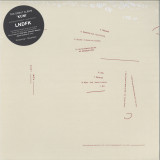
- A1: 2184
- A2: No Sleep Tonight
- A3: Planet Zero
- A4: Welcome
- A5: Dysfunctional You
- B1: Dead Don't Die
- B2: Standardized Experiences
- B3: America Burning
- B4: Do Not Panic
- B5: A Symptom Of Being Human
- C1: Hope
- C2: A More Utopian Future
- C3: Clueless & Dramatic
- C4: Sure Is Fun
- C5: Daylight
- D1: This Is A Warning
- D2: The Saints Of Violence & Innuendo
- D3: Army Of The Underappreciated
- D4: Delete
- D5: What You Wanted
Cerca:being dead
Recorded in 1991 by the quintet of vocalist Billie Ray Martin and Birmingham-based electronic musicians Brian Nordhoff, Joe Stevens, Les Fleming and Roberto Cimarosti, Electribal Soul was conceived as the sequel to the band’s 1990 debut album, Electribal Memories.
Electribal Memories had yielded the hits ‘Talking With Myself’ and ‘Tell Me When The Fever Ended’ and pushed Electribe 101 to the forefront of a crossover electronic scene that fused dance music with pop savvy. They were snapped up by Phonogram, managed by Tom Watkins and hailed as “the next band to meet the Queen” by i-D. The band took the coveted support slot for Depeche Mode on their epochal World Violation tour and supported Erasure at Milton Keynes Bowl. Seen as the next big thing, everything pointed toward enduring critical success for Electribe 101, and the band settled into putting their second album together.
“There was a degree of confidence among us when we came to write the second album,” recalls Billie Ray Martin. “To me, the songs we put down sound like some of our finest moments.” More immediately lush and warm than the dancefloor-friendly structures of Electribal Memories, the clue to the sound of Electribal Soul lies in the second word in its title: soul. Songs like the aching sensuality of opening track ‘Insatiable Love’ or the emboldened defiance of ‘Moving Downtown’ showcase Billie Ray Martin’s distinctive vocal range as it moves from haunting quiet to dramatic, euphoric rapture. Lyrics from ‘Moving Downtown’ had found their way into ‘Pimps, Pushers, Prostitutes’ by S’Express, and the song would appear as ‘Running Around Town’ on Martin’s 1996 solo album. The strikingproduction on the version of the song presented on Electribal Soul suggests classic late sixties soul influences, such as those of legendary Motown producer Norman Whitfield, with the long shadow cast by Kraftwerk never being far away.
‘Deadline For My Memories’, the song that provided the title for Martin’s first solo album, was originally intended for the second Electribe 101 album. Its lyrics document a sense of freedom and liberation from the darkness of a bad relationship, accompanied by jazzy piano and organ sounds over a quiet rhythm and discrete electronics. In contrast, ‘A Sigh Won’t Do’ finds Martin in soothing vocal mode, despite its devastating message about the final ending of a strained relationship, her lyrics framed by restrained and subtle beats and sounds.
To spend time with Martin’s voice on Electribal Soul is to find yourself moved deep into the ordinarily impenetrable emotional corners of your own psyche. “I was into big ballads at the time and listening to all kinds of US and UK singers, and I was also young enough to want to prove myself as a belter of ballads,” explains Martin of the classic soul edge the album showcased.
Electribal Soul heads into darker territory with ‘Hands Up And Amen’. Originally written by Martin in Berlin in the period before moving to London and forming Electribe 101, the song was then perfected and enhanced by the band’s production nous. ‘Hands Up And Amen’ savagely documents the mugging of a woman in Queens, NY at gunpoint, only to resolve itself with a middle section that nods reverently toward gospel tradition. The song coalesces around a regimented break and burbling synths, finally ending with layers of urgent synth sounds.
Meanwhile, a cover of Throbbing Gristle’s ‘Persuasion’ takes us into a seedy world of sexual coercion and creepy infatuation, predating Martin’s chilling version of the track with progressive house unit Spooky two years later. Supported by a minimal, nagging rhythm and barely-fluctuating sounds, Electribe 101’s take on ‘Persuasion’ makes for uneasy listening, even though Martin manages to inject a sort of twisted sympathy for the protagonist as the song progresses.
That Electribe 101 were as comfortable offering complicated, nuanced tracks like ‘Persuasion’ alongside pop house bangers like ‘Space Oasis’ – written by Billie Ray Martin with Martin King before Electribe 101 was formed – is testament to the way the band wove their way effortlessly through electronic music reference points. Framed by light, jazzy piano melodies and string sounds, the energy of ‘Space Oasis’ soars so high that it could easily reach the moon, while highlighting how well-suited Martin’s voice has always been to club music. We hear the same reminder of her dance music credentials on ‘True Memories Of My World’, finding her describing a Hollywood actress who reflects on being used by directors to sell her ‘tears’.
Hooking up with the Birmingham-based Nordhoff, Stevens, Fleming and Cimarosti after placing a Melody Maker ad in 1988 (“Soul rebel seeks musicians – genius only”), it was clear that Martin had found a group that recognised the unique power and importance of her voice. Having worked with genres as diverse as reggae, rock and R&B, the four producers proved to be perfect collaborators, presenting carefully-sculpted backdrops that emphasised the towering emotional dexterity of her voice.
“Listening back to these tracks now, I was reminded of what a bunch of great musicians they were,” says Martin. “They had a rule that if a part still sounded good after a day or two then it could stay. If it bothered the vocals, it would go.” Even more so than on Electribal Memories, Electribal Soul places Martin at the captivating centre of these pieces, surrounding her voice with everything from dubby rhythms to chunky R&B beats to nascent trip hop breaks; wiry, acid-hued synths uncoil gently without ever dominating, while horn samples and lush, disco-inflected strings provide a rich, naturalistic accompaniment for Martin’s emotional outpourings.
The band finished mixing the album at London’s Olympic Studios in 1991. They were assisted by Apollo 440’s Howard Gray on production duties for ‘Deadline For My Memories’, ‘Insatiable Love’ and ‘Space Oasis’, with Gray supported by talented engineer Al Stone. Pre-release promo tapes were issued and an enthusiastic energy started to build around the band’s anticipated second album.
It was not meant to be. Against a backdrop of a worsening relationship with Tom Watkins, and a disinterested Phonogram, instead of receiving a positive reaction to the new tracks, Electribe 101 were swiftly dropped by their label. Electribal Soul languished, unreleased, and the band yielded to pressures that had been building and split up. After collaborating with Spooky and The Grid, Billie Ray Martin went on to release her seminal debut solo album in 1996, with it securing the era-defining hit ‘Your Loving Arms’, while the other group members continued to work together as The Groove Corporation.
Thirty years after the songs were recorded, we’re now finally able to hear what the second and final chapter of Electribe 101’s story sounded like. Electribal Soul shows that the band had really only just got started when they dropped their first album in 1990. Heard only by a select and privileged few, what followed elevated the band’s music to a completely new level, making Electribal Soul musical buried treasure of the most precious and rare variety.
Electribal Soul will be released on LP, CD and digital formats on 18th February 2022 through Electribal Records. The physical formats include extensive liner notes from Billie Ray Martin, and the album sleeve features unseen archive photographs by Lewis Mulatero from the original 1990 sessions with the band that were never used in the sleeve designs for Electribal Memories.
Deadpan Darling is a long-awaited artist project by indie heavyweights
Ceschi and Blue Sky Black Death - 16 years ago, this album was created but never released, and a cult fan following of both artists have bootlegged it for years Finally, Deadpan Darling's self-titled album is being given a proper release on Fake Four Inc.
Halloween has been and gone for another year, but darkwave-inflected hardcore punk never goes out of fashion, right? And frankly, who gives a solitary fuck if it does? Nag’s sinister second album is too busy being an ear-bleeding good time to care about shit like that. It’s too wrapped up asking questions like ‘is this real reality?’ - too caught up in pushing Bernard Sumner minimalism into furiously energetic bruisers and ever-darker corners. It’s the record you’ve been waiting for throughout 2021, whether you knew it or not. This RIPS. Formed in Atlanta, GA, Nag have already dropped an LP (last year’s ‘Dead Deer’, on Die Slaughterhaus) and a handful of 7”s - all must-haves - but they’ve never quite cut loose like this. Vocalist Brannon Greene pitches his delivery somewhere between a caustic holler and a dead-eyed sneer, taking the blank generation for a midnight drive and hurtling straight into a brick wall. Meanwhile, the band nab ideas from no-wave, the wilder ends of Goner Records’ almighty roster, and the best (and sometimes synthiest) aspects of gothed-out post-punk - the resulting concoction may be composed of familiar elements, but it feels like no one else other than Nag. A more hyperbolic and verbose hack than me might say this is the moment that signals the band have ‘arrived’, but not me. I’d just say this is a damn fine record - one of the very best things to have emerged from the wider punk rock mess in the last 12 months. Oh, and I’d add that if you don’t buy it, you may as well sever those things called ears, toss ‘em into the woods and let any of their redeeming qualities seep out into the soil, ‘cause that’s the only way you could continue to argue that they’re serving any useful purpose. But you know, that’s just me. You do you, friend. Actually, scratch that. Buy this record, you idiot.
NEW LIVE ALBUM RECORDED DURING GONG'S 2019 TOUR - DUE FOR RELEASE ON KSCOPE - 2LP 140Gram Gatefold Sleeve
Formed in 1969 by Daevid Allen, one of the founding members of Soft
Machine, classic albums such as 'Camembert Electrique', 'Flying Teapot' & 'You' established Gong as one of the most unique, innovative & experimental rock groups of the Seventies. Before he sadly passed away in 2015, founding Gong member, Daevid Allen, laid
out his hopes for a future Gong, that it should be uplifting, exploratory & a positive force. Kavus Torabi, Fabio Golfetti, Ian East, Dave Sturt & Cheb Nettles, chosen by him, continue his vision.
'Pulsing Signals', recorded live at The Wardrobe in Leeds, The Cluny in Newcastle & Rescue Rooms in Nottingham in 2019 during 'The Universe Also Collapses' tour finds the group in spirited form, unbeknownst to them, it being their final tour before the global pandemic took charge.
Owing to Gong being an international band, lockdown & restrictions on travel made it impossible to convene & work on new music. The band received many requests by fans to release a live album & fortunately enough, the band had multitrack recordings of several shows from the 2019 tour. Bassist Dave Sturt went through all the master tapes & selected the best performances which
became 'Pulsing Signals'.
The album was recorded by Pete Wibrew & mixed by Frank Byng, while mastering was handled by Andy Jackson. The stylish artwork was designed by Steve Mitchell, who has worked closely with the band since 2016's 'Rejoice I'm Dead'.
With touring now set to recommence & bookings going long into 2022 & beyond, Daevid Allen's vision for the future looks set to be fulfilled. 'Pulsing Signals' will be released as a 9-track gatefold double LP on 140g black vinyl.
The Nonesuch debut of Hurray for the Riff Raff (aka Alynda Segarra), LIFE ON EARTH, is a departure for the Bronx-born, New Orleans-based singer/songwriter. Its eleven new “nature punk” tracks on the theme of survival are music for a world in flux – songs about thriving, not just surviving, while disaster is happening. Hurray for the Riff Raff tours North America this spring, beginning March 19 in Atlanta and continuing through April 20 in Nashville, with stops in Austin, Chicago, Los Angeles, and New York, among others. International tour dates will be announced shortly.
For her eighth full-length album, Segarra (they/she) drew inspiration from The Clash, Beverly Glenn-Copeland, Bad Bunny, and the author of Emergent Strategy, adrienne maree brown. Recorded during the pandemic, Life on Earth was produced by Brad Cook (Waxahatchee, Bon Iver, Kevin Morby).
Life on Earth’s first single, ‘RHODODENDRON’, is about “finding rebellion in plant life. Being called by the natural world and seeing the life that surrounds you in a way you never have. A mind expansion. A psychedelic trip. A spiritual breakthrough. Learning to adapt, and being open to the wisdom of your landscape. Being called to fix things in your own backyard, your own community,” says Segarra.
Of the ‘Rhododendron’ video, which was directed by New Orleans-based artist Lucia Honey, Segarra says: “It is really far out and fun. I got this bodysuit that just looks like the inside of the human body. It looks like you’re skinless. It’s in a scene where I’m playing to an audience of plants. Just really absurd, but I put that suit on and I was like man, this feels really good. It feels like, ‘This is who I am. Let’s just take the skin off.’
“It reminds me a little bit of Kids in the Hall,” they continue. “With this ‘Rhododendron’ shoot, something clicked in me where I was like, ‘All I have to do is be myself.’ I had been thinking that I had to be something bigger than myself. I felt like I was just never quite making the mark and then something clicked where I was like, ‘I just gotta be me. I could do that. I could show up and be me. And if people don’t like it, then I don’t know what to fucking tell them.’ It was like a brain shift of, ‘Oh, this can be fun. It doesn’t have to be suffering.’ With so many videos and photo shoots before, it really felt like suffering. I felt so uncomfortable being perceived. I didn’t know who I was.”
Honey adds: “We wanted to create something surreal, playful, and saturated that indulged heavily in the aesthetic of the early ‘90s. Alynda and I had many overlapping visual and philosophical references which sparked the initial collaboration. We wanted to make this video an homage to Gregg Araki’s Teenage Apocalypse trilogy but as a nature documentary crossover. I came across Araki’s work as a queer teenager, and he’s always been a big inspiration. Sex, blood, punk rock, camp, etc.
“We live in a moment where the future is bleaker and more unknown than ever, so there becomes a deep comfort in nostalgia and reliving the past. Through our talks, I realised Alynda’s new album touches on many of these same subjects, but perhaps in reverse; running from a past that is always haunting you. Shifting into a more refined self/identity through confronting one’s trauma and baggage. It was easy to reach collaborative synergy for this video project because we’re both interested in tackling similar issues.”
Alynda Segarra was born and raised in the Bronx, which they left at the age of seventeen, running away from everything and everyone they knew, hopping freight trains or hitchhiking across the country in the company of a band of street urchins. Segarra moved to New Orleans in 2007 and formed two bands: Dead Man’s Street Orchestra and Hurray for the Riff Raff. In 2015, Segarra decamped to Nashville, then to New York, to make her most recent album, 2016’s critically praised The Navigator, an ambitious and fully realized concept album that was her quest to reclaim her Puerto Rican identity. Segarra’s previous records as Hurray for the Riff Raff are Crossing the Rubicon (EP, 2007), It Don’t Mean I Don’t Love You (2008), Young Blood Blues (2010), Hurray for the Riff Raff (2011), Look Out Mama (2012), My Dearest Darkest Neighbor (2013), and Small Town Heroes (2014).
- A1: Audiobooks - Dance Your Life Away
- A2: Saint Etienne - Heart Failed (In The Back Of A Taxi) (In The Back Of A Taxi)
- B1: Doves - Compulsion
- B2: Toy - Dead & Gone
- C1: Confidence Man - Out The Window
- C2: Lcmdf - Gandhi (Andy Weatherall Remix Ii)
- D1: Espiritu - Bonita Manana (Sabres Of Paradise Remix)
- D2: Unloved - Devils Angels
Heavenly Recordings announce the release of ‘Heavenly remixes 3&4 - Andrew Weatherall volume 1&2’, a brace of compilation albums collecting together some of the finest remixes from the label’s long-time friend, collaborator and go-to remixer. These compilations follow ‘Heavenly remixes 1 & 2’, which showcases some of the label’s other great remixes.
By the time Heavenly was born in the spring of 1990, Andrew Weatherall was already an inspirational sounding board, as well as a fellow traveller on the bright new road that stretched out ahead, thanks to the massive cultural liberation of acid house. Back then every energised meeting could be turned into a fortuitous opportunity in this burgeoning new underground economy. Bored of your job? Start playing records out! Start a club night! Get in the studio!
Start a label! Just don’t stand still. Commandments Andrew would follow for the rest of his life.
At the start of things, Andrew was a regular visitor to Capersville - the pre-Heavenly press office run by label founder Jeff Barrett (soon to become Andrew’s manager). It was there that he famously picked up a copy of Primal Scream’s unloved second album and singled out a
track that would later become ‘Loaded’, after being given an instruction to “fucking destroy” it by the band’s Andrew Innes; it was there too that the idea to remix the first Heavenly release
came about.
Andrew’s mix of that first Heavenly record is very much a product of its time. ‘The World According To Sly and Lovechild’ is a swirling bass punch topped with a hypnotic marimba line and the kind of ecstatic diva vocal that you’d hear coming out of the speakers all night at postShoom clubs like Yellow Book.
His take on the label’s next release - Saint Etienne’s ‘Only Love Can Break Your Heart (A Mix of Two Halves’) - would set the template for his next three decades of audio exploration. A drawn-out imperial dub, the track builds and builds with a moody intensity (partly down to the
melodica played by Weather Prophets legend Pete Astor) that’s far more Kingston JA at dusk than Kingston-upon-Thames at kicking out time. It’s both a dancefloor record to get lost in and
headphone psychedelia of the highest order - a perfect example of what he did better than anyone else.
Between 1990 and his untimely death in 2020, Andrew fed more Heavenly bands through the mixing desk than those of any other label. Consistently, he returned visionary music to the
office, often in person for (at least) one ceremonial playback - a ritual that would involve the volume cranked up high and Andrew rocking back on his heels, eyes closed, lost in the alchemy of it all.
Each time, he would warp and twist originals into beautiful new shapes - elasticated club records that might evoke Detroit techno one second and Throbbing Gristle the next, before wheel-spinning into something akin to The Fall produced by King Tubby.
Andrew’s studio adventures would always be guided by that early advice to destroy the source material. It’s why he was the first name that came up when remixes were discussed; the first number on the speed dial. Listening back to these remixes now - to thirty years of glorious outsider sounds - it bangs home again just how fucking good Andrew was.
Scott Lavene is set to release ‘Broke’ on 7th June 2019, an album that is drenched in living in the gutter but staring at the stars.
Lavene has the lyrical smarts and the fairground bark of an Ian Dury, the incisive wordplay of a Costello and the deadpan pop of Madness in his creative DNA, along with the street poetry of an Essex boy version of Lou Reed, the dislocated funk of Talking Heads, the jellied eel lyrical bounce of Chas and Dave, and the inventive surreal see-saw of a Tom Waits, and many other nonconformists.
It’s an intoxicating brew that he makes his own in this collection of wonderful quirky songs that make up ‘Broke’.
These are songs that are full of detail and a life lived in scuffed shoes, rainy towns and the magic of the everyday. Songs about small talk, being skint, doomed affairs and the sweetness of falling in love over a cup of tea.
Creating unconventional backdrops for his street tales Scott builds up shapeshifting rhymes and looping grooves.
El Michels Affair follows up the massive success of their full length Yeti Season with The Abominable EP. A collection of unreleased tracks, alternate takes, and instrumentals from the Yeti Season recording sessions. EMA's blending their signature cinematic soul sound with influences from Turkis Funk and the grittiest of Bollywood soundtracks yielded an instant classic The Fader calls "a carnival of dusty funk and soul". The EP starts off with the unreleased gem "Messy Grass" whose synth intro, peppered with distant yeti cries, gives way to a tremendous backing track that Tamer Pinarbasi's Qanun dances over. On "Cham Cham" EMA invites Piya Malik to the microphone again to share her styled storytelling vocals over the instrumental track from Yeti Season's "Perfect Harmony". Where some of the tunes on the EP have vocals added, some of them have them removed letting the band take center stage; "Poison Song", "Uncut Gem", "Smoked", and "Progress" are all instrumental here giving them a wholly different energy than the vocal versions. The EP is being released with two different covers, each one has two paintings from different Ghanaian mobile cinema artists commissioned through Chicago's Deadly Prey Gallery and are interpretations of the original album artwork. One version is paintings by Stoger and Heavy J, who also contributed cover paintings to the Return To The 37th Chamber album. The other version of the cover is two paintings by Teshie and Farkira.
As the 21st century was born, so Kreator underwent what was nothing less than a seismic creative rebirth. By this time, the iconic German band had released nine studio albums in the 1980s and '90s, which had established them as one of the most important metal names of these decades.In the first period, they had helped to shape and pioneer the thrash scene through such releases as 'Pleasure To Kill' (1986), 'Terrible Certainty' ('87) and 'Extreme Aggression' ('89). During the following decade, the band had opened up exciting horizons of experimentation on albums like 'Coma Of Souls' (1990), 'Renewal' ('92) and 'Endorama' ('99).
Now, though, it was time to move into a fresh era, as vocalist/guitarist Mille Petrozza explains.
“During the 1990s, we were definitely experimenting with what the band were doing. But (drummer) Ventor and I decided that for this album – our first of the new millennium – we wanted to go back to the sort of sound that we had at the start of Kreator. In other words, to get back to the reason why we began the band in the first place.”
There was also new guitarist introduced, as Sami Yli-Sirniö (who had made his reputation with Finnish band Waltari) took over from Tommy Vetterli. The latter (also known as Tommy T. Baron) had joined in 1996 and played on the 'Oucast' (1997) and 'Endorama' albums.
The producer for this album was Andy Sneap, who was now making a name for himself as one of the pre-eminent masters of this art in the modern metal world.“I had known and liked Andy since the days he had been the guitarist in Sabbat, as they were signed to Noise Records as Kreator were on that label. He was our first choice to work on this new project. I liked what he'd done for Testament on their album 'The Gathering' (released in 1999). He had given them a sound they'd never had before, and that really was what we were after. It was natural and organic, and also very modern. I remember phoning him at his Backstage Studios in England (Ripley in Derbyshire). And Warrel Dane, the vocalist in Nevermore, answered. Andy was producing their new album at the time ('Dead Heart In A Dead World', 2000). And when I heard this, again I was very impressed. So, I was delighted when he agreed to produce the new Kreator album.”
The album title came from something Petrozza had read. “In a book I came across a comment that John F. Kennedy said (in 1962). This was: "Those who make peaceful revolution impossible will make violent revolution inevitable”. I thought 'Violent Revolution' would make a good title for an album. So, I kept it in my mind for this record. I think 'Violent Revolution' is a title that makes a real impact.”
One interesting aspect of the track listing was that the 52 second instrumental 'The Patriarch' actually came after the opening song 'Reconquering The Throne'. Fans might have been expected that it would have opened the album. But for Petrozza, there was a logical reason for this not to happen. “We really wanted to lead off with a thrashing track, to show everyone what we were now doing musically. After 'Endorama', it was important that everyone should recognise this was a new era for Kreator.”
'Violent Revolution' is without question an excellent album. While in some ways it does hark back to the glories of the band's earlier days, nonetheless it does not sound at all nostalgic. The performances and production values are very much part of the contemporary era, and the strength of the compositions themselves are of the highest values. Rising to the challenge offered by a new generation of ambitious metal bands, Kreator proved they were far from being a spent force. Unlike so many of their peers, here was a band who still had so much creativity to offer, and were also clearly excited themselves by what they were doing. And when you hear the band themselves enjoying the entire process, then you know this is a bona fide revitalisation.
- 1: Anders P. Jensen – Gamut (Uddrag)
- 2: Ib101 – Real (Demo)
- 3: The Bleeder Group – Here Come The Dead
- 4: Small White Man – The World To You
- 5: Eric Copeland – Fool
- 6: Homies– Live Tomorrow Edit
- 7: Bona Fide – Slouching Towards Bethlehem
- 8: Smerz – Før Og Etter
- 9: Yangze – Keep Me Cold
- 10: August Rosenbaum – Selfish (Selma Harp)
- 11: Bishbusch – Svl Lvn
- 12: Liss – My Lovin
- 13: Søren Kjærgaard – Hiatus 7
- 14: Baby In Vain – Unlikely
- 15: Puyain Sanati – The Rest Is Silence
- 16: Astrid Sonne – Tiden Der Gik
- 17: Joanne Robertson – Doubt
- 18: Ydegirl – Yde In Me
- 19: Søren Kjærgaard – Hiatus 3
- 20: Varnrable – There Are So Many Things Without Any Meaning
- 21: Gullo Gullo – Love Boat
- 22: First Hate – Vampire Boy ¯\_(ツ)_/¯
- 23: Søren Kjærgaard – Hiatus 8
- 24: Iceage – Lord Knows Best
- 25: Collider – When Will It End
- 26: Dane Ts Hawk – Tribute To Cockpit Music
- 27: Søren Kjærgaard – Hiatus 6
- 28: Kh Marie – Hvor Mange
- 29: Thulebasen – Detroit
- 30: Excepter – Abelene
Copenhagen based label Escho release “Escho 15 år: Burgers for my new life” - an extensive compilation of exclusive material for their 15th anniversary (2005-2020). The compilation gathers music by all the currently active artists of Escho - both Danish and international - 27 artists in total. Contributing artists for the compilation are (in alphabetical order): Anders P Jensen, August Rosenbaum, Astrid Sonne, Baby In Vain, BishBusch, The Bleeder Group, Bona Fide, Collider, Dane TS Hawk, Eric Copeland, Excepter, First Hate, Gullo Gullo, Homies, iB101, Iceage, Joanne Robertson, Kh Marie, Liss, Puyain Sanati, Small White Man, Smerz, Søren Kjærgaard, Thulebasen, Varnrable, Yangze and Ydegirl. About Escho and the compilation: The Escho sound was born 15 years ago in small apartments around Enghave Plads, a slightly run-down square at the west end of Vesterbro, Copenhagen, past the kebab shops and the porno shops and the drunks. A few years earlier, as teenagers, several members of the Escho crew had made extremely strange, crisp metal in a very popular band. Escho was a promoter and booking agent as much as it was a label in the early days. They put on small shows to foster and hype the local scene and they brought important performers from all over the world to Copenhagen for the first time. Black Dice, Gang Gang Dance, White Magic, Excepter, Hype Williams, Boredoms, Charles Hayward, they rippled through Copenhagen after they came. Eric Copeland stayed for months. Lorenzo Senni, now well known as a vanguard dance producer, brought his high-school hardcore band to Copenhagen. Escho found and asked these artists to play. And Escho played their humble part in giving sound back to the world. Iceage, Posh Isolation and the Mayhem scene went global. Escho is a lot about being in Denmark, what that sounds like, and projecting it for anyone to hear. Across its releases, Escho’s aesthetic has allowed for the amateurish and the obsessive, the soft and the hard. Escho is about the power of shared experimental experience. Escho has been going for such a long time that the kids who started it are now twice as old as they were when they came up with the name, the idea, the desire to start something. Much younger people, generations younger, work at the label. The world has transformed since then. Escho was born in a period of time where alternative and underground music existed on a private, separate plane to mass culture, and it now finds itself in a time where mass culture and the underground are porous. Tribalism and niche knowledge has been blended by the internet, erasing the border between mainstream and underground modes. Alternative thinking takes many forms now, and new artists continue to expand and interpret the sound of Escho, carrying with them the same curiosity that lit the first Escho sparks 15 years ago. As a whole, this compilation — it is important to note — is jagged in form and tone. It is not even close to a conventional scene compilation, where the sound of a clan flows together. This record doesn’t flow like that. And this, fittingly, makes this anniversary album a ‘classic’ Escho release, because conventions about form and presentation are thrown out the window and new conventions proposed. It is a reminder that Escho quietly remains an ongoing art project as much as anything else. More than its form and tone, however, this compilation is jagged because it is a document of today. It is not final, or conclusive in any way, because the contours of contemporary music are boundless. It’s jagged because Escho has been to a million shows, and put on a million shows, and still loves going to shows. It is a picture of pluralism, discovery and openness. It makes a case for having ears, and making art, and propagating this so that successive generations of young people do it too. This is exactly as it was in the beginning
[v] 22 First Hate – Vampire Boy ¯\_(ツ)_/¯ [2020 Demo]
In 2020 Brooklyn's Holy Hive introduced us all to something we didn't know we needed. Homer Steinweiss' thickly pocketed drumming paired with Paul Spring's floaty falsetto vocal produces a sound that's like a salve. It's been dubbed Folk Soul and Holy Hive not only expertly overlay the more apparent musical aspects of folk and soul-but they also draw from the more profound: being able to pull traditions from the past and make them their own. When Homer wasn't playing drums for Lady Gaga or Adele or Bruno Mars, he'd produce Paul's solo folk records. Along with original bassist and frequent collaborator Joe Harrison, these sessions proved to be Holy Hive's foundation. And their fi rst record, Float Back to You, expertly combined what each musician does best: Paul's heady, reflective approach to folk with Homer's universal classic soul sound. With their new record released on Big Crown, Holy Hive's beautifully simple-and-sparse Folk Soul sound is back-but updated. With new influences and the challenge of creating and capturing music during a global pandemic, this new self-titled album, is more personal, more reflective. They describe three distinct phases when piecing together Holy Hive: this first stage was pre-pandemic in California while traveling as a group, then-like the rest of us-they were separated, creating together but apart, and lastly an explosion of output once they reunited in New York. There is a natural but subtle evolution for Holy Hive on this record. Homer and Paul drew from new and maybe more obscure-yet-honest influences. It's still very much Folk Soul-how could it not be. But, like all artists, they've taken in what they've made and how they've made it, only to push it into new places. We know of Holy Hive's ability to lyrically convey the abstract and complex in poetic and palatable ways. But where the first record was soulfully silver-tongued with chill songs about love and affection, Holy Hive widens the lens with these novel influences, reflecting the points both Homer and Paul are in their own lives.
- A1: Color It Easy 2 27
- A2: Story Of My Life 2 36
- A3: Golden Crown 3 13
- A4: Ain't That The Way 2 53
- A5: Runaways 3 34
- A6: Deadly Valentine 3 56
- A7: I Don't Envy Yesterdays 2 21
- B1: A Wind Rose 2 21
- B2: All I'd Be Is Where You Are 3 05
- B3: Great Chains 3 12
- B4: Cynthia's Meditation 1 23
- B5: Brooklyn Ferry 2 55
- B6: Circling The Surface 1 50
- B7: Starless 3 00
- B8: Star Crossed 4 04
LP[21,39 €]
LTD. CLEAR PINK & BLUE SPLATTER VINYL
In 2020 Brooklyn's Holy Hive introduced us all to something we didn't know we needed. Homer Steinweiss' thickly pocketed drumming paired with Paul Spring's floaty falsetto vocal produces a sound that's like a salve. It's been dubbed Folk Soul and Holy Hive not only expertly overlay the more apparent musical aspects of folk and soul-but they also draw from the more profound: being able to pull traditions from the past and make them their own. When Homer wasn't playing drums for Lady Gaga or Adele or Bruno Mars, he'd produce Paul's solo folk records. Along with original bassist and frequent collaborator Joe Harrison, these sessions proved to be Holy Hive's foundation. And their fi rst record, Float Back to You, expertly combined what each musician does best: Paul's heady, reflective approach to folk with Homer's universal classic soul sound. With their new record released on Big Crown, Holy Hive's beautifully simple-and-sparse Folk Soul sound is back-but updated. With new influences and the challenge of creating and capturing music during a global pandemic, this new self-titled album, is more personal, more reflective. They describe three distinct phases when piecing together Holy Hive: this first stage was pre-pandemic in California while traveling as a group, then-like the rest of us-they were separated, creating together but apart, and lastly an explosion of output once they reunited in New York. There is a natural but subtle evolution for Holy Hive on this record. Homer and Paul drew from new and maybe more obscure-yet-honest influences. It's still very much Folk Soul-how could it not be. But, like all artists, they've taken in what they've made and how they've made it, only to push it into new places. We know of Holy Hive's ability to lyrically convey the abstract and complex in poetic and palatable ways. But where the first record was soulfully silver-tongued with chill songs about love and affection, Holy Hive widens the lens with these novel influences, reflecting the points both Homer and Paul are in their own lives.
LP is limited to 1000 copies, black vinyl. Swansea Sound started in the middle of lockdown. They realised that fast, loud, joyous, angry indie-pop punk was the answer to being stuck indoors. Who needs introspection? Hue Williams is reunited with Pooh Sticks partner Amelia Fletcher (ex- Talulah Gosh, Heavenly). Rob Pursey (also ex-Heavenly) and Ian Button (Wreckless Eric’s live collaborator) provide the noise. Swansea Sound are the fast, acerbic and joyous past, present and future of indie. Four of the tracks were released as singles, all of them now impossible to obtain. ‘Corporate Indie Band’ was a limited edition cassette, ‘I Sold My Soul on eBay’ was a one-off lathe cut that got auctioned on eBay (with a £400 winning bid), ‘Indies of the World’ was a 7” inch single that briefly hit the UK physical charts, but immediately sold out and plummeted back out again. And then there was ‘Swansea Sound’: a requiem for a lost radio station; an anti-corporate lament - another limited edition cassette single. First track Rock N Roll Void gives a three minute revision session, just in case you’ve forgotten about The Ramones, The Kinks, The Buzzcocks and the brief explosion of indie noise pollution of 1986. Some of the songs are reflexive – ‘Swansea Sound’ and ‘The Pooh Sticks’. (Who else was going to write a tribute to The Pooh Sticks?) Others are searching for hope in the digital desert – ‘Let It Happen’, ‘I’m OK When You’re Around’, ‘Pasadena’, ‘Angry Girl’. ‘Je Ne Sais Quoi’ is pure pop throwaway fun. The others songs are dead catchy too, they just happen to express a sickness and a contempt for the state of things. ‘Corporate Indie Band’ is about a group who have mortgaged their creativity to a major label and sold their identities to an online marketing team of public schoolboys. Freedom of Speech takes a look at three contemporary ‘alternative’ music stars and considers how they’ve responded to BLM, the pandemic and the rise of right-wing populism. ‘Like self-serving arseholes’, is the unfortunate answer. (You won’t struggle to work out who the three ‘alternative’ stars are.) Swansea Sound took their name from a well-loved local radio station when it was given a corporate makeover in 2020. They even used the radio station’s abandoned logo. Like the indiepunk pop songs, something modern acidic and angry has taken up residence in a familiar, borrowed frame. You can throw yourself around to Swansea Sound like it’s 1986, but if you catch the lyrics you’ll remember you’re in 2021. (Sorry about that.) The Rum Puncheon, a notorious pub in Swansea, closed down decades ago.
We used to enjoy presenting Chapelier Fou's work using the idea of music in the form of a treasure hunt. However, while the phrase in itself it still just as relevant today, we would never have imagined that it would become such an integral part of one of his albums. Or two of his albums to be perfectly exact - Méridiens and Parallèles. Two records with twelve songs each which answer each other back in the form of anagrams. They are like the two sides of the same planet - similar but simultaneously so different. They need to be discovered one after the other taking the time necessary to travel through the sound territories produced by his imagination. The starting point is a sombre night in Uqbar… Chapelier Fou's opening reference to Borgès was obviously not made by chance. He subsequently confided in us the objective of his diptych, namely to combine reality with fiction to question certainties and our relationships with the imaginary sphere. He has continued with his traditional classical-contemporary electronic approach which, although now known to a wide audience, has the advantage of opening up a whole range of possibilities right up to the infinite scale. Moving away from an "État Nain" (Dwarf State) to take refuge on an asteroid...Throughout Méridiens, each composition can be seen as a universe in itself or a specific landscape with its own temporality. Proof of this is the introduction to the chamber music format composed for and performed by only strings which can only be given the date we want to give it. This is "État Nain" in which violins are played like guitars. In some parts we find the spirit of the Penguin Cafe Orchestra and the idea of cheering up classical instruments and not taking everything too seriously. In other parts, we find something close to a mischievous and childish unplugged grunge anthem that could be from the French series Les Shadoks. This mischievous view of things is shown to full effect in Am Scharchtensee. The introduction shows Chapelier Fou's whole classical universe and mastery of orchestration in which "modular" electronics provide a subtle and discreet backdrop. Then, the record suddenly switches to a surrealist dialogue between these classical sounds and modular synthesizers with the flavour of the German pioneers Kluster/Harmonia to name but one example. Timelessness and imaginary places. La vie de cocagne confirms this choice of total freedom. It's traditional music with old sounds, a kind of forgotten bourrée (old French dance) in which electronic sounds disturb the established order and thus reach another musical dimension. Le méridien du Péricarde followed by Désert de Sonora push this idea of a trompe l'oreille and a hall of mirrors even further. The latter track ends almost like a catchy 80s melody and we can no longer find any logical meaning. We let ourselves be carried away by this profusion of madness and are a little amazed by this mastery of sound, composition and space. It sometimes all seems like a succession of conjuring tricks. Chapelier Fou takes not being serious very seriously indeed. The end song Everest trail is the perfect conclusion, a deadpan track in which the primary aspect of a totally classical melody in all its straightness is underpinned by a permanent exchange of electronic tweets which mocks the main musical posture. This impertinence harks back to Pierre Schaeffer who directed the ORTF's very serious experimental department in another era and allowed the development of Jacques Rouxel's series Les Shadoks thus introducing the general public to the notion of concrete music. This is also perhaps why Louis Warynski's stage name is French – because he has opted to use his French musical heritage. Thus the first singles selected from this album, Constantinople with its groovy and jazzy allure and Le Triangle des Bermudes evoke composers like Michel Magne or Michel Colombier both of whom have totally open minds and consider all music to have the same importance, namely that of sound. In absolutely all the tracks that make up Méridiens, you will find at least one detail - a pattern, melody, sometimes a simple sound - that will draw you back to explore it a little more. And the words are carefully weighed for sure. It's quite simple. This is undoubtedly his most hypnotizing and catchy album. Chapelier Fou has become a complete master of his own universe. He draws the start and finish lines himself and no one can follow him in a field that now belongs to him alone. Composed imaginary spheres, illustrated territories...Music is just as meaningful as the more visual arts. Therefore the artwork of Méridiens had to project each of the twelve tracks considered individually and not just the whole album as such. Chapelier Fou therefore asked his old friend the contemporary artist Corentin Grossman to create twelve windows to represent glimpses of the twelve worlds composed for the record. Windows or mirrors when it comes to that? You can never be sure of anything...Space OK. But what about time? The years go by and sometimes we forget that fact. But a simple glance back is often enough to gently touch the time that has passed. It is over 10 years since his first official record and he has been composing, recording and sharing his music for almost 20 years. 20 years is a long time. It makes some people look old while others fall into reassuring but sterile nostalgia. Chapelier Fou, on the other hand, has released his most ambitious project and tried to take a higher view of his discography that was itself nevertheless irreproachable. Although the journey is over we can see Parallèles universes on the horizon. Chapelier Fou has announced 12 additional tracks which are like echoes of the compositions on Méridiens' and will be released on the album Parallèles next spring. They are neither twins nor opposites – they are instead totally original new compositions which go further in exploring a universe which is already richly abundant.
El Michels Affair follows up the massive success of their full length Yeti Season with The Abominable EP. A collection of unreleased tracks, alternate takes, and instrumentals from the Yeti Season recording sessions. EMA's blending their signature cinematic soul sound with influences from Turkis Funk and the grittiest of Bollywood soundtracks yielded an instant classic The Fader calls "a carnival of dusty funk and soul". The EP starts off with the unreleased gem "Messy Grass" whose synth intro, peppered with distant yeti cries, gives way to a tremendous backing track that Tamer Pinarbasi's Qanun dances over. On "Cham Cham" EMA invites Piya Malik to the microphone again to share her styled storytelling vocals over the instrumental track from Yeti Season's "Perfect Harmony". Where some of the tunes on the EP have vocals added, some of them have them removed letting the band take center stage; "Poison Song", "Uncut Gem", "Smoked", and "Progress" are all instrumental here giving them a wholly different energy than the vocal versions. The EP is being released with two different covers, each one has two paintings from different Ghanaian mobile cinema artists commissioned through Chicago's Deadly Prey Gallery and are interpretations of the original album artwork. One version is paintings by Stoger and Heavy J, who also contributed cover paintings to the Return To The 37th Chamber album. The other version of the cover is two paintings by Teshie and Farkira.
The music on this full-length record by The Idealist, released on Höga Nord Rekords could work as a soundtrack for a Voodoo-horror-movie. It´s creepy acid-driven sound, often with a 303 as the centrepiece of the rhythm, is the kind that you´d expected to being chased in a maze of trees to.
Something threatening lies in The Idealists second release on the label. His Leftfield/techno is both a dark cold electronic adventure with metallic percussions, both a distorted image of a vengeful nature; a forest working as a single entity to find and feed on human souls.
Just like contemporary acts like Ramadanman and Appleblim, The Idealist contributes and develops a sophisticated yet primal branch of modern, uncompromising electronic music.
In four short years of existence, Green Lung have risen from the murk of the UK heavy underground to become a true cult band with a devoted following. Debut album Woodland Rites, released independently in early 2019, quickly garnered attention, resulting in a single being named ‘Track of the Week’ in the Guardian, plays on Daniel P. Carter’s Radio One Rock Show, a tour with fellow UK heavies Puppy and festival appearances across Europe. This brought the band to the attention of the wider music industry, and after multiple offers (including one from a major label) the band decided to stay true to their roots and sign with the Finnish audio wizards at Svart Records, home to several of their doomy inspirations including Reverend Bizarre and Warning. Svart’s deluxe reissue of the album, and the preceding EP Free the Witch,sold out several runs. Two years later, the folk horror-obsessed fivesome have re-emerged from their mulchy catacombs armed with dozens of freshly-whittled riffs. Black Harvest, the sequel to Woodland Rites, is a more colourful, widescreen reimagining of the band’s sound - Dawn of the Dead to its predecessor’s Night of the Living. Recorded at Giant Wafer Studios in rural mid-Wales over the course of two weeks with longtime producer Wayne Adams (Petbrick, Big Lad), it’s a more expansive and textured record than anything the band have done before, boasting a cinematic quality and more attention to detail.
In 1970, Kevin and David met whilst they were working in the Labour Exchange Office on Aytoun St, Manchester. Both played guitar and had been searching for other musicians who played atmospheric music. Kevin had been playing in small clubs in Manchester and David performed in a few local bands. One evening, they jammed together at Kevin’s family home, and quickly realized that their playing blended together to form the basis of the sound they had been looking for. In the late ‘70s, the music scene in Manchester was bursting with new bands and music.
However, Kevin and David had little in common with the local acts, being disciples of a more meditative approach. They followed a path of their own, reaching for an otherworldly sound that they heard from artists like John Martyn, David Crosby, Erik Satie, Terry Riley, Eberhard Weber, Alice Coltrane, and Ralph Towner. They experimented combining their acoustic guitars and David’s bass with various effects pedals and techniques to try and achieve a warm and expansive sound that rides the line between ambient, jazz, and psychedelic folk Music.
Towards 1981, they had written eleven songs and accompanied a few with Moog synthesizer laid down by Rob Baxter. All were recorded on cassette decks in their simple home studios. They named this collection of music “Light Patterns”, after a poem Kevin had written. With Light Patterns complete, they set out to find a label to represent their music. They started playing a few gigs in Manchester; Band On The Wall, the Gallery, and other venues, such as Rotters which local promoter Alan Wise had organized. They set up with small amps along with their effects and played as though they were back at home. As Kevin remarks, “It was unusual, to say the least, to play such venues in a low volume chilled out way. However, people listened, often in shocked curiosity, and some even asked for tapes.”
Peter Jenner, of Blackhill Enterprises, eventually picked up the album for his new label, “Sheet”. Peter had managed lots of experimental bands and solo artists, including Pink Floyd in their early Syd Barrett days. He always favored outsiders! The tapes were taken to Strawberry Recording Studios in Manchester, who were surprised when Kevin and David walked in with just a couple of home-produced cassette tapes. Fortunately, they liked them and agreed to master the album. It was then sent to Portland Recording Studios in London for final mastering to vinyl. George Peckham, aka “Porky”, did the pressing with a personal message in the deadwax; “Kaftans, Candles and be Cool Man”. The artwork for the album cover was done by the late Barney Bubbles, a truly visionary artist.
After the album’s release, the pair continued to play together regularly until David moved away from the city. Kevin still resides near Manchester in the rolling hills outside of the city. He continues to experiment with dreamy music in his loft, and we are set to share a selection of his ethereal archival and current compositions in the coming months. David lives a quiet life in a small coastal town in the South, he likes to sail and is an avid cricket fan. We’re excited to make Light Patterns accessible again for the first time in nearly 40 years, remastered from the original tapes. As the original press release said, “Put the album on, lie back and enter the land of no floors”.
Bjarki’s bbbbbb records welcomes its first-ever non-electronic project as Icelandic rock band Skrattar joins the label to unveil their thirteen-track album, ‘Hellraiser IV’.
Four-piece outfit Skrattar can be described as cigarette rock with an electronic vibe that makes your upper lip sweat. Having already developed a loyal fanbase in Iceland as a powerful live act with an energetic and provocative stage presence, the band now look further afield to global horizons as they reveal their latest album, ‘Hellraiser IV’.
With the release of ‘Hellraiser IV’, bbbbbb broadens its catalogue beyond dance and electronic music. While the label’s primary focus will remain electronic, several other genres will also feature - the connecting factor being that the music is Icelandic, experimental and fresh... the best that grassroots has to offer.
‘Good music should be heard, and this is my take on delivering probably the best music coming from Iceland at the moment. It’s an honest, wild love story of true friendship and creativity coming together in one album’ - Bjarki
‘Hellraiser IV’ contains thirteen tracks written over three years, with the oldest songs composed the year the band was founded, 2016. In 2019, when a good foundation for an LP had been laid as the band gained followers and honed its sound, they locked themselves in the studio until they completed the album. With many of the tracks composed in the dead of night, containing both lyrics written over a long period as well as improvisation, the final product is a record made by them from A to Z, in line with the band’s endearing DIY ethos.
‘Skrattar’ is Icelandic for a specific type of demon that you can’t control, but in Swedish, it means ‘to laugh’ - with laughter involved across many of the tracks on ‘Hellraiser IV’ as if to mock the dualism of seriousness. Their subject matter is chaos and anarchism - but their humour and satire are never far away. The music is an ode to the eternal void, while at the same time laughing in its face.
In addition, a remix album will be released digitally alongside Hellraiser IV, reimagined and reworked by a host of fellow musicians, producers, and artists. Among them, label regular Kuldaboli, bbbbbb boss Bjarki, DJ Flugvél og Geimskip, russian.girls, KGB and Anton Newcombe - the founder of The Brian Jonestown Massacre.
Limited Coke Bottle Green vinyl, 250 copies only for the UK. Any future pressing will be on black vinyl. Massage feature Alex Naidus from Pains At Being Pure At Heart. Recorded by Lewis Pesacov (Fool’s Gold, Foreign Born, Peel’d). Massage was supposed to be low-stakes, no big deal "anti-ambition," as Andrew Romano, guitarist and vocalist, put it. The L.A.based jangle-pop group's first album, 2018's Oh Boy, was a sweet and simple weekend warrior's affair, or more specifically, an every-other-Monday one, as the band members gathered to bash out songs that offered messy but heartfelt tribute to their chosen heroes: The Feelies, the Go-Betweens, Twerps, Flying Nun. For Romano, not taking things too seriously is a dead-serious affair: “Nothing kills the kind of music we want to make faster than the sense that a band is trying too hard,” he says. The kind of music Massage makes sunny, bittersweet, tender is less a proper genre than a minor zip code nested within guitar pop. Take a little "There She Goes" by the La's, some "If You Need Someone" by the Field Mice; the honey-drizzled guitars from The Cure's "Friday I'm In Love," a Jesus & Mary Chain backbeat, and you're almost all the way there. Indie pop, jangle pop, power pop whatever you call it, pushing too hard scares the spirit right out of this sweet, diffident music, and Massage have a touch so light the songs seem to form spontaneously, like wry smiles. Still, on their sophomore effort, Still Life, they manage to take a quantum leap forward in songwriting, production, and depth, all somehow without seeming to try. These 12 deft songs are full of late-summer sunlight and deep shadows, pained grins and shared jokes, shy declarations of love and quietly nursed heartbreak. Still Life resurrects a brief, romantic moment in the late-'80s, right after post-punk and immediately before alt-rock, when it seemed like any scrappy indie band might stumble across a hit. When Andrew Romano and Alex Naidus first met in 2007, Naidus had just joined a band with his friends Kip Berman and Peggy Wang that was about to stumble into many of them. When Naidus finally left Pains for L.A. in 2013, two hit albums and a few world tours later, he started playing with Romano to recapture the no-stakes, suburban-garage joy of making music for its own sake. It was "friendship incarnate," Naidus remembers. The other members came from within the friend circle Gabrielle Ferrer (keyboard/vocals) is Romano's sister-in-law, Michael Felix (drums) is one of Naidus’ best friends, and David Rager (bass) is a childhood friend of Felix’s. When Felix moved to Mexico City in early 2020, Naidus’ wife, Natalie de Almeida, stepped in. The result is the finest batch of songs they've ever produced. From Naidus' velvet-lined JAMC tribute "Half A Feeling" to Ferrer's Let It Be-era Replacements-tinged lament "The Double" to Romano's "In Gray & Blue," these are gold-standard indie-pop gems from emerging masters of the form. Still Life glows with the sincerity and unfakeable warmth of the era they so lovingly channel. Like the best Gin Blossoms chorus you still remember, the songs on Still Life stir big, pure emotions, but beneath them, uneasy truths about adulthood linger, just below the surface. Maybe the exact mix of ringing guitars and two-part harmonies can chase those feelings away, or redeem them, for at least a minute or three. Massage won't stop trying.
‘Part I’ is the debut LP from Indigo, the moniker and ongoing project of Melbourne-based composer and arranger, Nick Roder.
The first release in what will be an ongoing three-part series, Part I features nine tracks for bass guitar and tenor saxophone. Part II, an exploration of a slightly larger, more sonically diverse musical world will feature string quartet and voice. Finally, Part III will collaborate with choreographer Siobhan McKenna, who alongside Nick will develop a percussive movement work that seamlessly intertwines with the musical work.
“My aim is to create music that is sonically and musically atypical whilst still belonging to an accessible contemporary scene. Each project, album or ‘part’ will set out to explore a single ensemble or group of instruments. In the case of Part I, that ensemble is hollow body bass guitar and tenor saxophone. “ - Indigo (Nick Roder)
The Indigo project itself was inspired by Saxophone & Bass Guitar by Sam Gendel and Sam Wilkes, which prompted Nick to write an album of music for the same type of ensemble. Having only just purchased a bass guitar for a different project, the instrument was still very new to him.
“I was curious to see what I would write with my self-imposed rule of not being able to overdub material, and further, how my limitations as a relatively green bass guitarist would influence the writing of the material. A strong focus on harmonic movement and melodic material was where I eventually found my happy place.”
The result is a phenomenal debut. Burrowing into the space between it’s sparse instrumentation and dulcet tones, Part I is the realisation of a minimalist and concise vision of what a symbiotic relationship between two instruments can yield.
About Indigo
Indigo is the moniker and ongoing project of Melbourne-based composer and arranger, Nick Roder. The Indigo project was conceptualised in 2020 and focuses on deep sonic exploration of little-heard ensembles in a contemporary space.
Since 2018, Nick has been composing soundtracks for video games including The Invisible Hand, Roadwarden, N1NE: Splintered Mind, This Dead Winter and Miska. Nick has also played in art-rock ensemble, Tulalah, exploring sonic textures, combining contemporary jazz/rock with chamber sounds. The modular ensemble released The Flood (Equinox Recordings, 2015) and The Question (Independent, 2017).
Emerging from the frostbitten, dark and brooding woods of Siberia, NYTT LAND ascends as one of the most captivating and haunting musical forces in folk music. On their new album, Ritual, out August 6 via Napalm Records, NYTT LAND effortlessly pulls listeners into a world of ancient percussive instrumentation and vocal tradition: eight songs on Ritual tell tales of gods and heroes, born centuries ago and preserved in traditions, expressed in a unique sonic experience that can best be described by the duo itself as Shamanic Dark Folk. Blurb IG#1: NYTT LAND wear their shamanic Siberian influences on their sleeve on “Ritual” – haunting percussive instrumentation and unique, meditative vocal chants display their Shamanic Dark Folk in its full splendour. With millions of streams and views across all platforms, NYTT LAND is a force to be reckoned with in dark and ambient folk music! Blurb IG#2: Based on the tale of the ancient Siberian tribe known as Khanty, NYTT LAND transform their culture into a musical journey through their spiritual traditions. The dark, ambient atmosphere makes NYTT LAND a truly unique duo in folk, and has earned them multiple millions of streams across all platforms! Blurb IG#3: Right when NYTT LAND starts off “Svartravn” with mysterious whispers, the listener is being pulled into the melancholic atmosphere of the song – a true display of NYTT LAND’s Shamanic Dark Folk. Experimental vocal technique meets deep, stomping percussive instrumentation, inspired by ancient Siberian and Northern European culture. NYTT LAND are a truly unique duo and rightfully earned multiple millions of streams across all streaming platforms with their authentic, traditional take on folk music.
- A1: Here We Go!
- A2: On The Run
- A3: Journey To Bastion
- A4: I Think He’s Dead
- A5: A Walk Alone
- A6: Jordan’s Return
- A7: Getting Intimate 1
- A8: Manhunt
- A9: Making Plans
- A10: Downstream
- B1: Thinking Of Bastion
- B2: Get Ready
- B3: Get Rid Of Him
- B4: Let’s Get Out Of Here
- B5: Dream
- B6: Anger Builds Inside Jordan
- B7: Did They Catch Him?
- B8: Getting Intimate 2
- B9: Seeing Things
- B10: Tooling Up
- B11: Bastion’s Revenge
- B12: Here We Go Again!
Adam Gibbons, the artist & producer behind Lack of Afro and The Damn Straights, is set to release The Last Bastion OST, a cinematic, funk & soul soundtrack to a film that has yet, and may never, be made. Encompassing lush string and horn arrangements, the project will be released in three parts, with the full soundtrack coming out on limited edition, red vinyl this summer. Having originally got into music with the idea of scoring for films, The Last Bastion sees Adam fulfilling something of a long-held ambition.
"Long before all the Lack of Afro stuff took over, being a film composer was all I wanted to do. All my heroes were composers - guys like John Barry, John Williams & Thomas Newman and more recently David Holmes, Daniel Pemberton and Ludwig Goransson. There is something magical about a great film score - it adds so much to the cinematic experience in every way imaginable. I was always drawn to what the music was doing and I was fascinated by the guys who were the composers of the magic.”
For the Perth group, creativity and production hasn’t stopped in 2020. Despite
much of this year’s tour plans being put on pause, Psychedelic Porn Crumpets have used their time off road to continue preparing themselves for the release of their fourth studio release, and an eventual blistering return to stages
around the world with a heavy-hitter of an album primed for the live space.
Psychedelic Porn Crumpets have already given fans an early taste of the forthcoming SHYGA! era, with ‘Mr. Prism’ in August. The creation of SHYGA! The
Sunlight Mound, especially off the back of 2019’s huge LP And Now For The
Whatchamacallit, came together in a different environment for McEwan and
the results speak to the band’s evolution and McEwan’s evolution as a songwriter.
“For the first time in a long time I was home without any tours booked, no
work, no deadlines and I felt free to create. My writing process became ritualistic; every morning starting with a small walk to the local bottle shop at 11am
and writing whatever flowed, allowing myself to design in all styles without
boundaries, and not trying to theme the album early on. I haven’t had the luxury of writing this way since the first record, which I spent almost a year working
on. It felt like I was myself again, creating without opinion or constraints. I was
gliding through weeks with a day seeming to pass.
Private Space, the group's third album, is a previously untapped vibe at the heart of The Indications. Pushing beyond the boundaries of the funk and soul on their previous releases, Private Space unlocks the door to a wider range of sounds and launches boldly into a world of synthy modern soul and disco beats dotted with strings. It's an organic, timeless record that's as fresh as clean kicks and familiar as your favorite well-worn LP. Developed after being apart for much of the year, Private Space is creatively explosive and delights in upending expectations. Its 10 tracks are both an escapist fantasy and a much-needed recentering after a tumultuous 2020. Throughout, The Indications highlight a collective resiliency - as well as the power of a good song to be a light in the darkness. Durand Jones and The Indications have long provided the soulful soundtrack for such deep thoughts, both on stage and on your turntable. But as the world slowly resets from the chaos of the past year, Durand Jones and The Indications' Private Space is arriving at just the right time.
The first release in what will be an ongoing three-part series, Part I features nine tracks for bass guitar and tenor saxophone. Part II, an exploration of a slightly larger, more sonically diverse musical world will feature string quartet and voice. Finally, Part III will collaborate with choreographer Siobhan McKenna, who alongside Nick will develop a percussive movement work that seamlessly intertwines with the musical work.
“My aim is to create music that is sonically and musically atypical whilst still belonging to an accessible contemporary scene. Each project, album or ‘part’ will set out to explore a single ensemble or group of instruments. In the case of Part I, that ensemble is hollow body bass guitar and tenor saxophone. “ - Indigo (Nick Roder)
The Indigo project itself was inspired by Saxophone & Bass Guitar by Sam Gendel and Sam Wilkes, which prompted Nick to write an album of music for the same type of ensemble. Having only just purchased a bass guitar for a different project, the instrument was still very new to him.
“I was curious to see what I would write with my self-imposed rule of not being able to overdub material, and further, how my limitations as a relatively green bass guitarist would influence the writing of the material. A strong focus on harmonic movement and melodic material was where I eventually found my happy place.”
The result is a phenomenal debut. Burrowing into the space between it’s sparse instrumentation and dulcet tones, Part I is the realisation of a minimalist and concise vision of what a symbiotic relationship between two instruments can yield.
About Indigo
Indigo is the moniker and ongoing project of Melbourne-based composer and arranger, Nick Roder. The Indigo project was conceptualised in 2020 and focuses on deep sonic exploration of little-heard ensembles in a contemporary space.
Since 2018, Nick has been composing soundtracks for video games including The Invisible Hand, Roadwarden, N1NE: Splintered Mind, This Dead Winter and Miska. Nick has also played in art-rock ensemble, Tulalah, exploring sonic textures, combining contemporary jazz/rock with chamber sounds. The modular ensemble released The Flood (Equinox Recordings, 2015) and The Question (Independent, 2017).
Debut album from Cleveland born, NYC-based multi-instrumentalist, producer, singer-songwriter, and artist Cautious Clay. Deadpan Love, which includes previously released singles “Roots,” “Dying In The Subtlety,” and “Agreeable,” warps influences from R&B, Hip Hop and Indie Pop in Cautious’ trademark sophisticated songwriting and jazz- and blues-inflected instrumentation. “Deadpan Love explores the ways I cope with the worst of what humanity has to offer,” says Cautious. “It’s about opposites—having an outer layer that’s tougher, this “deadpan” state, and an inner layer of compassion, where you’re open to being there for the people you care about. It’s this warring compassion and cynicism that has empowered me to express myself through this medium.”
Kojaque follows his critically acclaimed cult concept record, ‘Deli Daydreams’, with an
expansive, urgent debut album. In this landmark debut, Kojaque mines both his
emotional interior as an artist, and the external forces of a love triangle barrelling
towards chaos. ‘Town’s Dead’ is a mind-bending, explosive and expansive trip,
documenting a tumultuous love triangle that unfolds across New Year’s Eve in a
place where gentrification poses as much a threat as the violence of street dealers.
Sonically, the record smashes any previous expectations, stretching an aural palate
that leaps from rage to solace, from clattering musical combustions to tender
ruminations. The tremendous scope and scale of ‘Town’s Dead’ demonstrates an
artist utterly untethered to assumptions about what a particular voice or genre should
be, and instead explores radical musical territory. Dark corners of parks, bedrooms,
clubs, streets and psyches are excavated and pouring over the rubble is an artist
who refuses to conform, unafraid of the vulnerabilities that are exposed when the
voice rings true, because there’s just no point in being anything else.
Kojaque is part of a new wave of Irish artists flooding the world with blistering and
sophisticated literature, film and music - ideas and work that emerged from a social
revolution stonewalled by late-stage capitalism. Welcome to that state of mind, where
the path less travelled is the only one worth taking.
On the announcement of his debut album Kojaque has said: “‘Town’s Dead’ comes
from the potential that I see in Dublin and in the people I’m surrounded by day in and
day out. There’s nothing but talent and ambition among young people, I’m constantly
reminded of that through the art and music that I see being made but I think so often
the city grinds you down, it takes your hope and your ambition. I know that it can
change because so many of my friends express the exact same wants, desires and
frustrations with living in Ireland. If so many of us are on the same page then I know
that things can change, there just needs to be some sort of catalyst to kick start that
change and for me that’s always been art and music. Time and time again, amazing
art continues to be made in spite of the struggles and setbacks that are presented
when living here. The title track and the album is a fight against what can sometimes
feel inevitable, it’s a rejection of what people tell you is your destiny as a young
person in the city, Town’s NOT dead it’s just Dormant.”
CD housed in digisleeve containing 12-page lyric and photo booklet.
Black double vinyl housed in 5mm wide spine single sleeve with 12-page lyric and
photo booklet.
“Hints of Odd Future and its offspring... Kojaque is not your average rapper” - i-D
“Dublin’s hip-hop community are making waves right now... an intimate introduction
to the world this bold artist inhabits” - Clash
“Social realist rhymes set to silky hip-hop” - NME
“Likeable and funny” - Trench
“The Dublin MC forcing us to face real life; both the gory and the glory” - Wonderland
“Ireland’s freshest hip-hop hope, Kojaque, serves ‘soft hip hop’ with a side order of
poetry and performance art” - Notion
Death Drives A Cadillac was Spike In Vain’s second
album, never officially released and unheard in its final
form until now. Like many hardcore bands circa ’84 and
’85, the group was ready to further expand its palette and
ease off the thrash tempos. Recorded roughly a year after
Disease Is Relative with a bigger budget, the album is even
more wide-ranging, and the songs are more fleshed out.
“Despair grew inside her, I grew inside her. She named
me Spirit Death, and this is my song” sings Chris Marec,
the vocalist on half of this LP. Though less “young” than
their debut, that album’s darkness lingers, but here has a
more removed, observational quality, with many songs
sung in character or in the third person, along with a
tendency for anthropomorphic allegory. It has a bit less to
do with screaming for death to come than with a growing
resignation to being the other, a recognition of inescapable
alienation and its relation to childhood trauma. —all with
a heaping side of absurdity and a sense of wonder at the
gradually unfolding endtimes.
That said, many of the tracks wouldn’t be out of place
on the debut, and some feature exotic tunings. Bits of roots
music come into play as well—gospel, blues, and country
figure to some extent in a third of the songs, sometimes
in convoluted, Beefheart-esque ways, and at other times
toying with genre archetypes as a cat does a mouse.
From Jagjaguar: “Somewhere along the way, I got the idea
that Richard Youngs’s ‘Sapphie’ was all about a dead dog.
“I don’t know if someone insinuated this idea in front of me
or if I psychologically tethered the title to the tenderly
printed dog paw on its cover. Either way, I’ve gone over a
decade thinking this remarkable, windswept album of torch
songs was about a dearly departed pet.
“And yet, as we approached a reissue of this Jagjaguwar
classic and a new, reimagined version by artists Hypnotic
Brass Ensemble, Moses Sumney, Sharon Van Etten, and
Perfume Genius, Richard Youngs was straightforward and
unsentimental about its meanings. ‘The lyrics are not
about anything in particular,’ Youngs wrote.
“The paw prints on the cover are, in fact, that of a friend’s
dog (‘The first dog I ever loved,’ Richard said), but there is
no devastating loss at its center.
“And so, I want to tell Richard how this album has become
a centering album for a great many of us, a transcendent
and meditative piece of art.
“‘What does ‘the mindfulness drill’ have to do with it?’
Richard asks me dryly in a note.
“It’s about being relentlessly present, Richard. It’s how
when we listen to your album, we feel like a lonely traveler
in a foreign country. How everything has a newness to it
and there’s no one to share it with but the you inside of
you. And that fine, fine line is where ‘Sapphie’ lives,
Richard. Thank you for this, Richard.”
A reimagining of Richard Youngs’ ‘Sapphie’ with
instrumentals from Hypnotic Brass Ensemble and vocal
contributions from Moses Sumney, Perfume Genius and
Sharon Van Etten.
Available on Opaque Black & White Explosion vinyl.
- A1: Logo Bakersfield (Full Length Version)
- A2: Fight/Escape
- A3: Game Show Promo
- A4: Laughlin's Collar/Richards' Collar
- A5: Network
- A6: Richards' Apt Sneak
- A7: Captain Freedom's Workout
- A8: Airport Chase
- A9: Medical Checkup
- B1: Richards' Intro
- B2: Hawaii/Amber Sneaks/Richards' Betrayal/Blast Off
- B3: Richards Lands/Come On Down
- B4: Subzero Intro
- B5: Subzero
- B6: Count's Aria Marriage Of Figaro (Instrumental Version Of Dynamo's Theme)
- B7: Uplink/Amber Launch/Richards Grabs Amber
- B8: Buzzsaw Dynamo
- B9: Buzzsaw Attack
- C1: Weiss Finds Uplink
- C2: Buzzsaw Richards Fight
- C3: Valkyrie Intro/Valkyrie
- C4: Spare Dynamo/Laughlin Dies
- C5: Fireball Intro
- C6: Fireball Chase
- D2: Broadcast Attack
- D3: Killan Is Launched
- D4: Revolution/End Credits (Alternate Version Of Intro Bakersfield)
- C7: Fireball Amber
- C8: Death March
- C9: Fake Death
- D1: Mick/Richards Amber
The Running Man’, was composed by Harold Faltermeyer (Beverly Hills Cop, Top Gun, Cop Out, and the upcoming film Top Gun, Maverick).
The original (1987) 17 track album has been expanded to 35 tracks for this deluxe edition, which includes additional music and unreleased and alternate cues. The album was remastered by Chas Ferry from the original Paramount Pictures sources. The 2 LP gatefold package features original artwork created by Florian Mihr and includes images from the film and extensive liner notes by Daniel Schweiger on the inner sleeves.
In the year 2019, America is a totalitarian state where the favorite television program is The Running Man - a game show in which prisoners must run to freedom to avoid a brutal death. Having been made a scapegoat by the government, an imprisoned Ben Richards (Arnold Schwarzenegger) has the opportunity to make it back to the outside again by being a contestant on the deadly show, although the twisted host, Damon Killian (Richard Dawson) has no intention of letting him escape.
- 1: Unlawful Assembly
- 2: Content 3. Before I Ask
- 4: Why Are We Waiting
- 5: Create The Visitor
- 6: We Can Really Feel Like We?Re Here
- 7: More Data
- 8: I Didn?T Know I Was Dead 9. Failure
- 10: Don?T Don?T Get Freaked Out
- 11: Anything Else
- 12: Attractive Target
- 13: Open Your Mouth
- 14: Incomprehensible Solution
- 15: The World Will Decide
Negativland’s mirror image sequel to last year’s True False, The World Will Decide turns the focus away from the very human inability to accurately define reality, and towards the technologies being built to do a better job at it. But if sorting true from false seemed like a full time job back when all one had to keep track of was one’s own mind, life alongside the machines built to connect everyone only seems to multiply the uncertainties. On The World Will Decide, those uncertainties are made almost deliriously danceable: a netweb of densely sampled voices melting speech back down into music and back again, into what everyone can agree are the real questions—did that firefly really land on your finger? Would you like to be arrested? Does this app connect you to people, or replace them? Is this post an example of inauthentic behavior? Do people have to die? Or, as one of the many sampled voices on this work assures the listener: we can really feel like we’re here.
"...a swirl of the bedrock elements that make up modern music, his LP lifts from Soul, Funk and Hip-Hop to create this ode to Detroit House."
A NATION OF MILLIONS
EARLY SUPPORT FROM ALEXANDER NUT ("Tight beats from Snips as always. Dexters Pain is my fave here. Big ups"), KARIZMA ("Proud to hear a friend grow musically, great work on the album my friend...Full Support. K'), RED RACK'EM, SK VIBEMAKER
SNIPS delivers the first vinyl release on Houseology. The Barbershop LP is a tongue in cheek play on the production techniques Todd Worsnip aka Snips normally uses when making his Hip-Hop work. This 8 track LP is meeting of the two worlds of House and Hip-Hop tapping into Snips' raw ability to find the best cuts and chops needed for any genre.
DJ Snips began his career at legendary London record store Deal Real', where he ran the open mic night alongside British host and comedian Doc Brown, Snips' years at Deal Real saw him DJ'ing alongside performances from several US heavy hitters including Kanye West, Mos Def and the Black Eyed Peas.
Snips' knack for manoeuvring through a wide range of Hip Hop oeuvres has seen him play around the world, Specifically in NYC where he has been a guest at legendary parties including Everyday People, Bible Study, Mobile Mondays and Ginny's Supper Club. As well as being a regular in NY, Snips has also headlined events in The Philippines, Australia, Germany, Hong Kong, The Netherlands, Qatar, France, Norway and Spain. When Snips isn't touring or on the Club circuit, he's known for churning out beats for some of the most talented MCs on both sides of the Atlantic. His production work includes tracks for several major US recording artists including M1 (Dead Prez), Capadonna (Wu Tang), Sean Price.
Work on the Houseology record label allows Snips the opportunity to articulate himself even more so within his skilled production, by drawing a definitive line between the House/Hip-Hop relationship which has existed for years.
The three players in Chicago’s Moontype orbited each other for years before they came in phase. Bodies of Water, their debut album for local label Born Yesterday, documents travel, insecurity, friendship, and the titular element—all of which are representative of the band members’ strong connection to place and to one another. “Being rooted in the landscape became important to me while studying geology, which completely changed how I think about the world,” offers songwriter, vocalist and bassist Margaret McCarthy of the album’s central themes. The arrangements themselves feel like open-hearted negotiations; sparse fingerpicking gives way to saturated tube-screaming as naturally as the changing of tides. Over twelve tracks, Moontype revels in the woozy concoction of its many influences, but always lands on punchy hooks, shifting between arrangements both spacious and mystifying without abandoning their conversational warmth.
Conservatory students at Oberlin College’s prestigious music program, each member focused on exploring different sounds. Guitarist Ben Cruz, who came up on classic rock shredding and migrated into jazz performance, admired the indie pop of Fountains of Wayne, the groundbreaking composition work of pianist Vijay Iyer, and the genre-morphing folk of heavy hitters like Neil Young and Joni Mitchell. He played in several projects alongside Emerson Hunton, who’d drummed from age six and entrenched himself in the Twin Cities improvised music scene before even heading to college. Margaret—who grew up outside of Boston playing piano, singing in choirs and writing on guitar—spent her time creating knotty, riot grrrl-and-hyperpop inspired songs for bass and voice, as well as noise soundtracks for art installations. Inspired by artists like Adrianne Lenker and Gillian Welch, she recorded the EP bass tunes at home in an apartment over the town’s optician, releasing it upon graduation. A week later she migrated even farther west to Chicago, where Ben and Emerson had already enmeshed themselves in several projects, from avant garde ensembles to a country group.
Ben was instantly impressed by Margaret’s songs, at once “challenging and unlike anything I had played before.” The duo decided to try performing together, but knew this special music would be even better fortified with drums. Emerson was the obvious choice—as Ben puts it, “He’s our great friend and also the best drummer we know. Who else do you call?” Moontype-as-trio gigged around town, eventually embarking on a first fall tour in Emerson’s Prius. On that trip, they felt the music morph into something living, and the care and trust between them intensified. They decided to put together songs for a record, recorded at the end of 2019 with Jamdek Recording Studio’s Doug Malone, a dependable collaborator whose patient process perfectly captured the magic of their newfound familiarity. While Margaret’s skeletal demos still informed the bulk of Moontype’s full-band debut (some of which are re-recordings of bass tunes cuts), the resulting arrangements are songs reborn and strengthened by the three musicians’ absorption of one another’s ideas.
On Bodies of Water, Margaret’s soothing, unadorned alto is often peppered by the gliding, eerie harmonies of her bandmates. “We love the act of singing together,” explains Ben, who describes it as “connecting and grounding and wholesome.” The push-pull search for common ground characterizes the instrumentals as well. Round basslines occupy higher octaves, trading space with guitars chugging in lower registers, and all the while drums break apart and glue back together in idiosyncratic grooves that never lose the pocket. Of the complicated rhythms that sometimes result: “Any mathy moments are based on how the lyrics fall naturally, which feels like it frees us up from having to stay in one time signature,” says Emerson. “Rhythmic elements never feel like they’re being added in, more like they’re already there and we just float on through.”
Touring’s restlessness informed these songs, but so did the DIY scene that welcomed Moontype to Chicago—including, according to Margaret, the “wild harmonies” of Ohmme, the “deadpan explanatory rock” of Ratboys, and the “luxe math rock pattern music” of The Knees. Working at beloved venue Sleeping Village inspired Margaret’s observational vignettes; “We are sitting at the desk and you are mixing all the bands,” she reports in the middle of the dextrous folk hammer-ons of “3 Weeks,” gently admitting, “I am trying to have fun and I am trying to get paid” in a world of bikes, trucks, and velvet. “About You,” a robust power-popper written about a post-gig romp around Richmond with artist Bebé Machete, opens with a Phair-ian quip: “Looking at you with my fuck me eyes / Do you wanna get inside of mine?” Meanwhile, the spectre of lost camaraderie looms over “Ferry,” an atmospheric and anthemic standout that questions, “If I’m not your best friend / then who am I to anyone?” Alongside water, this preoccupation with friendship is a focal concern lyrically, but the palpable love between Moontype’s players is essential in communicating that desire for connection, and all three members are dedicated to exploring sound and meaning organically and together. Care and generosity are at the core of Moontype, and Bodies of Water is a clever album full of insightful music, as cosily enveloping as it is incisively honest.
- 1: Leo'flash Return To The Underworld
- 2: All Flights Cancelled
- 3: Ding Dong. You're Dead
- 4: Gimbal
- 5: Magic Moshroom
- 6: The Art Of Being Jon Balkovitch
- 7: Four Candles
Hedvig Mollestad Thomassen - guitar/Ellen Brekken - bass/Ivar Loe Bjornstad - drums. Only nine months after her momentous debut solo album Ekhidna, the guitarist is back fronting her trio. With their previous album, Smells Funny, this explosive and expansive trio experienced a breakthrough of sorts, having gone from strength to strength through five albums since their 2011 debut Shoot!, gathering respect from both rock and jazz camps, sharing big stages with the likes of John McLaughlin and Black Sabbath, and being equally comfortable on jazz and rock stages. Hedvig enforced this breakthrough with Ekhidna, appearing on both jazz and rock best of 2020 lists, like coming in third in Prog's "Album of the Year" poll. She was included in Downbeat's "25 for the future" and received heaps of international attention and great reviews.With the hypnotic title track, the spacious ballad Four Candles and generally a more varied mood, Ding Dong. You're Dead. is the trio's most dynamic album to date. That said there's still enough solid and creative riffing here to satisfy the headbangers, as well as the jazzheads, as they further explore the free and open landscapes most notably started with their Black Stabat Mater album and continued with Smells Funny. As Nate Chinen wrote about "Black Stabat Mater" in JazzTimes: Her trio, which has Ellen Brekken on bass and Ivar Loe Bjornstad on drums, caught my ear then with its audacious style references: the loose swagger of early Black Sabbath; the density and prowl of peak Led Zeppelin; the expeditionary urge of Jimi Hendrix; the incantatory fervor of John McLaughlin. As recent performances have shown, online and in the flesh, this trio radiates confidence and have become a surefire hit on the Norwegian live scene. Hedvig first picked up her mother's acoustic guitar at ten, before discovering a whole new world through her father's jazz and rock record collection as a teenager. She was given her first electric guitar and amplifier as a confirmation present. Hedvig met Ellen and Ivar at the Music Academy in Oslo and asked them to join her after she received the Young Jazz Talent of the Year award at Molde International Jazzfestival in 2009. They have stayed together since, and all previous albums have been released on Rune Grammofon to wide international acclaim.
Back in 2015, to celebrate the 50th anniversary of the BBC broadcast of Delia Derbyshire & Barry Bermange’s “Inventions For Radio: The Dreams”, The Eccentronic Research Council released their own super-limited edition cassette soundtracking the recalled dreams (and nightmares) of friends, artists, actors, musicians, scientists, poets and filmmakers. The release was called “The Dreamcatcher Tapes Volume 1”. Five years on, and with a large part of the planet under lockdown and with nowhere to go but within their imagination, the ERC put a call out once again to music collaborators, nurses, teachers, truck drivers, writers, journalists and shop workers to upon waking, record their dreams straight into their phones and to then send them to the ERC to soundtrack. And thus, Volume 2 of The Dreamcatcher Tapes was born!
How did you make the album during lockdown?
“We got around 26 dreams sent to us via email over the space of a couple of weeks then Dean Honer my partner in The ERC and I revved up the old analogue equipment and would record music and collage sounds to the dreams (remotely) from our home recording studios and bounce them back and forth to each other till they were done. It was a really good way to work actually, sometimes I didn’t even have to put on any trousers!” says ERC/ Moonlandingz founder Adrian Flanagan. Why a second volume of The Dreamcatcher Tapes? “I was really interested to see how the enforced lockdown and the removal of people’s basic needs such as human contact and hanging out in close proximity to friends was affecting the dreams of my friends, peers and those at the very front line of this horrible pandemic”, Adrian continues. “The Important shared experiences for people’s mental health such as going out to gigs, the pub, the cinema etc. ”It was an interesting experiment. Nurses dreaming of inadequate PPE and having to use blow up Elvis costumes to protect themselves. Teachers dreaming of zombies and lots of people dreaming about sex - where the hair of Greek sorceress’s Circe meets bouncy castle breasts and where other dreamers dream of serial killers or seeing dead family members, or taking baby elephants for a walk, or having discos for one in the middle of the ocean and so much more. I’m really proud of this record. It’s psychedelic in its truest most cerebral form”
Who’s on “The Dreamcatcher Tapes Volumes 1 & 2”? Who are the dreamers?
“Although our long time collaborator Maxine Peake wasn’t on the very first tape (her dream ended up on LTD edition split 7” ERC single we did with Pye Corner Audio) - she was the first dream that we soundtracked when I came up with the idea of doing the concept record. However, on the new vinyl and tape box set - she opens volume 1. Across the 2 volumes there’s film maker Carol Morley, Andy Votel from Finders Keepers records, John Doran from The Quietus (who also wrote the albums brilliant sleeve notes), acclaimed writers Benjamin Myers & Adelle Stripe, musicians such as Evangeline Ling from the group Audiobooks, Lias Saoudi from my ‘semi fictional band’, The Moonlandingz and fat white family, Sidonie from The Orielles, journalists /writers Wyndham Wallace (he wrote lee Hazelwood’s brilliant biography) and Daniel Dylan Wray amongst a whole array of musician friends, eccentrics and people with actual proper jobs!”
Why did you chose Castles in Space for this release?
“Jim Jupp at Ghost Box records suggested them to me so I looked into them and saw they were doing loads of really great strange little bespoke electronic record releases. I think that because this is a very niche limited run release, it required a label that was willing to treat it like a piece of art and not a throwaway mass produced commodity. So making sure the packaging was special, the artwork was bang on point and the sleeve notes were written by a writer we like all were very important to us. “It was also important that we could turn it around from the finished recording to being in people’s hands really quickly as Dean and I have another ten projects between us on the boil - and so far, Castles in Space have been true to their word. It’s an artists label done with love and there’s not many of them about anymore - believe it or not.“
“The Dreamcatcher Tapes Volumes 1 & 2” is an immense collaborative achievement which makes for a thoroughly compelling, and gloriously disorientating listening experience.
It is released as a double coloured vinyl LP in deluxe gatefold sleeve w/insert and a highly limited deluxe double cassette box set. The album is released on March 19th, 2021.
Cardinal Fuzz and Feeding Tube Records are pleased to announce ‘DATALAND’, a collaboration between Dead Sea Apes, Black Tempest and Adam Stone achieved mainly through internet data transfer during the Covid lockdown of 2020. Insistent, evolving electronic sounds encounter a variety of guitars and percussion, from the clockwork kosmische of 'Lost Hours' to the stumbling nosie dub of 'Shop Soiled', while Adam Stone's words meditate on life in the post-industrial west, our increasingly atomised and data-driven society and its logical conclusion in a corporatised dystopia.
'Dataland' is a meditation upon the average existence of a 'developed-world' human in the early 21st century. Whilst not struggling with the harsh physical demands of industrial labour as we did in the recent past, our plight continues to embody the melancholia and confusion of alienation. Under the bewildering complexity of rationalised social and economic systems, we may indeed have become unwitting prisoners within, what the sociologist Max Weber termed, "the iron cage of bureaucracy" - tripping the minutes away in a daily pantomime of data-driven surrealism. This six song collection is a fusion of electronica, monologue, 'real drums' and guitar, and was recorded at various locations in sad old England over the last two years or so. An almost psychedelic sense of puzzlement, nausea and fatigue accompanies being lost in the omnipresent number-generating machines and anti-human modelling systems that now run our world. This is the realisation that defines the essence of the album - that your life is now only as real as what is displayed on the screen of your constant technological companion.
- A1: Ryuichi Sakamoto - First Coronation
- A2: Ryuichi Sakamoto - Open The Door
- A3: Ryuichi Sakamoto - Where Is Armo?
- A4: Ryuichi Sakamoto - Picking Up Brides
- A5: Ryuichi Sakamoto - The Last Emperor: Theme Variation 1
- A6: Ryuichi Sakamoto - Rain (I Want A Divorce)
- A7: Ryuichi Sakamoto - The Baby (Was Born Dead)
- A8: Ryuichi Sakamoto - The Last Emperor: Theme Variation 2
- A9: Ryuichi Sakamoto - The Last Emperor
- B1: David Byrne - Main Title Theme (The Last Emperor)
- B2: David Byrne - Picking A Bride
- B3: David Byrne - Bed
- B4: David Byrne - Wind, Rain And Water
- B5: David Byrne - Paper Emperor
- B6: Cong Su - Lunch
- B7: The Red Guard Accordion Band - Red Guard
- B8: The Ball Orchestra Of Vienna - The Emperor’s Waltz
- B9: The Girls Red Guard Dancers - The Red Guard Dance
The Last Emperor is a lavish historical epic directed by the great Italian filmmaker Bernardo Bertolucci and starring John Lone, Joan Chen, and Peter O’Toole. The film tells the life story of Pu Yi, the last monarch of the Chinese Qing dynasty prior to the republican revolution in 1911. The score for The Last Emperor was created by an unlikely trio: Ryuichi Sakamoto, David Byrne, and Cong Su. The soundtrack is a theme-filled exploration of the sounds and musical traditions of Imperial China, filtered through some very contemporary sensibilities. Sakamoto’s contribution comprises nine cues and is focused around his main theme: a beautiful, lyrical melody for the full orchestra. It’s soft, wistful, and introspective, but becomes increasingly dramatic. Byrne contributes five cues, and the first one is the most recognisable, as it’s the main title theme playing over the film’s stylish opening credits sequence. It emerges from a set of evocative Chinese percussion items, with the melody being carried by a gorgeous, lilting erhu. It’s traditional and wholly steeped in Chinese classical music, but it has a real emotional weight that will connect with westerners. Cong Su’s contribution to the soundtrack album comprises just one cue – “Lunch” – but there is much more of his music in the film; Su was basically responsible for writing all the period-specific Chinese source music one hears in and around the imperial palace during Pu Yi’s childhood. All in all, Sakamoto, Byrne and Cong Su deliver an excellent score.