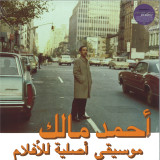
Habibi Funk is thrilled to share a second collection of deep grooves and unreleased songs from Algeria's Ahmed Malek, often compared to Italian heavyweight Ennio Morricone. Malek’s music effortlessly switches between thematic jazz, funk, reggae and Algerian folk – creating indelible soundscapes that intersect the musical innovations made in African jazz by Mulatu Astatke, Bembeya Jazz National along with some of Europe’s finest experimental composers like Piero Piccioni and Janko Nilovic. “Musique Originale de Films, Volume Deux” is out June 28th, 2024 via Habibi Funk.
Whenever an interview asks about a “memorable moment” in Habibi Funk label history, one we always reference is how we got in touch Ahmed Malek’s (22K Spotify Followers, 285K Spotify Monthly Listeners) music and subsequently his family. It all started with us coming across Ahmed Malek’s music on YouTube in 2012. We were mesmerized by how effortlessly the music would switch between jazz, funk and Algerian folk while counterweighting it with an undertone of melancholia. Musical perception is different for every person, but there is a chance that his music will touch you in one way or another. At the time, we had just started the Habibi Funk label and we felt Ahmed’s music might be a good fit for the sound we were trying to highlight. Fast forward three years: we had become captivated with the idea of reissuing some of Ahmed Malek’s music. We knew some people had tried to locate his family but, but with no success. In the end it was an incredible amount of luck that made it possible for you to read these words and listen to Ahmed’s music. We were on a DJ gig in Beirut playing old Arabic records and we mentioned our passion for Ahmed Malek’s music to a friend. She said she knew one person in Algier, and as much as it would be a shot in the dark, she could ask her if she had an idea of how to find Malek’s family. Two weeks went by before we heard back, and what we got was incredibly good news - her Algerian friend was the neighbor of Ahmed Malek’s daughter! We’re not spiritual people, but it felt like the universe wanted to see the release happen. We started to speak with Henya, Ahmed Malek’s daughter and she was more than happy with our idea. She assured us that her father would have loved the plan as well. She provided us with tons of awesome material, from great photos, to unseen video footage and unreleased tracks. Eventually we visited Henya in Algeria and we licensed some of her father’s music, first for one (Habibi 003), then for another (Habibi 005), then we eventually organized an exhibition in June/July 2019 – Planète Malek – Une Rétrospective – at the Musée Public National D’Art Moderne & Contemporain in Algiers, focusing on Ahmed Malek’s artistic life. We also produced a small movie about him that our friend Paloma Colombe shot and directed. “Musique Originale de Films, Volume Deux” is a deep collection of unreleased songs and stemmed grooves from the Algerian master, from jazz, funk, psych to reggae rhythms and Latin flavors, all under the sonic umbrella of “Planète Malek;” and to quote the maestro, “I didn’t choose music, music chose me.” Lead single is the subtlety funky “Thème Rythme Léger,” out May 3rd along with LP Pre-Order (coincided with Bandcamp Friday for a larger impact) a delicate sonic dance between flute, piano and Spanish guitar with a Bossainfluenced groove. The steady, swingin’ drum groove is cloudlike - definitely toe-tapping friendly so just grab a partner to feel the Rhythme Léger. Second single out May 17th is the reggae-infused “L’Empire Des Rêves” – a sultry sax melody weaves through a prismatic rocksteady thematic groove. 3rd and final single “Thème Djalti feat. Aïda Guéchoud” – is a true Western-inspired ode to his Italian counterpart Ennio Morricone. “Thème Djalti” features the haunting vocals of Aïda Guéchoud, and combines elements of baroque and Bossa-jazz in a timelessly thematic way that seems grandiose yet remains uniquely personal to your ears. Swelling strings, trumpet, fem vox, flute, and plucked guitar expertly arranged, feels like you’re riding a horse into the sunset. Focus track “La La La” is fiery afro-arab-funk of the highest order! Put on your dancing shoes as Ahmed cuts the rug and gets us grooving along. Sonically the cut sounds like if Ahmed ran into The JB’s and Fela Kuti at a Cymande concert. Driving guitar and organ solos vie over pulsating bass riffs and afro-funk drumming that’ll have you out on the dance floor in no time. As always, both vinyl and CD come with an extensive booklet featuring background and interviews with Ahmed compiled through found newspaper clippings and newsreels, also including unseen photos, scans and more. “Ahmed Malek: Musique Originale de Films, Volume Deux” will be out everywhere June 28th.
Cerca:beirut
Die dänische Band Efterklang meldet sich mit ihrem siebten Studioalbum „Things We Have In Common“ zurück, das am 27. September über City Slang veröffentlicht werden soll.
Ein Album über Freundschaft, Zugehörigkeit, Glauben und Verständnis, Themen, die in der Musik spürbar sind, die sanft und erhebend, heilend und mitreißend ist. Efterklang ist zu einer offenen Gemeinschaft mit drei festen Mitgliedern geworden: Mads Brauer, Casper Clausen und Rasmus Stolberg. Für dieses Album hat sich das Kerntrio wieder mit ihrem alten Freund und Efterklang-Gründungsmitglied Rune Mølgaard zusammengetan, der die Band 2007 verließ, um sich der mormonischen Kirche anzuschließen, und schließlich 2022 aus der Kirche austrat. Seine tiefgreifende spirituelle Reise beeinflusst maßgeblich den Inhalt und den Ton des Albums, auf dem er sieben der neun Songs mitgeschrieben hat. Things We Have In Common“ fällt mit dem 20-jährigen Jubiläum des Debütalbums der Band zusammen und präsentiert zwei Jahrzehnte der Zusammenarbeit, Erforschung, Entwicklung und Wiedervereinigung. Das Album enthält Beiträge von einer Vielzahl internationaler Musiker. Zach Condon von Beirut, der finnische Schlagzeuger Tatu Rönkkö, der venezolanische Gitarrist Hector Tosta und die guatemaltekische Cellistin und Sängerin Mabe Fratti wurden zu wichtigen Mitwirkenden. Der preisgekrönte italienische Mixer Francesco Donadello und der Süddänische Mädchenchor haben dem Album ihren Stempel aufgedrückt, wie schon beim 2012er Album „Piramida“ der Band.
After a few concerts/screenings improvised as a duo in Cairo and Beirut, as well as for the Rencontres d’Arles, the Lille photography center and the Belgian magazine Halogénure, Dargent and Oberland have teamed up with mavericks Elieh and Halal for a puzzling cross-border manifesto. The first sonic moves of this eclectic quartet, made in a bunker studio somewhere between Paris and Berlin,
urgently took the form of a quest, that of a neo-folklore for troubled times, a music seeping with many kinds of atavism and experimenting in all directions. A fertile no-man’s-land where trance and contem1plation, jazz and electronica, acoustics and electricity would merge in a stimulating mystical magma. From the possible emergence of a Babelian language to the shared desire to rediscover mu[1]sic as a ceremonial act, this encounter took place over three days of improvised sound bacchanalia, the phases of which were all recorded by Benoit Bel (Zombie Zombie, Thurston Moore Group, Oi[1]seaux-Tempête). A hallucinated and generous testimony, SIHR is a synergy of many different worlds and many different possibilities, the sonic vision of a present conjugated in a hybrid tense and exalted by too many tangos danced on the glowing ashes of our days
The new album from Lebanese-American musician Solpara, Melancholy Sabotage, marks his full length debut and return to Nicolas Jaar's Other People label. While it was recorded over Covid lockdowns, Jaar had been talking about wanting to back a Solpara full-length since he put out Swing. The album came to life while Solpara was living alone in a Brooklyn loft, collecting unemployment checks and viewing ample free time as the artist residency he'd dreamed of; he'd previously been forced to make music in odd windows between numerous jobs and the unmerciful pace of city life. Free from obligations, he would wake up early to take Arabic lessons online, read Tracey Thorn's autobiography, and skateboard the deserted streets, then come home and design sounds until he had a track that felt like it needed to be released. While this easy going lifestyle was peaceful in many ways, Solpara found more complex inspiration in the emotion that stemmed from participation in Black Lives Matter protests and the 2020 Beirut Port explosion, which rocked all of his extended family members in Lebanon.
Melancholy Sabotage explores the theme of sabotaging melancholy. Echoing sounds from the post-punk, trip-hop, and ambient genres, it is about sabotaging the cycle of melancholy and looking at this process without ignoring the sources that put it into motion. It may be compared to a rattling breaking free from retention, reaching states of dreamy euphoria while simultaneously acknowledging the sources of retention, viewed from above. The sources can be personal, political, or socio-economic. They are to be apprehended post-melancholy, after the sabotaging of the initial cycle of melancholy. In other words, it is about transcending melancholy and understanding where it came from with some distance. It may be beautiful and healthy to feel for a while, but how may one sabotage this cycle when it becomes paralyzing? Ultimately, this album is about feeling melancholy but also resisting it and naming the sources that initiated it.
"Time To Hold Better" points to neglect on both personal and group levels. "This Time Last Year" is a personal time capsule. "We Keep Us Safe" is about solidarity, autonomy, and care witnessed within protest groups. "Melancholy Sabotage" is a sonic exploration of the album concept illustrating anger and sadness, but finally, resistance and liberation from these feelings. "Measures" is a more fluid exploration of the latter after the initial storm has passed. "We Don't Owe" points to bigger bodies inflicting harm on populations that we owe nothing to. "Breaking Points" harkens the times that we may lose focus while pushing to transcend melancholy. "Eviction" is about being pushed out of a space unwillingly while simultaneously being forced to move forward.
Melancholy Sabotage pulls from a range of genres, uniting electronic sounds under the same post-punky glow. It pulls from complex, heavy themes including damage and injustice, presenting Solpara's most moving body of work to date. It highlights the poignance that has always been at the heart of his fluid sound, which caters to dancefloors and avant-garde spaces in equal measure. Working with a mix of dissonant guitars, distorted drum machines, and distant, reverb-washed vocals, Melancholy Sabotage is Solpara's uneasiest outing to date. The record pinpoints the duality at the heart of Solpara's sound, which is as plaintive as it is searing.
'Libanon' is music composed for the film "Maître, lihseb please" by Michael Shamberg, composed and performed by Rayon aka Markus Acher, with the help of Sebastian Hess on cello, a computer, a harmonium and a few libanese records .The music was also heavily inspired by the work of fotographer Fouad Elkoury (one of his photographs of Beirut is on the cover) and writer Etel Adnan.
Born in Beirut, Lebanon, Rami Gabriel has been a motive force in rock n' roll, jazz, Arabic, and experimental music communities across North America for over twenty years. In that time, he has released numerous projects across genres and under many names. On his debut LP for Sooper Records, Rami trips all the breakers. In his own name and voice for the first time, That's what I been sayin' is not so much a debut as a conflagration in Rami Gabriel's worldly underground. Drawing on Punk, Krautrock, Dub, No Wave, and lo- fi, the territory occupied by That's what I been sayin' is astringent, minimal, and buzzing with the sound of machines dancing in the wind. "I'm used to putting out records based on genre," says Rami of his multiple endeavors. "I was listening to one of the `70s Brian Eno records where he took his experimental work and his songs and put it all together, and I was thinking, `Why don't I try to put all the different ways I've been working for the last couple years onto one record?'" That's what I been sayin' ignites this vision with an album that ranges from the motorik-driven krautrock of "Like a monk" to the unexpected trance-like pairing of "Buzuq synth." That's what I been sayin' is a furnace of Rami's insuppressible impulses, where he undertakes to ask and answer: what is left of punk but making do with what is at hand? At times direct and scorching, at others meditative and wandering, That's what I been sayin' compresses Rami's understanding as a composer, musician, and singer into a restless, 11-track love letter to the underground. For Fans of The Fall, Haruomi Hosono, Brian Eno, and Scientist.
SIHR: sonic manifesto by a post-anything quartet feat. multi-instrumentalists from the Mediterranean inland Sea. New folklore for a devastated planet, including Frédéric D. Oberland (Oiseaux-Tempête), Grégory Dargent (H), Tony Elieh (Karkhana) & Wassim Halal (Polyphème).
After a few concerts/screenings improvised as a duo in Cairo and Beirut, as well as for the Rencontres d’Arles, the Lille photography center and the Belgian magazine Halogénure, Dargent and Oberland have teamed up with mavericks Elieh and Halal for a puzzling cross-border manifesto. The first sonic moves of this eclectic quartet, made in a bunker studio somewhere between Paris and Berlin, urgently took the form of a quest, that of a neo-folklore for troubled times, a music seeping with many kinds of atavism and experimenting in all directions. A fertile no-man’s-land where trance and contem- plation, jazz and electronica, acoustics and electricity would merge in a stimulating mystical magma.
From the possible emergence of a Babelian language to the shared desire to rediscover music as a ceremonial act, this encounter took place over three days of improvised sound bacchanalia, the phases of which were all recorded by Benoit Bel (Zombie Zombie, Thurston Moore Group, Oi- seaux-Tempête). A hallucinated and generous testimony, SIHR is a synergy of many different worlds and many different possibilities, the sonic vision of a present conjugated in a hybrid tense and exalted by too many tangos danced on the glowing ashes of our days.
Multi-instrumentalist & photographer, Frédéric D. Oberland has been leading the Oiseaux-Tempête collective for over ten years, lying somewhere between avant-rock and free jazz, repetitive music and electronics. Founding member of the bands FOUDRE! and Le Réveil des Tropiques, he’s also perfor- ming solo and composing soundtracks for cinema and installation art. Since 2018, Oberland co-cu- rates the NAHAL Recordings imprint alongside producer Mondkopf.
Electric guitarist, oud player, composer and photographer, Grégory Dargent cultivates his musical schizophrenia and identity through improvised music, trance music, jazz, hijacked maqam, repeti- tive music, pop, electro-acoustic installations and French chanson. From L’Hijâz’Car to Babx, from Berber singer Houria Aïchi to Rachid Taha, from Trio H to Sirventés enragés, from music for images to contemporary choreography, from the most acoustic of ouds to the most nuclear of guitars, he conducts, accompanies, composes, deciphers, questions, delves, makes mistakes, bounces back, ar- ranges, orchestrates and tirelessly shares his creative passions.
Tony Elieh is one of the pioneers of experimental music in Lebanon. A founding member of the first post-rock group of post-war Lebanon, The Scrambled Eggs, he has since developed his unique elec- tric bass skills in various groups and styles of music including collaborating with in groups such as Karkhana, Calamita and Wormholes Electric. Relocated in Berlin in recent years, he has performed a solo set of heavily processed bass generated sounds.
Is Wassim Halal only a darbuka player? Maybe !? But what about his music, compositions, ideas. You can find him with Polyphème playing and co-composing popular-contemporary music with Gamelan Puspawarna, or next to the french bagpiper Erwan Keravec, with the Bey.Ler.Bey trio (w/ Laurent Clouet & Florian Demonsant) working on an improvised-balkan-already-improvised-music, with per- formers and drawers Benjamin Efrati and Diego Verastegui, with Gregory Dargent and Anil Eraslan in H, creating a new pedal generating »Random taksim«, composing his own »Poème Symphonique pour 100 youyou« or composing pieces for ensembles.
Singer, actor and musician Farid El Atrache, born on October 19, 1910 in Soueïda, Syria, and died on December 26, 1974 in Beirut, Lebanon, is considered the greatest singer of the Arab world. A virtuoso of the oud, his timeless work, rich in hundreds of compositions, is recognized the world over. The present selection is devoted to the master's early works recorded in the 1930s-1940s.
- 01: Aykathani Malakon (Live At Cafe Oto)
- 02: Mouathibatti (Live At Café Oto)
- 03: Bell (Live At Café Oto)
- 04: Ya Nass (Live At Café Oto)
- 05: Rings (Live At Café Oto)
- 06: Shajar Al-Touti (Live At Café Oto)
- 07: 94 (Live At Café Oto)
- 08: Oulo La Emmo (Live At Café Oto)
- 09: Ayouha Al-Taiin Fi Al-Mawt (Live At Café Oto)
Live recording of the final show of SANAM's debut European 2023 tour at London's home for experiemntal music, Cafe Oto.
Beirut's SANAM burst on the scene in 2023 with their debut album Aykathani Malakon, chosen by The Guardian as one of their 5-star albums from 2023: "Aykathani Malakon thoroughly embodies their originating influences, whipping up kosmische, post-punk, psych rock, free jazz and Levantine folklore into an alchemical tour de force delivered with a defiant, DIY disposition".
Under difficult conditions, the band took to the road for a European tour in November 2023 with the final show at Café Oto. From their incendiary European debut earlier that month at LeGuessWho then rapturous, sold out shows in Switzerland, Belgium, Germany and the UK, spirits for the Cafe Oto gig were high and it was destined to be a tour highlight. 'Live at Café Oto' captures the intensity of the shows, a ritual where improvised rock, free jazz and noise underscored an exorcism of traditional Egyptian song and Arabic poetry.
Drummer Pascal Semerdjian adds: "On this tour, I felt the album evolve from being a set of improvised tracks captured spontaneously, into ripe solid songs. Playing these shows back-to-back, our chemistry kept growing, we got closer, and our live sets, at least to me, were an embodiment of this evolution. In a way, this was the real birth of the band"
Vocalist Sandy Chamoun: "We started the tour with a great push at LeGuessWho, and we kept this energy throughout the whole tour. Every gig felt like I was playing the songs for the first time, providing a new and fresh experience for me. We finished the tour with an emotionally intense gig at Cafe Oto, a dream venue. The audience was incredible, as if we had known each other for a long time and the energy was intense and intimate at the same time; it felt like we were in a small circle of fire together, both us and the audience."
"There was definitely magic in the air for our show at cafe oto - an iconic, humble and warm venue and the last show of the tour – it felt like everything was in the right place. It was my favourite show by far, specially that we were also comfortably able to talk about Palestine, the atrocity we have to live with and can't ignore." Pascal Semerdjian
Violist, violinist and singer-songwriter Marla Hansen returns to Karaoke Kalk with "Salt", her second full-length album to date. Building upon the sonic palette the Berlin-based musician established with her debut "Dust" in 2020, "Salt" takes the delicate mixture of acoustic instruments such as viola, violin, piano and guitar combined with subtle electronics to the next level. The new album is both a remarkable departure and at the same time sheds a new yet reassuring light on Hansen's work and creativity. "Salt" features numerous collaborations with like-minded musicians and friends, e. g. producer and composer Simon Goff, The Notwist's drummer Andi Haberl and the renowned artist DM Stith.
The "Dust" has settled. After having recorded her solo debut of that name, in 2020 the world came to a grinding halt, leaving Marla Hansen left to her own devices in her adopted home of Berlin. For Hansen, who previously had lent her talent to many creative minds such as The National, Sufjan Stevens, The Hidden Cameras, Jay-Z and Ravi Coltrane, the collaborative aspect of writing and producing music had always played a crucial part in finding her own path as a solo artist.
"I started to explore synthesizers and electronic production myself," she remembers of the time when meeting other musicians in person was out of the question. "I am proud that I accomplished many of the electronic elements of the new album by myself, and otherwise laid the groundwork for the final electronic structures through my own experiments. I always wanted to record a 'big' record, one that has a lot of power and sound, and this one is 'bigger' than anything I have done so far."
"Salt" is big, indeed. The opener "Chains" is driven by a gliding bass line, bobbing 808 snares, deep chords and a mesmerizing chorus doubled by luscious strings, marking the beginning of a new chapter in her creative journey. A stark statement, both musically and lyrically. Meanwhile, the title track of the album is an almost abstract sounding ambient miniature, sketch-like, dark and haunting, showcasing Hansen's voice in a shy, brittle and fragile state. If This Mortal Coil/The Hope Blister were ever to record another album, these songs should be high up on the shortlist of tunes to pick. "The One Time" - a duet with Hansen's long-time friend DM Stith - gently meanders between a Philip Glass-inspired piece for chamber orchestra and a vocal ensemble performing on Top Of The Pops. In this range of styles and approaches, Hansen's vision is more present than ever.
For refining and finishing the songs, Hansen turned to Simon Goff, who produced the album and engineered much of the recording, merging Hansen's newly-found songwriting approach with the artistic delicacy which made her debut album an exceptional piece of work. Features include among others: Alice Dixon (Oriel Quartett) on cello, Kyle Resnick (The National, Beirut) on trumpet, Benjamin Lanz (The National, Beirut) on trombone and tuba, and Miles Perkin on bass. And then there is The Notwist's Andi Haberl, who "crafted perfect drum and percussion parts to move the songs wherever they needed to go, either into their driving grooves, slow-build explosions or gentle swells of feeling."
But what are songs actually about? "The themes revolve around a feeling of being trapped. Having to stay inside during the pandemic, with all the silence and stillness coming with it. Simultaneously, I was caught up in a professional situation that was not working for me, yet it required a lot of energy and time. I was thinking a lot about how to break old habits and patterns. Patterns in my life, patterns I saw my friends and loved-ones stuck in. There are a lot of ways that people can be trapped, and breaking out of that requires a lot of courage and energy - on all levels. The title 'Salt' seemed to fit, ocean themes showed up naturally in some of the songs, and I thought often about the quote: 'The cure for anything is salt water: sweat, tears or the sea.' Maybe I was just dreaming of the ocean, since it was inaccessible for the first time! But I wanted a cure for this feeling of being trapped, in a time of uncertainty and anxiety, salt as a remedy seemed to have some truth in it: sweat, tears or the sea."
Perseverance and the urge for freedom prevailed in the end. "Salt" is a bold artistic achievement, with songs as big as the biggest waves imaginable. With melodies as alluring as the most comfortable breezes. Perfect from start to finish.
Repress!
London based DJ and producer Dan Shake is set to announce details of his new EP ‘Mosquito’, due for release on 13th March 2020 via his Shake Records imprint.
Dan’s latest outing offers three driving, thoughtful Detroit house influenced club tracks: from the synth-heavy adrenaline rush of title track Mosquito, to the jacking, motoric resolve of The Deep
End, and Hide Seek’s kinetic, sample-driven house groove.
Since debuting on Moodymann’s Mahogani Music in 2014 with 3AM Jazz Club / Thinkin About U, Dan made it into a springboard for his ambitions to work crowds the world over. His love of groove – ranging from sparky acid to Brazilian samba, itchy funk to heavyweight house – fuels his drive to make those around him dance as keenly as he does. At a party, Dan Shake isn’t just loaded with peak time weapons: he is one.
This will be the seventh release on Dan’s Shake imprint, following a string of dance floor-igniting releases, the most recent of which continues to scorch the airwaves from Radio 1 to NTS, garnering DJ support from the likes of Annie Mac, Gilles Peterson, Honey Dijon and The Black Madonna, and a searing set of disco-house releases last year on his own Shake imprint and Denis Sulta’s Sulta Selects.
Dan’s infectious charm and expert ear has resulted in a truly international list of shows in locations as far flung from home as Beirut to Buenos Aires, plus armfuls of Balearic visits, including closing the main stage at Dimensions Festival and playing b2b shows with Jeremy Underground, Marcellus Pittman & DJ Boring to name a few. With a never-ending tour schedule ahead, including his debut U.S. and Australia tour, stops at Nuits Sonores, Love International, Printworks, Kingdom Festival, Fly, Boardmasters, Dimensions, Pikes Ibiza and more new music planned for 2020, Dan Shake is set to have an exceptional year.
With her distinct sound treatment and signature improvised performances, Liliane Chlela has been pushing forward the boundaries of ‘Experimental and Electronic Music’ in Lebanon and the Middle East/West Asia and North Africa for over a decade both as a solo artist and via her various local and international collective projects. One of the most versatile female producers/musicians in the Middle East/West Asia and North Africa, Chlela constructs a characteristic sound both as a composer/producer and as a live musician. She further explores the connections between improvisation and sound treatment by approaching numerous musical genres with her signature techniques. Relentless and heavy dark electronic beats mingle with anger and anguish on Liliane Chlela’s album “Safala”. The Lebanese producer and hybrid DJ tapped into her personal memories to bring forth a sonic concoction anchored in the inherited oral epistemologies of her ancestors. Memories intertwine with Beirut, using incantations inherited from Chlela’s grandmother as building blocks to build an eight track album. From warding off the evil eye to protest sounds from the past year of events in Lebanon, the album haunts the listener to invoke a striking elegy on terror and anger, while inducing a rollercoaster of sonic eruptions.
Following the reissue last year of Fairuz's classic 1979 album "Wahdon", Wewantsounds pursue their exploration of great Lebanese music with the reissue of Fairuz's highly sought-after LP "Maarifti Feek," released in 1987. Recorded in Beirut around 1983-84, the album features the Diva's superb voice combined with Ziad Rahbani's jazz and funk orchestration, making it one of the most in-demand albums on the Arabic funk scene. The release will coincide with "Arab Divas," a major exhibition set in the prestigious Institut du Monde Arabe (IMA) in Paris, celebrating the greatest singers from the Arab World and starting 13 May 2020. One of the greatest singers of the Middle East, Fairuz started her career in Lebanon in the 50s and quickly established herself as the most renowned Diva in the Arabic world, playing the most prestigious venues in the world. At the end of the 70s, Fairuz was at a turning point both professionally and personally. Her Husband Assi Rahbani, who, with his brother Elias, had penned her biggest successes, has suffered a stroke a few years earlier. This setback ultimately led to both the demise of their marriage and the end of their professionnal partnership. Enters Ziad Rahbani, Fairuz and Assi's son, a young musician, playwright and producer who had cut his teeth writing a handful of Fairuz's song - including her 1973 hit "Sa'alouni El Nas" - at just seventeen. Ziad Rahbani swiftly took over from his father and uncle as the singer's musical director and composer and this fruitful association, which started in 1979 with the album "Wahdon," broke many new grounds for Fairuz with funkier rhythms and edgier lyrics. It was recorded at the same time as Rahbani's own 12 inch "Abu Ali" which became a sought-after disco classic in its own right. The association between the two continued with a second album, "Maarifti Feek" ("Our Encounter"), recorded between 1983 and 84 in Beirut but only released in 1987. The album was another groundbreaking mix of influences ranging from the traditional arrangements of "Oudak Rannan" and "Ma Kdirt Nseet" to the brazilan flavour of "Version 1" via the synth funk of "Ouverture 83" and its follow up "Reprise 83". Also featured on the album is a beautiful remake of Joaquin Rodrigo's "Concerto de Aranjuez" in the form of a tribute to the lebanese capital, "Li Beirut." This blend of Oriental grooves with jazz and funk orchestrations by Ziad Rahbani is a unique document of Fairuz's career development in the 80s and explains why "Maarifti Feek" is such a sought after album on the DJ and collector circuits which Wewantsounds is delighted to reissue for the first time since the album first came out.
- Interruption Introduction
- Passé Composé
- Les Orpailleurs
- Vitesse & Précipitation
- Octopolis
- La Ligne Claire
- The Coordinates Of A Soul
- Sens Dessus Dessous
- Catamaran Cameraman
- Une Minuscule Effervescence
- Le Devoir De Vacances
- Stereogrammes
- The Patterns Of A Hand
- Ainsi Souffle Le Vent
- Schmall Talk
- Maritime Jazz
- The Laws Of Subtraction
- Le Dictionnaire Des Sentiments
- Passé Decomposé (Bonus)
- Les Murènes (Bonus)
- The Contrast Of Characters (Bonus)
Jakarta Records is proud to present “Les Grandes Vacances” courtesy of Beirut’s Cosmic Analog Ensemble, aka multi-instrumental phenom Charif Megarbane. The LP is an expansive musical odyssey, one that paints a melodic tapestry woven from an eclectic panorama of sonic tools. Funky beats, dreamy melodies + cinematic flair combine to create an experience that transcends time. From vibrant funky energy to introspective moods and library-inspired tunes, “Les Grandes Vacances” captures the essence of past and present, inviting you to indulge in the perfect balance of “groove-stalgia.” Out January 19, 2024.
Cosmic Analog Ensemble (1.6k Spotify Monthly Listeners – SML), the prolific one-man band helmed by Charif Megarbane (61.5k SML), the staggeringly prolific producer, instrumentalist, and all-around musical mastermind, returns to his “Ensemble” with LP “Les Grandes Vacances.” Megarbane's artistry has garnered widespread recognition, with notable placements in Spotify Editorial Playlists like "Global Groove" (679k) and "Folk Fabrique" (162k), along with coverage from esteemed platforms / publications such as BBC Radio, Bandcamp, The Vinyl Factory, Time Magazine, and Esquire, among others. Building on the success of his debut solo release “Marzipan” in 2023 via Habibi Funk, “Les Grandes Vacances” is a sonic journey that captures the full scope of Megarbane’s sonic habitus. As a composer and producer, Megarbane touts hugely versatile, sometimes volatile musicianship — his 100+ catalogue of projects (including legendary groups like the Cosmic Analog Ensemble, Free Association Syndicate, Monumental Detail, etc.) features a huge domain of sonic direction. Now, Jakarta Records presents a new expansion in the Megarbane sonic universe.
In the enchanting sonic world of “Les Grandes Vacances,” Cosmic Analog Ensemble expertly combines diverse musical elements to craft an immersive experience. From vibrant funky energy to introspective moments and library-inspired compositions, the album's sonic palette is rich and varied. The meticulously designed artwork by Simone Cihlar (known for collabs with Anderson Paak., Tom Misch, Ivan Ave, Tapioca and others) complements the album's thematic depth, enhancing the visual and auditory journey for listeners.
First single is the thrilling sonic escapade, “La Ligne Claire,” set to release on November 10th in conjunction with LP pre-order. The track immerses listeners in vintage spy movie ambiance, featuring groovy drums, warm keys, thematic guitars, and strings that create an unforgettable car chase scene. As part of the rollout schedule, this single offers a glimpse into the album's captivating fusion of nostalgia and innovation, promising a musical adventure that lingers and resonates in your ears. Second single, the lush and groovy “Le Dictionnaire des Sentiments,” follows in the sonic footsteps of Serge Gainsbourg (complete with beautifully poignant French lyricism), out December 8th to round out the year. The track jerks the listener towards a more meditative state and expanding, cinematic sound.
Kicking of 2024 will be the absolute funkified single 3 “Maritime Jazz,” out January 5th. The track transports you to a groovy marina where the movement of the sea and boats sways you along a Madlib / Yesterdays New Quintet-esque groove.
Reflecting on his creative process, Megarbane cites a stream of consciousness approach to the Cosmic Analog Ensemble: “It’s a very spontaneous, playful, and diary-like approach and workflow…I trust my instinct because instinct is based on experience.”
.- "Wishah" (meaning veil in Arabic) is a composition in five stages, written by Youmna Saba between 2021 and 2022, for voice, oud and electronics. Following her previous solo works "Njoum" (2014) and "Arb’een" (40) (2017), this album marks a significant turning point in Saba's journey. Created after leaving Beirut and settling in Paris, "Wishah" reveals a profound shift in her musical expression, informed by rigorous research in the sonic properties of sung Arabic phonemes and their role in shaping synthesised electronic sounds. The album employs a digital extension for the oud, a concept developed by Saba in her research project 'Taïma’. This device enhances the oud's sonic range, seamlessly integrating synthesised electronics. It also amplifies subtle, often overlooked sounds generated during playing, such as resonances and fingerboard friction. The composition is organized into five distinct stages, each contributing to a process of gradual revelation. As the tracks unfold, they strip away layers of constructed emotions and perceptions that have been intricately woven over time, to expose a space that no longer exists. Wishah is a farewell to home. Youmna Saba (born in Beirut, 1984) is a musician, composer and musicologist. Her current research focuses on instrument and space resonances in different sonic and musical contexts. With four albums to this date, she has collaborated with musicians of different musical expressions such as Kamilya Jubran, Floy Krouchi, Mike Cooper and the Neue Vocalsolisten ensemble, and has taken part in numerous artist residencies. She is the laureate of the first sound residency at Quai Branly Museum, Paris (2022-2023) with her research project and installation “La Réserve des Non-Dits”, now on view at the museum; and a laureate of the music residency program at the Cité Internationale des Arts, Paris (2020-2021).
Die Neuauflage der 2015er Albums mit dem Hit aus Sex Education - in limitierter Auflage auf Eco-friendly farbigen Vinyl!
This Is The Kit (TITK) ist das viel geliebte Musikprojekt von Kate Stables, die in England geboren wurde und in Paris lebt. Produziert wurde Bashed Out von Aaron Dessner, einem Mitglied von The National, der sowohl Indie-Ikonen (Sharon Van Etten, Local Natives) als auch in jüngerer Zeit Stars wie Taylor Swift und Ed Sheeran produziert hat. Die für Bashed Out zusammengestellte Begleitband vereint die Talente der Tourmitglieder von TITK mit Session-Spielern aus der Brooklyner Musikszene: Bryce Dessner, Thomas Bartlett (Doveman, The Gloaming), Matt Barrick (The Walkmen) und Ben Lanz (Beirut, The National) leisteten wichtige Beiträge.
Seit der Erstveröffentlichung dieser LP leistete Kate wichtige Beiträge zum 2019 erschienenen Album/Film I Am Easy To Find von The National und wurde bei anschließenden Live-Terminen zum Tourmitglied. Im Jahr 2020 wurde der Titeltrack von Bashed Out ein Streaming-Hit, nachdem er in einer wichtigen Episode der Netflix-Serie Sex Education die Nadel fallen ließ.
Diese Musik ist ehrlich und menschlich - ein folkig-liebevoller Slow-Rumble. Es ist Rock, aber von der groovigen, katerfreundlichen Kiffer-Variante. Die Stimme von Stables erinnert an die Singer-Songwriter-Ära - ihr markanter, schneidender Gesang ist ganz vorne im Mix. The Line of Best Fit bezeichnet die Band als "unverzichtbaren Bestandteil der britischen Folk-Musik der letzten 10 Jahre...einer der wenigen wirklich innovativen Songwriter, die heute mit der britischen Folk-Schablone arbeiten."
- Ltd. Col. LP: (Eco Mix Coloured Vinyl)
Marjaa: The Battle of the Hotels” is a concept album born of the idea of merging singer & songwriter Mayssa Jallad’s two vocations: music and urban research/architectural history. Written in collaboration with producer Fadi Tabbal, the music builds upon Tabbal’s spatial approach to sound and Jallad’s research on Beirut’s Hotel District. The album is a reference to Jallad’s Historic Preservation master's thesis, in which she detailed the history of the “Battle of the Hotels”, a 5-months battle that took place in Beirut at the beginning of the Lebanese Civil War, from October 22nd, 1975 to March 29th, 1976. Jallad saw architecture as a main protagonist of the battle, as she discovered it was the first high rise urban battle in the world. The close of the battle resulted in the 15-year Green Line, an urban rift which split Beirut into “East and West”, restricting movement and communication and creating a violent divide that still resonates today. The album comprises two parts. Part A: Dahaliz, is a stroll in the city, where Jallad tries (and fails) to follow an old map. Musician Youmna Saba is a companion in this journey of remembering the once winding corridors (“Dahaliz”) of the city, destroyed by new developments since the 1960s. Empty skyscrapers propel her onto a past filled with the violence of snipers, and a present filled with the glamorous injustice of empty luxury real estate endorsed by powerful warlords-turned-politicians. In Part B: Maaraka, Jallad inhabits the building of the Battle of the Hotels, as its events unfold. She calls the fighting militias the Blues and Reds, respectively the Lebanese Front (Christian Nationalists) and the Lebanese National Movement (Pro-Palestinian leftists), leveling the playing field, and drawing a map of the battle through songwriting. Sary Moussa produces the conclusion of the battle in “Holiday Inn (March 21 to 29)”, which ends with the ultimate severance of the city of Beirut. The music caters to post-war youth who have never been taught this difficult history. Once we consider the “Battle of the Hotels” as our common heritage, it provides an opportunity to teach the value of civil peace. It is also a call to protest for the renewal, rather than the recycling of the political class that has once destroyed the country and holds us, to this day, hostage of its violence. Limited edition of 300 copies. 140gsm vinyl pressed at Microforum (Canada).
“‘Bashed Out’... will also likely be her breakout... get ready to hear a lot more from her.” - Stereogum This Is The Kit is the much beloved musical project of Kate Stables, born in England and based in Paris. ‘Bashed Out’ was produced Aaron Dessner, a member of The National known for both minting indie icons (Sharon Van Etten, Local Natives) and, more recently, becoming a producer to stars like Taylor Swift and Ed Sheeran. Dessner’s former client Sharon Van Etten called This Is The Kit her “favorite new artist” in Pitchfork. The backing band gathered for ‘Bashed Out’ combines the talents of This Is The Kit’s touring members alongside session players drawn from the Brooklyn music scene: Bryce Dessner, Thomas Bartlett (Doveman, The Gloaming), Matt Barrick (The Walkmen) and Ben Lanz (Beirut, The National) made key contributions. Since this LP’s initial release Kate made significant contributions to The National’s 2019 album/film ‘I Am Easy To Find’ and became a touring member on subsequent live dates. In 2020, ‘Bashed Out’’s title track became a streaming hit after an impactful needle drop in a key episode of Netflix’s ‘Sex Education’ series. This music is honest, human and humane - a folky-lovely slowrumble. It’s rock but of the groovy, hangover-friendly, stoner variety. Stables’ voice hearkens back to the singer-songwriter era - her distinctive, cutting vocals up front in the mix. The Line of Best Fit has the band as an “essential fixture of British folk music for the past 10 years… one of a handful of truly innovate songwriters working with the British folk template today.” For fans of Joni Mitchell, Bon Iver, Sharon Van Etten, Father John Misty, Gillian Welch, Laura Marling, Natalie Prass, Jose Gonzalez. This is the first time ‘Bashed Out’ has been widely available on vinyl since 2019. ‘Green Eyed Muddy Puddle’ eco-vinyl variant. Heavy touring in UK, Europe and North American to support the June 2023 release on Rough Trade, ‘Careful Of Your Keepers’.
- A1: Lady Rain
- A10: Little Woman By My Side
- A2: Insomnia Blue
- A3: Fine Anyway
- A4: Express Line
- A5: My Baby, She Is As Down As I Am
- A6: Everything You Want
- A7: Waiting For It Everyday
- A8: Dancer On The Ceiling
- A9: Sad Sad Songs
- B1: Every Body Is Going Home
- B2: Sitting In The Sun
- B3: Had To Come Back Wet
- B4: The Wizard
- B5: (Such A) Trip Thru Time (Such A)
- B6: Keep Going
- B7: Gone Away Again
Rogér Fakhr is a musician from Lebanon. He recorded these songs in the late 1970s in Beirut (and some during a brief exile in Paris). Some were circulated on hand copied cassettes among friends, others like "Had To Come Back Wet" were never released. His music effortlessly combines folk with touches of jazz and soul. He wrote, composed and arranged all songs. While working on his own music he also played for Ziad Rahbani, Fairouz and other musicians.
When we first heard Roger's music we were blown away! The music was a mixture of folk with touches of other genres. Maybe one could also refer to it as "singer-songwriter", since all of the songs were Roger's own compositions. Songs of unique beauty both musically as well as lyrically. At the same time they gave me the feeling of them being somehow time and space isolated capsules. Nothing really revealed, where they could've been recorded and without knowing it was Beirut, my first guess maybe would have rather been California, sometime in the 1970s. The immersive effect of his compositions and voice are just incredible. I was stunned and proposed Roger to work on a re-release, which he politely declined, saying he had no interest in this music being reissued.
The vinyl version comes with a 8 page booklet and a DL code. CD digipak version comes with a 16 page booklet.
- A1: End Transmission (Album Version)
- A2: Too Little Too Late
- A3: Ashes
- A4: Mother
- A5: White Cells
- A6: Avissos
- A7: Womb
- B1: Neon Dream
- B2: All Else Fails
- B3: Time To Die
- B4: End Transmission (John Beltran's Sweet Sunny Mix)
- B5: White Cells (Yui Onodera Remix)
- B6: Neon Dream (Elwd Vinyl Edit)
- B7: Time To Die (Heathered Pearls Remix)
Stelios Vassiloudis enters an inspiring new phase as he unveils his sophomore LP All Else Fails available March 25th via Balance Music.
Hailing from Athens, Greece, Stelios Vassiloudis poses a triple threat as a composer, producer and DJ. Having been active in the electronic music scene since the early 2000s he has cultivated his own brand of distinctive ambience reflective of his rich and diverse musical background; transcending the dance floor via an emotional narrative of complex soundscapes, intricate harmonies and hypnotic rhythms. Over the past decade Stelios has released music under various other monikers, yet this new endeavour is his most diligent to date - allowing him to rediscover his love for making music during the process, "I'm more hopeful, inspired and determined than ever before."
Ten years on from the release of his debut LP, Stelios' detail-oriented offerings remain incomprehensibly thought-provoking and thorough with this new album. Noticeably dissimilar to any previous efforts, Stelios consciously took a step back from the pressure of maintaining a steadily flowing supply of functional, club-oriented music and as the world stood still amidst the pandemic, he embraced the opportunity to reconnect and express himself with a broader musical vocabulary. He admits that: "with the world around us seemingly on the fast track to Armageddon, the music ended up being very much reflective of the sadness and helplessness I felt."
All Else Fails is a stimulating odyssey to anyone listening. Harmonically dense, arcadian glistens seep throughout the ten tracks, each complementary to the next. Bask in the wistful iridescence and you won't be disappointed.
Stelios carved his way into electronic music by traversing around the globe as a DJ and performer - performing at intimate underground bars in Beirut, festivals in Miami, after-hours in Tokyo, beaches in Goa and mega clubs in Argentina. Having developed a formidable discography on esteemed labels such as Bedrock, Poker Flat, Ovum, Constant Sound and Darkroom Dubs, among others, Stelios' studio prowess and coveted productions cemented his reputation as a versatile and acclaimed artist. His intense passion and drive for innovation in music serves as the fuel to keep him inspired and relevant, qualities that no doubt ensure his reputation as an artist of the highest calibre, will endure.
Margo Cilker's sophomore album, Valley of Heart’s Delight, refers to a place she can't return: California’s Santa Clara Valley, as it was known before the orchards were paved over and became more famous for Silicon than apricots. In this 11-song follow-up to 2021's critically acclaimed Pohorylle, family and nature intertwine as guiding motifs, at once precious and endangered, beautiful and exhausting. Cilker and Pohorylle producer Sera Cahoone brought most of that record's highly-acclaimed crew (studio players for The Decemberists, Band Of Horses, and Beirut) back to the studio with additional contributions from acclaimed Northwest traditionalist Caleb Klauder. Valley of Heart's Delight, Cilker's second record on Portland, Oregon label Fluff & Gravy Records, follows a year busily reaping the fruits of Pohorylle's success, with festival appearances at Pickathon, Treefort, and End Of The Road, and tours supporting American Aquarium, Hayes Carll, Drive-By Truckers, and Joshua Ray Walker. Margo Cilker lives near the Columbia River in Goldendale, Washington with her husband, songwriter and working cowboy Forrest VanTuyl, as well as their dog and some horses.
Habibi Funk is excited to share “Marzipan” - our first full length contemporary release courtesy of Beirut’s multi-instrumental phenom Charif Megarbane, also known as the man behind prolific Cosmic Analog Ensemble. The LP is a journey into Charif’s styling, one he terms “Lebrary”: a vision of Lebanon + Mediterranean expressed through the kaleidoscopic sonics of library music. Drawing from artists that encapsulates the HF sound, such as Ziad Rahbani, Ahmed Malek and Issam Hajali, Charif translates these influences into an LP that is equally at home in ’23. We always wondered why Charif’s music stayed under the radar for so long, that all changes with “Marzipan”.
Charif Megarbane, the staggeringly prolific producer, instrumentalist, and all-around musical mastermind returns with full LP “Marzipan.” Following his previous release of EP “Tayara Warak” in 2022, “Marzipan” is a sonic journey that seeks to capture the full scope of Megarbane’s habitus. As a composer and producer, Megarbane touts hugely versatile, sometimes volatile musicianship — his 100+ catalogue of projects (including legendary groups like the Cosmic Analog Ensemble, Free Association Syndicate, Monumental Detail, etc.) features a huge domain of sonic direction. This collection was previously developed in Megarbane’s own Hisstology label which hosts a wealth of collaborative efforts. Now, Habibi Funk represents Megarbane under his own name. Megarbane finds a sonic through-line in his surrounding soundscapes as he draws on the chaotic energy of the crowded Beirut metropolis (“Souk El Ahad”), the warm atmosphere of the Lebanese countryside (“Chez Mounir”), or the lushness of a Mediterranean beach resort (“Portemilio”). Reflecting the aural composition of his direct surroundings into kaleidoscopic instrumentation provides a unique insight into how one musical phenomenon transposes sight into sound. Habibi Funk is thrilled to share “Marzipan” and finally throttle this under-theradar phenomenon into the solo spotlight. Despite the magnitude of his catalog, Megarbane’s LP sounds as fresh—as resolutely inspired—as a debut record. “Marzipan” continues down the winding path he trod on EP “Tayyara Warak” (released Decmber, 2022) which features solid footing in the hectic city sounds Megarbane hears as home. Despite his obvious musical acumen, Megarbane’s greatest talent seems to be his open ears. In many ways, “Marzipan” is a cartographic feat — it travels and traces a journey across many dimensions (both sonic and physical). Megarbane’s instrumental catalogue is vast: toy glockenspiel, harpsichord, pedal steel, a classic Wurlitzer, et al are used liberally on the record. The resultant sound is as sprawling as the musician’s instrumental dexterity. “Marzipan’s” closing track “Bala 3anouan” can be translated loosely to “without address” — a fitting final word. Despite the entire record being a sincere testament to Megarbane’s environmental approach to music-making, the record is not bound to any particular coordinates, or any particular sound for that matter. The vastness of his influences — beloved artists like Ahmed Malek and Issam Hajali (both Habibi Funk veterans); West African funk deep cuts; European cinematic scores; et al — result in a record of somewhat unparalleled expansiveness. Floating melodies and frantic rhythmic interludes both find natural homes across “Marzipan.” The record is tinged with psychedelic elements—fuzz-drenched guitar, sliding microtonal interludes, hypnotic rhythmic breakdowns. Reflecting on his creative process, Megarbane cites a stream of consciousness approach: “It’s a very spontaneous, playful, and diary-like approach and workflow…I trust my instinct because instinct is based on experience.” Lead single “Souk El Ahad” opens the roll-out with a raucous energy, out June 12. Megarbane abstracts busy city sounds into a psychedelic framework, casting technicolor hues on everyday experience. Following is second single “Pas de Dialogue” out June 23. The track jerks the listener towards a more meditative state with lulling harpsichord and expanding, cinematic sound. “Marzipan” will be available physically and digitally everywhere on July 14, 2023. Be sure to listen for focus track “Chez Mounir” that captures the warmth of community in a joyful, laidback groove.
Uncover greater insight into the world of Charif Megarbane in the booklet accompanying the LP
Drawing influences from Doom, Psychedelia, Post- Metal, and Grunge, Burial Clouds' well crafted songwriting is ambitious in sonic scope. Heavy without being cliche, complex without falling into self-indulgence and epic without pretension.
Burial Clouds were originally an instrumental band, but have recently been joined on vocals by actor/ musician Michael Malarkey (Vampire Diaries, Project Blue Book). With this addition the band have reached a new level of expansiveness through Malarkey's crooning blues-esque vocals and blistering screams.
After several years of intense performance activity, the Italian sound artist and
vocalist SARA PERSICO releases her debut EP "Boundary", to be followed by a full album.
Born and raised in Naples, Berlin-based sound artist / vocalist SARA PERSICO cut her teeth
experimenting on the fringes of Naples' fiery underground experimental/noise scene, developing a
technique that would integrate her voice with analogue electronics, field recordings, and samples.
PERSICO holds a BA from the Conservatory of Napoli and a Master's Degree from the
Conservatory of Bologna and gained several residencies and scholarships like Temp Studio,
Lisbon (2018), Amplify Berlin (2021), Sonoscopia, Porto (2022), Sardegna Teatro - V2 Unstable,
Argentiera (2022). She presented her work in festival and events like Ballroom Blitz Beirut, CTM
Festival, Ortigia Sound System Festival/Bosco Colto, Codex Club, Documenta Fifteen, Dancity
Festival, Radical DB, Life Libertas Festival, among others.
As improviser and performer, she has collaborated with a wide spectrum of artists, joining EVELYN
SAYLOR's vocal ensemble for CATERINA BARBIERI's acclaimed "light-years" show at Rewire
Festival and London's Southbank Centre, and worked on projects alongside THE EX's ANDY
MOOR, TONY ELIEH (KARKHANA), LUDWIG WANDINGER, DIRAR KALASH, ELVIN BRANDHI,
RECORDAT, and many others.
She's also a fearless DJ who's able to straddle vastly different worlds, offering just as much
attention to abstract electronic sounds as she does bass-heavy club music, noise, and vocal
experiments. She is currently a resident on Bethlehem's Radio Alhara.
All this energy and experience radiates from her solo debut "Boundary": PERSICO's expressive
vocals play a central role, but her command of precisely sculpted electronic textures and dynamic
rhythmic structures is just as crucial to the overall experience.
Deconstructed beats, experimental voice, harmonic music, distorted rhythms craft a dense
introspective work that explores intimately the boundaries of the self. Identity rupture as a survival
technique, a voice-research climax with an unconventional approach - multi-faceted ideas melt in a
heavy-aesthetical 6 track solo EP that brings together different styles like noise and clubby sounds.
Hailu Mergia & Dahlak Band's Wede Harer Guzo is the third release on Awesome Tapes From Africa for Ethiopian keyboard and accordion maestro. In the years since Shemonmuanaye, Mergia has revamped his touring career, playing festivals and clubs worldwide, including a recent tour supporting Beirut. By 1978, Addis Ababa's nightlife was facing challenges. The ruling Derg regime imposed curfews, banning citizens from the streets after midnight until 6:00 am. But that didn't stop some people from dancing and partying through the night. Bands would play from evening until daybreak and people would stay at the clubs until curfew was lifted in the morning. One key denizen of Addis' musical golden age, Hailu Mergia, was preparing a follow-up to his seminal Tche Belew LP with the famed Walias Band. It was the band's only full-length record and it had been a success. But his Hilton house band colleagues were a bit tied up recording cassettes with different vocalists. Still Mergia, amidst recording and gigs with the Walias, was also eager to make another recording of his instrumental-focused arrangements. So he went to the nearby Ghion Hotel, another upmarket outpost with a popular nightclub. Dahlak Band was the house band at Ghion at the time. Together they made this tape Wede Harer Guzo right there in the club during the band's afternoon rehearsal meetings, with sessions lasting three days. Dahlak Band catered to a slightly more youthful, local audience, while Mergia's main gig with the Walias at Addis' swankiest hotel had a mixed audience that included wealthy Ethiopians, foreign diplomats and older folks from abroad. Therefore, their sets featured lighter fare during dinnertime and a less rollicking selection of jazz and r&b. Meanwhile, Dahlak was known more for the mainly soul and Amharic jams they served up for hours two nights a week to a younger crowd. Mergia released Wede Harer Guzo ("Journey to Harer," a city in eastern Ethiopia) with Sheba Music Shop, which was located in the Piazza district but has long since shut down. His cassette copy is the only known source we could find. Jessica Thompson at Coast Mastering managed to restore the recording to clean up layers of hiss, flutter and distorted frequencies, made worse by years of storage. Although there are some remaining sonic artifacts of the era's recording and cassette duplicating quality, this reissue captures the band's inimitable vibe. Recalling the audience's positive reaction to Wede Harer Guzo's novel arrangements, he says it sold well and found many fans. However, as no trace of the tape can be found online, there's no indication as to why the cassette appears largely forgotten until now
Beirut's Nur Jaber has joined forces with rising producer Luca Eck to rework KUMMER's pop sensation "Bei Dir" into an explosive techno one tracker on her own label, OSF.
Both Berlin based, the techno talents have forged a relationship both in and out of the studio. Luca delivered an accomplished contribution to Nur's 'Planet OSF' compilation back in 2021. The pair have a background in classical music, with Nur studying at Berklee college of music and Luca composing from as young as 11 years old. Combined, they create a smooth combination of robust and textured techno with subtle signature techniques from their unique individual influences, resulting in each production brimming with emotion.
Tape
Hailu Mergia & Dahlak Band's Wede Harer Guzo is the third release on Awesome Tapes From Africa for Ethiopian keyboard and accordion maestro. In the years since Shemonmuanaye, Mergia has revamped his touring career, playing festivals and clubs worldwide, including a recent tour supporting Beirut. By 1978, Addis Ababa's nightlife was facing challenges. The ruling Derg regime imposed curfews, banning citizens from the streets after midnight until 6:00 am. But that didn't stop some people from dancing and partying through the night. Bands would play from evening until daybreak and people would stay at the clubs until curfew was lifted in the morning. One key denizen of Addis' musical golden age, Hailu Mergia, was preparing a follow-up to his seminal Tche Belew LP with the famed Walias Band. It was the band's only full-length record and it had been a success. But his Hilton house band colleagues were a bit tied up recording cassettes with different vocalists. Still Mergia, amidst recording and gigs with the Walias, was also eager to make another recording of his instrumental-focused arrangements. So he went to the nearby Ghion Hotel, another upmarket outpost with a popular nightclub. Dahlak Band was the house band at Ghion at the time. Together they made this tape Wede Harer Guzo right there in the club during the band's afternoon rehearsal meetings, with sessions lasting three days. Dahlak Band catered to a slightly more youthful, local audience, while Mergia's main gig with the Walias at Addis' swankiest hotel had a mixed audience that included wealthy Ethiopians, foreign diplomats and older folks from abroad. Therefore, their sets featured lighter fare during dinnertime and a less rollicking selection of jazz and r&b. Meanwhile, Dahlak was known more for the mainly soul and Amharic jams they served up for hours two nights a week to a younger crowd. Mergia released Wede Harer Guzo ("Journey to Harer," a city in eastern Ethiopia) with Sheba Music Shop, which was located in the Piazza district but has long since shut down. His cassette copy is the only known source we could find. Jessica Thompson at Coast Mastering managed to restore the recording to clean up layers of hiss, flutter and distorted frequencies, made worse by years of storage. Although there are some remaining sonic artifacts of the era's recording and cassette duplicating quality, this reissue captures the band's inimitable vibe. Recalling the audience's positive reaction to Wede Harer Guzo's novel arrangements, he says it sold well and found many fans. However, as no trace of the tape can be found online, there's no indication as to why the cassette appears largely forgotten until now
Charbel Haber is Lebanese musician, performer, visual artist and composer from Beirut. His work has seen him collaborate with artists from a wide range of disciplines - film, video art, visual art, theatre, dance - both in Lebanon and abroad.
As a solo artist and as a member of post-punk band Scrambled Eggs, he has composed music for directors Khalil Joreige and Joana Hadjithomas, Ghassan Salhab, Mohamad Malas, video artists Lamia Joreige and Akram Zaatari, Maqamat dance company and playwrights Rabih Mroueh and Lina Saneh, to name but a few. His prolific and collaborative career includes free improv group Johnny Kafta Anti-Vegetarian Orchestra, psychedelic Arabic music ensembles Malayeen and Orchestra Omar, cold wave band The Bunny Tylers and minimal ambient duo Good Luck In Death. He is the founder of Those Kids Must Choke and co-founder of Johnny Kafta's Kids Menu - two experimental record labels - and he has recorded and collaborated with notable artists from the fields of free rock and improv such as Oiseaux-Tempête, Radwan Moumneh, Tarek Atoui, Jean Francois Pauvros, The Ex, Michael Zerang, Mats Gustafson, Eddie Prevost, Xavier Charles and Tony Buck.
And once again, here I am telling you to go look for the truth and its beauty in the words of dead poets, in the little tales of ravaged cities, in aborted dreams, in the melancholy of the ruins of tomorrow, in meaningless plastic totems, in the enigmatic end of restless fools.
I'll be here long after you all disappear.
These are the first and last sentences from Charbel Haber's latest offering, A Common Misunderstanding of the Speed of Light: a multi-media musing on the chronic and the chronological, the subversive nature of time. This combination of a record and book observes the slow passing of life and the illusion of retrogradation in his every day. Simply by documenting - via image, text and tune - Haber assigns value to everything that is cast in amber by this project. There's an acceptance and appreciation of the destitution he witnesses, it is an homage given in overlapping forms.
ACMOTSOL has two parts. The book, hardcover in an embossed orange, features photographs and texts taken from Haber's personal digital diary spanning from 2020 to the start of 2022. Broken into six chapters - named for the six tracks on the record - the entries are an artist's log of sorts during a peculiar period of global hyper stagnation and navigating the aftermath of the Beirut explosions. The 96 pages highlight Haber's interest in decay, negative space and the temporality of the human condition. Instead of presenting the images and texts as they were originally paired online, they're reordered and recontextualized in the book. New connections are formed, as tenuous and fleeting as the content they surround. The images interrupt the texts in many instances, forcing pauses and inviting distraction.
At the center of the book is a sudden burst of orange pages, with stylized pluckings of the text framing a QR-code that grants access to the record. With the brilliant orange covers and matching innards, pregnant with the music at the core, it's almost as if these central pages act as a way to turn the book inside out. There, the book's purpose is altered, fixated on a mirror image of itself. It forms a self-completing arc for the project, a loop.
ACMOTSO's second half is that mirrored album. Six tracks totalling just under 52 minutes. The music could be a continuation of his solo albums Of Palm Trees and Decompositions (2016) and It Ended Up Being a Good Day Mr. Allende (2012), an exploration into the expansiveness of seemingly simple loops of a lilting guitar. Careful electronic effects add dimensions or reground the listener. There's a swelling of sound, the illusion of the push of space before it retracts back into itself or fades into the distance. Much like the images and texts the music complements, the songs challenge the purity of cycles. Endings are beginnings, beginnings are endings or is everything just the middle? Haber is quietly and elegantly grappling with the troublesome act of place-making. In music, in words and in visual storytelling.
ACMOTSOL is a work that can be calming or disorienting, depending on what is requested of it. Similar to the way loops and cycles can signify both meditation and mania. The tendrils of Haber's past - his home of Beirut, fictional and real characters encountered, authors read, films watched, composers listened, walks taken - knit themselves together for a presentation of our immediate present. An evidence of a happening. A considered project of time.
All photographs, texts and music by Charbel Haber. Album mixed by Radwan Ghazi Moumneh. Design by Maziyar Pahlevan. Printed by Albe De Coker in Belgium.
This dual-part project will be released on XX XXX 2022 on 'Other People.'
Description by Nereya Otieno.
Ryuichi Sakamoto, Daniel Lanois, Loscil, K Leimer, Deaf Center, Tangerine Dream, Arvo Pärt Wake is a distillation and reflection of the work of three Portland musicians thrown, like the rest of the world, into forced isolation by the continually-mutating curse of a natural world in disequilibrium. The product of involuntarily inward-looking emotional landscapes, Wake emerged sounding surprisingly expansive and confident. The trio uses a variety of instruments –including harp, fretless bass, piano, and a variety of synthesizers– to conjure sparkling panoramas of the imagination that are deep-pooled and impressionistic, bracing yet comforting. Mike Grabarak and Joshua Ward have performed together for years as a duo under the moniker of Location Services, while Derek Hunter Wilson has primarily worked as a solo composer in the classical realm. For the Points Of No Return compilation, Beacon Sound's 50th release and a benefit for the Beirut Musicians Fund, they recorded a collaborative piece entitled "Interdependence In Solitude" that was so promising the label offered to release an album if they continued down the path they had started upon. The resulting eight songs are simply mesmerizing. Made during a period of change and upheaval in the world and society where many people were disconnected from others, the album is the product of a collage-like dialogue built on trust and patience. While the musicians couldn’t physically be together for much of this time, they began sending musical ideas to one another in a conversational back-and-forth that acted as an anchor of stability – something they found they could turn to and depend on when things felt uncertain elsewhere. This comfort zone led to some transcendent moments of experimentation. “Delicate Need”, for example, features recordings of exaggerated pizzicato that were sampled and then run back through processing effects, which were then subsequently performed live over the original track. As things became less risky on the Covid front, they would occasionally meet for backyard rehearsals. Indeed, a recording of one of these rehearsals became the basis for the opening track “Photo Aware”. Wake will be available later this summer as a limited edition LP, with design work by Berlin-based Studio Bernhardt. The cover painting was created by Portland artist Nate Ethington. Highlights: – Derek was invited by the artist Gregory Euclide (Bon Iver, Erased Tapes) to participate in his label project, Thesis, along with artists such as Benoit Pioulard, Loscil, and Julianna Barwick. – Derek‘s first and second albums as a solo artist were released by Beacon Sound (Travelogue, 2017; Steel, Wood, & Air, 2019). – Location Services likewise released their 2019 album Reincorporate on the label. – The artists plan to tour together in 2023. Cascadia release shows TBA. Bios: Location Services is the Portland-based project of multi-instrumentalist Mike Grabarek (Magic Fades) and harpist Joshua Ward. They’ve released music on Beacon Sound and Beer On The Rug. They perform both written and improvised music. Derek Hunter Wilson is a composer and multi-instrumentalist based in Portland. He has released two solo albums on Beacon Sound and has also collaborated with visual artist Gregory Euclide for his Thesis Project label, resulting in a split 10" with Spanish musician Rauelsson. He has additionally collaborated with poets Zachary Schomburg and Brandi Katherine Herrera for several sound and performance pieces. He has performed live on the West Coast and in Berlin, sharing the stage with artists such as Colleen, Amulets, and Liima.
Gazelle Twin, Lali Puna, This Mortal Coil, Slow Walkers, Atlas Sound, Bowery Electric, Broadcast Press Release: Snakeskin is an album of visionary electronic dream pop, shapeshifting above ambient and industrial undercurrents. It is moody, unsettling, luminous – the culmination of a decade of collaboration and friendship between Lebanese producer/musician/ engineer Fadi Tabbal and singer-songwriter Julia Sabra from Beirut-based indie trio Postcards. The duo began working on Snakeskin in the aftermath of the August 2020 Beirut port explosion, which killed at least 218 people, injured 7,000, and left over 300,000 people homeless. Indeed, Julia's home was destroyed by the explosion and her partner and bandmate Pascal badly injured. The first song that they wrote together afterwards was 'Roots', which closes out the album and was composed for the Ruptured-curated series The Drone Sessions in the fall of 2020. Snakeskin utilizes tape loops, synthesizers, vocals, and drum machines, combining Julia’s pop-inspired melodies and choral roots (an echo from her religious upbringing) with Fadi’s affinity for minimalism and musique concrète. The album seamlessly incorporates the melancholy electro-pop of 'All The Birds', the quiet menace of 'In Our Garden' (long-lost treasures, ancient lies / another buried paradise), and the beat-driven 'Signs'. The title track sums up their frame of mind, beginning as a lullaby and evolving into a glittering tapestry of distortion and feedback. As the artists write, Snakeskin is a product of "the disappearance of life as we know it, and with it the decay of nature and living creatures. There is no rebirth, no renewal. It’s about what it means to feel at home in such a place." Some tracks were also inspired by events happening in the surrounding region, such as the invasion of Armenia by Azerbaijan and the Palestinian uprising of May 2021 in Sheikh Jarrah - both events shedding light on relationships to home and land across the wider region. That such compelling art can emerge from unceasing tragedy may be the ultimate testament to human resilience and the pursuit of freedom and justice. "The moon speaks in tongues we can't discern / A plastic dove hangs from a cypress branch / Haven't you heard? / Nothing grows here anymore / The air is burnt / Nothing grows..." Highlights: – This is the second volume in the Corrosion Series, a collaborative effort by Beacon Sound and Ruptured, and the sixth collaboration between the two labels. – Fadi used samples of Julia's voice on his fifth solo album Subject to Potential Errors and Distortions (2020, Beacon Sound/Ruptured) – The Tunefork Studios team, led by Fadi, administered the Beirut Musician's Fund after the port explosion, as covered by Pitchfork, NME, and the Financial Times. – Julia's band Postcards released their third full-length album After The Fire, Before The End on Berlin label T3 Records in 2021 and are currently touring Europe. Credits: All music composed, performed and produced by Julia Sabra and Fadi Tabbal between November 2020 and December 2022. Lyrics by Julia Sabra. Drum samples by Pascal Semerdjian. Recorded by Fadi Tabbal, mixed by Sary Moussa and Fadi Tabbal at Tunefork Studios, Beirut. Cover photo by Lujain Jo. Design by Josette 'ZOoz' Khalil. Mastered by Rashad Becker. Bios: Julia Sabra is a Lebanese musician, songwriter and composer. She co-founded acclaimed Lebanese dream-pop outfit Postcards in 2013 and is the band’s multi-instrumentalist, lead singer and lyricist. Postcards have released two EPs (2013, 2015) and three albums (2018, 2020, 2021) and have been regularly touring Europe and the Middle East since 2015. She has been the manager of Tunefork Studios since 2017. Lebanese musician, producer, and sound engineer Fadi Tabbal’s work consist of minimalist pieces ranging from ambient and electronic to drone and contemporary classical. He has released six solo albums and has collaborated with various musicians, artists and filmmakers through the years. Often referred to as “the hardest-working person in Lebanon’s alternative music scene”, Tabbal established Tunefork Studios, a collective of producers, engineers and musicians, which has helped shape Beirut's contemporary music scene since 2006.
An absolutely legendary album from Lebanon by Issam Hajali’s group Ferkat Al Ard, “Oghneya” stands out as one of the great musical gems of the Arab world. A groundbreaking release from 1978 that represents the meeting point of Arab, jazz, folk and Brazilian styles with the talent of Ziad Rahbani, who did the albums arrangements. Filled with a variety of sounds and genres, from Baroque Pop to Psych-Folk to flashes of Bossa Nova, Tropicalia and MPB, “Oghneya” is like if Arthur Verocai took a trip to Beirut in the 70’s to record an album.
In 2015 we heard Ferkat Al Ard’s music for the first time, a Lebanese trio compromised of Issam Hajali, Toufic Farroukh and Elia Saba. It was a stunningly unique release that blends traditional Arabic elements, jazz and Brazilian rhythms hand in hand with poetic-yet-politically engaged lyrics. The band was active in the left-wing movement of Lebanon of the time and they communicated their political ideas candidly through their songwriting.
In our mind the idea was to see whether Issam was interested in re-releasing “Oghneya.” He was not opposed to it, but also made it clear that it was not his priority for a first project. He suggested we start with his first album, before Ferkat Al Ard was formed, “Mouasalat Ila Jacad El Ard,” which was recorded in 1977 in Paris together with his friend Roger Fakhr (whose work we have been privileged to re-release in the meantime as well.) “Mouasalat Ila Jacad El Ard” is melancholic, stripped-down, guitar-based folk intertwined with jazz-fused breaks, and the unique sound of the santour glistens through. While the music is very accessible, some song structures are rather atypical, neglecting common patterns of verse, hook, verse, hook. The lyrics mostly trace back to the poetic work of Palestinian author Samih El Kasem, with one song also written by Issam, who composed the music for the whole album.
We re-released Issam’s “Mouasalat Ila Jacad El Ard” in 2019 to a great reception, with positive reviews all over the place and an ongoing appreciation for the album. This meant it was time for us to undertake an “Oghneya” re-release again!
If you compare “Mouasalat Ila Jacad El Ard” and “Oghneya,” one apparent distinction is the strong Brazilian influence in the music. Issam Hajali explained that you can already hear traces of this influence on his debut, but it’s “Oghneya” where this musical relationship really peaks. Lebanon and Brazil have had a strong connection for nearly a century due to the continuous flow of immigrants from one country to the other. Today, Brazil has the largest Lebanese diaspora in the world, the “Brasilibanês”. The migratory route was not a one-way street, however, and some Lebanese returned to their home country, taking recordings of the music they learned to love in Brazil with them. They were followed by Brazilian musicians who visited primarily Beirut during the 1960’s and the first half of the 1970’s, just like many other musicians from around the world. In these years between the independence and the beginning of the civil war, Beirut became even more of a cultural center and regional hub than it already was.
Bossa Nova, at that time, was one of the defining sounds of Brazilian popular music. Issam Hajali remembers hearing it at a bar in Beirut’s Hamra district in 1974, which hosted musicians from Brazil playing the occasional gig. When Issam had returned from Paris in 1976 he got to know Ziad Rahbani, son of Fairouz, who had a shared passion with Issam for a lot of things, among them Brazilian music. Issam showed him some of the tracks he was working on, and Ziad agreed to help with arranging. The music that evolved from this cooperation between Ferkat Al Ard and Ziad Rahbani’s arrangement is, to put it lightly, outstanding. Issam’s singing is embedded into the uniquely beautiful string arrangements backed by the band’s poignant, swinging groove. The lyrics of the songs on “Oghneya” are based on poems by Mahmoud Darwish, Samih Al Qasem and Tawfiq Ziad, three pillars of Palestinian poetry within the last century, and their influence on “Oghneya” was itself a strong political statement during the Lebanese war.
“Oghneya” was eventually released in 1978 by the band themselves on cassette tapes. Finding a blank tape that fit the playing time proved to be impossible during the war so they needed to open up the case of each cassette to physically cut down the tape and customize it to the playing time. The album was well received, though some cultural critics deemed it too “occidental” in its sound. While the cassette was circulating, Ziad Rahbani started a label called Zida, together with Khatchik Mardirian. They decided to help the band with a re-release on vinyl in 1979, a year after “Oghneya” was originally released on cassette.
Sadly, there are two tracks from the original release of “Oghneya” that did not make it onto the reissue. “Ghfyara Ghaza” was replaced by the song “Juma’a 6 Hziran.” while “Huloul” was taken off without a replacement. This happened as a precondition from the band for this reissue to happen. We would have loved to include all tracks, but the decision ranged between having either a reissue like the one we put out or no reissue at all. Thus, an easy choice for us.
As always both vinyl and CD come with an extensive booklet with an interview with Issam as well as unseen photos from the recording sessions.
Headless Horseman, known for his sophisticated, experimental and adventurous productions and sound design has been a regular performer (live & DJ) worldwide since 2014. Not often seen on others labels, this original track featured was originally made as a direct support for a Various Artists (digital compilation called ‘Beirut Will Rise Again’) for Charity ahead of the horrific port explosion in Beirut in 2020.
Kind enough to agree to the track being featured on the 001 release of a new series of the System Revival Recordings label called ‘Minor Setbacks’ - a reflection of the struggles we have been facing over the last 3 years with the global pandemic and various ongoing social and humanitarian crises in the Middle East and beyond.
Stepping up in support of this project and offering a beautiful alternative takes of the original track are 2 pioneering artists, Berlin’s boundary breaking hero, Monolake and one of Detroit’s highly influential figures over the last 2 decades Erika.
The Diva Faïrouz.
Her real name Nouhad Haddad, she was born in the Zokak el Blat district of Beirut. The eldest of a modest Maronite family, she developed a passion for singing very early on. Her parents are too poor to afford the luxury of a radio, so she spends most of her time listening, her ear glued to the wall, to the neighbors. Nouhad quickly memorizes the songs she hears and gives a few samples at parties organized by her school. It was there that she seduced her comrades with her vocal abilities and that she was noticed in 1947 by the composer Mohammed Fleyfel.
The echo of his velvety voice reaches Halim el Roumi, talent scout, renowned singer-songwriter and director of Lebanese Radio, who asks to audition him immediately. Literally fascinated, el Roumi introduced him to the choir of Radio Beirut, baptized it with the name of Faïrouz and became its appointed composer. Then, he introduces her to Assi el Rahbani, a young avant-garde composer who, in the company of his brother Mansour, wishes to renew a Lebanese song under profound Egyptian influence.
The teenager Faïrouz succumbed to the personal charm of Assi, whom she married in 1954, and to that of his compositions (the model couple of Arab song would be separated by the death of their husband in 1986). The heavenly trio causes, from the publication of its first titles, a real musical revolution. Traditionalists howl at sacrilege and distortion while sympathizers of the rejuvenation and modernization of Lebanese folklore, weary of insipid refrains and pale copies, show their enthusiasm.
In 1957, Faïrouz opened the International Festival of Baalbek (a locality mentioned in one of his flagship titles) and sang in the middle of the six columns of the Roman temple. This initial encounter with his audience, who warmly welcomed him, earned him the nickname "seventh column". Faced with this fabulous galloping success, the Rahbanis are stepping up their offensive and courageously playing the card of constant innovation. They wrote for Faïrouz musical sketches, operettas and, from 1962 to 1976, about fifteen sung plays in which she plays the role of a woman in love with Love, the true, the pure, the innocent. , and that of hope. She also appears in a few films but she quickly interrupts her cinematic odyssey.
It is still and always one of the major references of Arabic song and many of its titles, such as "Bint el Chalabia", are hummed as much by the new generation as by the old.
- A1: End Transmission (Album Version)
- A2: Too Little Too Late
- A3: Ashes
- A4: Mother
- B1: White Cells
- B2: Avissos
- B3: Womb
- C1: Neon Dream
- C2: All Else Fails
- C3: Time To Die
- D1: End Transmission (John Beltran's Sweet Sunny Mix)
- D2: White Cells (Yui Onodera Remix)
- D3: Neon Dream (Elwd Vinyl Edit)
- D4: Time To Die (Heathered Pearls Remix)
Stelios Vassiloudis enters an inspiring new phase as he unveils his sophomore LP All Else Fails available March 25th via Balance Music.
Hailing from Athens, Greece, Stelios Vassiloudis poses a triple threat as a composer, producer and DJ. Having been active in the electronic music scene since the early 2000s he has cultivated his own brand of distinctive ambience reflective of his rich and diverse musical background; transcending the dance floor via an emotional narrative of complex soundscapes, intricate harmonies and hypnotic rhythms. Over the past decade Stelios has released music under various other monikers, yet this new endeavour is his most diligent to date - allowing him to rediscover his love for making music during the process, "I'm more hopeful, inspired and determined than ever before."
Ten years on from the release of his debut LP, Stelios' detail-oriented offerings remain incomprehensibly thought-provoking and thorough with this new album. Noticeably dissimilar to any previous efforts, Stelios consciously took a step back from the pressure of maintaining a steadily flowing supply of functional, club-oriented music and as the world stood still amidst the pandemic, he embraced the opportunity to reconnect and express himself with a broader musical vocabulary. He admits that: "with the world around us seemingly on the fast track to Armageddon, the music ended up being very much reflective of the sadness and helplessness I felt."
All Else Fails is a stimulating odyssey to anyone listening. Harmonically dense, arcadian glistens seep throughout the ten tracks, each complementary to the next. Bask in the wistful iridescence and you won't be disappointed.
Stelios carved his way into electronic music by traversing around the globe as a DJ and performer - performing at intimate underground bars in Beirut, festivals in Miami, after-hours in Tokyo, beaches in Goa and mega clubs in Argentina. Having developed a formidable discography on esteemed labels such as Bedrock, Poker Flat, Ovum, Constant Sound and Darkroom Dubs, among others, Stelios' studio prowess and coveted productions cemented his reputation as a versatile and acclaimed artist. His intense passion and drive for innovation in music serves as the fuel to keep him inspired and relevant, qualities that no doubt ensure his reputation as an artist of the highest calibre, will endure.
Mixing funk, jazz, boogie, it is released for the first time on vinyl with remastered audio and new liner notes by Lebanese DJ and curator Ernesto Chahoud. In the early 80's, Rahbani created a landmark album, 'Houdou Nisbi' now considered one of the best jazz funk albums from the Middle East. Featuring such cult tracks as "Rouh Khabbir", a remake of the Crusaders' "Soul Shadow" sung by Rahbani
himself, the modern soul of "Bisaraha" and the Brazilian flavoured "For Sure", the album is both effortlessly groovy and steeped in Oriental music. Held as "one of Lebanon's best kept Musical treasures' by Ernesto Chahoud in his notes, the album is a certified Rahbani cult classic.
"Houdou Nisbi," which means "relatively calm", an expression used by news anchors on Lebanese TV to describe the mood during cease-fire in the civil war between 1975 and 1990 - has been remastered for vinyl from the original masters by David Hachour at Coloursound Studio in Paris. The artwork has faithfully been reproduced for the enlarged format. An iconic cover highlighting the strange life
in war ravaged Beirut during the cease-fire and in line with the political stance of Rahbani, a self proclaimed non- religious leftist. Wewantsounds is delighted to bring the first-ever vinyl release of this iconic album to the world.
- A1: Abyad Barraq (With Greg Fox)
- A2: Sa'at (With Alexei Perry Cox)
- A3: Istashraqtaq (With Beirut)
- A4: Tanto (With Lucrecia Dalt)
- A5: Ana Lisan Wahad (With Farida Amadou & Pierre-Guy Blanchard)
- B1: Qalaq 1 (With Alanis Obomsawin & Diana Combo)
- B2: Qalaq 2 (With Roger Tellier-Craig)
- B3: Qalaq 3 (With Moor Mother)
- B4: Qalaq 4 (With Rabih Beaini)
- B5: Qalaq 5 (With Oiseaux-Tempete)
- B6: Qalaq 6 (With Viz Reka Csiszer)
- B7: Qalaq 7 (With Tim Hecker)
- B8: Qalaq 9 (With Mayss, Mazen Kerbaj, Sharif Sehnaoui & Raed Yassin)
The Acclaimed Arab-Levantine Contemporary Music & Art Project Returns With Its First New Album Since 2018. Led By Lebanese-Canadian Producer Radwan Ghazi Moumneh, Whose Many Credits Include Matana Roberts, Big | Brave, Sarah Davachi, Suuns. Featuring A Different Guest Collaboration On Each Track, Including Tim Hecker, Moor Mother, Beirut, Lucrecia Dalt, Greg Fox. Europe & Canada Tour In November 2021 With Experimental 16mm Analog Films By New Duo Member Erin Weisgerber.
One of the most renowned and uncompromising entities working in 21st century avant-garde Arab-Levantine art and music, Jerusalem In My Heart presents a new album of vital and haunting electronics and electroacoustics, framed by founder and producer Radwan Ghazi Moumneh’s spoken and sungArabic, buzuk-playing and sound design. Qalaq is the most distilled, variegated and finely wrought Jerusalem In My Heart album to date – featuring a different guest/collaborator on every track, yet as cohesive, emotionally resonant, sonically adventurous and narratively powerful as any release in JIMH’s celebrated discography. Guests across the album's 13 tracks include Moor Mother, Tim Hecker, Lucrecia Dalt, Greg Fox, Beirut, Alanis Obomsawin, Rabih Beaini and many more. “Qalaq” is an Arabic word with many shades of meaning but Moumneh particularly intends it as “deep worry” – on various obvious global levels, but also specifically with respect to Lebanon: its collapsing domestic politics, economy and infrastructure; the tragedy and aftermath of the 2020 Beirut port explosion; the intractable geography and geopolitics that continue to condemn the country to corruption, disruption, destabilization and violence. Moumneh writes: “The Side Two tracks are all named ‘Qalaq’ and then numbered, representing the degrees of layered and complex violence that Lebanon and the Levant have reached in the last couple of years, from the complete and utter failure of the Lebanese sectarian state that has driven the economy to a grinding halt, to its disastrous handling of the migrant influx from neighbouring failed states, to the endemic corruption that led to the August 2020 port explosion, to the latest chapter of Palestinian erasure and yet another brutally asymmetrical and disproportionate bombing campaign on Gaza.” Qalaq is shaped by a "dismantled orchestra" ofmusical collaborations, forged through long-distance file exchange during lockdown winter 2020-21 (and the inverted companion to JIMH's previous 2018full-length Daqa'iqTudaiq, which featured a 15-piece orchestra recorded live in Beirut). Moumneh initially through composed Qalaq in purposely stark and skeletal form, then gave each guest artist a section to decompose, edit, re-interpret and recompose as they desired, working their stems back into his own mixes for each piece/section and moulding newfound coherences in the overall work. The result is The album artwork with a front cover colour photograph by Myriam Boulous capturing a scene during the Beirut October Revolution of 2019.
k 11 Qalaq 6 (w/ VÍZ Réka Csiszér)
Aufgang is back with its 3rd album, “Broad Ways”, slated for release in November 2021
With this 3rd album, the franco-lebanese duo perpetuates its winning alchemy by drawing on the psychic and collective traumas of recent History at the crossroads between European and Middle Eastern cultures.
What more was there to prove for the Aufgang duo since their re-invention of US techno a few years ago through the means of organic instruments like piano + drums, and releases on Infiné & BlueNote/Decca ?
Maybe that they would from now on independently take onto themselves, the full conception and distribution of their body of work, supported by a collective of visual-arts creators, dancers, and emerging talent-incubators (Bi:Pole/Believe/ BigWax/Alter-K)...
“Broad Ways” could be translated as «in many ways» in the sense that there are many ways of seeing the world, and that everything is not binary and that on the contrary, our lives are shaped by the each other’s own paradigms...
In this clever mix of experimental techno, lyrical prowess and melodies in the Arab tradition, can one imagine a future that would solve the world’s current contradictions in a boiling magma so complex of which Edgar Morin would be proud... Following this unique trademark, this art of mixing influences and cultures, along the New York, Paris, Lebanon and now Sydney axis... how far will they go?
According to Pitchfork, AUFGANG “blends piano, drums and electronic music with virtuosity, with one foot in the club and the other in the conservatory.”
Rami KHALIFÉ, composer and pianist, transcends the classical heritage of his years studying at the Juilliard School in NYC and the Middle Eastern origins of his masterful family: his father Marcel KHALIFÉ is a major composer and musician in the Arab world.
The drummer and producer Aymeric WESTRICH has an instinctive DIY approach and infuses his music with his knowledge of urban and electronic cultures, developed with Kery James, Cassius, Phoenix and more recently Lomepal.
Taking their inspiration from multiple artistic movements and currents, from the Disco of the mythical Larry Levan to the poetry of Oum Kalthoum, these two free electrons have created their sound between Paris, Beirut and New York, in reaction to the frenetic energy of big cities, as if in an effort to prevent this energy from corroding their freedom. It’s a unique experience born from the sublime diversity of these two masterful approaches.
Feste sollte man feiern, wie sie fallen...oder eben dann, wenn es passt! 2020 feierte 4AD, Label-Zuhause von Acts wie The National, Beirut, The Breeders und vielen mehr, den 40. Geburtstag...und da es in 2020 eh nicht viel zu feiern gab, erscheint nun eben etwas verspätet ein passendes Geburtstagsgeschenk in Form einer einmaligen Compilation mit 18 Cover-Versionen aus dem reichhaltigen 4AD-Katalog, neu interpretiert von aktuellen Label-Acts! So zu sagen: back to the future! "Bills & Aches & Blues" bietet damit einen Querschnitt aus der Vergangenheit, präsentiert von der Gegenwart. Darunter alte Lieblingssongs wie "Junkyard" von The Birthday Party aus dem Jahr 1981 (interpretiert von U.S. Girls), bis zu zwei Grimes-Songs aus 2012, die von Spencer. und Dry Cleaning gecovert wurden. Die Ikonen von The Breeders sind allgegenwärtig, in Form von drei Covern ihrer Songs "Cannonball" (von Tune-Yards), "Mountain Battles" (Bradford Cox von Deerhunter) und "Off You" (Big Thief), während sie sich selbst dem Song "The Dirt Eaters" von His Name Is Alive annehmen. Und mit den beiden neuen Signings Maria Somerville und Jenny Hval ist auch ein kleiner Ausblick auf die Zukunft des Labels vertreten!
Die Brüder Scott und Bryan Devendorf (The National), Ben Lanz (The National, Beirut) und Multi-Instrumentalist Aaron Arntz (Beirut, Grizzly Bear) sind mit Stirnlampen und Höhlenausrüstung ausgestattet und tauchen in einen somnambulen Raum ein. LNZNDRF's II wirkt wie eine trance-induzierende Massenhypnose. Aufgenommen in ausgedehnten, schamanistischen Jam-Sessions im Public Hi-Fi Studio in Austin, Texas im September 2019 und später bearbeitet, um dem Ganzen eine Form zu geben. Der Titelsong "Ringwoodite" mit seinen flinken, geschmeidigen und präzisen Drums ist ein sommerlicher Wunderkerzen-Song, der so schnell vorbeirauscht, dass einem schwindlig wird, wenn man seinen Spuren folgt. Es folgen das computerverliebte "Gaskiers" und die langsame Motorik-Hymne "Stowaway", die zwar klanglich nicht miteinander verbunden sind, aber LNZNDRF voll in den Kanon des seltsamen und unauslöschlichen Krautrocks einreihen. "II" scheint die Dystopie der Gegenwart ebenso zu beschwören wie das große Mysterium, das uns erwartet, wenn wir endlich die Barriere durchbrechen. Es wird keine Utopie sein, aber es wird zumindest etwas anderes sein. So heißt es im lysergischen Post-Punk-Stück "You Still Rip": "We'll live like fruitless trees towards endless breeze linked as we please, the burning bridges smolder in our wake."