Am 26.04.2024 erscheint das neue Belgrad Album "Lysis". Sieben Jahre sind seit ihrem selbstbetitelten Debüt-Album (Musikexpress: "Die ernsthafteste deutsche Platte das Jahres.") vergangen. Die Band aus Hamburg und Berlin hat sich Zeit genommen und erwartet dies auch von den Hörer*innen: Es ist die erste Doppel-LP auf dem Zeitstrafe Label - rund 75 Minuten Musik für alle, die sich das in dieser Playlist-dominierten Ära noch zutrauen. Wer es tut, wird mit zwölf außergewöhnlichen Songs beschenkt, die die Aufmerksamkeit und Spannung konstant hochhalten. Die Klammer des Albums sind der Prolog (gesprochen von Jürgen Vogel) und der Epilog, die "Lysis" so sanft wie inhaltlich niederschmetternd einrahmen, dass man am Ende ersteinmal tief Luft holen muss. Hier tut sich eine Welt auf, die viel mehr ist, als nur eine Aneinanderreihung von Songs. Es wird keine Singles geben. Es wird keine Promoschnippsel, Teaser oder Shout-outs geben. Keinen Vorlauf. Hier ist "Lysis" von Hendrik Rosenkranz, Lev Leopoldowitsch und Stephan Mahler. Ein meisterliches Postpunk-Manifest, in Gänze.
Suche:belgrad
Premier release of the Never before released iconic, cult & paramount original holy grail soundtrack recording for the action packed partisansploitation movies and TV series - Otpisani and Povratak otpisanih (The written offs & The return of the written offs). This music composed by Milivoje Markovic and recorded in 1972 & 1976 represents the epitome for original Jazz Funk music recorded in ex-Yugoslavia. The series had people glued to their television screens awaiting for their own ‘Inglorious basterds’, the Belgrade guerilla group, to appear gunning down nazis by the hundreds - backed by an original deep funk soundtrack.
- Data - Ja Nisam Kao Ti
- Data - Izumi
- Data - España
- Data - Damage In My Head
- Data - France
- Data - Strahovi
- Data - Ne Želim Da Tako Žive
- The Master Scratch Band - Break War (The First Version)
- The Master Scratch Band - Jailbreak (The First Version)
- The Master Scratch Band - Computer Break (The First Version)
- The Master Scratch Band - Mad Scratch
Despite its tragic breakup, Yugoslavia as a political, social and cultural phenomenon still inspires generations, especially those who were born or lived at the time of this utopian land of South Slavs. Those who didn’t enjoy the privilege are still amazed by its 1970s and ’80s music scene and the number of very modern, high quality acts that were so often ahead of their time. Two such acts were Data and The Master Scratch Band, both founded by Zoran Jevtic and Zoran Vracevic, who introduced synth-pop, breakbeat, and hip-hop music in Yugoslavia in 1984 with their releases: SP Neka Ti Se Dese Prave Stvari/Ne Zovi To Ljubavlju and miniLP Deogut (Jugoton). Our latest release, “It Was Ridiculous, It Was Amazing!” gathers their earliest unreleased material from 1981-1983, showcasing a broader range of genres – alongside synth-pop and breakbeat/hip-hop, they also experimented with industrial, EBM, minimal synth, and electro-funk!
The whole record is divided into two parts: on A side there are 7 previously unpublished songs by group DATA, and on B side there are 4 previously unreleased recordings by The Master Scratch Band.
The Data side opens with two unexpected “shocker” tracks: Ja Nisam Kao Ti” (eng. I am Not Like You) and “Izumi” (eng. “Inventions”) from 1981, where they sound like early Deutsch-Amerikanische Freundschaft with unusual vocal pan sound effects on Serbian lyrics and uncompromising synth-based sound. Equally unpredictable are the next two songs: atmospheric “España” and dusty “Damage In My Head,” where Zoran Jevtić boldly steps into the lead vocal role. But the surprises don’t end there. The next two songs, France and Strahovi (eng. “Fears”), bring a mysterious and nostalgic atmosphere, elevated by the irreplaceable sound of the modular Roland System-100M. At the end comes the greatest surprise of all: Data covers YMO-Ballet in a song called Ne Zelim Da Tako Zive (eng, I Don’t Want Them Living Like That) and puts some extra energy in rhythm without losing the original song’s sensibility. Like in the original, the lyrics are tender and yet mysterious and provocative.
The Master Scratch Band side contains the very first versions of the songs Break War, Jailbreak, and Computer Break, originally recorded in studio Druga Maca in Belgrade in 1983. These versions were not released on their mini-LP album Dégout (Jugoton, 1984), and they are actually the first ever hip-hop/Breakbeat recordings in Yugoslavia. With great enthusiasm, every sound was uniquely crafted from scratch using the finest analog gear available in the early ’80s. The two young artists, aiming for international success, chose to write their lyrics in English. The album’s final track, “Mad Scratch,” showcases their talent for creating impressive sound effects, which would be a delight for contemporary DJs and producers who specialize in sampling and scratching old-school hip-hop.
This release is truly a “100% digger’s gem” – 11 previously unreleased tracks from legendary pioneers of electronic, hip-hop, and breakbeat. A collection to discover, enjoy, play, and treasure forever!
- 1: Bezsennosc
- 2: Moje Mysli
- 3: Labirynt Marzen
- 4: Spotkanie
Who would expect that a new Krautrock release on Macadam Mambo would come from a Japanese band called Heavenphetamine?! The duo/couple have been touring all over Europe in the past two years, and started to build a serious fan base, as every performance they deliver is leaving an imperishable memory. This is on a date in Belgrade at Karmakoma that they met with Sacha. They had this album recorded and auto-release on tape but not on vinyl, and it came completely naturally to decide to release it as a LP on Macadam Mambo. The tracks on the album are new versions a bit different from the tape, let’s say a bit more mature and minimal than from the first ones recorded and give the feeling of listening to a masterpiece in the genre. It can be dark and profound but also enough light to bring back this little sun that has trouble to shine in the winter. This album has been highly influenced by their experience with the war in Ukraine, and the friendship they made there, where it has been recorded, and it express this mix of emotions due to the feeling of exasperation and the hope to see someday this conflict come to an end and the relief of the peace…
Derailed Records x Planet Rhythm return with a focused new EP from Milo Raad, hailing from Belgrade.
This release sees Derailed adding its own VVS edge to the vinyl saga. Tougher, more direct, and forward thinking. The tracks are stripped back but intentional, designed to lock you in rather than overwhelm. Don't get it twisted though: there's still plenty of depth here, the kind you can lose yourself in if you let it run.
'' I Want VVS's More Than Ever ''
Artwork: Studio ANTM
Mastering: Audiosculpture
Distribution: Triple Vision
Double LP in a gatefold sleeve designed by Simon Fowler. Long-awaited vinyl release for this critically acclaimed album. Featured in The Quietus (best albums of 2023), Mojo (4/5) and Louder Than War.
- A1: The Second Dreams (Theme From House On The Sand)
- A2: The Torture (Theme From Time Of Heroes)
- A3: Motorcycle (Theme From The Exile)
- A4: The Opening Night (Theme From Ljuba Par Lui Meme)
- A5: In The Beaubourg Gallery (Theme From Ljuba Par Lui Meme)
- A6: All And Nothing At All (Main Theme From All And Nothing At All)
- A7: All And Nothing At All (Unused Theme From All And Nothing At All)
- A8: Jere And Marija In The Room (Theme From Marjuca Or Death)
- A9: The Bitter Tears Of Petra Von Kant I (Theme From The Bitter Tears Of Petra Von Kant)
- A10: The Bitter Tears Of Petra Von Kant Ii (Theme From The Bitter Tears Of Petra Von Kant)
- B1: Cassandra (Theme From The Trojan War Will Not Take Place)
- B2: Peace (Theme From The Trojan War Will Not Take Place)
- B3: Fourth Choir - Sun Ray (Theme From Biedermann Und Die Brandstifter)
- B4: Second Choir - Marching Step (Theme From Biedermann Und Die Brandstifter)
- B5: The Beginning Before The Beginning (Theme From Fool For Love - Savage Love)
- B6: She Runs Away (Theme From Fool For Love - Savage Love)
- B7: Eddie Enters (Theme From Fool For Love - Savage Love)
- B8: A Jerk (Theme From Fear And Hope Of The German Federal Republic)
- B9: Song 3 (Theme From Fear And Hope Of The German Federal Republic)
- B10: Chernobyl (Theme From Fear And Hope Of The German Federal Republic
A collection of music for the various films and theatre plays by Mirko Krsticevic, Croatian and Yugoslavian composer and musician active since 1970s. All and Nothing at All (Film and Theatre Music 1978 - 1988) focuses on his work for the underground and avantgarde cinema from the era: directors Ivan Martinac, Svemir Pavic, Lordan Zafranovic, Aleksandar F. Stasenko and Vanca Kljakovic are all part of the Split Cinema Club association; their work explores art, death, sexuality and eroticism. Pavic's portrait of surrealist painter Ljuba Popovic, made in the same year as its counterpart by Walerian Borowczyk, features scenes form Beaubourg Gallery in Paris and Udo Kier as a guest. Side B of the record is all about theatre: plays by Sam Shepard, Rainer Werner Fassbinder and Jean Giraudoux were all produced in Sarajevo and Split in the 1980s, with the rare electronic takes by Mirko Krsticevic and his subtle minimalist soundings of the themes from the Cold War era. This unique and diverse compositions by founder of the rock band Metak and sound studio Tetrapak from Split, are document of the time that is, especially in the closing Chernobyl theme, relevant again. Composer, musician and musical arranger Mirko Krsticevic was born in 1948 in Sibenik. He graduated in music theory at the Pedagogical Academy in Split and then at the Music Academy in Sarajevo. He studied composition with Josip Magdic, Mladen Pozajic and Miroslav Spiler. He is the co-founder of the Tetrapak music studio in Split, where numerous performers and musicians have recorded (Animatori, D'Boys, Haustor, Oliver Mandic, Gibonni, Srdjan Marjanovic, Stil, Trotakt Projekt and others). The first group he founded was the rock group Che, which performed his own songs, in which he played bass guitar. It was founded in the summer of 1969. Together with Ranko Boban and Momcilo Popadic, he founded the Metak group in the spring of 1978 in Prigradica on Korcula. In the group, he is the author of songs and lyrics, and he also plays the bass guitar. "Da mi je biti morski pas" is the group's most successful single, which in 1980 became one of the most played songs on radio and television. Metak performed in Belgrade in front of 70,000 people, and the media declared them the best group along with Macedonian Leb i sol. In compositional work and arrangements for other pop and rock artists, Krsticevic had high commercial success with Tutti Frutti Balkan Band, Biljana Petrovic, Seid Memic Vajta, Pepel in kri, Osmi putnik, Oliver Dragojevic , Djordji Peruzovic, Henda and others. Parallel to his pop and rock career, Krsticevic composed stage and film music for 45 films, mostly collaborating with the circle of experimental and amateur directors of the Split Cinema Club (Kino klub Split) as well as the rest of the local underground scene. He is the author of stage music for 130 theatre plays, and also records his own compositions in the field of contemporary music. He wrote over 30 works for solo instruments, chamber and symphonic music. At the end of 2007, he founded the Split society for contemporary music and the contemporary music ensemble Splithesis. In 2015, he founded his own orchestra The Highway to Well Family, composed of fourteen musicians and three singers. In 2021, he founded Arthesis, an artistic organization for contemporary music and visual arts. He is the author of four operas: "Krvava svadba" (1997), "Halugica" (1999), "Atlantida - Legenda o Dan'zoru" (2018) i "Atlantida II - Lu'blis Kaoamos" (2020). He is the winner of numerous awards, lives and works in Split. Gatefold LP with extensive liner notes, Direct Metal Mastering (DMM) from original tapes, pressed at Record Industry. File under: Soundtrack, Stage, Electronica
- A1: Arsen Dedić - Onaj Dan
- A2: Zdenka Vučković - Bosonoga
- A3: Bogdan Dimitrijević - O Barquinho
- A4: Nino Robić - Jedna Nota (Samba De Uma Nota Só)
- A5: Milan Bačić - Hō-Bá-Lá-Lá
- B1: Beti Jurković - Ljuljačka
- B2: Elda Viler - Senca Tvojega Nasmeha (The Shadow Of Your Smile)
- B3: Arsen Dedić - Često Te Sretnem
- B4: Bogdan Dimitrijević - Hershey Bar
- B5: Zdenka Vučković - Izgubljeno (Desafinado)
- C1: Drago Diklić - Moja Draga
- C2: Krunoslav Kićo Slabinac - Tko Si Ti
- C3: Plesni Orkestar Rtz - Plava Krizantema
- C4: Gabi Novak I Radojka Šverko - Za Mene Je Sreća (Samba Da Rosa)
- C5: Dubrovački Trubaduri - Ljuven Zov
- D1: Vikica Brešer - Sunčano Ljeto
- D2: Drago Diklić - Nitko Na Svijetu
- D3: Višnja Korbar - Subotnje Veče
- D4: Arsen Dedić - Večeras
- D5: Jimmy Stanić & Glenn Rich Orchestra - The Girl From Ipanema
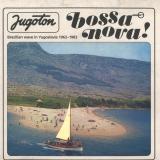
Rich musical history of Yugoslavia reveals a long-lasting love for the music of Latin America.
Entwined in Afro-Cuban rhythms, ballrooms were shakin', swayin' and swingin', gathering musicians who were heavily into jazz bands and orchestras, most notably in Ljubljana, Zagreb, and Belgrade. Jazz could be heard on the streets of Split way back in 1919 when dancing became a symbol of freedom. Radio was the most loved household item, newest sheet music was in demand and collecting records was hip like today. In the aftermath of Second World War, jazz went underground but little by little, things changed and Ella, Satchmo, Dizzy and Miles came to visit, among others. Music festivals shaped the music for entertainment and variety of popular styles showed influences from all over the world. In the early sixties, one particular rhythm crashed on the coast of the Adriatic Sea: the rhythm of bossa nova!
In the whirlwind of various musical styles, Latin American music still played important part of the scene in the early sixties Yugoslavia. Beguine, tango, rhumba, samba, calypso, mambo and cha-cha-cha all found their place on the festivals inspired by famous Sanremo, festival of Italian popular song that largely shaped the musical taste of Europe. It was the era of instrumental rock, R & B and rock'n'roll - sounds of "imperialist America" now played freely on imported and hand-made electric guitars. While dancing halls had been turning into concert venues, bossa nova has come! Eydie Gorme with Blame It on the Bossa Nova and Paul Anka with Eso Besso (That Kiss!) tried to make us learn some new dance moves but it was Joao Gilberto's gentle singing and his new way of playing samba songs, along with Tom Jobim's modern dissonant harmonies and poetry of Vinicius de Moraes that created the magic. When American alto saxophonist and flautist Bud Shank visited Zagreb and Ljubljana in 1963 (with Boško Petrović in his quintet) "it was the first time we heard bossa nova!" remembers Stjepan Braco Fučkar. Jugoton, the biggest record company in Yugoslavia, released 4-track EP Bossa Nova by Bogdan Dimitrijević and his ensemble that same year! While not being fully accepted or understood completely, the archives of Jugoton reveal to us various interpretations of this new trend from their vast catalogue.
Wrapped Up In Time is the fourth vinyl release by Night Foundation; the solo project of Intermedia artist and Noir Age label owner Richard Vergez. An existential suite of sounds comprised of analogue synth and drum machine, guitar, clarinet, tape loops and other assorted space racket.
The LP offers solo, instrumental passages punctuated by duets with Noir Age alumni: Underground vocal legend Little Annie reputable for her past collaborations with Coil, Nurse With Wound, Swans and countless others, lends her lived-in pipes for Blue Garage; along with Belgrade-based sound artist Zhe Pechorin for Night Blooming Jasmine; a tribute to our passed brother David Lynch.
Both rhythmic and expansive, Hinterland searching; Wrapped Up In Time is a processing of grief, memory, and the current state of our revolving loop of life. Recorded in South Florida, 2024-2025.
Mastered by Giuseppe Ielasi of Senufo Editions.
For fans of: Coil, King Tubby, Dead Can Dance, Scorn, Sabres of Paradise, and Vicious Pink
Limited edition of 100 on black vinyl with full color matte jackets
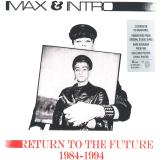
On the occasion of the celebration of the tenth anniversary of our work, in cooperation with PGP-RTS, we prepared a quite special edition: Max And Intro-Return To The Future 1984-1994 LP collects 12 tracks of this legendary Belgrade synth-pop group on high-quality 180-gram vinyl, remastered from the original master tapes with a handful of extras: the record comes with a rare interview from 1985, a lyrics sheet, and phenomenal unreleased photos by Goran Basarić and Max’s Poster.
Left field gangster synth jazz with a deep house nu boogie banger on the flip. BYRON THE AQUARIUS made their STAR CREATURE debut with a few remixes on Belgrade's IGOR JADRANIN's "CONTEMPORARY MOVEMENT" EP earlier this year. The A Side hits that squelchy synth bouncey stank face that’s heavy in the bass but light on the feet. The B Side collabs with STEVEN KLAVIER on vocals which one may recognize from his disco-forward collabs with KENNY DOPE, SOUL CLAP, KON, ELI ESCOBAR, and more.
- Egy Pillanatban A Végtelen
- Levegovétel
- Atfordul
- Földet Ér
- Otthon
GREY OTTHON VINYL[24,79 €]
TÖRZS, Hungary's premier instrumental post-rock band, return with the understated sonic beauty of `Menedèk', their first new music in six years. Loosely translating as `Refuge', `Menedèk' sees the freshly bolstered trio in their element; finding shelter, comfort and joy in the act of creative collaboration whilst the storm of day to day life weathers ever on. A steadfast and admirable mission statement centred on staying true to themselves in the moment, being open to growth and documenting this process as honestly as possible has led to TÖRZS building a reputation as one of Hungary's most exciting musical collectives. Three stunning albums of organic and perfectly composed contemplation, as well as the band's transcendental live shows alongside acts including contemporaries We Lost The Sea, Oh Hiroshima, Föllakzoid and more have placed TÖRZS at the forefront of a post-rock movement that prizes the shared experience of band and listener above all else. The band's previous full-length release, 2019's `Tükor', was recorded live at Aggteleki Cseppkobarlang, a UNESCO World Heritage protected cave system, 500 metres below the Aggteleki National Park. Embracing the cave's utterly unique natural reverb almost as a fourth member led to `Tükor' receiving critical acclaim, with TÖRZS were subsequently nominated for the HEMI Music Awards 2022 and invited to perform at the likes of Moscow Music Week (2020), The Budapest Showcase Hub (2021) and 2024's Changeover Festival in Belgrade, Serbia. Whilst the intervening years have seen unprecedented change on a global scale, TÖRZS too found themselves in a state of flux. The band returned to the more traditional studio setting in 2023, working alongside long-time producer György Ligeti, in order to faithfully capture the intimate energy of songs meticulously crafted together in their small rehearsal space, a far cry from 2019's subterranean setting. However, having spent countless hours writing, orchestrating and recording the pieces that have become `Menedèk', the band's founding drummer Zsombor Lehoczky stepped away from the band and music as a whole. Where this might have been catastrophic for any other band, remaining members Soma Balázs and Dániel Nyitray soon found a connection with Tamás Szijártó, who approached TÖRZS' music with the same openness to creativity in the moment; not `performing' as such, but simply working together to produce breathtaking, musical escapism away from the daily humdrum. The album's themes of shelter, refuge and support resound clearly on lead single `Otthon'. Meaning `At Home' in Hungarian, `Otthon' serves as a de facto introduction to the record. The song's lilting groove, soaring yet soft guitar palette and the band's signature delicate dynamism all combine to invite the listener to reflect; not steering one way or another yet inviting us to close our eyes and join the flow. Elsewhere, the pounding, chiming `Levegovétel' proves TÖRZS are still staying true to their mission statement of documenting the inevitable process of change. Here the band embrace elements of post-rock's harsher, heavier side with a cacophony of driving half-time drums and distorted, open-chord guitars yet still provide brief havens of space for themselves, the song and the listener alike to breathe before the euphoric swell rises anew. Whilst TÖRZS' previous full-length effort was a spectacular collision of the band's tight-knit existence and the (literal) echo chamber of the world outside, `Menedèk' is introspective, understated and refreshingly brave in its honesty. TÖRZS have opened the doors to their inner sanctum, their rehearsal space, their songwriting process, their friendship; inviting us to live in it with them, to revel in the moment together. FOR FANS OF Godspeed You! Black Emperor, Explosions In The Sky, This Will Destroy You, Caspian, MONO, Sigur Rós
- 1: Prepad
- 2: Svetski Osmeh
- 3: Daj Mi Sansu
- 4: Progresio Sam
- 5: Djuskaj
- 6: Kupatilo Je Shvatilo
- 7: Meterology
- 8: Otisli Smo
Original[30,88 €]
ŽUR (‘Zhure’, party) is absolute cult and one of the most rare Yugoslavian disco funk albums, originally recorded in 1981, reissued on Everland Music for the first time since the original vinyl came out more than 40 years ago. The album was carefully and brilliantly remastered by grammy nominated sound engineer Jessica Thomson.
Boban Petrović is a legend of Belgrade's sophisticated disco funk scene from the late 70s and early 80s.
Back in the second half of the 70s Boban started one of the first disco clubs in Belgrade and he was one of the biggest organizers of private house parties.
The finest balance between Boban Petrović's big-hearted party-maker-turned-philanthropist personality and his hustler one was achieved on Žur.
On Žur, he is at home, in his safe place, since the parties, the music and the people are the first out of many things he had completely figured out in his life. He is at the top of his game, occasionally bothered by a casual heartbreak, but always feeling himself, coming out playful and fundamentally peaceful, satisfied and ready to transcend himself in order to put the rest of the world in the limelight. In fact, Žur isn’t about the party, music, lyrics or its, hands down, beautifully balanced sonics. It’s about Boban and the funk he lived thoroughly. The funk before, but the funk he lived after this album even more so. All the ups and downs that he faced since the moment the first needle dropped on a Žur record to this very day are on this album as the unwritten destiny of that lighthearted character he played.
In short, ŽUR represents the essence of underground club life in Belgrade from the late 70s, when the album was recorded.
The quality of this trust is confirmed by the fact that Boban Petrovic's music is still actively listened to today, not just anywhere, but at the finest club events.
High end production and extremely authentic arrangements outside the mold of classic disco music, and lyrics that literally convey the vibe of his already jet-set lifestyle in Belgrade at the time.
Shortly after his musical career, Boban Petrovic became a businessman of the conscious class. He was living in Spain on his own luxury yacht for years, he had a private airplane, a car park. But all this time living on highest class level he never lost his identity. In all his offices, yacht, airplane and everywhere was playing loud funk music and he was dressed like a musician who just finished or need to start a gig.
Along the way Boban also wrote two books: Rokanje 1 & 2 describing the time when the album ŽUR was created.
The ŽUR album is one of the the holy grails of disco funk music releases on a global level.
ŽUR (‘Zhure’, party) is absolute cult and one of the most rare Yugoslavian disco funk albums, originally recorded in 1981, reissued on Everland Music for the first time since the original vinyl came out more than 40 years ago. The album was carefully and brilliantly remastered by grammy nominated sound engineer Jessica Thomson.
Boban Petrović is a legend of Belgrade's sophisticated disco funk scene from the late 70s and early 80s.
Back in the second half of the 70s Boban started one of the first disco clubs in Belgrade and he was one of the biggest organizers of private house parties.
The finest balance between Boban Petrović's big-hearted party-maker-turned-philanthropist personality and his hustler one was achieved on Žur.
On Žur, he is at home, in his safe place, since the parties, the music and the people are the first out of many things he had completely figured out in his life. He is at the top of his game, occasionally bothered by a casual heartbreak, but always feeling himself, coming out playful and fundamentally peaceful, satisfied and ready to transcend himself in order to put the rest of the world in the limelight. In fact, Žur isn’t about the party, music, lyrics or its, hands down, beautifully balanced sonics. It’s about Boban and the funk he lived thoroughly. The funk before, but the funk he lived after this album even more so. All the ups and downs that he faced since the moment the first needle dropped on a Žur record to this very day are on this album as the unwritten destiny of that lighthearted character he played.
In short, ŽUR represents the essence of underground club life in Belgrade from the late 70s, when the album was recorded.
The quality of this trust is confirmed by the fact that Boban Petrovic's music is still actively listened to today, not just anywhere, but at the finest club events.
High end production and extremely authentic arrangements outside the mold of classic disco music, and lyrics that literally convey the vibe of his already jet-set lifestyle in Belgrade at the time.
Shortly after his musical career, Boban Petrovic became a businessman of the conscious class. He was living in Spain on his own luxury yacht for years, he had a private airplane, a car park. But all this time living on highest class level he never lost his identity. In all his offices, yacht, airplane and everywhere was playing loud funk music and he was dressed like a musician who just finished or need to start a gig.
Along the way Boban also wrote two books: Rokanje 1 & 2 describing the time when the album ŽUR was created.
The ŽUR album is one of the the holy grails of disco funk music releases on a global level.
Especial welcomes new artist DJ 1985 to the label. As so often, the idea of pushing new music has been the raison d'etre of the past decade. An EP of a love for Acid, from the breaks anthem of the title We Trippin’ to exploring the ethereal and even mind-melting Ambient House and Balearic of how the Roland TB-303 has become a fundamental element in the history of electronic music.
Soviet born; Belgrade exile Stanislav Grishchuk is DJ 1985. A man of many monikers, came to House later, originally progressing from Breaks, Hardcore and onto Drum and Bass as DJ Saint Man, a Mixmaster in the truest sense, switching it up to include Ghetto House and Booty, DJing led to producing, finally seeing DJ 1985 emerged to encompass Acid, Bleep, Breakbeat, Chicago and beyond.
A DJ supreme from the old school – check his Boiler Room mix for live vinyl dexterity – his productions nod to Aphex Twin and the Rephlex / UK lineage, the Techno. Electro of masters Underground Resistance and Drexciya and on to Italo, Italian House and early 90s New Jersey and New York’s golden period and of course the masters Kraftwerk, all influence the sounds of this debut EP.
Starting as 808 and 909 Electro and Techno jams, all the tracks are recorded live, MPC, synth and drum machines, no computers involved. We Trippin’ is built around the “Think” break, with trippy 303 line, some 808, synths and off we go “we trippin”.
Dolphin and Sirens was inspired by the Boka Bay dolphins of Montenegro, near where the recording was made. A flotation bath of warm dreamy acid beats and aquatic found sound, fast, shifting breaks, the Adriatic Sea of Croatia and beyond beckoning.
Catland’s title is a nod to Stanislav’s love of all the feline, but the breaks’n’303 cut is an endlessly uplifting spark, celestial, a cosmic evolutionary odyssey.
DJ 1985 completes his debut EP with the aptly titled The Last One. Spherular, mysterious, this rise of spatial breaks is a reawakening of symbolic music that is touched by both East and West. Stanislav’s music intersects, trans-national, almost spiritual and psychedelic. Live jamming, more hearted, the snap electro percussion, dream-laden pads are twinned with an ethereal otherness via the endless possibilities of the TB-303.
Sdban Records präsentiert unveröffentlichte Radioaufnahmen
von 1967 des serbischen Jazztrompeters, Komponisten und
Bandleaders Dusko Goykovich (1931-2023). Zu diesem
Zeitpunkt hatte er sich endgültig als einer der profiliertesten
Jazzkünstler Europas etabliert.
Goykovich wurde in Jajce, Bosnien und Herzegowina, damals
Teil des Königreichs Jugoslawien, geboren. Er studierte von
1948 bis 1953 an der Belgrader Musikakademie, spielte
Trompete in Dixieland-Bands und trat im Alter von 18 Jahren
der Big Band von Radio Belgrad bei. Nach seinem Umzug
nach Frankfurt 1956 etablierte er sich in der westdeutschen
Jazzszene, wo er mit Kurt Edelhagen und Kenny Clarke &
Francy Boland spielte. Mitte der 60er Jahre kehrte Goykovich
nach einem USA-Aufenthal nach Europa zurück und stellte der
Welt bald seinen innovativen Balkan-Jazz-Sound mit Swinging
Macedonia (1966) vor, einem Album, das durch
melancholische Melodien und anspruchsvolle Rhythmen
gekennzeichnet war.
Especial is a label always on a mission to unearth left-of-centre perspectives on club music. This new EP, Be Honest, is just that from long-time friends Lipelis and Arsenii, who are based in Belgrade and New York but seek inspiration in the New York sounds of the 80s and hook up with Gayana for some woozy and lovelorn vocal additions. 'Be Honest' is a dubbed out and swaggering deep disco groove that comes as long, dub and cappella versions on the A-side.
The 12" dance mix brings some superb house drums into the picture and the Dubplate VIP is a fresh jungle rhythm. This is an EP with something for all.
The Lost Record is the underground rock 'n’ roll exploitation sci-fi film of this time. Starring Pauline Jorry andf eaturing appearances and contributions from Henry Rollins, Emmett Kelly, Michelle Mae, Paul Zone, Howie Pyro, Kid Congo, Crush, Automatic Band and scores of other underground notables, The Lost Record—directed and produced by Ian F. Svenonius and Alexandra Cabral—is a film set in a murky indeterminate future / past world where one record, The #1 Record, holds sway over society. In this world The #1 Record is unavoidable and ubiquitous; pumped out nonstop on the airwaves, intercom, and television with its irresistible and infectious message of totalitarian consumer control. The status quo is challenged when a protagonist—played by Pauline Jorry—a worker on an art assembly line, stumbles on another record at a junk-shop which is neglected, lost, and unplayed. Called The Lost Record, it suggests another way to live; another set of values. Enchanted, she begins to play it for others, much to the consternation of the authorities. Can / will it challenge the #1 Record? And what will happen if it succeeds? Based conceptually on the Escape-ism song of the same name, the soundtrack features a beautiful original score by Alex Minoff (of Golden, Extra Golden and Weird War fame) plus music by Emmett Kelly, Escape-ism, The Make Up, plus sound blurbs from this singularly poignant, funny, and affecting film which has won citationsand & notices at Belgrade's Kinoskop festival, Indie Lisboa, and the Chicago Underground Film Festival among others.
Unreleased themes from Kornelije Kovac for commissioned documentary short 'Raport iz Sarajeva', directed by Miodrag Zdravkovic in 1982. This music themes precede the official songs, idents and audio logos for the XIV Winter Olympic Games Sarajevo 1984 opening ceremony made by Kornelije Kovac in his Belgrade based studio from 1982 to 1984. Sourced from the original master tapes with full color artwork by Eric Adrian Lee. Includes insert with photographs from Kornelije Kovac private collection and liner notes by Zeljko Luketic. XIV Winter Olympic Games in Sarajevo 1984 had immeasurable status in the history of Yugoslavia and is widely recognized by organizing committee to be the best in recent history of the Games. However, they were also the pop-culture melting pot of the times, with posters by Andy Warhol and famed local designers and the music by Kornelije Kovac, leading the selected best-of-the-best composers of the times. The recordings on this release share the same musical approach to melody and structure Kornelije Kovac (1942 - 2022) was using at the beginning and the mid of 1980s: while exploring the possibilities of synthesizer, fresh from his collaborations in London with famed composer Hans Zimmer, and almost a decade since he shared Eurovision Song Contest stage with ABBA in Brighton with his Korni Grupa, He also collaborated with Bernie Marsden (Whitesnake), Paul Jones (Manfred Mann) and Andy Pask (Landscape) among others. Kornelije Kovac always insisted on the freshness of the harmony layers combined with DJ friendly rhythm backing track. With the warm analogue feel that resonates in today's digital world this was chosen for a purpose to be an old-school 12'' maxi-single, as it was intended to be, cut loudly for the sakes of all lost and existing discotheques in Sarajevo and all over the world.
This is quite a unique release , as expected with genre-defying label Subsound Records. From a mystical frontier where the East meets the West comes a psychedelic wonder called The Cyclist Conspiracy This musical collective consisting of ten men and women creates unique sonic escapism for the soul that embark any listener onto a long-haul voyage without further ado. New album "Mashallah Plan" is a psychedelic tapestry that blends infuences from various parts of the world into a seamless unique "desert" rock experience - a monumental psychedelic piece set in the landscapes of Northern Africa and the Middle East bolstered by some magnifcent choral work and powerful riffs. The Cyclist Conspiracy, The (Anti) World Orchestra is the musical output of The Little Brothers dedicated to The Mysteries of The Last Age. Started as an informal project within the Society For The Development Of Alchemical Studies "Vasko Popa" in 2014, it is now a musical troupe consisting of ten male and female souls. The orchestra draws infuences from various parts of the world while trying to avoid superfcial, "new age" eclecticism and direct its creative efforts towards the synthesis of the given elements. Whether it's the Byzantine Empire or secret nomadic paths of the desert, the smokey cafe crowded with manges and frivolous women, or the steppe with the sky for shaman only, psychedelic or turkce rock, Middle or Far East, the journeys the cyclists taking are never the quest for the heart of this world. Sometimes they appeared as a symbolic quest for Constantinople, the heart of The Cycling of Byzantium, but they are always the quest for the heart of the only true light Agape. The Cyclist Conspiracy have played numerous concerts in Serbia and neighboring countries, whether as headliners, support for other bands (Acid Mothers Temple, King Dude, Hayvanlar Alemi), or a part of festival lineups (Haywire Festival (RO), INdirekt (CRO), Zelenkovac Jazz Festival (BH), The Music of the Secret Society that Owns Belgrade (SR)). Their new album "Mashallah Plan" is a psychedelic tapestry that blends infuences from various parts of the world into a seamless unique "desert" rock experience - a monumental psychedelic piece set in the landscapes of Northern Africa and the Middle East bolstered by some magnifcent choral work and powerful riffs.The band comments: "Mashallah Plan" is a story about a spiritual journey on a bicycle. This simple device reveals its profound symbolism only through the path of most resistance and thus represents a perfect esoteric vehicle for The Dark Age we are living through".
"There could barely be a better figurehead for Belgrade's simmering multi-limbed music scene than Jan Nemeèek" The Quietus `Dissolved', a new album by Serbian synthesist and sound designer Jan Nemeèek, began its life cycle in a studio live room. It unpacks the paradigm of the individualistic act of computer music creation, transporting it into the communal setting of a band, its performers contributing elements ranging from prepared piano to Turkish lyre. The album opens with an unexpected falter, a false start that imbues the album with a sense of vulnerability. It's as if the album itself is finding its footing, mirroring the dissonance of an orchestra tuning. This digital ensemble, an assembly of electronic voices, seems to search for its harmony, its discord, its pitch, its timbre - much like a traditional counterpart would. As it unfolds, `Dissolved' further taps into the raw tonalities of partially defunct digital synthesizers, ranging from early 2000s' attempts at neural networks to precursors of oscillator-laden software synthesizers, in order to build its cloud of suspended tension and alternate histories. Through this clash of wistful piano and biting frost of digital pads with the iridescent hum of tube amps, the album reflects New Age tropes through the prism of metal (machine) music. Hailing from Belgrade, Serbia, Jan Nemeèek has been releasing electronic music since 2005, with a particular focus on ambient and bass-heavy electronic compositions. Nemeèek's music is characterized by his use of a wide range of sound generating tools, including neural networks, analog synthesizers, and granular synthesis. His approach to music production allows his work to unfold with patience, influenced by borderline dub sub-bass movements and heavily based on deconstructed recordings. Jan has released several albums, most notably 2014's Fragmented and later Recurrences. Prior to that, he co-founded the Creative Commons-based net label Norbu. `Dissolved' is set to be released on vinyl and digital on 10th November 2023 via Refractions, a new imprint founded by Nemeèek.
ele
Mit einer neuen, klaren Vision, die sich während der 2-jährigen, durch die Pandemie erzwungenen Pause herausgebildet hat, stellt das Album ”A Living Commodity” einen dynamischen künstlerischen Wandel von Egyptian Blue dar und zeigt die ganze Bandbreite und Ambition ihres Songwritings.
Der erste Vorgeschmack auf die neue Musik kam in Form von ”Geisha”; eine von Psychedelik geprägte Punk-Offensive, angetrieben von Luke Phelps treibendem Bass in Kombination mit Isaac Ide’s kraftvollem Schlagzeug, untermauert von den beiden Frontmännern Andy Buss & Leith Ambrose, die mit ihrem zackigen Gitarrenspiel den beklemmenden und düsteren Text mit Buss’ Bekenntnis ”I live for only you” zu einer anziehenden Klangcollage ergänzen.
Die jüngste Veröffentlichung ”Matador” und die aktuelle Single ”Skin” zeigen die von EB gewohnte hochintensive Gitarrenband-Dynamik, aber mit einer neuen Klangdimension, die an Kid A-era Radiohead, die Anfänge von Interpol und Gang Of Four erinnert.
Jetzt, nachdem sie ihre gesamte kreative Energie in die Erschaffung ihres Debütalbums ”A Living Commodity” gesteckt haben, das einen unbestreitbaren neuen Ehrgeiz und Hunger zeigt, sind Egyptian Blue bereit, ihren Status als eine der besten neuen Gitarrenbands aus Großbritannien zu behaupten.
Beograd (Belgrade in Serbian) is a four-piece Serbian electronic band, formed in the capital of the former Yugoslavia in 1980. Influenced by bands such as Kraftwerk, Depeche Mode, Ultravox and Human League, it played a role pioneer on the Yugoslav synth-pop scene. Their first studio album, Remek Depo, was released in late 1982 on cassette and early 1983 on vinyl by public label PGP RTB. It was a huge media success, released at the time of the effervescence of Belgrade's alternative scene, a vibrant underground movement of avant-garde artists and musicians that included leading bands such as Sarlo Akrobata, Ekatarina Velika, Idoli, Electricni Orgazam, etc. Unfortunately, the band disbanded shortly after the album's release. The album contains politically provocative lyrics for the time. Produced by Saša Habić, it stands out for the quality of its guest musicians - timpanist Borislav "Bora Longa" Pavićević, avant-garde saxophonist Paul Pignon and veteran jazz trumpeter Stjepko Gut - who contributed to its soulful side. , creating a unique combination of hot and cold.
Max & Intro was a short-lived duo formed by Vincent Max and Intro Johnnie in Belgrade. In 1984 they composed “Ostavi Sve” (in English: “Leave Everything”), probably the greatest ex-Yugoslavian minimal synth song of all times with heavy rotation on radio and even TV appearances. It was a tribute to Fairlight synthesizers, in that time non affordable for these young musicians and became an obsession, especially for Max. In 1985 was published their first and only release “We Design The Future” including “Ostavi Sve” and the B-side “Beogradska Devojka”, another synth gem.
TRANS TEHNOPOLIS EXPRESS is a sonic techno train on an international route that connects Kiev - Ljubljana - Madrid - Belgrade.
The locomotive is driven by six main drivers:
the magnificent well-known KESSELL with his uncompromising heavy groove techno bit.
A veteran of the hard extraspheric and hypnotic techno STANISLAV TOLKACHEV.
ALAVUX - which breaks the monotony between East and West and last but not least, three engine drivers, members of the underground techno movement Tehnopolis from Ljubljana: ORGANON, LXS and THON KLAND, who established an international sonic line with their original pieces.
The vinyl record has a sticker with the Bandcamp redeem code, where you can download the entire compilation (6 pieces), including Thon Kland - Edge - (ALAVUX remix) and ORGANON - HII - (Original), not on vinyl.
In collaboration with Croatian label Sareni Ducan, Discom proudly presents an official reissue of a very rare self-titled album of Yugoslavian 80’s funk band Boom Selekcija.
Boom Selekcija was a short-living group of musicians from Belgrade, active from 1979 to 1983. They recorded their debut and only album for the label Diskos in 1983 and after that disbanded. The line-up included musicians from Boban Petrovic’s backing band and Silva Delovska from Kim Band on vocals. The quality of recorded material and the complete lack of information about the band set them as a cult act among DJs and crate diggers. This is one of the albums which makes you ask ”What is this?” when you hear it, but nobody around could tell you an honest answer.
A side of the record begins with a track called Moje Cake (eng. My Tricks). It is a groovy theme with mellow vocals-a story of the poser who thinks he is very interesting. The same groove continues in the song Rokenrol Štipaljke (Rock And Roll Easy Girls) where friends are preparing for a crazy go out in a discotheque. It ends in a Balearic atmosphere in the songs Studentski San ( eng. A Student’s Dream)- a song about dreaming luxurious life on the Adriatic coastline) and Vladina Gitara (eng. Vlad’s guitar)-a nice dreamy guitar instrumental in the 70’s Yugoslavian style.
Equally groovy and interesting B side portrays naive and charming 80’s Belgrade: discotheques, parties, girls, tough guys, urban stories about real-common people and their destinies … all packed with such style and grace like you are in New York City suburbs in the late ’70s and enjoy perfect funk/soul musicianship. In this sense, you can hear: amazing slap bass by Vladan Mracic in the song Zuljas Me ( eng. You Are Going To My Nerves); cool funky guitar licks by Aleksandar Stefanovic in the song Bora Klej; authentic soul singing style of Mile Perisic and beautiful electric piano solo of Oliver Polak in song Frizerka Nada (eng. Nada, The Hairdresser) and convincing funk rhythm drumming by Zoran SImovski all way through.
This record will remain a significant point for investigating Yugoslavian funk history and it will be welcomed on every dance floor in the world that favors lesser-known grooves. We hope that we will manage to bring it closer to the younger audience and show how people used to live and have a good time in Belgrade and Yugoslavia.
- A1: Ss-Say - Care
- A2: Oskarova Fobija - Beli Dekolte
- A3: Danton's Voice - I Hear The Bells
- A4: Sympathy Nervous - Polaroid
- A5: Pas De Deux - Cardiocleptomanie
- B1: Robert Lawrence & Mark Phillips - Computer Bank
- B2: The Fast Set - Kaleidecon
- B3: Reserve - Destination Pour L'inconnu
- B4: Kym Amps - You Don't Know My Name
- B5: Unovidual & Tara Cross - Microphone Connection
A compilation of Minimal Wave from around the world ‘79-‘85. »The Hidden Tapes« features rare, unreleased, and licensed tracks from as far as Japan and the former Yugoslavia. Most of the bands on this compilation recorded on 4-track tape in their bedroom studios while two of them went further to collaborate by sending tapes through the mail. The sounds on this record range from raw proto-industrial to naive danceable Belgradian new wave, to filmic synthesizer music to more complex, vocal-driven melodic synthpop.
Rootz Lions Band share the love for conscious roots reggae music & are dreadicated to taking the music forward in these times.
Bassplayer Carlos Silva is the founding member of the band. In 2016 he gathered some of the Dutch reggae scene's most experienced musicians, each of them having previously played with top local and international artists - most recently the band have performed with Army, Prince Jamo, Donovan Kingjay, Black Omolo, Iyiapo Tafari, Chezidek and more.
MLK is a singer from Sierra Leone, based in the Netherlands. He performs regularly live with bands and in 2018 released the acclaimed LP 'The World Is In Trouble' with The Breadwinners on the Bionic Dread label.
King Cooper (AKA King Kooper in the Jazz world) from Amsterdam has a long & fascinating career, playing reggae, jazz, funk & soul with the likes of Doe Maar, Sister Sledge, Coopertest & many, many more... proving himself as one the world's top saxophonists.
Hornsman Coyote from Belgrade, Serbia is one of the leading Trombonists in the modern reggae scene and works regularly with top producers & labels internationally, such as, Lee Perry, House Of Riddim, Rolling Lion, Jah Works, Earth Works, Jerry Lions to name but a few. His career started as the front-man for Belgrade Hard-Rock-reggae crossover band, Eyesburn & is a singer songwriter in his own right with a huge catalogue from over 20 years of continued performance & recording.
Plunder was recorded and mixed at Earth Works Studio, Amsterdam
Long time in the making, finally here:
Belgrade’s Tapan debut on Offen.
It is to the detriment of our understanding of musicality that we mostly measure it by the capacity to produce, and much less by the capacity to receive some sort of acoustic information or event. The virtuosity of listening, of understanding the sonic situation and its potential, is, however, that which defines one's capacity to interact – with other musicians, with the audience, and with the environment. This could also be taken to mean that an ethical act is implied in the situation of listening – the decision to relate, to be attentive to, to actively position oneself in relation to what is heard.
Rarely is this capacity so thoroughly pronounced and ethically conscious as in the case of Manja Ristić, the Belgrade-born and Royal Academy of Music-schooled musician, composer, sound and multimedia artist (the list could go on), who currently lives on the island of Korčula in the Croatian part of the Adriatic. Ristić’s recent, field recording-based work, is indeed all about attentiveness, most of all towards the environment and the acoustic traces of the endangered ecological layers of her old-new Mediterranean surroundings. With that in mind, it is indeed no wonder that her newest album draws from Milton’s Paradise Lost, which could easily be the anti-slogan of the endangered Croatian coast, eaten up by the pressures of touristification and the usurpation and privatization of once common space. More precisely, the album is inspired by one of the fifty Gustave Doré illustrations of Milton’s epic, Him, fast sleeping, soon he found, In labyrinth of many a round, self-rolled, from which it draws its title. The verses and the scene are from Book IX, and depict the moment Satan inhabits the Serpent, the beginning of his subversion of God’s autocratic rule, as some interpretations would have it.
For Ristić, the actual Paradise she introduces us to is in a state of imbalance – the idyllic soundscapes of her island surroundings overlain with sonic anxiety, such as on the album’s first track, The Flies, with its unrelenting, nervous buzzing evoking the ominous Biblical entity of Beelzebub, or The Lord of the Flies. The next track, Whales, which beautifully utilizes archival whale recordings, could also be taken to establish an intertextual relation to Milton through Melville, whose Moby Dick was strongly influenced by Paradise Lost. The middle track of the album, dedicated to the Croatian-American painter and muralist Maksimilijan Vanka, uses to great, unsettling effect what to my ears sounds like a buried hydrophone, a technique often employed by Ristić in her work, giving us a rough, grinding impression of water beating the pebbles over a high-pitched drone. But perhaps the most ominous, pessimistic image is painted in The Flag Pole, in which the symbol of revolutionary victory (I’m thinking of the Yugoslav modernist Tin Ujević and his proto-avant-garde sonnet Farewell from 1914) becomes a source of terrifying sonic unease, as we are listening to the incessant sound of its rope hitting the metal pole. However, with Dlana Night comes relief – the drones become airier, calmer; there is a distant notion of people, dogs, everyday life, all shrouded in the calming sound of the crickets on the island of Silba. Ristić, ultimately, serves us some hope on this wonderful new album, showing us that something has been lost, but that something can also be gained through the thoughtful attention with which she listens to the world around her.
„My recording techniques all boil down to one thing – intuition. I do not use expensive or highly sensitive equipment nor do I employ special techniques. On the contrary, I believe that the information regarding a space or an object can be recorded well enough on an average device. My personal guideline when recording sound is the positioning of myself as the listening medium, active and with the intention of establishing a connection that is sometimes intellectual, sometimes conceptual, and sometimes phenomenological.” - Manja Ristić, in an interview for Kulturpunkt.hr
New album by the Berlin-based musician, composer and producer MIDORI HIRANO aka MIMICOF, entirely recorded using the EMS SYNTHI100 at Electronic Studio Radio Belgrade during an artist residency: contemporary electronic music / ambient for the advanced listener.
Midori Hirano is a Japanese musician, composer and producer based in Berlin. She started learning the piano as a child and later studied classical piano at university. Therefore the music she releases under her own name is based on the use of piano, but yet experimental and an eclectic mixture of modern digital sounds with subtle electronic processing and field recordings. So far, Hirano released 7 solo albums under her civilian name on labels such as Sonic Pieces and DAUW.
Under the moniker MimiCof she explores the realm of more experimental music and detailed rhythmic patterns, combined with an idea of drawing melodic shapes and harmonies. As MimiCof she performed at prestigious festivals and events such as CTM, Heroines of Sound Festival, Boiler Room Berlin and L.E.V. Festival, and was selected by Frank Bretschneider for the first volume of the "Sichten" compilation series on his raster label.
Besides producing her own works, Hirano has composed music for dance performances, video installations and films which have been screened at Berlin International Film Festival, Krakow Film Festival, SXSW Film Festival and HongKong International Film Festival (among others) and remixed tracks by artists including Rival Consoles, Foam And Sand aka Robot Koch, Liars and Pascal Schumacher.
While the last MimiCof album "Moon Synch" (2017, Alien Transistor) was recorded on the Buchla analogue modular Synthesizer at EMS Elektronmusikstudion in Stockholm, her latest effort "Distant Symphony" (the 4th as MimiCof) was created on a different synthesizer: the EMS SYNTHI 100 Synthesizer at Radio Belgrade. All sounds from this instrument were recorded as single sound samples at first, then mixed and modified into three long pieces of music, so that the audience can experience the machine's uniqueness and versatility of sound. Hirano understands this work as a gesture of respect for the SYNTHI 100's character: though a vintage instrument, it has never lost the beauty of its modern sound.
- 1: Ponor Naviše – Uplifting Abyss
- 2: Prolećna Groznica – Spring Fever
- 3: Hej Krčmarice – Hey Waitress Mama
- 4: Blue Kum – Blue Best Man
- 5: Dan Za Danom – Day By Day
- 6: Uspomena - Memento
- 7: Ne Dolaziš Više U Moju Ulicu – You Don’t Come By My Street No More
- 8: Moja Soba – My Room
- 9: Sećanje Na Prošlo Leto – Remembering Last Summer
- 10: Balada - Ballad
What would you do if a never before released jazz funk album from 70s Yugoslavia had dropped suddenly into your arms? An album which sounds like a crate diggers holy grail!? Album full of heavy drum breaks, repetitive bass grooves, superb sax solos and world class jazz arrangements finely intertwined with Yugoslavian folk music elements?! - “PRESS IT!” ~ That’s what we said always striving to present the future of unheard sound of Yugoslavia! With the help from Mr. Cosmic himself (Željko Kerleta), Jovan Maljoković and his wife Nevenka and, of course, Radio Belgrade who provided the recordings buried deep in their library, here we present Jovan’s first vinyl release since 1989 and his album nr. zero. If this LP was released in 1976, sounding this clear and impressive as it sounds today, it would be up on the pedestal with cult Yugo jazz-funk releases such as Sećanja by Miša Blam (also released on Everland) – and believe me – it would burn a whole through your wallet. Don’t allow me to get started on the Jovan’s ensemble personnel here, represening the crème de la crème of jazz and funk instrumentalists of Yugoslavian Jazz (Goce Dimitrovski, Miloš Krstić, Kire Mitrev, Miodrag Maljoković, Aleksandar Sanja Ilić, Miša Blam, Uroš Šećerov...). The raw execution, top recording and compositions resembling but not imitating the greatest contemporary western jazz-funk ides of the time, that sound like something that could have been easily released on Mainstream, Columbia, MPS or even be an authentic Kudu hit record if it had been released at the time by Creed Taylor. Just listen to the track A1 Ponor Naviše with a whirlwind of big band arrangement turnovers or track B1- Uspomena (hint: Sećanje...) where Jovan takes on the ‘Lame donkey’ in a strong downbeat rearrangement released just two years after Volker Kriegel published it on his album Lift! (MPS/BASF 1973.). You’ll be blown away by the instrumental prowess of the ensemble and Jovan’s ideas! ~ Dr. Smeđi Šećer
Alga Marghen proudly presents "Water Angels", an LP with previously unreleased tracks by Katalin Ladik, following the monumental "Phonopoetics" from 2019. "Water Angel", the title track, is a side-long work from 1989. It began its life containing a plice of "O Fortuna" from Carl Orff's "Carmina Burana" and was first staged in an artificial fog on a lake at the 1989 Spoleto Festival in Italy. The texts include fragments of her own lyrics mixed with parts from James Joyce and Lewis Carroll in a kind of sonic-textual collage of processed sounds superimposed to environmental field recordings. one can also hear the composer Erno Király, her first husband, playing his self-built instrument called "Zitherphone", a 58-stringed huge engine of sounds assembling five zithers in a single body, with pick-ups placed on some of the strings. The first part of "Water Angel" was used as a starting point for "Three Orphans", another composition juxtaposing electronically modified voice with recordings of folk songs, this time Hungarian. It's a kind of "adaptation of a Hungarian folk ballad", utilizing recordings done in Transylvania in 1940, registered with a wax cylinder phonograph and gathered by Radio Novi Sad. Thanks to the collaboration with Boris Kovac, the sound engineer for this project, the quality of Katalin Ladik's screams, whispers, chants, laughter, giggles is now significantly improved, and in some ways the subtle nuances of her virtuoso interpretation find here their most powerful rendition. Also presented on this record are three and never before issued works created by Katalin Ladik in collaboration with the composer Svetlana Marasch at the electronic studio of Radio Belgrade in 2019, "Electric Bird", "White Bird" and "Ice Bird". combining extended vocal techniques, processing and modular synthesis, these tracks confirm the artist's radical temperaments that helped to define her work during the 60s and 70s, while pushing it further into new territories thus revealing an artist with almost no peer in the experimental landscape today.
Tolouse Low Trax, Sacha Mambo, General Purpose and newcomer Berkay Mate get on the remix of Ex Ponto’s ‚ Neka Neka' LP. Neka Neka is a nod to ex-Yugoslavian experimentalists of the 80s (Rex Ilusivii, Kozmetika, Miha Kralj etc) and the thriving, late-night hedonism of Belgrade's Club 20/44
Tolouse Low Trax provides a remix to Middle Path that is experimental, deep and pulsating. The track is obscure, but has a pulse that you can feel in your chest and ears listening to be beautiful spoken words which will leave you in a trance.
Sacha Mambo reworks 20-40 into a vivid melodic trip that goes into the explorations of the cosmos. The movement of this track is groovy and uplifting, it will keep you on the move. The eclecticism and craziness of Sacha Mambo are definitely heard in this remix.
General Purpose remix Ex Ponto into psychedelic drug chug. This mid-tempo acid banger will keep your body moving, melt your mind and the break down will set you off. Close your eyes and immerse yourself in the vivid journey.
Berkay Mete serves up a remix of intoxicating Eastern sounds. This track is ideal for a sun soaked dancefloor or in the darkness of the nightclubs. Wherever it is played it will, the rhythm will grab you and keep you.
After years of being lost at sea, the ancient scrolls containing the long sought after fragments of X-Coast were discovered. It was decided that the transcripts be pressed onto plates and scattered throughout the realms, so that the age-old knowledge may never be forgotten.
On the front side of the disc, we deciphered two XTC transmissions. The first, "XTC I" dates from the original session. The second is the final attempt known to us, "XTC V".
The reverse side unfolds with an interpretation of "XTC V" by the prophet known as Foamek, who brings it to new, uncharted reaches of euphoria. The next scroll, titled "Horns" is a real collector's gem, played just once before during the inaugural X-Coast Boiler Room - transmission Belgrade.
The plate ends with what we believe is the first X-Coast session ever recorded. Simply called "Horizon”, it was evident that the inhabitants of the island stumbled upon something legendary.
This is a one-time opportunity to obtain the scrolls. Do not let them fall into the wrong hands!
Episode 4 of the Baroque Sunburst saga features Belgrade Ambassador Zarko Komar - aka Feloneezy - whose personal and intimate Uptempo production-style has previously found a home on Hyperdub.
"Axis to Axis" is a four-tracker that goes hard on resampling, blending Jungle and Juke with field recordings. The EP captures us in a hypnotic psychedelia, lubricated by moments of Dub and Jazz, with the unexpected fragments of vocals interrupting to drag the listener back to Earth.