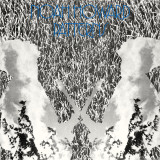
Picking up where "Máquina de Vénus" (Blacksea Não Maya) left off, this is now 100% DJ Kolt at the controls. Slow, grinding power tools working their way across the complex web of ideas the producer lays down. Truly a next level thing, taking elements from recognized styles such as tarraxo, EDM, even trap, bending their accepted signifiers to suit his own creative mind instead of the crowd pleasing monster that constantly haunts Dance Music. Here we find a wonderful, twisted approach to the dancefloor, one heavy on brain activity, fantastically moody, showcasing music that we long ago quit trying to define.
"Despertar" (again) changes the game, adding secret doors and pathways previously unheard and unthought of. This right here is the mark of a unique producer. You'll have a hard time trying to compare Kolt with any other artist on Príncipe, much less on the outside world. A keen sense of groove filters through all tracks, the dance is never forgotten but you know there are certain demands - you can't just expect a straight line to "a good night out", there's an effort required, you'll have to reach out as well so you can let loose and connect with the universal Master Plan.
The album is all made up of liquid transitions as much as rock-hard foundations, perfectly capable of being explicit when honouring the roots but so committed to a new stance that one may feel thrown off balance by the sheer genius of
Search:ben balance
- 1: Alan Vega, Bobby Gillespie, Andy Mackay - Blood On The Moon (Mekon Rebuild)
- 2: Renegade Soundwave - A.d.i.d.a.s
- 3: Bobby Gillespie - I Put A Spell On You
- 4: Robert Ames & Ben Corrigan - Chrome Ocean (Mekon Mix)
- 5: Rema-Rema - Rema-Rema (Mekon Mix)
- 6: Leslie Winer - When I Was Walt Whitman (Mekon Remix)
- 7: Hbar - Hendy
- 8: Mekon & Schooly D - Saturday Night (Hit By A Rock - Fucked Up Mix)
- 9: Mona Mur - Tied (Mekon Vs Hit By A Rock Mix)
- 10: Jiz - I Am The Moon
- 11: Zos Kia & Isabelle De Jour - May Day
John Gosling (aka Mekon) the English big beat/industrial musician and electronica producer, is set to launch his new label Hua Hua (pronounced wah wah) with an 11-track compilation album this July. A quick scan at some of the featured artists showcases a line up of legends - eighties rap sensation Schooly D sitting alongside Primal Scream mainstay Bobby Gillespie and John’s recently departed punk hero Alan Vega - even Roxy Music’s saxophonist and founder member Andy Mackay makes an appearance. And while John’s electronic alter ego Mekon is always on hand to remix and arrange, he’s far from the only producer behind the proverbial wheel.
“It’s stuff I had lying around and now I am finding ways to get it out of my system,” he says. “It’s all been brought to the world with brilliant new artwork by Isabelle de Jour, who also features on various tracks.”
Gosling is well known as a member of both Psychic TV and Coil (for the album Transparent). Gosling founded the groups Zos Kia with John Balance and Bass-o-Matic with William Orbit before recording as Mekon. He has also remixed under the name Sugar J. And that’s before we get to the fact that he has soundtracked some of the most forward-thinking fashion shows in the world - crafting the soundscapes for Alexander McQueen shows since the show Dante in 1996. Firstly working hand in hand with the late great Lee “Alexander” McQueen, then with his successor Sarah Burton. In the mid-to-late-nineties he was a core member of the group Agent Provocateur along with Matthew Ashman (originally of Bow Wow Wow), Dan Peppe, Danny Saber (of Black Grape) and Cleo Torez. He has also worked with artists such as Roxanne Shanté ('Yes Yes Y'All'), Marc Almond ('Delirious'), and Afrika Bambaataa. His third album “Something Came Up” featured artwork by Alexander McQueen.
John is as passionate about Suicide and Alan Vega and what he describes as “the new stuff”. Besides, he says, “that’s how people listen to music now. I think kids – my kids anyway – listen right across the board. People don’t see genres anymore. So it’s my definition of good music.” It’s safe to say that this is very much Volume 1. “Yes, it doesn’t cover everything and Volume 2 will be completely different.”
Following up on the Hayal EP in 2023, Dutch techno refractor Konduku makes a welcome return to Bitta with another four cuts of prismatic club fuel. Throughout his consistent output Ruben Uvez applies non-standard ideas to the techno formula, toying with rhythm and eliciting transcendental atmospheres from unusual patterns. This mode of exploration continues unabated on Gazoz, with the title track in particular leaning on a full-frequency, one-note synth pulse which dominates the mix and becomes truly hypnotic in its relentless presence. In the wrong hands it would come off garish, but ?vez knows how to weave subtlety around such forthright sonics to create a sublime sonic experience. 'Mikros' aligns with Konduku's more recognisable palette -- taut, bell-like rhythmic threads that balance delicacy and impact while tunnelling into mysterious, introspective zones. Aimed squarely at the heads-down section of the night, 'Luna' strides forth with a decisive dub techno palette and finds space for expression and progression in the most linear of arrangements. In true B2 style, 'Inici' rounds the EP out with a more fractured approach centred on reversed kicks and psychoactive arps riding wide and slow pitch bends for a mind-melting finish running at a formidable pace. As well as showcasing Konduku at his best, the sound on Gazoz serves as an extension of Bitta boss DJ Nobu's own particular tastes in techno -- brain-tweaking machine music crafted from supple parts, honed for the club without being limited by it.
- A1: Silent Night (3:39)
- A2: All I Want For Christmas Is You (4:01)
- A3: O Holy Night (4:27)
- A4: Christmas (Baby Please Come Home) (2:33)
- A5: Miss You Most (At Christmas Time) (4:32)
- B1: Joy To The World (4:18)
- B2: Jesus Born On This Day (3:41)
- B3: Santa Claus Is Comin' To Town (3:24)
- B4: Hark! The Herald Angels Sing/Gloria (In Excelsis Deo) (2:59)
- B5: Jesus Oh What A Wonderful Child (4:26)
- B6: God Rest Ye Merry Gentlemen (1:18)
LP 2x12"[46,18 €]
LP[26,68 €]
LP[26,68 €]
7" single[15,92 €]
12" single[15,92 €]
12" single[17,61 €]
LP[19,75 €]
2LP[90,34 €]
The Holiday Album That Turned Mariah Carey into the Queen of Christmas: Featuring the Standard “All I Want for Christmas Is You,” the Singer’s Blockbuster Merry Christmas Exudes Joy, Spirituality, and Conviction
Sourced from the Original Master Tapes, Presented in Audiophile Sound for the First Time, and Strictly Limited to 3,000 Numbered Copies:
Mobile Fidelity’s UltraDisc One-Step 180g 33RPM LP Set Plays with Superb Detail, Openness, and Definition
1/2" / 30 IPS / Dolby SR analogue master to DSD 256 to analogue console to lathe
Mariah Carey didn’t become the Queen of Christmas just because of her fervent love of the holiday. Or as the result of a brilliant marketing plan. The iconic singer earned her title by way of her blockbuster Merry Christmas, a 1994 album that quickly joined the likes of Bing Crosby’s White Christmas, A Jolly Christmas from Frank Sinatra, and Nat King Cole’s The Christmas Song as an all-time holiday vocal classic. Featuring a balanced mix of inspired originals and well-chosen covers, Carey’s fourth studio record has only grown in stature as new generations discover its magic. Mobile Fidelity’s 30th anniversary edition reissue of Merry Christmas makes her spellbinding performances and upper-tier register come alive like never before.
Sourced from the original master tapes, pressed at Fidelity Record Pressing, and strictly limited to 3,000 numbered copies, the pioneering label’s UltraDisc One-Step 180g 33RPM LP set of Merry Christmas plays with superb detail, depth, and dimensionality. Available in audiophile quality for the first time since its original release three decades ago, and featuring the bonus track “God Rest Ye Merry, Gentlemen,” the nine-times-platinum set breathes with a newfound openness and transparency that enhance the spirituality, passion, and festive tenor of Carey’s singing.
Benefitting from superb groove definition, a nearly inaudible noise floor, and dead-quiet vinyl surfaces, the music takes on a heightened energy and anticipatory emotion synonymous with the holiday season. Carey’s signature vocals explode with liveliness and dynamics, the full scope of her acrobatic range presented in clear, transparent sound that practically places her on a small stage in your listening room. This collectible version also breathes with the kind of warmth, intimacy, and coziness you want from a landmark vocal album.
Recorded when Carey helped put “diva” back into everyone’s vocabulary, Merry Christmas gave the New York native another smash right out of the box. What nobody knew at the time was the degree of the album’s staying power — and how, many years removed from its initial promotion cycle, its legend would still grow and even spark a 2010 sequel. Having re-entered the Top 200 charts every year since 2019, Merry Christmas ranks as one of the three most commercially successful holiday LPs ever made and, in due time, will likely earn the top distinction in that class. A global blockbuster, it seamlessly ties together Christian, gospel, and secular threads and speaks to a boundless audience, independent of denomination.
Most obviously, the record remains inescapably connected to “All I Want for Christmas Is You,” an uptempo anthem that towers as a holiday standard and one of the biggest-selling singles in history. Punctuated with celesta chimes, sleigh bells, springy keyboards, and joyous beats, the song echoes the simple albeit engaging melodies and doo-wop style of beloved holiday classics of yore — and blends such elements with contagious dance-pop rhythms to create an atmosphere rich in joy, wonder, and excitement. Radiant with golden soulfulness and sincere conviction, Carey’s exuberant singing and on-point phrasing put it all over the top. And how.
The song stands as the only effort in Billboard history to top the Hot 100 chart during at least three separate runs. Carey’s blockbuster has already hit No. 1 during five runs, spanning every year between 2019 and 2024. That’s just one of the many records the singer holds — and only one of the multiple highlights from Merry Christmas, which includes two other Carey-penned originals, “Miss You Most (At Christmas Time)” and “Jesus Born on This Day.”
Though slightly lesser known, Carey’s remarkable rendition of Darlene Love’s “Christmas (Baby Please Come Home)” further links her album with the big, lush, Wall of Sound heritage that helped inspire its production. Carey’s heartfelt take and transformation of the traditional “Santa Claus Is Coming to Town” into an animated tune that even adults can believe, as well as her clairon reading of “Joy to the World” — cleverly augmented with bits of Three Dog Night’s 1971 hit of the same name — further reinforce her status as Queen of Christmas.
At the peak of her powers, Carey finds equivalent success when tapping more spiritual veins. Witness the reverence she brings to the timeless carol “Silent Night,” the piousness she invests in “Jesus Oh What a Wonderful Child,” and the sacred feeling she conveys throughout “O Holy Night.” You’ll also never think of “Hark! The Herald Angels Sing” and “Gloria (In Excelsis Deo)” the same way again after hearing Mimi pour her heart and soul into them, and pair the songs together.
Indeed, it’s Carey’s pliable voice, melismatic technique, and five-octave range — on display here in definitive fashion — coupled with her undeniable love for Christmas and understanding of the religious significance of the season that make Merry Christmas a must-have holiday staple. And on Mobile Fidelity’s LP, something you better add to your wish list.
Classic free jazz album reissued for the first time since the 70s. Old-style gatefold sleeve LP, with liner notes by Ed Hazell.
Noah Howard, an alto saxophonist and composer, was known for weaving intricate and innovative musical patterns, often likening his work to "sound paintings." His 1971 album Patterns, the first LP he self-produced on his Altsax label, stands as a testament to his experimental and spiritual approach to music. In interviews, Howard frequently used visual terms like "patterns" and "shapes" to describe his compositions, emphasizing the importance of melody and structure even in highly improvisational settings. For Howard, patterns and melodies were essential to guiding listeners through his explorations without alienating them, maintaining a balance between innovation and accessibility. Howard's quest for an original sound was deeply influenced by jazz greats like Charlie Parker, Ornette Coleman, and Jackie McLean. While he admired these legends, Howard avoided imitation, striving instead to develop his own distinct voice. His sound was unmistakably his own, and he felt a deep obligation to carry the jazz tradition forward through personal expression, not by mimicking others. His music was also rooted in spirituality, a legacy he traced to his upbringing in the Black Baptist Church. He believed jazz had always contained a spiritual essence, from Louis Armstrong to John Coltrane, and his work aimed to channel this cosmic, spiritual energy.
Patterns was recorded in the Netherlands during Howard's second stint in Europe, where he found a more open, less racially charged environment compared to the U.S. For the album, Howard collaborated with Dutch musicians such as Misha Mengelberg (piano), Han Bennink (drums), and Earl Freeman (bass). Despite the challenges faced by guitarist Jaap Schoonhoven, who felt out of place in the session, the album came together as a powerful mix of blues, jazz, and classical elements.
The music on Patterns is a high-energy fusion of American free jazz and Dutch improvisation. Howard's saxophone work alternates between leading with passionate, lyrical lines and blending into the collective improvisation. The album’s dynamic interplay, particularly between Mengelberg’s dissonant piano clusters and Bennink’s thunderous drumming, creates a vivid "sound painting" full of contrasting forms and colors. Patterns remains one of Howard’s most unique and celebrated recordings, showcasing his visionary approach to jazz.
The first in a four-volume retrospective of Kuduro and tarraxinha pioneer DJ ZNOBIA. Incoming unto the world for a very long time from the musseke of Rangel, home of Casa da Mé&e Ju, in the Angolan capital o Ldanda, one if not the pivotal visionary of his country’s music electronic and digital modernism DJ Znobia, o/fum/an inventor. Usually considered the first purveyor of the fluency regarding tarraxinha (drinking in its foundational slow shuffle from the city of Benguela), as well as a main player in free thinking, spontaneous, funny, depressive, silly, melancholic, hilarious all encompassing beats within kuduro, batida, techno and beyond, his influence as a producer, DJ, MC and public fiuce has had a great imprint in Angolan culture for the better part of the last three ecades. This venture went through over 700 tracks of his archive (more than double are lost in the meantime between his and the NNT library) in order to collaboratively select a fiercely representative albeit balanced affair from his production, between instrumentals for sung kuduro, instrumental kuduro/batida, sung and instrumental tarraxinha, and other creative styling from the late 90’s to the mid 2000’s. Forms now heard around the world which started here, with Znobia a decisively influential contributor, along with several of his peers and collaborators, which will be also in evidence in this four volume retrospective. His story is way too far flung for this endeavor to try and make a simple narrative out of it. You have to be him, you have to be within this territory, and we ask of the people who will approach to ask him what has happened with the history of this music and what is the current reality at ground zero Luanda, as he is a mirror and visionary of its streets, in a country with such complicated dynamics and brutal treatment of its citizens. To try to put in a clean slate for this conversation, let’s talk to a genius of street music. Your question. First, here's the opening collection of what we have to share with you.
- A1: Runway
- A2: Track Of The Time
- A3: Reaching Through
- A4: Holy Low
- A5: Just To Feel Alive
- B1: Seasons Change
- B2: Some Are Lucky
- B3: Ruby
- B4: Call The Days
- B5: Holy Loud
8/10 FULL-PAGE LEAD REVIEW IN UNCUT: “TALENTED ARTISTS SUCH AS ALDOUS HARDING , DELANEY DAVIDSON, IVY ROSSITER AND MARLON WILLIAMS REPRESENT A FRESH COUNTRY-FOLK/AMERICANA MOVEMENT IN AND AROUND CHRISTCHURCH AND DUNEDIN. NADIA REID'S IMPECCABLE DEBUT WILL MAYBE SET A WIDER ORBIT IN MOTION.”
4/5 LEAD REVIEW IN MOJO: “INSPIRED DEBUT BY A YOUNG NEW ZEALAND SINGER-SONGWRITER YOU'LL FEEL YOU'VE KNOWN FOREVER. A WONDERFUL ALBUM"
SUNDAY TIMES DEBUT OF THE WEEK: "SHE RANKS ALONGSIDE LOW AND THE COWBOY JUNKIES FOR DELIVERING SLOW-BURN EMOTION"
"It has all that well-smoked wisdom, that mingling of strength and yearning that seems to charge the work of all my favourite female artists – Laura Marling, The Weather Station, Sharon Van Etten and Tift Merritt, to name but four. Reid is just 23, and since I am loathe to run that “old beyond her years” line, let us simply say that when I hear a young artist making an album as soulful and rich and self-possessed as Listen to Formation, Look for the Signs, I feel so thrilled not only for the existence of that record but for all the music they will make over all the years to come.” THE GUARDIAN PLAYLIST
6MUSIC ALBUM OF THE WEEK
A richness of voice; a depth of emotion; and wise beyond her years; with Listen To Formation, Look For the Signs, 23-year-old New Zealand native Nadia Reid has claimed her place as one of the country’s most evocative and profound young songwriters. Her music traces the sharp mountain peaks, azure coastline, and mirrored images of the land and sky that pinpoint her home country’s vast open landscapes.
Whether nerding about with friends, stunning audiences into silence with her spellbinding live shows or unwinding in the tranquillity of her favourite hometown spot overlooking Port Chalmers’ harbour through her large-rimmed spectacles, Nadia Reid has achieved a gloriously fresh and eloquent new folk sound. “I’ve been in New Zealand my whole life and guess at times I take for granted the serene beauty that I live so closely with,” she says of her music’s majestic affiliation with nature. Mapping out tales of change and loss, whilst drawing inspiration from reading, writing, the human condition, falling in and out of love, death, and birth - it all lends to a superbly balanced album that moves surreptitiously between sparse and fragile melancholia to beautifully brutal lyricism with a philosophical maturity that bellies her years.
Born in Auckland, Nadia’s acoustic roots stem from an upbringing in a musical household where attending folk clubs and festivals were regular occurrences on the family calendar. “I was lucky to witness a lot of live music and theatre performances because my mum was an actress. I was encouraged to learn piano and guitar, and attended a Steiner school where we spent a lot of time in nature, singing songs.” Before long Nadia was listening to The Be Good Tanyas with friend and fellow recording artist Aldous Harding, which spurred her chosen career path. “There was something spiritual about the Tanyas’ records - I vividly remember the goose-bump feelings up my arms, a true connection to the lyrics and vocals,” she recalls. “Aldous was the first person who told me I had a good voice and I thank her for that. I admire her as an artist and writer, and we like to keep up with what each other is up to.”
Creating her own enchanting wonderworld, each of Nadia’s songs explores the elements; truly organic, her vocals ebb, flow and soar but are always ignited with fire from the gut. Her lyrics clearly reference lush landscapes but equally reflect alienation provided by the surrounding Pacific Ocean and mortality of living in such close proximity to Mother Nature’s wrath, as experienced whilst living in Christchurch at the time of 2011’s devastating earthquake. “It shook the city to its core,” Nadia recalls. “I’m sure living through it has shaped my personality and writing. My first EP was recorded just months afterwards, it was a strange time. We were all quite fragile, but I was braver somehow.”
Boldly infusing folk with full flavour, Listen To Formation, Look For The Signs was produced by Ben Edwards, owner of Lyttelton Records in his Sitting Room studios with Nadia’s band consisting bassist Richie Pickard, guitarist Sam Taylor and percussionist Joe McCallum. Whilst 'Reaching Through’s rich but unhurried nature evokes She Hangs Brightly -era Mazzy Star and intricate nuances of Beth Orton are recalled on lead single ‘Call The Days’ which talks of moving to a new town and was the first song penned after Nadia moved from Christchurch to Wellington; spurred on by a “panic attack” and being “worried about making the right choices in life”. Elsewhere ‘Runway’ and ‘Some Are Lucky’ immediately channel Nadia’s love of TBGT’s Jolie Holland and appreciation for New Zealand’s Maori music by Maisey Rika and Anika Moa, plus the inspirational narratives of Kenyan-born Somali poet Warsan Shire.
"We're happy to announce the repress one of El Búho's more emblematic album and a key release on downtempo scene.
On Camino de Flores, his second full-length album, El Búho reimagines electronic music through the lense of the natural world and its rich soundscapes.
Drawing on the inspiration of traditional rhythms and sounds, notably from Latin America, Camino de Flores is an album that transports you to another place. Following the success of his first LP, titled Balance, El Búho is back and takes us on a journey from high mountains to cascading waterfalls, from a dusky rainforest to a crackling fire beneath a clear, star-filled sky. The album charts a pathway between traditional rhythms, the sound of the natural world, IDM electronica and a deep, enveloping dancefloor sound."
- Meditation
- Going Home
- A-1 Funk
- Every Step Of The Way
- Black Magic Woman
- Gypsy Queen
- Oye Como Va
- Yours Is The Light
- Batukada Xibaba (She-Ba-Ba)
- Stone Flower (Introduction)
- Waiting
- Castillos De Arena, Part I
- (Sand Castle)
- Free Angela
- Samba De Sausalito
- Matra
- Kyoto
- Castillos De Arena, Part Ii
- (Sand Castle)
- Se A Cabo
- Samba Pa Ti
- Mr. Udo
- Toussaint L’overture
- Incident At Neshabur
One of the Most Exhilarating Live Albums Ever Released: Santana’s Lotus Documents 1973 Performances Distinguished by Passionate Soulfulness, Chemistry, and Inventiveness
Mobile Fidelity’s 180g 33RPM 3LP Set Features Reference Sound and Deluxe Trifold Packaging Faithful to That of the Original Japanese Import: Strictly Limited to 5,000 Numbered Copies, Includes Four Photo Inserts and Two Fold-Out Posters
The bizarre legacy of Lotus transcends its status as both the definitive onstage document of Santana’s career and one of the most spectacular live albums ever released. Originally issued in 1974, the triple LP contains exhilarating performances of the band recorded at two shows in early July 1973 at the 2400-seat Osaka Kosei Nenkin Kaikan concert hall. It bears witness to the eight-piece collective playing with a chemistry, inventiveness, cohesiveness, and soulfulness no other Santana lineup would ever surpass. Featuring seven previously unreleased tracks as well as remarkable renditions of material from Santana’s first four albums and the Carlos SantanaJohn McLaughlin collaboration Love Devotion Surrender, Lotus simultaneously suggests and inspires, dreams and delivers.
Transferred by original engineer Tomoo Suzuki, strictly limited to 3,000 numbered copies, and housed in deluxe trifold packaging faithful to that of the original pressing, Lotus benefits from reference audiophile treatment on Mobile Fidelity’s 180g 3LP set. Featuring rich tones, smooth dynamics, excellent separation, deep soundstages, and involving presence, this reissue pays tribute to both the virtuosic lineup and the magnetic fusion of Latin- and Afro-Cuban-influenced jazz, rock, psychedelia, R&B, and blues. The complexity of the spiritual passages, demands of the crescendos, delicacy of the calm transitions, electricity of the solos: everything is rendered with superb balance and free of the harshness, compression, and fatiguing peaks that would otherwise distract from the presentations at hand. Black magic, indeed.
- Court And Spark
- Help Me
- Free Man In Paris
- People's Parties
- Same Situation
- Car On A Hill
- Down To You
- Just Like This Train
- Raised On Robbery
- Trouble Child
- Twisted
Joni Mitchell Gets Jazzy, Counterbalances Love and Trust with Freedom and Confusion on Court and Spark
Mobile Fidelity's UltraDisc One-Step 180g 45RPM 2LP
Plays with Definitive Detail and Clarity: Pressed on MoFi SuperVinyl Strictly Limited to 5,000 Numbered Copies
Box Set Features New Liner Notes
1/4" / 15 IPS / Dolby A analogue master to DSD 256 to analogue console to lathe
Court and Spark, the most commercially successful album of Joni Mitchell's trailblazing career, arrived after a year in which she took some time to breathe and kept a low profile. The pause led to more breakthroughs for the singer-songwriter. Marking Mitchell's increasing drift toward jazz (and affinity for Miles Davis and John Coltrane), Court and Spark garnered four Grammy nominations, earned the Best Album of the Year vote in the prestigious Pazz & Jop poll, and ranks #110 on Rolling Stone’s list of the 500 Greatest Albums of All Time.
Sourced from the original analog master tapes, pressed at Fidelity Record Pressing on MoFi SuperVinyl, strictly limited to 5,000 numbered copies, and featuring new liner notes, Mobile Fidelity's UltraDisc One-Step 180g 45RPM 2LP box set presents the 1974 classic with definitive detail, tonality, and directness. Marking the first time the revered LP has received audiophile-quality treatment, it's one of six iconic 1970s Mitchell records Mobile Fidelity is reissuing on vinyl and SACD sets.
Benefitting from a virtually nonexistent noise floor, dead-quiet surfaces, and superior groove definition, this collectible edition reproduces without compromise the textures, details, and breathtaking craftsmanship that help make Court and Spark into what many fans believe is the Canadian native’s finest hour. Notes bloom and decay as they do amid an acoustic live environment. Soundstages extend far and deep, with black backgrounds and balanced tones adding to the uncanny realism.
The reference-grade presence and openness put in transparent view Mitchell’s incisive words and unique phrasing, as well as the contributions of her prized support musicians — including Tom Scott and the L.A. Express as well as guest turns by the likes of David Crosby, Graham Nash, Jose Feliciano, and Robbie Robertson. Mitchell, experimenting with the melodic parameters of guitar and piano, is rightly found at the center of it all. The jazz-rock rhythms of drummer John Guerin, slippery guitar lines of Larry Carlton, vibrant horns and reeds laid down by Scott — crucial to the songs’ shape-shifting arrangements — can now also be heard with fresh ears.
Visually and physically, the packaging of the Court and Spark UD1S set complements its distinguished status. Housed in a deluxe slipcase, both LPs come in foil-stamped jackets with faithful graphics that illuminate the splendor of the recording. This reissue is for listeners who desire to engage themselves in everything involved with the album, including Mitchell’s “The Mountain Loves the Sea” painting — a picture of waves embracing and receding away from a mountain, a metaphor for the record’s lyrical themes — on the cover art.
Pitching deceptively light compositions against underlying tensions, Court and Spark witnesses the singer-songwriter finding her footing with a group of top-shelf musicians who seemingly understand her visions as well as expanding her lyrical palette and venturing further into territory no artist had dared explore. Mitchell’s accessibly complex structures, beat-propelled rhythms, and spirited interplay with Scott & Co. both give the music a different identity than her prior efforts and point in the directions she soon headed.
Lyrically, Court and Spark matches the wit, integrity, originality, and intellect of anything in Mitchell’s oeuvre — no small feat. Offsetting positives with negatives, and considering circumstances from multiple angles, Mitchell explores issues connected to love and freedom, certainty and confusion, and trust and fear with unfettered boldness and introspective empathy. She teeters between surrender and retreat, and spends a majority of the record sussing out the complications and sacrifices involved with such actions.
Mitchell addresses the transactional nature of desire (the intimate title track, the upbeat “Raised on Robbery,” complete with rock ‘n’ roll pep from Robertson and zesty sax from Scott); anticipation and disappointment of romance (“Car on a Hill,” “”Down to You); fame and celebrity (“A Free Man in Paris,” “People’s Parties”); and sanity (the dark and stormy “Trouble Child,” a satirical cover of Annie Ross’ “Twisted”). Throughout, she sings with an emotionally penetrating beauty and devastating honesty that teaches about ourselves.
Or, as Mitchell relays on “People’s Parties”: “Laughing and crying/You know it’s the same release.”
Krauty electrocis from FACTORY FLOOR re-promoted now! The music is taken from a project originally commissioned by London's Science Museum to live score Fritz Lang's 1927 cinematic landmark, Metropolis on its 90th anniversary. The band performed the score live at the Science Museum's IMAX in April 2017 in an event that was part of the acclaimed Robots exhibition. This new release is a studio recording of the 150 minute score, recorded in its entirety and mixed by Nik Void with the exception of the tracks `Heart of Data' and `Babel' which was mixed by award-winning producer Marta Salogni. It's something of a rite of passage for electronic artists to compose music for the classic sci-fi movie Metropolis, and with the simply named Soundtrack for a Film, Factory Floor join the ranks of Giorgio Moroder and Jeff Mills. ... While Soundtrack for a Film is subtler than Factory Floor's albums, it still bears the duos signature approach. ... Soundtrack for a Film also takes Factory Floor's skill at making expansive, evolving tracks to its logical conclusion, and the album could be heard as one two-and-a-half-hour cut. Despite its length, Gurnsey and Void never lose focus thanks to their carefully chosen motifs. ... As Factory Floor balance the organic and mechanical aspects of Metropolis and their music on Soundtrack for a Film, they achieve the best of both worlds -- a commissioned work that's just as original as their own albums. - Available as a box set comprising four 12" vinyl on the band's own imprint H/O/D Records. The artwork is by British artist Haroon Mirza adapted and arranged by Nik Void in collaboration with illustrator Sam Moore.
Next up on Feral Child comes the debut vinyl release from Austin Tx psych outfit NEON LEMON.
Having caught the eye of label head Dom on some cool looking, local Spacemen 3 themed nights’ posters; further digging revealed this incredible, richly melodic, yet deep psychedelic beauty with -seemingly- no home for a release on wax, so it was pretty easy to step in and offer to release it. “Hypnagogic Visions” is a superb, fuzz n’ drone drenched 6 track 10” LP in a sleeve designed by the legendary Jim Franklin (a friend of the band) who famously designed beautiful posters, flyers and gig tickets for the Elevators, Shiva’s Headband and Canned Heat amongst others, in his role as owner of the Vulcan Gas Company, a revered 60s Austin psychedelic club and concert hall. As Ben Siebert from the band explains: “This record was mostly written and recorded in a warehouse space outside of Austin (that no longer exists) called The Inner Chamber. We tried best to capture our live sound in this space, and with most band members in a state of constant turmoil at the time of its recording, this space offered a refuge from our personal lives and a place to transcend reality through creation of this music.” Neon Lemon blends together mind altering psychedelic sounds of the 60's with transcendent space rock of the early 70's. Finding their own balance between free form psychedelia and a mainline of roots rock and roll.
Limited one time 10” pressing, distributed by Forte Music Distribution and available late October 2024.
Just under a year after their acclaimed self-titled debut, dreampop duo deary release a brand new six-track EP – Aurelia – via Sonic Cathedral on November 1. It includes the singles ‘The Moth’, ‘Selene’ and ‘The Drift’ and features Slowdive drummer Simon Scott playing on three songs. It will be available on three different vinyl variants, a CD with three bonus tracks and digitally. It’s a stunning record, which displays a new-found maturity in terms of production as well as musically and lyrically. The band – singer Rebecca ‘Dottie’ Cockram and guitarist/producer Ben Easton – have had to grow up in public since the release of their debut single at the start of 2023, supporting legends such as Slowdive and Cranes and TikTok sensations like Wisp along the way. An aurelian is a rare old term for a lepidopterist – someone who studies and collects moths – derived from the Latin aurelia, meaning chrysalis. The perfect title for an EP which is based around the theme of metamorphosis and change. “It leans on the natural world, the human body, the earth and sky as well as human emotion,” says Ben of how the EP represents physical and metaphysical growth. “Change can be daunting but equally exciting, which is something we’ve come to learn.” “While writing the EP, I found a letter I had written to myself when I was 22,” adds Dottie. “I was fresh out of university and had moved back in with my parents as Covid was in full force. I was uninspired and lost and reaching out to my future self for some hope. It was a physical representation of what can happen in a few years; how much can change and how you never know what’s coming next. “I found it interesting that – at the age of 26 – here I was looking back to my younger self for hope or just some comfort in the fact that things will and do move on. It was important to me to bring both of these versions of myself into the new songs.” “Personally, I had noticed a change in myself; a new level of social anxiety, a strange disassociation to things that once brought me joy as well as negative repetitions in my daily life,” reveals Ben. “I began the year sober which allowed me to finish the writing process as a letter of care to my own mental health. There are motifs throughout the EP – for example the riffs in ‘The Moth’ and ‘The Drift’ being reminiscent of each other – which are like musical reflections of these repeated cycles.” It’s musically where the change deary have undergone is most obvious. ‘The Moth’ mixes howling guitars atop a strident breakbeat making it more Curve than Cocteaus; ‘Selene’ is a slow-building wall of noise; ‘The Drift’ combines a perfect pop melody with an incredible sense of urgency. These three singles are balanced by the brief but beautiful ‘Where You Are’ which leads into the Portishead-style trip-hop of ‘Dream Of Me’. The title track has been a staple of their live sets for about a year as ‘Can’t Sleep Tonight’, but its mix of The Cure circa Disintegration and Mezzanine Massive Attack has grown and evolved so much that they renamed it ‘Aurelia’ as the embodiment of the change they have been through. “We’ve allowed deary to naturally grow over the past year, we didn’t want to force it to take a certain shape or sound,” explains Dottie of the duo’s slow and steady approach. “A lot of the last EP was written by sending ideas back and forth over WhatsApp, but this time we were able to sit in the same room and I think that really shows. We know each other a lot better now as we have experienced this journey together and that benefits the writing process as we are more open with each other and can be vulnerable.” “Aurelia definitely feels a lot more collaborative, more personal and more fully realised than the first EP,” concludes Ben. “It feels like a real document of what has been a very important time in both of our lives. Ironically, the band has changed and matured even more since the recording, so we’re both excited to document the next stage
PIFF Records welcome 4 in - demand artists to the label on their latest release, also available as a limited 500 press vinyl release. Home to forward-thinking house, trance, and techno, PIFF Records boasts a diverse yet united musical output. Cosmic, dub - driven techno, atmospheric house beats, and everything in between coalesces under the imprint’s distinctive output of thoughtful, club - ready sounds. All aspects of PIFF Records come together on this release as the featured artists balance the cerebral and visceral in their productions.
Cybernet kicks off the release with Resonant Shifter. Pumping kicks lay the foundation for captivating synth arpeggios and warped call and response basses in this ‘90s - inspired cut of contemporary progressive trance. The perfect soundtrack for any location from sunset on the Ibiza seafront to sunrise as the shutters open at a warehouse rave.
Goa elements are out in full force on Hoe Down, courtesy of Glen S. Squelchy 303s, low textures, and metallic arpeggios resonate above a pulsating bassline and weighty kicks, relentlessly pushing forward and ascending to a new sonic dimension - taking you along for the ride.
Body Clinic substitutes the progressive trance for progressive house on Love X, bringing down the tempo but keeping intensity intact. An infectious, syncopated plucked bassline dances around groove - rich drums, psychedelic effects and leads indebted to early ‘90s releases. A masterful blend of the past, present, and future together on one track.
Closing the EP with Empty Clip, Tom Jarmey disrupts the 4x4 rhythms of the preceding tracks w ith a genre - bending cut of electro - infused breaks. Two-step drums are matched with clinical sound design, deep basses, and mystical arpeggios. Sure to add depth to any set and turn heads in the process.
Mint Green Vinyl.[22,27 €]
Since first bonding over Slowdive at a Texas karaoke bar six years ago, musicians Uriel Avila and Jonathan Perez have grown trauma ray into Fort Worth's foremost flag bearer of crushing shoegaze. A five-piece rounded out by bassist Darren Baun, drummer Nicholas Bobotas, and guitarist Coleman Pruitt, the band's debut album, Chameleon, captures their evolving sound at an apex of majestic devastation. A fusion of downer hooks, gauzy melancholia, and bulldozer riffs, the album heaves and crashes across 50 minutes of stacked amplifier alchemy. Lyrically the songs trace similarly lofty and brooding terrain; Avila says "The theme is death. And a chameleon, like death, can shape-shift in and out our lives in different forms." Chameleon opens with "Ember," dreamy and distant, alternately anthemic and apocalyptic, defeated and deafening. Lead single "Bishop" perfectly encapsulates trauma ray's depth and dimension, ripping out of the gate with "the biggest, baddest, saddest wall of sound." Lyrics about being burnt at the stake and "tossed in the flame" float above a stop-start assault of precision distortion, eventually expanding into a lush, heavy, sorrowful end coda. "Spectre" is a mysterious, introspective dirge, envisioned as a "mellow, slowcore, Duster-thing," all feeling and heavy fuzz chords (with no lead guitar). Avila wrote it, "to be a hymnal" from the perspective of someone who won't let go - a ghost, an ex, a shadow self. Although the album is rich with subtleties, graceful lulls, and "breaths of air," the band's three guitar attack is its defining force, a power flexed to its peak on "Bardo." Perez's intentions were blunt: "I wanted to write a riff that was hard as fuck." The result is alternately mean and eerie, veering between noisy one string bends and surging headbang, mapping a middle ground between Unwound and early-Deftones. One of trauma ray's greatest gifts is their ability to make doomy, sledgehammer heaviness sound like an earworm, without production tricks or gimmicks: "Riff, verse, chorus, three guitar parts - that's all you need." This quality is particularly apparent on the title track, a churning slab of amplifier worship, swirling chords, and heavenly, defeated vocals about not belonging, shape-shifting, and death ("A twisted face / Void of attention / An empty space / In your reflection"). "U.S.D.D.O.S" closes the album, swaying across seven minutes of grey skied guitar and haunted voice, subtly thickening as it deepens. Feedback and shrapnel gradually begin raining down, like a satellite disintegrating in the atmosphere. Titled as an acronym after a poem by Chilean writer Roberto Bolaño that loosely translates to "a dream within a dream," the melody softens, smears, and then disappears, slowly swallowed by the gravity of eternal descent. Chameleon is a masterpiece of craft, balance, melody, lyricism, and gravity, flexing a fresh vision of loud-quiet-loud architectures and the vertigo depths of blasted harmonics. From Slowdive to Nothing, to Hum and beyond, the band absorb and expand on their influences into a rare and dedicated alchemy. trauma ray's cinematic tempest is a gathering storm only just taking flight.
Black Vinyl[21,22 €]
Since first bonding over Slowdive at a Texas karaoke bar six years ago, musicians Uriel Avila and Jonathan Perez have grown trauma ray into Fort Worth's foremost flag bearer of crushing shoegaze. A five-piece rounded out by bassist Darren Baun, drummer Nicholas Bobotas, and guitarist Coleman Pruitt, the band's debut album, Chameleon, captures their evolving sound at an apex of majestic devastation. A fusion of downer hooks, gauzy melancholia, and bulldozer riffs, the album heaves and crashes across 50 minutes of stacked amplifier alchemy. Lyrically the songs trace similarly lofty and brooding terrain; Avila says "The theme is death. And a chameleon, like death, can shape-shift in and out our lives in different forms." Chameleon opens with "Ember," dreamy and distant, alternately anthemic and apocalyptic, defeated and deafening. Lead single "Bishop" perfectly encapsulates trauma ray's depth and dimension, ripping out of the gate with "the biggest, baddest, saddest wall of sound." Lyrics about being burnt at the stake and "tossed in the flame" float above a stop-start assault of precision distortion, eventually expanding into a lush, heavy, sorrowful end coda. "Spectre" is a mysterious, introspective dirge, envisioned as a "mellow, slowcore, Duster-thing," all feeling and heavy fuzz chords (with no lead guitar). Avila wrote it, "to be a hymnal" from the perspective of someone who won't let go - a ghost, an ex, a shadow self. Although the album is rich with subtleties, graceful lulls, and "breaths of air," the band's three guitar attack is its defining force, a power flexed to its peak on "Bardo." Perez's intentions were blunt: "I wanted to write a riff that was hard as fuck." The result is alternately mean and eerie, veering between noisy one string bends and surging headbang, mapping a middle ground between Unwound and early-Deftones. One of trauma ray's greatest gifts is their ability to make doomy, sledgehammer heaviness sound like an earworm, without production tricks or gimmicks: "Riff, verse, chorus, three guitar parts - that's all you need." This quality is particularly apparent on the title track, a churning slab of amplifier worship, swirling chords, and heavenly, defeated vocals about not belonging, shape-shifting, and death ("A twisted face / Void of attention / An empty space / In your reflection"). "U.S.D.D.O.S" closes the album, swaying across seven minutes of grey skied guitar and haunted voice, subtly thickening as it deepens. Feedback and shrapnel gradually begin raining down, like a satellite disintegrating in the atmosphere. Titled as an acronym after a poem by Chilean writer Roberto Bolaño that loosely translates to "a dream within a dream," the melody softens, smears, and then disappears, slowly swallowed by the gravity of eternal descent. Chameleon is a masterpiece of craft, balance, melody, lyricism, and gravity, flexing a fresh vision of loud-quiet-loud architectures and the vertigo depths of blasted harmonics. From Slowdive to Nothing, to Hum and beyond, the band absorb and expand on their influences into a rare and dedicated alchemy. trauma ray's cinematic tempest is a gathering storm only just taking flight.
After recent explorations into ambient and pop under his full name, Sacha Renkas switches back to his Antenna moniker for ALT013. The Kiev-born, longtime Rotterdam-based artist uses a rough-around-the-edges, hiss-laden palette to construct his intricate, pensive club tracks. Often recording on the fly, he embraces the limitations and quirks of the hardware he works with, curating the happy accidents that come with them and that help make his music feel as alive as it does. It is emotional and imaginative in spirit, yet raw, almost instinctive in its rendering. Renkas cites the new wave and synth-pop from his youth and the sounds coming from Chicago and Detroit, as well as the Dutch West Coast he encountered later on, as inspirations. The sensitivity and hands-on approach associated with these are also tenets throughout his work. The ''Another Wave EP,'' a selection of tracks created over nearly a decade, further substantiates this approach. Made on multiple MPCs, Juno synthesizers, and an Akai S900, and mixed on a Mackie 16-channel mixer, it blends, among others, elements of first-wave techno and European proto-trance. Opener ''Alisa'' stacks angular sine melodies and formant basslines one upon another yet flows like silk, its balance immaculately kept in check. On ''Everyone M1,'' the bass organ patch from which the track derives its title finds itself amidst a lo-fi flux of capricious arpeggiators, ethereal pads, and decocted drums. ''Another Wave'' is a carefully sculpted slow burner, collected in its unfolding. Wisps of melody, gated pads, and whisper seem to wind between its drum patterns; the tension looming beneath this patchwork never entirely reveals itself. ''Quasar'' blends signature dramatic chords and off-rhythm bells with a creeping acid bassline and more kaleidoscopic drum patterns. It closes an EP distilled in its form, confident in its intent, and nowhere too bothered by genre boundaries or other formal constraints.
- Cristal, Cristal Bass, S.a.d. Et Zagreb
- Crapauds Aux Cordes Étouffées Et Ressorts Sans Cône
- Chandelier, Cristal Et Croix
- Sept Croix Dont Deux Pitchées
- Douze Accords Simples De Sifflants Aux Attaques Coupées, Dont 2 Pitchés
- Croix, Sifflants Sans Attaque Et Ressorts Sans Cône
- Quatre Accords De Cristal Bass
After a triptych released by Un je-ne-sais-quoi, in barely 3 years, under the name Tachycardie, Jean-Baptiste Geoffroy, musician, composer but also visual artist, continues his very singular journey to the heart of sound matter, with an album composed on Baschet sound structures.
From the 1950s, the Baschet brothers created a truly innovative set of instruments which has since fascinated musicians seeking new sound experiences.
Both sculptures of glass, metal and instruments of great acoustic sharpness, these sound structures have made rare but remarkable forays into recordings of contemporary music (Bernard Baschet, Jacques Lasry, Luc Ferrari, Toru Takemitsu, Jonathan Fitoussi…).
The Baschet brothers were also keen to use these instruments for educational purposes in the form of workshops, cultural action projects or simply by inviting the public to try these instruments at the end of concerts. It is in the Ateliers Baschet, a place aimed at preserving and transmitting the work of the brothers (workshops, conferences, residencies) that Tachycardie recorded this new album.
After having combined on his previous albums, analog synthesis, audio-naturalism and percussion in an overwhelming balance, he explored here all the sonic variety of Baschet structures. He then just sculpted this sound material in his studio, using simple effects: editing and pitch.
The result is a new path to explore in Tachycardie’s world, made of subtle percussive crackles, beneficial chaos and restorative oscillations.
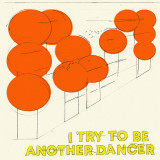
Brussels is a highway where rainbow-fuelled melancholia kids race its track, mountain and road bikes. Endless summers cherish the collective chosen chaos of the city; every corner displays wild micro-natures, buzzing insects, and rare weeds fourishing organically; tape hiss and AM radio compression are the soundtrack of everyday life. And hear! Originated in the Brussels DIY, indie rock and noise scene, a new kid on the block appears: Another Dancer.
They deal in utopian music - of the open, welcoming and whatsoeverish kind. It’s fresh, snotty, neurotic art-rock deeply rooted in 80s/90s DIY aesthetics. The songs on their debut album balance gently between forgotten pop hits and broken sound experiments. In their world, any shitload of weird, random, and badly synchronized sounds unveil broken-hearted pop mastery. In the Another Dancer universe, radios are stuck to WFMU and Soulseek is a self-conscious AI producing 80ies psychedelic FM-rock.
Brussels-based Another Dancer is outdated, wild at heart and elegantly shy. Their full album I Try to Be Another Dancer is out September 10th on Bruit Direct Disques and Aguirre.
"Flashes of the shambolic post-punk of Good Sad Happy Bad and the goofy, fraternal synth-pop of the blog-era gem Teenagers can be seen, often simultaneously, across the new single from the Brussels-based band Another Dancer. Vocals are layered on top of each other to a conversational near-cacophony, like you’ve been placed at the center of a Dry Cleaning show where everyone is, improbably, in a good mood. Sunny synth sweeps jostle next to bent, jangly guitar lines for a song that finds a special kind of vibrance in its mess. — Jordan Darville”
Introducing ‘Total Blue’, the Los Angeles-based trio of Nicky Benedek, Alex Talan, and Anthony Calonico. Despite collaborating for over a decade, ‘Total Blue’ represents a new chapter in their artistic journey together as a trio.
Embracing chance, inviting the unknown, and guided by a spirit of sheer play and exploration, ‘Total Blue’ was driven by a desire to ‘touch the beyond’ in pursuit of an elusive vibe the three had been chasing for years.
Alex, Nick, and Anthony envision ‘Total Blue’ as the all-encompassing full picture, a place where the real and the imaginary begin to blur; a destination reached not through escapism but by expanding one's perspective; a widened scope of vision where personality both shines and disintegrates.
Across the album, their mission statement is expertly achieved with subtlety and delicate human touch; painting with a lush palette of digital synths, Akai EVI wind synthesizer, fretless bass, and guitar, the trio masterfully balance texture and color, evoking wide expansive vistas that stretch from Los Angeles right out to the furthest reaches of sky and sea. This is ‘Total Blue’ - a place of time and timelessness where echoes of history and tradition merge with rootless inhuman sonics.
Art and design by Michael Willis.
Waking Season is the third full-length album from Beverly, MA post-rock quintet Caspian. The 10-song set was co-produced by Matt Bayles, former keyboard player from Minus the Bear and producer for such seminal albums as Isis’ Oceanic, Botch’s We Are Romans and Mastodon’s Blood Mountain. Waking Season is the follow-up to Caspian’s 2009 album Tertia. 2LP pressing from Triple Crown Records. Guitarist/keyboardist Philip Jamieson on working with Bayles, “We wanted to shake things up and work in a different type of environment, the kind of environment where it wasn’t just us calling the shots all the time. Working with someone who had the credibility to challenge the way we heard the songs outside of our own bubbles was extremely important to us for this record. Matt has a way of pulling the pieces together to make them sound crystal clear, sharp and balanced without removing any raw energy from a track. Working with him was a humbling and enlightening experience and we feel like it really benefited the album.”
Following a ten-year hiatus, multi-instrumentalists Rafael Anton Irisarri and Benoît Pioulard return with »How to Color a Thousand Mistakes«, their third LP together as Orcas. Building on the electronic minimalism of »Orcas« (2012) and the Twin Peaks-inspired haze of »Yearling« (2014), the duo have expanded their sound and vision into a full-spectrum ensemble.
In the time since their last major collaboration, Irisarri and Pioulard have done plenty on their own, while also traversing significant life changes: relocation from Seattle to New York, separation and divorce, illness, hospitalizations, and the loss of siblings, parents, and friends. Yet from these tribulations, they gleaned inspiration to reconstruct their lives, creating music with new collaborators and partners. Recorded in a variety of studios and cities including Brooklyn, Cambridge, Oxford, Seattle, and upstate New York, the resulting album, under the tutelage of UK producer James Brown (Arctic Monkeys, Kevin Shields, Nine Inch Nails), is a patiently-crafted beast, equally inspired by impressionism, British new wave, and dream pop.
With Irisarri’s guidance and Brown’s encouragement, Pioulard brings his velvety voice to its harmonized peak on songs like »Wrong Way to Fall« and the Durutti Column-indebted »Fare«. Where his most recent solo albums for Morr Music (»Sylva« and »Eidetic«) navigated foggy forests of ambient pop and stacked tape loops, here his characteristic blur shifts into focus with a unique degree of clarity and confidence. »How fare against balance do I / Navigate my errors?«, Pioulard sings in a heartbreaking tenor, echoing the album’s broader themes of introspection, grief, loss, trial and trauma.
Lead single, »Riptide«, is a summary of Pioulard’s life changes and personal upheavals in the past decade, »flitting eastward toward a yen deep in the past« and learning to glide through the tumult of ocean waves, as a metaphor for the punches one takes in pursuit of grace. Its towering, key-changing midsection arrives with the monumental drumming of Slowdive’s Simon Scott, a long-time friend and cohort who appears on most songs in the set. Scott’s quintessentially English, jazzier approach offers a balance of force and restraint as the backdrop for Irisarri’s majestic guitars, analog synth lines, and Martin Heyne’s Fender Rhodes counterpoints.
Second single, »Next Life«, began as a sketch by Scott, and reached its final form in the hands of Pioulard and Irisarri, at a point that each had endured major concurrent losses, finding a commonality in the need to gaze over the horizon while acknowledging the unavoidable bittersweetness of letting go – not only of people, but of routines, places, and expectations. It’s one of Orcas’ most nuanced pieces, with a mid-tempo, sunset glow that unfolds into a sparkling, slide-guitar finale as it disappears in the rear view.
On third-act highlight, »Bruise«, Scott is doubled on the drum kit by MONO’s Dahm Majuri Cipolla, whose Liebezeit-influenced metronomy anchors a nimble bass groove from Andrew Tasselmyer (of Hotel Neon), and some of the album's most syncopated, spaced-out interplay, courtesy of Puerto Rican guitar player Orlando Méndez (a childhood friend of Irisarri’s). Originally a droney, fingerpicked guitar demo, »Bruise« is the most storied composition here, having gone through almost a dozen versions and lyrical edits, with Brown distilling hours of improvised performances into the final arrangement.
Throughout »How to Color a Thousand Mistakes«, Irisarri uses his deep well of production experience to paint the stereo field with meticulously designed textures, exemplified on the slow burn of »Heaven’s Despite« and the heady rush of »Swells«. As a mixing and mastering engineer with Black Knoll, he has built a client list that reads as a who’s-who of modern, forward-thinking composition, including Temporary Residence, All Saints Records, and Ghostly International, among many others.
As with previous collaborations, Irisarri and Pioulard bring disparate styles and specialties to the table, but with an interpersonal dynamic that transcends friendship into brotherhood, their open-minded workflow and mutual respect are evident at every turn. »How to Color a Thousand Mistakes« brims with tight, complex art rock songwriting, masterful production, and sonic versatility, informed by a plethora of genres and tonal hues. The title might promise answers, but the gravitational center of the album is the dawning realization that, as you reckon with the infinite whims of the cosmos, there could be none.
- A1: So Close
- A2: Life Of A Dj (Feat Demolition Man)
- A3: Outta Orda
- B1: Save Me From Myself
- B2: Endless Dreaming (Feat Bulgarian Goddess)
- C1: Automatic
- C2: Consciousness
- D1: Moonshine
- D2: Odyssey (Feat Evil B)
- D3: Keep On Dancing
- E1: Make Me Feel
- E2: Natty Love (Feat Sweetie Irie)
- F1: Pyramidz
- F2: Journey To Outer Space
Warehouse Find!
Undoubtedly one of the most exciting acts to have emerged in drum & bass over the past decade, Voltage has joined forces with Hospital Records for the release of his long-awaited studio album 'Balance Over Symmetry' which marks the tenth year of his journey as a solo artist.
No stranger to the Hospital family with an album, 2 EPs and a handful of singles under his belt as part of drum & bass powerhouse group Kings Of The Rollers, it's now time to explore the solo sounds of Voltage which have slowly but surely carved him to be one of the most respected DJ & producers in the scene.
In his true rambunctious style, Voltage sets the swing with a wild card. 'So Close' is a sub-120BPM synthwave weapon which matches his retro-inspired fashion to his musical vibrations. The combination of catchy vocals, an 80s-esque bassline and an unforgettable topline melody sees the creation of something extremely different yet irresistible from Voltage.
Not straying too far from the roots of his influences, 'Natty Love' features the groove inducing vocals of sound system legend Sweetie Irie. Saturated sub wobbles juxtaposed with potent string plucks are intertwined with ease, peppered with that signature Voltage flair.
Teaming up with reggae and dancehall superstar Demolition Man known for his skill as a vocalist, producer, MC and sound engineer, 'Life Of A DJ' combines the sounds of Demo's with Voltage's unmissable sonic technique. 'Save Me From Myself' exposes
the lighter side to Voltage as he illustrates his versatility as an artist through a soul-heavy amen roller with a classic liquid bassline.
Reminiscent of the days of euphoric hardcore, 'Keep On Dancing' sets the vibe with uplifting piano chops and adrenalised vocals as crunchy snaps and rhythmic cymbals keep things moving beneath. An iconic duo to everyone who knows their drum & bass, Voltage and Evil B come together for 'Odyssey' which sees ambient soundscapes
and earnest lyrics on a truly heartfelt piece of music.
With releases on foundational imprints such as Metalheadz, 31 Recordings, RAM, Souped Up and Spearhead to name a few, Voltage's discography speaks for itself in laying down his years’ worth of experience within drum & bass. With support for his productions coming from a wide range of influential selectors including the likes of Andy C, Hype, Friction, Goldie, Bailey, Hazard and Bryan Gee, it's safe to say that 10 years of Voltage has been a remarkable decade to say the least. Here's to 10 more…
- A1: Portrait Of A Man
- A2: Itty Bitty Pretty One
- A3: Don’t Deceive Me
- A4: What’s Gonna Happen On The 8Th Day
- A5: Ashes
- A6: We Love
- B1: It’s Only Make Believe
- B2: Please Don’t Leave Me
- B3: I Put A Spell On You
- B4: I Don’t Know
- B5: Guess Who
- B6: What Good Is It
Mixing the theatrical, the operatic and the ghoulish, Screamin’ Jay Hawkins was a one-off whose shocking stage tactics helped him find initially fame in the mid-1950s. Recorded in Nashville in 1973 and his sole offering for local label Hot Line, A Portrait Of A Man And His Woman is Hawkins at his most accessible; the title track’s haunting delivery and a remake of calling card ‘I’ve Put A Spell On You’ balanced by bright takes of ‘Itty Bitty Pretty One’ and Conway Twitty’s ‘It’s Only Make Believe,’ with plenty of grunts, shouts and animalistic interjections beneath Hawkins’ operatic and gospel-tinged vibrato. Hawkins fans, take note!
Missing out on that super-chill, uber-jittery minimal groove thing? Let"s get real, real Ghosted again. Oren Ambarchi has been collaborating with the Fire! trio (Mats Gustafsson, Johan Berthling and Andreas Werliin) for over a decade - and both Johan and Andreas played on Oren"s Live Hubris as well. Oren and Johan began music-making together back in the early aughts - but it wasn"t until 2021 that the three of them got together to record music. That became the first Ghosted album. When they were done, it was clear they had founded a new group. A music of sustained tension and deep atmosphere marked by subtle, shifting dynamics, Ghosted was released in May of 2022 to psyched response everywhere; the trio embarked upon an ongoing series of concert bookings around Europe, with loads of other people in the world still hoping to have the chance to be in the room at the next show. Two years on, Ghosted has gone through several represses, now it"s time for the "dreaded follow up album"! Rather than go back to the well, the guys decided to tear everything down and start all over again, reimagining themselves from scratch. Just kidding! As we"ve noted, Oren, Johan and Andreas have been playing together for years and years, developing an essential telepathy within their shared space. They get each other and feed each other"s music processes on an elemental level. Why change that? What made the most sense was to go back to Daneil Bengtsson at Studio Rymden in Stockholm for a couple days, then have Oren and Joe Talia mix and Joe master it at Good Mixture in Melbourne again, then get Pål Dybwik to do some well-distinctive cover art, and once more, call it a record. That"s just what they did - and it should be no surprise at all that the new Ambarchi/ Berthling/Werliin album looks and sounds as engrossing as their debut, if not more so! Ghosted II has a definitively fresh quality radiating throughout. The mutual feeling among the three players goes deep, allowing for lots more to say every time they get together - a further recombination of elements, a new expedition through alternative angles... there"s always more, and incredibly, it"s all improvised, with next-to-nothing prepared going in and minimal overdubs after they"ve laid things down. References are shared in shorthand, with just a single word, like "Santana," or "Police" acting as working titles for certain pieces on this record (have a guess!). It"s a disservice to call them jams: above and beyond the innate feel of the songs, there"s a strong sense of structure, informed by the band"s communal aesthetic, and edified immeasurably by their time spent in concert the last couple years. As noted at the top, these guys balance their music improbably between a relaxed feel and a nervy resolve, as each member holds down their corner in an open sound field. Making Ghosted II, the band found that there"s a different kind of tension making something for an established project rather than the kind one feels making something for the first time - and they used this new variety, as before, as a kind of fuel - driving their terse minimalism fruit-fully through the process of succumbing to and then transcending guilty pleasures. Finding fresh territory in funk sketches, jazzy heads, ambient pastorals and droning soundtrack pieces, Ambarchi, Berthling and Werliin compellingly haunt a mad variety of spaces, leaving us wanting to get Ghosted II.
Sounds as diverse as Tropical Disco, Afro Funk, Highlife, Juju, Disco, Soukous & more combine effortlessly on the Debut full LP from Bosq & Kaleta. Brilliant songwriter and former member of legendary African groups like Fela Kuti’s Egypt 80 & King Sunny Ade’s African Beats, Kaleta helms the vocal duties with his signature chants in a mixture of Yoruba, Goun, French, English & Fon.
Bosq brings his renowned balance of organic & electronic production to give the album a current but timeless feel. A fantastic cast of guest musicians from as far and wide as Colombias Choco region on the Pacific Coast, to Brooklyn, to Port Novo, Benin & Lagos Nigeria bring a depth of musicianship & musical histories to the beautiful group of tracks.
idal Perspectives is an album by Giovanni Di Domenico, Pak Yan Lau, and John Also Bennett. Recorded across a single afternoon in Brussels, Belgium, the album’s four parts are a rippling alchemy of processed Rhodes piano, sizzling ceramics, and liquified bass flute, a rare meeting of three unique voices from the contemporary music landscape that manages to flow with the effortless inevitability of the oceanic tides.
Giovanni Di Domenico, an accomplished composer and prolific collaborator who has released albums with Jim O’Rourke, Eiko Ishibashi and Akira Sakata, among many others, initiated the collaboration with Bennett after the two met at a record fair in Saint-Gilles, Belgium and bonded over a shared inquisitiveness for unconventional sonic combinations. Along with Pak Yan Lau, a Belgian-born sound artist and improviser who has developed her own rich and unique sonic footprint, the trio entered the studio with little, if any, discussion beforehand, jumping right into playing without preconceived structures. The resulting recordings had a depth of sound and emotional resonance surprising even them, with finished pieces emerging from single live takes and minor edits.
Bennett, known for his solo work as well as his collaborations with Christina Vantzou as CV & JAB, gives us here a taste of his bass flute in free flowing form. Unconstricted by concept, joyfully and lazily bouncing off the melodic shimmers of Di Domenico’s Rhodes, Bennett uses his flute’s pitch information to trigger long tones that emerge like rays of light piercing through low hanging clouds - moments of clarity among a clicking world of sonic stimuli. Meanwhile, Lau’s crackling and sometimes dissonant contributions on prepared piano, live hydrophone, and custom ceramic sound objects balance out the triangle, adding a sense of microcosmic intrigue that allows the music to seamlessly ebb and flow between moments of comfort and foggy uncertainty.
The album’s title track and climax, the eighteen minute “Tidal Perspectives”, drifts in with some kind of clarity, Lau’s glinting tonal waves edging in just beyond the horizon lines drawn by Di Domenico’s Rhodes and Bennett’s bass flute. But like the tidal flows of the Atlantic that inspired its title, just as you begin to perceive what’s happening, the currents have already taken you out to sea. Tidal Perspectives will be released on June 14th, 2024, in a limited edition of 300 LPs by Editions Basilic.
The tussling vegetables in Mal Dean's cover-sketch somehow befit perfectly this extraordinary duo of Bailey and the great Dutch drummer Han Bennink. Recorded in London in 1972, Incus 9 was their second record (after an ICP in 1969), becoming a blueprint and inspiration for generations of free-improvisers. It is paired here with a brilliant session from the following year, with the same power and friendly combativeness, and oodles of creativity, technique and humour. It's obvious how much they loved playing together.The tussling vegetables in Mal Dean's cover-sketch somehow befit perfectly this extraordinary duo of Bailey and the great Dutch drummer Han Bennink. Recorded in London in 1972, Incus 9 was their second record (after an ICP in 1969), becoming a blueprint and inspiration for generations of free-improvisers. It is paired here with a brilliant session from the following year, with the same power and friendly combativeness, and oodles of creativity, technique and humour. It's obvious how much they loved playing together.
SIMON AND GARFUNKEL’S SWAN SONG: BRIDGE OVER TROUBLED WATER FEATURES METICULOUS PRODUCTION, GORGEOUS SONGWRITING, AND HEALING SPIRIT
Sourced from the Original Master Tapes and Limited to 4,000 Numbered Copies: Mobile Fidelity’s 180s SuperVinyl 33RPM LP Plays with Staggering Detail, Clarity, and Definition
1/4" / 15 IPS analogue master to DSD 256 to analogue console to lathe
Unifying, soothing, comforting: Simon and Garfunkel's Bridge over Troubled Water quickly became the album of an era upon release in 1970, the benchmark set serving as a beacon of hope and hymn of reassurance during a time marked by polarizing changes, social unrest, uncertain politics, and the dawn of a new era. These uplifting reasons — to say nothing about the gorgeous songwriting, meticulous production, and watershed performances — attest to why it is more relevant than ever in our current climate. Music, Bridge over Troubled Water simultaneously suggests and proves, heals all wounds and lifts all boats.
The seminal effort Rolling Stone named the 51st Greatest Album of All Time reaches illustrious sonic and emotional heights on Mobile Fidelity’s 180g SuperVinyl 33RPM LP. Pressed on MoFi SuperVinyl and strictly limited to 4,000 numbered copies, this ultra-hi-fi collector's edition brings you closer to music that picks up where the duo's Bookends leaves off. You'll enjoy deep-black backgrounds and pointillist details. Seemingly every note, breath, and movement is reproduced with exquisite accuracy, clarity, and balance. Each rotation benefits from SuperVinyl’s ultra-low noise floor and superb groove definition.
The best-selling record in the U.S. for several years running and winner of six Grammy Awards — including nods for Record of the Year, Album of the Year, Song of the Year, and Best Engineered Recording — Bridge over Troubled Water endures as a staple of accessible sophistication, angelic elegance, effortless singing, unhinged ambition, and therapeutic spirit. While it would turn out to be the final studio set for a duo surrounded by creative and personal disagreement, Simon and Garfunkel's collaborative ethos and soaring harmonies — combined with reflective narratives centred on the American experience, friendship, romance, and farewells — combine to turn the 11-track work into a paean to resolution, reconciliation, calm, and balance.
Home to the legendary title track graced by Garfunkel's pacifying solo lead vocals as well as the equally famous folk ballad "The Boxer," Peruvian-based "El Condor Pasa," upbeat "Cecilia," and rock ’n’ rolling "Baby Driver,” Bridge over Troubled Water remains as renowned for its musical diversity as its lyrical poignancy. Moving beyond the templates they'd perfected on four prior albums, Simon and Garfunkel embrace a then-unimaginable swath of styles. Rock, pop, gospel, country, R&B, South American, and jazz strains course throughout the songs, each sparked with bold experiments yet grounded in a well-orchestrated melange of melody, rhythm, and classicism that makes everything personal, familiar, and warm.
Not for nothing is Bridge over Troubled Water one of the finest-sounding albums ever made. Featuring instrumentation helmed by members of Los Angeles' fabled Wrecking Crew as well as multiple choral and string sections, songs took hundreds of hours to complete and involved pioneering recording techniques. Evoking both Phil Spector's live"Wall of Sound" approach as well as inventive effects, Bridge over Troubled Water is a triumph of texture, atmosphere, and architecture. Our audiophile edition brings the record's unique traits to the fore.
Whether the reverberation generated by Garfunkel's cassette recorder on "Cecilia," echoing drums captured in a corridor heard throughout "The Boxer," automobile noises peppering "Baby Driver," layer upon layer of voices dotting "The Only Boy Living in New York," or echo-chamber percussion on the title track, details comes through with stunning accuracy, clarity, and dimensionality. In every regard, Bridge over Troubled Water exudes genius.
2025 Repress
Macedonia's own Stojche is Fuse's next guest for the club's freshly made imprint. The long standing DJ and producer has been known to keep Detroit's playfully hybrid style as the focus of his work and 'Metaphor' is the case in point. His four tracks bounce through a nostalgic balance of techno, house, and more with a modern crisp. A refreshing take on club music, Stojche keeps techno's sometimes nonchalant attitude at arms length with a charismatic record that hits its mark with every measure.
The record's first track 'Counterpunch' features heavily lined percussion but still brews up a storm far and wide with resonant dub stabs and open hi hats. The drum machine boasts a full spectrum, rolling through a light show of melodic flashes, perfect for a room compressing soundsystem. The maximalist, vintage detail that Stojche brings to his compositions blurs the lines between classic genres in a time of hasty hybridization, which gives it a sort of authenticity that can't be taken for granted. 'Chordal Tribe', on the other hand, raises the general euphoria of the EP. Luring in the listener with bright pads and full-on drums, Stochje's work is reliable main slot material that adds color to any mix while providing a persuasive low end. Shimmering hi hats give it an ethereal quality making it an appropriate interlude for almost any context. Moving on to the B side, the producer sharpens up his rhythm and emphasizes the hardgroove influence in 'Signal Drive'. Softening the pace of his drums with free use of melodic chord stabs, Stojche opens up his dance floor for a crowd bonding record once again, complete with filter transitions and pummeling toms. As the final contribution, his title track 'Metaphor' begins with a more obscure opening to conclude his EP for Fuse. Leaning more to a techno cut, the record remains flamboyant as ever with open hats and rides shuffling through his arrangement. A muted main synth becomes apparent to focus the energy of the track while allowing for liveset-like drum flickering to take shape beneath, claiming the immortality of old club records with the technical precision of a seasoned modern producer.
Es gibt nur einige wenige große Bands auf unserem Planeten, die man innerhalb weniger Sekunden unfehlbar identifizieren kann. Das einzigartige
Melodieverständnis, die geschmackvolle Instrumentierung, die richtige Balance aus Tiefe und Eingängigkeit, und dann natürlich diese charismatische
Stimme: Magnum sind Magnum!
Dies gilt auch für ihr neuestes Studioalbum ‚Here Comes The Rain‘, das am 12. Januar 2024 über Steamhammer/SPV als CD+DVD, Doppel-Vinyl-LP, als
Boxset und als Digitalversion veröffentlicht wird und einmal mehr beweist: Stimmungsvoller kann klassische Rockmusik kaum klingen.
Das fantasievolle Artwork stammt wie gewohnt aus der Feder des großartigen Rodney Matthews, der bereits für zahlreiche Magnum-Scheiben das
äußere Erscheinungsbild an die atmosphärisch dichte Musik der Band perfekt angeglichen hat.
Kein Zweifel: Mit ‚Here Comes The Rain‘ ist Magnum in der Besetzung Catley, Clarkin, Keyboarder Rick Benton, Bassist Dennis Ward und Schlagzeuger
Lee Morris erneut ein farbenfrohes, abwechslungsreiches und in jeder Sekunde inspiriertes neues Studioalbum gelungen.
Black Truffle is pleased to announce the first vinyl reissue of Trancedance, a wild slice of Swedish Afro-fusion from Christer Bothén, originally released in 1984. A major figure in Swedish jazz and improvised music since the 1970s, often heard on bass clarinet and tenor sax, Bothen studied doso n’koni (the large six-stringed ‘hunter’s harp’ of the Wasulu) in Mali in 1971-2 before turning to the guinbri (the three-stringed lute of the Gnawa/Gnauoua) in Marakesh later in the decade. In between, he performed extensively with Don Cherry during his Organic Music Society period and taught Cherry the doso n’koni. In the later 70s and 80s he worked with the most important figures in the distinctive Swedish jazz-rock-world fusion scene, joining Archimedes Badkar for their African-influenced Tre and participating in Bengt Berger’s legendary Bitter Funeral Beer Band. Many of the musicians who played on the Bitter Funeral Beer Band’s ECM LP (including Berger on drums, Anita Livstrand on voice and percussion and Tord Bengstsson on piano, violin and guitar) joined Bothén for one of the sessions that produced Trancedance, the first release under his own name, dedicated to his compositions. The other session introduced his seven-piece group Bolon Bata, heard on the second track of each side. The title track opens the album with the rubbery buzzing strings of the doso n’goni playing a hypnotic ten beat pattern, soon joined by bass and piano before the entire nine-piece group kicks in with a rollicking Afro-jazz workout, Berger’s drums driving an intricate, winding melodic line played by the horns with Mattias Helden’s cello throwing in pizzicato slides and smears. Bothén then takes centre stage on tenor sax, soloing with a wide, vibrating tone and moving seamlessly from soaring melodies to guttural stutters. After a return to the composed horn lines and a solo from Elsie Petrén on alto sax, the piece builds to an ecstatic conclusion of yelping voices and handclaps, gradually simmering down to return to the solo doso n’koni where it began.
The hypnotic sounds of the hunter’s harp carries over to ‘Mimouna’, where it is joined by Bothen’s overdubbed guinbri. The piece develops into a haunting whispered and sung invocation, gradually building momentum until the organic textures of strings, voices, and hand percussion are ruptured by Lennart Söderlund’s distorted guitar, which brings an unmistakable touch of 1984 to the otherwise timeless sound. Joined by chicken scratch guitar and increasingly dominated by the insistent clang of three of Bolon Bata’s members on karqab (a kind of cast-iron castanet), the grove develops frenetically.
The B side opens with the multi-part epic ‘9+10 Moving Pictures for the Ear’, at over 16 minutes the record’s longest piece. Though Bothen is heard only on horns on this piece, the hypnotic repeating bass line carries on the first side’s link to African musical traditions. Using an expanded 16-piece ensemble, the music balances untethered improvisation with carefully arranged passages of knotty ensemble playing that at points suggest Mingus, Moacir Santos or some of the ambitious post-free work being done in the same years by figures like David Murray or Henry Threadgill. The piece ends with a triumphant passage of looping unison melody reminiscent of the Scandinavian folk explorations of Arbete och Fritid (whose Kjell Westling is heard on bass clarinet and soprano sax here). The sound of Bjorn Lundqvist’s fretless bass introduces the odd left turn made by the record’s final track, a spaced-out expedition into bluesy horn lines and distant guitar atmospherics set to a semi-reggae beat, perfumed by the core Bolon Bata group and bearing the appropriate title of ‘The Horizon Stroller’. A must for fans of the Swedish scene around groups like Arbete och Fritid and Archimedes Badkar, as well as any listener who has been seduced by Louis Moholo’s Spirits Rejoice!, The Brotherhood of Breath, or, more recently, the guinbri grooves of Natural Information Society, Trancedance is a lost classic ripe for rediscovery.
One of the most essential works from Nurse With Wound, coming in an extended luxury 3x picture LP and 2CD edition, with many unreleased, alternative versions and songs.
This album is the sister album to Current 93’s same titled album and it’s a crownjewel for collectors of avantgarde and experimental music.
The original release of Nurse with Wound’s gargantuan “Thunder Perfect Mind” in 1992 coincided with that of Current 93’s homonymous genre-defining album. Legend has it that the gnostic name initially appeared to Steven Stapleton in a dream as the title of Tibet’s then still nameless upcoming album. Both records feature contributions from David Tibet, Colin Potter, Rose McDowall, John Balance of Coil, Alan Trench of Orchis and Joolie Wood amongst others. The title and the partial overlap of the personnel on both albums isn’t quite where the similarities end, both albums have since become undisputed milestones in their respective artists’ oeuvre. At the core of the definitive 2023 Infinite Fog re-release fully overseen by Steven Stapleton are the two original tracks “Cold” – a classic unsettling rhythmic Nurse collage-fest, significantly closer to jittery psychelia than the oft-cited “industrial feel” and the epic “Colder Still”, easily one of the most mind-bending breathtaking NWW compositions up to this point and well beyond. The track soothes ghostly atmosphere and reveals new surprises with every listen, not least of which is a direct link to its sister release from c93 as well as the first appearance of the signature rhythm loop that would mutate and re-emerge on several later tracks. The album also is the first full-length collaboration with genius sound wizard Colin Potter who has since become a ubiquitous sidekick both on Nurse albums as well as in live performances. As a follow-up to what is widely acknowledged as one of the best-loved exercises in drone of the 20th century “Soliloquy for Lilith”, TPM is a much more varied but at least equally rewarding experience. Infinite Fog are beyond pleased to be able to offer a significantly enhanced, remastered and extended 3 LP version for old and new fans alike.
Tulsa, Oklahoma's Unwed Sailor have been on a tear over the past few years. Following a quiet phase through much of the 2010s, they reëmerged with the aptly titled Heavy Age (2019), and two more full-lengths, Truth Or Consequences (2021) and Mute The Charm (2023), that chart a remarkable evolution of their bass-led, pop-leaning post rock. On Underwater Over There - their ninth LP overall - a current of 80s goth and jangle-pop runs beneath a litany of memorable hooks and compositional left turns, creating a propulsive and intricate world of sound. The band worked collectively on all elements of mixing and production to craft a meticulously layered environment, while maintaining an air of spontaneity and experimentation across the set. Early standout, "Final Feather", drifts through varying landscapes of airiness and haze on a high-neck bass hook, while the hum of voices adds a contrast of angelic comfort. Bearing influence from New Order and The Cure in particular, its balance of gravitas and shimmer is the result of founding member Johnathon Ford's intuitive writing method: the lead bass line comes first, followed by supporting melodies, drums, guitars, keys, and final detailing. "Dusty" is a prime example of this process, as Ford's powerful, low-end groove anchors a full-spectrum array of guitars, bells, and arpeggiations along with Matt Putman's energetic drum section. Its fluid pacing provides a perfect establishing shot, with shifting moods that gather into a coda guided by David Swatzell's harmonized, glittering guitar riffs - a sunrise after a moonless night. In quick succession, "Blue Tangier" widens the aperture with a pounding percussive refrain, vibrant bass tone and an unforgettable, fuzzed-out melodic motif. Sprawling centerpiece, "Junko", is a loose callback to 2003's The Marionette and The Music Box, its deliberate stride and interwoven melodies evoking the hands of a mechanical clock, and the anticipation of something long-awaited but nebulous. It drifts effortlessly from innocence to intrigue, expands into a mesmerizing howl, and vanishes abruptly into mist. While honoring their forebears in winks and nods, Unwed Sailor remain totally inimitable in their approach and style, twenty-five years into an acclaimed career. The band's clear vision for Underwater Over There has yielded some of their most indelible work, and their inventive, passionate approach gives a strong sense of plenty more beyond the horizon.
Terzo is the third album by Il Sogno Del Marinaio, the avant-rock trio formed by legendary bassist Mike Watt (Minutemen, Firehose, Stooges), cult Italian experimentalist Stefano Pilia (Massimo Volume, In Zaire, Afterhours, Rokia Traore) and drummer Paolo Mongardi (Zeus, Fuzz Orchestra, Fulkanelli). This new batch of recordings is an incredible document of a band that’s creating their own path, ascending to new heights while bending the traditional
rock format.
Recorded at Casa Hanzo in San Pedro (US) and completed at Blindsun in Bologna (IT) the album features collaborations with Ramon Moro on trumpet and Petra Haden on vocals. Mixed beautifully by thighpaulsandra (Coil, UUUU, Spiritualized) and mastered by Giovanni
Versari with artwork by Michelangelo Setola. Terzo is the sound of a band that’s completely confident in their chops, their past suggesting that new possibilities have now been found and that the only territory that needs exploring is free-spirited, magical, restless and uncompromising. “Il Sogno Del Marinaio’s strength is in its effortless balance between Watt’s formidable past and his still potent future.” - Pitchfork.
Radio Slave's 'Venti' is released on Rekids on May 17th and is a twelve-track celebration of Matt Edward's most prominent alias' history. Starting life as a series of singles that began in 2023, 'Venti' sees Edwards explore lower tempos, House, Disco, and the Pop reinterpretations that birthed the moniker back in 2001.
From Venti’s opening track onwards, a glistening piece of piano-led house that's become an anthem at Sean Johnston and the late Andrew Weatherall's lauded ALFOS parties, it is clear that Edwards is keen to celebrate the past but through the lens of now. A Radio Slave favourite, 'Wait A Minute', is updated to include a powerful vocal from Nez. Kylie's 'Can't Get You Out of My Head' - a track that kicked Radio Slave into the modern dance music consciousness is reinvented as an Italo-inspired cover featuring Michael Love Michael delivering glorious vocals. 'Wild Life' and 'Wake Up', another two tracks that, as singles, dominated house and disco sets of the great and good in 2023, feel simultaneously fresh while paying homage to the origins of House - message-heavy vocals and all. A cover of Audion's 'Mouth to Mouth' and Edwards' tribute to Terry Hall, the Fun Boy Three reimagining 'The Lunatics' are keen displays of Radio Slave's knack for taking on beloved tracks and making them his own. The lasers-set-to-stun cut-and-paste nu-disco of Radio Slave’s 'Jaws' is a muscular and timely reminder that the punch of a track lies in its feel rather than tempo, while Edward's command of dub aesthetics and unmatched ability to stretch grooves into a tension-filled journey shines through on 'New Balance' and the epic closer, 'Thirty-Six'. Never one to entirely give into the throes of the 4:4, the cinematic electro of 'Stranger In The Night' and Balearic Cagedbaby collab 'Amnesia' round out 'Venti' as the whole Radio Slave experience - as intense as it is subtle.
One of the most prolific and critically lauded electronic music artists of the past two and half decades, Matt Edwards was born in Catford, London, in the early 1970s. When acid house hit the city, Edwards was deep in the scene, and he's remained there since. Residencies at the groundbreaking Ministry of Sound and an 'unofficial' residency that has seen him become one of Panorama Bar's most booked DJs during his 15-year stint living in Berlin have provided the grounding for an enviable tour diary that continues today.
His Rekids imprint, a label that has platformed some of dance music's biggest names, has been regarded as a high benchmark for two decades with Matt as sole A&R. Collaborations with legendary artists such as DJ Hell and Robert Hood, releases for Running Back, R&S, Innervisions, Figure and more, and a remixography that simply couldn't be repeated in modern music show just how important Radio Slave is.
On Gut Buster, Yosa Peit spawns fleshy sonic escapades, a swarm of vigorously processed vocals and soulful bass, set to a backdrop of visceral percussive structures. Full of roguish curiosity, the record is cast with an air of lo-fi experimentation, but with a platinum glint of pop sensibility. Peit's second album grapples with the destructive force of modern consumption, Gut Buster is an anti-capitalist battle cry that syntheses intimacy and hostility; a surrealist-punk affirmation and a testament to Peit's singular vision and unique approach. The free-ranging sound of Yosa Peit recalls the intense arrangements of a cyber-era Prince with the surrealist tones of Arthur Russell and early Björk. At the album's core, "World Eaters" unleashes scorching guitars in search of humankind's end, "I was born on a planet, I got hungry and I ate it." Even in the face of planetary doom and personal obstacles, Yosa evokes our propensity for mischief, humor and pleasure. "bb moon" processes sound solely from her bass into wicked oblivion. "CALL ME," a song about friendship, chews up it's anthemic melody into a gnarled strut worthy of an A$AP Rocky production, while "HAD3S" urges us to find balance, nodding to the mystical fuzz of Prince. Yosa's work has been called "personal, punk, poignant, deep" yet her genre-defying production, as textured as it is catchy, escapes definition. Gut Buster takes that collective playground for creation to planetary reaches, congregating friends from Berlin, Cologne, and New York's fuzzy musical underbelly: Employee, Funkycan, Gerry Franke, Glenn Astro, Nauker, Paingel, Tbz, and UCC Harlo. The record was mixed by Brainfeeder affiliate Benjamin Vukelic in Portland and Jan Brauer in Berlin. "Glitchy yet supple, the broken beats and warped abstractions are wholly unpredictable yet deliciously odd, like an esoteric mashup of Bjork, Aphex and Laurie Anderson" Electronic Sound Classic Black Vinyl, Gloss Laminated Sleeve, Printed inner "Gut" sleeve plus DL card.
Label mainstays Fouk just dropped the perfect dancefloor Bomb with ‘Mirage’ paired with a high-octane Elisa Bee remix
We all know Dutch duo Fouk from their soulful, bouncy take on house music. They’re also responsible for some of Heist’s biggest tracks like Kill Frenzy or their Lil Louis inspired 2021 release ‘Blue Steel’. On their new EP, the talented duo shows us a fresh side of their sound: the main-room hands-in-the-air-going-wild side. To top things off, Italian producer Elisa Bee made time in her busy schedule of DJ’ing and releasing for artists like Ben Sims on his Hardgroove imprint and Unknown to the Unknown to deliver a killer remix of the title track.
Fouk’s return to Heist after 3 years is a welcome one and with ‘Mirage’, they might just have given us their biggest house track in their decade spanning career. The track is built around a stuttering synth loop and a seductive female vocal chanting ‘What made you wanna…” The real star here is the bassline, which propels the track into a seriously infectious groove. Add some lush strings and moody changeovers and you’ve got yourself a full-blown dancefloor weapon. Mirage has been a staple in Dam Swindle’s sets for the past months and has been one of their set highlights ever since.
“Coffee” is one for the classic Fouk fans. It’s got lovely Rhodes, a joyous combination of whoo’s, snare-rolls and synth hits grooving on top of an infectious orchestral background loop. “Tapioca” is a hybrid latin-electronic groove that builds on punchy synths, live percussion and drunk keys to balance the energy of the track.
Elisa Bee’s remix of ‘Mirage’ is an intense percussive workout that builds on a breakbeat loop and a rave-bassline. The tempo is turned up a notch or 2 and that stutter synth and vocal of the original make this remix a wild warehouse affair.
Closing track of the EP is ‘Abalone’; A lovely bleep-house affair that still has a bit of that warehouse vibe. It’s got the perfect amount of distortion the drums while keeping things dreamy with some face-melting pads throughout the track.
As always, enjoy the music and play it loud!
Lars & Maarten
Blue Bendy are kicking off 2024 with news of their highly anticipated debut album ‘So Medieval’ which is being released via state51 on 12 April. Alongside this big announcement the band are sharing the latest new track from the record, ‘Come On Baby, Dig!’, and dates for their UK tour including their largest headline show to date at The Garage in London on 9 May and a special Album Launch Show in the band’s hometown of Scunthorpe to celebrate the release.
‘So Medieval’ captures all the musical foibles, idiosyncrasies and departures from the norm which Blue Bendy have displayed across their previous releases. Expressing their sound over the course of a full record for the first time, ‘So Medieval’ is an explosive mix of genre, atmosphere and emotions. The end result is something rare for a new band: a debut album which is as experimental as it is confident and assured, as tender as it is visceral, as quiet as it is loud, as bloody as it is teary.
Released 25th January, new single ‘Come On Baby, Dig!’ follows on from previously released album tracks ‘Cloudy’ and ‘Mr. Bubblegum’. Simmering down the tempo and darkening the mood, the track stacks forlorn lyrics against an assortment of riffs, tones and textures. The music video, directed by Michael Julings, depicts an unnamed character locked in an existential battle with an immovable black fridge. Starring Laura Schuller, a performance artist recently cast in the Marina Abramović retrospective at the RA, the video also features the band coming together to conjure supernatural powers at the video's climax.
Singer and lyricist Arthur Nolan explains that “Dig is dedicated to an old flame and a city break. I was eat pray loving, digging around for some culture in the wake of breaking up. The wheels came off the trip quickly, and now I won’t go back to Bologna, I’m banned.”
Building on the momentum of their 2022 EP ‘Motorbike’ Blue Bendy are stretching out into vast new sonic terrain. Their following two singles ‘Mr Bubblegum’ - a joyously intricate piece of experimental guitar pop - and the frenetic, propulsive yet incredibly deft sprawl of ‘Cloudy’, saw the band reach new heights creatively. Of the former, The Guardian enthused: “indie is riddled with addled, verbose frontmen right now, but none so rapturous as Blue Bendy’s Arthur Nolan: here he dances all over splayed post-rock and micro-cataclysms.”
Having toured as main support for Squid and Cola as well as playing packed out tents at festivals like End Of The Road and Green Man, Blue Bendy have struck a balance between being obviously skilled musicians, writing complex, layered, overlapping and ambitious compositions, while also utilising space, breadth, and restraint. Their music is bursting with dynamism, exploring push-pull dynamics that results in something ceaselessly unpredictable.
Proudly presenting a new series of Mr Bongo reissues exploring the incredible back catalogue of Sonny Lester’s iconic Groove Merchant record label. First up, the spellbinding funk-fuelled, soul jazz album ‘Simba’, by guitar maestro O'Donel Levy.
Baltimore-born, Levy was already well regarded as one of the best up-and-coming jazz guitarists at the time of Simba’s release. Having toured with George Benson and Jimmy McGriff, as well as featuring on McGriff’s Black Pearl album on Blue Note, he went on to sign with Sonny Lester’s Groove Merchant. Produced by Lester himself and recorded over two back-to-back days of sessions in 1973, Simba features a who's who of ‘70s session players. The album features the legendary studio drummer Steve Gadd, Cecil Bridgewater on Flugelhorn, bass by Tony Levin and arrangements by Manny Albam.
A masterclass in tight yet effortlessly funk-driven rhythms, the tracks showcase these musicians at their zenith. Album opener 'Bad, Bad, Simba' wouldn’t have been out of place on a Lalo Schifrin ‘70s car chase soundtrack. Levy's playing is brilliant, bright and slick, with an infectiously exuberant energy that is complimented perfectly by Gadd's supreme drumming. ‘Playhouse' serves up another vibrant offering, Wah Wah guitars, horns and flutes duelling it out in a fast-paced fashion.
The cinematic thread continues throughout, yet with the tempo taken down a notch. 'Sierra Lonely' and ‘Sad, Sad, Simba’ head into lush ballad territory, with superb arrangements by Albam and beautiful playing by Collins and Bridgewater on Flugelhorn. Here Levy shines without taking any limelight, as the players synergize to a relaxed perfection. ‘Nigerian Knights’ closes the album flawlessly, showcasing once more Levy’s understated yet magnetic flow on the guitar.
Every track on ‘Simba’ is a winner. As with CTI Recordings of the same era, the feel and textures of Sonny Lester's productions have that pre-emptive, hip-hop aesthetic, which later producers would rework and reimagine. This album is expertly balanced, deftly arranged and magically executed, ebbing and flowing with a cool buoyancy that just grooves and grooves.