Influential house and techno titan wAFF is branching out with his own new label, Nature. As well as donating a portion of profits to animal charities, the label will become a platform for music that in some ways heals us, just like nature itself. The innovative DJ and producer kicks it off with his own new three tracker, Colours.
You name it, wAFF has done it. The UK artist has headlined every major club and festival in the world, has released for labels like Cocoon, Hot Creations, Desolat and Moon Harbour Recordings and always brings his own flavours every time he steps out. It is now almost a decade since he broke through, so is the perfect time to start his own imprint.
Says wAFF, "There’s so much that’s happened over the past two years that I really wanted to create a platform of expression and creativity that would be meaningful not just for me but for everyone. I hope the label will be something that brings us back down to earth, to ground us. Nature is so important to me so I wanted something that felt like an extension of myself and what I care about so much. Nature, provides all life with what we need, nature heals us and that’s something I like to think of with this label. By providing the best quality of music for everyone, it can help with healing."
The stylish Colours is a taught, driving house track with slinky hi hats and rubbery drums. The monstrous bassline bobbles away down low and is sure to lock in any crowd. Django is another inventive groove, with lush claps and a knotted bassline that drives the track along beneath infectious percussion and silky smooth synths. Switchin is the most raw of the lot with its busy leads, razor sharp tech house drums and glitchy effects. Add in some turbocharged chords and you have a sleazy and standout banger.
These are three vital tunes that start off this label in fantastic fashion.
Cerca:ben g
- A1: Jessy Lanza - Guess What
- A2: Jessy Lanza - Seven 55 (Feat Loraine James)
- A3: Jessy Lanza - Wet X3 (Feat Taraval)
- A4: Oyubi - 140Yaku
- B1: Jim C Nedd - Maleka
- B2: Jessy Lanza - Heaving (Feat Taraval)
- B3: Dee Jay Nehpets - Na Na Na
- B4: Dj Swisha - If The Shoe Fits
- C1: Cn - Anubis
- C2: Lolina - A Path Of Weeds & Flowers
- C3: Mafia Boyz - Teaspoon La Qoh
- C4: The Raining Heart - Raining Heart
- D1: Michael J Blood - Lip Biter
- D2: Markus Mann - I'm Losing
- D3: Mr Ho - Bail-E
- D4: Golden Donna - Foaming
Jessy Lanza has always made music that perfectly suits the mood - whether it's the heads-down trance of the dancefloor or that hazy, post-club bliss. It's no surprise for an artist that takes electronic music's most intoxicating sensibilities and effortlessly reimagines them as experimental pop and R&B. The Canadian singer, producer and DJ from Hamilton, Ontario, has trodden an inspiring path which led to 2013's boldly minimalist debut Pull My Hair Back, released on revered UK label Hyperdub. Gorgeously complex follow-ups Oh No - shortlisted for Canada's prestigious Polaris Prize - and 2020's All the Time crowned her as a singular talent in the left-of-pop sphere. It's with this genre-bending approach that Jessy Lanza presents her entry for the DJ-Kicks series - a sprawling, club-indebted odyssey that draws you in closer and closer with each listen. Recorded this summer, the mix is an incisive snapshot of her emotional landscape during the past 18 months. In 2020, with nothing but a van, a few personal belongings and her musical gear, Lanza and her partner relocated from New York City to the Bay Area to ride out the pandemic. A change of scenery, buoyed by the slower pace of their new home, gave her a fresh perspective during a worldwide screeching halt. Jessy Lanza's DJ-Kicks mix also arrives as a divine stroke of timing. As the world slowly starts to re-open, it's a portal into the ecstatic energy of the dancefloor; an emblem of genuine healing - both personal and communal - that transports listeners to a state of pure euphoria.
Australian techno pioneer Biz is back with another ep of serious grooves. He creates a vibe that seduces the soul yet also has the tough elements that work so effectively on the dancefloor. This is the fourteenth release on Biz’s own label cliq which was founded in 2002 and is a reminder that Australian techno is unstoppable…serious vibes all round!!
Support by Laurent Garnier, DJRush, Ben Sims, Extrawelt, Deetron, Dave Clarke, Stephan Brown
Dewey Jeffries was a renowned jazz pianist for 40 years in the Greater Cleveland area as well as cities throughout the United States and Canada.
He frequently played with jazz giants such as Miles Davis, Benny Carter.
Dewey Jeffries was appeared in the early 70s when he released some singles and then in 1981 he released "This Is For You" an incredible piece of rare modern soul funk.
For Motown and Daptone sounds extimators.
- A1: Tyrell (2021 Remaster) 03 42
- A2: Take The Bus (2021 Remaster) 05 14
- A3: Rollen Rink (2021 Remaster) 06 09
- A4: Close, But Not Quien (2021 Remaster) 06 01
- A5: The Official Gm Ski-Wm Theme (2021 Remaster) 01 07
- B1: Temko (2021 Remaster) 05 20
- B2: Boom (2021 Remaster) 06 33
- B3: Madshoes (2021 Remaster) 05 38
- B4: Obvious (2021 Remaster) 03 36
- C1: No Ketting (2021 Remaster) 05 30
- C2: Blob Return (2021 Remaster) 02 12
- C3: Bonden (2021 Remaster) 04 54
- C4: Mimi (2021 Remaster) 01 41
- C5: 11 25 (2021 Remaster) 04:40
- D1: Die Mondlandung (2021 Remaster) 11 00
First time vinyl issue of this 1997 Mego classic. General Magic, the duo of Ramon Bauer and Andi Pieper, who, alongside Pita, first pioneered the classic Mego sound on the Fridge Trax 12” in 1995. The following year proved to be formulative when Mego released Frantz alongside a slew of game changing releases from Farmers Manuel, Pita and Fennesz.
Originally released as MEGO 010 Frantz presented a thrilling digression from what was in vogue in music at the time. This was the advent of portable computing and the Vienna based label was at the forefront of harnessing the potential of audio within this new technology.
At once smart and playful these releases reconfigured once disparate genres such as industrial, techno, glitch and the avant garde, folding them into a bright, audacious and euphoric new system of sound. The music on Frantz (named after the Austrian skier, Franz Klammer) still pushes the boundaries of acceptable audio constructions with it’s startling fried electricity and twisted sensibility. The sense of joy in the audio discovery is palatable as techno laced explorations unfold a variety of unexpected and unprecedented sonic manoeuvres.
Tyrell launches proceedings as schizophrenic stuttering handclaps simultaneously slice into pieces as it propels forward. The bending of the brain is on display with the likes of ‘Obvious’ and ‘Close, But Not Quien’. Temko skewers digital debris in which a ghost melody comes to the fore. Brazen rhythms mobilize the tracks ‘No Ketting’ and ‘Bonden’ whilst the Official GM Ski-WM Theme is a short stab of priceless pop wizardry skittering about a strange exhilarating melody in homage to the finest of winter activities.
This reissue also includes ‘Die Mondlandung’ which was released as a 12” in 1995 (MEGO 002), and has never been released anywhere, physical or digital, since. This track is based on the live German TV coverage of the moon landing. An apt theme for the abundance of exploration contained within this classic release.
--
About Frantz ... and Peter (by Ramon Bauer & Andi Pieper, November 2021):
Listening to the test pressings of the remastered Frantz album for the first time on vinyl, 25 years after the original release on the then still young Mego label in 1997, felt like uncovering an ancient artefact. In those exciting days during the mid-1990s, together with the late Peter Rehberg, we founded a label called Mego to further explore the wonders of electronic music. And that is what we did for the next 10 years until everything became too much with the label in somewhat rough waters. So we dropped out of music business and pursued different things. It was Peter who continued producing and releasing music with the restarted label, now called Editions Mego. Until his unexpected death in July 2021, he developed Editions Mego into the grown-up and much acclaimed outfit for which it is known today. We will forever miss Peter’s inspiring personality and his uncompromising creativity. His legacy will live on in his music and in the vast and rich Mego and eMego catalogues. We are humbled and proud to have played a role in those formative years of the label.
Peter approached us in October 2020 with the idea to do a vinyl reissue of Frantz, just in time for the 25 year anniversary of its release. That came as a complete surprise for us, General Magic had not released any music or performed live for over 15 years. Anyway, we were delighted with the prospect of having that General Magic "classic" remastered (by the exceptional Russell Haswell) and released for the first time on vinyl on Editions Mego.
Frantz is a collection of tracks that we produced in 1995 and 1996 right after recording “Fridge Trax” (with Peter) and “Die Mondlandung” (which comes as a bonus track on this reissue). At that time, we started to migrate our analogue gear to 64 MB RAM computers and used almost every other digital thing that yielded a sound by any means. We even deliberately crashed our then so-called "Powerbooks" and scratched self-produced CD-Rs until they produced previously unheard sounds. Real time audio processing with computers was barely a thing back then (before SuperCollider was released), but cheerful massaging of sound files yielded interesting results and the future looked bright. Listening to Frantz today, with decades of distance, there are some parts that might appear dated by modern standards, but the energy and the general magic of that period is well captured.
All Frantz tracks were produced in Andi's studio in Berlin and at Mego Vienna. The Mego studio/office was a vivid place located in an old factory on the outskirts of Vienna. We shared the place with Tina Frank, who created most of the early Mego covers and videos. Other artists, musicians and friends were hanging out there almost every day. Many ideas on Frantz are a product of that particular environment. “Mimi”, for example, is based on a field recording in the backyard of the factory, where we also shot the video for “Tyrell”. “11.25” contains sounds from the Prague train station we regularly passed through on the night train travelling between Vienna and Berlin. Other sounds were sourced from the early internet and mangled on the computer, carefully preserving those early audio codec artefacts. While working on the Frantz tracks at the Mego Vienna studio, Peter was usually around, as he was literally working and living there. And so, of course, he also made an impact on that album: It might not be widely known but Peter even appeared on Frantz contributing his voice to the choir on “The Official Ski WM Theme”.
Let there be Frantz!
- A1: Hello Baby
- A2: I Got The Rhythm (Feat. Elliott Cole)
- A3: All My Love (Feat. Juliette Ashby)
- A4: (Searching For) Peace & Love
- A5: Take You Home (Feat. Joss Stone)
- A6: Nothing Personal (Feat. Elliott Cole)
- A7: The Bakery Girl Intermission
- B1: One World (Feat. Herbal T)
- B2: Fires Glow (Feat. Emma Noble)
- B3: Magic Together (Feat. Elliott Cole)
- B4: Walk In The Sun (Feat. Professor Elemental)
- B5: Now I Feel Good (Feat. Elliott Cole)
REISSUE!
Multi-instrumentalist, composer, producer and DJ, Adam Gibbons (aka Lack of Afro) is back in considerable style with 'Hello Baby' - his fifth studio record and the first Lack of Afro album to be released on his own LOA Records imprint. 'Hello Baby' is a genre-bending colossus of an album that is packed full of Adam's trademark multi-instrumental goodness, heavy drums, percussion-packed production, and ear for a good tune.
"Laurel Hell" ist ein Soundtrack zur Transformation. Eine Landkarte für den Ort, an dem Verletzlichkeit und Widerstandsfähigkeit, Trauer und Freude, Fehler und Transzendenz in unserer Menschlichkeit Platz finden und als würdig angesehen werden können - um letztendlich anerkannt und geliebt zu werden. "I accept it all," verspricht MITSKI. "I forgive it all." Auf "Laurel Hell" festigt MITSKI ihren Ruf als Künstlerin, die die Kraft besitzt, unsere wildesten und zwiespältigsten Erfahrungen in ein heilendes Elixier zu verwandeln. "I wrote what I needed to hear. As I've always done." Nach der Veröffentlichung von "Be The Cowboy", einem der meistgelobten Alben des Jahres 2018, das von Outlets wie Pitchfork (u.a.) zum Album des Jahres gekürt wurde, stieg MITSKI vom Kultliebling zum Indie-Star auf. Mit spürbaren Folgen: Die Schinderei des Tourlebens und die Fallstricke die mit der erhöhten Sichtbarkeit einhergingen, beeinflussten ihre Musik ebenso wie ihren Geist, die sich in der ersten Single "Working For The Knife" niederschlägt. Ein Song, wie ein Prüfstein für das Gesamtgefühl von "Laurel Hell": "I start the day lying and end with the truth / That I'm dying for the knife." "Be The Cowboy" wurde von weiblicher Stärke und Trotz angetrieben, lebte jedoch von seinem Spiel mit Masken. Wie der Berglorbeer bzw. die "laurel hell", nach dem das neue Album benannt ist, kann die öffentliche Wahrnehmung, wie das berauschende Prisma des Internets, eine verlockende Fassade bieten, hinter der sich eine tödliche Falle verbirgt. Die sich immer enger zieht, je mehr man sich anstrengt. "I got to a point, where I just knew that if I kept going this way, I would numb myself to completion." Erschöpft von diesem verzerrten Spiegel und unserer Sucht nach falschen Binaritäten, begann MITSKI, Songs zu schreiben, die die Masken abstreifen und die komplexen und oft widersprüchlichen Realitäten dahinter offenbaren. MITSKI dazu: "I needed love songs about real relationships that are not power struggles to be won or lost. I needed songs that could help me forgive both others and myself. I make mistakes all the time. I don't want to put on a front where I'm a role model, but I'm also not a bad person. I needed to create this space mostly for myself where I sat in that gray area." Die daraus entstanden Songs verkörpern genau diesen Raum. Wie die zweite Single des Albums, "The Only Heartbreaker", die gemeinsam mit Dan Wilson geschrieben wurde und der erste Song dieser Art in ihrer Diskografie ist. "The Only Heartbreaker" verbindet treibenden 80er-Pop mit einem trügerisch einfachen Text, dessen aufrichtiger Refrain ins Ironische kippt, sobald dieser "the person always messing up in the relationship, the designated Bad Guy who gets the blame," beschreibt und sich zugleich fragt, ob "the reason you're always the one making mistakes is because you're the only one trying." MITSKI schrieb viele Songs für "Laurel Hell" während und teilweise vor 2018. Das Album wurde allerdings erst im Mai 2021 final abgemischt. Es ist die längste Zeitspanne, die MITSKI jemals für ein Album gebraucht hat und für die Musikerin inmitten einer radikal veränderten Welt endete. MITSKI nahm "Laurel Hell" mit ihrem langjährigen Produzenten Patrick Hyland in der Zeit der Isolation während der Pandemie auf, als einige der Songs "slowly took on new forms and meanings, like seed to flower." Das Album als Ganzes entwickelte sich "to be more uptempo and dance-y. I needed to create something that was also a pep talk" erklärt MITSKI. Die Spannung, die zwischen ihren raffinierten, aber wehmütigen Texten und dem sprudelnden Pop-Sound der 1980er Jahre entsteht, ist eine dringend benötigte Infusion in Zeiten wie diesen und das Werk einer reifen wie unwiderstehlichen Künstlerin, die auch zu fröhlich ansteckenden Dance-Beats immer noch etwas Profundes beizutragen hat.
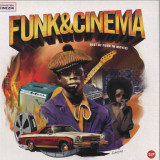
- A1: Isaac Hayes - The End Theme "Shaft
- A2: The Blackbyrds - The One-Eyed Two-Step
- A3: The Meters - Tippi-Toes
- A4: Melvin Van Peebles - Hoppin John
- A5: Joe Simon - Theme From "Cleopatra Jones" (Feat The Mainstreeters)
- B1: Lalo Schifrin - Bullitt (Main Title)
- B2: Don Julian - Lay It On Your Head
- B3: Isaac Hayes - Main Title "Truck Turner
- B4: Dyke & The Blazers - Let A Woman Be A Woman (& A Man Be A Man) (& A Man Be A Man)
- B5: Jerry Butler & Jerry Peters - Speak The Truth To The People (Frankie's Theme)
- C1: Dyke & The Blazers - We Got More Soul
- C2: Gil Scott Heron - Home Is Where The Hatred Is
- C3: Don Julian & The Larks - Shorty The Pimp
- C4: The Quantic Soul Orchestra - Pushin On (Feat Alice Russell)
- C5: George Benson - On Broadway
- D1: New Paradise - I Love Video
- D2: First Choice - Let No Man Put Asunder
- D3: Frankie Smith - Double Dutch Bus
- D4: The Sugarhill Gang - Rapper's Delight
- D5: Grandmaster Caz - South Bronx Subway Rap
Pressed on 140g Black Vinyl Including a signed print from Eddie Piller, limited to 750.
Demon are proud to release “Eddie Piller Presents British Mod Sounds Of the 1960s”, the follow up the “The
Mod Revival”. Featuring 100 original tracks across 6LPs, its a deep dive into the Mod scene in '60s Britain.
Including a selection of classic and rare tracks, tracing the scene from its R&B rootsto a soulful finale
Curated by Acid Jazz Records and Modcast founder Eddie Piller, and featuring new sleeve notes from
respected author and broadcaster Paul 'Smiler' Anderson.
As Eddie Piller points out in the forward to the extensive sleeve notes that accompany this collection, he
chose the word 'Sounds' carefully, reflecting the variety of talent contained here, from uncool session
musicians without an ounce of style in them, acts who saw an opportunity to jump on the Mod bandwagon
and bands who whole heartedly embraced Mod way of life.
And so this new collection mixes the Mod mainstays (Small Faces, The High Numbers The Action, The Fleur
De Lys), with a generous selection of future superstars (David Bowie, Rod Stewart, Elton John, Marc Bolan,
Jeff Beck and Graham Gouldman of 10cc are all represented here), and a few artists so obscure, so rare, that
they never got to release a record in the '60s, but Eddie has tracked down the tapes nonetheless.
"Be in with the In Crowd once more."
Every great youth cult deserves a great soundtrack, and when the '60s Mods adopted classic American R&B,
with a side order of hip Jazz, they undoubtedly found the right music for their exuberant and stylish way of
life. And yet, buying expensive imports, hoping for a local release or praying for a rare visit from overseas
talent was never going to be enough to satisfy British youth with a thirst for the latest sounds. Certainly not
those on the dancefloor and definitely not those with their own musical ambitions.
It was a music scene that began with imitation, before skill and imagination lead curious minds to innovation,
a scene that evolved from average (at best) copies of releases on the Chess, Motown and Stax labels, to
become something more sophisticated,something quite unique, something very British.
All formats are stylishly packaged (of course) and include new sleeve notes by Paul 'Smiler' Anderson, author
of the best-selling and highly regarded books'Mods: The New Religion' and 'Mod Art'.
Central to the enveloping aural experience of Dooms Children is its live-off-the-floor recording and organic production style. The effort was co-produced with musical col-laborator Danial Romano, and Montreal guitarist Patrick Bennett. More information on the project will be available in the coming weeks. Since co-founding pioneering post-hardcore outfit Alexisonfire in the early 2000s, the Canadian singer, guitarist, songwriter, and composer Wade MacNeil has lent his talents to numerous influential and impactful projects. He founded gritty punk outfit Black Lungs, fronts U.K. hardcore heroes Gallows, put fingerprints on recordings by the linkes of Anti-Flag, Cancer Bats, and Bedouin Soundclash, and scored a handful of successful feature films and video games. In 2017, Wade composed music for Jay Baruchel’s comedy Goon: Last of the Enforcers, and also scored Baruchel’s 2020 horror film Random Acts of Violence.
Rising UK-talent Guy Mac makes a much-anticipated debut on Hot Creations in January with the Sonic Boom EP. Made up of three original tracks, the release acts as both Guy’s and the label’s inaugural release of 2022.
The title track kicks off proceedings in an outright party fashion, as rampant kicks lay beneath up-tempo hats to set the tone. Reverberating vocals bounce alongside driving synth lines, before we’re soon graced with the stripped-back sounds of Waku Waku. Tribal-laced percussion opens into pulsing, space-like samples, whilst the enthralling chant of “waku waku” shimmers softly throughout. Rounding off the EP is Don’t Stop, another no-nonsense, late-night cut packed full of 4x4 drum patterns that perfectly encapsulates Guy’s hard-hitting, club-ready sound.
Rocksteady Disco returns with a package of officially licensed remixes of Brasilian master percussionist Dudu Tucci. As you’ve come to expect from the Rocksteady Disco family the release is a diverse one, starting with the peak hour acid vibes of “Luana (Pontchartrain Tuluminati Dub)”. Rounding out the A-side is the pensive and moody driving afro house of “Pai Benedeto (Kiko Navarro Remix feat. Carlos Mena)”, complete with a monologue reminding us why we get together in front of soundsystems and dance. On the B-side Blair French puts his foot in “Luana” only the way he can, with tons of drums and a dread bassline for the after hour freaks. Peter Croce closes out the release with his sensual Balearic-meets-Donald-Fagen remix of “Shakehands” featuring a stellar synth solo from Topher Horn. Cut loud to high quality wax, don’t sleep.
Today New York based singer, songwriter and producer Amber Mark announces details of her long-awaited debut album ‘Three Dimensions Deep’, out January 28th via EMI/PMR Records. The announcement of the album is accompanied by a sultry R&B instant-grat track ‘What It Is’ as well as a huge UK, EU and US spring tour announcement including London’s O2 Shepherd’s Bush Empire in March
Amber’s debut album arrives almost 4 years after the release of her second EP ‘Conexão’, an extended process that has proved central to its thematic development. The 17 track album can be divided into three main acts that follow the arc of Amber’s personal and musical development; WITHOUT, WITHHELD and WITHIN. Beginning by acknowledging her insecurities and anxieties before reflecting on her time in denial and spent processing them in all the wrong ways, Amber eventually widens her focus by seeking answers to the world’s negativity and trauma on a cosmic scale. Finding peace and a form of inherent spirituality in the world of astrophysics while writing the album led to a fresh perspective on life and a renewed sense of self. Amber’s debut album is simultaneously a profound concept album and a love letter to herself, richly intertwining messages of self-worth and reflections on the universe beneath a veneer of shimmering pop. In true Amber Mark style, ‘Three Dimensions Deep’ is a kaleidoscopic melting pot of influences and genres, drawing from funk and R&B, soul and hip-hop with international accents influenced by a nomadic childhood spent travelling the world with her late mother.
“Three Dimensions Deep is a musical journey of what questions you begin to ask yourself when you start looking to the universe for answers.” says Amber; “I can only go as deep as the third dimension as that’s how we see the world, but what about when you start looking to the universe within for answers.”
“‘What It Is’ low key is the title track of the album without it actually being the title track” explains Amber; “It comes from going through negative experiences which end up being the gateway to a question I think I’ll be asking for the rest of my life. What is the meaning of life,the universe and everything?”
The three official singles already released from the album ‘Worth It’, ‘Competition’ and ‘Foreign Things’ marked Amber’s first official singles since 2020’s ‘Generous’, though 2020 was still a hugely productive year for Amber. With her hometown of NYC hit hard in the first wave of the pandemic and placed under strict lockdown, Amber turned to her simple home studio to create an acclaimed series of home-produced covers and originals titled ‘Covered-19’, each accompanied by a homemade video and artworks. The series was followed by a collaboration with longtime friend Empress Of on the protest song ‘You’ve Got To Feel’, earning Annie Mac’s Hottest Record, ‘Tune Of The Week’ and a spot on the Radio 1 playlist. Earlier this year Amber was featured on legendary DJ Paul Woolford’s new piano-house track ‘HEAT’, again snagging Annie Mac’s Hottest Record and a long run across the Radio 1 and 2 playlists. Having already amassed over 300 million streams since the release of her breakout debut EP 3:33AM in 2017, Amber has built a global fanbase eager to hear her debut full length -
- A1: Lamparilla
- A2: Suplica
- A3: Tormentos
- A4: Lindos Ojos
- A5: Quimera
- A6: Corazon Que No Olvida
- B1: Las Tres Marias
- B2: Dicha
- B3: Mi Panecillo Querido
- B4: Sombras
- B5: Amor De Mi Linda Guambra
- C1: Vestida De Azul
- C2: Amor En Tus Ojos
- C3: Arbol Frondoso
- C4: Carnaval De Guaranda
- C5: Plegaria
- D1: Tus Ojeras
- D2: Limosna
- D3: Invocacion Sentimental
- D4: Nocturno
- D5: Desesperacion
- D6: Imploracion Indigena
Gonzalo Benitez and Luis Alberto Valencia were kingpins of the musica nacional movement in Ecuador. Check them out on the cover, on a rooftop in Quito’s Old Town, surveying their dominion. In 1970, when Valencia collapsed onstage during a performance of the yaravi Desesperacion — ‘My heart is already in ashes’ — and died four days later, aged 52, his coffin was carried through those city streets on the shoulders of his fans.
They began singing as a duo in their mid-teens. During twenty-eight years together they recorded more than six hundred songs, for Discos Ecuador, Nacional, Granja, Ortiz, Rondador, Onix, Fuente, Real, Tropical, Fadisa, RCA Victor — and of course CAIFE.
Their exquisitely romantic harmonising is a sublime blend of collected forbearance and abject self-annihilation, underpinned and elaborated by the heart-piercing, improvisatory guitar-playing of Bolivar Ortiz. Effectively the third member of the group. ‘El Pollo’ sets the tone and intensity for everything that follows: listen to his soloing at the start of our opener, Lamparilla.
Musically a pasillo — a cross between a Viennese waltz and the indigenous yaravi rhythm — Lamparilla draws its verses from a poem by Luz Martinez from Riobamba, written in 1918 when she was 15, under the influence of Baudelaire and Mallarme. Another pasillo here, Sombras is one of the best-loved songs in the musica nacional canon, setting lines about undercover sex and loss by the Mexican poet Maria Pren, which were considered pornographic on publication in 1911.
And Benitez & Valencia looked back still further, to the indigenous roots of Ecuadorian music, as the key to its future. Carnaval de Guaranda is their take on a song dating back to the era of the Mitimaes, a broad group of Bolivian tribes conquered by the Incas and displaced to Ecuador. ‘Impossible love of mine / I love you for being impossible / Who loves what is impossible / Is the truest lover.’
Lovingly presented in a gatefold sleeve with spot-gloss, and printed inners, with stunning photos and expert notes. Excellent sound, drawn from original tapes, by way of Abbey Road, D&M and Pallas.
- A1: Roberto Musci - Kami Shintai (Lion's Drums Edit)
- A2: Vasilisk - Awakening (Lion's Drums Edit)
- B1: Budi Und Gumbls - Tanz Der Korperlinge (Lion's Drums Edit)
- B2: Freddy Spins - Journey To Middle Earth (Lion's Drums Edit)
- C1: Roberto Musci & Lion's Drums - Alap On Benares
- C2: Manos Tsangaris & Lion's Drums - Crying Tafel
- D1: Tullio De Piscopo - Fastness (Lion's Drums Edit)
- D2: Suzanne Ciani - Paris 1971 (Lion's Drums With Roberto Musci Lost Tapes Remix)
Lion's Drums full length exists as en exploration in multiple dimensions. First by challenging the notion of the album format by presenting a body of work that lies snuggly between remixes, edits and original works and secondly as a means to delve into the transcendent potential of the drum. The album sets the tone by putting these two concepts fully on display with its hypnotic chant, swaying one into ease over the first two songs. In orderly cue folding and unfolding, meditatively through, melodies as muddied pastelle whispers cast over the measured language of the drum. Breaking away from the musing themes of the opening songs we find an ecstatic ritual in "Tanz der Korperlinge" and "Journey to Middle Earth", two distinct varieties but both of the same perennial species. Inky ether seeps back in through the second half of the album with a peak of frenzied tumbling toms and incongruous textures hovering above in the Manos Tsangaris' collaboration "Crying Tafel" and his re-imagining of Tullio De Piscopo's unhinged drum excursion "Fastness". The closing exemplifies the edit/remix/original ethos proposed for this work with Lions Drums drawing from tapes and original material of electronic pioneers Suzanne Ciani and Roberto Musci. Drawing from unreleased music and song sketches by the original artists as well as field recordings from travels & studio sessions made by Roberto Musci & Manos Tsangaris in the 80's and early 90's he constructs a side winding journey through playful textures and ethereal moods.
On his aptly-titled Mascot Records’ debut, What Happens Next, roots singer-songwriter and guitarist Davy Knowles boldly steps forward with timeless and cohesive songwriting; sleek modern production; and a lyrical, play-for-the-song guitar approach informed from soul, folk, rock, and blues. The 12-song album is just as influenced by The Black Keys, Fantastic Negrito, Gary Clark Jr., as it is Muddy Waters, Junior Kimbrough, and R.L. Burnside. It is a cohesive body of work rather than a collection of disparate songs. On What Happens Next, Knowles’s poetic songwriting, and his soulfully emotive singing steal the show. The 12-song body of work offers forth a peaks-and-valleys album experience winding through brawny riffs, jazzy blues balladry, and vintage soul before concluding with one of Knowles’s most personal songs released to date. Throughout it all, his guitar playing is brilliantly understated, his rhythm work is deft and dynamic—beefy on the rockers, and subtly supportive on the slower tunes—and his leads are economical but feature juicy blues bends and thick as molasses lead guitar tones."What Happens Next" is released on CD and digitally on October 22, 2021 and on vinyl on December 3, 2021 via Mascot Label Group/Provogue Records.