The eight track journey begins with Timothy Smith of 90s American darkwave band Lestat along with Pat Berdysz and Mekena Berdysz under their View So Cruel guise, “Corpses” is the blackened offering. A blend of styles and voices coalesce in this bright and burnt work. Colombia’s Ravetop follows, rich textured rhythms support scaling synthlines and distant vocals. Acid squawk and looming menace are the ingredients of Ruksby’s romp before Dragée presents an insurmountable wall of string and reverb in “Chapter VI.” The flip brings old friends back into the fold as well as welcoming new names. Canada’s Red Mass conspires with Lieutenant Freebase with unsettling results while Croatia’s Honored Matres returns with the bent and buckled bars and beats of “Sisterhood.” Diana Berti delivers a powerful psychological soundtrack, “Neptune”, before 80s band Simbolo from Brazil closes proceedings with the absorbing analogue abstraction of “For A Better File.” Eight pieces from far and wide, eight tracks that transcend borders and genre tags.
Поиск:ben men
Все
Paddan's Sigtryggur Baldursson and Birgir Mogensen are lifelong friends from Kópavogur, Iceland, who started as mates on the local football team, then graduated to making music together as teenagers, and even later as young men doing time in the experimental punk collective KUKL, from 1983 - 1986.
KUKL was populated by survivors of the post-punk scene in Iceland in the early 80s, which is well documented in the film Rock in Reykjavik from 1982. The band was released by the Crass collective in London and featured members, apart from Birgir and Sigtryggur, like Guðlaugur Óttarsson, Einar Melax, Björk and Einar Örn, some of whom would become better known later in outfits like the Sugarcubes and their respective solo work and other collaborations.
Sigtryggur has a long career in music, having worked with among others, Emiliana Torrini, Howie B, Les Negresses Vertes, Tomas R. Einarsson, Petur Ben, KK, Kaktus Einarsson, and many many others. He also produces an award-winning documentary music show for RUV called Hljómskálinn.
Birgir Mogensen is a classically trained classical guitarist and bass player who has worked through the years with artists ranging from KUKL to Killing Joke to Spilafifl and Inferno5.
Birgir and Sigtryggur formed Paddan during the 2010s, and are now preparing to release their EP Fluid Time, which has been inspired by their perception of time and space. Birgir Mogensen says, "As a duo, we trusted our musical intuition and were guided by allowing the first idea to remain unchanged during the recording process"Recorded, produced, and arranged by the pair, Sigtryggur and Birgir play basses and drums along with various other instruments.
All recordings are played on live instruments except a modular synth which is programmed in the background of two tracks The duo is joined by the great harmonica and lap steel player Gaukur Davidsson on "Vaguely" and "Bug," and trumpet player Eirikur Orri Ólafsson on "Splash," not to mention the mixing expertise of Vaccines bassist Arni Hjörvar Árnason on "Bug," "Splash," and "Kokka," and sound-mixer Albert Finnbogason on "Vaguely."
From London to Ibiza via Berlin, inspired by Chigago and Detroit, Ceri finds her truth in proper house music. ‘Can’t Pay My Bills’ EP provides a message of hope during uncertain times. Acknowledged as a “rising selector” by Crack Magazine, producer, label boss and record digger Ceri steps into 2024 with a brand-new EP ‘Can’t Pay My Bills” via her imprint “Find Your Own Records”.
“The title track is inspired by the current economic situation in the world, and also features a positive message that reflects the values and true origins of house music, reinforcing the belief that we can overcome our circumstances and improve our situation” - Ceri
The new four track EP drips with Chicago, New York and Detroit jackin’ house with garage influence, and a sprinkle of ripping UK breakbeat for good measure. The people’s producer D'Julz steps up, on remix duties, contributing not one but two remixes to the label’s ongoing message of artist authenticity and collaboration. The remixes will be vinyl only, and the originals will see a digital release later in the year.
“I have collected D'Julz music for many years, his label started around the same time I started DJing, and it was and still is, one of the few labels that I buy on sight. I know it will always be quality. Something I aspire to do with my label too.”– Ceri
As an artist led label 'Find Your Own Records’ has become a home for genuine house legends Mr G, Fred P, Alex Arnout, and has rightly gained support from Mixmag, Resident Advisor, BBC Radio 1, BB6Music and BBC1Xtra.
Support for the label so far comes from the likes of:
Midland, Ben UFO, Move D, K-HAND, Fumiya Tanaka, Fred P, Paranoid London, Steve O'Sullivan, Tristan Da Cunha, Ryan Elliot, Lakuti, DJ Deep, Kerri Chandler, Chloe Caillet, Fred P, Jeremy Underground, Cici, D’Julz, Chez Damier and more…
As a DJ Ceri has performed marathon sets at Fabric, Corsica Studios, Pikes Ibiza, Thisishaven, and recently made her debut at the legendary Panorama Bar/Berghain. Confidently sharing the booth with club favourites Ryan Elliot, Jeremy Underground, Paranoid London and Objekt it’s certain the next year of live shows will be ones to remember for the UK artist. Inspiring far beyond the dancefloor, Ceri also regularly steps up as a masterclass host / panelist on creativity, mental health, meditation and wellness with renowned platforms Beatport, ADE, RedBull, Point Blank and Native Instruments, earning her a distinctive reputation as a multifaceted artist and
thought leader.
Ceri – ‘Can’t Pay My Bils’ EP is out on Find Your Own Records. Vinyl end of Feb tbc. The remixes re vinyl only. And the originals will be released digitally in the summer.
A sense of destiny hangs over Sentir Que No Sabes, Mabe Fratti’s fourth solo-credited album released in a five year span. Her work has always possessed a finely tuned sense of drama capable of expressing a range of emotional states, and across this new album, she conveys the struggle to process various relationships or situations–and the actions that come next. Sentir Que No Sabes is urgent and clear, poppy, generous and approachable, while showcasing a considerable emotional hinterland. It is also, as Fratti is quick to mention, “groovy.”
Written and recorded with her partner, multi-instrumentalist, and co-composer Héctor Tosta (I.La Católica, Titanic), Sentir Que No Sabes is the result of an intense, detail-oriented process. Fueled by a new confidence gained in their collaborative project, Titanic, and its critically acclaimed 2023 LP, Vidrio, the two hunkered down in the familiarity of their studio (aka Tinho Studios) to bash out the initial sonic coordinates of her new record. “We talked and talked, and discussed ways of playing and recording, until things became inevitable,” Fratti explains. “We recorded a bunch of demos at our home studio and that meant we had a lot of time to re-edit and experiment. We really dug in. We were super focused on detail.” Tosta also took up the controls as producer and arranger-in-chief for all additional instruments. The album was later completed at Willem Twee Studios in Den Bosch in the Netherlands, and Pedro y el Lobo Studios and Soy Sauce Studios, in Mexico City.
For the final studio recordings, the pair were joined by drummer Gibran Andrade and trumpetist Jacob Wick to fill out and expand on Tosta’s percussion and brass arrangements. This small group of friends were able to work quickly and openly, and without fear: a testament to the exhaustive groundwork put in at Tinho Studios. This can be heard in three short, intermediary tracks that also manage to be the most aggressive on the record: “Kitana” (a scratch-laden instrumental that acts as a strange prelude for the last track, “Angel nuevo”) and a pair of two-minute instrumental interludes, “Elastica” I and II. None are throwaway mood pieces; rather they act as emotional cue cards, and hint at the way Fratti and Tosta created the overall atmosphere of Sentir Que No Sabes.
A strong sense of rhythm irrigates the sound from the jump, as heard on the glorious opening track, “Kravitz.” Here, the brilliant plucked cello line acts as a bassline and props up the steady thump of the kick drum. The cello’s growl serves as a conduit for a set of slightly paranoid lyrics that tell us “Quizás haya oídos en el techo” (“maybe there are ears in the ceiling”), while the song also introduces another staple of the record: the clever brass stabs, whistles, parps, and other interjections that paint a canvas of traffic in a city. It’s a postmodern, widescreen sound that for some might recall The Blue Nile’s Hats.
Sentir Que No Sabes is a record full to the brim with a modern pop sensibility, invoked by the sort of magpie spirit that ensnares anything it can find, repositioning sounds for the here and now. The keys and melody on the melancholy “Pantalla azul” (“Blue screen error”) transport us back to the glossy mid-1980s. “Oídos” (“Ears”) is a beautiful slice of contemporary, hybrid pop, in which Fratti’s vocal lines delicately spin themselves around the lean structures erected by the brass and drums, and the descending “plink” of a set of piano chords. Then we have a gloriously strong ending with the swell of “Angel nuevo” (“New angel”), another cinematic track full of gentle, instrument-rich swells and eddies that manages to be almost endless in its range–and yet intensely personal, as Fratti’s voice is close, almost whispering in your ear. A much needed lullaby for our fractious times.
The lyrics, for their part, have a stop-start quality to them, and hint at the small, incremental emotional taxes we pay through just living our lives. They circle around the music like birds waiting to swoop. There is something of the spiritual in all of Fratti’s work that expresses itself in a form of yearning: she looks to new horizons while personal dramas find themselves internalized, contextualized, and then dealt with through metaphor. Here, she was keen to mention Tosta’s constant encouragement in her finding a path to best sing or phrase her words to impart their maximum effect. “Hector was super inquisitive about my lyrics and asked me questions about what I meant, which sometimes is something you don't wonder so much about in isolation,” Fratti explains. “Besides, he is a great poet, and you can see that in what he did on the Titanic record. This made me go deeper into my lyric writing and definitely transformed it into something that I feel super happy about now.”
Take “Enfrente” (“In Front”), a track that initially comes across as a languid, glossy number, with plucked cello strings standing in for a bass line and brittle synth parts. Soon we catch on to a brilliant minor chord switch, which mirrors the fear and doubt expressed in the lyrics as someone “trembles up to the podium” in a “search for meaning.” There’s also the startling introduction of a vocoder in “Quieras o no” (“Whether you want it or not”); it comes precisely at the point Fratti sings “Quieras o no es un desastre” (“Whether you want it or not, it's a disaster”). Moments like these leave room for interpretation and, over time, create a strong bond between the listener and the record.
In fact, across Sentir Que No Sabes, each phrase–whether instrumental or vocal–becomes at some level emblematic of acts and moods that impart deep emotional significance. We see this best on “Intento fallido” (“Failed attempt”), which could be the score to feeling trapped in self-doubt, only to suddenly be sprung free by the song’s gloriously upbeat ending. On “Márgen del índice” (“Index margin”), the quicksilver switch between initial disharmony and a beautiful melody is breathtaking, all augmented by evocative arrangements, textured production, and the slightly playful, gnomic lyrics. The track’s emotional ecosystem allows another brilliant ending, which uses the simple repeated phrase, “Cómo lo va a ver?” (“How are you going to see it?”).
So what to make of Sentir Que No Sabes? High gloss Pastoralism? The sound of a city-bound, post-post modern soulscape? No matter the emotions evoked, it's the work of an artist coming into their own, and creating a benchmark record.
Köhncke rides again with another 12“ having 2 sides that couldn‘t be more different: the A-Side, „Timecode“, is a clock-ticking electronic disco tease promising a joyous release by building up tremendous expectations over its course of 8 minutes – and of course not delivering the final dance floor orgasm since the night has to continue in mutual happiness and expectations on the floor. But well, surely lots of „pre-cum“ spreaded...
The „flip“, „The Answer Is Yes“, displays Köhncke‘s love with The Beatles or Prefab Sprout and the likes, in a masterly programmed digital simulation of the „played“ sound of the likes (Köhncke cannot play any „real instruments“ except for a bit of Barré-Punk-Guitar). It‘s a love metaphor about 2 photons in „entanglement“, which is a proven very psychedelic effect in quantum physics. The photons are „entangled“ and „know“ each other‘s „spin“ in immediacy, thus not bent to the speed of light, even if they are 100000 light years from each other - a theory that even Einstein considered absurd when the pioneers of quantum physics came up with this in the 1930s. So Justus put his fascination with quantum physics into a pop love song metaphor – how much more do you want?
Köhncke kommt zurück mit einer 12“ - 2 Seiten, wie sie unterschiedlicher nicht sein könnten: Die A-Seite, „Timecode“, ist eine tickende elektronische Disco-Versuchungs-Zeitbombe, die über ihre Laufzeit von über 8 Minuten extreme Erlösungsversprechen macht, sie aber selbstverständlich nicht in einem endfinalen Floor-Orgasmus auflöst, denn die Nacht soll ja weitergehen in gemeinsamer Glücklichkeit und Erwartung auf der Tanzfläche. Allerdings, eine Menge „pre-cum“ wird schon versprüht in dieser unwiderstehlichen Spannungserzeugung von Track.
Die „flipside“, „The Answer Is Yes“, stellt Köhnckes Liebe zu den Beatles oder Prefab Sprout etc. ins Licht, in einer meisterhaft programmierten digitalen Simulation des „gespielten“ Sounds der Großmeister (Köhncke kann keine „echten Instrumente“ spielen außer ein bißchen Baréegriff-Punk-Rhythmusgitarre, sein Instrument ist der Sequenzer). Es ist eine Liebesmetapher über zwei Photonen im Zustand der „Verschränkung“, was ein heute wissenschaftlich nachgewiesenes extrem psychedelisches Phänomen aus der Welt der Quantenmechanik ist: die Photonen sind „verschränkt“ und „kennen“ ihren aktuellen „Spin“ (Rotationsrichtung des Teilchens) unmittelbar, also nicht gebunden an die Lichtgeschwindigkeit. Auch wenn sie 100000 Lichtjahre voneneinander entfernt sind – eine Theorie, die sogar Einstein absurd fand („Spukhafte Fernwirkung“), als die Pioniere der Quantenphysik sie in den 1930er Jahren postulierten. Köhncke verewigt seine Faszination für Quantenphysik hier also in Form eine Retro-Pop-Lovesong-Methapher – was will man mehr?
Downloads
- A1: Vanish (Featuring Joachim Spieth)
- A2: All Light Will Remain (Featuring Karen Vogt)
- B1: Farbe Der Nacht (Featuring Sonae)
- B2: Ancestral Images (Featuring Pepo Galán)
- C1: Utopian Fragments (Featuring Arovane)
- C2: Father Of Waters (Featuring Benoît Pioulard)
- D1: While Hunting Nightmares And Dreaming For Peace (Featuring Abul Mogard)
- D2: Presence (Featuring Hollie Kenniff)
Markus Guentner returns to his longstanding label, A Strangely Isolated Place following the triptych of ‘Theia’, ‘Empire’, and ‘Extropy’, presenting eight inspiring collaborations on ‘Kontrapunkt’.
Collaborations are nothing new to Markus, but it’s hard to see beyond his strong singular presence as a pioneer of long-form ambient and drone. Collabs have punctuated his albums in various places over the years, and he is no stranger to working as a duo amongst other projects, with such a strong conceptual thread throughout his prior ASIP releases, Kontrapunkt represents a literal pivot and counterpoint in his production approach. Instead of music encapsulating a strong conceptual narrative, Kontrapunkt sees Markus create a dialogue between himself and a collection of inspiring production partners.
Kontrapunkt opens with ‘Vanish’, a widescreen cinematic odyssey created in collaboration with fellow German and Affin label-head Joachim Spieth, forming the perfect opener with its modest subtleties. Australian-born Karen Vogt, renowned for her voice layering and looping, brings a beautiful, and natural addition to ‘All Light Will Remain’.
Sonae, who appeared on ASIP’s early digital releases, demonstrates her evolution into experimental flourishes with ‘Farbe Der Nacht’, adding pulsating techno tendencies and a menacing, metallic approach to Markus’ foundations. Multi-instrumentalist Pepo Galán harmonizes beautifully with Markus on ‘Ancestral Images’, adding complex nuances to a slowly evolving euphoric piece.
A master of synthesis, Arovane delivers a powerful display of supercharged electronics and coils of energy on ‘Utopian Fragments’. Benoît Pioulard's renowned expertise with guitars and tape distortion become a perfect counter to the electronics of Markus, blending styles seamlessly on ‘Father Of Waters’.
‘An unstoppable force meets an immovable object’ on ‘While Hunting Nightmares And Dreaming For Peace’, as Abul Mogard adds powerful restraint in a meeting of two drone titans. The album concludes with ‘Presence’, where Hollie Kenniff’s uplifting vocals provide a shimmering finish, perfectly bookending an album of perfected counterpoints and evolutions on the Markus Guentner sound.
Kontrapunkt will be available on Gatefold Black/Grey/Blue marble 2LP, digital and streaming on August 30th 2024. Mastered by Gio at Artefacts Mastering, Berlin, and featuring artwork by Noah M / Keep Adding.
Dustin Zahn & Z.I.P.P.O team up for a brand new EP entitled “Tools for Levitation.” Looking for a party record? Wrong EP. These tracks are designed to bend reality to your will. The record focuses on 4 esoteric Techno tracks with a strong emphasis on sound design, with each track being as heavy as they are mental.
Written during the depths of lock down, the finished results have a darker and more nihilistic approach than one would normally find on their solo productions. Since then, these tracks have been road tested over the years by our close friends and favorite DJs. Now, they’re finally available to the public
The Mental Groove Classic series returns with a treasure trove of rare and hard to find tracks plucked from the personal collection of label founder Olivier Ducret, a pivotal figure in Switzerland's acid house and rave-era party scene.
On Volumes Two and Three of the series - the first installment hit stores in 2017 - the Mental Groove and Musique Pour La Danse label founder takes us back to the turn of the '90s, a time he spent promoting parties in fields, squats, forests, warehouses and former factories in and around Geneva and behind the counter of a record shop of the same name. While others in Switzerland's emerging dance music scene gravitated towards US house and garage, Olivier and his crew opted for a bass, breaks and techno-focused sound inspired by regular trips to clubs, raves and record shops in the UK.
Drawing directly from his own record box and a memory bank full of snapshots of euphoric dancefloor moments, Mental Groove Classics volumes Two and Three sees Olivier reaching for cuts of near-mythical rarity, genuinely overlooked gems, and undeniably brilliant tracks that have left a long-lasting impression on the local raving landscape. It's an autobiographical audio document, historical archive and personal musical statement all rolled into one, inspired by a moment in time where musical boundaries were being redrawn in a wave of carefree optimism and freedom inspired new rave scenes across Europe and far beyond.
Matt Anniss
Original artwork by Soho's Brain Club co-owner and artist of early British club culture Mark Wigan.
File under house, breakbeat, techno and warehouse rave music
Fierce and forlorn, Swarm Intelligence’s “The Shattered Self” delves into the complexities of human existence in an era dominated by technological advancements. In this thought-provoking exploration, the artist challenges listeners to confront the consequences of a near future where physical and mental augmentation are commonplace. In a world where limbs can be upgraded, where consciousness can be uploaded, where memories can be digitally archived and shared on social media, where our AI clones can liberate us from menial tasks… What remains of our selves? Who is our self?
Swarm Intelligence draws influences from black metal, industrial-tinged dub and post rock, splicing these with his distinctive take on techno to devastating effect. "Dejected," the inaugural track, unleashes grinding walls of feedback against a relentless broken beat, its foreboding atmosphere heightened by a menacing low growl of distorted bass that permeates the unease. It's a disquieting overture that sets the stage for the tumultuous journey ahead.
The second track, “Eros” envelops the listener in a visceral soundscape, where haunting atmospheres intertwine with grinding feedback and pounding percussion. Initially tense, the track evolves into an unexpected and almost euphoric climax, adding an unforeseen emotional depth to the sonic narrative. Yet, beneath the surface, an undercurrent of tension remains—an ever-present reminder of the fragility of our self.
On the flip side, "Inciter" channels inner fury through a guttural chant punctuating a Birmingham-styled broken beat, marching forth with unyielding force.
Finally, "Portal" offers a moment of quiet introspection, as haunting pads echo a mournful refrain while micro recordings of whirring machinery are assembled into the percussion section. It serves as a poignant curtain-closer.
Through "The Shattered Self," Swarm Intelligence challenges listeners to reconsider their perceptions of identity, consciousness, and agency in an age where the machine and the human converge. It's a haunting and profound journey—one that invites introspection and contemplation long after the final reverb tails fade into silence.
Sleep Now Forever is the second and final album released by Sorrow, the post-Strawberry Switchblade group fronted by singer Rose McDowall. Originally released in 1999 and long since deleted it is a cornucopia of pastoral, elegiac folk music, swirling atmospherics, hymnal compositions and above it all the alternating towering and fragile vocal performances of McDowall. Recorded in the late 90s with fellow band member and co-songwriter Robert Lee, Sleep Now Forever is the definitive statement by the now defunct group and Rose McDowall’s most complete long-form work to date.
Released through the group’s own Piski Disk Records, Sleep Now Forever was distributed by World Serpent which struggled through the early 2000s with financial woes, eventually folding due to bankruptcy in 2004. Due to the company’s troubles, Sleep Now Forever was never distributed widely and was a victim of the company’s failure. Released on CD only, original copies are now rare and only traded on second hand channels. Remastered by Mikey Young for a limited vinyl release, Sleep Now Forever will be released on April 20th on double vinyl format, with one side an exclusive etching by Glasgow artist Holly Allan.
Despite its rarity, Sleep Now Forever enjoys a firm cult following. The album’s textures are expansive, lush, deliciously detailed and celestial. Recorded in home study Velvet Hole by Rose McDowall and then-husband Robert Lee, the album enlists an array of players from the underground Neo-folk / industrial scene: Nigel McKernaghan (Uilleann pipes, Whistles), Susan Franknel (Bassoon), John Contreras (Cello) and Lawrence Frankel (Oboe, Cor Anglais). The eleven songs here revolve around McDowall’s instantly recognisable voice. Brought up singing in the Catholic Church, McDowall’s vocals are impeccable and angelic, particularly on tracks like Turn Off The Light where her experiences with religion are canted over soaring oboe and guitar backing. By far the most evolved and realised version of Sorrow’s vision, it feels somewhat criminal that music this beautiful could be lost to time until now.
McDowall’s lyrics throughout Sleep Now Forever deal frankly with mental health, depression, altered states, death and redemption. Wave upon wave of harmony drench each song, McDowal’s vocal multi-tracked and imperious. Opener Soldier benefits from Robert Lee’s use of the studio as instrument, summoning forth a lilting group performance of sparkling guitar and percussion that recalls the Velvet Underground. Mikey Love’s master treats the compositions to brand new frequency dynamics and space. Harmonium and string drones form the counter to McDowall’s vocal on Love Dies, a slow, lurching lament that feels transcendent. On Haunting, the arrangement is orchestral and aching, bleeding into Fear Becomes You, with chord and harmony structure that recalls the baroque sixties pop of West Coast Pop Experimental Art Band or the 60s psychedelic folk movement. A towering, beautiful statement, this elegy for times lost and moonlit-illumination is finally resurfacing from the darkness.
Jlin’s detailed and meticulous exploration of rhythm’s inner and outer reaches has made her one of the most distinctive and recognisable voices within both the electronic and classical music worlds. Her compositions are consistently appealing and have an accessibility to them, yet often defy expectations. She exists within her own locus solus - no matter the collaborator, no matter where sounds ultimately lead her. Whatever the situation – from composing the Pulitzer Prize shortlisted ‘Perspective’ for Third Coast Percussion, to ‘Godmother’ her AI-powered collaboration with Holly Herndon, Jlin always expresses her outlook to the fullest. Her new album ‘Akoma’ sets a new benchmark in her personal road map, not only since the album features guest appearances from Björk, Philip Glass and Kronos Quartet but for her continued sonic persistence and resistance. Jlin does what Jlin does and it’s beloved across genres, across scenes and across generations. ‘Akoma’ is a new entry point into her sound and a new approach for both those who have been following diligently and those who are just now entering her world.So how did she get here? Here’s a rundown for those looking for the facts. She was both a math nerd and a steel factory worker. She got inspired by Footwork and started making tracks with mentorship assistance from RP Boo and DJ Rashad, but her music was far from typical for footwork from the get-go. In 2011, she released her first track ‘Erotic Heat’ on the Planet Mu anthology ‘Bangs & Works Vol.2.’ Fashion designer Rick Owens heard it and invited her to soundtrack his Paris Fashion Week show. Already before an EP or an album Jlin was in new cutting-edge territory. And it hasn’t stopped since. Everyday Jlin wakes up early and clocks into her home studio working hard on new music. Her discipline and craft-like approach means that those who would try to copy her sound simply can’t get to the level she is at. Since ‘Erotic Heat’ she has released two bold albums, 2015’s ‘Dark Energy’ and 2017’s ‘Black Origami.’ She has also released her soundtrack to Company Wayne McGregor’s dance piece ‘Autobiography’ (2018) and most recently (2023) the mini-album ‘Perspective.’ She’s remixed µ-Ziq, Factory Floor, Ben Frost, Max Richter, Björk, Martin Gore and others. She’s collaborated with Holly Herndon and the late SOPHIE. She’s worked with visual artists Kevin Beasley and Nick Cave. She composed a string quartet for Kronos Quartet and performed with them live in a tribute to Philip Glass. She also recently completed a tribute to Sun Ra with Kronos. ‘Perspective’, her very well received percussion work for Third Coast Percussion has further opened doors for her in classical music. She’s even thinking of one day writing an opera. She had a residency at MassMoca Museum earlier this year (2023). She’s performed live at Pitchfork Festival, Unsound Festival and too many others to mention. She’s also worked with Indian dancers, Company Wayne McGregor and renowned choreographer/MacArthur Fellow Kyle Abraham. There’s more but you get the picture - she’s working in contexts and in ways that few of her peers are able to. ‘Akoma’ is the next step - all these paths have led to this. We encourage you to tune in.
Diogo Silva, Nuno Fulgêncio and Rui Martins collectively go by the name Bardino. With their sound consisting of an inventive mix of
electronica, rock, jazz, the Porto-based trio are pushing their sound into unchartered waters. A feeling that will be reinforced after
experiencing their new album, ‘Memória da Pedra Mãe’.
Their enthralling music draws upon the imagery of the beautiful and rugged scenery of their home country. ‘Centelha’ , their previous
album (released by Saliva Diva in 2020) was recorded in Chaves,
in the very remote region of Trás-os-Montes. Their 207 EP of the same name was created in the rustic heart of Serra das Meadas. In this
latest offering, the mention of "Pedra Mãe" (Mother Stone), refers to a rare geological phenomenon popularly known as "breeder stones"
found in isolated, deserted, and inhospitable places. On the inspiration of the new album, they explain that they want to refer to "the
importance of collective memory in the cohesion and identity of communities and the process of creating new memories, a process that
is both natural and conflicting, since it mirrors a tension between past, present and future".
The album was recorded in the summer of 2023 at Arda Recorders in Porto and produced by João Brandão and Rui Martins. In this
new material, Bardino's resources expand: Nuno Fulgêncio's drums, Diogo Silva's bass and Rui Martins' veritable arsenal of keyboards
(acoustic and electric piano, various synthesisers) are augmented by the alto and tenor saxophones of Brian Blaker (who stands out in
"Memória" and "Black Mica"), the guitar of Leonardo Outeiro (who features on "Punctum No 2") and, already indicating their affiliation
with the Porto label Jazzego, Hugo Oliveira, who records as Minus & MRDolly (and is a guest on "Pedra Mãe") and Sérgio Alves, aka
AZAR AZAR (who plays piano and Moog on "Tília"). Bardino's entry into the increasingly unavoidable Jazzego catalogue also reinforces
their obvious links to a new wave of projects that have been experimenting with different tangents to the notion of "jazz", taking this
music as part of a wider set of coordinates.
Over the course of eight tracks, and clearly benefiting from the distinct imprint of the recognised quality work of João Brandão, one of
Portugal's current best producers, Bardino presents dense, deeply cinematic music of the highest definition, in which the different
instruments translate a broad emotional and visual landscape, with solos of enormous elegance arranged over grooves that induce the
idea of movement. All the musical coordinates mentioned earlier are present, but perhaps in this new material you can feel a greater
fluidity, certainly the result of honing the vision of the central trio through a vast experience collected on stages all over the country. And
there are even echoes of a decidedly Portuguese songbook, as is so clearly felt in "O Semeador", something new in the range of aesthetic
references embraced by Bardino. This is, in fact, music that thrives on a benign tension between past, present and future, in the sense
that it embraces traditions and history, seeks a new framework in this diverse now and dares to project itself forward. Because the future
is the best of all locations.
- A1: Villa - Silhouetten Der Nacht
- A2: Chontane - Ceoid
- A3: Levzon - Planga
- B1: Benkhlifa - Basikstruktur
- B2: Umwelt - Echoes Of The Storm
- B3: Kashpitzky - Timeline Off
- C1: Dax J - Passing Clouds
- C2: Lpv - Arrival
- C3: Hadone - Euphoria
- D1: Stef Mendesidis - Magma
- D2: Chlär - Raw Audio Models
- D3: Nnamael - One Step Closer To The Truth
- E1: Benkhlifa - Predator In The Zoo
- E2: Selective Response - Mars
- E3: Jehra - Take It Or Leave It
- F1: Mattia Trani - Dreampunk
- F2: Vil & Cravo - Plane To Lisboa
- F3: Jadzia - Surface
- F4: Pablo Bozzi - To The Edge
The World of Monnom Black makes it triumphant return, unveiling the highly anticipated third iteration of its iconic release and ushering in a wealth of new artistic voices into its ever-expanding universe. Celebrated for curating the finest handpicked music, the series remains a beacon for championing the true essence of techno. Presented on triple vinyl and graced by 19 esteemed artists, marking this as the label's most innovative and important release to date. Welcome to The World Of Monnom Black 3!
1 december 1944, Thiaroye military camp, right outside of Dakar, Senegal.
1600 French soldiers of West African origin (Benin, Mali, Ivory Coast, Tchad, Senegal , Gabon, Togo etc.) have been quickly evacuated by the French Army during what was subsequentially called the ‘whitening of the colonial troops’ that happened before the armistice signature. The soldiers are awaiting to be paid for their war effort. Things go sideways, protests erupt, and the French military staff decides to open fire. The official number of casualties is 35, although various sources claim several hundred people died on that fatal day.
Since then, several artists have grasped that difficult topic, screaming for recognition and reparation.
Such is the case with a young Senegalese musician and singer named Maxidilick Adioa, with his very first single ever released, ‘Toubab Bile’, in 1987.
At that time, Adioa had been living in France for a few years. He was considered a master percussionist, playing, recording and touring alongside the great Ivorian artist Alpha Blondy. He had just written a beautiful tune, ‘Nao’, for Aminata Fall, one of the biggest actress and singers in Senegal. It seemed like a good time to launch his solo career.
Toubab Bilé remains Adioa’s biggest hit to this day, and one of the best African reggae tune ever recorded.
Adioa ended up signing an album deal with Chris Blackwell’s Island records and toured the world endlessly during the following years.
In 2012, François Hollande was the first French President to officially mention and pay tribute to the Thiaroye massacre in a speech.
Repress.
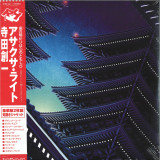
Back in 2015, Japanese DIY house pioneer Soichi Terada stepped back into the limelight courtesy of Rush Hour's 'Sounds From The Far East', a Hunee curated retrospective of material first released on his own Far East Recording label in the 1990s and early 2000s. Buoyed by the positive response and renewed interest in his work, Terada went back into studio to record his first new album of house music for over 25 years, Asakusa Light.
Developed over 18 months, Terada tried to recreate the mental and physical processes that led to the creation of his acclaimed earlier work. Those familiar with Terada’s celebrated, dancefloor-focused sound of the 1990s – a vibrant, atmospheric, and emotive take on deep house powered by the twin attractions of groove and melody – will find much to enjoy on Asakusa Light.
“I tried to recall my feelings 30 years ago, but when I tried it, I found it super difficult,” he explains. “I didn’t even know what I thought about myself five years ago, and the mental metabolic cycle seems to be faster than I thought. I tried different methods, including digging up my old MIDI data and composing by remembering old experiences. With the help of Rush Hour, I found some of the light from my heart that I had 30 years ago. I nicknamed the light I found in my heart, ‘Asakusa Light’.”
Produced using the very same synthesizers and drum machines that powered his 1990s work, the album is a joyous, colourful and life-affirming collection of timeless house music that not only recalls Terada’s own impeccable back catalogue, but also that of similarly celebrated contemporaries such as the Burrell Brothers or Ben Cenac (Dream 2 Science, Sha-Lor).
Terada, who has spent much of the last two decades writing video game music, has always had a gift for combining warm, undulating synthesizer basslines and perfectly programmed machine drums with stirring chords, smile-inducing melodies and mellow musical flourishes. It’s this immersive, sun-kissed and tuneful trademark style that takes centre stage on Asakusa Light, an album for the ages.
The set begins with the alien-sounding chords, soft-touch percussion and dawn-friendly warmth of ‘Silent Chord’ and ends on a high via the bouncing string stabs, starlight chords and thickset grooves of ‘Blinker’; in between, you’ll find a deluge of effortlessly feelgood music that’s the aural equivalent of a dopamine rush at sunrise.
There are subtle variations aplenty throughout the album – see the 8-bit lead lines and pulsing electronic textures of ‘Takusambient’, the vintage Tony Humphries flex of ‘Diving Into Minds’ and the effortlessly funky ‘Marimbau’ – but it’s the uniquely atmospheric, vivid and tactile nature of Terada’s loved-up sound that resonates. After well over 30 years in house music, the light in his heart is shining brighter than ever.
- A1: Wrong (Album Version)
- A2: Wrong (Thin White Duke Remix)
- B1: Wrong (Trentemøller Club Remix)
- B2: Wrong (Caspa Remix)
- C1: Wrong (Magda's Scallop Funk Mix)
- C2: Wrong (D I.m. Vs Boys Noize Remix)
- D1: Wrong (Trentemøller Club Remix Dub)
- D2: Oh Well (Black Light Odyssey Remix)
- E1: Peace (Single Version)
- E2: Peace (Sixtoes Remix)
- E3: Come Back (Jonsi Remix)
- F1: Peace (Ben Klock Remix)
- F2: Peace (The Japanese Popstars Remix)
- G1: Peace (Sid Lerock Remix)
- G2: Peace (Justus Köhncke Extended Disco Club Vocal Remix)
- H1: Peace (The Exploding Plastic Inevitable Jk Disco Dub)
- H2: Peace (Pan/Tone Remix)
- I1: Fragile Tension (Stephan Bodzin Remix)
- I2: Fragile Tension (Kris Menace's Love On Laserdisc Remix)
- J1: Hole To Feed (Popof Vocal Mix)
- J2: Hole To Feed (Paul Woolford's Easyfun Ethereal Disco Mix)
- K1: Perfect (Roger Sanchez Club Mix)
- K2: Perfect (Ralphi Rosario Dub)
- L1: Peace (Hervé's 'Warehouse Frequencies' Remix)
- M4: Fragile Tension (Laidback Luke Remix)
- N1: Fragile Tension (Peter Bjorn And John Remix)
- N2: Hole To Feed (Joebot Remix)
- N3: Perfect (Ralphi & Craig Club Mix)
- N4: Fragile Tension (Solo Loves Panorama Remix)
- L2: Peace (Sander Van Doorn Remix)
- M1: Fragile Tension (Radio Mix)
- M2: Hole To Feed (Radio Mix)
- M3: Come Back (Sixtoes Remix)
Sounds Of The Universe | The 12" Singles, a deluxe collector's
edition box set, contains seven 12" vinyl discs presenting
singles--including Wrong, Peace, the double A-side Fragile
Tension/Hole To Feed--alongside B-sides, remixes, dub
versions and other recordings contemporaneous to Depeche
Mode's 12th studio album, Sounds Of The Universe, originally
released by Mute Records in April 2009.
Sounds Of The Universe | The 12" Singles offers a full range of
ear-grabbing mixes--radio, club, dub and more--of Depeche
Mode originals with three discs (Discs Two, Four and Seven)
newly compiled for this collection, bringing together B-sides
and mixes first released across CD and maxi-singles
contemporaneous to the album's release.
When it came time to record the Sounds Of The Universe
album, DM's classic core (Dave Gahan, Martin Gore, Andrew
Fletcher) returned to the studio to make their second album
with producer Ben Hillier, whose intuitive contributions to
their previous studio album, 2005's Playing The Angel, had
created new sonic possibilities for the band expanding
Depeche Mode's vision and repertoire while continuing their
tradition of issuing monumental 12“ singles.
Water Machine is an office romance between Hando Morice (they/them), Flore de Hoog (she/her), Jimmy Gage (he/him) and Goda Ilgauskaitė (she/her). An unassuming supergroup formed out of Glasgow institutions including Goth GF, Passion Pusher, Brenda and Soursob, their sound careens between punk, country and alt-rock underpinned by the unique quality they call “Raw Liquid Power”.
Following last year’s self-titled demo tape on Gold Mold Records, and fresh off of shows with the likes of Holiday Ghosts, The Cool Greenhouse and The Orielles, as well as a rollicking Viagra Boys afterparty, the four-piece will release their highly-anticipated first studio effort ‘Raw Liquid Power’ on Upset The Rhythm on August 4th.
The EP opens with a menacing, modulating synth melody. Gage’s guitar enters with a mighty bend before breaking into the chugging rhythm of ‘Water Machine Pt. 2’. This timely reminder to refill your water bottle - “don’t be late, hydrate!” less a wellness mantra than a threat - builds to a spacey outro with flashes of the art-punk weirdness of Suburban Lawns. ‘Stilettos’ marches on indignantly with a spiky riff punctuated by Ilgauskaitė’s cowbells. Staccato talk-singing tells a playful tale of stray cats following you home, but belies a darker subtext as the breakdown gives way to paranoid duelling guitars evoking The Fire Engines.
The anti-anthem ‘At the Drive In’ skewers joyless DIY crowds, reminiscent of much-missed Glasgow punks Breakfast Muff. Water Machine’s irrepressible sincerity can’t help but shine through in the final moments though, as jibes about “late night trade potential” give way to plaintive vocal harmonies. Morice tears public transport a new one on closer ‘Bussy’, a First Bus diss track bemoaning precarious employment amidst crumbling infrastructure. “That’s why I’m not on time!” they roar over de Hoog’s frantic, pounding bass, bringing the record to a skidding, screeching halt.
Since the release of the highly acclaimed album Mamari (2021), the Muito Kaballa project has continued to develop.
The new album Little Child (2022) starts with a cracker called Inside Outside. The song addresses the hypocrisy and double standards of the European Union when it comes to refugee policy. The group works together with the renowned German/Nigerian musician Ade Bantu and the Angolan guitarist Juresse Amie Tieti Ndombasi and picks up their listeners where they were parked with Mamari. Fat grooves with clearly recognizable Afrobeat influences.
However, the musical journey leads step by step away from the usual sounds of the band. Already the second track Dansez! Dansez! shows that. The sound leads to Angola, Congo and a bit of Mali. The band stacks so many rhythms on top of each other that the word poly appears in a whole new light. It becomes clear that the nine deal intensively with the music that is the source of their inspiration. The gifted guitarist Juresse Amie Tieti Ndombasi puts the icing on the cake with his sound.
Let's continue with No = No. Here at last it becomes clear: Muito Kaballa has escaped from his drawer and is now in free flight, somewhere between jazz, fusion, afrobeat and whatever. But who cares? The sound is convincing, the feet shake to the beat and cannot be calmed down even with great effort and the message "Don't protect your daughter, educate your son" can't be said often enough.
The next song, Memories, reveals completely different sides of the band. While the sound is suddenly much more relaxed and, let's call it jazzy, the lyrics also become much more intimate and poetic. "Keep in mind, it makes you blind, starring in the sun". We don't find out what memories Niklas Mündemann, composer of the song, has in mind here but that shouldn't bother us. We just put on our sunglasses and let ourselves be carried away by the almost epic track, which with its ten minutes of playing time leaves nothing to be desired in terms of diversity. Sophisticated listeners will wonder if Niklas Mündemann listened to a bit of Kamasi Washington while composing. Maybe even a lot? Be that as it may - a special treat in the piece: the trombonist Saskia-Marleen Dahms, who makes a guest appearance on this song, rounds off the sound of the brass section again.
Last but not least, we come to the namesake of the album: the song Little Child builds on the mood of the previous track and rounds off the musical odyssey with a good portion of goosebumps. But the song doesn't just leave its mark on the surface, no, it also gets under your skin. While the melody has considerable catchy tune potential, it is above all the lyrics and the message that grab you here. Niklas Mündemann wrote the song during a phase of mental depression. Above all, psychotherapy helped him to think more positively again and to comfort his own inner child. We've all heard about that child in us. But when was the last time we hugged it? The song Little Child is the perfect accompaniment for this, because when you hear it, you immediately feel hugged, pressed and safe. Another highlight are the incredibly beautiful solos, played by Benjamin Schneider on guitar and Saskia-Marleen Dahms on trombone.
That's the end of the album and, to be perfectly honest, you don't feel left out in the rain, but you do feel left out in a (warm) shower. Time flies when you hear Muito Kaballa's new album and in the end you want more. 4 remixes for the dancefloor are delivered by French producer Kuna Maze, Polish/Angolan duo Lua Preta, French producer La Dame and Brazilian producer Badsista, tipping the remix balance into more female input.
Firescope are always on the lookout for new music, searching and sieving with headphones clamped over ears. GGGG, a recent discovery, unveils a stunning debut release. The co-founder of D.Ko Records may be a fresh face when it comes to releasing, but he has a wealth of both experience not to mention talent. His album, Gazé, is testament to this.
A spread of styles and influences coalesce to create GGGG’s unique sound. Ambient. Braindance. Electronica. Techno. All are melted and forged into the new. Processed percussion is the shifting sands from which a swooping melody takes flight, a melody that bends and soars as “K-Robot OG” ascends. Crystalline chords are shaven with fizzing drums in the frenzied elation of “Cas Contact.” And this is what lies at the heart of the collection, a rapturous joy that permeates the entire record. From the complexity and grandeur of “Chien Flûte 5.1” to the considered and subtle “Mudla 2”, the brightness of the audio palette chosen gives tracks an incandescence. This “joi de vivre” glistens and glows in the more playful tones of “Broutine Lamé” and “Cat Intro.” Textures are another area of interest for GGGG. Pieces like “Slowdry” and “Trip 2 Delinc” reshape and ruffle rhythms to bring a counterpoint to form and harmony. Beats are replaced by gentle waves of sound as the twelve-work collection culminates in “Sac Ala Blofel.”
Gazé tracks a course. From the energy and frenetic rhythms of first encounters to the atmospheric embrace of the latter part of the album, there is the sense that GGGG is celebrating the astounding of the ordinary, the amazing that is contained from the routine of dawn to dusk.