As it celebrates its 50th anniversary, Bill Withers' Still Bill remains true to its title – and stands as the greatest male-fronted soul album not made by a singer named Marvin, Al, Sam, James, or Ray. Though the saying "keeping it real" did not exist in popular parlance when Withers released his sophomore effort on Sussex Records, no words better capture the music's approach, mindset, and value. Every facet of Still Bill radiates honesty, truth, and emotion.
These characteristics – along with Withers' strong singing, hybrid arrangements, and deceptively simple songwriting – have allowed the album to endure to the point where it sounds as fresh today as in 1972.
After rising into the Top 5 of the Billboard Album charts and attaining gold status within a year of release, Still Bill has long been evaluated not by sales – but according to its merit, spirit, and agelessness. Included by The Guardian on its "1,000 Albums to Hear Before You Die" list (2007) as well as in Tom Moon's 1,000 Recordings to Hear Before You Die book (2008), its contemporary standing as one of history's most venerated soul efforts eclipses the positive reception it enjoyed in the early ‘70s.
Still Bill walks the same hallowed ground as What's Going On, Call Me, Night Beat, and Genius + Soul = Jazz. Like those landmarks, Still Bill plays with a mix of consistency, effortlessness, and complexity that rewards repeat listening and transcends categorization.
In combining four of the era's predominant styles – Philly soul, sweaty funk, Southern-reared blues, acoustic-based folk – and melding them with standout production borrowed from both minimalist affairs and sophisticated singer-songwriter albums, Still Bill occupies a distinct universe.
Its rhythmic fare is equally laidback and invigorating; relaxing and rollicking; eloquent and muscular; soft and tough. Withers' calm, self-assured voice hovers above it all, doubling as a warm blanket that adds comfort and grace to lyrics steeped in maturity, perspective, and compassion.
Withers' balanced outlook on human desires, needs, and situations stem from his own existence as a former blue-collar employee who believed his time as a musician would soon end. That grounding forever separates Withers from other contemporary soul greats – and stamps Still Bill with a conversational nature and egoless approachability.
"I mean look, I'm really a factory worker," said Withers in 1972. "That's a real job." There's that word again: real. The songs on Still Bill are tethered to modesty and actuality, wedded to a belief in simplicity, and connected to universal truths that link us all – independent of our economic or social standing. No track better exemplifies those principles than "Lean on Me," a feel-good paean to brotherhood and community that hit No. 1 on the pop and R&B charts en route to becoming a mainstream staple.
Withers approaches the plainspoken insight on "Lonely Town, Lonely Street" and heartbreaking vulnerability of "I Don't Want You on My Mind" with similar sincerity and straightforwardness. His proclivity for authenticity extends to the record's other big hit: the sexual, funk-laden "Use Me," which reached No. 2 and reflects the singer's everyman persona. It's an identity couched in keeping it real, the very inclination that ultimately led Withers to retire in the mid-'80s rather than bend to industry pressures or risk credibility.
That commitment to truthfulness and realism helps make Still Bill feel as unaffected as the air we breathe. Looking back on "Lean on Me" years later, Withers said it seemed like "something that was there before I got here" – the kind of song that could be 100 or 10 years old, or one we encounter anew 10 years into the future. The same can be said for every note on Still Bill.
quête:ben p
Names You Can Trust continues its years-long revival work with one of Panama's most gifted and legendary soul artists, Ralph Weeks, returning the singer to the studio for another brand new recording that highlights the now 80-year old's still silky vocals and masterful songwriting. Up for the challenge with their own studio savoir-faire is a most fitting and genuine purveyor of modern day soul themselves, Ben Pirani and The Means of Production, whose output on Palmetto Street Recording and Colemine Records has already achieved high praise and collectible status in just a few years. The mission, record two unreleased home studio demos that were penned and tracked in the early 1980's and recently excavated from Ralph's extensive archive of personal songs. These original compositions were faithfully given the full treatment and arrangement they never received, but always deserved. The A-Side, "Nobody Loves Me (Like You Do)", a quintessential Ralph testimonial of love, now shines alive and...
La MegaCobla: an experienced traditional Catalan cobla wind quartet, born after an improvisation workshop with ZA! two years ago. Pep Moliner, Jordi Casas, Xavi Molina and Xavi Torrent are four of the most reputable and innovative cobla musicians, experts in hacking tradition and using their folk instruments in any modern musical genre.
Tarta Relena, young a capella trans-folk duet that have shook up theire scene. With their use of polyphony and voice FX, Helena Ros and Marta Torrella are digging in the deepest Mediterranean folk repertoire and placing it in the XXIst century with aesthetic renewal.
ZA!: Papadupau & Spazzfrica Ehd are European benchmarks of the underground Do-It-Yourself music community. Their uniquely intense shows, as well as their collective/collaborative work (wokshops, benefit shows, Do-it-Together cooperation) have allowed them to tour the whole world, from Tokyo to Maputo, from Tasmania to Sao Paulo, from New York to Saint Petersburg. Under the premise that avant-garde art is not incompatible with collective horizontal creation, ZA! mix cult, underground and popular music without asking permission.
These three elements come together with the purpose of portraying their own vision of Mediterranean music, filtered by distortion (so current in cognitive, social and identity terms) and psychedelia (so inevitable in an increasingly accelerated and saturated reality). A retro-futuristic journey from folk to free exploring the shores of the Mediterranean, claiming its power as a living core, never as a deadly border.
The TransMegaCobla fuses traditional Mediterranean culture -from bulería to kopanitsa, from gnaoua to sardana- with contemporary culture to create a fictional but deeply human and festive universe. Resurrecting the Phoenician language, the octet seeks common roots to fuse and remake them with contemporary molds such as rock, punk, free jazz and conducted improvisation. A timeless orchestra ready to invent, with real elements, a science-fiction Mediterranean in a parallel reality.
Walter De Buck, oprichter van de Gentse Feesten, volkzanger en beeldhouwer, liet tijdloze volksmuziek in het Gents na. Violist en componist Guido Schiffer en zanger Pieter-Jan De Smet namen het initiatief om die liedjes een frisse injectie te geven. BUCK – wat zowel de naam van de groep als van de plaat is – koos voor evergreens uit het De Buckboek, maar vist ook prachtige minder bekende nummers op. De muziek is kleurrijk, met vaak een heerlijke mix van strijkers en blazers. En vol plezierige en sprekende accenten. Gentenaar en muzikant Pieter-Jan De Smet zingt in een onvervalst en smakelijk Gents, met veel inlevingsvermogen en expressie. De aanstekelijke arrangementen van Guido Schiffer en Reinhard Vanbergen, laten de teksten herleven. Je ontdekt ze opnieuw. En vooral, ze geven het oeuvre van Walter De Buck en ook het Gentse dialect een plaats in onze tijd. Bij BUCK is het erfgoed van Walter De Buck in goede handen. (Karel Van Keymeulen)
Eternally Frozen consists of a series of canon based compositions for brass ensemble, percussion and synthesizer by Andrea Belfi. The canon is an ancient compositional technique in which an initial melody is imitated at a specified time interval by one or more parts, creating illusionary never-ending musical journeys.
The work is inspired by the evocative image of the Deprong Mori, a mythological bat with the alleged ability to fly through solid matter by bending atoms by its natural skill of audio echolocation. The myth suggests that one of these bats had been “eternally frozen” in a wall of solid lead in 1952 by the researcher of the Rockefeller University, Donald R. Griffith. This story is exhibited in a display at the Museum of Jurassic Technology in Los Angeles, an institution renowned for both speculative, fantastical reinforcement of mythology and playful and beguiling distortions of mysterious could-be truths.
Both the canon and the “frozen” Deprong Mori are man-made illusory simulations of eternity. Their attempt is to create mirages, where the insinuation of facts is more meaningful than the reality.
After many years of sonic explorations with percussion, drums, and electronics, Belfi is here projecting himself as a composer through the direction of an astonishing brass ensemble in the realization of these canonic works. There are evident echoes of the works of Arthur Russell, Miles Davis, Moondog, William Basinski, and the Italian soundtrack tradition of Ennio Morricone and Egisto Macchi.
Wildflower is a trio comprising Idris Rahman (sax), Leon Brichard (bass) and Tom Skinner (drums).
The trio takes you on an intense, meditative and spiritual musical journey that embodies the spirit of freedom. Based around hypnotic grooves laid down by Brichard’s unswervingly solid bass lines, drummer Skinner plays around artfully with the beats, grooving hard in constantly shifting, unexpected turns of rhythmic play. Rahman’s contributions range from subtle conversational interplay to loudly expressed angry passion to the most delicate of whispers, conveying a depth of emotion and a deep sense of musical structure withIn an ever changing sea of musical conversation.
Using simple, arresting melodies as a starting point, the trio create freely improvised waves of emotion ranging from powerful climaxes to hauntingly beautiful breath-like passages and everything in-between, creating unique forms and structures that react to the acoustics and the atmosphere of the situation.
Taking inspiration from the spiritual jazz pioneers such as John and Alice Coltrane, Pharoah Sanders, Yusef Lateef and Sun Ra, compositional influences range from Gnawa music to modal jazz to Bengali folk music but the scope is wider still and the important unifying factor is the spontaneous communication and interplay between the three musicians. Rather than having a tight rigid structure, the tunes are allowed to breathe and develop into new unexplored forms, allowing fresh interpretations that make each performance a unique experience.
The album is a collection of live and studio recordings that have been recorded and mixed by the band.
Greek DJ & Producer Le Croque joins Groovin Recordings for his second vinyl release. His latest EP "The Cure" is a mind bending journey into electronic music.
"The Cure" features the legendary artist Baby Blak in spoken word taking you on a melodic afro-deep house trip. The remix by Italian Producer Freakme injects another dimension with a deep-electronic vibe. “Summer love” is a summer soundtrack for a Santorini sunset.
It brings together 80s nostalgia via pads and synths with the amazing piano solos of Tasos Korkovelos, taking it to another level. Last but not least, “Your Story”: a deep-house track carrying memories of the scene’s golden era, influenced by Le Croque’s favourite House Producers like Fred Everything, Jimpster and Opolopo.
Rossi. invites Mad.Again to HOMEGROWN. as the first guest artist on the label for his ‘Beware Of The Dog’ EP, accompanied by a remix from Liquid Earth.
Home to two stand-out releases from the label boss himself to launch the project, Rossi. now opens the doors of his bubbling HOMEGROWN. imprint for the first time as he welcomes an emerging talent making plenty of early noise. Introducing Mad.Again, a DJ/producer from East London whose early support from the likes of tINI, Enzo Siragusa, and Jamie Jones has already seen him lining up alongside artists such as Dungeon Meat and Tania Vulcano. Following material on Dansu Discs and his Kennel Club Records imprint, he arrives on the label with three powerful originals across his ‘Beware Of The Dog’ EP, with Los Angeles’ Liquid Earth stepping up on remix duties.
Opener ‘Steppin’ is a lively, rave-drenched production as vibrant stabs work on top of a bumping bassline and skippy percussion, while ‘Dolce Far Niente’ draws for tough-hitting drums and bendy synths. On the B-Side, ‘Point5’ is a skippy effort guided by hip-hip samples and spaced-out breakbeats, before Liquid Earth closes the show in style with a trippy, wonky and off-kilter take on the lead track as he journeys deep into the hazy early morning hours.
DJ Support
Sally C
Pete Tong (Radio 1 Support)
Chris stussy
Enzo Siragusa
Raresh
Cristi Cons
Voigtmann
Reiss
Archie Hamilton
Rich Nxt
Nu zau
Sepp
Sit
- A1: David
- A2: Loquillo Feat Caramelo De Cuba
- A3: Guajiro Italiano Feat Dany Noel
- A4: Georgina’s Rumba Feat Jorge Pardo
- A5: Las Olas Del Ma Feat Aroa Fernández
- B1: El Miramar Feat Kilino Y Joni Jiménez
- B2: Twanguero Gitano Feat Rafita De Madrid
- B3: Acacias Feat Alain Pérez
- B4: Tema De Vero, Cami Y Coni Feat Ismael Maitin
- B5: La Media Naranja Feat Frederlyn Mayora
Georgina's Rumba is a magnum opus in the field of latin music in the broadest sense. Gabriele Deiana Sardinian guitarist, composer, arranger, producer and lyricist brings together 36 musicians for this work, including the winners of the Latin Grammy 2021 Alain Perez and Ivan "Melon" Lewis. 15 Cubans, 12 Spanish gypsies, 5 Spanish and 3 Venezuelans give life to a musical biographical journey that ranges from latin jazz to bolero, salsa, flamenco-jazz, tropical, nordic
argentine style, son montuno and modern flamenco.
The record also features former members of the Paco de Lucia sextet including Jorge Pardo and Carles Benavent. The best of the best of each genre. The vinyl format is gatefold and contains a 6 pages insert 30cm x 30cm with photos and the history of the album.
A true and fascinating novel in that began in 1992. The cover is a hand-painted watercolor by the illustrator Gianluigi Concas and contains an encrypted rebus that can be solved by reading the novel in the insert.
- A1: Callmekat - Toxic
- A2: Groove Armada – Soundboy Rock – Lulu Vs Stella Dub
- A3: Tue Track – Two Park – The Veto Version
- A4: The 2 Bears – Heart Of The Congas – Peter Visti’s Stella Polaris Remix
- B1: Ben Summers - Dedil
- B2: Underher – You Can’t Give Me What I Want
- B3: Alan Dixon – In Lilly’s Garden
- B4: Days Of May – Beautiful Life – Aabech’s Stella Polaris Remix
- C1: Teitur & Mads Bjorn – Serena Williams – Ben Summers Stella Polaris Remix
- C2: Elvstrom – Change For You – Fredemann Dub
- C3: Dj Nicka – Haiku Lover
- D1: Badenpederstruck Feat Louise Alenius - 123
- D2: Foster The People – Pumped Up Kicks – Pete Gooding’s Stella Polaris Remix
- D3: Jose Padilla & Chris Zippel – Akamundo – Salta Mortale’s Stella Polaris Remix
- D4: Flipside – 8 Mm
- A1: Dance Macabre
- A2: Keep On Searching
- A3: Bobby & Whitney
- A4: Hold Back Love (Feat Lex Empress)
- A5: I Don't Know Why (Feat Mayer Hawthorne)
- B1: Squeeze Me (Feat Ben Westbeech)
- B2: Money In The Bag
- B3: All For Love (Feat Durand Jones)
- B4: Sweet Time (Feat Izo Fitzroy)
- B5: One Of These Days (Kraak & Smaak Remix)
- C1: Stumble (Feat Parcels)
- C2: Man Of Constant Sorrow
- C3: Good For The City (Feat Sam Duckworth)
- C4: I'll Be Loving You (Feat Ivar)
- C5: Dynamite (Feat Sebastian)
- D1: Hands Of Time (Feat Alxndr London)
- D2: Don't Want This To Be Over (Feat Satchmode)
- D3: How We Gonna Stop The Time (Feat Stee Downes)
- D4: The Future Is Yours
- D5: Let's Go Back (Feat Romanthony)
Kraak & Smaak, eine treibende Kraft der elektronischen Musikszene der letzten zwei Jahrzehnte, Meister des Nu-Disco, Funk und allem, was mit Electronic zu tun hat, feiern 2023 ihr 20-jähriges Bestehen - mit einer handverlesenen Auswahl ihres herausragenden Katalogs auf Jalapeno Records und dem eigenen Label Boogie Angst. Das Doppelabum mit dem schlichten Namen TWENTY bringt 20 Band- und Fanfavoriten und viele der unglaublichen Gäste, mit denen das niederländische Duo im Laufe der Jahre zusammengearbeitet hat: von Lee Fields bis Parcels, Romanthony bis Mayer Hawthorne, Ben Westbeech bis Durand Jones. TWENTY ist von Anfang bis Ende ein abgefahrener Hörgenuss, der nie enttäuscht.
We are proud to present the Mr Bongo pressing of Guilherme Coutinho E O Grupo Stalo's self-titled mythical album. Blending lo-fi, Brazilian tropicalia, jazz, funk and MPB with a unique aroma, this record is pure perfection.
It was originally released in 1978 on Erla - Estudio Rauland, an obscure record label from Belém in Brazil, that only released 7” singles, with this album being one of two exceptions. During the 1970s, Belém had a thriving nightclub scene, but it is thousands of miles away from the music industry hubs of Rio de Janeiro and São Paulo, making this record insanely difficult to find, even in Brazil. Added to the scarcity factor is the magical nature of the recording, which has naturally resulted in a hefty price tag to match. Original copies have become a prized, collector’s item.
The elusive Brazilian band leader and keyboard player, Guilherme Coutinho is a true cult artist. He passed away in 1983, at the age of just 41, and during his career he only seems to have appeared on a handful of marvellous records, which makes them all the more special. This album feels individualistic and distinctive from other albums of the day. Listening back to vocalist Elinho’s (aka Hélio Rubens de Oliveira) delivery, it sounds not too dissimilar to some of Belle & Sebastian’s songs. ‘Guilherme Coutinho E O Grupo Stalo’ is rich in charm, quirky and playful. It feels cinematic, soothing and benefits from being heard in its entirety. A proper album experience.
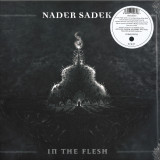
“In the Flesh” is the brainchild of Egyptian-born, New York-based conceptual artist Nader Sadek. Known for his impressively twisted sculptures, masks, and installations used for example by bands such as MAYHEM and SUNN O))), Sadek is now venturing into the realm of recorded music- including songwriting credits on this album! The band NADER SADEK emerges out of a collaboration between Sadek and some of extreme music’s most talented artists with its core made up out of songwriter/vocalist Steve Tucker (ex-MORBID ANGEL), CRYPTOPSY drummer Flo Mounier and Norwegian composer/guitarist Rune Eriksen (AVA INFERI, ex-MAYHEM). A host of guest-appearances lends additional weight to the musical impact of “In the Flesh” by leading artists such as Attila Csihar (MAYHEM), Travis Ryan (CATTLE DECAPITATION), Tony Norman (MONSTROSITY), Descructhor (MORBID ANGEL), and Nick McMaster (KRALLICE). “In the Flesh” is firmly based on a technically masterfully executed unique style of Death Metal with a pitch black twist that creates a multi-cultural symphonic abyss where melody and corrosion meet. As a work conceptual art “In the Flesh” is best explained like this: NADER SADEK invite you on a journey to the depths of the earth, where substances of a repulsive nature dwell. Beneath the earth’s crust, over millions of years creatures have disintegrated and decayed until taking on ghastly new life as petroleum. Like a return of the undead, petroleum and its derivates have wrought cross-cultural conflict, environmental pollution, and economic distress. With a visual and aural assault, Sadek’s new work “In The Flesh” re-interprets petroleum’s sinister insinuation into our everyday lives. Nine songs and a series of original drawings video works explore several aspects of the commodified resource we find ourselves fatally dependent on. “In the Flesh” exploits the sonic links between death metal and gasoline-dependent heavy machinery such as automobile and airplane engines. These links shaped the process of musical composition itself: The album opener, “Petrophilia”, kicks in with a sound evoking an engine starting up. Another song, “Of This Flesh (novus deus)”, follows the sonic structure of a car shifting gears. While continuing to link musical composition to mechanical transformations, other songs depart from engine-based references. The outro to the album, “Nigredo in Necromance” which is already accompanied by a video, dwells on an individual’s recognition that he must die in order to reunite with his deceased lover. The song riffs on the life-in-death of an oil-drenched society, as the lovers’ reunite in their decomposition and rebirth as petroleum. This theme also drives the track “Mechanic Idolatry”, which channels the uncanny thrust of Sadek’s recent artistic output, as live human beings provide the fuel for machines transforming themselves into flesh.
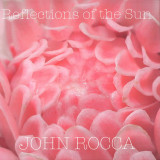
Reflections of the Sun is a collection of new music that see JOHN ROCCA experiment with a more laid back side to his musical personality. John is best know in Jazz Funk circles for his 1980s self funded, self produced and self released Brit Funk classic 'Southern Freeez', and as the band Freeez's founder.
"The melancholic suburban soul of ‘Southern Freeez’ never gets tired for me....an album that has remained at the top of my Brit Funk pile!" - GILLES PETERSON
Much of the album is also somewhat reflective. A personal and emotional reflection on John's life - the tracks a nod to John's varied musical pasts. Sounds, a pondering upon his collection of global influences and his life experiences over the years; Genre, the pulse of today, societal, musical or otherwise - but not easy to place as is John's character; Lyrics, the present dilemmas we face as humanity, whilst reflecting on our own private and deepest human feelings, of life and, of love in all its wonderous forms.
Musically, the 'Reflections of the Sun' album casts a glimpse back to Rocca's Brit Funk roots growing up amongst 1970s classic Jazz Funk and Soul, while also blending inspiration from his 1980-90s electronic influences topped off with everything else he has seen and heard on his life travels since then.
Giving a nod to John's own past while bringing Reflections of the Sun up to date was completed by adding elements of London's re-surgent and vibrant jazz scene. Not so different from John’s own early days jamming with Freeez, he is accompanied on all the album's tracks by his two young nephews and highly respected jazz musicians, Benjamin Rocca on keyboards and Joel Rocca on Saxophone. The two youngsters are known on the current London Jazz scene as the "Rocca Brothers".
The album's title track, "Reflections of the Sun" refers to how humanity, gorging on the sunshine that brings life to everything, also has a tendency to reflect the hellishness of the sun itself. Comparing our self-destructive nature with our planet's volumes of un-ending beauty.
Initial support for various tracks has come via radio plays on UK stations such as JazzFM, Jazz Funk & Soul Radio (JFSR), Soul Groove Radio and Solar (amongst others).
Croatian DJ & producer heavyweight Insolate debuts on Luke Slater's legendary Mote-Evolver imprint with a massive four-tracker of pure bred techno ready for the dance floor. After leaving her signature on highly respected labels such as DJ Deep's Deeply Rooted, Developer's Modularz, Ben Sim's Symbolism as well as her Out Of Place imprint which she operates along with Volster, she now delivers 'Push' a finely crafted EP of peak time material. Opening the A side, fierce workout 'Outer Bass' is showcasing a sinister driving energy that is followed by the raw frenetic groover title track 'Push'. On the flip side 'Blow' is a trippy, no-compromise cut, while closing, classy atmospheric track 'Desire' finishes off the EP with its effortless soulful touch and elegant, melodic synth pads flying by.
*MILKY CLEAR VINYL - 300 COPIES ONLY FOR WORLD!!* Technology + Teamwork’s fizzling synths, interweaving textures and punchy rhythms are beguiling on their long-awaited debut album We Used To Be Friends. However, at the heart of it all it’s the connection between the group’s two members, Anthony Silvester and Sarah Jones, the friendship the much-travelled duo have managed to maintain for nearly 15 years and a showcase of the slow-burning construction of the electronic world that they’ve surrounded themselves with. We Used To Be Friends is ultimately the tale of two storied artists in their own right, holding onto each other through personal and career twists and turns, relocations and broader movements through respective phases of their lives. Silvester and Jones first met and then collaborated as part of biting post-punk five-piece XX Teens in 2008, eventually breaking off to forge their own path together even as the latter’s demand as a drummer grew. Performing with everyone from Hot Chip, Harry Styles and Bloc Party among many others, Jones has been a constant percussive presence across the sphere of alternative UK pop music – she’s also found time for her own solo project Pillow Person and played on records by the likes of Puscifer and Kurt Vile. Silvester meanwhile has performed in art galleries across Europe including: Fridericianum in Kassel, Kölnischer Kunstverein in Cologne, and Vleeshal in Middelburg, as well as providing sound design and composing work for several art films. Technology + Teamwork is the constant throughout all of that though. “Technology + Teamwork's name perfectly describes how we work” Silvester explains. “Sometimes the teamwork is between each other and sometimes it’s between us and the technology.” Although going by the name Technology + Teamwork as far back as 2014, two events conspired that pulled the project into focus for the pair of them: firstly, Silvester spent a year constructing a soundproof studio shed on the border of London and Essex where he lives. Secondly, inevitably, the pandemic brought the globe-trotting Jones back home to just seven miles away from her long-time collaborator and friend. “We probably hung out more than we had for a few years” says Silvester. “Also, after all her Pillow Person releases Sarah had gotten really good with recording vocals and knowing what did and didn’t work and had a really good home studio set up. We still worked separately though, exchanging ideas via email and WhatsApp.” As with many artists through 2020 and early 2021, working separately was a new necessity that they were forced to adapt to. However, it became clear that there were creative benefits to it. “It really changed our sound and our sounds became a lot more focused as a result” Jones says. “I wanted to use the same ideas of improvisation that I might use while playing the drums for myself and apply that to melodies and lyrics.” The album bristles with hyperpop modernity. You can hear it in the manipulated vocals most prominently on Big Blue’s disco strut and on Moving Too’s heady mix of pitched up voice and burrowing sub bass. However, the pair also looked to San Francisco and the West Coast synthesis movement of the 60s, Silvester inspired by the likes of Suzanne Ciani and Don Buchla. The plaintive lo-fi and melancholy of Amsterdam incorporates Mutable Instrument’s Marbles by Émilie Gillet which – inspired by Buchla’s own synthesis work – outputs random voltages to give the track an air of unpredictability. It’s something that occurs throughout the album, the duo revelling in the happy accidents that disrupt the flow of their hook-laden pop. “The ‘Buchlian’ ideas of music having randomness and uncertainty, completely freed us up” Silvester explains. “It felt a bit like having more members in the band, machines that didn't do what you expected or intended.” Perhaps more subtly, is the influence of 17th and 18th century Baroque music, with Silvester drawing a line between it and the 90’s R’n’B he and Jones both love – exemplified perhaps best on K+B’s percussive claps and sultry grooves. The portentous juddering synthpop of the title track, meanwhile, alludes specifically to Handel’s Sarabande. It’s typical of an album that only needs a scratch of its seemingly glossy surface to unearth a myriad of contorted touchstones and reference points that’ve fermented beneath it. Thematically there’s an anxious sense to the record, with tracks often balancing above a quiet sense of unerring tension even at their most bombastic. Moving Too is the result of an existential doubt that hit Silvester while out cycling, with the outro refrain "it's not enough to die you also have to be forgotten" a take on something Samuel Beckett once said. These worries are echoed on the album’s closing track What A Year, which borrows a lot of lines from the late drag performer and fashion designer Dorian Corey including the grimly defiant "you're gonna leave your mark somewhere in this world just by getting through it”. Those clouds offer a counter point to We Used To Be Friends, but then isn’t that what great pop albums do? Technology + Teamwork undoubtedly love the craft of the hook and the song, but they always position themselves left of centre, prepared to scuff things up, pull something out of shape or manipulate something to leave it sounding warped. Much like their friendship, nothing here is particularly linear – and it’s all the better for it. Bio: Anthony Silvester & Sarah Jones first collaborated as part of biting post-punk five piece XX Teens in 2008, eventually breaking off to forge their own path together even as the latter's demand as a drummer grew. Performing with everyone from Hot Chip, Bat for Lashes, Harry Styles and Bloc Party (among many others), Jones has been a constant percussive presence across the sphere of alternative UK pop music - she's also found time for her own solo project Pillow Person and played on records by the likes of Puscifer and Kurt Vile. Silvester meanwhile has performed in art galleries across Europe including Fridericianum in Kassel, Kölnischer Kunstverein in Cologne, and Wleeshal in Middelburg, as well as providing sound design and composing work for several art films. Technology & Teamwork is the constant throughout all of that though. "We Used To Be Friends" proves that Technology & Teamwork undoubtedly love the craft of the hook and the song, but they always position themselves left of centre, prepared to scuff things up, pull something out of shape or manipulate something to leave it sounding warped. Much like their friendship, nothing hear is particularly linear - and it's all the better for it.
The eccentric beat ambassador Alexander Skancke showcases his sound once more on his Quirk label, diving into spring with his debut LP, “Kingdom Couch”. The Norwegian has crafted a versatile yet cohesive body of work between 2020 and 2023, parallel to when he began attending sessions with a therapist. The 10 track double 12” traverses between meticulously arranged minimal moods, shuffling jazz rhythms and ethereal experimental textures. In its few years of existence Quirk has become a safe haven for a freedom of expression as Skancke and his affiliates share their wild side on the label, but the LP marks a milestone on the imprint and for Alexander himself whose lifelong dedication to sound has built towards this moment, utilising the vast influences has absorbed over the years.
“Therapy Session I” teases you into the LP, shimmering blissfully as it grows, blossoming into a dream-like world, tuning your ears for the trip you are about to encounter. Constructed upon slick jazzy drums is “Lost In Time” loosening your senses as the pulsating bass swallows up your train of thought. “Dumbo Move” blurs the lines perfectly between the atmospheres the Berlin based producer has captured within the album. Dark, mysterious and mind bending material in “Purple Lucy” a chugging sub heavy bass driving the track forward as precise beeps and bleeps whirr throughout. On a more playful note is the B2, “Extravagance” animated drum patterns converse with the elastic groove perfectly. Closing off the first vinyl is “Therapy Session II”, another extended exploration of otherworldly ambience, drifting deeper in the world of Quirk.
“The Magnificent Tree Hut” stirs consistently throughout, crisp percussion combined with the psychedelic vocal samples which continue to flash in and out. Transitioning now into “Therapy Session III” sophisticated sounds, enticed further into the full bodied experience by the storytelling sounds of a female voice. Your eyes begin to close and you wake up in a hazy club setting, immersed in the after hours; that’s the immediate impact of “New Dawn”, pensive and hypnotic as it rumbles quietly in the realms of the underground. At just over ten minutes long Alexander Skancke brings you down for landing with the final “Therapy Sessions IV”, transcending movements crammed full of raw emotion, floating you calmly
out of the seventh outing on the label, and the thriving talents finest work to date.
The “Kingdom Couch” is an amalgamation of Skancke’s undying passion and burning desire to create outside of the norm, this can be heard throughout this masterpiece and will undoubtedly inspire its listeners to search for the bigger picture.
Artwork: Johann 3000
Mastering: Mike Grinser, Manmade Mastering
Electroacoustic duo JESSE and their extended collective is making a comeback of some sorts. Having been integral part of Finnish electronic music community for 15 years now, they are releasing a new album called Descend. Produced by the band together with Berliner DJ Sotofett, the record is a voyage to the depths of microcosmos of our minds. Warm and fuzzy grooves bending into a mindmelting buzz of swampy ambient. JESSE has always been a group that is musically on a constant search and mutation, Descend is a record that once more defines their edge and can be seen as a follow up to their 2017 record Twotinos (released on Keys Of Life).
We're thrilled to release two exciting electro tracks by Art P, as well as the classic minimal synthwave tune 'Der böse Osten' by related band project Die Synthetische Republik on this limited split 12".
The single kicks off with 'Genscher Pull and Push', an incredible and previously unreleased electro/wave/proto-techno tune from the P.A.P. archives, recorded in October 1982 with a political background. The song was only available on a demo cassette for a radio show and had been forgotten since then. Genscher was a long-time Federal Minister for Foreign Affairs and Vice Chancellor of Germany, who played a key role in a coalition change in September/October 1982, leading his party, the FDP, to leave the Helmut Schmidt cabinet with the SPD and continue with the opposition, the CDU/CSU. As a result, the German lyrics of the song shout 'bitte geh nach links / bitte geh nach rechts' ('please go to the left' - meaning the left-leaning SPD, and 'please go to the right' - meaning the right-leaning CDU), and so on.
Unfortunately, this track was never released, as the topic of the coalition change quickly became uninteresting and outdated. If it had been issued on vinyl in late 1982, it would probably be considered one of the first proto-techno tracks ever. With its driving and heavily-punching 808 rhythms, and the bending synth bass leads played on the Jupiter 4 synthesizer, it gives you a groove that owes as much to Kraftwerk's 'Computerwelt' album as it may rhythmically pre-date the sound of Detroit's Juan Atkins. The energetic German vocals are giving the track a unique Neue Deutsche Welle touch. They are heavily left/right panned to fit the political topic.
Next up on the Art P side is a remix of 'Polaroid', originally found on the No Message LP that we re-released last year. The track was recorded in 1985, and at that time, the duo of Frank Grotelüschen and Jens-Markus Wegener had become bored with the sound of the Roland 808 drum machine, so they made the track with a DrumTraks by Sequential Circuits. However, for this remix, DJ Scientist, the curator of this 12", wanted to recreate the typical electro-funk sound of the era and added 808 bass drums and claps. The track was also shortened to a more DJ-friendly arrangement. The result is a dancefloor delight for all lovers of classic electro and SVC-350 vocoder sounds!
Die Synthetische Republik was a project by Wegener of Art P and Olav Neander. The track 'Der böse Osten' can originally be found on the cassette album 'Faktor D', recorded in just two weeks on a Tascam Portastudio 245. The original recording sessions were pure fun but also rushed. Hence, none of the tracks was perfectly mixed. With digital technologies, we remastered 'Der böse Osten' to achieve the best possible result and are pleased to release this serious synth wave gem on a loud 12" for the first time as an exclusive extended mix.
The split 12" is released in a picture sleeve with a unique artwork on each side. It is limited to 500 copies.