With one foot planted in jazz and the other in the township groove of Mbaqanga, saxophonist Sello Mmutung was a powerful crossover figure in the history of popular music in South Africa. Using the stage name Bra Sello, meaning “brother” and used as a term of affection and respect in the jazz community, he came up in the era of shellac 78s as an exponent of the 1960s sax jive sound that brought the swinging rhythm of kwela into the domain of South African jazz. Despite the injection of American rhythm and blues into South African pop in the late-1960s, Bra Sello’s first releases on vinyl on the CBS label saw him backed by the group Abafana Bentuthuko and holding down an unapologetic township sound.
Joining the independent Soweto label under producer Cambridge Matiwane in the mid-1970s, Bra Sello recorded two records in the hit-making bump jive style popularised by serious jazz musician Dollar Brand on the one hand and prolific studio group the Movers, operating in funk and soul territory, on the other. Blending modern American and traditional African elements into joyful hip-swinging rhythms, Butterfly (1975) and The Battle of Disco (1977) reflect the vivacity of urban life in South Africa and document an era when dance music was performed by bands as extended jams laced with jaw-dropping solos. With music trends shifting dramatically in the late-1970s, the title of The Battle of Disco was an ironic call to arms in response to the territory that group musicians were beginning to cede to synthesisers and DJs.
For enthusiasts of African music from the 1970s, a full appreciation of the continent’s output is incomplete without South Africa’s pop-jazz sound providing a regional counterpoint to the funk experimentation of West Africa. Reissued for the very first time, Bra Sello returns in 2023 with limited replica editions from Afrodelic using master tape sources from the As-Shams/The Sun collection. Afrodelic’s unique edition of Butterfly features a previously unreleased track on Side B.
Wildflower is a trio comprising Idris Rahman (sax), Leon Brichard (bass) and Tom Skinner (drums).
The trio takes you on an intense, meditative and spiritual musical journey that embodies the spirit of freedom. Based around hypnotic grooves laid down by Brichard’s unswervingly solid bass lines, drummer Skinner plays around artfully with the beats, grooving hard in constantly shifting, unexpected turns of rhythmic play. Rahman’s contributions range from subtle conversational interplay to loudly expressed angry passion to the most delicate of whispers, conveying a depth of emotion and a deep sense of musical structure withIn an ever changing sea of musical conversation.
Using simple, arresting melodies as a starting point, the trio create freely improvised waves of emotion ranging from powerful climaxes to hauntingly beautiful breath-like passages and everything in-between, creating unique forms and structures that react to the acoustics and the atmosphere of the situation.
Taking inspiration from the spiritual jazz pioneers such as John and Alice Coltrane, Pharoah Sanders, Yusef Lateef and Sun Ra, compositional influences range from Gnawa music to modal jazz to Bengali folk music but the scope is wider still and the important unifying factor is the spontaneous communication and interplay between the three musicians. Rather than having a tight rigid structure, the tunes are allowed to breathe and develop into new unexplored forms, allowing fresh interpretations that make each performance a unique experience.
The album is a collection of live and studio recordings that have been recorded and mixed by the band.
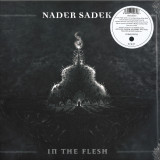
“In the Flesh” is the brainchild of Egyptian-born, New York-based conceptual artist Nader Sadek. Known for his impressively twisted sculptures, masks, and installations used for example by bands such as MAYHEM and SUNN O))), Sadek is now venturing into the realm of recorded music- including songwriting credits on this album! The band NADER SADEK emerges out of a collaboration between Sadek and some of extreme music’s most talented artists with its core made up out of songwriter/vocalist Steve Tucker (ex-MORBID ANGEL), CRYPTOPSY drummer Flo Mounier and Norwegian composer/guitarist Rune Eriksen (AVA INFERI, ex-MAYHEM). A host of guest-appearances lends additional weight to the musical impact of “In the Flesh” by leading artists such as Attila Csihar (MAYHEM), Travis Ryan (CATTLE DECAPITATION), Tony Norman (MONSTROSITY), Descructhor (MORBID ANGEL), and Nick McMaster (KRALLICE). “In the Flesh” is firmly based on a technically masterfully executed unique style of Death Metal with a pitch black twist that creates a multi-cultural symphonic abyss where melody and corrosion meet. As a work conceptual art “In the Flesh” is best explained like this: NADER SADEK invite you on a journey to the depths of the earth, where substances of a repulsive nature dwell. Beneath the earth’s crust, over millions of years creatures have disintegrated and decayed until taking on ghastly new life as petroleum. Like a return of the undead, petroleum and its derivates have wrought cross-cultural conflict, environmental pollution, and economic distress. With a visual and aural assault, Sadek’s new work “In The Flesh” re-interprets petroleum’s sinister insinuation into our everyday lives. Nine songs and a series of original drawings video works explore several aspects of the commodified resource we find ourselves fatally dependent on. “In the Flesh” exploits the sonic links between death metal and gasoline-dependent heavy machinery such as automobile and airplane engines. These links shaped the process of musical composition itself: The album opener, “Petrophilia”, kicks in with a sound evoking an engine starting up. Another song, “Of This Flesh (novus deus)”, follows the sonic structure of a car shifting gears. While continuing to link musical composition to mechanical transformations, other songs depart from engine-based references. The outro to the album, “Nigredo in Necromance” which is already accompanied by a video, dwells on an individual’s recognition that he must die in order to reunite with his deceased lover. The song riffs on the life-in-death of an oil-drenched society, as the lovers’ reunite in their decomposition and rebirth as petroleum. This theme also drives the track “Mechanic Idolatry”, which channels the uncanny thrust of Sadek’s recent artistic output, as live human beings provide the fuel for machines transforming themselves into flesh.
Angelo is an LP, named after a car, featuring nine songs Brijean have crafted and carried with them through a period of profound change, loss, and relocation. It finds percussionist/singer Brijean Murphy and multi-instrumentalist/producer Doug Stuart processing the impossible the only way they know how: through rhythm and movement. The months surrounding the acclaimed release of Feelings, their full-length Ghostly International debut in 2021 which celebrated tender self-reflection and new possibilities, rang bittersweet with the absence of touring and the sudden passing of Murphy’s father and both of Stuart’s parents. In a haze of heartache, the duo left the
Bay Area to be near family, resetting in four cities in under two years. Their to-go rig became their traveling studio and these tracks, along with Angelo, became their few constants. Whereas Feelings formed over collaborative jams with friends, Angelo’s sessions presented Murphy and Stuart a chance to record at their most intimate, “to get us out of our grief and into our bodies,” says Murphy. They explored new moods and styles, reaching for effervescent dance tempos and technicolor backdrops, vibrant hues in contrast to their more somber human experiences. Angelo beams with positivity and creative renewal — a resourceful, collective answer to “what happens now?”
Angelo the car is a 1981 Toyota Celica they got off Craigslist during their first stint in Los Angeles, where Murphy and Stuart have since settled. “Such a bro-y, ‘80s dude car, it’s been super fun to drive around in a new town,” Murphy says. “He’s older than us, he’s a classic, he’s got a story.” It is a spiritual vehicle with a cinematic appeal, first dropping them off in an alleyway for the scene-setting intro, “Which Way To The Club.” The question is quickly resolved by “Take A Trip” as a cruising bassline mingles with crowd sounds, hand-claps, cuíca hiccups, whip-cracks, even a horse neigh. Brijean have found some club on this cross-dimensional trip — the kind of
imagined space or chamber within one’s self capable of “shifting a fraction of who you are,” says Murphy. They wrote the track with the simple intention to be “as free as we could be,” adds Stuart, likening the flip on the B section to a realm unlocked: ”What if the world changed completely? You open the door to a new room.”
Next is “Shy Guy,” a motivational anthem for the wallflowers among us. Murphy sets up the daydream: “We are in junior high, we’re on the dance floor, what’s going down, who is dancing, who is not, how are we gonna make them dance?” The narrator, the MC, hypes up the room as conga-driven rhythms bounce between languid synth and guitar lines. “Show me how to move...I feel something...I know you feel it too,” Murphy sings sweetly, calling back to the opening lines of Feelings, and this time the audience chants it back. It is easy to picture Brijean performing this one — something they only got to do a handful of times until more recently, opening shows for Khruangbin and Washed Out, an experience they found informative. Murphy explains, “It was inspiring to be out there and let loose more. To see how people can expand their expression on stage gave me more liberty with how I viewed my musicianship. My role for so long was to be a backup percussionist, so why would I ever leave the drums, you know? But then after playing all these runs, you see these artists and realize you can, you have permission.”
“Angelo” and “Ooo La La” deliver the danciest stretch in Brijean’s catalog to date. The title track adopts a deep house pulse replete with strings, hi-hats, and kicks. The latter opts for a funkier groove that foregoes verses in favor of warbled hums and extended breakdowns. What follows is perhaps the duo’s dreamiest run, a comedown initiated with the honey-hued interlude “Colors” drifting into “Where Do We Go?”, a tropicália reverie where Murphy contemplates the passage of time and space.
It all culminates in “Caldwell’s Way,” a fond farewell to their Bay Area community — “a part of my life that I knew couldn’t come back,” says Murphy. Above shimmering organ sounds, lush strings, and the birdcall of their former neighborhood, she wistfully articulates the uncertainty of moving on by remembering the characters dear to them. There’s the wisdom of their neighbor, Santos, who refused payment when helping them move out: “I’d rather have 100 friends than 100 dollars.” And the song’s namesake, Benjamin Caldwell Brown, a friend and club night cohort for many years. “I’m only miles away, maybe I’m just feeling lonely,” the line resigns to warm nostalgia, and “Nostalgia” runs the closing credits to this healing and transportive collection.
Firescope are always on the lookout for new music, searching and sieving with headphones clamped over ears. GGGG, a recent discovery, unveils a stunning debut release. The co-founder of D.Ko Records may be a fresh face when it comes to releasing, but he has a wealth of both experience not to mention talent. His album, Gazé, is testament to this.
A spread of styles and influences coalesce to create GGGG’s unique sound. Ambient. Braindance. Electronica. Techno. All are melted and forged into the new. Processed percussion is the shifting sands from which a swooping melody takes flight, a melody that bends and soars as “K-Robot OG” ascends. Crystalline chords are shaven with fizzing drums in the frenzied elation of “Cas Contact.” And this is what lies at the heart of the collection, a rapturous joy that permeates the entire record. From the complexity and grandeur of “Chien Flûte 5.1” to the considered and subtle “Mudla 2”, the brightness of the audio palette chosen gives tracks an incandescence. This “joi de vivre” glistens and glows in the more playful tones of “Broutine Lamé” and “Cat Intro.” Textures are another area of interest for GGGG. Pieces like “Slowdry” and “Trip 2 Delinc” reshape and ruffle rhythms to bring a counterpoint to form and harmony. Beats are replaced by gentle waves of sound as the twelve-work collection culminates in “Sac Ala Blofel.”
Gazé tracks a course. From the energy and frenetic rhythms of first encounters to the atmospheric embrace of the latter part of the album, there is the sense that GGGG is celebrating the astounding of the ordinary, the amazing that is contained from the routine of dawn to dusk.
Kerri Chandler’s Kaoz Theory kicks off 2022 with Mr. ID’s Language Of Jazz EP, featuring two remixes from the label boss himself alongside two original cuts.
2021 saw Kerri Chandler’s Kaoz Theory continue to move from strength to strength, unveiling material from the likes of Dutch rising star Chris Stussy and of course Kerri himself, here we see the imprint wrap things up with a new addition to the roster, Casablanca, Morocco-based artist Mr. ID.
Up first on the release is ‘Track ID1’, a collaboration between Mr. ID and Youssef Grirane featuring Rita Mdn. It’s a unique six-minute journey through jazzy pianos and organ licks, intricate organic percussion and mesmeric, textural atmospheres. Kerri gives it the remix treatment in style extracting all of the jazziness of the original and retwisting things with the classic Chandler authentic house feel. Next, Chandler employs his revered 623 alias for the ‘623 Again Mix’ version which strips things back to low-slung drums, bumpy stabs and emotive piano lines.
The flip side houses ‘Track ID1’ in all its original glory before ‘Track ID2’ closes out proceedings seeing Mr. ID join forces with Younes Akhraz, rhythmically shifting to a jazzy 4/4 drum groove while wandering keys and warm subs fuel the mystical vibe.
DJ Feedback:
Sasha – Tasty
Laurent Garnier – Love the whole EP
Jimpster – Jazzed up piano house heaven! Love It!
Lea Lisa – Lovely remix by Kerri
Mr. V – Kerri delivers the goods once again!!!
Anja Schneider – Great. Love It.
Archie Hamilton – Nice
Andrew Treagust - Man that's some crazy production – really like it!
Mike W - absolutely classic release. how on earth could you go wrong? the world needs more piano!
Fish Go Deep - All tracks sounding great here. ID1 is a lovely warm groove and Kerri's remixes inject a little dancefloor bump to proceedings.
Daniel Troberg – incredible music
Kiki Navarro – excellent single, loving all the mixes special ID1 and the Kerri Chandler Main Remix
Ben Lovett – Remix mastery from Chandler – wonderful meeting of piano and drum – fire.
Sergio – Excellent example of classic house with personality
Kerri Chandler returns to his own Kaoz Theory label with ‘Prayer’, featuring the vocals of F L Brown, and in true Chandler fashion comprised of a variety of mixes on the single
Over the past twenty releases Kaoz Theory has showcased material from the likes of Ben Rau, Satoshi Tomiie, DJ Sneak, DJ W!ld, Art Department and DJ Deep as well as of course material from the label-boss himself, Kerri Chandler.
Here the latter deliver his latest single, entitled ‘Prayer’ and as the name would suggest channelling gospel house influence in varying forms.
The ‘Media Mix’ leads the way over choppy bass stabs, cinematic piano lines and shuffled 909 drums. Followed by the instrumental for those who like to get the heads down, and just groove.
The ‘623 Again Vocal Mix’ on the flip, shifts things into Dub Techno realms courtesy of a bumpy, driving rhythm, unfaltering stabs and robust low-end tones.
To wrap things up the ‘Feel Mix’ follows next, stripping things back to crunchy drums, airy chords and a snaking bass groove.
Concrete Noir, the project of composer, sound designer, and educator Piero Fragola, returns with Blades of Grass, a new EP released on Italian label Deset, following the acclaimed Romance Ruins.
The record develops Concrete Noir’s atmospheric and cinematic approach to electronic music, combining dense textures, sustained rhythmic tension, and immersive sound design. Side A features “Density,” “Pure,” and “Sleepless Eyes,” while Side B presents two reinterpretations: Legowelt’s electro-driven remix of “Rain On Me,” which emphasizes its synthetic and nocturnal qualities, and Caruan’s dance-floor reworking of “Sleepless Eyes,” preserving its atmospheric character.
Conceptually, Blades of Grass shifts from the themes of transformation and decay explored on Romance Ruins toward resilience—the ability to bend under pressure without losing identity or coherence. The EP reflects Fragola’s broader artistic language, shaped by more than two decades of experience in electronic music, audiovisual arts, sound research, and modular synthesis, including his work as a designer for Tiptop Audio and previous releases on international labels.
Composer and multi-instrumentalist Koen Holtkamp has spent more than two decades shaping a body of work at the intersection of ambient, experimental, and electroacoustic music. Known for his role in the influential duo Mountains, as well as a solo catalog defined by texture and spatial awareness, Holtkamp has long explored how sound interacts with environment and perception. With Nightlife, he enters a new phase of that inquiry, one shaped as much by physical relocation as artistic evolution.
After leaving Brooklyn for the relatively rural setting of New York’s Hudson Valley, Holtkamp found himself immersed in nature and embracing a slower way of life, a shift that directly informed the album’s creation. Rather than rushing into a new project, he allowed the space itself to guide him, focusing on experimentation and play instead of a fixed outcome. Over time, a new instrument emerged from his modular system, built around physical modeling techniques that emulate plucked string sounds. Drawing on a deep affinity for acoustic traditions, from guitar soli to the kora and other chordophones, he began translating those influences into an electronic language, creating music that feels tangible, effusive, and even intimate, despite its synthetic nature. As the pieces took shape, Holtkamp expanded the project into a kind of imagined ensemble. Composed with specific collaborators in mind, the album features extensive contributions from drummer Greg Fox and saxophonist and flutist Matt Bauder, whose performances subtly reshape the material and draw it toward more fluid, song-like forms, alongside a guest appearance from Ben Vida on synth bass. Yet even as Nightlife occasionally resembles a band in motion, its construction resists traditional cohesion. Acoustic and electronic sources coexist to create a hyper-dimensional sense of space, with each element deliberately placed in its own distinct environment, yielding a complex yet inviting setting that feels both otherworldly and completely natural.
Much of the album was created during late-night sessions, which became a kind of personal ritual and ultimately inspired its title. Nightlife unfolds as a series of finely detailed environments, where stillness, texture, and subtle interplay take precedence over momentum. Each piece invites close listening while remaining open and unforced, reflecting both a change in pace and a deepening of focus. The result extends Holtkamp’s ongoing interest in how sound can shape, and be shaped by, the spaces we inhabit.
South Asian super-producers Lapgan and Baalti – the former a Madlib-disciple spinning hip-hop grooves out of dusty desi samples, the latter duo purveyors of intricately tapestried dance music – holed up in the California desert in early 2024 for a songwriting session to blend their complimentary styles. They ended up with several albums worth of club material built upon decades of Indian music history – floor fillers that move like early Four Tet meets The Avalanches. They’ve been teasing this material around the world during live sets – from Paris Fashion Week to Glastonbury, London Clubs to BK Warehouse parties, sessions at Lot Radio and Karachi Community Radio, and anywhere else they find an aux. The result has been endless ID requests for unreleased gems like “Ipa Ma” and “Lime Tikka”, calls which should finally be answered with the release of Threads.
Lapgan Bio
Chicago-based archivist and producer Lapgan has become renowned for his signature style: unearthing rare and forgotten Indian & Pakistani sounds and recontextualizing them into hip-hop and dance beats that evoke J Dilla and Madlib. He has cultivated a reputation for quietly revolutionary sample-work across his beloved solo projects History and Duniya Kya Hai, as well as LAFANDAR, his critically acclaimed team up with Heems (of Das Racist / Swet Shop Boys). He has worked with a range of artists from both the West (Your Old Droog, Saul Williams, Cool Calm Pete, Kool Keith, Open Mike Eagle, Blue, Quelle Chris) and the East (EXCISE DEPT, Baalti, Sid Sriram, Sid Vashi, Dynoman), and has been featured in global media including Pitchfork, FADER, Stereogum, Passion of the Weiss, Mixmag, Homegrown, and Vinyl Me, Please. Over the past year he has headlined clubs and performed at festivals across the world from Chicago and New York to London and India, and was personally invited to soundtrack back to back Paris Fashion Week shows for the similarly norm-shifting designer Kartik Research. In 2026 he will soundtrack his third Kartik Research runway show, as well as reissue Duniya Kya Hai for its five-year anniversary alongside a companion EP featuring remixes from peers and supporters Arushi Jain, Loris, Mera Bhai, Malkfunktion, and Maral.
Baalti Bio
Baalti makes electronic music built around rhythm, pressure, and collective release – weaving through leftfield bass, dusty hip hop, tripped out dub and raw house all while maintaining a throughline rooted in South Asian culture seen through the lens of a sweaty dancefloor. In the last year they have experienced a whirlwind rise and growing global recognition: from their EP Mela vividly evoking West Bengal’s sound system culture to their Tamil-cinema-infused filter-house project with Anish Kumar Stunt Doubles, in addition to wide-ranging collabs and remixes alongside DJ ADHD, Naya Beat, and A.R. RahmanThey have also built a reputation for their frenetic live show, with appearances at international festivals like Glastonbury and MELT, headlining shows across Australia and Europe and supporting influences turned peers like Four Tet and Disclosure across North America. Their explosive, percussion-heavy sets have been platformed by Rinse FM, NTS, The Lot Radio, Beats In Space, and Refuge Worldwide, and their music has been renowned by publications including Pitchfork, Bandcamp Daily, RA, and MixMag. Their forward momentum continues into 2026 with slated headline tours in India, Australia, and Asia along with appearances at Coachella, Party in the Paddock, Fvded in the Park, and We Out Here festivals.
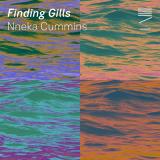
Nonclassical are proud to release Nneka Cummins’ Ivor Classical Award-winning finding gills (when they try to drown you), pairing the original orchestral work with its remix, finding gills realms and possibilities.
Originally commissioned and composed during Nneka’s time on nonclassical’s Artist in Residence programme and premiered by Sinfonia Smith Square in 2025, the work marks their first large-scale exploration of fixed electronics alongside chamber orchestra. Built entirely from its source material, the remix dissolves the perceived sacredness and permanence of orchestral music, stretching, warping and reassembling its fragments into a fluid electronic form.
Drawing on fragments of earlier compositions, Finding Gills embodies both destruction and creation, embracing the spirit of metamorphosis. Inviting the listener to sit in moments of dissonant discomfort and distress, an emerging sense of hope gradually reveals itself through radiant strings and spiralling melodies. Hinting at a sense of tiredness that is continually renewed, sparks of new life blossom within a shifting orchestral landscape where memory, experimentation and survival coexist.
The title alludes to the Afrofuturist mythology of Drexciya, imagined by Detroit duo James Stinson and Gerald Donald, in which the descendants of pregnant African women who were thrown overboard during the transatlantic slave trade adapted to breathe underwater, creating a new civilisation beneath the sea. Nneka draws on this subtle reference as they are inspired by the deep creative alchemy of transforming horror into vibrant and powerful myth.
Montréal-based sound artist Steve Bates expands his strategies and stylistic influences on An Infinite Antenna, his second solo album for Constellation, giving freer reign to melodic components and textural dynamics: leftfield synth work, deconstructed drum machine, pointillist electric guitar, and radiostatic blur are all part of the new brew swirling around his bruitist signal-bending and field-recording sensibility. Arguably a more ambient album than his acclaimed 2022 Constellation debut, An Infinite Antenna is at the same time more densely packed with ideas, dynamics, evocations and earworms. Coming out of the anarcho-punk scene of the Canadian Prairies in the 1990s, Bates founded Winnipeg’s experimental sound festival Send + Receive in 1998 before moving to Montréal to become Sound Coordinator at Hexagram (Concordia University), delving further into sonic research and theory, tape-based composition, and installation work. Alongside the curatorial arc of his own sound art label The Dim Coast, Bates released several solo and collaborative albums on ORAL_records leading up to All The Things That Happen, the 2022 Constellation debut praised by Boomkat for its “grittily iridescent ambient billow rendering maximalist panoramas” and by Backseat Mafia as “extraordinary soundscapes of unstable, destructive cacophony and tender calm, echoes of the threat of power.” Where that album was noisier and single-minded, made with the self-imposed limit of a Casio SK-1, Bates plays more widely with instrumentation and atmospheres on An Infinite Antenna, also drawing on his post-hardcore roots in seeking a sort of track-by-track concision nonetheless driven by the album’s coherence as a seamless work. “I was trying to set durations I associate with punk rather than the longer, sprawling music coming from more ambient styles (that I very much love), and while I wasn’t able to quite pare it down to Minutemen durations, I had that reduction to essential elements as a sort of whisper over my shoulder.” Incorporating source recordings made throughout 2023-2025, including at artist residencies and site-specific sound installation visits in Bosnia and Herzegovina (the album’s cover photo was taken in Sarajevo), Austria, Greece, and Saskatchewan, An Infinite Antenna combines Bates’ “idea of slowly scanning a radio dial” with a soundworld of recurring timbral and textural touchstones that forge an integrated whole.
The album’s 12 tracks work effectively as stand-alone pieces, replete with shifting undercurrents, buried melody, and stuttering kinetics, and as a sequential flow where the brief interstitial silences between them are like short pauses to flip the next page in a sketchbook of perspectival studies of a wide but singular tableau. The glistening atonal synth expressionism of opener “Pink pink pink pink…pink pink” drifts gently toward submerged ambience, darkened by the noised rumble and static interference of “Green as a ghost”, which introduces broken beats and piano chords in its denouement. Tracks like “Battles and sieges and street trees” and “Easier sad than done” work the foundations of low-end field-recording resonance, but dappled with lovely melodic droplets of treated guitar and synth. “Waste, songs of the world” and “Disaster loans” are among the album’s most explicit stylistic references to posthardcore, with distorted ambient bass and gently abrasive drum sampling. Closing track “Swamps and factories”, the album’s longest piece, is perhaps most reminiscent of Bates’ previous record with its sustained dissonant glimmer-drone, but the journey An Infinite Antenna traces to get there is Bates at his most dynamic, diverse, distinctive, and engaging. Thanks for listening.
Montréal-based sound artist Steve Bates expands his strategies and stylistic influences on An Infinite Antenna, his second solo album for Constellation, giving freer reign to melodic components and textural dynamics: leftfield synth work, deconstructed drum machine, pointillist electric guitar, and radiostatic blur are all part of the new brew swirling around his bruitist signal-bending and field-recording sensibility. Arguably a more ambient album than his acclaimed 2022 Constellation debut, An Infinite Antenna is at the same time more densely packed with ideas, dynamics, evocations and earworms. Coming out of the anarcho-punk scene of the Canadian Prairies in the 1990s, Bates founded Winnipeg's experimental sound festival Send + Receive in 1998 before moving to Montréal to become Sound Coordinator at Hexagram (Concordia University), delving further into sonic research and theory, tape-based composition, and installation work. Alongside the curatorial arc of his own sound art label The Dim Coast, Bates released several solo and collaborative albums on ORAL_records leading up to All The Things That Happen, the 2022 Constellation debut praised by Boomkat for its "grittily iridescent ambient billow rendering maximalist panoramas" and by Backseat Mafia as "extraordinary soundscapes of unstable, destructive cacophony and tender calm, echoes of the threat of power." Where that album was noisier and single-minded, made with the self-imposed limit of a Casio SK-1, Bates plays more widely with instrumentation and atmospheres on An Infinite Antenna, also drawing on his post-hardcore roots in seeking a sort of track-by-track concision nonetheless driven by the album's coherence as a seamless work. "I was trying to set durations I associate with punk rather than the longer, sprawling music coming from more ambient styles (that I very much love), and while I wasn't able to quite pare it down to Minutemen durations, I had that reduction to essential elements as a sort of whisper over my shoulder." Incorporating source recordings made throughout 2023-2025, including at artist residencies and site-specific sound installation visits in Bosnia and Herzegovina (the album's cover photo was taken in Sarajevo), Austria, Greece, and Saskatchewan, An Infinite Antenna combines Bates' "idea of slowly scanning a radio dial" with a soundworld of recurring timbral and textural touchstones that forge an integrated whole. The album's 12 tracks work effectively as stand-alone pieces, replete with shifting undercurrents, buried melody, and stuttering kinetics, and as a sequential flow where the brief interstitial silences between them are like short pauses to flip the next page in a sketchbook of perspectival studies of a wide but singular tableau. The glistening atonal synth expressionism of opener 'Pink pink pink pink_pink pink' drifts gently toward submerged ambience, darkened by the noised rumble and static interference of 'Green as a ghost', which introduces broken beats and piano chords in its denouement. Tracks like 'Battles and sieges and street trees' and 'Easier sad than done' work the foundations of low-end field-recording resonance, but dappled with lovely melodic droplets of treated guitar and synth. 'Waste, songs of the world' and 'Disaster loans' are among the album's most explicit stylistic references to posthardcore, with distorted ambient bass and gently abrasive drum sampling. Closing track 'Swamps and factories,' the album's longest piece, is perhaps most reminiscent of Bates' previous record with its sustained dissonant glimmer-drone, but the journey An Infinite Antenna traces to get there is Bates at his most dynamic, diverse, distinctive, and engaging. Thanks for listening
Gi Gi describes his process as “dubwise sampledelia.” It begins with fragments and ends somewhere else entirely, destabilizing its source material until it stops pointing backward. A borrowed sound, looped and bent, eventually forgets where it came from; it stops referencing anything but itself.
This liquid sensibility shaped his earlier work, music that hovered between drift and propulsion, suggesting the dance floor without fully stepping onto it. Presence was implied, edges stayed soft. The center was always there, but diffused like mist on a screen.
With In Lieu, that center comes into focus. Half written in Texas, half in Australia, the shift isn’t simply geographic, but internal. The record moves with a coiled, anticipatory energy; the drums arrive with more force and the bass organizes the room instead of melting into it. It's dense with the feeling of more bodies in the frame. Textures still smear and refract, but they move around a clearer axis.
Where past records circled their core, these inhabit it, pulling closer to the body. “Some Of” and “Arque” lean into low-end pressure without abandoning his instinct for drift. "Pink Dirt" circles around mechanical drums and dizzying vocal chops, head-down and visceral. Elsewhere, voices gain newfound contour, materializing in “Downswept” with intimate musings and nearly forming a lead vocal on the title track before dissolving again.
In Lieu moves with a newfound confidence, compressing inward, sounding closer to the source of its own pulse.
Shaped in the shadows and sounds of the legendary Topanga Canyon, California. The debut album from Biita Houdei is buoyed by a magic that feels wildly and beautifully untamed; wild-hearted sentiments that are shaped by the world around it, fascinated by the enchantment of it all, and delivered via a collective (harmony layered) voice that understands the complex nature of what it means to be alive in the here and now.
Produced by Haley Heynderickx, 'This Bed Was Made For Me' is a striking collection of stirring, signature folk songs animated by subtle instrumentation and orchestral flourishes. It feels lived in: vocals weave together in a beautiful harmonic dance, seasons shift, sunshine appears and bold psychedelic colours warm the horizon.
In the early stages of making her debut album, Biita Houdei knew two things: that she wanted the recordings to feel distinctly and palpably warm, and that she would sew a unique patch for every song on the album. The first of those things is subjective, though brightness pours in from all corners of This Bed Was Made For Me. The second became a laborious task she undertook throughout the process, the completion of which is testament to the slow process of it all, to the physical commitment and patience required to make a full work of art.
The patches she crafted during the making of This Bed Was Made For Me became a full quilt, one that now adorns the album’s front cover. Beneath it sits a striking collection of Houdei’s stirring, signature folk songs, brought into fruition with the help of fellow songwriter Haley Heynderickx, in her first lead production role, and the album’s producer/engineer Sahil Ansari. It’s also the first release Biita (pronounced “bee-tah”) is releasing under her newly-taken name, one that was gifted to her by her auntie and means "unique" in the Farsi language. “I proudly take this name,” Biita says of the change. “It makes me feel that much closer to my Persian heritage.”
Recorded across ten back-to-back and full days, the album touches on themes of love and heritage, of taking chances, the preciousness of time and the impact we all have on the world around us. A number of the songs were written in Topanga, California, while Biita settled into a new home as wild fires raged, and as she adjusted to a life which no longer held distinct seasonal changes, far from the Ozark Mountain home she felt so attached to. Such themes reveal themselves in a variety of ways across the album’s fourteen songs, that key sense of warmth retained in the bones of the album whether they are stepping into darkness or seeking out light.
The album feels lived in and alive; dust swirls, seasons shift, sunshine appears and is held. Biita calls it ‘psychedelic’ and there is indeed a sense of that in the world building, in the way the bold colours are always shifting. Formed of fourteen songs, and filling nearly forty-five minutes, This Bed Was Made For Me not only builds a whole world for listeners to inhabit but also implores you to stay a while. This was deliberate, indeed it’s Biita’s wish that listeners give the album dedicated time; to learn its shape, to explore it fully, away from the instant grab of playlists and skewed algorithms.
“Many of my favourite albums didn’t reveal themselves instantly to me,” Biita, now based in the Catskill Mountains of New York, explains. “Some did, of course, but I had to work to understand the full scope of the piece as a whole. I encourage people to dive deeper into everything that they choose to consume. It is not my intention to sound pretentious, but instead, I am trying harder to explain the gratitude I have for being able to craft every part of this album— using my hands, my brain, my voice, my visions. To me, it is an all encompassing work of art,” she continues. “Making the quilt was laborious. Taking the cover photo was laborious. No shortcuts, but rather a manual and tangible approach. I am thankful for the time it took.”
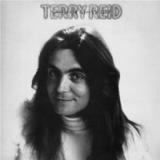
Released in 1976 on ABC Records, Seed Of Memory is Terry Reid's fourth studio album and marks a significant shift in his musical direction - This 180g vinyl re-issue faithfully replicates the original UK pressing including 4- page lyric insert Produced by Graham Nash, the album was recorded in California after Reid had relocated from Britain, and reflects the influence of the West Coast singer-songwriter scene while retaining elements of rock, blues, folk and soul. All eight songs were written by Reid, whose expressive vocals and guitar work remain central throughout. The recordings are enhanced by contributions from respected musicians including David Lindley on guitar and violin, Ben Keith and Al Perkins on pedal steel, and Graham Nash on harmony vocals. Lyrically, the album explores themes of reflection, spirituality, personal growth and social awareness, with songs such as "Brave Awakening" drawing on Reid's family connections to the mining industry. The relaxed arrangements contrast with the heavier sound of some of his earlier recordings, creating a more atmospheric and melodic style.
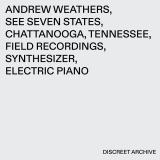
Poem by Alea Coble (February 2026) - Written for Andrew Weathers, Chattonooga Recording Project
Listen to my story and everything will come out true. - Bessie Smith
35° 02' 44.27" N -85° 18' 34.85" W:
Howl. Hammer strikes firing pin. Its echo ricochets over river bend. The woodpecker’s syncopated pop-pop-pop clink and thwap in time with cops practicing prayer at the firing range.
Quick. Sketch a few constellations onto a postcard: empty shotgun shells, these pre-forgotten fossils snaking rusted railroad spikes, like snagged rosary, fallen poplar petals draped over cerulean glass ashtray scattered along glittering fractures, ignored like a treaty. Train tracks reverberate necrophilic boomerang-hunger for mountain air without that coal dust. Eat. Eat. Everything is real estate. Even the air is for sale. Buy it cheap while I.C.E. carves through the valley along the Trail of Tears in unmarked SUVs, traffic stops.
Howl. Callback to estranged entanglements oscillating over holler and highway. Meet on the porch. Haint-blue ceiling. Some ghosts can’t get through anyway. They got tied up on the Walnut Street Bridge by a mob of white spit. Howl. The South should scare you.
But the woodpecker is still nesting, hungry, typing uncannied punctuation marks into black oak: a deed. Home? Takes a side-eyed knowing to call by name. The moon sickles in a sweating glass of iced tea.
Speculation cycle: symmetry as ancient as sour-dank betrayal of the tongue, bitter bones binding blood and lead, alchemical forgetting like I found a hairbrush in the yard while planting wild irises, like someone is charging $10 for an old glass Coke bottle, like semicolons itching restless under new sod from no-one-knows-where. Howl. Sing back. History is soil-in-stereo.
How will this line end? Like riverbank? Like atlatl arching hope smash-through a stained glass window? Words fall out of the sky, and 30 American flags snap at attention on the bridge. Howl. A shift in the wind gallops through the streets tossing her head back, laughing.
Tennessee River, who once kissed Pangea, how she softens at the knuckle-suck of it all, that secret-sweet stowed in the feathers of sandhill cranes lifting up on warm summer breeze: slow-shooting stars bending toward unbothered brevitas.
Howl. The red wolf knows her truest kin is always her shadow’s shadow.
raum…musik welcomes Jaffa Surfa back for its 121st release with ‘Tribal Diesel EP’, a four-tracker moving through progressive techno, industrial-tinged minimal, house and broken beat. Rather than treating these as fixed genres, Surfa reshapes them into something uncanny and unmistakably tribal, while keeping the groove firmly at the centre.
That approach is clearest on the A-side. “Diggers Diesel” has a ritual pull and, as the EP’s title suggests, finds Jaffa Surfa at his most tribal. Processed drums and splintered voices gradually lock into a hook while murky synths shift beneath them. “Lidl Sin” takes a leaner, slightly industrial but definitely understated route. Its reduced arrangement leaves enough room for each detail to register, with drums, synth stabs and sequenced lines appearing to exist in a state of constant mutation. On the b-side, “NGLZ” is the EP’s most direct house cut, driven by heavy low end, syncopated rhythms and flashes of phased samples. Breakbeat accents and old-school vocal fragments nod towards US house, though the track’s restless movement keeps it from settling into anything conventional. “Upstarz Galeri” closes on a wider screen, carrying traces of krautrock and decades-old sci-fi and cyberpunk soundtracks without ever feeling nostalgic. Airy and expansive, it pairs breakbeats and growling basslines with densely layered samples, giving its machine funk an unexpectedly emotional charge.
'Tribal Diesel EP' never overstates the contrast between its parts. Jaffa Surfa holds everything together through texture, rhythm and an almost cybernetic atmosphere. It is clearly built for the club, but carries enough personality and ambiguity to reward closer listening.
out of Stock
Last delivered 5 days ago available to reorder, subject to availability
Ty Segall, precleared for flight in full rock congress with the band (Ben Boye/Evan Burrows/Mikal Cronin/Emmett Kelly), shifts Chrome. Songs of massive riffs, swung, tightly arrayed lines of fuzz & distortion, twin-guitar attack-and-parry, endopic keyboards kicking, precise & thudding power, a rhythmic core on the march in full BAND energy. The songs are lyrically allusive trips, dark passages in the labyrinth, everything in the air bristling collectively, as minds collide.
a1 Hospital
a2 Running to Nowhere
a3 Black Paint
a4 Glass
a5 Play Cowboys
b1 Everything You've Been
b2 Let Go
b3 Separation
b4 Chrome
out of Stock
Last delivered 42 days ago available to reorder, subject to availability
This Mirror Weighs a Ton, Interpol’s first album in four years and debut for Partisan Records, finds the band turning inward while continuing to move forward. Across the record, reflection, distortion and perception become a lens through which familiar shapes are refracted into something slightly alien, as if seen through a different kind of light.
Produced with Grammy- and Oscar-winning Andrew Wyatt (ROSALÍA, Charli xcx) and mixed by Dave Fridmann, the album introduces vibrant new textures into Interpol’s world. Synthesizers, strings, acoustic guitars and percussion are integrated into the fabric of the songs, expanding the palette while revealing colors already latent within it. Nothing feels imposed. Instead, the additions deepen the band’s language of restraint, atmosphere and tension. At its center remains the creative relationship between Paul Banks, Daniel Kessler and Sam Fogarino, a partnership now approaching three decades and defined by intuitive alignment and momentum that continues to generate new possibilities. The result is an album that feels expansive, uncanny and alive with forward motion, not a reinvention but an evolution that allows Interpol to continue transforming without losing their identity.
“This Mirror Weighs A Ton” / “See Out Loud” is a study in duality, with Interpol moving fluidly between familiarity and departure. The title track unfolds from a skeletal progression into something vast and textural, built from warped bass, a wordless female voice and a sense of motion that feels tidal, bending the band’s familiar language into somewhere more expansive and unfamiliar. By contrast, “See Out Loud” carries the DNA of Interpol’s earliest work, sharp, propulsive and direct, while complicating it through layered vocals, shifting perspectives and a rare lead vocal turn from Kessler. Both tracks reflect the interplay between structure and spontaneity that defines This Mirror Weighs a Ton, expanding Interpol’s world through fresh textures while keeping the instinctive chemistry between Banks, Kessler and Fogarino at the center.
The double single is accompanied by two visualizers directed by Nick Steinhardt.
This Mirror Weighs a Ton, Interpol’s first album in four years and debut for Partisan Records, finds the band turning inward while continuing to move forward. Across the record, reflection, distortion and perception become a lens through which familiar shapes are refracted into something slightly alien, as if seen through a different kind of light.
Produced with Grammy- and Oscar-winning Andrew Wyatt (ROSALÍA, Charli xcx) and mixed by Dave Fridmann, the album introduces vibrant new textures into Interpol’s world. Synthesizers, strings, acoustic guitars and percussion are integrated into the fabric of the songs, expanding the palette while revealing colors already latent within it. Nothing feels imposed. Instead, the additions deepen the band’s language of restraint, atmosphere and tension. At its center remains the creative relationship between Paul Banks, Daniel Kessler and Sam Fogarino, a partnership now approaching three decades and defined by intuitive alignment and momentum that continues to generate new possibilities. The result is an album that feels expansive, uncanny and alive with forward motion, not a reinvention but an evolution that allows Interpol to continue transforming without losing their identity.
“This Mirror Weighs A Ton” / “See Out Loud” is a study in duality, with Interpol moving fluidly between familiarity and departure. The title track unfolds from a skeletal progression into something vast and textural, built from warped bass, a wordless female voice and a sense of motion that feels tidal, bending the band’s familiar language into somewhere more expansive and unfamiliar. By contrast, “See Out Loud” carries the DNA of Interpol’s earliest work, sharp, propulsive and direct, while complicating it through layered vocals, shifting perspectives and a rare lead vocal turn from Kessler. Both tracks reflect the interplay between structure and spontaneity that defines This Mirror Weighs a Ton, expanding Interpol’s world through fresh textures while keeping the instinctive chemistry between Banks, Kessler and Fogarino at the center.
The double single is accompanied by two visualizers directed by Nick Steinhardt.
Ty Segall, precleared for flight in full rock congress with the band (Ben Boye/Evan Burrows/Mikal Cronin/Emmett Kelly), shifts Chrome. Songs of massive riffs, swung, tightly arrayed lines of fuzz & distortion, twin-guitar attack-and-parry, endopic keyboards kicking, precise & thudding power, a rhythmic core on the march in full BAND energy. The songs are lyrically allusive trips, dark passages in the labyrinth, everything in the air bristling collectively, as minds collide.
Tipped by many as a true DJ’s DJ, London’s Isaac Carter has a sound that sits between heritage and reinterpretation. Drawing from the iconic hubs of Chicago and Detroit, his productions reframe classic influences with a contemporary UK perspective, prioritising groove, swing, and a stripped, functional edge.
At the heart of his work, Carter has developed his Ochi imprint, where his deeper material has circulated within a select circle of DJs, with love from names such as Ben UFO, Raresh, and Joy Orbison. A controlled outlet for ideas shaped specifically for club use, that approach also carries over into his sets, playing at the likes of DC10, Glastonbury, and Love International.
Fresh from his appearance for the London favourites at FUSE’s annual Open Air showcase, Enzo Siragusa now welcomes him to the label for the first time as he brings a collection of cuts that journey into varying corners of the house sphere.
The ‘Disconnected’ EP brings five tracks built around direct function and contrast. ‘Disconnected’ opens with rolling low-end pressure and slinking drums, loaded with swing, setting a clear rhythmic foundation for the project. ‘Bad Girl’ shifts into a more playful space, led by vocal fragments, hazy chords and dubby tones. On the B-side, ‘What We Do’ leans into crisp repetition sitting beneath shifting, trippy movement, followed by ‘Loopy’, which strips things back into a reduced late-night percussive trip.
Das Debutalbum der Indie-/Alt-Rock-Band Bantom Woods aus Austin, Texas. Obwohl die Band noch recht neu ist, gehören ihre Mitglieder zur Indie-Rock-Elite Austins und sind seit über zwei Jahrzehnten in diversen Bands aktiv. Sie verbinden Alt-Rock, Dream-Pop/Shoegaze, Post-Punk und Underground-College-Rock der frühen 90er Jahre zu einem unverwechselbaren, höchst eingängigen Sound mit den gewissen Austin-Touch. Nach dem Start mit einer digitalen EP im März 2025 folgt nun das volle Album, das unter anderem die Singles "Lotteries & Lightning Strikes" und "Bail Polish" enthält. Klassisch schwarze Vinyl-LP gibt's hier, kein Firlefanz.
Moving Pressure 03 lands as Rene Wise's third release on his imprint. With a refined approach to rhythm and restraint, the artist once again distills techno to its purest form: hypnotic, percussive, and propulsive. Across four tracks and in line with the label's essence, MP03 thrives on movement-low-end mastery meets tightly coiled grooves, while textural elements shift and evolve with subtle precision.
A1 'Relax' sets the foundation with a mighty sub-base, rolling forward with effortless force. Chopped-up claps ricochet through the mix, while a funky, disembodied vocal repeats a single command: "relax". Then comes 'Chomp Chomp', a denser offering in Wise's sensorial arsenal. Layered with gritty textures, his signature percussion builds a soundscape that is both tactile and weightless, evoking a kinetic dream state where groove and space are in constant conversation. On the flip, 'Cave' plunges into murkier terrain. Swathed in fog and sinister atmospherics, it unfolds through an eerie blend of sci-fi surrealism and grounded physicality. Bleeps hover like distant signals, their sharpness softened by a cavernous, smothering embrace. It's a study in tension-hypnotic and unsettling in equal measure. Closing the release is 'Deep Under', a track that embodies its name with subterranean mystique. The soundscape is rich with detail, an ecosystem of sonic fragments shifting beneath the surface. It's immersive yet elusive, like catching glimpses of something just out of reach-a mirage that flickers between the tangible and the ethereal.
This is minimalism with intent, built for deep immersion. Less, here, is infinitely more.
out of Stock
Last delivered 19 days ago available to reorder, subject to availability
French-born, Berlin-based DJ and producer Benabou returns with 'Rise & Merge', her second solo EP and first standalone project since 2018's 'Hottan'. She now presents a body of work that reaches beyond the familiar contours of techno while retaining the rhythmic precision of her core sound. The six-track EP emerged from a period of creative recalibration. Benabou found herself drawn towards exploratory forms, embracing movement via dub structures, broken rhythms and ambient atmospheres alongside more direct dancefloor energy.
Benabou's position as a mastering/cutting engineer at Berlin's Manmade Mastering studio is a central element of the record. Conceived as a vinyl release and brought to life with the assistance of Mike Grinser, the run time is deliberately contained to 15 minutes per side to preserve the EP's warmth and fidelity.
The inky opening track 'Projet G' slinks through cosmic textures and prowling sub-bass, built around layered Korg Mono/Poly and rich analogue components. Kliche's remix follows with a spacious, kinetic dub techno interpretation that teases out the original's deeper currents. 'Interlude' then offers a fleeting bridge between worlds. Conceived during a flight back to Berlin, its unfinished quality is entirely intentional, allowing the listener to imagine where it might lead.
The B-side flows towards club territory with 'Rise' and 'Shift'. Both tracks favour broken beats and fluid arrangements that lend them an organic, elemental quality. 'Merge' provides the EP's emotional resolution. Its experimental/ambient resonance unfolds through wispy melodies and porous textures; the state of separate elements finding their way back to a common origin.
"I’m really happy to present something this eclectic and to go where people might not expect me", Benabou explains. "To step slightly outside the techno world I know, and reach for something more open and luminous."
Ever since the late 1950s bossa-nova revolution, Brazil’s influence on French music has been undeniable. Pierre Barouh, Georges Moustaki and a vast array of lesser known artists, all made the Musica Popular Brasileira (MPB) an axis of promotion at the service of a cool and metaphysical, modern and mixed Brazilian lifestyle. Some were seduced by the poetic languors of the bossa, some were looking for fun, and others just loved the American hybridization of jazz-bossa, jazz-samba.
What is bossa nova? One of its creators, Joao Gilberto said: "Its style, cadence, everything is samba. At the very start, we didn't call it bossa nova, we sang a little samba made up of a single note - Samba de uma nota so .... The discussion around the origins of bossa nova is therefore useless”. It is nevertheless useful to remember that these magnificent Brazilian songs, which the guitarist describes as samba, were shifted and balanced around improbable chords. "I like things that lean, the in-betweens that limp with grace," said Pierre Barrouh, quoting Jean Cocteau.
With emotion, arrangements for violin and supple guitar licks, bossa nova rapidly changed. A transformation that can be heard in the Tchic, tchic, French Bossa Nova 1963-1974 compilation, the result of a cultural reappropriation, which traveled through the United States and supplemented itself in France.
A musical revolution that has remained significant, bossa nova was born in Rio. From 1956 to 1961, Brazil lived through its golden years. In five years, the country had invented its modernist style. Elected president in 1956, Juscelino Kubitschek de Oliveira, an elegant man with a broad forehead, brandished a promising slogan: "Fifty years of progress in five years". He quickly got to work. Not worried about increasing debt, he launched the project for a new federal capital, Brasilia, designed by the communist architect Oscar Niemeyer. Volkswagen opened state-of-the-art factories and created the “fusquinha”, the Beetle. In Rio, the Vespa made its first appearance. The Arpoador Surf Club crew run into the “girl” from Ipanema, Helô Pinheiro - the tanned garota ("chick"), between a flower and mermaid, who at 17 walked by the Veloso bar, where the fiery author and composer, Tom Jobim and Vinicius de Moraes, were getting drunk on whiskey. From then on, bossa symbolized cool.
In 1958, Joao Gilberto recorded Chega de Saudade, which the directors of Philips denied, calling it "music for fagots". The marketing director, who believed in it, secretly pressed 3000 78-inch vinyls and distributed them at schools around Rio, creating a tidal wave.
American jazzmen then took over. In particular, trumpeter Dizzy Gillespie and guitarist Charlie Byrd. In November 1962, the Brazilian Ministry of Foreign Affairs funded a "Bossa-Nova" concert at Carnegie Hall in New York, inviting the genre’s pioneers. Unprepared, the show soon turned to disaster. But the troupe was invited to the White House by Jackie Kennedy. The first lady loved "the new beat" and in particular Maria Ninguem, a song by Carlos Lyra, later covered by Brigitte Bardot.
In Brazil, the 1964 military coup quickly ended this euphoria. The destructive atmosphere that ensued pushed many Brazilian musicians to leave, if not to exile. Thus, Tom Jobim, Sergio Mendes and Joao Gilberto arrived to the United States. In New York, Joao Gilberto met saxophonist Stan Getz. At the time, he was married to the Bahianese Astrud Weinert Gilberto, who had a German father. She had never sung before, but she knew how to speak English. Getz therefore asked her to replace her husband on The Girl From Ipanema. The Getz/Gilberto record with Tom Jobim on piano, was released in March 1964. Phil Ramone, the "pope of pop" was in charge of sound.
Bossa nova arrived in Paris through the classic “guitar-voice” channel (Pierre Barouh, Baden Powell, Moustaki…) But France loved jazz and Paris had already welcomed its American contributors. All these good people were to pass through Saint-Germain-des-Prés. The cabaret l'Escale became the Mecca of Latin American sound where one could find Pierre Barrouh and his friends, such as the Camara Trio, samba-jazz aces, whose only record was published by the Saravah label. With a band strangely called Les Masques (a band that included Nicole Croisille and Pierre Vassiliu, among others), the Camara Trio recorded an interesting Brazilian Sound, including the track Il faut tenir which is present on this tasty compilation of rarities.
Other enlightened musicians can also be found on the compilation, such as Jean-Pierre Sabar (songwriter for Hardy, Auffray, Leforestier ...) and the French pop rock organist Balthazar. In 1975, Sabar recorded Aurinkoinen Musiikkimatka on a Finnish label, which featured the crazy Vai, Vai, included on this record. We are now following the footsteps of Brazilian electronic musicians such as Sergio Mendes, Eumir Deodato or Marcos Valle who created funk and disco sounds on their keyboards and synthesizers. A style that influenced Véronique Sanson when she wrote Jusqu’à la Tombée de la nuit in 1969 for Isabelle de Funès, the niece of Louis and a great friend of Michel Berger - Sanson did end up singing this track on her 1992 Sans Regret record.
The pinnacle of exoticism and travel, Sylvia Fels’ Corto Maltese includes bongos, sea mist and ocean sounds. The title was taken from Jacky Chalard’s concept album written in 1974, Je suis vivant, mais j’ai peur (I am alive, but I am scared), based on Gilbert Deflez’s science fiction novel.
However, bossa nova extended the scope of popularity. "In the 1970s, I was a fan of Sergio Mendes, Getz / Gilberto. I fell in love with this music that I knew because I had been an orchestral singer, " explained Isabelle Aubret, who in 1971 delivered a composite record of covers by the very funky Jorge Ben, Orfeu Negro, Tom Jobim, Vinicius de Morais and Jean Ferrat. "I recorded this album for Meys Records in Paris, far from Brazil, with wonderful musicians, François Raubert, Roland Vincent, Alain Goraguer...". The latter wrote the arrangements for Casa Forte, a very percussive title borrowed from Edu Lobo, one of the initiators of the bossa who spent time in California. "Jazz and bossa came together and produced very rhythmic music. I love singing, it allows me to dream, to have fun, to feel a high on stage, and these songs brought me joy, made me swing, my singing felt like a dance.”
The world tours of French singers and their desire for the tropics, often brought them to Rio with its hills, forests, caipirinhas and tanned bodies. There are surprises though, like this Iemenja (Iemenja is the goddess of the sea in the Afro-Brazilian candomblé religion). Not unlike the composer and musician Jean-Pierre Lang, based in Sao Paulo, Claire Chevalier taught Brazil to Brazil. In 1970, the singer and painter published a 45-inch vinyl, Mon mari et mes amants (My husband and my lovers), under the improbable pseudonym of Clarinha (little Claire). She was then living in Rio, with her husband, Joël Leibovitz, who founded a band called Azimuth, and who owned a record label specialized in "sambas enredos" songs for samba school parades.
For its B side, she asked Pierre Perret to come up with lyrics for a song composed by Carlos Imperial: "Oh goddess of the sea, o goddess Iemenja, I bring a white rose to adorn your long hair ..." . "Perret came to see us, and we had fun, remembers Joël Leibovitz. We wrote Lemenja for fun, we recorded it at the Havaí studio, behind the Central do Brasil the central station. Erlon Chaves, the arranger who worked with Elis Regina, joined us" adding his share of Afro-Brazilian percussions and funky brass to the mix.
There is a common misunderstanding in Franco-Brazilian history: that bossa, admittedly hedonistic, is perceived as funny, even though the poets who wrote the texts are often philosophizing on the human condition. Its French interpreters pull it towards a carnival inspired universe, far removed from its fundamental essence. Thus, Jean Constantin covered the famous Samba da minha terra, an ode to the art of samba written by the classic Bahian composer Dorival Caymmi, renaming it with the enticing title of Pas tant de tchi tchi pompon: "On your pier there is no tchi tchi / when you arch your back, you know everything is alright ”(lyrics by Gérard Calvi). This expedited bossa aims for the absurd, but retains a certain elegance.
Indeed, Jean Constantin was not an idiot, the rather large man had a huge mustache and liked fantasy, (Les pantoufles à papa, Le pacha, inspired by cha-cha-cha-cha, salsa and jazz) but he was also the lyricist of Mon manège à moi interpreted by Edith Piaf, the composer of Mon Truc en plume by Zizi Jeanmaire and the soundtrack of François Truffaut’s 400 Blows. Le Poulpe, published in 1970, from which this bossa is extract, was arranged by Jean-Claude Vannier, an accomplice of Serge Gainsbourg’s Melody Nelson. In short: "There is enough of samba / By looking at the parasol / Because my poor cabeza / Is going to die in the sun".
Even the American actress Marpessa Down, who was at the heart of the bossa nova revolution with her role as Euridyce in Marcel Camus’ film Orfeu Negro, winner of the 1959 Cannes Palme d'or, fed the clichée with Je voudrais parler au petit cuica - "Tell me how you manage to always make people want to dance / It's true, I must admit that I cannot resist your magic" - in consequence, once can hear the cuica, a little drum inherited from the Bantu.
But bossa nova had many angles. Societal, of course, pushing actresses who were symbols of women's liberation like Brigitte Bardot, Jeanne Moreau, or Sophia Loren to engage in the exercise of accelerated bossa. In February of 1963, Sophia Loren made a record in French in Rome, Je ne t'aime plus, featuring the song De jour en jour, a bossa written by two Italians, Armando Trovajoli and Tino Fornai, which was released a little later by Barclay. Bossa accompanied the 1960s, a decade of moral liberation. Ann Sorel, who interpreted La Poupée des favellas, caused a sensation with L’amour à plusieurs, a provocative song written by Frédéric Bottom and Jean-Claude Vannier. As for the actress Andrea Parisy, she displayed her bourgeois cheekiness in Marcel Carné's Les Tricheurs before interpreting Les mains qui font du bien. And Magalie Noël, the friend of Boris Vian, who sung Johnny fais-moi mal, was hired to sing Une énorme Samba, composed by Alain Goraguer (arranger to Gainsbourg, Bobby Lapointe and Jean Ferrat) with lyrics by Frédéric Botton.
But in the end, of what wood is bossa nova made of? The answer is given by Christianne Legrand, daughter of Raymond the conductor, and sister to Michel the composer: "With me, with jà" - jà means "immediately" in Portuguese. In 1972, the singer, an expert in vocal jazz and a member of the Double Six, published Le Brésil de Christianne Legrand. Two songs included on the Tchic Tchic compilation that demonstrate how bossa, jazz, funk, rock, etc. work like a swiss army knife: the music is used to denounce broken systems, or miracles, HLM et ciné roman, Cent mille poissons dans ton filet, two songs from the O Cafona soundtrack, a successful telenovela broadcast, at the time in black and white, on TV Globo. The first was adapted in French by the fighter and friend of the Legrand tribe, Agnès Varda. The second is content with a play on words, jostling them into a summer fun.
Véronique Mortaigne
out of Stock
Last delivered 3 months ago available to reorder, subject to availability
Double LP pressed on Pearl Dawn vinyl. Akupara Games, Videocult and Black Screen Records are beyond stoked to release the soundtrack to Rain World: The Watcher, a DLC of the massively successful game hit Rain World. The music was crafted by year-long companions of the game James Primate and Lydia Esrig but it's also featuring works by Serpanoy, Pinpoint, snoodle, Intikus and Kaeporo. This collection of hugely talented artists makes the score an eclectic journey that at the same time follows a coherent concept that reflects on the atmosphere of the game. The wilds that await will be unlike all that's come before. The double LP on stunning Pearl Dawn vinyl, that is featuring a total of 54 tracks, presents exclusive gatefold artwork by Kelocitta with UV spot varnish. This set is not only a true beauty but also perfectly in line with the vinyl releases for Rain World and Rain World: Downpour - don't miss out to complete your collection! Rain World: The Watcher is a DLC expansion of Rain World. Journey beyond to something, somewhere only ever glimpsed. Unknown creatures stalk and climb and dive and hunt. New breeds rip and pluck and burrow and hide. Predator and prey redefined. And through the middle of it all, a lonely lost slugcat trying their best to outlast the ravages of a warped world. When the world beneath your feet cracks and crumbles, will you hold on to all you once knew? Or dive into the unknown?
Ondanaconda does not compose with the jaw harp, but through it. For their self-titled debut album, the quartet turns this lamellophone, often perceived as archaic, into the record"s sole sound source. Found for centuries across continents, from Asia to Europe, the jaw harp is played against the teeth, using the mouth as a resonating chamber, shaping sound through breath and bodily movement. Here, amplified, prepared and sometimes pushed to its limits, it becomes percussion, bass, drone and texture - a true mouth synthesizer with vast possibilities. Between performance and trance, Ondanaconda crafts an unidentified sonic object, somewhere between collective ritual and raw electroacoustic experiment. Each piece emerges from specific combinations of instruments, exploring timbral affinities and rhythmic or harmonic potentials, while leaving room for drift and improvisation. Repetition acts as an unstable engine, bending patterns until they morph into something else. Together, Laurent Bruttin, Antoine Läng, John Menoud and Daniel Zea weave a dense, shifting mass where individual voices dissolve into an organic, almost hallucinatory polyphony. Conceived as a continuum, the album unfolds as a hypnotic flow, a physical and immersive music that moves from mouths to bodies, saturating the surrounding space. A radical UFO, at the crossroads of concert, performance and sound installation.
Time to welcome Soul 223 to the label with his debut Delusions EP entitled Fear Of Stopping. Something of a complete legend in our eyes and ears, Steve Pickton has been releasing top drawer tuneage for over two decades both as Stasis on influential labels such as B12 and Peacefrog and more recently as Soul 223 on equally well regarded imprints like Delsin, Soul Jazz and Neroli. Always one to shy away from any limelight or self promotion it's true to say that this underrated British producer remains something of an anomaly, staying true to his underground roots where faceless, shadowy and obscure reigns supreme over the latest over-exposed cover star. This ethos naturally carries through into his music where you will always find both expansive beauty and unrefined rawness in equal measures ensuring his tracks always sound fresh rather than over produced or contrived.
Fear Of Stopping opens the EP with a low-slung disco groove providing the backbone for intermittent pad washes and reversing stabs. The focus here is firmly on the drums and simple conga riff with thankfully very little else to deter you from this sublime slice of abstract dance music.
Next up we have a remix from another ridiculously talented producer who chooses quality over quantity, having only ever had one release under his own name, albeit for one of the most respected labels in the world; Rush Hour. Maxi Mill came to our attention having released one of the tracks of 2011 namely To The Next. On this, his first ever solo remix he brings a brilliant bump to the EP with a raw, warehousey and bass-heavy workout. Just the right amount of strings and pads keep the deep vibe intact but the filtering bass and jacking drums definitely take this one to the floor.
Flipping over we have Walberswick in it's Hoist Covert Mix incarnation. Almost thirteen minutes of spaced out, deep Detroit house music awaits you, ready to lure you in and cocoon you with it's warm and hypnotizing machine funk. Lovely to hear the old Stasis influence working it's way into this one sounding both decidedly old-school and completely futuristic and otherworldly as only the best tracks ever do.
Closing the EP we have Birdbrook Rain dropping the BPM's for a beautifully sparse track that brings with it an almost desolate and disconnected feeling, echoing synths providing a naive melody while a dusty pad shifts simply beneath. A little slice of magic concluding a fresh and interesting EP, we hope you agree.
Random Color ReVINYL Edition. Never has a Songs: Ohia album's process been so integral to its overall feel as is the case with DIDN'T IT RAIN, the band's sixth proper full-length. The album, like the working class South Philadelphia neighborhood in which it was birthed, has a real used goods kinda feel to it. Engineer Edan Cohen employed what some may consider "old-fashioned" recording techniques -- the entire album was recorded live with no overdubs, the full band playing in one room with the players always within arms' reach of one another; singers Jason Molina, Jennie Benford and Jim Krewson (the latter two of Jim & Jennie And The Pinetops) sharing microphones singing live together, sometimes sitting in chairs, sometimes standing. The result is a sound which resembles the warmth and personality of the classic Muscle Shoals Sound recordings of the early- to mid-70s: Willie Nelson's PHASES & STAGES, the Rolling Stones' "Wild Horses", and others by Aretha Franklin, Boz Scaggs, Bob Seger, Lynyrd Skynyrd and Wilson Pickett.Inspired by the Mahalia Jackson song of the same name, the title track is a beautiful song about the shifting tides of life and the old cycle of "a lot of shit going down before shit clears up". It's a damn fine place to start an album that seems in no hurry whatsoever to make a universal statement, instead perfectly content to walk its own path toward resolution. And damn if Songs: Ohia principal songwriter Jason Molina hasn't gone and created a record that is even more intensely personal and healing than any of his previous works. Neil Young had his AFTER THE GOLDRUSH, this is Molina's DIDN'T IT RAIN. Indeed, this is the album with which Molina really leaves his mark as a serious songwriter and artist. On 1999's genre-bending Ghost Tropic full-length, Songs: Ohia made it clear that it could make a cohesive album that took its listener on a journey from front to back. Its dislocated feel set a haunting tone, and its largely instrumental and drone-like quality was the process of the Ohia eluding itself and its own tendencies, searching for the underside of its roots freshly yanked. With DIDN'T IT RAIN, Molina & Co. return to the beauty of the song form and offer up a startlingly soulful and introspective song cycle in which Molina -- accepting a comfortable degree of anonymity amongst the other players -- meditates on what it means to feel rooted again (in the city of Chicago, where he's called home for the past three years), sounding more sturdy at his core than ever.
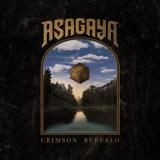
Crimson Buffalo is a narrative-driven album built as a fragmented story following Asagaya through a shifting parallel world shaped by conflict and transformation. Blending cinematic composition, diverse musical influences and collaborations with vocalists including Hannah Williams, Gaye Su Akyol, Moonlight Benjamin, Odile de Mainville, Mary May, Days and Alanna Matty, the record unfolds as a continuous arc where each piece contributes to a broader story. More than a collection of songs, it forms a constructedworld shaped by sound, contrast and progression.
artist bio
Asagaya is the project of French multi-instrumentalist David Kern. Through cinematic and narrative-driven songwriting, his albums unfold as cohesive stories centered on fictional characters.
Drawing from late 60s/70s aesthetics, 90s genre-crossing influences and a wide range of global musical traditions, his work blends live instrumentation, layered production and diverse sonic textures, shaped through collaborations with vocalists and musicians.
BEAR's sound is a calculated collision of technical precision and unfiltered aggression _ a modern strain of European metal that balances math-inflected complexity with visceral, live-wire intensity. At the core of their identity a combination of brains and brute force. With Anhedonia, Belgian heavyweights BEAR deliver five songs of pure adrenaline and unfiltered heaviness that capture a band confronting the strange emotional vacuum that can follow trauma. Anhedonia is both a battle cry and a confession; a visceral document of resilience carved from years marked by illness, loss, uncertainty, and hard-won perseverance. Musically, Anhedonia represents a sharpened evolution of BEAR's already formidable sound. Known for their intricate rhythms, punishing riffs, and explosive intensity, the band made a conscious decision this time to strip away excess and focus on the core of each song. There is no wasted movement on this EP. Every riff lands with purpose. Every rhythmic shift feels earned. The band trimmed the fat without sacrificing identity, creating space for dynamics and melody to cut deeper than ever before. "The songs are somewhat stripped back, allowing more space for Maarten's vocals to really shine this time around. I feel like we really hit a great balance of maintaining our signature complex sound while also allowing for more experimentation and melody." (James Falck) Anhedonia acknowledges numbness without glorifying it. It confronts pain without being consumed by it. And in doing so, it transforms heaviness into something connective. BEAR have always been a band driven by conviction, and here they stand at their most authentic, vulnerable and ferocious. Together, BEAR create music that feels alive _ tense, volatile, and emotionally charged _ where technicality enhances impact, and heaviness carries genuine vulnerability beneath its surface. FOR FANS OF The Dillinger Escape Plan * Every Time I Die * Botch * Converge * Norma Jean * Coalesce * Herod
BEAR's sound is a calculated collision of technical precision and unfiltered aggression _ a modern strain of European metal that balances math-inflected complexity with visceral, live-wire intensity. At the core of their identity a combination of brains and brute force. With Anhedonia, Belgian heavyweights BEAR deliver five songs of pure adrenaline and unfiltered heaviness that capture a band confronting the strange emotional vacuum that can follow trauma. Anhedonia is both a battle cry and a confession; a visceral document of resilience carved from years marked by illness, loss, uncertainty, and hard-won perseverance. Musically, Anhedonia represents a sharpened evolution of BEAR's already formidable sound. Known for their intricate rhythms, punishing riffs, and explosive intensity, the band made a conscious decision this time to strip away excess and focus on the core of each song. There is no wasted movement on this EP. Every riff lands with purpose. Every rhythmic shift feels earned. The band trimmed the fat without sacrificing identity, creating space for dynamics and melody to cut deeper than ever before. "The songs are somewhat stripped back, allowing more space for Maarten's vocals to really shine this time around. I feel like we really hit a great balance of maintaining our signature complex sound while also allowing for more experimentation and melody." (James Falck) Anhedonia acknowledges numbness without glorifying it. It confronts pain without being consumed by it. And in doing so, it transforms heaviness into something connective. BEAR have always been a band driven by conviction, and here they stand at their most authentic, vulnerable and ferocious. Together, BEAR create music that feels alive _ tense, volatile, and emotionally charged _ where technicality enhances impact, and heaviness carries genuine vulnerability beneath its surface. FOR FANS OF The Dillinger Escape Plan * Every Time I Die * Botch * Converge * Norma Jean * Coalesce * Herod
After a sold out first release, NY’s Superflux is back for Round Two with a debut release from arguably the most unsung hero of the Midwest underground. Uplink is a REDACTED-based hardware specialist known for their work running a series of labels and organizing parties that have helped define the region’s sound for more than a decade. Crafted using time-honored tools of the trade, these four dubby, tracky, and raw cuts – lifted from live stereo board recordings – will sit comfortably alongside releases from STL, Skudge, and MRSK.
The A1, Audio Sport, is a dubby groover with almost-steppy hats and bit of bite; a reverb-drenched lattice of delayed pads bends your sense of time and space until you realize you’re 12 hours into the warehouse function and someone’s just thrown a piano off the roof. A2, Blue Untitled, is a deep stomper reminiscent of the early WAX records. A big & shifty bassline turns this into a true head-nodder. B1, Temporary Machine 1, is a more subdued dubbed-out tech house cut anchored on a rolling bassline and flanked by dusty percussion and prescriptive stabs. Proper warm up tackle or hazy after-afters fodder: the choice is yours. Connoisseurs of a fine B2 rejoice – this one is it. Dokta is a moody, tripped out late night techno affair with a dash of bounce for good measure. All that hisses is gold.
Written by Colin Boardway
out of Stock
Last delivered 4 months ago available to reorder, subject to availability
London-based musician, composer, and NTS resident Kit Grill presents his extraordinary new album 'Andøya', inspired by a solo residency on the eponymous Norwegian island, a profoundly dramatic territory situated in the Vesterålen archipelago, inside the Arctic circle.
With evocative, sonorous ambient, drone, minimalism, experimentalism, and modern classical music, Grill captures the environmental essence of a remarkable region; an isolated Nordic landscape of small coastline villages, raw peatlands and sublime mountain ranges, surrounded by wide, open views of the Arctic ocean.
Drawn from his experience on solitary excursions around the island - hiking, exploring, and encountering the locals - 'Andøya' is a beautifully stark, stirring exploration of acoustic phenomena, seclusion in nature, and the expressive power of unique landscapes. For Grill, the trip entailed a surreal day-night cycle, and his experience has had far-reaching, existential implications, both for his practice and his perspective:
"On the 8th January 2025 I travelled to the Norwegian island of Andøya, in the Arctic Circle for a three week solo residency. Surrounded by sea, snow, and mountains, I lived in isolation and travelled around the island each day documenting the landscape. At 10am, the background light of the sun beneath the horizon would light the day and in the 4 hour window of light, I would hike into the mountains and explore the wilderness. It was a profound experience that changed the way I thought about sound, solitude, and what it means to be alone in nature."
"Since returning, I created a body of music informed by that time to try and capture the vastness and unpredictability of the Arctic landscape. The album moves through the sensory extremes: ice cracking, storms forming and fading, the rumble of tectonic plates, waves crashing, harsh winds, trudging through snow, and the sharpness of freezing air. The album aims to reflect both the landscape itself and the shifting emotions that came with living in isolation and the Arctic environment. The music and photography serve as a recorded diary of my time there, documenting the experience."
Following her contribution to Scenic Route’s Road Less Travelled 2, MS RAY returns with MELT — a defining new chapter in what Boomkat described as “adult contemporary soul.”
MELT is set to be a true benchmark for MS RAY - a five-track release that moves between the cathartic and the heartfelt, shifting fluidly between R&B, trip-hop and dream pop. Subtle yet expansive, it captures her most refined and emotionally resonant songwriting to date.
The EP features new single “Miss You” ft. Nourished By Time, a slow-burn duet pairing her velveteen delivery with his unmistakable, off-kilter pop sensibility.
Also included is “Signs,” her standout cut from Road Less Travelled 2, available here for the first time on vinyl, alongside three brand new, unreleased tracks that further explore her palette of nocturnal electronics, minimalist soul and soft-focus atmospherics.
out of Stock
Last delivered 4 months ago available to reorder, subject to availability
San Diego’s Mrs. Magician has always bent surf music and punk into something delightfully off-kilter — sun-soaked, hook-heavy power pop with a lyrical fixation on life’s darker undercurrents. Their 2012 debut, Strange Heaven, was a nihilistic pop statement that grew into a cult classic. The 2016 follow-up, Bermuda, sharpened the edges with punchy, nervy songwriting. Both records were produced by John Reis (Rocket From The Crypt, Hot Snakes, Drive Like Jehu), cementing the band’s place in Southern California’s underground lineage. Now, in 2026, Mrs. Magician reemerges with their long-awaited third LP, Spiritual Hangover. Recorded at Dave Grohl’s Studio 606 and Singing Serpent Studios with producer Christian Cummings, Spiritual Hangover finds songwriter Jacob Turnbloom trading youthful nihilism for something more reflective. Where earlier records wrestled with existential dread through anthemic defiance, this new collection embraces uncertainty — an admission of ignorance in the face of the human condition, paired with a genuine longing for connection and understanding. The humor remains. The hooks are sharper than ever. But the perspective has shifted.
These songs feel less like a declaration of dominance and more like a celebration of fragility — an acknowledgment that life is fleeting, confusing, and still worth enjoying. The album features Andrew Montoya (drums) and Mark Rivera (bass) of The Sess, Ian Fowles (guitar) of The Aquabats, and John Reis (guitar). Spiritual Hangover channels the bright urgency of late-’70s power pop through a distinctly Californian lens — warm, melodic, and irresistibly alive. “Super fun, well crafted, with great melodies. It gives me that late ’70s power pop energy I loved so much as a kid. Every track has something joyous to grab onto. In a world full of bleak news, Spiritual Hangover is a warming blast of California sunshine.” — Walter Schreifels (Gorilla Biscuits/Quicksand)
There’s a song on There’s A Whole World Out There, the second album by Canadian four-piece Arm’s Length, called “Palinopsia”. Derived from the Greek for “again” (palin) and “seeing” (opsia), it’s a visual phenomenon marked by the persistent image of something that’s no longer actually there. Singer and lyricist Allen Steinberg wrote the song wrote about “pure devotion or love towards someone that may no longer be a part of your life”, but it also applies to the record as a whole.
Because throughout this album’s 12 songs, Steinberg wrestles a with the part of life that’s been and gone. Yet there’s a noticeable difference between the person who wrote this record compared to the one who wrote Arm’s Length’s 2022 debut, Never Before Seen, Never Again Found. “This record speaks more to my life at the moment than the past,” he explains, “even though there’s still a good amount of past on it. But it’s how I’m dealing with it now, as opposed to being enveloped in it—there’s more a sense of being on the other side of it, of seeing it with hindsight. The tone has shifted a little. I’m probably just a bit more mature, as my frontal lobe is developing as we speak.” Produced by Anton DeLost—who worked with the band on Never Before Seen, Never Again Found and 2021’s EP, Everything Nice—There’s A Whole World Out There does indeed expand Arm’s Length’s horizons in accordance with Steinberg’s developing frontal lobe, presenting him as more self-reflective contemplative than he was before. He wrote the parts for all the instruments, as well as the vast majority of the lyrics, alone in his room, and then brought those initial sketches, recorded as voice memos, to drummer Jeff Whyte, who added percussion to Steinberg’s song skeletons. While the majority of the creative process was in Steinberg’s hands, it was only when these songs were recorded as a full band with Jeremy Whyte, who played bass on the record, and Ben Greenblatt that their full potential was realized. The result is that the feelings driving these songs burst and bloom with full force, building on the incredible foundations set by the band’s previous recorded output.
Sans Merit arrives on Knekelhuis with his second album Trolley Polly. A radiant album from currently LA-based Australian musician Griffin James—one that leans into unguarded joy with a playful, disarming sincerity.
The album rocks right away into our world. Lifting off where the guitar pedals mash the gas and go. While at other moments the acoustic guitar passages carry a neofolk intimacy, like the low-voiced choir singer cast out of a pastoral world, left to wander in his own solitude. These moments are swept up by surging shoegaze episodes, slipping into hazy hypnagogic pop interludes and wiry post-punk turns, giving the record a restless, shifting pulse.
Beneath it all lies a lyrical sensitivity that grounds the album’s movement. Sans Merit reflects on the big questions in a world that feels increasingly fragile, balancing vulnerability with a self-aware, gently naïve humor, while staying attuned to the emotional undercurrents of everyday life. It’s this perspective that makes Trolley Polly feel so human—alive in its contradictions, and quietly comforting.