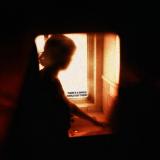
This Mirror Weighs a Ton, Interpol’s first album in four years and debut for Partisan Records, finds the band turning inward while continuing to move forward. Across the record, reflection, distortion and perception become a lens through which familiar shapes are refracted into something slightly alien, as if seen through a different kind of light.
Produced with Grammy- and Oscar-winning Andrew Wyatt (ROSALÍA, Charli xcx) and mixed by Dave Fridmann, the album introduces vibrant new textures into Interpol’s world. Synthesizers, strings, acoustic guitars and percussion are integrated into the fabric of the songs, expanding the palette while revealing colors already latent within it. Nothing feels imposed. Instead, the additions deepen the band’s language of restraint, atmosphere and tension. At its center remains the creative relationship between Paul Banks, Daniel Kessler and Sam Fogarino, a partnership now approaching three decades and defined by intuitive alignment and momentum that continues to generate new possibilities. The result is an album that feels expansive, uncanny and alive with forward motion, not a reinvention but an evolution that allows Interpol to continue transforming without losing their identity.
“This Mirror Weighs A Ton” / “See Out Loud” is a study in duality, with Interpol moving fluidly between familiarity and departure. The title track unfolds from a skeletal progression into something vast and textural, built from warped bass, a wordless female voice and a sense of motion that feels tidal, bending the band’s familiar language into somewhere more expansive and unfamiliar. By contrast, “See Out Loud” carries the DNA of Interpol’s earliest work, sharp, propulsive and direct, while complicating it through layered vocals, shifting perspectives and a rare lead vocal turn from Kessler. Both tracks reflect the interplay between structure and spontaneity that defines This Mirror Weighs a Ton, expanding Interpol’s world through fresh textures while keeping the instinctive chemistry between Banks, Kessler and Fogarino at the center.
The double single is accompanied by two visualizers directed by Nick Steinhardt.
Ty Segall, precleared for flight in full rock congress with the band (Ben Boye/Evan Burrows/Mikal Cronin/Emmett Kelly), shifts Chrome. Songs of massive riffs, swung, tightly arrayed lines of fuzz & distortion, twin-guitar attack-and-parry, endopic keyboards kicking, precise & thudding power, a rhythmic core on the march in full BAND energy. The songs are lyrically allusive trips, dark passages in the labyrinth, everything in the air bristling collectively, as minds collide.
Tipped by many as a true DJ’s DJ, London’s Isaac Carter has a sound that sits between heritage and reinterpretation. Drawing from the iconic hubs of Chicago and Detroit, his productions reframe classic influences with a contemporary UK perspective, prioritising groove, swing, and a stripped, functional edge.
At the heart of his work, Carter has developed his Ochi imprint, where his deeper material has circulated within a select circle of DJs, with love from names such as Ben UFO, Raresh, and Joy Orbison. A controlled outlet for ideas shaped specifically for club use, that approach also carries over into his sets, playing at the likes of DC10, Glastonbury, and Love International.
Fresh from his appearance for the London favourites at FUSE’s annual Open Air showcase, Enzo Siragusa now welcomes him to the label for the first time as he brings a collection of cuts that journey into varying corners of the house sphere.
The ‘Disconnected’ EP brings five tracks built around direct function and contrast. ‘Disconnected’ opens with rolling low-end pressure and slinking drums, loaded with swing, setting a clear rhythmic foundation for the project. ‘Bad Girl’ shifts into a more playful space, led by vocal fragments, hazy chords and dubby tones. On the B-side, ‘What We Do’ leans into crisp repetition sitting beneath shifting, trippy movement, followed by ‘Loopy’, which strips things back into a reduced late-night percussive trip.
Das Debutalbum der Indie-/Alt-Rock-Band Bantom Woods aus Austin, Texas. Obwohl die Band noch recht neu ist, gehören ihre Mitglieder zur Indie-Rock-Elite Austins und sind seit über zwei Jahrzehnten in diversen Bands aktiv. Sie verbinden Alt-Rock, Dream-Pop/Shoegaze, Post-Punk und Underground-College-Rock der frühen 90er Jahre zu einem unverwechselbaren, höchst eingängigen Sound mit den gewissen Austin-Touch. Nach dem Start mit einer digitalen EP im März 2025 folgt nun das volle Album, das unter anderem die Singles "Lotteries & Lightning Strikes" und "Bail Polish" enthält. Klassisch schwarze Vinyl-LP gibt's hier, kein Firlefanz.
Moving Pressure 03 lands as Rene Wise's third release on his imprint. With a refined approach to rhythm and restraint, the artist once again distills techno to its purest form: hypnotic, percussive, and propulsive. Across four tracks and in line with the label's essence, MP03 thrives on movement-low-end mastery meets tightly coiled grooves, while textural elements shift and evolve with subtle precision.
A1 'Relax' sets the foundation with a mighty sub-base, rolling forward with effortless force. Chopped-up claps ricochet through the mix, while a funky, disembodied vocal repeats a single command: "relax". Then comes 'Chomp Chomp', a denser offering in Wise's sensorial arsenal. Layered with gritty textures, his signature percussion builds a soundscape that is both tactile and weightless, evoking a kinetic dream state where groove and space are in constant conversation. On the flip, 'Cave' plunges into murkier terrain. Swathed in fog and sinister atmospherics, it unfolds through an eerie blend of sci-fi surrealism and grounded physicality. Bleeps hover like distant signals, their sharpness softened by a cavernous, smothering embrace. It's a study in tension-hypnotic and unsettling in equal measure. Closing the release is 'Deep Under', a track that embodies its name with subterranean mystique. The soundscape is rich with detail, an ecosystem of sonic fragments shifting beneath the surface. It's immersive yet elusive, like catching glimpses of something just out of reach-a mirage that flickers between the tangible and the ethereal.
This is minimalism with intent, built for deep immersion. Less, here, is infinitely more.
out of Stock
Last delivered 19 days ago available to reorder, subject to availability
French-born, Berlin-based DJ and producer Benabou returns with 'Rise & Merge', her second solo EP and first standalone project since 2018's 'Hottan'. She now presents a body of work that reaches beyond the familiar contours of techno while retaining the rhythmic precision of her core sound. The six-track EP emerged from a period of creative recalibration. Benabou found herself drawn towards exploratory forms, embracing movement via dub structures, broken rhythms and ambient atmospheres alongside more direct dancefloor energy.
Benabou's position as a mastering/cutting engineer at Berlin's Manmade Mastering studio is a central element of the record. Conceived as a vinyl release and brought to life with the assistance of Mike Grinser, the run time is deliberately contained to 15 minutes per side to preserve the EP's warmth and fidelity.
The inky opening track 'Projet G' slinks through cosmic textures and prowling sub-bass, built around layered Korg Mono/Poly and rich analogue components. Kliche's remix follows with a spacious, kinetic dub techno interpretation that teases out the original's deeper currents. 'Interlude' then offers a fleeting bridge between worlds. Conceived during a flight back to Berlin, its unfinished quality is entirely intentional, allowing the listener to imagine where it might lead.
The B-side flows towards club territory with 'Rise' and 'Shift'. Both tracks favour broken beats and fluid arrangements that lend them an organic, elemental quality. 'Merge' provides the EP's emotional resolution. Its experimental/ambient resonance unfolds through wispy melodies and porous textures; the state of separate elements finding their way back to a common origin.
"I’m really happy to present something this eclectic and to go where people might not expect me", Benabou explains. "To step slightly outside the techno world I know, and reach for something more open and luminous."
Ever since the late 1950s bossa-nova revolution, Brazil’s influence on French music has been undeniable. Pierre Barouh, Georges Moustaki and a vast array of lesser known artists, all made the Musica Popular Brasileira (MPB) an axis of promotion at the service of a cool and metaphysical, modern and mixed Brazilian lifestyle. Some were seduced by the poetic languors of the bossa, some were looking for fun, and others just loved the American hybridization of jazz-bossa, jazz-samba.
What is bossa nova? One of its creators, Joao Gilberto said: "Its style, cadence, everything is samba. At the very start, we didn't call it bossa nova, we sang a little samba made up of a single note - Samba de uma nota so .... The discussion around the origins of bossa nova is therefore useless”. It is nevertheless useful to remember that these magnificent Brazilian songs, which the guitarist describes as samba, were shifted and balanced around improbable chords. "I like things that lean, the in-betweens that limp with grace," said Pierre Barrouh, quoting Jean Cocteau.
With emotion, arrangements for violin and supple guitar licks, bossa nova rapidly changed. A transformation that can be heard in the Tchic, tchic, French Bossa Nova 1963-1974 compilation, the result of a cultural reappropriation, which traveled through the United States and supplemented itself in France.
A musical revolution that has remained significant, bossa nova was born in Rio. From 1956 to 1961, Brazil lived through its golden years. In five years, the country had invented its modernist style. Elected president in 1956, Juscelino Kubitschek de Oliveira, an elegant man with a broad forehead, brandished a promising slogan: "Fifty years of progress in five years". He quickly got to work. Not worried about increasing debt, he launched the project for a new federal capital, Brasilia, designed by the communist architect Oscar Niemeyer. Volkswagen opened state-of-the-art factories and created the “fusquinha”, the Beetle. In Rio, the Vespa made its first appearance. The Arpoador Surf Club crew run into the “girl” from Ipanema, Helô Pinheiro - the tanned garota ("chick"), between a flower and mermaid, who at 17 walked by the Veloso bar, where the fiery author and composer, Tom Jobim and Vinicius de Moraes, were getting drunk on whiskey. From then on, bossa symbolized cool.
In 1958, Joao Gilberto recorded Chega de Saudade, which the directors of Philips denied, calling it "music for fagots". The marketing director, who believed in it, secretly pressed 3000 78-inch vinyls and distributed them at schools around Rio, creating a tidal wave.
American jazzmen then took over. In particular, trumpeter Dizzy Gillespie and guitarist Charlie Byrd. In November 1962, the Brazilian Ministry of Foreign Affairs funded a "Bossa-Nova" concert at Carnegie Hall in New York, inviting the genre’s pioneers. Unprepared, the show soon turned to disaster. But the troupe was invited to the White House by Jackie Kennedy. The first lady loved "the new beat" and in particular Maria Ninguem, a song by Carlos Lyra, later covered by Brigitte Bardot.
In Brazil, the 1964 military coup quickly ended this euphoria. The destructive atmosphere that ensued pushed many Brazilian musicians to leave, if not to exile. Thus, Tom Jobim, Sergio Mendes and Joao Gilberto arrived to the United States. In New York, Joao Gilberto met saxophonist Stan Getz. At the time, he was married to the Bahianese Astrud Weinert Gilberto, who had a German father. She had never sung before, but she knew how to speak English. Getz therefore asked her to replace her husband on The Girl From Ipanema. The Getz/Gilberto record with Tom Jobim on piano, was released in March 1964. Phil Ramone, the "pope of pop" was in charge of sound.
Bossa nova arrived in Paris through the classic “guitar-voice” channel (Pierre Barouh, Baden Powell, Moustaki…) But France loved jazz and Paris had already welcomed its American contributors. All these good people were to pass through Saint-Germain-des-Prés. The cabaret l'Escale became the Mecca of Latin American sound where one could find Pierre Barrouh and his friends, such as the Camara Trio, samba-jazz aces, whose only record was published by the Saravah label. With a band strangely called Les Masques (a band that included Nicole Croisille and Pierre Vassiliu, among others), the Camara Trio recorded an interesting Brazilian Sound, including the track Il faut tenir which is present on this tasty compilation of rarities.
Other enlightened musicians can also be found on the compilation, such as Jean-Pierre Sabar (songwriter for Hardy, Auffray, Leforestier ...) and the French pop rock organist Balthazar. In 1975, Sabar recorded Aurinkoinen Musiikkimatka on a Finnish label, which featured the crazy Vai, Vai, included on this record. We are now following the footsteps of Brazilian electronic musicians such as Sergio Mendes, Eumir Deodato or Marcos Valle who created funk and disco sounds on their keyboards and synthesizers. A style that influenced Véronique Sanson when she wrote Jusqu’à la Tombée de la nuit in 1969 for Isabelle de Funès, the niece of Louis and a great friend of Michel Berger - Sanson did end up singing this track on her 1992 Sans Regret record.
The pinnacle of exoticism and travel, Sylvia Fels’ Corto Maltese includes bongos, sea mist and ocean sounds. The title was taken from Jacky Chalard’s concept album written in 1974, Je suis vivant, mais j’ai peur (I am alive, but I am scared), based on Gilbert Deflez’s science fiction novel.
However, bossa nova extended the scope of popularity. "In the 1970s, I was a fan of Sergio Mendes, Getz / Gilberto. I fell in love with this music that I knew because I had been an orchestral singer, " explained Isabelle Aubret, who in 1971 delivered a composite record of covers by the very funky Jorge Ben, Orfeu Negro, Tom Jobim, Vinicius de Morais and Jean Ferrat. "I recorded this album for Meys Records in Paris, far from Brazil, with wonderful musicians, François Raubert, Roland Vincent, Alain Goraguer...". The latter wrote the arrangements for Casa Forte, a very percussive title borrowed from Edu Lobo, one of the initiators of the bossa who spent time in California. "Jazz and bossa came together and produced very rhythmic music. I love singing, it allows me to dream, to have fun, to feel a high on stage, and these songs brought me joy, made me swing, my singing felt like a dance.”
The world tours of French singers and their desire for the tropics, often brought them to Rio with its hills, forests, caipirinhas and tanned bodies. There are surprises though, like this Iemenja (Iemenja is the goddess of the sea in the Afro-Brazilian candomblé religion). Not unlike the composer and musician Jean-Pierre Lang, based in Sao Paulo, Claire Chevalier taught Brazil to Brazil. In 1970, the singer and painter published a 45-inch vinyl, Mon mari et mes amants (My husband and my lovers), under the improbable pseudonym of Clarinha (little Claire). She was then living in Rio, with her husband, Joël Leibovitz, who founded a band called Azimuth, and who owned a record label specialized in "sambas enredos" songs for samba school parades.
For its B side, she asked Pierre Perret to come up with lyrics for a song composed by Carlos Imperial: "Oh goddess of the sea, o goddess Iemenja, I bring a white rose to adorn your long hair ..." . "Perret came to see us, and we had fun, remembers Joël Leibovitz. We wrote Lemenja for fun, we recorded it at the Havaí studio, behind the Central do Brasil the central station. Erlon Chaves, the arranger who worked with Elis Regina, joined us" adding his share of Afro-Brazilian percussions and funky brass to the mix.
There is a common misunderstanding in Franco-Brazilian history: that bossa, admittedly hedonistic, is perceived as funny, even though the poets who wrote the texts are often philosophizing on the human condition. Its French interpreters pull it towards a carnival inspired universe, far removed from its fundamental essence. Thus, Jean Constantin covered the famous Samba da minha terra, an ode to the art of samba written by the classic Bahian composer Dorival Caymmi, renaming it with the enticing title of Pas tant de tchi tchi pompon: "On your pier there is no tchi tchi / when you arch your back, you know everything is alright ”(lyrics by Gérard Calvi). This expedited bossa aims for the absurd, but retains a certain elegance.
Indeed, Jean Constantin was not an idiot, the rather large man had a huge mustache and liked fantasy, (Les pantoufles à papa, Le pacha, inspired by cha-cha-cha-cha, salsa and jazz) but he was also the lyricist of Mon manège à moi interpreted by Edith Piaf, the composer of Mon Truc en plume by Zizi Jeanmaire and the soundtrack of François Truffaut’s 400 Blows. Le Poulpe, published in 1970, from which this bossa is extract, was arranged by Jean-Claude Vannier, an accomplice of Serge Gainsbourg’s Melody Nelson. In short: "There is enough of samba / By looking at the parasol / Because my poor cabeza / Is going to die in the sun".
Even the American actress Marpessa Down, who was at the heart of the bossa nova revolution with her role as Euridyce in Marcel Camus’ film Orfeu Negro, winner of the 1959 Cannes Palme d'or, fed the clichée with Je voudrais parler au petit cuica - "Tell me how you manage to always make people want to dance / It's true, I must admit that I cannot resist your magic" - in consequence, once can hear the cuica, a little drum inherited from the Bantu.
But bossa nova had many angles. Societal, of course, pushing actresses who were symbols of women's liberation like Brigitte Bardot, Jeanne Moreau, or Sophia Loren to engage in the exercise of accelerated bossa. In February of 1963, Sophia Loren made a record in French in Rome, Je ne t'aime plus, featuring the song De jour en jour, a bossa written by two Italians, Armando Trovajoli and Tino Fornai, which was released a little later by Barclay. Bossa accompanied the 1960s, a decade of moral liberation. Ann Sorel, who interpreted La Poupée des favellas, caused a sensation with L’amour à plusieurs, a provocative song written by Frédéric Bottom and Jean-Claude Vannier. As for the actress Andrea Parisy, she displayed her bourgeois cheekiness in Marcel Carné's Les Tricheurs before interpreting Les mains qui font du bien. And Magalie Noël, the friend of Boris Vian, who sung Johnny fais-moi mal, was hired to sing Une énorme Samba, composed by Alain Goraguer (arranger to Gainsbourg, Bobby Lapointe and Jean Ferrat) with lyrics by Frédéric Botton.
But in the end, of what wood is bossa nova made of? The answer is given by Christianne Legrand, daughter of Raymond the conductor, and sister to Michel the composer: "With me, with jà" - jà means "immediately" in Portuguese. In 1972, the singer, an expert in vocal jazz and a member of the Double Six, published Le Brésil de Christianne Legrand. Two songs included on the Tchic Tchic compilation that demonstrate how bossa, jazz, funk, rock, etc. work like a swiss army knife: the music is used to denounce broken systems, or miracles, HLM et ciné roman, Cent mille poissons dans ton filet, two songs from the O Cafona soundtrack, a successful telenovela broadcast, at the time in black and white, on TV Globo. The first was adapted in French by the fighter and friend of the Legrand tribe, Agnès Varda. The second is content with a play on words, jostling them into a summer fun.
Véronique Mortaigne
out of Stock
Last delivered 3 months ago available to reorder, subject to availability
Double LP pressed on Pearl Dawn vinyl. Akupara Games, Videocult and Black Screen Records are beyond stoked to release the soundtrack to Rain World: The Watcher, a DLC of the massively successful game hit Rain World. The music was crafted by year-long companions of the game James Primate and Lydia Esrig but it's also featuring works by Serpanoy, Pinpoint, snoodle, Intikus and Kaeporo. This collection of hugely talented artists makes the score an eclectic journey that at the same time follows a coherent concept that reflects on the atmosphere of the game. The wilds that await will be unlike all that's come before. The double LP on stunning Pearl Dawn vinyl, that is featuring a total of 54 tracks, presents exclusive gatefold artwork by Kelocitta with UV spot varnish. This set is not only a true beauty but also perfectly in line with the vinyl releases for Rain World and Rain World: Downpour - don't miss out to complete your collection! Rain World: The Watcher is a DLC expansion of Rain World. Journey beyond to something, somewhere only ever glimpsed. Unknown creatures stalk and climb and dive and hunt. New breeds rip and pluck and burrow and hide. Predator and prey redefined. And through the middle of it all, a lonely lost slugcat trying their best to outlast the ravages of a warped world. When the world beneath your feet cracks and crumbles, will you hold on to all you once knew? Or dive into the unknown?
Ondanaconda does not compose with the jaw harp, but through it. For their self-titled debut album, the quartet turns this lamellophone, often perceived as archaic, into the record"s sole sound source. Found for centuries across continents, from Asia to Europe, the jaw harp is played against the teeth, using the mouth as a resonating chamber, shaping sound through breath and bodily movement. Here, amplified, prepared and sometimes pushed to its limits, it becomes percussion, bass, drone and texture - a true mouth synthesizer with vast possibilities. Between performance and trance, Ondanaconda crafts an unidentified sonic object, somewhere between collective ritual and raw electroacoustic experiment. Each piece emerges from specific combinations of instruments, exploring timbral affinities and rhythmic or harmonic potentials, while leaving room for drift and improvisation. Repetition acts as an unstable engine, bending patterns until they morph into something else. Together, Laurent Bruttin, Antoine Läng, John Menoud and Daniel Zea weave a dense, shifting mass where individual voices dissolve into an organic, almost hallucinatory polyphony. Conceived as a continuum, the album unfolds as a hypnotic flow, a physical and immersive music that moves from mouths to bodies, saturating the surrounding space. A radical UFO, at the crossroads of concert, performance and sound installation.
Time to welcome Soul 223 to the label with his debut Delusions EP entitled Fear Of Stopping. Something of a complete legend in our eyes and ears, Steve Pickton has been releasing top drawer tuneage for over two decades both as Stasis on influential labels such as B12 and Peacefrog and more recently as Soul 223 on equally well regarded imprints like Delsin, Soul Jazz and Neroli. Always one to shy away from any limelight or self promotion it's true to say that this underrated British producer remains something of an anomaly, staying true to his underground roots where faceless, shadowy and obscure reigns supreme over the latest over-exposed cover star. This ethos naturally carries through into his music where you will always find both expansive beauty and unrefined rawness in equal measures ensuring his tracks always sound fresh rather than over produced or contrived.
Fear Of Stopping opens the EP with a low-slung disco groove providing the backbone for intermittent pad washes and reversing stabs. The focus here is firmly on the drums and simple conga riff with thankfully very little else to deter you from this sublime slice of abstract dance music.
Next up we have a remix from another ridiculously talented producer who chooses quality over quantity, having only ever had one release under his own name, albeit for one of the most respected labels in the world; Rush Hour. Maxi Mill came to our attention having released one of the tracks of 2011 namely To The Next. On this, his first ever solo remix he brings a brilliant bump to the EP with a raw, warehousey and bass-heavy workout. Just the right amount of strings and pads keep the deep vibe intact but the filtering bass and jacking drums definitely take this one to the floor.
Flipping over we have Walberswick in it's Hoist Covert Mix incarnation. Almost thirteen minutes of spaced out, deep Detroit house music awaits you, ready to lure you in and cocoon you with it's warm and hypnotizing machine funk. Lovely to hear the old Stasis influence working it's way into this one sounding both decidedly old-school and completely futuristic and otherworldly as only the best tracks ever do.
Closing the EP we have Birdbrook Rain dropping the BPM's for a beautifully sparse track that brings with it an almost desolate and disconnected feeling, echoing synths providing a naive melody while a dusty pad shifts simply beneath. A little slice of magic concluding a fresh and interesting EP, we hope you agree.
Random Color ReVINYL Edition. Never has a Songs: Ohia album's process been so integral to its overall feel as is the case with DIDN'T IT RAIN, the band's sixth proper full-length. The album, like the working class South Philadelphia neighborhood in which it was birthed, has a real used goods kinda feel to it. Engineer Edan Cohen employed what some may consider "old-fashioned" recording techniques -- the entire album was recorded live with no overdubs, the full band playing in one room with the players always within arms' reach of one another; singers Jason Molina, Jennie Benford and Jim Krewson (the latter two of Jim & Jennie And The Pinetops) sharing microphones singing live together, sometimes sitting in chairs, sometimes standing. The result is a sound which resembles the warmth and personality of the classic Muscle Shoals Sound recordings of the early- to mid-70s: Willie Nelson's PHASES & STAGES, the Rolling Stones' "Wild Horses", and others by Aretha Franklin, Boz Scaggs, Bob Seger, Lynyrd Skynyrd and Wilson Pickett.Inspired by the Mahalia Jackson song of the same name, the title track is a beautiful song about the shifting tides of life and the old cycle of "a lot of shit going down before shit clears up". It's a damn fine place to start an album that seems in no hurry whatsoever to make a universal statement, instead perfectly content to walk its own path toward resolution. And damn if Songs: Ohia principal songwriter Jason Molina hasn't gone and created a record that is even more intensely personal and healing than any of his previous works. Neil Young had his AFTER THE GOLDRUSH, this is Molina's DIDN'T IT RAIN. Indeed, this is the album with which Molina really leaves his mark as a serious songwriter and artist. On 1999's genre-bending Ghost Tropic full-length, Songs: Ohia made it clear that it could make a cohesive album that took its listener on a journey from front to back. Its dislocated feel set a haunting tone, and its largely instrumental and drone-like quality was the process of the Ohia eluding itself and its own tendencies, searching for the underside of its roots freshly yanked. With DIDN'T IT RAIN, Molina & Co. return to the beauty of the song form and offer up a startlingly soulful and introspective song cycle in which Molina -- accepting a comfortable degree of anonymity amongst the other players -- meditates on what it means to feel rooted again (in the city of Chicago, where he's called home for the past three years), sounding more sturdy at his core than ever.
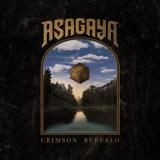
Crimson Buffalo is a narrative-driven album built as a fragmented story following Asagaya through a shifting parallel world shaped by conflict and transformation. Blending cinematic composition, diverse musical influences and collaborations with vocalists including Hannah Williams, Gaye Su Akyol, Moonlight Benjamin, Odile de Mainville, Mary May, Days and Alanna Matty, the record unfolds as a continuous arc where each piece contributes to a broader story. More than a collection of songs, it forms a constructedworld shaped by sound, contrast and progression.
artist bio
Asagaya is the project of French multi-instrumentalist David Kern. Through cinematic and narrative-driven songwriting, his albums unfold as cohesive stories centered on fictional characters.
Drawing from late 60s/70s aesthetics, 90s genre-crossing influences and a wide range of global musical traditions, his work blends live instrumentation, layered production and diverse sonic textures, shaped through collaborations with vocalists and musicians.
BEAR's sound is a calculated collision of technical precision and unfiltered aggression _ a modern strain of European metal that balances math-inflected complexity with visceral, live-wire intensity. At the core of their identity a combination of brains and brute force. With Anhedonia, Belgian heavyweights BEAR deliver five songs of pure adrenaline and unfiltered heaviness that capture a band confronting the strange emotional vacuum that can follow trauma. Anhedonia is both a battle cry and a confession; a visceral document of resilience carved from years marked by illness, loss, uncertainty, and hard-won perseverance. Musically, Anhedonia represents a sharpened evolution of BEAR's already formidable sound. Known for their intricate rhythms, punishing riffs, and explosive intensity, the band made a conscious decision this time to strip away excess and focus on the core of each song. There is no wasted movement on this EP. Every riff lands with purpose. Every rhythmic shift feels earned. The band trimmed the fat without sacrificing identity, creating space for dynamics and melody to cut deeper than ever before. "The songs are somewhat stripped back, allowing more space for Maarten's vocals to really shine this time around. I feel like we really hit a great balance of maintaining our signature complex sound while also allowing for more experimentation and melody." (James Falck) Anhedonia acknowledges numbness without glorifying it. It confronts pain without being consumed by it. And in doing so, it transforms heaviness into something connective. BEAR have always been a band driven by conviction, and here they stand at their most authentic, vulnerable and ferocious. Together, BEAR create music that feels alive _ tense, volatile, and emotionally charged _ where technicality enhances impact, and heaviness carries genuine vulnerability beneath its surface. FOR FANS OF The Dillinger Escape Plan * Every Time I Die * Botch * Converge * Norma Jean * Coalesce * Herod
BEAR's sound is a calculated collision of technical precision and unfiltered aggression _ a modern strain of European metal that balances math-inflected complexity with visceral, live-wire intensity. At the core of their identity a combination of brains and brute force. With Anhedonia, Belgian heavyweights BEAR deliver five songs of pure adrenaline and unfiltered heaviness that capture a band confronting the strange emotional vacuum that can follow trauma. Anhedonia is both a battle cry and a confession; a visceral document of resilience carved from years marked by illness, loss, uncertainty, and hard-won perseverance. Musically, Anhedonia represents a sharpened evolution of BEAR's already formidable sound. Known for their intricate rhythms, punishing riffs, and explosive intensity, the band made a conscious decision this time to strip away excess and focus on the core of each song. There is no wasted movement on this EP. Every riff lands with purpose. Every rhythmic shift feels earned. The band trimmed the fat without sacrificing identity, creating space for dynamics and melody to cut deeper than ever before. "The songs are somewhat stripped back, allowing more space for Maarten's vocals to really shine this time around. I feel like we really hit a great balance of maintaining our signature complex sound while also allowing for more experimentation and melody." (James Falck) Anhedonia acknowledges numbness without glorifying it. It confronts pain without being consumed by it. And in doing so, it transforms heaviness into something connective. BEAR have always been a band driven by conviction, and here they stand at their most authentic, vulnerable and ferocious. Together, BEAR create music that feels alive _ tense, volatile, and emotionally charged _ where technicality enhances impact, and heaviness carries genuine vulnerability beneath its surface. FOR FANS OF The Dillinger Escape Plan * Every Time I Die * Botch * Converge * Norma Jean * Coalesce * Herod
After a sold out first release, NY’s Superflux is back for Round Two with a debut release from arguably the most unsung hero of the Midwest underground. Uplink is a REDACTED-based hardware specialist known for their work running a series of labels and organizing parties that have helped define the region’s sound for more than a decade. Crafted using time-honored tools of the trade, these four dubby, tracky, and raw cuts – lifted from live stereo board recordings – will sit comfortably alongside releases from STL, Skudge, and MRSK.
The A1, Audio Sport, is a dubby groover with almost-steppy hats and bit of bite; a reverb-drenched lattice of delayed pads bends your sense of time and space until you realize you’re 12 hours into the warehouse function and someone’s just thrown a piano off the roof. A2, Blue Untitled, is a deep stomper reminiscent of the early WAX records. A big & shifty bassline turns this into a true head-nodder. B1, Temporary Machine 1, is a more subdued dubbed-out tech house cut anchored on a rolling bassline and flanked by dusty percussion and prescriptive stabs. Proper warm up tackle or hazy after-afters fodder: the choice is yours. Connoisseurs of a fine B2 rejoice – this one is it. Dokta is a moody, tripped out late night techno affair with a dash of bounce for good measure. All that hisses is gold.
Written by Colin Boardway
out of Stock
Last delivered 4 months ago available to reorder, subject to availability
London-based musician, composer, and NTS resident Kit Grill presents his extraordinary new album 'Andøya', inspired by a solo residency on the eponymous Norwegian island, a profoundly dramatic territory situated in the Vesterålen archipelago, inside the Arctic circle.
With evocative, sonorous ambient, drone, minimalism, experimentalism, and modern classical music, Grill captures the environmental essence of a remarkable region; an isolated Nordic landscape of small coastline villages, raw peatlands and sublime mountain ranges, surrounded by wide, open views of the Arctic ocean.
Drawn from his experience on solitary excursions around the island - hiking, exploring, and encountering the locals - 'Andøya' is a beautifully stark, stirring exploration of acoustic phenomena, seclusion in nature, and the expressive power of unique landscapes. For Grill, the trip entailed a surreal day-night cycle, and his experience has had far-reaching, existential implications, both for his practice and his perspective:
"On the 8th January 2025 I travelled to the Norwegian island of Andøya, in the Arctic Circle for a three week solo residency. Surrounded by sea, snow, and mountains, I lived in isolation and travelled around the island each day documenting the landscape. At 10am, the background light of the sun beneath the horizon would light the day and in the 4 hour window of light, I would hike into the mountains and explore the wilderness. It was a profound experience that changed the way I thought about sound, solitude, and what it means to be alone in nature."
"Since returning, I created a body of music informed by that time to try and capture the vastness and unpredictability of the Arctic landscape. The album moves through the sensory extremes: ice cracking, storms forming and fading, the rumble of tectonic plates, waves crashing, harsh winds, trudging through snow, and the sharpness of freezing air. The album aims to reflect both the landscape itself and the shifting emotions that came with living in isolation and the Arctic environment. The music and photography serve as a recorded diary of my time there, documenting the experience."
Following her contribution to Scenic Route’s Road Less Travelled 2, MS RAY returns with MELT — a defining new chapter in what Boomkat described as “adult contemporary soul.”
MELT is set to be a true benchmark for MS RAY - a five-track release that moves between the cathartic and the heartfelt, shifting fluidly between R&B, trip-hop and dream pop. Subtle yet expansive, it captures her most refined and emotionally resonant songwriting to date.
The EP features new single “Miss You” ft. Nourished By Time, a slow-burn duet pairing her velveteen delivery with his unmistakable, off-kilter pop sensibility.
Also included is “Signs,” her standout cut from Road Less Travelled 2, available here for the first time on vinyl, alongside three brand new, unreleased tracks that further explore her palette of nocturnal electronics, minimalist soul and soft-focus atmospherics.
out of Stock
Last delivered 4 months ago available to reorder, subject to availability
San Diego’s Mrs. Magician has always bent surf music and punk into something delightfully off-kilter — sun-soaked, hook-heavy power pop with a lyrical fixation on life’s darker undercurrents. Their 2012 debut, Strange Heaven, was a nihilistic pop statement that grew into a cult classic. The 2016 follow-up, Bermuda, sharpened the edges with punchy, nervy songwriting. Both records were produced by John Reis (Rocket From The Crypt, Hot Snakes, Drive Like Jehu), cementing the band’s place in Southern California’s underground lineage. Now, in 2026, Mrs. Magician reemerges with their long-awaited third LP, Spiritual Hangover. Recorded at Dave Grohl’s Studio 606 and Singing Serpent Studios with producer Christian Cummings, Spiritual Hangover finds songwriter Jacob Turnbloom trading youthful nihilism for something more reflective. Where earlier records wrestled with existential dread through anthemic defiance, this new collection embraces uncertainty — an admission of ignorance in the face of the human condition, paired with a genuine longing for connection and understanding. The humor remains. The hooks are sharper than ever. But the perspective has shifted.
These songs feel less like a declaration of dominance and more like a celebration of fragility — an acknowledgment that life is fleeting, confusing, and still worth enjoying. The album features Andrew Montoya (drums) and Mark Rivera (bass) of The Sess, Ian Fowles (guitar) of The Aquabats, and John Reis (guitar). Spiritual Hangover channels the bright urgency of late-’70s power pop through a distinctly Californian lens — warm, melodic, and irresistibly alive. “Super fun, well crafted, with great melodies. It gives me that late ’70s power pop energy I loved so much as a kid. Every track has something joyous to grab onto. In a world full of bleak news, Spiritual Hangover is a warming blast of California sunshine.” — Walter Schreifels (Gorilla Biscuits/Quicksand)
There’s a song on There’s A Whole World Out There, the second album by Canadian four-piece Arm’s Length, called “Palinopsia”. Derived from the Greek for “again” (palin) and “seeing” (opsia), it’s a visual phenomenon marked by the persistent image of something that’s no longer actually there. Singer and lyricist Allen Steinberg wrote the song wrote about “pure devotion or love towards someone that may no longer be a part of your life”, but it also applies to the record as a whole.
Because throughout this album’s 12 songs, Steinberg wrestles a with the part of life that’s been and gone. Yet there’s a noticeable difference between the person who wrote this record compared to the one who wrote Arm’s Length’s 2022 debut, Never Before Seen, Never Again Found. “This record speaks more to my life at the moment than the past,” he explains, “even though there’s still a good amount of past on it. But it’s how I’m dealing with it now, as opposed to being enveloped in it—there’s more a sense of being on the other side of it, of seeing it with hindsight. The tone has shifted a little. I’m probably just a bit more mature, as my frontal lobe is developing as we speak.” Produced by Anton DeLost—who worked with the band on Never Before Seen, Never Again Found and 2021’s EP, Everything Nice—There’s A Whole World Out There does indeed expand Arm’s Length’s horizons in accordance with Steinberg’s developing frontal lobe, presenting him as more self-reflective contemplative than he was before. He wrote the parts for all the instruments, as well as the vast majority of the lyrics, alone in his room, and then brought those initial sketches, recorded as voice memos, to drummer Jeff Whyte, who added percussion to Steinberg’s song skeletons. While the majority of the creative process was in Steinberg’s hands, it was only when these songs were recorded as a full band with Jeremy Whyte, who played bass on the record, and Ben Greenblatt that their full potential was realized. The result is that the feelings driving these songs burst and bloom with full force, building on the incredible foundations set by the band’s previous recorded output.
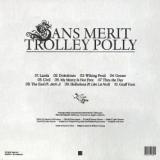
Sans Merit arrives on Knekelhuis with his second album Trolley Polly. A radiant album from currently LA-based Australian musician Griffin James—one that leans into unguarded joy with a playful, disarming sincerity.
The album rocks right away into our world. Lifting off where the guitar pedals mash the gas and go. While at other moments the acoustic guitar passages carry a neofolk intimacy, like the low-voiced choir singer cast out of a pastoral world, left to wander in his own solitude. These moments are swept up by surging shoegaze episodes, slipping into hazy hypnagogic pop interludes and wiry post-punk turns, giving the record a restless, shifting pulse.
Beneath it all lies a lyrical sensitivity that grounds the album’s movement. Sans Merit reflects on the big questions in a world that feels increasingly fragile, balancing vulnerability with a self-aware, gently naïve humor, while staying attuned to the emotional undercurrents of everyday life. It’s this perspective that makes Trolley Polly feel so human—alive in its contradictions, and quietly comforting.