Signals Aligned stands as a sonic testament to the intersection of science, spirituality, and the vast unknown. Inspired by pioneering theories on the nature of anomalous phenomena, viewing them not as extraterrestrial but as a complex, multidimensional enigma.
There’s a consistent theme of “discovery through distortion.” Truth is often obscured by layers of misinformation, disinformation, and misperception. The music plays with the concept of clarity and distortion, revealing hidden textures beneath shifting layers of sound.
The sound palette is vast and ethereal, incorporating elements of noise, shimmering synths, and organic textures. There’s a sense of both wonder and unease that mirrors theories on the strange and unexplainable.
Buscar:ben shift
Bendik Giske’s Beatrice Dillon-produced 2023 album gets an addendum with reworks from Carmen Villain, aya, Hanne Lippard, Hieroglyphic Being, Wacław Zimpel and Dillon herself.
Giske’s clearly got his ear to the ground; his last remix record was an invitation for Laurel Halo to put her stamp on »Cruising«, while 2018’s »Adjust EP« roped in Deathprod, Total Freedom, Lotic, and Rezzett. Now comes this new LP of remixes and it’s one of the best we’ve heard in aeons. Carmen Villain boots things off with a remix of »Slipping«, following her excellent (and way, way too underrated) »Nutrition EP« with a giddy, subtle roller that sounds as if it’s been constructed using only Giske’s raw stems. His breaths and leathery key presses – already amped up by Dillon’s detailed recording – are magicked into a dubby concrète groove that’s enhanced with the sparest melodic elements: echoing rainforest-at-night horn blasts, and lopped off decay trails that help fuel the momentum.
aya’s revision of the same track takes a different approach, forming forceful overlapping polyrhythms from Giske’s clanks, using the gamelan-like arpeggios for melodic weight and repetition. The result is a constantly shifting, hypnotic trancer that’s achingly organic – more Raja Kirik than Paul Van Dyke. Polish clarinetist and producer Wacław Zimpel, meanwhile, supplements his trippy recent collaboration with James Holden on a similarly levitational wrinkle of »Slipping« that twists Giske’s quivering sequences with microtonal synth prangs, and gusty echoes. But it’s Jamal Moss who plays fastest and loosest with Giske’s source material, calling back to April’s psy-house stunner »Dance Music 4 Bad People« with a powdery, sexualised banger that buries the breathy »Start« stems underneath neon synths, and brittle drum loops.
»I’m a digital nomad,« Lippard deadpans over Giske’s »Not Yet«. »I’m addicted you know that.« It’s a typically dry treatment from the conceptual artist that unexpectedly amps up the hypnotic qualities of Giske’s original, adding her circuitous charm to his concertina-ing sax sequences. And to tie things up perfectly, Beatrice Dillon returns with her diaphanous remix of »Rise and Fall«, built to emphasise the radically different approaches of each artist.
- 1: No Faith
- 2: Shadow Boxing
- 3: Sugarcoated
- 4: Deadwire
Nu-hardcore quintet, Bodyweb, are the sound of someone’s nervous system on the verge of breakdown—hyperactive, tormented and unflinchingly vulnerable. Born out of the Leeds hardcore scene, they’re a shape-shifting alloy of jagged emotion and precision chaos. What began as late-night jams between Louis Hardy (Higher Power, Big Cheese, Fate) and Ben Jones (Pest Control) eventually mutated into train_wreck_simulation, a debut EP filled with frantic breakdowns and nu-metal swag that felt like the soundtrack to a digital exorcism. The final piece of the puzzle came from Hardy’s estranged childhood friend, pq. His twisted samples and synthetic textures are haunted and disturbed, injecting cyberpunk soul into hardcore flesh. Contorting through several iterations in the following years, the band absorbed Luke Thompson (Stiff Meds) on drums, filmmaker Tom Hobson on guitar and Naomi Macleod (Empire State Bastard) on bass, and laid down their first collective offering. deadwired is due out on Flatspot Records later this year. Bodyweb's second EP is a violent thesis on connection and pain that sends Hardy’s unfiltered vocals through heaven and hell. Four overstimulating tracks run a gamut of styles and influences from Slipknot to Björk, constantly lane-switching between dizzying heaviness, ambient soundscapes and brain-burrowing hooks. Entirely self-produced, deadwired upgrades the sonic formula laid down on the last record and raises the question: what else could exist in Bodyweb’s twisted roadmap? Nothing seems impossible. What seems important, however, is retaining the rawness in a style that can often turn sterile. “We still wanted it to sound very human. It had to be well produced but not cold and lifeless.” shares Hardy. “We didn’t use a click track. All guitars were real amps with microphones. We tried to make everything as real and raw as possible, we recorded using all the same gear we use when playing live too to really capture the energy of how it feels when we jam together." ‘Deadwired’ is a snapshot of violent implosion. Four ADHD-fuelled transmissions from the edge of spiritual collapse. It drags metallic hardcore through glitched-out ambience to confront ego death, generational trauma, and the violence of being alive. On stage, Bodyweb don’t just perform, they purge. Raucous live electronics meld with digitally contorted guitars. Breakbeats meet breakdowns—no backing track in sight. Bodyweb enable a collective catharsis. Mosh, dance, dive, scream, heal. A physical therapy session screamed into the void.
- A1: Cheb Bakr – Allom
- A2: Group Hewaya – Irja
- A3: Shahd – Erhal Keef Alshams Tgheeb
- A4: Ahmed Ben Ali – Jara
- B1: The White Bird Band– Ya Ummi
- B2: Khaled Al Melody – Jani Bigool
- B3: Fathi Aldiyqz & Sons Of Africa Band – Palestine Is My Homeland
- B4: Libya Music Band – Kol Al Mawaeed
- C1: Stars Of Africa – Baed Al Farha
- C2: Khaled Al Reigh – Zannik
- C3: Khaled Al Zlitni – Jiti Yam Eloyoun Buhoor
- C4: Murad Najah – Hubbi Leeki
- D1: City Lights Band – Kul Ghrub
- D2: Adil Al Ramli – Mawoud
- D3: The Hope Duo – La Tgheeb Anni Wala Youm
2x12"[28,15 €]
Habibi Funk is more than happy to announce our 31st release which happens to be our 3rd various artists compilation. The album is dedicated to the cassette tape scene in Libya from the late 80s to early 2000s, from disco to reggae to pop. All songs previously unreleased outside of Libya and not available on any DSP platforms.
This compilation isn’t a sweeping history of Libyan music — it’s a personal journey into the sounds we fell in love with while digging through tapes, conversations, and stories across Libya and beyond. Rather than spotlighting the country’s most famous musical exports, the compilation brings forward a mix of overlooked gems and local classics of the cassette era: artists whose work thrived despite political limitations, and scarce international exposure. The music featured here blends reggae rhythms, synthy disco grooves, gritty pop, house, and funk, a vibrant collision of genres that reflects Libya’s unique sonic landscape from the 1980s to the early 2000s. Many of these recordings were recovered from the TK7 cassette factory in Sousse, Tunisia, a now-demolished site that once played a quiet but vital role in distributing and manufacturing Libyan music. Other tracks were digitised in a Cairo hotel room in 2021, where we transferred nearly 100 tapes over the course of three days, on-site using a high-grade cassette deck brought into Egypt with us. From that trove emerged artists like Ahmed Ben Ali, Cheb Bakr, and Najib Alhoush & The Free Music, who have already featured on our earlier releases. Their sounds sit alongside contributions from this release from the likes of Khaled Al Melody, Fathi Aldiyqz & Sons of Africa Band, City Lights Band, Libya Music Band, and Group Hewaya. During this era, Independent artists relied on makeshift home studios or travelled abroad to record in Tunisia and Egypt, gradually building their own infrastructures for creativity. By the 90s and early 2000s, as access to digital equipment increased, a few of the artists began setting up their own studios — a shift that gave rise to a more self-sufficient recording culture across the country. The resulting sounds are anything but homogeneous. They reflect Libya’s geographic and cultural crossroads: North African rhythms meet Arab melodies and deep African roots. Reggae, in particular, took on a local Libyan flavour — not just musically, through the slowed-down cadence of traditional shaabi beats, but socially, as a vehicle for expressing identity and pride. What ties all the artists on this comp together is a boundary- pushing approach to genre and style: recorded in small studios, exchanged by hand, and shaped by a cross-pollination of influences, from Benghazi to Tripoli and beyond. All tracks are licensed from their creators and in the case of the artists being deceased from their estates. All profits are being split 50:50 between us in the licensors and ownership remains with the creators, we only licensed the music.
LTD. CLEAR BLUE VINYL
New York painter and musician exploratory industrialist Tor Lundvall initially envisioned his 14th album, Beautiful Illusions, as an entirely instrumental affair, "inspired by memories of sitting in a church or cathedral watching the shifting sunlight through stained glass." Although he ultimately chose to wreath the majority of the tracks with hushed, poetic vocals, his original muse still resonates. These are certainly songs of shadowplay and vaulted skies, the quiet grandeur of dusk deepening on the horizon. Lundvall characterizes the lyrical subject matter, too, in ways both specific and surreal, exploring "the doubts, the anxieties and even the bleak fantasies the mind spirals into during moments of isolation, separation and distance." Tricks of the eye, mind, and ear, magnified by silence and the looming long winter. Shivering pulses and muted bass lines tread the twilight while icicle synths and wiry guitar map the melody until the voice enters, narrating oblique moods of essence and absence, tenderness and truth. Glimpses of dark humor flicker in the wordplay but the greater sonic landscape is one of falling leaves and failing light, small gestures rendered as revelation, cloaked in reverb and spatial fog. Lundvall's mastery of nuance and negative space continues to heighten, whispered brushstrokes of the invisible and the unsaid, what lies beneath and what lies beyond: "Behind the shields and false fronts is usually a sadness. The heartbreaking reflections of what might have been."
Still Forms in Air is the debut album by Italian composer Francesca Marongiu under her own name. It draws inspiration from mid-1980s Japanese ambient music — Hiroshi Yoshimura, Satoshi Ashikawa, Takashi Kokubo — and, more subtly, from Italian experimental echoes rooted in both personal and cultural memory.
The album unfolds like suspended time, like architecture that quietly bears witness to the shifts that have shaped our cities and the ways we live in them. These tracks reflect an emotional and urban landscape, shaped by a gaze cast upon the mid-1980s and early ’90s — a time of subtle yet lasting changes in the form and meaning of shared space. That period marked a delicate turning point, later described as les années d’hiver: the slow onset of fragmentation beneath a surface of creative openness.
Still Forms in Air doesn’t dwell in nostalgia (though it draws from it), but reimagines that duality through a contemporary lens. Its sound blends memory and presence, layering ambient textures with a refined spatial sensitivity. It is a dialogue across decades — clear-eyed, affectionate, and quietly luminous.
Written, arranged and recorded by Francesca Marongiu in Rome and Pistoia between May 2024 and March 2025.
Francesca Marongiu: electronics, synthesizers, vocals, sound objects.
Antonio Gallucci: wind arrangements on track 1 and 4, bass and sound objects on track 3, drums on track 3 and 4.
Mixed by Francesca Marongiu and Antonio Gallucci. Mastered by Antonio Gallucci at Mercurial Mastering in Pistoia. Artist photo by Elisabetta Scarpini. Artwork by Daniel Castrejón.
- A1: How I See The World ( Prelude)
- A2: You And Me
- A3: Do It Al Again (Heylucas+Hne)
- A4: Trying To See U
- A5: The Things That Bring Me.joy
- A6: Keep Dancing
- A7: Gerona (Heylucas+Androma+Singe Bleu)
- B1: Do It (Interlude)
- B2: Just Listen
- B3: With You
- B4: Life Is Beautiful
- B5: You're A Light (Heylucas+Benji Lewis)
- B6: Spaces (Heylucas+Nina Carr)
- B7: Thinking Of You (Heylucas+Yorina)
- B8: The Kind Of Love
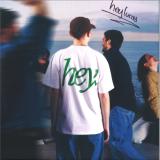
French electronic producer heylucas (formerly Luca) steps into a new era with his highly anticipated debut album, "hey".
Following a series of acclaimed singles throughout 2024 and 2025, "hey" marks a turning point in his artistic journey. After his first live performance in late 2024 met with enthusiasm, it became clear, Luca was no longer just a bedroom producer but a true performer. A shift that inspired the name change from Luca to heylucas, embracing a broader vision for his music. This career change is all the more significant now that he has just announced his very first solo live show at POPUP! in Paris on 24 May.
"hey" is a deeply personal recollection of emotions: the highs and the lows, the joy of loved ones, the grief of loss, and the thrill of firsts. From euphoric moments to introspective instants, the album showcase the diverse experience of the artist during this transformative year. Singles like "do the things that bring joy" "either it goes well, or it passes" and "keep dancing" are the perfect example, shaping his signature sound: heartfelt, uplifting tracks that make you want to move and reflect at the same time.
“Do It All Again” in collaboration with Swedish duo HNE, features spoken vocal snippets collected from real-life encounters in the final months of the album’s creation, blend with an energetic/euphoric production.
The album release will be doubled by the release of an exclusive live session by heylucas in which he will reinterpret classics from his repertoire as well as new tracks from his “hey” album.
More than an album, hey is a statement. It’s heylucas’s way of waving hello to listeners, to concertgoers, and to everyone who connects with the emotions he pours into his music.
Riding high on a prolific wave of output, Kloke returns to Mindgames with Lucidity — an album that confirms his position at the forefront of modern jungle.
Andy Donnelly has been actively releasing a broad swathe of electronic music since the late 00s, but it's his sharpened focus on jungle and drum & bass over the past 10 years that has cemented his reputation. As well as working closely with fellow scene leaders like Tim Reaper, the Australian artist has hit a flow state with his productions where the quality and quantity seems limitless. Since Mindgames started as a Samurai Music sub-label, Kloke has been a core part of the imprint's identity. Having already dropped the Mindgame 8 EP earlier this year, Donnelly is back with a full-length salvo of advanced jungle heavy on the technicalities and even heavier on the vibes.
Lucidity makes its mark from the very first blast of breakbeat science that opens up the title track. From that point on Donnelly works at full tilt, edging gritty textures into his sampling and capturing classic jungle's melancholic mystery through an expansive palette of re-pitched hooks. This is carefully crafted soundsystem music in thrall to the tradition of jungle, but at no point does it sound tired or throwback. One key element is the dynamic intensity of Donnelly's arrangements, shifting gears with devastating poise whether darting through the starry-eyed arps and deft breaks of 'Mobius Strip' or chopping around the jagged angles and noirish licks of 'Goose Cuts'.
Donnelly folds many moods into his jungle tapestries. 'Paradiso' conjures a smoky, haunting atmosphere while 'Nightfall' leads on techy darkside stabs before unfurling shadowy jazz licks that flicker like ghosts through the dense forest of drums. At all times, the commitment to mind-bending configurations of compound breaks drives the album forwards. No two beats roll the same as Donnelly indulges his precise and profound instinct for next-level edits and heavyweight production.
Gritty, raw and true to the roots of the culture, Kloke stands tall on Lucidity. It's the kind of detailed, deep and deadly album that shows jungle at its absolute best — a sound that still feels like the future in the right hands.
Vinyl A Coloured Vinyl[20,59 €]
Vinyl B Black Vinyl[12,56 €]
Vinyl B Coloured Vinyl[20,59 €]
Known for his ability to create captivating, emotionally charged techno, Jonathan Kaspar eventually returns to Cocoon Recordings with his third contribution Twofold Split. One, yet simultaneously two releases that once again showcase his extraordinary talent through condensed techno with a pinch of trance, weaving together driving rhythms and atmospheric textures in a way that feels innovatively progressive.
Drifting hypnotically, this might be the most fitting way to describe what Jonathan Kaspar unfolds before us here. The rolling percussion grooves seamlessly intertwine with the siren's spectral tone, gradually blending into the alchemy of ‘Yah’ as it erupts into the mix. By the time the peak arrives, there’s a raw intensity in the air - the track seems to bend and stretch then drills and twists until it cracks, but never loses its sense of purpose and remainsanchored in its deep, pulsating groove. On the flip side, ‘Silver Lines’ stands as a counterpart, offering a contrast in both sound and atmosphere. With its minimalist arrangement, the track first nestles in gently, lulling the listener into its world—only to tighten its grip as a synth sequence gradually opens its cut-off filter, slicing through the calm, drilling into the mind, and shifting the mood from tranquil to tense.
The discovery of Doris Dennison's score represents a genuine musicological breakthrough—what once would have been "a tree falling in the woods" thirty years ago now holds the potential to render "a thunderous clap in our minds." While researching Anna Halprin's lesser-known collaborators, scholar Tom Welsh uncovered the archives of AA Leath, one of Halprin's principal dancers. Buried within these materials was Dennison's handwritten score for Earth Interval, dated May 1956. Born in Saskatchewan, Canada, in 1908, and raised near Seattle, Dennison (1908-2009) encountered John Cage while teaching Dalcroze eurythmics at the Cornish College of the Arts. She joined Cage's earliest percussion quartet—alongside Margaret Jansen, the composer and his wife Xenia—in the group widely regarded as having performed the first complete concert of percussion music in the United States. This historic December 1938 concert was followed by tours and the landmark May 1941 performance at the California Club, comprising Cage and Lou Harrison's Double Music, the premiere of Cage's Third Construction, and Harrison's 13th Simfony.
As Bradford Bailey observes in his extensive liner notes, Earth Interval demonstrates "an extraordinary balance of elements that imbues the piece with a sense of clarity, directness, and constraint that is both distinct and ahead of its time." The work's most remarkable innovation lies in its approach to extended techniques, particularly Dennison's notation for the central movement: "In 2nd movement, 1st player lowers + raises a gong into a tub of water while beating." This technique, absorbed from Cage's experimental vocabulary, generates what Bailey describes as "fields of acoustic abstraction that bend and warp time through sustained resonances, beat, and space." The temporal sophistication of these manipulations anticipated Karlheinz Stockhausen's Mikrophonie I (1964) and Annea Lockwood's water-based sound investigations by over a decade. After joining Mills College as dance accompanist, Dennison maintained crucial connections to the Bay Area's experimental scene, collaborating with figures like Merce Cunningham and programming Cage's music throughout the 1950s.
Comprising three movements—Land Form, Air Tide, and Earth Play—Earth Interval is scored for recorder, drums, gongs, maracas, muted gongs, and bowl gongs. In total, the piece is just under eight minutes: "a fleeting glimmer of moment in time, a life spent at the cutting edge, and a singular creative vision that packs a powerful punch." When viewed in historical context, placed in contrast to roughly contemporaneous avant-garde percussion works by Cage, Harrison, Louis Thomas Hardin (Moondog), and Harry Partch, or important precursors like Edgard Varèse's Ionisation (1931) and Henry Cowell's Ostinato Pianissimo (1934), it's clear that Dennison was following her own path. Earth Interval is not derivative. It is a precursor to what was yet to come, alluding to developments of avant-garde and experimental music that wouldn't begin to appear on the cultural landscape until the 1970s and '80s, with the emergence of Post-Minimalism and more idiosyncratic artists and ensembles like Midori Takada, Ros Bandt, Peter Giger, Frank Perry, Christopher Tree, Michael Ranta, Gamelan Son of Lion, and Niagara.
This recording by Chicago's Third Coast Percussion, captured in March 2022, represents the first complete documentation of this pioneering work. The ensemble's interpretation reveals the piece's remarkable contemporaneity while maintaining its historical specificity. Where Cage, Harrison, and Partch employed "self-consciously off-kilter polyrhythms," Dennison's rhythmic sensibility anticipates minimalist developments by nearly a decade, yet integrates "forceful rests, as well as sharp shifts in sonic character, tempo, and meter, that break the momentum and breathe a sense of life into the piece's structure." This positions her work closer to Post-Minimalism decades before its emergence. The architectural approach demonstrates Dennison's understanding that "the composer almost entirely disappears" in favor of phenomenological listening experience, creating what might be called an egoless music that places its realities and meaning entirely in the ear of the beholder. The present recording, realized by Chicago's distinguished Third Coast Percussion ensemble, represents a significant achievement in experimental music scholarship and performance practice. As specialists in the Cage tradition and contemporary percussion repertoire, Third Coast Percussion approached Earth Interval with the historical sensitivity and technical precision required to illuminate Dennison's subtle compositional innovations. The March 2022 recording sessions, engineered by Colin Campbell, capture both the work's intimate chamber music qualities and its bold exploration of extended techniques. The ensemble's interpretation reveals the piece's remarkable contemporaneity—its ability to speak directly to current musical concerns while maintaining its historical specificity.
This recording serves multiple scholarly functions: it provides the first complete documentation of Dennison's compositional voice, offers insight into the broader network of experimental music practitioners surrounding Cage and Harrison, and demonstrates the sophisticated level of compositional thinking that was occurring within the Bay Area's dance-music collaborations of the 1950s. The work's emphasis on phenomenological listening—what might be called an "egoless" approach to musical experience—places it within a lineage of American experimental music that prioritizes perceptual process over compositional personality. The work's original obscurity—limited to AA Leath's performances at venues like the 1957 Pacific Coast Arts Festival at Reed College—paradoxically allowed it to remain "entirely on its own terms," free from the constraints of historical categorization. Drawing on Jacques Derrida's Archive Fever, the argument emerges that "the archive can acknowledge, celebrate, and resurrect" overlooked voices, transforming our understanding of experimental music history. The present Blume edition, featuring Third Coast Percussion's authoritative interpretation, includes a lavishly illustrated 16-page booklet designed by Bruno Stucchi / dinamomilano, containing complete scholarly apparatus, historical photographs, and detailed production notes. This recording enables "cross-temporal intersectionality," allowing Dennison to "belong to a newly formed and more dynamic understanding of the present and past," demonstrating how forgotten voices can reshape entire historical narratives when given proper scholarly attention and performance advocacy.
- 1: Coyote
- 2: Amelia
- 3: Furry Sings The Blues
- 4: A Strange Boy
- 5: Hejira
- 6: Song For Sharon
- 7: Black Crow
- 8: Blue Motel Room
- 9: Refuge Of The Roads
Mobile Fidelity's UltraDisc One-Step 180g 45RPM 2LP Set Plays with Authoritative Tonality, Airiness, and Clarity:
Pressed on MoFi SuperVinyl and Strictly Limited to
3,000 Numbered Copies
1/4” / 15 IPS Dolby A analogue master to DSD 256 to analogue console to lathe
Joni Mitchell is the only artist who could’ve made Hejira. The legendary singer-songwriter said as much when discussing the album decades after its release. Yet that fact seemed obvious from the moment the gold-certified effort streeted in fall 1976. An adventurous travelogue, probing narrative, and offbeat homage to freedom, Hejira remains an inimitable entry in the catalog of recorded music — a spare, gorgeous, meditative series of sonic vignettes comprised of floating harmonic pop, cool jazz, soft rock, and sensitive vocal elements that beckon feelings of motion, discovery, and self-examination.
Sourced from the original analog master tapes, pressed at Fidelity Record Pressing on MoFi SuperVinyl, and strictly limited to 3,000 numbered copies, Mobile Fidelity's UltraDisc One-Step 180g 45RPM 2LP set presents the record ranked the 133rd Greatest of All Time by Rolling Stone with definitive detail, richness, accuracy, and directness. Marking the first time the revered LP has received audiophile treatment, it's one of six iconic 1970s Mitchell records Mobile Fidelity is reissuing on vinyl and SACD.
Playing with a virtually nonexistent noise floor, dead-quiet surfaces, and superior groove definition, this collectible reissue reproduces in enveloping fashion the tones, textures, and craftsmanship that help Hejira function as the equivalent of a liberating trip down an open road with nothing but blue sky, natural landscape, and fresh air in the immediate vicinity. Passages bloom, carry, decay as they do amid an acoustically optimized environment. Soundstages extend far, wide, and deep, with black backgrounds and pinpoint images adding to the realism.
The reference-grade immediacy, airiness, and presence put in transparent perspective Mitchell’s dense strings of words, stream-of-conscious-like phrasing, and unhurried albeit forward momentum. Likewise, the instrumental contributions of her A-list support musicians — a cast that includes L.A. Express members John Guerin, Max Bennett and Tom Scott, plus Neil Young, Victor Feldman, and Abe Most — emerges with breathtaking clarity and dimensionality.
While Mitchell, whose intimate vocals and abstract guitar parts center everything, Mobile Fidelity's restoration of Hejira further reveals the visionary breadth of guitarist Larry Carlton and bassist Jaco Pastorius. Though heard on only four tracks, Pastorius' fretless bass epitomizes the fluid, subtle, flexible, roomy, and shape-shifting characteristics of songs that often appear to transpire out of nowhere akin to the formation of a puffy cumulus cloud overhead. In sync with Mitchell’s voice, Pastorius’ fusion hovers and floats, suspended in a fog you want to deeply inhale. The "grace notes" Mitchell desired on Hejira can now be heard in full. Ditto the luxurious tapestries of alinear lines, fills, and supplements unreeled on Carlton’s six-string.
Visually, the packaging of this UD1S set complements its identity as the copy to own. Housed in a deluxe slipcase, the LPs come in foil-stamped jackets with faithful-to-the-original graphics. This version is for listeners who desire to become immersed in everything about Hejira, including the unforgettable album cover — a pastiche of 14 different photos Mitchell used a Camera Lucida to assemble into one image that’s anchored by a portrait of her in a stoic pose — and the interior shots of Mitchell skating on a frozen Wisconsin lake wearing a pair of black skates, black shirt, and fur cape.
The notion of skating, feeling an awakening wind whipping against your face, and losing yourself to the surroundings are extremely apt for Hejira, which Mitchell wrote after a sequence of trips and relationships prompted her to reflect on the complicated conflicts between independence and marriage, success and satisfaction, duty and desire — and, more specifically, “the cost of being a woman.” The Canadian native delved into such themes before. But never as she does on Hejira, whose liberating, running-away aura doubles as another of Mitchell’s rejections of tradition as well as a suggestion of a better alternative.
At once observational and personal, expansive and insular, cheerful and poignant, Hejira spans a sea of human conditions, emotions, and circumstances. It addresses drifting, isolation, pleasure, place, time, and surroundings with strikingly poetic discourse matched with music that, save for the crooned ballad “Blue Motel Room,” forgoes conventional structures and choruses.
The jazz-based arrangements, marked by scaled-down percussion and all manner of bent, rounded, and unsettled notes, hint that Mitchell has no exact destination in mind. Excursions such as the moody “Furry Sings the Blues,” funky “Coyote” and edgy “Black Crow” throw open previously locked doors to possibility and journey. They signal it’s time for a welcome departure from norms and the past, one that leads to a heightened sense of clarity and perspective. Or, as Mitchell said upon choosing the album title, it’s time for “leaving the dream, no blame.”
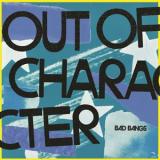
Turning heads with their unique blend of garage, psych, punk rock Bad Bangs played across notable festivals and club shows throughout a 23 show run in 2024. Making waves at Left of The Dial (NL), Leffingeleuren (BE), Truenorayo (ES) and Gliding Barnacles Festival (PT) Bad Bangs make a charging return to the 2025 European Summer festival circuit. Their 2024 sophomore release Out Of Character was the first offering since their debut album Character Building. Somewhere between punk and country, folk and psych, Bad Bangs find themselves Out Of Character. The Melbourne based outfit's sophomore album bends across genres to form a unique soundscape of their own. Live tracking with the masterful Paul Maybury (Cash Savage & The Last Drinks, The Murlocs) captured the bands enigmatic live energy, whilst mastering by Jim Diamond (Ghetto Recorders, The White Stripes, The Dirtbombs, The Gore Gore Girls) secured the signature gritty sound of Bad Bangs. The album arrives with the punchy, punk-laced opening track Contest, which questions the fabric of an industry hell bent on image and conformity, and concludes with the psych infused Wild Mess which laments the shifting state of the natural world. Themes of social and environmental unrest swirl in the undercurrent of an album reflecting on immediate frustrations and personal reflection. With a staple cult following in their hometown of Melbourne, Bad Bangs have supported a high caliber of contemporaries over the years such as Shannon and The Clams, The Murlocs, Rolling Blackouts Coastal Fever and Chastity Belt. Bad Bangs Out Of Character is set for re-release through Beast records (FR) and locally released via Blossom Rot Records (AU&NZ) (Snowy Band, Cassie Ramone and more) Bad Bangs are part of Ya Ya Yeah's booking roster throughout EU. Bad Bangs members are Shelby De Fazio, Tim Ryles, Sophia Lubczenko and Gab Portocarrero.
- A1: Eyeroll (Feat Elvin Brandhi) (4 01)
- A2: Malikan (Feat Abdullah Miniawy) (4 08)
- A3: Move On (Feat Iceboy Violet) (3 44)
- A4: 99 Favor Taste (Feat Juliana Huxtable) (0 57)
- A5: Nontrival Differential (Feat Elvin Brandhi) (4 25)
- A6: Partygoodtime (Feat Ledef) (0 09)
- B1: Cut Cut Quote (Feat Elvin Brandhi) (4 22)
- B2: Pique (4 26)
- B3: If The City Burns I Will Not Run (Feat Abdullah Miniawy & James Ginzburg) (3 23)
- B4: Hasty Revisionism (3 14)
- B5: Lacrymaturity (2 43)
Black Vinyl LP. The world has changed, we shouldn't try and pretend otherwise. While we were shut away in isolation our routines shifted, social patterns evolved, and our hopes and dreams were twisted into cobwebs we're still trying to wipe from our fingers. Ziúr tentatively approached this on her last album Antifate, an ambitious and complex hybrid pop fever dream that looked back to a Medieval escapist fantasy as the scent of revolution seemed to hum in the air. But when restrictions were eased, she found herself staring down a discombobulated society that had trapped itself in a spiral of microwaved nostalgia and detached, narcotic repetition. Eyeroll then is Ziúr's musical panacea, a tincture to wake us from our creative slumber and prompt external connection and reflection. It's a polyphonous hex that demands human interaction, and Ziúr's hand-picked alliance of collaborators - Elvin Brandhi, Abdullah Miniawy, Iceboy Violet, Juliana Huxtable, Ledef, and James Ginzburg - each provide distinct voices that together herald a bewildering sonic epoch. Ziúr's palette had to evolve to match the scope of the project, but it was pure necessity that informed the album's defining tone. Recording mostly at night, Ziúr was conscious of the noise she was making so developed a unique way to record organic percussion. Using a set of rototoms - low profile tunable drums - she scratched, scraped and gently tapped the skins to build up the undulating and unstable rhythmic backdrop for each track. It's the first sound we hear on the opener 'Eyeroll', rattling like lost marbles against Elvin Brandhi's primal croaks and screams. And when Brandhi's twisted articulations form words, Ziúr matches the energy with chaotic thuds and serrated blasts of saturated electronics. "I roll the shittiest cigarette," she squeals like she's about to start a mosh pit at Paris's GRM Studios. Without pause, Abdullah Miniawy takes over on 'Malikan', building on the promise of material with Simo Cell, Carl Gari and HVAD with corrosive trumpet blasts and charged, politically incendiary Arabic vocals. Inspired by pre-Islamic poetry and the Qu'ranic chanters he heard growing up in Saudi Arabia and Egypt, he spins labyrinthine stories that cross between the worlds, breaking down physical and spiritual borders simultaneously. Miniawy's scope is expanded even further on his second collaboration, 'If The City Burns I Will Not Run'. "If it rains and the city drowns," he utters over gaseous electronics, "I will not run away, but I will be anxious for the heart of one close to me." After a supple vocal turn from Manchester's Iceboy Violet on 'Move On' and a surreal interlude from poet- DJ-artist-theorist Juliana Huxtable on '99 Favor Taste', Brandhi returns with two more hyperactive collaborations: ,'Nontrivial Differential' and 'Cut Cut Quote'. On the former she slices into Ziúr's skeletal jazz eruptions, screaming and crooning interchangeably, fluxing between the rap battle and the cabaret. The latter is completely different meanwhile, with Brandhi settling into her role as front-woman and groaning dizzying improvised passages that sound like grunge crossed with psychedelic no-wave. Brandhi's spiky musical history has prepared her well for this collaboration; she's a prolific producer and has been using her voice spontaneously since debuting with father-daughter improv duo Yeah You in the mid 2020s. She's found an ideal foil in Ziúr, a producer who matches her restless energy and willingness to bend formality, and leaves an indelible mark on Eyeroll. But the album's most tender moments are from Ziúr herself, who winds the album down on 'Hasty Revisionism', growling over collapsible beats and cascading strings, and comes to an unexpected conclusion with country coda 'Lacrymaturity'. Its feverish amalgamation of country music and euphoric, experimental electronics might seem incongruous at first, but in context with the rest of the album is the only possible conclusion. With Eyeroll Ziúr is making a firm statement about togetherness, humanity, and the renewal of hope when all seems lost. By bringing together such a wide but philosophically harmonic team of collaborators, she's conducted a body of work that speaks to the creative fringe in no uncertain terms. Now's the time to throw away what you think you know, and build bridges you didn't think you need. Now's the time for action. She may have spent her entire career avoiding the solipsistic trappings of "queer art", but by assembling a communal statement that questions so many normative assumptions about music, politics, and beyond, Ziúr has chanced upon her queerest album yet. Cringe? Eyeroll.
- A1: Echoes Of Earth
- A2: Ancestral Machines
- A3: Abandoned Satellites
- A4: The Great Bell
- B1: Beneath The Dunes
- B2: The Ghosts Of The Black Drift
- B3: The Infinite
- B4: The Last Transmission
The Sorcerers' latest long player lands in perfect time for the summer, offering a further progression into their unique take on Ethio-inspired jazz. Other Worlds and Habitats is, of course, released on ATA Records and is blessed with the analogue recording and painstakingly loving production we have come to expect from this boutique studio. This, The Sorcerers eagerly anticipated fourth LP, follows on from the success of I Too Am A Stranger, a record which garnered praise from BBC Radio 2’s Jamie Cullum, “I love this, this is so good!”, Ethio-jazz legend Mulatu Astatke, “I like the grooves, and it is good to see The Sorcerers interpret Ethio jazz in their own unique way”, and Nightmares on Wax, “This sounds great! Love the way it's recorded”.
Never ones to stop moving forward, and ever vigilant to avoid the realm of pastiche, The Sorcerers see the Ethiopique sound as a building block for their natural progression as a group, but a block that sits at the base of a much larger, ever expanding, structure, The addition of keyboardist Johnny Richards, whose use of the Jen 73 piano, Mellotron and Farfisa Compact Duo, alongside the core members of the group, has opened some exciting doors for The Sorcerers, fusing the future looking optimism of the late 60s and 70s (when artists began to experiment with the new electronic technology and synthesisers becoming more readily available) and more traditional sounds. Taking inspiration from Ethiopian keyboardist Hailu Mergia and Nigerian musician William Onyeabor, Other Worlds and Habitats, as the name suggests, showcases The Sorcerers' shift to a new, and deeply exciting, musical landscape.
The Sorcerers’ Other Worlds and Habitats is a natural progression in the world they have created for themselves. Richer for shared experiences, and accepting the rise of the machines, they prove that while their journey is always going forward, there are many different paths to take.
Returning to the Bordello, and the seven-inch, is Real Velour. This secretive figure reappears with two tracks of indie dance that bend and re-shape elements of italo disco, minimal pop and synth wave to create an utterly unique experience. Sleazy basslines and tropical percussion give way to heavily vocodered words in “Lover”, machine amor breaking to spoken human voice as melodies twirl. The romance described is one of passion, of friendship and of fidelity; but, with a hint of control. Clever and addictive, the composition cherry-picks bittersweet sounds to depict this relationship. The flip, “Look What You’ve Done”, maintains the candystore keys of the A-Side; the tone shifting as lyrics adopt a brazen and fortified vigour. It appears maybe that the promises of “Lover” have been shattered. While the love story turns to hurt feelings and regret, Real Velour keep the energy high to revel in the final break-up.
ASR030 marks a proud moment for Arsenik Records, celebrating the 30th release together with ANNÉ. Built for the floor and rich in character, the EP flows through four distinct cuts, shifting naturally in textures and moods.
Opening with Frescoes, the EP sets a confident tone. Inspired by the ancient art of mural painting, the track weaves crisp percussion and rolling basslines into a flowing, groove- driven atmosphere — vivid and full of motion.
Lythra follows with a more introspective touch. Blending precise sound design and warm textures, it builds a subtle but powerful emotional pull beneath its steady pulse, loosely echoing ancient forms and symbolism.
On the B-side, Nyctis lifts the energy skyward. Carried by luminous synths and rolling momentum, it captures the fleeting euphoria of summer nights, offering a bright and open feeling without losing its grounding.
Closing the EP, Polynoe shifts into a breaky, more playful direction. Nodding to mythological imagery, it layers fractured rhythms and melodic rawness, bringing a fresh and unexpected twist to the final moments of the record.
- Intro
- Oracle Bone Script
- Mosquito
- Thief And The Bell
- Horse Accupuncture (Ft. Agung Mango & Nakama.)
- The Well
- Haste
- Interlude
- Dragon Tail
- Minesweeper
- Tiger And The Ceiling
- Snake Head
- Crabs
- Iron Butterflies
- Grace
- Libations/Roots
This is what you get when an emcee/producer is fed on a diet of abstract hip-hop, Southeast Asian samples, and Taoist folklore. Together with the Clementi Sound Appreciation Club (a five-piece band of up-and-coming musicians schooled in jazz from the local scene in Singapore), Mary Sue melts samples with live instrumentation on 'Porcelain Shield, Paper Sword.' At the core of the album is the tale of a time-traveling oracle, struggling to find meaning in the modern world-where ancient wisdom feels fragile, and truth is ever-shifting. A reinterpretation of idioms shapes its journey, where spiritual pursuits feel performative, and where the weight of the past clashes with an uncertain future. The music mirrors this tension: phrases of Gamelan music dissolve into smoky brass, spectral melodies unravel over off-kilter drums, and time bends through layered textures. 'Porcelain Shield, Paper Sword' is both a reckoning and a dream, where echoes of the past find new life in the chaos of now. A porcelain shield shatters on impact; a paper sword folds before it cuts. It's about the constant, fragile push-and-pull between aesthetics and money, tradition and progress, meaning and spectacle. "Like the oracle, we're all stuck in a world where spiritual longing gets tangled up with consumerism, where authenticity is blurred by performance, and where finding real meaning feels shakier than ever," rapper and producer Mary Sue explains. "'Porcelain Shield, Paper Sword' lives in that field of tension. The album drifts between beauty and collapse, truth and illusion, and past and present, without ever landing on solid ground."
- A1: Aseurai
- A2: Not A Necessity
- A3: Mandarin Tree
- A4: Get Up
- A5: Playground Song Side
- B1: Fading Star
- B2: Static
- B3: Drifting
- B4: Blue Butterfly
- B5: Goodnight
o encapsulate the themes. “Aseurai means around you in the atmosphere, hard to reach, fading away,” Choi says. “It’s a poetic expression. You wouldn’t say it in normal conversation, but I like that.”
Following the four-piece band’s 2024 self-titled EP, Aseurai adds disco and city-pop influences while staying true to dream-pop roots. While Phoebe Rings was originally a solo project of Choi’s, Aseurai marks a shift with contributing songwriting credits from the whole band. The four musicians cut their teeth working on other notable NZ projects such as Princess Chelsea, Fazerdaze, Tiny Ruins, AC Freazy,, Sea Views and Lucky Boy.
With a more ambitious collection of instruments, Choi says this album heralds the start of true collaboration: “I feel more precious about this LP because it includes everyone’s gems.” Guitar/synthesist Simeon Kavanagh-Vincent spearheads unexpected arrangements, with bold fuzzy guitar textures, to spice up the mix. Benjamin Locke adds maturity to the lyrics, paired with perfectionist bass lines. And drummer Alex Freer’s slick production soars Aseurai to diverse and synergetic heights. The broth is richer with more cooks in the kitchen, and the brewing of textures creates a distinct ‘Phoebe Rings’ sound.
If the EP was spacey, then Aseurai settles on earth, rooted in tangible moments. “Without getting too gloomy, it’s a weird world out there. A lot has changed in the world since the EP came out,” says Kavanagh-Vincent on this transformation. The album delves into hope and longing across all possibilities, and this exploration of holding on and letting go is organically threaded throughout. Across ten songs, Phoebe Ring’s storytelling ranges from tongue-in-cheek musings on gentrification to tender autobiographical memories.
아스라이 흩어지는 하늘의 별이 (May the falling light of faraway stars) / 그대의 손 끝에 닿아 숨이 돼주길 (Reach your fingertips and let you breathe),” Choi sings in the title track “Aseurai.” Imagined as a breezy track inspired by a 90’s Korean pop band, Choi discovered, when fleshing out the lyrics, that it was about yearning for people she couldn’t see anymore. In the old-school disco track, “Get Up,” Locke addresses struggles with mental health in a Matrix-inspired driven mantra: ‘Just get up / Just get up.’ The groove persists with ‘Fading Star,” a quirky ballad filled with steely jazz/rock guitar solos dedicated to a suburban aging musician. Kavanagh-Vincent’s lead single ‘Drifting’ is an unrequited celestial love song with bouncing bass and playful synths.
The band wrote, produced, and engineered the album across studios and band members’ homes in 2023/2024 in Tāmaki Makaurau (Auckland). It features mixing/mix production by local legend Jeremy Toy (Bic Runga, Aaradnha, Princess Chelsea) and mastering by Kelly Hibbert. With Aseurai, Phoebe Rings mark out a brilliant new constellation in their sky, bringing their individual compositions to the fore whilst seamlessly threading them into one celestial body - launching skyward on Carpark Records in June 2025.
Spectral Bounce’s fifth instalment comes courtesy of L.A.’s rave archivist and dancefloor operative Dreams, A.K.A. Jesse Pimenta. Throughout his decade-long career the California native has inspected, dissected and concocted all manner of dance musics, leaving his mark with drops on Apron Records, Pinkman, BANK NYC and his own imprint Dance Data. On SPEC05 — Dangerous When Wet — he hijacks the synapses with 4 accomplished productions, plotting a high BPM course through manifold styles using the raw aesthetic that characterises his output.
“Losing Control” is a frenetic dancefloor invitation, immediately locking into a pacing groove. Beneath wild hand drums, Dreams plays with an insistent 303 bassline alternating between rasping buzz and oily squelch, while stern vocals are layered on top of breaks that have been processed to a viscerally satisfying end.
Taking things from delirious dance circle to underwater biosphere, the EP’s eponymous track explores a submerged 1980s Miami. Weighty & enveloping, “Dangerous When Wet” is pure aquatic pop-n-lock — hydraulic electro for a drowned world. Ocean floor caustics are transmuted into auditory form: arpeggios bubble up; drones shimmer mystically; hi-hats hiss like air from an open valve. Amongst the sonar bleeps, a barrage of pummeling low-end is sure to give subwoofers a workout.
“XTC Messenger” delivers an infectious paranoid dispatch, astutely balancing the sensual with the deranged. A slow-mo dial tone unfolds languidly, running counter to nervously twitching high frequencies. Its punchy percussion is tuned for maximum dopamine release; the track’s abrupt vocal chops and mechanical kick-snare pulsation evoke the leather jackets and jagged edges of 1980s industrial discotheque.
“Pressure Points” closes the EP on a heady and mesmerising polymetric trip. The parting track is a lithe yet spacious number, propelled by a rattling break. Here Dreams follows from track 2, creating an immersive environment in which sounds tightly twist and twirl. Shifting oscillators call out like tiny creatures as the bass throbs and wriggles further into your brain, long after the needle hits the runout groove.
- A1: Branches
- B1: Branches
For his last solo record ‘Through a Room’, Bill Nace shifted his usual saturated guitar sound and added tapes, hurdy gurdy, doughnut pipe, bird calls and the mysterious Japanese taishōgoto. Setting up for the final night of his three day residency at OTO with only the taishōgoto soundchecked, Nace hoped that Parker would arrive with his small soprano as its opposite. “I’ve been interested in state change, you know, playing until there’s a shift in time.” Known for his development of multiphonics to produce a constantly shifting pattern, Evan Parker has evolved an instantly recognizable sound - his work the soprano most distinct. Happily, it was the soprano Evan brought with him and as soon as the two start to play they entwine - taking off in a double helix of keys and reed primed for endless reconfiguration. Space warps under the velocity of playing, the pitch rising unrelentingly. It felt like unending lift off in the room, sheer energy until the last note makes remember your feet have been on the floor the whole time. Total time bending shredding.