When his mother brought Stanley Turrentine’s Salt Song LP back from a trip to Canada, Julien Lourau, then a teenager, was impressed by the scope of the sound and the groove of the saxophone. He was also charmed by the lush arrangements and funky sound of the record, typical of releases on the CTI label. Created by producer Creed Taylor, CTI left an imprint in the minds of 70s jazz fans much like Blue Note did in the 60s, and it even ended up releasing work by artists who started out on this mythical label such as Stanley Turrentine and Freddie Hubbard. The two even shared the same sound engineer, the great Rudy van Gelder.
Yet CTI, though highly prolific during its 15 years of activity, has not benefitted from the same aura as its predecessor. “To breathe life into this album, I listened to a wealth of CTI releases and discovered some I had never heard before. I noticed, oddly, that many of today’s musicians know very little about CTI - a label unfairly considered as minor.”
The choice of tracks was determined by Julien’s personal tastes, always keeping in mind a desire to help people discover them yet focusing on the joy of actually playing them too.
"The album is made up of 9 pieces. Mathieu Débordes got everything down to the nearest note before we even attempted to play them. CTI didn’t hold back in fuelling their compositions with brass and violins, but I erased this aspect and pared things down to a bass, drums and two keyboards."
English drummer Jim Hart, someone Julien worked with during his London years, propels the group - from hard-bop polyrhythms with “drum & bass” inflections to a reworking of classic Red Clay.
Sylvain Daniel on the bass and Arnaud Roulin on the analogue keys are two musicians close to the saxophonist, and that he met when they were students in 1999 while organising a master class at the Conservatoire de Nantes. Since then, they have become his esteemed companions.
The collaboration with young pianist Léo Jassef began on this recording, where he also plays the Prophet 5. The dynamic and overlap of the many keyboards played by Arnaud and Léo bring the record a richness of timbre and harmony that the strings and brass provided on the CTI recordings.
For the final track on the record, Julien called upon his friend of 30 years, guitarist Bojan Z, for a fresh, Gospel take on Love and Peace, a track recorded by Quincy Jones in 1969, which here, is dedicated to Bojan’s recently departed brother.
“When it comes down to it, this album really is as I had imagined it, with, luckily, a few unexpected turns. I created a playlist I then claimed as my own. But in the end, I must admit that I would have loved to have composed some of these tracks.”
Search:ben w
Tape
Pauline Oliveros' Tara's Room has long been a favorite in the Imprec office and it's a great honor to be able to release it on LP for the very first time. Tara's Room was cut by John Golden and pressed at RTI in order to achieve a quiet, dynamic pressing. Originally released on cassette in 1987 following the 1986 release of "Sounding / Way" with Guy Klucevsek which is also available on LP via Imprec.
"Both pieces are intended to aid the listener in times of spiritual change, but are just fine for 'everyday' use as well. Highly recommended." Charles S. Russell, Ear Magazine
This LP features two long sides of infinite depth and sensitivity. Oliveros performs these pieces using a Just Intonation accordion and her Expanded Instrument System in order to bend both time and pitch.
Pauline Oliveros, composer, performer and humanitarian is an important pioneer in American Music. Acclaimed internationally, for four decades she has explored sound - forging new ground for herself and others. Through improvisation, electronic music, ritual, teaching and meditation she has created a body of work with such breadth of vision that it profoundly effects those who experience it, and eludes many who try to write about it. Oliveros has been honored with awards, grants and concerts internationally. Whether performing at the John F. Kennedy Center in Washington D.C., in an underground cavern, or in the studios of West German Radio, Oliveros' commitment to interaction with the moment is unchanged. She can make the sound of a sweeping siren into another instrument of the ensemble.
"On some level, music, sound consciousness and religion are all one, and she would seem to be very close to that level." John Rockwell
"Through Pauline Oliveros and Deep Listening, I now know what harmony is. It's about the pleasure of making music." John Cage
"The Witness" markiert eine gewitzte, unkonventionelle Linkskurve und zeigt Suuns in ihrer angenehmsten, offensten Form. Selbst aufgenommen und selbst produziert über den Großteil des Jahres 2020, ein Jahr voller Streit, Einsamkeit und Reflexion, zeigt "The Witness" die Band mit einer Lupe über ihren eigenen Standardzustand des Spielens und Auftretens. Es ist eine rasche Abkehr vom Vorgänger-Album "Felt" und erfreut sich daran, zufällige Ideen in ihren embryonalen Demo-Versionen zu ernten, als ob man ein glorreiches Feuerwerk in den Himmel entlässt. Mit dem Ausstieg von Max Henry als Vollzeitmitglied im Jahr 2018 und dem Wohnort-Wechsel von Ben Shemie, der jetzt einen Ozean entfernt in Paris lebt, manifestierte sich eine neue Herausforderung für das Trio, sich wieder zu finden, sowohl sozial als auch kreativ. Mehr als jede andere Suuns-Platte verwendet "The Witness" eine Jazz-Mentalität, die einen kontinuierlichen Vibe über die Vorstellung von separaten Kapiteln stellt. Es gibt eine Ebene der Entspannung, des Akzeptierens der Urinstinkte der Band und einen konzentrierten Versuch, diese Instinkte zu maximieren und zu überarbeiten. Für eine Band, die für ihre kryptische Anziehungskraft bekannt ist, markiert "The Witness" das bisher großzügigste, reduzierteste und berührendste Werk von Suuns.
Produced by Benny Yurco (Michael Nau, Grace Potter & the Nocturnals), mixed by Dan Molad (Lucius, Emily King) and recorded live at Little Jamaica Recordings in Burlington, VT, Liz Cooper’s highly anticipated sophomore album Hot Sass marks multiple departures—from her nine-year home of Nashville, from her band addendum of the Stampede, and from the genre-based expectations she’s accumulated throughout her career. With these twelve new songs, Cooper comes into her own—both musically and as a person—embracing a newfound sense of independence, honesty, maturity and creativity. In addition to Cooper and Yurco, Hot Sass also features Cooper’s longtime bandmates and collaborators Joe Bisirri (bass), Ryan Usher (drums, percussion) and Michael Libramento (guitar, synthesizer). Reflecting on the album, Cooper shares, “It’s me learning about what kind of woman I am and it’s not pretty all the time…I’m still processing these songs. Still reflecting. And I think that’s the thing—Hot Sass is just a stamp in time of what was happening in my life. I just want to continue making art that displays myself, the moments, and the people around me.” The new record follows Cooper’s 2018 full-length debut album, Window Flowers, which was released to widespread critical acclaim. Of the album, NPR Music praised, “a gorgeously arranged and performed bouquet of psychedelia-tinged folk-rock,” while Rolling Stone hailed, “Cooper pushes her strand of folk rock deep into psychedelic territory by merging her idiosyncratic vocal style with swirling, droning guitar effects and lacerating solos that feel dusted with otherworldly magic,” and Paste declared, “If we’re lucky, we are going to hear a lot more artists in the future like Liz Cooper.” Originally from Baltimore and now based in Brooklyn, Cooper has continued to tour consistently since her debut, performing alongside artists such as Dr. Dog, Shakey Graves, Bermuda Triangle, Lord Huron and Phosphorescent as well as special festival performances at Austin City Limits, Newport Folk Festival, BottleRock Music Festival, Lockn’ and more.
Underground rock festered and splintered as it spread through the U.S. in the mid-’90s, the alternative boom giving rise to microcosmic regional scenes singularly focused on feral powerviolence or screamo songs about breakfast. Boston’s Karate emerged as a force that could grip a national youth movement whose disparate tastes still commingled in the inky pages of fanzines overflowing with florid prose and on concert calendars for volunteer-run DIY spaces, community centers, and bowling alleys. In this world, Karate’s music was an enigma, one equally inviting to sneering punks and highfalutin indie-rock aficionados.Their 1996 self-titled debut, issued on Southern Records, set the standard.
Lasooing together white-knuckle posthardcore tension, sharply focused slowcore serenity, and resplendent jazz complexity, Karate eschewed settling in any one definiable style. But they certainly used the language of punk to get their point across; occasionally, guitarist Geoff Farina abandons his warm, hushed cadences for a hoarse shout that made him sound ragged, intensifying an aggression that burst out with every snaggletoothed guitar riff or drum snap that went off like canonfire.
Few followed their path—but who could keep up? Karate could make pensive moods blossom into feverish rollicking (“What Is Sleep?”), gracefully tip-toe around aggressive punk explosions without getting bent out of shape (“Bodies”), and stretch out
slowcore’s quietest reveries till their reflective notes sound ripped from an improvisational jazz session (“Caffeine or Me?”). Karate formally introduced the trio as a vital part of an independent U.S. punk scene stubbornly flowering in the face of the major labels’ ’90s harvest.
- A1: Tony Bennett - Rags To Riches
- A2: The Moonglows - Sincerely
- A3: The Cadillacs - Speedo
- A4: Billy Ward & His Dominoes - Stardust
- A5: The Chantels - Look In My Eyes
- A6: The Harptones - Life Is But A Dream
- A7: The Shangri-Las - Remember (Walkin' In The Sand) (Walkin' In The Sand)
- B1: Aretha Franklin - Baby I Love You
- B2: Bobby Darin - Beyond The Sea
- B3: Cream - Sunshine Of Your Love
- B4: Muddy Waters - Mannish Boy
- B5: Derek & The Dominos - Layla (Piano Exit)
Martin Scorsese’s Motion Picture "Goodfellas" needs little introduction. It is widely regarded as one of the greatest films ever made, and the ultimate mob movie. The soundtrack features artists Tony Bennett, Aretha Franklin, The Shangri-las and many more. It is a very rare find on vinyl, having only being pressed in a couple of small runs in the early 1990s. This 1LP release will be the first global pressing and will be available on blue vinyl.
super rare psychedelic folk lp from 1969, which with Shide & Acorn and Parameter is one of only three genuine Psychedelic Folk lp privately issued in england in that authentic era. only 70 copies were made by Hollick and Taylors custom pressing plant. very little was known about this lp and until this edition and it had been thought of as a solo folk lp, very very WRONG, its a band, and completely in the hallucinogenic and magical english Incredible String Band and Donovan style, with mystical lyrics, flutes, and a serene vibe throughout. the original 48 page booklet of lyrics and poems is reproduced, and errors by the original printers, such as the use of the wrong font on the cover, have been corrected according to the bands original wishes. for any fans of ISB, classic Donovan (Gift From A Flower era), Dr Strangely Strange and Shide & Acorn this lp is manna from heaven. Their unusual name was inspired during a train trip on magic mushrooms when a band member saw a poster from the train window depicting a lion and three similar words, emblazoned above the image, the lion appeared wreathed in flames and spoke to him as he passed.
LTD Edition!
Wenn ein Großteil von DJ Seinfelds früherer Arbeit von sepiafarbenem Dunst geprägt war - ein Ergebnis der absichtlichen Lo-Fi-Produktionstechniken des Produzenten - dann rückt seine Musik auf dem brandneuen Album, „Mirrors“, fest in den Fokus.Aufgenommen zwischen Berlin und Malmö, ist „Mirrors“ der Nachfolger von DJ Seinfelds von der Kritik gefeiertem Debütalbum, „Time Spent Away From U“, von 2017 und sein erstes für Ninja Tune. Benannt nach einem Zitat von Armands Lieblingsschriftsteller, dem argentinischen Romancier Julio Cortázar, findet sich der Produzent auf dem Album in einer ruhigeren und geerdeten Stimmung wieder, nachdem ein unglücklicher Vorfall in seiner Familie ihn in den letzten Jahren dazu zwang, mehr Zeit zu Hause in seiner Heimat Schwedenzu verbringen.
2016 als Teil der Lo-Fi-House-Szene neben Produzenten wie Ross From Friends und Mall Grab bekannt geworden, veröffentlichte DJ Seinfeld (dessen Name auf ausgedehnte Sessions beim Schauen der klassischen US-Sitcom nach einer Trennung und einem Umzug nach Barcelona zurückgeht) 2017 sein Debütalbum, das unter anderem vom internationalen Rolling Stone und Pitchfork gelobt wurde. Es erregte auch die Aufmerksamkeit von Zeitgenossen wie Flume, Flying Lotus, Bonobo und Martin Garrix und führte dazu, dass DJ Seinfeld zu einem weltweit gefragten DJ wurde, der überall von Glastonbury bis Coachella, Warehouse Project, Sónar By Night und MoMaPS1 Sets spielte und die Bühne mit zahllosen Künstler*innen teilte, von Jeff Mills bis Stormzy, Underworld und Bicep, außerdem begleitete er Disclosure auf einigen Terminen ihrer US-Tour. Im Jahr 2018 erschien seine DJ-Kicks, wodurch er zu einer auserwählten Gruppe von DJs und Produzent*innen katapultiert wurde, zu der auch Moodymann, DJ Koze oder Nina Kraviz gehören. Um das Ganze abzurunden, eröffnete Aphex Twin seine Live-Shows mit dem DJ Seinfeld-Track, „Sakura“.
New Yorker Singer-Songwriter entdeckt den Westcoast-Sound. Das 2019 erschienene Album "The Unseen In Between" etablierte den amerikanischen Musiker Steve Gunn als einen Großmeister des US-Songwritings - mit seinem neuen Album "Other You" unterstreicht er nun diesen Anspruch. Gunn, der ursprünglich aus Pennsylvania stammt und mittlerweile in Brooklyn lebt, ist für die Aufnahmen zu seinem neuen Album an die Westküste gereist. Das passt perfekt, denn seine Musik ist der ideale Soundtrack für Roadtrips von der Ostküste an die Westküste des Landes. Sein fein destillierter Sound lässt sich dabei zwischen Roots Rock, Americana, Folk und Jazz treiben. Steve Gunn ist Traditionalist und Suchender zugleich. Zumeist geht er nur mit losen Ideen ins Studio, bei denen er am Anfang nie so genau weiß, wo sie ihn am Ende hinführen werden. Ähnlich gestaltete sich das auch dieses Mal. Sein sechstes Studioalbum "Other You" nahm Steve Gunn zusammen mit Produzentenlegende Rob Schnapf (Beck, Elliott Smith, Kurt Vile) in dessen Mant Studios in Los Angeles Ende 2020 und Anfang 2021 auf. Schnapf hat großen Anteil an der Entstehung dieses Albums. Er schüttelte nicht nur das Soundbett auf, sondern mischte auch Steve Gunns Stimme in den Vordergrund, um den poetischen Lyrics des Songwriters die richtige Bühne zu bieten. Mit Hilfe von befreundeten Musikern wie Juliana Barwick, Mary Lattimore, Bridget St. John, Jeff Parker, Bill MacKay, Ben Bertrand und dem Schlagzeuger Ryan Sawyer (TV On The Radio, Thurston Moore, Gang Gang Dance) entstand mit "Other You" ein Album, mit dem Steve Gunn nicht nur die Grenzen von Genres auslotet, sondern auch seine eigenen.
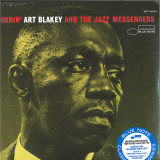
More than any other album in the canon of Art Blakey & The Jazz Messengers, 1958’s Moanin’ — featuring the great drummer with trumpeter Lee Morgan, tenor saxophonist Benny Golson, pianist Bobby Timmons, and bassist Jymie Merritt —was the perfect crystallization of the band’s bluesy, soulful sound, and it still stands today as perhaps the most quintessential hard bop recording of all-time.
Originally self-titled, the album was later renamed Moanin’ due to the popularity of Timmons’ unforgettable opening track. The album also introduced several indelible Golson compositions that would become standards of the jazz songbook including “Along Came Betty” and “Blues March.”
This Blue Note Classic Vinyl Edition is all-analog, mastered by Kevin Gray from the original master tapes, and pressed on 180g vinyl at Optimal.
Released on CD and digital on the 21st May 2021, this eagerly anticipated LP from I Grade Records immediately soared to the number one position in the iTunes reggae charts. The LP is now being released on 12" vinyl and cassette tape courtesy of Before Zero Records.
Polarities is the 13th and final full album of new material from Vaughn Benjamin and I Grade Records, the culmination of a 20 year working relationship that began with 2001's Nemozian Rasta album, which was Midnite's 4th album released to date at that time.
Polarities was produced jointly by the Zion I Kings production team, with Tippy I of I Grade at the production helm, alongside Vaughn Benjamin himself.
The album also includes two notable guest features: Tiken Jah Fakoly of Ivory Coast on "Everything Bless" and Chronixx of Jamaica on "Black Carbon", which were both released in 2020 as the first singles off of Polarities.
According to the artist himself, zake's first solo album of 2020 was recorded and produced during "a four-day excursion in several secluded areas" in South Carolina. As a result, listeners can expect to hear babbling brooks, birdsong and the gentle rustling of leaves beneath Zake's alluring mixture of enveloping ambient chords, unearthly drone tones, opaque electronics and slowly-shifting, heavily processed neo-classical movements. The results are hugely immersive and undeniably enjoyable, with each of the four tracks delivering a head-in-the-clouds journey that ripples with becalmed, atmospheric intent. In other words, it's the kind of ambient music you can get lost in. More please!
"Ry Cooder" - Ry Cooder (voc, g, mand, b); Van Dyke Parks (p); Bobby Bruce (v); Chris Ethridge Roy Estrada, Max Bennett (b); John Barbata, Richie Hayward (dr); Milt Holland (dr, perc); Gloria Jones (backing voc)
By the time he was aged 22, Ry Cooder was already a veteran of the music business and in great demand as a studio musician and sideman. Shortly after signing a contract with Warner Music in 1969, he released his first album under his own name, placing his confidence in the musical talent he had developed since being a child and on the rare value of his favourite instrument, the steel guitar.
The present LP that carries his name is a fascinating blend of blues, folk, rock ’n’ roll and pop – a unique mixture, which combines superb songs, virtuosic playing and somewhat bizarre yet imaginative arrangements. For material, Cooder, the son of folklorist parents, dug out ten gems coming from over six decades, right back to the 1920s – by legends such as Woody Guthrie, Blind Blake, Sleepy John Estes and Leadbelly, as well as a more up-to-date Randy Newman composition. As magnificent as his choice might be, it is the exuberant charm of his own instrumental composition "Available Space" that almost steals the show here. Expansive and unbiased, Cooder plays an ironic game made up of wordless irregular phrases, which promise the listener something new and ultimately circle in an infinite loop.
Cooder’s need to prove himself, moderated by his veneration for the past, helps to create a completely original work that will prove rewarding for the adventurous listener.
This Speakers Corner LP was remastered using pure analogue components only, from the master tapes through to the cutting head. More information under pure-analogue
All royalties and mechanical rights have been paid.
Recording: 1970 at various studios by Bob Kovacs, Doug Botnick, Rudy Hill and Jim Lowe
Production: Lenny Waronker and Van Dyke Parks
Repress
Nina Kraviz launches her (pronounced 'trip') label with a double-EP compilation entitled 'The Deviant Octopus', featuring a pair of brand new productions from Kraviz alongside material from Terrence Dixon, emerging talent Parrish Smith & Bjarki, and veteran producers Exos & Steve Stoll.
The idea for has been gestating for some time with Nina Kraviz, an avid crate-digger and frequenter of numerous second-hand record stores, who has long wanted to begin a label of her own which would build on some of the principles of her beloved 90s techno labels in terms of attitude and aesthetics, whilst looking for forward-thinking modern productions that reflect her core tastes for idiosyncratic electronic music.
The art and title of 'The Deviant Octopus' comes from a single-sentence scenario dreamt up by Kraviz: 'Without a moment's notice an Octopus appeared and devoured everyone in sight'. Supplied with this scenario, artist Tombo rendered his own unique visualization for the artwork that adorns the release sleeve. It's Kraviz's own nod to the labels that inspire her and grab her attention while digging through second hand records, the best of which were imbued with the unique personality of the people behind them. This extends to the sound Kraviz intends for : dusky, divergent and trippy music to stimulate brains, dreams and fantasies.
In this respect 'The Deviant Octopus' is a perfect introduction: Kraviz herself is represented on the tracklist by two new tracks that take up the mantle of last year's Mr Jones EP by returning to the vocal-flecked hypnotic techno that marked out that release. Complimenting those are two new cuts from a true master of hallucinatory off-kilter techno, Terrence Dixon in his Population One guise.
Joining them will be a pair of names from the techno pantheon who have been huge influences on Kraviz: with a career that's taken in releases on Synewave, Trax, Novamute and Richie Hawtin's early-90s Probe Records, Steve Stoll has been mining his own variant on techno and acid minimalism for over twenty years, heading up the Proper NYC label and releasing under various pseudonyms, such as Cobalt, of which Kraviz has been a long-term fan. His counterintuitively titled 'Pop Song' sits alongside a 13-minute 90s techno excursion from Reykjavik's Exos - the only previously-released cut (originally appearing on Thule Records sub-label Plast Trax in 1998) - together illustrating that will also live up to its name in the geographical sense: showcasing great music from historically vibrant electronic music scenes outside of the usual Detroit-Berlin axis.
With Kraviz looking to build a small repertory of talent around , this first release also makes room for two newer names: Bjarki is an Icelandic talent to keep a firm eye on, who drew Kraviz's attention in a chance meeting after a gig at Copenhagen's Culturebox club, after which he passed her a collection of mind-bendingly odd demos; while Parrish Smith is a talented Netherlands-based producer whose short yet impactful sketch '1.0 / 8.0 Afrika Genocide' brings the second 12' to a bewitching close.
- A1: Raise Your Vibrations
- A2: Transcend
- A3: This Could Be (For The Travelling Soul)
- A4: In Orbit
- A5: No Escape From Bliss
- A6: The Right Time
- A7: A Call To The Ancestors
- A8: Meditation
- B1: We Can't Breathe
- B2: It's Gonna Be Alright
- B3: Because Of You
- B4: Real Episode
- B5: Love From The Sun (Feat Dee Dee Bridgewater)
- B6: Changes
- B7: Rahspect (Amen)
As the grandson of the late trumpeter Doc Cheatham, and former student of legendary jazz trumpeter Donald Byrd, trumpeter Theo Croker is an artist steeped in jazz tradition and he is rapidly becoming one of the hottest jazz artists of this era.
Croker's own music reveals a love of organic funk, soul, and groove-oriented hip-hop. Helping to raise Croker's musical vibrations is his ensemble, featuring saxophonist Anthony Ware, keyboardist Michael King, guitarist Ben Eunson, bassist Eric Wheeler, and drummer Kassa Overall. Also adding color to the proceedings are guitarist Femi Temowo and saxophonist Irwin Hall. Dee Dee Bridgewater appears on the classic tune 'Love From The Sun'. Croker proves he's got deep ideas about life, spirituality, and how music connects us all. It's an ebullient, groove-conscious message perhaps best expressed on the bass-heavy 'It's Gonna Be Alright.' Trading the song's title phrase back and forth like old friends high-fiving on the street, you can hear Croker and his band smiling.
Audiophile 180glp pressing includes eight 12"x12" art print reproductions of analog film stills by renowned experimental filmmaker Daïchi Saïto. The first purely solo record by Jason Sharp - where every sound is created by his saxophone, breath, heartbeat & modular synthesis rig. Sharp's customized electroacoustic biofeedback system utilizes a heart monitor to turn his pulse into signal & tempo responsively synthesized in real time during peformance & recording. Produced by Radwan Ghazi Moumneh (MATANA ROBERTS, SUUNS, BIG | BRAVE, ERIC CHENAUX, JERUSALEM IN MY HEART). For Fans of Fennesz, Christina Vantzou, Tim Hecker, Klaus Schulze, Ben Frost, Gas, Windy & Carl, Colin Stetson. Montréal saxophonist and electroacoustic composer Jason Sharp presents his third album on Constellation. The Turning Centre Of A Still World is Sharp's first purely solo record and his most lucid, poignant, integral work to date. Following two acclaimed albums composed around particular collaborators and guest players, Sharp conceived his third as an interplay strictly bounded by his own body, his acoustic instrument, and his evolving bespoke electronic system. The Turning Centre... is a singular sonic exploration of human machine calibration, interaction, expression and biofeedback. Using saxophones, foot-controlled bass pedals, and his own pulse - patched through a heart monitor routed to variegated signal paths that trigger modular synthesizers and samplers - Sharp paints with organic waves of glistening synthesis, pink noise and digitalia. Melodic strokes and harmonic shapes ripple and crest across ever-shifting seas, through an inclement cycle from dawn to dusk. The album's six main movements navigate a world where placid surfaces are always roiled and disquieted by a deeper inexorable gyre: the gravitational pull and tidal perpetuity of our bodies made of water, buffeted by terrestrial atmospheric pressures, wrung out by emotions, coursing with blood, sustained by breath, inescapably yearning for and returning to ground again and again. Sharp's heartbeat literally courses through these compositions - while only occasionally surfacing as a clearly audible pulse or rhythm, it physically feeds into a spectrum of generative synthetic processes that help constitute and conduct the music.
- A1: Arifa - Naomi's Dance
- A2: Kijk Een Ster - Freedom Feat Gregg Green
- A3: Scallymatic Orchestra Autumn - Forest Song
- A4: Monsieur Dubois S Amuse - Wicked Jazz Sounds (Leroy Rey Remix)
- A5: Sophia - Over Feat Cloud Orchestra
- B1: Ranie Ribeiro - Morning Meditations
- B2: Maarten Hogenhuis - Lemniscate
- B3: Melle Jutte - Man Up And Create
- B4: Benny Sings - Hold That
- B5: Kraak Smaak - Naked Ft Ivar And Berenice Van Leer
- C1: Jesse Koolaas - About Time
- C2: Greyheads - Beat1(Lo Fi Session)
- C3: Hvnly - Sacred
- C4: Gino Cochise - Fo Woa
- C5: Planty Herbs - Back Into The Night
- D1: Rippps - Ar ..Ps
- D2: Bruxas - Sirocco
- D3: Kofi The Unkown - Bubinga Drum
- D4: Duke Hugh - Greenleaf
- D5: Sykes - Jazz
An ecletic musical representation of infamous Rotterdam Jazzclub BIRD with well-known and lesser-known Dutch artists from the black music spectrum, varying from Jazz, soul, hip-hop to electronic music. Compiled by BIRD musical curators Philip Powel and Guido van Dieren.
Somewhere Different is Brandee Younger’s major label debut album, out August 13th on impulse! Brandee composed and recorded the album in New York City and at the legendary Van Gelder Studios in New Jersey from November 2020 to February 2021. Somewhere Different evokes nostalgic Black soul, informed by pioneering harpists Alice Coltrane and Dorothy Ashby as well as ‘90s R&B groups like SWV and Xscape. Side A is introspective and downtempo, soundtracking months of isolation during the pandemic, while side B includes raucous rock arrangements and more vigorous tracks. Features Allan Mednard on drums and Rashaan Carter on bass, with appearances by legendary bassist Ron Carter, trumpeter Maurice Brown, tenor saxophonist Chelsea Baratz, flutist Anne Drummond and drummer Marcus Gilmore. Ron Carter on “Olivia Benson” and “Beautiful is Black”. Tarriona “Tank” Ball (from Tank and the Bangas) on “Pretend”