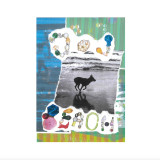
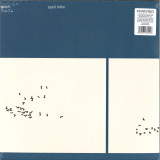
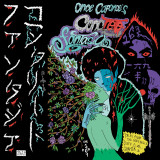
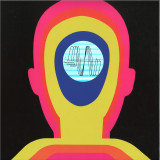
Melbourne/Naarm-based musician and curator Rama Parwata, known for being the backbone drummer in bands such as Kilat, Whitehorse and Rinuwat, releases his second major solo album titled ‘Ceases’ on Cassauna/Important Records.
Parwata's gripping new electro-acoustic work is a sonic exploration within the realms of post-free-jazz and experimental electronics. At its core, ‘Ceases’ navigates the liminal spaces between rhythm and noise, structure and chaos. The album traverses a vast emotional and conceptual landscape, touching upon themes of impermanence, transformation, and the cyclical nature of existence.
At the forefront of the album is Parwata's emotive compositional and performative approach, which serves as both anchor and catalyst for the album's journey. The percussion performance is cymbal heavy accompanied by deeply meditative drones and slow moving melodies. The wash of sound touches on a spiritualism akin to Coltrane’s “A Love Supreme Part 4: Psalm”, albeit with a modern electronic vision á la Tim Hecker. With a keen sense of textural intricacy Parwata favours the emotional expression of electro-acoustic composition, weaving complex poly-textures that ebb and flow with hypnotic, prayer-like intensity. Each performative gesture creates a visceral immediacy that draws the listener deeper into the celestial, otherworldly sonic framework.
The diverse array of electronic elements, meticulously crafted and seamlessly integrated into the fabric of the album are a testament of Parwata’s capacity for acousmatic composition. From pulsating synthesizers to glitched-out samples, the electronic timbres in "Ceases" serve as both sonic embellishments and structural foundations, blurring the boundaries between organic and synthetic, acoustic and digital. Honing in on the electronics, a listener could be convinced they were hearing anything from spiritual-jazz, 90s rave, dungeon synth or doom. Through judicious composition, Parwata imbues each sound with a sense of transcendental allure and paints a soundworld that has a distinct ‘outerness’. At times the narrative is pointedly bleak but over a few passages the sonic language often bends toward rejuvenation; finding respite in cadence. The title itself suggests a sense of cessation, of endings and beginnings intertwined—a motif that reverberates throughout the album.
Поиск:bend over
Все
Don't judge a book by its cover. Judge a record by its cover.
And, perhaps, its title.
Cedar Walton's Mobius is as outrageously, disorientatingly brilliant as the stunning jacket design, featuring the legendary jazz pianist morphing into a mobius strip, set against a beautiful sky filled with cumulus clouds. A proper jazz-funk fusion slapfest, Mobius is a stellar electric set from - essentially - one *hell* of a SUPERBAND.
Yes, in addition to Walton's Fender Rhodes wizardry, Mobius is elevated by Ryo Kawasaki's stinging electric guitar, pristinely clear vocals by Adrienne Albert and Lani Groves, rootsy percussion by Ray Mantilla and Omar Clay, alto and baritone from Charles Davis, trumpet from Roy Burrowes, Gordon Edwards on bass and Frank Foster's tenor sax. Oh and did we mention STEVE GADD ON DRUMS?!?!
Gem after gem of looping, bliss-inducing gold, it's an incredibly revelatory album. It presents a thrilling synthesis of R&B, funk, blues and hard bop (with a hint of rock), all driven by an idiosyncratic electronic keyboard. Walton, a giant in the jazz world, got quite the workout every time he played, from piano to arp synthesizer to clarinet to electric piano to mini-moog and back again.
Mobius was Cedar Walton's debut for RCA in 1975. The versatile artist confirmed his abilities as a player, composer, interpreter and arranger with this stunning record, and his own bright compositions offered a springboard for the improvisations of the different soloists. Coltrane's "Blue Trane" is the first classic to be given the funkafied Mobius treatment, Ryo Kawasaki let loose all over neck-snapping Gadd-drum gold before the horns take a fiery turn and subsequently give way to Cedar's virtuosity. A sparkling b-boy break version of Thelonious Monk's "Off Minor" (featuring an absolutely *fire* solo from Walton) really sets proceedings alight. Of the three original pieces, the shuffling, percussive power of "Soho" is just absolutely mind bending Latin-influenced jazzy soul whilst the mellow vibes of "The Maestro" bring elegant, sumptuous soul. And then there's the effortlessly funky "Road Island Red". Just too, too good.
Cedar Walton was born in Dallas, Texas, on January 17, 1934 and began his professional career in 1959 when he began touring for several years with the J.J. Johnson Quintet. He later joined the Art Farmer-Benny Golson Jazztet and then Art Blakey's Jazz Messengers. Pretty solid credentials, right? While based in New York City, Cedar played with such luminaries as Donald Byrd, Eddie Harris, Blue Mitchell, Kenny Dorham, Lee Morgan, Freddie Hubbard, Jimmy Heath and Milt Jackson. Without question, he was one of the most complete and gifted musicians of his time and Mobius provides proof of that. The fresh, danceable tracks, all firmly rooted in the living tradition of blues and gospel, are skilfully presented by a master who enjoyed keeping abreast of contemporary tastes and was always keen to renew his language.
As the album notes state: “Mobius, which is the theoretical shape of the infinite universe, makes use of the most modern recording techniques and synthesizers. We mastered and mixed so that it’s hotter than the competition, which should help radio play and in-store demonstration.” Indeed. Mobius is really gorgeous mid-70s fusion, ranging from the funky to the ecstatic. It's an absolute MONSTER that will completely blow you away; and, yes, it's as wild and hypnotic as the cover. The audio for Mobius has been carefully remastered by Be With regular Simon Francis, ensuring it sounds better than ever. Cicely Balston's expert skills have made sure nothing is lost in the cut whilst the records have been pressed to the highest possible standard at Record Industry in Holland. The original, iconic sleeve has been restored here at Be With HQ as the finishing touch to this long overdue re-issue.
Bruno Berle, the young songwriter and poet originally hailing from Maceió, the capital of Brazil’s Alagoas state, crafts songs that are simple, direct, and full of tender nuance. With his first album No Reino Dos Afetos (which translates to "In the Realm of Affections” and was released in 2022), Berle firmly established himself as a unique and important voice in the burgeoning scene of new Brazilian artists making a global impact, including peers like Ana Frango Elétrico, Tim Bernardes, Bala Desejo, Sessa and more. Now back with his second album, No Reino Dos Afetos 2, he stretches that further.
Bruno Berle’s music lives between two worlds – a traditional Brazilian folk talent steeped in history, and a contemporary, dreamy electronic pop; the result is songwriting that’s genre-bending, intentional, iconoclastic and consuming, spacious and sinewy and singular, a striking reflection of its composer while leaving space for the listener to settle in. The album follows Bruno’s relocation to São Paulo, and the songs are a reflection of his past and present. A rebuke of former categorizations of his work in Brazilian music scenes, and an idea of where his music can move, unfettered.
Berle’s music is purposeful in being a true portrait of himself, and a reflection of the music, art, and fashion scenes he personally moves through. Berle aims to provide an entrypoint for Black queer joy in his music, in his storytelling, in his presence and vision as a creative. For him, it feels subversive to be playing MPB laced with dubstep and lo-fi, a sort of intentional sacrilege, capturing a dialogue of modernity in traditional music.
Berle wrote most of the arrangements and co-produced his new album, Reino Dos Afetos 2 with longtime friend and musical partner Batata Boy, who is also from Maceió; the album was recorded in Rio de Janeiro, Maceió, and São Paulo, his new home, and picks up the conversation begun in 2022 on Berle’s debut album No Reino dos Afetos. Both records are the result of a nonlinear but coherent seven-year music creation process culminating in these albums, holding hands across space and time.
“Tirolirole,” the first single from the record, was released at the end of 2023; sun-soaked rhythms and soft voice coat the song, the lilting refrain of “Tirolirole” throughout – hushed, gentle, but somehow almost tactile, a golden-hour moment unlocked in the mind. “Tirolirole” is a triumphant future classic about the temporality of a blossoming love, with Bruno’s stunning vocal soaring over melodies which ebb and flow like the waters on the Atlantic shore. Of the track, Berle explains: “Despite ‘Tirolirole’ being an expression that evokes my childhood, just like the light words about nature, the harmony, and the poetry are epic, carrying a great hope for love.”
In fact, the guiding theme of No Reino dos Afetos 2 is a relationship, unfolding in the arc of a weekend. It traverses the innocence of an early young love, how that can be formative, can stretch on to take new shapes, or shape you. The album happens at the genesis of meeting someone and falling for them, before the relationship is thrown into overdrive – set in a big city, against a backdrop of major life changes, rising energy, the sound of São Paulo.
Something transcendental emerges in “Dizer Adeus,” with an arrangement that echoes a gospel atmosphere (evangelical and Catholic environments were pivotal to Berle’s upbringing). On “É Só Você Chegar,” piano and flute gracefully intertwine, a dance, while “Quando Penso” skews sparser, the voice-and-guitar minimalism somehow cultivating an entirely different shape – somehow both cozy and melancholy, with the background sound of a rainy day. Coupled with the lo-fi aspects that shape much of the album’s personality in the vocals and the production, No Reino Dos Afetos 2 is meticulously elaborated by Berle’s sonic alchemy, like on the mid-album instrumental “Sonho,” which feels like floating. “It’s the apex. It’s when lovers are sleeping together,” Berle explains of the feeling he wanted to encapsulate in the song.
On “Love Comes Back” Berle interprets Arthur Russell, the late Iowa musician who only reached greater visibility after he died in 1992. “His way of making music is similar to mine,” Berle explains. “He sings in a more fragile way, has more of an experimental way of recording, letting ‘chance’ appear in the final work.”
Even so, Berle doesn’t want his music to be buried in sentimentality – and the purposefulness of his craft serves as a sort of north star. The production, the arrangements, his restraint and intentionality in crafting his songs feel just as vital as their emotional cores. His songwriting is amorphous, fluid, an encompassing genre-bending movement in-and-of-itself, quietly daring. The songs are often in conversation with other works – drinking in fountains as diverse as the filmmaking of Ingmar Bergman, the poetry of Walt Whitman, the rhythm of Djavan, and the painting of Maxwell Alexandre. Musically he weaves together a rich tapestry of Brazilian folk, UK 2-step garage/dub, trip hop and sun soaked west coast songwriters; something akin to the worlds of Milton Nascimento, Arthur Russell, James Blake, Feist, and Sade colliding into one. But even then No Reino Dos Afetos 2 floats separately, a romanticism driven by a simplicity and intimacy, an open-ended possibility, Berle’s singularity as an artist at the helm of the ship.
Blue Bendy are kicking off 2024 with news of their highly anticipated debut album ‘So Medieval’ which is being released via state51 on 12 April. Alongside this big announcement the band are sharing the latest new track from the record, ‘Come On Baby, Dig!’, and dates for their UK tour including their largest headline show to date at The Garage in London on 9 May and a special Album Launch Show in the band’s hometown of Scunthorpe to celebrate the release.
‘So Medieval’ captures all the musical foibles, idiosyncrasies and departures from the norm which Blue Bendy have displayed across their previous releases. Expressing their sound over the course of a full record for the first time, ‘So Medieval’ is an explosive mix of genre, atmosphere and emotions. The end result is something rare for a new band: a debut album which is as experimental as it is confident and assured, as tender as it is visceral, as quiet as it is loud, as bloody as it is teary.
Released 25th January, new single ‘Come On Baby, Dig!’ follows on from previously released album tracks ‘Cloudy’ and ‘Mr. Bubblegum’. Simmering down the tempo and darkening the mood, the track stacks forlorn lyrics against an assortment of riffs, tones and textures. The music video, directed by Michael Julings, depicts an unnamed character locked in an existential battle with an immovable black fridge. Starring Laura Schuller, a performance artist recently cast in the Marina Abramović retrospective at the RA, the video also features the band coming together to conjure supernatural powers at the video's climax.
Singer and lyricist Arthur Nolan explains that “Dig is dedicated to an old flame and a city break. I was eat pray loving, digging around for some culture in the wake of breaking up. The wheels came off the trip quickly, and now I won’t go back to Bologna, I’m banned.”
Building on the momentum of their 2022 EP ‘Motorbike’ Blue Bendy are stretching out into vast new sonic terrain. Their following two singles ‘Mr Bubblegum’ - a joyously intricate piece of experimental guitar pop - and the frenetic, propulsive yet incredibly deft sprawl of ‘Cloudy’, saw the band reach new heights creatively. Of the former, The Guardian enthused: “indie is riddled with addled, verbose frontmen right now, but none so rapturous as Blue Bendy’s Arthur Nolan: here he dances all over splayed post-rock and micro-cataclysms.”
Having toured as main support for Squid and Cola as well as playing packed out tents at festivals like End Of The Road and Green Man, Blue Bendy have struck a balance between being obviously skilled musicians, writing complex, layered, overlapping and ambitious compositions, while also utilising space, breadth, and restraint. Their music is bursting with dynamism, exploring push-pull dynamics that results in something ceaselessly unpredictable.
‘Musica E Computer’ is a momentous release from Slow Motion label head Fabrizio Mammarella and Rodion recorded in the legendary Marche Synth Museum (Museo Del Synth Marchigiano).
A fully functional recording space that houses a fusion of several private collections of Italian electronic musical instruments gathered over the many years since their creation. The Marche region, being home to some of the most ground-breaking and foundational instruments, has created the likes of Crumar, Farfisa and Elka with innovative use from the likes of Tangerine Dream, Pink Floyd and Vangelis.
The opening track ‘Iris’ sets the exceptional tone for this release. Fully exploring the realms within the Marche with an eerie, metallic tropical soundscape showing their discoveries’ breadth. ‘A Corrente Alternata’ brings us back to Mammerella and Rodion’s revered partnership as unmatched creators of enigmatic, timeless earworms. The driving bassline sits beautifully within the characterfully saturated drums and tweets of an equally enigmatic synthesiser.
‘Un Segnale Di Speranza‘ launches us into the infectious, mind-bending signature arps of Mammerella and the rising harmonies of Rodion, with another ground-shattering bassline and arcane vocoders that transport you to peak time at Slow Motion’s Italorama Bar. ‘Musica E Computer’s’ soundscapes provide rich blends of the synthetic and organic sounds of the Italian region, acting as a geographic coda that can also be heard in ‘La Domenica Del Villaggio’.
‘La Memoria Dei Sistemi’ slips us back into the energetic, electronic environment that Rodion and Mammerella have so delicately crafted. Driving us through the celestial alchemy of this atmospheric track, which leads us to the chiming finish of ‘Una Nuova Era’. This ties together a transcendent homage to Musica E Computer’s recording surroundings and a bar-setting conclusion to another captivating masterpiece from the duo.
- A1: Goodbye Jackie Dandelion
- A2: Larry Bird
- A3: Cabra Drive
- A4: Bambi Feat Gotts Street Park
- A5: Woof Feat Biig Piig
- A6: Johnny Mcenroe Feat Wiki
- A7: Yoko Oh No!
- A8: Fat Ronaldo/Covent Gardens
- B1: Wagyu
- B2: Rainy Days
- B3: What If? Feat Charlotte Dos Santos
- B4: Citizen Kane
- B5: Peekaboo
- B6: Phantom Of The Afters
- B7: Heaven Shouldn't Have You
PHANTOM OF THE AFTERS is the 3rd album from Irish rapper Kojaque, out on his very own Soft Boy Records. With landmark projects Deli Daydreams and Town’s Dead, that saw him 2x nominated for Choice Music Prize, receive support from Radio 1, 1xtra, 6Music, support Loyle Carner & Lana Del Rey and headline festivals across Ireland, Kojaque changed the rap landscape (and Irish culture) for good. Collaborations on his latest project include Biig Piig, Wiki, Charlotte Dos Santos and Gotts Street Park. The album traces blurred outlines of childhood trauma, depression, grief and love, interweaving the physical and emotional journey of central character Jackie Dandelion with bigger questions about immigrant identity, homesickness, cultural stereotypes and ultimately the reconciliation of self. Kojaque has created a cinematic-universe that is bigger in scope but also more tender and intimate in approach than ever before. It’s this willingness to be vulnerable - grotesque, even - that’s captured in the album’s iconic artwork, which subverts the bigoted depictions of Irish caricatures in 19th and 20th century Punch Magazine cartoons and sees this particular Phantom of the Opera remove not just those distorted masks, but also his own.
With songs that are cocksure and contemplative, brutally honest but also refreshingly myth-making, PHANTOM OF THE AFTERS marks a new era from Kojaque: one of his generation’s most unique talents. In suitably audio-visual style, the album traces blurred outlines of childhood trauma, depression, grief and love. It interweaves the journey of central character Jackie Dandelion from Dublin to London with bigger questions about immigrant identity, homesickness, cultural stereotypes and ultimately the reconciliation of self. It’s this willingness to be vulnerable - grotesque, even - that’s captured in the iconic artwork, which subverts the bigoted depictions of Irish caricatures in 19th and 20th century Punch Magazine cartoons and sees this particular Phantom of the Opera remove not just those distorted masks, but also his own.
The record drops alongside one of its more brooding moments, ‘WHAT IF?’: a soulful ode to anxiety, and the crippling impact of fear in moving forward in life or your relationships. “I’ve been obsessed with Charlotte Dos Santos ever since I heard her project Cleo,” Kojaque comments. “She’s just got such a distinct voice and sound. I sent the track over hoping she’d be into it and she sent me back a near perfect hook.” A fully independent artist, Kojaque has brought a stellar lineup of guests together on his latest work: from Biig Piig, Charlotte Dos Santos and NY rapper Wiki (who featured on ‘JOHNNY MCENROE’) to Gotts Street Park (‘BAMBI’) plus production credits such as Calvin Valentine (Ryan Beaty), Tony Seltzer (Eartheater, Freddie Gibbs) and Karma Kid (Hak Baker, Shygirl).
PHANTOM OF THE AFTERS will see Kojaque continue to blaze a trail around the world. He first came to prominence with the genre-bending concept record Deli Daydreams: it became the first mixtape to ever be nominated for the Choice Music Prize, and demonstrated his prowess not only as a polymathic artist, but DIY label-head (co-founding Soft Boy Records, which was subject to a Boiler Room documentary) and visual artist (Kojaque has received a prestigious Royal Hibernian Academy Award for his film-making). Even as the rest of the world sat up and paid Irish Art some long-overdue attention, Kojaque’s creative output has remained thrillingly uncompromising. Tour-de-force debut album Town’s Dead examined everything from gentrification, masculinity and mental health to a gnarly love-triangle unfolding on New Year’s Eve, held together by a multi-hyphenate attitude. Once again nominated for the Choice Prize, Kojaque played a sold-out UK & European headline tour around the restrictive local lockdowns, with the album landing additional support across the likes of Radio 1, 1xtra, 6Music, plus shows with Lana Del Rey and Loyle Carner (who also sampled Kojaque on hugo). With his landmark projects to date, Kojaque changed the rap landscape (and Irish culture) for good. On PHANTOM OF THE AFTERS, you sense he’s just getting started.
MAGNOLIA PARK, the Florida based genre-bending alternative rock band who play more than 200 shows a year, are releasing their third album, entitled HALLOWEEN MIXTAPE II. The band"s following has grown substantially in the past year (with over 710k TikTok followers/63M views, 187k Instagram followers), as they move from opening slots on tours with everyone from Sum 41 to Simple Plan, to sold out headline tours and top slots at festivals including When We Were Young (LV /Oct 23), Reading / Leeds Festival 2023 (UK). It"s no secret that Epitaph Records has been the breeding ground for some of the most legendary bands in existence and MAGNOLIA PARK carry on in that tradition. Since forming in Orlando, Florida, in 2019, the five-piece act-vocalist Joshua Roberts, guitarists Tristan Torres and Freddie Criales, drummer Joe Horsham and keyboardist Vincent Ernst-have released two albums, three EPs, and a handful of singles, bringing their upbeat brand of alt-rock to the masses. While MAGNOLIA PARK"s music is at times lighthearted, the ethnically diverse band are also serious about spreading a message of inclusivity and inspiring other kids like them to start bands as a form of creative expression. "Our goal when we"re together is to make sure the next generation doesn"t have to face as much racial backlash for being a rock band," Torres explains. "In the industry, people look at us a certain way and try to impose things on us-and we want to make sure the next generation of rock bands don"t have to go through what we"ve been through."
DRIFT. Is British-Italian producer Nathalia Bruno, releasing music under the guise since 2015. Her 'techno-pop' EPs 'Black Devotion' and 'Genderland' released with Avant! records were the first explorations in finding the sound of DRIFT. but as the name suggests, is in constant flux. In 2020 'Symbiosis' the debut record was released on Hamburg's Tapete Records, an assemblage of lo-fi futurism reflecting on the breakdown of communication and interaction Nathalia felt was increasing around her. Channelling classic industrial electronica, haunting melodies, using samples, field recordings and curated sound as a 'canvas to rewire the vision of the future as colourful and old, ceremonial and rust beaten. A shrine like ornament and clinical machine language plaited together.'. In 2022 DRIFT. Self released 'The nature of things', a 30 minute piece entitled 'CTRL/ Algorhythm of love' written and produced for designer Mona Cordes' 'Cellusion' show for London fashion week. "_a journey into the dark heart of the dancefloor. The glimmering bass-heavy trance of its opening section could be classic Underworld, while its ambient center is genuinely Eno-esque. And then it all kicks off again as a Berlin school style banger. It's terrific" says Electronic Sound Magazine. This year, 2023 will give birth to DRIFT.'s second album released with God Unknown records '11 points In Time' written for and based on disappeared artist Rosi Crucci, compiled of sounds/field recordings recorded onto cassettes found in the attic of the home she last lived at, interpreted into song using some of her poetry and journal entries of what was happening in the world around her, attempting to finally give Rosi a voice. PRESS Louder Than War album review 'Symbiosis' (2020) "...blends passion with precision to create a tapestry of machine-made sounds that are bursting with ideas and filled with emotion. "We live in times where nothing means nothing," she sings on Visualise The Invisible. "And nothing is true." Never more so than now...Over the course of its ten tracks, Symbiosis draws from pretty much every strand of electronic music throughout its 50-year history" Shindig Magazine review 'Symbiosis' 2020 "A brilliant, fascinating album" Post Punk Magazine review 'Symbiosis' 2020 "is an exercise in disjointed meditation, a trip through the doors of the spirit lodge and inner workings of the human psyche." Pop Matters Review 'Symbiosis' 2020 "...One track in particular, "In Orbit", speaks to this new disturbing unknown we are creating. A distorted, three-note death knell drives it as repeated knocking seems to come from a dank tunnel. If it sounds bleak, it's likely also to be therapeutic and finds common ground with the entrancing industrial thud of Throbbing Gristle or Third Eye Foundation..."
Bay area textural pop group Torrey delve deep into a translucent dreamworld on their self-titled sophomore album. Bending classic shoegaze, rainy day indie rock sounds, and 90s alt rock flair into more intricate forms, the band uses these guitar-forward songs to shapeshift between gentle drifting and noisy breakthroughs. The overall effect is blissful, but never losing sight of the sturdy tunes underneath the fuzz. Some touchstones might include Lush, Drop Nineteens, Cocteau Twins and The Breeders, but Torrey have a deft grasp of their craft and a forward-thinking studio approach that places them very much in the NOW. Singles like No Matter How, Bounce and Moving are pure 2024 and place Torrey firmly alongside like-minded groups like Seablite, Winter and Alvvays who are enlivening a similar set of inspirations.
"Torrey by Torrey" includes the following tracks: "Moving", "Hawaii", "Slow Blues", "July (And I'm)" and more.
Crypt of the Wizard is proud to present Dipygus - Dipygus on vinyl and digital formats. Breaking bones, sucking the marrow dry and concocting its own mind-bending blend of cryptid death metal mutilations for over a decade now, Dipygus are a North American quartet powerhouse of crushing caveman gore grooves and monstrous neanderthal percussive slaughter. With already a blood hungry host of extended plays, splits and full-lengths under their gut string loincloths, Dipygus burst forth into 2024 with their self-titled third album—pushing the primitive psychosis of their sonic assault into new arenas of hallucinogenic cannibal combat. Rife with the foetid stench of mouldering mammoth corpses, Dipygus have spared no prisoners for their latest album; amping up their jungle fever dead dreams with skull smashing drumwork, monolithic bass brutality, captivating death hooks, venomous hypnotic leads, guttural flesh growls, ancient cryptid thematics and a truly diseased atmosphere, one that is as equally oppressive, as it is ferociously ominous. Freak induced fatalism from the backward fringes of time, Dipygus have once again laid morbid massacre to the audio waves and created their most potent slab of infectious caveman styled death metal to date, one that any cannibalistic monster marauder would be thrilled to sharpen their gnarled bone axes upon.
Following a first iteration which set the tone for our newly-minted Heimat series in explosive fashion, here comes the much anticipated second batch of our zeitgeistian take on today's scene's, its current potential and destination. Showcasing productions from artists keen to roll up their sleeves and sail into the impassible status quo, this new number packs the kind of red-hot hammering and cutting-edge punch we've been so adamant to push and defend over the past decade. Berlin-based French producer Arkan steps in first with a proper magnetic depth charge. Dwelling the darker layers of our ocean floor as its name suggests, 'Submarine' is pure hypnotic material geared up for heavy-duty boogie in the warehouse. Filling its ballast tanks with a hefty deluge of muscular bass onslaughts, sonar-like bleeps and untamed cascades of loopy arps, this one rolls and pitches like a haunted ship on predator mode. Adding his dynamic pulse and mind-bending spin to the A-side, Frameworks & Untertwegs bossman Decka cuts a path of straight mental obliteration as he smashes the doors of the club wide open and parades all guns blazing with the unapologetic crusher that is 'Circumvent'. A no-holds-barred workout for the strong stomachs, churning out fiery bars of kick-drum/squelchy bass contrast with in-your-face swagger. Switching on to the flip side, there's Manchester's Yant cruising with the ebulliently dynamic (no shit, Sherlock) tune, 'Moving'. A multidirectional concerto of pong-like modularity and racing synth arpeggios flying off like coloured bricks in a Tetris game gone absolute batshit. The kind of hi-intensity burner that'll awaken any lukewarm mid-set flow with its bouncy unpredictability and ruthless forward-pushing thrust. Rounding it off on a further minimal note, Amsterdam up-and-comer Hitam treats us to an inch-perfectly engineered finale with a stripped-back - yet, absolutely not hollow - bomb, 'Venusian Winds'. Gutsy that one sure is, with its metronomic step ticking at near-cyclonic speed and cleverly arranged, subtly FX-coated funk keeping things both suspenseful and focussed thru and thru. A sleek combo of pared-down brutalism and masterly executed analogue tailoring altogether. All dressed in clear purple marbled wax for the occasion, "Heimat II" shall please both the techno purist and visual aesthete in you with its velvet touch and effortless chic.
Drum-machine soul, funk, disco and boogie from Buffalo, NY. Rare 7" singles and previously unreleased tracks presented as a complete album. In the early 70s, Jessie Key and Sylvester Cleary - two passionate idealists living in Buffalo, New York - formed a close friendship based on a mutual mission to better their city. The Attica State Prison Riot of 1971 was a burning memory, and the Arthur vs. Nyquist lawsuit - brought against the City of Buffalo for creating and maintaining a racially segregated school system - was on the docket. Key was once a cotton-laborer in Mississippi, who journeyed north for school where he met his kindred spirit, Cleary. The two struck up an intense friendship, bought a drum machine and recorded their first 45, "A Man," a paean to self-actualization and Black American empowerment, which they custom pressed and issued privately. Dozens of recordings followed over a decade long span, issued on local labels and warehoused on cassette tapes. Perennial optimists, Key & Cleary tried any - perhaps every! - path they could demarcate in hopes of forwarding their agenda of self-effected, positive change. They formed Buffalo’s first minority-owned construction company, opened a health food restaurant in a building previously occupied by a fast food chain, and even concocted a candy bar called "The Buffalo Treat," which they manufactured and sold locally. Eventually they started their own label, Buffalo’s Reflection. On it they released their masterpiece, "What It Takes To Live," a sought-after disco and Northern Soul classic, which previously appeared on Now-Again”s Soul Cal anthology. This album collates the breadth of Key & Cleary’s recordings from 1970 until the mid 1980s, both with songs issued on rare 7" singles and previously unreleased. It presents a conjoined musical vision and tells the story of a duo years ahead of their time, both musically and culturally. Love Is The Way was their ethos - their goal was to enlighten humanity and to bend history in a more loving direction through communion.
DOG BEACH is Merryn Jeann’s first full length album, produced by Rob Ellis, comparing her directely with his previous collaborators.
Rob Ellis is a record producer, composer, arranger and musician who has been acting for about 40 years and during which he's had the honor to work with such notable artists as PJ Harvey, Marianne Faithfull, Scott Walker, Nick Cave, Warren Ellis, Brian Eno, Thom Yorke, Anna Calvi, ...
About working with Merryn : "In every instrumental phrase that she arrived at and each line of her vocal delivery Merryn's enthusiasm and very individual creativity comes across brilliantly I think... whilst still managing to retain an expression of deeply felt heart and soul... a rare combination in my experience, and a match for any of my aforementionel, much admired collaborators."
"The days in the studio were endlessly creative and playful... and subsequently very exhilarating... by the end it felt like we had really gone through something extremely special, and I believe the resulting LP strongly reflects that." Rob Ellis
Album was recorded over 5 weeks in England, including musicians such as Jim Barr (Portishead), Ben Christophers (Bat For Lashes) or Patrick J. Pearson (Daughter, LYR) but also Christelle Canot aka Confuse, half of IN CASE OF FIRE recently signed to Steve Budd’s prestigious record producer agency.
Merryn Jeann is a Naarm/Melbourne and Bundjalung Country/Byron Bay Shire based singer-songwriter and multi-instrumentalist. She has crafted a genre-bending, dreamy world of soundscapes that bear an enticing musical wisdom.
Sitting somewhere between Caroline Polachek, Cat Power, Weyes Blood, Feist, and Kelsey Lu, Merryn Jeann’s sound is fueled by authenticity. Her raw and honest self packaged into intricate and reflective morsels, many of which are yet to be revealed.
She played Glastonburry at the beginning of her career with the band TORA.
UK and international promo by Whiteboard PR.
A second LP will be recorded in 2025 again with Rob Ellis at the production.
Side projects : OSOO with Kyson & Chris Hill, IN CASE OF FIRE
Sydney, Australia- Melodic metalcore band BLOOM have announced new album Maybe In Another Life, out 15th February 2023- their first for new label, Pure Noise Records. Alongside the announcement is the release of the title track of the record, Maybe in Another Life. The track speaks to the anxiety that can be buried in fantasy. The lyrics contrast the experience of a sordid existence and the indulgence of what could have been, and what could be. The song moves from a dreaminess desire to a lament on the harshness of reality, the voice in the song is “Lost in the fantasy, Of being anyone but me.” The listener is left with a sense of longing at the climactic moments of the track, with soaring, symphonic instrumentation that fuels the words “ Let me start again, I'll make it count this time, Can I start over? Maybe in another life” "The song speaks to the characters anxieties and their methods of distracting through fantasy." says the band. "The lyrics contrast the experience of a sordid existence and the indulgence of what could have been. The song touches on a desire to lament on the harshness of reality. “Lost in the fantasy of being anyone but me”. The listener is left with a sense of longing at the climactic moments of the song with soaring, symphonic instrumentation that fuels the words “Let me start again, I’ll make it count this time. Can I start over? Maybe in another life”.
We’re kicking off the new year in style with a fantastic new double header by RAXON. This Egypt-born, barcelonese powerhouse has left his scent marks all over the place in recent years. He has developed an instantly recognizable sound and that’s no small feat in these times shaped by so much formulaic dullness. “Your Fault” sees our Catalan hot shot in an exuberant disco mood. Mind bending chord progressions foiled with Raxon’s trademark vocal stutters guarantee for wonderfully twisted hands in the air moments. With “Beskar” we’re entering Star Wars nerd territory. Jedipedia says, Beskar is a uniquely resistant iron that develops a wide range of properties—and colors—in the hands of skilled metalsmiths. Alright. Musically speaking, we’re dealing with a stealthy, funky as hell trance-not-trance juggernaut. 2024 is off to a good start:)
Wir beginnen das neue Speicher-Jahr stilvoll mit einem fantastischen neuen Doppelwhopper von RAXON. Dieses in Ägypten geborene Kraftpaket aus Barcelona hat in den letzten Jahren überall seine Duftmarken hinterlassen. Er hat einen Sound entwickelt, den man sofort wiedererkennt, und das ist keine kleine Leistung in diesen Zeiten, die von so viel formelhafter Langweiligkeit geprägt sind. “Your Fault” zeigt unseren katalanischen Draufgänger in ausgelassener Disco-Stimmung. Verrückte Akkordprogressionen, gepaart mit Raxons Markenzeichen, der Stotterstimme, sorgen für wunderbar verdrehte Hands in the air Momente. Mit “Beskar” betreten wir Star Wars Nerd-Territorium. Laut Jedipedia ist Beskar ein besonders widerstandsfähiges Eisen, das in den Händen geschickter Schmiede eine breite Palette von Eigenschaften – und Farben – entwickelt. Nun gut. Musikalisch gesehen haben wir es mit einer verstohlenen, verdammt funkigen Trance-Not-Trance-Rakete zu tun. 2024 hat einen guten Start hingelegt : )
Founding member of Band of Horses, Tyler Ramsey, returns with his fourth solo, full length studio record “New Lost Ages” - finding him facing the harsh realities of the world as we know it. Fans of Ramsey’s former projects, Father John Misty and Lord Huron will find “New Lost Ages” to be a relatable reprieve - one that feels both familiar and starkly new. Traversing genre-bending terrain, the new record from Ramsey is as indie and psych-rock as it is singer-songwriter, showcasing his talent and dedication to the craft.
***After birthing Street Riffs, their hi-definition, hi-energy, statement from 2020, CCR Headcleaner turned inward. The retreat from the pro-studio to the home studio was partially by design and partially decided by global events. Cleaner is very much a pandemic album, more of a homespun head trip than its predecessors. At the same time guitarist, songwriter and spiritual center of the group, Lacey Emmanuel, left the Bay for the shores of Lake Michigan. By most accounts an apocalyptic live-band became by and large a home recording animal. This is most apparent when Headcleaner turns up the balladry. “Don’t Feel the End” is a proto-metal campfire anthem, and “Everyday” hovers somewhere between keyboard misfit John Bender and the White Album. Make no mistake, the record will still be filed under “Punk” at your local record shop. It kicks off with “the brining pt. 2” the hottest slice of Funhouse free-rock that the band has committed to record. “Too Much” gives us its jail abolition rap over a two chord hardcore stomp. In a town (San Francisco) that is experiencing something of a DIY pop renaissance, Headcleaner has always fought to establish the fact that they have actual songs. This is no 70s throwback, but instead an attempt to up the ante. Without all the rock histrionics, technical arrogance and misogyny can the rock riff deliver on its ultimate promise: heavy music for total liberation. All tracks were mixed and lovingly fucked with by none other than Eric Bauer at his Bauer Mansion (RIP) Chinatown SF.
In 2013 Finland’s Oranssi Pazuzu issued their ‘Valonielu’ LP, an album of timeless creative immensity that was met with ubiquitous praise throughout the world, and solidified the band’s position as one of the most forward-thinking and interesting metal bands. Now Oranssi Pazuzu returns with the follow-up album and fourth overall, the mind-bending masterwork ‘Värähtelijä’. Oranssi Pazuzu, since birth, has never been satisfied to stick with a formula. Each album has seen the band expand upon its previous incarnation and then, like a supernova, blow it up and transform again into something recognizable but completely new. ‘Värähtelijä’ continues in this vein, giving the band much more room to diverge and explore the vast regions of hypnotic progressive psychedelia and the nebulous outer limits of Scandinavian black metal. Songs explode with radiant ultraviolet color and plunge into the deep black darkness of innermost consciousness. If ‘Valonielu’ was the creation of a universe, ‘Värähtelijä’ is the magnification and expansion of its infinite boundaries. Not meant for genre purists, Oranssi Pazuzu are on a trip all their own; modern electric pioneers on an expedition to unlock the keys to the hidden spaces all around and inside us.
Now-Again Records presents catalog-wide reissues of Latin music propellant Joe Bataan’s legendary Ghetto Records. Next up in the series - Joseph “Candido” RodrÌguez - Candido was mentored by Tito Punete, and his debut features a fantastic mix of fiery Salsa, Latin Jazz and Sweet Latin Soul. Ghetto Records was Joe Bataan’s way to get over on “The Man” and out of the ‘hood, a bold move by an artist looking for independence and creative control in an industry that had exploited his talents and treated him like chattel. As Bataan puts it today, “Ghetto Records was part of my journey, a stepping stone to everything else that I’ve done. I learned enough that it enabled me to get out of the box with my thinking, it showed me how to deal with adversity.” Like many dreams and schemes born of the street, this one was audacious, perhaps even reckless to a fault. Hatched from desperation yet full of hope Ghetto Records came crashing down shortly after its inception. The seven albums in its discography languished out of print - until now. These are the definitive reissues of these albums, licensed from Joe Bataan, with his oversight and input into a 16 page oversize book by Pablo Yglesias that details Bataan’s larger-than-imagination life and his little Latin label that could.
'“Nobody Move!”, so says Philippe Doray and his Asociaux Associés (the Antisocial Associates)! Having dynamited the end of the 70s with two radical albums – Ramasse-Miettes Nucléaires in 1976 & Nouveaux Modes Industriels in 1978, both reissued by Souffle Continu – Doray still hadn’t finished singing. Throughout the next decade he began his Composant compositeur which would document the “second period”, as he calls it, of his Asociaux Associés.
The record includes new schizo-electro songs which make the most of his association with Laurence Garcette, who also plays all sorts of keyboards. A prolongation of the first period of the Asociaux Associés, the duo updates Doray’s poetry: in reaction to the current overcast atmosphere, here are some hallucinatory fantasies to the rhythm of an infernal circle dance (« Le petit géant ») or an ecstatic waltz (“Bombés fluo”) or even coded messages stuffed into bottles and thrown into space (“Secoue le flipeur”, “Choc d’amour”).
On the bonus CD there are further iconoclastic examples: rare recordings (unpublished or even “inaudible”) of the Asociaux Associés but also by Crash, a duo that Doray formed with Thierry Müller (Ilitch, Ruth). At the controls of their experiment- bending machine the musicians multiply the possibilities: peripheral rock, arias in orbit, broken swing, industrial mantras and other joyful falsities. Enough to make you lose your mind? No... as Philippe Doray promised: it is the “jackpot qui frissonne” (the shivering jackpot) which is there to excite.'
Belgian artist Jennifur is a bit of an enigma in today’s contemporary music climate. While most bend over backwards to satisfy the algorithm’s constant need for content, Jennifur (real name Hector Devriendt) has been quietly crafting spell-binding music that stands the test of both time and decreasing attention spans, blurring genre and emotion seamlessly through a sonic DNA that is diverse and colourful.
Having locked himself in his basement for eighteen months in order to produce the soundtrack for PS5 and XBOX ONE snowboarding game Shredders – which was later released by Jennifur himself under the title Nowhere, Now Here – the Ghent based artist is preparing the release of his next full length; Things Don’t Change Until They Do on Supreems’ new label Sweet Sun.
Tears-on-the-dancefloor aesthetics meet with polyphonic, nostalgia-inducing patterns, coming-of-age breakbeats and heart-string tugging classical ambient on an album that sounds completely unlike anything else you will hear this year.
Comes with a biographical interview insert telling the fascinating story behind Fantasy Train and the creation of their unique 1984 album for the first time.
File together with: Donnie & Joe Emerson - Dreamin' Wild and Jr. & His Soulettes - Psychodelic Sounds albums.
"From a southern small town this after school project is hard to describe other than there's nothing else like it. Teens exploring soul, funk and rock and this album is their interpretation of all three. Catchy tunes, plenty of effects and earnest vocals. Fantasy Train is one of the freshest sounds I've heard in many years of digging." Rich Haupt (Rockadelic).
"Cool teen rock meets DIY modern soul laden with psyched guitars, weird sci-fi effects, and alternate male/female vocals. There's also cheesy synth-wave realms and dreamy late night gospel overtones." Taro Miyasugi (Vinyl Anaconda).
"Fantasy Train is a unique, genre-bending album cooked up in the sweltering Southern heat that impresses me with a special kind of style and panache. It is an amazing venture - their sound is clearly rooted in the soul of the '60s and the funk of the '70s but flourishes even further with the added electro-swagger of the '80s, and there is a certain genius to its fluidity. I don't really believe in genres anyway. The band's wild imagination and their excellent musical use of a laser pistol made clear to me that this album was one of a kind." Sam Swig (Mystery Brew).
- A1: Please Come Out
- A2: Wicked
- B1: Working With
- IB2: N My Head
- C1: Got Your Money
- C2: Didn't You Know
- D1: Two-Door
- E1: Memory Lane
- E2: Good Girls And Boys
- F1: All I Want From You
- F2: Don't Sell Rock
- G1: What Yours
- G2: Tweets
- H1: You Check
- H2: Hero Forever
- I1: Don't Pick Up
- I2: You Don't Know Me Anymore
- J1: Tenderly With You
- J2: Now Let's Wait
Sasu Ripatti's complete "Dancefloor Classics" series. Music for imaginary dancefloors, released on Ripatti's own label Rajaton.
”Look up, into the light” she said, while the camera shutter clicked. ”Like this? Does it look holy?” His neck felt stiff. Her reply: ”Yes, just like that. What do you mean holy? Like religious? ”No, more like trying to look very far, somewhere beyond what we can see.” ”Okay, stand still, I’m going to come close to you now. The light hits your face great.” click, click, click.
He noticed her fingernails. They were not polished. Natural. Even somewhat rugged, as if something wore out the fingers slightly. What had these hands held besides the camera? What made the edges of her fingernails drift off?
He thought it’s weird to look straight into the camera. The photographer had closed her left eye, the one not looking into the lens. Then it opened, she looked up, perusing the surroundings, then she closed her eye again, then looked up, closed, looking up, very quickly. It all seemed very professional. Maybe she calculated the light, making sure it’s close to perfect. ”What will these photos look like?” – the thought popped into his head briefly. It was liberating to think it wouldn’t matter.
”What’s that song playing?” he asked. ”Wait a sec, Ol’ Dirty Bastard?” she replied. ”Oh yeah, right. But the sample?” ”Hey, could you look up again, like that. No, lower.”
New directions: ”Look out from the window, turn left.” ”My left or yours?” ”Yours, I always try to think from the direction of my model.” How professional! This is a good shoot, so natural. Should I worry about how the photos look like? No, I don’t want to. His thoughts bounced around. What would the story be like? It’s a big newspaper, everyone will read it. Maybe someone drinks coffee and eats a stroopwafel while they do it. Will they place the waffle on top of the mug for a brief while, so that it gets hot and the syrup melts a little? Then it feels wet, and you can bend the cookie.
She broke his train of thought off midway through: ”Now turn right, but look left, and slightly up, but don’t turn your face right.” ”Umm, like this? Sounds like a set of pilates instructions.” she laughed ”You do pilates?” ”Yeah, it’s hard sometimes. Have you tried?” ”No”, she said. ”I’m not good for sports that are done in groups.” ”Yeah, but in pilates you can just be inside your mind, drowning in your private thoughts.”
”What are you thinking in pilates?” she asked, taking more photos. ”Well, mostly just which way is right. And which left.” click, click.
Q&A with Sasu Ripatti:
1) Tell us something about the EP series ”Dancefloor Classics”, what’s the idea and what can we expect?
I’ve been slowly writing these sort of dance music pieces and finally curated them together for a conceptual release. I like to create music for a dancefloor that exists only in my imagination and doesn’t try to suck up to the standardized reality.
2) Your vinyl format is 10” which is quite special (as opposed to LP / 12”). Why did you choose it?
It’s my favourite format, absolutely. The size is perfect, and you can make it sound really good @ 45 rpm. And you still can make great artwork.
3) You seem interested in sampling/repurposing, what does it mean to you as an artist to approach something already existing from a new angle? How does the source material inform you about the approach to take?
I guess i could flip it around and just say I’ve outgrown synths or electronic sounds to a great extend, and having gotten rid off all my synths already good while ago I’ve used samples as my main source material a lot. It’s obvious on this series that i’ve sampled existing music, but I also sample instruments and things in the studio and resample my own library that I have built over the years, it’s quite large. To me the end result matters, not so much how I get there. Once I have something on my keyboard and play around, it’s all an instrument, though with sampling other music it becomes a really interesting and complex one as you’re possibly playing rhythm, but also harmonic content and maybe hooks or whatever, all at once.
I never sample premeditadedly, like listening to records and looking for that mindblowing 3 sec part. I just throw the cards in the air and see what lands where, just full intuition and hopefully zero mind involved, playing tons of stuff, trying things, just recording hours of stuff. Then comes the interesting part to listen to hours of mostly crazy stuff and finding that mindblowing 3 sec part.
4) What is your relationship with the dancefloor (conceptually and/or in experiences / as a performer)?
Very complicated. I have never really felt comfortable on a dancefloor but have always wanted to. There’s something in club music, in theory, that really speaks to me. It has never really materialized for me – speaking mainly from a performer’s point of view who goes to check on a dancefloor for a moment after a concert. I never have DJ’d or felt much interest towards it. But again, I love the idea and concept of DJing. As well as producing music for imaginary DJs. Lately, as in the past 10+ years, I haven’t even performed in any sort of club spaces. So my relationship to the dancefloor is quite removed and reduced, but there’s quite a bit of passion and interest left.
All tracks composed and produced by Sasu Ripatti.
Artwork & photography by Marc Hohmann.
Mastering by Stephan Mathieu for Schwebung Mastering.
Vinyl cut by SST Brueggemann.
Publishing by WARP Music Ltd.
Following their contribution to the 2022 International Women’s Day compilation, and a co-production credit on “Dreaming is Essential” by Byron Yeates, Eoin DJ drops their first release on Radiant Records, Total Body. The 4-track EP is replete with mind-bending, lustrous tracks waiting to be spun out to sweatbox dancefloors.
“Total Body” invites movement from its first seconds. Layers and layers of snares, shakers and rhythmic synth stabs build tension before the pulse of a rolling bassline cements the elements into a cohesive hard house groove. Fragments and chops of sensx’s vocals wrap in and around the sonic field, leaving wisps of reverb and echo in their wake before repeating the track’s Total Body mantra in the breakdown. The result is a lushly-scored density of sound, with a relentless stomp that never feels overcrowded or too heavy.
Angel D’lite’s remix takes a more skeletal approach to “Total Body”: a snare and clap march beneath chiming vocal stabs, rumbling low end and rolling breakbeats, flipping the original into a modern bass-heavy hybrid number. The rhythmic synth from the original, reversed and efex’d, ushers us in, and then out of the track, around extra bass stabs and pitch shifted “Total Body” chops.
On the B side, “Ultra Soft” lifts off with a firm kick and a rolling 3-note bassline. Despite the title, the track hits harder than “Total Body” and sings with Eoin DJ signatures: swirling funnels of processed vocals, rich, ear-itching textures, stripped back percussion and rave-ready samples are sprinkled with 303s, to create a track that sits comfortably with both classic trance and techno and contemporary “Progressive” dance music.
The EP’s closer, a remix of “Ultra Soft” by Byron Yeates, compresses the astrally-inclined scale of the original track into shining slices of sound. A playful, chiming melody starts off the track alongside the kick, working through precise grooves, knife-sharp snares, a throbbing bass and chopped-up, smokey vocals. The result: 6 minutes of total embodiment from the Radiant Records boss.
Unlock the Groove: Trax Couture Unleashes Vinyl Magic with Exclusive Limited Release
Prepare to embark on a sonic journey like never before as Trax Couture, the trailblazing genre-bending record label, unveils its latest vinyl gem—the first in many years! Brace yourselves for a sweated out experience from Welsh producer Tru Method, with a two-tracker that's set to define your dancefloor encounters.
In a world saturated with predictability, Trax Couture continues to break the mold, daring to explore uncharted musical territories. The highly anticipated release boasts a scanty run of only 100 copies, ensuring that each fortunate owner becomes part of an exclusive adventure.
The star of the show is none other than the lead track, "Music." Brace yourself for a mind-bending experience as this trippy, breaks-infused dub-techno warper weaves its spell over your senses. It's not just music; it's a voyage into unexplored dimensions, where beats and breaks collide in a cosmic dance.
But that's not all. Enter the realm of euphoria with the second track, "Studio 77." A classic in the making, this euphoric breaks-driven hitter is designed to lift your spirits and transport you to a realm where every beat is a celebration. It's not just a track; it's a euphoric escape, a sonic sanctuary.
Trax Couture's commitment to pushing boundaries is encapsulated in this unique release, signaling a return to the vinyl scene with a bang. The limited edition ensures that these musical treasures are as rare as they are extraordinary.
With only 100 copies available, each sleee is hand painted and comes with unique insert in true TC style. Secure your slice of this sonic magic is not just a choice; it's a necessity for anyone
FULL OF HELL return with their highly anticipated new album, Garden Of Burning Apparitions. The new album, a genre-bending blitzkrieg of hardcore, grind and death metal, sees the band expand upon the very elements that have propelled FULL OF HELL to the forefront of extreme music over the last decade. Produced by Seth Manchester at Machines With Magnets in Pawtucket, Rhode Island, Garden of Burning Apparitions also sees FULL OF HELL adding new dimensions to their warp-speed hellscape. Guitarist Spencer Hazard and bassist Sam DiGristine's monstrous riffs now have an added noise-rock influence, while drummer Dave Bland commands the rhythm section at blazing speeds. Lyrically, Garden of Burning Apparitions sees vocalist Dylan Walker exploring (anti)religion, life's impermanence and the fear that comes with knowing death is inescapable. "Industrial Messiah Complex” grinds organized religion to a pulp in under 90 seconds, while Walker contemplates the commodification of spirituality seen in America’s vast network of garish mega-churches and how these practices are at odds with true spirituality. Meanwhile, “Reeking Tunnels” rides a strident noise rock riff down into the sewer. It’s a metaphor for the physical and mental space we become trapped in when we live in a perpetual state of fear and hate. Elsewhere, justifiable ochlophobia propels the guttural death metal blast of “Eroding Shell.” Lyrically, the song seeks to capture our fear of the violent, ignorant mob—a scene glimpsed far too often in this volatile era. In the end, FULL OF HELL’s boundary smashing has paid off again. “I think it’s good that we tried not to pigeonhole ourselves early on,” Walker reflects. “Because now, 10 years in, we have the opportunity to make whatever record we want, within reason, and people will follow along.”
DINGGGDONGGGDINGGGzzzzzzz!!!!!!! In the newest record by the iconoclastic Brooklyn-born composer Charlemagne Palestine (b. 1947), find two mesmerizing works for carillon, the keyboard-controlled bell tower derived in the 16th century. On side A, a new piece recorded at the artist's studio in Belgium_a high-ceiling, stuffed-animal-packed paradise he calls Charleworld_among friends and "divinities," his name for the thousands of plush toys he's amassed since the '60s. On the flip side, Blank Forms Editions' very first and long out-of-print release appears on vinyl for the first time: a cathartic street recording of the minimalist composer's 2018 musical eulogy for his late friend Tony Conrad, performed on the bells of St. Thomas Episcopal Church where the two first met. Two mesmerizing "klanggdedangggebannggg" sessions in the Quasimodo of 53rd Street's unmistakable improvisatory style. Perhaps more than any of his contemporaries in the bustling, cross-disciplinary downtown New York arts scene of the '60s and '70s, Charlemagne Palestine has embodied the notion of the artist as playful polymath, testing and transcending nearly every creative form imaginable in his more than six-decade career. Originally trained in Jewish sacred singing to be a cantor, he began his artistic life as a musician, studying piano and accordion, accompanying figures like Tiny Tim and Allen Ginsburg on percussion, using early synthesizers as an assistant to Alwin Nikolais, and eventually landing a long-running gig as the carillonneur at Midtown's St. Thomas Episocal. This libertine spirit of experimentation soon led to adventures in other aesthetic arenas: making kinetic light sculptures with Len Lye, devising choreographed performances with Simone Forti, and producing over a dozen visceral videotapes with the Castelli Gallery. In the '70s, he was particularly prominent on the burgeoning loft movement, becoming well-known for his sparse, intense, and exacting long-form piano concerts, that seemed to bend the very nature of time and space. Beginning in the '80s, he spent decades in self-imposed exile from the new music scene, absconding to a palace in Europe and privately honing his hermetic sonic and visual practice, until his resurgence among record fanatics in the mid-'90s.
- Le Petit Géant
- Secoue Le Flipeur
- Flash-Back
- Bombés Fluo
- Aurora Day (Edit)
- Choc D'amour
- Le Composant Compositeur
- Le Grand Géant (Edit)
- Secoue Le Flipeur (Version Inédite) - Asociaux Associés
- Générique (Unrelased) - Crash
- Pile Ou Face (Unreleased) - Crash
- Sous Le Moi (Demo) - Asociaux Associés
- Pile Ou Face (Inaudible N°1 Version)
- Dans Le Dédale (Unreleased Live)
- Le Composant Compositeur (Alternative Version)
- Un Décomposant, Des Composants - (Unreleased) - Asociaux Associés
- Pile Ou Face (Version Ep) - Crash
- Bombé Fluo (Unreleased Version) - Asociaux Associés
“Nobody Move!”, so says Philippe Doray and his Asociaux Associés (the Antisocial Associates)! Having dynamited the end of the 70s with two radical albums – Ramasse-Miettes Nucléaires in 1976 & Nouveaux Modes Industriels in 1978, both reissued by Souffle Continu – Doray still hadn’t finished singing. Throughout the next decade he began his Composant compositeur which would document the “second period”, as he calls it, of his Asociaux Associés.
The record includes new schizo-electro songs which make the most of his association with Laurence Garcette, who also plays all sorts of keyboards. A prolongation of the first period of the Asociaux Associés, the duo updates Doray’s poetry: in reaction to the current overcast atmosphere, here are some hallucinatory fantasies to the rhythm of an infernal circle dance (« Le petit géant ») or an ecstatic waltz (“Bombés fluo”) or even coded messages stuffed into bottles and thrown into space (“Secoue le flipeur”, “Choc d’amour”).
On the bonus CD there are further iconoclastic examples: rare recordings (unpublished or even “inaudible”) of the Asociaux Associés but also by Crash, a duo that Doray formed with Thierry Müller (Ilitch, Ruth). At the controls of their experiment- bending machine the musicians multiply the possibilities: peripheral rock, arias in orbit, broken swing, industrial mantras and other joyful falsities. Enough to make you lose your mind? No... as Philippe Doray promised: it is the “jackpot qui frissonne” (the shivering jackpot) which is there to excite
Singer, songwriter and author Ali Sethi had been entranced by Jaar's music long before they began collaborating. He'd absorbed the sounds over a number of years, listening casually and taking in their subtleties in bars and rooftop parties across Lahore and London. "It felt familiar to me, that sense of adventure you have when you hear his music, like a tale that teases you and plays with your expectations as it unfolds," says Sethi. "In that sense it resembled the leisurely improvised ghazals and qawwalis I grew up hearing in Pakistan." So when the two were finally introduced by Indian visual artist Somnath Bhatt, a regular Jaar collaborator who also handled the album's artwork, Sethi was well prepared. He began to sketch out voice notes using loops snipped from Jaar's acclaimed 2020 album 'Telas', improvising vocalizations and seductive Urdu poems over Jaar's weightless, time-bending productions. Jaar was astonished by the result; "It was what 'Telas' had been missing," he explains.
Improvisation has been important to the Chilean artist for many years. Before he had even started making electronic music, Jaar jammed on accordion with friends on the street in New York City. It's at the core of his practice, "a moment in time," in his own words. 'Intiha', the opening track on the album, is the first they finished together, and positions Sethi's evocative phrases over Jaar's faded, metallic percussion. It's a perfect proof of concept, re- imagining the world of 'Telas' and augmenting it with a sense of ancestral melancholy and giddy euphoria that's truly transformational.
Sethi is best known globally for his attempts to revive the ghazal, an ancient poetic form that was taken by Sufi mystics from the Arab world to Persia and throughout the Indian subcontinent, where it captivated the royal court. It's been unfashionable in the last few decades, a mannered style associated with decadence, and Sethi offers it a new lease of life through his playfully revisionist covers and renditions. (His most popular single 'Pasoori' is a global phenomenon, one of the most Googled songs of 2022, with hundreds of millions of listeners tuning into its timeless message of forbidden love.) Sethi updates the ghazal form by using his years of training in raga music, lifting metaphors that reflect his journey as an out-of- place queer kid in Pakistan who became a US citizen and now lives in New York City.
Black Vinyl[21,13 €]
Bathed in a green haze, the crowd oozed to the mutant rock and roll roaring from the basement's dusty depths — everything and everyone was sweaty and sticky. But as Speedy Ortiz crammed into the back corner, their grins just inches away from ours, D.C.’s Dougout became a moshed-and-sloshed sauna of 20-somethings delirious on rock euphoria.
After spending much of the new millennium bored out of my skull by network soap indie, Speedy Ortiz — not to mention its pals in Pile, Ovlov, Grass is Green and the rest of New England’s burgeoning basement scene — was rock's wild howl. The songs were unpredictable, yet weirdly memorable, swaggering with a winky and wry sense of self. Riffs would twist with a topsy tenderness, then slam a ruptured discord. Sadie Dupuis' sphinxian-yet-sensitive lyrics were not only matched but accentuated by her coil-sprung vibrato. How could Speedy Ortiz not immediately become my new favorite band?
What began as a short-lived solo project recorded in Dupuis' off-hours as a rock camp counselor became a four-piece band in Northampton, Mass., by the end of 2011: Dupuis on guitar and vocals with drummer Mike Falcone, bassist Darl Ferm and guitarist Matt Robidoux. They made cool mixtapes, cracked inside jokes and gushed about teenagers that opened for them on tour. They freaked out (via LiveJournal) when they met the bassist from Polvo or Helium's Mary Timony, but also rolled their eyes at '90s indie-rock comparisons. The band's first single — the gender-bending got-laid grunge yowler "Taylor Swift'' — elicited that rare response of the simultaneous giggle and headbang. The Sports EP amped up the taut yet rubbery riffery.
Released July 9, 2013, Major Arcana is filled with wedding chapel exorcisms, oiled-down attractants and criminally twisted puny little villains — this is Dupuis' haunted lexicon as she scales the toxic Aggro Crag of a breakup. And while Dupuis wrote these songs, the band's convulsing arrangements and diverse influences sprawled the squigglier edges of feedbacked fuzz to mete out matters of the heart. Falcone — who, it's worth noting, has a knack for vocal harmony — swung as much as he smashed the drums. In easily tipoverable songs, Ferm's burly bass and percussive overdubs gave the unruly glee its momentum. Robidoux ripped skronky guitar solos and countered Dupuis' riffs with decorative splatter. Over a four-day marathon session at Sonelab in Easthampton, recording engineer Justin Pizzoferrato sparked the studio imagination of Speedy Ortiz — not only leaning into gritty tones but layer-caking dense dynamics that made these songs pop and pulverize.
For all her sweet-toothed seething, Dupuis was not easy on herself. Everyone's allowed the idiot growing pains of your 20s and the misery that follows, but I can only imagine the emotional exhaustion that playing these songs on the road, night after night, must have wrought. "But you left something on my lips: a mark so sick," she repeats over the doomy destruction that ends the album. Thinking back to the many Speedy Ortiz shows I caught in those early years, including an unofficial after-after party for my own wedding, "MKVI" often served as the noisy down-and-out closer — heads would bang in solidarity as the crowd became co-authors in the chaos, the biting phrase now a hex, Speedy Ortiz forever our coven. —Lars Gotrich
To celebrate the 10th Anniversary of Major Arcana, Speedy Ortiz release a remastered edition on Carpark Records.
The earth rotates, seasons change_there is but one long day_ Time is a beguiling, indistinct entity_sometimes standing still, sometimes bending back upon itself with premonitions or memories of the future. Growing out of a pen pal style correspondence that took place over the course of a year, separated by the Atlantic Ocean, Gloria de Oliveira and Dean Hurley passed thoughts and music back and forth that would eventually form their collaborative album, Oceans of Time. The result is an aural tapestry of that exchange: woven from conceptual threads of the celestial within, mortality and the realm beyond stars. The duo's partnership is an effortless merge, yet it's the steady presence of de Oliveira's vocals that endows the record with its sense of potency. Throughout the album, there is an innate understanding of how a lyric across a chordal color can sharpen an emotional truth. Much like a sunbeam that pierces a spiderweb to reveal its intricacy, her lyric and melody are purposely aimed in order to illuminate the truths deep within oneself_a process that ties us all to the universal. The Danish philosopher Soren Kierkegaard, a professed influence, wrote about the truth as something that was inherently subjective, less about the concrete reality of what is believed and more about how it is experienced by the believer. Frequent David Lynch collaborator Dean Hurley sets the tonal and sonic landscape of each track on the album, lending a layered ether that envelops, frames and holds de Oliveira's vocals. With its impressionistic synths, shimmering guitars, and ethereal sonics, Oceans of Time at moments recalls the foundational dreampop of 4AD acts like Cocteau Twins and Lush. The album feels especially attuned to the connections between the physical and transcendental realms, and the best dreampop has a way of making the veil between two worlds feel just a little bit thinner. Oceans of Time is a key that has the power to release its listener from the handcuffs of reality, however briefly_
When Black Pumas made their self-titled debut in 2019, the Austin-bred duo set off a reaction almost as combustible and rapturous as their music itself. Along with earning a career total of seven Grammy Award nominations (including Album Of The Year) and winning praise from leading outlets like Pitchfork and Rolling Stone, singer/songwriter Eric Burton and guitarist/producer Adrian Quesada achieved massive success as a live act, touring large theatres all over Europe and North and South America and delivering a transcendent show Burton aptly refers to as “electric church.” As they set to work on their highly awaited sophomore album, the band broadened their palette to include a dazzling expanse of musical forms: heavenly hybrids of soul and symphonic pop, mind-bending excursions into jazz-funk and psychedelia, starry-eyed love songs that feel dropped down from the cosmos. Wilder and weirder and more extravagantly composed than its predecessor, Chronicles of a Diamond arrives as the fullest expression yet of Black Pumas’ frenetic creativity and limitless vision.
Chicago-based producer/multi-instrumentalist Ben Billington makes music under the name Quicksails.
A pillar of the Chicago experimental scene and its branches across the midwest and national DIY circuits, Billington has enriched his communities through overlapping roles as a musician and curator /
promoter of freak sounds for more than two decades. In addition to his work as a solo artist, he has performed with bands such as ONO, ADT, Circuit Des Yeux, Tiger Hatchery, and Ryley Walker’s
band. Billington’s solo recordings as Quicksails encompass everything from free jazz-inspired electro-acoustic production to rhythmic synth-pulse tapestries to music focused on what could be
considered one primary instrument among the many he works with: the drum kit and auxiliary percussion. Surface, his fifth release to appear on Hausu Mountain, combines all of these idioms into
one diverse program while also expanding his palette to rope in his more recent experiments with touch-sensitive custom synthesizers and modular systems. Surface shimmers with a sense of tonal
sophistication and emotional resonance that sets a high-water mark for the Quicksails project.
The album’s mind-bending juxtapositions of electronic and acoustic sound sources of contrasting fidelities charge each composition with energies at once alien and familiar — rooted in free improvisation and
jazz traditions while streaking off into realms of lush synth arrangement, and textural abstraction.
Within Quicksails’s dense fields of sound, one voice stands out with particularly bold contrast: the saxophone of modern experimental stalwart Patrick Shiroishi (Fuubutsushi, The Armed, a multitude of
improvised collaborations on labels like Astral Spirits and Touch Records), who guests on three of the album’s ten tracks. Shiroishi’s sax performances alternately burst out in squalling atonal spirals and
glow with neo-noir melodicism as if glimpsed in the smoke under a streetlamp on a darkened city corner.
- A1: Dragon Song (Brian Auger's Oblivion Express)
- A2: Total Eclipse (Brian Auger's Oblivion Express)
- A3: The Light (Brian Auger's Oblivion Express)
- B1: On The Road (Brian Auger's Oblivion Express)
- B2: The Sword (Brian Auger's Oblivion Express)
- B3: Oblivion Express (Brian Auger's Oblivion Express)
- A1: Dawn Of Another Day (A Better Land)
- A2: Marai's Wedding (A Better Land)
- A3: Trouble (A Better Land)
- A4: Women Of The Seasons (A Better Land)
- B1: Fill Your Head With Laughter (A Better Land)
- B2: On Thinking It Over (A Better Land)
- B3: Tomorrow City (A Better Land)
- B4: All The Time There Is (A Better Land)
- B5: A Better Land (A Better Land)
- A1: Truth (Second Wind)
- A2: Don't Look Away (Second Wind)
- A3: Somebody Help Us (Second Wind)
- B1: Freedom Jazz Dance (Second Wind)
- B2: Just Me Just You (Second Wind)
- B3: Second Wind (Second Wind)
- A1: Whenever You're Ready (Closer To It!)
- A2: Happiness Is Just Around The Bend (Closer To It!)
- A3: Light On The Path (Closer To It!)
- A2: Bumpin' On Sunset (Straight Ahead)
- B1: Straight Ahead (Straight Ahead)
- B2: Change (Straight Ahead)
- B3: You'll Stay In My Heart (Straight Ahead)
- A1: Brain Damage (Reinforcements)
- A2: Thoughts From Afar (Reinforcements)
- A3: Foolish Girl (Reinforcements)
- B1: The Big Yin (Reinforcements)
- B2: Plum (Reinforcements)
- B3: Something Out Of Nothing (Reinforcements)
- B4: Future Pilot (Reinforcements)
- B1: Compared To What (Closer To It!)
- B2: Inner City Blues (Closer To It!)
- B3: Voices Of Other Times (Closer To It!)
- A1: Beginning Again (Straight Ahead)
Brian Auger’s Oblivion Express was the phoenix that rose from the ashes of sixties combo The Trinity. Fusing R&B, jazz, soul and funk, keyboard maestro Brian Auger created a new breed of music that took the US and the UK by storm. Auger’s unique experimentation culminated in rhythm-infused jazz funk that united Black and white ’70s audiences. The 6 studio albums that make up Complete Oblivion illustrate the group’s diverse musical influences and progression, from the 1970 self titled debut’s heavy jazz-rock to the jazz fusion, latin and disco tinged Reinforcements from 1975 - this process no doubt powered by the groups’ evolving line up, which included guitarists Jim Mullen and Jack Mills, drummers Robbie McIntosh & Steve Ferrone, bassists Barry Dean and Clive Chaman and vocalist Alex Ligertwood. The musical highlights within Complete Oblivion are many, but particular highlights to mention have to be Total Eclipse (Oblivion Express), Fill Your Head With Laugher (A Better Land), the blistering cover of Eddie Harris’ Freedom Jazz Dance (Second Wind), the Barry Dean composition Whenever You're Ready, the version of Marvin Gaye’s Inner City Blues (Closer To It), Beginning Again (Straight Ahead) and the mind bending keyboard tour de force Brain Damage (Reinforcements). Given the groups legendary status among fellow musicians such as Zucchero and Herbie Hancock, DJ’s like Kenny Dope and Gilles Peterson and Auger’s legion of fans worldwide - that mission was fully accomplished - or to put it another way, in the words of super fans The Beastie Boys: “Those who remain oblivious to the obvious delights of Brian Auger’s Oblivion Express do so at their own risk!”
- Dragon Song
- Total Eclipse
- The Light
- On The Road
- The Sword
- Oblivion Express
- Dawn Of Another Day
- Marai's Wedding
- Trouble
- Women Of The Seasons
- Fill Your Head With Laughter
- On Thinking It Over
- Tomorrow City
- All The Time There Is
- A Better Land
- Truth
- Don't Look Away
- Somebody Help Us
- Freedom Jazz Dance
- Just Me Just You
- Second Wind
- Whenever You're Ready
- Happiness Is Just Around The Bend
- Light On The Path
- Compared To What
- Inner City Blues
- Voices Of Other Times
- Beginning Again
- Bumpin' On Sunset
- Straight Ahead
- Change
- You'll Stay In My Heart
- Brain Damage
- Thoughts From Afar
- Foolish Girl
- The Big Yin
- Plum
- Something Out Of Nothing
- Future Pilot
Brian Auger"s Oblivion Express was the phoenix that rose from the ashes of sixties combo The Trinity. Fusing R&B, jazz, soul and funk, keyboard maestro Brian Auger created a new breed of music that took the US and the UK by storm. Auger"s unique experimentation culminated in rhythm-infused jazz funk that united Black and white "70s audiences. The 6 studio albums that make up Complete Oblivion illustrate the group"s diverse musical influences and progression, from the 1970 self titled debut"s heavy jazz-rock to the jazz fusion, latin and disco tinged Reinforcements from 1975.
The innovators of Electro-Hip Hop are back! Franco-Californian duo, AllttA (French producer 20syl + American rapper Mr. J. Medeiros) emerge from their five year hiatus to take on the stage! After their 2017 debut “The Upper Hand” and sophomore following “Facing Giants” (that same year), AllttA returns with “Curio” Part. I, the first installment in their two part experiment on Electro and Hip Hop: a soundscape they’ve co-created while bending and pushing both into their own AllttA image . This “Curio” experiment of sound in motion will be hitting the road for a tour that will begin next fall.
The Electro-Hip Hop duo consisting of American rapper Mr. J. Medeiros and French producer 20Syl took an “at all cost” - “no fear” attitude when creating what might be the future of Electro - Hip Hop or at the very least a defining moment in the sub-genre.
“CURIO” Part II is AllttA’s second release from their two part album, “CURIO” Part I & II and as its name declares its: a rare, unusual, and intriguing object. In all aspects of “CURIO” you can see, feel, and hear the symbiosis of digital and organic life - the artificial intelligence and the human touch, a relationship which has never been so relevant as it is now.
Even material that didn’t make the record, a tune titled “Savages”, a jaw dropping sound experiment where AllttA used A.I. in a manner which shook the Hip Hop world at the highest levels of stardom, allowed the duo to insert a musical perspective into this world wide debate on the human relationship with technology. If this tune did not make it on the record - imagine what did…
“CURIO” Part II is where AllttA defines itself with confidence, class, and a level of creativity seemingly lost in an oversaturated market of express musical branding. Songs like “Honorificabilitudinitatibus’ and “Victim” take the listener into a genre splitting, epoch bending, mind and sound experience. Shakespearean like word play followed by stacked one-man choruses give you the impression Queen snuck in while distorted analog bass rings violently before morphing into sweet - pensive harmonic tones.
Black Truffle is pleased to announce Tender Membranes, the label’s first release from Swedish-Finnish sound artist and electro-acoustic composer Marja Ahti. Active for a decade in the Finnish underground music scene, in recent years Ahti has developed a distinctive approach to patiently unfolding electro-acoustic constructions, documented on a string of solo releases and collaborative projects with Judith Hamann and her husband Niko-Matti Ahti. Working with concrete and instrumental sounds, field recordings, and electronics, Ahti favours neither disjunctive collage nor monolithic consistency; rather, her work is composed of organically unfolding sequences of details and textures, which, as she says, ‘can stretch out or cut fast as long as they have a sense of inner stillness’, a sense that she connects to moments of heightened attention in everyday life. Tender Membranes consists of four lengthy pieces, partly inspired by the image of the senses and mind as membranes allowing for the passage between inner and outer spaces, sensation and its causes, creating a world. Ahti’s unhurried pacing encourages this sense of listening as an opening or surrender to sound, which can often create the impression that the listener is moving through a space zooming in on details. The opening Shrine (Aether) exemplifies this aspect of Ahti’s approach: a bell clears the air with a single long tone, followed by the ambience of outdoor spaces, crackling electronics, an archival recording of a horsefly on a windowpane. Dozens of these moments, varying in length, density, and intensity, move past the listener’s attention, momentarily brought into focus then slipping away. Like those of the masters of the French musique concrète tradition, Ahti’s sounds are not often recognisable, though they might suggest proximity or distance, open environments or closed spaces, the urban or rural, day or night. In Ahti’s work, we do not encounter spectacular metamorphoses à la Parmegiani but rather a state of ambiguity where the listener is often unsure what is organic and what is inorganic, where the careful productions of the synthesizer might end and sounds discovered in the environment begin. What Ahti calls her ‘poetic way of experiencing and organising the familiar and the unfamiliar’ is sustained throughout Tender Membranes, but each piece has its own character. On Dust / Light, human presence is more overt, as what appear to be whispers, singing, and distant speech thread between high frequencies, untraceable drips and pops, and metallic shimmers. In all this there is a melody that you can sing and to which you may dance makes more prominent use of musical instruments, gaining a sombre beauty from half-buried piano chords and organ tones. On the closing Oh Fragrant Witness, a delicate cloud of subtly bending pitches is repeatedly disrupted by a resounding, almost ominous mass of low tones, at once a strange detour from much of what has gone before and an almost classical finale. Arriving in a sleeve reproducing contemporary Finnish photographer Sini Pelkki’s fragmented visions of the everyday, Tender Membranes is a balm to reawaken tired ears.
- A1: High Energy (Extended Version)-Evelyn Thomas-1984-7.51
- A2: In The Evening (Original 12" Version)-Sheryl Lee Ralph-1984-6.16
- A3: Another Night (Dance Mix)-Aretha Franklin-1985-6.40
- B1: Body Rock (Dance Mix)-Maria Vidal-1984-6.30
- B2: Tell It To My Heart (Club Mix)-Taylor Dayne-1987-6.46
- B3: Love Will Save The Day (Extended Remix)-Whitney Houston-1988-7.59
- C1: Passion (Full Length Album Version)-The Flirts-1982-5.04
- C2: So Many Men So Little Time (Extended Version)-Miquel Brown-1983-8.14
- C3: Can't Take My Eyes Off You (12” Version)-Boys Town Gang-1981-9.31
- D1: The Male Stripper (Original Extended U.s. Remix)-Man 2 Man Meet Man Parrish-1987-7.51
- D2: Love Reaction (12" Version)-Divine-1983-5.34
- D3: Rocket To Your Heart (Remix)-Lisa-1983-9.35
- E1: Why? (12” Version)-Bronski Beat-1984-7.48
- E2: You Spin Me Round (Like A Record) (Murder Mix)-Dead Or Alive-1984-8.01
- E3: Theme From S ‘Express (12" Version)-S ‘Express-1988-5.58
- F1: No G.d.m. (Dedicated To Quentin Crisp) (12" Version)-Gina X Performance-1981-5.55
- F2: Relax (New York Mix)-Frankie Goes To Hollywood-1983-7.26
- F3: Don't Drop Bombs (Extended Remix)- Liza Minnelli-1989-5.57
- G1: Oh L'amour (The Extra Beat Boys 12” Mix) -Dollar-1987-6.53
- G2: Fascinated (Club Mix)-Company B-1986-7.33
- G3: Love In The First Degree (Jailers Mix)-Bananarama-1987-6.02
- H1: You Came (The Shep Pettibone Mix)-Kim Wilde-1988-7.36
- H2: Call Me (Viva Mix)- Spagna-1987-5.40
- H3: In Private (12” Version)-Dusty Springfield-1989-7.16
Box 2[78,19 €]
The influence that 80s gay nightlife had on electronic music, pop music in general and the evolution of clubbing for
subsequent generations is pretty much incalculable. In spite of the shadow of AIDs and reactionary political and media
forces both at home and in the USA, the period 1980 – 1990 bore witness to a dazzling explosion of dance music that
artfully drew a line from the peak of late-70s disco to the emergence of house and its 90s glory days. The art of the
12” single, the thrill of the remix, the rise of the superclub, the electronic spark of chart pop, the challenging of gender
barriers… all had their origin in the gay clubs. It’s not unreasonable to make the claim that by the end of the 80s,
virtually ALL chart pop music sounded like it had its origins on the dancefloors of Heaven nightclub!
Over 4LPs and 24 tracks, ‘Box Of Sin’ strives to tell the story of that decade, and to tease apart the strands of 80s gay
clubbing to show a period of unrivalled creativity and disco diversity. Via the box’s themed discs it shows how highenergy became house, how gender-bending synth bands took over the pop charts, how pop stars the whole world
over found a route to fame via the gay clubs, and how the era’s biggest producers aimed their masterworks purely at
the dancefloor. High energy, deep house, Eurobeat, synthpop, divas, acid house… all combine to paint a picture of a
rich and vibrant lifestyle. Along the way, ‘Box Of Sin’ unearths some overlooked gems rarely compiled today:
meanwhile some of the decade’s biggest names in club music gather to get into the picture – from Whitney Houston
to Dead Or Alive, Bananarama to Bronski Beat, Aretha Franklin to Inner City.
Based on the actual club charts at the time and with a stunning design package inspired by the small ads section of
80s gay press, ‘ Box Of Sin’ comes fully annotated and with an introduction by renowned gay author Paul Burston.
Throughout, it’s illustrated with photography documenting 80s gay clubbers in action, provided for Demon by The
Bishopsgate Institute, the UK’s LGBTQ+ archive. The project also resurrects the much-loved brand ‘Disco Discharge’, a
recognisable hallmark of quality among collectors and aficionados of club music heritage.
In the Red Records will proudly present the U.S. edition of Rantings from the Book of Swamp, the freewheeling eighth studio release by Australia’s magnificent and unpredictable Kim Salmon and the Surrealists, as a two-LP. The Surrealists were formed by the Scientists’ singer-songwriter-guitarist Kim Salmon in 1987, betwixt the last two tours by the original incarnation of that pathfinding Perth-bred band. The Surrealists had been dormant in recent years, as the bandleader focused his energy on recording and touring with a reunited lineup of the Scientists featuring guitarist Tony Thewlis, bassist Boris Sujdovic, and drummer Leanne Cowie, who had recorded the career-summarizing 1986 LP Weird Love. (In 2021, In the Red issued Negativity, a new album by that unit, to wide acclaim.) In 2020, as the COVID-19 pandemic lockdown settled around the globeSalmon reconvened with bassist/baritone guitarist Stu Thomas and drummer Phil Collings, who had appeared on the Surrealists’ 2010 release Grand Unifying Theory, the group’s most recent record. As with that work, the new material was created live on the studio floor, and emphasized improvisation in both its structure and content. “The premise for this recording,” Salmon explains, “was that at its commencement the band members would come prepared with no other material than whatever ideas they might be able to individually bring. The lyrical content was all derived from my notebooks (Book of Swamp) from sketches I’d been jotting down over the last couple of years. There was to be no consultation about musical forms until the event began. Once the event began, the band had carte blanche to do whatever necessary to salvage compelling performances over the two live events @ 7PM AEST 6/13/20 + 6/14/20 respectively…….i.e., we had to make it up from scratch!” Captured at Rolling Stock Recording Rooms in Collingwood, Victoria, Australia, by Myles Mumford, the music heard on Rantings from the Book of Swamp was originally presented as a pair of live streams directed by Andrew Watson at Semiconductor Media. The resultant album comprises 13 brain-bending tracks characterized by Salmon’s percolating lyrical imagination and the raw, unfettered interplay of the three seasoned musical collaborators. After the world began to emerge from the pandemic lockdown in 2022, the Surrealists hit Australian stages on the double-barreled “You Gotta Let Me Swamp My Rantings” tour, which featured two different lineups performing two albums in toto: the Rantings from the Book of Swamp trio, and the threesome of Salmon, Thomas, and drummer Greg Bainbridge, who played the material from You Gotta Let Me Do My Thing, the 1997 Surrealists album they cut together. Offbeat, off the street, off the map, and off the wall, Rantings from the Books of Swamp serves as a potent reminder that Kim Salmon and the Surrealists remain a puissant force in boundary-pushing rock music.
Omformer is the collaborative project from Ute cornerstones Mikkel Rev and Oprofessionell. Mostly focusing on the live act they still have managed to build an impressive catalogue covering everything from one-hour long ambient tracks to loopy psychedelic peak time weapons.
And for their long overdue debut EP you can expect no less, presenting four summer ready trance excursions extracted straight from previous live sets and jam sessions.
Dive into their most maximalist, drama inducing and dancefloor-shattering project to date. Get lost in layered psychedelic trance endlessly looping arpeggios, mind bending squelching resonances and big melodies best consumed under the forest canopy.
Frankie Cosmos, Palehound, Jay Som, Helado Negro, Lala Lala, Mamalarky, Sword II. Atlanta three-piece Kibi James announce their debut full-length album, delusions, out August 25th on Bayonet Records. Mari (guitar, keys), MJ Corless (bass) and Pomi Abebe (drums) join forces in crafting intoxicatingly dreamy melodies, their soft, siren-like voices sweeping you into their world as they bilingually share reflections on love in its many forms – romantic, familial, self – but most prominently the love that comes from their friendship. Co-produced, recorded and mixed by Drew Vandenberg (Faye Webster, SPELLLING, Toro y Moi) at Chase Park Studios in Athens, GA, and mastered by Heba Kadry, delusions is laden with vividly lush portraits of the places they call home Atlanta, their music community, their physical house, and the sense of home they have in one another. While the outside world is often a source of chaos, Kibi James finds security and intimacy in their shared domestic life together – the details of which come in the form of the intimate narratives and memories that make up delusions. From the manifestation spell for their now-apartment that's included in the first verse of "mister g," to finding homely solace in loved ones on "right now" and "bender," the band's ultimate sense of home is both fluid and utterly unshakable, as long as they have each other. They harmonize in both English and Spanish as their voices softly intertwine, singing of their hopes for the future over hazy, treated guitars and the soft pattering of drums. Their strong sense of unconditional love and mutual camaraderie keep them grounded, preserving the warm, optimistic light that has shone through every aspect of the band since their genesis. Corless says, "We're proud of where we come from and where we're headed. We're absolutely going to keep these delusions going."
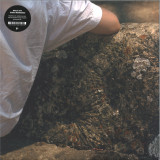
In Rumi's poem A Great Wagon he writes of a place of total acceptance. "Out beyond ideas of wrongdoing and rightdoing, there is a field. I'll meet you there," It is a boundless, liminal space where we can release the judgments we make and carry of ourselves, and the comparisons to others. When we think of this field, there is a sense of tranquility that only comes when we are undisturbed by the shadow self and see existence as neither bright nor dim, white nor black. But as lead singer Greg Bertens explains, arriving there is a whole different story. "This is a poem I've returned to over the years, and I love the idea of this place, but getting there is life's journey." Bertens adds "I think the longing for and elusiveness of this field is a recurring theme in our music." Field is enveloped by themes of regret, disconnection and frustration but with the space to understand that these feelings are a natural part of the struggle between reconciling the inner and outer self. The Los Angeles/San Francisco-based group have been indie shoegaze stalwarts since their formation in 2001. After two decades and a handful of line-up changes, their extensive discography presents a dynamically textural, lush psychedelic rock that has featured guest appearances by members of Pavement, My Bloody Valentine, and Snow Patrol, among others. 2021's LP We Weren't Here was hailed for its dense instrumental blanket, where unrelenting hi-hats and heavy kicks exist alongside dreamy drone guitar. This propulsive nature permeates Field, as members Bertens, Noël Brydebell (vocals), Nyles Lannon (guitar), Jason Ruck (synths), Justin LaBo (bass), and Adam Wade (drums) produce a kaleidoscopic sonic landscape. Patient, sprawling instrumentation builds a foundation in which Bertens' themes of endurance, perseverance and clarity can bloom with a considered poise. As a lyricist who writes in response to the instrumental arrangements, rather than a focus on a specific theme or person, Field is a testament to Film School's ability to create in the moment, and to showcase the magic that stems from when we are truly present. Album opener "Tape Rewind" is a swirling rush of color, as sustained guitars, darkened bass lines and urgent, percussive swells dance alongside each other. "This is the newest of all the songs on the record and feels like a new level of heaviness for the band," Bertens explains, noting that its lyrical context of struggling to move past trauma adds to its cathartic essence. Field is bookended by heavier themes, with closer "All I'll Ever Be" taking on the perspective of those we hurt when we embrace our own toxic behaviors. Originally written to be a simple acoustic guitar and vocals song soon turned into an ethereal, effects-laden composition, with Noël's hazy lead vocals ushering in a new-found acceptance. "It's all I want / To be released / And all I can be," she laments, cementing Field's message of accepting ourselves in whatever form we find ourselves in. "Defending Ruins" is a murky relentless underworld, inspired by the freewheeling tones of Texas-based band Holy Wave. "Defending the ruins, defending remains," Bertens spits, among a richly-layered outro. "Don't You Ever" confirms Film School's ability to merge both delicate and growling instrumentation throughout the album, with the song's softly spoken section hovering above sparkling guitar. "Is This A Hotel" bends towards the electronic aspects of the band, with wailing synths accompanying a story of bitter desire. With over two decades in the industry, Field cements Film School as a distinct, dominant force in the shoegaze scene. Soaked in an emotionally open, imaginative atmosphere, the album is both singular and expansive, and leaves the door open for a constantly evolving interpretation. Film School have never confined themselves to the rigidity of specifics, and it's on Field that they urge us to look beyond the binary of certainty, and to take a second look
- Panda Bear, Voice of the Seven Woods, Mammane Sanni Abdoulaye. File under: Jazz / Electronic. Titi Bakorta almost didn't make it. Born in and raised in Kinshasa, the Congolese multi-instrumentalist was on his way to Uganda when he fell off the boat as it traversed the mighty Congo River. Unable to swim, Bakorta was saved by a friend who dragged him to the closest city Kisangani, where he was unexpectedly acquainted with local singer Dancer Papalas. Soon they were performing in bands together, traveling across the continents and settling in Tanzania, South Sudan and Dubai - they even appeared in front of General Defao, the beloved Congolese vocalist who fronted legendary soukous bands Grand Zaiko Wawa, Choc Stars and Big Stars. Now based in Kampala, Bakorta offers his own unique take on Congolese pop and folk sounds, weaving traditional elements through a psychedelic lattice of guitar loops, mangled voices and eccentric beatbox rhythms on his debut full-length. He bends woodblock snaps on 'Kop' into stuttered blurs, wailing emotionally over twanging riffs and bizarre, theatrical xylophone twinkles. It's still pop music on some level, but curved around Bakorta's unwieldy personal narrative - there's a sense that everything could unravel at any time but it all hangs together, strengthened by Bakorta's confident, contemporary production smarts. 'Elles Vais' is more airy, with celestial soukous vocals that float above tight, electronic drums. Tangled guitar echoes overlap each other like dense, weaved tapestries, contrasting perfectly with Bakorta's urgent, driving pulse. Occasionally, he transcends completely, like on 'Molende' where his chants and phrases neatly flutter between praise music and contemporary R&B. "Hustling, hustling, hustling, everyday I'm hustling," an angelic voice coos over phased electric guitar plucks and looped, AutoTuned chorals. It makes perfect sense that Bakorta should team up with Metal Preyers' Jesse Hackett on the album's final track, the aptly-titled 'Titis Haunted House'. The two artists share a similar obsession with moonlit, carnivalesque soundscapes, and Hackett's eerie synths provide a suitably eccentric foundation for Bakorta's ghostly wails and fuzzy guitar sounds.
In 1972, a foursome of design students set out to make a record. This was, in many ways, a strictly creative endeavor. The quartet — composed of Dave Pescod, Alan Lewis, Phil Rawle, and Ted Rockley — were all trained, not as musicians, but as creatives. Art school heavyweights, the four were well-versed in the methodology of intentional experimentation, in the delicate balance of pushing the limits without completely unmooring oneself from a guiding creative intention. Emboldened by a high-brow familiarity with thoughtful experimentation and all the non-conviction of non-musicians, Bowes Road Band’s stint in the world of popular music yielded a record that is as much mind-melting as it is a direct product of its time. Their sprawling LP “Back in the HCA” embodies the exigence “art for art’s sake,” but it is for art’s sake that this record, however off the deep end it seems to travel (hear: “Doctor, Doctor”), remains a unified, and stunning, body of work. The LP’s do-ityourself garage rock noisemaking meets highfalutin creative processes. “Back in the HCA” is warbling psychedelic freakout (“Two Fingers,” “Doctor, Doctor”), Donovan-esque English countryside folk stylings (“Inside My Head,” “Goodbye to Rosie”), and avant-garde jazz improvisions (“Grass is Grass,” “Tomorrow’s Truth”) in one luminous release.
Originally an 9-track LP, Jakarta, Uno Loop, and Bowes Road Band decided to mine the six most cohesive tracks for the reissue, though the extras may be released somewhere down the line. Cohesion efforts aside, “Back in the HCA” stands alone in its singular conception of a genre-bending continuum — it evades definition. That said, the LP can easily be situated in the sonic environment in which it was conceived. By the end of the 60s, England was crawling with blues-based rock outfits that were starting to venture into prog rock territory. You can hear this popular dint cast over the folkier side of the LP. But Bowes Road Band was armed with their non-musicianship: they existed completely liberated from the motivating yet ultimately paralyzing lust for stardom. Enjoying this liberation, Bowes Road Band was utterly free to make noise. This freedom meant drawn out sax interludes amidst sweetly folk stylings (“Grass is Grass”) and Shaggs-like fuzzed-out freakouts that spiral into a void (Doctor, Doctor). This freedom also meant straight-forward tuneful cuts like “Goodbye Rosie” that conspicuously introduce heavily distorted auto-organ accompaniment mid-track amidst poignant lyricism. Bowes Road Band crafts a unified sound and then cracks it open.
With a completely off-the-radar status, Bowes Road Band could only press 50 copies of the record — 10 for each of them and 10 for the school. The band’s lifespan was to end there, or so they thought. “Back in the HCA” was the accidental fruit of a Berlin flea market treasure hunt by Jannis Stürtz, DJ and co-founder of Habibi Funk and Jakarta Records. After finding and sharing the LP with a few colleagues, Stürtz managed to get in touch with the band, get ahold of the master tapes collecting dust in Ted Rockley’s attic, and start the reissuing process. The record is still adorned with its original cover art designed by Alan Pescod, both reminiscent of bygone school days and the Zoom calls of yesterday — in short, reunion. Its re-discovery was happenstance and ought to be listened to as such. That is, “Back in the HCA” was not made to be listened to on a broad scale, or, at least, was not made with this goal in mind; it is neither in its time nor of its time. Of course, the group explicitly cites the folk tunes of the English countryside, the distorted rock groups that reigned during the record’s conception, and the fringes of psychedelic music that only the uber-underground might recognize (e.g., “Dreaming of Alice”). Yet still with these obvious influences, “Back in the HCA” always existed beyond the domain of both traditional musicianship and conventional commodification. Bowes Road Band’s DIY musicality beams through in technicolor across “Back in the HCA.” The vinyl includes an 8-page booklet detailing the albums creation and interviews with the band.
Lead single “Grass is Grass,” out July 14 along with album pre-order, encapsulates the record’s range: the track unfurls into a sprawling sax-driven trip following a sundrenched, Donovan-esque intro w/ lyrics “naively about parks and gardens, not marijuana!” The keyed-down folk cut “Goodbye to Rosie” is single 2 and elevates stripped-down acoustics with golden tinges, out August 4th. Focus track “Tomorrow’s Truth” constructs the fuzzed-out underbelly of acid folk. Listen for echoes of late Beatles, Mark Fry, and Donovan (if they were armed by an unshakabele willful naiveté). Like Sgt. Pepper’s on a shoestring budget—take a trip to the underground with LP “Back in the HCA,” available everywhere physically and digitally on September 1st via Jakarta Records and Uno Loop.
Besides online promotion from label profiles, the album will be further promoted by external agencies within the UK and US.
. It started in a cafe in Chico, California, with a flier, covered in glitter, wires, feathers, and assorted melted items, with a three-word advertisement: “Noise person wanted.” It wasn’t a sign. It was a sample. A tiny piece lifted from the visionary environment that the band XDS would continue building over the next couple of decades, hoarding an eclectic stockpile of collage materials/influences/approaches for assembling psychedelic dance-punk jams played with homemade instruments, blown-out samples, off-kilter drumming and dub baselines. Shoko Horikawa had come from Japan to (the small, music-crazy college town) Chico for school, and responded to Jesse Hall’s mysterious flier and a pitch to collaborate on making interesting sounds. The partnership would end up featuring her syncopated polyrhythmic drums alongside his vocals (through a duct tape-and-PVC-pipe mic) and custom-built Guitar-o-bass, plus synths/samplers and various noise-making devices. The two-piece Experimental Dental School eventually morphed into XDS as the duo moved the operation from Chico to Oakland to Portland and back to Chico, touring the world (playing alongside the likes of Deerhoof and other innovators) and releasing 11 recordings (on Cochon Records, German label TCWGA, etc.) as they went. On the new XDS album, Bicycle Ripper, the band’s genre-bending roots are as deep as ever, but the goal now is to be less “noise” people and more “fun” people. The songs are weird yet cohesive, with jittery grooves and inventive hooks. Throw a dart at the album and hit “Hot Panther, Cold Moon” for one random sample: an unrelenting fuzzed-out bass dances with a insistent drums; a sharp turn into sparse tin-can-guitar break; then a return to the dance floor with a bonus overdriven bass riff and full-throttle drums. The Panther stays hot whether she’s under the “hot hot sun” or the “cold cold moon.” It’s all very irresistible and, yes, really really fun
Dutch multi-instrumentalist Felbm returns with the conceptual album "cycli infini" : a 38-minute composition of metamorphosing tape loops, musical patterns and instrumental sketches. Further exploring the concept is the vinyl release which features the track spread over both sides and cut to the end of each locked groove - creating an essentially never-ending piece that challenges the idea of the traditional listening process. The idea came to fruition by way of a lifelong interest and growing awareness of the cyclical nature of the world around him - be it through observing nature, or the mathematical and mind-bending works of Dutch artist MC Escher, or minimalist composers such as Erik Satie, Laraaji and Melaine Dalibert.
"The openness of Laraaji"s and Satie"s music have also been an influence to create a certain softness and feeling of comfort, as I like this piece to be a place you want to revisit", says Felbm, real name Eelco Topper. While Topper"s previous releases on Soundway Records comprised series of short, individual sketches, on cycli infini the tapestry is sewn seamlessly together using a step-like progression through the circle of fifths, which as the name suggests, brings the listener back to the musical key and soundscape at which they started. Should the full track be on repeat, it begins anew without being noticed. The piece began life with a layer of drone loops using tapes and delay pedals, over which acoustic instruments such as flute, saxophone and bass trumpet would playfully but gently interpret a melody - toying with jazz, ambient, fourth world and percussive sounds. As the music evolves through the key progression, organic elements such as birdsong and wind chimes ground the piece in nature. Says Topper: "the never-ending metamorphosis of matter has always fascinated me, the idea that nothing ever really disappears and everything has already been here... just in different shapes."
No shortage of colorful characters emerged from Cameroon’s bikutsi scene in the 1980’s and early 90’s. Gibraltar Drakus is one of the most enduring and enigmatic of the artists who helped transform bikutsi into a beautifully endless fabric of triplet rhythms that eventually reached ears around the world.
Following the advent of Cameroon Radio Television in 1987, bikutsi began to supplant makossa and soukous for domination of the local airwaves and the attention of cosmopolitan, thrill-seeking residents of Cameroon’s capital Yaoundé and beyond. Biktusi perfectly fused Beti traditional music and increasingly electronic, highly rhythmic guitarbased bikutsi. Mimicking the sound of village-based xylophone music by rigging a mute to electric guitar strings, bikutsi artists provided a relentlessly energetic dance format for those with a taste for music steeped in their hometown sensibility (countering the popular makossa that many felt sounded less indigenous).
By the early 1990’s, Les Tetes Brûlées were indisputably the most famous and influential artists in bikutsi, due in part to the innovations of their incendiary guitarist Théodore Zanzibar Epeme. Following their first European tour in 1987, the band blew up internationally but Zanzibar tragically, and mysteriously, passed away, which nearly brought an end to the band completely. In hindsight, the consensus among most Cameroonians is Zanzibar’s contributions to biktusi were transformational and immeasurable.
“Zanzibar is the one who taught me how to compose a song, and I learned a lot from Zanzibar musically. We spent whole nights working on methods and other approaches to compose beautiful songs. I owe half of everything I have today to Zanzibar!”
Swept up in all this was Gibraltar Drakus, who was the youngest member of Les Têtes Brûlées and was also the protégé of his biggest supporter, Zanzibar. So it was fitting that he dedicate his 1989 debut to their groundbreaking late guitarist who had meant so much to him. Drakus literally exploded from his first album Hommage A Zanzibar (1989), which sold over 100,000 copies despite rampant piracy. For the recording, Drakus made sure he engaged prolific producer Mystic Jim to record and mix the album. The innovation musically rests both within the guitar interplay and the discipline in the orchestration, which result in a mind-bending clockwork of cross-rhythmic harmony.
This Moment' - Shakti's first new studio album in more than 45 years - is
a work of immense depth and radiant optimism
With John McLaughlin (guitar, guitar synth) and Zakir Hussain (tabla) joined by
vocalist Shankar Mahadevan, violinist Ganesh Rajagopalan, and percussionist
Selvaganesh Vinayakram, the Shakti of now is a powerfully dynamic collective,
defined by deft interplay, dazzling unison passages, extraordinarily dexterous
improvisations, and the ability to draw from a vast well of global traditions and,
miraculously, put them in conversation with one another.
As a cornerstone of what is now called World Music, the vision and virtuosity of
Shakti has inspired generations of musicians from around the world to explore
sonic hybrids once thought impossible. Born of the musical and spiritual
brotherhood shared by the revolutionary British guitarist and bandleader John
McLaughlin and master Indian percussionist Zakir Hussain, Shakti's soulful,
organic intermingling of Eastern and Western musical traditions has proven
transformative for both the band's members and its listeners. Fifty years after the
informal conversations and jam sessions that sparked the band into existence,
their music continues to resonate and evolve.
Despite the large gap in their studio discography, Shakti has persisted
intermittently over the years as a live proposition, releasing several concert
recordings. "Shakti is very much a 'live' band, " explains McLaughlin. "A part of the
problem with making a studio recording has always been the fact that we live on
different continents, and we all follow our individual careers – in addition to
working together in Shakti. 'This Moment' is the result of me calling everyone in
the fall of 2021 and persuading them to use today's recording technology to
realise it."
Recorded and mixed in the U.S., Monaco, India, and Great Britain, This Moment is
nevertheless cohesive, bound by the deeply held bond shared by the players - a
bond that is audibly apparent across the album's eight tracks.
Repress!
Funkiwala Records presents the third in the series of "Lokkhi Terra meets"albums, with the London fusionistas creating another unique sound-clash, this time with ex-Fela Kuti keyboardist and legendary UK Afro-beat ambassador Dele Sosimi, and members of his critically acclaimed Afro-beat Orchestra.
This particular collaboration has been bubbling away for a few years now, teasing audience expectations with a handful of sold out shows each year in between both bands busy schedules.
Featuring the two pianos of Kishon Khan and Dele Sosimi – Cuban percussionists/vocalists Geraldo De Armas (Yoruba Andabo), Oreste Noda (Ariwo), Javier Camilo (Ibrahim Ferrer) - a horn section led by Justin Thurgur (Bellowhead) featuring Yelfris Valdes (Sierra Maestra) and Graeme Flowers (Kyle Eastwood) to name a few – this is an All-star cast.
Kishon Khan's Lokkhi Terra have over a number of years now been quietly establishing themselves as one of London's more unusual heavyweight outfits, described as "Stunning Headliners… A majestic multi-cultural blend of sounds… effortlessly builds bridges between rolling Indian raga rhythms, Afro-Cuban grooves, Acid Jazz/funk and free flowing improvisation" (Timeout London). Included amongst the band members are London's top Cuban musicians, adding their infectious rich musical history to the city's melting pot.
When the band wanted to explore Cuban links with another of their favourite traditions, Afrobeat, who better to bring in then one of the Afrobeat originators – maestro Dele Sosimi – "Sosimi creates some of the most bewitching grooves in modern African music" E Jazz News.
Bringing together two Yoruba speaking musics - with different accents, from different sides of the Atlantic - Havana meets Lagos in London – A Cuban-Afrobeat-Experience. CUBAFROBEAT.
All About Jazz 4star review
A younger version of London's Grand Union Orchestra, founded by world-jazz pioneer Tony Haynes in 1982, Lokkhi Terra was put together by keyboard player Kishon Khan in 2005. Both ensembles have made a specialism of jazz / South Asian fusion, with Lokkhi Terra also giving as much attention to music from Cuba, where Bangladeshi-born, London-based Khan lived for a while in the early 2000s.
Cubafrobeat, as the title foretells, is a blend of Cuban dance music and Nigerian / Yoruban Afrobeat—a fusion rendered seamless by the synergies existing between Afro-Cuban and Yoruban music, language and mythology. The album is Lokkhi Terra's third and partners the band with the keyboard player and vocalist Dele Sosimi .
A young-going-on-child-prodigy member of Fela Kuti's Egypt 80, Sosimi went on to become musical director of Femi Kuti's Positive Force, before relocating to London and setting up Dele Sosimi's Afrobeat Orchestra, the finest Afrobeat band outside Nigeria, bar none, now with a string of consistently engaging albums under its belt. Cubafrobeat features Sosimi as lead vocalist on all four tracks, and on Fender Rhodes on two of them. His singing plays a prominent role in the Afrobeat Orchestra, but, such is the whirlwind impact of the band in full instrumental flight, that Sosimi is often thought of first and foremost for his keyboard and arranging talents. That may change by the time 2018 is over. Cubafrobeat is the third album in as many months to feature Sosimi as guest vocalist, spotlighting the gravitas, air of mystery, intimacy and ferocity his voice can bring to an occasion.
The first of these albums was the genre-bending spiritual-jazz band Emanative's Earth (Jazzman). One of the stand-out tracks, "Ìyáàmi," features Sosimi making obeisance to the titular Mother Goddesses of the Yoruba spirit worlds. His raw and intense invocations carry the track for nine mesmerising minutes. Otherwordly is not the half of it. Next up was dub / reggae / jazz band Soothsayers' Tradition (Wah Wah 45s), which featured Sosimi as lead vocalist on the compelling "Sleepwalking (Black Man's Cry)." Earth and Tradition are both outstanding albums and have previously been reviewed here.
Cubafrobeat is a total stonking blinder, too. It is an effectively nuanced affair, opening with the fiery "Afro Sambroso" and closing with the relatively reflective "Rumbafro." Sosimi's vocals light up the music, as do the several solos from trumpeters Graeme Flowers and Yelfris Valdes Espinosa and trombonist Justin Thurgur (a member of both Lokkhi Terra and the Afrobeat Orchestra). Sosimi and Kishon Khan's intertwining Fender Rhodes solos on "Cubafro" are also a delight, as is the drum and percussion section throughout.
The sound of summer, for sure, Cubafrobeat has enough depth and variety to make it something for all seasons.
Songlines 4star review
Lokkhi Terra are one of London's most authentic groups. They are a Latin-flavoured collective whose keyboard player and bandleader Kishon Khan segues from percussive montunos to complex Bengali rhythms and back, with jazz chops sparking funky and outward-looking fusions. Their collaboration with Dele Sosimi, Britain's foremost Afrobeat ambassador, has been bubbling for a while; here four tracks at ten minutes see musical conversations that never lose their sense of flow. An extensive line-up of stellar players, including trumpeter Yelfris Valdés, conguero Oreste Noda and trombonist Justin Thurgur, highlights the genre-crossing potential of world traditions. Opener 'Afro Sambroso' showcases batá drums from Gerardo de Armas Sarria before the track links Cuban grooves with Afrobeat. 'Timbafro' crackles and sways via Khan's organ, Sosimi's vocals and Oscar Martinez's timbales. 'Cubafro' features dazzling interplay between Khan, Sosimi and Javier Camillo's Spanish-language vocals. 'Rumbafro' is all rumba choruses, Yoruba vocals and Afrobeat horns. Rooted in their sources, but with musical threads intertwining, separating and reconfiguring – with grooves at a premium – this is a fusion lover's dream
S Transporter is Izaak S and Ryan Spencer, a pan-American duo of exact origins unknown. With roots spanning from Detroit to San Francisco, the project is somewhere around four years old, though no one remembers exactly when it started. The songs were initially demoed in Ryan's bedroom and promptly forgotten about in the chaotic whirl of both members’ efforts in other music projects, DJing, and party-throwing ventures until Ryan played them at his weekly, Monday Is The New Monday (co-founded with PGS' Ben & Zach). Immediately, the songs burst with new life into our ears, and we excitedly requested to hear more. In a tale every creative can relate to, Ryan simply didn't know if they were any good. We found them extraordinary.
What followed were several months of additional recording sessions in a collective effort to finalize the tracks, done at Ryan's apartment in Southwest Detroit, Izaak's in SF, and the Portage Garage in Hamtramck. Bay area DIY underground luminary Anya Ghiorzi joined the group and contributed her vocal talents to the songs, which began to exhibit a sound representative of the genre-collisions featured at MITNM– from krautrock and boogie to trance, acid, and house– in a way other PGS releases have hinted at, but have not fully expressed until now.
S Transporter is the name of the EP, the project, and all four songs. A maximalist sound with a minimalist presentation, naming the songs - so many years after their inception - would, perhaps, take away from the feeling that struck all three of us the first time we heard them on a club-grade sound system.
Izaak S and Anya Ghiorzi are San Francisco residents, musicians, and DJs in the Loveshadow dance collective.
Ryan Spencer is a Detroit resident, DJ, co-founder of Monday Is The New Monday, and is a member of Freakish Pleasures.
"S Transporter 1"
Uptempo, backspin-laden electro/acid with a winding 303 bassline that reveals itself slowly over the pulsing breakbeat backbone. Immersive, haunting and enchanting.
"S Transporter 2"
Downtempo electro. Slap bass. Heavy boogie. Sensual vocals reminiscent of early Chris N Cosey carry you through this industrial funk heater. Heavy synth lines and rhythmic grooving guitar that is club-ready for dance floors of all kinds.
"S Transporter 3"
A fast paced, percussion forward adventure with balaphone melodies and bending synth pads. Spoken words guide the journey, arriving at a movement inducing Juno ascension that dances into a calm end.
"S Transporter 4"
Encompassing the seemingly disjointed, individualistic styles of S Transporter 1-3, ‘4’ combines elements of the entire release into one final gesture. ‘4’ could be Byrne/Eno ("Regiment"), but it's something else - the product of decades of dance music history, distilled by two musicians & DJs into one song.
credits
releases July 19, 2019
PGS 010
S Transporter
"S Transporter"
EP
2015-2019
Written, Mixed and Produced by Izaak S & Ryan Spencer
Vocals by Anya
Bass on “2” by Lucas De Leon Turner
Percussion & additional production on "3" by Shigeto
Percussion on “3” by Julian Spradlin
Mastered by Josh Bonati at Bonati Mastering
Recorded at Izaak's apartment in San Francisco, Ryan's apartment in Southwest Detroit and the Portage Garage
Records Pressed at Archer Record Pressing, Detroit, MI
Design by Will
MMXVIX
- 01: Introduction / Purple Haze Feat. Zdechly Osa
- 02: Slayaz / Elf Island
- 03: Fifi Feat. Lil B
- 04: House On The Hill
- 05: Pet Cemetery
- 06: The Cheshire Cat
- 07: Wipeout
- 08: Afro Samurai / Quest
- 09: Cat Kingdom
- 10: Magic Carpet
- 11: Pinocchio Feat. Jehst
- 12: The Horsemen
- 13: Ice King Feat. Lealani
- 14: Cat In Oz
- 15: Heaven's Gates
- 16: Outsiders
- 17: Psychosis City
- 18: Age Of Aquarius
Psych-rap enigma Onoe Caponoe returns with his fifth studio album ‘Concrete Fantasia’ on High Focus Records. In crystal clear communication with the mothership; littered with striking references to fantastical realms and uncommon lore, but very much anchored in the inner city blocks and smoggy roadsides that inform his everyday, ‘Concrete Fantasia’ is a dark fantasy tape that expertly blurs the lines between genres, tones, moods and character profiles.
Of this world and out-of-this-world perfectly poised; Onoe offering up escape portals, before quickly pulling the listener back in with wave-upon-wave of catdelix riptides. ‘Concrete Fantasia’ is something of a tug-of-war; peppering movie samples, vignettes and complex go-betweens tickling the senses, combining with a cacophony of mind-bending lyricism resulting in a singular journey, with Onoe confidently filling the shoes of both author and narrator.
Pinocchio ducking feds in the hood, an Ice King ruling over a frostbitten kingdom, The Cheshire Cat trying to clean up Alice’s act, sweet serenades to off-shore mermaids, the trials and tribulations of life in a haunted trap house, big booty witches, flying carpets and beyond, ‘Concrete Fantasia’ is a real trip through the imaginative mind of Onoe Caponoe. With an eclectic line-up of featured artists and productional talent propping up the fictional cast, ‘Concrete Fantasia’ has all the makings of an alt-rap odyssey for the ages.
- 01: Introduction / Purple Haze Feat. Zdechly Osa
- 02: Slayaz / Elf Island
- 03: Fifi Feat. Lil B
- 04: House On The Hill
- 05: Pet Cemetery
- 06: The Cheshire Cat
- 07: Wipeout
- 08: Afro Samurai / Quest
- 09: Cat Kingdom
- 10: Magic Carpet
- 11: Pinocchio Feat. Jehst
- 12: The Horsemen
- 13: Ice King Feat. Lealani
- 14: Cat In Oz
- 15: Heaven's Gates
- 16: Outsiders
- 17: Psychosis City
- 18: Age Of Aquarius
Psych-rap enigma Onoe Caponoe returns with his fifth studio album ‘Concrete Fantasia’ on High Focus Records. In crystal clear communication with the mothership; littered with striking references to fantastical realms and uncommon lore, but very much anchored in the inner city blocks and smoggy roadsides that inform his everyday, ‘Concrete Fantasia’ is a dark fantasy tape that expertly blurs the lines between genres, tones, moods and character profiles.
Of this world and out-of-this-world perfectly poised; Onoe offering up escape portals, before quickly pulling the listener back in with wave-upon-wave of catdelix riptides. ‘Concrete Fantasia’ is something of a tug-of-war; peppering movie samples, vignettes and complex go-betweens tickling the senses, combining with a cacophony of mind-bending lyricism resulting in a singular journey, with Onoe confidently filling the shoes of both author and narrator.
Pinocchio ducking feds in the hood, an Ice King ruling over a frostbitten kingdom, The Cheshire Cat trying to clean up Alice’s act, sweet serenades to off-shore mermaids, the trials and tribulations of life in a haunted trap house, big booty witches, flying carpets and beyond, ‘Concrete Fantasia’ is a real trip through the imaginative mind of Onoe Caponoe. With an eclectic line-up of featured artists and productional talent propping up the fictional cast, ‘Concrete Fantasia’ has all the makings of an alt-rap odyssey for the ages.
- 01: Introduction / Purple Haze Feat. Zdechly Osa
- 02: Slayaz / Elf Island
- 03: Fifi Feat. Lil B
- 04: House On The Hill
- 05: Pet Cemetery
- 06: The Cheshire Cat
- 07: Wipeout
- 08: Afro Samurai / Quest
- 09: Cat Kingdom
- 10: Magic Carpet
- 11: Pinocchio Feat. Jehst
- 12: The Horsemen
- 13: Ice King Feat. Lealani
- 14: Cat In Oz
- 15: Heaven's Gates
- 16: Outsiders
- 17: Psychosis City
- 18: Age Of Aquarius
Psych-rap enigma Onoe Caponoe returns with his fifth studio album ‘Concrete Fantasia’ on High Focus Records. In crystal clear communication with the mothership; littered with striking references to fantastical realms and uncommon lore, but very much anchored in the inner city blocks and smoggy roadsides that inform his everyday, ‘Concrete Fantasia’ is a dark fantasy tape that expertly blurs the lines between genres, tones, moods and character profiles.
Of this world and out-of-this-world perfectly poised; Onoe offering up escape portals, before quickly pulling the listener back in with wave-upon-wave of catdelix riptides. ‘Concrete Fantasia’ is something of a tug-of-war; peppering movie samples, vignettes and complex go-betweens tickling the senses, combining with a cacophony of mind-bending lyricism resulting in a singular journey, with Onoe confidently filling the shoes of both author and narrator.
Pinocchio ducking feds in the hood, an Ice King ruling over a frostbitten kingdom, The Cheshire Cat trying to clean up Alice’s act, sweet serenades to off-shore mermaids, the trials and tribulations of life in a haunted trap house, big booty witches, flying carpets and beyond, ‘Concrete Fantasia’ is a real trip through the imaginative mind of Onoe Caponoe. With an eclectic line-up of featured artists and productional talent propping up the fictional cast, ‘Concrete Fantasia’ has all the makings of an alt-rap odyssey for the ages.
'Malombo music is an indigenous kind of music. If you listen to it, you can feel that it can heal you, if you’ve got something wrong. It’s healing music.'
Lucky Ranku
"Lucas ‘Lucky’ Madumetja Ranku (1941-2016) was one of the greatest African guitarists of his generation. He first made his name with the Malombo Jazz Makers – the successor group to the legendary Malombo Jazzmen, formed in Mamelodi township by guitarist Philip Tabane, drummer Julian Bahula and flautist Abbey Cindi. When Tabane left the Jazzmen in 1965, Bahula and Cindi called on Lucky to replace him, and the Malombo Jazz Makers were born. Building on the popularity and success of the original Malombo Jazzmen, the Malombo Jazz Makers become immensely popular, touring widely, winning numerous jazz competitions, and recording two successful albums for the Gallo label.
The deep and hypnotic Down Lucky’s Way was their third album. Recorded in 1969, it was the first Malombo Jazz Makers album to feature additional instruments, and the first to feature Abbey Cindi on soprano saxophone as well as flute. But more than anything else, Down Lucky’s Way is a transfixing showcase for Lucky Ranku’s sui generis guitar virtuosity. Quite different from their previous recordings, the album shifted the Jazz Makers’ sound toward hypnotic, extended compositions, layered by organ bass and guitar overdubs. Of all the Malombo Jazz Makers recordings, Down Lucky’s Way is the deepest of mood, and the richest of vision.
However, through one of the erasures that are ubiquitous in South African musical history under apartheid, it seems that the record may not ever have been properly issued. Original copies are outrageously rare – only a few are known among collectors. When we asked Lucky about the album, he was unaware it had ever been released, and had never seen a copy. Perhaps it was pulled; perhaps it was pulped; perhaps Gallo simply took their eye off the ball. Nobody knows, but it is not impossible that the apartheid authorities were involved, for by 1969, the Malombo Jazz Makers were well known to them.
Julian Bahula’s introduction of malopo drums to the music of the original Malombo Jazzmen was a moment of crucial political and cultural radicalism for South African jazz. Traditionally used by BaPedi people for healing, the malopo drums of Malombo music re-centered jazz
around indigenous sounds and culture, and over the next decade, the Malombo Jazz Makers became deeply involved in political opposition to apartheid. Their recovery of indigenous sounds made them the musical standard bearer for the Black Consciousness movement, and they toured South Africa clandestinely with the writer and anti-apartheid activist Steve Biko. They also broke apartheid laws by playing with the white rock group Freedom’s Children, sometimes appearing on stage in masks or made up with UV paint to avoid detection by the authorities; they appeared regularly at the rule-bending Free People’s Concerts organized by David Marks, where Marks’ clever exploitation of a loophole – mixed audiences were prohibited from attending ticketed concerts where anyone was being paid, but the law said nothing about private functions played by artists for free – meant people could come together in defiance of apartheid laws. The notorious Special Branch would raid their concerts; Lucky remembered police storming an auditorium, throwing smoke bombs.
Eventually the political situation became too dangerous, and the band were being actively sought by the police. Though Abbey Cindi remained in South Africa, both Julian Bahula and Lucky Ranku went into political exile in the UK, where Bahula founded the group Jabula with Lucky and former members of Cymande, Steve Scipio and Michael ‘Bami’ Rose. With Jabula, Julian and Lucky worked tirelessly for the anti-apartheid movement, raising funds and awareness all over Europe and in the US. They played with Dudu Pukwana’s Spear in the joint formation Jabula-Spear, and worked together in Bahula’s Jazz Afrika formation, and Bahula organized the first Concert for Mandela in 1984 (it was Jabula that supplied the chorus for The Special A.K.A.’s hit single ‘Nelson Mandela’). Lucky also played and recorded with Chris McGregor’s South African Exiles Thunderbolt group. After the fall of apartheid, they both remained living and working in the UK. In 2012 the South African government awarded Julian Bahula the Gold Order of Ikhamanga for his cultural work during the struggle against apartheid.
Until his death in 2016, Lucky continued to play with countless groups and musicians. putting together the band Township Express with Pinise Saul, and leading his own African Jazz Allstars. The influence of his playing on the international perception of South African township music was immense, and he was held in the highest regard by his peers – ‘Lucky was a guitarist who could bring any house down’, said Michael ‘Bami’ Rose.
But despite his continuous presence on the UK live circuit over four decades, Lucky Ranku never recorded an album as leader. And so as well as restoring an important lost piece of South African musical heritage, Down Lucky’s Way is a precious opportunity to hear one of Africa’s foremost guitarists stretching out, in focus and in his element."
First issue since 1969 of the Malombo Jazz Maker’s unknown third album.
Liner notes featuring interviews with Julian Bahula and Lucky Ranku.
Fully licensed from Julian Bahula.
Black Light Smoke is the electronic music moniker of Jordan Lieb - producer, songwriter, and award winning film and TV composer. A Chicago native, Jordan transplanted to New York City in 2001, where his career as a multi-disciplined musician has taken flight in many forms.
Currently residing in upstate New York, Black Light Smoke returns to Scissor and Thread for his first full length debut-album: Ghosts.
The 12 tracks (plus three digital bonus tracks) span everything from 90s house, smooth and deep soulful beats, dusty grooves and thoughtful treaties on the state of creativity, capitalism and identity.
It’s a collection that sits together as a listening experience perfectly, building peaks and sliding into serene troughs, all with a strong sense of radical thought and creative experimentation. Tracks bend and warp in unexpected directions, while gritty, distortion and overdrive counterpoint classic rave stabs and vocal samples. Taken as a whole, the album could be the soundtrack to a night drive through the city, as much as certain tracks will no doubt find themselves woven into the sets of the more leftfield and genre pushing DJs. Either way, it’s an essential release from one of the most exciting and vital producers out there and the first artist signed to Scissor and Thread back in 2011.
The album title, Ghosts, tells two stories. One is personal - an artist embracing the shadows of his past in order to move forward and complete a body of work. The second story is a search for the original meaning of house music - not just the usual sample, appropriation or casual nod to the originators of house - but a meditation on the living story of Black America in which house music is an inseparable chapter. Both stories are a reflection on grief and the transformation of trauma into celebration.
100% of Jordan Lieb’s personal proceeds from this record will go to Little Bit Foundation, empowering students living in poverty to achieve their academic goals.
- A1: No Camera (2 24)
- A2: Anxious Anthony (Feat Anthony Ware) (3 44)
- A3: Ready To Ball (2 46)
- A4: Clock Ticking (Feat Danny Brown & Wiki) (2 33)
- A5: Still Ain't Find Me (Feat Tomoki Sanders, Bendji Allonce, Mike King & Ian Fink) (4 19)
- A6: Make My Way Back Home (Feat Nick Hakim & Theo Croker) (1 00)
- A7: The Lava Is Calm (Feat Theo Croker) (1 44)
- B1: No It Ain't (Feat Andrae Murchison) (1 47)
- B2: So Happy (Feat Laura Mvula & Francis & The Lights) (2 54)
- B3: It's Animals (3 05)
- B4: Maybe We Can Stay (Feat J Hoard) (2 35)
- B5: The Score Was Made (Feat Vijay Iyer) (3 42)
- B6: Going Up (Feat Lil B Shabazz Palaces & Francis & The Lights) (5 28)
Like a winding system of trails and paths cutting through a digital forest-scape, M. Sage's Paradise Crick is shaped by time. Full of wonder and charm, designed patiently and from a rich, curious mulch of synthesized and acoustic sound, the versatile American artist and magic realist's new suite of music is an imaginary destination and a pastoral fantasy that envisions the natural and fabricated worlds as one. Matthew Sage is a musician, intermedia artist, recording engineer and producer, publisher, teacher, partner, and parent. Assembling a sprawling and idiosyncratic catalog of experimental studio music between Colorado and Chicago since the early 2010s, recent highlights include The Wind of Things (Geographic North, 2021), an ensemble-recorded expression of bow-splashed nostalgia, and the four seasonal albums of Fuubutsushi, the improvisatory ambient jazz quartet he formed with friends from afar in 2020. Sage renders projects with nuanced velocity and a completist sensibility _ when it's finished, it's done _ which is what makes Paradise Crick, his debut for RVNG Intl., a compelling outlier. Sage first staked his tent in Crick's conceptual campground five years ago from his home studio in Chicago (he's since returned to Colorado, home to the mountains and prairies often personified in his work). He had just read Richard Brautigan's Trout Fishing in America, a kaleidoscopic reflection of pastoral America's shifting identity by way of magical fishing sojourns. Inspired by that feeling, of getting lost but finding oneself in through the outdoors, he amassed over seventy demos documenting a fictional soundtrack for camping. Pull up to this park, and the sign might read, "Welcome to Paradise Crick. Fire Danger Is Low." The sequence, pruned down to thirteen tracks, courses the dewy mornings, afternoon hikes, and firelit nights of a weekend expedition. While Sage is not a filmmaker, he views the method of making this album as a similar form of world-building via structure, narrative, formal elements, and editorial refinement. Contrasted with his collaborative craft, here he is a sole auteur reclined in total autonomy, able to improvise scenes and implement special effects at will. A parallel precedent for such unchecked imagination in the M. Sage canon is A Singular Continent, his 2014 album that tilted its compass to a faraway land. Where Continent built its world layering samples as composition, Paradise Crick deploys a balance of accessible song structures with experimental instrumentation and sound design. Speckled with harmonica, autoharp, chimes, penny whistle, voice, hand percussion, and other mysteries, Crick's texture is treated as a sensorial adventure; the swamps gurgle, the lakes glisten, and the valleys breathe in robust HD. The rhythms are loose and buoyant, bursting with a few `kick and snare' moments shaped by Sage's lifelong love for drumming and headphone prone electronic music. Crick bumps more than most anything he's done before; crackling static pulses and lush vibrations reveal an intrinsic groove, a hidden beat map. In the landscapes of Paradise Crick, science and magic co-exist, 5k boulders and midi frogs share the frame with real-life memories of Midwest camping trips and the desire to feel extra human in a digitized space. Sage strived for "nature in the holodeck" but couldn't help leaving fingerprints in the simulation, and it's these traces of spirit and character that give Paradise Crick its strange allure. The album's bubbling sense of play, melody, and timbre takes cues from left-field electronic lineage; synth pioneers like Tomita and Raymond Scott up through the more expressive pop tendencies of Woo, Stereolab and the Cocteau Twins, and into contemporary composers like Sam Prekop. The album's vocabulary is uncomplicated; the gestures are sweet and inviting, intended to lull the listener. As much as Sage continues to be an experimentalist by nature in his work, with Paradise Crick, he spins a narrative. Not necessarily a concept album, but rather an invitation to take off for a weekend. That's the modus operandi down here in the Crick, we stretch out. M. Sage's Paradise Crick will be released May 26, 2023 in LP, CD, and digital editions. A portion of the proceeds from this release will benefit Earthjustice, the premier nonprofit public interest environmental law organization.
Aptly titled, ‘Welcome’ is the debut album from Don Glori. A kaleidoscopic free dive into his world, featuring 8 recordings of revolving jazz, Brazilian, soul and funk inspired compositions spinning together and blurring into a genre bending slew of new music.
There is an intangible element of joy and connection sitting just outside the grasp of description or definition that can be felt throughout this album. Each song on this album captures the spirit and irrepressible energy that underpins the core of the Don Glori project.
Imperfections are captured along with the moments of transcendence. Layers of vocal harmonies oscillate next to pulsating samba rhythms while spiritual overtones permeate throughout. Congas and percussion form a holy union with the drum kit, co-piloted by Don Glori’s own bass lines.
Saxophones, horns and flutes flutter in between the musical canyons carved out by the piano and vibraphone. When you press all of these forces together you can start to feel the intangible; the intrinsic human elements existing in the creases. The sweat, excitement and willingness of each musician to dedicate their spirit and take risks on every track of this album.
It’s clear from the outset that this is an expansive body of work, from the spiritual jazz opener ‘Maiden Waters’ to the bubbling street party that is ‘Dlareme’, and ending on the unashamedly seductive ‘Commodore’. This is the kind of record that will translate equally well to both the dance floor and the lounge room rug.
Power, Pain, Privilege is Specimens fourth album & most personal work to date, it follows up on his collaboration album ‘Intersections’ with Peter Broderick, Benoît Pioulard, Midori Hirano & Emilie Levienaise-Farrouch.
Power, Pain, Privilege is a commissioned piece by London’s Southbank Centre and is an abstract sonic exploration of biracial identity, in its historicity as well as through the lens of Ives’ own personal experience of being British-Jamaican. The album is a departure from his largely ambient work and explores haunted and twisted dancehall rhythms, industrial drones, and spoken word pieces that track a course through painful incidents of imposter syndrome, shame, privilege & racism.
The album opens with a computerised robotic voice reading excerpts of the 1930s Fletcher Report: “an Investigation into the Colour Problem in Liverpool and other ports” a report which heavily stigmatises children and mixed heritage families of African and European origin. It could be deemed the official outset in defining Liverpool's ‘half castes’ as a problem and blight to the “British way of life”. Ives’ states “this track sets the tone to the album, the cold analytical and dehumanising approach to reports like this, whilst over 80 years old set the standard for viewing biracial families and to have used a Human voice to recite these pieces of text would have been to give it too much life”
The album is accompanied by a film directed by the photographer & director Lucie Rox which was live scored at The Southbank Centre in London and in Paris at 3537.
First LP from Donna Candy, the bass-vocal-drums trio trawled from the sub genres of experimental rock and busy pushing to the front of heavy music. Nu metal bass riffs, switch-pitched fuzz vocals and big, splashy drums layer over unsettling narratives and extreme loops to bring a bit of the pit to the dancefloor.
Begun as an off the cuff party band with the idea of finding a live sound that would fit between 4am trance sets, the trio soon found themselves addicted to the euphoric sludge they created. Swapping their usual guitar for a bass, JS Donny drives Donna Candy with simple riffs, split half clean and half shredded with Boris / Sunn O))) like distortion. Head-banging the whole way, they’ll switch speed or stop suddenly, bending and drawing out notes to ratchet things up for release. Nadja's vocals tear through the top layer - heavily processed and warped with weird imagery. Together there’s a feeling of what it might be like to see Sightings slowed by codeine but with Elvin Brandi on the mic.
Always set up facing each other, off stage and surrounded by the audience, Donna Candy encourage catharsis - reciprocally transforming energy between themselves and the crowd. They build a queer euphoria that pulls apart metal’s narrow dichotomy of nihilistic machismo vs. hyperfemininity, and begins to make the visceral faux-hybridity of nineties nu metal feel possible this time around. ‘Blooming’ brings us six offerings from the band on a four way split release that speaks for itself - once on board with the DC energy you’ll want to be a part of it.
Recital presents »As Above, So Below, a new album from French multi-instrumentalist Delphine Dora. Over the past decade, from poetry reading, chansons, organ performances, tape compositions and so on, each album in Dora’s lush discography feels like a feather from a different bird. A keen ability to defy any singular “sound,” always diving to different depths.
»As Above, So Below« centers around mystic piano and voice recordings. In a distinct gothic landscape, each of the nine tracks float into one another. From verdant piano works that revolve like beautifully stretched out miniatures, expanding and bending like shadows across the floor, to foggy vocal arrangements hovering above beds of rural field recordings. Quiet synthesizers crawl in the backdrops, never disturbing the spirit of the piano motions.
On the track »Cantique spirituel,« Dora, from a cloud of her phantasmal caroling, recites a poem by German author Novalis (1772-1801). »Blindly we strayed in night’s confusion…« This poetic essence is found throughout the album… »gladness and grief alike consume.«
»As Above, So Below« was produced and mixed by the brilliant British musician Andrew Chalk, whose presence tints the air throughout Dora’s album. Chalk ornaments the pieces with additional instrumentation, along with Jean Noël Rebilly playing clarinet.
Shannon, and veteran electronic producer and remixer producer Dave Clark, best-known for his Sparky moniker, and as one-half of the production/remix team Optimo (Espacio).
First emerging in 2015 with a couple of compilation appearances, Kübler-Ross released their debut, self-titled album in 2020. Originally released as a limited-edition cassette on the Glasgow label Akashic Records, the album — now resequenced and released on vinyl via Suction Records’ minimal synth sublabel Ice Machine — is a collection of tracks recorded over a three year period in a variety of studios, rehearsal rooms, and gigs, documenting the musical variety and ferocity of their incendiary live performances. The Akashic tape, despite being low-key, under-the-radar, and released in limited quantity, managed to earn them a Long List nomination for SAY (Scottish Album of the Year) for 2020.
Standout cut “Bridges”, first released in 2015, is synthpop perfection — sitting comfortably alongside classics from the first wave of UK electronic classics by Thomas Leer and Robert Rental, John Foxx, and even early Depeche Mode. It’s not the only synthpop track on the record, but the album is dominated by a more tough, raw, and punk spirit, featuring aggressive female vocals, live drums + bass guitar, and judicious use of crude analog synthesizers and tape delay fx. Think Liaisons Dangereuses meets Suicide, and you’re beginning to get close…
Available digitally, and on limited vinyl LP in a reverse-board jacket. We’ve also pressed up a special edition with an additional bonus 7”, featuring covers of songs by US minimal synth oddball John Bender,and Australian industrial mavericks SeveredHeads. The special edition LP and 7” are on pink-vinyl LP + green-vinyl-7”, and strictly limited to 200 copies. Both versions include a Bandcamp download card inside.
Custard Vinyl[16,35 €]
The Beths debut EP – new pressing on on Light Blue Vinyl
The Beths' Warm Blood is a strong contender for the catchiest record you've never heard. Formed when four jazz students at the University of Auckland bonded over their shared love of the pop-punk sounds of their youth, The Beths bring new energy to the genre. This 5-song debut EP, a deliriously pleasurable statement of purpose, comes crammed with enough blissful hooks to carry through most bands' careers.
Listeners for whom the tag 'New Zealand indie rock' brings to mind the Flying Nun sound of bands like The Clean and The Chills may be surprised to find Warm Blood's five unstoppable tunes landing closer to artists like Slant 6 and The Breeders. The nimble guitar work here moves from heavy riffing reminiscent of Sleater-Kinney to hazily bending lines that would make Stephen Malkmus and Mary Timony beam, while the joyous vocal harmonies from all four members bubble and swell to ecstatic crescendos that channel The Zombies' Odessey and Oracle.
With impeccable production from guitarist Jonathan Pearce and stellar musicianship across the board, Warm Blood is a non-stop delight. Tracks like leadoff track and first single 'Whatever,' the ridiculously addictive standout 'Idea/Intent,' and 'Rush Hour 3,' a playful ode to romance in this era of download-and-chill franchise films, take delight in the challenge of breathing new energy into the limitations of the 3-minute pop song.
We are very pleased here at RE:WARM Records to announce our first release of 2023 and our first full artist album from none other than David Kitt as he brings us his first album since July 2021. The Genre-bending Irish musician and producer has announced his ninth studio album ‘Idiot Check’ to be released on 31 March 2023 via RE:WARM. A unique and sincere songwriter with an expert ability to meld inspirations, eras and sounds, Kitt’s music glimmers with a sense of timelessness well-earned after over twenty years immersed in music.
Produced and recorded by Kitt himself using his “Breaking Bad mobile studio set-up”, the album was written between 2016 and 2022 in Dublin, Paris and eventually the remote town of Ballinskelligs in south-west Kerry, where the artist moved during the pandemic and has stayed ever since. Blending acoustic and electronic elements with expert precision, the record showcases both the diverse circumstances of its inception and Kitt’s personal breadth as a songwriter and producer. From the fuzzy, lo-fi “Wishing Well” fluttering with a gentle sense of magnetism, to the infectious and upbeat “Not So Soon”, and jovial, traditional folk cut “Balances”, “Idiot Check” is an evergreen album as experimental as it is ageless.
If we want to look into the future, we have to start considering the implications more holistically. All too often, science fiction is a dystopian projection of the current era's grimmest realities spiked with pragmatic historical hindsight - but what if instead it was able to reflect our needs, hopes, and dreams? On "SPINE", award-winning Danish composer SØS Gunver Ryberg considers a sustainable alternative, buoyed by interconnectedness, empowerment, and understanding. Channeling her dextrous sound design into advanced, time-bending music that fluctuates through techno, experimental ambient, and soundsystem-vibrating bass music, she maps out an artistic landscape that's futuristic and complex, but never oppressive.
Ryberg is an accomplished producer who's developed her sound over many years, playing concerts and working tirelessly on video game soundtracks, film scores, dance, performance, and multichannel installation pieces. Her first solo album "Entangled" appeared in 2019 on Berlin's esteemed Avian imprint, and was praised for its sensitive approach to noise and abstracted techno, while its EP-length followup "WHYT 030" was nominated for the Nordic Council's prestigious music prize this year. "SPINE" is the inaugural release on Ryberg's own label Arterial, and stands as a thematically dense statement of intent. The label provides a platform to extend Ryberg's artistic goals and reflect not just her world but a world she wants to see develop in the future: somewhere connected and creative, where exploration and free expression is prioritized over genre division and petty compromise.
This philosophy is central to the sounds on "SPINE", which have been carefully sculpted to accurately lay out Ryberg's worldview. Opening track 'Unfolding' presents a sonic ecosystem that flourishes as it spreads itself out, and quivering kick drums vibrate alongside unstable atmospherics. There's the faint fingerprint of Chain Reaction's notional dub techno in there somewhere, but Ryberg interrupts the thought before it can coagulate, assuring the listener that her vision isn't ponderous but playful and optimistic. This mood flickers into view again on the title track 'Spine', as fragmented breaks rumble beneath disorienting synths, faint images of a life we once knew refracted into cosmic beams of light. 'Mirrored Madness' meanwhile is warm, assertive, and optimistic, contrasting skittering cybernetic percussion with dense, enveloping harmonies.
When she pushes rhythm into the background, like on the cinematic 'We tumble on the edges', Ryberg's compositional skill is placed under the microscope. We're presented with the opportunity to examine another dimension of her work, the mystery beneath the stone, hearing saturated, alluring pads infused with hidden harmonies. In these moments, Ryberg implores all of us to consider the environment, asking us to think about the earth's essential nutrients on the dreamy 'Phosphorus Cycle', and what we might do to save ourselves on the delirious 'Where do we go from here'. Ryberg's concern isn't chastising, it's laid out in a warm embrace. The future could still be bright - there's something beautiful in the complexity if you just take the time to look closely.
The next release on Phase Group is a truly singular and original album from Rotterdam-based producer Ayaz.
With ‘Unpinned’ Ayaz presents a window into a uniquely crafted and highly personal sonic environment, where intercepted radio broadcasts tune in and out of focus, modulating drones echo through cavernous space and the sound of experimental synth explorations are layered over heady dub-laden beat work, deep bass lines and expertly programmed traditional sampled artefacts from the music of his native Azerbaijan.
This is an uncanny and evocative sound universe both cinematic and driving, music that would work equally scoring science fiction cinema as in the most avant-garde club environments. Mind-bending and visionary music for those that explore.
- A1: Ronnie Miller - I Got The Hots For You
- A2: Leaves Of Autumn - Slip Back Into The Magic
- A3: Mirage - Bend A Little
- A4: People - Misty Mood
- A5: Stroke - Without Your Love
- A6: Tom Miles - Old Home Movies
- A7: Jan Lewis Group - Oh Senor
- A8: Synod - Future Shock
- B1: Mikael Neumann - Hey Flicka
- B2: 5-3-74 - Love Is Not For Real
- B3: Babe - It&Apos;S A Long Road
- B4: Jeff Elliott - Magic Sands
- B4: Charles Vickers - Mister Jones
- B5: Aoh - The Answer Lies In Love
- B6: Dianne Elliott - The Ring
- B7: Phil Palumbo &Amp; Pals - It Was A Very Good Year
After 6 years and 7 volumes, the Tramp Records crew invites you to join them on yet another enlightening journey into soulful Jazz, Folk and Funk from the 1970s.
This 8th volume contains nineteen Jazz, Soul and Folk nuggets from between the late 1960s and the late 1970s. One of the many highlights is the opening track by Bobby Cole which is most likely one of the finest independently produced vocal jazz recordings ever put on wax. So true. Oscar Brown Jr. and Mark Murphy sends its regards. But that's just the beginning. Praise Poems Vol.8 covers a wide selection of genres, from big band jazz (Helmut Pistor's Big Rock Jazz Band and Germany's own Ladykiller) to psych-pop (Portraits in Sound, Harve and Charee and Allison & Shaffer), from folk-rock (Flash, Garndarf and the incredible Fang Buzbee) to AOR (The Menagerie and Penn Central), completing the set with a handful of melancholic folk beauties, most notably Hans Hass Jr.'s mind-blowing "Welche Farbe hat der Wind".
Very few compilation series' release as many as eight volumes and those that get that far often start to run out of quality music or meander too far from their original artistic direction. That certainly is not the case with the "Praise Poems" series which leaps from strength-to-strength as our team of compilers and researchers continue to unearth lost and often overlooked music from an era long gone. Many of these records were released in small quantities as private pressings or by small regional labels. Obviously, those labels neither had the budget, expertise, nor options to promote their releases in a sweeping way. Therefore the majority of these artists failed to find the wider audience their music so richly deserved.
Purple Vinyl
London’s abundant waterways and parks provide an oneiric muse for Cucina Povera and Ben Vince’s resounding debut full-length collaboration, an engrossing suite of weightless sax, synth and disklavier-bedded soundscapes that land somewhere between Grouper and Terry Riley.
As a newcomer to London, Rossi was caught up in a sort of wondrous reverie - a feeling that seeps through every movement of thia almost hour long album. Vince's plasmic echoes and Rossi's aerial delivery form a poetic union, twisting and painting each sound in pearlescent shades, finding a musical confluence between Rossi's words - fluid, dreamy, hazy ideations - and Vince's shadowy renditions.
Rossi's folk roots shine through like cracks of dawn sunlight on 'Sumu Puistossa' ("fog in the park"), reverberating over organ and dream-zone sax; her words tip into muted surrealism thanks to the controlled chaos of Vince's bleak treatments. His grasp of jazz is transfixing: bending sax motifs like ghostly memories of music from another timeline, smudging them into the soundfield. It’s most effective on the title tracx, where sickly, dissonant notes flicker like an almost-extinguished candle alongside motorised furniture music courtesy of a Disklavier.
From the Terry Riley-esque transcendence of '∞' to the sacred incantation of long-form closer 'Pikku Muurahaiskeko' ("little anthill"), the pair expose a new layer of creativity with each turn, gradually zooming out from discreet, vulnerable beauty to encompass a gently orchestrated chaos of sustained, sublime tension
[b] 02. [_]
Jasper James fights for what he wants to be, cuz function is the key. This is his first offering for the ESP Institute, and after many trials and tribulations with the pressing plants, everyone’s patience is now handsomely rewarded. On the A side, '0141' is percussion-based track utilizing a variety of overdriven metallic percussion and petite vocal snips that roll up neatly into a seductive rhythm. This is one for the hips and hands, with instrumentation chopped into short staccato spikes, Jasper invites impulsive body theatrics and the freedom to spastically express oneself. On the flip, 'E-Maniac' is a bona-fide tops-off Summer anthem if we ever heard one. What would typically qualify as an A-side banger, we’ve decided would better suit our contrarian leanings as a nice Easter egg, just to make sure you’re actually listening. This one drives hard, shuffling at a maniacal pace with gut-bending bass notes and stuttered pad stabs. These two songs will ping your pong and pong your ping.
Recorded in 1994/95 at PCP Labs. Mixed at Conway Studios. Except "Minus" recorded at G-Son Studios and "Ramshackle" recorded at The Shop, Sunset Sound and Conway Studios and mixed at Conway Studios.
All songs published by Youthless / Kobalt Music Publishing / Dust Brothers Music ASCAP except "Ramshackle", "Lord Only Knows" and "Minus" published by Youthless / Kobalt Music Publishing ASCAP
"Devil's Haircut" contains a sample from "Out Of Sight" (James Brown) published by Fort Knox Music BMI, performed by Them, courtesy of the Decca Record Co.; a sample from "Soul Drums" (Bernard Purdie) published by Tenryk Music BMI, performed by Pretty Purdie, courtesy of Sony Music; and elements from "I Can Only Give You Everything" (Philip Coulter/Thomas Scott) published by Carbert Music ASCAP.
"Hotwax" contains a sample from "Song For Aretha" (Bernard Purdie/Horace Ott/Robert Thiele) published by Tenryk Music/Well Made Music BMI, performed by Pretty Purdie; and a sample from "Up On The Hill" (Monk Higgins/Alexandra Brown) published by Special Agent Co./Tippy Music Publishing ASCAP, performed by Monk Higgins & The Specialties, courtesy of Blue Note Records, a division of Capitol Records, Inc.
"Lord Only Knows" contains elements from "Lookout For Lucy" (Mike Millius/Don Thomas) published by Southern Music Publishing Company, Inc. ASCAP performed by Mike Millius, courtesy of MCA Records, Inc.
"The New Pollution" contains a sample from "Venus" (Brad Baker) published by Sonny Lester Music Publishing Co. ASCAP, performed by Joe Thomas, courtesy of LAC Ltd.
"Jack-ass" contains a sample from "It's All Over Now, Baby Blue" (Bob Dylan) published by Special Rider Music SESAC, performed by Them, courtesy of Decca Record Co.
"Where It's At" contains a sample from "Needle To The Groove" (Embden Toure/Khaleel Kirk) published by Hit And Hold Music, Inc. ASCAP, performed by Mantronix, courtesy of Warlock Records.
"Sissyneck" contains elements from "The Moog And Me" (Dick Hyman) published by Eastlake Music, Inc. ASCAP, performed by Dick Hyman, courtesy of MCA Records, Inc. and elements from "A Part Of Me" (Paris/Taylor) published by Zethus Music, administered by Chappell & Co., Inc. ASCAP. All Rights Reserved. Used by permission.
"Readymade" contains excerpts from "Desafinado" (Antonio Carlos Jobim/Newton Mendonca) published by Bendig Music/Corcovado Corp. BMI, performed by Laurindo Almeida And The Bossa Nova All Stars, courtesy of Blue Note Records, a division of Capitol Records, Inc.
"High 5 (Rock The Catskills)" contains elements from "Mr. Cool" (Vincent Willis) published by Cotillion Music Inc./NAP Publishing Co./ Sylheart Publishing Co., administered by Warner-Tamerlane Publishing Co., Inc. BMI performed by Rasputin's Stash, courtesy of Atlantic Recording Corp., by arrangement with Warner Special Products, Inc.
Brainwave research center is a new project from NYC-based house/techno producer, Chase Smith (W.T. Records, Apartment, is/Was), & documentary filmmaker, Christa Majoras (School of Visual Arts).
Conceived together over two years as musical thought experiments, brainwave research center’s debut album, figure 1, contains a genre-bending distillation of influences from experimental music (Steve Reich, Laurie Spiegel, Black Dice), 1990s ambient techno (The Orb, Pete Namlook/Fax Records), and Motorik/Kosmiche/Krautrock (Kraftwerk, Suicide, Manual Gottsching).
The songs embrace a raw, naive approach to sound design, instrumentation, and technical production to capture the feeling of experimentation of the works they are inspired by. Described by listeners as a mixture of Electronic, ambient, and kosmische/krautrock.
Recorded and produced in Greenpoint, Brooklyn in the back of Smith’s synthesizer/electronic repair shop, Specs Sales & Repair, Figure 1 is the first in a sequence of 4 works to be released.
Made primarily with TR-606, OB8, SH-101, MS-20, Fizmo, H3000, SDE-3000
- A1: Illusion (Part 2)
- A2: Two-Person Love
- A3: I Don't Know How It Works
- A4: Dead Meat
- A5: Sniveller
- B1: Duped
- B2: That's Fine
- B3: Round The Bend
- B4: Wretched Lie
Silver Vinyl[23,06 €]
London band’s debut album (after one 7” on Prefect, and a 7-inch EP on TiM/Prefect Records (UK)). Feat. current/former mbrs of Joanna Gruesome, Ex-Void, GN, Sniffany & The Nits. London group The Tubs return to Trouble In Mind with their hotly anticipated full-length album entitled “Dead Meat”. The band were formed in 2018 from the ashes of beloved UK post-punk band Joanna Gruesome by former members Owen 'O' Williams and George 'GN' Nicholls. By incorporating elements of post-punk, traditional British folk, and guitar jangle seasoned by nonchalant Cleaners From Venus-influenced pop hooks and contemporary antipodean indie bands (Twerps/Goon Sax, et al). “Dead Meat” is resplendent in hi-fidelity strum & thrum, incorporating fleeting elements of post-punk and indie jangle, but the group’s penchant for trad British folk & Canterbury folk-rock takes a noticeable, caffeinated step forward. Echoes of Fairport Convention’s decidedly English chime cross swords with singer Owen Williams’ lyrics directing Bryan Ferry’s “thinking man’s libertine” persona into a more dolorous outlook. Many songs (like “Round The Bend” and “Duped”) soar with an urgent strum under Williams’ acerbic lyrics, recalling a younger fiery Richard Thompson. They languish in an aching, bitter resignation (of both the situations described & the protagonist’s place in it), particularly near the album’s second half. Others like the previously released “I Don’t Know How It Works”, “Two Person Love” and “Illusion” (re-presented here as “Illusion Pt. II” and all rerecorded from their original 7-inch versions) up the urgency, implying that the journey for the person described in each tune is not over & may be even more desperate than before. The band has never been tighter & more dynamic, often imperceptibly ratcheting up the tension, an extra guitar strum overdubbed, a barely audible organ/synth cranking under a chorus or bridge, or unexpected backups from current Ex-Vöid (and ex-Joanna Gruesome) vocalist Lan McArdle. The Tubs are poised to take over your stereo - there’s no point in resisting
If naming is a form of claiming, of being claimed, how is one tethered to both the physical landscape that surrounds us, as well as our own internal emotional landscape_at times calm, at times turbulent, and ever changing? H.C. McEntire's new album Every Acre grapples with those themes_themes that encompass grief, loss, and links to land and loved ones. And naming_claiming land, claiming self, being claimed by ancestry and heritage_permeates the hauntingly beautiful landscape that is this poignant collection of songs. The songs straddle the line between music and poetry. In "New View," McEntire cites poets "Day, Ada, and Laux, Berry, and Olds"_fixtures in the world of writing, whose works are beacons of light over bleak horizons. The beginning of the song is backed by soft guitar plucks that fall on the downbeat and spangle like stars, and, throughout, guitar, bass, and drums swell together gently, mimicking ebbing and flowing tides under the moon. McEntire's voice (at once tender and fierce) intones the truth of both giving and taking, releasing and claiming: "Bend me, break me, split me right in two. Mend me, make me_I'll take more of you." Permeated by heartbeat-like drums, "Shadows" develops quiet ruminations on surrender and loss_reminiscing, moving on. This ponderous, dreamlike song asks the question of how "to make room." How does one make room, for self and for renewal and surrender, when it is so difficult to leave what you know behind? Playing with slivers of descending chromatics, along with the occasional downward-stepping bass, here McEntire yearns for home, and for nesting. Perhaps one of the more grief-stricken songs, "Rows of Clover" is a lamentation, one that touches on the loss of a "steadfast hound." The lone piano in the beginning of the song is rhythmically hymn-like. The stark verse arrangement gradually leads to a chorus that reads like a moody exhale, swollen with lush guitar strums and a Bill Withers-esque understated soul groove. But what stands out the most is an image of being "down on your knees, clawing at the garden"_the only explicit mention of a person in the song. "It ain't the easy kind of healing," sings McEntire, seemingly from further and further away as her voice echoes; and healing ta;kes time, time takes time_truths that linger painfully. "Dovetail" is a song that tells of various women. The song moves back and forth between solo piano and the addition of bass and drums under vocals. McEntire's gentle, trembling vibrato_harmonized in thirds in a celebratory manner_calls to mind a rejoicing psalm and shines through these images, leaving the listener cuttingly fraught with emotions_such as wonder, sadness, nostalgia_that can only arise with these juxtapositions. Gracious (and graceful) with its lilting melodies and lush harmonies, Every Acre ex - plores the acres of our physical and emotional homes. These songs are reaching for the kind of home that we all seek: one where we can rest and lay down (or tuck away) our burdens of loss. And maybe, moving through every acre of a world that often tries to tear our sense of identity and heritage down, McEntire sheds light on what it is to be human in this life_both stingy and gracious, both hurtful and kind.
Orange Viny
If naming is a form of claiming, of being claimed, how is one tethered to both the physical landscape that surrounds us, as well as our own internal emotional landscape_at times calm, at times turbulent, and ever changing? H.C. McEntire's new album Every Acre grapples with those themes_themes that encompass grief, loss, and links to land and loved ones. And naming_claiming land, claiming self, being claimed by ancestry and heritage_permeates the hauntingly beautiful landscape that is this poignant collection of songs. The songs straddle the line between music and poetry. In "New View," McEntire cites poets "Day, Ada, and Laux, Berry, and Olds"_fixtures in the world of writing, whose works are beacons of light over bleak horizons. The beginning of the song is backed by soft guitar plucks that fall on the downbeat and spangle like stars, and, throughout, guitar, bass, and drums swell together gently, mimicking ebbing and flowing tides under the moon. McEntire's voice (at once tender and fierce) intones the truth of both giving and taking, releasing and claiming: "Bend me, break me, split me right in two. Mend me, make me_I'll take more of you." Permeated by heartbeat-like drums, "Shadows" develops quiet ruminations on surrender and loss_reminiscing, moving on. This ponderous, dreamlike song asks the question of how "to make room." How does one make room, for self and for renewal and surrender, when it is so difficult to leave what you know behind? Playing with slivers of descending chromatics, along with the occasional downward-stepping bass, here McEntire yearns for home, and for nesting. Perhaps one of the more grief-stricken songs, "Rows of Clover" is a lamentation, one that touches on the loss of a "steadfast hound." The lone piano in the beginning of the song is rhythmically hymn-like. The stark verse arrangement gradually leads to a chorus that reads like a moody exhale, swollen with lush guitar strums and a Bill Withers-esque understated soul groove. But what stands out the most is an image of being "down on your knees, clawing at the garden"_the only explicit mention of a person in the song. "It ain't the easy kind of healing," sings McEntire, seemingly from further and further away as her voice echoes; and healing ta;kes time, time takes time_truths that linger painfully. "Dovetail" is a song that tells of various women. The song moves back and forth between solo piano and the addition of bass and drums under vocals. McEntire's gentle, trembling vibrato_harmonized in thirds in a celebratory manner_calls to mind a rejoicing psalm and shines through these images, leaving the listener cuttingly fraught with emotions_such as wonder, sadness, nostalgia_that can only arise with these juxtapositions. Gracious (and graceful) with its lilting melodies and lush harmonies, Every Acre ex - plores the acres of our physical and emotional homes. These songs are reaching for the kind of home that we all seek: one where we can rest and lay down (or tuck away) our burdens of loss. And maybe, moving through every acre of a world that often tries to tear our sense of identity and heritage down, McEntire sheds light on what it is to be human in this life_both stingy and gracious, both hurtful and kind.
- 1: The Train Kept A-Rollin
- 2: For Your Love
- 3: You're A Better Man Than I
- 4: Evil Hearted You
- 5: Shapes Of Things
- 6: I Ain't Done Wrong
- 7: Heart Full Of Soul
- 8: Good Morning Little Schoolgirl
- 9: Still I'm Sad
- 10: I Wish You Would
- 11: I'm A Man
- 12: I Ain't Got You
- 13: Stroll On (From The Motion Picture "Blow Up")
- 14: I'm Not Talking
Blue Vinyl[28,15 €]
Charly Records presents THE BEST OF THE YARDBIRDS The Yardbirds blend of blues, rock and pyschedelia paved the way for heavy rock… The definitive introduction to one of the UK's most successful and influential groups of the Sixties. This comprehensive band overview draws on the hugley important Giorgio Gomelsky recordings that defined the sound of The Yardbirds during their pivotal period 1963 through 1966. The distinctive and groundbreaking blues style of Eric Clapton features on half these tracks, whilst Jeff Beck and his pioneering brand of swaggering, ear-bending, psychedelic rock takes lead guitar duties on the rest. The compilation features the group's hits from the era, including the top 10 singles “Shapes Of Things”, “For Your Love”, “Still I'm Sad” and “Heart Full Of Soul”, as well as “Stroll On” from the soundtrack to the cult 1960’s film ‘Blow-Up’ scored by Herbie Hancock. Part of a new and lavish “Best of” series highlighting the key artists in the Charly Records catalogue.
If naming is a form of claiming, of being claimed, how is one tethered to both the physical landscape that surrounds us, as well as our own internal emotional landscape at times calm, at times turbulent, and ever changing? H.C. McEntire’s new album Every Acre grapples with those themes that encompass grief, loss, and links to land and loved ones. And naming claiming land, claiming self, being claimed by ancestry and heritage permeates the hauntingly beautiful landscape that is this poignant collection of songs. The songs straddle the line between music and poetry. In “New View,” McEntire cites poets “Day, Ada, and Laux, Berry, and Olds” fixtures in the world of writing, whose works are beacons of light over bleak horizons. The beginning of the song is backed by soft guitar plucks that fall on the downbeat and spangle like stars, and, throughout, guitar, bass, and drums swell together gently, mimicking ebbing and flowing tides under the moon. McEntire’s voice (at once tender and fierce) intones the truth of both giving and taking, releasing and claiming: “Bend me, break me, split me right in two. Mend me, make me I’ll take more of you.” Permeated by heartbeat-like drums, “Shadows” develops quiet ruminations on surrender and loss reminiscing, moving on. This ponderous, dreamlike song asks the question of how “to make room.” How does one make room, for self and for renewal and surrender, when it is so difficult to leave what you know behind? Playing with slivers of descending chromatics, along with the occasional downward-stepping bass, here McEntire yearns for home, and for nesting. Perhaps one of the more grief-stricken songs, “Rows of Clover” is a lamentation, one that touches on the loss of a “steadfast hound.” The lone piano in the beginning of the song is rhythmically hymn-like. The stark verse arrangement gradually leads to a chorus that reads like a moody exhale, swollen with lush guitar strums and a Bill Withers–esque understated soul groove. But what stands out the most is an image of being “down on your knees, clawing at the garden” the only explicit mention of a person in the song. “It ain’t the easy kind of healing,” sings McEntire, seemingly from further and further away as her voice echoes; and healing takes time, time takes time truths that linger painfully. “Dovetail” is a song that tells of various women. The song moves back and forth between solo piano and the addition of bass and drums under vocals. McEntire’s gentle, trembling vibrato harmonized in thirds in a celebratory manner calls to mind a rejoicing psalm and shines through these images, leaving the listener cuttingly fraught with emotions such as wonder, sadness, nostalgia that can only arise with these juxtapositions. Gracious (and graceful) with its lilting melodies and lush harmonies, Every Acre explores the acres of our physical and emotional homes. These songs are reaching for the kind of home that we all seek: one where we can rest and lay down (or tuck away) our burdens of loss. And maybe, moving through every acre of a world that often tries to tear our sense of identity and heritage down, McEntire sheds light on what it is to be human in this life both stingy and gracious, both hurtful and kind.
Red Vinyl
It has been exactly ten years since Finders Keepers first intrepidly entered Andrzej Korzyński’s cavernous musical vault, but it is only today that we are able to proudly announce the safe retrieval on what we consider the true heavy psych holy grail of the Polish composer’s mind-bending oeuvre. By cruel coincidence this welcome event has sadly come during the same year as the composer’s tragic passing. However, in true Korzyński style, alongside his previous Finders Keepers releases, the legacy he has left behind in this one final lost soundtrack project alone has come with musical riches beyond anyone’s wildest expectations.
The comprehensive elusive archive of the deeply psychedelic soundtrack to Andrzej Żuławski’s forbidden film Diabeł (The Devil) is perhaps the most detailed dossier one could wish to find – including audio sketches, rejected proposals and pre-butchered variations that play out like an intense and veritable creative conversation between the director and the maestro, both of whom are widely recognised as true mavericks of socialist-era Poland’s fertile artistic landscape. Never intended for anything as conventional as a straightforward movie tie-in promotional disc (state owned Eastern European record labels rarely did this), the music in this archive has required special forensic inspection. Let’s say the devil is in the detail. The 7” record you are now holding is more than just a companion piece, and it is far from a selection of the (non-existent) poppy title themes to promote a full feature-length album. This standalone release is wholly unique in its own right, giving Finders Keepers listeners a final access all areas snoop into the mind of one of the pillars of our alternative musical community.
As those familiar with Żuławski and Korzyński’s long-running relationship will understand (a methodology best exemplified in the schizoid soundtrack to the film Possession), their exchanges were deeply nuanced and often complicated, with lots of artistic “tennis” thrown into the mix. The key plot in this behind-the-scene fable is that after delivering his original off-kilter psychedelic score to the director, maestro Korzyński was asked to make the music “totally unique, like something from another planet”, to which Korzyński took his tapes, pulled down the vari-speed to a guttural grind and continued to recompose over the top using avant-garde electro-acoustic techniques while deploying psychedelic skills of guitarist Winicjusz Chróst. This limited record release proudly boasts Korzyński’s original uptempo awkward psychedelic pop music prior to the doom laden growls that make the official films soundtrack a true Goliath of Eastern European soundtrack composition. Which, when recontextualised, will stand as a veritable face-melter for stoner rock fans. As one of Finders Keepers deepest conquests, we are delighted to share The Devil Tapes… What is a grail without the wine.
Cassette[13,87 €]
Formed in 2014 in Chicago by partners Joshua Condon
and Eliza Weber, Glyders have kept busy, lighting up
shows around town and country ever since then with their
mystery sound, on the road when and where they could
from here to Europe, taking time also to self-release a
couple of EPs (‘DIM’ and ‘Lend a Hand’).
Fuelled by Josh’s spectral vocals and the liquidity created
by his guitar and Eliza’s bass, Glyders’ mazy spacecraft
takes to the air from the empty parking lot out back of the
roadhouse and finds in its arc an anodyne of the trippy and
the wiggy / ghostly places lost and found. Glyders have it
both ways, rocking the white line with fervour but also
stopping to soak up the fragrance of the purple sage and
the queen of the night by the side of the road.
They’ve cut their records at home, with Josh delving deep
in the pleasures of analogue recording, finding the
embodiment of their subterranean fascinations with twists
and turns of the dial in a space they’ve dubbed the Juicy
Lagoon. Steeped in the pop and psychedelic enigmas of
rock and roll yore, the buzzing of tubes and transients and
uncontainable rumble, Glyders make it shake and live in
front of the tape machine and real audiences alike with a
flexible, expansive palette of sounds and a tight bunch of
songs.
For their first vinyl full-length, the watchword, as ever, is
‘maximal minimal’. These kids are up around the bend and
in it for the long haul. After a few line-up shifts over the
years, they’re settled down with drummer Joe Seger and
are fixing their sights on the far horizons. If you see
Glyders choogling down the track, pull up and get set for
‘Maria’s Hunt’.
Vinyl LP[25,00 €]
Formed in 2014 in Chicago by partners Joshua Condon
and Eliza Weber, Glyders have kept busy, lighting up
shows around town and country ever since then with their
mystery sound, on the road when and where they could
from here to Europe, taking time also to self-release a
couple of EPs (‘DIM’ and ‘Lend a Hand’).
Fuelled by Josh’s spectral vocals and the liquidity created
by his guitar and Eliza’s bass, Glyders’ mazy spacecraft
takes to the air from the empty parking lot out back of the
roadhouse and finds in its arc an anodyne of the trippy and
the wiggy / ghostly places lost and found. Glyders have it
both ways, rocking the white line with fervour but also
stopping to soak up the fragrance of the purple sage and
the queen of the night by the side of the road.
They’ve cut their records at home, with Josh delving deep
in the pleasures of analogue recording, finding the
embodiment of their subterranean fascinations with twists
and turns of the dial in a space they’ve dubbed the Juicy
Lagoon. Steeped in the pop and psychedelic enigmas of
rock and roll yore, the buzzing of tubes and transients and
uncontainable rumble, Glyders make it shake and live in
front of the tape machine and real audiences alike with a
flexible, expansive palette of sounds and a tight bunch of
songs.
For their first vinyl full-length, the watchword, as ever, is
‘maximal minimal’. These kids are up around the bend and
in it for the long haul. After a few line-up shifts over the
years, they’re settled down with drummer Joe Seger and
are fixing their sights on the far horizons. If you see
Glyders choogling down the track, pull up and get set for
‘Maria’s Hunt’.
Light Blue Vinyl[14,08 €]
CUSTARD VINYL PRESSING.
The Beths' Warm Blood is a strong contender for the catchiest record you've never heard. Formed when four jazz students at the University of Auckland bonded over their shared love of the pop-punk sounds of their youth, The Beths bring new energy to the genre. This 5-song debut EP, a deliriously pleasurable statement of purpose, comes crammed with enough blissful hooks to carry through most bands' careers.
Listeners for whom the tag 'New Zealand indie rock' brings to mind the Flying Nun sound of bands like The Clean and The Chills may be surprised to find Warm Blood's five unstoppable tunes landing closer to artists like Slant 6 and The Breeders. The nimble guitar work here moves from heavy riffing reminiscent of Sleater-Kinney to hazily bending lines that would make Stephen Malkmus and Mary Timony beam, while the joyous vocal harmonies from all four members bubble and swell to ecstatic crescendos that channel The Zombies' Odessey and Oracle.
With impeccable production from guitarist Jonathan Pearce and stellar musicianship across the board, Warm Blood is a non-stop delight. Tracks like leadoff track and first single 'Whatever,' the ridiculously addictive standout 'Idea/Intent,' and 'Rush Hour 3,' a playful ode to romance in this era of download-and-chill franchise films, take delight in the challenge of breathing new energy into the limitations of the 3-minute pop song.
Repress of Kaitlyn's solo debut Euclid (primarily written on a Buchla Music Easel synthesizer), it was inspired by her love of mbira music, early electronic music pioneers like Laurie Spiegel, Oskar Sala, and Terry Riley, and euclidian geometry. Each of the first six songs on Euclid were initially structured using euclidian geometry, an idea which Smith explored while attending a class at the San Francisco Conservatory. As Smith explains, "We each chose a 3D shape and assigned our own guidelines to the different components that make up the shape. For example each point of the shape represents a different time signature, each line between the points represents a pitch, each shape within the closed lines represents a scale, etc. And then you play the shape." Despite their heady geometric origins, the songs have a playfulness and warmth that makes them inviting and memorable. In addition to the buoyant grooves of Smith's synthesizers, some of the songs feature wordless vocals, which energize the otherworldly songs, while grounding them with Smith's earthly presence. She slows things down for the second half of the record, which features a collection of twelve short pieces, Labyrinths I-XII. Originally composed as new soundtracks to old silent films she found online, Smith says the tranquil Labyrinth pieces are "intended to feel like one is walking through a holographic labyrinth and encountering different experiences such as hang gliding, viewing microbes under a microscope, ice fishing in Alaska, and watching glaciers collapse." Despite their brevity, most of these songs feel like mini odysseys, effortlessly casting a cinematic hue on the the listener's world. Throughout Euclid Kaitlyn Aurelia Smith consistently delivers sonic puzzles draped in a warm Pacific mist. At times these songs feel so alive like the musical analog to roots growing deeper and stronger, leaves on branches bending towards the light, or the sun peeking over the horizon, briefly igniting the air with a primordial swirl of warm and cool colors.
You’re Not a Bad Person, It’s Just A Bad World is the fourth studio album from the genre-bending Canadian punks, Rare Americans. Containing the massive singles, “Love Is All I Bring,” & “Lose My Cool,” (which seeks to raise awareness on bullying), the nine-track album expands on the wildly inventive world Rare Americans have created through their gripping stories and visuals. After ripping through America on their first ever US tour, of which all dates were sold out well in advance, the band’s next mission seems clear. Global domination.
Sky Blue Vinyl[35,25 €]
Ltd edition Double Sky Blue Vinyl, Gatefold sleeve w/ spot gloss, liner notes + DL card. Classic Double Black vinyl, Gatefold sleeve w/ spot gloss, liner notes + DL card. Bending scuzzy boundaries, ‘Good Bad Not Evil’ is a coming-of-age garage rock classic record. Full of hedonistic delinquent anthems, the fourth studio album from Atlanta punks Black Lips reaches it’s 15 year anniversary. This deluxe edition includes unearthed photos and new liner notes from Jared Swilley and King Khan. The second disc features B-sides and rarities including ‘Cruising’, ‘I Wanna Dance With You’ and ‘Leroy Faster’. ‘Good Bad Not Evil’ perfectly encapsulates the disillusionment of the mid-00s America, slammed between warehouse parties, DIY generator shows and scattered party pics, which was recorded in a little house in Atlanta that had been converted into a studio called the Living Room. Referencing Shangri-Las in the title, this is where their knack for garage gems met Motown; with bass heavy grooves (later remixed by Diplo), a certified country twang and unabashed bravado. Instant hits like ‘Veni Vidi Vici’, ‘Cold Hands’, ‘Bad Kids’ and ‘O Katrina!’ immediately became Black Lips staples. This was a band caught in the eye of the storm, the touring continued, the parties didn’t stop, this was a band bending the scuzzy boundaries of their chosen genre. The record was hailed by the likes of Pitchfork, who proclaimed, “Black Lips are a go-to band for vintage lo-fi freaks, and their raucous live shows have helped them cross over outside of crusty dive bars. ‘Good Bad Not Evil’, however, is the record where naysayers, disinterested friends and acquaintances, people on the street, and anyone else within earshot has to sit up, shut up, and listen.” …and, shut up and listen they did. “A perfect tapestry of sordid pleasure.” NME // “The same rapturous energy as the Sonics and the 13th Floor Elevators.” The Guardian // Track List: Disc One – Good Bad Not Evil. A1 I Saw A Ghost (Lean) A2 O Katrina! A3 Veni Vidi Vici A4 It Feels Alright A5 Navajo A6 Lock and Key A7 How Do You Tell a Child That Someone Has Died B1 Bad Kids B2 Step Right Up B3 Cold Hands B4 Off The Block B5 Slime and Oxygen B6 Transcendental Light… Disc Two - B-Sides & Rarities. C1 Cruising C2 Make It C3 I Wanna Dance With You D1 Best Napkin I Ever Had D2 My Trouble D3 Leroy Faster D4 Buried Alive
Black Vinyl[31,72 €]
Ltd edition Double Sky Blue Vinyl, Gatefold sleeve w/ spot gloss, liner notes + DL card. Classic Double Black vinyl, Gatefold sleeve w/ spot gloss, liner notes + DL card. Bending scuzzy boundaries, ‘Good Bad Not Evil’ is a coming-of-age garage rock classic record. Full of hedonistic delinquent anthems, the fourth studio album from Atlanta punks Black Lips reaches it’s 15 year anniversary. This deluxe edition includes unearthed photos and new liner notes from Jared Swilley and King Khan. The second disc features B-sides and rarities including ‘Cruising’, ‘I Wanna Dance With You’ and ‘Leroy Faster’. ‘Good Bad Not Evil’ perfectly encapsulates the disillusionment of the mid-00s America, slammed between warehouse parties, DIY generator shows and scattered party pics, which was recorded in a little house in Atlanta that had been converted into a studio called the Living Room. Referencing Shangri-Las in the title, this is where their knack for garage gems met Motown; with bass heavy grooves (later remixed by Diplo), a certified country twang and unabashed bravado. Instant hits like ‘Veni Vidi Vici’, ‘Cold Hands’, ‘Bad Kids’ and ‘O Katrina!’ immediately became Black Lips staples. This was a band caught in the eye of the storm, the touring continued, the parties didn’t stop, this was a band bending the scuzzy boundaries of their chosen genre. The record was hailed by the likes of Pitchfork, who proclaimed, “Black Lips are a go-to band for vintage lo-fi freaks, and their raucous live shows have helped them cross over outside of crusty dive bars. ‘Good Bad Not Evil’, however, is the record where naysayers, disinterested friends and acquaintances, people on the street, and anyone else within earshot has to sit up, shut up, and listen.” …and, shut up and listen they did. “A perfect tapestry of sordid pleasure.” NME // “The same rapturous energy as the Sonics and the 13th Floor Elevators.” The Guardian // Track List: Disc One – Good Bad Not Evil. A1 I Saw A Ghost (Lean) A2 O Katrina! A3 Veni Vidi Vici A4 It Feels Alright A5 Navajo A6 Lock and Key A7 How Do You Tell a Child That Someone Has Died B1 Bad Kids B2 Step Right Up B3 Cold Hands B4 Off The Block B5 Slime and Oxygen B6 Transcendental Light… Disc Two - B-Sides & Rarities. C1 Cruising C2 Make It C3 I Wanna Dance With You D1 Best Napkin I Ever Had D2 My Trouble D3 Leroy Faster D4 Buried Alive
- 1: The Train Kept A-Rollin
- 2: For Your Love
- 3: You're A Better Man Than I
- 4: Evil Hearted You
- 5: Shapes Of Things
- 6: I Ain't Done Wrong
- 7: Heart Full Of Soul
- 8: Good Morning Little Schoolgirl
- 9: Still I'm Sad
- 10: I Wish You Would
- 11: I'm A Man
- 12: I Ain't Got You
- 13: Stroll On (From The Motion Picture "Blow Up")
- 14: I'm Not Talking
Blue Vinyl[26,85 €]
Charly Records presents THE BEST OF THE YARDBIRDS The Yardbirds blend of blues, rock and pyschedelia paved the way for heavy rock… The definitive introduction to one of the UK's most successful and influential groups of the Sixties. This comprehensive band overview draws on the hugley important Giorgio Gomelsky recordings that defined the sound of The Yardbirds during their pivotal period 1963 through 1966. The distinctive and groundbreaking blues style of Eric Clapton features on half these tracks, whilst Jeff Beck and his pioneering brand of swaggering, ear-bending, psychedelic rock takes lead guitar duties on the rest. The compilation features the group's hits from the era, including the top 10 singles “Shapes Of Things”, “For Your Love”, “Still I'm Sad” and “Heart Full Of Soul”, as well as “Stroll On” from the soundtrack to the cult 1960’s film ‘Blow-Up’ scored by Herbie Hancock. Part of a new and lavish “Best of” series highlighting the key artists in the Charly Records catalogue.
Ingredient is the elegant collaboration of Toronto poets, composers, producers and dear friends Ian Daniel Kehoe and Luka Kuplowsky. Their self-titled release is an enigmatic electronic avant-pop record attuned to the micro and macro perspectives of the natural world. Ingredient is an album whose lyrics are more poem than lyric, and whose songs exist in a merger of house music, philosophically-minded lyricism and contemporary R&B. One might recall electronic and art-pop luminaries such as Yukihiro Takahashi, The Blue Nile, and Arthur Russell, or connect it to contemporaries like Nite Jewel, Westerman and Blood Orange. A distinct world of dance, of questions, of secrecy and ultimate softness.
Eight years of friendship forges strange telepathy.
In the summer of 2020, Ian Daniel Kehoe was entrenched in a new feeling of heaviness; psychosomatic symptoms had started to proliferate; stress made new pores across the body, bending sensitivity into pain. His days were met with confusion, detachment, sleeplessness and pain without causation. Disfigured, he felt that what had been central and centering was blown out to the periphery of things. In a moment of self-preservation he reached out to his dear friend Luka Kuplowsky to make an album together. For Kehoe, it was an instinctual grasp for the anchoring truthfulness of deep friendship and the potential for a dedicated creative collaboration. Kuplowsky’s presence was light, supportful and curious, eager to explore musically the sounds they were mutually drawn to: house music, ambient pop, dub. The duality between Kuplowsky and Kehoe – between the Aflight and the Unmoored – is a portrait of a friendship whose exchanges came easy and produced an outpouring of song. Creation and therapy crisscross. In email correspondence that catalogs their process of collaboration, affection abounds: “feels bare without the Luka Licks”, or “Love you so much”, or “Kinda just overwhelmed with deadliness coming in at all angles.” When their voices first come in together on “Wolf,” that harmony arrives in a dramatic avant-pop sound that is bold and wondrous.
Kuplowsky and Kehoe both arrive at Ingredient as established artists whose works are committed to language’s propensity to provoke and mystify. Kuplowsky’s 2020 album Stardust is an idiosyncratic and otherworldly blend of pop and jazz romanticism grounded by Cohen-esque vocals and a stirring philosophical curiosity. Kehoe’s entrance into the new decade has hatched four records of pop experimentation, most recently 2022’s Yes Very So, a euphoric and bold album of poetic synth-pop and meditative ambient instrumentals. Kuplowsky and Kehoe’s union as Ingredient is a beautiful and unusual chemistry that integrates their distinct approaches while bringing forth a newness: a sound that alternates between cinematic technicolor and dubbed out fogginess; a lyricism that exchanges their lucid and clear poetics for a playful and obtuse verse. The album intuitively taps into the opposing emotional states of Kuplowsky and Kehoe during the conception of the record, contrasting the buoyancy of trumpeting keyboards (“Resurface”), angelic synthesized voices (“Come”), and rolling bass (“Photo”) with the record’s underlying darkness of whirring buzzsaw textures (“Transmission”), whooping sirens (“Wolf”) and murky ambience (“Illumination”). Lyrically, this duality arises in the record’s flux between openness (“Variation”, “Raindrop”) and existential dread (“Wolf”). “Illumination” most clearly crystalizes this opposition, reconciling the verses’ neurotic yearning for enlightenment with the chorus’ liberating doctrine of negation: “no more devotion… no more delusion”. Amidst the gradations of light and dark, Kuplowsky and Kehoe trade indelible, lush melodies as though their voices are made of a substance that melts easily one into the other. The harmony of poetry, sound, and texture cuts through your brain fog like a wet diamond.
Ingredient’s self-titled record was assembled by Kuplowsky and Kehoe over the course of six months in a home studio they frequented daily. Amidst synthesizers and drum machines they composed, re-composed, and workshopped a wide array of music, ultimately focusing on a set of eight songs that lived in a shared musical and philosophical world. Recording days often ended in basketball games at a local court or a rooftop commune over a pot of tulsi tea and a crossword puzzle. Kuplowsky brought in the Blue Cliff Record – the classic anthology of Chan Buddhism – whose inscrutable and sublime insights remained constant throughout the recording process as an activator of reorientation and reflection. While Kehoe was frequently rendered physically immobile by bouts of anxiety, a patience and mutual caring governed the pace of their creation; rest, stretching and meditation became equally important as the act of arrangement. Invited into their intimate circle of composition was Thom Gill, whose heavenly voice uplifts “Variation” and “Raindrop,” and Karen Ng, whose alto sax simmers and dances around the funky strut of “Raindrop.”
The lyrics on Ingredient reflect the persistence of change, the infinite variability of nature where randomness and divergence are no accidents. In Daoism, duality, in the form of Yin and Yang, is not contradictory as it is in Western idealist philosophy, but rather composes the eternal and lived paradox of our changeless-changing universe: changeless because all is change, and changing because the dynamism of the Dao makes each moment transformational. Kuplowsky and Kehoe refract this way of seeing the world, as in Variation: “Variation in the natural world / there it is.” Ingredient is an experience of the manifold ways of saying there it is of the transformational world, and there it is, unfolding. Elsewhere, change and ephemerality is addressed through the record’s preoccupation with non-human perspectives, reorienting the listener to the wolf, the mouse, the emerald frog, the centipede, the bird, the fly in the lamp. The album cover visualizes this fascination with the striking image of a reddish-orange frog atop a defamiliarized landscape of dark green leaves. Mirroring the exploratory process of the record’s collaboration, the frog also signals the amphibian’s natural inclination to leap into boundless potential. Kuplowsky and Kehoe’s lyrics manifest philosopher and ecologist Timothy Morton’s concept of “the mesh,” drawing attention to the “vast, entangled web” of interconnectedness that connects all life forms and interweaving the songwriters’ shared wonder into the Animal’s unknowability. As Luka narrates in the breakdown of the dance-floor ready “Photo,” “the closer we observe things, the further they retreat into abstraction.” In Ingredient’s ecosystem, perception is a reversible fractal where the world’s minutest details mirror the shape of the cosmos.
According to the Dao, the path to healing starts by reorienting perception away from the self and toward the self’s subsumption in Totality. For Kehoe, collaborating with Kuplowsky became the reorientation necessary for the self-preservation he was seeking, opening up a shared creative practice to navigate and soften the complexity of his psychological shattering. The album begins with Kuplowsky intoning “colossal faith” which bounces around the stereo field in a cloud of echo, and it is the enormity of “faith” that centers both Kuplowsky and Kehoe’s collaboration and their inquisitiveness in the vast mysteries of our very being. Truth in Ingredient is not an essential nugget, but a bending of the light – it is the equivocal entanglement of how we are in nature as nature, but with a plea or prayer under our breath that marks our felt distance from what we are a part of: “carry me towards the mountains of my birth / returning to the nest / the silence of the earth.”
In 2003, Pisco Crane assembled a six-piece band from motivated and talented like minds in the Kinshasa slums where he grew up. Pisco had been involved with a handful of local rap acts when he was younger, but after meeting legendary instrument builder Bebson De La Rue, he was inspired to follow a new path. He set about building instruments from the discarded trash that surrounded his city: bits of old computers or oil cans were fashioned into bass guitars and drums, and keyboards were bashed together using springs, metal pipes, and offcuts of tubing. If there was a core philosophy that guided Pisco at this stage in his journey, it was that everyone should have access to instruments, no matter where they come from or what their budget might be. And following in the footsteps of Bebson, Pisco locked into a Congolese tradition that touches on the eccentric genius of globally lauded artists like Konono Nº1 and Staff Benda Bilili. Over the years, Fulu Miziki's notoriety grew in the Kinshasa underground - their utopian vision of the future was infectious. Eventually, they were joined by performance artist, sculptor and fashion designer Lady Aisha, who offered the band unique colour and a soulful central focus. Influenced by Kinshasa's street performance scene, Aisha helped the band devise vivid masks and costumes that were as electric and singular as the instruments they played, and the scene was set. In 2020, as the world was plunged into lockdown, footage of Fulu Miziki went viral and their star began to grow exponentially, with a video of the band preforming the track 'Tikanga' racking up millions of views on Facebook. The band used this opportunity to work on documenting their sound, and shored up at the Nyege Nyege studios in Kampala for a year to assemble a definitive album. Recorded by HHY & The Macumbas' Jonathan Saldanha, this record captures the band's furiously innovative mixture of industrial sonics, spiritual jazz, punk, and Congolese soukous pressure. At their best, Fulu Miziki sound almost completely out of time, curving pounding rhythms around microtonal clanks, rousing chants and spiky sonics. On 'Mutangila', there's a hint of disco in the 4/4 stomp, but it's been shifted into a post-punk ritual, adorned with complex bell percussion and overlapping vocals. 'Congo' is even harder to define; electrified buzzes form a bassline, but it's the mindboggling rhythms that shuttle the track into psychedelic realms, led confidently by Lady Aisha's limber rhymes. Fulu positively slither on the sultry, industrial-influenced 'Sebe', while 'Tikanga' reminds of Congo's rumba-derived soukous traditions, materializing the sounds into the future with tight, pounding percussion and head-melting fx. The story of Fulu Miziki is sprawling and complex and constantly evolving, with various offshoots and band iterations. Two members left the band in 2016 to form KOKOKO! with French producer Débruit. Not long after they recorded this magnum opus album, several other original members left to form a similarly named outfit currently based in Europe. This other incarnation recently released an EP of electronic productions without the band founder Pisko Crane and lead vocalist Lady Aicha, on the UK based Moshi Moshi records. Pisco and Lady Aicha currently lead a different outfit in Kinshasa made up of completely new musicians. This full-length is the remaining proof of Fulu Mziki at their most vital and most complete - it won't be repeated - and can never be recreated. It's an essential portrait of one of the Democratic Republic of Congo's most innovative contemporary outfits, and some of the most surprising hybrid music you're likely to hear.
Clear + Red + Black Marbled Vinyl[22,48 €]
Always pushing forward, always aiming higher: In the 20 years of their existence, EPICA have never shied away from challenges, twists and turns, weathering every storm and pushing the symphonic metal genre to heights no one even dared to believe in. Since 2002, the band surrounding global metal icon Simone Simons and her long-time musical partner Mark Jansen have released eight highly innovative and cinematic albums, have toured the world over and have left their mark as one of metal’s most prolific, most cherished and most admired success stories forever.
With "The Alchemy Project", EPICA set another highlight in the band's 20th anniversary year! Graced by a vivid and witty artwork by graphic wizard Heilemania, EPICA embark on a journey through seven extraordinary new songs. Co-written and performed with diverse guests ranging from extremists like Fleshgod Apocalypse, Niilo Sevänen (Insomnium) and Björn ‘Speed’ Strid (Soilwork) via melodic masters like Tommy Karevik (Kamelot), keyboard legend Phil Lanzon (Uriah Heep) or Roel van Helden (Powerwolf) to a once- in-a-lifetime song with Simone Simons, Charlotte Wessels and Myrkur, EPICA have really outdone themselves once again. The result is a mind-bending release that even surpasses the usual broad scope of an EPICA record.
Toxic Green Marbled Vinyl[22,48 €]
Always pushing forward, always aiming higher: In the 20 years of their existence, EPICA have never shied away from challenges, twists and turns, weathering every storm and pushing the symphonic metal genre to heights no one even dared to believe in. Since 2002, the band surrounding global metal icon Simone Simons and her long-time musical partner Mark Jansen have released eight highly innovative and cinematic albums, have toured the world over and have left their mark as one of metal’s most prolific, most cherished and most admired success stories forever.
With "The Alchemy Project", EPICA set another highlight in the band's 20th anniversary year! Graced by a vivid and witty artwork by graphic wizard Heilemania, EPICA embark on a journey through seven extraordinary new songs. Co-written and performed with diverse guests ranging from extremists like Fleshgod Apocalypse, Niilo Sevänen (Insomnium) and Björn ‘Speed’ Strid (Soilwork) via melodic masters like Tommy Karevik (Kamelot), keyboard legend Phil Lanzon (Uriah Heep) or Roel van Helden (Powerwolf) to a once- in-a-lifetime song with Simone Simons, Charlotte Wessels and Myrkur, EPICA have really outdone themselves once again. The result is a mind-bending release that even surpasses the usual broad scope of an EPICA record.
- A1: Pat Benjamin - January 11
- A2: Bons - Droste
- A3: Nein Rodere - Projection Check
- A4: Goldblum - Deep River
- A5: Trjj - Collectivizor
- B1: Blackwater - Overload
- B2: Komare - Blanco Y Verde
- B3: Cia Debutante - Slow Navigator
- B4: Valentina Magaletti - Low Delights
- B5: Roxane Metayer - Arc Volute
- C1: Stefan Christensen - No Alternatives
- C2: Exek - Who’ll
- C3: Still House Plants - Thinking About Appearances
- C4: Moin - Toots
- C5: People Skills - Flag For Gravity
- D1: Able Noise - To Appease
- D2: The Dengie Hundred - Albatross Iii
- D3: Tara Clerkin & Sunny Joe Paradisos - Castelfields
- D4: Mark Gomes - Orbiting Ganymede
- D5: Pat Benjamin - August 2
“Let me fly you home. We can talk on the way”
Thorn Valley is a 20 song assemblage of various transmissions from the ever diffuse and widening DIY underground, released to mark the four year anniversary of World of Echo. The river ever bends, the valley ever deepens.
Available as a gatefold double LP pressed in an edition of 500. Artwork by Matthew Walkerdine
Classic Black vinyl, Lyric insert + DL card. The Black Lips return with their 10th studio effort ‘Apocalypse Love’, scorched with their trademark menace, it cryogenically mutates all recognised musical bases; it spins yarns about vintage Soviet synths, Benzedrine stupors, coup de’ tats, stolen valor and certified destruction, all set against a black setting sun. Since the turn of the decade the band have transformed from austere country pioneers, into a set of Lynchian surrealists, hellbent on recalibrating the history of rock ‘n’ roll. Singer and saxophonist Zumi Rosow muses, “It’s a weird dance record, one that reflects the moment that the world’s in right now…” ‘Apocalypse Love’ is an album that emanates from a dive bar jukebox in the back of your mind; with a playlist that bends between tub thumping doom-glam, Plastic Ono singalongs, cocktail-shaken space age pop, Morricone reverberations and lo-fi outsider acoustic-punk, with mariachi horns, theremins, drum machines and harmonies filtering through the infectious melodies. Stand-out number ‘Among The Dunes’ is an amorphous platform-heeled anthem, a signature sax-fuelled stomper filled with trippy swagger. While opener ‘No Rave’ proffers a hypnotic locked groove, with Cole Alexander’s trademark snarl delivered over a sulphurous wall of distorted hedonism, a dystopian anthem for an apocalyptic manifesto. Meanwhile, the twisted exotica of ‘Whips Of Holly’ with its silver screen façade is like the soundtrack to a classic Theda Bara vamp-fest. As the band venture into their third decade, ‘Apocalypse Love’ is proof that The Black Lips show no sign of slowing down… “A wonderful new chapter… The world may be on fire, but at least we have Black Lips.” The Line Of Best Fit // “Simply masters in their field” NME // Track List A1 No Rave A2 Love Has Won A3 Stolen Valor A4 Lost Angel A5 Whips of Holly A6 Apocalypse Love A7 Operation Angela. B1 Crying on A Plane B2 Sharing My Cream B3 Among The Dunes B4 Tongue Tied B5 Antiaris Toxicaria B6 The Concubine
Collapso Calypso is the long-awaited third album from dreampop artist Chorusgirl. Initially planned for release in 2020, but the pandemic and a nervous breakdown brought everything to a screeching halt. It took Silvi Wersing - aka Chorusgirl - the rest of 2020 and 2021 to rebuild her life and reconsider everything, including her music and the band. She decided to relocate from London to her small hometown in Germany, to become a carer for her increasingly ill father and to take Chorusgirl back to its roots as a solo project, just like in 2014. She revisited old demos and wrote a few more songs, and steadily worked to complete the album as an anchor at a time of turmoil. With the album charting her progress back to health, she decided to call it Collapso Calypso, a riff on taking her despair for a dance. The album includes a multitude of references from music and film and features Silvi's trademark self-reflective lyrics on the themes of coming through a crisis, grief, resilience, and ultimately letting go, or the inability thereof, all set to the sounds of 60s girl groups and her favourite bands from the 80s. The release follows on from 2018 album Shimmer and Spin (Reckless Yes) and the self-titled 2015 debut (Fortuna Pop). “Chorusgirl pertain to a certain kind of cold, detached dreaminess you’d associate with a label like 4AD in its prime: their overall sound being seemingly informed by Lush’s successful hybrid of classic pop, fiery punk and shimmering soundscapes. … Yet, rather than reliving a sound there’s a sense here that Chorusgirl are more intent on reinventing it. Look no further than their debut self-titled LP for conviction.” (8/10) Line of Best Fit “Chorusgirl’s sound is distinctly London (although, more the London of the 80s than of now) but it’s also the sound of escaping London. (…) It’s the feeling of sleeping with the bedroom window open for the first time in months and waking up with a fresh wafting across your face.” Noisey “Chorusgirl explore universal themes with the catchiest of tunes, thundering rhythms, a wry sense of self and fascinating multi-meaning lyrics.” (8/10) Louder Than War “There’s no slack on the album – from the starting gate to the finish line, Chorusgirl bristle with static and nerves.” … Chorusgirl are simple, until they’re not. You might recognise the distant spirits, the razor chords, the surfy snarls. But where other bands coast on borrowed sound, Wersing bends it to her own life, creating a space that resonates with insight and empathy. Ever felt separate from the human race? Be comforted, for here is your kind.” (7/10) Drowned In Sound This is a record with teeth… one of the most impressive first albums of a year rich in strong debuts.” (5/5) NARC Magazine “Sparkling with bright rhythms and jangling pop…with hints of something shadier, bittersweet and more potent.” London In Stereo “Lovingly smudged guitars” (7/10) Loud & Quiet
reissue with original artwork!
Todd Terje's 2012 EP It's the Arps rumbled the floors of warehouse parties and hedonistic sleepovers alike with lead single 'Inspector Norse' leading the vanguard of electro fun.
Please welcome: It's The Arps! Oslo's magic music maker Todd Terje has already gained a wunderkind like reputation for his gentle yet potent productions (we won't mention the 'E' word here) on labels like Full Pupp, Permanent Vacation and Running Back on top of being one of the best remixers money can buy (Shit Robot, Bryan Ferry, Dølle Jllle etc etc). What is there left for him to do Establish a label of his own! 'It's The Arps' is the starting signal for Olsen. And what a splendid one it is. Created from scratch and solely on the mythical synthesizer ARP 2600, it features four tracks (reads instant classics) that couldn't be a better follow-up to his 2011 super hit EP 'Ragysh'. Towering over the assortment is the laser crime scene called 'Inspector Norse'. Defying genres and blinkers, this is finest goose bumps dance music that makes you whistle along, laughing and crying all at the same time - but the rest isn't half bad either. The short, but sweet 'Myggsommer' gives away Terje's secret love for quirky exotika, whereas 'Swing Star Pt 1' and its brother have a (balearic) brilliance and witchery to them that is rarely found nowadays. Released on Olsen Records and housed in a beautiful sleeve courtesy of Bendik Kaltenborn. 100% Arp 2600 and 200% Todd Terje.
'Marasma Vussa is the Brainchild of Antonio Feola a long standing figure on the London music scene, Antonio has been running the Fish Factory Studio in Willesden, North London for over two decades now. Throughout the years, he has had a major role in helping many of the current lead players of the London scene have a place to record and define their sound.
Antonio's project Masmara has existed for over 30 years and here has found its place on record. Recorded on tape over time with some of the most sought after players in London and edited during the lockdown period, Vussa is an album of mind-bending deep, cosmic mediative jazz experiments. Boasting catchy melodies and heavy, heavy jazz breaks!'
A1 Somber ambience and dark drones pair well with small, silent melodies and form this perfect teaser track by Ninze & Niju.
A2 With their well-known ear for details, Ninze & Niju deliver the soundtrack for riding your skateboard through deserted downtown past midnight.
A3 Another signature tune by genre-defining NInze & Niju, bringing together hushed drum patterns and filtered organs to this mind-boggling brain bender.
B1 Not much time is wasted when rhythmic layers, driving arpeggios and moving percussion slowly unite to this hypnotic peak time beast to be unleashed by Ninze & Niju.
B2 This pretty straightforward, yet hard-to-grasp track unfolds in too many layers to leave you calm - another twisted tune for bare feet in morning dew.
(Vinyl Re-Issue)
TROUBLE’s comeback album “Simple Mind Condition” re-issued as deluxe 2CD edition, features a fantastic “Greatest Hits” set played live, known as “Live in Stockholm 2003” on CD 2, all fully remastered! Here we have Trouble returning with “Simple Mind Condition”, after a long hiatus (twelve years had passed since the release of “Plastic Green Head”), taking once more to the skies of metal. Some complaints and criticism followed upon its release which are not really fair. Although fat and doomy stomps as on “Psalm 9” and “The Skull” are not present in abundance, nor are the stoner metal speed assaults of the self-titled “Trouble”, but neither those have been present really since the self-titled came out. “Manic Frustration” was a killer album, no doubt, but different being focussed on hard rock and not the doom and stoner influences. “Plastic Green Head” remedied this problem, to impressive standards and resulted in another great Trouble album. This album features songs that are well-written and have a lot of sludgy stoner hooks, and are drenched in Eric Wagner’s (R.I.P.) woe-is-me penmanship. Overall, a very good album, a convincing album worth your listening time. Those expecting the past could be a little bit disappointed, but those who will give the time to this album will find a hidden treasure in it. We decided to add a true gem to the re-issue, being the full set from their reunion show in November 2003, recorded live in Stockholm, Sweden. This is nothing short but an absolute fantastic Trouble live-set and the tracklist will speak for itself, all killer no filler!
Middle Eastern psych-rock collective Al-Qasar"s debut album is an explosive mix of heavy Arabian grooves, global psychedelia and North African trance music. The band calls it "Arabian fuzz." Brazenly electric yet deeply connected to their roots, guests include Lee Ranaldo (Sonic Youth), Jello Biafra (Dead Kennedys) and Alsarah (Alsarah & The Nubatones). Mixed by Alain Johannes (Queens of the Stone Age, PJ Harvey). Al-Qasar was born in the Barbès neighbourhood of Paris," explains band leader Thomas Attar Bellier. "I"ve lived in Los Angeles, Paris, New York, Lisbon... I wanted to start a project that was in tune with the daily life of people living in these international cities, something diverse, radically colourful, with a fresh, contemporary outlook on what societies really look like today". The musicians came together from France, Morocco, Algeria, Egypt, and the United States. Shows followed, first in France, then in Europe and the Middle East. They put out an EP, the widely-lauded Miraj, recorded in Cairo. In the same time frame, Attar Bellier collaborated with the likes of Emel Mathlouthi and Dina El Wedidi, two of the most exciting names in contemporary Arab music. Drawing on years of experience working in Los Angeles studios, Attar Bellier produced the album. Who Are We? translates the sound that inhabited his head into something physical that stirs spirit, heart and feet. It is relentless and insistent, like a psychedelic celebration on the dancefloor, bristling with the kind of deep energy that makes Al-Qasar sound like the world"s most dangerous wedding band. During those years spent behind the control board, Attar Bellier made some good friends in the US, and they"ve been eager to help out on the project. Alain Johannes (Queens of the Stone Age, PJ Harvey) mixed the record, and Grammy-winner Dave Collins mastered it. The Dead Kennedys" Jello Biafra was a natural addition to "Ya Malak," his inimitable voice reciting a translation of Egyptian revolutionary poet Ahmed Fouad Negm, elevating the record"s social critique while showcasing the first-ever English recording of Negm"s work. Jello Biafra is not the only punk hero to appear on Who Are We? Lee Ranaldo of Sonic Youth layers textured, brooding guitar over the first two cuts, "Awtar Al Sharq" and "Awal." The sweeping drones embrace the Moroccan bendir groove to magical results. "Lee sent me upwards of eighteen guitar tracks," says Attar Bellier in amazement. "It was enough for an entire EP, and all so good. The hard part was deciding what not to use. Lee"s vibe just fit perfectly with what I was trying to do with the track." Who Are We? is an exhilarating album. Its intensity never wavers, music that pulls from the hypnotic roots of North African trance and threads it into a fabric with the elaborate beauty of Arabic scales and the shock and thrill of rock"n"roll. It is modern folklore, a reflection of the cross-cultural societies we"ve become.
47 revisits German artist OAKE’s seminal track “Paysage Dépaysé” in a special remix EP.
OAKE have established themselves as flagbearers for dark electronica in the years pursuant to their EP on Downwards in 2015, making cinematic dance music for imprints across the experimental-industrial axis—including a solo effort on 47 in 2019. After a series of standout early releases, the artists put out one of their canon-defining tracks, “Paysage Dépaysé,” as part of the Monad XXIV EP for Stroboscopic Artefacts. Now, it receives the remix treatment on 47029 with three dynamic and radically divergent approaches to OAKE’s atmospheric and deeply melancholic inaugural work, which will be pressed to vinyl for the first time.
The newly remastered original song is a post-industrial dirge that weaves OAKE singer Konstanze Bathseba Zippora’s otherworldly vocals over a noisy mothswarm of electronics, but label veteran Killawatt revs the first version’s subdued threnody up to a dance floor-friendly techstepper. On the B-Side, remixer Lemna uses a more restrained style, enshrouding the instrumentals under a martial sashay of tribal breakbeats, while 47 newcomer Quelza brings the collection to a ruminative close by bending and breaking Zippora’s virtuosic solo through a latticework of glitched-out synths and percussive stabs.
For genre-bending band Whiskey Myers, 2019’s self-titled and self-produced album offered a watershed moment. With Rolling Stone raving that the “irresistible” album was “the record the band was poised to make” while declaring them “the new torch bearers for Southern music” in a story titled “How Whiskey Myers Won Over Mick Jagger and Made the Album of Their Career;” Billboard and No Depression naming the album to best-of-the-year lists; 41,000 first week album sales; and the project debuting atop both the Country and Americana album charts (as well as at No. 2 on the Rock charts, behind only a re-release of The Beatles’ Abbey Road), the band celebrated mainstream success a decade in the making. Now, after spending 21 days isolated at the 2,300-acre Sonic Ranch studio deep in the heart of their native Texas, just miles from the U.S./Mexico border, the Gold-certified renegades have doubled down on what they do best: sharing honest truths with no-holds-barred instrumentation, letting the self-produced music speak for itself. Yet with Tornillo, named for the border town that is home to the pecan orchard-filled recording complex and set for release on July 29 via their own Wiggy Thump Records with distribution by Thirty Tigers, the six-piece band has taken their solid decade-plus foundation and pushed themself to further explore new sonic landscapes. “It’s going to have a little bit different sound,” lead singer Cody Cannon shared recently with Outsider. “It’s still Whiskey Myers at its core, but it’s kind of fresh… We did a lot of bass and horns on this one, which is something we’ve always wanted to do. Just being fans of all that old music and Motown stuff, and a lot of the stuff coming out of Muscle Shoals, old rock and roll. “We’re going to bend genre even more, I think, with this new record,” he continued. “It’s all over the place. But that’s fun, right? I hate the whole ‘Put it in a box. You gotta be this.’ … That’s not art to me. I love the idea of just doing, really, whatever you feel. It comes out a certain way because that’s just how it comes out. Whiskey Myers never really tried to be a certain way. It’s just how we are. So I think that’s really the whole thing about music, or the beauty about music; it’s just that freedom to create.” Tornillo as a whole does exactly that, drawing as much inspiration from Nirvana as from Waylon Jennings – even adding the legendary McCrary Sisters’ gospel influence to the project on background vocals. With Cannon leading the way on songwriting, the album also features writes from lead guitarist John Jeffers and fellow bandmembers Jamey Gleaves and Tony Kent, as well as rising singer/songwriter Aaron Raitiere (Anderson East, Oak Ridge Boys, A Star is Born).
Sound designer, DJ & Producer Hermanez is in constant evolution, always looking for new targets and challenges to experiment with uncommon, innovative languages through music. For his latest imaginative offering, the Belgium-based artist is teaming up with equally whimsical imprint All Day I Dream to send listeners off into sublime grooves via the Remedio EP.
The project embarks on its placid journey with ‘Alavanca,’ an intentionally introspective track complete with soft-touch percussion and vast soundscapes. This breathable atmosphere offers curative melodies and other sonic elements that lend to the idea one can experience a journey through sonic suggestion. ‘Tale of the Unexpected’ steers the project back into a more punchy, attentive direction. Slowly rising synths build over the first few minutes, before bending into the forefront with warped and winding arp effects. ‘Areia’ is yet even more lively, with woofering percussion leading the listener into deep progressions that spill out into a melodious keys-based arrangement. ‘Wutaf’ wraps up the EP with a lighthearted conclusion that reminds fans of the joyous feeling of wellness experienced in this All Day I Dream universe.
OZRIC TENTACLES' ED WYNNE ANNOUNCES NEW ALBUM WITH GRE
VANDERLOO FROM 'GRACEROOMS'.Since 1983, the Ozric Tentacles have
woven psychedelic audio-tapestries that capture the almost dangerous
musical diversity of the free festival scene, blending acid rock with dub,
reggae, ethnic world music & electronic, jazzy experimentation
Ed Wynne, founding member & leader of the outfit, now presents a new project. A
long- term admirer & friend of Gre Vanderloo, better known from his project
'Gracerooms', the two have now teamed up to record 'Tumbling Through The
Floativerse'.
"I've always enjoyed the synth orientated musical worlds he creates with his
project 'Gracerooms'" says Ed of his new collaborator. "Shortly before lockdown
2020, whilst making the early stages of the recent Ozrics album 'Space for the
Earth', we decided to try & make some tunes together. Gre came over from
Holland where he lives, to the Blue Bubble Studio here in Fife & we started
recording pretty much straight away. We ended up with about six definite starting
points, which then developed & unfolded into a harmonic realm we referred to as
'The Floativerse'… A place where you might escape gravity for a moment".
Featuring guest appearances from 'Gracerooms' bassist, Paul Klaessen & longterm Ozrics synth player Silas Neptune, the entire album was recorded at Ozrics
headquarters; Blue Bubble Studios, engineered & produced by Ed Wynne &
mastered by Adam Goodlet. Mind- bending artwork comes courtesy of Valerie
Fangman.
Following the precursor singles of 2021, Formality Jerne-Site’s unveiling is finally cast upon her already-growing fanbase. Trained classically as a composer and completing a masters at the Royal Danish Academy of Fine Arts, Jura introduces a highly-anticipated playground of carefully sculpted characters, plots and lessons - sometimes charming, sometimes nefarious, always absolute and sincere. A fictional land opens its doors and roof to us. A trio of trans kids run amok in rural suburbia. Various sorcerers of the wild future enter the scene on some songs; on others, the mind is cast to sun-drenched drives and journeys of yesteryear. At the heart is a pop sensibility: yearning, reflections, vanity, guesswork, hope. Jura is adamant about practice and precision. Dead seriously she offers, about making music: ‘Nothing should be half-hearted or an accident.’ There’s a maturity and elegance to her compositions, arrangements that - although at first sound seem abstract - lean away from experimental, somehow. She sing-speaks in English, and somehow not typically theatrically for such a play of a record. The theatrics are all real. It’s a fantasy land for sure, but it's based on hard facts. Like academia subdivided into poetry. It’s that weird-ass specificity she mentioned. Opener ‘Someone’s Lifework’ introduces less a choir of voices, than a choir of personalities. The art of storytelling is at the center of the musical expression. A protagonist relinquishes control of chaos that’s bigger than them on a perilous journey on some vessel: they comfort their co-passengers. There’s a sense that the hero - or anti-hero - might be more canny and cunning than the sweetness they first sell to fellow players. 'Is this our getaway chance?’ sings fellow Copenhagener Ydegirl amongst swelling synths and reverb that become so definitely Jerne-Site as the quest continues. The search? For intimacy, perhaps. ‘Same late Age (dIcK bIfFeReNcE)’ imbibes at once, some further disorientation, perhaps a little hallucinatory feeling which may come over the listener. Through a synthesizing of political themes that work across time ‘Same Late Age (dIcK bIfFeReNcE)’ bears reminiscences of the musical expressions of anti-capitalism in the 1980es, although in a new body and context. “I have a feeling that music reconjures societal morals and ideas from the time in which it was written when we press play or hear a live performance. From the moment at a concert when the symphonic orchestra starts tuning in, the time traveling begins. So I imagined how it would be to be trans sitting there playing the first violin, having the job of producing that first tone that all the other musicians around me tune in ona, ” Jura explains. The listener yearns for more; and subsequent tracks deliver. On ‘How Intimate It Gets,’ Jura meditates on the futility of closeness, begging the audience to enter the blood and guts of their own entanglements, the blueprints of focusing entering. Jura sings richly about fingers being lines, pointing or bending, and we’re reminded of their own wicked ways we can’t control. A history of singing in choirs informs the harmony of myriad inner voices heard across the album. At once prophetic and enigmatic, some of the songs rearrange historical events out of pop musical language. The enormously entertaining ‘Pinot-Botticelli Toast to European Users’ conjures scenes of Cold-War world leaders stuck on a cruise in the Transatlantic vacuum, and the protagonist watches a devastating heartbreaker careen on into the picture, led by his own hips on ‘The Lasceaux Associate’. Finally, on title track ‘Formality Jerne-Site’, American English rises to the occasion like a verdict around the narrative of three trans teenagers in rural Colorado: language turns into something sensual and haptic, playing with the snare and sizzle of syllables. The words twist and bend, while the music follows its own synaesthetic logic: “around us pop culture made a vow to a normative desire, drawing in like water color percussion”. Anyines is a site of play and documentation, with a canon so far quite nice. Their future is one that envisions supporting the galaxies their dear friends embody, be it music, performance, video games or beyond. Highlights from their discerning back catalogue include myriad formats: live and digital, plus releases binded to physical artefacts that enhance the live experience such as sculptures and scents. Their history also includes disappearing time-sensitive shadow-tracked material and cross-disciplinary opportunities that reflect deep professionalism and a totally non-schooled semblance of sound and drama. Recent releases include a dance-theatre soundtrack, a traditional shiny pop record, and the acclaimed ML Buch sophomore, Skinned.
It's hard to believe it's taken this long for a proper retrospective of legendary Los Angeles collective CVE. "We Represent Billions" is a crucial portrait of one of the West Coast's most low-key influential crews - a hydra-like collective of rappers, producers, designers and engineers who were key members of the Good Life Cafe's open mic scene, going on to inspire artists like Jurassic 5, Kendrick Lamar amongst many other. Initially called Chillin Villain Posse before morphing into Chillin Villain Empire in the late 1980s, they eventually centered around the core trio of Riddlore, NgaFsh and Tray-Loc. The crew were years ahead of their time, self-producing music without samples and pioneering a stream of consciousness lyrics that still sound fresh and innovative. CVE were self-sufficient and motivated from the beginning, named "Chillin Villains" because that's how they were perceived by white America. This social motivation was channeled into their groundbreaking performances at Good Life Cafe, the South Central session that evolved into Project Blowed and later on came to influence LA club night 'Low End Theory'. It was chronicled by Ava Duvernay, herself an MC in short-lived duo Figures of Speech, in her "This is the Life" documentary, where she interviewed CVE alongside Jurassic 5, Freestyle Fellowship, Abstract Rude and Busdriver. On "We Represent Billions", we're treated to a snapshot of the CVE sound from 1993-2003, their most prolific era. The retrospective collects music from the handful of albums the crew released on their own Afterlife Recordz label (mostly as limited edition CD-R's) plus many previously unreleased tracks and highlights their untethered eccentric creativity and sheer breadth of influence. Whether twisting twitchy West Coast electro on 'All Over Da Globe' or free associating over horror synths and foley sounds on 'Made in Chillz Ville' there's a sense that their music was just too future for its time. Assembled from heaving industrial samples and graced by back-and-forth tongue twisting flows, 'Thugs and Clips' is as eerie and hard-hitting as anything 2Pac's "The Don Killuminati: The 7 Day Theory" full-length. Fuzzed-out and unsettling, 'Calistylics' welds an ambient synth loop and bone-rattling percussion to Tricky-esque percussion, while the flickering closer 'Unicycle' is a cross between Dr. Dre's icy G-gunk pressure and Three 6 Mafia's pitch black lo-fi funk. In many ways, 2022 is the perfect time to rediscover this music: an urgent, creative fusion of spine-tingling pre-grime electronic minimalism and mind bending wordplay that still sounds completely idiosyncratic and utterly alien. Tracks: 1 All Over Da Globe 2 Thugs and Clips 3 C.V. Vault 4 Made in Chillz Ville 5 Bring It On 6 Calistylics 7 No Feelins 8 Let's Get It On 9 Today Was A Fucked Up Day 10 Untitled (Freestyle) 11 Unicycle
Having kicked off in Galway and then quickly on to Brisbane, we travel across the pond to Durham, to pick the brains of one dance music’s freshest minds and most exciting talents, Tommy 2000, for the all-encompassing GTOWN 003 - ‘2K Musik’.
5 tracks that will travel the length and breadth of your brain; from the epic opener and lead single, ‘Whales’, to the algebraic break sequences of ‘T-2000’, Tommy’s follow up to his debut EP on DJ Haus’ Dance Trax is about as mature a sound you could expect from any artist, let alone an 18 year old just dipping his toes in the water.
‘Whales’ leads the way as an almost orchestral breakbeat builder-style track that reaches its peak gradually and really takes us for a ride as we step into the world of 2K Musik. Following on from that, is the most classically-conventional track of the lot, ‘Baff’. The four to the floor backbone lulls the listener to be sucked into what is an entirely unique club track they’ve never even come close to hearing before. That is then spun on its head entirely when Tommy’s almost bookmark sound comes into play on the title track, ‘2K Musik’. Hammering us with breaks and unapologetic bass, this marriage of old school sounds with entirely dynamic arrangement and all around ingenuity tells us exactly what 2K Musik is all about.
We swap over to the B side then, without much of a break for air, and kick off with the ever-nautically themed ‘Tuna’. At this point, it’s more than evident that Tommy 2000 is entirely worthy of his placement as an artist that’s here to stay, as if he’s pulled us underwater to listen to what the sea creatures have to say to us. Totally transforming even more modern sounding breakbeat drum patterns and bending them to his will, GTOWN003 is almost like a portal into the mind of a music genius, not just an EP you sit down and listen to; this is an immersive exhibition into the world of Tommy 2000. The final stop on the line is ‘T-2000’. You want to stop and get off, but you can’t. Everytime you think you’ve got this track figured out, you haven’t. Snares coming crashing down and attacking the breaks just as you’ve began to comprehend the synthlines and pads that eb and flow off of each other as this crescendo takes us home and back to reality, as the needle lifts on what is only the beginning for one of dance music’s brightest stars on one of its realest labels.
GTOWN003 - 2K MusiK by Tommy 2000 lands on G TOWN RECORDS on June 24th. Are you Ready?
The team at Diskotopia are extremely proud to present London via Tbilisi producer Sseq's debut self-titled LP. Sseq has been honing his craft over the past several years releasing music as part of the Body Thrills duo as well as DJing and playing live at Georgian clubs and festivals before making his move to the UK. Here on his stunning self-titled debut LP, Sseq materializes twelve abstracted and microcosmic jewels of interdimensional techno alchemy. The compositions bend and weave, flutter and spiral across synthetic textures and abstract rhythmic expressions that at once beguile and inspire. Sseq's sound is like an interstellar interpretation of what a sentient Buchla synth might dream of in zero gravity. RIYL Actress, Beatrice Dillon, Patten, Drexciya, Pole, and Björk-era Mark Bell productions. Sseq's debut LP was mastered by Dominic Clare at Declared Sound and will be available as a limited-edition cassette.
- A1: Toxic Shock - Big Print
- A2: This
- A3: The Happy Medium
- A4: Nothing But Trouble
- A5: The Bending End
- A6: Lower Than Ever
- B1: Insurance
- B2: Why’s Of Acknowledgement
- B3: Bachelor Land
- B4: Crafty Fag
- B5: Ponces All
- C1: How To Age
- C2: Urban Ospreys
- C3: Cakehole
- D1: The Crunch
- D2: All Talk
- D3: Look Satisfied
- D4: Not Man Enough
- D5: Bachelor Land
Back on vinyl for the first time in 3 decades, Hysterics is pressed on double silver vinyl LP. As essential vinyl reissue from the recently revived King Rocker stars. Following the release of the critically acclaimed King Rocker documentary (staring Stewart Lee), Robert Lloyd’s cult post-punk are selling out tours and receiving the long-overdue recognition they deserve. Long out of print, rarity-packed deluxe edition of their second album is a worthy follow-up to that of their debut and a harbinger of great things to come.
12“ TRANSPARENT BLUE VINYL + POSTER + DOWNLOAD
Continuing its tradition of genre bending output, Veyl comes forth with one of its most innovative releases to date. 'Still III' is a collaboration between Supreme Low (Jerome Tcherneyan of Years of Denial) and New York-based MC, Sensational, who has been pushing hip hop’s boundaries for over 30 years. Tcherneyan first saw Sensational in France in 1999 while meeting in New York in 2001. The two quickly connected and kept in touch throughout the years when they finally got the chance to record material together in London in
2016.
With beats created mainly using an SP1200 (a sampler associated with hip hop golden's age and raw Techno), Fuzz/Distortion pedals and dub units like Echoes/Spring Reverb, psychedelic modulations such as Chorus/Flanger/Phaser and a modular synth, Sensational’s rhymes were totally improvised on the spot in a 3 a.m. studio session under heavy influence. The result is a powerful fusion of sound and style that shatters all expectations and delivers an audio vehicle bridging past, present and future.
While not lending itself to categorisation, 'Still III' packs Narcotic beats, llbient, Dub, Noise Rap, Bass terrorist, Freak Style, Raw poetry and more into an 8 track release which is unlike anything out right now.
Joining on the release are Tcherneyan collaborators Broken English Club, who appears on the ominous opener, 'Doomed' as well as Years of Denial co-conspirator Barkosina, who, as always, mystifies with her
vocal presence on 'The World'. Also appearing, Meanad Veyl remixing 'Everybody Ready' and Belgian pioneer hypnsokull finishes off the release in perfect fashion with a remix of 'Raw Shit'.
Across eight studio albums, DECAPITATED grew from the adolescent dream of teenagers from a small Central European town to one of the leaders of the metal genre. Each successive album further expands the band’s sound with genre-bending authenticity and integrity. As Metal Injection rightfully observed, “any self-respecting death metalhead knows the name well.”
DECAPITATED’s music is a weapon forged by four young men from a historic medieval-fortified town in Poland, which catapulted them to the top of a worldwide subculture. Like a rose in the devil’s garden, the DECAPITATED story builds triumph from tragedy. The gleeful grotesquery of extreme metal imagery and rifftastic bludgeoning beckons listeners to uncover broader truths.Upon the release of 2017’s Anticult, Metal Hammer declared DECAPITATED “a serious successor to the likes of Pantera and Lamb Of God – a band who can draw new legions into the metal world as its new champions.” Their diverse follow-up, 2022’s Cancer Culture, delivers on that promise.
Instantly recognizable devastation and deceptively sinister hooks abound. Freshly minted DECAPITATED anthems like “Last Supper,” “Hello Death,” “Just Cigarette,” “No Cure,” “Iconoclast,” and “Cancer Culture” shimmer with sonically sharp production and unrelenting bombast. There’s also a newly increased emphasis on melody, even venturing into darkly romantic territory. Wacław "Vogg" Kiełtyka (guitar), Rafał "Rasta" Piotrowski (vocals), Paweł Pasek (bass), and James Stewart (drums) are at the top of their game, delivering the goods at peak performance. Jinjer vocalist Tatiana Shmayluk and Machine Head frontman Robb Flynn make guest appearances.
Set on the descending plains of a mountain range amid a dense forest, Krosno boasts a 14th-century Gothic church, a Subcarpathian museum, and stunning artisan glassware. In this Polish town, teenage music student Wacław "Vogg" Kiełtyka discovered records from bands like Morbid Angel, Cannibal Corpse, Metallica, and Machine Head. The guitarist and his younger brother, drummer Witold “Vitek” Kiełtyka, cofounded DECAPITATED in 1996, inspired by a wide range of technical death, blackened thrash, and local heroes, like KAT and the world-renowned Vader. Death and black metal reigned supreme in the Polish scene of the 1990s, where Behemoth originated as well. In fact, a Vader song called “Decapitated Saints” inspired the band’s moniker.
The organic musical chemistry between the Kiełtykas was akin to the brotherly connectivity and vibe driving Pantera, Gojira, and the classic era of Sepultura. In 2006, Kerrang! praised the first three DECAPITATED albums - Winds of Creation (2000), Nihility (2002), and The Negation (2004) – as “superbly conceived and executed eruptions of technical brilliance and razor-sharp songwriting that turned these youthful Poles into one of the genre’s most widely respected bands.” That year’s Organic Hallucinosis further perfected Vogg’s penchant for blending extremity with catchy hooks.
The rule-breaking ferocity and invention of the first four albums reinvigorated death metal, as DECAPITATED inspired a new generation of bands who followed suit. Sadly, this era came to a shocking end in late 2007. While touring Russia, the band’s bus collided with a large truck near the border with Belarus. Both Vitak and then-singer Adrian “Covan” Kowanek sustained severe head injuries. Tragically, Vitak passed away in a Russian hospital a few days later. He was just 23.Vogg summoned the courage to continue, in honor of his brother and what they created, and returned with a new incarnation of DECAPITATED and the fiercely adventurous comeback album, Carnival is Forever (2011) featuring new vocalist Rafał "Rasta" Piotrowski. Blood Mantra (2014) introduced bassist, Paweł Pasek. Blabbermouth declared it “perhaps the most poised and gutsy” DECAPITATED album, adding “its courageous bends make it a turbulent but pleasurable ride.”
Cancer Culture sounds brilliant, modern, and tasty. “There is no place for any fake, plastic, bullshit drum machine or anything like that,” Vogg insists. “It’s all organic, pure, and clear, showing the true face of the band. Vogg and company entrusted the Cancer Culture mix to David Castillo at Sweden’s Fascination Street Studios / Studio Gröndahl (Sepultura, Carcass, Opeth, Katatonia), and legendary American producer Ted Jensen (Metallica, Slipknot, Pantera, Machine Head, Korn).
The devoted supporters who traveled to see DECAPITATED on international tours with the likes of Lamb Of God, Meshuggah, Soulfly, Fear Factory, and Suffocation over the years will recognize the ever-present pummeling backbone. Longtime fans and newcomers alike will connect to the variety of atmospheric depth throughout Cancer Culture’s ten boundlessly energetic and creative tracks.
“If you told me 25 years ago, in my neighborhood in the South of Poland, that I would be in Machine Head, sharing riffs with Robb Flynn,” Vogg marvels. “It’s simply incredible. It means that everything is possible in your life. That gives me the faith to believe that I can achieve even more in my career. The dreams we have when we are kids, things we can barely imagine, can happen.” Flynn contributes a hauntingly beautiful vocal to the Cancer Culture track “Iconoclast.” “Clean vocal singing is a really new thing in DECAPITATED,” Vogg notes. “It’s really unique and amazing.”
Driven by Vogg’s passion and integrity, the dual emphasis on creative invention and technical prowess maintains DECAPITATED’s stature as genre-leaders in 2022 and beyond. The band’s supporters continually demonstrate confidence and absolute certainty DECAPITATED will deliver.
Across eight studio albums, DECAPITATED grew from the adolescent dream of teenagers from a small Central European town to one of the leaders of the metal genre. Each successive album further expands the band’s sound with genre-bending authenticity and integrity. As Metal Injection rightfully observed, “any self-respecting death metalhead knows the name well.”
DECAPITATED’s music is a weapon forged by four young men from a historic medieval-fortified town in Poland, which catapulted them to the top of a worldwide subculture. Like a rose in the devil’s garden, the DECAPITATED story builds triumph from tragedy. The gleeful grotesquery of extreme metal imagery and rifftastic bludgeoning beckons listeners to uncover broader truths.Upon the release of 2017’s Anticult, Metal Hammer declared DECAPITATED “a serious successor to the likes of Pantera and Lamb Of God – a band who can draw new legions into the metal world as its new champions.” Their diverse follow-up, 2022’s Cancer Culture, delivers on that promise.
Instantly recognizable devastation and deceptively sinister hooks abound. Freshly minted DECAPITATED anthems like “Last Supper,” “Hello Death,” “Just Cigarette,” “No Cure,” “Iconoclast,” and “Cancer Culture” shimmer with sonically sharp production and unrelenting bombast. There’s also a newly increased emphasis on melody, even venturing into darkly romantic territory. Wacław "Vogg" Kiełtyka (guitar), Rafał "Rasta" Piotrowski (vocals), Paweł Pasek (bass), and James Stewart (drums) are at the top of their game, delivering the goods at peak performance. Jinjer vocalist Tatiana Shmayluk and Machine Head frontman Robb Flynn make guest appearances.
Set on the descending plains of a mountain range amid a dense forest, Krosno boasts a 14th-century Gothic church, a Subcarpathian museum, and stunning artisan glassware. In this Polish town, teenage music student Wacław "Vogg" Kiełtyka discovered records from bands like Morbid Angel, Cannibal Corpse, Metallica, and Machine Head. The guitarist and his younger brother, drummer Witold “Vitek” Kiełtyka, cofounded DECAPITATED in 1996, inspired by a wide range of technical death, blackened thrash, and local heroes, like KAT and the world-renowned Vader. Death and black metal reigned supreme in the Polish scene of the 1990s, where Behemoth originated as well. In fact, a Vader song called “Decapitated Saints” inspired the band’s moniker.
The organic musical chemistry between the Kiełtykas was akin to the brotherly connectivity and vibe driving Pantera, Gojira, and the classic era of Sepultura. In 2006, Kerrang! praised the first three DECAPITATED albums - Winds of Creation (2000), Nihility (2002), and The Negation (2004) – as “superbly conceived and executed eruptions of technical brilliance and razor-sharp songwriting that turned these youthful Poles into one of the genre’s most widely respected bands.” That year’s Organic Hallucinosis further perfected Vogg’s penchant for blending extremity with catchy hooks.
The rule-breaking ferocity and invention of the first four albums reinvigorated death metal, as DECAPITATED inspired a new generation of bands who followed suit. Sadly, this era came to a shocking end in late 2007. While touring Russia, the band’s bus collided with a large truck near the border with Belarus. Both Vitak and then-singer Adrian “Covan” Kowanek sustained severe head injuries. Tragically, Vitak passed away in a Russian hospital a few days later. He was just 23.Vogg summoned the courage to continue, in honor of his brother and what they created, and returned with a new incarnation of DECAPITATED and the fiercely adventurous comeback album, Carnival is Forever (2011) featuring new vocalist Rafał "Rasta" Piotrowski. Blood Mantra (2014) introduced bassist, Paweł Pasek. Blabbermouth declared it “perhaps the most poised and gutsy” DECAPITATED album, adding “its courageous bends make it a turbulent but pleasurable ride.”
Cancer Culture sounds brilliant, modern, and tasty. “There is no place for any fake, plastic, bullshit drum machine or anything like that,” Vogg insists. “It’s all organic, pure, and clear, showing the true face of the band. Vogg and company entrusted the Cancer Culture mix to David Castillo at Sweden’s Fascination Street Studios / Studio Gröndahl (Sepultura, Carcass, Opeth, Katatonia), and legendary American producer Ted Jensen (Metallica, Slipknot, Pantera, Machine Head, Korn).
The devoted supporters who traveled to see DECAPITATED on international tours with the likes of Lamb Of God, Meshuggah, Soulfly, Fear Factory, and Suffocation over the years will recognize the ever-present pummeling backbone. Longtime fans and newcomers alike will connect to the variety of atmospheric depth throughout Cancer Culture’s ten boundlessly energetic and creative tracks.
“If you told me 25 years ago, in my neighborhood in the South of Poland, that I would be in Machine Head, sharing riffs with Robb Flynn,” Vogg marvels. “It’s simply incredible. It means that everything is possible in your life. That gives me the faith to believe that I can achieve even more in my career. The dreams we have when we are kids, things we can barely imagine, can happen.” Flynn contributes a hauntingly beautiful vocal to the Cancer Culture track “Iconoclast.” “Clean vocal singing is a really new thing in DECAPITATED,” Vogg notes. “It’s really unique and amazing.”
Driven by Vogg’s passion and integrity, the dual emphasis on creative invention and technical prowess maintains DECAPITATED’s stature as genre-leaders in 2022 and beyond. The band’s supporters continually demonstrate confidence and absolute certainty DECAPITATED will deliver.
AN ISLE ATE HER don’t have the typical story that most bands in metal music do. They were an artistic mathematical monster that took over Atlanta, Georgia in the early 2000’s, but it’s members had taken some very unexpected turns in artistic direction as solo artists after they disbanded.
Absolutely manic breakneck tech grindcore that was as mind-bending to listen to as it was to see live. Formed initially in July 2007, Vocalist Chaz Bell, guitarist Collin Hutchinson, drummer Matt Cooper, and various other members performed under various names, playing countless shows and tours while constantly building their musical skills.
500 PRESSED WORLDWIDE . For Fans of: Daughters, Dillinger Escape Plan, The Red Chord, PIg Destryer
Fractal head rearrangement from Keith Fullerton Whitman on his first vinyl release in what feels like years, here blessing Japan’s NAKID label with a new instalment in his forever-evolving Generators project, arcing from bleeping post-Kosmische sounds into completely unexpected drum mutations in footwork and grime modes. It’s properly head melting gear that links the algorithmic mind-fukkery of Laurie Spiegel with the floor-bending rhythmic experimentation of Mark Fell, Rian Treanor or Jana Rush, and the first in a three part series that offers some of the strongest gear we’ve heard from one of the very best in the game.
Modular synth scientist, critic and historian Keith Fullerton Whitman first debuted his »Generators« set in 2009, using a modular setup to create non-repeating melodic patterns that basically came close to generating themselves. Over the course of hundreds of live shows (and a handful of releases on Root Strata, Editions Mego and other labels), Whitman glacially honed his process and allowed the concept to slither down different avenues, mutating as it picked energy from the various venues it was situated in. His rigorous method meant ‘Generators’ was never played out the same way twice, veering from psychedelic Kosmische experimentation to obliterated, off-grid Techno.
In 2019, on the tenth anniversary of the project, Whitman was invited by the GRM in Paris to set up in Studio C, where he avoided the arsenal of pristine, museum-worthy modular synthesizers and instead reprogrammed his classic ‘Generators’ patch. Recorded in a single take using luxe analog- to-digital convertors, the result is a 45-minute durational piece, split into two distinct sides for this release.“Very little manual interaction happened,” Whitman explains. The music is, as its title suggests, generative, and at this point basically sounds as if it reached its most advanced, final form. The first few minutes of the opening side mine the original theme, with clocked LFO shapes triggering oscillator blips in mind-expanding non-looping patterns. Soon, percussion enters the matrix, at first wrong-footing us with a 4/4 fake-out - possibly nodding to the piece’s 2010 Root Strata iteration - before splitting into staccato polyrhythmic abstractions of the most loose- limbed and deadly variety.
General MIDI drums can sound almost hilariously boxed-in, but handled by Whitman they show off a plastic cultural sheen to piercing effect, deployed in a way that re-draws the rhythmic bass music of someone like Jlin while nodding to Mark Fell and Rian Treanor’s quasi-generative dance explorations. These comparisons take on even more weight on the second side, where Whitman opens up his filters to allow the synth bleeps to sing even more loudly, introducing that all- important clap/hat interplay that dialogues with Atlanta and Chicago simultaneously.
"The focus of this project and presentation examines the art of mental persuasion and how the mind can control as well as fall vulnerable to subservient ways. It allows the means to look creatively and more in-depth to a subject that applies to every person and at every stage of life because how we perceive or sense something is part of our evolutionary survival pattern. " -Jeff Mills
Mind Power Mind Control
The focus of this project and presentation examines the art of mental persuasion and how the mind can control as well as fall vulnerable to subservient ways. It allows the means to look creatively and more in-depth to a subject that applies to every person and at every stage of life because how we perceive or sense something is part of our evolutionary survival pattern. Because there is no exact mental compatibility between any of us, speculation and misconceptions are not exemplary so, an emphasis on "the presentation of facts, ideas and methods and what we knew as true by example" are the major points that drives the overall purpose of this album project.
Mainly artistic but scientifically as well, the album will explore various techniques used to control minds, physicality of people and inanimate objects. The objective of this project is to examine, reveal and demonstrate how humans have created metaphysical and mind-bending techniques to control people, they're minds, societies and our outlook on reality and life.
-Jeff Mills
- 1: Rusletur (O.brække)
- 2: Monday (M.eilertsen)
- 3: One Step Further - Three Back (O.brække)
- 4: Limbo (O.brække)
- 5: Rubicon (M. Eilertsen)
- 6: Spring Psalm (M. Eilertsen)
- 7: Raag Löyly (T. Seim)
- 8: Rubato Alla Grande (O. Brække)
- 9: Something's Motion (P. O. Johansen)
- 10: Big Shuffle (O. Brække)
- 11: Responsorium (O. Brække)
- 12: Momk (T.seim)
- 13: Theme For Alvar Wirkola (P. O. Johansen)
- 14: Dawn (O. Brække)
The Source - nearly 30 years in the tradition of the infinite peculiar. The Source is a quartet with a long history. Actually started in 1993, with the founding members Ingebrigt Håker Flaten (bass), Per Oddvar Johansen, Trygve Seim og Oyvind Brække, who all by then studied at the Jazz Course at the Trondheim Music Conservatory. The new quartet album; " ... but swinging doesn`t bend them down" will be published in October on the legendary record label Odin. The title is an excerpt from the poem "Birches" by the American poet Robert Frost, a title that encompass a child's dream of climbing the treetops and swinging birch branches. It could be read as a reflection over the conflict between the free play in nature and the boundaries of adult life awaiting on the ground_ But maybe the ground can wait? Just join the sheer joy of climbing the trees and the careful balance that is needed not to fall and be at one with the flexibility of nature. After several season-related albums, like "The Source: of Christmas" and "The Source: of Summer", it is now a pure quartet display out in the tube, only based on original music. The pieces are all signed by the quartet members and covers a vast register; raga, shuffle, swing, lyrical spots, improv and even a rough trombone/drum outing, and more.The Source: Oyvind Brække, trombone Trygve Seim, saksofon Per Oddvar Johansen, trommer Mats Eilertsen, bass.
After the 2020 album "Lieder Für Geometrische Stunden", Sankt Otten finally make us happy again with a new release at the beginning of 2022. "Symmetrie Und Wahnsinn" (Symmetry and madness) fits here skillfully, both creatively and musically, in an album series with geometric context.
The album starts unusually buoyant with "Hymne Der Melancholischen Programmierer" (Hymn for sentimental programmers). A Kraut-Pop pearl, which could go on forever with its Motorik swing and with its catchy melody the track doesn't come across as melancholic as the song title predicts. You have to listen twice to not succumb to the illusion that it was composed in Düsseldorf at the end of the seventies. Here (and on the track "Sei Symmetrisch Zu Mir"), Sankt Otten were supported in the studio by drummer friend DIRK PELLMANN.
The drum machine in rumbling funky mode. "Die Glücklichen Unglücklichen", the secret hit of the album? They bend the beat into geometric shapes, let the bass play in circles and cover the song with ghostly choirs. The echo of a spinett-like sound overlays the sound, spitting out a deceptively cuddly dream world.
The 10 minute long "Die Ordnung Des Lärms" could be called an Ambient-Kraut symphony without hesitation. An enormous swelling to ecstasy, a guitar sings distantly in the background. Silence. Synthetic strings pave the way and are supported by choirs. A crackle that suggests a rhythm until it is taken over by a drum computer in the main part of the track. Bombastic mountains of synthesizers pile up and yet a catchy melody finds its way through this mishmash of hypnotic electronics. Fourth movement - Kosmische-choirs in suspension over a bass synth and an Ebow guitar. Is this already Prog-Rock? The question doesn't arise, in the end everything merges into reverb. "Luftspiegelung Der Sentimentalitäten" begins cautiously with a gentle sequence and a discreet kick drum. The mini-Moog sounds like a guitar. Anyway. A surface floats by and returns, layers and shapes build up. At last, everything melts into perfect harmony with a plaintive-sounding synth. This track was composed as a stripped back reprise of the first track from the last album "Sentimentale Sequenzen". A hypnotic Motorik-beat of an 808 that encourages head nodding and could almost be danceable. True to style with warm analog 80s electronic sounds and a loose echo guitar. This is "Angekommen In Der letzten Reihe". Man and machine hand in hand as a homogeneous musical unit and the connection of tradition and vision.
Sankt Otten like images of infinity. In the religious sense of meditative mantras, or also in the mathematical sense of an elongated curve that eventually returns to its starting point. "Bis Das Helle Licht Uns Holt" goes exactly in this direction with its classical use of sequencers and a sound carpet of choirs. Sound worlds that, through a clever repetitiveness, barely noticeably guard the constant changes in the compositional mesh like a secret and only reveal what is to be discovered by listening closely and letting it be seen. Such a thing is probably called Berlin School?
The Osnabrück duo Sankt Otten, founded in 1999, has been releasing on Denovali since 2009. With their now 12th album they give us again a gem of timeless instrumental music. The holy trinity of Krautrock, Ambient and contemporary Electronics, but always stylistically confident and unmistakable Sankt Otten. For the mastering New York based RAFAEL ANTON IRISARRI could be won. Also with the cover layout again good taste is proven. As part two of a cover series, this extraordinary die-cut cover artwork was again created by designer DANIEL CASTREJÓN.
- A1: Start This Over Again (Feat Supercoolwicked)
- A2: Jump
- B1: Virgil (Feat Mitchell Yoshida)
- B2: Bend Who (Feat Milf Melly & King Milo)
- C1: Money Hit Da Floor (Feat Supercoolwicked & Amir Hassan)
- C2: Outer Jass Authority (Feat Supercoolwicked, De'sean Jones & Ian Finkelstein)
- D1: Inner Luv (Intrumental Mix)
- E1: Aaayoooooo (Feat Alister Fawnwoda)
- E2: Multiple Orgasms
- F1: Ice Cream (Feat Alandra O Smith & Supercoolwicked)
- F2: Can't Change
- G1: My Momma & 'Nem Said I Don't Have To!!!
- G2: Miss Hunn'nay (Feat Mad Mike Banks)
- H1: Whale Sex
Repress
Mancunian genre-bender Interplanetary Criminal comes back for more on Shall Not Fade sublabel Time Is Now; In My Arms EP makes his third full release on the imprint. This time round, he shares four carefree rave-influenced garage pieces topped off with a rolling drum and bass remix from breakbeat master Coco Bryce.
Much like his previous releases - spanning Time Is Now, Sneaker Social Club, Banoffee Pies and more - these tracks feel mildly tongue-in-cheek. The upbeat title track is skippy, summery garage that adds a twist of organ to add some playful flavour. "Momofuku" utilises cartoon-villain vocal samples for a similar effect, multilayered and crackling with ear candy but with a deep bass that builds through the rest of the record.
Into the B-side, "Opulence" focuses on this darker edge, echoing and growling with a sub bass that begs to be blasted through a towering sound system. "Let Loose" caps off the record in style, a rattling snare giving way to large house stabs that glimmer over swells of bass - a hands-in-the-air rave track.
Coco Bryce's reimagining of the title track sees it transformed into a deep and gritty drum and bass roller with a drop as powerful as a gunshot.
- A1: Change
- A2: Time Escaping
- A3: Spud Infinity
- A4: Certainty
- A5: Dragon New Warm Mountain I Believe In You
- B1: Sparrow
- B2: Little Things
- B3: Heavy Bend
- B4: Flower Of Blood
- B5: Blurred View
- C1: Red Moon
- C2: Dried Roses
- C3: No Reason
- C4: Wake Me Up To Drive
- C5: Promise Is A Pendulum
- D1: 12,000 Lines
- D2: Simulation Swarm
- D3: Love Love Love
- D4: The Only Place
- D5: Blue Lightning
‘Dragon New Warm Mountain I Believe In You’ is a sprawling album exploring the deepest elements and possibilities of Big Thief. To truly dig into all that the music of Adrianne Lenker, Max Oleartchik, Buck Meek and James Krivchenia desired in 2020, the band decided to write and record a rambling account of growth as individuals, musicians and chosen family over four distinct recording sessions.
In Upstate New York, Topanga Canyon, The Rocky Mountains, and Tucson, Arizona, Big Thief spent five months in creation and came out with 45 completed songs. The most resonant of this material was edited down into the 20 tracks that make up ‘Dragon New Warm Mountain I Believe In You’, a fluid and adventurous listen.
The album was produced by drummer James Krivchenia, who initially pitched the recording concept for ‘Dragon New Warm Mountain I Believe In You’ back in late 2019 with the goal of encapsulating the many different aspects of Adrianne’s songwriting and the band onto a single record.
The attempt to capture something deeper, wider and full of mystery points to the inherent spirit of Big Thief. Traces of this open-hearted, non-dogmatic faith can be felt through previous albums but here on ‘Dragon New Warm Mountain I Believe In You’ lives the strongest testament to its existence.
Tephra is the latest mesmerizing, propulsive EP by Philadelphia-based rave conjurer Furtive. With captivating woozy arpeggios, high-pressure textural progression, and sharp scintillating sound design, Furtive’s release is a fresh and powerful entry on Mild Fantasy - the brainchild of NYC-based DJ/producer Elle Dee.
Furtive is a full-gonzo rave rat, intractably committed to the dancefloor as a producer, DJ, and DIY event organizer. Tephra showcases a canny approach to creative techno dynamics most familiar to die-hard dancefloor supplicants who’ve both been in the booth and worshiping in front of the speaker stacks.
The EP kicks off with its namesake track: Tephra is a pressure-building whirlwind of dense, textural progression and explosive tension-and-release dynamics. Mounting from a muscular low-end pattern up to a dramatic break, Tephra is a proper warp-drive weapon.
With Strobe Bubble Romance, Furtive dives into pedal-to-the-metal rave acceleration with jagged arpeggio interplay and sharper sound design. In gentler, more romantic contrast, Iris Blur brings back a dizzying melodic progression to even out the blistering pulse of the former.
Question Accelerator (No Answers) is a trippy twist in the EP, comprising a high-torque psychedelic drum and bass journey. As a digital-only bonus, Furtive closes the release with Lullaby, a haunting ambient exploration.
A ferociously productive producer with over a decade of experience bending sounds, Furtive cut their teeth as a DJ and promoter in Washington, DC’s warehouses, where they also played a turnkey role in putting on some of the District’s zaniest techno parties. They’ve supported internationally celebrated non-nonsense acts and held court in dingy watering holes with eclectic selections and a steadfast focus on pacing, dynamics, and surprises. Beyond the fog and strobe lights, Furtive creates art in various mediums, including linocuts, render art, inky drawings, and tattooing.
Merit Hemmingson is an 81-year-old matriarch, composer, organist and singer from Jämtland
She has devoted her life to exploring and constructing her own musical landscape, which bends and challenges genres in ways that have often created swells. Since the 1960s, her personal expression has created a unique space in Swedish music history where jazz, groove rock and folk music meet. Throughout her career Merit has moved forward with a strong sense of self and sensitivity to music and she has collaborated with both The Ark and Beppe Wolgers, played on major jazz stages in New York and over the years toured around Sweden and also in Norway. Her long experience invites you to a rare artistic depth, which winds down through narrow caves and out into magnificent saltwater cathedrals.
Featuring musicians like Loney Dear, Martin Hederos and Mattias Bjäred (Soundtrack of our lives), Sara Parkman and many more.
- A1: Suzanne Ciani - Rain
- A2: Harold Budd - La Casa Bruja
- A3: Bryce Dessner - Lullaby (Song For Octave)
- A4: David Lang - Spartan Arcs
- A5: Brian Eno, Roger Eno - Celeste
- B1: Julia Wolfe - Earring
- B2: Nico Muhly - Etude N 3 Running
- B3: Caroline Shaw - Gustave Le Gray
- C1: Melaine Dalibert - 6+6*
- C2: Moondog - Prelude N 1 In A Minor
- C3: Timo Andres - Wise Words
- C4: Peter Garland - Nostalgia
- C5: Philip Glass - Etude N 6
- D1: Sylvain Chauveau – Mineral*
- D2: Philip Glass - Etude N 16
- D3: Ezio Bosso - Before 6
- D4: Ryuichi Sakamoto – Solitude*
- D5: Melaine Dalibert – Epilogue
France pianist Vanessa Wagner continues her exploration of the minimalist repertoire by introducing her audience to pieces, many rare or unpublished, by acclaimed composers, young pianists, and genre-bending personalities from the ambient and electronic scenes. In France or even Europe, Vanessa Wagner is practically the only "classical" pianist to tackle this contemporary and timeless repertoire. Study of The Invisible features interpretations of pieces by a spectrum of composers that includes Suzanne Ciani, Harold Budd, David Lang, Bryce Dessner and Phillip Glass.
Described by Le Monde as ‘the most delightfully singular pianist of her generation’, and by Libération as ‘one of the most curious and captivating pianists on the French scene, Vanessa Wagner is able to balance parallel careers. As well as performing a classic solo, chamber and concert repertoire on stages all over the world, through her output on InFiné she is continuously exploring paths that are equally personal, but perhaps more intimate. Study Of The Invisible sees her breaking new ground in a musical tradition, in a way that no other ‘classical’ pianist in France and Europe currently does. Often described as ‘minimalist’, it’s a musical tradition that covers a multitude of singular styles and musical personalities and that spans generations.
Study Of The Invisible seeks out the mysterious world that lives behind the score, the imperceptible links that unite these silences and harmonies, but also the inner resources that this music can bring to light. With this record and this journey, whose apparent melancholy ultimately proves to be powerfully comforting, Vanessa Wagner continues to give a new scale to a music which proves to be above all radiant and luminous.
*are Vinyl exclusive tracks
Brooklyn-based musician, producer, and DJ Peter Matson returns to Bastard Jazz with a dance-floor ready 12" and digital EP, "The Right Way." The EP builds on Peter's 2019 release for the label - "Short Trips" - as well as his work as the bandleader for Underground System, and a slew of other solo and collaborative projects over the last two years.
Working from the ground up to produce a batch of 3 original tracks, Matson takes his sensibility as a DJ and musician and blends them into an unique whole, crafting sprawling arrangements into club-ready productions. With overall recording quality and ear for detail taking center stage, "The Right Way" boasts an impressive list of musical collaborators including a standout A-side feature from Ibibio Sound Machine's vocalist Eno Williams on the Afro-Disco workout "Call and Answer." Two beautifully conceived instrumentals on the flip-side dip into slow burning Italo ("The Right Way") and Balearic ("PB (Ça Va)") territories, while the UK duo Faze Action helm remix duty, pushing "Call and Answer" toward their signature Afro-meets-ProtoHouse & Disco vibe.
The EP weaves Matson's affinity for club music with the African influences for which he is known, culminating in a release that is both genre-bending and timelessly danceable. "The Right Way" is out digitally on Bastard Jazz Recordings February 25th, 2022, with the 12" to follow shortly after.
- 01: Through The Timehole
- 02: Distant Reflections
- 03: Tribal Call
- 04: The Turning Point
- 05: Mutated Perception
- 06: Untrodden Pesonance
- 07: Elemental Waveshore
- 08: Glittering Embalming
- 09: Squirlich Stroll
- 10: Return Of The Mystic Channeler
- 11: Chosen Ones
- 12: The Field Of Draflinis
- 13: Forgotten Valley
- 14: Cavern Of Morphing Stones
- 15: Hovering Over The Magnetic Ground
- 16: New Dawn - Return
Following the release of Collision and Coalescence, Slovakian label mappa commits to the duo Grykë Pyje, releasing their third LP "Squirlich Stroll". Maintaining the fabled tone of their debut on the label, Jani Hirvonen (Uton) and Johannes Schebler (Baldruin) dig deeper into the sonic vein of myth and fabric of yonder. The music in "Squirlich Stroll" unravels as a yarn brought back from a wild voyage.
On uncharted areas of medieval maps where potential dangers were thought to exist, the inscription "Here be dragons" was used to warn as much as to tempt explorers willing to cross limits. Myth awaited them as a blank page of dormant territory, yet also to be proved unlike and reinvented. In such pliable borders, wonder had the favorable conditions to blend experience and imagination, crafting creatures with an eye instead of a bellybutton, arms instead of ears and ears instead of fingers, hypnotizing spirals where a mouth should have been. These chimeras, though fictitious, allowed explorers to express their delusions along with their fears. "Here be dreams", we hear nightmares. Here be mushrooms the size of pyramids that sing lullabies for mountains. Here be talking roads that lead to volcanoes throats and spit you back to flight. Here be art of bending trees into braided bridges like in Meghalaya, and the time gap between seed and living ruins.
Let that be the compass, the astrolabe. Yet, the music in Squirlich Stroll comes with these journeys already embraced, unraveling as a story told by wanderers visiting town, nourishing fantasy. The sonic language and diction employed here are crystal clear. Sounds are sharp and pure. Growls, howls, shrieks, tingles, rattles, moans, excretions and even hymns sung by landscape and creatures alike do not run over each other. There is no chaos, but ambience, cohabitation. The duo masters dramaturgy, providing every voice with focused turns and character, guarding their parley with caution and care, convoking them mainly through soothing synth melodies that enable an analgesic, sedative mood. Clusters of sounds gathered are articulated through the album with the inherent luminosity and required stability to accomplish what peaks in, as the title of the final track reads, a new dawn.
Reissue of George Duke's classic 1976 jazz-funk-fusion album 'Liberate Fantasies'
This 1976 album, the last one of the MPS fusion series, continues George Duke's tendency to couple his fusion world with accessible R&B songs. Once again, he shows a discernible vocal development. In "Tryin' And Cryin" the Californian together with rock singer Napoleon Brock overlays multiple vocal tracks.
On "Seeing You" Duke lays on a glaze of soulful tenderness, whereas "What The…" is 30 seconds of frivolous funning around. "Back to Where We Never Left" is a witty gem in which Duke bundles his pool of synthesizers into a united groove, whereas "I C'n Hear That" shows off synth and marimba tonal colors in dialogue, with the bass riffing on the bottom.
The album flows into the final bend carrying along the sonorous richness of Brazil. "After the Love" plays with the languorous erotic colours of the tropics, whereas all the band members are allowed to shine on the epic circa ten minute title track with its hot samba flair: the rhythm section with "Ndugu", Al Johnson, and Airto Moreira's percussion arsenal, Daryl Stuermer with his rock interludes on guitar, and Duke himself with inspired virtuosity on all sorts of synths and
keyboards.
"If I could watch any jazz band in the UK, any, I would choose Matthew Halsall's band, just love what he's been doing over the last few years... It's always high level, spiritual jazz music" Gilles Peterson BBC Radio 1.
Matthew Halsall (born September 11, 1983, in Manchester, England) is a Worldwide Award winning and MOBO nominated trumpeter, composer, producer and DJ.
Since 2008, Matthew has released seven critically acclaimed studio recordings and has been a key figure in the rise of a new jazz sound in the UK. In addition to his own releases Halsall has collaborated with many DJs and producers, most notably DJ Shadow and Mr. Scruff, and in 2013 Matthew's music was selected by Bonobo for his Late Night Tales compilation. Halsall is also the founder of Gondwana Records, a genre bending independent record label featuring a wealth defining albums by the likes of Portico Quartet, GoGo Penguin, Hania Rani and Mammal Hands.
His own rich music draws on the spiritual-jazz of Alice Coltrane and Phaorah Sanders, contemporary electronica and dance music alongside his travels in Japan, the traditional art and music of which, has left a lasting impression on his compositions.
Sending My Love (2008) and Colour Yes (2009) were his first releases and document Halsall's first great bands featuring the likes of flautist Chip Wickham, saxophonist Nat Birchall, harpist Rachael Gladwin, bassist Gavin Barras and drummer Gaz Hughes. Joyful, life-enhancing albums, drawing on UK jazz and spiritual jazz influences but with a decidedly modern bounce, they introduced Halsall's music to the world gathering support from the likes of Gilles Peterson and Jamie Cullum, Mojo, Straight No Chaser and beyond.
But Halsall was never completely happy with how the records were presented and as part of Gondwana Records 10th anniversary decided to revisit the recordings, meticulously remixing and remastering them for vinyl and commissioning new artwork from Ian Anderson, one of his favourite designers. These then are the definitive editions of the records.
Sending My Love comes complete with the beautiful bonus track This Time, while Colour Yes features the equally striking It's What We Do and Ai.
"I am very proud of these early recordings. They represent the starting point of my musical journey in Manchester and showcase some of the cities finest musicians such as: Nat Birchall, Chip Wickham, Rachael Gladwin, Adam Fairhall, Gavin Barras and Gaz Hughes. They are also the very first recordings my brother and I decided to release on our record label (Gondwana Records). Listening back they sound full of energy and joy and really reflect how I was feeling at that precise moment. But as much as I loved the music, I was never 100 percent happy with the sound of the mixes and mastering.
So I decided to go back to the original tapes to remix and remaster them and present them the way I'd always wanted, and along the way we unearthed a couple extra unreleased tracks, which we decided to include as bonus material. Myself and my brother also decided to bring in Ian Anderson of The Designers Republic to re-imagine the artwork and we are super blown away by the results!" Matthew Halsall, Oct 2019
Deluxe 2LP editions with artwork re-imagined by Ian Anderson of 'The Designers Republic'. "If I could watch any jazz band in the UK, any, I would choose Matthew Halsall's band, just love what he's been doing over the last few years ... It's always high level, spiritual jazz music" - Gilles Peterson BBC Radio 1. Matthew Halsall (*September 11th' 1983, in Manchester, England) is a Worldwide Award winning and MOBO nominated trumpeter, composer, producer and DJ.
Since 2008, Matthew has released seven critically acclaimed studio recordings and has been a key figure in the rise of a new jazz sound in the UK. In addition to his own releases Halsall has collaborated with many DJs and producers, most notably DJ Shadow and Mr. Scruff, and in 2013 Matthew's music was selected by Bonobo for his Late Night Tales compilation. Halsall is also the founder of Gondwana Records, a genre bending independent record label featuring a wealth defining albums by the likes of Portico Quartet, GoGo Penguin, Hania Rani and Mammal Hands. His own rich music draws on the spiritual-jazz of Alice Coltrane and Phaorah Sanders, contemporary electronica and dance music alongside his travels in Japan, the traditional art and music of which, has left a lasting impression on his compositions.
Sending My Love (2008) and Colour Yes (2009) were his first releases and document Halsall's first great bands featuring the likes of flautist Chip Wickham, saxophonist Nat Birchall, harpist Rachael Gladwin, bassist Gavin Barras and drummer Gaz Hughes. Joyful, life-enhancing albums, drawing on UK jazz and spiritual jazz influences but with a decidedly modern bounce, they introduced Halsall's music to the world gathering support from the likes of Gilles Peterson and Jamie Cullum, Mojo, Straight No Chaser and beyond. But Halsall was never completely happy with how the records were presented and as part of Gondwana Records 10th anniversary decided to revisit the recordings, meticulously remixing and remastering them for vinyl and commissioning new artwork from Ian Anderson, one of his favourite designers. These then are the definitive editions of the records. Sending My Love comes complete with the beautiful bonus track This Time, while Colour Yes features the equally striking It's What We Do and Ai.
"I am very proud of these early recordings. They represent the starting point of my musical journey in Manchester and showcase some of the cities finest musicians such as: Nat Birchall, Chip Wickham, Rachael Gladwin, Adam Fairhall, Gavin Barras and Gaz Hughes. They are also the very first recordings my brother and I decided to release on our record label (Gondwana Records). Listening back they sound full of energy and joy and really reflect how I was feeling at that precise moment. But as much as I loved the music, I was never 100 percent happy with the sound of the mixes and mastering. So I decided to go back to the original tapes to remix and remaster them and present them the way I'd always wanted, and along the way we unearthed a couple extra unreleased tracks, which we decided to include as bonus material. Myself and my brother also decided to bring in Ian Anderson of The Designers Republic to re-imagine the artwork and we are super blown away by the results!" Matthew Halsall, Oct 2019.
- A1: Tyrell (2021 Remaster) 03 42
- A2: Take The Bus (2021 Remaster) 05 14
- A3: Rollen Rink (2021 Remaster) 06 09
- A4: Close, But Not Quien (2021 Remaster) 06 01
- A5: The Official Gm Ski-Wm Theme (2021 Remaster) 01 07
- B1: Temko (2021 Remaster) 05 20
- B2: Boom (2021 Remaster) 06 33
- B3: Madshoes (2021 Remaster) 05 38
- B4: Obvious (2021 Remaster) 03 36
- C1: No Ketting (2021 Remaster) 05 30
- C2: Blob Return (2021 Remaster) 02 12
- C3: Bonden (2021 Remaster) 04 54
- C4: Mimi (2021 Remaster) 01 41
- C5: 11 25 (2021 Remaster) 04:40
- D1: Die Mondlandung (2021 Remaster) 11 00
First time vinyl issue of this 1997 Mego classic. General Magic, the duo of Ramon Bauer and Andi Pieper, who, alongside Pita, first pioneered the classic Mego sound on the Fridge Trax 12” in 1995. The following year proved to be formulative when Mego released Frantz alongside a slew of game changing releases from Farmers Manuel, Pita and Fennesz.
Originally released as MEGO 010 Frantz presented a thrilling digression from what was in vogue in music at the time. This was the advent of portable computing and the Vienna based label was at the forefront of harnessing the potential of audio within this new technology.
At once smart and playful these releases reconfigured once disparate genres such as industrial, techno, glitch and the avant garde, folding them into a bright, audacious and euphoric new system of sound. The music on Frantz (named after the Austrian skier, Franz Klammer) still pushes the boundaries of acceptable audio constructions with it’s startling fried electricity and twisted sensibility. The sense of joy in the audio discovery is palatable as techno laced explorations unfold a variety of unexpected and unprecedented sonic manoeuvres.
Tyrell launches proceedings as schizophrenic stuttering handclaps simultaneously slice into pieces as it propels forward. The bending of the brain is on display with the likes of ‘Obvious’ and ‘Close, But Not Quien’. Temko skewers digital debris in which a ghost melody comes to the fore. Brazen rhythms mobilize the tracks ‘No Ketting’ and ‘Bonden’ whilst the Official GM Ski-WM Theme is a short stab of priceless pop wizardry skittering about a strange exhilarating melody in homage to the finest of winter activities.
This reissue also includes ‘Die Mondlandung’ which was released as a 12” in 1995 (MEGO 002), and has never been released anywhere, physical or digital, since. This track is based on the live German TV coverage of the moon landing. An apt theme for the abundance of exploration contained within this classic release.
--
About Frantz ... and Peter (by Ramon Bauer & Andi Pieper, November 2021):
Listening to the test pressings of the remastered Frantz album for the first time on vinyl, 25 years after the original release on the then still young Mego label in 1997, felt like uncovering an ancient artefact. In those exciting days during the mid-1990s, together with the late Peter Rehberg, we founded a label called Mego to further explore the wonders of electronic music. And that is what we did for the next 10 years until everything became too much with the label in somewhat rough waters. So we dropped out of music business and pursued different things. It was Peter who continued producing and releasing music with the restarted label, now called Editions Mego. Until his unexpected death in July 2021, he developed Editions Mego into the grown-up and much acclaimed outfit for which it is known today. We will forever miss Peter’s inspiring personality and his uncompromising creativity. His legacy will live on in his music and in the vast and rich Mego and eMego catalogues. We are humbled and proud to have played a role in those formative years of the label.
Peter approached us in October 2020 with the idea to do a vinyl reissue of Frantz, just in time for the 25 year anniversary of its release. That came as a complete surprise for us, General Magic had not released any music or performed live for over 15 years. Anyway, we were delighted with the prospect of having that General Magic "classic" remastered (by the exceptional Russell Haswell) and released for the first time on vinyl on Editions Mego.
Frantz is a collection of tracks that we produced in 1995 and 1996 right after recording “Fridge Trax” (with Peter) and “Die Mondlandung” (which comes as a bonus track on this reissue). At that time, we started to migrate our analogue gear to 64 MB RAM computers and used almost every other digital thing that yielded a sound by any means. We even deliberately crashed our then so-called "Powerbooks" and scratched self-produced CD-Rs until they produced previously unheard sounds. Real time audio processing with computers was barely a thing back then (before SuperCollider was released), but cheerful massaging of sound files yielded interesting results and the future looked bright. Listening to Frantz today, with decades of distance, there are some parts that might appear dated by modern standards, but the energy and the general magic of that period is well captured.
All Frantz tracks were produced in Andi's studio in Berlin and at Mego Vienna. The Mego studio/office was a vivid place located in an old factory on the outskirts of Vienna. We shared the place with Tina Frank, who created most of the early Mego covers and videos. Other artists, musicians and friends were hanging out there almost every day. Many ideas on Frantz are a product of that particular environment. “Mimi”, for example, is based on a field recording in the backyard of the factory, where we also shot the video for “Tyrell”. “11.25” contains sounds from the Prague train station we regularly passed through on the night train travelling between Vienna and Berlin. Other sounds were sourced from the early internet and mangled on the computer, carefully preserving those early audio codec artefacts. While working on the Frantz tracks at the Mego Vienna studio, Peter was usually around, as he was literally working and living there. And so, of course, he also made an impact on that album: It might not be widely known but Peter even appeared on Frantz contributing his voice to the choir on “The Official Ski WM Theme”.
Let there be Frantz!
On his aptly-titled Mascot Records’ debut, What Happens Next, roots singer-songwriter and guitarist Davy Knowles boldly steps forward with timeless and cohesive songwriting; sleek modern production; and a lyrical, play-for-the-song guitar approach informed from soul, folk, rock, and blues. The 12-song album is just as influenced by The Black Keys, Fantastic Negrito, Gary Clark Jr., as it is Muddy Waters, Junior Kimbrough, and R.L. Burnside. It is a cohesive body of work rather than a collection of disparate songs. On What Happens Next, Knowles’s poetic songwriting, and his soulfully emotive singing steal the show. The 12-song body of work offers forth a peaks-and-valleys album experience winding through brawny riffs, jazzy blues balladry, and vintage soul before concluding with one of Knowles’s most personal songs released to date. Throughout it all, his guitar playing is brilliantly understated, his rhythm work is deft and dynamic—beefy on the rockers, and subtly supportive on the slower tunes—and his leads are economical but feature juicy blues bends and thick as molasses lead guitar tones."What Happens Next" is released on CD and digitally on October 22, 2021 and on vinyl on December 3, 2021 via Mascot Label Group/Provogue Records.
Hot on the heels of his preliminary EP on Stroboscopic Artefacts, Embryo, which paved the way to the present album, and two years after the landing of his 2016-released inaugural LP, Montagne Trasparenti, Mannequin helmsman Alessandro Adriani returns with his highly anticipated full-length debut for SA, Morphic Dreams. Throughout eleven cuts painstakingly executed but lacking not an iota of the fresh, spontaneous oomph that made his sound stand out of the crowd of techno producers to have emerged over the past decade, Adriani lays the foundations to a suspended sound imaginarium, governed by its own rules and principles of gravity. Revolving around the notions of sublimation and quest for inner balance, Morphic Dreams is comprised of four distinct sequences, conceived and designed as reflections of four mental states, each of them linked to the four alchemical elements i.e. Water, Earth, Air and Fire here represented by the A, B, C and D-sides. Fluid and enveloping, the A-side bathes the listener in some zero-G uterine vortex, pitching and rolling from the slo-burning exotic sensuality and tribal spell of The Tropical Year to the trunk-bending, arpeggiated fast-track pulse of Storm Trees, through Raindances feverish electro swing. Entering a further abrasive, minerally rich phase, the B-side unleashes Adrianis dark side with optimum conviction. Deeply anchored in earthly materiality, this new evolution stage starts off to the frantic Italo bass of Dissolving Images, rushing headlong into a kaleidoscopic maelstrom of fractured reflections and nasty Giallo-like ambience. The delirious body stretch sequence then rather abruptly swerves onto a calmer flux with Dust/Mist, a much enticingly hip-swaying collaboration with Simon Crab, ex-member of the seminal 80s UK industrial-experimental band Bourbonese Qualk, before Casting The Runes engulfs us into a tormented world of swollen eeriness and disquieting esoterism. Back to a widescreen showcase of droney distortions, nasty acid swashes and other quirky drum programming, Hors De Combat opens a new chapter, shortly followed by the playful bass intricacies and modular jeu-de-piste of Invisible Seekers, featuring Avian affiliate and longtime friend Shawn OSullivan. A further mind-expanding piece, C-side closer Crow deploys its blackened wings wide and high as a chaos of martial percussions and liquefying synths slivers crash past the red-hot skyline. A fluttering melodic interlude, Things About To Disappear blazes a clean trail for Make Words Split And Crack to flourish, slowly but surely blooming into a nonstop grandiose twelve minute-shy finale geared up with the stirring cacophonic force of a Ligetian symphony and something of an epic-scale Kubrickian soundtrack.
These recordings, made in 2001 in the weeks before September 11, constitute a unique historical document. They are spoken-word adaptations of scenes taken from Destroy All Monsters, the first book by acclaimed writer and 'pop culture alchemist' Ken Hollings. A multistranded postmodern epic, Destroy All Monsters offers a radical retelling of Desert Storm, America's military operation targeting Iraq, using imagery derived from MTV videos, CNN news reports, Japanese kaiju movies and anime, Hong Kong action flicks and tales of alien abduction. The book's entire narrative nervously unfolds in an unstable of world of terror monsters, wrecked cities and dangerously tall buildings: where an event like 9/11 is inevitable. The book was officially launched on September 13, but distribution in the United States was delayed when ports on the Eastern Seaboard were closed to shipping post 9/11, leaving copies of the book stranded in the Atlantic. 'Published the very week of the "attacks on America",' Toby Litt wrote at the time, 'Destroy All Monsters is genuinely, spookily prescient…as a progress report on Planet Earth, it seems to have timeslipped onto the front pages.' Lydia Lunch praised it as 'a hallucinogenic spiral into future nightmare', while The Scotsman called it 'mind bending reading.'
In the summer of 2001, Ken Hollings was approached by sound designer and electronic music composer Simon James, who wanted to create an audio adaptation of scenes from the novel to share with subscribers to a spoken word channel launched by totallyradio. The idea was to record Ken reading his own words and then embed them in a soundscape that evoked the fragmented complexity of the original text. Ken concentrated on a small handful of threads from the overall narrative, while Simon directed and engineered the final recording. This resulted in the two sequences of words, sounds and electronic tonalities contained on this audiocassette: an unsettling portrait of people about to be overtaken by events.
In October 2001, having just got married in London, Ken and Rachel Hollings went to New York for their honeymoon, just as they had originally planned. They spent an unforgettable week in a city struggling to recover from the seismic changes that had just taken place while a sudden wave of anthrax attacks on government and media offices filled the news cycles. Rachel took a photograph of Ken at Ground Zero, where crowds of onlookers continued to gather, and the air still smelled of burning.
Ken Hollings is a writer and broadcaster whose main concern is the relationship between culture and technology. He has written and presented numerous critically acclaimed features for BBC Radio 3, BBC Radio 4 and Resonance 104.4 FM His other books include Welcome to Mars, The Bright Labyrinth, The Space Oracle and Inferno all available from Strange Attractor/MIT Press. His latest book, Purgatory, is due from Strange Attractor in Spring 2022.
Simon James is a producer, musician and sound designer based in Brighton, UK, whose work combines electronic sources with field recording techniques and sound treatments, using sound to transport the listener to fantastical audio worlds. Simon's latest release, Electro Smog, collects electromagnetic field recordings from Shenzhen's electronic markets, recorded while he was in China at the invitation of Musicity and The British Council.
The Destroy All Monsters audio adaptations marked the first occasion Ken and Simon worked together – subsequently they collaborated on the 12-part series Welcome to Mars for Resonance 104.4 FM and Connecting, an audio portrait of the original 'phone phreaks', for BBC Radio 3. In 2021 they teamed up again to make Fast Forward, a six-part documentary series for Kasperksy Lab.
Gábor Lázár's colourful discography extends from sound art to his more recent dancefloor detonations. From his first release on Lorenzo Senni's Presto! label to his collaborations with Russell Haswell and his popular 'seizure inducing' team-up with Mark Fell entitled 'The Neurobiology of Moral Decision Making' to his last album 'Unfold' on The Death of Rave, where he balanced relentless, snappy rhythms and wonky melodic tones against more measured chords to create a deliciously fruity futurism.Gábor has now signed to Planet Mu for his new album 'Source' which moves forward with the dance music direction he started to formulate with 'Unfold'. Gábor first fell in love with electronic music simultaneously through dance music and it's IDM offspring, and also with harsher, noisier computer music on labels such as Editions Mego. This collection, which develops slowly over 8 tracks, works its way through his own take on these influences, moving across themes and loops as if each track is a different stage in a process. All these tracks sound incredible on a club sound system. The listener can hear nods to hoover bass and 2-step in 'Phase', or trance techno in ‘Excite', the dive-bombing bass of dubstep in 'Effort ' or the frantic techno influence of 'Route', emulated in the minimal forms Gábor has created with a sound artist's precision and a strict adherence to his vacuum-like grids. Gábor bends his sounds, abstracts them and re-contextualises them; basslines fire out of the grid at strange angles and squirm as if they've come alive, shards of melody shoot off at wild angles, attacking with drama and a thrilling sense of energy
Witness the ever-changing, ever-mutating threat that is reality.
Perception is under duress; sensibility is bending everyday
under the barrage of nonsense. One must make note of whom
one is and what one has become: look into the mirror of the
planet-killers—psychic cannibals infiltrate and contaminate
once familiar and seemingly secure territories… formidable
foes indeed! What powers these beasts? What fuels discord
and hatred? The behemoth of a “civil” society? What are the
weapons at one’s disposal? Generosity is the aegis against greed,
empathy is the armor to deflect apathy, love is the club to abate
hate…the fog is lifting and humans are opening their eyes.
And so Castle Face offers this field recording, the Osees
Protean Threat, from the pits as a quick booster between protein
pills and recycled sweat beverage anthems to assist the listener
to not worship at the altar of violence and greed, to not offer
oneself up for free, to stand up and be vigilant! Truth will not
be found in the speeches and photo ops of the overlords— stand
strong and together under the gaze of the oppressors.
Stand vigilant, united with those who don’t have the same
privileges. Demand respect and a peaceful life for all.
This recording is at the apogee of scuzz—punk anthem
amulets for the ears and heart, a battery for one’s core. Be
strong. Be human. Be love.
Bill Withers created mellow, downhome-style soul for barely more than a decade before electively retreating from the industry to pursue craftsman interests. Yet over the course of the handful of albums he made for Sussex and CBS, the Appalachian native struck lasting emotional chords in legends ranging from Booker T. Jones to Stephen Stills—not to mention the millions of listeners that fell under the spell of now-standard tracks such as “Lean on Me,” “Use Me,” and “Ain’t No Sunshine.” The antithesis of the sweaty R&B shouter that prowled the edge of stages, Withers dealt in calm and vulnerability. Serving as a template for modern British soul contemporaries like Sam Smith and an extension of the timeless fare explored by Van Morrison, Curtis Mayfield, and Al Green, Bill Withers’ Greatest Hits belongs in every music lover’s library.
Mobile Fidelity’s reissues of the 1981 compilation provide a transparent view of Withers’ relaxing timbre and the subtle grooves underlining his arrangements. Characteristics ranging from the tension of the guitars, funky bends of the bass, whisper-soft coo of the formal strings, airiness of the backing harmonies, and sharpness of the snare drum emerge with utmost clarity and lifelike presence. Always prized for its naked honesty and pure conviction, Withers’ music positively caresses the senses on this LP and SACD, the unadulterated production and beautiful soundscapes revealed anew with each listen. You won’t find a better-sounding roots R&B collection.
Far View’ is a compilation of tracks from Joel Vandroogenbroeck’s series of library
music releases for the Coloursound label, a uniquely trippy catalogue of music
vignettes long overdue for their day in the library music sun, remastered from the
original analogue reels.
The late Joel Vandroogenbroeck was among the rare breed of musicians who defy
all categorization, using music conventions to explore the far reaches of human and
cosmic consciousness. After passing through the jazz and rock worlds from the
1950s through the ‘70s, Joel found new outlets for his expansive vision in the ‘80s
with the Swiss library music label Coloursound. ‘Far View’ draws tracks from these
releases, which form a unique entry in the genre of library music. For the uninitiated,
this is just one way to begin a brilliant musical trip through Vandroogenbroeck’s
undersung career.
A musical prodigy from youth, Joel arrived at Brussels’ classical Music Conservatory
in the early ‘50s, but his studies were curtailed by the revelation of jazz. Soon, Joel
was touring in groups around Europe and beyond with luminaries like Eje Thelin,
Stan Getz, Bob Brookmeyer and Zoot Sims. As time passed, his musical
consciousness continued to expand: time spent in Africa sparked a deep exploration
of the music of the Middle East. The new rock sounds from England, like The Beatles
and Jimi Hendrix, were mind-blowing. And from Germany came the krautrockers,
with something completely else again.
Vibing on the eclectic energies of the day, Vandroogenbroeck formed Brainticket,
whose approach to composition fused jazz, rock and a mélange of global musical
traditions, combining a Western rhythm section and analogue synthesizers with an
astonishing array of acoustic instruments; ethnic flutes, sitar, harp, kalimba and all
manner of percussion. Steeped in diverse approaches of playing and listening,
Brainticket drew from prog rock and psych, traditional sounds and minimalist music,
all of which passed through their hands like the tributaries that formed the basis of
what would soon be known as New Age music.
In the late 1970s, Vandroogenbroeck began composing for sound libraries, with
recordings to be used as underlay music in films, radio and television. Gunter
Greffenius’ Coloursound Library was formed in 1979 with an inclusive vision of
music, including experimental, progressive rock, and some of the earliest examples
of ambient music - styles not well represented in other libraries. Coloursound gave
Joel the freedom to create music in any style or genre, and over the next decadeplus, he embarked on a musical journey that is unmatched anywhere in the world of
library music. Working under the pseudonyms VDB, his output on Coloursound is
some of his most sublime and otherworldly - ranging from dark electronics to
imagined music of the ancient past to ethereal ambient sounds of the future, which
makes sense, as Joel’s records were always ahead and in and out of their time.
Joel VandroogenbroeckJ passed away in in December 2019, while work was being
done assembling this collection. Curated by David Hollander, whose ‘Unusual
Sounds’ album and book of the same name delightfully explore the library music
world, ‘Far View’ draws from ten of Joel’s Coloursound albums with lovely cohesion.
Featuring brilliantly remastered sound, liner notes from David Hollander, album art
designed by Robert Beatty and reproductions of the Coloursound album jackets, ‘Far
View’ is an entry point to Joel Vandroogenbroek’s mind-bending body of work - sonic
soma to expand your consciousness and vibrate with the cosmos.
Channeling her innermost depths, Oshana reveals her widest body of work to date, “Disciples of Dystopia;” a multi-faceted expression of the emotions, influences, and sounds that have guided her on her musical journey. The album aptly marks the fourth release on her very own, Psionic label, and is the first double 12” in the catalogue.
As you lift into orbit, “Disciples Of Dystopia”, seduces your senses with an ominous vocal of what lies ahead. The opening track simmers gently with a progressively rising atmosphere as the down tempo vibe flows inside you-Automatic connection. “Mind Over Matter” is a futuristic breaks experience, familiar nostalgic hip hop scratches flash in and out, winding into a spiraled synth labyrinth that introduces you to dimensions unknown. Slowing the pace down a notch is “Labor Of Love;” emotional chords and floaty melodies work their way around the steady and pitched down body of the track.
As we coast into the B side, “Embrace The Wave” offers some italo energy; clean disco kicks meld into retro synths; this one cruises on a loose, irresistible, and unrelenting groove. “Take Me Away” sweeps you right off your feet and includes a feature from long time collaborative partner, Anthea. Anthea’s transcending vocals set the tone for a harmonious quest, enriched with positive and imaginative energy; the type you want to absorb as the night concludes. However, the night is far from over.
As we coast into part two, we’re introduced to “Odyssey,” a slow rising track that takes you from the intergalactic ocean all the way to the techno tides. As the track progresses, all of the mechanical cogs converse in absolute harmony. Who doesn’t enjoy a “Heated Moment?” Crisp and punchy drums drive the track as a trance bassline ripples throughout, making an impression on the most discerning of dancefloors.
Riding a squelchy, arpeggiated acid line from the start is “Astral Flight”, a psychedelic club room charmer that revolves around warm and direct bass. The closing track of the LP “Automated Beats,” is a raw, animated affair structured around chunky 808 arrangements and hip hop percussion; playful with a pinch of ghetto booty charm for good measure.
“Disciples Of Dystopia” is more than just an LP; each of the tracks feed off of the next, and Oshana’s never-ending creative energy shines as she bends through genres with effortless ease.
Carl Finlow has been a prominent name in UK electro since the mid-90s, releasing music at an astonishing rate under a variety of monikers. Silicon Scally defines his most strictly electro-oriented project, reflective of the Kraftwerk era and the emerging electro-scene, with releases on respected labels such as Cultivated Electronics, CPU and of course 20/20 Vision, with music from a variety of Carl's monikers being amongst the labels earliest releases.
'Crushed' is a sought after album project originally self-released on Finlow's Bandcamp during the 2020 lockdown. We felt the release was to important to be overlooked without a much deserved run of vinyl, so have pressed a limited run of records featuring futuristic electro highlights and the best unreleased cuts.
'Proton Mass' kicks things off with perfectly crafted robotic funk, solid mechanical breaks and mind bending glitches, setting the landscape for a journey into the abyss with Silicon Scally unshakeably at the helm. 'Centronix' follows up with razor-sharp rocking beats, squelchy bass and jarring grooves as if designed for high pace no nonsense club sets from the likes of DJ Stingray or Helena Hauff.
On the flip side 'Axiom' takes us deeper into the void with dark basslines, complex drums and unapologetically disorientating frequencies. A track that makes us question if Finlow has transcend to a future state where he is more machine than man, sending psychoactive messages in the form of killer electro cuts.
'Cascade Lasers' wraps up this epic dose of electro with interstellar energy, driving things home with deep bass wobbles, high octane breaks, wrapped grooves and tormenting yet playful synth licks. Yet another release that has us convinced the late great Andrew Weatherall was indeed correct!
"For quite a number of years now I have been convinced that Mr Finlow is a conduit for musical transmissions beamed from a parallel universe, sometime in the future" - Andrew Weatherall
- A1: Soul Machine
- A2: Distant Memories
- A3: Black Butterfly
- A4: Atomic Heart
- A5: Eternal Time Machine
- A6: Quantum Mysticism
- A7: Reflections
- A8: Trees Speak
- B1: Nothing Remains
- B2: Everlasting
- B3: Spirit Oscillator
- B4: Waiting
- B5: Unconscious Though Control
- B6: Ghost We Know
- B7: Silance In The Sky
- C1: Shadow Circuit (Part I)
- D1: Shadow Circuit (Part Ii)
Trees Speak is an experimental rock band that transcend mainstream influences by incorporating elements of Avant-garde, Neo-psychedelic, Minimalism, art and electronic - along with violin-bowed guitar, Theremin and a glut of effects pedals, and it's an ear-bending rush of lush soundscapes.
Trees Speak - as much a sound laboratory as a rock and roll band - is the musical venture of acclaimed visual artist and musician Daniel Martin Diaz (formerly of Blind Divine and Crystal Radio). For the debut double-LP Trees Speak is joined by Michael Glidewell (Black Sun Ensemble), Gabriel Sullivan (XIXA, Giant Sand), Connor Gallaher (Myrrors & Cobra Family Picnic), Damian Diaz (Human Error), and Julius Schlosburg (Jeron White Acoustic Trio). The studio itself should also take top billing, because in the tradition of krautrockers Can and Bitches Brew-era Miles Davis, the band takes its winding, incandescent motoric rock and roll improvisations and edits them into coherent compositions using the mixing desk after recording. And that's where the sound lab half of the equation appears. The end result is flowing and droning ambient proto-punk reminiscent of fellow travelers NEU!, Stereolab,
Our intention is to create music with an unrehearsed minimalist approach performing simple beats, riffs, and sequences that take one inward. We attempt to create a sonic environment to set one's mind free and to become aware of the nuances of tone, melody, and structure. We organize our recording equipment with the same approach, in a transparent manner. Our recorded performances are never rehearsed. Our belief is that a brilliant rehearsal is a lost opportunity to capture a magical moment. We are chasing the mystery of music and tone. We let the musical performance sculpt its own destiny and create imperfect perfection. Our tool of creation is the anxiety one feels when they are unrehearsed or prepared for a performance. We believe this approach brings us closer to the authentic self. The result is genuine music without an agenda that captures the unfiltered spirit.
- Trees Speak
The music was recorded live in one room with no overdubs or repairs, only using edits to create arrangements. All tracks were written over a 5 day period at Sacred Machine Studio and Dust & Stone Studio.
- A1: Intro
- A2: Real Name, No Gimmicks
- A3: City Of Grind
- A4: Goerlitzer (Interlude)
- A5: Goerlitzer (Skit)
- B1: Infiltrate
- B2: What's Yours
- B3: Boogie Angst
- C1: The Substance Break (Skit)
- C2: Dangerous Ego
- C3: Introspective (Interlude)
- C4: Disappearing
- C5: Club Situation (Skit)
- D1: Street Dreams (Feat Florian Rietze)
- D2: Let's Hide
- D3: Nice Place, Bad Intentions
- D4: Outro
“Einsteigen Bitte!”
After more than six years of collaboration between label and artist, Feines Tier and Luca Musto bring to you the highly anticipated first full length LP “Nice Place, Bad Intentions”.
Musto’s first LP “Nice Place Bad Intentions” departs from the conventional 4/4 time signature. Instead, the album’s structure and the tracks themselves are reminiscent of a 1990s/2000s Hip Hop long play release. This becomes evident in the fact that the LP not only features 17 tracks, including skits and interludes, but also that they make up the framework of a conceptual album. Here, listeners will be encouraged to follow the track list and listen to “Nice Place, Bad Intentions” in one go.
“Nice Place, Bad Intentions” was produced over a period of 1,5 years. Besides the majority being original samples and vocals from Luca Musto, the LP also features a number of studio musicians, including bass players, trumpeters and guitarists. Cologne-based guitarist Simon Bahr can be found on several tracks, including the three singles “Infiltrate”, “Boogie Angst” and “Real Name, No Gimmicks”. Moreover, the skits and interludes are spoken by professional voice actors from the US and Canada.
The Berlin-themed album follows the characters Mick and Richie, who are all about partying and come to the city for one weekend in hopes to have the time of their lives. When the characters’ expectations meet reality, their naiveté (or bad intentions) lead them to getting screwed, robbed and even arrested. These stories about their journey through Germany’s capital are found in the interludes and skits. Listeners can follow them passing infamous places and metro stations in the city based on sampled BVG announcements, which gives the album a radio play vibe.
Sound-wise, Luca Musto’s unique sounds include scratched hooks that meet original lyrics and melodies, resulting in distinctive genre-bending tunes. As Mick and Richie stumble through some of Berlin’s most in-famous places, their expectations repeatedly clash with the reality of the capital’s nightlife. Similarly the liste-ners’ expectations are twisted and turned. Yet, the soundtrack underlining the characters’ journey never disappoints and brings its listeners on a rhythmic trip of old and new sounds. From rapping on downtempo as in “City of Grind” to merging the classic structure of electronic music with funky guitar licks and unconventional chord transitions as in “Infiltrate”, the LP feels at once like a daring experiment and like the beginning of a developing new genre.
‘The record is inspired by the idea of humanity’s ever-increasing entanglement with technology and artificial intelligence, balancing fears and moral concerns with the possibilities of evolution’s next phase’
A new Soccer96 album is a chance for Danalogue (Dan Leavers) and Betamax (Maxwell Hallett) to return to something of a spiritual creative home. Between them, the keyboardist and drummer have become synonymous with the thriving London jazz scene and, in their mind-bending incarnation as the astral synths-and-drums pairing, they’ve traversed stylistic worlds. Over nearly a decade, the duo have metamorphosed from a DIY outfit whose rough-edged recordings hit with a punk spirit, to cosmic dreamers that use sound to travel the reaches of the mind.
First single Dopamine features Nuha Ruby Ra on vocals who sings from the perspective of human and machine throughout the track. This concept overlaps with the music seamlessly, forming a meeting point between technological and human exploration.
Dialogues between the band and Nuha crystallised a shared vision of a future where humans and artificial intelligence are entangled in a codependent relationship based on the giving and receiving of pleasure hormones, the robots only source of dopamine is to receive it from humans, and the humans’ ability to unleash the monsters of the worst of human emotion.
Danalogue and Nuha sing together ‘It’s a Long Way down’ .. the feeling of jumping from the cliff of our current state as humans and ‘free-falling’ into the unknown of robot-human intertwining. By the outro they are pleading with each other over their dopamine co-dependency, in terms of both giving and receiving the hit. "Dependency leads to free-falling integration, a moment of freefall into robotic consciousness. Humans and machines are locked in a dance of addiction." explains Betamax.
Soccer96 has always been a vessel for Danalogue and Betamax to find clear water from their multitude of other collaborations, their most notable being as two-thirds of The Comet Is Coming alongside Shabaka Hutchings. Danalogue’s other recent production credits include Snapped Ankles and Calabashed, whilst Betamax has been making music with Champagne Dub and Coma World.
“Through collaborating with various artists and developing our own sonic language, it feels like we have created a sound of our own,” says Danalogue. “Now we think less literally and take more liberties to not necessarily sound like a duo. It’s more like a production team that can be augmented or stripped back depending on what the music calls for.”
Dopamine, though, sees the pair back together once again, incubating their findings of the past two years and moving Soccer96 into new territories. The record is maybe darker in some senses than what they’ve put out before; it’s inspired by the idea of transhumanism and humanity’s ever-increasing entanglement with technology and artificial intelligence It balances fears and moral concerns with the possibilities of evolution’s next phase. “The LP title Dopamine refers to the type of neurotransmitter associated with pleasure, that enables technology to hack into our minds and control us, creating addiction, dependency,” Betamax explains.
Dopamine began life as a sonic reaction to the graphic novels of ‘Moebius’ Jean Giraud. The duo then started swapping reel-to-reel tape ideas through each other’s letterboxes in lockdown, before eventually convening in the studio and displaying one of the revered French artist’s images in the middle of the studio for inspiration.
“All musical decisions would centre around this image,” Betamax says. “It was a depiction of a cosmic traveller gazing across a desert at a sort of crystal city. If the music was resonating with the image then we knew we were on the right path. We are both glad there is a lot of emotional warmth underpinning the whole thing. We are trying to connect with the human essence at all times.”
MAUGLI blends vibrant sounds and driving rhythms from all over the globe. With a background as a drummer and of various styles, his genre-bending music blends sampling and recording into a lively collage. His crisp arrangements balance an electronic yet organic feeling. His debut album “Alba” (translated from Italian as “sunset“) is inspired by traditional music and the dance rituals of various Afro cultures and their diaspora such as capoeira, work songs or gnawa. While seeking to translate their spirit into the present day, MAUGLI combines these elements with electronic music, wobbling synthesizers and stomping beats. “Ladainha” is a soulful homage to the capoeira culture featuring Professor Chipreu PDM and "Baksheesh" to the rich American blues tradition, with hypnotic synth riffs and chopped up guitar licks resolving in a south african chant (recorded in the late 1950`s). “Mizan” opens with a pounding Guembri (a traditional gnawa three-stringed lute) accompanied by it’s descendant the ’banjo‘, allowing the sampled berber vocals to shine through. “Rawa’s” striking guitar riff is set up against biting synth blobs and piano chords, Nigerian fiddles and chants that swing us deeply into the groove. Get your ticket, for this album is an outernational roundtrip.
For all overthinkers and introverts. On their debut album "Smalltalk & DMCs", the Berlin indie-pop trio Varley finds strength in vulnerability. The result: an album like a good friend.
The indie-pop trio Varley is Dublin-born Claire-Ann and German band mates Joschka Bender and Matthias Heising. Initially influenced by Bon Iver, and citing the likes of Fleetwood Mac, The Cardigans and Phoebe Bridgers as other notable touchstones, what lies at the core of Varley’s affective, heart-on-sleeve music is its willingness to be vulnerable. Their music is an honest and raw outlet, and the cathartic nature of their songwriting is one to be championed.
FULL OF HELL return with their highly anticipated new album, Garden Of Burning Apparitions. The new album, a genre-bending blitzkrieg of hardcore, grind and death metal, sees the band expand upon the very elements that have propelled them to the forefront of extreme music over the last decade. Produced by Seth Manchester, Garden of Burning Apparitions also sees FULL OF HELL adding new dimensions to their warp-speed hellscape. Guitarist Spencer Hazard and bassist Sam DiGristine's monstrous riffs now have an added noise-rock influence, while drummer Dave Bland commands the rhythm section at blazing speeds.
Lyrically, Garden of Burning Apparitions sees vocalist Dylan Walker exploring (anti)religion, life's impermanence and the fear that comes with knowing death is inescapable. "Industrial Messiah Complex” grinds organized religion to a pulp in under 90 seconds, while Walker contemplates the commodification of spirituality seen in America’s vast network of garish mega-churches and how these practices are at odds with true spirituality. Meanwhile, “Reeking Tunnels” rides a strident noise rock riff down into the sewer. It’s a metaphor for the physical and mental space we become trapped in when we live in a perpetual state of fear and hate. Elsewhere, justifiable ochlophobia propels the guttural death metal blast of “Eroding Shell.” Lyrically, the song seeks to capture our fear of the violent, ignorant mob—a scene glimpsed far too often in this volatile era.
In the end, FULL OF HELL’s boundary smashing has paid off again. “I think it’s good that we tried not to pigeonhole ourselves early on,” Walker reflects. “Because now, 10 years in, we have the opportunity to make whatever record we want, within reason, and people will follow along.”
2024 Restock
Space Afrika follow last year's heartbreaking x perception-bending mixtape "hybtwibt?" with an anxious patchwork of drill bass, reflective musique concrete and after-hours surrealism >> singular deep headspace exploration to file alongside Mark Leckey, Perila, Burial or Klein.
Assembled to accompany a short film from Manchester-born visual artist, poet and filmmaker Tibyan Mahawah Sanoh, Joshua Inyang and Joshua Tarelle’s newest is a cinematic audit of identity and ancestry. In the film, Sanoh works hard to visually illustrate an honest and vulnerable picture of her soul. Inyang and Tarelle respond by doing the same with sound, collaging disparate elements together in a way that should be familiar to anyone who heard "hybtwibt?" or their jawdropping RA mix from earlier this year.
Warped field recordings, overdriven rhythmic pressure, syrupy pads and disorienting vocals are cut and pasted over each other, generating a living, breathing study of the duo's Northern working class Black British reality. Unlike the duo's acclaimed "Somewhere Decent To Live" full-length, elements mutate and transform: mushy noise bends into street sounds, haunted vocals into echoing drill melancholia and muffled howls into shattered digital remnants.
The main event is the full 10-minute soundtrack, that's layered with Sanoh's disorienting and deeply personal poetry and echoes Mark Leckey's recent "In This Lingering Twilight Sparkle". Then the EP is bumped up with three sketches from the same sessions, two of which never made it to the final mixdown. 'Version 3' is a particular highlight, pasting heartbreaking piano and blowtorched vocal loops over winding drill bass > sounds like Burial remixing Unknown T into pure syrup.
a 1. Untitled (To Describe You) OST feat. Tibyan Mahawah Sanoh 10:50
a 1 | Untitled (To Describe You) OST feat. Tibyan Mahawah Sanoh 10 50
Repress
Nina Kraviz launches her (pronounced 'trip') label with a double-EP compilation entitled 'The Deviant Octopus', featuring a pair of brand new productions from Kraviz alongside material from Terrence Dixon, emerging talent Parrish Smith & Bjarki, and veteran producers Exos & Steve Stoll.
The idea for has been gestating for some time with Nina Kraviz, an avid crate-digger and frequenter of numerous second-hand record stores, who has long wanted to begin a label of her own which would build on some of the principles of her beloved 90s techno labels in terms of attitude and aesthetics, whilst looking for forward-thinking modern productions that reflect her core tastes for idiosyncratic electronic music.
The art and title of 'The Deviant Octopus' comes from a single-sentence scenario dreamt up by Kraviz: 'Without a moment's notice an Octopus appeared and devoured everyone in sight'. Supplied with this scenario, artist Tombo rendered his own unique visualization for the artwork that adorns the release sleeve. It's Kraviz's own nod to the labels that inspire her and grab her attention while digging through second hand records, the best of which were imbued with the unique personality of the people behind them. This extends to the sound Kraviz intends for : dusky, divergent and trippy music to stimulate brains, dreams and fantasies.
In this respect 'The Deviant Octopus' is a perfect introduction: Kraviz herself is represented on the tracklist by two new tracks that take up the mantle of last year's Mr Jones EP by returning to the vocal-flecked hypnotic techno that marked out that release. Complimenting those are two new cuts from a true master of hallucinatory off-kilter techno, Terrence Dixon in his Population One guise.
Joining them will be a pair of names from the techno pantheon who have been huge influences on Kraviz: with a career that's taken in releases on Synewave, Trax, Novamute and Richie Hawtin's early-90s Probe Records, Steve Stoll has been mining his own variant on techno and acid minimalism for over twenty years, heading up the Proper NYC label and releasing under various pseudonyms, such as Cobalt, of which Kraviz has been a long-term fan. His counterintuitively titled 'Pop Song' sits alongside a 13-minute 90s techno excursion from Reykjavik's Exos - the only previously-released cut (originally appearing on Thule Records sub-label Plast Trax in 1998) - together illustrating that will also live up to its name in the geographical sense: showcasing great music from historically vibrant electronic music scenes outside of the usual Detroit-Berlin axis.
With Kraviz looking to build a small repertory of talent around , this first release also makes room for two newer names: Bjarki is an Icelandic talent to keep a firm eye on, who drew Kraviz's attention in a chance meeting after a gig at Copenhagen's Culturebox club, after which he passed her a collection of mind-bendingly odd demos; while Parrish Smith is a talented Netherlands-based producer whose short yet impactful sketch '1.0 / 8.0 Afrika Genocide' brings the second 12' to a bewitching close.
- A1: Take Your Medicine
- A2: Meddle With Metal
- A3: Badness Of Madness
- A4: Close Talker
- A5: Forever People
- A6: Captain Crunch
- A7: Don't Spoil It
- A8: Phantoms (Feat Open Mike Eagle)
- B1: Bomb Thrown
- B2: You Masked For It
- B3: Astral Traveling (Feat Vinnie Paz)
- B4: Nautical Depth
- B5: Stun Gun
- B6: Mf Czar
- B7: Captain Brunch
- B8: Sleeping Dogs
Rising from the wreckage of a war torn planet, Czarface joins forces with MF DOOM in the epic Czarface Meets Metal Face! Blending DOOM's trademark abstractions and CZARFACE's in-your-face lyrical attack, this album is ripe with cartoon violence, societal observations and pop culture musings. Over banging beats provided by The Czar-Keys, the armored team give you the witty unpredictable treats any hip-hop fan can sink their fangs into. Expect beats, rhymes, and metal as Czarface controlled by WU-TANG CLAN powerhouse Inspectah Deck and 7L & Esoteric team up with everyone's favorite villain, MF DOOM. With track titles like "Nautical Depth","Meddle With Metal", "Astral Traveling" to "Madness of Badness" this album packs a punch with 16 brand new tracks. Add that with features from Open Mike Eagle and Jedi Mind Tricks' Vinnie Paz, we promise you mind-bending metaphors and brain-melting beats as this powerful pairing sounds off in March 2018! Long time rumored full length collaboration album from Czarface and MF DOOM, fan favorite "Ka-Bang" from Czarface's 2015 sophomore LP Every Hero Needs A Villain had fans begging for more. Cover Art by clothing brand Mishka's head designer Lamour Supreme. Album features Vinnie Paz of the legendary Jedi Mind Tricks, and Open Mike Eagle, who's most recent album "Brick Body Kids Still Daydream" was on Rolling Stone & Pitchforks top 50 albums of 2017 list. The albums lead video "Meddle With Metal" done by Animation Firm TFU Studios who have worked with MF DOOM prior on the "All Caps" video as well as with Mayer Hawthorne, Biz Markie, Cut Chemist and more!
The full-length debut from Bendigo Fletcher, Fits of Laughter is a collection of moments both enchanted and mundane, sorrowful and ecstatic: basking in the beauty of a glorious lightning storm, waking with a strand of your beloved’s hair happily caught in your mouth, drinking malt liquor while bingeing “The X-Files” on a lonesome Saturday night. As lead songwriter for the Louisville, KY-based band, frontman Ryan Anderson crafts the patchwork poetry of his lyrics by serenely observing the world around him, often while working his grocery-store day job or walking aimlessly in nature (a practice partly borrowed from the late poet Mary Oliver). When matched with Bendigo Fletcher’s gorgeously jangly collision of country and folk-rock and dreamy psychedelia, the result is a batch of story-songs graced with so much raw humanity, wildly offbeat humor, and a transcendent sense of wonder.
True to its spirit of purposeful wandering, Fits of Laughter unfolds in a wayward yet lushly detailed sound, embroidered with everything from crystalline harmonies to blistering guitar riffs to heady drum-machine beats. For help in forging the album’s ragged elegance, Bendigo Fletcher worked with producer Ken Coomer (the original drummer for Wilco and Uncle Tupelo), whom Anderson met in a flash of strange serendipity. Soon after he’d connected with Coomer via phone and bonded over a shared affection for Pink Floyd’s Obscured by Clouds, the band headed to Nashville to record in Coomer’s garage studio, laying down the album’s eight songs in nine frenetic days.
In keeping with the regional perspective that defines much of folk and country music, Fits of Laughter ponders certain paradoxes inherent in the band’s homeland. “In Kentucky there’s a long-running frustration of tradition and stubbornness versus progress,” says Anderson. “On one side you’re looking at things like the coal industry or Mitch McConnell, but then there’s also a feeling of togetherness and a fuck-the-man attitude and a loving desire for everyone to be left alone.” Referring to Fits of Laughter as a coming-of-age album, Anderson also examines a more internal conflict throughout the songs, including his choice to abandon his medical-school aspirations in favor of pursuing a career in music. “The title’s really about the spectrum of emotions I’ve felt on the way to finding what makes me feel like I’m living truthfully, rather than holding onto what I think other people’s expectations are of me,” he says. “It’s a phrase that bridges all of those emotions—everything from joy to hysteria.”
The internationally renowned alternative Bluesman, famous for his outrageous one-man live show and songs featured in Breaking Bad (plus many other soundtracks), has now brought his blues growl and rough sound up to peak industry production and style...of around 1974.
This album sits style-wise alongside the greats of the genre: Tom Waits, Randy Newman, Dr John. It also has the unmistakable blues harmonica, voice and wit all his own.
Fans also purchase Seasick Steve, Jon Spencer , and other alt-Blues recordings.
Son Of Dave is a unique genre bending 21st century Blues innovator who has been bringing his 9+ albums and shows to modern generations internationally over two decades and selling over 20,000 hard copies, 50,000 DD, and streaming 3 million annually.
UK PR has secured radio plays at BBC6Music, BBCRadio2, Jazz FM, RadioX Canadian PR has secured charting college station support and national CBC plays.
UK autumn tours include dates supporting Sleaford Mods (not your average blues circuit) 2020 and 2021 singles were playlisted at Spotify curated Nu-Blue, Bluestronica and other alt-Blues type playlists.
Former member of multi-million selling Crash Test Dummies all through their heyday
Has been chosen support for Iggy & The Stooges, Supergrass, Rag&Bone Man,
John Spencer, UB40 and many more. Not the same old Blues in other words.
A very long list of achievements.
NNA Tapes is thrilled to present brand new music from percussionist and
composer Booker Stardrum.
Over the past decade, the Los Angeles and New York-based musician has built
a language of sounds as a solo artist, frequent collaborator, and improviser.
‘CRATER’ is the artist’s third full-length album on NNA, beginning with 2015”s
‘Dance And’ cassette, and followed up by the 2018 limited edition vinyl release
‘Temporary etc.’
The worlds of electronic music and free jazz firmly root Stardrum’s unique
musical syntax; as ‘CRATER’ unfolds, a torrent of microscopic, staccato musical
gestures collide and coalesce into a singular whole, while jagged and angular
sounds coexist harmoniously with their smooth, polished counterparts, creating an auditory balance and swaying symmetry.
- A1: Fantas Variation For Voices (Feat Evelyn Saylor, Lyra Pramuk, Annie Garlid &Amp; Stine Janvin)
- A2: Fantas For Saxophone And Voice (Feat Bendik Giske)
- A3: Fantas For Two Organs (Feat Kali Malone)
- A4: Fantas For Electric Guitar (Feat Walter Zanetti)
- B1: Singeli Fantas (Feat Jay Mitta)
- B2: Fantas Hardcore (Feat Baseck)
- B3: Fantas Resynthesized For 808 And 202 (Feat Carlo Maria)
- B4: Fantas Morbida (Feat Kara-Lis Lis Coverdale)
Fantas is the epic opening track on Caterina Barbieri’s acclaimed 2019 release Ecstatic Computation. The original Fantas laid out a magical path of patterns leading the listener on a journey into the sound itself. Fantas Variations maps out eight new potentials sprung from this initial path as constructed by a diverse mix of artists lending to a wide spectrum of new works extrapolated from the original work. For this project Barbieri invited friends and long time collaborators from a variety of musical backgrounds to create a more sustainable and inclusive landscape in terms of stylistic, geographical, gender and generational balance. The results are a diverse array of approaches and instrumentation which blur the boundaries between the acoustic and electronic.
Fantas Variations embraces a platform for mutual exchange and support between like-minded artists, where active and collective re-imagination is prioritised over the traditional model of remixes, which is often strategic, functional and more passive.
Longtime friend and collaborator Kali Malone rearranged Fantas to a slowed-down, austere and eerie version for two Organs. Evelyn Saylor created a piece for a vocal ensemble consisting of her, Lyra Pramuk, Stine Janvin and Annie Garlid, joining forces to express the choral, psychedelic and vitalistic nature of the piece. Barbieri’s former guitar professor at the Conservatory in Bologna, Walter Zanetti, composes Fantas for electric guitar, by translating every single gesture of the original electronic piece into a personal, nuanced and detailed interpretation. Bendik Giske’s reinterpretation for Saxophone and Voice captures the atmospheric essence of Fantas and its psychic meteorology. Longtime collaborator and along with Barbieri the other half of the outfit Punctum, Carlo Maria, resynthesizes Fantas for TR808 and MC202, bringing a more club-oriented dimension of the piece to life whilst unveiling the sonic continuum between rhythm and pitch through a sensitive timbral approach. Jay Mitta’s Singeli reinterpretation of Fantas transpires with pitched-up percussion and turbo-fast polyrhythmic patterns unleashing the frenetic, shifting, transformative matter within the piece to a higher plain of euphoric dance. Baseck’s variation is a rave fantasia, where the prismatic trance of the original is channeled into fierce, uncompromising hardcore, whilst Kara-Lis Coverdale’s take is a phantasmagoria for piano that gently, yet inexorably, captures the relentlessness chimerical qualities of the original, unveiling its spectral backbone.
Evelyn Saylor (feat. Lyra Pramuk, Annie Garlid & Stine Janvin) - Fantas Variation for Voices (7’38’’)
Composed by Evelyn Saylor. Performed by Evelyn Saylor, Lyra Pramuk, Stine Janvin and Annie Garlid. Recording, mix and additional production by Bridget Ferrill at Real Surreal Studio, Berlin 2021.
Bendik Giske - Fantas for Saxophone and Voice (7'31'')
Adapted and performed by Bendik Giske. Recorded, mixed, and produced by Bendik Giske in Funkhaus, Berlin 2020.
Kali Malone - Fantas for two Organs (10'21'')
Arranged for The Utopa Baroque Organ, The Sauer Organ and tuned sine waves. Recorded by Benny Nilsen at Orgelpark, Amsterdam 2020.
Walter Zanetti - Fantas for Electric Guitar (7'27'')
Recorded by Walter Zanetti, Bologna 2020.
Jay Mitta - Singeli Fantas (12'03'')
Recorded by Jay Mitta in Sisso Studios, Dar Es Salaam 2020.
Baseck - Fantas Hardcore (4'44'')
Mixed by Anthony Baldino, Los Angeles 2020.
Carlo Maria - Fantas resynthesized for 808 and 202 (4'29'')
Recorded by Carlo Maria, Milano 2020.
Kara-Lis Coverdale - Fantas Morbida (3'04'')
Performed, recorded and mixed at The Shop in Valens, Ontario by Kara-Lis Coverdale, January 2021. Engineering assistance from Robert Coverdale and Adam Feingold.
DJ Sotofett and LNS have teamed up with Tresor Records for Sputters. The double-vinyl album with 15 cuts spans a hybrid of warped electro and psychedelic hypnosis, all the while remaining fixed in an unmistakable dance release. Recorded between 2017 – 2020, and bookmarked throughout by intros and interludes dug out from archival material, it's a deconstructed yet classic compound of techno-sonics.
LNS from Calgary, Canada, is rooted in braindance, electro and acid. Releasing 12inches on both her self-titled imprint LNS and Sotofett’s Wania - LNS, whilst in the studio, has often pointed out “the lacking blend of dub and electro in dance music”.
DJ Sotofett, hailing from Moss, Norway, is among a myriad of things commonly known for the extended work of his Sex Tags Mania and Wania labels, without forgetting his afro, dub and jazz releases on Honest Jon's London.
Together both artists give space to a guest appearance by E-GZR, a fellow Wania artist, to open the Sputters journey. The sinus bending drum stutter of K.O. by E-GZR collisions flanging basses and chronic-inducing synth pads to blueprint the technoid atmosphere to come. LNS & DJ Sotofett take control with El Dubbing, evoking an effect-heavy demeanour, typical of the Sex Tags Mania soundworld that DJ Sotofett is responsible for, this time rubbing up against solid electrified rhythms. The hypnotic moods carry over to Dúnn Dubbing's deep delays, freely running over a surprisingly minimal skeleton retaining a solid direction. Crafting a warmly emotive end of Side-A with sparse rhythms to perfection.
A meaner turn introduces Side-B. Hints of electro are scattered everywhere, fat basslines, ricocheting drums and synths that mourn and drift in and out of harmony. Vitri-Oil exposes a tumbling sound design, fog-lit chords of material fragility and nosedives - with an alive mix that wallows and grows in equal measures. The side closes with Shim, a classic drift between house and techno releasing sensual euphoria with the albums first big surprise – grand strings.
“LNS wanted to sell her TR-606, while my reply was for us to make a track with the 606 sounding so fresh that she'd never even think about selling it again” Sotofett states. Side-C proves the artists to be some of the most singular producers around with album centrepiece The 606. Clocking in over 10 minutes, it kicks off as a driving techno banger, chugging bass and big chords. Midway through everything falls away, and out of the void enter scattered drums and improv piano lines emerge, while twisted dubs lead us back in an enduringly warm groove.
Side-D sets the clock back to the original electroid foundation of the album, casting fires with alien vibrations. Synchronic Bass Blort is a hard-hitting electro track, steaming sonics and thrills, its melodic hook diving in subterranean motions. On Sputtering the duo raspily beams into outer space, with fizzy motives that disfigure and dazzle while the harmonies of the closing track is for yourself to experience.
DJ Sotofett and LNS deliver an album inhabiting a world full of sci-fi sonics and fierce groove. Their sound is free and live, simultaneously wondrous and sharp.
Up to kick off 2021 in the most adequately frenzied, thoroughly corrosive fashion, DDS04 serves up a quintet of chrome-tanned, hi-velocity beats courtesy of Italian hardware fetishist Anna Funk Damage (previously heard on the likes of Mind Records, Lux Rec, Lazy Tapes and more) and Austrian-Hungarian outfit Dutch Courage - alias Superskin & Új Bála - each of whom step up to the plate to deliver an exquisitely ear-wormy slice of their deranged industrial gospel.
A-side starts off to the sound of AFD's hard bouncin' "48 Hours Death" - a raw-cooked deluge of head-reducing EBM grit, flaring binary signals and Giallo-infused arpeggios out a blood-stained Suspirian tale. Fear for the deadly scalp hunters lurking in the club's darkest nooks, they've just sniffed out your trail.
Brutal churner "Youssef" picks up the torch and pulls out the quake-inducing breaks without further ado, dressed out with languorous Orientalistic melodies and steely distortions tailored to bend mind by the dozens. Forged in the furnace, the full-out punk-minded "I Come From Fire" rounds off the side on a drum and bass-heavy note, drawing as much from 60s psych-garage as it does from 80s deconstructionist tape music.
Flip sides and here's Budapest unit Dutch Courage taking the reins with the off-kilter treat "Hand Of The Sword" - navigating a weird zone of its own, floating astride post-apocalyptic Bristol bass, sliced-and-diced abstraction and overly textured yet equally bone-bruising riddims.
Wrapping up the journey with both force and serenity, "Neo-Soulmates" follows a similar path with its warped synth flexions and raucous machine cries making the rounds from one end of the spectrum to the other effortlessly, merging to give birth to something genetically contrasting from any contemporary. A most fitting finale to an EP that celebrates and encourages sonic bizarro in all its forms and manifestations.
The New Studio Album Of Epic Black Heavy Metal From The
Norwegian Legends
“Five heavy dinosaurs looking in wonder and bewilderment at the stars” Fenriz
With the highly revered Norwegians remaining ever-dedicated to the art of the
riff after 35 years of existence, Darkthrone return for album number nineteen
and a new dose of metallic godliness. On the back of 2019’s triumphant ‘Old
Star’ opus, the duo of Nocturno Culto & Fenriz present a 41-minute maelstrom
of Epic Black Heavy Metal across five sprawling compositions.
Organic and dynamic, the album is an exploration of the very finest vintage
metal and the best of doom, all delivered in the unmistakable Darkthrone style,
whilst also incorporating instruments such as the Moog to further expand upon
these soundscapes.
Eschewing the process of using their own Necrohell II studios - which has
served the band so well over the last 15 years - & welcoming a change of environment and the opportunity to experiment with new ideas, ‘Eternal Hails......’
was recorded at Chaka Khan Studio in Oslo, & engineered by Ole Ovstedal &
Silje H gevold, breathing new life into the sound while retaining the essence of
Darkthrone’s natural, raw feeling.
The cover artwork features the piece “Pluto and Charon” (1972), from renowned science fiction artist David A. Hardy; a hugely inspirational image for
both Fenriz & Nocturno Culto spanning several decades, and this also stands
as a symbolic link between the genre-bending styles apparent on Darkthrone’s
earliest works, to those same traits evident on ‘Eternal Hails......’.
Kojaque follows his critically acclaimed cult concept record, ‘Deli Daydreams’, with an
expansive, urgent debut album. In this landmark debut, Kojaque mines both his
emotional interior as an artist, and the external forces of a love triangle barrelling
towards chaos. ‘Town’s Dead’ is a mind-bending, explosive and expansive trip,
documenting a tumultuous love triangle that unfolds across New Year’s Eve in a
place where gentrification poses as much a threat as the violence of street dealers.
Sonically, the record smashes any previous expectations, stretching an aural palate
that leaps from rage to solace, from clattering musical combustions to tender
ruminations. The tremendous scope and scale of ‘Town’s Dead’ demonstrates an
artist utterly untethered to assumptions about what a particular voice or genre should
be, and instead explores radical musical territory. Dark corners of parks, bedrooms,
clubs, streets and psyches are excavated and pouring over the rubble is an artist
who refuses to conform, unafraid of the vulnerabilities that are exposed when the
voice rings true, because there’s just no point in being anything else.
Kojaque is part of a new wave of Irish artists flooding the world with blistering and
sophisticated literature, film and music - ideas and work that emerged from a social
revolution stonewalled by late-stage capitalism. Welcome to that state of mind, where
the path less travelled is the only one worth taking.
On the announcement of his debut album Kojaque has said: “‘Town’s Dead’ comes
from the potential that I see in Dublin and in the people I’m surrounded by day in and
day out. There’s nothing but talent and ambition among young people, I’m constantly
reminded of that through the art and music that I see being made but I think so often
the city grinds you down, it takes your hope and your ambition. I know that it can
change because so many of my friends express the exact same wants, desires and
frustrations with living in Ireland. If so many of us are on the same page then I know
that things can change, there just needs to be some sort of catalyst to kick start that
change and for me that’s always been art and music. Time and time again, amazing
art continues to be made in spite of the struggles and setbacks that are presented
when living here. The title track and the album is a fight against what can sometimes
feel inevitable, it’s a rejection of what people tell you is your destiny as a young
person in the city, Town’s NOT dead it’s just Dormant.”
CD housed in digisleeve containing 12-page lyric and photo booklet.
Black double vinyl housed in 5mm wide spine single sleeve with 12-page lyric and
photo booklet.
“Hints of Odd Future and its offspring... Kojaque is not your average rapper” - i-D
“Dublin’s hip-hop community are making waves right now... an intimate introduction
to the world this bold artist inhabits” - Clash
“Social realist rhymes set to silky hip-hop” - NME
“Likeable and funny” - Trench
“The Dublin MC forcing us to face real life; both the gory and the glory” - Wonderland
“Ireland’s freshest hip-hop hope, Kojaque, serves ‘soft hip hop’ with a side order of
poetry and performance art” - Notion
Melbourne-via-Tasmanian four-piece Quivers first released
their 2018 debut We’ll Go Riding On The Hearses as hand-made
cassettes. The album dealt with singer Sam Nicholson’s loss
of his brother in a freediving accident, and “trying to not think
about that, and often coming back to ghosts, benders, water,
and pissing in the snow.” When demand for the album grew,
it received a vinyl release and led Quivers to tour the US, film
a KEXP session, and be selected by NPR Music for both the
Austin 100 SXSW preview and as a “Slingshot” artist to watch.
Their life-damaged but hopeful jangle pop has only sharpened
since then, and while 2021 follow-up Golden Doubt conjures
up REM or The Clean, there is a lyrical directness that sets this
record apart as always its own.
Golden Doubt is carried by shimmering guitars and the
harmonizing vocals of members Holly Thomas and Bella
Quinlan. Elevated by the production of Matthew Redlich
(Holy Holy, Husky, Ainslie Wills), the record explores what
comes after grief, and how one throws oneself back into love. As
Nicholson explains, the album tries to bottle “the rush of feelings
and fears when you give in to falling for someone. It’s also an
album in love with other albums, and the other bands around
us.” Before each take at Woodstock and The Aviary studios in
Melbourne, Australia, the band would imagine a scene together
(a waterhole for “Laughing Waters”, an overgrown carpark for
“Videostores”) and then dive in to capture live group takes.
Quivers need to get words on the page and sounds out to keep
moving on. Both Nicholson and Thomas lost their brothers in the
same year, and through that shared vulnerability they all have
together that runs deep. Golden Doubt is also a love letter to
playing music as a band and processing it all together rather than
just carrying it as a weight. The cancellation of a 21-date US
tour they had slated for 2020 has left them undeterred; Quivers
plans to continue being a band and get back out into the world
as soon as it’s possible.
With Bending the Golden Hour, the third album from Memphis, Tennessee’s Aquarian Blood, husband and wife team J.B. Horrell (Ex-Cult) and Laurel Horrell (formerly of the Nots) continue the gorgeously stripped-down and atmospheric direction set on their critically acclaimed previous effort A Love That Leads to War.
While Aquarian Blood has roots as a chaotic punk rock six-piece, the band shifted gears after two raucous cassette-only releases on ZAP Cassettes, a pair of seven-inches, and 2017’s Last Nite in Paradise, released on Goner Records. After drummer Bill Curry broke his arm, the Horrells redefined
Aquarian Blood, reemerging in early 2018 as the more intimate, mostly acoustic balladeers behind the staccato, fever dream sound of A Love That Leads to War. Like its immediate predecessor, Bending the Golden Hour was recorded at the Horrell's Midtown Memphis home. The band turned over 43 tracks to Goner co-owner Zac Ives, who handpicked 17 songs for the album.
The final result is shimmering and hopeful; as beautiful and sparse as a Rockwell Kent snowscape. Bending the Golden Hour begins ominously with “Channeling,” which sounds like an outtake from Paul Giovanni’s soundtrack to 1973’s pagan nightmare The Wicker Man. Then the band upshifts for “Time in the Rain,” a sweet duet set to a rigid snare beat. From there, Aquarian Blood zigs to country and zags to psychedelic folk, brooding on one song and soothing listeners with the next. And while the music, feel, and experience is different, Aquarian Blood naturally brings to mind some legendary musical partnerships: Richard and Linda Thompson, Lee Hazlewood and Nancy Sinatra, Johnny and June Carter Cash, Gram Parsons and Emmylou Harris; not to mention similarly-bent-but-beautiful luminaries like Roy Harper, Pentangle circa 1967 -1973, and Jackson C. Frank.
There’s a big middle ground, like folk-psych, or weirder country music,” he says, reeling off names like Skip Spence and Syd Barrett as stepping stones between the genres of punk and folk.
Inspirations for Bending the Golden Hour come from myriad sources that document the milestones and minutiae in a family’s full life. Some lyrics name a time or a place; others reflect the fleeting moments that elapse unnoticed. “Come Home,” which is sung by J.B. and his daughter Ava, was written the day Ava got her driver’s license. “Ava took the car out by herself afterwards, and I wrote the song immediately—she sang her part when she got home that evening,” J.B. recalls. Whether or not the listener knows the backstory, the song rings sentimental, with subtle, supportive instrumentation that underscores guitar and vocals. The bewitching “Rope and Hair,” on the other hand, is less sketched out, with lyrics that are simply a recitation of the talismen found on a silver sabertooth charm that J.B. purchased for Laurel at a Latin strip mall in southeast Memphis. That’s all to be said. “Sometimes when you know too much about what the song is about, it takes away the magic,” says J.B. “Alabama Daughter,” says Laurel, is about a place where a childhood friend lived called Castleberry Holler. “It was really rural, just a lot of shacks without electricity—the kind of place you didn’t go to unless you were invited,” she says. “Probable Gods” is a hazy reflection on the struggle of such a strange year. “It’s been very cathartic to put all of this into words and not have it live
Psionic is pleased to present a true pioneer of NYC’s underground, Reade Truth. True to his name and true to the game, he delivers “Very Likely (U Will Like Me),” three emotively expressive cuts expertly revealing the artist at his fundamental core. “Close Call, Unknown Bass,” ushers in a myriad of tough, analog percussion, pacey bass, and plenty of modulated acid to set the floor ablaze. “Very Likely (U Will Like Me)” is refreshingly assertive with its impenitent bass, overdriven percussion, and unrelenting synths. “Unknown Tomb, Ancient Race,” adopts a more cerebral approach, opting for mechanical bass, mind-bending synths, and stripped-back percussion. Together, they form an uncompromised creation without reservation, an embodiment of what Truth does best.


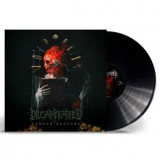



![Space Afrika - Untitled (To Describe You) [OST]](https://www.deejay.de/images/l/2/7/977627.jpg)