The first thing that strikes you is the rhythm. The Gossip have been making punks dance since they debuted 5 years ago, long before dance punk existed. Soulful and jagged, you can hear everything from Dischord to Motown in Brace's playing. Now, with the addition of new drummer Hannah Blilie (Shoplifting, ex-Chromatics) they have a new thundering beat for the kids to dance to on the corners and in the clubs. The next thing that smacks you is Beth's voice, all the guttural blues of the South is in that inimitable instrument. It resonates with the confidence that is in her lyrics asking people to hold on just a little bit longer, re-assuring the youth that there are others out there, and spitting in the face of all who say otherwise! "Standing in the Way of Control", their third album, was recorded by Guy Picciotto (Fugazi) at Seattle's Bear Creek. From heartbreakers like "Coal to Diamonds" to the anthemic title track, released as a single with a Le Tigre remix, the band is unafraid to put it all out there and take their audience to new places. This is the sound of a band destroying and surpassing all expectations placed on them.
Electronic music composer David Morley returns to De:tuned with the live recorded 'Fashion' EP. In the early 90s Belgian fashion designer Dirk Bikkembergs reached out to David Morley to ask if he could create a special piece of music for the Paris Fashion Week. The 'Fashion - Show' DAT tape recording radiates the energy of David's thrilling live performance and captures an exciting synergy of art and music during an era that shaped an entire generation.
Kevin Foakes (Openmind, DJ Food, Ninja Tune) created all the graphic work. Mastered by Matt Colton at Metropolis. A separate digital release will also be available at the usual digital shops. Stay tuned!
out of Stock
Last delivered 73 days ago available to reorder, subject to availability
Electronic music composer David Morley returns to De:tuned with the live recorded 'Fashion' EP. In the early 90s Belgian fashion designer Dirk Bikkembergs reached out to David Morley to ask if he could create a special piece of music for the Paris Fashion Week. The 'Fashion - Show' DAT tape recording radiates the energy of David's thrilling live performance and captures an exciting synergy of art and music during an era that shaped an entire generation.
Kevin Foakes (Openmind, DJ Food, Ninja Tune) created all the graphic work. Mastered by Matt Colton at Metropolis. A separate digital release will also be available at the usual digital shops. Stay tuned!
out of Stock
Last delivered 22 months ago available to reorder, subject to availability
Tim Burton’s 2005 adaptation of Roald Dahl’s classic children’s book was conceived as long ago as 1991 and was in development for several years before Burton was involved in the production. He immediately brought regular collaborators Johnny Depp and Danny Elfman aboard.
Charlie and the Chocolate Factory represents the first time since The Nightmare Before Christmas that Elfman contributed to a film score using written songs and his vocals. The film was released to critical praise and was a box office success, grossing $475 million worldwide.
The wonderfully quirky melodic score and songs from one of Hollywood’s great composers harks back to Edward Scissorhands, Burtons’ and Elfman’s most personal work, and is a return to the composer’s “vintage” sound from the late 1980s and early 1990s.
First released on vinyl in 2015, this latest edition brings the popular soundtrack back to vinyl on Marshmallow Pink and Chocolate Brown Vinyl.
“It was more fun than I ever had working on a movie. It was so crazy and doing all the vocals was so much fun. I found myself falling into voices, singing vocal mannerisms. I was having such a gas.”
- Danny Elfman
When Man Man released its last album, "Dream Hunting in the Valley of the In Between," frontman Honus Honus (née Ryan Kattner) was in a state of unrest, oscillating between hope and cynicism. Perhaps fittingly, the album dropped during the pandemic, a time at which we could all relate. But, much like that bizarre turn of events, the ennui now seems so distant to Man Man. A revived sense of purpose washes through Man Man's new album, Carrot on Strings, radiating a mix of calm and confidence. Kattner always embodied a wild-man pied-piper vibe: his melodic, unhinged art-rock was at once intriguing and angsty. He was so alluringly creative that you went along with it, even if you were never sure where Man Man would take you. Carrot on Strings is no less inventive, but its ethos is radical in context of the band's two-decade career. "When I was younger, I would feed off of chaos. I would, you know, be upset and get drunk and smash chairs," Kattner explains. "Now those chairs are in my head: It's less of an outward projection, more of an interior monologue." The name "Carrot on Strings" came to Kattner while experimenting with the sound of someone munching on the vegetable, which you can hear in the cacophonous, similarly named song. It alludes to how success always seemed to dangle uncertainly before him, often just out of reach. But listen intently and you'll hear a more content Kattner finding an uneasy peace: "Life, as far as I've known it, has always been side hustles. Would it be great if I could go into a studio and record for a year without figuring out how to finance it? Yeah, it would be," he says. "But ultimately, I need to keep making music because art is an extension of my psyche. It's how I have learned to translate the palpitations of my heart. Simply put, I'd go insane without it." Growing up as a multiracial Hapa kid (half Filipino, half white) with a father in the U.S. Air Force, Kattner lived an itinerant childhood that included a few pivotal years in Germany, where he honed in on an appreciation for out there German cinema and art. His film obsessions and screenwriting background were crucial to Carrot on Strings. The album nods to the films of Werner Herzog and Rainer Werner Fassbinder as much as Italo-disco, Randy Newman, goth rock, and avant pop. (Kattner continues to work in the film industry with an acting role in the upcoming horror-comedy movie Destroy All Neighbors, for which he also served as composer; music supervising season 1 & 2 of the Interview With The Vampire AMC TV series; and shopping around, with director Matthew Goodhue, a script he wrote that he describes as a Wim Wenders road movie on acid.) In a bid to not overthink anything - his last album took seven years to make - he recorded the bulk of Carrot On Strings in five days in Mant Sounds studio in Glassell Park, Los Angeles with "very chill" producer Matt Schuessler, who had worked on Man Man's cover of Neu!'s "Super" for the seminal Krautrock band's box set. The resulting album represents a newfound sense of self for Kattner, who finds himself inspired and at peace both personally and artistically in ways that eluded him for most of his first 15 years playing music. When, on Carrot On Strings, you hear Kattner croon humbly, or sing of the tension between his outsize stage persona and the thoughtful, soulful guy he actually is, you're hearing Kattner liberate himself. "I first got into music to escape from myself," he says. "And now, it sounds so corny, but I have zero doubt that music ended up saving my life."
As part of the series - Blockhead presents his new album, Luminous Rubble, where the artist dives deep into KPM’s iconic music and sound design library. Blockhead has released 15 albums over the past 15 years and is regarded as one of the modern masters of instrumental hip-hop. It’s a producer’s dream: Being given access to a vast library of material to construct something completely new and exciting out of all of it and when Blockhead’s at the controls, the results are a listener’s paradise, too. The New York City-based hip-hop production legend’s Luminous Rubble is the latest missive in a particularly busy period for the underground hip-hop veteran, who’s spent the last decades lending his considerable talents to work from artists like Armand Hammer, billy woods, Murs, and Open Mike Eagle; in 2021, he released the critically acclaimed collab LP Garbology with rap legend and longtime collaborator Aesop Rock, just last year he unleashed his twelfth solo album, The Aux. “For me, as a producer who uses samples, there’s nothing better than free rein. That was so exciting for me. Their vault is the one I’m most familiar with,” he says with a laugh. “Back when I used to go record shopping a lot, I would pretty much buy any KPM record on sight. They were always a huge find at record stores. So to be able to tap into these records with no limitations was really nice. Having no boundaries can be overwhelming when it comes to the creative process. Working with these samples forced me to find middle ground in cases where I’d typically just walk away and look elsewhere.” After hearing Luminous Rubble, you’ll be happy he stuck around.
"It seemed that if I didn’t somehow repeat the process of greatness, and do so immediately, multiple times away to satisfy playlist and binge watch culture, then I “wasn’t shit”. After a while I was like “nah this doesn’t feel good,… I don’t know if I am finding joy in this”. I would record songs and not release them, obsess over sessions recorded in my home with 30 takes of vocals and wake up only to delete them. When it began to feel right I found solace in an epiphany that I was not obligated to operate at any other wavelength. I am moving on a different type of time, and that doesn’t expire." -Cavalier
For heads of a certain time period of NYC hip-hop, Brooklyn born, New Orleans-based rapper and songwriter, Cavalier was the one that got away. The outrageously talented artist whose name and reputation preceded him everywhere you went in the scene. The rapper who everyone knew was so dope that he had to blow, but who never seemed concerned with any of that. The pretty boy draped in Polo who stole every live show with a feather in his hair and a mouth full of gold fronts. The cat so dedicated to his own independence that even indie labels stopped trying to sign him and projects came when they came, but when they came they were undeniable.
Cavalier was THAT guy for a lot of us; a silver-tongued philosopher with an eye for the poignant details of black life and a delivery as effortless as a young Ken Griffey’s swing. All that said, it never really felt like Cav had that moment in the spotlight that we always assumed was coming. After chiseling away through headier cult corners of the NYC hip-hop scene Cavalier was recognized for his memorable co-pilot to Quelle Chris’ 2013 Mello Music debut, Niggas Is Men. The critically acclaimed LP helped propel Quelle Chris into the forefront of indie hip-hop (and also happened to be the first production credits for Messiah Muzik). Cav followed up with his first full length, Chief, which sports a notable Raekwon feature but also early work from producers like Ohbliv and Tall Black Guy. A relocation to New Orleans and partnership with producer/vocalist Iman Omari yielded two more projects: 2015’s Lemonade EP and Private Stock in 2018. Great records all; eagerly sought by collectors and signal boosted by influential media like OkayPlayer, Solange’s Saint Heron, and Pitchfork. Cavalier’s bonafides have never been in question, but his new album Different Type Time feels like a revelation—a sonic suspension bridge between his rich history and the artform’s future.
Different Type Time doesn’t sound like the future though, its vibrations are somewhere all their own. It sounds like jazz, like a conversation overheard in roti shop, or a pool hall, or the foyer of your old building on a fall day, front door propped open with a brick. The blues is in there too, and the south—the American South, and theGlobal South, and South Brooklyn. It’s not that it sounds like the past, but you can hear everything that came before in the thick of the basslines and the yearning of the keys. Different Type Time also doesn’t sound like now, it sounds like RIGHT NOW; the bounce of the lyrics like the staccato of basketball in the park, carried on a spring breeze.
Although he doesn’t rap on DTT, Quelle Chris plays a pivotal role; producing eight songs and serving as associate producer/consigliere to Cav throughout the creative process. “There is no time wasted in explaining things when I collaborate with Quelle. He understands the universe I am in and the realities I want to create. He’s in them. And I don’t think I can envision one without him,” Cavalier explains. Messiah Muzik, Wino Willy, Ohbliv, Ahwlee, Child Actor, Fushou and several other producers round out the credits, all lending their talents to the album’s spaciously soulful sound. At the center of all these alchemies is Cavalier, nimbly dancing in and out of pockets like a sidewalk game of jumprope. Different Type Time is a masterclass in this thing we call hip-hop; daring and original, yet always standing deeply rooted in the culture.
Upchuck are experiencing a moment. The Atlanta punk collective just came off multiple tour runs with their good friend Faye Webster. Their Ty Segall-produced second album Bite The Hand That Feeds, with all its buzzsaw guitars and high-speed rippers and headbanging sludge, arrived in October. Later this year, they’ll make appearances at multiple festivals including Coachella. In the midst of relentlessly barreling ahead, the band and their label Famous Class are taking a beat to revisit how they got here. After working with Segall on Bite the Hand That Feeds, the band floated the notion that they wished they could hear what their collaborator could do with the songs on their 2022 debut album Sense Yourself. Holed up in his studio over Christmas with COVID and nothing else to do, Ty Segall began toying with Sense Yourself, sifting through folders of unlabeled stems to find the best guitar parts, emboldening the drum sound, and bringing greater clarity to KT’s vocals, all while bolstering the urgency of the band’s overall attack. With Segall’s new mix, Upchuck’s intense and righteous debut now impossibly overflows with even more fuzz and fury. In Segall, they found a kindred spirit whose studio approach made sense for just how hard they wanted this music to hit. “When we first went to record with Ty for Bite the Hand That Feeds, Mikey and I walked into the guitar room and Ty said, ‘Don’t touch the EQs.’ We looked at the amp and everything was on 10 except the master volume,” Hoff said. Previously, the band had been encouraged to capture the unvarnished sound of the studio. They’d toured with Segall’s band Fuzz, so everybody had the same goal while recording together: Capture the electricity of their intense live set. The band’s shows have a reputation for coming unglued, and there’s no greater document of that than Sense Yourself’s iconic album artwork. With no text, it’s a candid photo of a moment from a show shot on film without editing: blood streaked across KT’s face as they shout into the mic. In the middle of their EP release show, KT was in the pit as a fan started crowd surfing inside a shopping cart. A loose piece of metal near a wheel caught the singer right near the eyebrow and blood was everywhere, an instant piece of iconography snapped by probably every camera phone in the room. When Hoff revisits the message of this first album and Upchuck’s first songs, he thinks back to the year before the band even started when he and KT were hanging out. “We were sitting around talking for eight hours like ‘fuck, that's fucked up, that's fucked up.’” Upchuck became a vehicle for these five people to process how fucked up everything it is—to digest these formative hours-long conversations and put them to bludgeoning, intense rock music. The music is also fun as hell, and that’s part of the point. “There's a lot we need to do as people and a lot of things we need to fix in society but also like come on man like have your fun, wild out, have your drink,” KT says. “But be on your shit at the same time. Check your folk.”
Grönland Records veröffentlicht ein Dokument eines einzigartigen – wenn auch bisher wenig bekannten – Auftritts von BRIAN ENO, HOLGER CZUKAY & J.PETER SCHWALM, bei dem sie von Raoul Walton und Jern Atai, Mitglieder von Schwalms Band Slop Shop, begleitet wurden. Der als "High-Altitude-Food-Performance with Incidental Music by Slop Shop and Brian Eno" angekündigte Auftritt, bei dem die Teilnahme von Can-Mitbegründer Czukay vorab geheim gehalten wurde, wurde am 27. August 1998 vor der Kunst- und Ausstellungshalle der Bundesrepublik Deutschland in Bonn aufgenommen, bei der Eröffnungsparty für eine Ausstellung der Multimedia-Installation "Future Light-Lounge Proposal" von Eno. Der Titel des Albums, das auf Vinyl, CD und über alle digitalen Plattformen erscheint, leitet sich vom ungewöhnlichen Namen der Veranstaltung ab: SUSHI. ROTI. REIBEKUCHEN
Limited to 500 LPs and 500 CDs. New album from the most danceable post-punk pop band in the UK. It's like something has exploded! CRUMBS have been incubating this, their second album, for a few years now. Who knows how they kept all the energy in check. It must have been like sitting on a volcano. The songs burst out with pure pop fire, sending splinters of guitar, sharp lyrics and snatches of the catchiest backing vocals. The rhythm section (Jamie and Gem): it's like Delta 5 meeting Le Tigre in a dark alley in Leeds, fusing blindly and completely, and then forcing its way into the back entrance of a venue, sending volts through the limbs of the unwitting punters, forcing them to dance. This is TIGHT. And as the lights come on and the indie kids throw themselves around, Ruth's vocals sweetly assault their ears with anger, joy, political intelligence - and all around, Stuart's guitar, sometimes twangly-melodic like the B52s, sometimes sweet and ringing like a memory of Scars, sometimes furious and feeding back, keeps you alert and thirsty for more. These songs do NOT outstay their welcome. Starts and ends are cut hard: no pre-echo, no wistful, drawn-out regretful fade-outs. CRUMBS have imbibed the key lessons taught by The Gang Of Four and The Au Pairs: never let the energy dissipate. But there is more than anger here. The band have smuggled a pop sweetness into the disciplined shapes of their angular songs. You're Just Jealous has sharp edges, but it's generous too. The album will be available as a vinyl LP, CD, download and on streaming services. CRUMBS - a brief history. They are based in Leeds, where they are active movers in the DIY scene that currently thrives in the North of England. They recorded a Marc Riley session in 2016, released their first album (on Everything Sucks) in 2017, toured extensively in 2018 and 2019, playing at the Brudenell Social Club with Swearin' and Jeffrey Lewis, and at plenty of fests such as LaDIYfest and Specialist Subject's birthday all dayer in Bristol, A Real Cool Fest in Bradford, Mousetival in Stockton and the Cambridge Indie pop Alldayer. They spent the pandemic creating these new, tightly-wound, irresistible pop songs. These are the people in CRUMBS and these are their influences: Stuart (GUITAR) - Bauhaus, Gang of Four, Shop Assistants // Gem (DRUMS) - Beat Happening, The Raincoats, Antelope // Jamie (BASS, BACKING VOCALS) - Delta 5, ESG, Chic // Ruth (VOCALS) - The Go-Go's, Mika Miko, Paint It Black Collectively - 80s pop music
Sam Cooke’s SAR Records Story 1959-1965 gathers significant recordings of SAR Records – the label Sam Cooke co-founded, produced the majority of records for and was instrumental in operating. Groundbreaking artists such as The Soul Stirrers, Johnnie Taylor, Billy Preston, and Bobby Womack’s group The Valentinos are all featured, in addition to Sam himself. “The whole SAR Records Story is infused with Sam Cooke’s rapturous sense of how sacred gospel and sexual soul flow together, unbroken,” stated Milo Miles on NPR’s Fresh Air upon the set’s initial release almost three decades ago. In an era where black-owned labels were a rarity, Los Angeles based SAR Records was founded at almost exactly the same time as Motown, its Detroit counterpart. SAR was established in 1959 by Sam Cooke, music publisher J.W. Alexander, and S. Roy Crain, Cooke’s road manager and founder of gospel group The Soul Stirrers. The acronymous name standing for Sam Alex Roy, SAR sought to keep gospel music alive while simultaneously crossing over to pop audiences in the secular world. LPs 1 and 2 of the set focus on the former, while LPs 3 and 4 encompass the latter. From choosing talent, to writing a great number of songs, to producing, SAR was entirely the fulfillment of Cooke’s vision on a musical/creative level. The superstar singer, who had already crossed over from the gospel world himself, tirelessly coached the vocalists during SAR recording sessions, emphasizing diction. His methods are heard throughout the collection, as he is heard speaking to artists between takes. “And by Sam being there with you and just giving you that special attention, you wanted to give it to him like it was supposed to be. I think that’s what made SAR, SAR. Because he was selling himself through different artists.” – Bobby Womack. VERY LIMITED 1-2 COPIES ONLY PER SHOP
Handpicked by Paul himself, Will of The People is a carefully curated collection of 31 tracks from Weller’s extensive cornucopia of tunes that never quite made it to one of his 9 studio albums since 2002. Here is a collection which reminds us that there has always been a parallel narrative to the main recorded output of Paul’s albums and singles. The B-Side, and the remix, is a space in which to explore, experiment, or to flex a different set of artistic muscles.
The story begins back in the autumn of 2003, when the Fly On The Wall 3LP & 3CD collection brought together a wealth of Paul Weller solo recordings that stretched back to 1991. The B-sides, 12” EP tracks, single remixes and ‘live’ recordings featured all had one thing in common, namely that they hadn’t been included on any of his hugely successful solo albums. Furthermore, in many instances, they’d become highly sought after in their original formats and were fetching significant sums from fans and collectors. Will Of The People follows up Fly On The Wall and takes the listener through a similar mix of rarities, this time spanning the period 2002 to 2021.
From covers to eclectic remixes, Will Of The People delivers a scintillating array of songs which skirt across many genres. Here you will find such gems as Paul’s cover of The Beatle’s “Birthday”, released to celebrate Macca’s 70th, and the sparkling disco-ball banger remix of Cosmic Fringes by none other than the Pet Shop Boys. It also includes Paul’s first foray into film soundtracks with the sublime “Ballad Of Jimmy McCabe” from the film Jawbone. Scattered across the tracks are appearances from the likes of Primal Scream, Simon Tong & Graham Coxon.
Will Of The People is released on triple vinyl and 3CD. The album features sleeve notes written by writer and broadcaster John Wilson.
out of Stock
Last delivered 2 years ago available to reorder, subject to availability
1000 copies worldwide. Deluxe freshly remastered edition of Royal Trux's seminal debut album, originally released on their own Royal Records label in 1988. Fierce and uncompromising, this long overdue re-issue comes with rejuvenated artwork and brand-new liner notes. Formed in 1987 by Neil Hagerty (vocals, guitar), formerly of Pussy Galore, and his then girlfriend Jennifer Herrema (vocals), Royal Trux successfully dismantled alternative rock with a discordant guitar and time signatures akin to Miles Davis on an unholy mission circa 'Bitches Brew' or Manson strumming in his prison cell. Often described as a garage rock act, Royal Trux were far more complex, an unravelling surge of ideas, influences, mangled theories and out-there meandering, setting the blueprint for lo-fi indie amid their intricate reflections on their self-destructive lifestyle. "Their music was wild and their lives even wilder." The Guardian // "A chop-shop approach to pop history." Pitchfork
In many ways, the music of Writhing Squares could have only originated in Philadelphia; the city itself a microcosm of creatives, go-getters, freaks & weirdos that have coalesced into a supportive & boundary-pushing crew. Former Purling Hiss bassist Daniel Provenzano & Ecstatic Vision sax-player & vocalist Kevin Nickles' first musical missive was shot forth in 2013 (the self-released CDR "Live In Space") & various singles, split releases, albums (and a double-album) later we arrive at the duo's fourth full-length "Mythology", their third for Chicago-based Trouble In Mind Records. "Mythology" picks up the pieces left shattered by their previous double-album "Chart For The Solution" and reconnects the broken shards together like Kintsugi, the ancient Japanese technique for mending broken ceramics, infusing the breaks with powdered gold. The Squares themselves are like mad-scientists, taking the ruined detritus populating junk shops & surplus outlets & constructing their own sonic laboratories in their New Jersey basements to record, mix & tweak "Mythology"s eight tracks. Their new location allowed the band to regroup, reassess & reconstruct their sound from the ground up, shearing away the cosmic excess of 2021's "Chart For The Solution" to a sharper point. Tracks like `Barbarians' & `LEM' are classic Squares; brutal, aggressive, unwavering assault of Motorhead/Stooges-inflected sci-fi punk scree, while others like `Chromatophage's mutant funk & `Cerberus's techno-slink owe a serious debt to electric-era Miles Davis or Herbie Hancock & show that the group has more to offer than bludgeoning you with sonic force. Provenzano's bass & electronics are like a tank rolling across the terrain - a gnarly construct of Hawkwind-ian headiness & `Vincebus Eruptum's snarl - uncaring of what gets in the way. Nickles' brass vacillates between Stooges-influenced sleaze, jazzy no-wave stabs, & cacophonous sonic storms, strafing the listener into oblivion. The duo are joined on "Mythology" by drummer John Schoemaker - who contributed drums to "Chart For The Solution"s epic closing track `Epilogue' - whose percussive pulse adds an organic swing to The Square's sonics, particularly on album closer "The Damned Thing"s cosmic strut. "Mythology" tackles a multitude of themes, from fantastical tales of hellhound `Cerberus' or the comic-inspired "Eternity " to `Chromatophage's colorful/evil yarn about animals that eat colors (or a Magic: The Gathering card) to the true-life influenced `Acid Rain' that deals with the uncertainty of consuming drinking water after a chemical spill in the Delaware River. Elsewhere, `Ferrell' is an homage to the late, great Ferrell "Pharaoh" Sanders & `The Damned Thing' by a short horror story penned by Ambrose Bierce about an animal whose coloring is invisible to the naked eye. Writhing Squares are in a transitional phase, mapping out a new sonic mythology for themselves after crossing the event horizon into unknown space. "Mythology" is streaming on most DSPs & released on black vinyl & limited fluorescent green vinyl (while supplies last) on April 26th, 2024.
In many ways, the music of Writhing Squares could have only originated in Philadelphia; the city itself a microcosm of creatives, go-getters, freaks & weirdos that have coalesced into a supportive & boundary-pushing crew. Former Purling Hiss bassist Daniel Provenzano & Ecstatic Vision sax-player & vocalist Kevin Nickles' first musical missive was shot forth in 2013 (the self-released CDR "Live In Space") & various singles, split releases, albums (and a double-album) later we arrive at the duo's fourth full-length "Mythology", their third for Chicago-based Trouble In Mind Records. "Mythology" picks up the pieces left shattered by their previous double-album "Chart For The Solution" and reconnects the broken shards together like Kintsugi, the ancient Japanese technique for mending broken ceramics, infusing the breaks with powdered gold. The Squares themselves are like mad-scientists, taking the ruined detritus populating junk shops & surplus outlets & constructing their own sonic laboratories in their New Jersey basements to record, mix & tweak "Mythology"s eight tracks. Their new location allowed the band to regroup, reassess & reconstruct their sound from the ground up, shearing away the cosmic excess of 2021's "Chart For The Solution" to a sharper point. Tracks like `Barbarians' & `LEM' are classic Squares; brutal, aggressive, unwavering assault of Motorhead/Stooges-inflected sci-fi punk scree, while others like `Chromatophage's mutant funk & `Cerberus's techno-slink owe a serious debt to electric-era Miles Davis or Herbie Hancock & show that the group has more to offer than bludgeoning you with sonic force. Provenzano's bass & electronics are like a tank rolling across the terrain - a gnarly construct of Hawkwind-ian headiness & `Vincebus Eruptum's snarl - uncaring of what gets in the way. Nickles' brass vacillates between Stooges-influenced sleaze, jazzy no-wave stabs, & cacophonous sonic storms, strafing the listener into oblivion. The duo are joined on "Mythology" by drummer John Schoemaker - who contributed drums to "Chart For The Solution"s epic closing track `Epilogue' - whose percussive pulse adds an organic swing to The Square's sonics, particularly on album closer "The Damned Thing"s cosmic strut. "Mythology" tackles a multitude of themes, from fantastical tales of hellhound `Cerberus' or the comic-inspired "Eternity " to `Chromatophage's colorful/evil yarn about animals that eat colors (or a Magic: The Gathering card) to the true-life influenced `Acid Rain' that deals with the uncertainty of consuming drinking water after a chemical spill in the Delaware River. Elsewhere, `Ferrell' is an homage to the late, great Ferrell "Pharaoh" Sanders & `The Damned Thing' by a short horror story penned by Ambrose Bierce about an animal whose coloring is invisible to the naked eye. Writhing Squares are in a transitional phase, mapping out a new sonic mythology for themselves after crossing the event horizon into unknown space. "Mythology" is streaming on most DSPs & released on black vinyl & limited fluorescent green vinyl (while supplies last) on April 26th, 2024.
Reissue of early Japanese house outing by Junichi Soma, Shuji Wada and Katsuya Sayo. Comes with insert with liner notes.
All musical movements require a spark to set them alight; in the case of Japanese house music, that spark was provided by the forward-thinking resident DJs of The Bank in Roppongi, Tokyo. In 1989, to celebrate the ground-breaking club’s first birthday, the venue released a 12” EP featuring first-time productions from three of its DJs, Junichi Soma, Shuji Wada and Strong Katsuya AKS Katsuya Sayo.
Widely considered to be one of the first ever EP of house music produced in Japan, 1st Unit was never officially released. Instead, 500 of the 1000 copies pressed were given away at The Bank’s first birthday party, with the rest initially being sold not in local record stores, but rather the venue’s own in-house shop. Three decades on, the 12” is finally set to get its first worldwide release via Rush Hour’s Store JPN Series.
The record has its roots in The Bank’s willingness to give its ever-changing roster of DJs a free hand to play what they liked – at the time a rarity in Tokyo nightclubs, whose musical offerings usually revolved around strictly defined playlists. At The Bank in 1989, it was not only common to hear European body music and the kind of post-disco New York productions associated with Larry Levan’s sets at the Paradise Garage, but also acid house – something not offered at the time by other clubs in the city.
This cutting-edge blend of sounds, combined with the venue’s unique decor (it was modeled on the inside of a London bank, complete with a cashier’s window to take entrance fees), made The Bank a go-to spot for young party-goers, celebrities and forward-thinking Japanese musicians (Ryuichi Sakamoto was reportedly a weekly visitor).
When it came to celebrating the club’s birthday by cutting a unique record, it made sense for The Bank’s owners to turn to three of their most exciting resident DJs, who were assisted by Heigo Tani and Jun Ebi. The collective name, 1st Unit, was chosen to reflect the fact that all three resident DJs were debutants with no previous studio experience.
As this reissue proves, the music remains timeless, magical, and authentic to the sound of American house productions of the period – albeit with occasional twists,. Katsuya Sano’s EP opener, ‘I Need Love’, sounds like a twist on Larry Heard productions of the period – all jacking TR-909 drums, undulating analogue bass, dreamy JUNO synthesizer chords and evocative vocal samples.
The influence of Chicago acid house is also evident on Junichi Souma’s ‘Ubnormal Life’, whose unusual title contains what he says was an intentional misspelling. Driven forwards by restless drum machine handclaps, sweet chords and rising and falling melodic motifs, the track is an energetic and uplifting treat.
Perhaps the most influential of the three tracks at the time – within Japan at least – was Shuji Wada’s similarly misspelled ‘Endless Load’. Deeper and more melodic with a more expansive arrangement, the track’s combination of marimba-style lead lines, tribal drum patterns, dreamy chords and jazz-funk influenced bass offered a loose blueprint for the more successful and better-known Japanese deep house tracks that followed.
out of Stock
Last delivered 14 months ago available to reorder, subject to availability
Khruangbin, Bicep and Elkka cover issue 4 of Disco Pogo
Three covers this time with huge features on the transcendental Khruangbin, the phenomenal Bicep and the incredible Elkka.
Plus 25 Years of The Social, How To Run A Record Shop With Phonica, DFA in photos, the pivotal year of 1994, Slam on how they made Positive Education, crate digging with Nightmares on Wax, Krust on where he is now and Richard Norris on has he ever ridden a horse!
Also features on Beat Hotel Ibiza / Bolis Pupul / Charlie Dark / Flowered Up / Julie Pavon / Lindstrøm / Kate Bush / Mildlife / Miss Kittin / Optimo / Paranoid London / Pete Blaker / Robert Hood and much more.
204 pages of quality music journalism by the world’s best music writers plus beautiful photography and design in a quality print magazine.
The Good the Bad and the Zugly have been delivering premium class, antiquated rock for almost 15 years straight. They’ve always been the real deal. True heroes of the Armageddon. Whenever responsibility came knocking at the door they stuck to their guns and kept living the rock life to the fullest. Their contemptuous look at everything and
everyone who doesn’t fit into their world view has always been prominent in their sound, and their musical and lyrical expression has stayed uncompromised.
No one has yet dared to confront their satirical know-it-all attitude, but recently water has started to seep through their seemingly waterproof façade. Band members have on several occasions been observed at the Oslo’s local shopping malls wearing reading glasses, down jackets, and sensible footwear, pushing strollers filled with blaring,
chocolate devouring children. With wistful eyes they’re seen pushing strollers through to the suburbs, far away from dirty dens credible dark nooks and shitty toilets.
To mend this rapidly declining rock image they´ve decided to release what they consider to be their worst album so far: A collection of B-songs that have never made the list when assembling the list of Norwegian Grammy nominated classics. This upcoming album is
nothing less of a wonderful bouquet of contemptuous elegies who haven't yet found a place on the big, dark web. Truth be told the opinionated armor GBZ has been hiding behind was mostly for show, they’ve always beat around the bush – or as we say in Norwegian: had a walk around the porrid
The Good the Bad and the Zugly have been delivering premium class, antiquated rock for almost 15 years straight. They’ve always been the real deal. True heroes of the Armageddon. Whenever responsibility came knocking at the door they stuck to their guns and kept living the rock life to the fullest. Their contemptuous look at everything and
everyone who doesn’t fit into their world view has always been prominent in their sound, and their musical and lyrical expression has stayed uncompromised.
No one has yet dared to confront their satirical know-it-all attitude, but recently water has started to seep through their seemingly waterproof façade. Band members have on several occasions been observed at the Oslo’s local shopping malls wearing reading glasses, down jackets, and sensible footwear, pushing strollers filled with blaring,
chocolate devouring children. With wistful eyes they’re seen pushing strollers through to the suburbs, far away from dirty dens credible dark nooks and shitty toilets.
To mend this rapidly declining rock image they´ve decided to release what they consider to be their worst album so far: A collection of B-songs that have never made the list when assembling the list of Norwegian Grammy nominated classics. This upcoming album is
nothing less of a wonderful bouquet of contemptuous elegies who haven't yet found a place on the big, dark web. Truth be told the opinionated armor GBZ has been hiding behind was mostly for show, they’ve always beat around the bush – or as we say in Norwegian: had a walk around the porrid
This is the first re-release on 7inch vinyl single of the early Reggae classic “She Caught The Train” by Ray Martell released in 1970 on the Trojan sublabel Joe in the U.K. and later covered by UB 40 in 1983. This original song, a huge hit, has featured on many compilations but has never been repressed as a single, until now…
It was initially released with the track “Tea House From Emperor Roscoe” by Dice The boss on the B side (which we will also release separately on the 22nd of March 2024). On this release, we chose to showcase a super rare Ray Martell song, the gorgeous “Cora” initially released on Attack in 1970.
About Joe Mansano:
“She Caught The Train” was credited to Joe Mansano, real name Joel Mansano who also produced the song. Joel was a Trinidadian who moved to London in 1963. He was a record shop seller, song writer and producer and became heavily involved in the early reggae era producing and writing tracks for several Jamaican artists, enough for Trojan to dedicate a label to him: the “Joe” label aimed at the emerging Skinheads market. He also owned a shop the Joe's Record Centre in Brixton and recorded two handfuls of singles under the name Joe The boss…
About Ray Martell:
“Cora” is credited to Ray Martell himself and was produced by Philligree, an alias for Graham Goodall and Phil Chen. The Philligree duo produced about 20 very interesting singles on a variety of labels with artist such as Desmond Dekker, Millie, Pat Sandy and Ray Martell among others between 1969 and 1970. Although “She Caught The Train” is indeed a famous track, little is known about Ray Martell aka Martel Robinson. Ray was born in St Catherine parish in Jamaica in September 1943. He started to sing at school and church and later on moved to U.K. where he kept on singing in clubs in Coventry and Birmingham … He eventually moved to London where he recorded 4 great tracks in 1970 “She Caught The Train” on Joe, “Cora” and “Loving Lover” on Attack, and “Lover” on Trojan, the last three being written by himself. In 1973 he started his own label “Ray” featuring his own productions but these were unfortunately not as interesting as his previous releases…
out of Stock
Last delivered 2 years ago available to reorder, subject to availability
A Jazz Dance Favourite that Jazz Room Records Head Honcho Paul Murphy was hepped to by Brownswood and 6Music Jazz Supremo Gilles Peterson at the 20th Birthday Bash of London's most Underground of Clubs: Shiftless Shuffle.
Murphy: "I'd quite forgotten all about it, but when I saw the reaction on the dancefloor it was "Mental Note Time, get on the case for a full investigation and let's see some Vinyl re-issue action!"
The head of the original Danish Label, Pick Up Records, later reminded Paul that he was selling the originals in his original Jazz Record Shop "Fusion Records" when the original was released and that he, Peter Littauer, had actually delivered them personally on a trip to London. Synergy in action!
The music is a mixture of 100mph Latin Jazz (Girl With Three Faces/747 To Rio/From Dusk Towards Dawn) and Funky Rhodes driven workouts (Travelling/Circles In The Air), plus the vocal pyrotechnics of Hawaiian singer Lei Aloha Moe who guested on two of the tracks.
out of Stock
Last delivered 2 years ago available to reorder, subject to availability
A 2LP compilation featuring 42 of the world’s most supreme Northern Soul anthems.
An essential collection for any fan of great timeless music, this compilation celebrates the dance movement that emerged in Northern England and the Midlands in the early 1970s. Be transported back to the swinging sounds of Northern Soul, featuring the soulful classics from Gloria Jones, The Supremes, Smokey Robinson & The Miracles, Dusty Springfield and Frankie Valli & the Four Seasons.
"For a long time, I'd come across these discs without really understanding what connected them, apart from a button and that famous logo designed by René Dessirier. Then, with a little more digging, I discovered the "self-production" link. For choirs, schools, folk singers, young pop groups, popular homes and even great composers who engraved unique copies of certain recording sessions...
The French equivalent of the English "Derby Service", the Kiosque d'Orphée, formerly at 7 Rue Grégoire de Tours in the 6th arrondissement, was taken over by Georges Batard in 1967 and moved to 20 Rue des Tournelles in the 4th arrondissement of Paris. The adventure lasted until 1991. Georges Batard was a sound engineer who used a Neumann tube engraver to engrave acetates from the tapes he received, before printing the precious vinyls in the press factories of the day, where he was able to produce very small runs of between 50 and 500 copies.
Of course, there were other structures for releasing his records, such as Voxigrave or, later, FLVM, but none of them had so many records in their catalog. Le Kiosque d'Orphée was neither a label nor a publisher, but a structure that allowed you to press your own vinyl, at a time when it was quite an adventure to get your first 45 rpm or 33 rpm album released!
Georges Batard was described as passionate and conscientious. His son, bassist Didier Batard, wrote of him:
"Georges was passionate about recording and reproducing the stereo sound of his great passion, music. He paid close attention to distortion rates, signal-to-noise ratios, response curves, rise times and other damping factors in audio equipment. He was looking for the exact reproduction of concert hall sound in his living room (with the same sound level, if possible...). In the late '50s/early '60s, he found other sound enthusiasts in AFDERS (Association Française pour le Développement de l'Enregistrement et de la Reproduction Sonores). He became its honorary president. Every Saturday afternoon, its members met to test au- dio equipment. Their opinions were published in the monthly Revue du Son.
All you had to do was send in your tapes and choose the number of record copies you'd like to take home with you, so you could finally share your creations and, in a way, exist. You could opt for a generic sleeve, available in several colors, directly customizable with your name and credits, or you could design your dream sleeve yourself in your living room or at a printer's.
This "Do It Yourself" temple gave birth to some superb pouches. Stencilled, hand-written, illustrated with paintings, drawings, illustrations by friends or girlfriends of the time, photo prints hastily stuck in the middle of a blank, white sleeve, on which the traces of time would leave their imprints, so that collectors and the curious would come and buy them decades later, with the promise of a musical discovery, unfortunately not always fulfilled...
What most of these records have in common is the youth of their songwriters, whether or not they've had a career. Stories of buddies, of getting by and dreams of glory made up this catalog. Most of them were amateur productions, both in terms of the level of the musicians and the quality of the recordings, made on a two-track or, the ultimate luxury, a 4-track in a teenager's bedroom or parents' living room.
It was the beginning of the home studio, thanks to the advent of the Revox portable tape recorder. A bit of a shaky DIY system, but, in return, the luxury of setting no limits: one-sided tracks, no outside censorship, no artistic director, no manager, no Barclay or EMI/Pathé Marconi logos...
When you finally had your own record, you could give it away or sell it to friends, family or after concerts. You could also drop it off at the nearest record shop, with undisguised pride.
It was also a calling card that could be sent to radio stations or music labels, in the hope of launching a career...
Many of the protagonists in this story tried to sign with labels, but in those days, bridges were not so easy to build between one's hometown, or even one's village, and the major or more specialized label that might have released these records. At the time, the advertisements published in the press by the Kiosque d'Orphée opened up the field of possibilities for provincial composers. It was now possible to make their own record, without having to go through the process of signing with a label.
Some of the composers who have gone on to make a career have used this channel to release their first record or parallel projects (Claude Engel, Dominique A, Andy Emler, Michel Deneuve, Claude Mairet, Mick Piellard, Tristan Mu- rail...) and sometimes even single or very limited pressings of work or promotional copies (Bernard Parmegiani, Jef Gilson...).
This album is the conclusion of a long investigation, begun six years ago. It took a long time to find the records, scattered all over the place, in the homes of collectors and sometimes the musicians themselves, and then to listen to them, sometimes painstakingly, to unearth these moments of grace.
From this work, 23 tracks remain, but there are dozens of others that could have been included, so we had to choose, and the choice had to be as universal as possible. This selection is obviously not objective, but I hope you'll like it.
For a few years Leo Robinson was the sort of hidden secret you sometimes come across in local music scenes. First in Manchester and now in Glasgow, he’d pop up regularly on DIY bills or as local support to a touring act, quietly blowing them off stage with his rich baritone vocal and homespun lo-fi tales of folklore and animism. With The Temple – his debut on PRAH Recordings – he looks set to cross over from being a cult concern.
“There's a spectrum within the album between fully mythologising or symbolising my lived experience, and just stating it in very matter of fact terms - that push and pull between the need to abstract and the need to break through the abstraction and have an honest moment with oneself” he explains. “This is one of the themes of the album as well as part of the process. The aim was to take all these anecdotal or symbolic elements and merge them into one narrative and one world, in a way that you can find your way through the record as if it were a landscape or language with its own logic.”
The record takes on a pastoral, slightly baroque nature that Robinson partly attributes to a friend screening a lot of ‘70s BBC material in his book shop that they used to hang out at. There are also elements of jazz, flickering to life in “The Spring”’s piano-led finale and coda.
Thematically, Robinson likens it to a Jungian ‘Hero's Journey’, his voice possessing a character who goes through several defined stages of consciousness. From conception and the beginning of an earthly life, the first half of the album recognises the development of the protagonist’s narrative and identity, before “The Pink Light”’s freeform departure from the hitherto more song-based suite devastatingly shatters this. The second half of the album then sees the protagonist witness “the uncontainable” water; learning that true divinity lies not in the individual self or lofty notions of gods and temples, but in the unremarkable nettles, insects and dogs on the roadside riverbank - referenced on tracks “The Cormorant” and “The Spring”.
Although now residing north of the border, The Temple was written while Robinson was finding his feet in Manchester, having moved there to go to art school as a teenager (as a visual artist, he has exhibited at the Tiwani Contemporary in London and Cardiff’s Chapter Arts Centre). As a result, many of the tracks bear out the shadows of his experiences in the northern city – at their most visible and explicit on the beautifully fragile storytelling of “The Pavement”. Written the day after the Manchester Arena Bombings, it recalls Robinson waking up to go to work on a hot summer’s day to discover that his street had been blocked off for terrorism investigations; it then progresses through the rest of his day, amidst the grimly surreal aftermath of the previous night.
Having written the chords, melodies and lyrics to the album, Robinson fleshed out the tunes by scoring out parts for the additional instrumentation, but it was only when a friend sent a demo to PRAH that he was able to fund its full recording. Guitars, vocals, piano and French Horn (the latter recorded by Lauren Reeve-Rawlings) were put down at Green Door Studios in Glasgow. Microphones were placed around the room and the sound of the musicians stepping on creaky floorboards and opening creaky doors were left audible to further the record’s live feel. The harpsichord heard on “The Serpent”, meanwhile, came from University of Glasgow lecturer David McGuinness. Strings were then recorded at PRAH Studios by Francesca Ter-Berg and Raven Bush, the Social Singing Choir adding their choral vocals to “Temple II”.
The result is an album that feels both luscious and yet intimately raw; as grand as Richard Dawson at his most panoramic but containing the rough edges and skeletal looseness of a Calvin Johnson work. At times Robinson lyrically moves towards the surreal, but ultimately this is a record grounded in reality; a true showcase of Robinson’s skill as a lyricist and songwriter.
First Word Records is proud to bring you 'The Essance' - the classic debut album by Essa (formerly known as Yungun), originally released in 2004, now released on vinyl & digital for the first time, 20 years on!
A lyricist, lawyer and a Londoner, legendary MC Essa has earned praise over the years from artists such as Nas and Mark Ronson, as well as performing and recording with legends like De La Soul, Wu-Tang Clan, Guru, Slum Village and Pharoahe Monch.
This 15-track album is considered one of the greats to emerge during UK Hip Hop's "golden era"; a vibrant time for the genre when artists such as Ty, Jehst, Roots Manuva, Klashnekoff, Skinnyman, Task Force, Doc Brown and Foreign Beggars were garnering huge fanbases, and an eco-system of shops like Deal Real, club nights like Kung Fu, labels like Lowlife, and stations like Itch FM were prevalent, while BBC 1Xtra was a mere infant.
'The Essance' includes production and features from luminaries such as Harry Love, Mr Thing, Lewis Parker, Kyza, Devise & Ben Grymm, to name a few.
Esteemed author Musa Okwonga says on the reissue liner notes "the most startling thing about 'The Essance' was its range. Yungun (Essa) was one of the few MCs who could perfectly walk the paths of hope and melancholy with equal ease, whose artist name belied the wisdom of his lyrics. Beyond that, his delivery was supremely self-assured, filled with a swagger he could always justify.
Yungun's gifts also extended to the stage, where he was one of the best young actors that many of his contemporaries had seen, and to languages, which saw him writing and rhyming in Spanish with a notable flourish. He was also someone who constantly walked between two worlds, excelling in one of the country's most competitive academic environments during the day and then delivering a soaring radio set by night. Raised in a vibrant vein of North London, endlessly curious about the world around him, Yungun's fine ear for music and passion for the variety of life made him someone who could reach all audiences.
'The Essance' is a beautifully-woven meditation on the human condition, one which takes you from the dancefloor to the summer afternoon barbecue to the bathroom mirror; yet it is also the opening statement of a unique career."
In the words of Essa himself "my key goal for this album was to span so many moods and styles that I couldn't be categorised, leaving me free to then go in whatever direction I chose. I was almost too successful with this – I would later struggle to pin down my own identity, both on and off the mic, as a rapper slash lawyer, of mixed-heritage, blessed to be able to enter many circles but feeling truly at home in none. As I write this, twenty years (plus a marriage and several children) on, I finally feel more at peace with being undefinable, and am getting better at bringing my full, authentic self into as many aspects of life as I can. I am grateful to be able to look both back and forward, with equal passion."
'The Essance' was followed with a collaborative album with DJ Mr Thing ('Grown Man Business'), then some years later on First Word with 'The Misadventures of a Middle Man' in 2014. There's also a forthcoming project in the works, due for release Summer 2024 with all-new material produced by Pitch 92. Both these releases also coincide with the 20th anniversary of the First Word label (named "label of the year" at the 2019 Worldwide Awards).
A timeless piece of work, 'The Essance' is true-skool boom bap through and through that stands up two full decades later, from the ethereal anthem 'Liquid Love', to the uptempo bounce of 'Dancing Shoes', to the grit of 'The Big Idea', to the thought provoking 'What Eye See Pt.2', to bangers like 'Push' or 'Spit Fire', this is an essential addition to the collection of any discerning hip hop head.
'The Essance' is due to be released on vinyl & digital worldwide on February 23rd 2024.
The Rhythm Method veröffentlichten 2019 ihr Debütalbum und kündigen heute, vier Jahre später, den Nachfolger Peachy an, der am 8. März auf Moshi Moshi Records erscheint. Publikationen wie The Guardian, Dazed, Dork, i-D, Loud + Quiet haben die Band schon früh gelobt und sie mit Künstlern wie Pet Shop Boys und Squeeze verglichen. The Rhythm Method kehren nun mit einem völlig anderen Sound zurück, und, wie sie sagen, mit einem "zusammenhängenden Meisterwerk". Das neue Album, das von Bill Ryder-Jones produziert wurde und an dem auch Aoife Power von Whenyoung mitwirkt, ist das erste Mal, dass sie Musik in einem richtigen Studio aufgenommen haben. Es ist von dem Wunsch beeinflusst, das eigene Potenzial voll auszuschöpfen und sicherzustellen, „dass man es auf dem Sterbebett nicht bereut", so The Rhythm Method, die von Mike Skinner bis Michaela Coel gefeiert werden.
Über die neue Single „Have A Go Heroes“ sagt das Duo:
"Nach einem Gig in Hull im Jahr 2018 hatte Rowan einen psychotischen Anfall. Pech gehabt. Er machte (entgegen allen medizinischen Ratschlägen) mit einer kompletten UK-Tournee weiter. 'Have A Go Heroes' ist das Ergebnis davon.
Es ist eine Collage der britischen Regionallandschaft: Tankstellen, einsame Hügel, euphorische und mörderische Gedanken in einem."
MOFAK, the funkiest producer from the south of France (Marseille), is back with a double Modern Boogie single just the way we like it!
A side: the bass of the single sets the tone over a fat beat featuring the vocals of Saïd (IAM) and Elois Scroggins! The vocoder gives us a real treat, and the chorus takes it all in and sets the dancefloor alight!
B Side : Big beats and groovy bass are the recipe for the intro, then AprilSoul takes it all in when the synthesizers kick in! Mofak on vocoder lifts the track, then the chorus kicks in and keeps us on the edge of our seats until the awesome guitar chorus forces us to play Air Guitare ! !
With this double single, Mofak confirms his Modern Boogie level of production and makes it clear that we'll have to keep a close eye on him in the shops.
out of Stock
Last delivered 9 months ago available to reorder, subject to availability
Autumn 1904 is a post-punk indie-rock band formed in 1982 in Edinburgh, Scotland by Allan Dumbreck (keyboards) and Ross Thom (guitar). The band originally became a five-piece (Billy Bowie – bass, Keith Falconer – drums, Billy Leslie – vocals) but grew to a seven piece in early 1983 (taking on two female backing vocalists, Indira Sharma and Lisa Cameron). Autumn 1904 were part of the DIY indie-rock movement in Edinburgh in the early to mid 1980’s kicked off by The Shop Assistants, they worked alongside The Wild Indians, Finitribe (originally Gallery Macabre) and Goodbye Mr MacKenzie, often performing together or attending each other’s shows.
In February 1984 the band performed at the John Peel Roadshow at Edinburgh University and afterwards were invited to record a BBC Radio 1 session which was broadcast three times on the Peel show. They were immediately courted by 11 major record and publishing companies. In March 1984 their song “I heard Catherine Sing” featured on the Deadbeat magazine compilation album “Deadbeat 1”. Internal tensions and health issues over the summer of 1984 held up development and caused Sharma and Cameron to leave the band.
The band first split in January 1985 with Thom, Bowie and Falconer going on to form The Crows with former members of First Priority, including future Glasgow Cathouse / Garage promoter Donald McLeod MBE. Dumbreck and Leslie reformed the band and performed throughout 1985 sometimes including Shirley Manson, then working with Goodbye Mr MacKenzie and later with Garbage. This line-up lasted until November 1985 when the band split again. Dumbreck went on to work with Scottish groups The Big Dish, Horse and Thrum. Later working extensively in music education setting up the music department at UWS where Jim Prime (Deacon Blue) and Paul McGeechan (Love and Money) became lecturing staff.
The line-up at the time of the Peel session was Dumbreck, Thom, Bowie, Falconer, Leslie and backing vocalists Indira Sharma and Lisa Cameron.
In May 2021, the original five members agreed to re-master / re-record the original material from their studio recordings for release. Work began with producer Liam McCluskey (Gun, King King, Twin Atlantic). Approaching Ian Smith in 2022 at independent record label Last Night from Glasgow for advice, he offered to release the album on the label. The final masters include Tippi from label-mates The Hedrons on vocals and a number of fresh recordings of material written in 1982-83 but never previously recorded.
At 15 years of age Danny aka DJH worked at his Dad’s record shop at the weekends in Kings Lynn. He also built himself a basic studio in the back of the shop where he linked up with a local customer and started to make music. These tracks would form an EP called The Bass Project which went on to be one of the most sought after hardcore records, being offered for up to £750 a copy. Not bad for a 15 year old kid who made his one and only release back in 1993.
26 years later and Danny has linked up with Vinyl Fanatiks and entrusted the label to reissue his childhood gem. And from the success of that EP, long since sold out on Vinyl Fanatiks, came a slew of fresh music, transporting an older DJH back to his youth with a succession of Eps on Amen Brother, under the Unfinished Bizzniz series. This is Part 2 of that series and DJH continues to delve through his samples to bring fresh takes on the hardcore scene that helped him cut his teeth in the business and eventually getting him signed to Nervous Records with his Tech House output.
Part 3 of this series has already been cut and ready for release in 2022. So don’t sleep on this top selektion my selekta!
out of Stock
Last delivered 3 years ago available to reorder, subject to availability
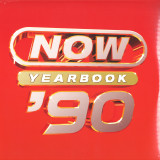
NOW Music is proud to present the next instalment in our ongoing ‘Yearbook’ series – and the second to celebrate the ‘90s, NOW – Yearbook 1990; 79 tracks from a fantastic year in Pop! Available on 4CD deluxe book format with 79 tracks , 4CD std digi with 79 tracks and 44 tracks from a fantastic year in Pop, pressed on gorgeous translucent triple orange vinyl. Disc One includes #1s from New Order, New Kids On The Block, Steve Miller Band, and The Beautiful South, as well as Pop smashes from The KLF, The B-52’s, Kylie Minogue, Whitney Houston Kim Appleby, and concluding with the theme from Twin Peaks, Julee Cruise’s ‘Falling’, Chris Isaak with ‘Wicked Game’ and Pet Shop Boys defining ‘Being Boring’. Dance floor-fillers kick off Disc 2 from Deee-Lite with ‘Groove Is In The Heart’, #1s from SNAP!, and from Adamski & Seal plus club classics from Bass-O-Matic and Adventures Of Stevie V with ‘Dirty Cash (Money Talks)’, plus the unexpected collaboration between DNA & Suzanne Vega. Disc 3 opens with the still-breathtaking interpretation of Prince’s ‘Nothing Compares 2 U’ from Sinéad O'Connor. Up next are film related hits; Maria McKee’s ‘Show Me Heaven’, from the ‘Days Of Thunder’ soundtrack, and the ‘Young Guns II’ track ‘Blaze Of Glory’ from Jon Bon Jovi
out of Stock
Last delivered 20 months ago available to reorder, subject to availability
Black Screen Records, Lost In Cult Records and Chuhai Labs are proud to tee up, for the first time, this terrific Cursed to Golf vinyl featuring the complete and unabridged soundtrack from the inimitable Mark Sparling! Captured in its grooves are the energetic chiptunes that goaded you on from course to course, as you ascended from Purgatory to become a Golfing Legend. Relive your finest drives or be introduced to this world of caddie-ridden fantasy in this beautiful collection of fearsome hooks and catchy choruses. Mark Sparling shares with us some insight into his aims for the Cursed to Golf soundtrack: "Cursed to Golf was simultaneously some of the funnest and most challenging music I have had to write in a long time. The original pitch for the music was 'Castlevania meets Mario Golf,' and it took me some time to find a good balance that we were happy with. But I'm really proud of the end result!" Enjoy all your favourite tunes across this 2xLP set, presented in a thematic duo of 180g heavy duty records, one golf course green and the other ghostly transparent magenta. Brought to life with art from Crisppyboat, this playful gatefold reinterprets Cursed to Golf's iconography through a joyous new lens.
Run DMC haben 1992 (fast) alles hinter sich gelassen, um einen zeitgemäßeren Sound zu kreieren. Dies gelang mit der Unterstützung von Produzent Jermaine Dupri und den Featurings Q Tip (A Tribe Called Quest), Naughty By Nature, Pete Rock usw... Erhältlich als Doppel-LP auf weissem Vinyl im Gatefold
Franco-British artist, born in Birmingham suburbs in 1993, Albert Newton welcomes us into the metaphysical universe of his debut album scheduled for release early 2024 on Byebye records.
After releasing his first EP «Bedroom Posters (*Spring)» in 2020, Henry met a quantum researcher and an astrophysicist who opened his eyes to the reality and beauty of the scientific world we live in. These encounters would prove a major inspiration for the writing of his first album, «Twin Earth».
A 10-track album influenced by a wide range of musicians from Bowie, MGMT and Tame Impala to Frank Ocean or even Philip Glass. Produced by Max Baby (Hannah Jadagu, Goldie Boutilier).
The multilayered lyrics map the traditional rollercoaster of emotions as well as their place in the celestial architecture . Nothing is ever perfect on this twin planet, but Albert Newton looks upon it with tenderness and gratitude, and shares a much-needed optimistic vision.
Italian born, London-based soundsmith Andrea Ottomani dons his Big Hands moniker for an excursion in modern dub on the burgeoning Teeth label. Ottomani is the artist behind the label Baroque Sunburst, which he runs with Soreab, and he also forms half of jazz techno unit Ottomani Parker with Abraham Parker.
The Vulgarity Of Snow is Ottomani’s woozy, lilting soundwalk through techno, experimental electronics and scorched earth acid. The untitled tracks are less like distinct entities and give way to a larger, conjoined pair of triptychs spread out over two sides of wax. They feel like a paean to the format, which no doubt comes from Ottomani’s time spent working at one of London’s most revered record shops. As a longer, more probing piece, it’s anathema to talk about The Vulgarity Of Snow in terms of bpms and sub-genres, and arguably it owes as much to free jazz and psych-rock as it does to more leaden styles such as dub and roots. At times it pays tribute to the work of acts like Basic Channel and Random Trio, deploying dub electronics in novel ways, but it is also broader in its choice of sounds. On B2, for example, Mino Carbone, the artist’s uncle and an Italian anarchist from the same lineage as artists like Dario Fo, plays a song from that tradition. It’s not a chaotic piece, but it’s not heavily constrained.
Teeth is an ideal home for Ottomani’s freeform work, following contributions to Beat Machine, Blank Mind and Oscilla. The label is the brainchild of Jojo Mathiszig, who also runs Farringdon record shop and radio station Kindred. Slade graduate and Kindred co-founder, Scarlet Griffiths, supplies the artwork following on from her recent exhibition at Dinner Party Gallery.
out of Stock
Last delivered 2 years ago available to reorder, subject to availability
***After birthing Street Riffs, their hi-definition, hi-energy, statement from 2020, CCR Headcleaner turned inward. The retreat from the pro-studio to the home studio was partially by design and partially decided by global events. Cleaner is very much a pandemic album, more of a homespun head trip than its predecessors. At the same time guitarist, songwriter and spiritual center of the group, Lacey Emmanuel, left the Bay for the shores of Lake Michigan. By most accounts an apocalyptic live-band became by and large a home recording animal. This is most apparent when Headcleaner turns up the balladry. “Don’t Feel the End” is a proto-metal campfire anthem, and “Everyday” hovers somewhere between keyboard misfit John Bender and the White Album. Make no mistake, the record will still be filed under “Punk” at your local record shop. It kicks off with “the brining pt. 2” the hottest slice of Funhouse free-rock that the band has committed to record. “Too Much” gives us its jail abolition rap over a two chord hardcore stomp. In a town (San Francisco) that is experiencing something of a DIY pop renaissance, Headcleaner has always fought to establish the fact that they have actual songs. This is no 70s throwback, but instead an attempt to up the ante. Without all the rock histrionics, technical arrogance and misogyny can the rock riff deliver on its ultimate promise: heavy music for total liberation. All tracks were mixed and lovingly fucked with by none other than Eric Bauer at his Bauer Mansion (RIP) Chinatown SF.
Ba Da Bing is releasing the soundtrack to 2022’s paeon to cuisine prep, Flux Gourmet. A vibrant, four-coursed, 23-track double album, Flux Gourmet includes contributions by Heather Trost, Jeremy Barnes, Marta Salogni, Cavern of Anti-Matter, and Roj (Broadcast), as well as Strickland’s own compositions as part of The Sonic Catering Band. British Director and sonic pioneer, Peter Strickland, known for The Duke of Burgundy (2014), Berberian Sound Studio (2012) and Björk: Biophilia Live (2014), has always pushed visuals and narrative to absurd heights. In Flux Gourmet, performance artists taking part in a residency dedicated to sonic catering combining cooking, sound and theater. Food is amplified, microphones are jammed against blenders, and the sizzling sound of the frier turns becomes an ominous rattle. The film’s soundtrack is equally as process oriented, experimental, and kaleidoscopic as its protagonists’ practice. Contributors are Cavern of Anti-Matter, Jeremy Barnes, Heather Trost, Roj (formerly of Broadcast), Tim Harrison, Dan Hayhurst and Nurse With Wound.
2001, Yorkshire, England. SUBDUB is in full strength shaking down Leeds' city walls with regular parties, community events & sound system sessions. Active since 1998, the devoted crew push UK Dub music forward, inviting key players of the scene to play at their events powered by the mighty Iration Steppas sound system. Session after session, the SUBDUB imprint nurtures a loyal community of skankers while building close ties top artists in the field. A solid reputation that resonates amongst dub-heads around the globe. After 3 years of existence and having already put out 3 singles on their Tandori Space Records label, the idea of putting out a SUBDUB compilation album sparks. Producers get involved and the ‘Digital Africa’ project takes shape! But when the test presses finally arrive, the difficult financial situation and bleak state of the vinyl market at the time force the project to get shelved…
22 years on, while on a pilgrimage to SUBDUB and stopover at the Tribe Records HQ, the Dubquake team see the dusty test presses emerge from the record store vaults and get a taste of the incredible music through the shop's speakers… Unreleased & exclusive tracks by Iration Steppas, Jah Warrior, D.BO General, Vibronics, The Disciples, Tena Stelin, Nucleus Roots, The Bush Chemists & Freedom Masses. 12 undiluted UK Dub cuts from the 90s pressed on to 2x12” vinyl discs, with a 13th bonus digital track. Pure sound system business, raw dubs inna vanguard style!
‘Digital Africa’ is finally coming out on Dubquake Records in time to celebrate SUBDUB’s 25th birthday. A forgotten compilation full of history, curated by Simon Scott & Mark Iration. Guaranteed to bring back sweet memories to veterans of the dance, a great piece of dub music education for the rest of us!
out of Stock
Last delivered 2 years ago available to reorder, subject to availability
Während die Lichter für 2023 ausgehen und wir ins Jahr 2024 vordringen, melden sich die Rough Trade-Shops mit ihrer jährlichen Counter Culture-Auswahl zurück. Die LP enthält 13, die Doppel-CD ganze 35 Tracks. Alles ist abgedeckt, von der chaotischen Partywut von Snooper über den aus den Fugen geratenen Metal von Pest Control bis zum biertrinkenden Spaßfest der Mary Wallopers. Du bekommst Lip Critic im Death-Grips-Style, ein elfminütiges Sludge-Workout von Slift, den Badu-Future-Soul von Liv.e und die 'new kids on the black' Lifeguard mit ihrer einzigartigen Interpretation von Post-Punk. Wie immer leben und atmen die Rough Trade-Shops neue Musik und diese Serie steht dafür.