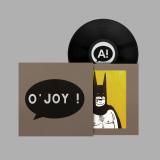
Nach zwei gefeierten Studioalben kündigt die britische Band BIG SPECIAL ihre neue EP mit folgenden Worten an: "Diese neue Platte besteht aus den verworfenen Teilen unserer ersten beiden Alben. Wir haben sie wieder hervorgeholt und mit ins Studio genommen, um sie zu überarbeiten und zu verfeinern. So entstand ein eigenständiges Werk, das unser bisheriges Schaffen reflektiert. Die Songs, die nicht zur richtigen Zeit an den richtigen Ort passten. Darunter auch Songs, die die Alben damals vielleicht zu lang gemacht und zu düster geraten lassen hätten, obwohl wir eigentlich die Balance einer emotionalen Reise bewahren wollten, als ob man einen Film mit geschlossenen Augen schaut. Also haben wir O'JOY! gemacht."
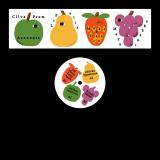
The debut vinyl release for Toronto’s hottest new 45s label, Baller Beats! BB-001 brings the perfect blend of dance floor ready cuts and drum-heavy, timeless soul. Suckaside breathes new life into a nostalgic Hip Hop classic with chunky breaks for the dance floor & DJ Goce revamps a highly underrated soul gem with his massive drums and larger than life sound. Don’t sleep on this limited first press!
Side A) Classic Hip Hop Bizness from the UK’s edit due, Suckaside. Retro vibes with punchy breaks and a loud press - Dance floor ready cut for your crates!
Side B) Goce does this OG soul sample justice in a big way! Massive drums, a huge string section, and the true original songwriter and vocal performance from a classic song. Later covered by a famous Motown group, this original recording didn't get it’s fair play... until now! An incredible tribute to the OG artist!
out of Stock
Last delivered 3 months ago available to reorder, subject to availability
Cult reissue label Sticky Buttons returns with ‘Sweet Edits’, their first official foray into dancefloor edits featuring 4 remixes of Nigerian boogie legend Dizzy K by a hand picked set of superstar producers specially designed to get the party moving.
Starting with a bang, the A Side features a double hit of remixes to Dizzy K’s 80’s sleeper hit “Afrikan Jamboree”. First up is Clive From Accounts, frequent contributor to Razor-N-Tape and hot off the heels of his 2025 debut full length LP, Clive’s edit has gifted us a complete foot stomper, filled with popping synths and squelchy baselines the track has already been getting big plays by the likes of Optimo over the past 18 months. On track A2, well known dance floor magician Lipelis takes the reins, creating his Disco Dub version, expertly layering traditional african drums and vocal loops from the original to build a wonky club track laden with energy and soul as come to be expected from the artist.
Over on the B Side, South London based duo Make A Dance (M.A.D) take the formula from their own widely popular house inspired edits imprint to take apart Dizzy K’s “I’ll Never Love Again”, stripping it down into a teetering, chugging acid sprinkled weapon overlaid with a ferocious drum pattern destined to move even the stiffest hips. Last but not least, Japanese producer Mayurashka brings her signature subversive style to Sticky Buttons, flipping Dizzy’s K’s “Konga Mama” into a hypnotic tribal masterpiece, pulsating with a psychedelic techno edge ripe for blending in smokey club venues and dark mainrooms.
Four heaters not to be slept on. Hearing is believing and on this limited edition vinyl release the legend of Dizzy K sings again, finely tuned for 2026 dancefloors but always carrying the raw spirit of the original.
Mastered by Submarea Estudio
Cover Art Illustration by Alex Ram
out of Stock
Last delivered 4 months ago available to reorder, subject to availability
The year that NOW’s story began, and where we started our ‘Yearbook’ series back in 2021. An incredible year in Pop music, and a fabulous selection of the years’ hits have featured on that first ‘Yearbook’, and on the ‘80-84 Final’ as part of our appreciation of 1983. Those tracks were generally the bigger hits of the year, with their Chart achievement a factor in their inclusion. However, that’s not the whole story, and our celebration of 1983 wouldn’t be complete without shining a light on some of the year’s singles that have been compiled much less frequently over the past 40 years. Welcome to the THE VAULT for 1983…Some of the tracks were Top 40 hits, some missed the Chart completely, and some were huge in the U.S. and not in the U.K. – but all are part of the wonderful Pop story of 1983. Released as 80 tracks across 4-CDs, available as a standard 4CD and as a a special edition 4CD in ‘hardback book’ packaging featuring a 28-page track by track guide, original singles artwork and a quiz and 45 tracks across 3-LPs, pressed on stunning translucent red vinyl -
out of Stock
Last delivered 3 months ago available to reorder, subject to availability
Writings on the topic that go off in all directions, mind-numbing lectures given by academics, and testimonies, most of them heavily doctored, from those who “lived through that era”: so many people today fantasize about the early days of punk in our country… This blessed moment when no one had yet thought of flaunting a ridiculous green mohawk, taking Sid Vicious as a hero, or – even worse – making the so-called alternative scene both festive and boorish. There was no such thing in 1976 or 1977, when it wasn’t easy to get hold of the first 45s by the Pistols or the Clash. Few people were aware of what was happening on the fringes of the fringes at the time. Malcolm McLaren was virtually unknown, and having short hair made you seem strange. Who knew then that rock music, which had taken a very bad turn since the early 1970s, would once again become an essential element of liberation? That, thanks to short and fast songs, it would once again rediscover that primitive, social side that was so hated by older generations? Who knew that, besides a few loners who read the music press (it was even better if they read it in English) and frequented the right record stores? Many of these formed bands, because it was impossible to do otherwise. We quickly went from listening to the Velvet Underground to trying to play the Stooges’ intros. It’s a somewhat collective story, even though there weren’t many people to start it.
The Guilty Razors were among those who took part in this initial upheaval in Paris. They were far from being the worst. They had something special and even released a single that was well above the national average. They also had enough songs to fill an album, the one you’re holding. In everyone’s opinion, they were definitely not among the punk impostors that followed in their wake. They were, at least, genuine and credible.
Guilty Razors, Parisian punk band (1975-1978). To understand something about their somewhat linear but very energetic sound, we might need to talk about the context in which it was born and, more broadly, recall the boredom (a theme that would become capital in punk songs) coupled with the desire to blow everything off, which were the basis for the formation of bands playing a rejuvenated rock music ; about the passion for a few records by the Kinks or the early Who, by the Stooges, by the Velvet mostly, which set you apart from the crowd.
And of course, we should remember this new wave, which was promoted by a few articles in the specialized press and some cutting-edge record stores, coming from New York or London, whose small but powerful influence could be felt in Paris and in a handful of isolated places in the provinces, lulled to sleep by so many appalling things, from Tangerine Dream to President Giscard d’Estaing...
In 1975-76, French music was, as almost always, in a sorry state ; it was still dominated by Johnny Hallyday and Sylvie Vartan. Local rock music was also rather bleak, apart from Bijou and Little Bob who tried to revive this small scene with poorly sound-engineered gigs played to almost no one.
In the working class suburbs at the time, it was mainly hard rock music played to 11 that helped people forget about their gruelling shifts at the factory. Here and there, on the outskirts of major cities, you still could find a few rockers with sideburns wearing black armbands since the death of Gene Vincent, but it wasn’t a proper mass movement, just a source of real danger to anyone they came across who wasn't like them. In August 1976, a festival unlike any other took place in Mont-de-Marsan – the First European Punk Festival as the poster said – with almost as many people on stage as in the audience. Yet, on that day, a quasi historical event happened, when, under the blazing afternoon sun, a band of unknowns called The Damned made an unprecedented noise in the arena, reminiscent of the chaotic Stooges in their early adolescence. They were the first genuine punk band to perform in our country: from then on, anything was possible, almost anything seemed permissible.
It makes sense that the four+1 members of Guilty Razors, who initially amplified acoustic guitars with crappy tape recorder microphones, would adopt punk music (pronounced paink in French) naturally and instinctively, since it combines liberating noise with speed of execution and – crucially – a very healthy sense of rebellion (the protesters of May 1968 proclaimed, and it was even a slogan, that they weren’t against old people, but against what had made them grow old. In the mid-1970s, it seemed normal and obvious that old people should now ALSO be targeted!!!).
At the time, the desire to fight back, and break down authority and apathy, was either red or black, often taking the form of leafleting, tumultuous general assemblies in the schoolyard, and massive or shabby demonstrations, most of the time overflowing with an exciting vitality that sometimes turned into fights with the riot police. Indeed, soon after the end of the Vietnam War and following Pinochet’s coup in Chile, all over France, Trotskyist and anarcho-libertarian fervour was firmly entrenched among parts of the educated youth population, who were equally rebellious and troublemakers whenever they had the chance. It should also be noted that when the single "Anarchy in the UK" was first heard, even though not many of us had access to it, both the title and its explosive sound immediately resonated with some of those troublemakers crying out for ANARCHY!!! Meanwhile, the left-wing majority still equated punks with reckless young neo-Nazis. Of course, the widely circulated photos in the mainstream press of Siouxsie Sioux with her swastikas didn’t necessarily help to win over the theorists of the Great Revolution. It took Joe Strummer to introduce The Clash as an anti-racist, anti-fascist and anti-ignorance band for the rejection of old-school revolutionaries to fade a little.
The Lycée Jean-Baptiste Say at Porte d’Auteuil, despite being located in the very posh and very exclusive 16th arrondissement of Paris, didn’t escape these "committed" upheavals, which doubled as the perfect outlet for the less timid members of this generation.
“Back then, politics were fun,” says Tristam Nada, who studied there and went on to become Guilty Razors’ frontman. “Jean-Baptiste was the leftist high-school in the neighbourhood. When the far right guys from the GUD came down there, the Communist League guys from elsewhere helped us fight them off.”
Anything that could challenge authority was fair game and of course, strikes for just about any reason would lead to increasingly frequent truancy (with a definitive farewell to education that would soon follow). Tristam Nada spent his 10th and 11th unfinished grades with José Perez, who had come from Spain, where his father, a janitor, had been sentenced to death by Franco. “José steered my tastes towards solid acts such as The Who. Like most teenagers, I had previously absorbed just about everything that came my way, from Yes to Led Zeppelin to Genesis. I was exploring… And then one day, he told me that he and his brother Carlos wanted to start a rock band.” The Perez brothers already played guitar. “Of course, they were Spanish!”, jokes their singer. “Then, somewhat reluctantly, José took up the bass and we were soon joined by Jano – who called himself Jano Homicid – who took up the rhythm guitar.” Several drummers would later join this core of not easily intimidated young guys who didn’t let adversity get the better of them.
The first rehearsals of the newly named Guilty Razors took place in the bedroom of a Perez aunt. There, the three rookies tried to cover a few standards, songs that often were an integral part of their lives. During a first, short gig, in front of a bewildered audience of tough old-school rockers, they launched into a clunky version of the Velvet Underground's “Heroin”. Challenge or recklessness? A bit of both, probably… And then, step by step, their limited repertoire expanded as they decided to write their own songs, sung in a not always very accurate or academic English, but who cared about proper grammar or the right vocabulary, since what truly mattered was to make the words sound as good as possible while playing very, very fast music? And spitting out those words in a language that left no doubt as to what it conveyed mattered as well.
Trying their hand a the kind of rock music disliked by most of the neighbourhood, making noise, being fiercely provocative: they still belonged to a tiny clique who, at this very moment, had chosen to impose this difference. And there were very few places in France or elsewhere, where one could witness the first stirrings of something that wasn’t a trend yet, let alone a movement.
In the provinces, in late 1976 or early 1977, there couldn’t be more than thirty record stores that were a bit more discerning than average, where you could hear this new kind of short-haired rock music called “punk”. The old clientele, who previously had no problem coming in to buy the latest McCartney or Aerosmith LP, now felt a little less comfortable there…
In Paris, these enlightened places were quite rare and often located nex to what would become the Forum des Halles, a big shopping mall. Between three aging sex workers, a couple of second-hand clothes shops, sellers of hippie paraphernalia and small fashion designers, the good word was loudly spread in two pioneering places – propagators of what was still only a new underground movement. Historically, the first one was the Open Market, a kind of poorly, but tastefully stocked cave. Speakers blasted out the sound of sixties garage bands from the Nuggets compilation (a crucial reference for José Perez) or the badly dressed English kids of Eddie and the Hot Rods. This black-painted den was opened a few years earlier by Marc Zermati, a character who wasn’t always in a sunny disposition, but always quite radical in his (good) choices and his opinions. He founded the independent label Skydog and was one of the promoters of the Mont-de-Marsan punk festivals. Not far from there was Harry Cover, another store more in tune with the new New York scene, which was amply covered in the house fanzine, Rock News (even though it was in it that the photos of the Sex Pistols were first published in France).
It was a favorite hang-out of the Perez brothers and Tristam Nada, as the latter explained. “It’s at Harry Cover’s that we first heard the Pistols and Clash’s 45s, and after that, we decided to start writing our first songs. If they could do it, so could we!”
The sonic shocks that were “Anarchy in the UK”, “White Riot” or the Buzzcocks’s EP, “Spiral Scratch” – which Guilty Razors' sound is reminiscent of – were soon to be amplified by an unparalleled visual shock. In April 1977, right after the release of their first LP, The Clash performed at the Palais des Glaces in Paris, during a punk night organised by Marc Zermati. For many who were there, it was the gig of a lifetime…
Of course, Guilty Razors and Tristam were in the audience: “That concert was fabulous… We Parisian punks were almost all dressed in black and white, with white shirts, skinny leather ties, bikers jackets or light jackets, etc. The Clash, on the other hand, wore colourful clothes. Well, the next day, at the Gibus, you’d spot everyone who had been at this concert, but they weren’t wearing anything black, they were all wearing colours.”
It makes sense to mention the Gibus club, as Guilty Razors often played there (sometimes in front of a hostile audience). It was also the only place in Paris that regularly scheduled new Parisian or Anglo-Saxon acts, such as Generation X, Siouxsie and the Banshees, the Slits, and Johnny Thunders who would become a kind of messed-up mascot for the venue. A little later, in 1978, the Rose Bonbon – formerly the Nashville – also attracted nightly owls in search of electric thrills… In 1977, the iconic but not necessarily excellent Asphalt Jungle often played at the Gibus, sometimes sharing the bill with Metal Urbain, the only band whose aura would later transcend the French borders (“I saw them as the French Sex Pistols,” said Geoff Travis, head of their British label Rough Trade). Already established in this small scene, Metal Urbain helped the young and restless Guilty Razors who had just arrived. Guitarist for Metal Urbain Hermann Schwartz remembers it: “They were younger than us, we were a bit like their mentors even if it’s too strong a word… At least they were credible. We thought they were good, and they had good songs which reminded of the Buzzcocks that I liked a lot. But at some point, they started hanging out with the Hells Angels. That’s when we stopped following them.”
The break-up was mutual, since, Guilty Razors, for their part, were shocked when they saw a fringe element of the audience at Metal Urbain concerts who repeatedly shouted “Sieg Heil” and gave Nazi salutes. These provocations, even still minor (the bulk of the skinhead crowd would later make their presence felt during concerts), weren’t really to the liking of the Perez brothers, whose anti-fascist convictions were firmly rooted. Some things are non-negotiable.
A few months earlier (in July 1978), Guilty Razors had nevertheless opened very successfully for Metal Urbain at the Bus Palladium, a more traditonally old-school rock night-club. But, as was sometimes the case back then, the night turned into a mass brawl when suburban rockers came to “beat up punks”.
Back then, Parisian nights weren’t always sweet and serene.
So, after opening as best as they could for The Jam (their sound having been ruined by the PA system), our local heroes were – once again – met outside by a horde of greasers out to get them. “Thankfully,” says Tristam, “we were with our roadies, motorless bikers who acted as a protective barrier. We were chased in the neighbouring streets and the whole thing ended in front of a bar, with the owner coming out with a rifle…”
Although Tristam and the Perez brothers narrowly escaped various, potentially bloody, incidents, they weren’t completely innocent of wrongdoing either. They still find amusing their mugging of two strangers in the street for example (“We were broke and we simply wanted to buy tickets for the Heartbreakers concert that night,” says Tristam). It so happened that their victims were two key figures in the rock business at the time: radio presenter Alain Manneval and music publisher Philippe Constantin. They filed a complaint and sought monetary compensation, but somehow the band’s manager, the skilful but very controversial Alexis, managed to get the complaint withdrawn and Guilty Razors ended up signing with Constantin with a substantial advance.
They also signed with Polydor and the label released in 1978 their only three-track 45, featuring “I Don't Wanna be A Rich”, “Hurts and Noises” and “Provocate” (songs that exuded perpetual rebellion and an unquenchable desire for “class” confrontation). It was a very good record, but due to a lack of promotion (radio stations didn’t play French artists singing in English), it didn’t sell very well. Only 800 copies were allegedly sold and the rest of the stock was pulped… Initially, the three tracks were to be included on a LP that never came to be, since they were dropped by Polydor (“Let’s say we sometimes caused a ruckus in their offices!” laughs Tristam.) In order to perfect the long-awaited LP, the band recorded demos of other tracks. There was a cover of Pink Floyd's “Lucifer Sam” from the Syd Barrett era – proof of an enduring love for the sixties’ greats –, “Wake Up” a hangover tale and “Bad Heart” about the Baader-Meinhof gang, whose actions had a profound impact on the era and on a generation seeking extreme dissent... On the album you’re now discovering, you can also hear five previously unreleased tracks recorded a bit later during an extended and freezing stay in Madrid, in a makeshift studio with the invaluable help of a drummer also acting as sound engineer. He was both an enthusiastic old hippie and a proper whizz at sound engineering. Here too, certain influences from the fifties and sixties (Link Wray, the Troggs) are more than obvious in the band’s music.
Shortly after a final stormy and rather barbaric (on the audience’s side) “Punk night” at the Olympia in June 1978, Tristam left the band ; his bandmates continued without him for a short while.
But like most pioneering punk bands of the era, Guilty Razors eventually split up for good after three years (besides once in Spain, they’d only played in Paris). The reason for ceasing business activities were more or less the same for everyone: there were no venues outside one’s small circuit to play this kind of rock music, which was still frightening, unknown, or of little interest to most people. The chances of recording an LP were virtually null, since major labels were only signing unoriginal but reassuring sub-Téléphone clones, and the smaller ones were only interested in progressive rock or French chanson for youth clubs. And what about self-production? No one in our small safety-pinned world had thought about it yet. There wasn’t enough money to embark on that sort of venture anyway.
So yes, the early days of punk in France were truly No Future!
out of Stock
Last delivered 6 months ago available to reorder, subject to availability
Undun is the story of a man, Redford Stevens, dying in reverse, rewinding from the moment he became a statistic and hitting the points in his life where he's at his most self-aware. That he's a criminal who got caught up in the familiar street-hustle trappings that the modern media's documented countless times is a pivotal detail-- it's hit at an angle that seems to emphasize the futile inevitability of it all. His life could be any number of misdirected narratives that ends with a toe tag, and what details listeners learn about him are hazy, buried under archetypal turns of fate and decisive struggles. That this protagonist is a fictionalized composite of a handful of real people, filtered through a matter-of-fact narrative that splits character ambivalence with journalistic impartiality, only makes his lack of direction and the failure of any real closure stand out even more. "Lotta niggas go to prison," Dice Raw states on "Tip the Scale", "how many come out Malcolm X?"
So the Roots' latest album isn't a sprawling, rise-and-fall crime story, not a condemnation or a veneration of a man living outside the law, not a bullet-riddled grand guignol heavy on explicit details of soldiers getting cut down. It's a character study of a man whose existential crisis ends only with his death-- a death gone largely unspecified, the glamor and tragedy washed over with a doomed resignation. That's a hard thing to pull off, even for a band as given to deep-thinking concepts as the Roots are. And when your main lyrical catalyst is Black Thought-- a man more given to allusions than direct statements-- it's likely that it'll take a while for the full scope of Undun to really sink in.
If and when it does, it might strike listeners as a bit skeletal: omit the mood-setting instrumental bookends, including a brief, four-part orchestral suite that builds off Sufjan Stevens' "Redford (For Yia-Yia and Pappou)", and you've got maybe a half hour's worth of material. By ?uestlove's accounts, writing Redford's story introduced the headaches and challenges that come with scriptwriting into their songwriting, and what's left on Undun is the end result of frequent revisions and rewrites that attempt to reconcile character, theme, and continuity. If it comes at the expense of nuance, it's not always obvious: There's an easy-to-trace narrative line from Redford's acceptance of his fate ("Sleep") to his acknowledgement of how close it's approaching ("Make My"), back through declarations of aggravated toughness ("One Time"), and celebratory fatalism ("Kool On"), along ups and downs that juxtapose motivation ("Stomp") and helplessness ("Lighthouse"). When the vocal portion of the album ends with two of the bleakest sets of verses in the Roots discography, peaking with the estrangement of "I Remember" and the desperation of "Tip the Scale", Undun reveals itself as a story where a man's actual death isn't quite as tragic as the circumstances that pushed him to it.
out of Stock
Last delivered 6 months ago available to reorder, subject to availability
Intricate structures with an intertwining of spontaneity and randomness, meeting the diverse genre influences of the band members from mediaeval music to shoegaze to noise. That is Unravel, the new album, and first in six years, from Czech band Manon Meurt.
"Unravel reflects the different stages of dissociation, a person's thoughts, observations - whether of the environment or of oneself - and admiration for the beauty and cruelty that nature mirrors," multi-instrumentalist and lyricist Kateřina Elznicová says of the album.
Produced by Eddie Stevens (Freakpower, Zero 7, Moloko, Roisin Murphy) the album was pieced together from recorded fragments, meticulously pieced together. The title Unravel refers to the development of the band, unravelling what they are to find the full potential of their music as well as uncovering the layered nature of the songs and emotions.
"Eddie Stevens’ approach to recording was a big surprise. We understood that there was no one right version of the songs. Each of our themes carries a certain energy that can manifest and blossom in many ways. Compared to previous records, the vision of each member was much more evident, while we learned not to cling to our individual ideas of a signifying break or a nu-metal bounce at the end of an ambient song. The main thing was a common concept," adds keyboardist David Tichý on creating the seven songs on the record.
Abum producer Eddie Stevens describes the collaboration, “Each album is an adventure. You do some preparation, check the route over and over, prepare for any eventuality that your packing space and imagination will allow, plan some places to stop and rest en route, places to eat, sleep, then consider the challenges - the ice wall, the summit, even just finding your way in foreign land. But despite all that planning, you can never really say for sure what’s going to happen, what unexpected path you might take, what strangers might invite you in for a cup of tea and to what ends. So it was making Unravel with Manon Meurt and engineer and studio owner Lukas Martinek at Svárov studios and of course back home in the relative safety of my studio. Musicians who quickly became friends showed me more than I showed them, people with ideas, with creativity seeping from their pores. Music making the right way: no blinkers, no walls, no preconceptions, no barriers, no rules. What a pleasure, and what a magical, technicoloured,
kaleidoscopic album we’ve made together, “
The combination of industrial material with plant motifs in the work Untitled_1 by Ukrainian artist Liza Libenko, which adorns the cover of Unravel, strongly attracted the band. After all, floral motifs have always been close to Manon Meurt's music. Libenko, a student of the Academy of Fine Arts and a finalist of the prestigious Austrian Strabag Artaward International Prize, has recently been working on overcoming the narrative boundaries of the canvas, the paintings "attack"the viewer. Sunflowers are a powerful symbol of life and the sun; in Libenko's paintings they are black and burnt, serving as an allegory for contemporary conditions. The work was photographed by photographer and artist Marcel Rozhoň, and the final processing of the Unravel album was done by graphic artist Zuzana Malá.
Melbourne / Naarm strongholdButter Sessionsclock 15 years in the game with a trilogy of 12"s, sustaining their uncompromising streak of peak-form electronics. The family-style V/A binds friends, collaborators, former studio neighbours and DJ booth allies, capturing a label that exists as community as much as catalogue.
A new chapter in Butter Sessions' ongoing Japanese exchange sees Sapporo sound sculptor Kuniyukire-opening a 2015 tour collaboration with label heads Sleep D- a deep, spatial beatdown powered by dub pressure and percussive hypnosis. Shadow-lurking prodigy Mosam Howiesondrops in with his trademark scatterbrain techno, while Hasvat Informantlocks into joint-consciousness big-room radioactivity.
Opening the B-side, Fader Capfuses Balearic psy-ence with Mike Dunn-esque utilitarian jack, hovering somewhere between '80s memory and future vision. Tokyo's Mayurashkafollows with Survival Guide, big beat colliding with drug chug, before Albrecht La'Brooyreunite for a divine chill-out tent slowdown, magnifying sample detail with exacting flow. We're adrift until Sunju Hargunlights the beacon with スカイサーファ(Sky Surfer), Thailand's emissary of ritualistic minimal trance.
Whether taken alone or folded into the three-disc triptych, each instalment stands as a bag-ready constant, charged with Butter Sessions' curatorial finesse.
out of Stock
Last delivered 89 days ago available to reorder, subject to availability
A rising and genre-defying figure in the French electronic scene, Goldie B continues her ascent with Who Says Night’s For Sleeping?, a five-track EP that asserts her distinctive signature: an instinctive blend of club energy, cinematic storytelling and UK rave influences. Conceived as the soundtrack to a night lived in full intensity, the record moves through the fire of the dancefloor, the collective trance, and those suspended moments where one floats between dream and wakefulness.
“I imagined this EP as the soundtrack to a night experienced in its entirety. From the first rush of adrenaline on the dancefloor to that floating walk home, still carried by the music. My influences range from Moby and Air to Floating Points and Joy Orbison, artists who know how to combine power and emotion. I love connecting the raw energy of the club with more dreamlike textures, because you can absolutely dream while dancing. Each track is an instinctive snapshot of my inner world.” Goldie B The EP’s opening act, “The Space Between” blends ethereal pads, organic strings and a steady crescendo, recalling the elegance of Air or Moby. It opens a suspended space, equally suited to inner drift or physical release. “I wanted it to feel like a threshold, a gentle hand pulling you into a trance state.”
On “U Make Me Feel So Good”, a sensual and narrative breakbeat track, a flowing bassline gradually tightens into trancier energy. Seductive female vocals weave through broken rhythms, creating a piece that is as tactile as it is hypnotic. “It’s about contrast, the softness and caress at the start, then a tension that rises and electrifies.”
Instagram | Youtube | TikTok | SoundCloudAt the heart of the project, “Rêve de Rave” channels 90’s breakbeat spirit with old-school samples, an euphoric central break and voices urging to move your feet. Urgent and liberating, it embodies the dreamlike essence of the rave. “It’s how I imagine the rave: a lucid dream where joy and collective energy feel almost unreal.”
Next comes the most incisive cut of the EP, “Purple FX”, driven by a grating central bassline that evolves relentlessly until its explosive drop. Minimalist yet implacable, it captures the sheer force of a peak-time track. “I wanted a track purely designed for the club, where the tension just keeps rising until it explodes.”
Closing in chiaroscuro, “Snake Waves” shifts from breakbeat into a half-house, half-techno 4/4 groove, carried by a sinuous, hypnotic bassline. The track plays on tension and release, with a rich harmonic break before fading like a suspended farewell, where the party recedes but the energy lingers. “It’s a farewell piece that keeps the intoxication alive, like a final vertigo before slipping back into the night.”
Goldie B is a multifaceted force on the French electronic scene. A producer, multi-instrumentalist, singer, MC, DJ, and co-founder of the label Omakase Recordings, her sets blend bass, jungle, UKG, and breakbeat, captivating audiences with their contagious energy. Based in Marseille, she has released music on renowned labels such as D.KO, Banoffee Pies, and YUKU, and has performed on some of the biggest French stages and festivals: Peacock Society, Astropolis, NDK, Marsatac, Delta, Le Bon Air, and even the Festival d’Avignon. In 2024, she was selected by Apple Music for its Women In Electronic series. Her new Who Says Night’s For Sleeping? EP confirms her status as an instinctive and distinctive artist to watch on the French electronic scene.
out of Stock
Last delivered 8 months ago available to reorder, subject to availability
Known for their warm harmonies, live energy, and poetic lyrics, Boy & Bear explore on Tripping Over Time themes such as embracing life's journey and its contradictions: "It's about the subtle lessons of life. Often you don't realise you've gone through something until you've truly experienced it. You keep learning, stumbling forward, and embracing the chaos with a smile. It's optimistic, nostalgic and playful, just like life itself," says frontman Dave Hosking. The record feels like one big celebration of joy, laced with a bittersweet, happy-sad energy. Since their breakthrough with the double-platinum debut Moonfire, Boy & Bear have released multiple #1 albums and earned a reputation as one of Australia's most compelling live acts.
Manchmal geht einfach alles POP! Fall in Love Again with "Balloon Balloon Balloon"! Unterwerfung. Das ist das Wort, das mir in den Sinn kommt, wenn ich mich mit Kai Slaters Sharp Pins auf den überwältigenden Pop-Planeten begebe. Das Universum funktioniert nur, wenn man sich unterwirft: sich der Liebe unterwirft, sich der Rockmusik unterwirft. Sich der Kraft zu unterwerfen, die von einem Jungen ausgeht, der seine Gitarre schwingt, um makellosen Gitarrenpop zu kreieren, der ins Pantheon der Idole gehört, zu denen er mit diesem Album aufsteigt. Natürlich ist es verständlich, dass man zunächst wütend ist. Alle waren wütend auf Big Star, weil sie den Beatles zu nahe kamen. Und alle werden wütend auf Sharp Pins sein, weil sie dasselbe tun und dann noch Guided by Voices mit ins Spiel bringen. Wie kann er es wagen? Diese Überheblichkeit. Welcher 20-Jährige glaubt, er könne Robert Pollard übertrumpfen? ,Queen of Globes and Mirrors?" Ein Verbrechen. Mit dem noch schlimmeren Verbrechen, Songs zu schreiben, die so rätselhaft zeitlos sind, dass man glauben könnte, sie seien aus einem verlorenen Beatles-Band gestohlen worden. ,I Don't Have the Heart" und ,(I Want to) Be Your Girl" lassen einen wirklich im Unklaren darüber, wann und wo sie entstanden sind. Aber wenn der Lo-Fi-Noise-Pop von "Balloon Balloon Balloon" uns an etwas erinnert, dann daran, dass nur Kai das kann. Mit seiner 12-saitigen Gitarre und seiner unermüdlichen Besessenheit von Popmusik ist Slater einzigartig ausgestattet, um nicht nur von Pollard und Chilton das Erbe anzutreten, sondern auch den Byrds, den Temptations, den Four Tops und allen anderen Künstlern nachzufolgen, die versuchen, die wahre Liebe auf Band zu bannen. Er wendet die Taktik ,um Vergebung bitten, nicht um Erlaubnis" an, wenn er sich bei diesen Größen bedient, und uns bleibt nichts anderes übrig, als Slater zu vergeben, dass er uns diese Rock'n'Roll-Juwelen schenkt, die er aus der Vergangenheit in eine Zukunft katapultiert, die so melodisch makellos und doch kantig und aufrichtig ist, dass wir ihm auch dafür danken müssen, dass er das Genre vor der Bedeutungslosigkeit bewahrt hat. Denn was Slater hinzufügt, ist ganz und gar sein Eigen. Eine unbeschreibliche Sensibilität für das Songwriting, die trotz der zahlreichen Anleihen nur ihm gehören kann. Am Ende des Albums schluckt man jegliche Wut oder Ungläubigkeit, die man vielleicht hatte, und akzeptiert, dass Sharp Pins wirklich so gut sind. Auf diesem umfangreichen, aber niemals überladenen Album erschafft Slater eine Welt voller kleiner Pop-Perlen, die so einfach und dumm gut sind, dass sie uns daran erinnern, dass eine andere Welt möglich ist. Denn es ist nicht nur so, dass die Songs unmöglich aus dem Kopf gehen, was sie auch sind. Es ist Slaters eigene Hingabe an dieses Streben nach dem perfekten Popsong, die uns glauben lässt, dass dies nicht nur möglich ist, sondern auch ausreicht, um dem Leben wieder Form und Farbe zu geben. Fall in Love Again ist keine Empfehlung, sondern eine Verpflichtung. Nicht nur gegenüber einem schönen Mädchen, von denen es auf dem Album viele gibt, sondern gegenüber der Welt selbst. Vielleicht ist es dann möglich, die Zukunft zu erreichen, von der der 20-jährige Slater selbst träumt, aber bis dahin haben wir seine Liebesbriefe an den Rock'n'Roll und die Welt um ihn herum, die uns Gesellschaft leisten.
On a "Balearic-Jazz trip", the phenomenally hyped Thought Leadership returns with another X ideas: the deck this time chooses the Ace of Swords. In the acclaim garnered by III of Pentacles, there were many whispers of “Balearic” from those in the know. As soon as you drop the needle on XI you will be basking in turbo Balearica.
Originally out on cassette only, we present the first ever vinyl issue. It's a hideously limited pressing of 300 for the world, so don't sleep on this.
The sonic palate has been augmented by the addition of synth and bass; there are more guitar layers, more pedals and more organic drums this time – a much fuller production. Still DIY, and still recorded straight to multitrack, just ever so slightly grander in scale; think a rough-hewn, long-lost Claremont 56 cut and you’ll have some idea of how XI opens this future classic LP.
The touchstones so key to the vision of Pentacles (Cocteau Twins, Dif Juz, Durutti Column) are all still present and correct; XII could be a piece from Extractions, XIII is pure Garlands-era Guthrie and, now with the shuffling jazz drums, XV makes TL even more LC – but more disparate influences are found this time out too. ECM guitar legends John Abercrombie and Pat Metheny in the more considered melodic phrasing and harmonic structure of the ideas and a nod to the cosmic Balearic spirit in the overall vibe, means more is offered to the listener across Swords.
XVI and XVII are the biggest indicators to Thought Leaderships’ new found love of The Real Book and their grasp of jazz chords. The former sounds like if Mike Hedges had produced on a heavily sedated ECM date in the early 80s, whilst the latter is Bright Size Life condensed into a most post-punk shard of Strat conversation. The syrupy Phase 90 on the lead parts lends much weight to the guitar melodies, a beautiful tonal counterpoint to the Vox-ish chimes of the plangent chords we’ve all come to love.
The flip again treats us to three extended, improvised jams. XVIII owes as much to Canterbury as it does to Krautrock, another modal voyage through the stars. Light the incense and drift away, guided by delayed cymbals and weaving ribbons of guitar. XIX has almost a New-Wave/Sophisti-Pop energy to it in tone, if not in structure and execution. Something almost Tears for Fears-esque in the chiming chorus guitars. An interesting outlier that has already received a lot of love from those that have heard it. XX is the starkest idea, and the only piece this time with no drums. What we do get, however, is a free exploration over a two chord-vamp. It’s Harvest Time meets Planet Caravan and a fitting end to this Balearic jazz trip.
Be With is honoured to present the first ever vinyl release of Ace Of Swords, carefully remastered by Be With's engineer Simon Francis to ensure it sounds better than ever after its initial tape release. Cicely Balston's expert skills have made sure nothing is lost in the cut at Abbey Road Studios whilst the records have been pressed to the highest possible standard at Record Industry, in Holland. The original tape cover artwork, so crucial to Thought Leadership's striking visual aesthetic, has been rejigged for vinyl issue here at Be With.
The last one flew. You have been warned.
out of Stock
Last delivered 10 months ago available to reorder, subject to availability
The seventh release in the Punctuality canon lands hot with a peak-time four-tracker from Persian-Swedish DJ and producer Mohajer based in Berlin. All In is a bold statement of intent—the music glistens with sleek, modern production aesthetics, drawing from UK-tinged breaks, pumping ’90s house, and sultry, timeless trance moods, perfect for big rigs and intimate dancefloors alike. Like her DJ sets, the tracks are scintillating and high-throttle, twisting and turning through unexpected paths while maintaining a steady dancefloor focus throughout.
“Intake” sets the tone for the EP. The A1 is a high-octane collage of lustrous, contemporary house, where playful, bouncy low-end slips and skips around glitched-out atmospherics, sleazy tech synths, and earworm organs. The arrangement careens and veers without relenting, driven by pumping amens and provocative vox chops fluttering in and around the bass.
A2, “i c u” keeps things heated with rolling breaks and ultrabright melodies that ignite the track with dazzling intensity. A sultry take on UK soundsystem music, its undulating wubs and flirtatious vocals are anchored by a dub sensibility that keeps the groove low, slung, and sexy. Think smoke machines, red lights, and smoldering sexual tension.
Luscious, trancey, and dripping with percussive sensuality, “You Wannabe” carries the sensuous mood to the flip. The track unfolds like the arc of a DJ set, teasing moments of magic amid layers of atmospheric pads, FX, and a pulsing bassline that grounds the arrangement from start to finish. The vibe is sweltering, cosmic, and irresistibly sultry—drawing from many directions but always locked into the groove, built for DJs and dancers alike.
The EP closes with “Backseat,” a hypnotic journey through swirling synthetic flourishes, rumbling subs, and psyched-up lead lines. It expertly builds tension and release, flipping halfway into bright flashes of euphoria and light. The result: a mysterious, sensual number that captures the ephemeral magic of the dancefloor and showcases the expert production skills of Mohajer.
This is buy-on-sight material from start to finish—don’t sleep.
out of Stock
Last delivered 7 months ago available to reorder, subject to availability
After an amazing run with his latest EP on Hessle Audio 'Make It Better/ Restless Sleep' Josi Devil is back with a 3 tracker on TSVI & Wallwork's Nervous Horizon.
Combining club functionality and cinematic sound design this EP leaves no stone unturned.
'No More' has already conquered most dance floors around the UK and the world being played by the biggest names in the scene like Ben UFO, Joy O, Special Requests etc.
'Duinpan' is a pounding garage banger with mind bending sound design.
'M.e.S' the final track is a collaboration with label boss TSVI, and it definitely is the cherry on the cake incorporating both the signature Nervous Horizon sound and Josi Devil's cold & slick production.
out of Stock
Last delivered 3 months ago available to reorder, subject to availability
Das Reissue enthält sechs bisher unveröffentlichte Demos, darunter die Songs Hold Me Up und Don"t Blow Your Wind, die nie über die Demo-Phase hinausgingen. Auch frühe Versionen von Tangerine, Summer, Kitchen Door und Clobberedsind enthalten und zeigen, wie diese Klassiker entstanden. Ergänzt wird die Veröffentlichung durch neues Artwork, Fotos, Erinnerungsstücke sowie Notizen der Band und Produzent John Agnello. Sleepy Eyed markierte Mitte der 90er einen Wendepunkt: Nach dem Erfolg von Big Red Letter Day (1993), das Buffalo Tom in die Billboard-Charts brachte und mit Late At Night in der Kultserie My So-Called Life zu sehen war, wollte die Band zurück zu einem roheren Sound. Bill Janovitz verweist auf Dylan- und Stones-Platten als Inspiration: weniger Perfektion, mehr Direktheit, Nähe und Authentizität. Aufgenommen wurde in den Dreamland Studios im Bundesstaat New York - abgeschottet, intensiv, fast wie tägliche Live-Sets. Herausgekommen sind Songs, die bis heute zu Fan-Favoriten zählen, allen voran Tangerine, Summer und Kitchen Door. Gegründet 1986 an der University of Massachusetts, stehen Buffalo Tom (Bill Janovitz, Chris Colbourn, Tom Maginnis) seit fast 40 Jahren gemeinsam auf der Bühne - 10 Alben später ein beeindruckendes Stück Beständigkeit.
Vintage Sounds - FOLK Edition Die neue Ausgabe der beliebten Vintage Sounds Vinylreihe widmet sich einem der ehrlichsten und bewegendsten Genres der Musikgeschichte: Folk. Diese Sammlung vereint 14 zeitlose Klassiker, die das Herz und die Seele der Folkbewegung widerspiegeln - roh, poetisch und zutiefst menschlich. Mit dabei sind Legenden wie Joan Baez, deren "Donna Donna" zur Hymne der Friedensbewegung wurde, und Bob Dylan, der mit "House Of The Risin" Sun" seine frühe Meisterschaft zeigt. Woody Guthrie bringt mit "This Land Is Your Land" ein Stück amerikanischer Geschichte auf die Platte, während Townes Van Zandt und Dave Van Ronk die dunkleren, introspektiven Seiten des Genres beleuchten. Auch seltene Perlen wie Dave Bixbys psychedelisch-spirituelles "Morning Sun" oder Bridget St Johns melancholisches "Autumn Lullaby" finden hier ihren Platz. Die Compilation schließt mit einem bewegenden Duett von Terry Callier & Paul Weller, das Folk in die Gegenwart holt.
"Clouds In The Sky They Will Always Be There For Me", das vierte Album von Porridge Radio, wurde Anfang 2024 in Somerset vom langjährigen Big Thief- und Laura Marling-Tontechniker Dom Monks aufgenommen und ist ein Moment des Erwachsenwerdens, inspiriert von Burnout, der Musikindustrie, Herzschmerz und der zunehmenden Vertiefung der Bandleaderin Dana Margolin in ihr eigenes Handwerk als Künstlerin. Margolins rücksichtsloser, sich selbst hinterfragender Schreibstil wird auf dem gesamten Album durch die bisher ergreifendste Musik der Band ergänzt, die sich geduldig aufbaut und tragisch intensiv ist. "Alle Songs begannen als Gedichte, ich wollte mich selbst herausfordern", sagt Dana Margolin über das Werk, aus dem "Clouds In The Sky They Will Always Be There For Me" wurde. "In einem Song kann sich der Autor immer hinter den Tricks der Musik und altbekannten Techniken wie Wiederholungen verstecken. In einem Gedicht hingegen sind es nur Worte und das war's." "Vieles auf diesem Album handelt von einer frenetischen und verzweifelten Art von Liebe, es geht um den völligen Verlust meines Selbstbewusstseins in einer Beziehung und um den tiefen Rest von Unsicherheit und Schmerz, der eine neue Beziehung trübte." Lieder, die als Liebeslieder geschrieben wurden - wie "In A Dream I'm A Painting" - bekamen neue Bedeutungen, als Margolin die Lieder mit einer neuen Distanz betrachtete. "Es gab eine Menge Liebe und Verwirrung, alles durchsetzt mit Erschöpfung und Schmerz." Die Clouds-Sessions fanden in Frome statt, als der Winter zu Beginn des Jahres 2024 in den Frühling überging. "Es gab ein paar Zusammenbrüche", grinst Dana, eine faire Einschätzung der Aufnahme solch intimer und persönlicher Songs, "nach einigen Takes brach ich einfach auf dem Boden zusammen, so aufgebracht war ich." Es wurde ein Umfeld geschaffen, in dem Dana sich ausdrücken konnte und in dem sie gefördert wurde. "Wir hatten jeden Abend diese großen gemeinsamen Mahlzeiten", sagt sie, "es fühlte sich sehr eng und fürsorglich und warm und besonders an. Unser kleines Haus lag auf einem großen Hügel, ein Fluss floss hindurch, es war groß und hell und schön", erinnert sich Dana. Das Studio selbst war hell - voller strahlendem natürlichem Licht aus den großen Fenstern, ein Segen für Musiker, die an die abgeschottete Welt der meisten Aufnahmestudios gewöhnt sind, und zum ersten Mal konnten alle im selben Raum wie der Produzent aufnehmen. "Es fühlt sich an, als hätten wir zum ersten Mal etwas gemacht", erklärt sie und freut sich hörbar über das Album, "es hat etwas von unserer Freundschaft eingefangen und von der Art und Weise, wie wir gelernt haben, zusammen zu spielen. Ich liebe die Songs, ich liebe es, sie zu spielen, sie sind nicht alt geworden und es fühlt sich an, als wäre es etwas Besonderes." Eine Pause. "Es hat mich so viel gelehrt. Deinem Bauchgefühl zu folgen, auf deine Freunde und ihre Loyalität zu vertrauen, darauf zu vertrauen, dass du mit Leuten richtig kämpfen kannst. So will ich leben, so will ich Platten machen, denn Platten machen ist mein Leben, denn meine Arbeit ist mein Spiel, mein Job ist mein Leben. Alles ist in dieser Sache miteinander verbunden, und es gibt Wege darin, die mich nicht umbringen."
The third album "Single Man", released on April 21, 1976, was an album with many controversies from the production stage.
It was discontinued less than a year after its release, and then a movement to re-release "Single Man" arose, and it finally re-released in 1980, so it has
a twisted story.
The album features a variety of performances due to the transition period from the folk period to the electric arrangement period, and above all, many
masterpieces that can be said to be representative of the entire RC period, such as "Slow Ballad". The driving force just before the rapid climb to
"KING OF ROCK" after 1980 is already boiling in this album.
In addition to the latest remastered sound source from the original master tape of the album, this deluxe edition includes single songs from that time,
versions not included on the album, and a studio live sound source from tvk's "Young Impulse" at the time of the album's release.
It is a deluxe edition packed with the overflowing talent of RC Succession at that time.
The booklet includes for the first time all 17 images from the original jacket illustration, "Pictures for the Test of Painting Apperception of Infants and Children."
・Remastered by zAk
・Disc 1: Half-speed cutting / Disc 2: Normal cutting by Miles Showell at ABBEY ROAD
・180g heavyweight clear vinyl
・Booklet (17 images of "Pictures for the Test of Painting Apperception of Infants and Children" (illustrations by Minamioji Hajime), commentary, lyrics)
・Liner notes: Imai Tomoko, Sakai Hiroki
The downtempo legacy of Tosca continues. Originally released in 2005, J.A.C. is the fourth studio album by the Austrian duo - an album dedicated to their then newly born sons, "Joshua, Arthur, Conrad". For its 20th anniversary, which also marks !K7"s 40th anniversary, it has been fully remastered and compiled into a beautiful gatefold 2LP. Between the release of their classic Dehli 9 and J.A.C., the two entered fatherhood. As all Tosca albums relate to biographic events in the life of Huber and Dorfmeister, the birth of their sons naturally called for an album dedication. J.A.C. is perhaps the most consistent formulation of both, the carefree and melancholic sound of Tosca.
out of Stock
Last delivered 10 months ago available to reorder, subject to availability
Who doesn't love a good edit? And who really does them much better than Danny Krivit, a veteran of the game with millions of them (probably) to his name. Here he turns his hand to Sjuya Okino's 'Thank You (feat Navasha Daya)' which is a jazz dancer with effervescing broken beats, busy chords and live percussion under a freeform scat vocal that brims with soul. On the flip, DJ Kawasaki edits a Dimitri Form Paris mix of 'Give Your Love A Chance (feat Clara Hill)' which has a Chic-style bass riff and big disco energy that's ripe and ready to bring good times to any party.
out of Stock
Last delivered 12 months ago available to reorder, subject to availability
The dons from Down Under have only gone and done it again. Demonstrating the breadth of the Sleep D sound, the ever-prolific duo dish out a 3-track invocation of mesmeric techno and trance.
Following a remix cameo on Alfred Czital and Ayu’s recent ‘Talk To Me’ EP, this is the fully fledged label debut. A truly engrossing triple-pronged attack from two intrepid explorers of the “rave unconscious”.
Celebrated for live hardware sets and in-the-moment improvisation, that same freeform NRG courses throughout. Synapses firing on all cylinders as we’re caught somewhere between the warped, direct and emosh.
Pivoting from cybernetic meltdown to sci-fi dystopia before finally settling on some full-blown trance ascension. Proper techno freak-out into the levitational and sublime, all primed for the big room.
out of Stock
Last delivered 5 months ago available to reorder, subject to availability
late night drive home have never known a world without Wifi - without access to the endless stream of joy, sorrow, heartbreak, and hope that we all tune in and tune out to on the daily. In many ways, the guys can"t really extricate themselves from that reality - even their band name comes from a random Wikipedia page - but they"re trying to at least grapple with it. "Most of us grew up on the internet with unsupervised access at a very young age," says singer Andre Portillo. "As we started foreseeing all the outcomes - both good and bad - of this kind of access and advancement, we started writing... forming a sound and message that would become our next record." The culmination of that, then, is the buoyant yet ominous as I watch my life online, the band"s debut album. late night drive home was born in El Paso, Texas, and Chaparral, New Mexico, hardworking communities where folks built their houses by hand and collars were mostly blue. Comprising guitarist Juan "Ockz" Vargas, singer Andre Portillo, drummer Brian Dolan, and bassist Freddy Baca, the entirely self-taught quartet released their first digital EP as a full band, 2021"s Am I sinking or Am I swimming?, and blew up with the single "Stress Relief," a blast of early-Aughts indie that racked in tens of millions of streams. After they signed with Epitaph Records in 2023 - and releasing 2024"s grunge-inspired 3 song EP i"ll remember you for the same feeling you gave me as i slept - they found themselves playing stages their indie idols previously shredded: Coachella, Shaky Knees, Austin City Limits, and Kilby Block Party. Since the end of the pandemic, though, the band had been dreaming up as i watch my life online. "I started thinking about the time after the pandemic and how much things were changing," says Vargas. "So the whole album is a critique of social media and the way we use the internet to distance ourselves from each other." The resulting suite of tracks is a series of online vignettes that hammers home the band"s message: the photos on your phone shouldn"t be your identity; your posts aren"t your inner monologue. A bigger life is lived where there"s no service - in your hometown on a late night road with your friends, and on stage, where the band finally found their destination after that long drive.
After their big ''My Garden'' EP and the great ''Way Of Dub'' tape, the austrian producer duo returns with a extra heavy 12“ vinyl release.
The A Side comes with a deep and meditative cut featuring the unmistakable voice of Fikir Amlak. ''Never Get Burned'' is a roots-infused anthem built for sound systems, followed by a thundering dub version.
Flip the record and things get mystical. ''Sitar Dub'' brings in Lance Hume on sitar, weaving hypnotic eastern melodies into a deep bass meditation – again paired with a powerful dubwise version.
This one’s for the selectors and the steppers. Dub with pressure. Don’t sleep!
out of Stock
Last delivered 14 months ago available to reorder, subject to availability
Der mehrfach mit Platin und siebenmal mit Diamant ausgezeichnete R&B- und Popstar The Weeknd kommt mit seinem Album „Hurry Up Tomorrow“ zurück. Nach seinem 2020 erschienenen Erfolgsalbum „After Hours“, welches auch das am häufigsten gestreamte R&B-Album aller Zeiten ist, und dem 2022 veröffentlichten Album „Dawn FM“ bringt The Weeknd die Trilogie mit „Hurry Up Tomorrow“ zu ihrem Höhepunkt. Dieses Album hebt seine künstlerischen Erzählungen auf ein neues Level und fängt existenzielle und selbstreferenzielle Themen des Sängers ein. Titel wie „Dancing In The Flames“, „Timeless“ mit Playboi Carti und “Sao Paulo” mit Anitta werden bereits seit dem Sao Paulo Konzert von den Fans gefeiert. Im Jahr 2023 wurde The Weeknd vom Guinness-Buch der Rekorde zum „Beliebtesten Künstler der Welt“ ernannt.
out of Stock
Last delivered 5 months ago available to reorder, subject to availability
The album opens with "Hypnagogia," an ode to the space between sleep and wakefulness where we are open to other realms of consciousness. The song slowly builds along a steady pulse provided by bassist Pickle (Nicole Smith) and drummer Rikki Styxx. Tripped out saxophone bleats from guest player Gabe Flores swirl on top of the organ drones laid out by guest keyboardist Gregg Foreman. The band's choral objectives for Under the Spell of Joy are established right off the bat, with Bonnie Bloomgarden's melodic invocations bolstered by a choir, giving the album a rich and vibrant wall-of-sound aesthetic. The song ominously builds on its hypnotic foundation until it opens up into a raucous revelry at the four-minute mark. The portentous simmer of the opening track yields to the ecstatic rocker "Hold My Hand," where verses reminiscent of Velvet Underground's "I'm Waiting For The Man" explode into big triumphant choruses. From there the band launches into the title track, which marries the griminess of The Stooges with an innocence provided by a children's choir chanting the album's primary mantra "under the spell of joy / under the spell of love." Death Valley Girls have always vacillated between lightness and darkness, and on "Bliss Out" they demonstrate their current exuberant focus with a patina-hued pop song driven by an irrepressibly buoyant organ line laid down by keyboardist The Kid (Laura Kelsey). A similar cosmic euphoria is obtained on "The Universe," where alternating chords on the organ help elevate soaring saxophone and keyboard lines out beyond the stratosphere. If you're looking for transcendental rock music, look no further.
Smut is the project of lyricist Tay Roebuck, guitarists Andie Min and Sam Ruschman, drummer Aidan O’Connor, and bassist John Steiner. Roebuck, Ruschman and Min started the band a decade ago in Cincinnati, Ohio. Since then, they’ve played alongside Bully, Wavves, and Nothing. After years in the Cincinnati DIY scene, they made their Bayonet Records full-length debut, How the Light Felt. The record was a revelation. Pitchfork called it “a rigorous, decade-spanning study,” and a “well-oiled spin on late-’80s guitar pop.” Under the Radar called it “pop perfection,” that “blends subtle hooks with wistful lyrics.” It was a record that explored grief through the lens of melancholic dreampop, using drum machines and layered, intricate melodies.
Tomorrow Comes Crashing, Smut's first record with O'Connor and Steiner, sees the band re-energized and trained on the limitless potential that comes with making music with people you love. Galvanized with a new lineup, Smut focused on creating a record that possessed the same towering intensity as the records that first got them into music: Three Cheers for Sweet Revenge, Relationship of Command. The outcome is ten of their most intense, bombastic, and focused songs to date.
Catharsis bursts through the seams throughout Tomorrow Comes Crashing. “Syd Sweeney, ”inspired by the actress, is the record's centerpiece. It's about how profoundly strange it can be to be a woman, to be misunderstood by people who don’t even know you. The song is driven by chugging guitars and big, rolling drums. In other words: stadium rock about perception. Paramore meets Dookie. “She connects to the youth and the girls in the water/All she amounts to is someone’s daughter,” sings Roebuck in one particularly poetic moment. The song comes to a thrashing metal-inspired breakdown. It’s ecstatic.
To make the record, Smut recorded “as live as they could,” alongside Aron Kobayashi-Ritch(Momma) in a studio in Red Hook, Brooklyn, over the course of ten days. “We have so much energy right now,” says Roebuck. Right before they went off to New York, Roebuck and Min got married, with the rest of the band by their side. The recording was a true labor of love — driving from Chicago with all their equipment, returning from 12 hour studio days to sleep on friends' couches and floors, Roebuck completely blowing her voice by the end. Smut has always been DIY. Because they love it. Because they have to do it–there’s no other option. Tomorrow Comes Crashing is the culmination of that DIY spirit: making a record that completely encompasses the intensity, moodiness, and emotion of their journey so far.
Originally issued on Hut Records in June 2000, Alone With Everybody was eagerly anticipated, as it was Ashcroft's first recordings since the demise of the group he founded and led, The Verve - This re-issue replicates the 2000 UK first pressing and is available on audiophile 180g double vinyl in gatefold sleeve.
Opening the album with its string overture, "Song For The Lovers" signalled Ashcroft's intent immediately. Intensely melodic, anthemic, it picked up exactly where The Verve's 1997 multi-platinum album Urban Hymns left off. Lifted as a single, it reached No 3 in the UK and spent most of the summer on the charts.
Recorded at Olympic Studios and Metropolis in London, big, bold and frequently beautiful, Alone With Everybody raced to No 1 in early July; it played to all of Ashcroft's strengths, memorable hooks, catchy choruses, beats subtly influenced by dance music; the brass-blazing bold hoedown of "Money To Burn" was the album's second single; other highlights include the ballad "Slow Was My Heart", the upbeat joy of "C'Mon People (We're Making It Now)" and the reflective, string-enrobed "You On My Mind In My Sleep".
There are imagined landscapes we all carry within us—dreamed,
half-remembered, or just beyond reach. Lofoten, the new album by
Cate Francesca Brooks on Clay Pipe Music, is a musical reflection on one such place.
Located above the Arctic Circle, Norway's Lofoten Islands are known for their dramatic peaks, open seascapes, and distinctive red fishing cabins dotting the shoreline. Though Brooks has never visited this remote northern region, it became an unexpected source of inspiration.
The project began when Cate listened to a narrated "sleep story" set in the islands. Intrigued, she researched the region and found herself drawn to its stark beauty."I fell in love with creating an impression of somewhere I would probably never visit, but felt a real affinity with," she explains.
This ambitious album translates that connection into sound. Through carefully crafted electronics, melodic themes, richly layered textures and big production, Brooks captures the essence of Lofoten—its icy light, vast horizons, and profound quiet."The other thing that happened around the same time was the first lockdown here in the UK. I had taken the opportunity of having some extra time to learn a new (to me) method of synthesis; that of the Synclavier, which uses one aluminium wheel and an array of buttons to control every parameter of the sound.
"I took to it with intrigue and before I knew it, I had built up hundreds of original sounds, many of which were perfect for the textures I could hear in my head for Lofoten. So that (along with a Prophet synth and a TR-808) became the sound world." Lofoten stands as an evocative testament to how music can transport us to distant places, transforming geographical limitations into imagined creative possibilities.
Dummy is a rock band from Los Angeles comprised of Alex Ewell, Emma Maatman, Nathan O'Dell, and Joe Trainor. Their debut full-length "Mandatory Enjoyment" (Trouble in Mind) arrived in late 2021, becoming one of the year 's sleeper hits and garnering praise from Pitchfork, Stereogum, and more. Coming out of lockdown, the band spent two years touring in support of the record, and it is this transformational experience that pulses through "Free Energy ", the exhilarating follow-up to "Mandatory Enjoyment". A creatively restless band, Dummy (Ewell: drums, synths, bass; Maatman: vocals, synths, organ; O'Dell: vocals, guitar, organ; Trainor: guitar, bass, synths) wanted to get harder, dancier, more psychedelic for their next record. This meant applying explorative potentials of electronic textures to the elemental qualities of rock i.e. more vocal loops, sampling, more crazy rhythms, and playful synths - but make those samples of Trainor 's guitar, let Maatman sing bolder, experiment with using cold mechanical elements in warm and sparkly ways, and lean harder into traditional-yet-still-awesome forms of rock guitar experimentation like feedbackThe result is a record that celebrates music's ability to move the body, whether that be through a teeth-rattling wall of MBV-esque noise, a sticky pop chorus, or a joyous drum machine_or, if you're Dummy, maybe all of them in the same song. Pop music has always been a big part of Dummy's sound and it manifests in different ways all over Free Energy: the bubbly synth sequence made with a Korg EM1 popping all over "Nullspace," the revved-up drone-pop inspired by second and third wave Dunedin Sound bands like Look Blue Go Purple and Dadamah, and the motorik beat powering "Nine Clean Nails," perhaps the most confidently pop song Dummy has ever recorded and one that exemplifies "Free Energy "'s balancing of live performance intensity with electronic augmentations, the dancier rhythmic elements created out of a drum loop recorded by Ewell while the bridge recalls the Feelies with call-and-response guitars from O'Dell and expressive vocals from Maatman. "Free Energy " also features guest appearances from Oakland-based saxophonist and electroacoustic artist Cole Pulice (Moon Glyph) contributes saxophone and wind synths and Jen Powers of Powers / Rolin Duo (Astral Editions, Feeding Tube Records).
In ,What's The Matter, M. Ross?", dem dritten Album des eigenwilligen Autors M. Ross Perkins, befindet sich unser Junge auf einer Reise nach innen, auf der er das Transzendente und und Existenzielles mit seinem lyrisch bisher bekenntnishaftesten Album verbindet. Multiinstrumentalist Perkins muss man dem Singer/Songwriter-Zeitgeist zurechnen, der für MJ Lenderman und Waxahatchee schwärmt und gleichzeitig Optimismus vermittelt. "What's the Matter, M Ross?" wurde komplett von Perkins komponiert, gespielt und in seinem Studio in Dayton, OH aufgenommen. Die Kopfhörer-Symphonien bewegen sich mit einer bedächtigen, komponierten Raffinesse, während die Texte neues Terrain erkunden. Die Eckpfeiler des Psych-Pop bleiben: die Schnörkel von Nilsson sind noch da, aber auch Gram Parsons und Jonathan Richman. Wenn man "What's the Matter, M. Ross?" geografisch einordnen will, dann ist das Album zu gleichen Teilen Laurel Canyon und Big Pink, mehr Woodstock die Stadt als das Festival. Perkins ist ein in sich geschlossener Teenage Fanclub (aus der Spätphase) mit George Harrisons spirituellem Sinn für inneres Fernweh.
In ,What's The Matter, M. Ross?", dem dritten Album des eigenwilligen Autors M. Ross Perkins, befindet sich unser Junge auf einer Reise nach innen, auf der er das Transzendente und und Existenzielles mit seinem lyrisch bisher bekenntnishaftesten Album verbindet. Multiinstrumentalist Perkins muss man dem Singer/Songwriter-Zeitgeist zurechnen, der für MJ Lenderman und Waxahatchee schwärmt und gleichzeitig Optimismus vermittelt. "What's the Matter, M Ross?" wurde komplett von Perkins komponiert, gespielt und in seinem Studio in Dayton, OH aufgenommen. Die Kopfhörer-Symphonien bewegen sich mit einer bedächtigen, komponierten Raffinesse, während die Texte neues Terrain erkunden. Die Eckpfeiler des Psych-Pop bleiben: die Schnörkel von Nilsson sind noch da, aber auch Gram Parsons und Jonathan Richman. Wenn man "What's the Matter, M. Ross?" geografisch einordnen will, dann ist das Album zu gleichen Teilen Laurel Canyon und Big Pink, mehr Woodstock die Stadt als das Festival. Perkins ist ein in sich geschlossener Teenage Fanclub (aus der Spätphase) mit George Harrisons spirituellem Sinn für inneres Fernweh.
José James just can’t leave the ’70s alone. Or maybe it’s the other way around. The singer, songwriter, bandleader, and producer was born in 1978, after all, but over his past 17 years of fundamentally forward-looking, blessedly mercurial music, he keeps getting pulled back in. His 2013 Blue Note breakthrough No Beginning No End revisited the hooky, funky, jazz-streaked songcraft of the time through a modern crate-digger’s ears. On 2020’s No Beginning No End 2 — James’ debut on his own Rainbow Blonde Records — he went back through the portal with a small army of fellow celebrated eclecticists. Just last year, there was the album 1978, a richly layered love letter to said year that felt deep, luxe, and cool. It’s as if — vested with the restless fluidity of jazz, the tuned-in sensitivity of soul, and the revisionist grit of hip-hop — he is trying to play his way into the exact moment when, culturally speaking, everything was about to change.
“I'm still so fascinated by the tension in that era of all these seemingly clashing things happening at once,” says James. “The loft scene, the jazz scene, Elton and Billy, Bob Marley, the Isleys, Funkadelic, disco being this behemoth in a way I don't think we even understand today… And then there’s where everybody went from there — into hip-hop, into punk rock, exploding jazz. It's like a summation of the ’70s, and it's about to transform. It's the peak of the rollercoaster.”
Literally breaking into history is impossible, of course, but James’ new LP, 1978: Revenge of the Dragon, does feel like breaking through or bursting out. In loving contrast to its predecessor, the fresh set plays hot, like a Friday night out at the Mudd Club in its prime. Though he’s dreamt up albums with collaborator counts approaching the dozens, James gathered a tight crew for this one. Himself and Taali on vocals. BIGYUKI on keys and analog synth. Jharis Yokley on drums. Bass split between David Ginyard (Blood Orange, Terence Blanchard) and Kyle Miles (Michelle Ndgeocello, Nick Hakim). And an all-star brass lineup: Takuya Kuroda on trumpet, young lion Ebban Dorsey on alto sax, and genre-spanning ronin Ben Wendel on tenor sax. They set up in Dreamland Studios near Woodstock, a restored 19th century church, and recorded live to tape, two tracks, drums pushed to the max — “a small homage to the rise of punk,” says James.
In that place out of time, the band laid down a handful of choice covers and some wild originals, like the single “They Sleep, We Grind (for Badu),” a decades-collapsing cut powered by an ugly groove. Steeped in dub, funk, and sampledelia, James chants an artists’ mantra (“They sleep, we grind / Man, f--- your nine to five”), makes lyrical callouts to Marley and Nas, and channels everything from George Clinton to J Dilla, not to mention the earthy mysticism of Erykah Badu. In 2023, James released and toured his Badu covers LP, On & On. “Living in her musical house for a year was transformative,” he says. “This is my summary of everything I learned through her, tying it to this idea that artists move differently. We are in society but we are outside, too, looking out and in at the same time. Our hours are different, our schedules are different.”
To that point, James and co. actually began each day in the woods, filming the album’s visual companion piece, Revenge of the Dragon, an honest-to-God kung-fu short complete with bad overdubs, training montages, camera tricks, and plot twists. The film pays tribute not only to the genre’s greatest year (1978, of course), but also its cinematic exchange with Blaxploitation, plus James’ own recent Shaolin training and admiration for Bruce Lee as a culture-bridging force (the LP’s cover recreates an iconic shot of Lee). On top of that, says James, “We had this immediacy in the studio. Live, one take, no overdubbing. I feel like that's where the martial arts piece comes in, where it's about being relaxed but also aware, and there's immediacy in your movements.”
Across the project, tribute takes that refracted, multifaceted form. From his personal late-’70s playlist, James chose four covers reflecting the era’s disco-fied churn: the MJ-meets-Quincy dancefloor masterpiece “Rock With You”; Herbie Hancock’s prescient vocoder fever dream, “I Thought It Was You”; and a pair of Black-radio hits from two bands whose fans typically wouldn’t have been caught dead in the same stadium: “Miss You” by the Rolling Stones and the Bee Gees’ “Inside and Out.” All of it gets filtered through a contemporary Black (and beyond) lens, coming out loud, free, funky, and buzzing — dynamic, yes, but also of a joyous piece.
1978: Revenge of the Dragon transports you to a crowded room where all this is playing out in real time. That feeling is helped out by opener “Tokyo Daydream,” a bass-driven swan dive into a neverending night of boutique bar-hopping and neon revelry. Later, “Rise of the Tiger” finds James bringing rare braggadocio to a propulsive track with growling synth lines and a hunger for whatever comes next. And then there’s the closer, “Last Call at the Mudd Club,” which with its upbeat energy and string of Stevie-inspired pickup lines, evokes the sort of unabashedly elated track the DJ throws on at 3:56 a.m. before everyone is kicked out. “I wanted to leave the album on that note,” says James. “If this was a night out in New York, this would be the last thing you hear before you get in that taxi and go back to your apartment.” Or, perhaps, back to 2025.
out of Stock
Last delivered 16 months ago available to reorder, subject to availability
K U T E get rambling on through the perpetual fog and herald a spectacular mould-melting sound on their forthcoming album 'Intrigue/Fatigue'
After breaking out of Glasgow's live circuit and releasing a critically acclaimed demo tape, the band of dissenters is ready to break the unsuspecting public. Never Sleep are proud to present a landmark moment in the Glasgow hardcore scene. The modus operandi of 'Intrigue/Fatigue' is as political as it is social, a fusion of post rock, art, hardcore, punk, and performance. It’s their first for the Berlin label (founded by Gabber Eleganza) following the elusive demos that circulated Glasgow's underbelly.
Ahead of the release K U T E brought their fervorous live show around the UK and beyond leading to award nominations in Scotland for 'Best Live Act' supporting bands like Militarie Gun, Angel Du$t, The Serfs to name a few. The band also played at Outbreak and .core festivals
The band member's Amy, Kenni, Fletch and Matty have been performing as K U T E for just over a year. Amy's frontwoman reputation has already garnered huge attention and her lyrics honesty, social awareness and humility has also made waves as a true new voice in music.
The result is a mesmerizing powerhouse of a debut, where they have found a singularity where hardcore meets Battles, or Godspeed goes full windmilling in the basement.
Playing singles 'For You', 'One More For The Walk' and 'Intrigue/Fatigue' have been released in the lead up to the record and have been making big waves at BBC6 with support from members of Mogwai. The band's technical yet gargantuan sound has crossed over into the public spectrum and led to a whole wave of new fandom.
They have shared their self produced videos for Singles ‘For You’ & ‘One More For The Walk’ as well as a 2 song live session ‘LIVE AT THE LAWBURN’
The band are embarking on their first UK Tour in 2025 supporting ‘Fentanyl’ in June and a slew of UK & EU dates
Musique Pour La Danse is proud to present the definitive edition of the highly acclaimed and globally beloved Donkey Kong Country soundtracks, meticulously recreated by composer and producer Jammin' Sam Miller. Released in 1994 for the Super Nintendo Entertainment System (SNES), Donkey Kong Country was celebrated not only for its groundbreaking quasi-3D graphics but also for its exceptional soundtrack.
The soundtrack featured a variety of compositions, and has been highly praised for its diverse and high-quality music, with tracks like "Aquatic Ambiance" and "Fear Factory" standing out as fan favorites. The influence of the Donkey Kong Country soundtrack extends beyond the gaming world, having inspired modern artists and changed the way video game music was perceived.
This limited edition boxset, limited to 500 copies, comes as a triple DLP set, containing Volumes 1, 2, and 3. Pressed on red, green, and blue marbled vinyl, it is housed in a hardboard slipcase featuring new and original artwork by Andrew Beltran.
Don't sleep on this ultimate release-the previous boxset edition has been sold out for a long time, and if you can find it, it's being sold for crazy money.
Using hex SPC data converted to MIDI, Jammin' Sam Miller painstakingly recreated the DKC soundtrack note by note, sourcing the original equipment used to create it. He then translated the MIDI into a modern studio context, incorporating keyboard samples, remixing the sounds with added effects, and mastering the tracks. To learn more about his process, watch the explanatory video here: cutt.ly/ulUHE6J.
out of Stock
Last delivered 3 months ago available to reorder, subject to availability
WOW. Daniel O'Sullivan's transcendent new album, Eros, is one of the greatest things we've ever heard. A simply stunning song cycle of hypnotic, experimental contemporary chamber music composed for a 14-piece ensemble. Combining minimalism, complex syncopation, detailed acoustic textures, weird intervals and samurai precision, this record will elegantly blow your mind. When Daniel first sent us this, he pitched it as “Liquid Swords meets Michael Nyman”. Trust us, he wasn't wrong. A "unique hybrid orchestral music", it presents a confluence of Daniel's longstanding fixations; indeed, there's elements of Nyman, Antonio Carlos Jobim, Magma, Aaron Copland and RZA. But this is wholly O'Sullivan's. Originally commissioned for the Sonoton Music Library in Munich, Eros now receives a deluxe vinyl release courtesy of Be With Records, bringing this meticulously crafted work to a wider audience. Limited to just 500 copies for the world, these are gonna fly.
An English composer and multi-instrumentalist, Daniel O'Sullivan’s career has been marked by versatility and innovation. In addition to his work with Sonoton, he has composed extensively for the legendary KPM music library, contributing to its storied legacy of production music. As a deep virtuoso and collaborator, O'Sullivan has also played in a number of influential projects, including Ulver, Sunn O))), This Is Not This Heat, Grumbling Fur and Miracle (with Steve Moore), leaving an indelible mark on the contemporary experimental music landscape.
O’Sullivan’s first foray into classically informed chamber music, Eros is a culmination of his long-standing fixations and expansive musical influences. The album features arrangements that are as detailed as they are emotionally resonant, showcasing his unparalleled ear for intervals and mastery of counterpoint. The music brims with complex rhythmic syncopation and a sensitivity to texture and space, resulting in a soundscape that is both intoxicating and dauntingly precise.
Recorded June 2023 and February 2024, in Brussels, London and Carmarthenshire, Wales, Eros features members of Echo Collective (Neil Leiter and Margaret Hermant), Thighpaulsandra (from seminal post-industrial band Coil), and jazz pioneer Oren Marshall. Daniel's sonic weapons of choice, in his own inimitable words, were "Big Bad Drum, Pee Anne Oh, Low End Brass, Willowy Winds & Samurai Strings." You get the picture. As a cyclical suite, this is a record that really needs to be heard in its entitreity, from start to finish, to truly appreciate the genius at work here.
A jaw-dropping statement of intent, the minimalist "Golden Verses" sets the tone with its complex cue which has your neck snapping right when it feels like it needs to. Listen and you'll understand. A syncopated tangle of sharp strings, crunchy bass, drums percussion and bright piano and mallets vie for position with French horn and woodwind melody in the most compelling and unexpected ways. Quite simply, it's one of the finest album openers I've ever heard. It's followed by the atmospheric rippling minimalism of "Lyre Lyre", a gorgeous gem with shimmering chimes, bright melody, human percussion and syncopated pizzicato strings. It kinda comes on like a less-abstract Boards Of Canada, bursting with typical wonderment. The piano and string-drenched "Dolorous Stroke" effortlessly builds its warm, pastoral orchestration with flowing piano arpeggio, steadfast drums, expressive string quartet, rich low brass, woodwind and lyrical flute. Just sublime.
The insistent frenetic propulsion of "Plain Paper" is utterly beguiling, featuring a determined string motif, urgent drums and percussion, driving low brass and breathless, energetic flute. The haunting, interweaving string arpeggios that propel "Grapes Draped" presents a claustrophobic minimalism for chaos and darkness, with growling low woodwind and brass, spiky harpsichord, skittering flutes and tight drums. Up next, "Xanix Annum" is a stately minimalist waltz with expressive lyrical string quartet and delicate woodwind, anchored by drums and percussion. "Painting Rose" is a bouncy stop-start track with angular syncopated strings and a piano pulse underneath bright harpsichord and flutes. "Rotunda Garden" presents ethereal textural minimalism for landscapes and reflection with flowing string arpeggios, warm, low woodwind drones, floating choir and cymbal swells. Closing out this extraordinary side of music, the glowing, flowing minimalism of "Flowry Orb" features urgent organ, piano and woodwind arpeggios, half-time drums with shimmering cymbals, a soaring, beautiful violin solo and hypnotic vocal chant.
Side 2 opens with "Theia Mania" a determinedly off-kilter, angular track featuring low wind, brass and drum stomp in dialogue with lively string trio, woodwind and solo horn. The light, airy minimalism of "Painting Percy" is built around an interplay of rhythmic motifs for piano, low brass, bassoon, fluttering flutes, urgent strings, drums and percussion whilst "For Archetypes" is a delicate, gently syncopated chamber cue for nostalgia, nature, reflection and moments of calm, with steady piano motif, intimate woodwind and French horn, and warm, graceful strings. The urgent Ars Memoriae is a propulsive march for progress, processes and industry, underpinned by driving tuba, with determined strings, resolute drums, and vivid, expressive flute, clarinet and French horn.
The syncopated energetic minimalism of "Mirrored Seven" presents layers of melodic and cyclical piano, drums, low brass, harp, flute and strings. "Pure Ornament" follows, a slowly evolving chamber cue with flowing clarinet, string and harp arpeggio, plodding tuba and percussion, fluttering flute and graceful, lyrical solos. Stunning! Up next, "Brave Boy" moves from its tender, warm, lullaby-like intro with lyrical flute, clarinet and strings before opening into a playful backend driven by a bouncy tuba riff and syncopated piano, woodwind, string trio, and drums and percussion. Rounding out this astonishing piece, "Waxen Waned" is a warm, pastoral chamber cue with light lyrical woodwind, tender French horn and subtly pulsing string trio.
The album's title is a reference to Plato’s conception of Eros, which is more than romantic or physical desire. It is a dynamic and creative force that drives individuals to seek perfection whether in art, relationships, philosophy or the pursuit of truth. Wholly appropriate, here, we think. When asked what his influences were in making this astounding record, he answered thusly: "Non-musical: Householding, Pythagoras, Goethe, Grail romances, Hermeticism, Doctrine of Signatures (Parcelsus, Bohme, Pliny), Eric Rohmer, John Stezaker, Yasujiro Ozu. Musical: Duke Ellington (late suites), Smile-era Brian, early RZA, Wagner (Parsifal Overture), Magma, Mancini, Axelrod, YMO, Hildegard, Nyman, Penguin Cafe Orchestra, Jobim (Stone Flower), Alessandro Alessandroni, Tavener, Moondog, Orthodox Music, Secular Music." That's some pretty deep shit. Makes you want to dive in, no?
Mastering for this vinyl edition was overseen by Be With regular Simon Francis, and it was cut by the esteemed Cicely Balston at Abbey Road Studios to be pressed in the Netherlands by Record Industry. Truly, Eros is a work of extraordinary depth and sophistication. It invites listeners to immerse themselves in its intricate layers, to lose themselves in its hypnotic rhythms, and to marvel at the precision of its execution. With this release, O’Sullivan reaffirms his position as one of the most inventive and uncompromising voices in contemporary music. Do. Not. Sleep.