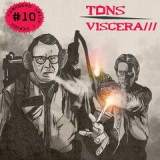
A new artist appears on the streets of City HC Records, he is Andrey Orenstein
multidisciplinary artist, part of the alternative Rock band ‘Tequilajazz’, with several solo musical incarnations such as: Amor Entrave, for electronic Indie beats with tocuhes of IDM of broken beats, Do you like trains? for Acid House, and 50DIX, dedicated to street beats such as jungle, drum n bass, ghetto house, Juke and Footwork, and the pseudonym he uses for Go Ahead! EP, the new and multifaceted 22nd release from the Valencian label.
IF U WANT 2 is the elegant track that takes us into the bustling avenues of the 2st century megapolis, where the urban rhythms of the dance battles in Chicago, Footwork and Juke, along with brief Jungle passages alternate in a brilliant composition with funk and jazz nuances accompanying tight percussion and distorted kicks at 160 BPM.
Tough and Ghetto House and rugged acid define FOOLZ, second track of the A-side in which the demonic power of the 303 sounds embrace the thick and husky voice that together with infectious laughter set a rhythm as pugnacious as it is playful.
FETTA DI LIMONE, Juke, Footwork and Jungle, a perfect combination of American influences, legacy of Dj Rashad together with the English tradition around bass music, are fused by 50DIX with the unexpected and playful Italian lyrics of Tomasso Girardi, in perfect conjunction with the pianos, ethereal pads and mutant synths, that forge the development of the track. Already anthemic before the first beat sounds.
Juke, IDM, Halftime and abstract broken beats combine for the ultimate dance elixir, in the last track of the vinyl titled ICE FEELS KEEN, reaching 170 BPM in a catharsis of braindance, soul and acid exaltation in a dreamy harmony, where the syncopated notes of Oleg Egorov's bass and the velvety voice of Julia Garnits (Ice Hokku) commune.
Bonus digital track - 50Dix ICE FEELS KEEN (DZA REFLIP). Hypnotic, sharp and minimalistic, DZA's remix transforms the original track into an intimate and evocative experience, in which every sonic element acquires more prominence and presence.
Bonus digital track 2 - Fetta di limone (Kaxtelian remix) Inspired by the classic hardtrance sounds of the 90s, from Valencian dance temples such as Chocolate, Kaxtelian reinterprets the track with distorted drums, catchy melodies and Rave spirit at 165 bpm.
Mastering by Steve Voidloss at Black Monolith Studios in London (UK), except for the Bonus track 2 mastered by Raszia.
Once again, artwork and design by Dani Requeni, giving artistic coherence to the label's aesthetic.
out of Stock
Last delivered 19 months ago available to reorder, subject to availability
The band is considered as a unique combination of the darkest sides of many
underground genres like grindcore, black/death metal, ambient, drone and of course
psychedelic music.
Tons formed in 2009 with members of hardcore bands from the 00's Turin scene (The
Redrum, Lama Tematica and NoInfo). Slow and heavy sounds take the place of
frenetic HC rhythms; the texts speak about weed in an ironic way, but also about a
certain tendency to esotericism that characterizes the city of Turin. In 2010 they
recorded a demo and in 2012 their first full length "Musinee Doom Session, Volume 1",
recorded by Danilo "Dano" Battocchio, was released for the Turin-based Escape From
Today (EFT050) and for the young Roman label, Heavy Psych Sounds (First non Black
Rainbows release, HPS005). In 2013 a split with Lento from Rome came out and Tons
began to plow the European venues, opening the stage for bands like Bongzilla,
Unsane, Church of Misery, Napalm Death, Pentagram etc ...
In 2015 the drummer Marco Dinocco left the band and was replaced by Andrea
Peracchia (Dogs for Breakfast/Slaiver). Paolo Paganelli (Woptime/Linea77) was also
added as lead guitarist. In 2018 the second full length of the band "Filthy Flowers of
Doom" was released for Heavy Psych Sounds Records, which would bring Tons again
around Europe in 2018 and in 2019. In 2021 they released a split record with the
mighty Bongzilla followed by a European tour together in 2022. On 7th October 2022
the band released a brand new album called "Hashension" and a repress for the 10th
anniversary of their debut album "Musinee Doom Session, Volume 1" with remastered
audio and a new cover artwork.
During these years Tons played in many important Festival, such as Desert Fest
London and Antwerp, Sonic Blast, Frantic Fest, Venezia Hardcore and HPS Fest.
QUOTE From the Band :"Three fun tracks for lovers of head banging who don't take
themselves too seriously like our friends Teo Segale (Rumore Mag.) and Ranch Sironi
(Nebula) to whom these songs are dedicated. "
This latest opus marks the band's studio comeback since 2018's "City Of Dope And
Violence", plus the opportunity to work with underground scene juggernauts like Tons
and Subsound Records and the consolidation of Alexander Lizzori as active producer
("Cyclops" / "2" era drummer and long time collaborator).
The band is considered as a unique combination of the darkest sides of many
underground genres like grindcore, black/death metal, ambient, drone and of course
psychedelic music.
Tons formed in 2009 with members of hardcore bands from the 00's Turin scene (The
Redrum, Lama Tematica and NoInfo). Slow and heavy sounds take the place of
frenetic HC rhythms; the texts speak about weed in an ironic way, but also about a
certain tendency to esotericism that characterizes the city of Turin. In 2010 they
recorded a demo and in 2012 their first full length "Musinee Doom Session, Volume 1",
recorded by Danilo "Dano" Battocchio, was released for the Turin-based Escape From
Today (EFT050) and for the young Roman label, Heavy Psych Sounds (First non Black
Rainbows release, HPS005). In 2013 a split with Lento from Rome came out and Tons
began to plow the European venues, opening the stage for bands like Bongzilla,
Unsane, Church of Misery, Napalm Death, Pentagram etc ...
In 2015 the drummer Marco Dinocco left the band and was replaced by Andrea
Peracchia (Dogs for Breakfast/Slaiver). Paolo Paganelli (Woptime/Linea77) was also
added as lead guitarist. In 2018 the second full length of the band "Filthy Flowers of
Doom" was released for Heavy Psych Sounds Records, which would bring Tons again
around Europe in 2018 and in 2019. In 2021 they released a split record with the
mighty Bongzilla followed by a European tour together in 2022. On 7th October 2022
the band released a brand new album called "Hashension" and a repress for the 10th
anniversary of their debut album "Musinee Doom Session, Volume 1" with remastered
audio and a new cover artwork.
During these years Tons played in many important Festival, such as Desert Fest
London and Antwerp, Sonic Blast, Frantic Fest, Venezia Hardcore and HPS Fest.
QUOTE From the Band :"Three fun tracks for lovers of head banging who don't take
themselves too seriously like our friends Teo Segale (Rumore Mag.) and Ranch Sironi
(Nebula) to whom these songs are dedicated. "
This latest opus marks the band's studio comeback since 2018's "City Of Dope And
Violence", plus the opportunity to work with underground scene juggernauts like Tons
and Subsound Records and the consolidation of Alexander Lizzori as active producer
("Cyclops" / "2" era drummer and long time collaborator).
On his Discrepant debut Memotone aka Bristolian Will Yates collects some unreleased recordings under a most aptly titled name - »Pruning« - following a healthy stream of releases for such esteemed labels as Black Acre, The Trilogy Tapes or Soda Gong.
Considering the process of pruning as a practice of selective removal, the album takes its name at face value never falling into a mere collection of tossed off material or random B-side assemblage, making it a cohesive listen throughout its disparate timeframe and evasions.
A statement about Memotone's vision itself, »Pruning« veers closer to his Fourth World/ECM/Exotica meets Sci-fi transmutations in alignment with what would be expected from a Memotone release on Discrepant. »Moss Zone« briefly sets the tone with a warm but queasy synth bedsheet that flows into the »Weird Figures« cyber- jungle, all small twinkling percussions and rainforest pads slowly rising. 'Riders' brings the synth-flute to an early Warp meets John Hassell's »City: Works of Fiction« scenario that pops up again in more disrupted form on »Wisdom MOTHER«. »Not What I Thought's« skewed tropical guitar gets going on lo-fi percussion and dissonant synth chords while »Jim Starling and The Inverse Church« bring to mind »Autoditacker« era Mouse on Mars going jazz-fusion. Or what we should expect from their Smalltown Supersound stint. »Beach Scene« is exactly it, as the sun sets into »Come In Don't Mind the Ghost« summer night's stars with all the allure of Stereolab.
Unearthed from the neolithic tar that eventually swathes all history, Aerial M"s early-98 Peel Session is once again among us. Compared to the studio takes, played strictly and singly by Aerial/Papa M-astermind David Pajo, these versions swing from the necks of road-burned players, breathing more bestially than their canonical cousins, glinting "pon the dark metallic roots that fed all of Pajo"s best guitar lines, winding thru time immemorial.
It’s been 20 years since Hinder’s major label debut Extreme Behavior was released, and we’re still not sure the music industry has recovered. Seldom have commercial and critical success been poles apart to this degree; this record went TRIPLE platinum and scored, what, four major hit singles (more if you count the international charts)?! Yet, critical scorn was unrelenting, one reviewer commenting Hinder “appeal not to fans of music, but fans of high fives.” Which is pretty funny…but this Oklahoma City band laughed all the way to the bank, as songs like “Get Stoned,” “Lips of an Angel” (#3 on the Hot 100), “How Long,” and “Better Than Me” were worldwide hits.
Part of this was due to the undeniable charisma of lead vocalist Austin John Winkler; producer Brian Howes also deserves credit for co-writing the songs. But a big part of Hinder’s allure (aside from the fetching cover photo taken straight from the cover of the book How to Tell a Naked Man What to Do: Sex Advice from a Woman Who Knows) was the band’s devil-may-care attitude. Fans of Jackass found their party-hearty soundtrack right here; Extreme Behavior is good, unclean fun. Remastered for its firstever vinyl reissue on its 20th birthday by Mike Milchner from Sonic Vision, and pressed in blackberry vinyl!
Orange/Black/Sunburst Vinyl "Choice Quality Stuff/Anytime," released in 1971, marked the third studio album by It's a Beautiful Day, a band celebrated for their eclectic blend of rock, jazz, folk, classical, and world-beat influences. Formed in 1967 in San Francisco during the height of the city's vibrant music scene, the band initially featured vocalist Pattie Santos, violinist David LaFlamme, and keyboardist Linda LaFlamme. Their distinct sound, highlighted by David's five-string violin, set them apart from their contemporaries, even though they never reached the same level of fame as Jefferson Airplane or Santana. By the time of this album, the band's lineup had shifted significantly. Founding members Mitchell Holman and Hal Wagenet had departed, replaced by bassist Tom Fowler (later known for his work with Frank Zappa) and guitarist Bill Gregory. The album, recorded amid these transitions, reflects both the band's creative maturity and their ability to evolve while staying true to their signature style. Tracks like "Creed of Love" and "Anytime" exemplify their musical diversity and lyrical depth. "Choice Quality Stuff/Anytime" was a continuation of the band's legacy, cementing their place as a unique voice in the late 60s and early 70s rock scene, even as their lineup and fortunes changed.
“We all grew up playing heavy music. For me personally, listening to artists like Swans, Godflesh, Neurosis and Kiss It Goodbye in my 20s was cathartic in a lot of ways. Identifying with people that have a similar world perspective, who are channeling their angst and frustration into the creative outlet of art and music — that was important.”
Josh Graham isn’t just talking about his decades-long career in heavy music, which has included A Storm of Light, Battle of Mice, and many years as the one-man visual department for Neurosis. He’s also talking about the formation of Guiltless, his new band with bassist Sacha Dunable (Intronaut), drummer Billy Graves (Generation of Vipers) and guitarist Dan Hawkins (A Storm of Light).
Guiltless released their debut EP, Thorns, via Neurot Recordings in early 2024. Crushing and cheerless, it seemed to welcome the apocalypse looming on our collective horizon. “The EP had a pretty narrow focus starting from my ideas,” Graham explains. “With this record, my main goal was to really collaborate with Sacha and Dan and Billy because those guys are great songwriters. The new album is meant to open up the sonic palette and explore more territory.”
That new album is Teeth to Sky, the band’s first full-length. Even more pulverizing and focused than its predecessor, the album’s collaborative songwriting approach was paired with an adjustment to the lyrical content.
You can hear it on “One Is Two,” which channels a tightly controlled Meshuggah churn through the more visceral lo-fi approach of Kiss It Goodbye or Swedish noise rock legends Breach. On “In Starless Reign,” Guiltless blend dissonant black metal and thundering doom while Graham invokes humanity’s inability to see the forest through the trees. Then there’s the bruising title track, which combines the gnarled sensibilities of The Jesus Lizard, Cherubs and Barn Owl into a rumination on Mother Nature’s revenge.
Teeth To Sky was recorded remotely by the members of Guiltless—except for the drums, which were recorded by Travis Kammeyer (Generation of Vipers) at Fahrenheit Studios in Johnson City, Tennessee. The album was mixed by Kurt Ballou at God City in Salem, Massachusetts, and mastered by Brad Boatright at Audiosiege in Portland, Oregon.
Insolate unveils the 'Full Disclosure' album, arriving 7th March 2025 on her Out Of Place Records, released on digital and double record vinyl. It's the Croatian artist's second full-length release, already supported by the likes of Rodhad, Stephanie Sykes, and Nastia, following 2019's 'Order Is Chaos' on the label and its subsequent remix album, which featured reworks by Ben Sims, Pfirter, Sev Dah, Amotik, Under Black Helmet, Volster, ASEC, and Flamina.
"'Full Disclosure' is a reflection of who I am today. It represents the music I love to play, featuring high-energy bangers alongside functional tracks while experimenting with chords, vocals and melodies. As the title suggests, Full Disclosure is about openness, transparency, and revealing the full truth of who I am as an artist" - Insolate
'On Your Knees' starts Insolate's 'Full Disclosure' LP with rolling dub-infused rhythm drenched in a subtle but potent 303, an otherwordly vocal providing a tripped-out vibe. Closing out the A-side is 'Stand Strong', a pacey groove with an effective vocal sample and well-swung drums shot through with razor-sharp stabs.
On the flip, Insolate teams up with Croatian guitarist PEP for 'The Proof', a real banger that marks his debut in Techno production featuring mind-melting arpeggio sequences and a shadowy atmosphere. This is before 'Survival Symphony' strips things back via minimal drum work and electrifying synthlines that build in intensity.
The title track of Insolate's 'Full Disclosure' album, perfect peak-time cut 'Full Disclosure', continues with glitchy sequences, a bass bin-shaking groove, and another high-impact vocal sample. The aptly named 'Playground' then picks up speed with racing drums and rattling percussion while synths wriggle around playfully, followed by 'Big City', which features hauntingly enchanting melodies laid over bubbling arps and a steady beat. Insolate's 'The Biggest Fan' is another rave-ready trip with carefully crafted polyrhythms which won't fail to hypnotise the dancefloor before 'Ocean of Tears' closes out Insolate's stellar long-player via a captivating vocal harmony and acid-soaked 909s.
Since 1997, Insolate has become synonymous with the Croatian Techno scene via her HUSH! and TRAUM event series and her Osijek-based Out Of Place record label that's spotlighted artists like Anne, Francois X, and many more. She has built an impressive international career that's led her play at Berghain, Rex, and Tomorrowland, while her productions have seen her win the support of titans like Laurent Garnier and Ben Klock and join labels such as Luke Slater's Mote-Evolver and Bpitch.
'Full Disclosure' is a masterful body of work that shows the complete wealth of Insolate's talent and two-decade-long experience in Techno.
out of Stock
Last delivered 7 months ago available to reorder, subject to availability
Whipped up in the dust of Rene & Rene's Tejano tornado "Angelito," the Dynamic label was just one among San Antonio record and real estate mogul Abe Epstein's enterprises. Dynamic's flagship outfit, the Commands, marched "No Time For You" up to the middle of the charts in 1966 with performance chops honed jet-sharp by the demanding Air Force Base circuit. That takeoff paved a runway for 20 more soulful Dynamic singles over an impressive 30-month campaign. Epstein's open-door policy brought a diverse cross-section of Texas talent into convergence within his General McMullan Drive studio, as whites, blacks, and Latinos alike suited up for service in whichever new group the call of duty called for. Epstein's Alamo City melting pot is ladled out here in 21 (28 on the 2LP) of Dynamic's most intriguing dishes by the Tonettes, Little Jr. Jesse & the Tear Drops, Don & the Doves, Willie Cooper & the Webs, Bobby Blackmon & His Soul Express, and Doc & Sal. Lone Star pic sleeves, full-color dancehall photography, and rich ephemera plant a new flag for soul in soil that's seen its share of hoisted banners.
The Local Moon (East Berlin 1987/88) The name The Local Moon originated from an intimation by the oriental jester Nasreddin that every city had its own moon. This idea did not go without a certain local colour in the bipolar frontline city of Berlin; from an astropolitical view, its divided sky never saw a full moon, the light conditions were ideologically broken. From the black light of those years emerged The Local Moon. René Le Doil and Ronald Lippok took wings like two crows from a pigeon’s nest when quite suddenly in 1987 light entertainment permeated East Berlin’s Offground and the two musicians were hired for the New Romantic revue New Affair. Before that, Le Doil had been involved in the Stattgespräch fashion spectacle and in Allerleirauh, the “thing of light, space, sound and leather”. Lippok had been the drummer for Rosa Extra, one of the earliest punk rock bands in East Berlin. Together with his brother Robert, who had already come into the picture with an avant-punk project named after the Jules Verne novel Fünf Wochen im Ballon (Five Weeks in a Balloon), Ronald Lippok then founded the post-punk commune Ornament & Verbre- chen, for whom Le Doil would occasionally guest as an... more credits released July 20, 2022 Tape (Side A, B, C – Track #1 - #16) Music by The Local Moon, recorded in April 1987 René Le Doil: accordion, bass, guitar, keyboards, piano, voice Ronald Lippok: acoustic guitar, keyboards, percussion, voice Produced by The Local Moon Single (Side D – Track #17 - #19) Music by The Local Moon, recorded in May 1988 René Le Doil: keyboard Ronald Lippok: keyboard, voice Charlotte Jansen: oboe, voice Alex Wolf: percussion Bo Kondren: emax, traktor Detelf Pegelow: guitar Robert Lippok: clarinet, ethno brass Produced by Bo Kondren Recorded at Gunther Krex Studio
out of Stock
Last delivered 19 months ago available to reorder, subject to availability
Superior Viaduct and our new artist label, W.25TH, are proud to continue to be the home for Cindy Lee with the physical release of the celebrated album Diamond Jubilee. Universally praised, shortlisted for the 2024 Polaris Music Prize, and already hailed by Pitchfork as the 3rd best album of the 2020s, anticipation and conversation around the record has been high.
Cindy Lee is the performance and songwriting vehicle of Patrick Flegel (who previously fronted influential indie group Women). Over several albums, Flegel has combined delicate melodies and sheer beauty with moments of experimentation. With Diamond Jubilee, Flegel’s undeniable songcraft comes to the foreground, embracing a more instant connection and accessibility. Timeless tales of love and longing, surrounded by sticky hooks, take the listener on an unforgettable journey. Diamond Jubilee was written and recorded over several years by Patrick Flegel in Toronto, Durham, Calgary and Montreal at Realis- tik Studios. The album was mixed by Steven Lind, who also contrib- utes to several tracks and co-wrote “Baby Blue,” and was mastered by Joshua Stevenson.
Triple LP on black vinyl comes with 24” x 36” poster.
out of Stock
Last delivered 4 months ago available to reorder, subject to availability
Loyle Carner will release his highly anticipated sophomore record, 'Not Waving, But Drowning' on 19 April via AMF Records.
'Not Waving, But Drowning' follows Loyle's BRIT (Best Male, Best Newcomer) and Mercury Prize nominated, top 20 debut 'Yesterday's Gone'. The bedrock of honest and raw sentimentality that you heard on 'Yesterday's Gone' left an inextinguishable mark on music in general and UK Hip Hop in particular, standing out as an ageless, bulletproof debut.
'Not Waving, But Drowning', Loyle's new album, gives yet more evidence - as if it were needed - of his razor-sharp flow and his unique storytelling ability. Yes, he can rap, but he allies that with the sensitivity of a poet, the observational skills of a novelist, and warmth of your best friend. The album opens with 'Dear Jean', a letter to his mother in which he's telling her that he has found the love of his life, 'a woman from the skies', and he's moving out.
It goes without saying that Loyle's music is hard to categorise, but what is even more impressive is that for someone who grew up listening to Mos Def, Biggie Smalls, Roots Manuva, and Wu Tang Clan, he doesn't sound like any of them. Although he might from time to time give lyrical nods to them, he's no imitator.
Loyle loves cooking. There are two tracks on this album named after chefs. The British-Israeli chef Yotam Ottolenghi, and the now deceased Italian chef Antonio Carluccio. 'Ottolenghi' the first single from the album was featured on the BBC Radio 1 B-list, BBC 6 Music A-list and has already been streamed over 5 million times.
Loyle refers to real life for everything, the title of 'Yesterday's Gone' came from a song of his step father, the title of his new album 'Not Waving, But Drowning' comes from a poem by his grandfather, which in turn came from a Stevie Smith poem. What you hear on the track 'Krispy' is real. He is pouring his heart out to his best friend Rebel Kleff after their relationship went downhill, he invites him on the track to say his piece but he doesn't turn up, so we get a flugel solo instead.
Loyle also has his own personal black consciousness movement. When he refers to his 'fathers' in the track 'Looking Back' he really is referring to two fathers. His biological father, a black man who he knows, but knows very little of, and his step father, a poet and musician who happens to be a white man but died a sudden unexpected death from epilepsy (SUDEP). With no real emotional ties to his biological father, but a deep connection with a deceased step-father, where does a young child turn He succinctly captures many of the great, unspoken, cultural and historical paradoxes of multicultural Britain on 'Looking Back'.
An album like this is hard to find. It is for those who like their Hip Hop to have soul, and their soul to have spirit. This is because it works on so many levels, but it is reflecting the personality of its creator. There are a host of collaborators here, Jorja Smith, Rebel Kleff, Kiko Bun, Kwes, Jordan Rakei, Sampha, Tom Misch and more, but none are overpowering. They blend righteously into place.
Loyle is not bitter with people who have let him down, or a society that lets so many down, but the combination of anger and love he has gives his voice the perfect blend of strength and vulnerability. This might be a coming of age album, but it's also a coming of ageless album. Loyle's 2019 Spring tour - which includes London's Roundhouse - sold out within 20 minutes of being on sale.
Not Waving, But Drowning
A rapper that raps about family is hard to find. The boys in the 'hood' tend not to be that interested in how much a 'brother' loves his mother, or how much he misses his dad, or even how much he misses his best friend. The boys in the 'hood' tend to be obsessed with the size of their cars, girls, bank accounts, and other personal 'possessions'. Loyle Carner's Mercury and BRIT Prize nominated debut 'Yesterday's Gone' (Released 2017), made it clear that he wasn't that kind of rapper. In fact, every time I talk to him about his work we talk about the world, and we tended to confuse ourselves by calling his work rap, poems, or songs, sometimes in the same sentence. They are in truth all of these things.
Here's some poetry.
Honestly I need them.
I hate them but I grieve them
I think I've finally found the reason
Trust
Like the fire needs the air.
I won't burn unless you're there.
'Not Waving, But Drowning', Loyle's forthcoming new album, gives us yet more evidence, (if it were needed), that he still has what rappers call, flow, but he hasn't lost any of his story telling qualities. Yes, the boy can rap, but a rapper with the sensitivity of a true poet, the observational skills of a novelist, and warmth of your best friend. The album opens with 'Dear Jean', a letter to his mother in which he's telling her that he has found the love of his life, (a woman from the skies), and he's moving out. He really loves the woman from the skies, but he still loves his mum, and so he reassures her that there is no competition, and tells her that 'She's not behind me or behind you, but beside we and beside two', his words. Or to put it another way, moving out without moving out. My words.
It goes without saying that Loyle's music is hard to categorise, but what is even more impressive is that for someone who grew up listening to Mos Def, Biggie Smalls, Roots Manuva, and Wu Tang Clan, he doesn't sound like any of them. Although he might from time to time give lyrical nods to them, he's no imitator. He says finding his own voice was something he always found easy. Although young, (in terms of a musical career), he has confidence in his own words and his own voice, and has never been tempted to sound like he's been hanging out in the USA, or rolling in 'Grime' on the mean streets of East London. And so when it comes to the creative process he doesn't simply find a beat to jump on and ride. Beats are important, but they are tenderly layered with samples, keyboards, or live drums, all imaginatively assembled for the laying on of words. Some tracks start with the idea, some with poetry, and some with a verse from a singer or some other melodic inspiration, but there is no formula.
Here's some poetry.
Don't hold any memories of us
Rather hold you everyday until the memories are dust
Yo we only caught the train
Cos you know I hate the bus
A prolific reader, who has dyslexia is hard to find. Add ADHD (Attention deficit hyperactivity disorder) to that and life should become even more difficult. To deal with your difficulties you devise coping strategies, which can differ from person to person. Loyle loves cooking. There are two tracks on this album named after chefs. The British-Israeli chef Ottolenghi, and the now deceased Italian chef Antonio Carluccio. Loyle describes himself as 'weird' because he is happy to read a cookbook as if he was reading a novel or a book of poetry. He has opened a cookery school for young adults not just because he loves food and wants to make more of it, but because it is one of the few things that can focus the ADHD mind. And when it comes to his other love, football, his approach is the same. Focus. He wanted to be a striker he says, up front scoring goals, but found his best position was in midfield because he was able to focus, check options, and see passes ahead of time, providing passes for other players just when they needed them. He says, 'You don't grow out of ADHD, you grow into it.' Loyle is also working with Levi's® on their music project where he is mentoring young musicians over a six month period, culminating at Liverpool Sound City festival.
More poetry.
When the going is tough
I wait till it falls on deaf ears
Hearsay
Without the boundaries of love
He also said, 'Ask most people and they will say that they love their mothers, but most are not going to rap about her'. On his first album Loyle's mum Jean wrote about the 'scribble of a boy' that growing up would take things apart to see how they worked. On this album she speaks with pride about a man who has found his place in the world.
Yes, poetry.
I'm still looking for the answers
Trying to find the right questions
Still waiting for my fathers
But can't break them in to sections
This poetry is serious. Loyle has his own personal black consciousness movement. He told me that he always felt safe at home, and being the darkest one in the family never meant a thing, but then when he had to face the outside world he felt hostility. It shook him up. Now he had to start asking questions, but what were the questions. This is serious. When he refers to his 'fathers' in the verse above taken from the track 'Looking Back' he really is referring to two fathers. His biological father, a black man who he knows, but knows very little of, and his step father, a poet and musician who happens to be a white man but died a sudden unexpected death from epilepsy (SUDEP). So to whom would a young black (or mixed race) kid turn He succinctly captures many of the great, unspoken, cultural and historical paradoxes of multicultural Britain when he says, 'My great grandfather could of owned my other one.' We are a people descended from enslaved people on one hand, and enslavers on the other, something we are still struggling to come to terms with, and this can be apparent in one family. A big book could have told you that, but here we get it in one line on the track, Looking Back.
Loyle refers to real life for everything. The album is peppered with captured moments that he records on his phone. These moments can range from conversations with taxi drivers, to capturing the moment when England scores a goal in the world cup. The title of 'Yesterday's Gone' came from a song of his step father, the title of his new album 'Not Waving but Drowning' comes from a poem by his grandfather, which in turn came from a Stevie Smith poem. What you hear on the track 'Krispy' is real. He is pouring his heart out to his best friend after their relationship went downhill, he invites him on the track to say his piece but he doesn't turn up, so we get a flugel solo instead. Yes people, this is real.
An album like this is hard to find. It is for those who like their Hip Hop to have soul, and their soul to have spirit, this is an album for those who have, (I'm sorry, I'm going to say it), emotional intelligence. This is because it works on so many levels, but it is reflecting the personality of its creator. There are a host of collaborators here, Jorja Smith, Rebel Kleff, Kiko Bun, Jordan Rakei, Sampha, Tom Misch and more, but none are overpowering. They blend righteously into place. Loyle is not bitter with people who have let him down, or the society that has let him down, but the combination of anger and love he has gives his voice the perfect blend of strength and vulnerability. This might be a coming of age album, but it's also a coming of ageless album. His first album worked, and this second album is a continuation of that work. Not creating a form, but being formless, as someone like Bruce Lee once said.
And here's some poetry from mum.
We talked long in to the darkest hours
Until we saw the burnished sky
And our eyes stung
As our words blurred and became thoughts
As we were silenced by the dawn
We clung to each other like sailors in a storm
out of Stock
Last delivered 19 months ago available to reorder, subject to availability
Since 2013 - Brighton & Barcelona duo PAYFONE have been releasing records on respected NYC and UK labels GOLF CHANNEL , LENG and DEFECTED.
Now releasing on their own OTIS imprint - PAYFONE deliver another deep 12 in preparation for their debut album.
In September 2024 PAYFONE released their WILD BUTTERFLY EP which appeared in many best of 2024 end of year DJ charts whilst gaining the support from the likes of Richard Dorfmeister, Leo Mas and Daddy G.
Phil Passera and Jimmy Day's productions continue to gain fans across the disco world with a template of synth and bass that equates to a heady and intoxicating excursion into early electronic soul disco circa late 70's / early 80's.
Known for their atmospheric, mid-tempo sultry selections, PAYFONE offer up another deep dive of synth-driven drum machine pleasure with remix duties courtesy of San Francisco trio 40 Thieves: Corey Black, Layne Fox and Jay Williams.
Latest offering VOLT to VOLT is a moody meltdown of Moog bass and full frontal vocals featuring the talents of North Carolina's JO GABRIEL HARRIS and New York City's TERI JACKSON.
Always a cut above, this Payfone release will be VINYL ONLY.
Get with it !
Payfone have released over 16 individual 12" releases, including Phonica's 'Record of 2023 - 'I Feel You'
out of Stock
Last delivered 60 days ago available to reorder, subject to availability
Vinyl Only / Sleeve manufactured with 400 mcn Fedrigoni "Shiro Eco" paper / Original unreleased poster with alternative artwork insert with notes by Tony Higgins printed on schedography peach past color paper / PVC outers / original artwork /
Personnel:
Tete Mbambisa - Piano
Basil Coetzee - Tenor Sax and Flute
Zulu Bidi - Bass
Monty Weber - Drums
Notes:
Mbambisa first gained prominence as a pianist in 1961 as a member of the Jazz Giants, this time with Pukwana as saxophonist, bassist Martin Mgijima and drummer Makaya Mtoshoko, setting the sound and shape of a scene that became known as Cape Jazz. Following an introduction from Chris McGregor, Mbambisa formed a band, The Swinging City Six, with saxophonist Ronnie Beer before going on to play at the end of the 1960s in the groups The Soul Jazzmen and Spirits Rejoice with Duku Makasi. As a member of The Soul Jazzmen, Mbambisa recorded the breakthrough album 'Inhlupenko Distress' in 1969 for the City Special label. After a recording hiatus, Mbambisa returned in 1974 with an octet album, 'Tete's Big Sound' released on a newly formed label, As Shams or The Sun, established by South African record store owner and independent producer Rashid Vally. 'Tet's Big Sound' included tracks like 'Unity' and the 'Black Heroes Lamentation', now considered a classic in the South African jazz underground.
The sound that Mbambisa carved in this period was wholly acoustic, and is a style that now is often loosely labelled spiritual jazz, a sound that alludes to deep African textures and rhythms balanced with clear nods to American hard bop and modal jazz, sometimes edging toward free improvisation in echoes of John Coltrane and Pharaoh Sanders. The music is often centred around a fulcrum of trance like vamps with repeated motifs that allow for extended pieces that create a hypnotic effect. This clearly exemplified on Mbambisa's next album, 'Did You Tell Your Mother', released in 1979, once more for The Sun label. (Tony Higgins)
Born as a culture and art movement that began in the Bronx in New York city in 1973, Hip Hop emerged from neigh- borhood block parties thrown by the Black Spades, an African-American group that at the time was describes a being a gang, a club, and a music group. Since then, and for the last fifty years, Hip hop culture has spread to both urban and suburban communities throughout the United States and subsequently the world, Furthermore, it has become a phenomenon that influenced music, fashion and pop culture as a whole. An album that features many of the most influential artists of the genre, including Run DMC, LL Cool J, Grandmaster Melle Mel, Ice-T, Slick Rick, Eric B, & Rakim, Naughty By Nature and Big Daddy Kane among many others. It also includes a curated selection extrac- ted from the Rap Mania: The Roots Of Rap event, which was a bi-coastal simulcast concert that brought together some of the most popular Hip Hop artists of that era for a one-time-only show. East Coast Hip Hop meets West Coast Hip Hop before the gangsta craze and east vs west rivalry really got started. The show was a celebration of the 15th Anniversary of Hip Hop and took place simultaneously at the Apollo Theater in New York City and The Palace Theater in Hollywood. With fantastic artwork and remastered sound, this is essential collection, that any hip hop fan will treasure and that will help as an introduction to those interested in knowing more about a movement that changed the course of pop culture. Also, remember that this is not available on streaming platforms.
„Life has never been easy, so keep moving“ is the opening line of Making moves, the title song of SANTROFI‘s new album. Four years ago their celebrated debut ‚Alewa‘ introduced this 8 piece Highlife collective powerhouse from Accra to the world.
After five solid years on the road, SANTROFI is now ready to release some fresh material. co-produced and mixed by four-time Grammy Award winner Jerry Boys (REM, Ali Farka Toure, Buena Vista Social Club, Orchestra Baobab, Kronos Quartet). The band has continued an intense tour schedule, with 2024 seeing their first shows in the USA as well as a Japan tour of with 13 sold out shows 2024. where.
Making moves is both a celebration of SANTROFI’s roots and a leap into the future of Highlife. The opening track Amina is a Ghanaian childhood game turned Highlife Funk. It draws from the past, pushing it into the future. The title song Making moves sees Santrofi team up with the current booming Afrobeatscene in Ghana: It features Ghanas Newcomers Kofi Jamar and Arathejay. The song talks about trying to survive on the sometimes crazy streets of Accra without loosing your mind. Su nkwa sees Santrofi celebrating their love for typical Sikji Highlife music. And the nostalgic No money, no honey sums up yet another common truth from the streets of Accra. From the opening Highlife funk of Amina to the Ghanaian-childhood-game-turned- boogie-banger Gyae me how, this record will get you dancing.
Led by producer-bassist Kojo Ofori, SANTROFI unites 8 of Accra’s most gifted musicians with a passion for both vintage highlife grooves and a hip hop sensibility. Members of the band have played with leading Ghanaian artists including Ebo Taylor, Pat Thomas, Ambolley, AK Yeboah and highlife pioneer AB Crentsil with whom they recorded just before he passed away - watch out for that!
SANTROFI have shared stage and studio with rising stars of Ghana’s vibrant urban music scene such as Kidi, Yaw Tog, Black Sherif, AratheJay and even Nigerian superstar Wizkid (who has made Accra his second home). The upcoming album sees the band teaming up with some of the most exciting talents in Ghana‘s such as AratheJay and Kofi Jamar.
If you think it is impossible to play a funk groove (or even drill) over a pulsing Highlife clave: SANTROFI will prove you wrong. Listen to the phrasing of SANTROFI‘s horn section, hear the Highlife clave running through every bar of their music. Santrofi are pushing Ghanas Highlifegrooves into the future without loosing its sweet soul. And don’t forget to come and see them Making moves live in your city.
Berlin based label "Matasuna Records" kicks off the new year 2025 with a soulful 7inch featuring songs by Barcelona's "The Blaxound" and singer "John Vermont". Their common love for vintage soul from the 60s and 70s brought them together for this project to compose and record classic soul sung in Spanish. This 45 shows that the concept worked out wonderfully: Spanish Soul at its best, sounding authentic and contemporary at the same time!
Matasuna Records, known for its reissues of musical treasures from the past, also has an eye for exciting new discoveries in contemporary music. With "The Blaxound & John Vermont" the label has once again found an interesting project for soulful & contemporary music that fits perfectly into the label's sound spectrum and will appeal to lovers of authentic soul music.
The two songs "No Es Por Ti" and "Qué Más Te Da?" from their recently released album will be released for the first time as a 7-inch vinyl single on Matasuna Records. The instrumentation and the lovely harmonies are the ideal basis for John Vermont, who with his versatile voice, sometimes powerful, sometimes smooth - but always soulful - can fully develop his vocal spectrum and fill the songs with his presence. Instrumental and vocal arrangements are beautifully balanced and harmonious. Beatific!
Artist info
"The Blaxound" is a Barcelona-based music project with deep ties to the city's Funk and Soul sceney. The project started in 2003 under the direction of musician, songwriter and producer "Marta Roman". The Blaxound has released four studio albums between 2007 and 2024 on different labels.
Years ago, Marta focused on the idea of recording a classic soul album sung in Spanish, respecting as much as possible the original production and sound of the late 60s and early 70s. Luckily, she met singer "Ivan Espejo" aka "John Vermont", which was the turning point and led to the full vocal album "Déjalo Ir" released on "Love Soul Productions" in 2024.
All songs were composed, recorded and produced by Marta Roman in her own studio, Black Flamingo Recordings, in Barcelona, Spain.
out of Stock
Last delivered 20 months ago available to reorder, subject to availability
Black vinyl / 505mcn paper / 30 x 60 cm Insert with Liner Notes by Tony Higgins printed on 250 mcn Lenza Top Recycling Paper / Condensed interview to Spata Sisters and exclusive pictures.
Personnel:
Enzo Randisi - Musser Percussion Keyboards
Riccardo Randisi - Acoustic Piano, Rhodes, ARP & Korg Keyboards
Marcello Pellitteri - Drums
Giuseppe Costa - Acoustic Bass & Electric Bass Guitar
Mimmo Cafiero - Congas & Percussions
Sandro Palacino - Tenor and Soprano Saxes
Loredana Spada - Vocalist
Cinzia Spata - Vocalist
Mary Lo Giudice - Vocalist
Mariella Gueli - Vocalist
Notes:
Did someone say Summer? Sicily is what Cuba is to the Caribbean, sun, sea, easy and friendly people with lots of troubles! You won't find anything better around that identifies the summer more than this album by Enzo Randisi who at the beginning of the 80s put together a Swing Ensemble as a tribute to that "cheerful" movement of Jazz music. But Enzo and his fellas just couldn't stay on track and put in the best that the alternative Palermo area could offer in that historical period, like the sisters Cinzia and Loredana Spata, who brought the production to a next level in the vocal version of All Blues or in Chic Corea's Spain. But what really struck us was Charles Cables' version of "Quite Fire" (here missspelled as "Quite Fair"), released a few months earlier only in Japan and which would only become famous in the 90s with the Acid Jazz movement, and this tells us a lot about how hungry Enzo and Riccardo were of musical knowle, to be able to find some pearls in a city with basically no record shops and isolated...well...it's on an island! For this re-press we enlisted Tony Higgins, who recently finished a very long commitment and greenlight to delight us with his polished English...Welcome back Tony!
As Jess Sylvester finished his Hardly Art debut as Marinero in the fall of 2020, he realized it was time for a change. Sylvester grew up in Marin County, on the doorstep of San Francisco. It was a nurturing community for a high-school punk with a pompadour and, later, for a sober songwriter with a proclivity for moody psychedelia. But he wanted to be challenged and inspired by a new setting and scenario around strangers who prompted him to approach his music in unexpected ways. So in September 2020, as the world continued to reel in lockdown, Sylvester headed several hours south to Los Angeles, a city that, despite the relative proximity, the film buff knew largely from classic and cult films situated there. When he arrived, he kept digging into that cinematic past-Robert Altman's The Long Goodbye, with John Williams' classic theme, or classic 90s movies about East LA, many featuring Edward James Olmos. They shaped his understanding of his new town just as it began to open. This is one pillar of the multivalent and endlessly lush La La La, Marinero's new album about sobriety, identity, and fantasy that is playfully named both for the city that helped shape it and the sophisticated pop it contains. Sylvester wrote about characters outside of himself, whether considering the heroine reckoning with her own version of keeping clean or the screenwriters whose work was deemed communist simply as a political convenience. He linked those songs with motivational anthems about self-acceptance and playful numbers about flirting through food, shaping a 12-song set rich with humor, empathy, and encouragement. Sure, La La La is a continuation of the slippery genre play Sylvester started with 2021's Hella Love, 2019's Trópico de Cáncer, or even before that. But it also feels like a fresh beginning for Marinero, as Sylvester realizes how boundless this project can be. He began to think about the music of his childhood, how his mother is from San Francisco with Mexican roots, and how he'd heard so much salsa growing up as an impetuous teenager. So he wrote "Taquero," a red-hot salsa tune that uses tacos and their trappings as a source of endless metaphors for come-ons. And then there was the Ray Barreto or Santana-inspired "Pocha Pachanga," with organ gliding and percussion pulsing beneath his yearning vocals, warped as if by desert winds. In Los Angeles, he found a wealth of players who spoke this music like language itself (including Chicano Batman's Eduardo Arenas), all ready to play with and push these familiar forms. Sylvester has also been sober for 21 years, since a cross-country sojourn to attend college in Boston ended in a chemical haze. Today, he sees friends facing the same decisions he made two decades ago, and he brings bits of that experience to bear in songs that feel like self-help anthems. Recorded with a musical hero (and labelmate) of his, Chris Cohen, "Sea Changes" feels like sunshine breaking through dark clouds, as Sylvester acknowledges the newfound confidence and clarity in a friend who has stepped away from destructive habits. In the past, Sylvester has been intractably linked to his identity as a Mexican-American, born to parents from Mexico and Irish- American descent who settled in San Francisco. That can be limiting, of course, tying him to notions of sound and style that aren't always correct. On La La La, he simultaneously steps into and out of those preconceptions, singing tracks above salsa in joyous Spanish or pondering the dynamics of the Hollywood Ten and blacklists above mysterious lap steel and teasing trumpet. His identity, then, should now be clear: He is a Californian, making music shaped by the diversity of encounters and experiences that are a central part of that state's fabric. Never before has he presented himself so fully and unabashedly on tape as with La La La, an album Sylvester built with new inspirations to deliver new charms.
Volume 1 of this expertly curated project of 90s Italian House - put together by Don Carlos.
If Paradise was half as nice… by Fabio De Luca.
Googling “paradise house”, the first results to pop up are an endless list of European b&b’s with whitewashed lime façades, all of them promising “…an unmatched travel experience a few steps from the sea”. Next, a little further down, are the institutional websites of a few select semi-luxury retirement homes (no photos shown, but lots of stock images of smiling nurses with reassuring looks). To find the “paradise house” we’re after, we have to scroll even further down. Much further down.
It feels like yesterday, and at the same time it seems like a million years ago. The Eighties had just ended, and it was still unclear what to expect from the Nineties. Mobile phones that were not the size of a briefcase and did not cost as much as a car? A frightening economic crisis? The guitar-rock revival?! Certainly, the best place to observe that moment of transition was the dancefloor. Truly epochal transformations were happening there. From America, within a short distance one from the other, two revolutionary new musical styles had arrived: the first one sounded a bit like an “on a budget” version of the best Seventies disco-music – Philly sound made with a set of piano-bar keyboards! – the other was even more sparse, futuristic and extraterrestrial. It was a music with a quite distinct “physical” component, which at the same time, to be fully grasped, seemed to call for the knotty theories of certain French post-modern philosophers: Gilles Deleuze, Félix Guattari, Paul Virilio... Both those genres – we would learn shortly after – were born in the black communities of Chicago and Detroit, although listening to those vinyl 12” (often wrapped in generic white covers, and with little indication in the label) you could not easily guess whether behind them there was a black boy from somewhere in the Usa, or a girl from Berlin, or a pale kid from a Cornish coastal town.
Quickly, similar sounds began to show up from all corners of Europe. A thousand variations of the same intuition: leaner, less lean, happier, slightly less intoxicated, more broken, slower, faster, much faster... Boom! From the dancefloors – the London ones at least, whose chronicles we eagerly read every month in the pages of The Face and i-D – came tales of a new generation of clubbers who had completely stopped “dressing up” to go dancing; of hot tempered hooligans bursting into tears and hugging everyone under the strobe lights as the notes of Strings of Life rose up through the fumes of dry ice (certain “smiling” pills were also involved, sure). At this point, however, we must move on to Switzerland.
In Switzerland, in the quiet and diligent town of Lugano, between the 1980s and 1990s there was a club called “Morandi”. Its hot night was on Wednesdays, when the audience also came from Milan, Como, Varese and Zurich. Legend goes that, one night, none less than Prince and Sheila E were spotted hiding among the sofas, on a day-off of the Italian dates of the Nude Tour… The Wednesday resident and superstar was an Italian dj with an exotic name: Don Carlos. The soundtrack he devised was a mixture of Chicago, Detroit, the most progressive R&B and certain forgotten classics of old disco music: practically, what the Paradise Garage in New York might have sounded like had it not closed in 1987. In between, Don Carlos also managed to squeeze in some tracks he had worked on in his studio on Lago Maggiore. One in particular: a track that was rather slow compared to the BPM in fashion at the time, but which was a perfect bridge between house and R&B. The title was Alone: Don Carlos would explain years later that it had to be intended both in the English meaning of “by itself” and like the Italian word meaning “halo”. That wasn’t the only double entendre about the song, anyway. Its own very deep nature was, indeed, double. On the one hand, Alone was built around an angelic keyboard pattern and a romantic piano riff that took you straight to heaven; on the other, it showcased enough electronic squelches (plus a sax part that sounded like it had been dissolved by acid rain) to pigeonhole the tune into the “junk modernity” section, aka the hallmark of all the most innovative sounds of the time: music that sounded like it was hand-crafted from the scraps of glittering overground pop.
No one knows who was the first to call it “paradise house”, nor when it happened. Alternative definitions on the same topic one happened to hear included “ambient house”, “dream house”, “Mediterranean progressive”… but of course none were as good (and alluring) as “paradise house”. What is certain is that such inclination for sounds that were in equal measure angelic and neurotic, romantic and unaffective, quickly became the trademark of the second generation of Italian house. Music that seemed shyly equidistant from all the rhythmic and electronic revolutions that had happened up to that moment (“Music perfectly adept at going nowhere slowly” as noted by English journalist Craig McLean in a legendary field report for Blah Blah Blah magazine). Music that to a inattentive ear might have sounded as anonymous as a snapshot of a random group of passers-by at 10AM in the centre of any major city, but perfectly described the (slow) awakening in the real world after the universal love binge of the so-called Second Summer of Love.
For a brief but unforgettable season, in Italy “paradise house” was the official soundtrack of interminable weekends spent inside the car, darting from one club to another, cutting the peninsula from North to centre, from East to West coast in pursuit of the latest after-hours disco, trading kilometres per hour with beats per minute: practically, a new New Year’s Eve every Friday and Saturday night. This too was no small transformation, as well as a shock for an adult Italy that was encountering for the first time – thanks to its sons and daughters – the wild side of industrial modernity. The clubbers of the so-called “fuoriorario” scene were the balls gone mad in the pinball machine most feared by newspapers, magazines and TV pundits. What they did each and every weekend, apart from going crazy to the sound of the current white labels, was linking distant geographical points and non-places (thank you Marc Augé!) – old dance halls, farmhouses and business centres – transformed for one night into house music heaven. As Marco D’Eramo wrote in his 1995 essay on Chicago, Il maiale e il grattacielo: “Four-wheeled capitalism distorts our age-old image of the city, it allows the suburbs to be connected to each other, whereas before they were connected only by the centre (…) It makes possible a metropolitan area without a metropolis, without a city centre, without downtown. The periphery is no longer a periphery of any centre, but is self-centred”.
“Paradise house” perfectly understood all of this and turned it into a sort of cyber-blues that didn’t even need words, and unexpectedly brought back a drop of melancholic (post?)-humanity within a world that by then – as we would wholly realise in the decades to come – was fully inhuman and heartless. A world where we were all alone, and surrounded by a sinister yellowish halo, like a neon at the end of its life cycle. But, for one night at least, happy.
out of Stock
Last delivered 84 days ago available to reorder, subject to availability
Die 1987er Black Uhuru-Alben "Positive" und "Positive Dub" zählen zu den besten Arbeiten der legendären Reggae-Band und erscheinen nun kombiniert in remastered Qualität. Produziert von Steven Stanley, mit Sly & Robbie als Studiomusiker, war "Positive" das letzte Album mit Delroy "Junior" Reid on vocals. Beide Formate enthalten die vollständigen 16 Tracks, die LP ist auf schwarzem 180g Doppelvinyl im Gatefold gepresst.
- "At its best, Black Uhuru combines the persistent dance-inciting rhythms of pure reggae with substantial pop melodies and soulful vocals." - St. Petersburg Times
- "The sheer tunefulness the band has displayed in the past." - The Washington Post
- "Uplifting, yet realistic. It paints real, and often graphic, pictures of conflict in the Third World." - Ottawa Citizen
out of Stock
Last delivered 20 months ago available to reorder, subject to availability
Eastern Rebellion 3 was recorded in 1979 at the Sound Ideas Studio in New York City, USA. Musicians include Cedar Walton on piano, Curtis Fuller on trombone, Bob Berg on tenor saxophone, Sam Jones on bass and Billy Higgins on drums. The renowned jazz musicians deliver 6 solid jazz tracks all written by Cedar Walton, except their jazz interpration of the standard “Never Never Land” which was written by Jule Styne, Adolph Green and Betty Comden.
Imaginary friends Akka & BeepBeep share the third release on their label: Floral Ancestors by Raduns. The 12” offers blooming ambient rooted in dub, lush drone and hand-picked cosmic that’s all grown deep in Detroit.
Spacious sonic arrangements vividly swell yet keep grounded within a sculptural rhythmic core. Raduns sows synth basslines and wispy pads next to harmonious guitars and muted field recordings. Grooving propulsion drives throughout. Rhythms appear, in negative space, like outlines between leaves. Recorded with machines direct to SD card, the compositions represent ephemeral blessings of experience. As if strolling into a verdant conservatory, the layered and diverse sensations blend into one cohesive revelatory experience.
On their first record, Raduns draws an ancestral line in Detroit as inspiration. A time when you could ride a streetcar from Dexter-Linwood to Belle Isle. A time before freeway expansion demolished vibrant Black neighborhoods. A time before the rebellion, motown and white flight. A time when Raduns’ great-grandparents were florists in the city, serving the community in times of celebration and times of grief. This melancholic circle shapes the project in which Raduns summons these Floral Ancestors, stretching upward from the darkness of the earth into the light of the world back down once more.
AKKA’s Side: “Grass Boulevard” exhales a luscious soundscape that develops through wave-crashing synths and circulated guitars to a transplanted acid lead. “Spread” lays out a decoration of blended sample and hold synth with kosmische styled guitar licks. Tracked as a single take in a Detroit community studio, the tune intuitively reseeds the symbiotic sprout between krautrock and Detroit techno.
BEEP’s Side: “Metrograde Bouquet” submerges you into the bulb of a handcrafted vase. Dub techno roots grow out into murky water with energy that is subtle yet profound. “Oldest of Arrangements” textures breaths of misty air cascading ventilating in on itself. The track’s time seems to stretch and disappear within a dark and deep undercurrent. A harmonic and reverberant resonance closes the record in a flowering of beauty and peace.
“You’re a flower child. Put this music out.” - Someone Important in Detroit
In 1971, film producer David Gil and his business partners Robert S Sinn and Paul Frankenberg launched a film company called GSF. Over the next few years, it would be involved in a small number of productions. But, in 1971 the movie business was kind of old-hat, music was where it was at, and so GSF Records, a well-funded label, headed by Larry Newton was formed. Today Newton is largely remembered for his attempts to prevent Louis Armstrong from recording 'What A Wonderful World' but that didn’t stop him from growing ABC from a second division company to an industry leader. As he approached his 52nd birthday he was unveiled as GSF Records’ president a full-service music company, involved in records and publishing across all genres. Through a joint venture with drummer Bernard Purdie the label targeted the R&B charts and soul & funk dominated GSF's release schedule.
Black music ruled and this was reinforced by the hiring of Lloyd Price as head of A&R (veteran R&B star), and producers George Kerr (All-Platinum), Mickey Stevenson (Motown) and Jerry 'Swamp Dogg’ Williams. No wonder then, unintentional as it was, that GSF left behind such an extraordinary legacy of rare soul treasures.
NEW YORK’S BEST KEPT SOUL SECRET Features legendary Northern Soul classics courtesy of Anderson Brothers, Skull Snaps and Connie Laverne Produced by hit makers George Kerr and Motown veteran Mickey Stevenson Starring the Whatnauts and Eddie “Hey There Lonely Girl” Holman
Erste remasterte Reissue des Black Uhuru-Klassikers BRUTAL von 1986, gleichzeitig die erste Vinylreissue überhaupt. Das Album entstand in einer Traumbesetzung mit u.a. Sly & Robbie, Junior Reid und Tyrone Downie (Roots Radics), wurde von Arthur Baker co-produziert und von RAS Records-Engineer Jim Fox co-gemischt. Es enthält die Kultsingle 'Great Train Robbery' und war als Best Reggae Recording für den Grammy 1987 nominiert.
out of Stock
Last delivered 20 months ago available to reorder, subject to availability
In 2009, you couldn't ignore Kyteman. It truly was his year. His album "The Hermit Sessions" likely topped the year-end lists of many critics and music enthusiasts. With his HipHop Orchestra, sometimes 25 members strong, Kyteman made more than his mark at numerous festivals, including Pinkpop, Paaspop, Oerol, North Sea Jazz, Lowlands, Appelpop, a sold-out gig at the HMH in Amsterdam, and many club performances, always bringing the energy to the next level. His appearances on Dutch televisionshows like 'Raymann Is Laat' and 'De Wereld Draait Door' are also legendary. Now, 15 years later, the music has not lost any of its power. It is high time for a re-release of this iconic album in a special Anniversary Edition, with an additional insert with photo's, credits and a reflection by Colin Benders.
REMASTERED REISSUE of the legendary Pentagram 6th album with brand new artwork and coloured vinyl. Show 'Em How is the sixth album by American doom metal band Pentagram. It was released in 2004 by Italian label Black Widow Records. This album featured Bobby Liebling on vocals backed up by three members of Internal Void. Now it's time for a brand new remastered version with new artwork designed by Luca Solomacello.
Royal Blue Vinyl. REMASTERED REISSUE of the legendary Pentagram 6th album with brand new artwork and coloured vinyls. Show 'Em How is the sixth album by American doom metal band Pentagram. It was released in 2004 by Italian label Black Widow Records. This album featured Bobby Liebling on vocals backed up by three members of Internal Void. Now it's time for a brand new remastered version with new artwork designed by Luca Solomacello.
Kaum eine deutsche Band hat es seit ihrer Gründung vor gut 30 Jahren geschafft, einen so einzigartigen musikalischen Kosmos zu erschaffen wie die deutsche Band Bohren & der Club Of Gore aus Mühlheim. Mit ihren düsteren Instrumentalstücken konnten sich Bohren in den letzten Jahren eine beinharte Fangemeinde erspielen, und namhafte Musiker wie Mike Patton (Faith No More), Ry-X, John Grant, Soap&Skin und Thor Harris (Swans) sind den zeitlosen Songs von Bohren längst verfallen.
Das wunderbar betitelte "Bohren For Beginners" versammelt alle Highlights des Bohren-Katalogs in teilweise neu abgemischten Versionen sowie einen neuen Song, so dass die vorliegende Werkschau als Einstiegsdroge sowohl für Newcomer als auch für eingefleischte Fans interessant ist. Da ein großer Teil des Bohren-Backkatalogs schon seit Jahren gelöscht ist, werden hier musikalische Schätze gehoben, die nichts von ihrer Qualität verloren haben und auch in 20 Jahren noch für Gänsehaut sorgen werden.
Bisher gab es das Album nur digital und als CD, am 10.02.2023 erscheint das Album jetzt auch als 3LP in einem schicken Tri-Gatefold.
out of Stock
Last delivered 19 months ago available to reorder, subject to availability
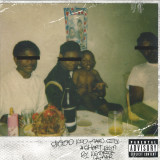
Zum 10. Jubiläum erscheint am 21. Oktober das Album „good kid, m.A.A.d city“ von Kendrick Lamar erneut.
Das Album enthält Gastauftritte von Drake, Dr. Dre, Jay Rock, Anna Wise und MC Eiht und erzählt die Geschichte von Lamars Erfahrungen als Teenager in den drogenverseuchten Straßen und dem Bandenleben seiner Heimatstadt Compton. Das Album wurde 2014 für vier Grammys nominiert, darunter für das Album des Jahres. Zudem enthält „good kid, m.A.A.d city“ die erfolgreichen Singles ”The Recipe”, ”Swimming Pools (Drank)”, ”Backseat Freestyle”, ”Poetic Justice” und ”Bitch, Don’t Kill My Vibe”.
Das Album ist als 1CD und 2LP auf 180g gepresst erhältlich.
out of Stock
Last delivered 20 months ago available to reorder, subject to availability
Seit ihrer Gründung vor 25 Jahren hat es kaum eine deutsche Band geschafft, sich einen dermaßen eigenen musikalischen Kosmos zu schaffen, wie die Mühlheimer Band Bohren & der Club Of Gore. Mit ihren dunklen instrumentalen Tracks konnten sich Bohren in den letzten Jahren eine beinharte Fanbase erspielen, und auch renommierte Musiker wie Mike Patton (Faith No More), Ry-X, John Grant, Soap&Skin als auch Thor Harris (Swans) sind den zeitlosen Songs von Bohren längst verfallen.
Das wunderbar betitelte »Bohren For Beginners« versammelt nun erstmals Album übergreifend alle Highlights des Bohren Kataloges in z. T. neu abgemischten Versionen, als auch einen neuen Song, so dass die vorliegende Werkschau sowohl als Einstiegsdroge für Neueinsteiger, als auch für die beinharten Fans von Interesse ist. Da ein Großteil des Bohren Backkataloges bereits seit Jahren gestrichen ist, werden hier musikalische Schätze gehoben, die nichts an Qualität eingebüßt haben und auch in 20 Jahren noch eine Gänsehaut erzeugen werden.
out of Stock
Last delivered 18 months ago available to reorder, subject to availability
High Roller Records, reissue 2025, 180g black vinyl, ltd 300, 425gsm heavy cardboard cover, 4 page promo insert, A5 photo card, lyric sheet, poster, Mastered for vinyl by Patrick W. Engel at TEMPLE OF DISHARMONY in September 2020. Cutting by SST Germany on Neumann machines for optimal quality on all levels... The ultimate audiophile edition of this eternal NWOBHM classic!
Kaum eine deutsche Band hat es seit ihrer Gründung vor gut 30 Jahren geschafft, einen so einzigartigen musikalischen Kosmos zu erschaffen wie die deutsche Band Bohren & der Club Of Gore aus Mühlheim. Mit ihren düsteren Instrumentalstücken konnten sich Bohren in den letzten Jahren eine beinharte Fangemeinde erspielen, und namhafte Musiker wie Mike Patton (Faith No More), Ry-X, John Grant, Soap&Skin und Thor Harris (Swans) sind den zeitlosen Songs von Bohren längst verfallen.
Das wunderbar betitelte "Bohren For Beginners" versammelt alle Highlights des Bohren-Katalogs in teilweise neu abgemischten Versionen sowie einen neuen Song, so dass die vorliegende Werkschau als Einstiegsdroge sowohl für Newcomer als auch für eingefleischte Fans interessant ist. Da ein großer Teil des Bohren-Backkatalogs schon seit Jahren gelöscht ist, werden hier musikalische Schätze gehoben, die nichts von ihrer Qualität verloren haben und auch in 20 Jahren noch für Gänsehaut sorgen werden.
Bisher gab es das Album nur digital und als CD, am 10.02.2023 erscheint das Album jetzt auch als 3LP in einem schicken Tri-Gatefold.
out of Stock
Last delivered 21 months ago available to reorder, subject to availability
Over 19 tracks, Wayfaring Strangers: Cosmic American Music mines gold from dollar bin country-rock detritus to reconstruct events as seen from the genre's wild west - Americana's vast private press substructure. As progenitor and contemptuous poster boy for the music that came to be Cosmic American, Gram Parsons found himself mired in a recording career spent mostly in scouting the perimeters of chart success. "He hated country-rock," Parsons collaborator Emmylou Harris would later reflect. "He thought that bands like the Eagles were pretty much missing the point." Parsons had been orbiting the idea of Cosmic American Music for some time. In 1968 he'd parted ways with the Byrds and was looking to take air with a new project. "It's basically a Southern soul group playing country and gospel-oriented music with a steel guitar" he told Melody Maker, on the subject of The Flying Burrito Brothers. So it was that when A&M's Burrito Brothers debut The Gilded Palace of Sin made it to shelves in February of 1969, early adherents to the Cosmic American gospel were already echoing its message from areas flanking Gram Parsons' Southern California hills and canyons. There was F.J. McMahon in coastal Santa Barbara, Mistress Mary further inland in Hacienda Heights, and Plain Jane of Albuquerque, New Mexico, each responding by committing their own private readings to tape before day one of the 1970s. Parsons himself might've disdained them, had he even been aware of such minor ripples, shimmering at the edges of his desert oasis. But these were true believers all the same, given over fully to his roots music concept, each filling vinyl grooves with non-rock instrumentation like fiddle, banjo, and pedal steel guitar, the last undoubtedly Cosmic American Music's most distinguishing stringed signifier. Only too predictably, big labels did the grunt work of confining and defining the movement, as ABC, United Artists, RCA, and more played catch-up with Asylum's raptor rock juggernaut, via backwoods crossover also-rans with names like Gladstone, American Flyer, and Silverado. Twang reigned, the shitkickers kicked shit, and the vaguely western-sounding guitar records piled up. Country-rock became "the dominant American rock style of the 1970s," as Peter Doggett's comprehensive Are You Ready for the Country put it much later. Wayfaring Strangers: Cosmic American Music picks up and dusts off golden ingots from the dollar-bin detritus of that domination, to reconstruct events as seen from the genre's real Wild West-America's one-off private press label substructure.
out of Stock
Last delivered 21 months ago available to reorder, subject to availability
Written and recorded in a firestorm of creativity during the mastering phase of Lukah's upcoming double LP with Real Bad Man, Permanent Blackface is a monstrous vignette displaying the true power of Lukah's songwriting and the technical brilliance of his team. The album flashes before you like a lightning strike illuminating a barren cityscape.
Introducing himself as Mr. Blackface, Lukah identifies the true artist's responsibility to hold a mirror to the listener in order to confront and disarm taboos. In both content and music, the record balances vulgarity and introspection, the horror of silence, and the comfort of colossal, discordant sound. Over 12 songs the celestial, often blood-soaked color palette of soul and R&B that gave emotional weight to Why Look Up and Raw Extractions has been scraped away like a charred skeleton. With a small cast of voices consisting entirely of Lukah's immediate family, and production duties handled in-house by WALZ, Deener, Hollow Sol, Cities Aviv, SB11, and Lukah himself, the record has the intimacy of a theater production. The only voices present are Lukah, joined by his mother providing scat vocals, and his grandfather discussing the Jungian self-hatred of the colonial project and its terrifying repercussions for contemporary Black Amer-icans, with a fitting invocation of Dr. Frankenstein's monster. The beats here are reminiscent of noir, 78rpm swing and big band, evoking the underlying horror of a pre-Civil Rights movement America, where segregational binaries invert-ed folk tales through the white terror of ghosts, the black "spook", and mythic themes of fate and free will. The whip-lash of shifting perspectives keeps your head on a swivel in way only Lukah's superior pen can elucidate. Will it trigger anger that first voice you hear on Permanent Blackface is Judy Garland singing "Sweet Chariot"? But isn't this just Lukah speaking through her, announcing he's got "The Southin his mouth"? As the internet endlessly debates intention and appropriation in our artistic history, the insignificance of this small sample is put into perspective: another white pebble in a black ocean of Lukah's creation. "If the sun don't shine today / pray the sun come out tomorrow...pray the sun pierce through the sorrow"
The album introduces an unnamed character beset by disposition. As the story's scope increases, the gaze of the mir-ror shifts. How would white society feel if historical roles were reversed? How does a presumed white listener experi-ence the trauma of interacting with police?