Two voices at the frontier of deep, hypnotic and experimental electronic music converge with four-track split EP that moves between first light and subsurface dark.
Lost Few’s productions inhabit the hazy threshold between ambient and dancefloor music - textured, atmospheric productions built around mood and motion. On the A-side, Broken Dawn opens with a sense of slow emergence: layered pads and rhythmic pulse conjuring beauty before sunrise, when sound feels closer to dream than waking. Light Before The Haze deepens the journey; a longing, weightless piece that traces the diffuse glow that precedes full light — melodic, restrained, and deeply felt.
Dino Sabatini needs no introduction; his productions have bolstered the underground electronic music scene while sculpting a new narrative for deep, modern electronic music. On the B-side, Subsurface Light is characteristically Sabatini: a hypnotic descent into pressurised depths, where rhythm becomes ritual and texture carries the weight of ancient resonance. He then reimagines Lost Few's Light Before The Haze as a closing meditation — pulling it further inward, slowing its pulse, and casting it in the particular deep-techno shadow he has made his own.
Together, the four tracks form a coherent arc from the pre-dawn quiet of Lost Few's introspective electronics to the subterranean intensity of Sabatini's world — a release that rewards both patient listening and late-night movement.
Black Truffle is back with his fourth EP on GAMM!
This time, BT goes all out, exploring everything from spaced-out, European disco to mid-tempo proto-disco and jazz-disco.
Expect disco interpretations flying in every direction on this 12"...exactly what we've come to love from Black Truffle.
All tracks are mastered by Lay-Far on reel-to-reel tape to capture that beautifully organic, warm analog feel.
Black Truffle is pleased to present Even Colder Spring, the latest release from the mysterious and wildly prolific Cities Aviv (a.k.a. Wilbert Gavin Mays, who also records as African-American Sound Recordings), a rare appearance from the artist outside his own D.O.T. Audio Arts label. For over a decade, Cities Aviv has twisted hip-hop conventions into the most skewed and splayed forms, layering and lacerating twitching loops, extreme production techniques and his mercurial vocal stylings into hermetic décollage. Across 16 tracks, Even Colder Spring charts Mays’ restlessly experimental approach: what sound like fully formed productions are interrupted suddenly after seconds; interjections of field recordings cue unexpected shifts; details drown under layers of fuzz. His vocal delivery takes in rhythmically intricate rap, barely articulate murmurs and freely melodic song, the latter often with a disorientating lack of connection to the track’s harmonies. The lyrical shifts are as paratactical as the musical movements. Apocalyptic visions of social and cultural uniformity alternate with reflections on mortality, glimpses of everyday life and head-scratching one-liners: ‘Maybe Mars is bougie?’ His reference points are as surprising as ever, the Dante quotes of previous releases joined here by a track named after Henri Bergson’s idea of the élan vital. Australian listeners, in particular, might be especially taken aback to hear ‘Closing Door’ open with the phrase ‘the tyranny of distance’.
While Mays’ work can sometimes be claustrophobically bleak, the productions here are often sparkling, at times touching on the shimmer of private-issue New Age sounds and the more playful end of krautrock. The instrumental ‘Martine Drift’ could almost be a snatch of Cluster’s Zuckerzeit caught through dial-up internet. The distant echoing drums of ‘L_area’ cross Persona’s Som with lo-fi IDM, while closer ‘Final Heaven’ dissolves a cloud of loops across almost seven minutes into ecstatic, rippling distortion. The graphic design, at the artist’s request closely modelled on the format of Corwood Industries, offers as good a clue as any to what awaits the listener on Even Colder Spring: a world at once impossibly opaque and intensely personal.
Rosa Balisteri was one of the brightest stars on the Italian folk scene of the 1960s and 1970s, certainly far too little known given her talent and expressive power. Her life story is marked by a tormented nature, punctuated as it is by traumas, anguish, injustices, and wounds that forever scored her turbulent existence. Through her songs, Rosa relives the suffering and despair for the devastating challenges and trials of her harrowing life. The archaic and expressive power of her dialect stirs the emotions, exuding anger and pain, but also love and devotion. Through her, all of Sicily sings as well, that of the marginalized people, of peasant struggles, of miners, of cart drivers, and of war. The significance of her protest places her alongside the similar experiences of the historic voices of American blues, the great folk singers of the 1960s such as Odetta and Joan Baez, and the social commitment of two South American heroines like Violeta Parra and Mercedes Sosa. The edition includes a 20-page booklet that tells the story and features the lyrics.
Vinyl dividers for arranging and organising 12'' records
Easy categorisation for a clear overview of your record collection
Top index tab for convenient labelling and quick segmentation
Includes a sticker sheet with individual labels for easy marking
Made of durable polypropylene (PP) material
RAWAX MOTOR CITY EDITION presents Black Eyes - Ocean FLoor Funk EP
We are very happy to spread the news about this outstanding deep monster record!
Three original tracks by high rising Black Eyes plus a timeless warm and filigree remix by Abacus.
2026 Repress, Black Vinyl, Unicover
Johannes Albert brings back the iconic anthem that is "More Action Pleeease!". This time stretched across a full A-side, cut at 45 rpm for maximum punch and pressed on a weighty 180 grams. Built sturdy, loud, and ready to tear through any system. The full-cover artwork seals the deal, but the B-side brings the real twist: the Disco-House edit everyone's been craving (yes, exclusively on vinyl!). Dompe's "Lemon Ice" gets the full "Action" vocal treatment, transforming it into a guaranteed dancefloor riot. Finally - the complete "Actionpella" is attached for the hard-working DJs and the lazy ones alike. Now? More Action Pleeeeeeeeeeease!
Kid Katana Records teamed up again with KOEI TECMO GAMES and Team NINJA, to bring you the NINJA GAIDEN 2 Black OST on vinyl for the first time.
This physical edition is a 2LP designed in close relationship with the game's creative team:
2-colored vinyl with a unique “corona” effect that is reminiscent of “Sumi (black ink)”: handmade vinyl effect melting white and black colors to shape a unique vinyl color on each product, evoking Ryu Hayabusa style.
Handpicked curation of the game music, mastered for this specific vinyl edition
A Gatefold created for this specific vinyl
Kid Katana Record produced this album with supervision from Koei Tecmo Sound, who composed the original game music.
The Mighty Diamonds are one of the most famous vocal groups to come out of the Jamaican Reggae scene.
Their perfect harmonies ride over the wholesome and Garveyite influenced lyrics to such great effect that they will always evoke memories of that time and place, but also like all great music never seems to date.
The Mighty Diamonds consist of Donald ‘Tappy’ Shaw (lead vocals) Fitzroy ‘Bunny’ Simpson and Lloyd ‘Judge’ Ferguson providing those fantastic harmonies.
They began their recording career working with producers Stranger Cole and Rupie Edwards but found their breakthrough success with producer Joseph ‘Joe Joe’ Hookim at the legendary Channel One Studios recording ‘Hey Girl’ and covering two foreign tunes namely ‘Country Living’ (The Stylistics) and ‘Stoned Out of Mind’ (The Chi-lites) which suited their vocal styles perfectly.
The vocal group also cut tracks with other famous producers of the time Joe Gibbs ,Gussie Clarke and Mr.Tappa Zukie of which we focus this release on.On listening, these tunes work perfectly with harmonies weaving together and lifting the songs to another level.
The group also leave some room for a history lesson in the shape of ‘Morgan the Pirate’ and the thought provoking ‘Do You Want to Spend Your Time Wasting Time’.
Well waste no more and enjoy this set by one of Jamaica’s finest vocal groups….
Daniel Akbar is a Constant Black regular and for good reason: his blend of house, minimal, tech and garage is a perfect fit. He continues his hot streak with this latest missive, starting with 'The Night', which marries Jaydee-style darkness with New York house bounce. 'The Walls' has a rugged, dirty minimal bump to it and a sci-fi synth edge. 'Trippin' is another sleazy and low slung house vibe, 'Care For You' brings a bit of garage shuffle and throwback bass filth, then 'Afraid' pulls back to a more seductive late night tease with hella catchy grooves and pure heads down energy.
On his latest offering, &ME is delivering quite the achievement. Co-produced with Black Coffee, the a-side „The Rapture Pt. III” obviously continues the narrative of its predecessors. But unlike in the motion picture business, where sequels tend to be watered down rehashes of the original, those Raptures are just getting better and better.
It’s all here, the dense and gentle build-up, the tender piano lines, the just overwhelming emotion. Safe bet, we’re dealing with a future classic here.
On the flipside you’ll find L.I.F.E, yet another score for the emotive peak of a clubnight. And that tune is brimming with life for sure, be it pulsating within its rhythmic architecture or it’s inhaling and exhaling dynamics. It salutes the children of planet earth and that message
lucidly comes through as it’s written in &ME’s distinctive, but utmost universal sonic language.
Constant Black is one of the many, many labels that Burnski heads up. It's where he focuses on stripped-back minimal and tech house with a moody undercurrent. Kerouac is a mainstay in his orbit and here takes one side of a new 12" that opens with 'This Method,' a rigid thumper with an eerie edge. 'Produce To The Max' has a dark bassline and ghoulish vocal sounds, while 'Talking About' is a more light and bumpy percussive number. Mees Mattern takes care of the flip with the dusty, garage-y loops of 'Sloppy Tekniic,' rubbery bass minimalism of 'Reeses Pieces' and grittier '404 Not Found. Six fresh tools for rewiring a dancefloor.
Burnski's Constant Black label puts out constantly good sounds for all those of a minimal and tech house persuasion. This 33rd such outing comes from Per Hammer who offers a trio of irresistible grooves. 'Everybody_hz' kicks off with rubbery drums and bass intertwining with each other while wonky synths up top add some tripped-out feels. A Varhat adds a little extra bounce and urgency to this silky late-night hypnotiser and then it's back to Hammer for 'The Danish URL'. It's a hooky groove with warped pads rippling up top while closer 'Arkivo' is a more textural and abstract affair with a nice dubby undercurrent.
Originally from Sicily but living in Basel, electronic composer Marco Papiro confirms his eccentric and multifaceted personality. The sound articulation of his analog synthesizers flows into in an artificial hyperrealism of great thematic and expressive variation. The tracks unfold between ascending cosmic moments, more ecstatic meditative tones, symphonic planetary floods, exotic afrodelic and psycho-andean drifts. Papiro synthesises and converts echoes of acoustic wind instruments (oboe, recorders, bamboo flute), while the percussion lives on its own pulsating reality. The influence of certain folk traditions, as well as contemporary music, also suggests the more acoustic flavor of an ethereal minimalism (for voice and psaltery), making his music a continuous open sea of visions. Cover painting by Anton Bruhin printed on two different colored papers. Co-released with Les Giants.
In the late 1980s, Klaus Wiese (Popol Vuh) deepened his connection with Tibetan culture. The result is a series of works solely dedicated to the universal purity of the Singing Bowls. Uranus, perhaps the most rigorous of these, is an intense meditation on the trans-personal sphere of the VI chackra. The music becomes like a single harmonic chant, the reflection of a constant flow of divine light, which transforms the psyche and dilates the secret passages of the heart. In the galaxy of pure sound, the accumulated overtones offer the intrepid listener the access to a prismatic, fluoriscence-rich consciousness. The ego thus becomes the sonorous composer of itself, of the vital circle flooded with beneficial acoustic vibrations. In this sense, Uranus, originally published on tape (Aquamarin Verlag/1988), also marks a parallel with the same research by Henry Wolff & Nancy Hennings or Nada Himalaya's Deuter.
First published in 1978 by Cetra, in this work Antonio Infantino continues to express his ritualistic and shamanic relationship with the musical traditions of Southern Italy. The recordings focus on the mystery of death and the sacraments, the light of the spirit and the divine that descends and conquers souls. The phenomenon of Tarantism is still strong, the power of dance as a symbol of transformation and revolt, a therapeutic process of final healing. Folk music celebrates a deep sense of community, the memory of a peasant world that no longer exists but is still alive in the collective memory. Behind the tight and insistent rhythm of the percussion, the voices of the people, the colours of the squares and the scratchy string arrangements always emerge. The magical sound of the bagpipes is lost in the alleys of the villages. Infantino sings of minor cultures, the poor and oppressed classes, who share joys and sorrows, dance and music as secular forms of liberation.
First up the return of Black Blood on vinyl after a hiatus of well over 20 years. This release is a reworking of the EXITUS002 vinyl that came out on that Italian label back in 1999. This one has a bonus track from that period of time too called “Avalanche Of Fear”. Pressed on “Blood Splatter” vinyl and limited to 150 copies. Each sleeve has been hand-painted, stamped and numbered by Black Blood himself (along with a little help from the family). Random copies have limited postcards inside. The sleeves that were hand printed are the same stock of sleeves from 2000 that were used on F.O.S. number 2 & 3. The 2026 mastering has made this release even better than the super-rare original.
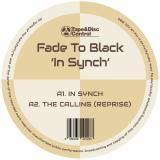
Jay Denham is the US techno mainstay behind Fade To Black and now his 1990 EP 'In Synch' gets reissued as the second outing from the Tape & Disc Control crew. The original often fetches close to three figures on the second-hand market and was an early blueprint for rugged analogue techno with plenty of bounce, not least in the title cut. 'The Calling (reprise)' builds through classic Detroit machine soul with surging chords and feathery light percussion dancing over the groove. 'Insistent Rhythm' has boom and swing in equal measure while 'The Calling' is rich in old school techno funk and plenty of wiggy electronic lines. 36 years old but still utterly futuristic.
DJ Support: Danny Krivit, Brian Tappert, John Morales, Craig Charles, Dr packer and more
Italian producer Corrado Alunni returns to the 7-inch format with a high-caliber double-sider. The A-side, 'Black Pearl', is a masterclass in jazz-funk-house elegance, weaving warm Fender Rhodes melodies with vibrant flute and trumpet solos over a sophisticated, sun-drenched groove. On the flip, 'Turn It On' keeps the energy high with Alunni’s signature blend of infectious Rhodes riffs, chunky basslines, and dancefloor-ready drums. A must-have addition for fans of soulful house and nu-disco lovers alike.
Terrestrial Funk presents a piece of Detroit history. Born and raised in Motor City, Karl Fultz knew at the age of twelve that he wanted to be the most talented and successful DJ in the world. In 1999 he released on Juan Atkins’ Metroplex under the alias People Mover and in 2000 he released as Black Electric on Puzzlebox. Inspired by British synth-pop duo Eurythmics, Fultz says Black Electric was a way to get more women involved in the techno movement. Together alongside vocalists Tiffany Elliott, Kim Glover & Talena Fultz, Black Electric brought sex appeal to the scene. Their first and only release stays in demand and has become inaccessible until now. Terrestrial Funk’s reissue provides two fresh cuts on the new 12”; ‘Purple’ a chugging Detroit acid track describing soul modification to enhance intimacy and a proper bassed out club mix of the nasty electro sex song ‘Work That’, which was only featured as an acapella on the original release. The release also features updated mixes of both the title track and the half-time anthem 'Come To Me' alongside the original y2k mix of 'Colors'. Black Electric stands as a testament to turn of the millennia Detroit and the city’s undying devotion to expand our connection to music.
Īlker Soylu returns with third instalment of his Mastering Black alias, marking a decade of Zwart Goud with a special edition LP titled X - an introspective yet adventurous document that blurs the lines between genres, time, and place.
X is a carefully crafted passage through contrast and cohesion. From dusk-lit highways to underwater reveries, this third chapter from Mastering Black unfolds as both continuation and evolution - a cinematic odyssey of sound sculpted inward and outward for introverts and extroverts, for you and me - for us.
Dewa Alit, master of radical Balinese gamelan, returns to Black Truffle with Baur Bentur. Genetic (2020, BT063) introduced international listeners to the magical sound-world of Alit’s Gamelan Salukat, who perform on instruments tuned to a unique scale derived from modified versions of two traditional Balinese scales. The two pieces heard on Chasing the Phantom (2022, BT093) further demonstrated his radical fusion of tradition and experimentation, with passages where unorthodox techniques make the acoustic ensemble resemble glitching electronics. Baur Bentur now highlights another aspect of Alit’s work, presenting pieces composed in 2024 and 2025 where Gamelan Salukat performs alongside virtuoso pianist Sri Hanuraga. Alit’s music is grounded in deep reflection on the tradition of Balinese gamelan and its place in the contemporary world. His title, ‘Baur Bentur’, which translates as ‘mixing and smashing’, points to his embrace of the intercultural mixture of Eastern and Western elements in the search for innovation. Against the calcification of Balinese music into tourist entertainment, Alit poses his searching, experimental work, which celebrates the communal values and performance practices of traditional gamelan while pushing into startling new directions.
‘Sukat Tacara’ is a study in layered tempos, meters, and polyrhythms, a constantly shifting dialogue between piano and the instruments of Gamelan Salukat. It begins close to a traditional concerto, pairing a brisk sequence of melodic variations from the piano with a spare but propulsive accompaniment of drums and hanging metallophone tones, punctuated by low gong strikes. The piano builds in volume and density across a rapid succession of fragments, at points recalling George Antheil’s ticking wind-up machinery, though Hanuraga’s jazz background shines through in the fluidity with which he navigates the complexities of the score, where chromatic movement co-exists with bluesy phrases. An abrupt change in the piano to patterns of dense clusters introduces a new episode, during which the metallic instruments of the gamelan enter the foreground. The piece dazzles with its inventive rhythms and dynamics, building to a stunning passage featuring the signature heavy muting technique of the Gamelan Salukat metallophones in kinetic patterns that would be at home on a Príncipe release.
The title piece begins at high intensity and rarely lets up, working through bracing unison ensemble melodies and punctuation points where piano and gamelan together seem to become a single, thudding drum. For much of the piece the piano is tightly integrated into the ensemble, the harmonic extensions of the melodic line subsumed into a moving cloud of complex overtones generated by the gamelan instruments. Wildly kinetic on the rhythmic level, the piece swarms with microscopic movements of beating patterns generated by the ‘blend and crush’ of three simultaneous tuning systems: the equal temperament of the piano and the saih cenik (small scale) and saih gede (big scale) used by the gamelan instruments. Accompanied by the composer’s thoughtful liner notes and images of the musicians, Baur Bentur is a stunning next step in Alit’s radical combination of tradition and innovation.
Cold Union emerge with “Lost In Black”, a coldwave signal suspended between haze and motion. An early glimpse of their upcoming album, where restraint becomes atmosphere and every element is reduced to its essential form. Icy guitars drift over deep, driving basslines, while distant, delayed vocals hover in slow, almost spectral, hypnotic atmosphere. There’s a clear understanding of the genre’s lineage here—echoes of classic post-punk codes reinterpreted with patience and intent. Minimal, precise, and emotionally distant, Lost In Black channels the core of post-punk into something colder, sharper, and built for the finest late hours goth parties.
Scaler are the electrifying Bristol-based band hailed as the city’s “next national breakthrough” thanks to their pulverising live show and meticulous, mind-warping sound. Hot off their critically acclaimed sophomore record ‘Endlessly’ which was nominated for an AIM award for ‘Best Independent Album’ comes Reflex. An EP full of kinetic energy satisfying a craving for immediacy within the project. The layers of intricate collaboration of Endlessly are peeled back and the raw energy of SCALER is cast forth. “These songs were made with the four of us in the room together with our machines, reacting to what the others were doing. Trying to capture the feeling of when your body outruns your head, no second guessing or holding back. Together they work as both fight and flight. A chase and a reaction. Instinct not thought. A reflex.
4LP vinyl boxset - pressed on opaque red, green, blue and yellow vinyl housed in printed inner sleeves with disco holes within a hardbound book jacket. The back cover is a Ludo board and the package contains Ludo game pieces, dice and instructions on how to play.
The Best of the Black President is the 13 track guide to Fela Kuti’s massive and manifold creative career. Fela was a musician, arranger, producer, political radical, outlaw and the originator of Afrobeat. This is the first time the complete compilation is available on vinyl. It is a 4 LP set, with updated cover art in a hardbound book jacket and printed inner sleeves. The individual LPs are pressed on red (sides A/B), green (sides C/D), blue (sides E/F) and yellow (sides G/H) vinyl. This edition features a Ludo game board as the back cover and comes with a perforated set of game pieces, dice, and instructions on how to play. Limited edition of 3000 for the world.
The release of this special edition coincides with the 12 episode podcast on the life and legacy of Fela, Fela Kuti: Fear No Man, produced by the Obamas and hosted by Jad Abumrad (Radiolab, Dolly Parton’s America). The series features dozens of interviews including Burna Boy, Paul McCartney, Questlove, Ayo Edebiri, David Byrne, Santigold, and President Obama himself. It was initially released on Audible on 9/15/25 and had a wide release across all podcast platforms on 10/15/25
The experiment aboard orbital station Sequoia-4 began as a routine test of the acoustic array. The team attempted to synchronize an analogue resonator with a quantum audio synthesizer. The two incompatible frequencies were expected to cancel each other out. Instead, the instruments registered a stable wave. It didn’t fade, on the contrary, it did respond to every sound, every movement around it.
At first, they assumed a coding error, but the wave began adapting to the researchers’ voices, shifting its amplitude and rhythm. Within hours, its spectrum started to resemble a heartbeat. The recording was forwarded to the Analysis Division, where it was named Hybrid Dub — a hybrid resonance formed between the machine and the human senses. The phenomenon proved unpredictable: each listener described different effects, from gentle euphoria to vivid recollections of memories that had never occurred.
Even after the system was powered down, a faint signal persisted in the ether — as if the mechanism had learned to breathe on its own. Some claimed that, when replayed, traces of the ocean, rustling leaves, and distant voices could be heard — as though the signal had passed through layers of living matter and remembered them.
The project was shut down, and the archive sealed. Only one line remained in the final report: “The signal wasn’t created — it discovered us.”
With Black Koyo, Mattias De Craene enters a sound world at once intimate and vast. Born from journeys in Morocco and Brussels, the project traces the rhythms, chants, and spirits of the Gnawa tradition, revealing a quiet resonance that echoes De Craene's own search for depth and presence. Guibri, qraqueb, call-and-response chants, saxophone, loops, and electronics come together in a trance-induced dialogue - ritualistic, elemental, and dreamlike - creating a space where listening becomes immersion, tradition meets imagination, and music unfolds as a shared act of reflection and wonder.
About Mattias De Craene
Mattias De Craene's artistic path is marked by rare coherence. As a central voice in Nordmann and MDC III, he developed a physical, rock-inflected jazz language driven by propulsion, volume, and trance-like collective energy. Over time, a period of personal rupture - burnout, tinnitus, depression - shifted his focus inward. The saxophone became a breathing, textural presence, and in his solo work, he weaves saxophone, electronics, loops, and minimal forms into a cinematic, hushed world where repetition, resonance, and silence slow perception. Rooted in ambient and introspection, his music prizes attention over impact, precision over excess - a quiet intensity recognized with a nomination as Musician for the Music Industry Awards (MIA's).
About Black Koyo
Black Koyo is a Brussels-based ensemble and one of the most compelling voices of the Gnawa tradition outside Morocco. Led by maalem Hicham Bilali, the group brings guibri, qrraqueb, and call-and-response chants to life with trance-like intensity and ritual precision. Their music is both rooted and contemporary, weaving earthbound rhythms and vocal invocations into ecstatic, immersive soundscapes, creating a space where ancestral resonance meets present-day imagination.
About Jan Bang
Jan Bang is a pioneering Norwegian producer and musician, celebrated for his mastery of live sampling and his ability to merge electronics with improvisation, rhythm, and texture in real time. He mixed the album and occasionally joins live performances, bringing his signature approach to sound as co-founder of the influential Punkt Festivaland collaborator with artists such as Jon Hassell, David Sylvian, Arve Henriksen, and ECM Records' roster. As a performer and sound architect, Bang creates immersive, trance-like sonic textures where silence and sound carry equal weight. Within Mattias De Craene ftBlack Koyo, his live sampling becomes an organic instrument, weaving saxophone, electronics, and Gnawa rhythms into hypnotic, physically charged soundscapes.
Line-up & credits
Mattias De Craene - sax, electronics | Hicham Bilali - guibri, vocals, qraqueb |Ismael Akhraz - vocals, qraqueb | Marwan Abantor - vocals, qraqueb
All tracks are original gnawa traditionals played by Black Koyo and arranged by Mattias De Craene.
Album produced & recorded by Mattias De Craene in Essaouira, Morocco and hometown Ghent, Belgium 2025.
Text by Hicham Bilali.
Mixed by Jan Bang at Punkt Studio
Mastered by Lieven Van Pee
Artwork by Marina Sviridova
Design by Benoit Van Geel
Manufactured and distributed by N.E.W.S.
Executive production by W.E.R.F. records
Supported by Flemish Government, Jazzlab, nona, HA Concerts, Aubergine artist Management,
KAAP, La Bestia (Wout Van Putten) & mdcmu.sic vzw.
2026 (c) W.E.R.F. records
You can always rely on Burnski and his many labels to keep DJs and dancers well-oiled with plenty of fresh house and garage tackle in various different guises. Constant Black keeps it stripped back with this new one from Rotterdam resident Fabio Santos. 'Midnight Protocol' is an ice-cold stepper, and 'Duster' gets more sleazy and raw with a heavy house foundation. There's wub-wub filth underpinning the garage shuffler 'Breather', old school ragga vibes on 'Request To All Junglist' and 'Conspiracy' is a light-footed hot-stepper with mutant energy. An absolute no-brainer that will become a go-to for months to come.
black.round.twelve returns with Dancing Tiger EP, a new vinyl release from Tagir exploring the deeper edges of Minimal House and Tech House. Rooted in the label’s vinyl-only ethos and focused curation, the record leans into long-form grooves, subtle detail and controlled movement.
The title track “Dancing Tiger” is a slow-burning minimal piece stretching across twelve minutes. Oboe-like tones and modular textures sit alongside processed vocal fragments and acoustic percussion, anchored by a steady low-end that develops with patience.
“Break It Love” moves into a more direct framework, combining vocal loops with an elastic bassline and a steady 4/4 pulse, while modular elements add texture and forward motion.
On “Off Smoke”, the structure becomes more abstract, with a repeated vocal phrase stretched, pitched and fragmented across a pumping groove. Subtle variations and underlying swing create a controlled but fluid sense of movement.
With Dancing Tiger EP, Tagir delivers a groove-led record that aligns closely with black.round.twelve’s approach, balancing functionality with detail and maintaining a clear focus on the dancefloor.
Entering into the portal once again, The Black Lodge releases its 9th offering, this time a full EP from Russian hardware wizard LVRIN. 6 tracks of dark psychedelic electronics traversing through Jakbeat, Techno, Industrial and Krautrock sonics - guaranteed to take the dance floor to the beyond!
Black Dot duo returns to Kri Records with six tracks ranging from EBM club domination to electro after-hours relaxation. Duo's signature futuristic melancholia on Lust EP is laced with melodic synth lines, a haunting Slavic vocal, and spiced with club-ready remixes by Innershades and Charlie.
Both CDG Rouge tracks feature duo's trademark mesmerizing electro mood that works both, on the dancefloor and the Autobahn. The darkly playful atmosphere and lyrics might evoke a memory of early Miss Kittin and The Hacker collaborations. The Innershades remix sees the Belgian producer at his top New Beat game, while Charlie reworked the sleazy No Harm Lust into a leather ripper. AI Climax is a self-explanatory EBM club stomper, while What Will It Be Boy rounds the release with a cheeky nod to the 80s.
Christian Kroupa & Le Chocolat Noir (Black Dot) return to Kri 3 years after their debut, picking up the thread where it all began. Since their first release, and outings on Mechatronica and Italo Moderni in between, the duo continues to refine their stripped, nocturnal electro sound— sharp, eclectic, and built for late hours.
This limited edition of 100 white label 12” vinyls presented by the BLACK INDUSTRIAL RESEARCH GROUP is released to coincide with shows at London’s Ormside (November 19), Bristol’s Arnolfini (November 21) and Cardiff’s Chapter (November 29), ahead of the 2026 publication of the project’s extensive vinyl boxset. One-sided and hand-stamped with hidden reverse insert, the record features an original composition by DUBMORPHOLOGY (TREVOR MATHISON + GARY STEWART) reworking the words of JOHN AKOMFRAH (from an interview by APPAU JNR BOAKYE-YIADOM and OLIVER FUKE).
DJ Support: Ashley Beedle, Phil Mison (Ibiza legend), Nick The Record, Kenneth Bager (Music For Dreams), Ross Allen (NTS, Worldwide FM), Simon Dunmore, Cedric Woo (Beauty & the Beat), Ban Ban Ton Ton, The Mighty Zaf (Love Vinyl), Femi Fem (Young Disciples), Jay Negron (NYC legend), Bruce Forest (Better Days, NYC), Bruce Tantum (NYC), Colleen “Cosmo” Murphy, Mr Shiver, Hugh Mane, Eccentrics Disco, Eclectics Disco, Fannoire Ge, Percebes Records (Lisbon), For Mankind (Pikes, Ibiza), S/A/M (Cafe Del Mar, Ibiza).
Winner of the 2020 Bob James “Black Lives Matter” remix competition on François Kevorkian’s World Of Echoes Facebook page, Love For Black Lives is available on vinyl for the first time, alongside 2 brand new mixes, on this 4-track EP. It is the debut release on Hobbes Music’s new sub-label Noetic Rhythm, dedicated to releasing music that brings people together on the dancefloor.
Leonidas debuted in 2012 with Sequential EP on Kay Suzuki's Round In Motion label, gaining praise from industry legends. He has collaborated with Hobbes on several releases, including the Balearic hit Web of Intrigue, which topped Bill Brewster’s 2017 DJ poll. His music has appeared on compilations like DJ Harvey’s The Sound of Mercury Rising Vol II, as well as BBC Radio 1 & 6 music.
Newly remastered version of Oren Ambarchi’s long out-of-print classic Hubris originally released on Editions Mego in 2016. Expertly remastered by audio wizard Joe Talia who worked with the original mixes, highlighting the myriad details of the audio with forensic precision, previously unheard up until now.
From the 2016 press release:
Hubris continues the exploration of relentless, driving rhythms heard on Ambarchi’s Sagittarian Domain (2012) and Quixotism (2014). Where those records looked to Krautrock and techno for their starting points, the sidelong opening track here begins from the perhaps unlikely inspirations of disco and new wave, drawing particularly from Ambarchi’s love of Wang Chung’s soundtrack to William Friedkin’s To Live and Die in L.A. Leaving behind the song-forms of these reference points, Ambarchi weaves a sustained and pulsating web of layered palm-muted guitars from which individual voices rise up and recede, eventually setting the stage for some lush guitar synth from Jim O’Rourke. Arnold Dreyblatt collaborator Konrad Sprenger contributes overtone-rich motorized guitar, pushing the piece into a satisfying intersection of shimmering minimalism and rhythmic drive that smoothly builds up until the entrance of Mark Fell’s electronic percussion in its final section.
After a short second part, in which Ambarchi, O’Rourke and crys cole pay tribute to the skewed harmonic sense of Albert Marcoeur with a track built from layered guitar figures and abstracted speech, the long final piece pushes the concept of the first side into darker and denser areas. Joined by electronics from Ricardo Villalobos and the twin drums of Will Guthrie and Joe Talia, the layered guitars of the first piece are transformed into a raw and tumbling fusion-funk groove that calls to mind early Weather Report or even the first Golden Palominos LP. As this stellar rhythm section rides a single repeated chord change into oblivion, a series of spectacular events emerge in the foreground: first, aleatoric synthesizer burbles from Keith Fullerton Whitman, then slashing skronk guitar from Arto Lindsay, until finally Ambarchi’s own fuzzed-out harmonics take center stage as the piece builds to an ecstatic frenzy. Few artists could hope to include such an incredible variety of collaborators on one record and still hope for it to have a unique identity, but Ambarchi manages to do just that, crafting three pieces that emerge directly out of his previous work while also pushing ahead into new dimensions.
Players: Oren Ambarchi, crys cole, Mark Fell, Will Guthrie,
Arto Lindsay, Jim O’Rourke, Konrad Sprenger, Joe Talia, Ricardo Villalobos, Keith Fullerton Whitman.
Loud Ambient 2 picks up directly from where Loud Ambient left off. After picking the drum machines back up, we returned to the colourfield ideas that shaped the first record. Rothko remained a key reference, along- side a strong recommendation to spend time with the work of Josef Albers. We did exactly that, and it paid off.
Alongside the music, we created 50 new pieces of artwork for Loud Ambient 2. These became tools rather than decorations. Working this way felt open and rewarding, and brought a real sense of play back into the process. We already understood what a Loud Ambient track could be, so slipping back into that headspace felt natural. The tracks came together quickly, full of energy, movement and that familiar noodle quality.
The creative side landed easily this time. There is some- thing about working with colourfields that frees you up and pushes you further into abstraction. It removes hesitation and keeps the focus on instinct and response.
With the drum machines and synths loaded, we kept our heads down and made the kind of music we want to hear on a dance floor. Loud Ambient 2 is the result.
This album brings together some of the finest music ever released on Black Jazz Records which in its short four-year history, between 1971 and 1975, released over 20 superlative albums which all successfully blending spiritual jazz, funk and soul jazz of the highest calibre. Similar to other independent jazz labels at the time, including Strata-East Records and Tribe Records, Black Jazz focussed on a number of key artists, most of whom first established their career during this period, and all of whom are featured here. Featuring The Awakening, Doug Carn, Walter Bishop, Chester Thompson, Kellee Patterson and more. Black Jazz Records was founded in Oakland, California, by pianist Gene Russell and percussionist Dick Schory.
The label released twenty albums between 1971 and 1975. Artists who recorded for Black Jazz Records included Cleveland Eaton (bassist for Ramsey Lewis), keyboardists Doug Carn and Chester Thompson, vocalist Kellee Patterson, saxophonist Rudolph Johnson, bassist Henry Franklin, and spiritual fusion group The Awakening. The label was distributed and financed by Ovation Records, based in Chicago. Schory founded Ovation in 1969, shortly after leaving RCA. Schory was a Grammy-nominated percussionist who was also known for his development of the stereo recording techniques including Dynagroove and RCA Victor’s Stereo Action. Schory also pioneered quadrophonic sound, and a number of Black Jazz Records were in quadrophonic and other formats such as ¼” tape and 8-track.
Black Jazz launched in 1971 with Gene Russell’s ‘New Direction’. Russell was the creative force behind the label, acting as producer, engineer and A&R and focussed on developing new solo artists. The most successful of these was Doug Carn, who released four albums featuring his wife, Jean Carn, as vocalist. She later changed her name to Jean Carne and became a successful soul singer signed to Gamble and Huff’s Philadelphia International empire.
Black Truffle is pleased to present Radis, the first recording by the Oslo-based trio of Andrea Giordano (voice and organetto), Kalle Moberg (accordion) and Jo David Meyer Lysne (guitar and snare drum). Now based in Norway, Giordano is a native of Cuneo, in the Piedmont region in the north-west of Italy and her exploration of the Piedmontese language provides the starting point and conceptual anchor of the trio improvisations heard on Radis, which make use of the words of 20th century Piedmontese poets Nino Costa, Bianca Dorato and Oreste Gallina. As the musicians explain, the project is an attempt to preserve the beauty and singularity of a language at risk of extinction.
Fittingly, the first sound we hear on the opening piece ‘Fiorìa’ is Giordano’s unaccompanied voice. She sings a poem from Oreste Gallina as a kind of floating cadenza, the accompanying silence sensitizing the listener to the pellucid quality of Giordano’s voice and the unique sound of the Piedmontese language. The voice dies away and into the silence swells a single tone, sounded by Moberg’s accordion and—special guest on this opening piece—the alto saxophone of Mario Gabola. Extended techniques and preparations create unexpected timbres from the acoustic instruments: Gabola’s saxophone is augmented with tin cans and springs and Moberg’s unorthodox techniques allow the accordion to generate wheezing, buzzing textures and patterns of microtonal beating. Giordano’s voice returns, picking up the thread of the languorous opening melody, coexisting for a while with the shifting drone before the piece takes an unexpected yet organic left-turn into a delicate saxophone solo of sorts.
Recorded in several locations across Italy and Norway over the course of three years, Radis documents an ensemble who have developed both a distinctive sound-world and a remarkably sensitive group dynamic. Moving from folkish duets between accordion and Giordano’s organetto (the small accordion used in Italian folk music) to episodes of metallic guitar scraping from Meyer Lysne, the music is both quietly contemplative and gently chaotic. Ensemble roles shift with disarming ease. If on ‘Profij dëspers’ Meyer Lysne’s prepared guitar adds a haywire noise element to a lyrical episode of organetto and accordion, the next piece, ‘D’antorn a lor’, is grounded in chiming guitar chords of stunning beauty; once Giordano’s joins, the result calls up the most spacious moments of Maria Monti’s Il Bestiario. Throughout the seven pieces, the trio explore countless possibilities of group interaction and the margin between conventional euphony and pure abstraction: at times the voice floats against silence or seems almost disconnected from the gentle clatter of the instruments (sometimes reminiscent of Nikiforas Rotas’ haunting settings of Cavafy), while at other points the instruments touch on conventional harmonic accompaniment. What is perhaps most striking of all is the way that voice and instruments relate to each other, the extended technique reframing the voice as a kind of abstract sound object, while the melodic beauty of Giordano’s voice lends a contemplative, almost melancholic air to the wheezing and scraping of accordion and guitar.
Captured in gorgeously intimate recordings, Jim O’Rourke’s careful and beautifully spacious mix highlights the wealth of textural detail in each element. Accompanied by notes, session photos and the text of the Piedmontese poems, Radis is a work of stunning beauty that demonstrates the vitality of exploratory music in Norway today.
Dutch titan Orlando Voorn plunges into deeper waters for his Lost Control 2097 debut. The opener ''Vibrations'' hits like a hazy '90s hip-hop daydream, wrapped in the glow of soulful deep house. ''Summer Breeze'' is strictly for the heads--pour up the gin and juice, kick back, and let the world melt for a minute. If you're hunting for that golden first strike, ''Purpose Pursuit'' cruises in with a boogie-soaked groove that feels like flipping through dusty dance-floor memories. And to top it off, label chief Black Eyes, the Prince of Hydro himself, delivers a remix that sinks you into a warm, tape-scarred drift.
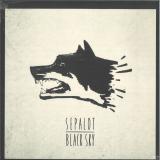
On this album the former "Chasing Clouds" have accumilated into the eponymous "Black Sky"; these drifting soundclouds have swallowed a bulk of Sepalot´s sunny nature; his trademark relaxed attitude gave way to instrumental melancholy and pugnacity. "Before I started recording I listened to lots of The Doors songs. I found the suicidal aspect in their music very exciting. I totally inhaled it." Sepalot reports. "The breakage, the grid, the dirt - that was my inspiration. I was thirsty for the energy of pureness." In order to capture this roughness Sepalots first production steps were drafting soundsketches - often more than 100 in a row. This is then is followed by a sorting procees with many drafts going immediately into the trashcan. The survivors create the first basic draft.
There is something waiting in the wings. Don´t fear the storm, come outside with us... "Black Sky" is here.
Clemens Brentano: "These sounds are a wonderfull living breath of darkness"
Cinthie’s Collective Cuts sub-label of her 803 Crystal Grooves label welcomes the UK’s Black Eyes onto its roster this March with his ‘Hydrocity Reflex’ EP, comprised of four original soul drenched House Jams.
Cinthie’s 803 Crystal Grooves Collective Cuts welcomes Black Eyes with a fresh four-track EP that distils the Manchester-born, Berlin-based artist’s signature aesthetic into its purest form. Fusing deep, trippy and soulful house with a raw, Detroit-leaning sensibility, Black Eyes channels the influence of House music’s roots into rolling rhythms and fluid textures alongside shaped by his enduring love of water. Now firmly embedded in Berlin’s underground while carrying the grit of his northern roots, he delivers a release that feels both immersive and driving a natural fit for 803 Crystal Grooves’ dance floor focused sonic vision.
Opening the EP is ‘Can You Dig That Depth’, an emotive slice of House driven by saturated keys, soulful vocal lines, heavily swung drums and a buoyant bassline. ‘Pressure Malfunction’ follows, stripping things back to organic percussion, sweeping filtered funk loops and intricately processed spoken-word chants. The B-side begins with ‘Loyalty To Tha Deep’, living up to its name as it embraces classic Deep House sensibilities through choppy, airy chord progressions, hypnotic breathy vocals, fluttering melodies and slow-slung, crunchy drums. ‘Funky Oxygen’ then brings the release to a close, channelling the spirit of Motor City House with a refined blend of cut-up samples, shuffled percussion, jazzy keys and a snaking bass groove.
Black Truffle is thrilled to announce Dalbergia Retusa, an extensive double LP selection of the solo guitar music of Hans Reichel, compiled by Oren Ambarchi. Last heard on Black Truffle as one quarter of the joyously anarchic Bergisch-Brandenburgisches Quartett, Hans Reichel (1949-2011) is one of the great figures of experimental guitar music. Though perhaps lesser known than peers like Derek Bailey, Fred Frith and Keith Rowe, Reichel’s rethinking of the instrument was in some ways the most radical of all. Early on, he dispensed with existing guitars to build a series of his own that explored the use of additional strings and fretboards, moveable pickups, extra bridges, special capos, and other innovations documented in the extensive booklet accompanying this release.
Reichel was a long-term resident of Wuppertal, the small Western Germany city that became an unlikely centre of European free jazz in the late 1960s, also home to Peter Brötzmann and Peter Kowald. His solo debut Wichlinghauser Blues was an early entry into the FMP discography and began a relationship with the label that stretched into the 1990s; all the solo performances heard here were first released on FMP. As Reichel says in the charming archival interview with Markus Müller included here, he was ‘always a cuckoo’s egg at FMP’, a label that began as an outlet for roaring European free jazz. What strikes the listener right from the opening selection on Dalbergia Retusa—‘Return of the Knödler show’, from 1987’s The Dawn of Dachsman—is the extraordinary beauty of Reichel’s music, at once alien in the shimmering sonorities and unconventional pitch relationships made possible by his invented instruments, and deeply lyrical, even romantic in its harmonic content. Growing up in West Germany in the 1960s, Reichel’s formative influences were mainly British and American rock bands, a background that shines through in many of the pieces included here: ‘An old friend passes by’ is haunted by the ghost of Hendrix’s rhythm guitar, and the wild closer ‘Heimkehr der Holzböcke’, taken from a rare 1975 7” and the only piece to use overdubbing, layers errant hammer-on and slide tones over a Canned Heat boogie chug.
Reichel was an important source for the development of Oren Ambarchi’s own extended approach to the electric guitar. Appropriately enough, his selection opens with the very first piece by Reichel he ever heard, on a flexidisc included with a 1989 issue of Guitar Player magazine. Though Reichel collaborated with others extensively in many settings and also performed on violin and his other major contribution to instrument invention, the daxophone, his music for solo guitar remains at the core of his oeuvre. Focusing exclusively on solo pieces recorded between 1973 and 1988, the 23 pieces on Dalbergia Retusa showcase the range and consistency of Reichel’s work, allowing the listener to see how his performances developed hand-in-hand with his instrumental inventions. On a piece from his very first LP, played on an 11-string instrument (partly strung with piano strings and using a schnapps glass a slide), we hear his intensive exploration of fret-hammering to create zither-like, chiming tone, which Reichel would hone further in later years with a double fretboard guitar specifically designed to be hammered rather than fretted and picked. On a piece from 1979’s Death of the Rare Bird Ymir, Reichel uses two steel-string acoustic guitars at once, with beautiful results: ‘some even say too beautiful’, he jokes in the interview included here. Many of the pieces from the 1980s make use of varieties of the ‘pick behind the bridge guitar’, instruments of uncanny harmonic richness primarily designed to be played on the ‘wrong’ side of the bridge. At times the unexpected behaviour of attacks, resonance, and decay can almost seem electronic, conjuring up the technology-assisted work of Henry Kaiser or even Fennesz, but realised solely through Reichel’s unorthodox techniques on his invented instruments. Extensively illustrated with photos and Reichel’s own plans and drawings of his instruments, Dalbergia Retusa is an essential introduction to the unique world of Hans Reichel. Rarely has music been at once so strange and so beautiful.
Brooklyn-based BlackCat Records continues its deep analog journey with Sonder, a refined dub techno statement by Argentinian producer Volpe.
Known for his warm sound design and subtle rhythmic detail, Volpe builds four immersive cuts around drifting dub chords, spatial depth, and slow-burning groove.
Instead of pushing for impact, Sonder explores atmosphere, patience, and emotional resonance, techno reduced to its purest and most timeless form.
Black Moon Mother blends light and heavy soundscapes that pull from elements of Psych-Rock, Pop, Doom Metal and Shoegaze. Formed out of a Nashville music collective in 2017, the band put together a demo EP that became their live set, kickstarting their musical journey. At the beginning of 2018, Black Moon Mother began writing new material and continued the show-a-month ritual, while adding a new song to the live set one by one. January 2020 brought Black Moon Mother to Dark Art Audio in Madison, TN where they worked with engineer and producer Mikey Allred. Their newest album Illusions Under the Sun showcases an expanded musical depth and songwriting maturity, while exploring themes of nature, purpose, and perspective.
A decade ago, Taylor Swift was already a world-renowned and dominant force in the pop world. In 2014, she was on a world tour that took in a stop at Tokyo Saitama Arena on June 1st and the recording of it captures the electrifying energy of her sold-out performance during the iconic "Red" world tour. This live album showcases Swift at her early peak and delivering heartfelt ballads and powerful pop anthems with her signature charm and stage presence. Fan favourites resonate with emotion and live energy, while quieter moments like 'All Too Well' highlight her storytelling prowess. The Saitama Arena crowd adds to the magic throughout.
Visionary producer Ilija Rudman confidently lands into the Black Jukebox catalogue with a truly mesmeric 2-tracker.
Based in Zagreb, Ilija has carved a legacy over more than two decades in the game throughout which he's released over 100 vinyl EPs and 8 studio albums, collaborating with the likes of Robert Owens, Greg Wilson, Faze Action and Ron Trent.
'Euphonia' opens up with a suave slice that melds deep Detroit shades with the flexible Electro funk of Morgan Geist and Clatterbox. A sawtooth bass climbs steps in the low end while gorgeous synths bend and glide at the groove's core. Crisp, delicate drums kick, snap and shuffle as they guide a low-slung, retro-futuristic trip to the moon.
'Late Checkout' draws for a similar sound palette as rich analogue pads form a magic carpet for Prelude-era synth phrases and another sneaking bass line. The tone is elegant and nothing feels forced as Ilija Rudman traverses the vast sonic territory between Salsoul-era Disco and modern Electro-funk in the most fluent and stylish manner.
Companion 10" to the recent, superb LP Sampler from The Belfast duo...
After showcasing their broad and boisterous tastes on a series of super limited Edits 12's, plus original releases on labels like Touch Sensitive, Hoga Nord, Duca Bianco and Optimo Music, we finally have a fully formed suite of original cuts which take us on a journey through their varied and vivid vibrations...
On Barrios & Barricades, BB deliver two powerful Dark Disco delights...
The kind of peak-time industrial funk-outs that have soundtracked infamous, strobe-lit joy factories over the decades from Chicago's Medusa's, Ghent's Boccaccio or Optimo's legendary Sundays at The Sub Club.
Yes, it's that good !
Swiss DJ and composer Dexter Troy has made a name for himself with notable productions on labels such as « King Street Sounds, » « Groove Culture, » and « Mood Funk Records, » alongside iconic artists like Kerri Chandler, Dennis Ferrer, Masters At Work, Satoshi Fumi, and Dimitri From Paris. For over 15 years, he has shared his passion for electronic music in bars, clubs, and festivals in Switzerland and abroad.
His rich and diverse musical universe draws from multiple influences: house, funk, disco, all enhanced with a touch of electro-techno. »
One year after the part 1, « The Double Take part 2 » is coming to put the finishing touches to the project. He’s joined by BAKA G, a talented artist who made a name for herself on the Brussels house scene and distinguished herself with releases on labels such as Happiness Therapy.
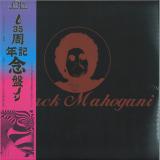
It’s been over 20 years since Kenny Dixon Jr., better known as Moodymann, released Black Mahogani—an album rich in atmosphere and emotion, offering a quintessential journey through deep house, soul, and jazz. Timeless yet modern, it’s an immersive and emotionally resonant experience that reflects the singular character of Detroit’s deep musical heritage.
Originally released in 2004, Black Mahogani is arguably one of Moodymann’s most revered and sought-after works. It completes the puzzle laid out by his rare and elusive KDJ 12” releases from the mid to late '90s. With the help of Detroit legends like the late Amp Fiddler, Roberta Sweed, and Norma Jean Bell, Dixon infused his analog soundscapes and samples with a new organic warmth—expanding the deep house genre while simultaneously paying homage to 1970s soul and cinematic soundtracks.
Dixon’s masterful control of tension—knowing exactly when to hold back and when to let go—makes Black Mahogani an enduring masterpiece. It's not just a landmark in electronic music, but a definitive statement in 21st-century Black American music.
Recorded in the wake of Dr. King's assassination, this 1969 single from Mississippi-born, Chicago-raised Syl Johnson stands as one of the starkest and most soul-wrenching protest songs ever committed to tape. Built around a slow, smouldering groove and the raw ache of Johnson's vocal, 'Is It Because I'm Black' is less a call to arms than a question hung in the air-resigned, frustrated, defiant. The Pieces of Peace deliver a restrained but deeply felt arrangement: skeletal drums, moody bass, mournful horns, all circling Johnson's voice like a sermon in minor key. What could feel like despair instead pulses with something tougher-dignity, clarity, and a refusal to shut up. The record would later be sampled by Wu-Tang and reinterpreted in Jamaica, but nothing quite matches the grit and sorrow of the original. A landmark in American soul music, whispered more than shouted.
Making this album was an absolute joy. We used Rothko’s artwork as a major influence. His use of colour fields, blending, mood and scale really helped us build an album of tracks that could stand on their own and also work together as a coherent whole across all the tones we had been working with. It was also a chance to fall back in love with our 909, 808 and 707.
While working on music for several other projects, the “Rothko” project got renamed Loud Ambient because it did not really sit right with the My Brutal Life series. We often talked about what people make of The Black Dog and whether they think we only make ambient music. We do not. Over the last year or so, one of us would be working on something and someone else would say, “That is a Loud Ambient track.” The name stuck. We liked the funny side of it.
With Loud Ambient, everything just fell into place creatively. Surprisingly for us, the tracklisting never changed, just small tweaks here and there. That rarely happens. It marks a first for us as a band. All the stars aligned and the confidence in this album is the strongest we have ever had.
Loud Ambient was made to dance to, something we have not done in a while. We welcome the return to the dancefloor with both hands. Will you join us?
Originally released in 1997, Black Corsair stands as a true milestone in late-’90s house music — a record that captured the raw energy, soulful depth, and forward- thinking sound of an era. Now this legendary EP returns in a fully remastered reissue, bringing its timeless grooves and hypnotic rhythms back to life with pristine clarity. Celebrated for its deep basslines, lush textures, and irresistible dancefloor spirit, Black Corsair remains a defining statement of the underground house movement —an essential rediscovery for collectors and new listeners alike.
Matching brooding, tense undercurrents of drone with strained soulfulness, Malcolm Pardon makes a notable shift in his creative approach on his third album.
Leaving his piano behind, the Stockholm-based artist explores the richly varied tones lingering in the background of his past compositions.
Born from his extended live improvisation for Gustaf Broms’ Köttinspektionen exhibition in Uppsala, Flesh & Bonesbecomes a haunting suite of compositions focused on texture and spatial processing, mixed by longtime collaborators Aasthma (Peder Mannerfelt & Pär Grindvik). From Hidden Path’s cavernous wells of low-frequency tone to Under Over’s sustained synth blooms, and the woozy two-chord refrain of Speaking In Tongues, Pardon's seasoned approach to dramatic scene-setting leads his music into its own captivating, compelling sphere, where emotions entwine and conjure strange new plains of expression.
The 10th release on ALIM Music, a stone-cold classic, has been reborn. Gil Scott-Heron and Brian Jackson’s The Revolution Will Not Be Televised, the iconic song of protest and Black Consciousness, has been reimagined and revitalised for a new generation. With new lyrics and vocal performance from Black Thought, a reworked and bassline-heavy production by Masters at Work, Brian Jackson has recreated an absolute masterpiece.
Originally taken from Gil’s poem as performed on his Small Talk at 125th & Lenox and then released as a proto Hip-Hop song featuring Bernard Purdie’s drumming on the 1974 Pieces of a Man album, this new version updates the track’s original powerful lyrics to include references to the propaganda of Fox News, social media tropes, live streaming, taking the knee and modern day consumerism. Delivered by Black Thought in his imitable style and accompanied by Brian Jackson’s incisive jazz flute, these new lyrics represent a Black Liberation call to action for today’s world.
Louie Vega and Kenny Dope’s production gives The Revolution Will Not Be Televised a dancefloor edge that embraces a Jazz Hip-Hop flow with the absolute clarity of the message. Taken from Brian Jackson’s forthcoming and aptly titled BBE Music album, Now More Than Ever, The Revolution Will Not Be Televised will unite Boomers, Millenials and Gen-Z in its multi-generational cross-over appeal bringing the original Gorillas together with Neo-Soul and Hip-Hop heads of today.
Peter Ivanyi is Ghost Warrior, and it's an apt name for a producer who operates in the shadows between several drum & bass sub styles. His sophisticated sound designs and impeccable rhythms have taken him to the likes of 31 Records, re:st and The Collection Artaud but here he lands on regular home Well Street. 'Black Box' pairs deft drum programming with jazzy cymbals and blasts of textured bass, and 'REM' is then backlit with a celestial synth glow. A Josi Devil remix brings some low-end hustle and bustle and 'Dream Transmission' is a minimal stepper with an eerie deep space edge and absorbing sense of late-night tension.
Providing more prolific dance floor energy this winter are Italian house pushers Black Box Records, a carefully curated VA of feel good vibe from producers Ruff Stuff, Floska, label founder Vito Fattore, and the eclectic sounds of, DJ GLC. Available on vinyl this Oktober.
Kicking off proceedings is Berlin based Italian, Ruff Stuff. A killer cut, with ice cold drum arrangement which becomes one with the playful chords which propel the energy of the ‘Son Of Will’ track, the female vocal sample sprinkled in for some added pleasure. Young Italian trio Floska deliver ‘Get Up & Dance’ dreamy and mellow sounds on a lo-fi tip, almost seven minutes of pure bliss.
The brain behind Black Box,Vito Fattore, steps up for the B1 as any leader should. Clinical dance floor moods, laced with emotion. Magical pads and synths work their way around the funk laden body of the track, explosive summer time feelings. Switching things up for the closing track is DJ GLC, with a deeper and darker energy than the other three track. Aptly entitled ’Suspense’ mechanical whirrs carry the track, as broken drums burst through the seams of the record. A trip through murky waters that compliments the EP in great fashion.
Another display of zestful house music from a blossoming label, sure to be a winner with tastemakers and groove explorers alike. One to watch out for in the coming periods as Black Box Records continue to supply you with what you need.
SCALER are the electrifying Bristol-based band hailed as the city’s “next national breakthrough” thanks to their pulverising live show and meticulous, mind-warping sound. Now they’re back with ‘Endlessly’, a sublime and stylistically expansive new album. 10 potent tracks written and recorded more collaboratively than ever before, as SCALER explore what it means to make music with no ceiling.
Building on what they know and taking it in new directions has been a constant throughout the three-year journey behind ‘Endlessly’, which came together in the studio beneath Bristol’s legendary The Louisiana. Inspired by time apart, the album finds them reconnecting with their diverse sonic touchpoints – many tangled in their city’s much-mused-on musical heritage – and the creative energy of collaborators around them. Close friends and long-admired peers, including Akiko Haruna, Art School Girlfriend, Tlya X An, Shadow Stevie, Thomas Ridley and Cold Light’s ELDON add colour to SCALER’s darkened palette and point to the left-turns they’re leaning into. The intense softens into introspection. The blistering becomes a balm.
‘Endlessly’ is the second album from SCALER, a.k.a. Alex Hill, Isaac Jones, James Rushforth and Nick Berthoud, alongside visual artist Jason Baker. The record follows 2022’s acclaimed ‘Void’ and marks their debut for Bristol’s revered Black Acre, a longtime champion of genre-defying electronic music.
2025 Repress
New LP from Dax J - War is Peace, Freedom is Slavery, Ignorance is strength
Referencing the political slogans in Orwell's dystopian novel 1984, where language is manipulated to control and oppress, we find a stark reflection in modern society, where truth is frequently distorted, and freedoms are increasingly compromised-echoing the very tactics Orwell warned against
Repress alert! Due to high demand and increasing popularity, it was just about time to repress this Delta classic! And since a new cut was required, we decided to include a very special bonus track: a neo-classical piano rework of Black Endlessness, composed and conducted by the highly talented Area Forty_One.
Day 1. The planet is dead. An anomaly is detected — the time flow is slightly distorted.
Day 2. Landed in the central crater. The clocks of our suits show different times from the clocks on the ship. The gap is increasing.
Day 4. Logs contain records of events that never happened. A report of tomorrow’s evacuation appeared in the system. No one wrote it.
Day 5. We found footprints leading from the landing site to the crater, identical to ours. The ship log was discovered nearby. Final entry: “Do not enter the crater.”
Log transmission terminated. The crew did not reestablish contact.
The Belfast duo make ready this exceptional 6-Track Sampler from their forthcoming debut LP...
After showcasing their broad and boisterous tastes on a series of super limited Edits 12's, plus original releases on labels like Touch Sensitive, Hoga Nord, Duca Bianco and Optimo Music, we finally have a fully formed suite of original cuts which take us on a journey through their varied and vivid vibrations...
A general tip of the hat to the dark, post industrial basements illuminated by Weatherall's 9 O'Clock Drop comp.
From haunted dancehall, via beautifully throbbing ethno-chug and mesmerising clank-fests, to gloriously scuffed and foreboding Crammed Disc and Wax Trax! reminiscent offerings to the strobe gods.
One very limited press wrapped in screen-printed sleeves - one for the ages !